Posted tagged ‘Trump and Iran’

Venezuela: State Sponsor of Terrorism?

February 18, 2017

Venezuela: State Sponsor of Terrorism? Investigative Project on Terrorism, February 17, 2017
1977

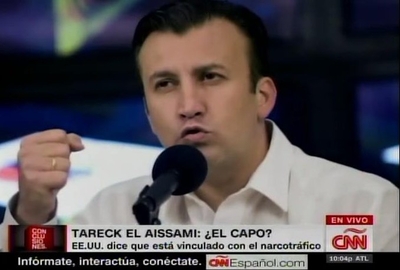
U.S. intelligence has long considered Tareck El Aissami as a key figure in the global narcotics trade with ties to Iran. He oversaw massive shipments of drugs from Venezuela to other countries, including the United States, and issued identification documents to Hizballah operatives. But El Aissami isn’t an affiliate of Hizballah or the Iranian Revolutionary Guard Corp (IRGC). El Aissami is the vice president of Venezuela.

After an extensive Treasury Department investigation spanning several years, the Trump administration levied sanctions against El Aissami on Monday, freezing his assets in the United States and prohibiting business relationships with him. American officials have previously identified and sanctioned other senior Venezuelan officials involved in drug trafficking operations with Colombian FARC and close cooperation with Iran’s terrorist activities.

U.S. officials previously have criticized Venezuela’s failure to cooperate on global counterterrorism issues. Yet these latest allegations – surrounding the upper echelons of Venezuela’s government – suggest that the South American country has devolved into a full-blown state sponsor of terrorism.

Earlier this month, CNN received a 2013 secret intelligence document from several Latin American countries highlighting ties between El Aissami and 173 Venezuelan identification cards and passports issued to people from the Middle East, including Hizballah affiliated personnel. El Aissami “took charge of issuing, granting visas and nationalizing citizens from different countries, especially Syrians, Lebanese, Jordanians, Iranians, and Iraqis,” the report shows.

Previous U.S. reports detailed blatant corruption and vulnerabilities on Venezuela’s borders, failing to even conduct basic biographic screening at various ports of entry. However, the allegations surrounding El Aissami’s operations take these security concerns to a whole new level. One of the most powerful leaders of a large Western country stands accused of facilitating terrorist infiltration into other states, including the United States.

The Simon Wiesenthal Center also suggests that El Aissami served as an interlocutor between Iran and Argentina in an effort to hide the Islamic Republic’s role in coordinating the 1994 Jewish Center bombing in Buenos Aires. Hizballah operatives are widely believed to be responsible for that attack, which killed 85 people and wounded 300. Moreover, a Wiesenthal Center representative in South America fears that El Aissami may encourage the Venezuelan government to adopt formal state policies based on anti-Semitism.

Under the reign of former President Hugo Chavez, Iran exploited friendly ties with Venezuela to establish terrorist networks throughout region. Iranian and Hizballah operatives have cultivated and consolidated operating bases in South America, especially in the tri-border area (TBA) of Argentina, Brazil and Paraguay. With a large Muslim population featuring significant numbers of Hizballah sympathizers, the terrorist organization uses this area for recruitment, arms smuggling and drug trafficking, and logistics planning for terrorist operations.

Hizballah also relies on legitimate businesses and front organizations in the region, diversifying its terrorist financing profile to generate a significant portion of its revenues from its Latin American operations. With Venezuelan help, the terrorist group continues to expand its presence and consolidate support in other Latin American countries. Hizballah has even registered as a political party in a Peruvian region characterized as having that nation’s largest Muslim population.

Yet Venezuelan ties to drug trafficking and terrorists are not limited to South America. The Treasury Department also revealed that El Aissami helped coordinate narcotics shipments to drug cartels operating on the U.S. border, including Mexico’s infamous Los Zetas. In 2011, Virginia prosecutors said that a Lebanese man helped the Mexican Los Zetas drug cartel smuggle of more than 100 tons of Colombian cocaine. The U.S. Treasury Department claimed that Hizballah benefitted financially from the criminal network.

Later that year, the United States disrupted an IRGC-led plot in cooperation with a Mexican drug cartel to assassinate Saudi Arabia’s Ambassador to Washington.

The problematic nexus between Iranian-backed operatives – including Hizballah – and Mexican drug cartels allows terrorists to earn big money to fuel their violent operations. These connections also enable Hizballah to make inroads into the United States through its porous border with Mexico.

In a 2011 testimony before a House Homeland Security subcommittee, Roger F. Noriega, former U.S. ambassador to the Organization of American States, highlighted the danger posed to U.S. homeland security from the growing Hizballah presence in Latin America:

“The more broad implication for U.S. homeland security is that Hizballah—via Iran and Venezuela—has engaged the United States in an offensive strategy of asymmetric warfare on our doorstep. It is aiming to win the mental battle of attrition and the moral battle of legitimacy—particularly with the youth in Latin America. Unless our government recognizes and responds to their efforts, our ability to protect our interests and our homeland will be gradually and dangerously diminished.”

That testimony is as relevant today as it was years ago, foreshadowing continued cooperation between Iran, its terrorist proxies, and the government of Venezuela. Now with a vice president who maintains intimate ties to a variety of violent organizations, Venezuela has transitioned from a safe haven for nefarious activities to a global state sponsor of terrorism.

Top Trump Aide: Despite Resignation of National Security Adviser, Administration Committed to Flynn’s Staunch Stance on Iran

February 17, 2017

Top Trump Aide: Despite Resignation of National Security Adviser, Administration Committed to Flynn’s Staunch Stance on Iran, AlgemeinerRuthie Blum, February 16, 2017

trumpandgorkaSebastian Gorka with US President Donald Trump. Photo: Facebook.

A top aide to US President Donald Trump told The Algemeiner on Thursday that despite the resignation this week of General Michael Flynn as national security adviser, Washington remains committed to his staunch positions on Iran.

“Flynn’s statements on the Islamic Republic reflect the new administration’s stance, as the president has been very clear,” said Deputy Assistant to the President Sebastian Gorka. The author, most recently of Defeating Jihad: The Winnable War, was referring, in part, to the former national security adviser’s “officially putting Iran on notice” earlier this month, after it test-launched a ballistic missile, and its proxy terrorist group in Yemen — the Houthis — attacked a Saudi warship.

Speaking to The Algemeiner in the wake of Wednesday’s meeting between Trump and Israeli Prime Minister Benjamin Netanyahu — who has spent years warning against the dangers of a nuclearized Iran — Gorka said, “We are reassessing US policy to the regime in Iran and are committed to not facilitating the mullahs in their destabilization of the whole region as the Obama White House did, especially through the disastrous JCPOA (Joint Comprehensive Plan of Action),” otherwise known as the nuclear deal.

The ayatollahs, he noted, “are not only behaving in ways that are antithetical to the American values of freedom and human rights, but through their proxies, they are harassing our partners in the Middle East, and have become a particularly negative force in the region since being emboldened by the nuclear deal and by the Obama administration, which rewarded bad behavior with billions of dollars and undisclosed annexes to the JCPOA.”

Asked whether Netanyahu’s input had an effect on Trump’s statement about not allowing Iran to achieve “nuclear capability” — rather than merely preventing it from building a nuclear weapon — Gorka said, “The key is that this administration has been adamant that it will treat friends as friends. And you listen to your friends’ concerns.”

The Jewish state, he said, is in this category, “as was expressed in yesterday’s meeting, and through Trump’s insistence that America’s bond with Israel is ‘unbreakable.’ The warmth shown to Netanyahu was palpably different from the cold shoulder he received from the previous president.”

Gorka went on to explain that the opposite messages being conveyed to Israel and Iran from the White House are in keeping with a Marine Corps motto — which, he said, has been informally adopted by the Trump administration — “No better friend, no worse enemy.”

“It means that America is back on the scene,” he said. “No more oxymoronic ‘leading from behind.’ We have restored our relationship with the Israeli government to the place where it should be.”

Gorka, a naturalized American whose parents escaped Communist Hungary and was raised in the UK, came under the critical scrutiny this week of several media outlets for wearing the medal of a Hungarian order of merit re-established in 1920 by Miklós Horthy. Horthy, the wartime Hungarian regent accused of not doing enough to prevent the Nazi deportation of Jews — and whose own son was kidnapped by Nazi commandos — was eventually replaced by the fascist Arrow-Cross Regime, allied to Hitler.

The honor, today, however, is recognized by the International Commission on Orders of Chivalry, and was awarded to Gorka’s father as a recognition of his suffering and resistance to the Communist dictatorship that followed the fascists.

“Smearing individuals is what the Left does when it can’t win an argument on substance,” Gorka said, explaining that his father had been granted the merit more than 30 years after WWII.

Gorka recounted:

He was nine years old when the war broke out and 15 when it ended and the puppet Nazi regime fell. He was imprisoned at the age of 20 for his anti-Communist activities, and was later given the medal in exile. I wear his medal during official occasions in homage to my father and my Hungarian roots.

It is especially appalling that I was smeared, when the writer, Eli Clifton, who first made the allegation was allegedly fired from his previous position for making antisemitic and anti-Israel statements. To quote one authority: “The Simon Wiesenthal Center, the Anti-Defamation League and the American Jewish Committee have all termed the anti-Israeli rhetoric of … Eli Clifton …. to be infected with Jew-hatred and discriminatory policy positions toward Israel.”

It is therefore “galling,” he said, “that I should be slandered in this way, when my family lived through and opposed all dictatorships.” Still, he added, “When your political opponents resort to this kind of defamation, it’s a sign that your side is winning.”

Iran Warns Trump Against Disclosing Secret Iran Deal Documents

February 16, 2017

Iran Warns Trump Against Disclosing Secret Iran Deal Documents, Washington Free Beacon, February 15, 2017

(Does General Flynn know about secret deals beyond those on file at the U.S. Congress? — DM)

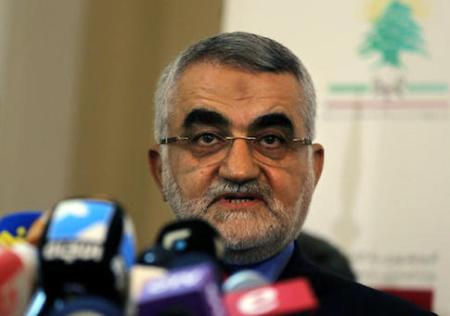
Iranian Alaeddin Boroujerdi, Chairman of the Committee for Foreign Policy and National Security at the Iranian Shura Council, speaks to journalists after meeting with Lebanese Foreign Minister Gibran Bassil, at the Lebanese foreign ministry in Beirut, Lebanon, Monday, Aug. 1, 2016. Boroujerdi arrived in Beirut for two days visit to meet with Lebanese officials. (AP Photo/Bilal Hussein)

Iranian Alaeddin Boroujerdi, Chairman of the Committee for Foreign Policy and National Security at the Iranian Shura Council. . . . (AP Photo/Bilal Hussein)

Senior Iranian officials are warning the Trump administration about disclosing secret deals related to the nuclear deal that have long been hidden from the public by the Obama administration, according to recent comments that prompted pushback from senior sources on Capitol Hill.

Iran’s warning comes on the heels of a Washington Free Beacon report disclosing that former national security adviser Michael Flynn had been pushed out of office partly due to his intention to release these sensitive documents to the American public.

Leading lawmakers in Congress launched multiple investigations last year into the Obama administration’s efforts to keep these documents secret and out of public view. Sources who spoke to the Free Beacon about the matter said that the Trump White House is working on ways to publicize this information despite warnings from Iran.

Secret side deals related to the nuclear agreement remain unclassified but have been stashed in a secure location on Capitol Hill, making it difficult for staffers and lawmakers to view them. Individuals seeking to view these documents must have security clearance and are barred from taking notes or speaking about what they see.

Multiple senior congressional sources familiar with the nature of the documents told the Free Beacon that lawmakers and the Trump administration would not be intimidated by Iranian threats.

Alaeddin Boroujerdi, a senior Iranian lawmaker and head of country’s foreign policy committee, warned the Trump administration against making these documents public in recent remarks.

“If Trump wants to publish confidential documents exchanged between Iran and the International Atomic Energy Agency, it will in fact constitute a violation of the agency’s obligations, because the agency has been committed not to make Iran’s confidential nuclear information and documents available to any country, including the U.S.,” Boroujerdi was quoted as saying in Iran’s state-run media.

Some of these documents surround side deals struck between Iran and the IAEA regarding the Islamic Republic’s ability to enrich uranium. They also include deals about how much information Iran must disclose to international inspectors about the country’s contested nuclear program.

As part of the nuclear deal, U.S. inspectors are not permitted to take part in the review of any Iranian sites.

Rep. Peter Roskam (R., Ill.), a vocal opponent of the Iran deal who has long been fighting for the full disclosure of the Iran deal documents, told the Free Beacon that the Obama administration hid these documents in order to mislead Americans about the true nature of the agreement.

“The administration is under no obligation to conceal information about secret side deals, nor should they feel obligated to protect the anonymity of individuals or institutions who misbehaved at the behest of the Obama administration,” Roskam said.

Included in these documents are details of multiple, secret payments to Iran that totaled close to $2 billion. The money is believed to have been part of an incentive package aimed at securing the release last year of several American hostages in Iran.

None of this information is technically classified, yet it remains hidden from the American public and a large portion of Congress.

“The deal has only survived this long because the Obama administration gave Iran secret exemptions to cheat,” said one veteran congressional adviser familiar with the documents. “The Iranians know that if people found out about those exemptions, it would be obvious that the deal was always a bad, unsustainable deal, and they couldn’t blame Trump. That’s why they’re making up reasons why parts of the deal should be kept secret.”

Iran is expressing opposition to the disclosure of the information in order to force the Trump administration into a corner, the source maintained.

A senior congressional aide familiar with the situation further told the Free Beacon that U.S. lawmakers would not be instructed by Iran about what can and cannot be made public.

“Our declassification procedures are not subject to the whims of Iranian officials,” the source said. “Unclassified documents should be released so the American public can see just how bad of a deal the previous administration negotiated on its behalf.”

A second congressional source explained that federal law mandates these documents be released to lawmakers. This includes side deals and other materials related to the future of Iran’s nuclear program.

“The American public has a right to know what’s really going on behind the scenes with the nuclear agreement. At the very least, Congress is entitled to all relevant documents—including side arrangements or any other related materials—as mandated by federal law under Corker-Cardin,” the source said. “We won’t be intimidated by these empty threats from Iran or any international body. It’s time to make these secret documents public so everyone can for themselves what this deal is really all about.”

Is This The Coup the Left Wanted?

February 15, 2017

Is This The Coup the Left Wanted?, The Resurgent, February 15, 2017

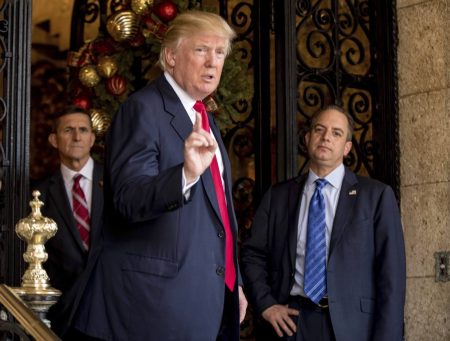
trumpandflynn

There is no evidence that Donald Trump’s campaign and Russian intelligence cooperated to steal the election from Hillary Clinton. But the New York Times waits for the third paragraph of this sensational story to tell you. First, they want you to know intelligence sources say Trump campaign staffers had multiple, repeated contacts with the Russians.

What we are seeing is an intelligence community trying to sabotage the President of the United States. We should all be concerned even if we have our own concerns about the President and Russia.

It is more and more apparent that, while Mike Flynn misled Vice President Pence and should have been fired, we only know this because members of the intelligence community engaged in an opposition research dump on Flynn with the media. They engaged as a separate and distinct branch of government, and that is a dangerous situation.

The left is cheering on the outcomes, as are some on the right, but they are all ignoring the process. When the intelligence community ceases to serve the Commander-in-Chief and instead tries to sabotage him because they do not like the direction he is taking the country, they are putting their interests ahead of the voters and the electoral process.

The same problem exists with the Ninth Circuit Court of Appeals and its decision on the immigration order. In large part, the court based its decision on Donald Trump’s campaign statements that he wanted a Muslim ban. At first blush, that may seem legit to people but consider Barack Obama and Obamacare.

Chief Justice John Roberts upheld Obamacare’s constitutionality because he said it fell under the taxation powers of the constitution. But Barack Obama had campaigned on Obamacare saying that it was not a tax. Had the Supreme Court used President Obama’s campaign statements against him, they would have thrown out Obamacare.

While one may cheer on the outcome from the Ninth Circuit, they should not cheer the process and flawed legal reasoning.

Both the intelligence and court situation raise troubling issues. By cheering outcomes based on deeply problematic processes, people are rapidly moving towards “ends justify the means” reasoning. That will bring about the very creeping authoritarianism the left fears from Donald Trump.

They cheer this on now because it is working to their advantage as rogue leakers try to undermine a President they do not like. But it will eventually happen to them. By then they will have surrendered any and all moral high ground to cry foul.

The intelligence community serves at the pleasure of the President, not the other way around. The President must be able to depend on the intelligence community’s assessments. Right now, the intelligence community is causing a breakdown in trust with the Trump Administration through leaks designed to undermine his authority.

If a terrorist attack on our soil happens because the President felt he could no longer trust the intelligence community’s assessments, that will be on them. This behavior, in a democratic republic, must be considered unacceptable.

It is possible to be happy Mike Flynn is gone and also be deeply bothered by the means through the intelligence community designed his ouster. People on all sides should be speaking up loudly that the behavior of the intelligence community in damaging leaks is unacceptable.

Finally, we know that Mike Flynn intended to reform the intelligence community and expose side deals made with Iran to secure a diplomatic agreement. President Trump should commit to replacing Mike Flynn with someone as hell-bent on reform and exposure of the Iran deal as Mike Flynn was. The intelligence community cannot be rewarded for bad behavior that undermines the democratic processes of this nation, even if some of us are happy Mike Flynn is gone.

Former Obama Officials, Loyalists Waged Secret Campaign to Oust Flynn

February 15, 2017

Former Obama Officials, Loyalists Waged Secret Campaign to Oust Flynn, Washington Free Beacon, February 14, 2017

File photo : Retired Lieutenant General Michael Flynn, U.S. national security advisor, arrives to a swearing in ceremony of White House senior staff in the East Room of the White House in Washington, D.C., U.S., on Sunday, Jan. 22, 2017. Trump today mocked protesters who gathered for large demonstrations across the U.S. and the world on Saturday to signal discontent with his leadership, but later offered a more conciliatory tone, saying he recognized such marches as a "hallmark of our democracy." Photographer: Andrew Harrer/Bloomberg(Sipa via AP Images)

File photo : Retired Lieutenant General Michael Flynn, U.S. national security advisor, arrives to a swearing in ceremony of White House senior staff in the East Room of the White House in Washington, D.C., U.S., on Sunday, Jan. 22, 2017. Photographer: Andrew Harrer/Bloomberg(Sipa via AP Images)

“The Obama administration knew that Flynn was going to release the secret documents around the Iran deal, which would blow up their myth that it was a good deal that rolled back Iran,” the source said. “So in December the Obama NSC started going to work with their favorite reporters, selectively leaking damaging and incomplete information about Flynn.”

“After Trump was inaugurated some of those people stayed in and some began working from the outside, and they cooperated to keep undermining Trump,” the source said, detailing a series of leaks from within the White House in the past weeks targeting Flynn. “Last night’s resignation was their first major win, but unless the Trump people get serious about cleaning house, it won’t be the last.”

******************************

The abrupt resignation Monday evening of White House national security adviser Michael Flynn is the culmination of a secret, months-long campaign by former Obama administration confidantes to handicap President Donald Trump’s national security apparatus and preserve the nuclear deal with Iran, according to multiple sources in and out of the White House who described to the Washington Free Beacon a behind-the-scenes effort by these officials to plant a series of damaging stories about Flynn in the national media.

The effort, said to include former Obama administration adviser Ben Rhodes—the architect of a separate White House effort to create what he described as a pro-Iran echo chamber—included a small task force of Obama loyalists who deluged media outlets with stories aimed at eroding Flynn’s credibility, multiple sources revealed.

The operation primarily focused on discrediting Flynn, an opponent of the Iran nuclear deal, in order to handicap the Trump administration’s efforts to disclose secret details of the nuclear deal with Iran that had been long hidden by the Obama administration.

Insiders familiar with the anti-Flynn campaign told the Free Beacon that these Obama loyalists plotted in the months before Trump’s inauguration to establish a set of roadblocks before Trump’s national security team, which includes several prominent opponents of diplomacy with Iran. The Free Beaconfirst reported on this effort in January.

Sources who spoke to the Free Beacon requested anonymity in order to speak freely about the situation and avoid interfering with the White House’s official narrative about Flynn, which centers on his failure to adequately inform the president about a series of phone calls with Russian officials.

Flynn took credit for his missteps regarding these phone calls in a brief statement released late Monday evening. Trump administration officials subsequently stated that Flynn’s efforts to mislead the president and vice president about his contacts with Russia could not be tolerated.

However, multiple sources closely involved in the situation pointed to a larger, more secretive campaign aimed at discrediting Flynn and undermining the Trump White House.

“It’s undeniable that the campaign to discredit Flynn was well underway before Inauguration Day, with a very troublesome and politicized series of leaks designed to undermine him,” said one veteran national security adviser with close ties to the White House team. “This pattern reminds me of the lead up to the Iran deal, and probably features the same cast of characters.”

The Free Beacon first reported in January that, until its final days in office, the Obama administration hosted several pro-Iran voices who were critical in helping to mislead the American public about the terms of the nuclear agreement. This included a former Iranian government official and the head of the National Iranian American Council, or NIAC, which has been accused of serving as Iran’s mouthpiece in Washington, D.C.

Since then, top members of the Obama administration’s national security team have launched a communications infrastructure after they left the White House, and have told reporters they are using that infrastructure to undermine Trump’s foreign policy.

“It’s actually Ben Rhodes, NIAC, and the Iranian mullahs who are celebrating today,” said one veteran foreign policy insider who is close to Flynn and the White House. “They know that the number one target is Iran … [and] they all knew their little sacred agreement with Iran was going to go off the books. So they got rid of Flynn before any of the [secret] agreements even surfaced.”

Flynn had been preparing to publicize many of the details about the nuclear deal that had been intentionally hidden by the Obama administration as part of its effort to garner support for the deal, these sources said.

Flynn is now “gone before anybody can see what happened” with these secret agreements, said the second insider close to Flynn and the White House.

Sources in and out of the White House are concerned that the campaign against Flynn will be extended to other prominent figures in the Trump administration.

One senior White House official told the Free Beacon that leaks targeting the former official were “not the result of a series of random events.”

“The drumbeat of leaks of sensitive material related to General Flynn has been building since he was named to his position,” said the official, who is a member of the White House’s National Security Council. “Last night was not the result of a series of random events. The president has lost a valuable adviser and we need to make sure this sort of thing does not happen again.”

Other sources expressed concern that public trust in the intelligence community would be eroded by the actions of employees with anti-Trump agendas.

“The larger issue that should trouble the American people is the far-reaching power of unknown, unelected apparatchiks in the Intelligence Community deciding for themselves both who serves in government and what is an acceptable policy they will allow the elected representatives of the people to pursue,” said the national security adviser quoted above.

“Put aside the issue of Flynn himself; that nameless, faceless bureaucrats were able to take out a president’s national security adviser based on a campaign of innuendo without evidence should worry every American,” the source explained.

Eli Lake, a Bloomberg View columnist and veteran national security reporter well sourced in the White House, told the Free Beacon that Flynn earned a reputation in the Obama administration as one of its top detractors.

“Michael Flynn was one of the Obama administration’s fiercest critics after he was forced out of the Defense Intelligence Agency,” said Lake, who described “the political assassination of Michael Flynn” in his column published early Tuesday.

“[Flynn] was a withering critic of Obama’s biggest foreign policy initiative, the Iran deal,” Lake said. “He also publicly accused the administration of keeping classified documents found in the Osama bin Laden raid that showed Iran’s close relationship with al Qaeda. He was a thorn in their side.”

Lake noted in his column that he does not buy fully the White House’s official spin on Flynn’s resignation.

“For a White House that has such a casual and opportunistic relationship with the truth, it’s strange that Flynn’s ‘lie’ to Pence would get him fired,” Lake wrote. “It doesn’t add up.”

White House Press Secretary Sean Spicer stated in his daily briefing that “the evolving and eroding level of trust as a result of this situation and a series of other questionable incidents is what led the president to ask General Flynn for his resignation.”

A third source who serves as a congressional adviser and was involved in the 2015 fight over the Iran deal told the Free Beacon that the Obama administration feared that Flynn would expose the secret agreements with Iran.

“The Obama administration knew that Flynn was going to release the secret documents around the Iran deal, which would blow up their myth that it was a good deal that rolled back Iran,” the source said. “So in December the Obama NSC started going to work with their favorite reporters, selectively leaking damaging and incomplete information about Flynn.”

“After Trump was inaugurated some of those people stayed in and some began working from the outside, and they cooperated to keep undermining Trump,” the source said, detailing a series of leaks from within the White House in the past weeks targeting Flynn. “Last night’s resignation was their first major win, but unless the Trump people get serious about cleaning house, it won’t be the last.”

The art of the ‘no deal’ with the PA

February 14, 2017

The art of the ‘no deal’ with the PA, Israel Hayom, Ruthie Blum, February 14, 2017

Meanwhile, even Fatah and Hamas can’t bury the hatchet, other than literally, in the backs of one another’s operatives. But the one thing the two terrorist groups do share is a mutual antipathy to Israel and the aim to eradicate the Jewish state. The author of “The Art of the Deal” and his secretary of state will learn this soon enough, if they don’t know it already. In any case, the appointment of world-renowned expert in Islamic terrorism Sebastian Gorka as deputy assistant to the president is a sign that they want to be told the truth. Let us hope that Netanyahu feels welcome and comfortable enough during his visit in Washington to do the same.

****************************

There is much speculation about Israeli Prime Minister Benjamin Netanyahu’s upcoming meeting at the White House with U.S. President Donald Trump. Typically, rather than waiting to hear the outcome of Wednesday’s deliberation, Israelis have been analyzing a conversation that has yet to take place, and weighing in on the extent to which the Jewish state can count on the new administration in Washington to embrace the policies of the Israeli government, and on the level of personal chemistry that emerges between the two leaders.

The assumption is that the Joint Comprehensive Plan of Action — the nuclear deal reached between Iran and world powers in July 2015 — will be on the agenda, and that the issue of achieving a two-state solution between Israel and the Palestinian Authority will be raised. The second topic includes several directly related issues, such as the possibility of the relocation of the U.S. Embassy in Israel from Tel Aviv to Jerusalem, and the newly passed Judea and Samaria Settlement Regulation Law, which retroactively grants permits to a number of outposts on privately owned Palestinian land.

Whatever the upshot of the meeting, however, one thing is certain: The Trump administration will not be able to broker an agreement that resolves the Palestinian-Israeli conflict, no matter how talented, smart or well-intentioned Jared Kushner — the president’s son-in-law who is purportedly being charged with this task — may be.

The charade in which Netanyahu has participated since he announced his conditional support for Palestinian statehood in a televised address to the nation in June 2009, is that there is a “solution” to the ongoing war waged by the Arabs in Judea and Samaria, Gaza and east Jerusalem against the very existence of the Jewish state. Netanyahu knows better than anybody else that this is as much an exercise in rhetoric as it is in futility. He is fully aware that the only way for peace to be possible is for the Palestinians to oust their corrupt and evil leaders in Fatah and Hamas and — in striving for the freedom and prosperity they have been denied by the honchos in Ramallah and Gaza City — emulate Israeli society.

If such a day ever comes, no more than five minutes will be required for the sides to agree on the technicalities — maybe 10, if the negotiators get stuck in traffic on the way to the table.

The same holds true for Iran, which is why the JCPOA was not flawed due to the wording of its clauses, but rather to the fact that the mullah-led regime in Tehran had no intention of reaching any genuine agreement with the “infidels” it wishes to annihilate. Its goal was not to have international sanctions lifted in order to get on with the business of improving the economic lot of the Iranian people. It simply wanted a more unfettered path to obtaining nuclear weapons with which to impose its hegemony on the Middle East and force the rest of the world to capitulate to its Islamist will.

Meanwhile, even Fatah and Hamas can’t bury the hatchet, other than literally, in the backs of one another’s operatives. But the one thing the two terrorist groups do share is a mutual antipathy to Israel and the aim to eradicate the Jewish state. The author of “The Art of the Deal” and his secretary of state will learn this soon enough, if they don’t know it already. In any case, the appointment of world-renowned expert in Islamic terrorism Sebastian Gorka as deputy assistant to the president is a sign that they want to be told the truth. Let us hope that Netanyahu feels welcome and comfortable enough during his visit in Washington to do the same.

US-Russian steps vs Iran await new NSC chief

February 14, 2017

US-Russian steps vs Iran await new NSC chief, DEBKAfile, February 14, 2016

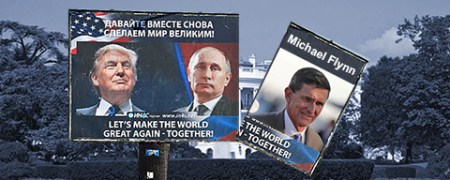
flynnout_eng_480

Michael Flynn’s abrupt resignation as National Security Adviser Monday night, Feb. 13, was a crippling blow to Donald Trump’s foreign policy strategy, less than a month after he entered the White House. Flynn was the architect and prime mover of the president’s plans for close cooperation with Russian President Vladimir Putin. He was brought down by misinforming Vice President Mike Pence – and very likely the president too – on the content of the conversation he held with the Russian ambassador before Trump’s inauguration.

Although retired Lt. Gen. Keith Kellogg takes over as acting NSA, the White House is urgently considering a permanent replacement to fill Flynn’s large shoes. Former CIA Director David Petraeus’ name has come up, but his indiscretions over state secrets still count against him. Vice Admiral Robert Harward, a former Navy SEAL, is a strong contender, although more may emerge.

Even before picking his next national security adviser, Trump will need to determine how to proceed with his détente with Putin, the highly sensitive details of which were managed personally and confidentially by Mike Flynn as the centerpiece of the new administration’s foreign policy.

His contacts with Moscow were under heavy fire from the president’s friends and foes alike, both before and after the November election. It was defended stalwartly by Trump himself, Pence and Flynn. However, neither the president nor the vice president can tell exactly what Flynn promised the Russians and to what deals he committed them. Therefore, his successor will be required to start building Washington’s ties with Moscow from scratch.

While Flynn’s departure has caused havoc in the Trump administration, it is a catastrophe for the Middle East, because a core objective of the US-Russian partnership, which he shaped as a model for other regions, was to have been to clip Iran’s wings and cut down its standing down as premier Middle East power conferred by Barack Obama.

(How the Flynn mechanism was to work plus detailed analysis of the fallout from his departure will be covered exclusively in the coming issue of DEBKA Weekly out next Friday).

Flynn alone was privy to arrangements concluded with Saudi King Salman in Riyadh, Jordan’s King Abdullah in Amman, President Putin in Moscow, Tayyip Erdogan in Ankara, Abdel-Fatteh El-Sisis in Cairo and Prime Minister Binyamin Netanyahu in Jerusalem.

Some of his output began taking shape on the day he stepped down, when Syrian rebel groups led by Jordanian special operations officers attacked Syrian army positions in the southern town of Daraa. This was the start of an operation to drive Syrian government forces and their Iranian and Hizballah allies from the lands bordering on Jordan and Israel.

In Cairo, too, President Michel Aoun of Lebanon and his host, El-Sisi were hashing out a plan for the Egyptian army and Gulf forces to go into action against Hizballah in Syria and Lebanon.

Wednesday, Feb. 15, Prime Minister Binyamin Netanyahu is to visit the White House for his first meeting with Trump as president. They too were scheduled to discuss US operations against Hizballah and the role Israel would play.

In the coming hours, Trump will have to decide whether to go ahead with these initiatives in the absence of Flynn and his detailed knowledge of how they should go forward, or simply put them on hold until his successor is in place and has time for a full study of their complicated ins and outs. At the same time, a different national security adviser in the White house might have different plans to those laid out by his predecessor.

Why the US Should Target Iran’s Revolutionary Guards

February 14, 2017

Why the US Should Target Iran’s Revolutionary Guards, AlgemeinerHeshmat Alavi, February 13, 2017

iranian-revolutionary-guard-in-2012-military-parade-in-tehran-wikipediaMembers of the Iranian Revolutionary Guard Corps. Photo: Wikipedia.

The Trump administration is now facing a very important opportunity to deliver the message that the mullahs deserve to hear. In so doing, it will be on the right side of history where supporting the Iranian people’s struggle for freedom and democracy through peaceful regime change is concerned.

****************************

The possibility of the Trump White House blacklisting Iran’s Islamic Revolutionary Guard Corps (IRGC) as a foreign terrorist organization (FTO) is causing enormous tension in Tehran, as the regime understands the political, economic — and, perhaps most importantly — geopolitical consequences of such a move.

An Iranian opposition group has scheduled a Tuesday press conference to provide new information about the IRGC Quds Force “command headquarters for terrorist training of foreign mercenaries and a number of overt and covert training centers” across Iran, according to the online statement.

The IRGC was established supposedly to safeguard the “Islamic Revolution.” The FTO designation of this enormously important Tehran entity would further toughen US President Donald Trump’s push on Iran.

The IRGC is in full control of the mullahs’ cherished ballistic missile program, used especially to lift morale within the regime’s dwindling and highly fragile social base.

Washington has considered Tehran a state sponsor of terrorism since 1984, as the regime has continuously armed, trained and financed a conglomerate of terrorist groups in the Middle East — mainly Hezbollah in Lebanon, Shiite militias in Syria and Iraq and the Houthis in Yemen.

Designating the IRGC, an official armed force, rather than another militia group, would be unprecedented. It would send a signal to Iran that the new US administration is targeting the very core of its apparatus — one that also enjoys significant leverage over its economy.

The IRGC is the leading force behind Iran’s nuclear programballistic missile driveinvolvement in Syria and other states and atrocious domestic human rights violations. The FTO designation would ban any economic transactions and relations with IRGC-affiliated companies, thereby significantly curbing its access to the revenue needed to pursue all the above-mentioned ambitions.

There are already signs of increasing concerns in this regard having a considerable effect.

The France-based international oil and gas French company Total has hinged its plans for a $2 billion project in Iran in the summer on US sanctions waivers, which now seem unlikely, to say the least, with the Trump administration imposing a major policy overhaul.

Companies across the world are already described as wary about doing business with Iran. The FTO designation would bring an end to all the leeway provided for foreign businesses to enjoy working with entities that may be connected with the IRGC.

And while some argue that an FTO designation for the IRGC would result in Iran’s abandoning ship on the nuclear deal reached with the P5+1 in July 2015, they are absolutely wrong. Tehran needs the accord more than any other party, as crippling international sanctions were taking their toll on its economy. And rest assured that Iranian Supreme Leader Ali Khamenei would never have blessed such a pact were better options available.

The Iranian opposition has a history of shedding important light on the IRGC’s destructive roles, and calling for necessary action in this regard.

Iran’s “nuclear and missile program is against the Iranian people’s interest and must be stopped,” Maryam Rajavi, president of the National Council of Resistance of Iran (NCRIsaid recently.

The NCRI has welcomed the Trump administration’s recent round of sanctions against Tehran and earlier proposed measures aimed at “banning all deals and trade with IRGC-affiliated companies.”

The Trump administration is now facing a very important opportunity to deliver the message that the mullahs deserve to hear. In so doing, it will be on the right side of history where supporting the Iranian people’s struggle for freedom and democracy through peaceful regime change is concerned.

Trump’s game in Saudi Arabia

February 13, 2017

Trump’s game in Saudi Arabia, American ThinkerJames Lewis, February 13, 2017

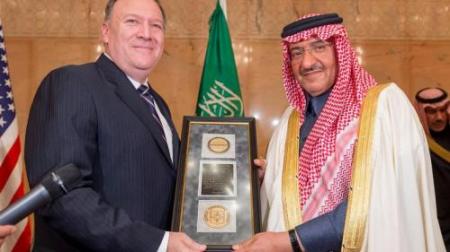
Mike Pompeo, the new CIA head, just flew to Riyadh to give a medal to the reigning son of the king (who is said to suffer from dementia).  While some conservatives regard this as a travesty (e.g., a “Not the Onion” commentary from Zero Hedge), I think this is meant to be an open signal to support the House of Saud, whose help is needed against the Iranians anyway and who support President El-Sisi against Hamas and the Muslim Brotherhood.

saudiaward

It’s not clear what the Saudis did in exchange, but they have been under the gun, fearing that Western media would expose their role in support of violent jihad.  So this looks as though the Saudis have done a lot to settle those debts.  It’s not the kind of public gesture the CIA does a lot.

The Saudis can shut down ISIS/AQ/Al Nusra, or whatever the worst gang of maniacs calls itself today.  They also have no problem with selected assassinations.  SecDef Mattis has a long record of talking about morality and immorality in warfare, and he does not like sadistic monsters.  I think the moral dimension of defensive war has been missing during the Obama years.

These moves may signal both domestic and foreign agreements to calm things down.  The Saudis know that their control of OPEC is waning, since Trump is aggressively opening up domestic traditional and shale energy production (again, something Obama never would do).  But the Saudis need to make a “soft landing,” which is not going to be easy.  So they have been talking peace with Israel, on the assumption that Israel can communicate with the U.S. – at least under Trump.

These are all calming moves in a very agitated international situation. I believe that Trump is going to move aggressively against Muslim Brotherhood infiltration, probably with Saudi backing.  The Saudis are ideologically aligned with ISIS, al-Qaeda, and the M.B.s, but tactically, they could abandon them.  Violent jihad arose with OPEC, and now that OPEC is declining, it would be smart to convince the Saudis that the jig is up.

We can see if there is a marked decrease in jihadist violence.  If not, then the hypothesis is wrong.

The possibility of public exposure of their role in 9/11 is still very real and can be used to ensure their good behavior.

This is Kremlinology, but it’s falsifiable.  There are many dangerous enemies in the world, including George Soros domestically, and the intelligence agencies can torpedo a lot of stuff.  It is smart for Trump to calm things down and focus on the hard parts first.


Pro-Kremlin Pravda.ru: ‘ Iran Is Becoming A Major Problem, First And Foremost For Russia’s Interests’

February 13, 2017

Pro-Kremlin Pravda.ru: ‘ Iran Is Becoming A Major Problem, First And Foremost For Russia’s Interests’, MEMRI

On January 22, 2017, the Russian media outlet Pravda.ru published an analysis on Russia-Iran relations. According to the article’s author, Dmitri Nersesov, Iran is becoming a problem for Russian interests. Nersesov also added that Iran wants Russia to choose between Iran and Washington. “Iran wants Russia to recognize that Teheran holds the key to the regulation of the Syrian crisis. Should Russia decide that the real strategy is built on the cooperation between Moscow and Washington, rather than Moscow and Teheran; the Islamic Republic will be extremely disappointed,” Nersesov wrote.

Below are excerpts from Pravda.ru’s article:[1]

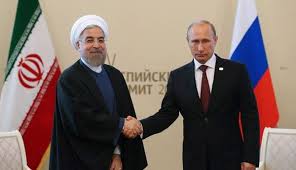
putrou(Source: Islam.ru)

‘Observers Testify That Iranian Internal Propaganda Blames Russia For The Rise Of Iranian Military Losses In Syria’

“After the strange story of the Russian ACF [Air-Cosmos Force – in 2015, the Military Air Force and the Cosmos Defense were united] usage of the Iranian Hamadan military airbase, it became absolutely clear that Tehran cannot be fully trusted.[2] Events of the last several days only strengthen that feeling. Russian-Iranian contradictions appear not only in the vicinity of Syria, but also start influence the Russian-U.S. relations. And that is very serious…

“The point is that Moscow intended the Astana negotiations to become the initial platform for establishing a practical dialogue with the new American administration. That is what the Russian Minister of Foreign Affairs Sergey Lavrov sought to convey at his press-conference. Lavrov said: ‘We consider it right to invite the representatives of the UN and the new U.S. administration to this meeting. We expect that new American administration can accept this invitation and will be represented by its experts of any possible level’… The fact that inviting the Americans was coordinated with Ankara must not be ignored.

“What about Tehran?

“The following was stated there: ‘We did not invite them, we are against their presence’. These words by the Iranian Foreign Minister Javad Zarif are cited by the news agencies. Thus Iran had publicly rejected its allies’ initiative… It seems like that this position of the Iranian leadership does not specifically relate to Syria’s problems. Zarif’s words are a message to Moscow and Washington. We shall try to decipher it.

“The Iranians want Moscow to clearly understand that they intend to control as strictly as possible the implementation of its strategy in Syria, and in the long term– in the Middle East generally. Tehran is able to create problems in fulfilling the combat tasks (by blocking access to the Hamadan airbase), in reaching ceasefire and humanitarian pauses (frequently the pro-Iran Shi’ite units have frustrated these initiatives), and renewing Russia-U.S. contacts on Syria.

“Simultaneously, Tehran’s demarche seemingly forces Moscow to make a choice: between us [Iran], or Ankara define your choice Russians! You can definitely negotiate with the Turks the ceasefire between the Syrian [factions], you can even conduct joint airstrikes against terrorists, but without us, the Iranians, you will not attain any practical goals. Take into account that today Turkey is weak, and it will stay like this indefinitely. And Iran is only getting stronger, as the sanctions against it had been removed, and you will compete with Western corporations for the right to participate in strengthening Iran!

“The Iranians present Moscow with a similar choice regarding the relations with Washington: will Iran or remain Russia’s leading partner in Syria and in the region generally or [will it be] Washington? If Moscow does not fully and decisively acknowledge that the keys to managing the Middle East are in Tehran, and only the intimate team work with Iran makes possible to promote the Russian interests here; if Moscow will ‘suddenly’ decide that the ‘real strategy’ is built not along the Tehran-Moscow axis, but along the Moscow-Washington one – the Islamic Republic will be very disappointed. And will find – definitely find! – the means to punish the ‘arrogant Russians’.

“In this context one should note that during the recent funeral of Hashemi Rafsanjani…was accompanied by the chanting of anti-Russian slogans. Observers testify that Iranian internal propaganda blames Russia precisely for the rise of Iranian military losses in Syria. This should not come as a surprise, because the Russian ACF were kicked out of the Hamadan [military airbase] for ‘ungentlemanly behavior’ and ‘arrogance’. Iran quite willingly believes that any foreigner only thinks about showing them his ‘arrogance’, and they do not forgive this sin. All the more so when it is Russia – the ‘small Satan’ for those who inherited Imam Khomeini’s set of values…

‘It Depends On The U.S. When Iran Will Become A Full-Fledged Nuclear Power’

“Washington? What message did Tehran send to the new president Trump?

“The main thesis is the same: Iran is the leading player in the regional arena, it has the capacity to exert a critical influence on Russia’s position and actions even with regards to Russian-American contacts. In a language resembling Trump’s, it sounds something like this: Tehran is the blocking shareholder in Syria and in the Middle East. Draw your conclusions, Mr. President!

“To talk this way with great powers, Iran must hold strong trump cards. It has them. The main one is the notorious ‘nuclear program’ and the famous deal about it.

“What is the heart of the matter? Ten years of struggle (since Bush-junior) against Iran getting the nuclear missiles brought Iran to the threshold of owning such a weapon. It has the carriers. The warheads which it ostensibly does not have (yet?) can be almost surely made within 15 years, when the limitations imposed as part of the ‘deal’ expire.

“That ‘deal’ was Obama’s favorite baby, his fundamental foreign policy achievement (by his own admission). This achievement means that now it depends on the U.S. when Iran will become a full-fledged nuclear power. For Tehran, just after signing the ‘deal’ (the full text of which no one has seen) had promptly warned everybody: any act which the Iranians will consider to be its violation will mean the abnegation of agreements, and then the Islamic Republic of Iran  will consider itself free to implement its nuclear program.

“Of all the ‘deal’ participants (the U.S., Russia, China, France, Britain, Germany, Iran), only the U.S. is interested and capable of provoking Iran to such a step, for even under Obama, Washington did not lift all the sanctions imposed on Iran. And Trump even claims the intent to renege on Iran’s nuclear program agreement. And if he will really do it, Tehran will have carte blanche to continue the work the result of which may become (with intolerably high probability) the appearance of her nuclear weapon.

“In view of this logic, Iran’s message to Trump is: ‘Mr. President! Upon your first signal, we shall do what your predecessors had steadily led us to! To build our blocking shares into controlling ones we need only a nuclear truncheon. When we get it depends on your decision’.

“Against this background, it is desirable to note a significant detail: several weeks ago, Iran announced the beginning of a program for building a nuclear navy. This means its transformation in the near future into an ocean power capable of ‘force projection’ in the Persian Gulf, in the Indian Ocean, and in the Red and Mediterranean Seas.

“It appears that all this suffices to understand: Iran is becoming a major problem, first and foremost for Russia’s interests. Surely, much can be explained by the upcoming May presidential elections in the Islamic Republic of Iran. Nevertheless, it would be useful to find a way of making Tehran politicians understand that their behavior is becoming too provocative.

“Perhaps the launch of cruise missiles from the Caspian flotilla bears repetition?”

___________________________

[1] Pravda.ru, January 22, 2017.

[2] See MEMRI Special Dispatch No. 6577, Russian Strategic Bombers Deployed To Iran; Russian Senator Says Nuclear Weapons, Heavy Bombers Will Not Be Permanently Deployed In Syria, August 16, 2016.

See MEMRI Special Dispatch No. 6589, Russia This Week – August 22-29, 2016, August 28, 2016.

See MEMRI Special Dispatch No. 6582, Russia This Week – August 15 – 22, 2016, August 21, 2016.