Posted tagged ‘Trump and Iran’

Middle East: A Shift from Revolution to Evolution

April 8, 2017

Middle East: A Shift from Revolution to Evolution, Gatestone InstituteNajat AlSaied, April 8, 2017

The lesson the Trump administration might learn from the disastrous mistakes of its predecessor is that the main sources of terrorism in the region are political Islam and all its related religious groups. All these radical groups, including ISIS, Al-Qaeda, Jabhat Al-Nusra and Hamas have been spawned by a political Islam driven by the ideology of the Muslim Brotherhood.

The fight, therefore, should not be against Islam, but against political Islam. Islam needs to be practiced the way other religions are, as a private personal faith that should be kept separate from public life and politics, and whose expression should be confined to worship only.

Mosques, whether in the Arab and Muslim world or in the West, should be places of worship only and must not transformed to centers for polarizing society or for recruitment by political religious groups.

After each Islamist terrorist attack in the West, the public is divided into two camps: one angry and one indifferent. The problem with defeating Islamist terrorism seems to be that either it is attacked by conservatives who call Islam an evil cult or it is forgiven entirely by liberal apologists. What, then, is the answer?

One of the main failures in Western analyses of the origins of terrorism in the Middle East and North Africa is that the West attributes them to a lack of democracy and a lack of respect for human rights. This is, indeed, part of the cause, but the root of the problem is a lack of development and modernity. U.S. President Donald Trump did not exaggerate when he said that the Obama administration’s foreign policy was disastrous. It was catastrophic mainly for two reasons. One was the knee-jerk support for the “Arab Spring” and for extremist Islamic political groups such as the Muslim Brotherhood. The second was the alliances the Obama administration built with unreliable countries such as Qatar, which supports radical political groups such as the Muslim Brotherhood. In addition, Obama made the mistake of continuing to try to appease Iran’s theocratic regime.

The Arab Spring’s uncalculated, hasty attempt to establish so-called democracy only generated more turmoil and chaos in the region. Certain radical political groups simply exploited the elections to serve their own political and sectarian agendas; that swoop for power only resulted in more authoritarian and dictatorial regimes, as have played out, for instance, in Egypt, where we have witnessed the murder of civilians and police officers by the Muslim Brotherhood. In other countries, the situation is even worse; attempts to install democracy have totally destroyed the state and facilitated the spread of terrorist militias, as in Libya.

It is ironic that Western countries and their advocates stress the need to apply democratic practices in Arab countries, but evidently do not recall that development and secularism preceded democracy in Western Europe. The United Kingdom, which has the oldest democratic system, did not become fully democratic until 1930. France became fully democratic only in 1945, 150 years after the French Revolution.

The Emir of Qatar, Sheikh Tamim bin Hamad Al-Thani, at the Arab Summit in Jordan on March 28, 2017 delivered a speech in which he indicated his continuous support for the Muslim Brotherhood:

“If we are serious about focusing our efforts on armed terrorist organizations, is it fair to consider any political party we disagree with as terrorist? Is our goal to increase the number of terrorists?”

Many Arab leaders were infuriated by his speech; at the forefront was President Abdel Fattah el-Sisi of Egypt, who left the Arab Summit Hall during the speech to meet King Salman of Saudi Arabia.

Most Arab leaders and analysts, in fact, are enraged by Qatar’s continuous support for Islamist political groups such as the Muslim Brotherhood, because these groups are a threat to their national security.
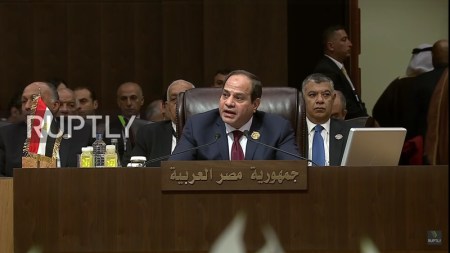
President Abdel Fattah el-Sisi of Egypt speaks at the Arab Summit, on March 29. The previous day, Sisi walked out of a speech by the Emir of Qatar, Sheikh Tamim bin Hamad Al-Thani. Sisi was infuriated by Al-Thani’s declaration of support for the Muslim Brotherhood. (Image source: Ruptly video screenshot)

Another consequence of Obama’s foreign policy — in particular attempts to get close to Iran’s hostile regime — has been a fraying of relationships with old Arab allies of the United States. Some of Obama’s advisors thought that replacing Saudi Arabia with Iran was somehow “better” for the United States, if Iran “is beginning to evolve into a very civilized and historically important country” — an analysis that can be described as completely short-sighted.

The Saudi regime, with all its flaws, is a monarchy run by princes; the Iranian regime is a theocracy run by clerics. The Saudi regime is not a theocratic regime but a hybrid structure, which is neither wholly secular nor wholly religious. As such, the religious class functions under the authority of the ruling class. Princes are driven by self-interest; clerics are driven by ideology. In terms of extremism, the Iranian regime is pushing for hegemony, whilst Saudi Arabia has been taking only a defensive, rather than an expansionist, position.

The motivation of Saudi Arabia in exporting mosques world-wide and installing radical Saudi imams is defensive, not expansionist as in Iran. Saudi Arabia’s impetus is to confront Iran’s hegemony and the spread of its hostile ideology. It is this strategy, which Saudi Arabia has practiced since 1979 to balance Iran’s power and to combat its rebellious ideology, that must change.

That Iran’s Khomeini regime sought to embarrass Saudi Arabia — a country that is home to Islam’s two holiest mosques, in Mecca and Medina — by portraying it as not sufficiently Islamic, meant that the foundational Islamic Wahhabism of the Saudi Kingdom was aggressively reinforced. This emphasis resulted in even more constraints being put in place in Iran: especially on entertainment. Since the Khomeini revolution in 1979, all plays, fashion shows, international events, and cinemas have been banned. As for women, the Commission for the Promotion of Virtue and Prevention of Vice has increasingly harassed them. As for minorities, especially Shia challenging the Iranian Shia regime and its support for Shia militias — particularly the dominant Revolutionary Guards — books were published attacking the Shia:

More books appeared, attacking the Shias and especially Khomeini’s views. These books – like the arguments of Khomeini’s followers – rejected modern thinking as an “intellectual invasion.” Saudi Arabia, considered the guardian of Sunni Islam, spent billions of dollars on challenging the Khomeini-backed Shiites.

This religious one-upmanship — a competition over which body can be the “most religious” — must stop. Saudi Arabia would do well to understand that in order to confront the hegemony of the Iranian theocratic regime, the answer is not to radicalize Saudi society but to return to the way it was before 1979.

The best way to defeat the rebel hostile regime in Iran might be through creating an inclusive and tolerant society in Saudi Arabia. Saudi Arabia needs to change its approach towards Iran because the current strategy has not worked. The current strategy has done nothing except to strengthen the Iranian regime’s dominance; distort, globally, the image of Saudi Arabia and accelerate terrorism.

The lesson the Trump administration might learn from the disastrous mistakes of its predecessor is that the main source of terrorism in the region are political Islam and all its related religious groups. All these radical groups including ISIS, Al-Qaeda, Jabhat Al-Nusra and Hamas have been spawned by a political Islam driven by the ideology of the Muslim Brotherhood. Extremist jihadists such as Osama bin Laden, Abdullah Azzam and Ayman al-Zawahiri were all taught by the Muslim Brotherhood.

Political Islam practiced by the Iranian theocratic regime has been comfortably generating Shia radical militias, including the terrorist group, Hezbollah. The fight, therefore, should not be against Islam, but against political Islam. Islam needs to be practiced the way other religions are, as a private personal faith that should be kept separate from public life and politics, and whose expression should be confined to worship only. Mosques, whether in the Arab and Muslim world or in the West, should be places of worship only and must not transformed to centers for polarizing society or for recruitment by political religious groups. Unfortunately, Western countries have turned a blind eye to the political activities inside these mosques.

The danger of these religious political groups is that they do not believe in democracy or human rights; they just use elections to grasp power in order to impose a system of “Islamic Caliphate” as their only form of government. Most of these groups use religion as an ideology to oppose governments other than their own, and when they are criticized or attacked, they play the role of the oppressed.

The Trump administration needs to take advantage of the fact that the majority of people in the Middle East and North Africa have lost faith in religious political groups, especially since the failure of the Muslim Brotherhood in Egypt and Tunisia.

Before the Arab Spring, support for these groups was huge; now it stands at less than 10% of the population. This study was conducted in the Arab world, not including Turkey. The Muslims who support Turkish President Recep Tayyip Erdogan are the Muslim Brotherhood.

Most recent polls indicate that the majority of people in Arab and Muslim countries prefer religion to be kept separate from politics.

The country that is working the most systematically to fight these religious political groups in the region is the United Arab Emirates (UAE). There are several institutes and think tanks researching how to combat these groups. Dr. Jamal Sanad Al-Suwaidi, Director General of the Emirates Center for Strategic Studies and Research (ECSSR), has given a robust analysis of these groups and how to combat them in his book, The Mirage. In it, he cites a study on public opinion on political religious groups: A survey of the UAE population, on how these groups are able to influence the public by taking advantage of certain flaws in the system: 53.9% because of corruption; 47.9% because of poverty and 29.1% because of an absence of civil society groups that confront these opportunists.

The Middle East-North Africa region will undoubtedly have to go through several stages before it can successfully establish democracy. An evolutionary developmental approach will definitely be better than the failed revolutionary democratic one pursued by the Obama administration.

Secularization is also crucial in the fight against terrorism. Trying to build a democracy before going through the stages of secularism and political reformation — which includes rectifying existing flaws, such as corruption; modernization which means the liberation of the region from extremist totalitarian religious dogma and all other forms of backwardness in order to kick-start a renaissance; and scientific development — will not only be inadequate but will actually generate more terrorism by helping radicals to keep gaining power. It would be like a farmer who wants to plant roses in arid desert soil full of thorns.
KLEIN – Iran Is the Wild Card Following U.S. Air Strikes In Syria

April 7, 2017

KLEIN – Iran Is the Wild Card Following U.S. Air Strikes In Syria, BreitbartAaron Klein, April 7, 2017

U.S. Navy/via AP

President Vladimir Putin cannot risk a military confrontation with Trump and Russia is already signaling willingness to abandon Assad to come to a larger regional accommodation.

Still, there is the possibility that Russia may quietly support action by others, especially agents of a very nervous Iranian regime that has been preparing proxies for years who can heat up Israel’s northern border and beyond.  Both Moscow and Tehran have reason for wanting Trump to pay a price for acting in their Syrian playground.  The question is whether they will dare to respond, even tacitly.

The next few days and weeks will be critical in determining Iran and Russia’s resolve in the face of an awakened America that has returned from its eight-year slumber.

******************************

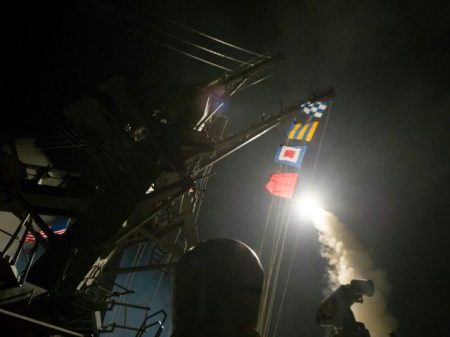
TEL AVIV – Following the U.S. launch of Tomahawk missiles targeting a strategic Syrian airfield on Thursday night, Iran must be monitored carefully for the possibility that it may use its proxies for retaliation, especially against Israel’s northern border.

Following eight years of inaction on Syria under the Obama administration, President Donald Trump demonstrated last night that he is willing to hold Syrian President Bashar al-Assad to account, this time by striking the Shayrat Airfield near the Syrian city of Homs that was believed to have been utilized to carry out a chemical weapons attack that killed scores of civilians.

The U.S. airstrikes signaled to Assad and his Russian and Iranian backers that Trump will act in Syria and the administration strongly supports the removal of the Syrian president – an important strategic ally of Moscow and Tehran. The U.S. military move demonstrates to Israel and the Sunni Arab bloc cast aside by Obama’s nuclear deal with the mullahs that American leadership has officially returned to the region.

Assad himself is unlikely to retaliate since the last thing he wants amidst a years-long insurgency attempting to topple his regime is to go to war with Trump or expand the battlefield to U.S. ally Israel.

Trump’s bold authority in Syria directly threatens Russian interests since it was Moscow that largely filled the security vacuum in that country when Obama repeatedly failed to take any meaningful action against Assad. However, Russia’s direct response will most likely be confined to vocal protestation, such as Kremlin spokesman Dmitry Peskov calling the U.S. strikes “aggression against a sovereign nation” carried out on a “made-up pretext.”

President Vladimir Putin cannot risk a military confrontation with Trump and Russia is already signaling willingness to abandon Assad to come to a larger regional accommodation.

Still, there is the possibility that Russia may quietly support action by others, especially agents of a very nervous Iranian regime that has been preparing proxies for years who can heat up Israel’s northern border and beyond.  Both Moscow and Tehran have reason for wanting Trump to pay a price for acting in their Syrian playground.  The question is whether they will dare to respond, even tacitly.

And that brings us to Iran.  Trump’s embrace of America’s traditional Sunni Arab partners at the expense of Tehran and his strong positions against the disastrous international nuclear agreement have been deeply concerning to the expansionist, terrorist-supporting Twelvers in Tehran.  And while the removal of Assad from power would be a blow to Russia, depending on the ultimate outcome such a move could be disastrous for Iran’s position in Syria.  Iranian Revolutionary Guard units have been fighting the anti-Assad insurgents alongside the Syrian military and the Iran-backed Hezbollah militia.  Syria represents a key pawn in Iran’s geopolitical chessboard that stretches across the vital region.

In recent weeks, there have been strong indications that Iran has been seeking to arm its Hezbollah proxy with even more advanced weapons that can target the Jewish state. Last month, Israel took the unusual step of striking a Hezbollah weapons convoy near the city of Palmyra that Prime Minister Benjamin Netanyahu said was transporting advanced weapons to the Iran-backed militia.

Israeli leaders and Hezbollah terrorists have in recent weeks ratcheted up war rhetoric, with Israeli officials warning that Hezbollah, which can only act at the direction of Iran, has been preparing for conflict.

Last Sunday, IDF Chief of Staff Lt. Gen. Gadi Eisenkot warned the IDF would not hold back from striking Lebanese state institutions in a future conflict with Hezbollah. “The recent declarations from Beirut make it clear that in a future war, the targets will be clear: Lebanon and the organizations operating under its authority and its approval,” Eisenkot stated.

Hezbollah is not Iran’s only option. Breitbart Jerusalem has been reporting on the formation of a “Golan Liberation Brigade,” which was announced last month by the secretary-general of the Iraqi Harakat al Nujaba Shiite militia and is reportedly being trained by the Iranian Revolutionary Guard Corps.  The so-called militia is another Iranian front that could be used to target Israel’s Golan Heights at the behest of Tehran.

The next few days and weeks will be critical in determining Iran and Russia’s resolve in the face of an awakened America that has returned from its eight-year slumber.

Iran Will Not Cancel The JCPOA – Because It Grants Iran Nuclear State Status And Is A Western Guarantee For The Regime’s Survival

April 7, 2017

Iran Will Not Cancel The JCPOA – Because It Grants Iran Nuclear State Status And Is A Western Guarantee For The Regime’s Survival, MEMRIA. Savyon and Yigal Carmon* April 6, 2017

(Cf. The Real War in ‘Syria’ and the Strategy for Long-Term Victory. — DM)

Introduction

The JCPOA grants the Iranian regime two historic achievements – the status of a nuclear state and immunity against a Western attack due to its nuclear development. This is effectively a Western guarantee of the Islamic Republic regime’s survival. These achievements cannot be cancelled unless the agreement itself is declared invalid.

Iranian spokesmen have stressed that even if President Trump’s administration cancels the agreement, the agreement cannot be cancelled – because Iran, in its prescience, involved the EU and the UN in backing the agreement. Even if the U.S. alone were to cancel the agreement, it would still remain in force – that is, Iran’s status as a nuclear state would remain.

Iranian President Hassan Rohani stressed, for example, at a November 11, 2016 cabinet meeting, the day after Trump was elected president, that there was no way to cancel the agreement. He said: “Iran’s wisdom in the nuclear agreement was in the fact that it had the JCPOA approved as a UN Security Council resolution, and not as a [bilateral] agreement with a particular country or administration. Therefore, it will not be changed by any decision by a particular administration.”[1]

Following the JCPOA’s Implementation Day, in January 2016, and even previously, Iranian regime officials repeatedly warned that if the U.S. violated the agreement, and especially if more sanctions were leveled against Iran, Iran would cancel the agreement and revert to the status quo that existed before the agreement, and would even advance beyond it?

For example, an October 21, 2015 letter of guidelines from Iranian Supreme Leader Ali Khamenei to President Rohani constituting “conditional approval” for the agreement stated: “Throughout the eight-year period, any imposition of sanctions at any level and under any pretext (including repetitive and reiterated pretexts of terrorism and human rights) on the part of any of the countries party to the agreement will constitute a violation of the JCPOA and the [Iranian] government would be obligated to take the necessary action as per Clause 3 of the Majlis resolution and stop the activities mandated by the JCPOA.”[2]

Iran Is Changing Its Policy – From Threats To Cancel The Agreement To Threats Of A Parallel Response

However, after the U.S. leveled additional sanctions against Iran, during both the Obama and Trump administrations, it became clear[3] that Iran was not going to implement its threats. Instead, Iran presented a new formula that does not obligate it to abrogate the agreement, as it previously threatened. The new formula determined that the Iranian regime would respond to any U.S. violation of the agreement with its own parallel violation.

Indeed, on March 26, 2017, after the U.S. State Department’s March 24, 2017 announcement of new sanctions against companies and individuals connected to Iran’s missile program, Iran’s Foreign Ministry announced counter-sanctions against 15 U.S. companies. Additionally, in response to the Countering Iran’s Destabilizing Activities Act of 2017, currently under consideration in the U.S. administration and the U.S. Senate designating Iran’s Islamic Revolutionary Guards Corps as a terrorist organization, Majlis National Security Committee chairman Ala Al-Din Boroujerdi announced, on March 25, 2017, that the committee would present to the Majlis a plan to designate the CIA and U.S. Armed Forces as terrorist organizations, to be carried out after the March 21 Iranian Norouz holiday.[4]

On April 3, 2017, Iranian Foreign Minister Javad Zarif reiterated: “If the moment comes that the Americans are not implementing the JCPOA, our reversion [to the pre-JCPOA situation] will be very swift, and we will arrive at even more than what we once had… We have enough guarantees for the day when the [Iranian] regime decides and feels that the level of America’s breaking of its promises is so high that we must revert to the pre-JCPOA [situation]. But it does not appear to me that this will happen.” [5]

It should be noted that in his threats about the possibility of Iran’s reversion to the status quo that existed prior to the agreement, Zarif does not set out any red line or specific condition whose violation will oblige Iran to cancel the agreement. Instead, he states that Iran will act “when it feels” that the U.S. is ratcheting up its level of violations against Iran. Furthermore, Zarif adds that such a situation, in his assessment, will not occur.

Iran’s backing down from its previous threats and warnings regarding the JCPOA’s continuing validity even if the U.S. cancels it is testimony to the agreement’s historic importance for the Iranian regime. In our assessment, Iran will not cancel the agreement even if the U.S. continues to level sanctions against the country, even if it is involved in military action against Iranian interests. Iran will not cancel an agreement that endows it with nuclear-state status and that constitutes a guarantee of the regime’s survival and provides immunity from a Western attack aimed at regime change. These historic achievements for Iran were granted to it by the Obama administration by means of the JCPOA.

Needless to say, the threat to revert to the pre-JCPOA situation is in itself an empty threat, because if the regime does this, it will bring itself back to a situation defined by then-U.S. Secretary of State John Kerry as “a two-month [nuclear] breakout time.”[6] By doing so, it will bring closer the risk of attack by the West.

The JCPOA – A Tool To Ensure The Survival Of The Iranian Regime

The Iranian regime is clinging to the JCPOA because this agreement guarantees its survival. President Obama promoted the Iranian regime from the status of a “defendant state”, subject to Security Council sanctions for its nuclear program, to the status of a legitimate nuclear state that can negotiate with the rest of the world powers over upgrading its nuclear activity.

The existential threat that led Supreme Leader Ali Khamenei to revive Iran’s nuclear project in 2002, (after the founder of the Iranian Revolution, Ayatollah Ruhollah Khomeini, stopped the country’s Shah-era nuclear project), was the threat to the regime’s survival. The regime was under threat both from being attacked directly by the West, with the aim of bringing about regime change, and indirectly by mobilizing opposition elements at home, which the regime labeled “fitna” – such as the fitna – i.e. civil unrest – following the 2009 presidential election, which it suppressed. For this reason, Khamenei, during the negotiations for the JCPOA, demanded that the U.S. stop the American broadcasts in Farsi to Iran, suspend its political and economic support for Iranian opposition groups, and stop criticizing Iranian censorship of the Internet – all three demands pertain to regime survival (see MEMRI Inquiry and Analysis No. 837, Khamenei’s Aim at the Nuclear Talks – Securing the Survival of His Regime, May 15, 2012).

With the JCPOA, Khamenei gained a double achievement, assuring both the survival of his regime and Iran’s membership in the nuclear club. The Iranian regime’s original aim in pursuing the JCPOA was to guarantee the survival of the regime in the face of all the possible threats, from within and without – and was not intended to obtain massive economic aid nor to bring Iran into the Western economy in order to ease its people’s economic distress – which Khamenei intends to do with the “resistance economy,” the main thrust of which is self-reliance and rejection of economic cooperation with the West and foreign investment in Iran.

Iran’s nuclear status, promised to Khamenei by the Obama administration in the agreement that is backed by Europe, allows him to both continue to repress the Iranian people and to continue exporting the Iranian Revolution in the region.

*A. Savyon is Director of the MEMRI Iranian Media Project; Yigal Carmon is President of MEMRI.

______________________

[1] ISNA (Iran), November 9, 2016.

[2] MEMRI Inquiry and Analysis No. 1196, Iranian Supreme Leader Khamenei’s Letter Of Guidelines To President Rohani On JCPOA Sets Nine Conditions Nullifying Original Agreement Announced July 14, 2015, October 22, 2015.

[3] Tasnim (Iran), March 26, 2017.

[4] IRIB (Iran), March 25, 2017.

[5] Farsnews (Iran), April 3, 2017.

[6] http://www.huffingtonpost.com/entry/john-kerry-iran-israel_us_55b22b45e4b0224d8831d360

A new age of diplomacy

April 5, 2017

A new age of diplomacy, Israel Hayom, Prof. Abraham Ben-Zv, April 5, 2017

The character of the new American diplomacy is slowly becoming clear, both in terms of style and essence, and especially as it pertains to the Middle East. We are being given the impression that U.S. President Donald Trump is trying to adopt the management style of late U.S. President Franklin D. Roosevelt, who tended to bypass his secretary of state.

Preliminary signs indicate that Trump sees his current wandering adviser and envoy, Jared Kushner, as a confidant and trustworthy emissary for sensitive diplomatic missions. This is clear from his mission to Baghdad at the beginning of the week and in his ongoing involvement in advancing the peace process in the Palestinian arena. Kushner is also expected to take part in the U.S.-China summit (set to take place in Florida this week), reflecting his role as moderating figure in the charged relationship between Trump and the Chinese leadership and indicating his growing power.

While a young and energetic Kushner hops between continents as the president’s representative, U.S. Secretary of State Rex Tillerson lags behind him, excluded and disconnected from the big decision-makers.

This gives a good idea of style. As for the essence — when it comes to the Middle East in particular, we are seeing a sort of diplomacy that is radically different than former U.S. President Barack Obama’s approach. This is especially true regarding the Trump administration’s efforts to establish a Sunni anti-Iranian axis led by Cairo and Riyadh. While the Obama administration abandoned the United States’ traditional partners on this front, and instead, worked tirelessly to reconcile with Iran, the current White House is signalling unequivocally that it is determined to at least turn over a new leaf in its relationship with these regional powers and to upgrade strategic cooperation with them in order to uproot terrorism.

While Obama’s relationship with Egyptian President Abdel-Fattah el-Sissi was characterized by coldness (in contrast to the warmth he showed to Egypt’s previous leader, Muslim Brotherhood member and sworn Hamas supporter Mohammed Morsi), Trump’s approach is quite different. El-Sissi’s state visit to Washington this week was marked by extraordinary warmth and cordiality on the part of the American president. This was an effort to erase the remnants of the recent past — especially the memory of punitive and alienating policy led by Obama against the Egyptian leader — from the Egyptian consciousness.

A similarly dramatic improvement can be seen in U.S.-Saudi relations, wherein strategic cooperation has also been upgraded recently, especially (but not only) regarding fighting on the Syrian front and in the struggle against the Houthi militias operating in Yemen with Iran’s help and support (against al-Qaida forces in the field). This follows the deep ebb in their relationship due to Obama’s tireless efforts to appease the Ayatollah regime in Iran, the sworn enemy of the Saudi royalty. Regarding Syria, in 2013, Obama abandoned the civilian population there to its fate, remaining, despite his declarations, completely passive even after Syrian President Bashar Assad crossed all the red lines by using murderous chemical weapons against masses of civilians. On Tuesday, too, Assad’s forces carried out a major chemical attack, harming many civilians, in the country’s destroyed and divided north. Based on the growing military involvement and the Trump administration’s determination to deal with the “axis of evil” there too, we can assume that the White House will have a different response to this war crime.

Finally, regarding U.S.-Israeli relations, we are witnessing the expression of exceptional support and identification, reminiscent of the golden age of late U.S. President Lyndon B. Johnson (during which time then-U.S. Ambassador to the U.N. Arthur Goldberg’s speeches reflected the strength and resilience of the “special relationship”). While the Obama administration focused on efforts to settle the conflict, which it defined as a core issue of utmost local and regional importance, the Trump administration is demonstrating a much more relaxed and relevant approach to the complex situation. On this front too, there is real change in the form and style of American diplomacy in the Trump era.

Airplane Sales to Iran Put Under Critical Review By Trump Admin

April 5, 2017

Airplane Sales to Iran Put Under Critical Review By Trump Admin, Washington Free Beacon, April 5, 2017

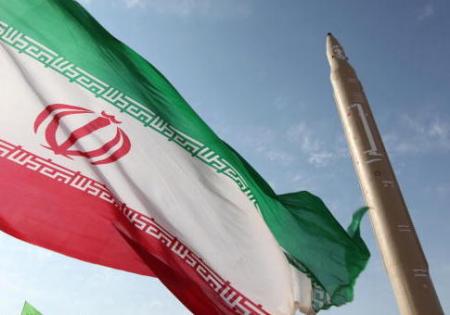
A picture taken on August 20, 2010 shows an Iranian flag fluttering at an undisclosed location in the Islamic republic next to a surface-to-surface Qiam-1 (Rising) missile which was test fired a day before Iran was due to launch its Russian-built first nuclear power plant. AFP PHOTO/VAHID REZA ALAEI (Photo credit should read VAHID REZA ALAEI/AFP/Getty Images)

The move represents a departure from the Obama administration’s policy, which promoted the sale of airplanes to Iran across the United States and Europe.

The review of these deals appears to be part of a larger ongoing review of the entire Iran nuclear deal, which is being undertaken by the White House. The Trump administration could move to reverse many of the promises made by the United States to Iran under the previous administration, including airplane sales and other concessions aimed at promoting business in Iran.

****************************

The Trump administration is undertaking a critical review of Obama administration-era policies permitting the sale of American airplanes to Iran, which have been used in the past to ferry weapons to terrorists and conduct other illicit activities, according to U.S. officials familiar with the situation.

U.S. airline manufacturer Boeing announced on Tuesday that it had reached a memorandum of understanding with Iran guaranteeing the sale of up to 60 planes pending review by the Trump administration.

Sources who spoke to the Washington Free Beacon speculated the latest announcement, which was announced earlier in the day by Iran, could be meant to pressure U.S. officials to sign off on the deal.

While the newly installed administration had come under fire earlier this year for seeming to continue Obama-era policies meant to approve these sales, U.S. officials now tell the Free Beacon that all past and future deals are coming under review by the new administration as part of a larger assessment of the landmark Iran nuclear deal.

The review of sales between Boeing and Iran represent a first step to possibly canceling the deals, which have come under criticism by U.S. lawmakers and foreign policy experts who maintain the Islamic Republic will use the American aircraft to boost its air force and illicit weapons trade, according to multiple sources who spoke to the Free Beacon.

“Treasury’s Office of Foreign Assets Control [OFAC] will be reviewing aviation licensing as part of the National Security Council’s ongoing interagency review of the Iran deal,” a Treasury Department official told the Free Beacon.

The move represents a departure from the Obama administration’s policy, which promoted the sale of airplanes to Iran across the United States and Europe.

The review of these deals appears to be part of a larger ongoing review of the entire Iran nuclear deal, which is being undertaken by the White House. The Trump administration could move to reverse many of the promises made by the United States to Iran under the previous administration, including airplane sales and other concessions aimed at promoting business in Iran.

While the Treasury Department was unable to comment on specific licenses and ongoing determinations pursuant to the Boeing deal, officials pointed out that the latest announcement is not a final deal.

Any sale of planes by Boeing to Iran will be subject to review and require a license from the Treasury Department, officials said.

One senior White House official told the the Free Beacon that the most recent Boeing deal with Iran will be held for review along with the entire Iran nuclear deal.

“The review of existing Iran policy is ongoing–and this MOU will be part of that process,” said the official, who was not authorized to speak on record. “Obviously the administration wants American companies to get large contracts, but we have to put the of the American people first.”

Companies such as Boeing are still legally permitted to negotiate and enter into agreements with Iran as it relates to the sale of airplanes so long as the Iranian entities are not currently subject to U.S. sanctions.

However, the final sale of these planes requires specific consent from the Treasury Department.

The Obama administration had rushed to push through these types of sales before leaving office. President Donald Trump has advocated a tougher line and these sales could be nixed as a result of Iran’s ongoing support for terrorism across the Middle East.

One senior congressional source familiar with the situation told the Free Beacon that the Trump administration’s latest move should serve as a warning to Boeing.

“Treasury is finally committing to a full review of current licensing policies for aircraft sales to Iran,” the source said. “Boeing executives should be on notice: it’s not just this new request that they will need approval on, but the previous one for Iran Air as well.”

Rep. Peter Roskam (R., Ill.), a vocal opponent of the Boeing-Iran deal, told the Free Beacon that Boeing’s continued push to deal with Iran is “outrageous.”

“On the same day Bashar al-Assad’s Air Force dropped chemical weapons onto children, an American company announced its intent to sell airplanes to Assad’s patrons in Tehran,” Roskam said late Tuesday. “Iran continues to use commercial aircraft to support Assad’s atrocities in Syria and other terror proxies around the globe.”

Congress will continue its work to prevent the sale of planes to Iran, particularly in light of its ongoing use of civilian aircraft to ferry weapons and other illicit arms across the region.

“We will do everything within our power, and we hope the administration will do everything within its power, to prevent the sale of even more airplanes to state-owned companies in the Islamic Republic,” Roskam said.

Boeing has not backed off its commitment to these sales, despite fierce opposition in Capitol Hill and now in the White House.

One senior congressional adviser who has been working on the matter told the Free Beacon that Boeing’s aggressive lobbying campaign is beginning to backfire.

“Boeing has apparently calculated that their lobbying power can overcome the opposition of majorities in Congress and the American public, to say nothing of the Trump administration’s NSC and Treasury,” said the source, who was not authorized to speak on record.

“Maybe [Boeing is] right—though that’s not the mood on the Hill,” the source explained. “But banks will have to make a different calculation, since they don’t have the protection of the country’s most powerful lobbyists, and the Trump Treasury Department doesn’t fuck around with banks that facilitate Iranian terrorism, which is exactly what it means to give Iran airplanes. The fines would probably be in the billions.”

Trump’s Greatest Deal

March 24, 2017

Trump’s Greatest Deal, Front Page MagazineCaroline Glick, March 24, 2017

(Before the Flynn debacle, Trump’s efforts to get Russia to divorce itself from Iran appeared to be proceeding well. Please see, Highly Classified National Security Information Must Not be Leaked. Part b of the article is titled “Flynn telephone conversations.” Part c is titled “General Flynn, Russia and Iran.” Flynn’s departure from the Trump administration and America’s current Russophobia do not augur well for future success in pushing for the divorce. — DM)

Originally published by the Jerusalem Post

If Trump can convince Russia to ditch Iran, then he has a chance of dismantling the regime in Tehran and so defusing the Iranian nuclear program and destroying Hezbollah without having to fight a major war.

The payoff to Russia for agreeing to such a deal would be significant. But if Trump were to adopt this policy, the US has a lot of bargaining chips that it can use to convince Putin to walk away from the ayatollahs long enough for the US to defuse the threat they pose to its interests.

The problem with the Russia strategy is that since Trump defeated Hillary Clinton in the presidential race, the Democrats, their allied media outlets and powerful forces in the US intelligence community have been beset by a Russia hysteria unseen since the Red scares in the 1920s and 1950s.

The fact that Obama bent over backward to cater to Putin’s interests for eight years has been pushed down the memory hole.

***************************************

What can be done about Iran? In Israel, a dispute is reportedly raging between the IDF and the Mossad about the greatest threat facing Israel. IDF Chief of General Staff Lt.-Gen. Gadi Eisenkot thinks that Hezbollah is the greatest threat facing Israel. Mossad Director Yossi Cohen thinks Iran’s nuclear program is the greatest danger facing the Jewish state.

While the media highlight the two men’s disagreement, the underlying truth about their concerns has been ignored.

Hezbollah and Iran’s nuclear program are two aspects of the same threat: the regime in Tehran.

Hezbollah is a wholly owned subsidiary of the regime. If the regime disappeared, Hezbollah would fall apart. As for the nuclear installations, in the hands of less fanatical leaders, they would represent a far less acute danger to global security.

So if you undermine the Iranian regime, you defeat Hezbollah and defuse the nuclear threat.

If you fail to deal with the regime in Tehran, both threats will continue to grow no matter what you do, until they become all but insurmountable.

So what can be done about Tehran? With each passing day we discover new ways Iran endangers Israel and the rest of the region.

This week we learned Iran has built underground weapons factories in Lebanon. The facilities are reportedly capable of building missiles, drones, small arms and ammunition. Their underground location protects them from aerial bombardment.

Then there is Hezbollah’s relationship to the Lebanese Armed Forces (LAF).

For more than a decade, the Americans have been selling themselves the implausible claim that the LAF is a responsible fighting force capable and willing to rein in Hezbollah. Never an easy claim – the LAF provided targeting information to Hezbollah missile crews attacking Israel in 2006 – after Hezbollah domesticated the Lebanese government in 2008, the claim became downright silly. And yet, over the past decade, the US has provided the LAF with weapons worth in excess of $1 billion. In 2016 alone the US gave the LAF jets, helicopters, armored personnel carriers and missiles worth more than $220 million.

In recent months, showing that Iran no longer feels the need to hide its control over Lebanon, the LAF has openly stated that it is working hand in glove with Hezbollah.

Last November, Hezbollah showcased US M113 armored personnel carriers with roof-mounted Russian anti-aircraft guns, at a military parade in Syria. The next month the Americans gave the LAF a Hellfire missile-equipped Cessna aircraft with day and night targeting systems.

Lebanon’s President Michel Aoun is a Hezbollah ally. So is Defense Minister Yaacoub Sarraf and LAF commander Gen. Joseph Aoun.

Last month President Aoun told Sen. Bob Corker, the chairman of the US Senate Foreign Affairs Committee, that Hezbollah serves “a complementary role to the Lebanese army.”

And yet the Americans insist that it continues to make sense – and to be lawful – to arm the LAF.

You can hardly blame them. Denial is an attractive option, given the alternatives.

For the past eight years, the Obama administration did everything in its power to empower Iran. To make Iran happy, Obama did nothing as hundreds of thousands of Syrians were killed and millions more were forced to flee their homes by Iran and its puppet Bashar Assad.

Obama allowed Iran to take over the Iraqi government and the Iraqi military. He sat back as Iran’s Houthi proxy overthrew the pro-US regime in Yemen.

And of course, the crowning achievement of Obama’s foreign policy was his nuclear deal with the mullahs. Obama’s deal gives Iran an open path to a nuclear arsenal in a bit more than a decade and enriches the regime beyond Ayatollah Khamenei’s wildest dreams.

Obama empowered Iran at the expense of the US’s Sunni allies and Israel, and indeed, at the expense of the US’s own superpower status in the region, to enable the former president to withdraw the US from the Middle East.

Power of course, doesn’t suffer a vacuum, and the one that Obama created was quickly filled.

For decades, Russia has been Iran’s major arms supplier. It has assisted Iran with its nuclear program and with its ballistic missile program. Russia serves as Iran’s loyal protector at the UN Security Council.

But for all the help it provided Tehran through the years, Moscow never presented itself as Iran’s military defender.

That all changed in September 2015. Two months after Obama cut his nuclear deal with the ayatollahs, Russia deployed its forces to Syria on behalf of Iran and its Syrian and Lebanese proxies.

In so doing, Russia became the leading member and the protector of the Iranian axis.

Russia’s deployment of forces had an immediate impact not only on the war in Syria, but on the regional power balance as a whole. With Russia serving as the air force for Iran and its Syrian and Hezbollah proxies, the Assad regime’s chances of survival increased dramatically. So did Iran’s prospects for regional hegemony.

For Obama, this situation was not without its advantages.

In his final year in office, Obama’s greatest concern was ensuring that his nuclear deal with Iran would outlive his presidency. Russia’s deployment in Syria as the protector of Iran and its proxies was a means of achieving this end.

Russia’s alliance with Iran made attacking Iran’s nuclear program or its Hezbollah proxy a much more dangerous prospect than it had been before.

After all, in 2006, Russia supported Iran and Hezbollah in their war against Israel. But Russia’s support for Iran and its Lebanese legion didn’t diminish Israel’s operational freedom. Israel was able to wage war without any fear that its operations would place it in a direct confrontation with the Russian military.

This changed in September 2015.

The first person to grasp the strategic implications of the Russian move was Prime Minister Benjamin Netanyahu. Netanyahu recognized that with Russian forces on the ground in Syria, the only way for Israel to take even remedial measures to protect itself from Iran and its proxies was to drive a wedge between President Vladimir Putin and the ayatollahs wide enough to enable Israel to continue its raids against weapons convoys to Hezbollah and other targets without risking a confrontation with Russia. This is the reason that Netanyahu boarded a flight to Moscow to speak to Putin almost immediately after the Russian leader deployed his forces to Syria.

Israel’s ability to continue to strike targets in Syria, whether along the border on the Golan Heights or deep within Syrian territory, is a function of Netanyahu’s success in convincing Putin to limit his commitment to his Iranian allies.

Since President Donald Trump entered the White House, Iran has been his most urgent foreign policy challenge. Unlike Obama, Trump recognizes that Iran’s nuclear program and its threats to US economic and strategic interests in the Persian Gulf and the Levant cannot be wished away.

And so he has decided to deal with Iran.

The question is, what is he supposed to do? Trump has three basic options.

He can cut a deal with Russia. He can act against Iran without cutting a deal with Russia. And he can do nothing, or anemically maintain Obama’s pro-Iran policies.

The first option has the greatest potential strategic payoff. If Trump can convince Russia to ditch Iran, then he has a chance of dismantling the regime in Tehran and so defusing the Iranian nuclear program and destroying Hezbollah without having to fight a major war.

The payoff to Russia for agreeing to such a deal would be significant. But if Trump were to adopt this policy, the US has a lot of bargaining chips that it can use to convince Putin to walk away from the ayatollahs long enough for the US to defuse the threat they pose to its interests.

The problem with the Russia strategy is that since Trump defeated Hillary Clinton in the presidential race, the Democrats, their allied media outlets and powerful forces in the US intelligence community have been beset by a Russia hysteria unseen since the Red scares in the 1920s and 1950s.

The fact that Obama bent over backward to cater to Putin’s interests for eight years has been pushed down the memory hole.

Also ignored is the fact that during her tenure as secretary of state, Clinton approved deals with the Russians that were arguably antithetical to US interests while the Clinton Foundation received millions of dollars in contributions from Russian businessmen and companies closely allied with Putin.

Since November 8, the Democrats and their clapping seals in the media and allies in the US intelligence community have banged the war drums against Russia, accusing Trump and his advisers of serving as Russian patsies at best, and Russian agents at worst.

In this climate, it would be politically costly for Trump to implement a Russian-based strategy for dismantling the Iranian threat.

This brings us to the second option, which is to confront Iran and Russia. Under this option, US action against Iran could easily cause hostilities to break out between the US and Russia. It goes without saying that the political fallout from making a deal with Russia would be nothing compared to the political consequences if Trump were to take the US down a path that led to war with Russia.

Obviously, the economic and human costs of such a confrontation would be prohibitive regardless of the political consequences.

This leaves us with the final option of doing nothing, or anemically continuing to implement Obama’s policies, as the Americans are doing today.

Although tempting, the hard truth is that this is the most dangerous policy of all.

You need only look to North Korea to understand why this is so.

Seemingly on a daily basis, Pyongyang threatens to nuke America. And the US has no good options for dealing with the threat.

As Secretary of State Rex Tillerson acknowledged during his recent trip to Asia, decades of US diplomacy regarding North Korea’s nuclear program did nothing to diminish or delay the threat.

North Korea has been able to develop nuclear weapons and intercontinental ballistic missiles while threatening the US with destruction because North Korea enjoys the protection of China. If not for the Chinese, the US would long ago have dealt a death blow to the regime.

Israel has moved Russia as far away from Iran as it can on its own. It is enough to stop convoys of North Korean weapons from crossing into Lebanon.

But it isn’t enough to cause serious harm to Tehran or its clients.

The only government that can do that is the American government.

Trump built his career by mastering the art of deal making. And he recognized that Obama’s deal with Iran is not the masterpiece Obama and his allies claim but a catastrophe.

The Iran deal Trump needs to make with the Russians is clear. The only question is whether he is willing to pay the political price it requires.

Facing Trump Administration, Iran Shows Fear And Military Self-Restraint, Halts Provocations, Threats, And Incitement – While Boosting Morale At Home And Delegating The Bulk Of Conflict To Its Proxies

March 20, 2017

Facing Trump Administration, Iran Shows Fear And Military Self-Restraint, Halts Provocations, Threats, And Incitement – While Boosting Morale At Home And Delegating The Bulk Of Conflict To Its Proxies, MEMRIA. Savyon and Yigal Carmon* March 20, 2017

Introduction

Since the establishment of the administration of U.S. President Donald Trump, which is known to be against Iran’s revolutionary regime, Iran has faced a new reality. On the one hand, the U.S. is acting to organize the Gulf countries and Arab countries into an arrangement that Arab media have dubbed an “Arab NATO” which is aimed against Iran. On the other hand, Iran senses that despite the Iran-Russia cooperation in recent years and in various areas, Russia is abandoning it for its other vital interests, such as an understanding with the U.S. in order to advance the lifting of the sanctions against it, and an understanding with Turkey as its top regional partner.[1]

These developments have given rise in Tehran to a sense that it is besieged and under an emerging existential threat, in light of the crystallization of a comprehensive U.S.-Russia-Arab (including Israel) front against the Iranian revolutionary regime.

This report will review the overall Iranian reaction to this new situation:

The Iranian Response To The New Developments

Iran’s response to these new developments is characterized by fear of U.S. activity against its regime, as can be seen in several areas:

1. Considerable military restraint and a halt to long-range missile tests, in response to the warning by President Trump: Following Iran’s failed January 29, 2017 launch of its long-range Khorramshahr missile, the Trump administration announced that Iran was being “put on notice.” At that time, Iran had been making preparations to launch yet another long-range missile, and had made the practical arrangements for doing so; the launch was cancelled following the U.S. warning. Islamic Revolutionary Guard Corps (IRGC) Aerospace Force commander Amir Ali Hajizadeh complained, on March 9, that Iran had been so firmly deterred that it is even refraining from using a missile to launch a satellite into orbit: “We have a missile for non-military purposes for launching satellites. But it is being put into storage because of America’s angry tone?! … How much longer will we be blackmailed and forced to compromise? If we do not change our strategy, and continue to operate according to orders from officials who are stuck in the mud, our situation will deteriorate daily.”[2]

The satellite images below, taken by ImageSat International (ISI),[3] show the launch site in Semnan. The first image, taken January 17, shows the launch site and launch pedestal as inactive; it also shows, on the ground, the emblem of the Iranian Space Agency (ISA) and the emblem of the Simorgh (“Phoenix”) orbital carrier rocket that is used to launch satellites. The second image, taken February 3, shows the launch pedestal ready for launch and many vehicles at the launch site.

Left to right: Image 1: Launch site in Semnan showing inactive launch pedestal, with emblems, taken January 17, 2017; Image 2: Launch site showing pedestal ready for launch and vehicles surrounding the site, taken February 3, 2017.

Images 3 and 4 below, also taken February 3, show the integration facility during a visit by a VIP in advance of the launch. The VIP’s vehicle, and many others, including jeeps from the VIP’s motorcade, can be seen.

Left to right: Images 3 and 4, showing integration facility during the VIP’s visit; taken February 3, 2017.

Image 5, taken two days later, on February 5, shows that the launch site is again inactive.

Image 5 – launch site again inactive, taken February 3, 2017.

The day after the cancellation of the missile launch, on February 4, IRGC Aerospace Force commander Amir Ali Hajizadeh said: “America is looking for excuses surrounding our missile tests, because the enemy has set its sights on [harming] our security. The enemy deals with issues such as [our] nuclear capabilities and science, the might of [our] missiles, and so on. These are all merely excuses [to justify] their hostility towards the Islamic regime and the Iranian nation.”[4]

Also indicating Iran’s military self-restraint were February 9, 2017 statements by Defense Minister Hossein Dehghan. On the eve of Iran’s Revolution Day, he spoke about “the new claim by American elements and media outlets regarding an additional missile test by Iran. These false claims,” he added, “are a type of creating an enemy and Iranophobia. This is planned by the Zionist regime, which incites while spreading lies.

“First, this is a false claim, and nothing like [such a missile launch] happened; second, even if such a test was conducted, it had nothing to do with them at all; and third, Iran’s missile program is a standard program, and missile tests are part of these plans, which are made in advance; these tests are conducted in order to maintain our country’s defensive readiness.”[5]

  1. A halt to provocations against U.S. Navy vessels, and even an official IRGC statement that responsibility for handling the crews of foreign vessel apprehended penetrating Iranian territorial waters was being transferred from the IRGC to the civilian Ports & Maritime Organization (PMO): This is due to fear of a harsh response by the Trump administration to humiliation of American captives – as happened in January 2016, even though there had been no real response to this from the Obama administration.[6]
  2. A halt to public threats to burn and sink U.S. Navy vessels in the Persian Gulf,[7] and a near-total moratorium on hostile anti-U.S. statements: The slogan “death to America” has disappeared almost entirely from the official discourse of regime spokesmen, including Iranian Supreme Leader Ali Khamenei himself,[8] as have public burnings of the American flag.[9]

In a March 16, 2017 article, the ideological camp mouthpiece Kayhan attacked the government of Iranian President Hassan Rohani, stating that the government is claiming that “when Trump was elected, [Rohani government officials] said that Trump was unpredictable and makes unconsidered decisions – and that is why it is better for us to refrain from saying anything to offend him…”[10]

  1. Boosting morale and persuading Iranians of the might of their country and of the need for faith in God and in the armed forces’ ability to face down the U.S.: One example of this was a television interview with Defense Minister Dehghan on February 7, 2017, on the eve of Revolution Day. In it, Dehghan said that today, that is, after Trump took office, Iran is on the defensive against the American threat: “We consider defense to be necessary for our country, for other Muslim countries, and for Muslims [in general]… It is certain that the enemies are lying in wait for our regime. It is our duty to equip ourselves to the point that no one dares threaten us, blackmail us, or attack our country. All defensive elements, together with the nation as a whole, stand against the enemy to prevent an attack by it, and if the enemy attacks, we will punish it…

“The countries around us are no threat to us. The threat to us is an extra-regional threat known as the regime of arrogance [i.e. the U.S.], which is why we must acquire anything that gives us the upper hand – that is, asymmetric warfare. We must operate so that on the designated day [when war breaks out], not only will we not be caught off guard strategically, but we will surprise the enemy and inflict the maximum damage on it…”[11]

One example of efforts to boost national morale was a speech by IRGC Deputy Commander Hossein Salami, who had often issued threats to the U.S. and had said that Iran would destroy its forces in the Gulf. On February 2, 2017, Salami highlighted Iran’s defensive capabilities in light of the uniting of ranks by its enemies: “Today, the enemies have joined forces against our great revolution, but their plans have been defeated. The entire world wants to wipe us off the geographical map… but the martyrs have shown that any superpower can be confronted with reliance on faith, with Islam, and with obedience to the leader. By relying on jihad and martyrdom, we can confront any power and defend the honor of Muslims.

“Our glorious history is full of victories over the arrogance [i.e. the U.S.]… The Islamic regime of Iran has succeeded in gaining major influence in the Islamic world… Our nation is so mighty… We are involved in a great jihad, and as long as the Muslims [meaning the Shi’ites] dream of martyrdom and rely on the directives of the Koran, which light our way, we will never be defeated, but we will defeat the enemy…

“Iran’s mighty missile force is included in the list of unprecedented global deterrents. If the enemy fears our nuclear might, it can flee to the bomb shelters.

“The Iranian nation has learned to create might by reliance on internal faith… Every day, the number of defensive missiles, warships, and launchers increases. The air, land, and sea are under the control of this nation… here, in the land of heroes and martyrs.”[12]

Also in his February 4 speech, IRGC Aerospace Force commander Amir Ali Hajizadeh highlighted Iran’s ability to withstand an American attack: “The threats to Iran made by certain American elements are merely boasts. Due to my knowledge of the capabilities of our armed forces, I confidently say that a foreign threat will not influence our Islamic regime. We rely on the infinite might of God, while America relies on earthly equipment and might. We will emerge victorious from the arena in any possible scenario. We will not hesitate for a single moment in creating and strengthening our defensive capabilities… 24 hours a day, we work to defend the security of the nation, and if the enemy makes the smallest error, our missiles will land on its head like a thunderclap.”[13]

  1. Strengthening the resistance front and delegating the fight against Iran’s enemies – the West, Israel, Saudi Arabia, and the Gulf states – to Iran’s proxies: These proxies include the Shi’ite militias in Iraq and the Houthis in Yemen, as well as Syria, Hizbullah, and the Palestinian organizations, which are operated by Iran, to revive the battlefront against Israel (see MEMRI Special Dispatch No. 6811, Iran Prepares Militarily And Politically Vis-à-vis Trump Administration: Strategic Alliance With Russia, Dragging Israel Into War With Hizbullah, Palestinians, March 3, 2017).

The Iran-backed Houthis in Yemen have recently been firing missiles at Saudi Arabia: On March 17, the Houthis fired a medium-range ballistic missile at an Aramco facility in Jazan, Saudi Arabia.[14] Also on March 17, the Houthis fired three missiles at a mosque in an army base in Ma’rib Governorate during Friday prayers. The attack killed and wounded dozens of officers and soldiers.[15] Additionally, a locally made Yemeni Borkan-2 missile was fired at the King Salman airbase in Riyadh.[16]

Further, the Syrian regime has been escalating its responses to Israeli attacks on convoys transferring strategic missiles from Iran to Hizbullah. Unlike in the past, this week the Syrian regime fired anti-aircraft missiles at Israeli aircraft. MEMRI assesses that this was the result of Iranian pressure on Syrian President Bashar Al-Assad and on Hizbullah to respond in accordance with Iranian policy in order to spark a military confrontation with Israel.

Furthermore, it should be mentioned that as part of the Iranian regime’s efforts to revive the Palestinian front against Israel, on February 21, 2017, Tehran held the Sixth Conference in Support of the Palestinian Intifada. In his opening remarks at the conference, Supreme Leader Khamenei stressed the need to assist resistance movements in their military struggle against Israel, and said that Iran’s aid to these movements is directly tied to the level of these movements’ commitment to the principles of “resistance” (i.e. the struggle against Israel). He especially highlighted the need to continue aiding the resistance in the West bank, saying: “The main pivot of the Resistance is the steadfastness and endurance of the Palestinian people who have raised courageous and resistant children. Meeting the needs of the Palestinian people and Palestinian resistance is an important and vital responsibility which should be carried out by all of us. In doing so, we should not ignore the basic needs of the Resistance in the West Bank because the West Bank shoulders the main burden of the suppressed intifada.” (see MEMRI Special Dispatch No. 6795, Khamenei In Speech At Iran’s Sixth International Conference In Support Of Palestinian Intifada: ‘We [Stand] With Every Group That Is Steadfast On This Path [Of Resistance]’; ‘Cancerous Tumor’ Israel Must Be Cured In Several Phases, February 21, 2017).

It should also be mentioned that as part of Iranian efforts against Israel, Hizbullah secretary-general Hassan Nasrallah has recently made aggressive statements about Israel in interviews with Iranian and Lebanese media.

  1. Attempting to connect Russia to Iran in a strategic alliance (see MEMRI Special Dispatch No. 6795, Iran Prepares Militarily And Politically Vis-à-vis Trump Administration: Strategic Alliance With Russia, Dragging Israel Into War With Hizbullah, Palestinians, March 3, 2017).
  2. Clinging insistently to the JCPOA, even in light of actions by the U.S. that Iranian representatives had once stated would lead Iran to revert to a pre-JCPOA situation.

Moreover, in this context, MEMRI assesses that Iran will under no circumstances withdraw from the JCPOA, even if the Trump administration increases the sanctions against it, and even if the U.S. takes military action against Iranian interests in the region. This is because the JCPOA is an historic achievement for Iran, since it grants it the status of a nuclear state. Furthermore, according to the Iranian regime mouthpiece Kayhan, the Rohani government had presented the JCPOA as a tool to prevent a war against the Iranian regime.[17]


*A. Savyon is Director of the MEMRI Iranian Media Project; Y. Carmon is President of MEMRI.


[1] See MEMRI Inquiry and Analysis No. 1303, ‘Iran Diplomacy’ Following Tripartite U.S.-Russia-Turkey Military Chiefs of Staff Meeting: ‘If You Aren’t Sitting At The Table, You Are Being Eaten At The Table,‘ March 15, 2017.

[2] Tasnim (Iran), March 9, 2017.

[3] ISI – ImageSat International – is a privately owned company which provides confidential earth imagery acquisition under prioritized tasking management with very high resolution image quality.

[4] Tasnim (Iran), February 4, 2017.

[5] Asr-e-Iran (Iran), February 9, 2017.

[6] According to IRGC Navy commander Ali Fadavi, the IRGC signed an agreement with the Ports and Maritime Organization of Iran (PMO) under which the crews of all foreign naval vessels penetrating Iranian territorial waters and captured by the IRGC would be handed over to the PMO. Defapress.ir February 27, 2017.

[7] An isolated incident on March 4, 2017 saw IRGC boats approach an American destroyer, forcing it to change course. The Iranians later argued that the incident came about because the destroyer had deviated from its regular path. Tasnim (Iran), March 8, 2017.

[8] Assembly of Experts head and Guardian Council secretary Ayatollah Ahmad Jannati was the one official who did use the “death to America” slogan during a Revolution Day parade on February 10, 2017. He said: “Today, we all chant the slogan ‘death to America’ and trample its flag. This means we will not compromise nor back down to evil. We are not alone in the world, and throughout the world there are many nations that trample the American flag. Hostility towards America is the slogan of all those who are oppressed and desire freedom. We will never end our hostility towards evil, and we will always chant the slogan ‘no to humiliation.'” Fars (Iran), February 10, 2017.

[9] It should be noted that some attempted to justify this by calling it a sign of respect for the American people who voted against Trump.

[10] Kayhan (Iran), March 16, 2017. It should be mentioned that while the ideological camp’s hawks, such as the IRGC and Kayhan, accuse the pragmatic camp and President Rohani of responsibility for this policy of self-restraint, Supreme Leader Khamenei consents to this policy, and even leads it himself.

[11] Tasnim (Iran), February 8, 2017.

[12] Tasnim (Iran), February 2, 2017.

[13] Tasnim (Iran), February 4, 2017.

[14] Al-Akhbar (Lebanon), March 18, 2017.

[15] ‘Okaz (Saudi Arabia), March 18, 2017.

[16] Al-Quds Al-Arabi (London), March 18, 2017.

[17] Kayhan (Iran), March 16, 2017.

State Department’s Top Iran Official Helped Sell Notorious Iran Deal

March 19, 2017

State Department’s Top Iran Official Helped Sell Notorious Iran Deal, Iran Focus, March 19, 2017

(Secretary of State Tillerson should pick Backemeyer’s brain for information about Iran’s vulnerabilities and the negotiation of the Iran scam. Then he should probably fire him — DM)

London, 19 Mar – A current senior official at the State Department, Chris Backemeyer, who serves as deputy assistant secretary for Iranian affairs under Secretary Rex Tillerson, was intimately involved in convincing public and private agencies of the Iran deal’s merits. Allegedly, he was a key component of the operation to sell the Iran nuclear deal to the American people.

As part of his duties under Obama, Backemeyer was the U.S. principal deputy coordinator for sanctions policy. He traveled throughout the country (and the world) working to convince multinational corporations to do business with the Iranian regime. He was also the lead sanctions negotiator in the P5+1 talks that resulted in the Iran deal.

Today, Backemeyer is the highest-ranking official at the State Department with intimate experience in Iran policy.

In an article by National security correspondent Jordan Schachtel, he writes that “Backemeyer reassured mega-companies such as Boeing that investing in Iran was a safe bet, while at the same time the Iranian regime was exporting its caliphatist ideology across the globe. Iran is the world’s foremost state-sponsor of international terrorism. The dictatorship in Tehran funds and aids several terrorist groups throughout the Middle East and the world at large.”

As part of the deal, Iran received an estimated $100-plus billion in assets for agreeing to stop its rapid nuclear development, a windfall for that country. But in fact, according to Schachtel, the deal gave Tehran an accelerated path to a nuclear weapon. Chris Backemeyer helped charter a deal that threw a lifeline to a regime with a flailing economy. Last year, it was revealed that the US paid a $1.7 billion ransom to Iran for the release of American hostages. In his testimony before Congress, Backemeyer claiming that the money would go to serve “the critical needs that Iran has had.” Instead, say Schachtel, “some of the cash was handed over to the Iranian Revolutionary Guards Corps, the group responsible for conducting Iran’s worldwide terrorist operations.”

The State Department official spoke at an annual confab last year, which was hosted by the National Iranian American Council (NIAC). This is a group that many Iranian dissidents consider to be a front group for Tehran, with deep ties to the regime.

US is back

March 19, 2017

US is back, Israel Hayom, Prof. Eyal Zisser, March 19, 2017

(Please see, for example, A new foundation for Saudi-US relations. — DM

The Trump administration is not even 100 days old, but the Middle East is already feeling the change. The United States is once again taking an active role in the region, and more importantly, Washington is once again standing by the allies and friends it had abandoned. It is now abundantly clear that America can differentiate between the good guys and the bad guys in the region, and that it plans to act for the former and against the latter.

It is an open secret that the election of President Donald Trump, despite being portrayed as an enemy of Islam who gobbles up Muslims, was greeted with a sigh of relief in the region, and in some cases with overt jubilation. America’s allies were fed up with former President Barack Obama and his administration, which turned its back on them during tough times and did not hesitate to criticize them and even question their legitimacy.

The Obama administration was obviously biased in favor of pro-Islamic elements in the region, such as the Muslim Brotherhood in Egypt. It also courted Iran and tried to appease it, in the hope of dissuading it from pursuing its nuclear ambitions and maybe scaling back its destabilizing activities in the region. This all created an unbridgeable gulf between Washington and its old friends, who came to conclusion that even the minimal understanding Washington had of the region’s complexities was no longer there, and that perhaps the Obama administration had lost touch with reality.

Trump is not committed to the former administration’s value system, which was used to pass judgment and essentially sacrifice his allies and friends. For all of Obama’s high-minded values, he essentially let Syria falter and allowed its fate to be decided by the impulses of President Bashar Assad and his friends in Moscow and Teheran.

Many have assumed that Trump would prefer to wait before taking action in the Middle East, a region with which he is not familiar and which does not require immediate American intervention, especially since Obama left him almost no wiggle room. But, surprisingly, the American efforts in the region under his leadership have been the most intense in recent memory.

Last week, Trump hosted Crown Prince Mohammed bin Nayef, Saudi Arabia’s interior minister, whose associates were quick to declare that the meeting was a historic turning point in the countries’ bilateral relations, because the two leaders saw eye-to-eye on the Iranian threat and on the need to counter its efforts to destabilize the region. Similar voices have been heard in Cairo and in Ankara.

Trump is also sending additional forces to Syria to strengthen the American hold on its eastern part. This is designed to help deal a crushing blow to Islamic State and provide a counterweight to the Russian presence, and even more importantly, to the Iranian presence there. Trump has also tried to have the Israelis and the Palestinians resume direct talks without accepting the prerequisites set by Palestinian Authority President Mahmoud Abbas.

Trump’s actions regarding the Palestinian-Israeli conflict are part of a more comprehensive effort to advance regional cooperation in the region, an effort Egyptian President Abdel-Fattah el-Sissi has been pushing for months. Trump hopes this effort will usher in new arrangements between Israel and its Arab neighbor and the Palestinian Authority.

Trump may not have a deep understanding of the region, but he has the instincts of a businessman who wants to win. He may very well prove that one does not have to be impartial to reach a deal, as President Vladimir Putin has proved in Syria. Trump may be able to make Israel and the Palestinian reach certain understandings even while showing his support for Israel. Most importantly, the deal that Trump promotes will not be bound by the value system of Obama or the Europeans, nor will Trump say amen to every request made by the Palestinians. Trump will only make sure the deal advances both sides’ interests.

Only time will tell whether Trump can effect the change he desires in the region.

In Media, Iranian Foreign Minister, Majlis Member Clash Over Iran-U.S. Relationship

March 10, 2017

In Media, Iranian Foreign Minister, Majlis Member Clash Over Iran-U.S. Relationship, MEMRI, March 9, 2017

(If we send Kerry, will they keep him?

–DM)

Recently, Iranian Majlis member and National Security and Foreign Policy Committee member Javad Karimi Ghodosi, from the ideological camp that is critical of the JCPOA and of Iranian ties to the U.S. made accusations against Iranian Foreign Minister Mohammad Javad Zarif. In a February 28, 2017 interview, Ghodosi told the YJC website, which belongs to Iran’s Islamic Revolutionary Guards Corps (IRGC), that Zarif had sent a letter to his U.S. counterpart Secretary of State Rex Tillerson requesting, inter alia, that former secretary of state John Kerry be appointed special JCPOA representative. Ghodosi also noted: “[I]t is unclear whether the letter was sent in coordination with regime officials in Iran.”

The Iranian Foreign Ministry immediately denied Ghodosi’s allegations, attributing ulterior motives to him and saying that he was attempting to defame Iran’s diplomatic officials.

These statements must be viewed in the context of the Iranian leadership’s apprehensions about what the Trump administration will do next, after President Trump tweeted, on February 2, that “Iran has been formally PUT ON NOTICE for firing a ballistic missile” and added that the JCPOA was a “terrible deal.” They must also be viewed against the backdrop of the disagreement within the Iranian leadership over what its strategic response to the U.S. should be – whether to work with it, in line with the pragmatic camp’s approach, or to strengthen strategic ties with Russia, in line with the IRGC’s position.

Ghodosi, Zarif. Source: YJC, February 28, 2017

Following is the translation of the YJC interview with Ghodosi and of the Foreign Ministry’s rebuttal:

Majlis Member Ghodosi: Foreign Minister Zarif Asked Secretary Of State Tillerson To Appoint John Kerry As JCPOA Representative Because Of His Ties With The Iranians

“The Foreign Minister [Zarif] has sent a letter to [U.S. Secretary of State] Rex Tillerson with four requests. I hope the foreign minister will not deny this, because everything I say is true.

“One of the requests that Zarif presented to the American secretary of state is that America not take steps to cancel the JCPOA, and that if it did, Iran would submit a complaint to the [UN] Security Council regarding American violations of the JCPOA.

“Zarif’s most important request to the American secretary of state is that the U.S. State Department appoint a special JCPOA representative. The letter stated that John Kerry should be selected for this position, because he has a good and transparent relationship with the [Iranian] negotiating team.

“In this letter, Zarif [also] proposed to the new American secretary of state that he conduct a secret bilateral meeting in Istanbul, Turkey.

“Additionally, Zarif also requested that a direct emergency line be set up for special cases between the two countries’ foreign ministries.

“Thus far, no response from the new American secretary of state to the Iranian foreign minister’s letter has been received, and it is unclear whether the letter was sent in coordination with regime officials in Iran. However, since Iran does not approve of such ties [with the U.S.], we must question [whether it was coordinated with regime officials].

“Additionally, the Iranian foreign minister sent three letters to [EU Representative for Foreign Affairs Federica] Mogherini presenting [Iranian allegations of U.S.] JCPOA violations. This is an excellent revolutionary letter.

“Regime officials stressed to the Iranian foreign minister that the public must be kept up to date regarding such letters and JCPOA violations. In any case, even Zarif’s fourth letter, [which was] to [Iran’s] National Security Committee, mentioned no such JCPOA violations.

“In light of the increasing severity of the sanctions, which keeps rising, the government, and especially [President] Rohani and [Foreign Minister] Zarif, must be more transparent with public opinion on nuclear matters.”

Foreign Ministry Vehemently Denies Ghodosi’s Claims

The Iranian Foreign Ministry announcement stated that “this new, untrue, and unfounded claim by Karimi Ghodosi on the matter of letters by Zarif to the American secretary of state is strongly denied.

“The Foreign Ministry is shocked and saddened by the improper and bizarre thought process of Karimi Ghodosi, who insists on continuing to make false and unfounded allegations about the senior echelon of the Iranian diplomatic corps. The aim of this appears to be disruption of public opinion and self-aggrandizement. As in the past, these claims will not benefit his specific goals.

“The wise and diligent Majlis members are well informed about all of Iran’s foreign policy, and will not be influenced by these false statements.

“Such deviant issues will [also] not influence the continuation of the principled path of the Foreign Ministry, or its general operating frameworks. Measures that disrupt public opinion are against national security and can be dealt with by legal means.”[1]

___________________________

[1] YJC (Iran), February 28, 2017.


