Posted tagged ‘Trump and illegal immigration’

DHS Officers Humiliate Judges by Enforcing Immigration Laws, Declares Judge

June 5, 2017

DHS Officers Humiliate Judges by Enforcing Immigration Laws, Declares Judge, BreitbartNeil Munro, June 5, 2017

(Poor baby. Since he is humiliated by doing his job, perhaps he would prefer to be appointed Supreme Rules of the Universe. — DM)

U.S. Immigration and Customs Enforcement

Reinhardt’s intemperate language, said Andrew Arthur, a former immigration judge, suggests that the court’s decisions are political biased. “There is no ‘cold neutrality’ in the Ninth Circuit’s ruling,” Arthur wrote about the court’s preliminary ruling in the Hawaii case. “It is personal, visceral, and vindictive.”

**********************************

Judges are humiliated and dehumanized whenever they must enforce the nation’s immigration laws, according to a senior judge on the far-left Ninth Circuit Court of Appeals.

The judge’s cry of outrage came when he could not block the orderly repatriation of an illegal immigrant who has two drunk driving convictions, plus a U.S. wife and three children.

“We are unable to prevent [Andres] Magana Ortiz’s removal, yet it is contrary to the values of this nation and its legal system,” complained Judge Stephen Reinhardt, who wishes to extend citizens’ rights to illegal foreign migrants. He said:

We are compelled to deny Mr. Magana Ortiz’s request for a stay of removal because we do not have the authority to grant it. We are not, however, compelled to find the government’s action in this case fair or just. …

The government’s decision to remove Magana Ortiz diminishes not only our country but our courts, which are supposedly dedicated to the pursuit of justice. Magana Ortiz and his family are in truth not the only victims. Among the others are judges who, forced to participate in such inhumane acts, suffer a loss of dignity and humanity as well. I concur as a judge, but as a citizen I do not.

The judge, who is married to a former top leader in the ACLU, also lamented the authority of ordinary DHS agents to enforce the law despite protests from well-paid, high-status “civil rights” lawyers:

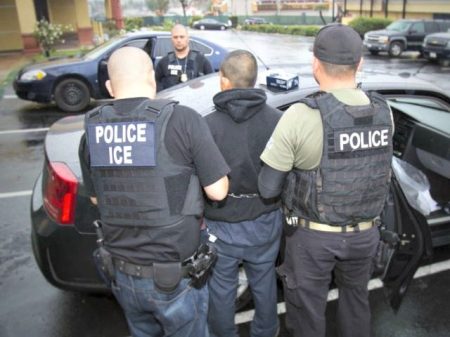
On January 25, 2017, the President [Donald Trump] signed a series of executive orders dismantling the system of priorities that had previously guided Immigration and Customs Enforcement and Border Patrol in determining whom to deport. The orders also gave far greater authority to individual agents and officers, who are now removing non-citizens simply because they are here illegally, regardless of whether they have committed any offense. In light of the breadth of these orders and the lack of any apparent limit on agents’ discretion, the undocumented must now choose between going to work, school, hospitals, and even court, and the risk of being seized.

In contrast, the new Supreme Court Justice appointed by Trump, Neil Gorsuch, has a more humble vision of his job as a judicial referee, saying in a 2013 award ceremony that:

As my daughters remind me, donning a [judicial] robe doesn’t make me any smarter … It serves as a reminder of what’s expected of us—what [Irish philosopher Edmund] Burke called the “cold neutrality of an impartial judge.” It serves, too, as a reminder of the relatively modest station we’re meant to occupy in a democratic society. In other places, judges wear scarlet and ermine. Here, we’re told to buy our own plain black robes — and I can attest the standard choir outfit at the local uniform supply store is a good deal. Ours is a judiciary of honest black polyester.

The judges on Reinhardt’s Ninth Circuit are expected to release soon a decision blocking Trump’s Executive Orders limiting the entry of people from six terror-prone Muslim countries. The decision is based on a Hawaiian case, in which an Egyptian-born Islamic cleric claimed his constitutional rights were infringed by Trump’s efforts to reduce Islamic jihad in the United States.

The court’s decision may have been delayed by the Islam-inspired bloody attacks in Manchester and London, at least one of which was conducted by the sons of Muslim refugees and migrants from Libya.

Reinhardt’s intemperate language, said Andrew Arthur, a former immigration judge, suggests that the court’s decisions are political biased. “There is no ‘cold neutrality’ in the Ninth Circuit’s ruling,” Arthur wrote about the court’s preliminary ruling in the Hawaii case. “It is personal, visceral, and vindictive.”

Byron York: While other controversies rage, work on border wall moves forward

May 30, 2017

Byron York: While other controversies rage, work on border wall moves forward, Washington Examiner, May 29, 2017

(Please see also, FULL MEASURE: May 28, 2017 – Price of Power on how Congress “works.”  — DM)

New revelations come almost by the minute in the Trump-Russia affair. The White House moves into full-defense mode. The Trump agenda stalls on Capitol Hill.

A reasonable observer might conclude that is all that is happening in the Trump administration. But even as those troubles fill news sites and cable TV, administration officials are quietly moving ahead on one of the president’s top campaign promises: the construction of a wall on the U.S.-Mexico border. Although it hasn’t received much attention relative to the president’s many problems, extensive planning for the wall is under way, officials are evaluating specific proposals, sites are being studied, and yes, there is money available to get going.

The work is being done under President Trump’s executive order of Jan. 25, which declared the administration’s policy to “secure the southern border of the United States through the immediate construction of a physical wall …” The order went on to set a high standard of effectiveness: “the prevention of all unlawful entries into the United States” along the border. Finally, the order cited an existing law, the Secure Fence Act, which in 2006 called for the construction of “at least two layers of reinforced fencing” and “additional physical barriers” on up to 700 miles of the 1,954-mile border.

“The executive order calls on the authority in the Secure Fence Act for us to begin immediately,” said a senior administration official who recently provided an extensive update on the state of the wall project. In March, U.S. Customs and Border Protection sent out a request for proposals for companies to bid on the construction of prototypes — not little models to sit on someone’s desk, but full-scale sections of proposed wall designs that will be put in place on the border. So far, Border Protection has received more than 100 proposals.

“We are evaluating what started out as a solicitation to industry and request for proposals — 18 to 30 feet high, concrete, impenetrable, hard-to-scale, the correct aesthetics,” the official said. “We’ve tried to capture the intent [of the executive order] in the requests for proposals, and those proposals are being evaluated now.”

There are some important points to remember before going any further. First, there is no intention to build a wall to stretch the entire border, from San Diego, Calif., to Brownsville, Texas. In his campaign, the president made clear that the wall need not cover every mile of the border. Certainly, no expert who supports more barriers at the border believes it should, either.

And the wall does not always mean a wall. The Jan. 25 executive order defined “wall” as “a contiguous, physical wall or other similarly secure, contiguous and impassable physical barrier.” Planners say that in practice, that will certainly mean extensive areas with an actual wall. But other areas might have the type of fencing outlined in the Secure Fence Act, or some other barrier yet to be designed.

And that leads to a third point: The border barrier will not look the same at all points along the border. The terrain of the border is different — some parts are so imposing they don’t need a barrier at all — and officials plan to design walls and barriers that fit each area, rather than one long, unchanging structure.

Right now, officials are studying how many “buildable miles” will need a barrier. Whatever the precise number, it will be big. In 2015, the Department of Homeland Security told Congress that, of the 1,954 miles of border, 1,300 miles, or 66.5 percent, have no fencing or barriers at all; 299.8 miles, or 15.3 percent, have vehicle fence; and 316.6 miles, or 16.2 percent, have pedestrian fence. Only 36.3 miles, or 2 percent, have the kind of double-layer fencing required by the Secure Fence Act. (The law was passed by Congress and signed by President George W. Bush, but neither Bush nor Congress really wanted to build the fence. So they didn’t.)

“We’ve asked the nine sectors on the Southwest border, if you have to meet the standards in the executive order and the Secure Fence Act, where is it that barriers are required to complete the task?” said the senior administration official. “We’ve then evaluated those areas where the traffic [of illegal border-crossers] is highest.” Planners are considering those factors in light of the executive order’s “prevent all entries” standard — administration officials are taking that edict very seriously — to come up with areas in which a wall would be the best solution, or where some other type of physical barrier would do the job better.

At the moment, planners believe that about 700 “buildable miles” of the border will require a wall or other barrier. That just happens to be about the same amount called for in the Secure Fence Act.

Does the government have that much land available? The answer is mostly yes. Remember, from the numbers cited above, that there are more than 650 miles along the border with something on them — vehicle fence, simple pedestrian fence, whatever. That means the government has already gone through the land acquisition and approval process required to erect a barrier. “It’s federal property now because we’ve either condemned it or purchased it,” said the official.

There’s no doubt that hundreds of miles of truly impenetrable barriers would have a huge effect on illegal border crossings. Talk to some experts who favor tougher border enforcement, and they will say that even as few as 100 well-chosen miles of barrier would make a difference.

In any event, there is a significant amount of border land that is already in government hands. “West of El Paso, a lot of the land is public,” the official noted, while “as you go further east from El Paso towards Brownsville, a lot of that land is private.” Going through the process of condemning or buying land — with all the legal and financial issues involved — will depend “on how we choose the priorities.”

Once planners decide where to build, there will then be the question of what to build. If the decision is to build a wall, then the question is: a wall of what? Planners have decided that concrete will definitely be involved, even though it hasn’t played much of a role in earlier barriers. Why concrete? “It’s an interpretation of the vision,” the senior administration official explained. By “vision,” he meant it is a way to make Trump’s oft-repeated promise of a “big, beautiful wall” a reality. Trump didn’t mean a fence.

On the other hand, using concrete presents one obvious problem. Whatever barrier is built, Border Protection agents on the U.S. side need to be able to see through it. That’s always been a requirement with earlier barriers. So now, officials are looking for creative ideas for a wall that will still allow them full sight of the Mexican side.

That touches on the most important consideration for planners. A wall isn’t just a wall. It is a system — a “smart wall,” as they call it. It involves building a barrier with the monitoring technology to allow U.S. officials to be aware of people approaching; to be able to track them at all times; to have roads to move people around; the facilities to deal with the people who are apprehended; and more. “It’s not just a barrier,” noted the official. (Last year, with the Obama administration still in office, a number of Border Protection officials traveled to Israel to study that country’s highly effective barriers; they came home big believers in a smart wall.)

At this point, it’s impossible to say what building a smart wall will cost, because officials haven’t yet decided on a plan. But how much money does the administration have to get started now? Begin with money that was already to available to the Department of Homeland Security.

“Congress gave us a re-programming for money we were planning to do other things with — mostly technology — to get us through this request for proposals and to get the prototypes underway immediately,” the senior administration official said. “That has happened already. We found $20 million to get that effort underway.”

“Then, the 2017 budget resolution gives us substantial money to continue doing real estate and environmental planning and design, and then replace some fencing,” he continued. “That’s in the neighborhood of $900 million.”

“You won’t get a lot of new fence for that,” the official conceded. “You’ll get some upgrades. But you’ll get some behind-the-scenes work underway — engineering, design, real estate acquisition, title searches, the kinds of things that have to happen to make it work.”

That is a start. Republicans on the Hill argue that they got as much money in the recent spending bill as they could for the project, given that they had to work with Democrats to avoid a government shutdown and fund the government through Sept. 30. “We weren’t going to get anything passed that said, quote-unquote, ‘wall,'” noted one GOP staffer.

The next funding hurdle will come when Congress considers spending for 2018. Most House and Senate Democrats appear determined to stop a border barrier. They say it will be expensive and ineffective, while some Republicans believe Democrats oppose the wall mainly because they fear it will work.

After the recent spending bill passed, some opponents of the wall declared the project dead. (Sample headline: Vanity Fair’s “How Trump’s Wall Failure Will Forever Doom His Presidency.”) But any victory dance right now is premature. Yes, it’s certainly possible the wall won’t be built. But it’s also possible it will be built, or that significant parts of it will be built. The work is already under way.
Salvadoran Officials Overwhelmed by Returning Deported Gang Members

May 29, 2017

Salvadoran Officials Overwhelmed by Returning Deported Gang Members, Breitbart, Ryan Saavedra, May 28, 2017

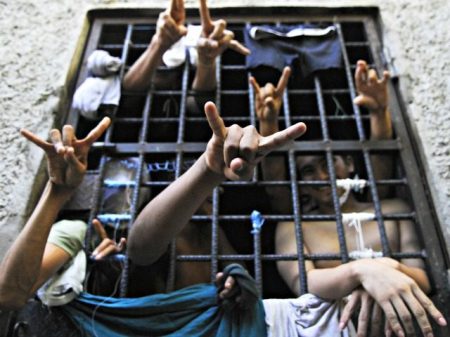
Officials in El Salvador held emergency meetings after seeing a sharp increase in the number of violent gang members being deported back to the country from the United States under the Trump administration.

Salvadoran authorities have held emergency meetings and proposed new legislation to monitor returning criminals and gang members that are returning to El Salvador after deportation, according to the Washington Post.

The move by Salvadoran officials comes as a direct result of the Trump administration’s crackdown on illegal immigration and efforts to deport more criminal illegal aliens from the U.S.

This year the U.S. has already deported 398 gang members back to El Salvador – compared to only 534 for all of 2016.

It is due to this rapid increase in deportations that Salvadoran officials like Héctor Antonio Rodríguez, the director of the country’s immigration agency, are worried about the impact the returning gang members will have in the country.

“This clearly affects El Salvador. We already have a climate of violence in the country that we are combating,” Rodríguez said. “If gang members return, of course this worries us.”

Many of the returning gang members belong to MS-13, a notoriously violent street gang that has plagued communities throughout the U.S. with horrific acts of violence. Although MS-13 started out in Salvadoran communities in Los Angeles sometime during the 1980’s, lax immigration policies and weak border security helped the gang explode in size as MS-13 originated from illegal immigrants, Breitbart Texas reported.

The recent murders of four teens in New York City have put MS-13 in the national spotlight with Attorney General Jeff Sessions declaring that U.S. authorities are going after the gang.

“The MS-13 motto is kill, rape, and control,” Sessions said. “I have a message to the gangs that are targeting our young people: We are targeting you. We are coming after you.”

Speaking at a rally in April, President Trump highlighted the importance of removing illegal alien MS-13 gang members from the U.S.:

At the heart of my administration’s efforts to restore the rule of law has been a nationwide crackdown on criminal gangs, and that means taking the fight to the sanctuary cities that shield these dangerous criminals from removal. The last very weak administration allowed thousands and thousands of gang members to cross our borders and enter into our communities, where they wreaked havoc on our citizens. The bloodthirsty cartel known as MS-13 has infiltrated our schools, threatening innocent children.

We have seen the horrible assaults and many killings all along Long Island where I grew up. We are seeing the vicious spread of transnational gangs into all 50 states and the human suffering they bring with them. I have been with the parents. It is devastation. A very respected General recently told me that MS-13 are the equivalent in their meanness to Al Qaeda. My administration will not rest until we have dismantled these violent gangs, and we are doing it rapidly, and we are sending them the hell out of our country.

On Wednesday, Breitbart Texas reported that Sen. Ron Johnson (R-WI), Chairman of the Senate Homeland Security Committee, said recently obtained documents from a whistleblower show that the Obama administration knowingly admitted 16 MS-13 gang members in 2014.

President Trump and Pope Francis Meet Face-to-Face

May 25, 2017

President Trump and Pope Francis Meet Face-to-Face, Front Page MagazineJoseph Klein, May 25, 2017

(Please see also, Catholics Respond to Pope Francis’ ‘One-Sided, Misleading’ Message to Donald Trump. — DM)

[I]t is the fight against climate change that remains his top concern, which is of little comfort to the survivors and families grieving over their loved ones killed or injured in the Manchester slaughter. The same is true about those who suffered from the Islamic terrorist slaughter at a Coptic Christian church in northern Egypt on Palm Sunday. ISIS has claimed responsibility for both attacks.

[I]n the spirit of moral relativism so prevalent today, Pope Francis has declared: “There are fundamentalist and violent individuals in all peoples and religions—and with intolerant generalizations they become stronger because they feed on hate and xenophobia. By confronting terror with love, we work for peace.”

********************************

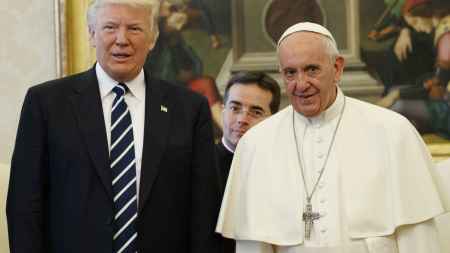
President Trump and Pope Francis held a half-hour private meeting at the Vatican on Wednesday. Despite their sharp differences on climate change, redistribution of wealth, the handling of refugees and other key global issues, the two men were at least outwardly cordial. Both clearly wanted to avoid anything that could be perceived as confrontational, which had characterized remarks each had made about the other on prior occasions.  However, Pope Francis used the occasion of the meeting to deliver a message to President Trump about the importance of remaining committed to the fight against climate change. He even decided to give the president a copy of his 2015 encyclical on saving the environment.

The meeting occurred only two days after the horrific suicide bombing in Manchester, England that claimed at least 22 lives, including an 8 year old girl, and injured many more. Yet fighting against the foremost evil of our day, Islamic terrorism, did not appear to be foremost on Pope Francis’s mind at his meeting with President Trump.   A message had been previously issued in Pope Francis’s name, stating that he was “deeply saddened” by the “barbaric attack” in Manchester and extending his condolences. However, it is the fight against climate change that remains his top concern, which is of little comfort to the survivors and families grieving over their loved ones killed or injured in the Manchester slaughter. The same is true about those who suffered from the Islamic terrorist slaughter at a Coptic Christian church in northern Egypt on Palm Sunday. ISIS has claimed responsibility for both attacks.

“With Allah’s grace and support, a soldier of the Khilafah managed to place explosive devices in the midst of the gatherings of the Crusaders in the British city of Manchester,” ISIS declared in a boastful statement. ISIS threatened more attacks to come against “the worshippers of the Cross and their allies, by Allah’s permission.” Children specifically will be targeted. A May 4th article entitled “The Ruling on the Belligerent Christians” previewed what lay ahead, declaring that the “blood” of women and children “is not protected” since they have not embraced Islam.

The Middle East and “the protection of Christian communities” did come up during the meeting between Pope Francis and President Trump, according to a statement released by the Vatican. However, they may well have been talking past each other.

When the Pope thinks of Christian communities, he tends to focus on what he considers to be the compassionate duty of Christians to reach out to the poor, including to care for the world’s many refugees and other migrants. Indeed, in February 2016, Pope Francis sharply criticized then candidate Trump for his views on immigration. “A person who only thinks about building walls, wherever they may be, and not building bridges, is not Christian,” the Pope said. On another occasion, speaking to Catholics and Lutherans in Germany last October, Pope Francis said, “It’s hypocrisy to call yourself a Christian and chase away a refugee or someone seeking help…”

Pope Francis has acknowledged the “serious harm to the Christian communities in Syria and Iraq, where many brothers and sisters are oppressed because of their faith, driven from their land, kept in prison or even killed.” However, he has failed to single out for condemnation those responsible for such suffering and their animating ideology – radical Islamic terrorists, whose hateful ideology is rooted in their literal reading of the Koran and Prophet Muhammad’s sayings and actions. Instead, in the spirit of moral relativism so prevalent today, Pope Francis has declared: “There are fundamentalist and violent individuals in all peoples and religions—and with intolerant generalizations they become stronger because they feed on hate and xenophobia. By confronting terror with love, we work for peace.”

Terrorism, according to Pope Francis, feeds on “fear, mistrust, and the despair born of poverty and frustration.” End economic inequality, the Pope believes, and voilà – love replaces hatred and terrorism gives way to peace. “This is no time for denouncing anyone or fighting,” he declared. In the Pope’s reckoning, Christian minorities will be safe if we can just all agree to get along and share the wealth.

President Trump, on the other hand, is a realist. He recognizes the clear and present danger to Christian communities, particularly in the Middle East, from genocide committed by Islamic terrorists. These terrorists are not especially motivated by poverty. Indeed, some have been very well-off, including the late Osama bin Laden. As President Trump realizes, they are motivated by their hateful supremacist radical Islamic ideology, which spurs them on to attack the “Crusaders” wherever they can be found. They seek to make their fundamentalist form of Islam the only legitimate religion in the world.  The rest of us either have to convert, pay a tax to live as a dhimmi, or die.

In a major speech on terrorism that Donald Trump delivered last August while running for the presidency, he described the atrocities committed in the name of “the hateful ideology of Radical Islam.” These atrocities included, he said: “Children slaughtered, girls sold into slavery, men and women burned alive. Crucifixions, beheadings and drownings. Ethnic minorities targeted for mass execution. Holy sites desecrated. Christians driven from their homes and hunted for extermination. ISIS rounding-up what it calls the ‘nation of the cross’ in a campaign of genocide.”

This genocide is a product of fundamentalist Islam-inspired ideology, which cannot be fought “with love,” as Pope Francis would like us to believe. Nor would the West’s “warm human welcome” and “authentic hospitality” to all refugees provide “our greatest security against hateful acts of terrorism,” as Pope Francis would also like us to believe.

Again, President Trump is a realist. His policies towards refugees, which Pope Francis evidently thinks are heartless, aim to protect Americans from jihadists seeking to enter the United States from the most terrorist-prone countries in the world. The president sought to reverse Barack Obama’s discrimination against Christian refugees – the truly persecuted victims of radical Islamic genocide in the Middle East – and was called an Islamophobe and worse for his efforts. Pope Francis should be standing up for what President Trump tried to accomplish in this regard. But he hasn’t. In fact, the Vatican expressed concern about President Trump’s first executive order suspending travel and entry of refugees from certain countries, which had included a provision providing preferential treatment for persecuted religious minorities such as Christians.

President Ronald Reagan and Pope John Paul II successfully worked together, projecting military and spiritual power respectively, to defeat the evil of their day – communism and the Soviet Union. The evil of our day is radical Islamic terrorism, not climate change. Will Pope Francis follow in the footsteps of Pope John Paul and work with President Trump to help save Christians and other civilized people from this evil source of mass slaughter? Based on his record so far, it is doubtful, but we shall have to wait and see.

Jeff Sessions: MS-13 Could Be Designated a Terrorist Organization

April 19, 2017

Jeff Sessions: MS-13 Could Be Designated a Terrorist Organization, BreitbartIan Mason, April 19, 2017

AP Photo/Alex Brandon

Attorney General Jeff Sessions continued his campaign against the vicious MS-13 gang on Fox News’s Tucker Tuesday evening, telling host Tucker Carlson that the group may qualify as a terrorist organization.


“The government of El Salvador has designated MS-13 a terrorist organization. Would it be helpful for our government to do the same?” Carlson asked. “I think so, perhaps. It could qualify for that,” was Sessions’s response.

Designating MS-13 a “foreign terrorist organization” would make providing any material support for the group, here or abroad, a felony, and compel U.S. financial institutions to freeze any assets they reasonably believe belong to the group. The determination is made by the State Department and not AG Sessions’s Justice Department, but Sessions’s willingness to support such a designation speaks to how seriously he takes the threat from the gang.

“This is one of the most violent gangs in the history of our country,” Sessions said of MS-13. He cited the group’s use of machetes and willingness to kill and prostitute children, as they have done across the United States.

The Attorney General laid out a plan to attack MS-13, whose 10,000+ estimated members in the United States operate across 40 states, according to a DOJ fact-sheet on the group. Tough use of immigration laws will be central to Sessions’s strategy for breaking the brutal gang, many of whose members are illegal aliens from Central America. The group originally sprouted up among Salvadorans in Los Angeles in 1980s after thousands of them fled there from political atrocities in their war-torn homeland.

“So many of these people are illegally here,” Sessions said, lashing out at the lax immigration enforcement of prior administrations that, in his view, have contributed to the blossoming of MS-13. “With a good lawful border, many of them of would not be here. They sent some of the most violent people.”

Sessions mocked the perverse use of Obama administration policies on “unaccompanied minor” illegal aliens by MS-13 leaders to get their people exactly where they were needed in America. “They were directed how to enter. If they came and claimed themselves as, you know, a minor, the Obama administration let ’em come into the country, and took them to their destination city, and turned them over to some ‘relative,’” he told Tucker.

Sessions sent a hopeful message about efforts to combat MS-13, calling the destruction of the gang “hard, but not impossible.” “As we have cases and we work them hard, pursue convictions, and we deport people who are here unlawfully, we can devastate this gang,” he said.

BREAKING: Sessions Announces Illegal Aliens Who Illegally Re-Enter The U.S. Will Be Charged With a Felony

April 11, 2017

BREAKING: Sessions Announces Illegal Aliens Who Illegally Re-Enter The U.S. Will Be Charged With a Felony, Town HallKatie Pavlich, April 11, 2017

Speaking from the U.S.-Mexico border in Nogales, Arizona Tuesday, Attorney General Jeff Sessions announced major changes to Justice Department protocol when it comes to charging and prosecuting illegal aliens. 

“For those that continue to seek improper and illegal entry into this country, be forewarned:  This is a new era.  This is the Trump era.  The lawlessness, the abdication of the duty to enforce our immigration laws and the catch and release practices of old are over,” Sessions said.

Here are the details (bolding is mine): 

Starting today, federal prosecutors are now required to consider for prosecution all of the following offenses:

  • The transportation or harboring of aliens.  As you know too well, this is a booming business down here.  No more.  We are going to shut down and jail those who have been profiting off this lawlessness — people smuggling gang members across the border, helping convicted criminals re-enter this country and preying on those who don’t know how dangerous the journey can be.
  • Further, where an alien has unlawfully entered the country, which is a misdemeanor, that alien will now be charged with a felony if they unlawfully enter or attempt enter a second time and certain aggravating circumstances are present.
  • Also, aliens that illegally re-enter the country after prior removal will be referred for felony prosecution — and a priority will be given to such offenses, especially where indicators of gang affiliation, a risk to public safety or criminal history are present.
  • Fourth:  where possible, prosecutors are directed to charge criminal aliens with document fraud and aggravated identity theft — the latter carrying a two-year mandatory minimum sentence.

Further, Sessions said prosecuting those who assault federal law enforcement officers will be a priority.

“If someone dares to assault one of our folks in the line of duty, they will do federal time for it,” Sessions said.

The Attorney General also emphasized the administration’s focus on dismantling violent cartels and dangerous gangs inside America cities.

“When we talk about MS-13 and the cartels, what do we mean?  We mean criminal organizations that turn cities and suburbs into warzones, that rape and kill innocent citizens and who profit by smuggling poison and other human beings across our borders.  Depravity and violence are their calling cards, including brutal machete attacks and beheadings,” Sessions said. “With the President’s Executive Orders on Border Security, Transnational Criminal Organizations and Public Safety as our guideposts, we will execute a strategy that once again secures the border; apprehends and prosecutes those criminal aliens that threaten our public safety; takes the fight to gangs like MS-13 and Los Zetas; and makes dismantlement and destruction of the cartels a top priority.”

Border Patrol union urges Trump to cut Obama’s red tape holding back agents

April 3, 2017

Border Patrol union urges Trump to cut Obama’s red tape holding back agents, Washington Times

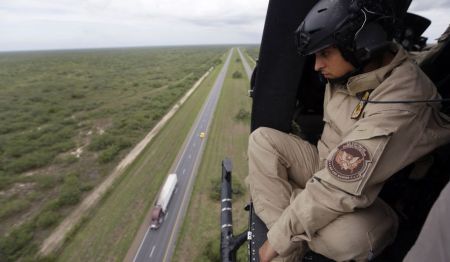
A U.S. Customs and Border Protection Air and Marine agent peers out of the open door of a helicopter during a patrol flight over McAllen, Texas, near the U.S.-Mexico border. (Associated Press)

The Homeland Security Department has been reluctant to send helicopters on nighttime missions to aid the Border Patrol, leaving agents to face drug smugglers and illegal immigrants without critical air cover, the chief of the agents’ labor union told Congress late last month.

Brandon Judd, an agent who is also president of the National Border Patrol Council, said that unless President Trump can solve that kind of bureaucratic bungling — and is willing to oust the Obama administration figures who botched the policies — he will struggle to secure the border.

The helicopters are one example of that, Mr. Judd said.

Mr. Judd said that when the Border Patrol controlled its own helicopters, it got the air support it needed. But after the Homeland Security Department was created more than a decade ago, the helicopters were turned over to the Office of Air and Marine, which has been reluctant to fly the nighttime hours the agents need.

“Right now the Office of Air and Marine, they fly very little at night,” he told the Senate Homeland Security and Governmental Affairs Committee. “In fact, in [the Rio Grande Valley sector], we had to use Coast Guard to fly sorties in certain areas. And when their apprehensions became so great, it’s my understanding the officer at Air and Marine asked them not to fly anymore at night in RGV because it was making them look bad.”

Officials at U.S. Customs and Border Protection, the agency that oversees both the Border Patrol and the Air and Marine division, declined to comment.

But Mr. Judd said it’s just one example of a bureaucracy erecting hurdles — what he called “kingdom-building” — that he said could stymie Mr. Trump’s immigration goals.

“We talk about securing the border, and the border — we can absolutely secure it, but it cannot be secure if our operations are not sound,” Mr. Judd told The Washington Times.

“What’s very concerning to Border Patrol agents is, to this point, we still have the same people who gave us all of the failed operations, who were the authors of the catch-and-release program. They’re still in charge — even under this current administration,” the union chief said. “That’s head-scratching, especially since the president said we’re going to drain the swamp.”

Mr. Trump’s early changes to enforcement policy, freeing agents to carry out the law enforcement duties they signed up for, has helped boost morale, said Mr. Judd and Chris Crane, the head of the union for the Immigration and Customs Enforcement Council.

But they said the agencies’ leadership needs attention.

Mr. Crane said “a good ol’ boy network” pervades ICE, which he said is too heavy on managers who get in the way of agents trying to enforce immigration laws in the interior. He said agents are eager to enforce laws against employers who hire illegal immigrants, but their hands are tied.

The complaints of bureaucratic bungling struck home with both Democrats and Republicans on the homeland security committee, who said they are eager to find bipartisan areas where they can help the agents get things going.

One challenge is the polygraph test, which all Border Patrol applicants must pass. The agency’s 75 percent failure rate is higher than that of any other law enforcement department, but the top brass say they are committed to it — even as they prepare to try to hire 5,000 more agents to comply with Mr. Trump’s executive orders.

Even police officers who have passed polygraphs for their current jobs but who are looking to transfer can end up failing, Mr. Judd said.

Both Democrats and Republicans said they are eager to clean up the immigration agencies within the Homeland Security Department and would like to find common ground with the agents and officers.

Sen. Claire McCaskill, Missouri Democrat, said the panelists want to know the names of bureaucrats who are standing in the way of smart enforcement — though she said the ICE and Border Patrol unions, which endorsed Mr. Trump in the election campaign, may have a greater claim to the president’s ear.

Still, one Democrat, Sen. Kamala D. Harris of California, said she worries that the agency is expanding too quickly, without training to protect illegal immigrants from overzealous enforcement. She wanted to make sure agents weren’t going after lesser-priority targets.

“When troops on the ground have not been trained, it leads to dysfunction because there is a lack of consistency and accountability and direction,” she told Mr. Crane, the chief of the union for ICE agents and officers.

Mr. Crane told her she misunderstood how agents in the field carried out their priority targeting.

Mr. Crane and Mr. Judd also said the government needs to be careful about salaries. Because ICE agents have higher pay and often have better living options away from remote border communities, Border Patrol agents may rush to join the other force.

Part of the problem is the complicated bureaucratic web.

ICE and the Border Patrol are separate law enforcement divisions within Homeland Security.

That bureaucratic mess also helps explain the problem with helicopter patrols along the border.

The Border Patrol used to have its own helicopters, but after CBP was created as part of Homeland Security, the Air and Marine division was created as a separate agency within CBP. Now, when agents want the assistance of eyes in the sky, they have to go outside their own chain of command.

Mr. Judd said the helicopters are a perfect illustration: Most illegal crossings are attempted at night, and air support is critical for maintaining visibility.

Just as important, when those attempting to sneak in hear a helicopter overhead, they are less likely to run — making the apprehension easier and less dangerous for agents.

Mr. Judd said the air division has dedicated most of its resources to the Border Patrol, but not at the right times, leaving the agents without night cover.

“We expected to see a huge change in the way CBP operates. There’s been no change to this point,” he said.

CBP has long faced questions about its use of air resources. The Homeland Security inspector general has been particularly withering in its evaluation of the drone program, saying CBP has a tough time keeping its aircraft aloft and in scheduling missions and can’t demonstrate the worth of the program.

CBP officials have said the inspector general is using suspect calculations.

Flights themselves can be dangerous.

In 2015, a helicopter was called in to assist local police who were trying to stop a drug smuggling attempt near Laredo, Texas. As the helicopter was making its second pass, it took fire from the Mexican side — perhaps as many as 15 rounds, two of which struck the aircraft.

CBP officials later said the man who fired on the helicopter was a specialized contractor whom the smugglers used to provide cover for their operations. Mexican authorities caught the man.

But in hopes of sending a message to the cartels, CBP sent to the region several Black Hawk helicopters, which can be armored to withstand enemy fire while continuing to fly.