Posted tagged ‘Trump agenda’

Mission accomplished in Syria

April 12, 2017

Mission accomplished in Syria, Israel Hayom, Clifford D. May. April 12, 2017

(Accomplished or just begun? — DM)

Congress should send Trump the legislation it is now considering, seeking to impose new sanctions on Iran in reprisal for its continuing support of terrorists, its missile tests and its maintenance of more than 35,000 troops in Syria, including its own, those of its Lebanese proxy, Hezbollah, and Shiite fighters recruited from Iraq and Afghanistan. Suspending Iran’s deal with Boeing/Airbus would be useful, too. Only the willfully credulous believe that Iran’s theocrats won’t use such aircraft for illicit military purposes.

************************

If you’re still unsure about whether U.S. President Donald Trump did the right thing when he launched 59 cruise missiles at Syria’s Shayrat Air Base last week, consider the alternative.

He knew that Syrian dictator Bashar Assad had yet again used chemical weapons to murder Syrian civilians, women and children prominent among them. He knew that Iran and Russia had enabled this atrocity, as they have many others. He knew he had two choices.

He could shrug, instruct his U.N. ambassador to deliver a tearful speech calling on the “international community” to do something, and then go play a round of golf. Or he could demonstrate that the United States still has the power and the grit to stand up to tyrants and terrorists, thereby beginning to re-establish America’s deterrent capability.

In other words, this was what Sun Tzu and Carl von Clausewitz would call a no-brainer. (Well, loosely translated.) A mission was accomplished. Do harder missions lie ahead? Yes, of course. But I suspect Defense Secretary James Mattis and National Security Adviser H.R. McMaster have made that abundantly clear to the new president.

We now know for certain that Russia failed to live up to its 2013 commitment to ensure that Assad surrendered all his illegal chemical weapons under the deal it brokered. Secretary of State Rex Tillerson acerbically questioned whether that was the result of complicity or incompetence or whether Russia allowed itself to be duped by Assad.

The strike ordered by President Trump was not “unbelievably small” — then-Secretary of State John Kerry’s description of the punishment then-President Barack Obama decided not to impose in response to Assad’s earlier use of chemical weapons. It was big enough to make clear that American diplomats are again carrying big sticks. (For Obama to insist that diplomacy and force are alternatives was patently absurd.)

Conveniently, Trump was dining with Chinese President Xi Jinping when the strikes occurred. It’s fair to speculate that Xi is today thinking harder about American requests to rein in Kim Jong Un, the North Korean dictator whose drive to acquire nuclear-tipped missiles that can reach the American mainland has become what Tillerson called an “imminent” threat.

Having passed his first major national security test, Trump is now obliged to demonstrate firmness and consistency. What plans might the Pentagon have on the shelf to respond to further provocations? The next round of Tomahawk missiles could permanently ground Assad’s air force. That would make it easier to then establish no-fly zones. If such measures do not alter the calculations of Assad and his Iranian and Russian patrons, consideration could be given to leveling his defense, intelligence and command-and-control centers as well.

Another idea under discussion: setting up safe havens, or, to use a better term, “self-protection zones,” for those fleeing the Syrian regime and various jihadist forces, Sunni and Shiite alike. Israel and Jordan could help the inhabitants of such areas adjacent to their borders defend themselves. The Saudis, Emiratis and Bahrainis could contribute to the cost. Might this lead to the partition of Syria? Most likely, but it’s difficult to imagine a “political solution” that would not include such readjustments.

All this, while useful and perhaps even necessary, should be seen as insufficient. Syria is a major humanitarian catastrophe but only one piece in a much larger geopolitical puzzle. Sooner rather than later, the Trump administration needs to develop what Obama refused to contemplate: a comprehensive and coherent strategy to counter the belligerent, imperialist and supremacist forces that have emerged from the Middle East and are now spreading like weeds around the world.

The Islamic State group will of course need to be driven off the lands on which it has attempted to establish a caliphate. After that, its terrorists will have to be hunted, along with those of al-Qaida, wherever they hide (e.g., Egypt where, over the weekend, they bombed two Coptic Christian churches).

But — and this is crucial — accomplishing these missions must not serve to further empower Iran’s jihadist rulers, who dream of establishing an expanding imamate, the Shiite version of a caliphate.

Most immediately, Congress should send Trump the legislation it is now considering, seeking to impose new sanctions on Iran in reprisal for its continuing support of terrorists, its missile tests and its maintenance of more than 35,000 troops in Syria, including its own, those of its Lebanese proxy, Hezbollah, and Shiite fighters recruited from Iraq and Afghanistan. Suspending Iran’s deal with Boeing/Airbus would be useful, too. Only the willfully credulous believe that Iran’s theocrats won’t use such aircraft for illicit military purposes.

That the United States cannot solve all the world’s problems was one of Trump’s campaign themes. But the implication is not necessarily, as some of his supporters hoped, that he would turn a blind eye to all atrocities and threats not already within America’s borders.

In the last century, most Americans recognized, in some cases with enormous reluctance, that there was no good alternative to doing whatever was necessary to rout the Nazis and communists, enemies whose goal was to kill off the democratic experiment.

In this century, jihadists and Islamists harbor the same ambition. We can attempt to appease them. We can try to make ourselves inoffensive to them. We can keep our hand extended, hoping that in time they will unclench their fists. Or we can decide instead to plan for a long war that will end with the defeat of these latest enemies of America and the rest of the civilized world. If Trump has grasped that within his first 100 days, he’s not off to such a bad start.
Trump Sends a Message to China Through Syria

April 10, 2017

Trump Sends a Message to China Through Syria, Front Page Magazine, Daniel Greenfield, April 10, 2017

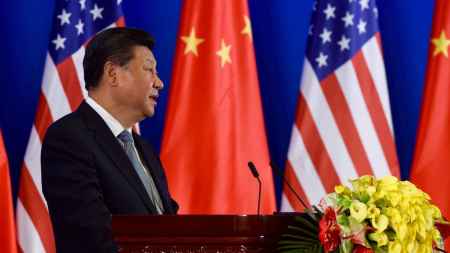
On Thursday evening, President Trump met with China’s President Xi and bombed Syria. The decision came as Trump traveled on Air Force One to meet with Xi at Mar-a-Lago. An hour into their dinner, 59 Tomahawk cruise missiles launched and pounded an airbase in Syria. The message wasn’t just for Assad and Putin. It was for Xi and his North Korean client state. The era of a weak America was over.

Xi had come to America expecting an easy photo op visit. President Trump would urge action on North Korea and Xi would smile coldly and shoot him down. Talk of fairer trade would be similarly dismissed.

And then Xi would go home and laugh that the bold new American leader was another paper tiger.

Except that President Trump had a different plan. Instead of Xi showing how tough he could be, Trump gave him a front row seat to a display of American power. The message was both obvious and subtle.

And President Xi, along with Russia’s Vladimir Putin, North Korea’s Kim Jong-un and Iran’s Supreme Leader Khamenei, aren’t laughing.

The obvious part was as blatant as a 1,000 pound explosive warhead slamming into concrete and steel, and as obvious as upstaging Xi’s efforts to stonewall Trump while warning that North Korea could be next if the Chinese leader continues to be obstinate.

Trump had warned throughout the campaign that he would not be laying his military plans on the table. “You’re telling the enemy everything you want to do!” he had mocked Clinton.

His address to the nation came an hour after the missiles had struck. The element of surprise had held.

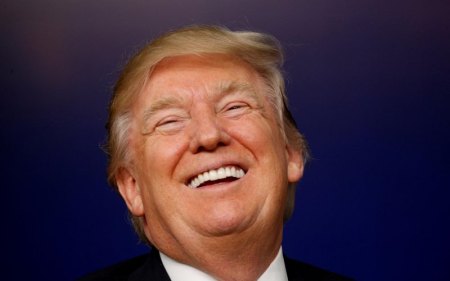
And Xi came away with a very different message. The Obama era was over. The new guy was bold, dangerous and unpredictable. Like many of Trump’s American opponents, Xi understood now that the jovial man sitting next to him could and would violate the rules of the game without prior warning.

China would have to be careful. There was a cowboy in the White House again.

And that was the subtle part. Trump does not care very much about Assad. What he truly cares about is American power. Left-wing critics quickly pounced on Trump’s past opposition to strikes on Syria and his criticisms of Obama for not enforcing his own “red line”.

There is no contradiction.

Trump didn’t believe that strikes on Syria were a good idea. But once we had committed to a red line, then we had to follow through if we were going to be taken seriously.

And so Trump enforced Obama’s red line. Not because of Obama or Syria. But because of America.

“When he didn’t cross that line after making the threat, I think that set us back a long ways, not only in Syria, but in many other parts of the world because it was a blank threat,” President Trump said.

President Trump intends to get things done. And he knows it won’t happen with “blank” threats.

Asked about whether the strikes represented a message to Xi and North Korea, Secretary of State Tillerson replied, “It does demonstrate that President Trump is willing to act when governments and actors cross the line and cross the line on violating commitments they have made.”

“President Trump has made that statement to the world tonight,” he added.

The message is more subtle than a 1,000 pound warhead. But not by that much.

President Trump’s move bewildered leftist critics who had to shift from accusing him of having a secret relationship with Russia to accusing him of ruining our relationship with Russia. It also enraged some supporters who maintained a dogmatic non-interventionist position. But Trump doesn’t make decisions based on ideology. He measures policies against real world objectives, not abstract philosophies.

What he has always wanted to do is solve real problems.

The problem he was solving on Thursday wasn’t Assad. President Trump recognizes that Syria is an unsolvable problem and that little good can come of extended engagement with it. There are no good guys in Syria. Only Sunni and Shiite Jihadis and their victims. Syria is and will always be a dead end.

The problem is that Obama thoroughly wrecked American prestige and power over eight years. And that makes it painfully difficult to get anything done when no one in the world will take us seriously.

President Trump sees North Korea’s nuclear weapons as a major threat. But he also sees the crisis as a way to leverage our military might to achieve better trade deals with both partners and rivals. He is not wedded to a globalist or anti-globalist ideology. Instead he sees every problem as an opportunity.

He is not committed to any international coalition, globalist or anti-globalist, except where it temporarily serves American purposes. That is what being a true nationalist actually means.

That is what makes him so unpredictable and so dangerous.

President Trump made a point in Syria. He timed that point for maximum effect. The point isn’t that Assad is a bad man. Though he is. It’s not that he isn’t a Russian puppet, though only the lunatic left could have believed that. The point is that he is determined that America will be taken seriously.

Cruise missile diplomacy isn’t new. Bill Clinton fired over 500 cruise missiles into Iraq. Not to mention Sudan. Bush fired cruise missiles into Somalia. Obama signed off on firing cruise missiles into Yemen and Syria at terrorist targets. The difference is that Trump isn’t just saving face with cruise missile diplomacy.

President Trump’s real objective isn’t the Middle East. It’s Asia. He doesn’t see Russia as our leading geopolitical foe, but China. Syria was the opening shot in a staring contest with the People’s Republic. The moves in this chess game will sometimes be obvious and sometimes subtle. And Trump is usually at his most subtle when he’s being obvious. That’s what his enemies usually miss.

President Trump’s first step in Syria was to reestablish physical and moral authority on the international stage while the President of China had to sit there and watch. He humiliated Democrats and their media operation at the peak of their Russia frenzy. And he sent the message that America is back.

It’s not a bad return on a $60 million investment. We’ve spent much more in the field with less to show for it.

The Obama era in international affairs ended with whimper and a hollow Nobel Peace Prize as a trophy. The Trump era in international affairs began with 59 cruise missiles and a big bang.

Don’t Get Fooled, Trump Is Winning

April 7, 2017

Don’t Get Fooled, Trump Is Winning, Daily Beast, Matt Lewis, April 7, 2016

(From the Daily Pest, generally a far-left rag. — DM)

Kevin Lamarque / Reuters

Most political change is incremental. The greatest trick Donald Trump ever pulled was convincing the world that his presidency was floundering.

**********************

They don’t hold Rose Garden signing ceremonies when a governmental regulation is repealed. But if they did, Donald Trump’s still-nascent presidency would be getting a lot more respect.

While the media focuses on sexy topics—Russian spy intrigue, botched Muslim bans, White House palace intrigue, emerging foreign policy challenges, and the health care bill’s collapse—Team Trump has been quietly rolling back job-killing regulations and appointing a boring (by design), yet highly competent, Supreme Court Justice who almost certainly will be confirmed on Friday.

Despite evidence to the contrary, President Trump is making changes in his first 100 days that will affect America for decades to come.

One of his key weapons has been the Congressional Review Act (CRA), a 1996 law that allows Congress to repeal recent regulations. Before Trump took office, this law had been used just once. Since taking office, however, President Trump has signed 11 of these CRAs into law, effectively reversing several last-minute Obama-era regulations.

The window for using this tactic is closing; the CRA can only be used within 60 days of Congress being informed of a new regulation. But here’s where things have the potential to get very interesting: Once a regulation is repealed, agencies are also banned from issuing new rules that are “substantially similar” to the one that was just vetoed.

Behind the scenes, some shrewd Republicans are quietly toying with the idea of anticipating liberal regulations and preemptively introducing them. It’s like the PreCrime unit in “Minority Report.” A Republican Congress and president would effectively sow the earth with salt to prevent any future regulation from being introduced. It would be a bold gambit, but this would transform the CRA from a purely defensive weapon into an offensive one.

President Trump is also targeting regulations that aren’t susceptible to the CRA. Last week, he signed an executive order to thwart the “Clean Power Plan,” which President Obama’s Environmental Protection Agency unilaterally instituted to curb carbon dioxide emissions (or kill the coal industry—take your pick).

Because this regulation isn’t recent enough to fall victim to the CRA, it will be harder to roll back. There will be court challenges. Nobody said this was going to be easy.

Of course, the most obvious evidence that Trump is changing the future is the Neil Gorsuch nomination. Supreme Court Justices are given a lifetime appointment, so it’s hard to overemphasize the potential impact of confirming a young nominee who shares your worldview. But this could be just the beginning. Rumors swirling about the possibility that Justice Anthony Kennedy might soon announce his retirement serve as a reminder that Trump could dramatically shift the balance of the Supreme Court for decades.

It’s also important to note that there is a link between judicial appointments and regulations. As I noted back in January, Neil Gorsuch has criticized Chevron Deference—an extra-Constitutional principle that says that courts should defer to agencies in terms of their interpretations of statutes. In the future, Republicans hope to move these decisions back into the purview of the legislative branch.

The rap on Trump is that he gets media buzz and attention but doesn’t do the work. But what if the story of his early administration is quite the opposite? While the media has focused on the shiny objects—the scandals and legislative failures—they have all but ignored the fact that the Trump administration has been quietly changing America. Whether by design—or by coincidence—Trump’s gains have been overshadowed by the chaotic, the urgent and the interesting.

In a world that fetishizes positive action and putting points on the board, there’s endless breathless play-by-play for a game where the trash-talking, flashy quarterback is sacked repeatedly. Meanwhile, the real action is taking place under the radar, where the team is assembling an impressive roster of defensive linebackers who can handle blocking and tackling in the trenches for years to come.

Although this stands in sharp contrast to Trump’s action-oriented rhetoric, it doesn’t lessen the fact that, slowly but surely, he is moving the country in a more conservative direction. There’s no telling how many federal judges, never mind Supreme Court Justices, he might appoint. There’s no telling how many bureaucratic regulations he might repeal.

Most political change is incremental. The greatest trick Donald Trump ever pulled was convincing the world that his presidency was floundering.

A new age of diplomacy

April 5, 2017

A new age of diplomacy, Israel Hayom, Prof. Abraham Ben-Zv, April 5, 2017

The character of the new American diplomacy is slowly becoming clear, both in terms of style and essence, and especially as it pertains to the Middle East. We are being given the impression that U.S. President Donald Trump is trying to adopt the management style of late U.S. President Franklin D. Roosevelt, who tended to bypass his secretary of state.

Preliminary signs indicate that Trump sees his current wandering adviser and envoy, Jared Kushner, as a confidant and trustworthy emissary for sensitive diplomatic missions. This is clear from his mission to Baghdad at the beginning of the week and in his ongoing involvement in advancing the peace process in the Palestinian arena. Kushner is also expected to take part in the U.S.-China summit (set to take place in Florida this week), reflecting his role as moderating figure in the charged relationship between Trump and the Chinese leadership and indicating his growing power.

While a young and energetic Kushner hops between continents as the president’s representative, U.S. Secretary of State Rex Tillerson lags behind him, excluded and disconnected from the big decision-makers.

This gives a good idea of style. As for the essence — when it comes to the Middle East in particular, we are seeing a sort of diplomacy that is radically different than former U.S. President Barack Obama’s approach. This is especially true regarding the Trump administration’s efforts to establish a Sunni anti-Iranian axis led by Cairo and Riyadh. While the Obama administration abandoned the United States’ traditional partners on this front, and instead, worked tirelessly to reconcile with Iran, the current White House is signalling unequivocally that it is determined to at least turn over a new leaf in its relationship with these regional powers and to upgrade strategic cooperation with them in order to uproot terrorism.

While Obama’s relationship with Egyptian President Abdel-Fattah el-Sissi was characterized by coldness (in contrast to the warmth he showed to Egypt’s previous leader, Muslim Brotherhood member and sworn Hamas supporter Mohammed Morsi), Trump’s approach is quite different. El-Sissi’s state visit to Washington this week was marked by extraordinary warmth and cordiality on the part of the American president. This was an effort to erase the remnants of the recent past — especially the memory of punitive and alienating policy led by Obama against the Egyptian leader — from the Egyptian consciousness.

A similarly dramatic improvement can be seen in U.S.-Saudi relations, wherein strategic cooperation has also been upgraded recently, especially (but not only) regarding fighting on the Syrian front and in the struggle against the Houthi militias operating in Yemen with Iran’s help and support (against al-Qaida forces in the field). This follows the deep ebb in their relationship due to Obama’s tireless efforts to appease the Ayatollah regime in Iran, the sworn enemy of the Saudi royalty. Regarding Syria, in 2013, Obama abandoned the civilian population there to its fate, remaining, despite his declarations, completely passive even after Syrian President Bashar Assad crossed all the red lines by using murderous chemical weapons against masses of civilians. On Tuesday, too, Assad’s forces carried out a major chemical attack, harming many civilians, in the country’s destroyed and divided north. Based on the growing military involvement and the Trump administration’s determination to deal with the “axis of evil” there too, we can assume that the White House will have a different response to this war crime.

Finally, regarding U.S.-Israeli relations, we are witnessing the expression of exceptional support and identification, reminiscent of the golden age of late U.S. President Lyndon B. Johnson (during which time then-U.S. Ambassador to the U.N. Arthur Goldberg’s speeches reflected the strength and resilience of the “special relationship”). While the Obama administration focused on efforts to settle the conflict, which it defined as a core issue of utmost local and regional importance, the Trump administration is demonstrating a much more relaxed and relevant approach to the complex situation. On this front too, there is real change in the form and style of American diplomacy in the Trump era.

Sisi as key to Arab anti-ISIS pact with Israel

April 3, 2017

Sisi as key to Arab anti-ISIS pact with Israel, DEBKAfile, April 3, 2017

(Please see also, Restore the U.S.-Egyptian Strategic Alliance, Designate the Muslim Brothers as Terrorists. — DM)

Our Washington sources report that President Trump aims to complete his plan for bringing together Egypt, Saudi Arabia, Jordan and Israel on a new footing by September.

*********************************

US President Donald Trump’s first face to face with Egyptian President Abdel-Fatteh El-Sisi at the White House Monday, April 3, focuses on four main topics, DEBKAfile reports: The fight against Islamist State terror rampant in Egyptian Sinai and neighboring Libya; topping up US military assistance to Cairo, aid for easing Egypt’s dire economic straits and, finally, the effort to bolster normal relations between the Arab world (including the Palestinians) and Israel.

From the moment he assumed the Egyptian presidency in June 2014, El-Sisi has waged a never-ending war on Islamist terror against Ansar Beit-al Maqdis, which later pledged alliance to the Islamic State’s leader Abu Bakr Al-Baghdadi. The Egyptian army has so far been worsted.  The Egyptian president is not deaf to the criticism of the Second and Third Armies’ failure to overcome a few thousand armed men, even though they can at a moment’s notice raise several thousand more fighters from the Bedouin tribes of Sinai. US intelligence has rated the Egyptian forces as slow-moving and unwieldy; but for limited forays, its contingents preferring to sit safely in their barracks rather than risk going out and pursuing the enemy across the Peninsula.

Shortly before President El-Sisi’s trip to Washington, the Egyptian air force conducted intense bombardments of ISIS concentrations around the northern town of El Arish, killing at least 14 terrorists, nabbing 22 and seizing large caches of roadside bombs. But they too long delayed bearding the Islamists in their main stronghold atop Mount Jabal Hala in central Sinai. ISIS is therefore free to move around the territory and strike at will, the while expanding its operations into Egypt proper.

The weekend air strikes came after months in which ISIS overran sections of El Arish, Sinai’s biggest town (pop: 100,000). Their grip is such that Egyptian forces no longer dared venture into those lawless neighborhoods, especially at night. Earlier this year, terrible persecution including executions forced the few thousand indigenous Christians, most of them Copts, to flee their homes in El Arish. Egyptian forces proved unequal to safeguarding the US-led international observer force (MFO) monitoring the 1972 Egyptian-Israel peace treaty at a nearby station.

American military aid to Egypt stands today at $1.3bn a year. Even though the US president means to slash foreign aid programs, he may make an exception in this case and expand military assistance -, possibly in the coin of advanced military hardware, given the country’s unending frontline battle against Islamist terror.

Its presence in El Arish, 130km from the Egyptian-Israeli border, plants the peril on the doorsteps of Egypt’s neighbors as well: Northern Sinai borders on Israel, its northwestern district shares a border with the Gaza Strip, abutting in the east on Jordan and in the southwest on Libya. The cities of western Sinai sit on the banks of the Suez Canal.

The Islamic State’s Sinai affiliate is closely allied with Salafi organizations in the Gaza Strip and works hand in glove with its Palestinian Hamas rulers, especially in the lucrative arms-smuggling business.

Al-Baghdadi last year posted a group of Iraqi officers in his service to the Sinai contingent. They travelled through southern Jordan to reach the peninsula. The Islamist cells in Libya have moreover made ISIS-held turf in Sinai their safe highway for traveling undetected to their other strongholds across the Middle East.

To stamp out this sprawling, multi-branched menace, the Trump administration needs to bring Egypt, Jordan and Israel into a coalition for a sustained, common campaign.

The Obama administration, which boycotted President El-Sisi for persecuting Egypt’s Muslim Brotherhood, tried unsuccessfully to build Turkey, Egypt and Israel into a counterterrorism pact. The Trump administration, for which the Brotherhood is anathema, has a better chance. But first, relations between the Arab world and Israel need to be placed on a regular footing. Some groundwork already exists in the informal bilateral military ties Egypt and Jordan maintain with Israel. DEBKAfile’s military sources have revealed in past reports the limited give-and-take relations for fighting terror Saudi Arabia and Abu Dhabi maintain with Israel.

The US President’s advisers recognize that before a broad, effective front against ISIS and Al Qaeda can be put together from these partial, often covert ties, progress is necessary towards normalizing relations between the Arab governments and the Jewish state, including the Israeli-Palestinian track.

Trump will certainly want to hear what role his Egyptian guest is willing to take for bringing this process forward. He will ask his next Middle East visitor, Jordan’s Abdullah II, the same question, when he arrives in Washington Tuesday. As for the Palestinian leader Mahmoud Abbas, he was promised an invitation to the White House this month, but not yet been given a date. He is clearly being left to wait until the senior players in the region have had their say. Our Washington sources report that President Trump aims to complete his plan for bringing together Egypt, Saudi Arabia, Jordan and Israel on a new footing by September.

A Times Source Outs Herself

March 29, 2017

A Times Source Outs Herself, Power Line, Scott Johnson, Power Line, March 29, 2017

(Weaponizing intelligence information for political purposes:

Meanwhile, the Democrat media continue to try to shift public focus to alleged Russian ties of Trump and his colleagues while ignoring the very substantial ties of the Clintons, Podestas, et al. — DM)

Evelyn Farkas is the former Obama administration deputy secretary of defense — and now an MSNBC analyst. Appearing on air among her friends at MSNBC yesterday, she all but outed herself as a key source for the seminal New York Times story on the Obama administration’s efforts to subvert the incoming Trump administration.

The March 1 Times story ran under the headline “Obama administration rushed to preserve intelligence of Russian election hacking” under the byline of Matthew Rosenberg, Adam Goldman and Michael Schmidt. The Times reporters noted that they protected the identity of their sources because, you know, their cooperation with the Times was criminal or because their actions were otherwise legally problematic. The Times reporters put it this way in their March 1 story:

More than a half-dozen current and former officials described various aspects of the effort to preserve and distribute the intelligence, and some said they were speaking to draw attention to the material and ensure proper investigation by Congress. All spoke on the condition of anonymity because they were discussing classified information, nearly all of which remains secret.

In her comments on MSNBC Farkas uses one term of art that requires translation. The term of art is “the Hill,” i.e., Capitol Hill. By “the Hill” Farkas means congressional Democrats and their staffers. As MSNBC flashed an image of the Times story on the screen, Mika Brzezinski states that Farkas “actually knew about this attempt to get and preserve information…and were doing some work yourself.” That’s nice “work” if you can get it.

Thus spake Farkas:

Well, I was urging my former colleagues, and, and, frankly speaking, the people on the Hill, it was more actually aimed at telling the Hill people, get as much information as you can – get as much intelligence as you can – before President Obama leaves the administration. Because I had a fear that somehow that information would disappear with the senior [Obama] people who left. So it would be hidden away in the bureaucracy, um, that the Trump folks – if they found out HOW we knew what we knew about their, the Trump staff, dealing with Russians – that they would try to compromise those sources and methods — meaning we would no longer have access to that intelligence. So I became very worried because not enough was coming out into the open and I knew that there was more. We have very good intelligence on Russia. So then I had talked to some of my former colleagues and I knew that they were also trying to help get information to the Hill…That’s why you have the leaking.

The video of Farkas’s response is below. The entire segment including Senator Debbie Stabenow is posted here.

(The video is at the link. A longer video, with similar but longer content is at the Fox News article linked below.– DM)

I have lifted the video and slightly modified the transcript of Farkas’s response from the post here by Sundance at the The Conservative Tree House site. Sundance has more in the way of commentary in an update that may or may not be on point or withstand scrutiny. I agree with Sundance on this point: “Looks like Devin Nunes and the House Intelligence Committee ha[ve] a new person to bring in for testimony.” Yes, indeed, let us hear more from Ms. Farkas regarding “the Hill people” and her underlying project under oath.

UPDATE: FOX News covers the story here. (Here is the video embedded in the Fox News post. — DM)

https://www.youtube.com/watch?v=cVGp2FZmVA4


WATCH: Attorney General Jeff Sessions Announces Action AGAINST Sanctuary Cities

March 27, 2017

WATCH: Attorney General Jeff Sessions Announces Action AGAINST Sanctuary Cities, Fox News via YouTube, March 27, 2017


What’s really hidden deep within all this intel squabbling

March 24, 2017

What’s really hidden deep within all this intel squabbling, Hot Air, Andrew Malcolm, March 24, 2017

(Please see also, Will Smoking Gun Documents Vindicate Trump? — DM)

One of the tricks in political communications when experiencing difficult times is to drag several other issues into the fray, muddying the waters to distract attention from the main controversy.

That’s what you’re witnessing now in the arcane kerfluffle over wiretapping, eavesdropping, surveillance and congressional protocol. So, let’s clear things up.

Forget President Trump’s unsubstantiated tweets about being wiretapped by a certain ex-president who’s fled to French Polynesia for a month. Forget about Russians and what they may or may not have done last year. And ignore the manners expected of a House committee chairman. In other words, disregard all the pots calling all the kettles black.

Here’s what really matters: During the waning days of the Obama administration U.S. intelligence was indeed monitoring the conversations of foreign persons of interest after the Nov. 8 election and before the Jan. 20 inauguration. That’s normal and actually encouraging given how many key things those agencies have missed in recent years.

In those eaves-droppings they overheard Trump aides being mentioned or talking to agencies’ foreign targets. That’s called “incidental contact” in the intel world. That means they weren’t supposed to be targeting the American, but he or she came up. That’s unavoidable in intelligence-gathering if you’re doing a thorough job.

T o avoid “unmasking” those innocent bystanders, t ranscripts of those overheard conversations refer to the foreign target by name and identify the other person simply as American No. 1 or American No. 2. A very small number of very senior intelligence officials will know the actual identity of the American, people like, oh, then-CIA director John Brennan or Susan Rice, Obama’s national security adviser.

Remember Trump’s first national security adviser, retired Gen. Michael Flynn? He was picked up talking with the Russian ambassador as part of his transition work. Subsequently, he was fired , not for the conversation but for misrepresenting that conversation to Trump teammates, including Vice President Pence. Trump accurately saw that as fatally corroding the trust he needs in such a close aide.

But here’s the deal: We should never have known it was Flynn.

Yes, as head of the Defense Intelligence Agency Flynn was very unpopular among Obama administration members and indeed was frozen out of contact with the commander-in-chief because he favored a much stronger response to ISIS, among other things. Talk about a president dodging opposing views.

Like Flynn or not, it is illegal — as in against the law — for anyone to reveal the name of an incidentally-overheard American. Someone in a small circle of Obama intelligence officials who knew the identity of that American No. 1 committed a felony by leaking Flynn’s name to media.

Safe to say the leak, like numerous others since Hillary Clinton was not inaugurated as president, was not intended to facilitate the smooth presidential transition that Obama so often publicly promised.

Before you faint from the revelation of illegal duplicity among partisan spies in Washington, hear this. Rep. Devin Nunes, chairman of the House Intelligence Committee, has made public appeals for information on intelligence matters, beyond official intel briefings.

On Wednesday Nunes, who was on Trump’s transition, said, “I recently confirmed that on numerous occasions the intelligence community … collected information about U.S. citizens involved in the Trump transition.” The chairman said the monitorings involved transition team members and possibly Trump himself, adding, “I want to be clear, none of this surveillance was related to Russia or the investigation of Russian activities or of the Trump team.”

Nunes then briefed Trump at the White House, a violation of political protocol because he did not first tell committee Democrats. They went into immediate p hoto-op orbit to — wait for it — distract from the actual revelation about their departed dear leader.

But forget such hissy fits. Also, ignore whether this supports Trump’s claim of being “wiretapped” by Obama.

We now know Obama administration intelligence operatives listened in on Trump aides’ conversations. We now know they illegally leaked the identities. And it’s not a stretch in this poisonous partisan environment to wonder if those intel encounters were truly incidental.

Or perhaps did the monitoring use foreign officials as mere covers to gather information, hopefully damning, on the Republican’s transition team and on this Trump usurper who had no business upsetting Clinton on Nov. 8?

Trump’s Greatest Deal

March 24, 2017

Trump’s Greatest Deal, Front Page MagazineCaroline Glick, March 24, 2017

(Before the Flynn debacle, Trump’s efforts to get Russia to divorce itself from Iran appeared to be proceeding well. Please see, Highly Classified National Security Information Must Not be Leaked. Part b of the article is titled “Flynn telephone conversations.” Part c is titled “General Flynn, Russia and Iran.” Flynn’s departure from the Trump administration and America’s current Russophobia do not augur well for future success in pushing for the divorce. — DM)

Originally published by the Jerusalem Post

If Trump can convince Russia to ditch Iran, then he has a chance of dismantling the regime in Tehran and so defusing the Iranian nuclear program and destroying Hezbollah without having to fight a major war.

The payoff to Russia for agreeing to such a deal would be significant. But if Trump were to adopt this policy, the US has a lot of bargaining chips that it can use to convince Putin to walk away from the ayatollahs long enough for the US to defuse the threat they pose to its interests.

The problem with the Russia strategy is that since Trump defeated Hillary Clinton in the presidential race, the Democrats, their allied media outlets and powerful forces in the US intelligence community have been beset by a Russia hysteria unseen since the Red scares in the 1920s and 1950s.

The fact that Obama bent over backward to cater to Putin’s interests for eight years has been pushed down the memory hole.

***************************************

What can be done about Iran? In Israel, a dispute is reportedly raging between the IDF and the Mossad about the greatest threat facing Israel. IDF Chief of General Staff Lt.-Gen. Gadi Eisenkot thinks that Hezbollah is the greatest threat facing Israel. Mossad Director Yossi Cohen thinks Iran’s nuclear program is the greatest danger facing the Jewish state.

While the media highlight the two men’s disagreement, the underlying truth about their concerns has been ignored.

Hezbollah and Iran’s nuclear program are two aspects of the same threat: the regime in Tehran.

Hezbollah is a wholly owned subsidiary of the regime. If the regime disappeared, Hezbollah would fall apart. As for the nuclear installations, in the hands of less fanatical leaders, they would represent a far less acute danger to global security.

So if you undermine the Iranian regime, you defeat Hezbollah and defuse the nuclear threat.

If you fail to deal with the regime in Tehran, both threats will continue to grow no matter what you do, until they become all but insurmountable.

So what can be done about Tehran? With each passing day we discover new ways Iran endangers Israel and the rest of the region.

This week we learned Iran has built underground weapons factories in Lebanon. The facilities are reportedly capable of building missiles, drones, small arms and ammunition. Their underground location protects them from aerial bombardment.

Then there is Hezbollah’s relationship to the Lebanese Armed Forces (LAF).

For more than a decade, the Americans have been selling themselves the implausible claim that the LAF is a responsible fighting force capable and willing to rein in Hezbollah. Never an easy claim – the LAF provided targeting information to Hezbollah missile crews attacking Israel in 2006 – after Hezbollah domesticated the Lebanese government in 2008, the claim became downright silly. And yet, over the past decade, the US has provided the LAF with weapons worth in excess of $1 billion. In 2016 alone the US gave the LAF jets, helicopters, armored personnel carriers and missiles worth more than $220 million.

In recent months, showing that Iran no longer feels the need to hide its control over Lebanon, the LAF has openly stated that it is working hand in glove with Hezbollah.

Last November, Hezbollah showcased US M113 armored personnel carriers with roof-mounted Russian anti-aircraft guns, at a military parade in Syria. The next month the Americans gave the LAF a Hellfire missile-equipped Cessna aircraft with day and night targeting systems.

Lebanon’s President Michel Aoun is a Hezbollah ally. So is Defense Minister Yaacoub Sarraf and LAF commander Gen. Joseph Aoun.

Last month President Aoun told Sen. Bob Corker, the chairman of the US Senate Foreign Affairs Committee, that Hezbollah serves “a complementary role to the Lebanese army.”

And yet the Americans insist that it continues to make sense – and to be lawful – to arm the LAF.

You can hardly blame them. Denial is an attractive option, given the alternatives.

For the past eight years, the Obama administration did everything in its power to empower Iran. To make Iran happy, Obama did nothing as hundreds of thousands of Syrians were killed and millions more were forced to flee their homes by Iran and its puppet Bashar Assad.

Obama allowed Iran to take over the Iraqi government and the Iraqi military. He sat back as Iran’s Houthi proxy overthrew the pro-US regime in Yemen.

And of course, the crowning achievement of Obama’s foreign policy was his nuclear deal with the mullahs. Obama’s deal gives Iran an open path to a nuclear arsenal in a bit more than a decade and enriches the regime beyond Ayatollah Khamenei’s wildest dreams.

Obama empowered Iran at the expense of the US’s Sunni allies and Israel, and indeed, at the expense of the US’s own superpower status in the region, to enable the former president to withdraw the US from the Middle East.

Power of course, doesn’t suffer a vacuum, and the one that Obama created was quickly filled.

For decades, Russia has been Iran’s major arms supplier. It has assisted Iran with its nuclear program and with its ballistic missile program. Russia serves as Iran’s loyal protector at the UN Security Council.

But for all the help it provided Tehran through the years, Moscow never presented itself as Iran’s military defender.

That all changed in September 2015. Two months after Obama cut his nuclear deal with the ayatollahs, Russia deployed its forces to Syria on behalf of Iran and its Syrian and Lebanese proxies.

In so doing, Russia became the leading member and the protector of the Iranian axis.

Russia’s deployment of forces had an immediate impact not only on the war in Syria, but on the regional power balance as a whole. With Russia serving as the air force for Iran and its Syrian and Hezbollah proxies, the Assad regime’s chances of survival increased dramatically. So did Iran’s prospects for regional hegemony.

For Obama, this situation was not without its advantages.

In his final year in office, Obama’s greatest concern was ensuring that his nuclear deal with Iran would outlive his presidency. Russia’s deployment in Syria as the protector of Iran and its proxies was a means of achieving this end.

Russia’s alliance with Iran made attacking Iran’s nuclear program or its Hezbollah proxy a much more dangerous prospect than it had been before.

After all, in 2006, Russia supported Iran and Hezbollah in their war against Israel. But Russia’s support for Iran and its Lebanese legion didn’t diminish Israel’s operational freedom. Israel was able to wage war without any fear that its operations would place it in a direct confrontation with the Russian military.

This changed in September 2015.

The first person to grasp the strategic implications of the Russian move was Prime Minister Benjamin Netanyahu. Netanyahu recognized that with Russian forces on the ground in Syria, the only way for Israel to take even remedial measures to protect itself from Iran and its proxies was to drive a wedge between President Vladimir Putin and the ayatollahs wide enough to enable Israel to continue its raids against weapons convoys to Hezbollah and other targets without risking a confrontation with Russia. This is the reason that Netanyahu boarded a flight to Moscow to speak to Putin almost immediately after the Russian leader deployed his forces to Syria.

Israel’s ability to continue to strike targets in Syria, whether along the border on the Golan Heights or deep within Syrian territory, is a function of Netanyahu’s success in convincing Putin to limit his commitment to his Iranian allies.

Since President Donald Trump entered the White House, Iran has been his most urgent foreign policy challenge. Unlike Obama, Trump recognizes that Iran’s nuclear program and its threats to US economic and strategic interests in the Persian Gulf and the Levant cannot be wished away.

And so he has decided to deal with Iran.

The question is, what is he supposed to do? Trump has three basic options.

He can cut a deal with Russia. He can act against Iran without cutting a deal with Russia. And he can do nothing, or anemically maintain Obama’s pro-Iran policies.

The first option has the greatest potential strategic payoff. If Trump can convince Russia to ditch Iran, then he has a chance of dismantling the regime in Tehran and so defusing the Iranian nuclear program and destroying Hezbollah without having to fight a major war.

The payoff to Russia for agreeing to such a deal would be significant. But if Trump were to adopt this policy, the US has a lot of bargaining chips that it can use to convince Putin to walk away from the ayatollahs long enough for the US to defuse the threat they pose to its interests.

The problem with the Russia strategy is that since Trump defeated Hillary Clinton in the presidential race, the Democrats, their allied media outlets and powerful forces in the US intelligence community have been beset by a Russia hysteria unseen since the Red scares in the 1920s and 1950s.

The fact that Obama bent over backward to cater to Putin’s interests for eight years has been pushed down the memory hole.

Also ignored is the fact that during her tenure as secretary of state, Clinton approved deals with the Russians that were arguably antithetical to US interests while the Clinton Foundation received millions of dollars in contributions from Russian businessmen and companies closely allied with Putin.

Since November 8, the Democrats and their clapping seals in the media and allies in the US intelligence community have banged the war drums against Russia, accusing Trump and his advisers of serving as Russian patsies at best, and Russian agents at worst.

In this climate, it would be politically costly for Trump to implement a Russian-based strategy for dismantling the Iranian threat.

This brings us to the second option, which is to confront Iran and Russia. Under this option, US action against Iran could easily cause hostilities to break out between the US and Russia. It goes without saying that the political fallout from making a deal with Russia would be nothing compared to the political consequences if Trump were to take the US down a path that led to war with Russia.

Obviously, the economic and human costs of such a confrontation would be prohibitive regardless of the political consequences.

This leaves us with the final option of doing nothing, or anemically continuing to implement Obama’s policies, as the Americans are doing today.

Although tempting, the hard truth is that this is the most dangerous policy of all.

You need only look to North Korea to understand why this is so.

Seemingly on a daily basis, Pyongyang threatens to nuke America. And the US has no good options for dealing with the threat.

As Secretary of State Rex Tillerson acknowledged during his recent trip to Asia, decades of US diplomacy regarding North Korea’s nuclear program did nothing to diminish or delay the threat.

North Korea has been able to develop nuclear weapons and intercontinental ballistic missiles while threatening the US with destruction because North Korea enjoys the protection of China. If not for the Chinese, the US would long ago have dealt a death blow to the regime.

Israel has moved Russia as far away from Iran as it can on its own. It is enough to stop convoys of North Korean weapons from crossing into Lebanon.

But it isn’t enough to cause serious harm to Tehran or its clients.

The only government that can do that is the American government.

Trump built his career by mastering the art of deal making. And he recognized that Obama’s deal with Iran is not the masterpiece Obama and his allies claim but a catastrophe.

The Iran deal Trump needs to make with the Russians is clear. The only question is whether he is willing to pay the political price it requires.

Obama Admin Loyalists, Government Insiders Sabotage Trump White House

March 22, 2017

Obama Admin Loyalists, Government Insiders Sabotage Trump White House, Washington Free Beacon, March 22, 2017

The White House. Photo credit  MANDEL NGAN/AFP/Getty Images)

The Obama administration worked in its final weeks in office to undermine the incoming Trump White and continues to do so, according to multiple sources both in and out of the White House.

Behind the effort, these sources say, are senior government officials who previously worked under President Obama and remain loyal to his agenda. These individuals leak negative information about the Trump White House and its senior staff to a network of former Obama administration officials who then plant this information in key media outlets including the Washington Post and New York Times.

Meanwhile, holdovers from the Obama administration are working to undermine the Trump administration’s agenda through efforts to alter official communications, a number of administration officials confirmed in conversations with the Washington Free Beacon.

Multiple sources expressed concern over what they described as an unprecedented effort by the former administration to subvert President Donald Trump’s team. These sources would only speak on background because they were not officially authorized to publicly discuss the situation, which is said to have fostered a level of discomfort and distrust in the West Wing.

The Free Beacon first reported on several portions of this effort earlier this year, including separate campaigns to undermine current CIA Director Mike Pompeo and former national security adviser Michael Flynn, both of whom were subjected to leaks aimed at undermining their credibility.

“We have members of the former administration at the highest levels who through their actions after January 20 have demonstrated their refusal to recognize the results of the general election,” one senior administration official told the Free Beacon. “They have pursued, organized, and managed a comprehensive subversion of the new administration.”

In one instance, Trump administration officials found evidence that the administration’s executive order banning travel from certain Muslim-majority nations had been selectively altered to bring it more in line with Obama-era talking points.

Several hours before the orders were set to be signed by Trump, officials noticed that language concerning “radical Islamic terrorism” had been stripped from the order and replaced with Obama-era language about countering violent extremism.

West Wing staffers quickly scrambled to rewrite the order to bring it back in line with Trump’s rhetoric, sources told the Free Beacon. The alteration of these directives is said to have spooked some senior officials working on the issue.

A series of targeted leaks also has fostered concerns that Obama administration holdovers are seeking to handicap the new administration.

Several weeks before his resignation, former national security adviser Flynn requested staff assemble an in-house phonebook that included contact information for senior White House staff. Before Flynn signed off on the effort, the phonebook was leaked to the press.

Additionally, the previous administration permitted staff to accrue substantial amounts of vacation time in its last year in office. As soon as team Trump entered the White House, it was obligated to pay out all of these hours. White House sources say the cost was in the millions of dollars.

The payout prevented the Trump White House from hiring key staff in its opening days due to insufficient funds, according to those familiar with the situation. Flynn, for instance, was able to hire only 22 people to work on the White House National Security Council, which topped around 420 staffers under Obama.

“They put landmines everywhere,” according to one senior administration official.

Outside of the White House, meanwhile, a team of former Obama administration officials is working to subvert Trump’s agenda.

Former Obama administration officials such as Ben Rhodes, the architect of Obama’s pro-Iran press operation, and Colin Kahl, a senior national security adviser to former Vice President Joe Biden, have engaged in public efforts to “purge” the current White House of officials they disagree with.

Earlier this month, Kahl admitted on Twitter that he is seeking to provoke the firings of Trump’s handpicked team “in the West Wing,” including senior advisers Steve Bannon, Stephen Miller, and Sebastian Gorka, and NSC leaders Michael Anton and KT McFarland.

As part of this effort, Kahl, Rhodes, and others have leaked damaging stories about these officials to allies in the media.

The latest target, Gorka, has been falsely accused of being a Nazi sympathizer and an Islamophobe. The campaign against Flynn unfolded in a similar manner and sources who spoke to the Free Beacon about the matter speculated that these leaks will continue.

“They have a network of journalists for whom they have served as sources and they have fed stuff to these journalists,” one senior U.S. official told the Free Beacon. “That’s what pretty obviously is going on. I’ve never seen this happen before. I’ve never heard of it happening throughout history.”

Putting the current White House in a permanent state of defense is a key objective of this strategy, according to one senior Republican foreign policy operative who is close to the White House.

“Part of this campaign, of course, was the media operation of selective leaks, many of which were illegal and directly targeted the staff and officials of the incoming Trump administration,” the source said.

This targeted media campaign is similar to the method used by Rhodes and others to push the Iran nuclear deal.

“You can tell what’s clearly going on because many of the same media outlets who formed crucial parts of Ben Rhodes’ Iran Deal ‘echo chamber’ are springing to launch coordinated attacks on Sebastian Gorka today,” said one longtime political consultant who is close to the White House NSC. “The way it works is, one highly partisan journalist goes out on a limb in dishonestly characterizing the target. That dishonest story is used to build on the next, in which the original lie is taken as fact, and then repeated in an echo chamber until it becomes conventional wisdom.”