Posted tagged ‘Terrorism’

IDF pulls units from locations bordering Gaza, ignoring rising Egyptian military and al Qaeda activity

January 4, 2015

IDF pulls units from locations bordering Gaza, ignoring rising Egyptian military and al Qaeda activity, DEBKAfile, January 4, 2015

Egyptian_troops_SinaiEgyptian troops battling terrorists in Sinai

Israelis living in a string of villages and towns bordering on the Gaza Strip protested in vain against Defense Minister Moshe Ya’alon’s decision to withdraw the military presence keeping them safe, especially since the summer war on Gaza.

Four significant security events in the last 48 hours on both sides of the border added to their concerns:

Their government, at its weekly cabinet meeting in Jerusalem Sunday, Jan. 4, set up a committee to expedite the transfer of the bulk of IDF facilities from the center of the country to the south.

At the same time, Israelis living in the south within range of the Hamas-ruled Gaza Strip saw the soldiers heading out and were advised to put their trust in local paramilitary “preparedness squads” taking over from the army. The local population believes that they are not up to the job of safeguarding them from more terrorist aggression – by missile, tunnel or intrusion.

Also Sunday, Egypt began expanding the security buffer zone along the 14km of the Gaza-Sinai-Israel border, doubling its breadth from one half to a whole kilometer. The mostly Palestinian inhabitants of this zone were evacuated.

Saturday, Jan. 3, Egyptian troops raided three towns in northern Sinai: Rafah (which is part located in the Gaza Strip), El Arish and Sheikh Zuweid, killing 7 militants of Ansar Beit al-Maqdis, which last month pledged allegiance to the Islamic State of Iraq and the Levant, and jihad against Egypt and Israel.

A few hours later, an Egyptian army explosives expert was killed and several soldiers injured when a large bomb planted on a road in Sheikh Zuweid blew up when they tried to dismantle it.

Saturday night, the IDF commander of the Gaza Division, Brig. Gen. Itay Virov tried to calm dwellers across from the Gaza Strip, who were up in arms about the withdrawal of their military safety net. He addressed members of Kibbutz Nahal Oz with a rare burst of frankness. He spoke of military policy, but his words no doubt reflected the strategic thinking of Prime Minister Binyamin Netanyahu, Defense Minister Ya’alon, the outgoing Chief of Staff, Lt. Gen. Benny Gantz, and his successor next month Maj. Gen. Gadi Eisenkott.

The general may be commended for laying the truth about official policy on the table. However, instead of calming his audience, he bared evaluations that may give the rest of the country sleepless nights as well.

Here are the high points of his Nahal Oz lecture:

  • Israel can’t deter Gazan Palestinians from making war, because they have no other options. So deterrence in this case is an empty value.
  • Israel deliberately avoided going all the way to remove Hamas from power in Gaza in the summer war because salafist jihadists and al Qaeda would have moved in to replace them. It was deemed better to rely on Egypt to grapple with the terrorist threat, including al Qaeda, rather than the IDF.
  • Brig. Virov termed the last Gaza operation a campaign based on the doctrine of prevention rather than a war of aggression.
  • The political wing of Hamas looks after the population and wants peace and quiet, whereas the military wing lost no time in restoring the tunnels Israel blew up, conducting scores of test launches of rockets, and training hard for the next round of combat with Israel.
  • Israel therefore has no option but to prepare for a replay of Defense Edge with operations 2, 3 or even 4. Hamas must be degraded militarily each time – but not so far as to be rendered incapable of buttressing the Hamas regime.
  • The conclusion drawn from Gen. Virov’s lecture was that the Netanyahu government has provided Hamas-Gaza with a political and military guarantee of safety.

Like all policies, even those well thought out, this one too carries a price tag.

The general spoke of Hamas in terms of an independent entity whose operations and impact are confined to the Gaza Strip. He refrained from mentioning that, as recently as December, both of Hamas’ branches, the military and the political, jumped aboard the Iran-led Iraqi-Syrian-Hizballah alliance. This Palestinian group is now subject to Tehran’s policy decisions and directives. This omission from Israel’s policy calculations could be dangerous. Clearly, an undefeated Hamas remains a lasting menace.

Tehran’s decisions regarding Hamas may have an overarching effect, possibly touching on the moves directed by President Barack Obama. (See our Jan. 1 article on Obama’s New Year gift to Israel and the Middle East.).

Israel’s policy of relying on the Egyptian army to contain Al Qaeda’s Sinai network also comes at a price.

For now, Israel has quietly consented to large-scale Egyptian military strength entering Sinai: One and a half divisions, including fighter squadrons and tank battalions, have taken up positions, nullifying the key demilitarization clause of their 1979 peace treaty.

And that’s just for starters.

What Were Armed US Consulate Staff Doing near Adei Ad?

January 4, 2015

What Were Armed US Consulate Staff Doing near Adei Ad? Israel National News,  Ari Soffer, January 4, 2015

(Please see also ‘Deport US Consulate Staff Who Threatened Jews’ and related update links in my parenthetical comment there. This is a further update.– DM)

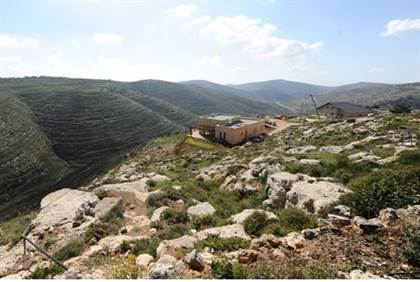
img557200Adei Ad is located in the Shiloh bloc north of JerusalemMendy Hechtman/Flash 90

Security source says ‘no question’ US Consulate staff pointed their weapons during Friday confrontation. Planned provocation or blunder?

****************

The full details of Friday’s clash between residents of the Jewish village of Adei Ad in Samaria and a delegation from the US Consulate in Jerusalem – which very nearly escalated into a fully-fledged shootout between the sides – are still emerging.

But those details which have emerged so far paint a worrying picture regarding the conduct of Consulate staff – who either willingly took part in a planned provocation, or else, in a staggering show of irresponsibility and unprofessionalism, recklessly blundered into a volatile and potentially deadly situation without the slightest idea of what they were doing.

Roughly two hours before the start of Shabbat, a group from the Consulate, escorted by armed (apparently American) guards and several residents of the Arab village of Turmus Ayya, descended en-masse and unannounced on an area within 50 meters of Adei Ad’s southwestern edge. Neither the IDF nor local residents were informed of the visit beforehand.

The Consulate delegation had apparently been “invited” by Palestinian Arabs from Turmus Ayya, many of whom hold US citizenship, ostensibly to see the site of what Arabs claim was an “attack” by Adei Ad residents on an olive orchard. That incident was originally reported Thursday night by the PA’s Bethlehem-based Maan News, which claimed that Jewish “settlers” had uprooted 5,000 olive trees – a rather incredible number to those familiar with quite what such a mammoth task would entail. Subsequent reports later revised the number down to 500, although no independent verification or evidence of the alleged damage has surfaced as yet.

Adei Ad residents, alarmed at the unannounced arrival of a large groupfrom a Palestinian village within meters of their community, rushed out to confront them. A brief verbal altercation ensued which quickly escalated, with youths from Adei Ad hurling rocks at the delegation, causing some damage to a Consulate vehicle.

At this point the accounts vary; witnesses from Adei Ad say Consulate staff drew their weapons – an M-16 and a handgun – following which residents called for backup from Adei Ad’s own security team. The Consulate, for its part, has denied any weapons were drawn at all. Either way, the American delegation beat a hasty retreat.

Notably, at no point during the confrontation was the IDF alerted by the Consulate team; only after leaving the scene did the Americans call the army, who quickly responded and launched an investigation, which is still ongoing.

img73901Damage to US Consulate vehicle Rabbis for Human Rights

Whatever the case, Jewish residents of Adei Ad and surrounding communities in the Shiloh bloc, located in the Binyamin region to the north of Jerusalem, are demanding answers. Angry residents say the incident was clearly a planned provocation, and have expressed their astonishment at the fact that an armed entourage from the US Consulate would arrive at a contested spot without coordinating their visit with the IDF in advance.

Indeed, regardless of the intent behind the visit, one Adei Ad resident pointed out that it was a clear recipe for disaster.

Apart from being the location of a protest in December 10th in which senior PA official Ziad Abu Ein died of a heart attack, the site of Friday’s confrontation is also the precise spot where a group of Palestinians attempted to infiltrate Adei Ad just two weeks ago.

“Two weeks ago at that exact place a horse was stolen,” said the resident, who asked to remain anonymous. “At 10 p.m. that same night dozens of Arabs from a nearby village came up to Adei Ad at the same spot, and residents came out to keep them away.”

Recounting Friday’s incident, he said residents had no idea Consulate staff were present at all. All they saw, he said, was “Arabs approaching, accompanied by what looked like a group of Europeans – we didn’t know who they were exactly. Often foreign anarchists join the Arabs in carrying out violence or provocation.”

Due to the tense relations between Jews and Arabs in the area, Arab farmers must contact the IDF before working land that abuts Adei Ad in order to avoid any confrontations. For their part, Adei Ad residents have long complained that they have been regularly targeted by Arab thieves and vandals.

“About two years ago a group of Arabs actually came right up to my house, right into the enter of Adei Ad, and stole a whole herd of sheep. In the past they’ve stolen horses, they stole a tractor, building equipment,” the resident recounted.

“The Arabs know that if they want to come that close to Adei Ad to do agricultural work they need to let the army know first to escort them. So any time Arabs approach without army supervision – particularly in that place where two weeks ago there was an incident – that’s a sign that they are coming to cause trouble… to attack or damage property,” he added.

He said locals had long given up on the prospect of receiving help from police, who he accused of totally avoiding their responsibilities and only agreeing to investigate Palestinian accusations against them.

“We receive no backing from the police,” he lamented. “Every time there is an incident of robbery by the Arabs the military refuses to deal with it because they don’t look at it as life-threatening; and the police… they tell us that it’s out of their jurisdiction.

“On the other hand, every time the Arabs steal something or cause trouble they then go and report us to the police – that’s how they work – so it’s always a one-sided investigation, because the police claim they have no jurisdiction over the Arab villages, only over us! No one has ever been charged, no property has ever been returned.”

He emphasized that despite the negative characterization of Adei Ad and surrounding Jewish communities in the area by some media outlets, residents are not interested in trouble and just want to get on with their daily lives in peace.

“We have much better things to do with our lives – we have our children and families, and we have jobs,” he said. “We don’t enjoy going out and having rock-throwing fights… no one seems to realize… but we feel we are under threat and that if we don’t do it the next step is a terrorist attack.”

Responding to American denials that Consulate staff pointed their guns at residents, a local security source said there was “no question” they hadindeed drawn their weapons, based on the individual testimony of numerous witnesses.

The security source, who also asked to remain anonymous, said one American “with ginger hair” was seen pointing his pistol at residents, who were unarmed, from inside of his car after rolling down the window. The other armed man then did the same with an M-16 rifle.

It was then that the situation threatened to get out of control.

“News spread that some people had approached the town with weapons, and they called for help,” prompting armed members of the local civilianfirst-response team to rush to the site, he recounted.

Luckily, “at that point it seems like the Americans thought it would be a good time to leave… and after that there was a brief confrontation between the Arabs and (Jewish) residents until the army arrived.”

He said that although an investigation was still ongoing, the conduct of the Consulate delegation was “suspicious.”

“Why didn’t they call anyone while the confrontation was going on?” he asked.

He also described the “strange” behavior of the Consulate guards when they were finally met by IDF forces and first-responders, describing them as looking sheepish and, unprompted, immediately insisting they hadn’t drawn their weapons.

Marc Prowisor, a resident of the nearby town of Shiloh, said the latest confrontation posed some “difficult questions.”

“Were members of the American Consulate knowingly taking part in a larger provocation – which is against the law?” asked Prowisor who, as Director of the One Israel Fund charity which helps secure local communities, is in regular contact with local security forces.

Islamic State Cell Detained by IDF in Hebron‏, Special Unit Established to Track Activities

January 4, 2015

Islamic State Cell Detained by IDF in Hebron‏, Special Unit Established to Track Activities, Algemeiner, Dave Bender, January 4, 2015

ISIS-militants-300x266

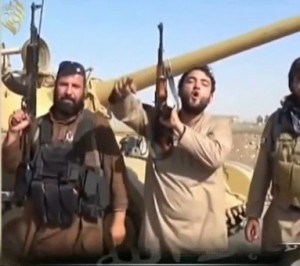
ISIS Militants. Photo: Screenshot, Fox News Sunday

“The IDF is deeply concerned with the fact that IS’s videos affect the Palestinian public which is very frustrated with its leadership; we are following this potential phenomenon closely,” the senior official said.

**************

The Israel Security Agency (Shin Bet) and the IDF in November busted what it revealed Sunday was a three-member Islamic State (IS) terror cell in Hebron, Israel’s Walla News reported, as the army said it has ratcheted up surveillance of the growing regional threat.

Officials said they suspected the trio of planning to carry out attacks in Israel including bombings against the IDF. One of the detainees admitted to planning to kill a local Jewish resident at nearby “Abraham’s Well.”

Ahmed Wadeh Salah Shehadeh, 22, Muhammad Fayyad Abd al-Qader, 21, and Ktzai Ibrahim Dib Maswadeh, 23 admitted to interrogators that they had established the military cell, constructed several bombs, and plotted to kill an Israeli soldier and use his weapons and uniform in a shooting attack.

The cell had actually set off to perpetrate the attack, but did not follow through for reasons not detailed in the report.

Their cases were transferred to court in recent days for indictment on offenses of membership and activity in an unlawful association, and other, unspecified charges.

Also on Sunday, Israel’s Channel 2 News reported that army intelligence recently dedicated a separate force to exclusively focus on IS activities, particularly across social media.

“We have made adjustments inside the IDF’s intelligence-collecting units because we came to the understanding that IS is breaking historic boundaries,” the commander of the “Hatzav,” intelligence unit said.

“Most of the information we gather comes from the internet; IS does not belong to a particular region in which we may have sources,” he noted.

Previously, the IDF primarily tracked IS via its division in charge of Syria. However, senior officials soon began to understand that the organization was a unique phenomena.

“Once we saw the first beheading videos we understood IS was something new, never seen before,” according to the unit commander.

“The IDF is deeply concerned with the fact that IS’s videos affect the Palestinian public which is very frustrated with its leadership; we are following this potential phenomenon closely,” the senior official said.

The recent arrests in Hebron apparently bear out that warning about the emerging threat.

A Sad State of Affairs: The Kerry Record

January 2, 2015

A Sad State of Affairs: The Kerry Record, World Affairs JournalJoshua Muravchik, November/December, 2014

(Kerry likely agrees with Obama as to his quite foreign foreign policies and, equally likely, we are stuck with both at least until Obama leaves the White House.

Kerry I'm an idiot

The most bothersome current aspects of Obama-Kerry foreign policies are the extent to which they trust Iran and how they deal with it and the P5+1 negotiating group. — DM)

John_Kerry_and_Benjamin_Netanyahu_July_2014 (1)

Although Kerry’s anti-American ideology has moderated to some degree from his fiery days as an antiwar leader, he has misrepresented but never repudiated his past. Especially consistent has been his inclination to see the best in America’s enemies, from Madame Binh to Comandante Ortega to Bashar Assad. Israelis were shocked this summer that Kerry came up with a plan molded by Turkey and Qatar to fit the interests of Hamas at their own expense. Had they known him and his record better, they might not have been.
***************

The Gaza war of July and August 2014 occasioned the sharpest frictions in memory between the United States and Israel, highlighted by a cease-fire proposal offered by Secretary of State John Kerry that Israel’s security cabinet rejected unanimously. Kerry’s plan envisioned a seven-day cease-fire, during which the parties would negotiate “arrangements” to meet each of Hamas’s demands about the free flow of people and goods into Gaza and the payment of salaries of Hamas’s tens of thousands of employees. As for Israel’s demands about destruction of tunnels and rockets and the demilitarization of Gaza, these were not mentioned at all, except in the add-on phrase that the talks would also “address all security issues.”

The document cited the important role to be played by “the United Nations, the Arab League, the European Union, the United States, Turkey, [and] Qatar.” Conspicuous by their absence from this list were Israel, Egypt, and the Palestinian Authority. These three had also not been invited to the Paris meetings where Kerry worked on his ideas with leaders of the countries and bodies mentioned.

Barak Ravid, diplomatic correspondent for the liberal Israeli newspaper Haaretz, wrote that the proposal “might as well have been penned by Khaled Meshal [head of Hamas]. It was everything Hamas could have hoped for.” The centrist Times of Israel’s characteristically circumspect editor, David Horovitz, branded Kerry’s initiative “a betrayal.” And left-leaning author Ari Shavit commented that “Kerry ruined everything. [He] put wind in the sails of Hamas’ political leader Khaled Meshal, allowed the Hamas extremists to overcome the Hamas moderates, and gave renewed life to the weakened regional alliance of the Muslim Brotherhood.”

Turkey and Qatar are the mainstays of that alliance and were chosen by Kerry as his principal interlocutors because they are Hamas’s main backers. This brought protests from the Palestinian Authority, led by President Mahmoud Abbas’s movement, Fatah, the secularist rival to Hamas. That group declared that “whoever wants Qatar and Turkey to represent them can emigrate and go live there. Our only legitimate representative is the PLO.”

The shock of Palestinian and Israeli leaders would have been less, however, if they had been more familiar with the record of John Kerry. Spurning America’s friends in pursuit of deals with their nemeses was perfectly in character for the secretary of state. The hallmark of his career has been to denigrate America itself, while supporting the claims of its enemies.

That career began in 1969, when, months after returning from a tour of duty in Vietnam, Kerry sought and received a military discharge so that he might run for Congress. His campaign as a peace candidate sputtered, but his authenticity as a Vietnam vet established him as a presence in the burgeoning antiwar movement. In May 1970, he traveled to Paris for an unpublicized meeting with Viet Cong representatives, and, perhaps at their suggestion, he joined up upon his return with Vietnam Veterans Against the War. VVAW was headed by Al Hubbard, a former Black Panther. Kerry was instantly given a top role, twinning with Hubbard as the public face of the organization.

At a VVAW protest in Washington, DC, in April 1971, Kerry joined other veterans in throwing away their military medals in front of news cameras. The entire demonstration was punctuated by Kerry’s appearance before the Senate Foreign Relations Committee, where he offered dramatic testimony about American atrocities in Vietnam based on accounts heard at a VVAW inquest a few months earlier. He spoke of veterans who said:

They had personally raped, cut off ears, cut off heads, taped wires from portable telephones to human genitals and turned up the power, cut off limbs, blown up bodies, randomly shot at civilians, razed villages . . . poisoned food stocks, and generally ravaged the countryside.

These acts, Kerry emphasized, “were not isolated incidents but crimes committed on a day-to-day basis with the full awareness of officers at all levels of command.”

When, at the behest of aghast senators, the Naval Criminal Investigative Service conducted a formal inquiry into the stories presented at the VVAW inquest, it reported that many of the VVAW witnesses cited by Kerry refused to cooperate, although promised immunity. Others were clearly crackpots, and several swore, and provided witness corroboration, that they had not participated at the inquest at all and had no idea who had appeared in their names. The entire exercise had been inspired and largely engineered by Mark Lane, whose book on the same subject earlier that year had been panned by New York Times columnist James Reston Jr. as “a hodgepodge of hearsay,” while that paper’s book reviewer, Neil Sheehan, who had reported from Vietnam and would soon break the Pentagon Papers, revealed that some of Lane’s “witnesses” had not served in Vietnam. (The political scientist Guenter Lewy documents these events in his 1978 book America in Vietnam.)

In August 1971, four months after his Senate appearance, Kerry made another trip to Paris, to meet with Madame Nguyen Thi Binh, foreign minister of the Viet Cong, this time in full view, for his first exercise in international diplomacy. He returned touting the “peace plan” of the Viet Cong, explaining: “If the United States were to set a date for withdrawal, the prisoners of war would be returned.” Although he frequently accused American leaders of lying, he took the Communist leaders’ statements at face value, asserting that their peace plan “negates very clearly the argument of the president [Nixon] that we have to maintain a presence in Vietnam to use as a negotiating [chip] for the return of those prisoners.”

Kerry’s dismissal of the statements of US leaders as lies and his credulity toward those of the Vietnamese Communists reflected a broader difference in attitude toward the two sides to the conflict. Ho Chi Minh, who had spent long years as a henchman of Stalin’s, serving the Comintern in several countries, was in Kerry’s admiring eyes “the George Washington of Vietnam” who aimed only “to install the same provisions into the government of Vietnam” that appeared in the American Constitution. America, in contrast, had itself strayed so far from those principles that it needed a “revolution” to restore them.

Kerry’s colleagues in VVAW undoubtedly shared this sentiment, and in November 1971, at a conference of its leadership in Kansas, the group considered just how far down the path of revolution it was willing to go. It debated, although ultimately rejected, a proposal to commence a campaign of terrorist violence and assassination of pro-war US senators. When he ran for president in 2004, Kerry denied he had been present at this conclave, but when FBI files secured by the Los Angeles Times under the Freedom of Information Act placed him there, he retracted that denial in favor of the statement that he had “no personal recollection” of it.

Is this plausible? Gerald Nicosia, author of a highly sympathetic history of the antiwar movement, reported, in May 2004, that “several people at the Kansas City meeting recently said to me or to mutual friends that they had been told by the Kerry campaign not to speak about those events without permission.” Why the urgency to cover up? And how would the campaign know who was there, that is, whose silence to seek, if Kerry had no recollection of the meeting? One of Nicosia’s interviewees, John Musgrave, said “he was asked by Kerry’s veterans coordinator to ‘refresh his memory’ after he told the press Kerry was in Kansas City. Not only is Musgrave outraged that ‘they were trying to make me look like a liar,’ but he also says ‘there’s no way Kerry could have forgotten that meeting—there was too much going on.’”

This puts it mildly: the event was memorably raucous, with debates over the proposals for violence and for napalming the national Christmas tree, furious factional fighting, the discovery of eavesdropping bugs in the building leading to a quick move to another location, and above all an angry showdown between Kerry and Hubbard over revelations that the latter had never been in Vietnam. This particular contretemps was punctuated by Hubbard’s dramatically pulling down his pants to show scars he claimed he sustained in Vietnam. The mayhem culminated in Kerry’s announcing his resignation from the group’s executive. And Kerry had “no personal recollection” of being there?

Although Kerry appeared as a speaker for VVAW for about a year following this resignation, he then faded from national view for a decade, climbing the ladder of local and state politics in Massachusetts before winning election to the US Senate in 1984. The Senate, he later said, “was the right place for me in terms of . . . my passions. The issue of war and peace was on the table again.” What put it on the table were the anti-communist policies of President Ronald Reagan, which Kerry deeply opposed. A year earlier, Reagan had ordered the invasion of Grenada, which Kerry scorned as “a bully’s show of force [that] only served to heighten world tensions and further strain brittle US-Soviet and North-South relations.”

In contrast, Kerry ran on a platform of the Nuclear Freeze, a popular movement opposing US plans to counterbalance a large Soviet nuclear buildup over the previous decade. Kerry made sure to score one hundred percent on a test of candidates’ positions presented by a group called Freeze Voter ’84, and he proposed to cut the defense budget by nearly twenty percent, including “cancellation of twenty-seven weapons systems” and “reductions in eighteen other[s],” according to the Boston Globe. He cited his own work with VVAW as a counterpoint: “We were criticized when we stood up on Vietnam. . . . But we’ve been borne out. We were correct. Sometimes you just have to stand and hold your ground.”

In the Senate, he secured a coveted seat on the Foreign Affairs Committee and turned his attention to the fraught issue of policy toward Central America, a small region that had assumed inordinate geopolitical importance by becoming one of the front lines in the Cold War. A Marxist-Leninist party, the Sandinista National Liberation Front, had seized power in Nicaragua and was aiding likeminded movements in El Salvador and other nearby states while the Reagan administration supported anti-Communist guerrillas inside Nicaragua, the so-called “Contras.”

Kerry lent his name to Medical Aid for El Salvador, which gave non-lethal aid to the Communist side in that civil war. On February 16, 1982, an Associated Press story quoted actor Ed Asner, leader of a Hollywood group that raised much of the funding for this project, as explaining that “medical supplies are to be purchased in Mexico and shipped clandestinely to the Democratic Revolutionary Front in El Salvador.” However, the issue of US aid to El Salvador’s anti-Communist government became overshadowed by debate about aid to the Nicaraguan “Contras.”

As the Senate neared a decisive vote, Kerry and Senator Tom Harkin undertook a dramatic maneuver to try to head off approval of the Reagan administration’s request for Contra funding. They flew to Managua, the Nicaraguan capital, for their own summit meeting with the country’s strongman, “Comandante” Daniel Ortega. The results resembled those of his 1971 meeting with Madame Binh. Ortega handed Kerry a “peace plan” according to which the US would first end all aid to the Contras, and the Sandinistas would then initiate a cease-fire and restore civil liberties. Kerry justified undercutting the US government in this way by faulting Reagan’s failure “to create a climate of trust” with the Sandinistas. He, in contrast, offered them trust in abundance, calling Ortega’s plan “a wonderful opening.” He took to the Senate floor to say, “Here, in writing, is a guarantee of the security interest of the United States.”

A year later, in 1986, in another Senate debate on Contra aid, Kerry voiced one of the odder claims about his Vietnam experience. Warning against the slippery slope of military involvement and against the duplicity of our own government, Kerry delivered a floor speech containing this assertion:

I remember Christmas of 1968, sitting on a gunboat in Cambodia. I remember what it was like to be shot at by Vietnamese and Khmer Rouge and Cambodians, and have the president of the United States telling the American people that I was not there; the troops were not in Cambodia. I have that memory which is seared—seared—in me.

The “seared” part was a nice touch, especially in view of the fact that the whole thing had not happened (although Kerry had been repeating the story since as early as 1979). In the course of Kerry’s 2004 presidential campaign, the Swift Boat Veterans for Truth, former crewmen on the type of vessel on which Kerry served who were angered by his antiwar activities, attacked this claim among other aspects of Kerry’s military history. In this case, however, unlike in response to some points raised by Kerry’s detractors, no shipmate of Kerry’s could be found to corroborate his version. Soon, his spokesmen began to hedge. One aide explained that Kerry’s boat had been “between” Vietnam and Cambodia. But the two countries are contiguous: there is no “between,” so another spokesman backed down further, explaining that Kerry had merely been “near” Cambodia.

Then, Douglas Brinkley, who authored a laudatory history of Kerry’s military service, issued another explanation, apparently at the behest of the campaign. On Christmas 1968, the moment of Kerry’s “seared” memory, he was fifty miles from Cambodia, said Brinkley, but his boat “went into Cambodia waters three or four times in January and February 1969.” Oddly, however, Brinkley’s book, which covered those two months in painstaking detail at a length of nearly one hundred pages, even to the extent of locating the sites of battles, made no mention of Kerry’s having crossed into Cambodia. And the campaign soon pulled the rug from under Brinkley by issuing a new claim, namely, that Kerry’s boat had “on one occasion crossed into Cambodia.” Three of Kerry’s shipmates, two of whom were supporting his campaign, categorically denied even this minimized claim.

In that, they are supported by no less a source than Kerry himself, in the form of a journal he kept while on duty. Substantial passages of it are reproduced in Brinkley’s book, and one of them reads:

The banks of the [Rach Giang Thanh River] whistled by as we churned out mile after mile at full speed. On my left were occasional open fields that allowed us a clear view into Cambodia. At some points, the border was only fifty yards away and it then would meander out to several hundred or even as much as a thousand yards away, always making one wonder what lay on the other side.

He was never to learn the answer because this diary entry was from his final mission.

Kerry was of course right to link Central America to Southeast Asia. They were both nodes in the Cold War, the epic struggle that defined international politics for forty years, including the first two decades of Kerry’s political engagement, from the time he returned from Vietnam in 1969 until the Berlin Wall came down in 1989. Whatever the rights and wrongs of America’s entry into Vietnam, or its actions in Central America or elsewhere, Kerry perverted the basic issue of the Cold War, always viewing America’s actions as bellicose and malign, while casting those of the Communists, like “George Washington” Ho Chi Minh, in the most favorable light.

To many, the Cold War’s benign denouement—the fall of the Wall and the USSR’s disappearance into the ash bin of history—vindicated Reagan’s approach, but Kerry appears to have entertained no second thoughts despite these outcomes. When it came to addressing post–Cold War issues, he remained reflexively averse to the exercise of American power. Kerry had lamented as “not proportional” Reagan’s 1986 bombing of Libyan dictator Muammar el-Qaddafi’s residence in response to a Libyan terror attack on US servicemen in Germany. The Middle East was also the scene of the first military showdown after the Cold War, when Saddam Hussein’s Iraq swallowed whole the neighboring state of Kuwait, in 1990. At the time, Kerry opposed the Bush administration’s request for authorization of military action, saying that those “of the Vietnam generation . . . come to this debate with a measure of distrust [and] a resolve . . . not [to be] misled again.” He concluded his Senate speech by reading a passage from an antiwar novel by the American Communist Dalton Trumbo.

With the Cold War’s end, and America’s demonstration of will and strength in driving Hussein’s forces from Kuwait, the defining issue of the 1990s became the wars of Yugoslavia’s dissolution. Here, the prime issue was whether or not to lift an international arms embargo that rendered Bosnia’s Muslims naked before their predators, the well-armed Serbs. As public opinion reacted to news accounts of the grisly results of this imbalance, the Senate voted to lift the embargo, over the objections of Kerry, who helped to lead the opposition.

With the terrorist attacks of September 11, 2001, the American public was awakened from its post–Cold War indifference toward foreign affairs. A fierce patriotism burst forth, and with it a determination to take down those who had attacked us. Thus, preparing for a 2004 presidential bid, Kerry moved to reconfigure his image. The antiwar veteran was suddenly replaced by the military hero, and the Democratic nominating convention was replete with uniforms and military gestures, highlighted by Kerry’s sharp salute to the assemblage while uttering the words, “reporting for duty.” Already, his rejected service medals had miraculously reappeared mounted and framed on his Senate office wall. Asked how that was possible, as he had been photographed throwing them away, Kerry explained that the medals he tossed were not his own but actually belonged to another veteran.

The dramatic reincarnation did not quite come off, as Kerry was dogged by Vietnam veterans, led by fellow Swift Boat crewmen, still furious at how he had blackened their names. And the awkwardness of his transformation was symbolized by his much-ridiculed explanation of his stance on funding the 2003 US invasion of Iraq: “I actually did vote for the $87 billion before I voted against it.”

In his later years in the Senate, Kerry made the issue of Syria his own. He took several trips to Damascus where, according to a June 2011 account in the Wall Street Journal, he “established something approaching a friendship with [Syrian dictator Bashar] Assad.” When Barack Obama came to office, he made Kerry his point man in efforts to improve US-Syrian relations. Kerry put his endorsement on diplomatic proposals he received in Damascus, including an offer by Assad to engineer a Palestinian unity government embracing Fatah and Hamas. The benefits to the US, not to mention Israel, of such unity were not self-evident, but in any event, talks between the two Palestinian factions were already under way, mediated by Egypt, which was closer to Fatah. Why it would be advantageous to switch the sponsorship to Syria, the ally of Hamas, was hard to grasp. Nonetheless, Kerry saw in Assad’s proposal the prospect of “a major step forward in terms of how you reignite discussions for the two-state solution . . . . Syria indicated to me a willingness to be helpful in that respect.” In all, as the Journal put it, “Kerry . . . became . . . Assad’s champion in the US, urging lawmakers and policymakers to embrace the Syrian leader as a partner in stabilizing the Mideast.”

In sum, although Kerry’s anti-American ideology has moderated to some degree from his fiery days as an antiwar leader, he has misrepresented but never repudiated his past. Especially consistent has been his inclination to see the best in America’s enemies, from Madame Binh to Comandante Ortega to Bashar Assad. Israelis were shocked this summer that Kerry came up with a plan molded by Turkey and Qatar to fit the interests of Hamas at their own expense. Had they known him and his record better, they might not have been.

Palestinians submit revised statehood draft to UN

December 30, 2014

Palestinians submit revised statehood draft to UN

Washington calls resolution ‘unconstructive,’ signaling it will veto the bid when it comes up for a Security Council vote

By AFP and Times of Israel staff

December 29, 2014, 10:54 pm

via Palestinians submit revised statehood draft to UN | The Times of Israel.


Palestinian Authority President Mahmoud Abbas speaks during a press conference at the Ministry of Foreign Affairs in Algiers, December 23, 2014. (photo credit: AFP/Farouk Batiche)

Palestinian Authority President Mahmoud Abbas speaks during a press conference at the Ministry of Foreign Affairs in Algiers, December 23, 2014. (photo credit: AFP/Farouk Batiche)


UNITED NATIONS — The Palestinian leadership on Monday presented changes to a UN draft resolution on statehood that could come up for a vote at the Security Council as early as this week.

The United States again rejected the text that would pave the way to a Palestinian state by setting a 12-month deadline to reach a final peace deal and calling for Israel to withdraw to the pre-1967 lines by the end of 2017.

Arab ambassadors endorsed the text, which contains new provisions on declaring East Jerusalem the capital of a Palestinian state, settling the issue of Palestinian prisoner releases and halting Jewish settlements.

But a final decision on the timing for a vote on the draft resolution at the Security Council rests with Palestinian and Jordanian leaders.

“Both our leaderships will be discussing, to find the best way and the best timing to vote on the Security Council resolution,” Jordanian Ambassador Dina Kawar told reporters.

“Realistically, it could happen tomorrow,” added Palestinian envoy Riyad Mansour.

The draft resolution was formally presented to the council on December 17, but the United States quickly rejected the text over Palestinian insistence that deadlines be set.

The Palestinians had said they were open to negotiations on the text and Jordan began talks on a measure that could garner a consensus among the 15 council members.

But the latest push showed that prospects for a resolution that would satisfy both the Palestinians and the United States were bleak.

Discussions on the draft resolution come amid mounting international alarm over the ongoing violence and the failure to re-start negotiations.

US Secretary of State John Kerry spoke to Palestinian Authority President Mahmoud Abbas on Sunday about the latest Palestinian push at the United Nations.

“We don’t think this resolution is constructive,” said State Department spokesman Jeff Rathke. “We don’t believe this resolution (…) advances the goal of a two-state solution.

“We think it sets arbitrary deadlines for reaching a peace agreement and for Israel’s withdrawal from the West Bank, and those are more likely to curtail useful negotiations than to bring them to a successful conclusion.

“Further, we think that the resolution fails to account for Israel’s legitimate security needs, and the satisfaction of those needs, of course, integral to a sustainable settlement,” Rathke said.

It remained unclear if the Palestinians would seek a quick vote or hold off until January 1, when five new members with a pro-Palestinian stance join the Security Council.

Diplomats said it was unlikely that the resolution would garner nine votes under the current makeup of the council — a scenario that would allow the United States to avoid resorting to its veto power.

A US veto risks angering key Arab allies, including partners in the US-led coalition carrying out airstrikes against the Islamic State in Syria and Iraq.

Angola, Malaysia, New Zealand, Spain and Venezuela begin their two-year stint at the council on January 1, replacing Argentina, Australia, Luxembourg, Rwanda and South Korea.

Several European parliaments have adopted non-binding motions calling for recognition of Palestine and there are fears of a return to war unless peace efforts are revived.

The Palestinians have warned that if the bid to win support for a UN resolution fails, they are prepared to join the International Criminal Court to file suits against Israel.

They will also take action at the UN General Assembly and in other international fora to force the issue of Palestinian statehood on the agenda.

“If the Arab-Palestinian initiative submitted to the Security Council to put an end to occupation doesn’t pass, we will be forced to take the necessary political and legal decisions,” Abbas said last week.

“If it fails, we will no longer deal with the Israeli government, which will then be forced to assume its responsibilities as an occupier.”

Israel’s Prime Minister Benjamin Netanyahu has repeatedly rejected efforts to impose terms via the UN, and calls for a negotiated resolution of the conflict. However, he has refused to restart talks with the Abbas-led PA so long as it remains partnered with Hamas, the Gaza-based Islamist terror group that seeks to destroy Israel, in a Palestinian unity government.

Exclusive: Terror Org. Harbored by Pakistani Gov’t Now Backs ISIS

December 29, 2014

Exclusive: Terror Org. Harbored by Pakistani Gov’t Now Backs ISIS, Clarion ProjectRyan Mauro, December 29, 2014

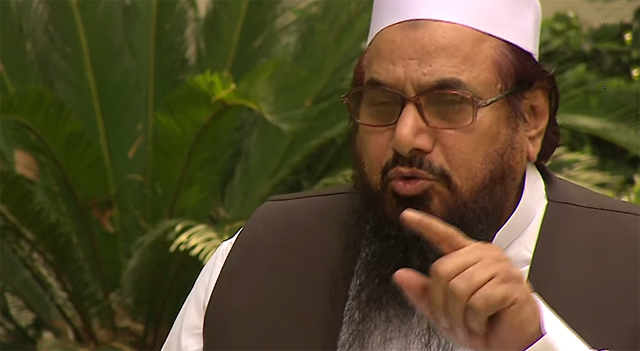
Hafiz-Saeed-IPHafiz Saeed, leader of the Jamaat-ut-Dawa terror network has a $10 million bounty on his head issued by the U.S. government.

Saeed is also on record as criticizing the Islamic State for massacring Muslims as “apostates” and suggested it should focus on destroying Israel. Earlier this month, he said he’d say to the Islamic State, “I invite you, you are sitting near the Israel boarder, go and destroy the Israeli Jewish [sic].”

*************

The Clarion Project has learned from a first-hand source in Pakistan that the leader of Jamaat-ut-Dawa, a major terrorist group harbored by the Pakistani government, expressed support for the Islamic State in a recent sermon.

The story breaks as Pakistani embassy is condemning the television show Homeland for depicting Pakistani government officials as complicit in terrorism.

The Clarion Project’s source, whose identity has been verified and will be referred to as “Aamir,” recently attended a public sermon by Jamaat-ut-Dawa (JUD) leader Hafiz Muhammad Saeed at the group’s Jamia Markaz al-Qadsi headquarters in Lahore. JUD is a rebranding of Lashkar-e-Taiba (LET). The group is best known for the 2008 attacks in Mumbai, India that killed over 150 innocents.

The U.S. State Department lists JUD/LET as a Foreign Terrorist Organization and says it has links to Harakat ul-Jihad-i-Islami in Bangladesh, the Indian Mujahideen and Jaish-e-Mohammed. The U.S. Treasury Department says it works with Al-Qaeda, the Taliban and the Haqqani Network and targets U.S. and Afghan forces.

The event was heavily guarded with Saeed’s own security team equipped with assault rifles. The bulk of the sermon was dedicated to promoting jihad against the U.S. and India in order to “save Islam.” Saeed explicitly told attendees to donate to jihad and even recommended registering at a website to fight. Other reports have confirmed the placement of donation boxes for jihad at his events.

Saeed said that the current jihad against America is the same one that was waged against the Soviet Union and that the U.S. is already showing it will suffer the same fate. He boasted that America is so intimidated by him that it is even afraid of his name. Attendees responded with chants of jihad.

Aamir’s report matches Saeed’s bravado. After the U.S. announced a $10 million award for his information leading to his arrest, he held a public rally next to a Pakistani base that is only 40 minutes from the U.S. embassy.

“America should give that reward money to me,” Saeed joked. “I am here. I am visible.”

According to Aamir, Saeed explicitly endorsed jihad against the U.S. in Afghanistan, against India in Kashmir and against the U.S. in Iraq, where American forces are battling the Islamic State.

Saeed’s group is taking a similar stance as other Al-Qaeda-linked groups in endorsing the Islamic State as a group but stopping short of granting legitimacy to Abu Bakr al-Baghdadi as a caliph.

However, Saeed is also on record as criticizing the Islamic State for massacring Muslims as “apostates” and suggested it should focus on destroying Israel. Earlier this month, he said he’d say to the Islamic State, “I invite you, you are sitting near the Israel boarder, go and destroy the Israeli Jewish [sic].”

What Saeed said to an attendee indicates he is privately more supportive of the Islamic State than his public speeches reveal. Someone from the audience approached Saeed about his implied declaration of the Islamic State as an ally and asked about the group’s presence in Pakistan.

The source was shocked at Saeed’s answer. He said that the Islamic State represents pure Islam and predicted that it would take over Pakistan and seize its nuclear weapons. Saeed emphasized that the Islamic State means no harm towards Sunnis and so it should not be feared.

The immediate focus on nuclear weapons is in line with previous comments. In June, Saeed praised Pakistan’s nuclear arsenal and he took part in a rally in May celebrating the anniversary of Pakistan’s first nuclear weapons test.

In 2011, Saeed and another JUD leader said at a rally that Pakistan must wage jihad against India over Kashmir, even if it means nuclear war. Saeed has reportedly said that Pakistan should share its nuclear weapons with other Islamic countries. Abdul-Qadeer Khan, the “father” of Pakistan’s nuclear weapons arsenal, is linked to JUD/LET.

Aamir said that Islamist groups in the country are becoming more supportive of the Islamic State group, even if they don’t swear allegiance to it or endorse al-Baghdadi as caliph. Increasing numbers of individuals are pledging to it and even putting pro-Islamic State bumper stickers on their cars, he said.

Even tepid support from JUD would dramatically boost the Islamic State’s fortunes in Pakistan and Afghanistan, where its support is already rising. The Islamic State has been endorsed by the Jundullah terrorist group and six Pakistani Taliban commanders have sworn allegiance. It is also approaching Lashkar-e-Jhangv.

JUD is considered the “most dangerous terrorist group operating in South Asia” besides Al-Qaeda. It has been estimated to have 150,000 members, but a Pakistani journalist named Arif Jamal who wrote a book about JUD/LET says it commands at least 500,000 armed men.

It operates like a “state within a state” in Pakistan. It has boasted of having over 200 schools, as well as hospitals, charities, mosques and even ambulances and blood banks. The group has over 2,000 doctorsin its medical services and 60,000 subscribers to its monthly magazine published in Urdu.

In 1998, Saeed vowed his group would “ultimately plant the flag of Islam on [New] Delhi, Tel Aviv and Washington. All evil in the world emanated from the White House, which would be blown up…”

Its fierce Islamism and anti-Americanism creates a pool of recruits for groups like the Islamic State and encourages homegrown terrorism. It has an English website and Jamal says it has a major presence in the United Kingdom and a European headquarters in Paris.

“The U.S. and British governments have both acquired overwhelming evidence that ‘homegrown’ terror cells seeking instruction at ‘real’ terrorist training camps frequently end up at either facilities run by LET or JEM [Jaish-e-Mohammed]. JEM is essentially seen as an equal substitute for LET if the latter is unavailable,” says terrorism expert Evan Kohlmann.

The revelation that Saeed and JUD is speaking supportively of the Islamic State is an embarrassment for Pakistan when its government is railing against the American television show Homeland for presenting the Pakistani government as a sponsor of terrorism.

Aamir said the world needs to focus on the entire Pakistani infrastructure that promotes a “fascist totalitarian ideology.”

He named JUD, Jaish-e-Mohammed, Lashkar-e-Jhangvi, Tehreek-e-Nafaz-e-Shariat-e-Mohammadi and Tablighi Jamaat as Islamist groups who openly promote this ideology in Pakistan.

The madrasses indoctrinate children with a “sense of siege” by constantly saying that Islam and Muslims everywhere are facing a dire threat from non-Muslim oppressors and that only Muslims are fit to rule.

He said anti-Semitism is common in their education and that infidel adversaries are portrayed as cowards who run from confrontations with devout Muslims. There are even prayers for the elimination of Israel and poetry about jihad.

The Islamist clerics often preach that “Islam is a religion of peace,” but that does not mean non-violence. The violent jihad waged by “peaceful” Muslims is a response to the oppression of Zionists,infidels and kuffars. These same mosques will have copies of “44 Ways to Support Jihad” by Anwar al-Awlaki, for example.

When these clerics do condemn terrorism committed by Muslim extremists, it is framed as a byproduct of non-Muslim aggression (especially U.S. drone strikes) or even the work of an anti-Islam conspiracy.

Aamir expressed deep concern about the negative impact on society and especially women due to the Islamists’ use of sexual propaganda in indoctrinating boys before they even reach puberty. He said that stories of the Taliban and other terrorists’ sexually abusing boys are not hard to come by.

Pakistan’s status as an “ally” must not depend on its arrests of Al-Qaeda leaders like Khalid Sheikh Mohammed or its offensive against the Pakistani Taliban in North Waziristan. This is done because of their attacks inside Pakistan and is not part of a strategy against all Islamist terrorists and radicals.

From 2002 through 2014, Pakistan has been the recipient of $28 billion in U.S. aid. If Pakistan wants to be an ally of the U.S. and continue to reap those benefits, it needs to dismantle JUD and every other Islamist terrorist network operating from within its borders.

As it stands now, T.V. shows like Homeland are closer to reality than fiction.

Europe’s Year of the Jihadist

December 29, 2014

Europe’s Year of the Jihadist, Investigative Project on Terrorism, Abigail R. Esman, December 29, 2014

(But the world is less violent than it has ever been. It is also more tolerant. Thus spake Obama.

— DM)

1107

Among the trends of 2014 – “Gone, Girl,” Lena Dunham, and $55,000 potato salad – was another the list-makers seem to have missed: it was also a very good year for Islamic jihad. And while this was true on the battlefields of Syria and the cities and villages of Pakistan, it was true, too, in more subtle ways throughout the West – and especially in Europe. It was, for instance, the year of Mehdi Nemmouche’s slaughter of four Jews at the Jewish Museum in Brussels.

It was the year that Belgium itself was named a “terrorist recruiting hub” by the Wall Street Journal. And in Germany, France, England, and the Netherlands, pro-Islamic State demonstrations laid bare the growing support of terrorism and Islamic jihad among Europe’s expanding Muslim population – all while politicians either stood back or even contributed to the praise.

Throughout 2014, Europeans faced pro-IS, anti-Jew demonstrations in Paris, Hamburg, Amsterdam, London and The Hague, and the establishment of “sharia zones” in London, Wupperthal, and elsewhere. True, such zones do not necessarily delineate areas in which sharia law, rather than state law, applies. But the term helps them define those largely-Muslim neighborhoods whose residents tend to be radical and who often support jihadist movements both at home and abroad.

Combined, these events signal the increasing success of Islamists who are working to change Europe from within – sometimes through violence, but more often through strategies known as “stealth jihad” – a way of applying social and political pressures to transform the current culture.

Take, for instance, the response of Josias van Aartsen, mayor of The Hague, to radical Muslims who called for the death of Dutch non-Muslims and Jews during pro-IS rallies in August: then on holiday, Van Aartsen declined to return home, ignoring even the throwing of stones at non-Muslims and the police. Only when a counter demonstration against IS was planned in the same, Muslim-majority neighborhood did Van Aartsen take action: he forbade it. “Too provocative,” he said.

Or there are the recently-leaked intelligence briefs in France, as reported by the Gatestone Institute, that “Muslim students are effectively establishing an Islamic parallel society completely cut off from non-Muslim students,” while “more than 1000 French supermarkets, including major chains such as Carrefour, have been selling Islamic books that openly call for jihad and the killing of non-Muslims.”

In England, an “Operation Trojan Horse” outlined plans to Islamize schools in Muslim neighborhoods. According to the Guardian, a government investigation of the program last summer found a “‘sustained, coordinated agenda to impose segregationist attitudes and practices of a hardline, politicised strain of Sunni Islam’ on children in a number of Birmingham schools.” Among those responsible for the “Operation” were the Association of Muslim Schools – UK and the Muslim Council of Britain – the same organization that, in 2011, declared that women who do not veil their faces “could be guilty of rejecting Islam.”

Ironically, it seems to have been England’s own culture that allowed the rise of Islamist teachings in its schools to begin with. Even Britain’s education secretary Nicky Morgan admitted to the New York Times that much of the operation’s success could be attributed to public “fear of being accused of racism and anti-Islamic views.” Not for nothing did former Obama advisor Lawrence Krauss declare the British “too polite” and “scared of offending ‘vocal and aggressive Muslims.'”

The government’s discovery of “Operation Trojan Horse” and immediate efforts to dismantle it are commendable, but it is difficult to assess the damage already done to Muslim children in the British schools. By some accounts, as many as 2,000 Britons have joined the (Sunni-led) jihad in Syria and Iraq. That includes the man known as “Jihadi John,” who beheaded U.S. journalists James Foley and Steven Sotloff. And, experts warn, the number of so-called “junior jihadis” – children under 10 who have become radicalized – is on the rise.

Not that such warnings are likely to do much good: The UK has, until recently, spent tremendous resources on programs aimed at preventing Muslim youth from joining militant groups, which have for the most part failed. “Having undertaken the ‘most significant domestic program by any Western country to foster a moderate version of Islam and prevent radicalization, the UK has effectively given up trying to stop jihadists from being created,” James Brandon, the former research director at one such program, told Reuters.

Despite such developments, European lawmakers have had a hard time figuring out how to deal with Muslim radicals, especially with returnees from Syria and Iraq. England is hardly the only place where politicians fear “offending” the sensibilities of Muslim groups. Although an estimated 450 Germans have joined the jihad in Syria, German Green Party domestic policy expert Irene Mihalic told the magazine Der Spiegel in September that tougher counterterrorism laws were unnecessary because “there are already ‘sufficient levers available to impose bans and limitations’ on terrorists and their supporters.” Majority parties apparently disagreed. Later that month, Germany became the first country to fully outlaw IS, along with all expressions of support for the terrorist group, from banners and graffiti to public demonstrations and endorsements by local mosques.

Such has hardly been the case in Denmark, though, where unwillingness to “offend” or “provoke” the country’s Muslim community has translated into a program that seeks to rehabilitate returning jihadists, rather than imprison them. In the country that boasts the second-largest number (per capita) of Muslims to join jihadist groups, returnees receive generous handouts in the form of government assistance in finding homes and jobs, or tuition aid in order to continue their education. In addition, the rehab program “does not try to change the fundamentalist beliefs of the returning fighters – as long as they don’t advocate violence,” CNN reports.

Evidently pampering jihadists isn’t working very well: Danish intelligence recently warned that returnees from IS and Al Nusra camps now pose a “significant” threat to the country. One jihadist profiled by CNN said that he plans to return to Syria to rejoin the caliphate once he completes his Danish government-funded education.

Other European governments have been reluctant to prosecute those recruiting for ISIS and other terrorist groups – groups that are in effect encouraging people to commit murder. In December, Dutch courts declared a 20-year-old woman “not guilty” of recruiting women to join the jihad in Syria on the grounds that women in IS are not permitted to fight – and hence cannot be considered terrorists. In another case, 23-year-old “Imad al-O” was found guilty of helping a 16-year-old girl travel to Syria via Egypt. His sentence? Three months prison time and 240 hours of community service.

Through it all, “lone wolf” radicals continue their attacks in European cities, such as the Dec. 21 attack in Dijon by a man who drove a car into a crowd of pedestrians, claiming he was “acting for the children of Palestine.”

The attack “for the children of Palestine” occurred just as French officials determined to join Sweden in recognizing a Palestinian state – a kind of international version, you might say, of England’s decision to stop trying to keep Muslim youth from radicalizing and becoming warriors for Islam. Unlike Kickstarter potato salads, it’s a trend we can well leave behind as we move into the new year.

Mahmoud Abbas: Failing the Palestinians and Peace

December 29, 2014

Mahmoud Abbas: Failing the Palestinians and Peace, Front Page Magazine, December 29, 2014

Mahmoud Abbas

[T]he increased authoritarianism of Abu Mazen is reflected in a recent survey by the Palestinian Center for Policy and Survey Research. It indicates that 66% of Palestinians are afraid to criticise Abu Mazen and the PA, and 80% consider the PA institutions to be corrupt and infected with nepotism.

***************

Mahmoud Abbas, (aka Abu Mazen) has been a failure as the Palestinian “Rais.” He failed to lead the Palestinian Authority (PA) toward peace with Israel, and he mismanaged the alleged goal to achieve statehood for the Palestinians. Instead of facing the tough issues and making compromises required in negotiating peace and statehood with the Israelis, Abbas chose an alliance with the Gaza controlled terrorist group Hamas. Following Abbas’ pact with Hamas last April, Israel broke off peace negotiations with the Palestinians, just days before the talks brokered by Secretary of State John Kerry were scheduled to expire.

Abbas isn’t only confusing Israelis, Americans, and is his Europeans patrons, he is perplexing his own Palestinian consituents. Following last summer’s Gaza War between Hamas and Israel, Abbas threatened to join the International Criminal Court (ICC) and saught to indict Israel on war crimes. PA Foreign Minister Riad al-Maliki met with the Chief Prosecutor of the ICC last August to explore ways of joining the court by PA President Abbas signing the Rome Statute.  When, however, the U.S. Congress threatened to cut off all funding to Palestine if Abbas filed war crimes charges against Israel, Abbas backed off. At the same time though, Israel’s Prime Minister threatened to counter-sue, alleging that the rockets fired by Hamas terrorists into Israeli civilian areas constituted “double war” crimes.

The Israeli Law Center called Shurat-HaDin, led by Nitsana Darshan-Leitner submitted a complaint against Mahmoud Abbas in the ICC for “war crimes.” The complaint claims that Abbas may be tried for his responsibility in the missile attacks targeting Israeli cities, executed by the Palestine Liberation Organization (PLO), which Abbas heads. It charges that Fatah, also led by Abbas, was responsible for several missile attacks on Israeli cities. Darshn-Leitner pointed out that Fatah leader Abbas may be tried by the ICC. Abbas is a citizen of Jordan and Jordan is a member-state of the ICC. The ICC has jurisdiction over crimes committed by a citizen of a member state. Darshan-Leitner added, the organization “will not allow Fatah to carry out rocket attacks on Israeli population centers, while hypocritically advocating Palestinian membership in the ICC. Abbas falsely believes that alleged crimes against Arabs are the only ones that should be prosecuted.”

A week ago, Abbas threatened again. This time he fingered the security co-ordination with Israel following the death of Ziad Abu Ein, 55, PA Minister without Portfolio. He promptly backtracked. On November 29, 2014, Abbas declared  that if the United Nations Security Council rejects the Palestinian statehood resolution, he will seek membership in the ICC. He said, “We will seek Palestinian membership in international organizations, including the International Criminal Court in the Hague. We will also reassess our ties with Israel, including ending the security cooperation between us.”

Abbas’ latest gambit is a UN Security Council (UNSC) resolution that would force Israel to withdraw from Judea and Samaria (West Bank) within two-years. According to press reports, U.S. Secretary of State John Kerry requested to postpone the Palestinian initiative at the UNSC until after the Israeli elections, (March 17, 2015) but the Palestinians refused. PA Foreign Minister Riad al-Maliki intimated to reporters that there was disagreement between the Americans and Palestinians on how the elections in Israel would or wouldn’t advance the PA UNSC resolution. Kerry believed that a UNSC vote before the elections would impact adversely on the winners. In other words, a vote before the elections would strengthen Netanyahu and the Right in Israel. Maliki argued that a vote before January, 2015 would be rather positive.

At a closed meeting last week with 28 EU ambassadors, John Kerry revealed that he was asked by former Israeli president Shimon Peres and Tzipi Livni to prevent the Palestinian initiative at the UNSC because it will help “Netanyahu and Bennett (Jewish Home Party chairman) in the upcoming elections.” Maliki posited that Kerry himself has not abided by his pledge not to intervene in the Israeli elections.

Also last week in London, Secretary of State Kerry met with Saeb Erekat, the chief Palestinian negotiator, and according to a PA senior official, Kerry posed a number of U.S. principles that should be included in the Palestinian UNSC resolution. Kerry supposedly refused the two year time period demand by the PA for Israeli withdrawal. The resolution as Kerry suggested should include recognition of Israel as a Jewish state, as well as U.S. opposition to declare Jerusalem as a joint capital for Palestine and Israel. Erekat rejected the U.S. proposals. Kerry declared afterward that the U.S. does not accept the Jordanian (presenting the Palestinian resolution)  and French resolutions. He warned that if the Palestinians insist on presenting the resolutions, the U.S. would use its veto power. Erekat rejected Kerry’s ideas, and insisted that the resolutions would be submitted. As of December 25, 2014, Abbas rejected an Arab League request to delay the submission of the Palestinian statehood until January when five new members who support the Palestinian cause will join the Security Council.

Abbas’ gambits notwithstanding, the increased authoritarianism of Abu Mazen is reflected in a recent survey by the Palestinian Center for Policy and Survey Research. It indicates that 66% of Palestinians are afraid to criticise Abu Mazen and the PA, and 80% consider the PA institutions to be corrupt and infected with nepotism. Last summer, according to the survey, support for Abbas (Abu Mazen) declined to 35% from 50%. “There is no doubt about the fact that outlawing freedoms and rights, especially of professional unions, is a factor in Abbas’ decline in popularity,” said Dr. Khalil Shikaki, one of the survey takers.

PA security agents inspect what is written in the social media, and threaten those who criticize Abbas. Abu Mazen critics point out that after a decade in power he is controlling all systems of government to such an extent as to minimize all resistance. Perceived political rivals such as Mohammad Dahlan, who once served as Abu Mazen’s assistant, and Salam Fayyad, the former Prime Minister of the PA, are vilified by Abbas. Following the Palestinian Unity government formation, headed by Rami Hamdallah last May, elections were to follow. But, once again, internal squabbling prevented it, and added to it was Abbas’ fear of a Hamas victory.

Abu Mazen’s strategy for the establishment of a Palestinian state has reached a cul-de-sac.  None of his gambits proved successful. His rivalry with Hamas is bitter and ongoing, despite the alliance he forged at the expense of negotiations with Israel. And, like his predecessor Yasser Arafat, he balks at the idea of ‘ending the conflict’ with Israel. He knows full well that this might be a death sentence for him, targeting him for assassination. It is for this reason that Abbas and the PA are unlikely to forgo the “right of return” of Palestinian refugees to Israel. Israel for its part, cannot accept such a demographic suicide. This is why Abbas would rather avoid negotiations with Israel and bypass it by going to the UNSC. It is also the ostensible reason why peace with Israel cannot be achieved, and as a result, the Palestinian people continue to suffer political and economic deprivation. Abbas has not been the solution to the Palestinian problems; rather, he has been responsible for failing them.

The Israelis who back UN hypocrisy

December 29, 2014

The Israelis who back UN hypocrisy, Israel Hayom, Dr. Limor Samimian-Darash, December 29, 2014

[T]he more one delves into the U.N.’s outrageous conduct, the harder it becomes to separate the actions of the international community from the tailwind provided by certain Israelis.

******************

The growing relationship between Iran and the Palestinian Authority, as well as Iran’s arms shipments and its involvement in terrorism, are, as always, not being condemned internationally. This is in addition to the world’s silence about the Palestinian terrorist attacks in recent months, which have included stabbings, vehicular rammings and firebombings. None of these produced a U.N. resolution against the Palestinians. And if the massacre at the synagogue in Jerusalem had not looked like a classic anti-Semitic attack in Europe, it is doubtful we would have heard any condemnation of it at all.

One can, of course, complain about the hypocrisy of the world, and particularly that of European nations, who have continued to ignore the growth of Islamic radicalism and terrorism in the world and have focused instead, in a biased manner, on the Israeli-Palestinian conflict. Alongside this, more and more nations are symbolically recognizing a Palestinian state and turning a blind eye to all Palestinian misdeeds. These moves are indeed symbolic, not just because they have no diplomatic meaning, but also, ironically, because Israel is once again being placed on the altar for sacrifice.

But the more one delves into the U.N.’s outrageous conduct, the harder it becomes to separate the actions of the international community from the tailwind provided by certain Israelis. Indeed, Tzipi Livni, Isaac Herzog and even Avigdor Lieberman have explained to us that this is all happening because of a lack of diplomatic initiative on the part of Prime Minister Benjamin Netanyahu. They do this, of course, without attributing any blame to Palestinian Authority President Mahmoud Abbas, who, despite all the concessions offered by Netanyahu, would not even agree to begin peace talks.

And there are now more false accusations being hurled around, such as the claim that the lack of negotiations following Operation Protective Edge is leading us toward a renewal of hostilities in the Gaza Strip. There is no mention of Hamas or its desire to expel us from the region. There is also no mention of the use of reconstruction funds by Hamas to re-arm itself ahead of the next round of fighting or the fact that the Palestinian Authority was kicked out of Gaza by the Palestinians themselves. No, they say, everything is the Israeli government’s fault for not initiating a diplomatic process.

And even more bluntly, Israeli politicians are directly appealing to the international community to apply pressure on the Israeli government. For example, Livni had the gall to implore U.S. Secretary of State John Kerry to not support the unilateral Palestinian move at the U.N., as this would have strengthened the Israeli Right. Herzog made a similar claim when he sought to dissuade the British parliament from recognizing a Palestinian state.

Former Labor MK Avraham Burg took a different tack, urging his British friends to recognize a Palestinian state and force a diplomatic solution on Israel. And if we look not too far back in history, this was the exact line taken by Livni when she was appointed foreign minister in 2006 by then-Prime Minister Ehud Olmert. Her first speech at the U.N. did not remind the nations of world about the historical right of the Jewish people to the land of Israel. Instead, her debut speech on the world stage was dedicated to presenting her vision of the establishment of a Palestinian state.

These are not some words uttered by one Palestinian government minister or another. And no, they are not a biased report by a BBC presenter. Rather, these are Israeli politicians who, whether they are just trying to butt heads with the government or if they truly believe in the righteousness of Abbas, are ultimately providing fuel for unilateral anti-Israel moves at the U.N. And when they do this, they are helping the lowlifes at the U.N.

Palestinians desire only true Islamic peace with Jews.

December 28, 2014

Palestinians desire only true Islamic peace with Jews, Dan Miller’s Blog, December 28, 2014

Palestinians are Islamic and Islam is the religion of peace. Don’t forget it, unless you are a hateful Islamophobe and look forward to being murdered.

A You Tube copy of a heart-warming Palestinian instructional video on how to achieve blessed Islamic peace with Jewish oppressors is embedded a few paragraphs below. The video has “gone viral” in the Palestinian social media.

The 1 minute and 13 second-video, as seen below, shows the “teacher” calmly walking up to a “victim,” stabbing him, and walking away.

One of the tactics appears to imitate the Islamic State method of beheading.

The guide to killing Jews teaches that after stabbing the victim, the knife should be twisted to maximize wounds and cause death.

To put the video in proper perspective, here’s an excerpt from Imam Obama’s October 3, 2014 Eid al-Adha greeting to Muslims around the world:

As our Muslim neighbors and friends gather for Eid celebrations, Muslim Americans are among the millions of pilgrims joining one of the world’s largest and most diverse gatherings.  Hajj brings together Muslims from around the world – Sunni and Shiite – to share in reverent prayer, side by side.  It serves as a reminder that no matter one’s tribe or sect, race or religion, gender or age, we are equals in humanity. [Emphasis added.]

On Eid, Muslims continue the tradition of donating to the poor and joining efforts with other faith communities in providing assistance to those suffering from hunger, sickness, oppression, and conflict.  Their service is a powerful example of the shared roots of the world’s Abrahamic faiths and how our communities can come together in shared peace, with dignity and a sense of justice. [Emphasis added.]

And now, the beautiful video showing Palestinian pathways to a shared humanitarian peace between Muslims and Jews with dignity and (social) justice for all:

In similar vein, a Palestinian envoy to Iran recently “said that ‘Israel is a cancer’ that ‘will be destroyed’ . . . ”

anti-Israel-allah

He is the envoy from the Palestinian Authority, Israel’s peace partner in discussions which Secretary Kerry has pushed ever since he first honored and delighted Israel by becoming the U.S. Secretary of State.

Kerry I'm an idiot

Here’s an Andrew Klavan video condemning Israel’s own brutal war on innocent cancer cells. They are probably not the types of cancer cells to which the esteemed Palestinian Authority envoy referred.

Finally, here’s an uplifting video from November of 2011 about the glories of the Arab Islamic Spring and the peace, enlightenment and happiness it is bringing to all whom it touches.