Posted tagged ‘Terrorism’

ISIS in full swing under ex-Iraqi general: 70 deaths in a month, on the march in 10 countries

February 1, 2015

ISIS in full swing under ex-Iraqi general: 70 deaths in a month, on the march in 10 countries, DEBKAfile, February 1, 2015

Kenji-Goto_31.1.15Kenji Goto in ISIS hands

ISIS strategists, not content with these “successes,” are still in full thrust and believed to be planning to expand their operations and hit Israel – whether from the south or the north.

*********************

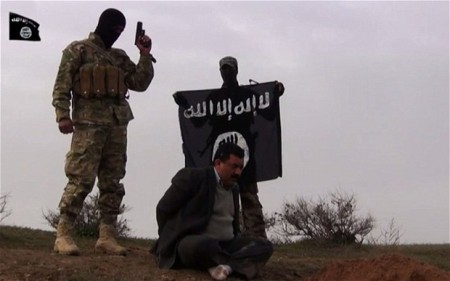
Saturday night, January 31, the Islamic State of Iraq and Levant capped a month of atrocities by beheading its second Japanese hostage, Kenjo Goto, a 47-year old journalist. Jordan vows to do everything its power to save the Jordanian pilot Lt. Moaz al-Kasasbeh, but it may be too late.

In March alone, the Islamists are known to have killed at least 70 people in 10 targeted European and Middle East countries. This is a modest estimate since exact figures are not available everywhere – like in Saudi Arabia and Egypt. ISIS terrorists trailed their horror that month through France, Spain, Belgium, Iraq, Saudi Arabia, Syria, Jordan, Egypt and Libya.

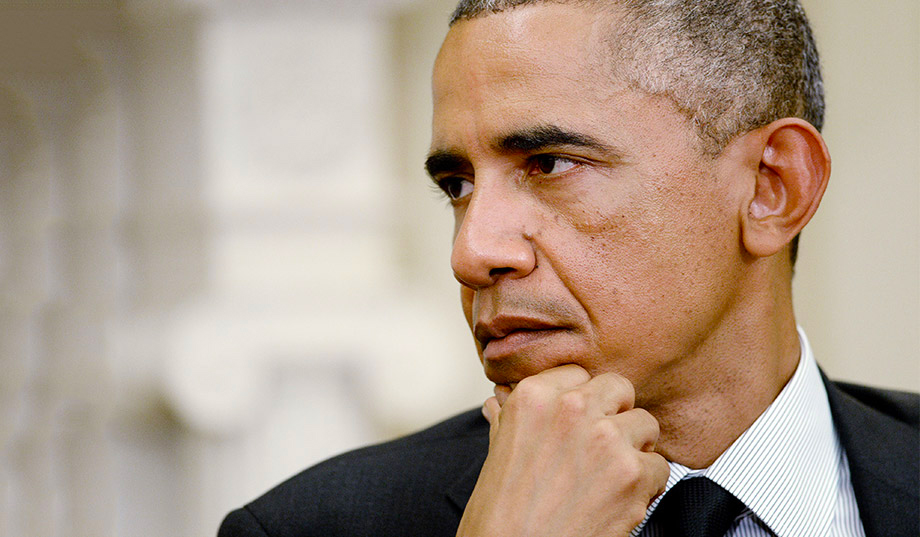
US President Barack Obama, who heads a 20-state coalition fighting ISIS in Iraq, strongly condemned the Goto murder. Secretary of State John Kerry, trying to sound positive, commended the recovery of the Syrian town of Kobani by Kurdish forces as “a big deal.”

ISIS was indeed forced to concede defeat in battle under US air strikes. But Kerry forgot to mention that the battle is far from over:  the Islamists pulled back from Kobani’s districts, but are still pressing hard on the walls of the town and heavy fighting for its control continues.

If Kobani is the only military gain achieved by US-backed forces in months of coalition effort, who will be able to stop the brutal ISIS offensive going forward in Europe, North Africa and the Middle East?

The British government keeps on warning that an Islamist attack is coming soon. Foreign Secretary Philip Hammond said Sunday that this was a “generational struggle that must be fought in other parts of the world in addition to the Middle East.”

It was obvious from these lame comments that the West is totally at a loss for ways to pre-empt the thrusting danger.

Some Western intelligence agencies have sought cold comfort by pointing to the Islamists’ willingness to negotiate the release of the Jordanian pilot held hostage since his capture in Syria in December as a symptom of weakness, signaling its readiness to part with its murderous image. Others judged the latest video clips unprofessional and a sign that ISIS leadership was in disarray.

Neither of these judgments is supported by the facts.

DEBKAfile’s counter-terrorism and intelligence sources report that the high command of the Islamic State functions at present with machinelike efficiency in pursuit of its goals. The name of Abu Baqr al-Baghdadi has been circulated widely as ruler of the Islamic “caliphate” he founded in parts of Syria and Iraq. But behind the scenes, he is assisted by a tight inner group of 12-15 former high officers from the Baath army which served the Saddam Hussein up until the 2003 US invasion of Iraq. Members of this group ranged in rank from lieutenant-colonel to general.

Ex-Maj. Gen. Abu Ali al-Anbari, its outstanding figure, acts as Al Baghdadi senior lieutenant.

He also appears to be the brain that has charted ISIS’s current military strategy which, our sources learn, focuses on three major thrusts: the activation of sleeper cells in Europe for coordinated terrorist operations: multiple, synchronized attacks in the Middle East along a line running from Tripoli, Libya, through Egyptian Suez Canal cities and encompassing the Sinai Peninsula; and the full-dress Iraqi-Syrian warfront, with the accent currently on the major offensive launched Thursday, March 29, to capture the big Iraq oil town of Kirkuk.

DEBKAfile was first to report the arrival in Sinai during the first week of December of a group of ISIS officers from Iraq to take command of their latest convert, Ansar Beit Al-Miqdas.

Another former Iraqi army officer was entrusted with coordinating ISIS operations between the East Libyan Islamist contingent and the Sinai movement. Their mission is to topple the rule of President Abdel-Fatteh El-Sisi.

The imported Iraqi command made its presence felt in Libya Tuesday, Jan. 27 with the seizure of the luxury Corinthia Hotel in Tripoli and execution of the foreigners taken there, including an American and a British man. Two days later, ISIS terrorists fanned out across Sinai for their most devastating attack ever on Egyptian military and security forces. They launched simultaneous attacks in five towns, Rafah on the border of the Gaza Strip, El Arish and Sheikh Suweid in the north and  the Suez Canal cities of Port Said and Suez to the west – killing some 50 Egyptian personnel and injuring more than double that figure.

ISIS strategists, not content with these “successes,” are still in full thrust and believed to be planning to expand their operations and hit Israel – whether from the south or the north.
Taliban claim insider attack at Kabul Airport that killed 3 US contractors

January 31, 2015

Taliban claim insider attack at Kabul Airport that killed 3 US contractors, Long War Journal, Bill Roggio, January 30, 2015

(Nothing to see here; they are just insurgents. Please see White House Struggles To Distinguish Between The Islamic State and Taliban Prisoner Swaps. — DM)

The Taliban claimed last evening’s attack at Kabul International Airport that killed three American contractors. The insider or green-on-blue attack, where a member of the Afghan security forces kills Coalition personnel, is the first of its kind recorded this year.

The attacker, who was dressed in an Afghan military uniform, killed the three contractors and wounded one, Major General Haq Nawaz Haqyar, the commander of Afghan police at the airport, told Pajhwok Afghan News. An Afghan was also killed in the shooting, Haqyar said. It is unclear if the Afghan who was killed was the shooter.

The US Department of Defense confirmed that three Americans and an Afghan were killed in the shooting.

Taliban spokesman Zabihullah Muhajid claimed the attack in two statements on his Twitter account, and said it was executed by Ihsanullah, an “infiltrator … from Laghman province working inside Kabul airport.”

“The attack killed 3 American terrorists and wounded 4 others before the infiltrator was martyred by return fire,” Muhajid claimed. The tweet included the hashtag “Khaibar,” a reference to the Taliban’s offensive that was announced in May 2014. The Taliban said it will continue to launch insider attacks, as well as encourage Afghan soldiers to execute such operations.

The Taliban have devoted significant effort into attempts to kill NATO troops and foreigners by infiltrating the ranks of Afghan security forces. Mullah Omar affirmed this in a statement released on Aug. 16, 2012, when he claimed that the group had “cleverly infiltrated in the ranks of the enemy according to the plan given to them last year [2011],” and he urged government officials and security personnel to defect to the Taliban as a matter of religious duty. Omar also noted that the Taliban had created the “Call and Guidance, Luring and Integration” department, “with branches … now operational all over the country,” to encourage defections. [See Threat Matrix report, Mullah Omar addresses green-on-blue attacks.]

Overall number of insider attacks still unknown

The last known insider attack took place on Sept. 16, 2014 in the western province of Farah. In that attack, an Afghan soldier gunned down a Coalition trainer inside a military base.

The previous attack occurred on Aug. 5 at a training center in Kabul. An Afghan soldier killed a US major general and wounded 16 more military personnel, including a US brigadier general, a German general, five British troops, and at least one Afghan officer. The Taliban did not claim credit for the attack, but praised the Afghan soldier who executed it.

There were four insider attacks recorded in Afghanistan in 2014, according to The Long War Journal’s statistics. The number of reported green-on-blue attacks on Coalition personnel in Afghanistan has dropped steeply since a peak of 44 in 2012. In 2013, there were 13 such attacks. [For in-depth information, see LWJ special report, Green-on-blue attacks in Afghanistan: the data.]

The decline in attacks may be due to several factors, including the continuing drawdown of Coalition personnel, reduced partnering with Afghan forces, and the adoption of heightened security measures in interactions between Coalition and Afghan forces.

However, many insider attacks remain unreported. If an attack by Afghan personnel does not result in a death or injury, and it is not reported in the press, the Coalition will not release a statement on the incident.

The International Security Assistance Force (ISAF), which was disbanded at the end of 2014, told The Long War Journal in March 2012 that “these statistics,” the number of attacks that did not result in a casualty, are “classified.”

“[A]ttacks by ANSF on Coalition Forces … either resulting in non-injury, injury or death … these stats as a whole (the total # attacks) are what is classified and not releasable,” Lieutenant Colonel Jimmie Cummings, ISAF’s former Press Desk Chief, told The Long War Journal. Cummings said that ISAF is “looking to declassify this number.” The number was never declassified.


White House Struggles To Distinguish Between The Islamic State and Taliban Prisoner Swaps

January 30, 2015

White House Struggles To Distinguish Between The Islamic State and Taliban Prisoner Swaps, Jonathan Turley’s Blog, Jonathan Turley, January 30, 2015

(President Humpty Dumpty:

‘When I use a word,’ Humpty Dumpty said, in rather a scornful tone, ‘it means just what I choose it to mean — neither more nor less.’

‘The question is,’ said Alice, ‘whether you can make words mean so many different things.’

‘The question is,’ said Humpty Dumpty, ‘which is to be master — that’s all.’

Hence, Islam is the religion of peace and terrorists aren’t terrorists. Will all of the king’s horses and all of the king’s men be able to put him back together again?– DM)

bergdahl
150124201815-nr-dnt-harlow-sajida-al-rishawi-explainer-00001707-large-169

The White House again seems to be struggling with barriers of both language and logic as many raise comparisons between the controversial Bergdahl swap and the effort this week of Jordan to swap a terrorist for one of its downed pilots with Islamic State. During a week where one of the five Taliban leaders released by the Administration has been found trying to communicate with the Taliban, the Jordanian swap has reignited the criticism of the swap for Army Sgt. Bowe Bergdahl, which violated federal law and released Taliban leaders with long and bloody records. The White House seems to be trying to argue that the Taliban are not terrorists in direct contradiction to its prior position that they are indeed terrorists. It shows the fluidity of these terms and how the government uses or withdraws designations as terrorists to suit its purposes. The familiarities between Islamic State (IS) and the Taliban appear to be something in the eye of beholder or, to quote a certain former president, “It depends on what the meaning of the word ‘is’ is.”

As a refresher, the Taliban has long been viewed as terrorists, even when they were in power. They have destroyed religious sites, art, and in one of the most infamous acts in modern history, blew up the giant ancient Buddhas at Bamiyan.The United Nations and human rights groups have documented a long list of civilian massacres and bombings carried out by the Taliban. One report described “15 massacres” between 1996 and 2001. The UN estimates that the Taliban were responsible for 76% of civilian casualties in Afghanistan in 2009, 75% in 2010 and 80% in 2011. The Human Rights Watch estimates that “at least 669 Afghan civilians were killed in at least 350 armed attacks, most of which appear to have been intentionally launched at non-combatants.” This includes the widespread use of suicide belts. The Taliban has always had a close alliance with al Qaeda.

That record was put into sharp relief with the swap for Bergdahl with ties to terrorism including one who was the head of the Taliban army, one who had direct ties to al-Qaeda training operations, and another who was implicated by the United Nations for killing thousands of Shiite Muslims. While we have always said that we do not negotiate with terrorists, we not only negotiated for Bergdahl but gave them what they wanted.

20051114181303

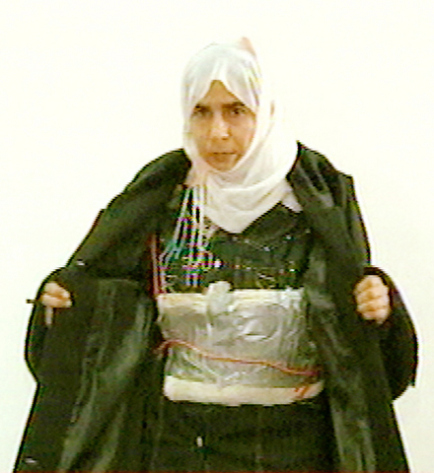
The Jordanian swap raised the same obvious concerns. Many have objected, for good reason, to the idea of releasing Sajida al-Rishawi, who participated with her husband in a terrorist attack on a wedding party at the luxury Radisson hotel in the Jordanian capital of Amman on Nov. 9, 2005. al-Rishawi hoped to be welcomed to paradise by walking into a wedding of 300 people enjoying a family gathering with children and murdering them in cold blood. Her husband’s bomb went off but not her bomb. It goes without saying that she is a hero to the murderous Islamic State for her effort to kill men, women, and children at a wedding.

The swap appears in part the result of pressure from Japan to secure the release of one of its citizens. In my view, such a propose swap was disgraceful. al-Rishawi is as bad as it gets as a terrorist. To yield to terrorists who engage in weekly demonstrations of beheading unarmed captives is morally wrong and practically suicidal. Just as the West is funding this terrorist organization through millions of ransom payments, the exchange of a terrorist only fuels their effort to capture and torture more Western captives.

This brings us back to the White House. When asked about the proposed swap with Islamic State, the White House was aghast. White House spokesman Eric Schultz stated “Our policy is that we don’t pay ransom, that we don’t give concessions to terrorist organizations. This is a longstanding policy that predates this administration and it’s also one that we communicated to our friends and allies across the world.”

The media understandably sought guidance on why the swap with Bergdahl was the right thing to do (despite the flagrant violation of federal law) while the swap for the pilot was not. The White House acknowledged that the Taliban are still on a terrorist list but then tried to rehabilitate the organization into something else. The White House is now referring to the Taliban as an “armed insurgency.” It notes that the Taliban are not listed by the State Department as a terrorist organization. However, they are listed as one of the “specially designated global terrorist” groups by the Department of the Treasury. Indeed, they have been on that list since 2002. Worse yet, the statement from the White House came in the same week that the Taliban claimed responsibility for killing three U.S. contractors.

John Earnest tried to thread the needle by explaining “They do carry out tactics that are akin to terrorism, they do pursue terror attacks in an effort to try to advance their agenda.” He seems to struggle to explain what is terrorist attacks and what are attacks “akin to terrorism.” Most people view suicide belts and civilian massacres to be a bit more than “akin to terrorism.”

Earnest also note that, while the Taliban has links to al Qaeda, they “have principally been focused on Afghanistan.” However, “Al Qaeda is a terrorist organization that has aspirations that extend beyond just the border between Afghanistan and Pakistan.” That is diametrically opposed to the position of the Administration in claiming sweeping powers to strike targets around the world against any forces linked to al Qaeda and many who have few such links. Indeed, while referencing to the authorization to attack al Qaeda, the Administration attacked Islamic State, which was actively fighting with al Qaeda.

The spin of the White Hosue also ignores the role of the Taliban-aligned Haqqani network in holding Bergdahl, a well-known terrorist group.

There are obviously arguments to make for the Bergdahl swap (though I find little compelling in the arguments that justify the violation of federal law by the White House). However, the argument must acknowledge that we negotiated with a group of hostage taking terrorists and we need to address the implications of that fact. Alternatively, if the White House now believes that the Taliban is no longer a terrorist organization, it needs to take it off its listing of such groups (a listing that subjects people to criminal charges for material support or assistance with the group). It cannot have it both ways and call it a terrorist group unless such a label is inconvenient.

Swapping Prisoners with Terrorists

January 30, 2015

Swapping Prisoners with Terrorists, National Review Online, Andrew C. McCarthy, January 29, 2015

pic_giant2_092214_SM_Barack-Obama-G_0

Obama’s disastrous policy dates back to his earliest days in office.

Suddenly, there is outrage in the land over President Obama’s policy of negotiating prisoner swaps with terrorist organizations, a national-security catastrophe that, as night follows day, is resulting in more abductions by terrorist organizations.

Well, yes, of course. But what took so long? Sorry if I sometimes sound like I work the “I Told You So” beat at the counter-jihad press. But as recounted in these pages, immediately upon assuming power in 2009, Obama started negotiating exchanges of terrorists — lopsided exchanges that sell out American national security for a net-zero return.

Critics now point to the indefensible swap Obama negotiated with our Taliban enemies in 2012 as if it were the start of the problem. In reality, the springing of five top Taliban commanders in exchange for the Haqqani terror network’s release of U.S. soldier Bowe Bergdahl was fully consistent with what was by then established Obama policy. There was nothing new in our president’s provision of material support to terrorists even as those terrorists continued to conduct offensive terrorist operations against our troops.

Clearly, the Bergdahl–Taliban swap was a disaster. As I’ve previously noted, it would be a profound dereliction of duty for a commander-in-chief to replenish enemy forces in this manner even if the captive we received in exchange had been an American war hero. To the contrary, Obama replenished our enemies in exchange for a likely deserter who may have voluntarily provided intelligence to the enemy and whose treachery cost the lives of American soldiers who tried to find and rescue him.

Even the conservative media are now suggesting it was the Bergdahl–Taliban swap that marked Obama’s reckless departure from longstanding American policy against negotiation with terrorists, and in particular against exchanging captured terrorists for hostages. This policy reversal has indeed incentivized jihadists to capture more Westerners, and prompted state sponsors of jihadists, such as Qatar, to propose more prisoner swaps. Moreover, the Obama strategy has deprived the U.S. of any moral authority or leadership influence to dissuade other countries, such as Jordan, from releasing anti-American jihadists in similar prisoner exchanges.

But the disaster did not begin with the Bergdahl–Taliban swap.

As I detailed in a column soon after Obama took office — specifically, on June 24, 2009 (“Negotiating with Terrorists: The Obama administration ignores a longstanding — and life-saving — policy”):

Even as the mullahs [i.e., the rulers of Iran’s Shiite regime] are terrorizing the Iranian people, the Obama administration is negotiating with an Iranian-backed terrorist organization and abandoning the American proscription against exchanging terrorist prisoners for hostages kidnapped by terrorists. Worse still, Obama has already released a terrorist responsible for the brutal murders of five American soldiers in exchange for the remains of two deceased British hostages.

To summarize: The Iranian government implanted a network of Shia jihadist cells in Iraq in order to spearhead the terror campaign against American troops. The point was to duplicate the Hezbollah model by which Iran controls other territory beyond its borders. In fact, the network of cells, known as Asaib al-Haq (League of the Righteous), was organized by Hezbollah veteran Ali Musa Daqduq.

The network was run day-to-day by two brothers, Qais and Layith Qazali. Both brothers and Daqduq were captured by U.S. forces in Basrah after they orchestrated the assassination-style murders of five American soldiers abducted in Karbala on January 20, 2007.

A few months later, in May 2007, the terror network kidnapped five British civilians. As American troops put their lives on the line to protect Iraq, the terrorist network told Iraq’s Iran-friendly prime minister, Nouri al-Maliki, that they would release the Brits in exchange for Daqduq and the Qazali brothers. The Bush administration refused the offer.

But soon after entering office in 2009, President Obama decided to change course and entertain the offer. The new administration rationalized that the trade could serve the purpose of Iraqi political reconciliation — which is to say: Obama, in the midst of pleading for negotiations with the “Death to America” regime in Tehran, prioritized the forging of political ties between Iraq and an Iran-backed terror network over justice for the murderers of American soldiers.

Conveniently, Iran’s influence over Maliki ensured that Iraq would play ball: Maliki’s government would serve as the cut-out, enabling Obama to pretend that (a) he was negotiating with Iraq, not terrorists; and (b) he was releasing terrorists for the sake of Iraqi peace, not as a ransom for hostages.

Layith Qazali was released in July. This failed to satisfy the terror network, which continued to demand the release of Daqduq and Qais Qazali. The terrorists did, however, turn over two of the British hostages — or rather, their remains.

I know you’ll be shock-shocked to hear this, but while Obama’s minions were practicing their so-very-smart diplomacy, the jihadists were killing most of their hostages. At least three of the Brits were murdered. Yet even that did not cause Obama to reconsider his position.

In late 2009, the administration released Qais Qazali in a trade for the last living British hostage, Peter Moore. As The Long War Journal’s Bill Roggio reported at the time, an enraged U.S. military official aware of the details of the swap presciently observed: “We let a very dangerous man go, a man whose hands are stained with U.S. and Iraqi blood. We are going to pay for this in the future.”

Meanwhile, as I related in July 2009, Obama released the “Irbil Five” — five commanders from the Iranian Revolutionary Guard’s Quds force. Like Daqduq, the Quds force was coordinating Iran’s terror cells in Iraq. At the time, General Ray Odierno, then the top U.S. military commander in Iraq, publicly stated that Iran was continuing to support, fund, and train the terrorists attacking American and allied forces.

As Michael Ledeen pointed out, the release of the five Iranian terrorist commanders – three years before Obama’s release of the five Taliban commanders – was the price the mullahs had demanded to free Roxana Saberi, a freelance journalist the mullahs had been holding. The Obama administration, naturally, claimed that it was not negotiating with terrorists but with sovereign governments (just as it claimed only to be negotiating with Qatar as it cut the Bergdahl deal with the Taliban and the Haqqanis). Besides, said the administration, the president’s hands were tied by the status-of-forces agreement, which purportedly required turning prisoners over to the Iraqi government (for certain return to Iran) — even prisoners responsible for killing hundreds of Americans, even prisoners sure to persevere in the ongoing, global, anti-American jihad.

And then there was Daqduq. His comparative notoriety, coupled with a smattering of negative publicity over the other terrorist negotiations and swaps, caused a delay in his release. But in July 2011, with the Beltway distracted by the debt-ceiling controversy, the Obama administration tried to pull off Daqduq’s stealth transfer to Iraq.

As I noted at the time, however, the Associated Press got wind of the terrorist’s imminent release, and its short report ignited fury on Capitol Hill. Several senators fired off a letter, outraged that the United States would surrender “the highest ranking Hezbollah operative currently in our custody” — a man who would surely return to the jihad “to harm and kill more American servicemen and women” when Iraq inevitably turned him over to Iran, as it had done with other released terrorists.

The administration retreated . . . but only for the moment. Realizing it would be explosive to spring Daqduq during his reelection campaign, Obama waited until the Christmas recess after the election. The president then had the terrorist quietly handed over to Iraq, which, after acquitting Daqduq at a farce of a “trial,” duly released him to Hezbollah in Lebanon.

There is a reason why the Arab press was reporting that the Obama State Department was entertaining discussions with Egyptian authorities about freeing the Blind Sheikh — Omar Abdel Rahman, the convicted terrorist serving a life sentence for running the jihadist cell that bombed the World Trade Center and plotted other attacks against New York City landmarks. There is a reason why, when he assumed power in 2011, Muslim Brotherhood–leader-turned-Egyptian-president Mohamed Morsi proclaimed that his top priorities included pressuring the United States to return the Blind Sheikh to Egypt.

Long before the Bergdahl–Taliban swap, it was well known that the Obama administration was open for business — if the business meant releasing terrorists.

Bibi, Iran’s Nukes, and Military Force in a Changed Middle East

January 30, 2015

By: J. E. Dyer

Published: January 30th, 2015

via The Jewish Press » » Bibi, Iran’s Nukes, and Military Force in a Changed Middle East.


IRAN-US-POLITICS-MILITARY

{Originally posted on author’s website, Liberty Unyielding}

Over at The Atlantic, there’s a comprehensive worldview being built on the question of whether there’s a “military solution” to the Iran nuclear problem, and how Benjamin Netanyahu has Israel positioned vis-à-vis the problem in general.

Jeffrey Goldberg thinks Netanyahu has Israel positioned very poorly indeed.

James Fallows’ conclusion, agreeing with Goldberg on the worldview, is encapsulated in a quote from a war-game director and retired Air Force officer in 2004:

“After all this effort, I am left with two simple sentences for policymakers,” our main war-game designer, retired Air Force colonel Sam Gardiner, said at the end of our 2004 exercise. “You have no military solution for the issues of Iran. And you have to make diplomacy work.” That was true then, and truer now.

I don’t doubt at all the sincere belief Fallows has in this conclusion.  But if you unpack the work that led to it 2004, you find that it was based on a fatally flawed premise. (More on that in a moment.)

Moreover, the situation of 2004 no longer obtains.  That means that the calculations of two major players must now be different.  One is Israel; the other is the United States.  The calculations I refer to include not merely the consequences of each party’s actions, and whether the parties’ capabilities are sufficient for the necessary task.  They also include what the threat has become, and the fact that it is graver now than in 2004.

Don’t make assumptions about what I mean by that.  It may not be what you think.

Why the 2004 conclusion about “military force” is flawed

I’ll begin by explaining my point that the premise of the 2004 war game sponsored by The Atlantic was flawed.  There are several criticisms that can be levied, but this is the one that matters most.  (And I don’t mean to impugn the care and diligence that went into the war game.  You’ll see, however, why I found it fatally flawed at the time – before I was an active blogger – and still do.)

To illustrate what I’m talking about, I’ll quote a key passage from the 2004 war-game summary.  Several players were assembled to act out the roles of the Principals Committee of the National Security Council, and James Fallows narrates the events of the game:

The President wanted to understand the options he actually had for a military approach to Iran. The general and his staff had prepared plans for three escalating levels of involvement: a punitive raid against key Revolutionary Guard units, to retaliate for Iranian actions elsewhere, most likely in Iraq; a pre-emptive air strike on possible nuclear facilities; and a “regime change” operation, involving the forcible removal of the mullahs’ government in Tehran. Either of the first two could be done on its own, but the third would require the first two as preparatory steps. In the real world the second option—a pre-emptive air strike against Iranian nuclear sites—is the one most often discussed. Gardiner said that in his briefing as war-game leader he would present versions of all three plans based as closely as possible on current military thinking. He would then ask the principals to recommend not that an attack be launched but that the President authorize the preparatory steps to make all three possible.

The fatal flaw here is posing the problem set by the president as one of creating options for a “military approach” to Iran.  That’s why the options end up being, respectively, useless, vague, and appalling.

Asking what a “military approach to Iran” would look like is asking the wrong question.  The first question – the right question – is always what the objective is.  If you read through the war-game summary, I believe you’ll agree with me that no strategic objective was ever set for the players.  The three options outlined above imply three different objectives.  If I were the president, and those three options were presented to me, I would ask what could have possessed my staff to forward options one and three.

Fallows relates that the Principals Committee players spent most of their time thinking of reasons why option three was bad.  Of course they did.  But why they were even discussing it is the real question.

They spent very little time on option two, according to Fallows, which is the only option that would have fit the objective as most Americans understood it: to prevent Iran from getting nuclear weapons by inflicting destruction on her nuclear program.  This is his account of the time they gave to it:

The participants touched only briefly on the Osirak-style strike [i.e., option two] during the war game, but afterward most of them expressed doubt about its feasibility.

This is by no means the only reason to dispute the conclusion the war-gamers came to.  But it’s the most important one.  They were not asked to respond to a specific objective with options for accomplishing it.  In particular, they weren’t told to focus on the objective that was relevant and widely understood to be the potential purpose of military operations – and they didn’t focus on it!

They were asked, in the absence of a specific objective, to discuss some random options for using military force.  That tells us nothing about the efficacy of military force.  It tells us that the planning process asked the wrong question.*

Fast-forward to 2015

In 2015, we are no longer in the situation of 2004.  Three important conditions have changed since then.  The importance of these conditions can’t be overstated, in fact, because they change both what’s possible, and what matters.

Jeffrey Goldberg wrote the following on Tuesday (emphases below are added by James Fallows):

Whatever the case, the only other way for Netanyahu to stop Iran would be to convince the president of the United States, the leader of the nation that is Israel’s closest ally and most crucial benefactor, to confront Iran decisively. An Israeli strike could theoretically set back Iran’s nuclear program, but only the U.S. has the military capabilities to set back the program in anything approaching a semi-permanent way.

Fallows disagrees with him, invoking the 2004 war game to assert that “military force,” per se, just can’t get the job done:

Israel doesn’t have the military capacity to “stop” Iran from getting a nuclear weapon, and neither does the United States, at least not in circumstances short of total war.

The key problem with working off of either of these premises, Goldberg’s or Fallows’, is that their framing is stuck in 2004.  Here are the three conditions that have changed since then:

(1)  The U.S. no longer has the conventional military capability to “set back Iran’s nuclear program in something approaching a semi-permanent way.”  This is a relative condition, and it’s because of the loss of readiness in our armed forces, independent of any other reason.

(2)  Iran’s nuclear program is considerably advanced from 2004, and setting it back has a different definition now.  This doesn’t mean it’s infeasible, but it does mean that no one now has the capability to use a conventional strike campaign to set Iran’s program back to where it was ca. 2004 or earlier.  A setback can only be to some much more advanced point in Iran’s progress.

(3)  Iran’s geopolitical posture in the Middle East has changed materially since 2004.  The regime’s intentions have never changed, but the facts on the ground about what territory Iran can use to menace her neighbors – as well as U.S. interests – have changed dramatically.

I’ll discuss each of these factors in turn.

Decline in U.S. military capabilities

Here is the thing to keep in mind about U.S. capabilities.  In 2004, it was correct to say that the capabilities we had were sufficient to contemplate destroying every Iranian facility related to the nuclear weapons program, using conventional means.  Not only did we have the weaponry; the weapon systems were in a readiness state high enough to be deployed and used.

There was a political question, certainly, about how hard we wanted to hit Iran.  There were a number of factors to consider, and valid reasons why it was not done.  But it was feasible to do it, with the arsenal we had readily available.

In 2015, we could no longer conduct that same attack: the attack that was necessary in 2004, against a smaller and less advanced nuclear program.  We don’t have the same assets available now, because our strike-fighters, in the Air Force and Navy, are unable to maintain the same level of force-wide readiness they could in 2004.  When they’re not deployed or within 3-5 months of deploying, our strike fleet aircrew and aircraft now fall to the lowest level of readiness, and can’t be “worked up” on a short timeline.

There are no extra ready squadrons to call on today, and fewer are routinely present in the CENTCOM area of responsibility than in 2004.  The same is true of aircraft carriers and Tomahawk missile shooters.  (Read more about how we got to this point here, here, here, here, and here.)

If the president wanted to assemble a force to attack Iran, the force would be smaller than what he would have had in 2004, and any “build-up” would involve pulling assets off the front line in other theaters: Europe, where NATO is trying to deter Russia with an enhanced military presence, or the Far East, where we are trying to deter North Korea and China.

Alternatively, the president could ask Congress for the funding to increase force readiness so that there would be more of the strike fleet available at a given time.  Implementing that approach would take at least six months to see the first effects: e.g., one or two squadrons at improved readiness.  The issue isn’t just things like pilot qualifications; it’s things like non-deployed aircraft being cannibalized for parts, and the whole fleet being backed up with deferred maintenance.

We continue to keep our global strategic bombers – B-2s and B-52s – at a generally higher level of readiness, and could use them to attack Iran with conventional ordnance.  Their operations would be constrained, however, by the limitations of strike-fighter readiness and specialty aircraft (e.g., the Navy F/A-18 “Growlers” that provide electronic warfare support).  The bombers need escorts, as they need in-flight refueling; having enough ready bombers isn’t the same thing as having enough ready capability.

Moreover, the U.S. could expect to have limited access to airfields in the Persian Gulf region.  It became clear as early as 2010 that Gulf nations would seek to restrain U.S. operations against Iran from their bases, and today, we should expect the Gulf emirates to be very picky about what they allow.  They won’t buy into tentative, non-decisive military operations that leave Iran able to retaliate against them.  If they fear that we aren’t going to act decisively enough, it’s likely that all three of our major hosts – Bahrain, Qatar, and Kuwait – would deny us the use of their bases for an operation against Iran.

That limiting condition would take out the Air Force as a source of strike-fighters, and make it much harder to operate tankers, reconnaissance aircraft, and AWACS.

Add in factors like the uncertain future of the Tomahawk missile (the Obama administration proposed to end production in 2014), and what we have today is a much more limited set of options than we had in 2004.  Although we still have a capability to attack Iran’s nuclear-related facilities, we can’t mount the kind of crippling attack we could have in 2004.  What we could achieve now is limited to a smaller effect.

Put it this way: in 2004, the five-day attack described in option two of the Atlantic war game was less than what was needed to impose that “semi-permanent setback” referred to by Jeffrey Goldberg.  But we could have mounted that option two attack with negligible inconvenience to ourselves.  It was well within our capabilities.  We also had the means, by deploying more force, to bring off the larger attack required to administer the “semi-permanent setback.”

In 2015, something like the five-day attack is the very most we could bring off.  It was less than what was needed to achieve a semi-permanent setback to Iran’s program in 2004 – and today, it is far less.

Advances in Iran’s nuclear and missile programs

Iran has made significant advances in her nuclear and missile programs since 2004, demonstrating the ability to enrich uranium to near-weapons-grade purity; demonstrating the ability to enrich uranium on an industrial scale; acquiring enough enriched-uranium stock for 7-8 warheads; and demonstrating the ability to boost a payload into orbit, and therefore, inevitably, a ballistic missile to ICBM ranges.  Iran had none of these capabilities in 2004, and in fact was not even close to having them.

(It is worth noting that the January 2015 appearance in Iran of a launch platform capable of supporting an ICBM has occurred right on schedule, in terms of when analysts in the last decade thought it would.  As of 2015, we have seen most of the developments that were predicted in the Iranian nuclear program in the 2005 NIE – see here as well – and the missile-system developments predicted in that NIE and an East-West Institute analysis published in 2009.)

ICBM-capable launcher observed near Tehran in Jan 2015. (Israel Ch. 2)

ICBM-capable launcher observed near Tehran in Jan 2015. (Israel Ch. 2)

The Iranians have also installed missile silos for their medium-range ballistic missiles (MRBMs) – hardening them against attack – and, according to British intelligence, successfully launched a solid-fuel mobile MRBM to a range of 2,000 km (1,200 statute miles) in 2011.  The latter feats mean Iran has a no-notice, shoot-and-scoot MRBM capability that can reach well into Europe.

These various advances, and other related ones, have two significant implications.  One is that the “bottleneck” of Iran’s nuclear weapons program – the part of it we would get the highest payoff from attacking – has shifted.

There are other, related implications, such as the right way to attack elements of the program.  It wouldn’t be enough today to simply blast away at the Natanz uranium enrichment complex, for example; we would have to follow through afterward and actively prevent Iran from rebuilding a uranium enrichment capability, which the Iranians now have more than ample expertise to do.  In 2004, it would have been a tremendous setback to them to lose Natanz.  They still couldn’t absorb such a loss easily, but their recovery now would be a matter of time and money, not rebuilding from scratch.

At any rate, the bottleneck, or critical node, in their program shifted some time ago, from uranium enrichment, which Iran has mastered, to weaponization of a warhead: that is, fitting a functioning warhead to a delivery system (presumably a ballistic missile, at least to begin with.  Cruise missiles would come later).  Although we have a reasonable idea of which sites to hit to attack that “weaponization” bottleneck, it is the most shadowy aspect of the Iranian nuclear program.  Our confidence in what to hit is slightly lower than it is for the uranium chain or the missile design and production chain.

The other key implication about Iran’s advances is, of course, that the threat has increased.  It is greater today, and it’s more imminent.  We can less afford to do nothing about it than we could in 2004.

And what that means is that even if we can only do less now than we would prefer, the urgency of doing it has increased.

Iran’s geopolitical posture and the resulting threat

That is one facet of the situation faced by Israel.  It’s also a situation faced by the United States, now that Iran is ten years closer to having an ICBM capability, and at the very least could soon be able to hold every partner we have in the Middle East hostage with nuclear-armed MRBMs.

For Israel, however, it isn’t possible to separate the security implications of the nuclear-missile problem from the geopolitical problem.  Both work together to change Israel’s security conditions – which is what Iran intends.

Jeffrey Goldberg wrote his piece Tuesday as if nothing has changed for Israel, other than that there are now face-to-face negotiations between the U.S. and Iran.  But since January 2011, Israel’s security situation has changed significantly, and Iran is one of the biggest factors in that.

Graphic used by retired Gen. Jack Keane to brief Congress 27 Jan on 4-fold increase in radical Islamic threat since 2010. (Graphic: Institute for the Study of War; CSPAN video)

Graphic used by retired Gen. Jack Keane to brief Congress 27 Jan on 4-fold increase in radical Islamic threat since 2010. (Graphic: Institute for the Study of War; CSPAN video)


It’s particularly meaningful to frame the issue by starting from the fact that Israel’s capability against the Iranian nuclear program has always been more limited than America’s.  (Stay with me; this does relate to the Iranian geopolitical posture.)  It’s possible for America to recover the ability to pressure and intimidate Iran into a level of compliance, along the lines of the strategy outlined in my footnote below.  It will never be possible for Israel to do that.

If Israel is going to act, it will have to be with an actual attack.  And that means that what Iran has to do is make it as hard as possible for Israel to bring off such an attack.  That is a driving facet of the geopolitical problem Iran sets for herself.  Iran has larger designs on the region; her plans against Israel “nest” into them.  But the focus on Israel is unmistakable, and one of the key reasons is that hemming Israel in with threats will dilute Israel’s capability to mount an attack against Iran’s high-value facilities.

As little as five years ago, Iran’s options for servicing this requirement were quite limited.  Hamas and Hezbollah could launch rockets and dig tunnels from Gaza and southern Lebanon.  Hezbollah had successfully used an Iranian-supplied anti-ship missile in 2006, but there was little likelihood of such an attack being brought off again.

Iran, however, had begun sending warships to the Horn of Africa for antipiracy operations as early as December 2008, and with the onset of the Arab Spring, her military profile across the region metastasized.  The presence of Iranian warships has become routine in the Red Sea, and in 2011, Iran sent warships through the Suez Canal for the first time since the 1979 revolution.  Iran has announced deploying submarines to the Red Sea as well.  Every new weapon the Iranian navy tests or drills with in the Persian Gulf – including cruise missiles and high-speed torpedoes – it intends to use in its forward patrol areas, which now include the waters of the Red Sea, and potentially the Eastern Mediterranean.

Meanwhile, Iran now has Special Forces deployed in Iraq, as well as wherever the Assad regime is in (nominal) control of territory in Syria.  There is intriguing evidence that the Iranians have taken over a nuclear-related facility in western Syria: in fact, that they arranged for Hezbollah to “liberate” it from Sunni jihadists because it’s a nuclear facility, and is being used for Iran’s purposes.

Iran’s aggressively expanding posture across the region. (Google map; author annotation.)

Iran’s aggressively expanding posture across the region. (Google map; author annotation.)


And earlier this month, the Iranians sent a very high-level military delegation to perform reconnaissance in the Golan Heights – just one of the recent pieces of evidence that Iran wants to open a new front for Israel to have to defend.  The Iranians want to preoccupy Israel’s military, and increase her insecurity overall by forcing Israel to counterattack into Syria, thus creating the ongoing danger of escalating an already unstable situation.

(Google map; author annotation. Inset: Wikimedia Commons, author annotation)

Google map; author annotation. Inset: Wikimedia Commons, author annotation)


It’s important to understand that Iran’s campaign serves multiple purposes, because its implications for Israel are therefore bigger.  Israel isn’t just concerned now about Iran’s nuclear program.  Netanyahu has to be concerned about what Iran, with or without nuclear arms, will do with her expanding territorial leverage in the region.  Iran gaining a foothold in Yemen with the Houthi coup there is the latest disturbing development, one that could give the Iranians a base from which to deploy midget submarines into the Red Sea, for example, or base military aircraft, or position missile launchers to complicate Israel’s missile defense picture.  Yemen could certainly become a waypoint for the flow of illicit arms from Iran to a variety of recipients.  Where once Israeli intelligence could focus on ports in Sudan, it now may have the entire western coast of Yemen to contend with.

The brewing crisis in the Golan may by itself be enough to present Israel with a matrix of game-changing decision points in the next 12 months.  There’s a limit to how much harassment Israel can afford to live with and retain viability as a free and secure nation, making a good life possible for her people.  The confrontation with Iran is growing in more than one dimension, and Israel can’t treat the Iranian nuclear program as a theoretical, specialized threat, separate from the overall menace Iran presents to her.

At right, IRGC General Mohammad Ali Allahdadi, one of two IRGC general officers and six Iranians conducting reconnaissance in the Golan Heights on 18 Jan 2015, when their convoy was struck by (presumably) the IDF. Allahdadi is seen here hanging with former President Khatami in 2009. (Image: Iranian TV via Twitter)

right, IRGC General Mohammad Ali Allahdadi, one of two IRGC general officers and six Iranians conducting reconnaissance in the Golan Heights on 18 Jan 2015, when their convoy was struck by (presumably) the IDF. Allahdadi is seen here hanging with former President Khatami in 2009. (Image: Iranian TV via Twitter)

It’s not 2004 anymore

The profile of Iran’s activities makes it abundantly clear that none of what she does is “about” Israel making concessions on West Bank settlements, or otherwise falling in with proposals made by the Obama administration for a final status agreement.  Iran is all over the region – Iraq, Syria, Lebanon, Yemen, Sudan – taking advantage of the opportunities created by the aftermath of the Arab Spring.

Jeffrey Goldberg suggests that Israel should strengthen Obama’s negotiating position by making more concessions to the Palestinian Arabs.  But in 2015, nothing in the region’s main dynamic is even about that anymore.  The main dynamic is the feeding frenzy for the territory of Syria and Iraq.  The various actors are shaping up to be Iran, ISIS, the Kurds, and some combination of others who still retain a legacy set of “status quo” objectives (including, e.g., the U.S., Saudi Arabia, and perhaps Turkey).

Not one of those actors can be deterred or influenced by artificially forced developments in the now-defunct Oslo process.  But at least two of the actors – Iran and ISIS – will exploit Israel however they have to, to gain advantage for themselves.  That’s what Iran is doing with her foray into the Golan, which gives “top cover” to her nuclear program, but also has the real potential to become as much of an existential threat to Israel as an Iranian bomb.

Israel can’t afford to ignore the fact that the whole unfolding strategy interlocks.  In essence, Iran has already begun a new phase in her long-running campaign against Israel, and the Obama administration is asking Israel to behave toward the negotiations with Iran as if that hasn’t happened: as if it’s still 2004, and everyone still has the same situation and the same options.

An emerging trigger point

Israel doesn’t.  It’s not 2004 anymore.  There was a time, as little as a year ago, when the triggers for Israel to have to attack boiled down mainly to these two: either Iran was about to cross the “red line” Bibi briefed to the UN in 2012, or the Iranians were about to deploy a modern anti-air missile system that would make it too difficult for Israel to pull the attack off, once it was in place.

But we’re past that point now.  Developments in the nuclear program, or inside Iran, aren’t Israel’s only concern.  The Israelis may well have to execute a preemptive strategy that baffles and blunts Iran’s whole package of activities in the Israeli security perimeter.  Attacking the Iranian nuclear program – facilities in Iran – will probably form some element of that, but it won’t be enough.

And the trigger matrix has changed.  The intolerable juncture for Israel is likely to be connected with Iran’s emerging campaign in the Golan.  Neither the prompts for military action, nor its purpose and targets, will be bounded by the old outlines of the “Iranian nuclear” problem.  The problem is bigger now: simultaneously more threatening and immediate, and more diffuse.  A strike campaign against Iranian nuclear facilities, with F-15s, is no longer the main mental picture we should have.

Like the Oslo-legacy negotiations, the Obama administration’s negotiations with Iran have little relevance to the security conditions Israel faces today.  One of the most important things the U.S. could do to reset the clock is now out of reach: that is, pacify and effectively settle the situation in Syria and Iraq, where Iran, like ISIS, is gaining strength and position from conflict.  The Obama administration doesn’t seem aware that the situation has changed, and with it the motives and concerns of everyone in the region.  Netanyahu has to deal, nevertheless, with a reality that’s changing under our feet with each passing day.

Center, with scarf: Iranian Qods Force commander Gen. Qassem Soleimani, with local Iraqi military leaders in Iraq in 2014. A U.S. defense official said in 2013 that Soleimani was “running the whole Syrian war by himself.” (Quoted by Dexter Filkins in “Shadow Commander,” The New Yorker, 30 Sep 2103. Image via Twitter)

Center, with scarf: Iranian Qods Force commander Gen. Qassem Soleimani, with local Iraqi military leaders in Iraq in 2014. A U.S. defense official said in 2013 that Soleimani was “running the whole Syrian war by himself.” (Quoted by Dexter Filkins in “Shadow Commander,” The New Yorker, 30 Sep 2103. Image via Twitter)


* I’m fully aware, incidentally, that policy is sometimes made in just this way.  But that doesn’t mean that we can accurately judge whether military force would be effective by approaching our evaluation through an inherently flawed policy-making process.

An objective and a strategy

For what it’s worth, this is what I would have asked the NSC and principals to look at back in 2004.  The strategic objective would have been to rope Iran into a heavily and genuinely supervised mode with her nuclear program, understanding that political change in Iran might be encouraged that way (alongside other methods), through frustrating the regime and weakening its reputation, but would ultimately have to come in other ways from the Iranian people.  Outreach to reformers in Iran would have been the highest American priority overall.

The objective of using military force would have been to set Iran’s nuclear program back significantly – by at least 24 months – and inflict some level of additional damage as a deterrent, against both immediate retaliation and future activities.

I would have wanted a process of escalating pressure on Iran with a concurrent military build-up in the Gulf region, designed to force Iran to open up all the facilities identified by the IAEA and Western intelligence as suspect.  If Iran didn’t comply in good faith by a deadline, the strikes would start.  The strike threat would have been implied, not spelled out.  The deadline would have been a short one (30-45 days), only long enough to accommodate the build-up, but not so long that Iran could change all her program arrangements to evade attack.

The scope of military strikes for which the build-up was designed would have included the significant “bottleneck,” or critical node, of Iran’s program at the time – the uranium enrichment complex at Natanz – as well as the suspicious special-use facilities in the Parchin area southeast of Tehran.

There would have been some other targets in the nuclear and missile programs, but those two installations would have been the top priorities.  Equally important targets would have been the IRGC assets most useful for projecting power outside Iran’s borders, including ballistic missiles, coastal cruise missiles, and submarines, as well as the IRGC’s paramilitary organization.  Attacking the air defense network and national command and control nodes would have been necessary to hold air superiority for U.S. forces while they were operating in Iranian air space.

Ideally, the preparations for this, and the escalating pressure on Iran (very possibly including intense economic pressure), would have gotten Iran to make some meaningful concessions at the time.  We need not oversell what we could have wrested from Iran without an attack, but odds were better than even that we could have gotten meaningful concessions: concessions that justified the effort, even if they weren’t everything we wanted.  Rinsing and repeating would almost certainly have been necessary.

My own preference would be for an extended process in which we could force Iran’s program more into the open, and keep pushing Iran back, without having to strike.  Instead of letting Iran play for time, we should be playing for time: time for Iranian reformers, who poked their heads up in 2009, and who are still there to be worked with.

About the Author: J.E. Dyer is a retired US Naval intelligence officer who served around the world, afloat and ashore, from 1983 to 2004.

Andrew Klavan: Attack of the But-Heads!

January 29, 2015

Andrew Klavan: Attack of the But-Heads! Truth Revolt via You Tube, January 29, 2015


The Imaginary Islamic Radical

January 28, 2015

The Imaginary Islamic Radical, Front Page Magazine, Daniel Greenfield, January 28,2015

(Ask Secretary Kerry.

Please see also Muslim Brotherhood-Aligned Leaders Hosted at State Department. — DM)

iraqstill-450x281

Our problem is not the Islamic radical, but the inherent radicalism of Islam. Islam is a radical religion. It radicalizes those who follow it. Every atrocity we associate with Islamic radicals is already in Islam. The Koran is not the solution to Islamic radicalism, it is the cause.

******************

The debate over Islamic terrorism has shifted so far from reality that it has now become an argument between the administration, which insists that there is nothing Islamic about ISIS, and critics who contend that a minority of Islamic extremists are the ones causing all the problems.

But what makes an Islamic radical, extremist? Where is the line between ordinary Muslim practice and its extremist dark side?

It can’t be beheading people in public.

Saudi Arabia just did that and was praised for its progressiveness by the UN Secretary General, had flags flown at half-staff in the honor of its deceased tyrant in the UK and that same tyrant was honored by Obama, in preference to such minor events as the Paris Unity March and the Auschwitz commemoration.

It can’t be terrorism either. Not when the US funds the PLO and three successive administrations invested massive amounts of political capital into turning the terrorist group into a state. While the US and the EU fund the Palestinian Authority’s homicidal kleptocracy; its media urges stabbing Jews.

Clearly that’s not Islamic extremism either. At least it’s not too extreme for Obama.

If blowing up civilians in Allah’s name isn’t extreme, what do our radicals have to do to get really radical?

Sex slavery? The Saudis only abolished it in 1962; officially. Unofficially it continues. Every few years a Saudi bigwig gets busted for it abroad. The third in line for the Saudi throne was the son of a “slave girl”.

Ethnic cleansing? Genocide? The “moderate” Islamists we backed in Syria, Libya and Egypt have been busy doing it with the weapons and support that we gave them. So that can’t be extreme either.

If terrorism, ethnic cleansing, sex slavery and beheading are just the behavior of moderate Muslims, what does a Jihadist have to do to be officially extreme? What is it that makes ISIS extreme?

Our government’s definition of moderate often hinges on a willingness to negotiate regardless of the results. The moderate Taliban were the ones willing to talk us. They just weren’t willing to make a deal. Iran’s new government is moderate because it engages in aimless negotiations while pushing its nuclear program forward and issuing violent threats, instead of just pushing and threatening without the negotiations. Nothing has come of the negotiations, but the very willingness to negotiate is moderate.

The Saudis would talk to us all day long while they continued sponsoring terrorists and setting up terror mosques in the West. That made them moderates. Qatar keeps talking to us while arming terrorists and propping up the Muslim Brotherhood. So they too are moderate. The Muslim Brotherhood talked to us even while its thugs burned churches, tortured protesters and worked with terrorist groups in the Sinai.

A radical terrorist will kill you. A moderate terrorist will talk to you and then kill someone else. And you’ll ignore it because the conversation is a sign that they’re willing to pretend to be reasonable.

From a Muslim perspective, ISIS is radical because it declared a Caliphate and is casual about declaring other Muslims infidels. That’s a serious issue for Muslims and when we distinguish between radicals and moderates based not on their treatment of people, but their treatment of Muslims, we define radicalism from the perspective of Islamic supremacism, rather than our own American values.

The position that the Muslim Brotherhood is moderate and Al Qaeda is extreme because the Brotherhood kills Christians and Jews while Al Qaeda kills Muslims is Islamic Supremacism. The idea of the moderate Muslim places the lives of Muslims over those of every other human being on earth.

Our Countering Violent Extremism program emphasizes the centrality of Islamic legal authority as the best means of fighting Islamic terrorists. Our ideological warfare slams terrorists for not accepting the proper Islamic chain of command. Our solution to Islamic terrorism is a call for Sharia submission.

That’s not an American position. It’s an Islamic position and it puts us in the strange position of arguing Islamic legalism with Islamic terrorists. Our politicians, generals and cops insist that the Islamic terrorists we’re dealing with know nothing about Islam because that is what their Saudi liaisons told them to say.

It’s as if we were fighting Marxist terrorist groups by reproving them for not accepting the authority of the USSR or the Fourth International. It’s not only stupid of us to nitpick another ideology’s fine points, especially when our leaders don’t know what they’re talking about, but our path to victory involves uniting our enemies behind one central theocracy. That’s even worse than arming and training them, which we’re also doing (but only for the moderate genocidal terrorists, not the extremists).

Secretary of State Kerry insists that ISIS are nihilists and anarchists. Nihilism is the exact opposite of the highly structured Islamic system of the Caliphate. It might be a more accurate description of Kerry. But the Saudis and the Muslim Brotherhood successfully sold the Western security establishment on the idea that the only way to defeat Islamic terrorism was by denying any Islamic links to its actions.

This was like an arsonist convincing the fire department that the best way to fight fires was to pretend that they happened randomly on their own through spontaneous combustion.

Victory through denial demands that we pretend that Islamic terrorism has nothing to do with Islam. It’s a wholly irrational position, but the alternative of a tiny minority of extremists is nearly as irrational.

If ISIS is extreme and Islam is moderate, what did ISIS do that Mohammed did not?

The answers usually have a whole lot to do with the internal structures of Islam and very little to do with such pragmatic things as not raping women or not killing non-Muslims.

Early on we decided to take sides between Islamic tyrants and Islamic terrorists, deeming the former moderate and the latter extremists. But the tyrants were backing their own terrorists. And when it came to human rights and their view of us, there wasn’t all that much of a difference between the two.

It made sense for us to put down Islamic terrorists because they often represented a more direct threat, but allowing the Islamic tyrants to convince us that they and the terrorists followed two different brands of Islam and that the only solution to Islamic terrorism lay in their theocracy was foolish of us.

We can’t win the War on Terror through their theocracy. That way lies a real Caliphate.

Our problem is not the Islamic radical, but the inherent radicalism of Islam. Islam is a radical religion. It radicalizes those who follow it. Every atrocity we associate with Islamic radicals is already in Islam. The Koran is not the solution to Islamic radicalism, it is the cause.

Our enemy is not radicalism, but a hostile civilization bearing grudges and ambitions.

We aren’t fighting nihilists or radicals. We are at war with the inheritors of an old empire seeking to reestablish its supremacy not only in the hinterlands of the east, but in the megalopolises of the west.

Muslim Brotherhood-Aligned Leaders Hosted at State Department

January 28, 2015

Muslim Brotherhood-Aligned Leaders Hosted at State Department

Brotherhood seeks to rally anti-Sisi support

BY:
January 28, 2015 5:00 am

via Muslim Brotherhood-Aligned Leaders Hosted at State Department | Washington Free Beacon.


The State Department hosted a delegation of Muslim Brotherhood-aligned leaders this week for a meeting about their ongoing efforts to oppose the current government of President Abdel Fattah al-Sisi of Egypt, who rose to power following the overthrow of Mohamed Morsi, an ally of the Brotherhood, in 2013.

One member of the delegation, a Brotherhood-aligned judge in Egypt, posed for a picture while at Foggy Bottom in which he held up the Islamic group’s notorious four-finger Rabia symbol, according to his Facebook page.

That delegation member, Waleed Sharaby, is a secretary-general of the Egyptian Revolutionary Council and a spokesman for Judges for Egypt, a group reported to have close ties to the Brotherhood.

The delegation also includes Gamal Heshmat, a leading member of the Brotherhood, and Abdel Mawgoud al-Dardery, a Brotherhood member who served as a parliamentarian from Luxor.

Sharaby, the Brotherhood-aligned judge, flashed the Islamist group’s popular symbol in his picture at the State Department and wrote in a caption: “Now in the U.S. State Department. Your steadfastness impresses everyone,” according to an independent translation of the Arabic.

Screen Shot 2015-01-27 at 2.43.16 PM

Another member of the delegation, Maha Azzam, confirmed during an event hosted Tuesday by the Center for the Study of Islam and Democracy (CSID)—another group accused of having close ties to the Brotherhood—that the delegation had “fruitful” talks with the State Department.

Maha Azzam confirms that ‘anti-coup’ delegation, which includes 2 top [Muslim Brothers], had ‘fruitful’ conversations at State Dept,” Egypt expert Eric Trager tweeted.

Assam also said that the department expressed openness to engagement, according to one person who attended the event.

Trager, a fellow at the Washington Institute for Near East Policy (WINEP), told the Washington Free Beacon that the State Department is interested in maintaining a dialogue with the Brotherhood due to its continued role in the Egyptian political scene.

“The State Department continues to speak with Muslim Brothers on the assumption that Egyptian politics are unpredictable, and the Brotherhood still has some support in Egypt,” he said. “But when pro-Brotherhood delegations then post photos of themselves making pro-Brotherhood gestures in front of the State Department logo, it creates an embarrassment for the State Department.”

When asked to comment on the meeting Tuesday evening, a State Department official said, “We meet with representatives from across the political spectrum in Egypt.”

The official declined to elaborate on who may have been hosted or on any details about the timing and substance of any talks.

Samuel Tadros, an Egypt expert and research fellow at the Hudson Institute who is familiar with the delegation, said that the visit is meant to rally support for the Muslim Brotherhood’s ongoing efforts against to oppose Sisi.

“I think the Muslim Brotherhood visit serves two goals,” Tadros said. “First, organizing the pro Muslim Brotherhood movement in the U.S. among the Egyptian and other Arab and Muslim communities.”

“Secondly, reaching out to administration and the policy community in D.C.,” Tadros said. “The delegation’s composition includes several non-official Muslim Brotherhood members to portray an image of a united Islamist and non-Islamist revolutionary camp against the regime.”

The delegation held several public events this week in Maryland and Virginia, according to invitations that were sent out.

Patrick Poole, a terrorism expert and national security reporter, said the powwow at the State Department could be a sign that the Obama administration still considers the Brotherhood politically viable, despite its ouster from power and a subsequent crackdown on its members by Egyptian authorities.

“What this shows is that the widespread rejection of the Muslim Brotherhood across the Middle East, particularly the largest protests in recorded human history in Egypt on June 30, 2013, that led to Morsi’s ouster, is not recognized by the State Department and the Obama administration,” Poole said.

“This is a direct insult to our Egyptian allies, who are in an existential struggle against the Muslim Brotherhood, all in the pursuit of the mythical ‘moderate Islamists’ who the D.C. foreign policy elite still believe will bring democracy to the Middle East,” Poole said.

Iran-Syria-North Korea Nuclear Nexus

January 28, 2015

Iran-Syria-North Korea Nuclear Nexus, Front Page Magazine, January 28, 2015

Hassan

As Iranian and American chief diplomats continue to meet to find ways to speed up nuclear negotiations and strike a final nuclear deal that would lead to the removal of all international sanctions on the ruling clerics, the Obama administration persists in ignoring the recent revelations about the Islamic Republic and its covert operations in the region.

A new Western intelligence assessment points to efforts by the Syrian government to renew its operations in an underground and clandestine nuclear facility near Qusair, close to the border of Lebanon, in order to produce nuclear weapons. Citing the Western intelligence assessment, the German weekly Der Spiegel pointed out that the reconstruction of the nuclear facility is being conducted with the assistance of the Islamic Republic, North Korea, and Hezbollah.

The intelligence report indicates that dialogue between Ibrahim Othman, head of the Syrian Atomic Energy Commission of Iranian, and North Korean and Hezbollah affiliates were “intercepted.” In addition, according Abu Muhammad al-Bitar, the Free Syrian Army has also noticed the “unprecedented” presence of Iranian and Hezbollah security members in the town of Qusair on the suburbs of Homs.

If Iran is engaged in such operations assisting Syrian President Bashar al Assad, it is breaching the protocols of the Non-Proliferation Treaty (NPT), as well as posing a great threat to security in the region.

If, even before obtaining nuclear weapons, the ruling clerics of Iran are assisting their allies to become nuclear states, how can we trust the Islamic Republic in nuclear negotiations and how can one rely on their claim that they are not seeking to build a nuclear bomb?

Iran-Syria and North Korean-Syria military and nuclear cooperation has been going on for a long time. When it comes to the issues of ballistic missiles, Syria has previously cooperated with both Iran and North Korea.

Syria possess approximately 50 tons of uranium which could be adequate enough to create 5 nuclear bombs. For developing nuclear weapons either highly enriched uranium or an adequate amount of plutonium is required.

Some might make the argument that Syria developed the uranium by itself without the assistance of other countries or other non-state actors. Nevertheless, technically, pragmatically and realistically speaking, Syria does not possess the capability of developing an estimated 50 tons of natural uranium. This suggests that the role of other states and non-state actors have definitely played a significant role. Some of the only allies that the Syrian government has still kept are Iran, North Korea and Hezbollah.

It is crucial to point out that, without a doubt, becoming a nuclear state for the Syrian and Iranian government would be a formidable tool in to suppress opposition, maintain power, and deter foreign intervention in case of crimes against humanity.

There are two major nuclear site in Syria. The first one is the Al Kibar reactor in the northeast of the city of Deir Ezzour and the second one is Marj Sultan in the outskirt of Damascus where the fuel is reportedly stored.

News with respects to the Syrian government renewing its nuclear program were previously reported in 2013. There had been reports that some activities were being carried out at an alleged Syrian nuclear facility close to an eastern suburbs of Damascus, Marj Sultan.

The International Atomic Energy Agency (IAEA) reported previously that Damascus was building a nuclear reactor in Deir Ezzour. Reportedly tons of enriched uranium in Damascus are being protected by Iran’s Revolutionary Guard Corps and Hezbollah.

According to Der Spiegel, “Syria’s dictator has not given up his dream of an atomic weapon and has apparently built a new nuclear facility at a secret location…..It is an extremely unsettling piece of news.”

In addition to the aforementioned concerns about the undeclared Syrian nuclear site and nuclear proliferation, one of the crucial issues is that the nuclear material might fall in the hands of multiple other players and Islamist groups. In other words, if these nuclear sites are seized by some radical groups or Al Qaeda-linked affiliates, they might be capable of utilizing the highly enriched uranium and produce nuclear weapons.

Iran’s other indisputable and multi-layered activities and engagements in Syria — including the military, financial, intelligence, and advisory assistance to the Syrian government which have further radicalized and militarized the ongoing Syrian war — persist. In addition, the recent intelligence report and satellite images of secretly renewing nuclear activities with the assistance of the Iranian and North Korean governments poses a grave threat to stability and security in the region. Unfortunately, despite the seriousness of this issue, the Obama administration continues to ignore these issues and persists on trusting the Islamic Republic in the nuclear negotiations.

US says it did not pass Israel Iran warning of ‘consequences’

January 28, 2015

US says it did not pass Israel Iran warning of ‘consequences’

State Department condemns threats after foreign minister in Tehran says Americans told to tell Israel of coming retaliation over deadly airstrike last week

By AP and Times of Israel staff January 27, 2015, 7:14 pm Updated: January 27, 2015, 9:43 pm

via US says it did not pass Israel Iran warning of ‘consequences’ | The Times of Israel.

As predictable, the spinning is on high speed.


an said Tuesday it has sent a warning to Israel through the United States over the recent killing of an Iranian general in an alleged Israeli airstrike, though Washington quickly denied conveying any such message.

The report came as Israel’s Golan Heights came under rocket attack from Syria, over a week after several Hezbollah and Iranian operatives were killed in the airstrike in Syria.

“We told the Americans that the leaders of the Zionist regime should await the consequences of their act,” Deputy Foreign Minister Hossein Amirabdollahian was quoted by the official IRNA as saying.

He added, “The Zionist regime has crossed our red lines.”

Iranian General Mohammad Ali Allahdadi, a senior commander in the Revolutionary Guard, was killed along with six Lebanese Hezbollah fighters in a January 18 airstrike in the Syrian-controlled part of the Golan Heights.

Both Iran and Hezbollah blamed Israel for the strike and vowed to respond; the Israeli government refused to comment.

Amirabdollahian said Iran delivered the message to US officials via diplomatic channels. He did not elaborate.

In Washington, State Department spokeswoman Jen Psaki would not comment on private diplomatic talks with Iran, beyond saying that no threat to Israel was delivered in the latest round nuclear talks between US and Iranian officials.

“We absolutely condemn any such threats, that come in any form,” Psaki told reporters.

There was no official comment in Israel over the Iranian report.

Amirabdollahian’s remarks came during a commemoration ceremony in Tehran for the slain general and the Hezbollah fighters. In the same ceremony, General Hossein Salami, acting commander of the Guard, said Iran will retaliate soon.

“We tell [Israel] to await retaliation, but we will decide about its timing, place and the strength,” he said, according to the IRNA report.

Allahdadi was one of the highest ranking Iranian officers known to have been killed abroad in decades.

On Tuesday afternoon, two rockets slammed into open Israeli territory in what was widely viewed as retaliation for the airstrike. Israel responded to the rockets by shooting 20 shells into Syria.

The Israeli military has been on high alert along the northern border since the airstrike, fearing retaliatory action from Hezbollah or its patron in Tehran.

At the same time Israeli leaders have warned that Hezbollah, Lebanon and Syria will pay a price for any attacks against Israel.

“They who play with fire – will be hit with fire,” Prime Minister Benjamin Netanyahu said Tuesday.

On Monday, Arabic daily al-Hayat reported that Israel had sent a message to Hezbollah via foreign diplomats warning against attacking Israeli or Jewish interests abroad.

Iran and the US cut diplomatic ties after militant Iranian students stormed the US embassy in Tehran during the 1979 revolution and held a group of American diplomats for 444 days.

The two nations normally exchange diplomatic messages through the Swiss embassy, which looks after US interests in Iran. But diplomats from both countries also meet directly on other occasions — such as the current negotiations to limit the scope of the Iranian nuclear program in exchange for easing harsh international sanctions against Tehran.

Also on Tuesday, Iranian Defense Minister Brigadier General Hossein Dehqan stressed that his country fully supported Hezbollah and added that Tehran would aim to heavily arm Palestinians in the West Bank, the Iranian Fars news site reported.

“The Islamic Republic of Iran’s position on the Zionist regime is unchangeable, and given the fact that the resistance stream is standing against the Zionists and the terrorist and Takfiri groups, we will make our utmost efforts to support and strengthen Hezbollah and the resistance of the Lebanese people,” Dehqan told reporters in Tehran on Tuesday.

“The constant and general policy of the Islamic Republic is arming the West Bank and strengthening the resistance stream and Hezbollah forces to confront the Zionists’ usurping and occupying regime,” Dehqan said.