Posted tagged ‘Syria’

US and Hizballah coordinate spy drone flights over Qalamoun, share US combat intelligence

May 23, 2015

US and Hizballah coordinate spy drone flights over Qalamoun, share US combat intelligence, DEBKAfile, May 23, 2015

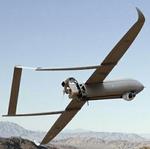
U.S._special_forces_operating_recon_drones_in_Lebanon_5.15Reconnaissance drone operated by US special forces in Lebanon

How do Obama’s repeated commitments to Israel’s security square with close US military and intelligence cooperation with an organization whose vow to destroy Israel is backed by 100,000 missiles – all pointed south?

************************

Another strange pair of bedfellows has turned up in one of the most critical Middle East battlefields: the United States is helping Hizballah, Iran’s Lebanese surrogate, in the battle for control of the strategic Qalamoun Mountains. DEBKAfile’s intelligence sources disclose that a US special operations unit, stationed at the Hamat air base on the coast of northern Lebanon, is directing unarmed Aerosonde MK 4.7 reconnaissance drone intelligence-gathering flights over the Qalamoun Mt arena, 100 km to the west.

Washington set up the base originally in line with an assurance to Beirut of military assistance for the next three years to counter any threatened invasion by extremist elements.

However, it turns out that the data the US drones pass to Lebanese army general staff in Beirut goes straight to Hizballah headquarters – and on to the Iranian officers in Syria running Bashar Assad’s war effort.

The Aerosonde MK 4.7 can stay aloft for 10 to 12 hours at a stretch at an altitude of 4.5 km. It functions day or night, equipped with an advanced laser pointer capability. It is capable of carrying ordnance but US sources say they the aircraft in Lebanon are unarmed.

Since Hizballah is also operating Ababil-3 surveillance drones of its own over Qalamoun, coordination had become necessary between the American team and the Shiite group.  The consequence is that for the first time, the US military is working directly with an internationally-designated terrorist organization – a development with earthshaking ramifications for Israel’s security. This partnership has in fact become a game-changer for the worse in terms of Israel’s security ties with the US and has caused an upheaval in its military and intelligence disposition in the region, in at least six respects:

1. To counter US-Hizballah intelligence collaboration, Israel is obliged to reshuffle the entire intelligence mechanism it maintains to protect its northern borders with Lebanon and Syria.

2.  Israel finds itself forced to monitor the progress of the US special unit’s interface with Hizballah, its avowed enemy.

3.  Israel can no longer trust American intelligence coming in from Lebanon because it is likely tainted by Hizballah sources.

4.  Hizballah is gaining firsthand insights into the operating methods of US special operations forces, which Israel’s methods strongly resemble and must therefore revamp.

5. The Hizballah terrorist group is winning much needed prestige and enhanced status in the region from its collaboration with the US.

6. Hizballah’s Ababil drones are in fact operated by the hostile Iranian Revolutionary Guards, which leaves Israel with no option but to overhaul from top to bottom the intelligence-gathering systems employed by its surveillance drones to track Iranian movements in the region.

At the Washington Adas Israel synagogue Friday, May 22, President Barack Obama wearing a kipah “forcefully” objected to suggestions that policy differences between his administration and the Israeli government signaled his lack of support for the longtime US ally.

This raises a question: How do Obama’s repeated commitments to Israel’s security square with close US military and intelligence cooperation with an organization whose vow to destroy Israel is backed by 100,000 missiles – all pointed south?

Richard Engel on Obama’s Strategy Against Islamic State: The Definition of Stupidity

May 21, 2015

Richard Engel on Obama’s Strategy Against Islamic State: The Definition of Stupidity, Washington Free Beacon via You Tube, May 21, 2015


Ramadi’s fall opens ISIS road to Baghdad. Jordan warns US air strikes won’t stop the terrorists’ advance

May 18, 2015

Ramadi’s fall opens ISIS road to Baghdad. Jordan warns US air strikes won’t stop the terrorists’ advance, DEBKAfile, May 18, 2015


Jordan’s King Abdullah has warned the Obama administration in an urgent message that US air strikes alone won’t stop the Islamic State’s advances in Iraq and Syria and, what is more, they leave his kingdom next door exposed to the Islamist peril. ISIS would at present have no difficulty in invading southern Jordan, where the army is thin on the ground, and seizing local towns and villages whose inhabitants are already sympathetic to the extremist group. The bulk of the Jordanian army is concentrated in the north on the Syrian border. Even a limited Islamist incursion in the south would also pose a threat to northern Saudi Arabia, the king pointed out.

Abdullah offered the view that the US Delta Special Forces operation in eastern Syria Saturday was designed less to be an effective assault on ISIS’s core strength and more as a pallliative to minimize the Islamist peril facing Saudi Arabia, Jordan and the Gulf emirates.

DEBKAfile’s Washington sources report that US officials refused to heed Abdullah’s warning and tried to play it down, in the same way as Secretary John Kerry tried Monday, May 18, to de-emphasize to the ISIS conquest of Ramadi, the capital of Iraq’s largest province.

At a news conference in Seoul, Kerry dismissed the Islamists’ feat as a “target of opportunity” and expressed confidence that, in the coming days, the loss “can be reversed.”

The Secretary of State’s words were unlikely to scare the Islamists, who had caused more than 500 deaths in the battle for the town and witnessed panicky Iraqi soldiers fleeing Ramadi in Humvees and tanks.

Baghdad, only 110 km southeast of Ramadi, has more reason to be frightened, in the absence of any sizeable Iraqi military strength in the area for standing in the enemy’s path to the capital.

The Baghdad government tried announcing that substantial military reinforcements had been ordered to set out and halt the Islamists’ advance. This was just whistling in the dark. In the last two days, the remnants of the Iraqi army have gone to pieces – just like in the early days of the ISIS offensive, when the troops fled Mosul and Falujah. They are running away from any possible engagement with the Islamist enemy.

The Baghdad-sourced reports that Shiite paramilitaries were preparing to deploy to Iraq’s western province of Anbar after Islamic State militants overran Ramadi were likewise no more than an attempt to boost morale. Sending armed Shiites into the Ramadi area of Anbar would make no sense, because its overwhelmingly Sunni population would line up behind fellow-Sunni Islamist State conquerors rather than help the Shiite militias to fight them.

Iran’s Defense Minister Hossein Dehghan, who arrived precipitately in Baghdad Monday, shortly after Ramadi’s fall, faces this difficulty. Our military sources expect him to focus on a desperate effort to deploy Shiite militias as an obstacle in ISIS’s path to Baghdad, now that the road is clear of defenders all the way from Ramadi.

In Amman, King Abdullah Sunday made a clean sweep of senior security officials, firing the Minister of Interior, the head of internal security (Muhabarat) and a number of high police officers. They were accused officially of using excessive violence to disperse demonstrations in the southern town of Maan.

The real reason for their dismissal, DEBKAfile’s counter-terror sources disclose, is the decline of these officials’ authority in the Maan district,  in the face of the rising influence of extremist groups identified with Al Qaeda and ISIS, in particular.

First US ground operation in Syria kills ISIS oil chief – as Islamists advance on three new fronts

May 16, 2015

First US ground operation in Syria kills ISIS oil chief – as Islamists advance on three new fronts, DEBKAfile, May 16, 2015

USspecialforcesJoran10.6.14US Special Operations forces in Jordan.

America’s first ground operation in the five years of Syrian war was directed against the Islamic State of Iraq and the Levant – ISIS.  US sources report that Special Operations forces mounted a raid Saturday, May 16, on an ISIS convoy in the Deir a-Zour district of eastern Syria, and killed senior Islamist commander and oil and gas chief, Abu Sayyaf, when he resisted capture. His Iraqi wife, Umm Sayyaf, was taken to Iraq for interrogation by the US troops, all of whom returned safely.

Abu Sayyaf’s importance for the Islamist group cannot be overrated as the man in charge of its commandeered oil fields in Syria and Iraq. He also managed their overseas sales in a thriving black market, netting an estimated $5million a day for bankrolling the group’s wars.

Catching him alive was the preferred object of the raid. Under interrogation, he would have been a valuable source of information on the working of the group’s illicit oil and gas trade, how it was managed, the identities of its customers and routes of payment to the ISIS war chest.

DEBKAfile’s military sources report that the US raid was staged from Jordan, not Iraq. In normal circumstances, the Jordanians don’t permit US ground or air operations to be staged directly from their territory. However, a joint 10-day US-Jordanian war game, Eager Lion, was in progress in the Hashemite Kingdom. Some 10,000 troops from various countries, including the US, were practicing special operations against ISIS. And so the US unit was ready to hand a short distance from a high-value target at Deir a-Zour.

DEBKAfile adds that the operation came just two days after the Arab Gulf leaders’ summit convened by President Barack Obama ended at Camp David Thursday, May 14. The war on ISIS was a key item on their agenda.

Sources in Washington disclose that the order for the raid came directly from President Barack Obama on the advice of national security council heads in the White House. The troops landed in the middle of a hotbed of fighting between the Syrian army and ISIS. They were no doubt lifted in and out of the scene at speed by helicopter.

The Islamists are in full flight on three Syrian fronts (as well as the same number in Iraq). The group has overrun Al-Sina’a, Ar-Rusafa and Al-Omal in this district, as well as seizing Saker Island in the middle of the Euphrates River north of Deir a-Zour, from which it is shelling the largest Syrian air base in eastern Syria.

Islamist fighters are also advancing on Syria’s ancient city of Palmyra (Tadmor). This is a 2,000-old desert site with precious remains of antiquity, but also home to Bashar Assad’s infamous Tadmor prison, notorious for torture and summary executions.

ISIS targets near this ancient town are the biggest Syrian air base in central Syria and more oil fields. Most of the Iranian and Russian air transports delivering military equipment for the Syrian army and Hizballah land at this base.

The Islamists are additionally targeting Syrian military positions in eastern Homs.

President Strangelove or, how I learned to stop worrying and love the bomb

May 14, 2015

President Strangelove or, how I learned to stop worrying and love the bomb, Jerusalem Post, David Turner, May 14,2015

Concerned about Soviet intentions in the region the Truman administration entered into the U. S.-Saudi Mutual Defense Assistance Agreement (MDA) in 1951. The Agreement provided the foundation for what would emerge as an American commitment to provide a defense umbrella for the region to protect American interests in the Middle East. American assurances to states in the region seemed intact until the GW Bush Administration invasion of Iraq. Trapped in a war it completely misjudged and soon realized it could not win the administration sought an accommodation with Iran to control Shi’ite militias battling the Americans.

The Bush policy of “accommodation” with Iran became the Obama policy of “appeasement” towards the Islamic Republic. Thus began a six-year-long quest to intended to encourage that country’s recalcitrant and hegemony ambitious leaders to abandon its nuclear weapons program. With the imminent 30 June deadline for signing an Agreement quickly approaching the president invited the Gulf Cooperation Council (GCC) states headed by Saudi Arabia to Camp David promising a mutual defense agreement assuring the Arab states of American protection in the event Iran proved a threat to the region. In addition to “assurances, the Saudis insisted on a signed and “formal alliance structure with the United States guaranteeingU.S. support against potential Iranian aggression.”

In advance of the conference the White House announced that President Obama would meet with the Saudi king the day beforeCamp David. But at the last minute, [d]ispleased with Washington’s dealings with Iran, with an emerging deal over its nuclear program and with US security proposals to Gulf Arab nations,” King Salman announced he would not meet with President Obama and would not attend the Camp Davidconference. In the end only two of six Gulf nations decided to attend with heads of state.

The king’s last-minute cancellation, his turn-down of a meeting with the leader of the Free World was described as “a calculated snub for the president’s policies on Iran and the Middle East.” It was revealed that Kerry, in his meeting with the Saudis the week earlier, told the king that Obama was not prepared to finalize according to the king’s timetable any agreement that might result at Camp David.

And then there was the fact that a mutual defense agreement with the Saudis, the 1951 MDA, already existed already assuring the Saudis protection under America’s nuclear umbrella. Mistrust of American intentions and assurances by America’s “allies” built up over the previous twelve years was palpable.

Bush and the Region

“Even before the inauguration [and, of course, the pretext of 9/11], Cheney asked outgoing Secretary of Defense William Cohen to provide Bush with a briefing focused on Iraq… [Bush appointee] Defense Secretary Rumsfeld saw, “September 11, 2001, as a potential “opportunity.””

Symptomatic of hubris resulting from power minus coherent policy President Bush ignored both Arab and Israeli warnings of Foreseen Consequences certain to follow should the administration follow through with its threat to invade Iraq.

“With his latest remarks, [Saudi, later king] Prince Abdullah joined the chorus of Arab complaints about the Bush administration’s talk of taking military action to oust Saddam Hussein and put an end to his programs to develop weapons of mass destruction. At virtually every stop in the Arab world, Mr. Cheney has been told that an American military strike would destabilize the region.”

And, according to Lawrence Wilkerson, a member of the State Department’s Policy Planning Staff, “[t]he Israelis were telling usIraq is not the enemy – Iran is the enemy.” Wilkerson said that the Israeli reaction to invading Iraq in early 2002 was, “If you are going to destabilize the balance of power, do it against the main enemy.”

Bush and the Bomb

Cut off the head of the snake,” the Saudi ambassador toWashington, Adel al-Jubeir, quotes the king as saying during a meeting with General David Petraeus in April 2008.

In a speech to the Knesset in 2008 to observe Israel’s 60thanniversary Bush told the Knesset, “America stands with you in firmly opposing Iran’s nuclear weapons ambitions. Permitting the world’s leading sponsor of terror to possess the world’s deadliest weapon would be an unforgivable betrayal of future generations.” Nowhere in his speech did Bush hint at his long held view that America was not prepared to enter another Middle East war, that there never was a military option with which to threaten Iran’s nuclear weapons program. No accident then that Bush chose war-averse Robert Gates as his defense secretary; and that Gates in turn chose war-averse Admiral “Mike” Mullen as head the Joint Chiefs of Staff. The dovish defense pair would for years be the president’s PR mouthpiece warning against even the threat of force to halt Iran’s nuclear program. The Gates/Mullen oft-repeated warning of “unforeseen consequences” became, over the years a common, almost mantra-like warning against any action against Iran.

No surprise then that the openly dovish, newly-elected President Obama invited Gates to remain on as his defense department head, “a show of bipartisan continuity in a time of war that will be the first time a Pentagon chief has been carried over from a president of a different party.”

Obama and the Region

By way of destabilizing the region Obama has not yet equaled the fallout of Bush’s invasion of Iraq. If Bush gifted Iraq to Iran, set the stage for the “Arab Spring,” Obama did not come in second for lack of trying. The new president followed Bush by targeting his own tyrant, Muamar Qadafi and transformingLibya, as did Bush in Iraq, a political wreck bordering on a failed state.  Libya today is ruled al-Queda, Islamic State and other terror organizations with two governments powerless to assert control. Bordering Egypt Libya today supplies both the Sinai Salafist insurgency and the terror enclave of Gaza with weapons. And as Bush ignored Israeli and Arab warnings regarding the impact of invading Iraq, Obama chose to those same Arab-Israeli warnings regarding his intention to depose America’s principal Arab ally, Hosni Mubarak of Egypt. In a single mindless move the U.S. followed up its Iraq disaster with Egypt. And followed the collapse of Egypt’s secular regime, insult to injury Obama endorsed as “democratic government” the same Muslim Brotherhood with a decades-long terror campaign against the government; the group behind the assassination of Anwar Sadat for having sought peace with Israel: the Muslim Brotherhood whose child, al-Quaeda, had flown airliners into New York’s World Trade Center! The list of Bush and Obama Administration policy failures seems to know no limits: Iraq redo, Bahrain,Yemen and the bloodbath of Syria. Lacking capacity to learn from ideology-based failures, it continually repeats its “unintended consequences.”

Obama and the Bomb

If Bush set the pattern for accommodation then the tactic at least had some “justification” as Iran’s IRGC was funding, arming and even leading the Shi’ite insurgency against Iraq’s American invaders. Not provoking Iran might have the result of limiting American casualties. But for Obama, recipient in advance of the Nobel Peace Prize for promising regarding “world peace”; for Obama to provide Iran, a state sponsor of Islamist terrorism a world forum to show up American weakness and enhance Iranian prestige; for Obama whose commitment on entering office was to promote nuclear non-proliferation: for Obama to provide Iran all the time necessary to achieve threshold nuclear armament status and, failing to contain Iran the consequence would be a nuclear arms race in the lands of the Arab Spring… Saudi Arabia,Turkey and Egypt are already moving to parity with Iran whileJordan and several Gulf states are at varying stages of planning.   

Obama, who promised nuclear non-proliferation, has turned out to be godfather to a nuclear arms race in the least stable, most militant region of the world!
Some 250 Hizballah dead in Qalamoun battle. Nasrallah pushes Lebanese army to enter Syrian war

May 13, 2015

Some 250 Hizballah dead in Qalamoun battle. Nasrallah pushes Lebanese army to enter Syrian war, DEBKAfile, May 13, 2015

Hezbollah-Qalamoun_15.8.14Hizballah fighter on Mt. Qalamoun

Amid Hizballah’s rising war losses, its leader Hassan Nasrallah strongly urged the Lebanese chief of staff Gen. Jean Kahwagi to send his troops into battle over the strategic Qalamoun Mountain, alongside Hizballah and the Syrian army, DEBKAfile’s military sources disclose. Nasrallah argued that the time had come for the Lebanese army to take a hand in the fighting, since the Syrian rebels led by Al Qaeda’s Syrian arm, the Nusra Front, were shelling the eastern Beqaa Valley of Lebanon from their Syrian strongholds on the mountain that sits athwart the Syrian-Lebanese border.  Thousands of jihadis, he said, were seizing land around the northeastern Lebanese villages of Arsal and Nahleh.

Another of Nasrallah’s demands was for Gen. Kahwagi to bring out the Lebanese army’s heavy artillery to shell rebel Qalamoun concentrations, positions and moving vehicles, because they endangered Lebanese national security.

The Lebanese general gave the Hizballsah chief a flat no. He declared the Lebanese army would not “slip” into any war inside the Syrian area of Qalamoun where Hizballah and the Syrian army are currently fighting jihadis, but added: “The army is ready to confront any assault on Lebanese sovereignty and push back any infiltration by militants.”

Tuesday, May 12, in Beirut, US Ambassador David Hale interceded in the argument: “I would say that ISIS posed no threat to Lebanon until Hizballah went into the war in Syria and that provided the magnet that drew these terrorists here.”

Listing the American weapons reaching Beirut of late, as Hellfire missiles fired from helicopters against ground targets, precision guided missiles and howitzers, the ambassador said firmly: “This is exactly what they (the Lebanese army) need to target this particular terrorism phenomenon.”

DEBKAfile’s military and counter-terrorism sources don’t believe that the Lebanese army chief will be able to hold out for long against the gradual ISIS and Nusra slide into his country. At the moment, the intruders are mostly fleeing Islamists, driven by the Syrian army and Hizballah from their mountain positions and out of the eastern Lebanese border districts close to the battle front.

But although the Syrian army and Hizballah are claiming to have taken strategic hills in the volatile border region last week, the battle is far from over and does not appear to be anywhere near a clear resolution.

Even when Syria and Hizballah do achieve a local gain here or there, fresh ISIS and Nusra forces keep on pouring back – mostly from the north – to constantly open up new battlefronts on the Qalamoun mountains. Their commanders have already grasped that no one will stop them slipping back and forth between Syria and Lebaon – both to escape Syrian and Hizballah fire and meanwhile to hit Hizballah’s rear strongholds in the Lebanese Beqaa.

Hizballah’s death toll in battle is soaring disastrously – at least 250 reported in the last few days, including 9 senior commanders.

Most military and intelligence experts agree that, as time goes by, however hard they try, the United States and Lebanese army will not be able to stem the jihadists’ spillover into the Beqaa Valley.

Qalamoun battle is do-or-die for Bashar Assad, Hassan Nasrallah and Iran’s Gen. Soleimani

May 9, 2015

Qalamoun battle is do-or-die for Bashar Assad, Hassan Nasrallah and Iran’s Gen. Soleimani, DEBKAfile, May 9, 2015

(??????????? — DM)

Qalamoun_battle_5.15Hizballah flag aloft in Qalamoun battle

President Obama has just lately adopted a plan some members of his National Security Council put forward: It is to get the Iranians moving on the nuclear deal by applying a painful prod in the form of a wedge in the Revolutionary Guards (IRGC) leadership. IRGC chief Gen. Ali Jafari is being elevated as a “moderate” and the “good guy” of the regime, while Gen. Soleimani, the Al Qods chief, who orchestrates IRGC’s external subversive operations, is fingered as the “bad guy.’

*****************

Two contenders are locked in a fateful contest to win the strategic Qalamoun Mts. on the Syrian-Lebanese border: The Syrian army and its Hizballah ally are fighting tooth and nail against the opposition Army of Conquest, which is spearheaded by Nusra Front, Al Qaeda’s Syrian branch. This battle has all of a sudden attained the proportions of a critical regional contest, which poses dire consequences for the Iran-Syrian-Hizballah alliance at large and its three prime movers, Syrian President Bashar Assad, Hizballah leader Hassan Nastrallah, and their overall commander, Iran’s Gen. Qassem Soleimani, head of the Al Qods Brigades.

With so much hanging in the balance, it is no wonder that Hizballah issued confused communiqués on the battle, until Nasrallah interceded Tuesday, May 5 to say: “We have not issued a statement, and we will not issue a statement. When we launch a (Qalamoun) operation, it will be obvious to everyone.”

The operation is, however, already in full flight. Neither Nasrallah nor anyone else can predict its outcome for sure, because a radical, unforeseen shift has taken place in the balance of strength. For the first time in nearly five years of Syrian civil war, the United States has lined up with Saudi Arabia, Turkey, Qatar and the UAE to give the Syrian opposition heavy weapons. Had they been supplied earlier, the war might have ended sooner and many of the hundreds of thousands of victims might have been saved.

Also, after a long silence, senior Obama administration spokesmen were finally willing to blast the Assad regime for his heinous war crimes.

Friday, May 8, three senior spokesmen confirmed as “strong and credible” the reports that the Syrian army had reverted to the use of chemical weapons. They were Robert Malik, US ambassador to the Hague-based Organization for the Prohibition of Chemical Weapons, US Undersecretary of State Antony Nlnken and US ambassador to the UN Samantha Power.

They were willing to “disclose” a fact – long common knowledge in the region – that the Syrian army had retained a part of its chemical stockpile. This disclosure exposed the much-acclaimed US-Russian accord concluded by Secretary of State John Kerry and Foreign Minister Sergei Lavrov at the end of 2013, forcing Assad to surrender his chemical arsenal, as a more or less dead letter.

On the heels of the US accusation, PCWU international inspectors revealed that traces of sarin and VX nerve agents were found in Syria last December and in January.

The new Obama administration’s diplomatic offensive against Assad came as the Qalamoun showdown attained momentous proportions, after two weeks of heavy Syrian military war reverses in the north. The sharp US edge was also directed at Gen. Soleimani, who is responsible for Iran’s supply of chorine-filled barrel bombs dropped by the Syrian air force on civilians in rebel-held areas.

Washington has refocused its attention on Syrian-Iranian chemical warfare out of two broader considerations:

1. Iran’s cavalier contempt for the international accords and treaties banning chemical weapons raises tough questions about Tehran’s credibility and trustworthiness for upholding the comprehensive nuclear accord currently in negotiation with the Six Powers. Can Iran be trusted to honor any commitment to allow the “intrusive inspections” of its nuclear sites, which President Barack Obama has pledged as the underpinning of any accord?

2.  President Obama has just lately adopted a plan some members of his National Security Council put forward: It is to get the Iranians moving on the nuclear deal by applying a painful prod in the form of a wedge in the Revolutionary Guards (IRGC) leadership. IRGC chief Gen. Ali Jafari is being elevated as a “moderate” and the “good guy” of the regime, while Gen. Soleimani, the Al Qods chief, who orchestrates IRGC’s external subversive operations, is fingered as the “bad guy.’

Jafary is also to receive economic incentives for accepting the nuclear accord, while denouncing Soleimani, leading light of Iran’s military interventions in Iraq, Syria and Yemen, may have the added benefit of forcing Tehran to pull in its horns in those conflicts.

Time will tell whether this tactic is effective. As matters stand in May 2015, it is hoped that undercutting Soleimani’s repute will impinge on the level of Iranian military involvement in Syria, Iraq and Yemen. A decision by Tehran to downscale its military support for the Syrian and Hizballah armed forces may undo them in the battle of Qalamoun. This defeat will seriously undermine Assad, Nasrallah and Soleimani. And so the Syrian opposition and its backers have all the more reason to push hard to win this fateful encounter.

PM Netanyahu’s Remarks to the Washington Institute for Near East Policy

May 3, 2015

PM Netanyahu’s Remarks to the Washington Institute for Near East Policy, via You Tube, May 2, 2015

Iran swings behind escalated Syrian-Hizballah anti-Israel terror offensive on the Golan

May 1, 2015

Iran swings behind escalated Syrian-Hizballah anti-Israel terror offensive on the Golan, DEBKAfile, May 1, 2015

israeli_tanks_golanIsraeli tanks on the Golan

The Syrian and Hizballah military delegations visiting Tehran this week achieved their purpose: DEBKAfile’s intelligence and military sources report that in three days of talks up until Friday April 30, Syrian Defense Minister Gen. Fahad Jassim al-Freij procured from his Iranian counterpart Hussein Dehghan, approval for a stepped up terror campaign against Israeli forces and civilians on the Golan, to be executed by terrorist surrogates. Iran pledged its support for this campaign and promised to make the Revolutionary Guards and Afghani Shiite forces present in Syria available, in the event of an Israeli counter-attack.

A stamping ground, designated “the open area,” was to be provided for all terrorist militias willing to attack Israel. It would stretch from Damascus to the Golan – a distance of 60 km by road – and take in the Syrian Hermon and Lebanese Chebaa Farms. Syrian and Hizballah military intelligence services will take responsibility for coordinating their operations and providing them with arms and intelligence.

According to the plan approved in Tehran, Syria and Hizballah will establish new militias for their campaign as well as deploying existing terrorist groups.

One such framework, made up of Syrian Druzes, was set up in recent weeks. Its first attack last Sunday April 26 – an attempt to plant a bomb near an Israeli Golan border position – was a flop. All four bombers were killed in an Israeli air strike and the device did not detonate.

The commander of the new Druze militia is Samir Kuntar, a name familiar to Israelis as the murderer of the Haran family of Nahariya and two police officers, who got out of prison in 2008 after serving 36 years of a life sentence. Kuntar is a rare Lebanese Druze who joined Hizballah in his youth.

Our sources note that President Bashar Assad many times suggested setting up a special Syrian-Palestinian “resistance movement” for taking back the Golan, which Israel captured during Syria’s 1967 invasion and later annexed.

However, the terrorist attacks on Israel were left until now mostly to Palestinian squads created ad hoc for single operations. They were often drawn from Ahmed Jibril’s PFLP-General Command group or recruited in the Yarmuk refugee camp in Damascus.

But now, Assad and his Hizballah ally are set on a serious escalation by different tactics, DEBKAfile’s sources report. For a major terror offensive, they are building new frameworks with local recruits mustered in South Lebanon and the Syrian Golan. Some of those militiamen have been seen moving about in the Druze villages scattered over Jabal Druze and the Hermon up to the Chebaa farms.

IDF Eliminates Terror Cell Planting Bomb on Syrian Border

April 26, 2015

IDF Eliminates Terror Cell Planting Bomb on Syrian Border, Israel National News, Kobi Finkler, Ari Yashar, April 26, 2016

IDF forces on Sunday night eliminated a terrorist cell as it was trying to place an explosive on the Israeli-Syrian border on the Golan Heights.

Reportedly four terrorists were killed in the incident; no IDF soldiers were wounded in the exchange.

A senior IDF source said that an army surveillance patrol located the terrorists who had arrived at the border from Syria, and tracked them as they advanced.

When they reached the border and placed an explosive on it, IAF aircraft fired missiles at them, taking out every single terrorist member of the cell.

The IDF reports that the incident took place on Israeli territory just east of the security barrier.

The last security incident involving an attempted border bombing similar to this one took place last March, when an explosive was placed on the border. As a result of the explosion, an IDF paratrooper officer was critically wounded.

Earlier on Sunday Defense Minister Moshe Ya’alon (Likud) warned that Israel will strike Iranian attempts to smuggle advanced weapons to the Hezbollah terrorist organization in Lebanon, following Arab reports that an IAF airstrike the day before took out a Scud missile depot in Syria transferring weapons to Hezbollah.

According to the reports in Arabic media, a Scud depot in the Qalamoun mountain region rife with smuggling to Hezbollah was targeted, after a weapons convoy was hit last Wednesday.

“Iran continues to try and arm Hezbollah, even in these very days, and it hopes to equip the Lebanese terrorist organization with advanced and precise weapons,” said Ya’alon. “We won’t allow Iran and Hezbollah to establish a terrorist infrastructure on our border with Syria, and we will know to put our hands on all those who threaten citizens of Israel, along all our borders and even far from them.”