Posted tagged ‘Sinai’

Sinai attacks decline as Egypt’s fight against IS yields results

August 29, 2016

Sinai attacks decline as Egypt’s fight against IS yields results Through targeted bombings on Islamic State’s Jabal Hilal stronghold, Egyptian military deals strong blow to terror group’s capabilities

By Avi Issacharoff

August 29, 2016, 2:51 pm

Source: Sinai attacks decline as Egypt’s fight against IS yields results | The Times of Israel

Smoke rises after a house was blown up in a military operation in Egypt’s Sinai peninsula on November 20, 2014. (Abed Rahim Khatib/Flash90)

There has been a steady and significant decline in terror attacks carried out by the Islamic State in the Sinai Peninsula in recent months, according to both Egyptian and Israeli sources.

Get The Times of Israel’s Daily Edition by email
and never miss our top stories
  Free Sign up!

Though the Islamic State’s armed activities continue apace in the northeast triangle framed by the Israel, Gaza and Egypt borders, there have been fewer terror attacks on the Egyptian army, with a smaller number of casualties than last year, and the attacks have been less ambitious than those IS carried out in 2014 and 2015, as a result of the group’s weakened force and diminished weapons supply.

The Egyptian military’s operations in the central Sinai Peninsula and a series of airstrikes in the Jabal Hilal region — a terrorist-controlled area — have dealt a powerful blow to IS’s military capabilities, the sources said.

For the past few years, Jabal Hilal has been the stronghold of the extremist group in the peninsula, mostly due to its topography.

The region’s extensive cave system — it is considered the “Tora Bora of the Sinai,” an allusion to the rugged region of Afghanistan that Taliban and al-Qaeda fighters made into a bastion against the United States — has made it the preferred destination for IS, the current iteration of the Ansar Bayt al-Maqdis group.

Three months ago, toward the end of May, the Egyptian military spokesperson, Col. Muhammad Samir announced the killings of “88 armed members of the jihadist group in central and northern Sinai.”

May’s large-scale aerial campaign not only took out nearly 100 IS operatives, it also injured hundreds more, dozens of them seriously. In addition to the human casualties, the bombings destroyed the group’s weapons storage facilities and ammunition caches, which had been kept hidden for years.

Essentially, the “logistic front” of the Islamic State in Sinai was destroyed, the sources said.

Around the same time, Egyptian President Abdel-Fattah el-Sissi also discussed the actions against IS, which focused on Jabal Hilal, an area that is seen as particularly problematic. According to Sissi, there had been a significant victory in the fight against terror. However, he clarified, the state of emergency for Egypt would continue.

An image taken from a video clip released by the Sinai affiliate of the Islamic State group on August 1, 2016. (MEMRI)

An image taken from a video clip released by the Sinai affiliate of the Islamic State group on August 1, 2016. (MEMRI)

Earlier this month, the Egyptian military announced another achievement, the execution of Abu Duaa al-Ansari, the presumed commander of the Islamic State in Sinai, formerly known as Ansar Bayt al-Maqdis.

According to the military’s statement, the series of bombings south of el-Arish — the provincial capital of the Sinai — in which al-Ansari was killed came as the result of precise intelligence. During the bombings, a number of weapons storehouses were destroyed and some 45 operatives were killed.

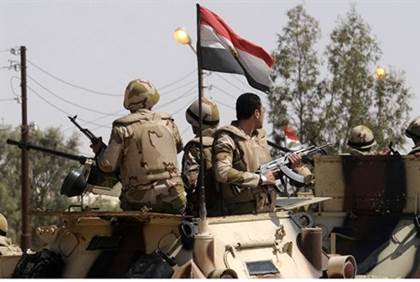
Illustrative: Egyptian security forces in the Sinai, in July 2013. (Mohamed El-Sherbeny/AFP)

Illustrative: Egyptian security forces in the Sinai, in July 2013. (Mohamed El-Sherbeny/AFP)

Throughout 2015, dozens of Egyptian soldiers were killed by IS, with the worst attack taking place during the month of Ramadan in simultaneous assaults on a number of Egyptian military outposts near the town of Sheikh Zuweid that left over 50 dead.

Since the July 1, 2015 attack, however, the Egyptian military’s intelligence has improved. In addition, security collaboration and cooperation with Israel has continued.

Recently, Egypt has made a number of significant gestures in the diplomatic realm, including a rare meet-up between its foreign minister and Prime Minister Benjamin Netanyahu, that testify to the closeness of the two sides.

ISIS Comes to Gaza

July 11, 2016

ISIS Comes to Gaza

by Khaled Abu Toameh

July 11, 2016 at 5:00 am

Source: ISIS Comes to Gaza

  • Recent reports leave no doubt as to cooperation between Hamas and ISIS groups in Sinai. These reports, the Egyptians and Palestinian Authority argue, provide further evidence that the Gaza Strip remains a major base for various jihadi terror groups that pose a real threat.
  • The report said that terrorists wanted by the Egyptian authorities were admitted to the Gaza Strip hospital in return for weapons given to Hamas by the Islamic State in the Sinai.
  • Mahmoud Abbas and the leaders of the Palestinian Authority (PA) can continue to talk all they want about a Palestinian state that would be established in the West Bank, Gaza Strip and east Jerusalem. But when ISIS-inspired groups are active in Gaza and there are no signs that the Hamas regime is weakening, it is rather difficult to imagine a Palestinian state.
  • The jihadi groups clearly seek to create an Islamic emirate combining the Gaza Strip and Sinai. Abbas might thank Israel for its presence in the West Bank — a presence that allows him and his government to be something other than infidel cannon fodder for the jihadis.

Hamas denies it up and down. Nonetheless, there are growing signs that the Islamist movement, which is based in the Gaza Strip, is continuing to cooperate with other jihadi terror groups that are affiliated with Islamic State (ISIS), especially those that have been operating in the Egyptian peninsula of Sinai in recent years.

This cooperation, according to Palestinian Authority security sources, is the main reason behind the ongoing tensions between the Egyptian authorities and Hamas. These tensions have prompted the Egyptians to keep the Rafah border crossing mostly closed since 2013, trapping tens of thousands of Palestinians inside the Gaza Strip.

In 2015, the Egyptians opened the Rafah terminal for a total of twenty-one days to allow humanitarian cases and those holding foreign nationalities to leave or enter the Gaza Strip.

This year so far, Rafah has been open for a total of twenty-eight days. Sources in the Gaza Strip say there are about 30,000 humanitarian cases that need to leave immediately. They include dozens of university students who haven’t been able to go back to their universities abroad and some 4,000 patients in need of urgent medical treatment.

Surprisingly, last week the Egyptians opened the Rafah terminal for five days in a row, allowing more than 4,500 Palestinians to leave and enter the Gaza Strip. The unusual gesture came on the eve of the Muslim feast of Eid al-Fitr. However, the terminal was closed again at the beginning of the feast on July 6.

The renewed closure of the Rafah terminal coincided with reports that efforts to end the tensions between Hamas and Egypt hit a snag. According to the reports, the Egyptian authorities decided to cancel a planned visit to Cairo by senior Hamas officials. The decision to cancel the visit, the reports said, came in the wake of the dissatisfaction of the Egyptians with the way Hamas has been handling security along the border between the Gaza Strip and Egypt. The closure of the border crossing came as a blow to Hamas’s efforts to patch up its differences with Egypt and pave the way for easing severe travel restrictions imposed by Cairo on the Palestinians in the Gaza Strip.

In recent weeks, Hamas announced that it had deployed hundreds of its border guards along the shared border with Egypt in order to prevent infiltration both ways, especially of jihadi terrorists who have been targeting Egyptian security personnel and civilians in Sinai. However, the Egyptian authorities remain extremely skeptical about Hamas’s measures.

Egyptian security officials are convinced that Hamas is not serious about preventing jihadi terrorists from crossing the border in either direction. Moreover, the Egyptians suspect that Hamas maintains close relations with some of the ISIS-affiliated groups in Sinai, and is providing them with weapons and medical treatment.

Egyptian President Abdel Fattah el-Sisi has refused to conduct high-level contacts with Hamas since he came to power in 2013. His regime views Hamas as a threat to Egypt’s national security. The few meetings that did take place between the two sides were restricted to security issues; that was why Sisi entrusted his General Intelligence officials to conduct the discussions with the leaders of the Islamist movement who visited Cairo in the past months.

Apparently, the Egyptian skepticism towards Hamas is not unjustified.

In recent weeks, reports have surfaced that leave no doubt as to cooperation between Hamas and ISIS groups in Sinai. These reports, the Egyptians and Palestinian Authority argue, provide further evidence that the Gaza Strip remains a major base for various jihadi terror groups that pose a real threat not only to Egypt’s national security, but also to Israel and the Palestinian Authority in the West Bank, as well as neighboring countries such as Jordan and Lebanon.

Reports have also emerged that some of the jihadi terrorists in Sinai have been receiving medical treatment in hospitals in the Gaza Strip, with the approval of Hamas. The terrorists, who are wanted by the Egyptian authorities, are believed to have entered the Gaza Strip through smuggling tunnels along the border with Egypt.

According to one report, one of the terrorist leaders from Sinai, Abu Sweilem, was documented lying in bed at the Abu Yusef al-Najjar Hospital in the city of Rafah, in the southern Gaza Strip. The report said that Abu Sweilem was hospitalized under the heavy guard of members of Hamas’s armed wing, Ezaddin al-Qassam. It said that he, and other terrorists wanted by the Egyptian authorities, were admitted to the Gaza Strip hospital in return for weapons given to Hamas by the Islamic State in Sinai, which is known as Wilayat Sina’.

Another report by the same source claimed that Mohamed Abu Shawish, a senior member of Ezaddin al-Qassam in the Gaza Strip, has been helping train and organize the jihadi terrorists in Sinai. Hamas claimed that the man had fled the Gaza Strip to join ISIS and was wanted by its armed wing for defection. The report, however, noted that Abu Shawish was moving freely between the Gaza Strip and Sinai and was even using Hamas vehicles to commute between the two areas. It added that Abu Shawish has even set up a vast network of relations along the Palestinian side of the border with Egypt to facilitate the smuggling of weapons and terrorists in both directions.

The report goes on to reveal that the top Hamas operative is in touch with Eyad al-Khaldi, the owner of a clothing factory in the Gaza Strip, who has been supplying him with military uniforms and other equipment for the terrorists in Sinai. The report cites this as evidence of the growing activities of the Sinai-based jihadi terrorists inside the Gaza Strip, which is taking place with the blessing of top Hamas officials.

Hamas has in the past indeed cracked down on ISIS-affiliated groups and individuals in the Gaza Strip. But this happens only when they seem to pose some kind of a threat or challenge to Hamas’s rule over the Gaza Strip.

This crackdown, however, has clearly not stopped Hamas members, especially those belonging to Ezaddin al-Qassam, from collaborating with other groups that are linked to ISIS and that are engaged in terror attacks against the Egyptians in Sinai. Isolated and desperate for cash in the Gaza Strip, Hamas seems prepared to cooperate with anyone in order to retain its control and survive.

Some Palestinians in the Gaza Strip argue that the double standard Hamas employs in dealing with the jihadi terrorists is the result of a split between its political and military wing. While the top political leaders of Hamas appear to be keen to distance themselves from the jihadi terrorists, the commanders of Ezaddin al-Qassam are acting independently and working with anyone who hands them weapons.

These Palestinians also point out that an increasing number of Ezaddin al-Qassam members have in recent years fled the Gaza Strip to join ISIS in Sinai, Syria and Iraq — a development that continues to worry the political leadership of Hamas. Those who have not been able to flee the Gaza Strip are joining other jihadi groups that are operating inside the Gaza Strip.

Reports indicate that an increasing number of Hamas gunmen have in recent years fled the Gaza Strip to join ISIS in Sinai, Syria and Iraq. Pictured above: An August 2014 image of terrorists from the Islamic State in Sinai (then known as Ansar Bayt al-Maqdis), preparing to behead four Egyptians they accused of spying for Israel.

Last month, further evidence of this trend was provided by the death of Khaled al-Tarabin, a former Hamas operative killed while fighting alongside ISIS in Syria. He is the seventh Hamas-affiliated Palestinian to be killed while fighting alongside ISIS in Iraq and Syria in recent months, according to sources in the Gaza Strip.

Regardless of the level of cooperation between Hamas and jihadi terrorists in Sinai, the Palestinians living in the Gaza Strip will pay the price. Reports about this cooperation simply entrench in the minds of the Egyptians the need to close the borders, humanitarian needs be damned.

As for the Palestinian Authority, all it can do for now is watch the Gaza Strip — which it is hoping will become part of a future Palestinian state — descend into hell.

Mahmoud Abbas and the leaders of the Palestinian Authority can continue to talk all they want about a Palestinian state that would be established in the West Bank, Gaza Strip and east Jerusalem. But when ISIS-inspired groups are active in the Gaza Strip and there are no signs that the Hamas regime is weakening, it is rather difficult to imagine a Palestinian state. Abbas has not been able to set foot in the Gaza Strip since 2007. Even his private residence in Gaza City is off-limits to him. But Hamas is just the beginning of the story for Abbas. The jihadi groups clearly seek to create an Islamic emirate combining the Gaza Strip and Sinai. The Palestinian Authority president might thank Israel for its presence in the West Bank — a presence that allows him and his government to be something other than infidel cannon fodder for the jihadis.

Khaled Abu Toameh is an award-winning journalist based in Jerusalem.

ISIS seeks to destroy Israel, ‘liberate’ Jerusalem with Sinai Peninsula terrorist force

May 23, 2016

Islamic State aims to destroy Israel, ‘liberate’ Jerusalem with Sinai Peninsula terrorist force By Rowan Scarborough –

The Washington Times Sunday, May 22, 2016

Source: ISIS seeks to destroy Israel, ‘liberate’ Jerusalem with Sinai Peninsula terrorist force – Washington Times

With a media blitz, the Islamic State has set its sights on Egypt’s Sinai Peninsula as the next shot at expanding its empire and establishing a base from which to attack neighboring Israel.

The terrorist group’s propaganda units have gone into high gear for recruitment this month to build a force in Sinai large enough to one day conquer Jerusalem — the same way its fighters took over large parts of Syria and Iraq.


Last week, Marine Gen. Joseph Dunford, chairman of the Joint Chiefs of Staff, warned of the Islamic State’s presence in Sinai, where the group may have placed as many as 1,000 terrorists. The general’s concern is a signal that the U.S. faces another war front against the Islamic State in addition to Iraq, Syria and Libya.

More than a dozen Islamic State media arms in Iraq and Syria have produced videos narrated by a who’s who of hardened jihadis, who are surely on a U.S. kill list for daily airstrikes.

Islamic State propaganda promises recruits that they will one day “liberate” Jerusalem and end the state of Israel, according to analysis by the Middle East Media Research Institute, which tracks jihadi communications. The Egyptian army, the force standing in the way, is threatened with beheadings if soldiers continue to fight.

Such a massive propaganda effort for one mission is unusual for the Islamic State, also known as ISIS and ISIL. Analysts says it means leader Abu Bakr al-Baghdadi views the land as increasingly important to his group’s ultimate goal of bringing down governments in the region and expanding its so-called caliphate, or Islamic state.

“I think ISIS sees the Sinai as a steppingstone for launching greater attacks against Israel, which would boost its claim to primacy in championing the Arab/Muslim cause against Israel, an issue that strongly resonates with many Arab Islamists,” said Jim Phillips, a Middle East analyst at The Heritage Foundation. “The Sinai cells also pose a long-term threat to Egypt, a key state with the largest Arab population. Nature may abhor a vacuum, but terrorists love them.”

Steve Stalinsky, executive director of the Middle East Media Research Institute, said the Islamic State is applying lessons learned in Anbar, Iraq, parts of which it controls, as it tries to persuade Egyptians and people in Hamas-controlled Gaza to join. Hamas is a U.S.-designated terrorist organization.

“One of the videos noted that ISIS in Sinai has learned from the experience of ISIS in Al-Anbar as the two areas are similar in terms of its desert geography,” Mr. Stalinsky said.

“They have been calling Egyptian and Gazans to join them. They believe that ISIS in Sinai will be the gate towards the liberation of Palestine,” he said.For now, the Islamic State lacks the firepower to repeat its success in Anbar, where it captured a number of towns including the disputed Fallujah, after invading Iraq.

“Their strategy now in the Sinai is basically hit-and-run kind of attacks,” Mr. Stalinsky said.

Egyptian forces on the peninsula are hit by those attacks almost daily.

The Islamic State made an enormous statement in Sinai in October when it placed a bomb on Metrojet Flight 9268, sending the Russian airliner crashing onto the desert landscape. The Islamic State claimed it sabotaged the plane, killing 224 people, with explosives hidden in a soda can. If so, the bomb was likely placed on the plane by an Islamic State insider at the Sinai Red Sea resort of Sharm el-Sheikh.

“ISIS leadership views the Sinai province as a key extension for the organization outside of its core area of control in Syria and Iraq,” says an analysis by the Middle East Media Research Institute. “Indeed, the Sinai province is considered one of the most powerful and effective among these extensions.”

Mr. Phillips said the Arab Spring uprising centered in Cairo fed the Islamic State the fighters it needed in Sinai as many Islamists were released from prisons.

“Extremist groups flourished in the Sinai, where they recruited disaffected Bedouin tribes, which had long resented what they perceived to be neglect and marginalization at the hands of the Egyptian government,” he said. “The Sinai also offered a conduit to Gaza, where extremists received support from Hamas and other radical Palestinian Islamist groups.”

Counteroffensive

A sampling of some of the more than one dozen Sinai-centered Islamic State videos provided by the Middle East Media Research Institute:

Two jihadis in Iraq, Abu Qaswara Al-Masri, an Egyptian, and Abu Omar Al-Maqdisi, likely a Palestinian from Gaza, urge Egyptians to join the Islamic State in Sinai.

Al-Masri tells the Egyptian army: “We advise you to repent before we manage to find you. If we find you, there will be no other [fate] but beheading for you. There will be no mercy for you and you are aware of that. You have seen what the soldiers of the caliphate have done with your colleagues and you will see. I advise you to repent. I am a truthful adviser to you.”

Islamic State fighters Abu Suhaib Al-Ansari and Abu Omar Al-Ansari, in Iraq’s Ninawa province, appear in a recruitment video. Abu Omar Al-Ansari urges Egyptians to attack Egyptian government officials and “spill their blood and communicate with them with guns and explosives and turn them into corpses with bombs.” He specifically called on Gazans to travel to Sinai.

A video produced in Aleppo province, Syria, attacks the Muslim Brotherhood in Egypt as mainstream.

A fighter says, “You are the preachers for polytheism and falsehood, you are the ones who issued the fatwa for people to take part in the polytheist democracy, and you are the ones who issued the fatwa for people to vote for the pagan constitution, which puts sovereignty in the hands of the people instead of Allah.”

He added: “You have deceived your followers that [adhering to] democracy and entering the parliament will lead to [the implementation] of Islamic Shariah. Now, where is the Shariah, O enemies of Allah?”

The Brotherhood’s overriding goal is to spread Shariah, or Islamic law, around the world by undercutting secular governments.

Gen. Dunford, the Joint Chiefs chairman, raised alarm last week about the Islamic State’s growing presence in Sinai and said Egyptian forces had begun a counteroffensive against its units.

“We have seen a connection between the Islamic State in the Sinai and Raqqa,” Gen. Dunford told reporters, according to a dispatch by Voice of America. “We have seen communication between the Islamic State in the Sinai and the Islamic State in Libya and elsewhere, so we are watching that pretty closely.”

Raqqa is the Islamic State’s self-proclaimed capital in central Syria, from which it directs media operations and terrorist attacks.

“The Egyptians are taking the fight to the Islamic State right now,” he said aboard a flight for a NATO meeting in Brussels.

The Egyptian military said this weekend that it conducted a series of raids in Sinai that killed 51 Islamic State fighters, according to the Arab news site Al Bawaba.

“Just being able to have a presence and cause some disruption in between Egypt and Israel gives ISIS some propaganda value, at the very least, said retired Army Lt. Gen. James Dubik, an analyst at the Institute for the Study of War in Washington. “It also causes Egypt to look both East and West and may, therefore, provide some operational flexibility to ISIS planning.”

Israeli army says Hamas helping Islamic State in Sinai

July 2, 2015

Israeli army says Hamas helping Islamic State in Sinai

Top officer claims Gaza providing military, medical support to the IS offshoot behind Wednesday’s massive attack that killed dozens

By Times of Israel staff July 2, 2015, 8:28 pm

via Israeli army says Hamas helping Islamic State in Sinai | The Times of Israel.

Smoke rises in Egypt's northern Sinai, as seen from the border of the Gaza Strip, on July 1, 2015, amid fierce clashes between government forces and Islamic State-affiliated gunmen. (Abed Rahim Khatib /Flash90)

Smoke rises in Egypt’s northern Sinai, as seen from the border of the Gaza Strip, on July 1, 2015, amid fierce clashes between government forces and Islamic State-affiliated gunmen. (Abed Rahim Khatib /Flash90)


The IDF has acquired intelligence that Hamas is providing weaponry and other support to the Islamic State’s Sinai affiliate, Wilayat Sinai, the group thought to be behind Wednesday’s deadly attack on Egyptian security services, a top Israeli officer said Thursday.

The coordinator of government activities in the territories, Maj. Gen. Yoav Mordechai, told the Arabic-language news network al-Jazeera that along with military support, Hamas has also been providing medical support to injured IS operatives.

Wednesday’s attack, which included a wave of suicide bombings and assaults on security installations by dozens of militants, saw Sinai’s deadliest fighting in decades. Security officials said dozens of troops were killed, along with nearly 100 attackers.

Mordechai claimed a high-ranking officer in Hamas’s military wing, named as Wa’al Faraj, has been smuggling injured Islamic State fighters into the Gaza Strip for medical treatment.

COGAT commander Maj. Gen. Yoav Mordechai, left, at the Bitunya Crossing near Ramallah (Photo credit: Yonatan Sindel/ Flash 90)

COGAT commander Maj. Gen. Yoav Mordechai, left, at the Bitunya Crossing near Ramallah (Photo credit: Yonatan Sindel/ Flash 90)


Another top Hamas commander involved in training fighters, Abdullah Kishta, had been lending his expertise to Islamic State jihadists in Sinai, Mordechai said, adding that the IDF has “proof” of these direct ties.

Wilayat Sinai (Province of Sinai) was known as Ansar Bayt al-Maqdis before it pledged its allegiance to the Islamic State.

The IDF on Thursday beefed up its presence along the border with the Sinai Peninsula following the attacks, as security officials cautioned that the IS-affiliated group could attempt to overrun the Gaza Strip.

The Israeli army deployed additional troops and was monitoring the fighting across the border using UAVs, Israel Radio reported Wednesday.

“We see in front of our eyes IS acting with extraordinary cruelty both on our northern border and at our southern border,” Prime Minister Benjamin Netanyahu said on Thursday, referring to operatives of the group who have been fighting in the Syrian civil war.

“Our hearts are with the Egyptian people, we send our condolences to the Egyptian government and the families of those who were killed in battle by cruel terror.”

Egyptian officials said the military killed 23 extremists in dawn raids Thursday in northern Sinai, just south of the border town of Rafah, near the Gaza Strip.

They said the army was also seeking out militants house to house in the town of Sheikh Zuweid — where the militants attacked at least five army checkpoints the previous day — and de-mining roads in and around the area that extremists had booby trapped with mines and improvised explosives devices.

A photo shared by the Egyptian military shows a weapons cache seized from IS-linked jihadists in the Sinai Peninsula (Facebook/Egyptian army)

A photo shared by the Egyptian military shows a weapons cache seized from IS-linked jihadists in the Sinai Peninsula (Facebook/Egyptian army)


The Sinai attacks were the most brazen in their scope since jihadists launched an insurgency in 2013 following the army’s overthrow of Islamist president Mohamed Morsi.

Militants took over rooftops and fired rocket-propelled grenades at a police station in Sheikh Zuweid after mining its exits to block reinforcements, a police colonel said.

“This is war,” a senior military officer told AFP. “It’s unprecedented in the number of terrorists involved and the type of weapons they are using.”

One car bomb attack against a checkpoint south of Sheikh Zuweid killed 15 soldiers.

The Islamic State group said its jihadists surrounded the police station after launching attacks on 15 checkpoints and security installations using suicide car bombers and rockets.

Troops regularly come under attack in the Sinai, where jihadists have killed hundreds of policemen and soldiers since Morsi’s overthrow.

IS said the assault had involved three suicide bombers. “In a blessed raid enabled by God, the lions of the caliphate have simultaneously attacked more than 15 checkpoints belonging to the apostate army,” it said in a statement.

AP and AFP contributed to this report.

Israeli border troops, US Mid East forces on alert after massive ISIS assault on Egyptian forces in Sinai

July 1, 2015

Israeli border troops, US Mid East forces on alert after massive ISIS assault on Egyptian forces in Sinai, DEBKAfile, July 1, 2015

Sinai_Attack_1.7.15ISIS attacks Egyptian Sinai positions

The Islamic State of Iraq and the Levant moved ominously close to Israel’s borders Wednesday, July 1 – not as predicted in the north, but in the south, from the Sinai Peninsula. There, ISIS followed up on its Ramadan terror outrages in France, Tunisia, Kuwait and Kobani, with a massive assault on Egyptian forces in the northern Sinai region of Sheikh Zuwaid close to the Israeli and Gaza Strip borders.

Not just a terrorist attack, ISIS launched a full-scale military assault, starting with mortar fire and suicide bombings against five Egyptian military checkpoints.

Using a tactic similar to that employed in the capture of the Iraqi town of Ramadi last month, ISIS gunmen followed this initial assault by riding in on minivans, backed by heavy mortar fire, to storm the positions held by stunned Egyptian troops. Altogether some 20 Egyptian army positions were attacked in and around Sheikh Zuwaid.

Egyptian troop reinforcements setting out from El Arish to the northeast to aid the beleaguered force, went up on mine and bomb traps secretly planted around their camps and police stations. Egyptian Apache assault helicopters striking the ISIS force themselves faced ground fire from shoulder-borne anti-air missiles.

Egyptian forces are reported to have sustained heavy casualties, at least 64 dead and many more wounded. The Islamists are additionally said to have taken Egyptian prisoners as hostages.

As the fighting grew fierce during Wednesday, Israel to shut its border crossings with Egypt and the Gaza Strip, and sent reinforcements south in case the jihadis launched an attack on Israel from northern Sinai.

Our military sources also report that US Middle East forces located in Jordan and at Sharm el-Sheikh are on the ready in case the Islamic State decides to attack the US officers and men at the Multinational Force facility in Sinai, which is located near the Sheikh Zuwaid battlefield.

The ISIS Sinai offensive is part and parcel of the reign of terror launched last Friday by Yassin Sahli when he beheaded his French boss, and Seifeddine Rezgui, who murdered 39 holidaymakers on a Tunisian beach. Standing ready for the Islamist offensive in Sinai were the jihadis of the Ansar Beit al-Maqdis, which recently declared Sinai a province of the Islamic State and took an oath of allegiance to Abu Bakr al-Baghdadi.

ISIS draws on two additional major sources for its fighting manpower: the infrastructure it established in turbulent Libya for training and arming jihadis to cross the Egyptian border into Sinai; and the fatal attraction its radicalizing ideology holds for young Muslims who are taught that the brutal murder of Islam’s foes is a cleansing and purifying act.

At least 64 killed in Sinai terror attack

July 1, 2015

At least 64 killed in Sinai terror attack

According to reports from Egypt, around 70 armed terrorists attacked a number of military roadblocks in the area of Sheikh Dawid. At least 64 Egyptian soldiers and police officers were killed in the terror attack that included a truck bomb explosion and the firing of missiles.

Jul 01, 2015, 02:00PM | Dana Nasi

via Israel News – At least 64 killed in Sinai terror attack – JerusalemOnline.

At least 64 Egyptian soldiers and police officers were killed and dozens were injured this morning in a coordinated terror attack targeting military checkpoints in the area of Sheikh Dawid in the Sinai.  It included a car bomb explosion and the firing of missiles, according to reports in the Egyptian media.

The Al Ahram newspaper reported that fifty checkpoints were attacked by 70 armed terrorists. The fighting in the area continues as some reports speak about Egyptian soldiers that were kidnapped by armed terrorists with vehicles.  The terror attack began around 9:30am with heavy gunfire and explosions.  According to some reports, an Egyptian military apache helicopter was hit by armed terrorists.  ISIS took responsibility for this terror attack.

ISIS posts a new forward command group to Egyptian Sinai – at Israel’s back door

December 10, 2014

ISIS posts a new forward command group to Egyptian Sinai – at Israel’s back door, DEBKAfile, December 10, 2014

Abu_Bakr_al-Baghdadi_speaks_at_a_mosque_in_Mosul_2014Abu Bakr al-Baghdadi speaking at a mosque in Mosul

On arrival in Sinai, Islamic State commanders announced their movement’s mission had been overhauled and redirected from Egypt alone to the “Egyptian-Zionist alliance.”

******************

A group of at least ten ISIS operations and intelligence officers, led by a senior commander, has arrived in Sinai and taken charge of the local Ansar Beit al-Maqdas jihadis, thereby opening up a dangerous new front against Egypt and Israel, in proximity to the Suez Canal, the Gaza Strip and the West Bank, DEBKAfile’s exclusive counter-terror sources report.

Their identities are not known, but their relocation from Iraq to the Egyptian peninsula was carefully arranged. They came posing as tourists coming for a holiday at the Sinai resort of Sharm el-Sheikh, arriving on charter flights from Middle East and European locations on fake passports. This enabled them to evade the strict security checks at Cairo international airport.

By assuming command of the local Ansar Beit al-Maqdas terrorist group, which last month pledged allegiance to the Islamic State, Abu Bakr al-Baghdadi has moved to add Sinai as a new province to the caliphate he established in parts of Iraq and Syria.

In recent weeks, our counter-terror sources reveal, Islamic State tacticians have provided the Sinai outfit in with a strategic reserve by posting 300 combatants from Iraq to eastern Libya. This group also supplies the Egyptian contingent with arms.

Egypt therefore finds itself encircled by IS forces on its western border from Libya and deeply threatened from the northeast in Sinai; whereas Israel faces the same jihadi menace in the southwest from Sinai and in the north from Syria.

On arrival in Sinai, Islamic State commanders announced their movement’s mission had been overhauled and redirected from Egypt alone to the “Egyptian-Zionist alliance.”

One of their first tasks will be to counteract recent Egyptian military successes in broadening their penetration of the peninsula’s Bedouin tribes and so inflicting heavy losses on Ansar Beit al Maqdas.

Israel finds itself outflanked by the new IS deployment in Sinai. The IDF heavily built up its northern strength to meet any Al Qaeda menace from Syria to the Golan, creating the Bashan Division to fight off jihadist incursions. In the event, the IS’s Syrian units have given the Israeli border a wide berth and are focusing on fighting in northern and eastern Syria.

And so, while preparing to tackle Islamist encroachment from the north, Israel finds them cropping up along its southern border, where no comparable military buildup is in place.

Abu Bakr’s Sinai move contradicts the claims of senior US commanders that IS is on the run in Iraq after being badly hurt by US and coalition air strikes. (Last week there were no more than 31 air raids over Iraq and 15 in Syria.) All that the light US-led air campaign has achieved so far is to induce the Islamic State’s leaders to shift ground tactically from territorial expansion to defense and entrenchment.

Egypt uncovers 82 new Gaza-Sinai smuggling tunnels

December 3, 2014

Egypt uncovers 82 new Gaza-Sinai smuggling tunnels, DEBKAfile, December 3, 2014

The Egyptian army this week unearthed a total of 82 new smuggling tunnels running from Sinai to the Hamas-ruled Gaza Strip, DEBKAfile’s military sources report. It turns out that neither Israeli nor Egyptian intelligence had caught on to the massive project. The illicit passageways were discovered by chance when Egyptian troops were working on on a new buffer zone to separate Sinai from the Palestinian enclave. Both agencies were taken aback by the speed with which Hamas had reconstituted its underground system for smuggling arms and fighting men into the Gaza Strip, after it was practically demolished by Egypt and Israel.

Behind the lines: The Jihadi connection between Sinai, Gaza and Islamic State

November 2, 2014

Behind the lines: The Jihadi connection between Sinai, Gaza and Islamic State, Jerusalem PostJonathan Spyer, November 1, 2014

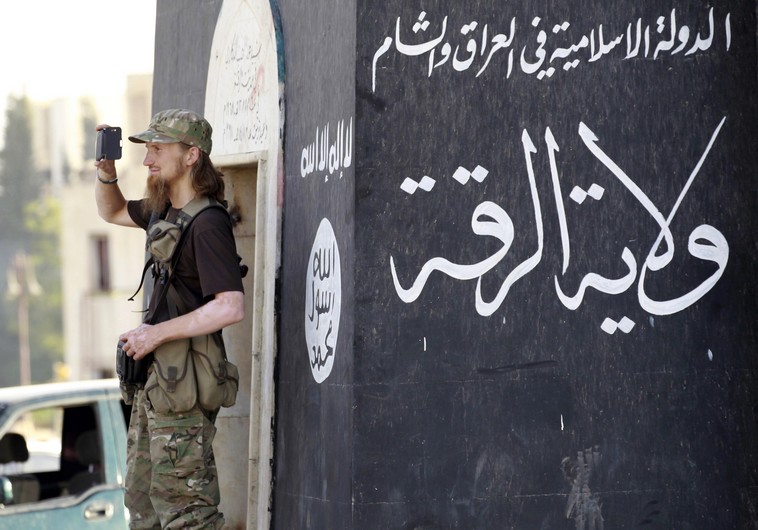
Islamist fighterA militant Islamist fighter films his fellow fighters taking part in a military parade to celebrate their declaration of an Islamic caliphate. (photo credit:REUTERS)

Islamists in the Sinai Peninsula have formed ties with ISIS and, closer to home, with Hamas and salfist groups in the Gaza Strip.

********************

What kind of relations do the jihadists of northern Sinai and Gaza have with Islamic State, and with Hamas? Egyptian President Abdel Fattah al-Sisi declared a three-month national emergency this week, following the killing of over 31 Egyptian soldiers in a suicide car bombing carried out by jihadists in northern Sinai.

No organization has issued an authoritative claim of responsibility for the bombing, but it comes amid a state of open insurgency in northern Sinai, as Egyptian security forces battle a number of jihadist organizations. Most prominent among these groups are Ansar Bayt al-Maqdis and Majlis Shura al-Mujahideen; the attack on the Sinai military base came a few days after an Egyptian court sentenced seven members of Ansar Beit al-Maqdis to death for carrying out previous attacks on the army.

In subsequent days, Egyptian officials pointed an accusing finger at the Hamas rulers of Gaza, asserting there is “no doubt that elements belonging to Palestinian factions were directly involved in the attack.” Cairo is now set to build a new barrier separating the Strip from northern Sinai.

In a number of Arabic media outlets, unnamed Egyptian government sources openly accused Hamas members of aiding the assault, assisting with planning, funding and weapons supply.

Are the Egyptian claims credible? Are there links between Hamas or smaller jihadist movements in the Gaza Strip and the insurgents in northern Sinai? And no less importantly, is the armed campaign in northern Sinai linked to Islamic State? First, it is important to understand that jihadist activity in northern Sinai is not a new development. Long before the military coup of July 3, 2013, and indeed before the downfall of president Hosni Mubarak in February 2011, this area had become a lawless zone in which jihadists and Beduin smugglers of people and goods carried out their activities.

Ansar Bayt al-Maqdis emerged from this already existing jihadist milieu in the period following Mubarak’s ouster.

At this time, Egyptian security measures in the area sharply declined.

Ansar Bayt al-Maqdis has not confined its activities to the Sinai area; rather, it has directly engaged in attacks on Israeli targets. Recently, the group beheaded four Sinai locals who it accused of being “spies for the Mossad,” also carrying out two rocket attacks on Eilat this past January.

The claim of links between Hamas and Ansar Bayt al-Maqdis has been raised in the past. In September, Egyptian security forces claimed to have found uniforms and weaponry identifiable as belonging to Hamas’s Izzadin Kassam brigades.

It is worth remembering that the current Egyptian government has, since its inception, sought to link salafi jihadist terrorism with the Muslim Brotherhood in Egypt, as part of its strategy of marginalizing and criminalizing the Brotherhood.

The current statements seeking to link Hamas directly to Ansar Bayt al-Maqdis may form part of this larger strategy.

For its part, Hamas indignantly denies any link to this week’s bombing.

But what can be said with greater confidence is there is, without doubt, a burgeoning and violent salafi jihadist subculture which encompasses northern Sinai and southern Gaza – with various organizations possessing members and infrastructure on both sides of the border.

Ansar Bayt al-Maqdis itself and Majlis Shura al-Mujahideen both have members in Sinai and Gaza. Working tunnels smuggling goods and weapons exist between Gaza and northern Sinai, despite Egyptian attempts to destroy them.

It is also a fact that Hamas is aware of these tunnels and makes no attempt to act against them, benefiting economically from their presence.

From this standpoint, Hamas authorities in Gaza are guilty by omission of failing to act against the infrastructure supplying and supporting salafi guerrillas in northern Sinai, whether or not the less verifiable claims of direct Hamas links with them have a basis.

Given this reality, it is also not hard to understand the Egyptian determination to build an effective physical barrier between the Strip and Egyptian territory.

What of the issue of support for Islamic State? Should these jihadist groups be seen as a southern manifestation of the Sunni jihadist wave now sweeping across Iraq, Syria and increasingly, Lebanon? From an ideological point of view, certainly yes.

From an organizational point of view, the situation is more complex.

According to Aymenn Jawad al-Tamimi, an expert on jihadist groups currently based at the Interdisciplinary Center Herzliya and the Middle East Forum, neither Ansar Bayt al-Maqdis nor Majlis Shura al-Mujahideen have formally pledged their allegiance to the caliphate established by Islamic State in parts of Iraq and Syria.

Nevertheless, Tamimi confirmed, both organizations have expressed “support” for Islamic State and its objectives, while not subordinating themselves to it through a pledge of allegiance.

Ansar Bayt al-Maqdis is known to maintain contacts with Islamic State, which has advised it on the mechanics of carrying out operations. Islamic State, meanwhile, has publicly declared its support for the jihadists in northern Sinai, without singling out any specific group for public support.

Tamimi further notes the existence of two smaller and more obscure groups in Gaza with more direct links to Islamic State.

These are Jamaat Ansar al-Dawla al-Islamiya fi Bayt al-Maqdis (The Group of Helpers/ Supporters of the Islamic State in Bayt al-Maqdis), which carries out propaganda activities from Gaza and helps funnel volunteers to Syria and Iraq, and the Sheikh Abu al-Nur al-Maqdisi Battalion, a Gazan contingent fighting with Islamic State in these countries.

So, a number of conclusions can be drawn: Firstly, Hamas, in its tolerance of and engagement with smuggling tunnels between Gaza and Sinai, at least indirectly permits the jihadists networks operating these tunnels to wage their insurgency against Egypt – even if the claims of a direct Hamas link to violent activities in Sinai have not yet been conclusively proven.

Secondly, the most important organizations engaged in this insurgency support Islamic State, and are supported by them, though the former have not yet pledged allegiance and become directly subordinate to the latter.

Islamic State is not yet in northern Sinai, but its close allies are. Their activities are tolerated by the Hamas rulers of the Gaza Strip – as long as they are directed outward, against Egypt and Israel.

IDF Ups Presence Near Sinai Border Amid Heightened Tensions

October 5, 2014

IDF Ups Presence Near Sinai Border Amid Heightened Tensions, Israel National News, Tova Dvorin, October 5, 2014

(Beheadings? They must not be Islamic. — DM)

Egyptian security personnelEgyptian security personnel Reuters

An additional reason behind the deployment is the number of ISIS ‘copycat’ attacks in the peninsula, he added – noting that beheaded bodies have been found ‘continually’ in the Al-Arish area over the past several weeks.

********************

Southern Command deployed in response to heightened tensions between Egypt, Sinai terror groups. ‘We don’t take risks,’ officer explains.

The IDF’s Southern Command has reinforced its forces along Israel’s southern border, a senior IDF officer revealed Sunday, due to rising unrest in the Sinai Peninsula

On Thursday, the Egyptian Army eliminated a major terror leader in the peninsula, the head of the ISIS-linked Ansar Bayt Al-Maqdis group.

Mohamed Abu Shatiya, who took part in the kidnapping of seven Egyptian soldiers in Sinai last year, died during fighting with the army south of Rafah, on the border with Gaza.

Terror attacks in Egypt have eased over the past month as the military squeezes their hideouts in the sparsely inhabited peninsula, analysts have noted – and could ease even further with the elimination – but IDF officials told Walla! News Sunday that the extra deployment is a necessary precaution.

“The Egyptian Army has raised the volume on its terror crackdown, and they in turn have increased their efforts to harm Egypt,” the officer stated.

An additional reason behind the deployment is the number of ISIS ‘copycat’ attacks in the peninsula, he added – noting that beheaded bodies have been found ‘continually’ in the Al-Arish area over the past several weeks.

Thus, the IDF has “decided not to take unnecessary risks,” he said, for fear that members of Ansar Bayt Al-Maqdis will turn to attacking Israeli targets in an attempt to destabilize the region. The group has claimed responsibility in the past for several rocket attacks that targeted the Israeli resort city of Eilat.

The Southern Command has increased its posts along the Gaza-Egypt border near Rafah, commanders in the field said, adding that the Egyptian Army “faces significant challenges.”

But more than just the regional threat of Ansar Bayt al-Maqdis, the source added, the deployment is also to fend off an increase in infiltrations from Gaza.

Last week, two separate infiltration attempts were apprehended along the same border. One suspect was armedthe other was not.

“Palestinians who have despaired of the situation in Gaza are jumping across the border with a knife, hoping to be arrested by the IDF,” the source said. “We do not take a risks; in our view, such intrusion is taken as an attempted attack.”