Posted tagged ‘Russia – Syrian war’

The high price the world could pay for Obama’s Syria, Iraq policy

November 9, 2015

The high price the world could pay for Obama’s Syria, Iraq policy, Center for Security Policy, Fred Fleitz, November 9, 2015

1896925188

As I’ve discussed on Fox News.com before, President Obama’s Syria/Iraq policy is not a policy.  It is a non-policy to do as little as possible about the chaos in these countries so he can hand this mess to the next president.

The Obama administration has announced two major policy shifts in two years to deal with the Iraq/Syria crisis and the threat from ISIS.  Neither exhibited the decisive leadership that the world expects from the United States.  Both were reactive and piecemeal moves to counter multiple humiliations of America.

This has created a growing global perception of American weakness and indecisiveness that will embolden America’s enemies for the remainder of the Obama presidency and possibly beyond.

The first policy shift, announced in a speech by President Obama on September 10, 2014 in response to a series of ISIS beheadings, was supposed to “degrade and ultimately defeat” ISIS.  The president said this effort would include “a systematic campaign of airstrikes” in Iraq and Syria, training and equipping of moderate Syrian rebels, increased support to the Iraqi army and stepped up humanitarian assistance.

The failure of the September 2014 policy shift was obvious soon after it began.  Pinprick airstrikes in Syria did not stop ISIS from making gains on the ground.  In Iraq, ISIS took the city of Ramadi last May despite being outnumbered 10-1 by the Iraqi army.  The Iraqi army and the Iraqi Kurds clamored for more arms while the Obama administration sat on its hands.

Obama’s 2014 policy shift suffered a spectacular collapse this fall when a failed $500 million program to train and equip moderate Syrian rebels was cancelled and Russia intervened in Syria and began conducting airstrikes against anti-Assad rebels, many backed by the United States.  Iran also stepped up its presence in Syria by sending troops who are fighting to prop up the Assad government.

This rapid collapse of President Obama’s Syria/Iraq policy over the last few weeks has caused serious damage to American credibility.  Russian President Putin mocked and ignored President Obama as he sent Russian forces into Syria.  An intelligence sharing agreement was signed between Russia, Syria, Iraq and Iran.  Iraqi lawmakers even called on Russia to conduct airstrikes against ISIS positions in their country.

The Obama administration responded to these setbacks with a new policy shift that looks even worse than the last one.

The president is sending “fewer than 50” special operations troops to help advise an alliance of Syrian Arab rebels.  Given the lack of a clear policy and confusing rules of engagement, such a small deployment will be scoffed at by America’s adversaries and may be at risk of being captured.  On Monday, President Obama made the preposterous claim that this deployment is consistent with his pledge of “no boots on the ground” in Syria and Iraq because these troops will not be on the front lines fighting ISIS.

The New York Times reported on November 2 the Syrian Arab rebel alliance that U.S. special operations troops are supposed to be advising doesn’t yet exist and is dominated by Syrian Kurds who mostly want to carve out their own state and have little interest in fighting to take back Arab territory from ISIS.  Moreover, American military support of the Syrian Kurds worries Turkey because of their close ties with the PKK, a Kurdish terrorist group in Turkey.

The U.S. dropped 50 tons of weapons for the Arab alliance in late September.  Although U.S. officials initially said Syrian Arabs and not Syrian Kurds were the recipients of the airdrop, according to the New York Times, Syrian Kurdish fighters had to retrieve these weapons because the Arab units for which they were intended did not have the logistical capability to move them.

The Obama administration’s latest Iraq/Syria policy shift includes a renewed call for Assad to leave office and a new round of Syrian peace talks.

New U.S. demands that Assad step down make little sense due to increased Russian and Iranian support.

The first round of U.S.-brokered Syrian peace talks were held last week in Vienna.  17 nations participated, including, for the first time, Iran.  The talks produced a vague communique endorsing a future cease-fire, a transitional government, a new constitution and elections in which Syrians would select a new government.  However, it seems unlikely the Assad regime – which was excluded from the talks – or its Russian and Iranian backers will ever support free and fair elections.

Russia and Iran rejected a timeline proposed by U.S. Secretary of State John Kerry at the peace talks under which Assad would step down in four to six months and national elections would be held in 18 months.  This puts a cease-fire out of reach since most Syrian rebels will not agree to a peace process that leaves Assad in power.

The Syria talks were overshadowed by the unwise decision by the Obama administration to include Iran because its presence legitimized its interference in Syria and Iraq.  This also made the talks tumultuous due to open feuding between Iranian and Saudi officials.  More talks are scheduled but Iranian officials have said they may not participate due to their differences with the Saudis.

So far, Mr. Obama has not agreed to Pentagon recommendations to back Iraqi forces with Apache helicopters or to allow U.S. military advisers to serve on the front lines with Iraqi forces.  These proposals are still reportedly under consideration.  Meanwhile, Republican congressmen continue to demand the Obama administration directly arm the Iraqi Kurds who are struggling to battle ISIS with inadequate and obsolete weapons.

America’s friends and allies know President Obama is pursuing a Syria/Iraq non-policy to run out the clock.  They know Mr. Obama’s initiatives are not serious policies but minor gestures that allow the president to be seen as doing something now while also enabling him to claim after he leaves office that he did not put U.S. boots on the ground in Iraq and Syria nor did he get America into another war.

Alliances in the Middle East are already shifting because of President Obama’s Syria/Iraq non-policy.  Russia is filling a power vacuum in the region and is building a new alliance with Iraq, Iran and Syria.  Russia has improved its relations with Egypt and Israel. Although the Saudis are working with the Obama administration to arm moderate Syrian rebel fighters, Riyadh is frustrated that the U.S. is considering compromise solutions which could leave Assad in power.  Saudi Arabia also reportedly is considering providing surface-to-air missiles to the Syrian rebels, a move the U.S. opposes since these missiles could fall into the hands of ISIS.

America’s enemies are certain to try to exploit the run-out-the-clock foreign policy that President Obama apparently plans to pursue for the remainder of his term in office.  This could mean a surge in global provocations, terrorism and violence from North Korea to the South China Sea to Afghanistan and to the Middle East due to the disappearance of American leadership over the next 15 months.

Remember that the weakness and incompetence of President Clinton’s foreign policy emboldened Al Qaeda to step up terrorist attacks against U.S troops and led Osama bin Laden to believe that the September 11, 2001 terrorist attacks would drive the United States from the Middle East.  With Barack Obama dithering away America’s global credibility, a catastrophic terrorist attack like 9/11 could happen again.

Amplifying Details on the Sinai Plane Bombing and the Egypt-Libya Nexus

November 7, 2015

Amplifying Details on the Sinai Plane Bombing and the Egypt-Libya Nexus, Independent Strategy and Intelligence Study Group, November 7, 2015

The last few days have been filled with a flurry of information regarding the downing of Flight 7K9268. Within the last 18 hrs we’ve received amplifying information from our sources in the country. Our sources within the Egyptian Directorate of Military Intelligence (DMI) confirmed that Russian investigators found the remnants of the explosive device we were talking about in our 03 NOV “Sinai Plane Crash Update.” Furthermore, the running theory of those investigators is that depressurization caused by an internal explosion tore off the tail section, causing the plane to flip over and send it to the ground. When we asked one of our sources if 500 grams of C4 could cause that, he answered back that it wouldn’t take much to bring a plane down, especially if the device was placed near the fuel line – which is what DMI assesses to be the case. Another source working with Russia’s Health Ministry Center for Forensic Medical Expertise confirmed that parts of an explosive device was uncovered.

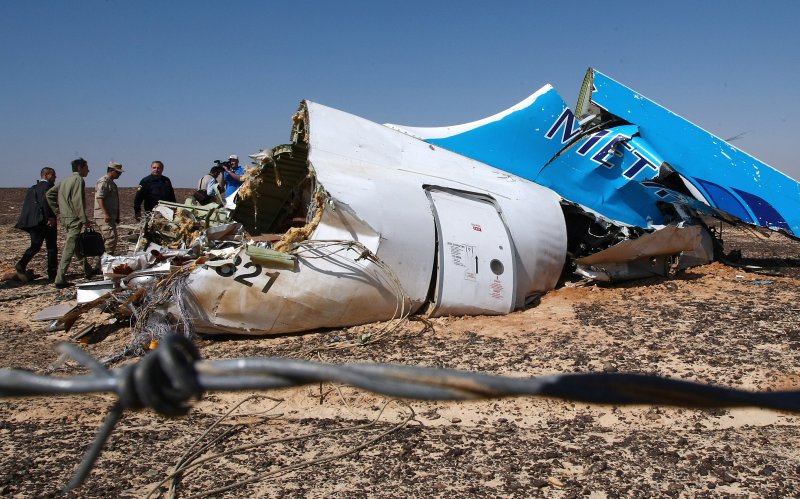
sinai-crash-300x168Source: Associated Free Press/Getty Images (Maxim Grigoryev)

As for the operative who emplaced the device on the plane, we’ve confirmed that the individual did not receive any assistance from a member of the security forces – because he’s a member of the security forces himself. The individual in question used his position to circumvent the 8 explosive detection systems and security checkpoints located at the airport in order to get to his target. DMI knew how this went down fairly quickly, although our sources couldn’t answer how this fell through the cracks, although they did imply that the security forces are plagued with serious internal issues due to the rising insider threat. However, Sharm al-Sheik Airport Chief Abdel-Wahab Ali was removed from his position due to these major security lapses. The fact that the British government aired these very same concerns LAST YEAR made the decision to remove him much easier.

The Latest: Sharm El-Sheikh Airport Chief Has Been Replaced
http://www.nytimes.com/aponline/2015/11/04/world/middleeast/ap-egypt-russian-plane-crash-the-latest.html?_r=0

UK had concerns about Sharm el-Sheikh airport security almost a year ago
http://www.theguardian.com/politics/2015/nov/05/uk-had-concerns-sharm-el-sheikh-airport-security-year-ago-egyptian-beach-resort

Sinai Plane Crash Update
http://isisstudygroup.com/?p=9184

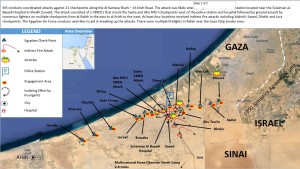
IS-Sinai-300x135Islamic State-Sinai (IS-Sinai) aka “Wilayat Sinai (WS)”: Just entered the next stage of Operations. Source: The ISIS Study Group

Adding further weight to what we’ve been saying is that the Black Box reveals that the crash was not an accident. More importantly, the media (and some Western governments) are saying what we first mentioned in our “Sinai Plane Crash Update.” Excerpt:

European investigators who analyzed the two flight recorders from the Metrojet plane that went down last weekend in Egypt are categorically saying the crash is not an accident, CNN affiliate France 2 reported Friday.

The investigators said the cockpit voice recorder of Metrojet Flight 9268 shows an explosion and the flight data recorder confirms the explosion is not accidental — there is no sign of mechanical malfunction during the initial part of the flight, France 2 reported.

Everything is fine during the first 24 minutes, then in a fraction of a second there is a blackout and no more cockpit conversation, convincing investigators there was a bomb on board, according to France 2.

CNN Aviation Analyst Richard Quest said there would have been different data on the black boxes if there was a catastrophic failure than if there was an explosion. The key is what happened just before the data suddenly stops, he said.

“It’s this split second, and it’s a millisecond, where you hear an explosion of some description,” he said. “And you see all the parameters (on the recorders) go haywire before the power is completely lost. If this report is accurate, (investigators) have now analyzed that … heard it and they can identify it.”

If the plane had broken apart due to structural failure, there would have been more noise — and for a longer time, he said.

France’s air accident investigation agency, the BEA, told CNN that Egyptian officials will make an announcement about the crash investigation within the next 24 hours.

Report: Black boxes show bomb brought down Russian jet
http://www.cnn.com/2015/11/06/middleeast/russian-plane-crash-egypt-sinai/

Screen-Shot-2015-11-06-at-6.50.48-PM-300x167

Media now talking about the bomb being placed in the cargo hold among the luggage near the fuel line
Source: CNN

This wasn’t the first time WS gained access to an Egyptian airport either. Last year they recruited an employee at Cairo International Airport who provided Team Baghdadi with schematics of the facility, locations of guard postings and security procedures. Fortunately, DMI found out and arrested him before the attack plan was set into motion – which was the same plan carried out in Sharm al-Sheik. This was one of a long list of incidents – many of which were never reported by the country’s media outlets – that led to GEN Sisi authorizing the DMI to lead the crackdown on the insider threat within the security forces. From MAY 15 – JUL 15 several junior and mid-level officers within the Army were detained for either being sympathizers or full-fledged members of WS. There’s also been an increase in military personnel refusing to carry out missions against WS – not because they’re “scared” – because they “didn’t want to kill their Muslim Brothers” (which is a red flag since most Muslims would never consider IS as their “Muslim Brothers”). For the most part the military has been the main advocate for moderate Islam and secularism. Unfortunately, that all changed when the Muslim Brotherhood’s Muhammad Morsi rose to power, where he quickly began to sack “problematic” (read-those of moderate Islam or secular leanings) officers. Then he began to fill the ranks with those he reflected his values – in other words, guys with extremist views. The result was a new breed of officers in the junior and mid-level ranks who were very sympathetic to the ideologies of al-Qaida (of which the MB is closely-aligned) and IS. WS’ increase in capability is a good indicator of the success they’ve had in recruiting personnel with formal military experience (Check out “ISIS-Sinai Beheads Croatian Hostage – Just the Beginning” for additional info).

ISIS-Sinai Beheads Croatian Hostage – Just the Beginning
http://isisstudygroup.com/?p=8195

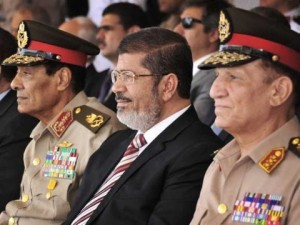
mohamed-morsi-300x225Egypt’s insider threat: Morsi’s legacy. Source: Sharif Abdel Minoem (Associated Press)

The bombing of that Russian airliner is the beginning of WS and IS’ Libya affiliate entering into a new phase of Team Baghdadi’s overall global campaign of conducting high-profile attacks outside of Syria and Iraq. WS followed up the plane bombing with another attack targeting an officer’s club that killed three policemen. But that’s just the start – WS fully intends to expand their operations to targeting Russians and Western tourists to both cripple Egypt’s tourism industry (which would result in significant economic damage) and retaliating for Russia’s Syria intervention. The indicators were all there with the sharp increase in the frequency and scale of attacks carried out by WS in Sinai throughout the year and this past summer in particular (Reference – “Sinai Under Siege Rising capabilities of Wilayat Sinai”). That said, the first real indicators of WS’ increased capabilities was seen as early as JAN 14 when they shot down an Egyptian military helicopter in the Sinai with a MANPAD that was traced back to one of the Qaddafi regime weapons depots that was raided by so-called “moderates” during the early days of the “Arab Spring.” In AUG 15 another attempt was made by WS to bring down an aircraft – this time a Thomson Airways airliner – as it was heading to Sharm al-Sheik Airport. Fortunately the pilot was able to perform evasive maneuvers and avoid being brought down (See the Guardian’s article titled, “Sharm el-Sheikh flight from Stansted dodged missile in August” and our initial piece on the Sinai crash, “Islamic State Claims to Have Shot-Down Russian Plane in Sinai – But Did They?”).

Egypt: 3 police officers killed in North Sinai bombing
http://www.cnn.com/2015/11/04/africa/egypt-north-sinai-bombing/

Militants Down Egyptian Helicopter, Killing 5 Soldiers

Sharm el-Sheikh flight from Stansted dodged missile in August
http://www.theguardian.com/uk-news/2015/nov/06/missed-by-a-1000-feet-how-british-holidaymakers-came-close-to-being-hit-by-a-missile-in-august?CMP=twt_gu

Sinai Under Siege Rising capabilities of Wilayat Sinai (WS)
http://isisstudygroup.com/?p=7587

Islamic State Claims to Have Shot-Down Russian Plane in Sinai – But Did They?
http://isisstudygroup.com/?p=9157

WS-July-2015-attack-Sinai-300x169

This is just a quick snapshot of attacks that occurred in JUL 15
Source: The ISIS Study Group

WS also wanted to show Baghdadi that they’re an effective force capable of achieving the objectives of his external operations campaign, but also to justify that their request for additional funding. This was also a bid for obtaining heavier weaponry from IS’ Libya affiliate, who sends weapons and supplies to Syria – some of which goes through Sinai (Check out “The Strategic Importance of Egypt to ISIS,” “2015: The Year of ISIS Expansion From Gaza to North Africa” and “The ISIS Expansion Into North Africa” for more details). We don’t think Libyan IS Emir Abu Nail will satisfy that request until after he seizes Darnah – which IS was driven out of back in JUN 15. As of this writing, IS-Libya has been busy consolidating its forces in the al-Fatayeh-area located Southeast of the city. That area is the likely staging-area from which the offensive to retake the town will be launched. The Libyan affiliate is facing a tough fight as they’re forced to take on several other opposition groups of varying jihadist flavors as well as the forces of the Egypt-back Libyan GEN Khalifa Haftar.

For the third time, Haftar’s forces fail to control Derna
https://www.middleeastmonitor.com/news/africa/20744-for-the-third-time-haftars-forces-fail-to-control-derna

Isis in Libya: Islamic State driven out of Derna stronghold by al-Qaeda-linked militia
http://www.ibtimes.co.uk/isis-libya-islamic-state-driven-out-derna-stronghold-by-al-qaeda-linked-militia-1506241

ISIS responsible for most Libya killings: ICC prosecutor
https://www.dailystar.com.lb/News/Middle-East/2015/Nov-06/321833-isis-responsible-for-most-libya-killings-icc-prosecutor.ashx

ISIS In Libya? Gadhafi Sirte Residence Searched By Islamic State For Hidden Money: Report
http://www.ibtimes.com/isis-libya-gadhafi-sirte-residence-searched-islamic-state-hidden-money-report-2139456

Warplanes bomb Libya’s Sirte, target Islamic State: witness
http://www.reuters.com/article/2015/10/29/us-libya-security-idUSKCN0SN2JM20151029

The Strategic Importance of Egypt to ISIS
http://isisstudygroup.com/?p=1392

2015: The Year of ISIS Expansion From Gaza to North Africa
http://isisstudygroup.com/?p=5248

The ISIS Expansion Into North Africa…
http://isisstudygroup.com/?p=3257

IS’ Libya affiliate is the terror organization’s most-developed branch and has become a critical part of Baghdadi’s vision of being able to project power outside of Syria/Iraq. Its worth noting that the Libya affiliate has been tasked with providing material support to other affiliates in North Africa in addition to WS and the main effort in Syria. WS actually receives a great deal of their financial support from the Libya affiliate. In fact so much influence has been placed on bolstering the Libya affiliate that some foreign fighters have actually been diverted there. Our sources report the presence of fighters from France, Germany, Egypt, Algeria, Sudan, Saudi Arabia, Canada and one unconfirmed report of Americans serving among the ranks. Recent reporting also suggests that a group of Indonesian jihadists are projected to be entering the country for this same purpose – other sources imply that they may have already arrived. Not only is Libya an alternative for foreign fighters who aspire to wage jihad but can’t make the trip to Syria, its a training ground for select personnel who get sent back to their countries of origin to establish their own attack networks and conduct the cell-based external operations that the IS leadership has been transitioning to over the last few months (For more info on this transition to cell-based external OPs, check out “Neil Prakash and Friends – an Update” and “Nail in the Coffin: ISIS’ Anwar al-Awlaqi BN Sends Fighters to Europe”). Think of it as IS’ way of “diversifying their terror portfolio” for their goal of launching such attacks in the West.

Neil Prakash and Friends – an Update
http://isisstudygroup.com/?p=8862

The Loss of Key ISIS External OPs Figures and the Anwar al-Awlaqi Battalion
http://isisstudygroup.com/?p=8467

Nail in the Coffin: ISIS’ Anwar al-Awlaqi BN Sends Fighters to Europe
http://isisstudygroup.com/?p=8562

With all this happening, what’s next for Vlad? Make no mistake, he’s going to respond – and when he does, people are either going to die or “disappear.” The big mistake the IS mothership in Syria and the Sinai affiliate made is thinking that Vlad is as soft and flaccid as President Obama. They’re going to find out real quick just how big of a mistake they made once he expands his intervention in Syria (although there will be challenges-more on that in another article) followed by enhanced collaboration with the Sisi regime – which has been steadily moving away from America and getting closer to Russia for well over a year (Check out “Egypt Atmospherics” for more details). On the flip side we assess that IS’ Caucasus affiliate (made up mostly of remnants of Imarat Kavkaz or “IK”) are going to become very active in launching attacks inside Russia itself. Although the media seized on the fact that Syria is one of Vlad’s client states, what didn’t get any real coverage are the 2,500-3,000 Russian nationals currently fighting under the IS banner in Syria – many of which are of Chechen/Dagestani/Tajik ethnicity (Reference the following for additional info – “Russia Poised to Increase Military Presence in Middle East in Response to Islamic State’s Strength,” “Islamic State’s Expansion into the Caucasus Region,” “Gulmurod Khalimov Update – His Militant Views May Not Be a Recent Development” and “Introducing Tajik Special Police COL Gulmurod Khalimov: Islamic State Defector”). At some point those foreign fighters are going to return to Mother Russia. A few already have. So if you thought this high-profile attack was an “isolated incident” that only affects Egypt, you thought wrong.

Egypt Atmospherics…
http://isisstudygroup.com/?p=614

Russia Poised to Increase Military Presence in Middle East in Response to Islamic State’s Strength
http://isisstudygroup.com/?p=8416

Islamic State’s Expansion into the Caucasus Region
http://isisstudygroup.com/?p=6880

Gulmurod Khalimov Update – His Militant Views May Not Be a Recent Development
http://isisstudygroup.com/?p=7760

Introducing Tajik Special Police COL Gulmurod Khalimov: Islamic State Defector
http://isisstudygroup.com/?p=7027

vlad2-300x219

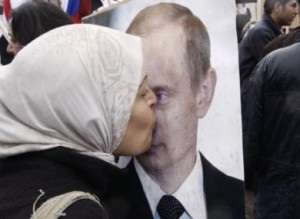
Egyptian locals are increasingly “Pro-Vlad” – but aren’t big fans of President Obama
Source: The ISIS Study Group

Other Related Articles:

Haftar-Sisi Alliance: The Roadblock to ISIS Bridge Into the Maghreb
http://isisstudygroup.com/?p=5033

Egypt Strikes ISIS Positions in Libya: Moderate Muslims Rise Up Against Terror
http://isisstudygroup.com/?p=4889

Egypt and UAE Launch Airstrikes in Libya – US Kept in the Dark
http://isisstudygroup.com/?p=1302

Is Egypt Planning Military Intervention in Libya?
http://isisstudygroup.com/?p=584

Jordan Steps Up Airstrikes Against ISIS, Egypt Launches New Sinai Offensive
http://isisstudygroup.com/?p=4669

Egyptian Army and IDF Take On ISIS Supporters in Sinai
http://isisstudygroup.com/?p=1500

Egyptian Army Hits Back At ISIS In Sinai
http://isisstudygroup.com/?p=2410

ISIS Plots to Bring the “Flames of War” to US, UK and Australia
http://isisstudygroup.com/?p=6431&

Putin halts flights to Egypt until “true causes” known for Metrojet crash

November 6, 2015

Putin halts flights to Egypt until “true causes” known for Metrojet crash, DEBKAfile, November 6, 2015

(Please see also, Russia to suspend flights to Egypt until causes of Sinai crash are clear. — DM)

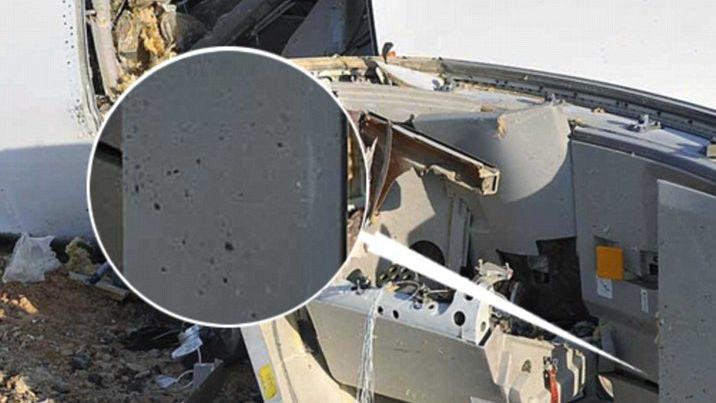
Bomb_evidence_B_5.11.15

They discovered holes made by iron balls planted inside a bomb and scattered through all parts of the plane (see attached photos), as well as large tears in the outer walls that were caused by a powerful explosion.

****************************

President Vladi­mir Putin halted all Russian flights to Egypt Friday, Nov. 6, “until we know the true causes of the incident” .i.e. the cause of the Russian Metrojet flight crash over Sinai Saturday which killed all 224 people aboard. Several European and Gulf Arab governments suspended flights to Sharm el-Sheikh, but Russia was the first to halt all outbound flights to Egypt. Kremlin spokesman Dmitry Peskov said that Putin acted on the recommendation of the Russian security service chief Alexander Bortnikov.

The language of the statement – “true causes of the incident” – indicates that the Russians have lost patience with President Abdel-Fatteh El-Sisi and don’t trust the Egyptian investigation into the causes of the disaster. For most of the week, the Russians played along with Egypt’s obstinate resistance to any suggestion of terrorism and insisted on waiting for the official investigations before making any determinations. Thursday, Moscow sharply criticized British prime minister for presuming on the strength of intelligence that the plane was most likely downed by a bomb.

Putin abruptly changed course Friday following four developments:

1. Russian investigators collecting samples at the crash scene in Sinai found residue and other evidence of an explosion emanating from inside the plane or externally from a missile. They discovered holes made by iron balls planted inside a bomb and scattered through all parts of the plane (see attached photos), as well as large tears in the outer walls that were caused by a powerful explosion. Samples from the airplane’s wreckage were collected and presented to a meeting of the National Anti-Terrorist Committee Thursday.

Mourners_memory_5.11.15

2.  Forensic examination of victims’ remains left no doubt that they died as a result of an explosive blast.

These findings spread like wildfire in Moscow and in St. Petersburg among the grieving families. The Russian leader saw he could no longer afford to line up with Cairo’s playdown of the terrorist factor.

3. Moscow received intelligence that the Islamic State plans to follow up on its first “success” with further terrorist attacks on Russian and European passenger jets.

By downing the Russian airliner over Sinai, the Islamist terror group delivered a huge blow to Egypt’s tourism industry. Russia tops Egypt’s tourist market. Last year, 3.1 million Russians visited Egypt, yielding $2.5bn out of the total national tourism income of $7.3bn in 2014.

Sharm el-Sheikh was the scene of havoc Friday, as Russian and British tourists mobbed the airport in an attempt to fly home after the Egyptian authorities limited the number of outbound flights.

The Regional Storm Hits Israel

November 5, 2015

The Regional Storm Hits Israel, Israel DefenseAmir Rapaport, November 5, 2015

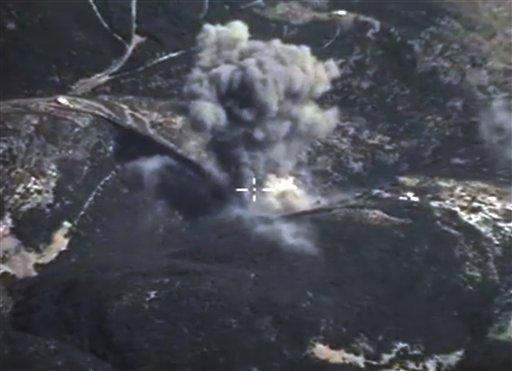
bomb in SyriaAn aerial view of a bomb explosion in Syria (Photo: AP/Russian Defense Ministry Press Service)

1. High Tide/Low Tide. When the “Second Intifada” broke out in October 2000, IDF used to refer to the riots and terrorist attacks in the Judea and Samaria area, as well is inside the territory of the State of Israel as “High Tide/Low Tide”, as each wave of riots was followed by a period of relative quiet, and then a new trigger emerged, leading to a wave of renewed violence, and so on.

Eventually, the “High Tide/Low Tide” incidents assumed a pattern of a murderous terrorist offensive, which took the lives of more than a thousand Israelis through suicide attacks, until the Intifada finally subsided in 2004.

The wave of riots and terrorist attacks that erupted about 15 years later, in the fall of 2015, appears to be connected, in some way or another, to the state of instability that characterizes many areas throughout the Middle East. For the last few years, the lion’s share of the fighting takes place in Syria, where hundreds of thousands of people were killed and millions more became refugees.

The major question that arose within the Israeli defense establishment in the fall of 2015 was whether this latest wave of terrorist attacks marks the outset of a “Third Intifada”. Although outwardly the Israeli interest is to announce “This is not a new Intifada,” in effect, there is talk about a “new situation” and no one knows how it will evolve.

Analyses performed within the defense establishment point to a number of reasons that suggest that this is a significant wave of terrorism which could turn out to be prolonged, as well as to reasons that justify the claim “This is not a new Intifada”.

One of the reasons that this wave of attacks is serious and could be prolonged is the religious motive: the Israeli media does not speak about it too often, but the Arab world is raging around rumors or reports that Israel actually intends to change the status quo on Temple Mount.

Even when one attempts to fish only “comfortable” data out of the statistics of the latest terrorist attacks, it is impossible to ignore the increase, by tens of percent, in the number of violent incidents throughout the Judea and Samaria area as well as within the “Green Line” during the last few weeks.

On the other hand, one significant difference between October 2015 and “Black October” (following the outbreak of the Second Intifada 15 years ago), is that the Israeli security forces are currently operating freely throughout the Judea and Samaria area. Consequently, entering the hospital in Nablus did not call for tactical support by tanks and aircraft. During the Second Intifada, on the other hand, it took the IDF and ISA quite a long time before they succeeded in regaining control over the centers of the Palestinian cities, pursuant to Operation Defensive Shield, and even then, the control achieved was only partial.

The recent events erupted despite the fact that IDF and ISA operate continuously against terrorist detachments. In each of the last few years, 2,000-3,000 Palestinian inhabitants were arrested. 80% of them were sentenced by the courts to prison terms of several months minimum.

It is still difficult to predict how the events will evolve over the next few months, but in any case, it seems that we have “a new security situation” on our hands.

2. Vladimir Putin. Many people regard the regional instability as the direct result of the American strategy of minimizing US involvement in the region, due to separatism processes and shifting the focus of world attention to Eastern Asia and the Pacific region (among other things, owing to the reduced dependence on Arab oil).

The party that stepped very effectively into the vacuum left by the USA was Russian President Vladimir Putin, who currently positions himself as the regional “Sheriff”.

No one can overestimate the importance of the moves made by Russian President Vladimir Putin, who deployed military forces to Syria this fall and continues to position himself as the strong man of the Middle East who never abandons his allies, while the USA has “transmitted” that her allies cannot rely on US support (as the USA had abandoned Egyptian President Hosni Mubarak in 2011).

This fall, the Russians deployed to Syria fighter aircraft that attack targets of the rebels opposing the military of President Bashar al-Assad. These moves were carefully coordinated with Iran, which, for her part, deployed hundreds of troopers (who are currently helping Hezbollah withdraw some of its forces back to Lebanon).

The Russian-Iranian move may have been intended to exert pressure on Saudi Arabia that supports the rebels, as well as to raise the price of oil, which is important to the economies of both countries.

Complicated? Even if there is no connection between the moves in Syria and the energy market, there is a definite connection between the fighting in Syria and the war raging in the southern part of the Arabian Peninsula. A solution in Syria may project on the war over there, as in both regions Iran and Saudi Arabia support opposing sides, with the conflict between the Shi’ite and Sunni factions of Islam as the backdrop.

Behind the scenes of the latest developments in Syria there has always been a Russian plan to bring about the end of the civil war in Syria by dividing it into areas of influence, with about 30% of the territory, in the Tartus and Lattakia area, remaining under control of the Alawite community of the current President, Bashar al-Assad.

Russia is interested in the sea ports in this area, and much less in maintaining Assad in control over a part of the disintegrated country. The Russians will not yield to the American demand to remove Assad from power until they have guaranteed their important interests. The party expected to pay the price is Israel, which may find itself, within a few months, facing a de-facto Iranian and Hezbollah domination on the other side of the border with Syria on the Golan Heights.

This situation could evolve despite the fact that Israel and Russia coordinate some of their respective moves, as indicated by the trip made by Prime Minister Netanyahu’s to Moscow last September, accompanied by the IDF Chief of Staff, Lt. Gen. Gadi Eizenkot, and Head of the IDF Intelligence Directorate, Maj. Gen. Hertzi Halevi, during which they met with “Sheriff” Putin.

3. Meanwhile, in the South. The good news come from the south, where Egypt under Abdel Fattah el-Sisi is determined to defeat the forces of al-Qaeda and the Islamic State that operate throughout the Sinai Peninsula. Egypt, Israel and the USA cooperate closely in the context of this effort, owing to their shared interests.

El-Sisi regards Hamas in the Gaza Strip as an enemy, owing to the cooperation between Hamas and the Egyptian Muslim Brotherhood movement, which is engaged in an on-going conflict with his regime.

Hamas itself is under tremendous pressure from different directions: from Egypt, which cuts off the underground tunnels connecting the Gaza Strip with the Egyptian territory, as well as from al-Qaeda and elements identifying with the Islamic State, who urge the leaders of Hamas to renew the fighting against Israel and occasionally even launch a rocket into Israeli territory in order to motivate Israel (which regards Hamas as the party responsible for such launches) to attack Hamas.

The reality that emerged in the Gaza Strip is yet another example of the complexity in our region. Iran, encouraged by the signing of the nuclear agreement with the superpowers, has renewed its support for Hamas, both financially and militarily (despite the fact that Hamas identifies with the rebels fighting against Bashar al-Assad in Syria and in Iran itself).

The positive bottom line is that Hamas, owing to its own considerations, does its best to maintain the ceasefire agreement reached with Israel following Operation Protective Edge in the summer of 2014. That state of affairs remained in effect until the fall of 2015 but reality, as everyone knows only too well, is highly dynamic.

4. A Small Military. One of the most significant moves expected within IDF in November is the endorsement of the long-term plan for the coming five-year period, and the conversion thereof into an effective order for execution.

“Gideon” is the name of the new multi-year plan led by IDF Chief of Staff, Lt. Gen. Gadi Eizenkot. The plan is intended to rely on the long-term budget allocated to the IDF according to the recommendations of the Locker Committee, and will come into effect in 2016, after five years during which IDF have operated without a long-term plan, as the previous plan had ended as far back as during the tenure of Lt. Gen. Gabi Ashkenazi as Chief of Staff. The Gideon plan is intended to convert the IDF into a technological, cyber-based military organization, possessing fast maneuvering elements equipped with accurate, lethal weapons and enhanced sea and air branches. Above everything else, the most substantial investment will be made in intelligence.

The greatest concern among quite a few elements within the defense establishment pertains to the size of the military, as the new plan calls for the demobilization of quite a few units. One of the principles of Israel’s national security concept since the days of David Ben-Gurion is the need to maintain a strong, substantial military force, based on hundreds of thousands of reservists. The principle is still valid, but in effect, the emphasis is placed on intelligence, air power and commando operations. The substantial ground army, along with its massive tank OrBat, is reduced dramatically – which is inconsistent with the aforesaid principle.

5. Defense Exports. Nearing the end of 2015, the Israel Ministry of Defense and the Israeli defense industries embarked upon a massive sales effort. Between October and December, they will take part in not less than five major defense exhibitions in the USA, South Korea, Japan, Colombia and Thailand.

Even if that effort proves successful, the statistics for 2015 will indicate that Israeli defense exports still follow the downward trend that began in 2014. At best, the defense exports for 2015 will amount to US$ 5 billion, as opposed to US$ 7 billion in 2013.

The main reason for this decrease is the end of the global campaigns in Iraq and Afghanistan. Several major deals that are still on the agenda, mainly in India, can still change the picture before the end of 2015 and lead to a positive trend in terms of the scope of exports. In any case, the contribution made by the defense exports, which amounts to billions of dollars, to the Israeli economy and to the Israeli security resilience is immense. The massive proceeds enable the Israeli defense industries to continue to invest funds in research in order to develop products at the cutting edge of technology.

Anti-air missiles in ISIS hands also imperil Saudi, Jordanian and Israeli skies

November 5, 2015

Anti-air missiles in ISIS hands also imperil Saudi, Jordanian and Israeli skies, DEBKAfile, November 5, 2015

Shut_up

The Ansar al Sharia terrorist organization in Libya, which attacked the US consulate in Benghazi and murdered the American ambassador in 2012, has the very missiles capable of shooting down large airliners flying at high altitudes: Russian-made ground-to-air Buk missiles, which have a range of between three and 42 kilometers. This ultra-violent Islamist terror group has very close operational ties with ISIS-Sinai, and very possibly smuggled the missile system into Sinai from Libya.

****************************

The British Cobra (emergency cabinet) decision of Wednesday, Nov. 4, not to send airliners to or from Sharm El-Sheikh, where 20,000 British tourists are stranded, further strengthens the assumption that the Russian Metrojet Flight 9268 was downed over Sinai Saturday by a terrorist missile. It confirms that air traffic over Sinai and landings at Sharm are under threat from the ground – else why leave a large group of Britons under virtual siege in the Egyptian Red Sea resort? London said that the suspension of flights to Sharm was “indefinite.”

Moscow early Thursday accused London of being moved to this action out of hostility to Russia rather than security concerns.

Downing Street released a statement Wednesday saying: “As more information has come to light, we have become concerned that the plane may well have been brought down by an explosive device.” This statement was criticized by Egypt as “premature” – not a good omen for the conversation Prime Minister David Cameron is due to hold with his visitor, Egyptian president Abdel-Fatteh El-Sisi, later Thursday.

The British government has therefore stubbed toes in Moscow and Cairo without coming up with an emergency plan for evacuating its citizens from Egypt, whether overland to Cairo by bus or by sea aboard ships picking them up at the Red Sea resort and sailing through the Suez Canal.

This lack of initiative is a sign of confusion and uncertainty.

So far, the drawn-out deliberations and prevarications by officials in several countries regarding the crash of the Russian plane are meant for one purpose: to gain time for doing nothing about ISIS in Sinai. Neither the US, Russia or Britain is ready to send forces to the peninsula to confront the terrorists head-on.

The Ansar al Sharia terrorist organization in Libya, which attacked the US consulate in Benghazi and murdered the American ambassador in 2012, has the very missiles capable of shooting down large airliners flying at high altitudes: Russian-made ground-to-air Buk missiles, which have a range of between three and 42 kilometers. This ultra-violent Islamist terror group has very close operational ties with ISIS-Sinai, and very possibly smuggled the missile system into Sinai from Libya.

A number of intelligence agencies are aware of this and so a flock of leading European and Persian Gulf airlines lost no time in rerouting their flights to avoid Sinai straight after the Russian air disaster.

By causing this disaster, the Islamist terrorists coolly aimed for four goals:

1.  Retaliation for Russian intervention in Syria

2.  An attempt to destabilize the regime of Egyptian President Fattah Al-Sisi

3.  To show up the inadequacies of the 63-member coalition that the US formed in its effort to fight ISIS

4. To parade before the world the Islamic State’s operational prowess, its ability to shoot down the large passenger planes of the world’s biggest powers.

For five days, intelligence and flight safety experts dismissed the claim of responsibility that ISIS issued on the evening of October 31, maintaining that it was not to be taken seriously because no proof had been provided to support the claim – as if the charred fragments of the plane spread across tens of kilometers of desert were deniable.

In the second of its three messages, ISIS repeated its claim Wednesday, Nov. 4, promising details of how it downed the plane at a later date.

While more and more Western governments are coming around to accepting that the Russian airliner’s crash was caused by an explosive device, DEBKAfile’s counterterrorism sources repeat that they cannot rule out the possibility of a missile. The argument made on Wednesday in Washington and London that terrorist organizations do not have missiles capable of downing such planes is are simply incorrect.

ISIS-Sinai’s possession of an advanced ground-air missile system does not only endanger planes in the peninsula’s airspace, but also those aircraft flying over the Suez Canal as well as parts of Saudi Arabia, Jordan and Israel. One of the Egyptian president’s main purposes in his London visit was to try and persuade Prime Minister Cameron to join an Egyptian military operation against Ansar al Sharia in Libya and so eliminate a major prop and arms supplier for ISIS-Sinai. He does not hold out much hope of success.

Russian-made cargo plane crash in S. Sudan kills dozens. Second Mid East air disaster

November 4, 2015

Russian-made cargo plane crash in S. Sudan kills dozens. Second Mid East air disaster, DEBKAfile, November 4, 2015

RussianPlaneSinai_Sudan2nd Russian-linked air crash kills dozens in Sudan. The missile or bomb which blew up the Russian airliner over Sinai Saturday is reported by DEBKAfile’s sources to have been likely smuggled in from Libya. Nov 4, 2015, 12:29 PM (IDT)

While neither the Egyptians or the Russians are willing to admit this, it is highly likely that the missile or explosives which brought down the Russian airliner Saturday came from Libya.

*********************

No cause has yet been established for the Russian-made Antonov Ant-12’s crash-landing on the east bank of the Nile River 800 m short of Juba international airport in South Sudan Wednesday, Nov. 4. Its five-man crew were Russians. According to first reports some 40 people were killed both on board and on the ground, although there appear to be two survivors.

But none of the 224 passengers and crew aboard the Metrojet Flight 9268 Airbus 321 survived the airliner’s crash in central Sinai Saturday, Oct. 31, en route from their holiday in Sharm El Sheikh to St. Petersburg.

Russian sources following the forensic examination of the bodies and partial remains of the victims flown to St. Petersburg report that they show evidence of an explosion in the plane before it plummeted to the ground. Further testing is required to establish the cause of the explosion.

A US infrared satellite detected a heat flash at the same time and same vicinity over Sinai where the Russian plane went down. A US defense official added that the same satellite would have been able to track the tell-tale heat trail of a missile from the ground.  “The speculation that this plane was brought down by a missile is off the table,” the official said.

Another official said, “the plane disintegrated at a very high altitude.”

The general consensus ahead of the Egyptian and Russian probes is that a sudden, catastrophic explosion caused the crash – whether from a bomb inside, “external impact” – as the Metrjet company claims – or from faulty fuel. Russian fuel experts found nothing wrong with the fuel.

An Egyptian physician who inspected the scene of the disaster found that one out of every five bodies he saw had been incinerated to death from a fire that may have started in the passenger’s cabin and spread to the rest of the plane.

Egyptian experts reported that “the large number of separate body fragments” could indicate that a strong explosion occurred onboard before the aircraft hit the ground. They were scattered across a radius of 8-10 square kilometers from the wreckage.

Russian and Egyptian sources tracking the examination of the two black boxes found evidence that the calamity occurred too rapidly for the pilots or crew to send an SOS or even say a few words.

As the probe of the air catastrophe began Tuesday and Wednesday, Moscow and Cairo were increasingly at odds on their findings. The Russians asserted that the plane must have broken up into two parts as a result of a strong explosion, whereas Egyptian officials remained intent on playing down the claim of responsibility for the crash published Saturday by the Sinai wing of the Islamic State. They criticize the Russians as rushing to conclusions ahead of the probe.

Egyptian President Abdel-Fatteh El-Sisi arrived in London Wednesday for talks with British Prime Minister David Cameron. In interviews prior to his arrival, the Egyptian president said that he will demand that David Cameron “complete his mission in Libya to prevent the country being dominated by Islamists.”

By “mission,” El-Sisi was referring to the UK’s role in the coalition which toppled Muammar Qaddafi in 2011.

DEBKAfile’s counterterrorism sources report that Egypt faces an acute problem from Libya’s transformation in the last two years into the main supply source of smuggled arms and fighters for the Islamist terrorists operating in Egypt and Sinai.

While neither the Egyptians or the Russians are willing to admit this, it is highly likely that the missile or explosives which brought down the Russian airliner Saturday came from Libya.

What coordination? Russia and Israeli warplanes play cat and mouse over Syria

November 2, 2015

What coordination? Russia and Israeli warplanes play cat and mouse over Syria, DEBKAfile, November 2, 2015

AttackinSyria480

Syrian media reported an Israeli air force attack Sunday, Nov. 1, after two sorties Friday night against Syrian army and Hizballah bases in the Qalamoun Mountains on the Lebanese border. The IDF declined to confirm or deny these reports. Syrian sources described a large number of Israeli airplanes as bombing a Hizballah unit based in the village of El Ain in northern Lebanon and the arms depot of the 155thBrigade of the Syrian army at Al-Katifa to the east.

The two targets are 70 km apart. So these air strikes must have targeted two key points along the Iranian arms supply route to Hizballah.

They also raise three important questions:

1. Did Israel’s Tel Aviv command center use the hotline to Russian headquarters to give Moscow prior warning of air strikes against Syrian and Hizballah targets, explaining that no harm was intended to the Russian military in Syria?

Hardly likely; the Russians would not be expected to tolerate Israeli bombardments so close to their own military enclave in Latakia province.

2.  Did Russian surveillance planes and stations detect the approach of Israel’s bombers and decide not to interfere?

After all, Israel has turned a blind eye to repeated Russian air strikes in the last few days against rebel positions in the southern Syrian town of Deraa and Quneitra opposite IDF Golan positions. The two cases suggest a gentlemen’s agreement between Russia and Israel to abstain from interfering with each other’s air operations over Syria, so long as there are no direct clashes between the two air forces. This could easily have happened when Russian planes bombed Quneitra.

So is Moscow giving Israel enough aerial leeway to strike Iranian, Syria and Hizballah targets so long as there is no interference in Russian operations?

That too is unlikely because it would amount to permission for the Israeli air force to operate inside the anti-access/area denial bubble which the Russian air force has imposed over Syria.

3.  Did the Israeli air force use electronic warfare measures to jam the tracking systems installed in Russian spy planes and air defense missile systems in Syria?

DEBKAfile’s military sources have this answer: Israel and Russia have been conducting a clandestine electronic contest for 33 years, since the memorable episode in 1982, when the Israeli air force destroyed in a single strike the entire Russian air defense missile system installed in Syria.

Since then, the Russians have worked hard to develop electronic warfare measures for gaining on the Israeli edge, without much success.

This was strikingly demonstrated in September 2007, when the Russian-made electronic tracking and warfare systems, which were the backbone of Syria air defense missile batteries, missed the Israeli warplanes as they came in to bomb the North Korean-built Iranian-Syrian plutonium reactor going up in northern Syria.

This lapse may have recurred in the case of the Israeli air sorties Saturday.

ISIS claims downing Russian airliner in Sinai in reprisal for Moscow’s Syria air strikes

October 31, 2015

ISIS claims downing Russian airliner in Sinai in reprisal for Moscow’s Syria air strikes, DEBKAfile, 6:38 PM, IDT, October 15, 2015

(Please see also video at ISIS Video Shows Downing of Airplane, Contradicting Russian Claims of Technical Fault. — DM)

plane-crash_relatives_31.10.15

Families receive news of no survivors at St. Petersburg airport.

Had the crash been the result of a technical fault, as Moscow and Cairo claim, it would not have been so completely gutted but broken up into large fragments. The total destruction could only have been caused by an explosion either inside the A321 or a direct missile hit.

***************************

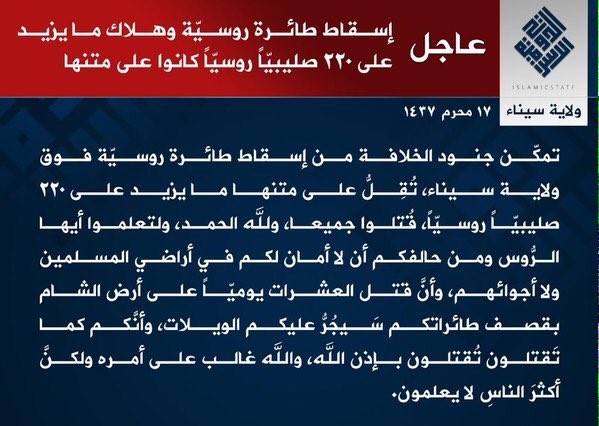
“The fighters of the Islamic State were able to down a Russian plane over Sinai province that was carrying over 220 Russian crusaders. They were all killed, thanks be to God,” said a statement from the Sinai affiliate of ISIS after a Metrojet Airbus 321, carrying 217 Russian tourists and 7 crew from Sharm el-Sheikh to St. Petersburg, crashed in central Sinai early Saturday morning, Oct. 31. There were no survivors. President Vladimir Putin declared Sunday a national day of mourning after sending messages of sympathy to their families.

The terrorists’ statement went on to say: “You should know, Russians and your allies, that you have no security on Muslim land or its airspace… The daily murder of scores of innocents in Syria by your air bombardments will bring upon you disasters… Just as you kill, so you will be killed…”

ISIS_russian_plane_31.10.15

Russia’s Minister of Transport Maxim Sokolov strongly denied as “inaccurate” what he called “assorted information that the Russian passenger plane was shot down by an anti-aircraft missile fired by terrorists.”

DEBKAfile early Saturday attributed the disaster to the ISIS Sinai branch Ansar al-Bait Maqdis, while Moscow and Cairo issued confusing claims as to its cause. They included a distress call from the pilot of the Russian plane to the Egyptian control following a technical fault with a request to reroute the plan to El Arish or Cairo.

However, aviation sources say this exchange never took place and the Airbus abruptly disappeared off the screens indicating a sudden catastrophe.

The Egyptian daily Al-Ahram Arabic quoted the head of Egypt’s Air Navigation as admitting later that the plane’s pilot did not request an emergency landing before crashing.

Responsibility for the air disaster claimed by ISIS takes the war on the Islamic terrorists down to a new security low for all the countries in the region, including Israel. Lufthansa and Air France airlines have suspended all flights over the Egyptian Peninsula. President Putin will be under pressure to decide whether or not to expand Russia’s war on the Islamic State in Syria and Iraq or pull back.

DEBKAfile reported earlier Saturday.

A Russian civilian plane with 217 passengers and 7 crew aboard crashed, and is belived shot down by a missile, over Sinai over Sinai early Saturday morning, Oct. 31, shortly after taking off from the Sinai resort town of Sharm el-Sheikh for St. Petersburg.

Initial reporting on the fate of the plane was confused and is still not completely clear. It was first reported to be missing after contact was lost with Egyptian air control; it was then said to be safely on its way to Russia over Turkey. Russian aviation sources then reported the A321 to be missing over Cypriot air space. Finally, the Egyptian prime minister’s office Egyptian prime minister’s office confirmed that a Russian passenger plane had crashed n central Sinai and a cabinet level crisis committee had been formed to deal with the crash.

The airliner owned by the small airline Kogalymavia disappeared from screen 23 minutes after takeoff from Sharm el-Sheikh. There were many families with children aboard.

DEBKAfile reports:  The first claim by Russian aviation sources that the plane had gone missing over Cyprus was an attempt to draw attention from the likelihood that it was shot down over Sinai, where the former Ansar al-Miqdas, which has renamed itself ISIS-Sinai, maintains its main strongholds.

Moscow is reluctant to admit that the Islamic State may have chosen to retaliate for the buildup of Russian forces in Syria and Russia ari strikes on its bases in Syria.

If the airline was indeed shot down by the Sinai branch of the Islamic State, the Russians are finding that ISIS is fully capable of striking at the least expected place and most vulnerable spot of its enemy.

On board the plane were 17 children, along with 200 adults and seven crew, said aviation authorities. There are no signs of survivors.

Confirming the deliberate attempt at confusion, Moscow and Cairo both stated that the plane had disappeared from the radar 23 minutes after takeoff from Sharm El-Sheikh.

This is refuted by the discovery of the wreckage, a few minutes ago, completely gutted and destroyed, and a short distance away near Bir Al-Hassaneh, in the central Sinai Jabal al-Halal mountain range, where Ansar Beit al-Miqdas terrorists are holed up and which is almost inaccessible to rescue teams.

It is to this stronghold that DEBKAfile reported in recent months that ISIS sent officers, former senior members of Saddam Hussein’s army, to set up a major campaign against the Egyptian army, along with advanced anti-air missile systems smuggled into Sinai and the Gaza Strip from Libya for this campaign.
Israel air force jets no longer carry out low flights in the areas within range of the Islamic groups armed with these missiles.

Updating:

In another attempt to disguise the cause of the disaster, Russian and Egyptian officials now say that the pilot of the Russian plane reported a technical fault after takeoff and asked to be rerouted to Cairo or El-Arish. Russian and Egyptian officials have meanwhile announced they are forming commissions of inquiry to investigate the cause of the tragedy. Official condolences were relayed to the waiting families the airport.

The Sinai branch of the Islamic State has developed a highly competent intelligence-gathering network, DEBKAfile’s sources report, operated by local Bedouin tribesmen who track the slightest movements in the Peninsula. The Egyptian army and the American troops serving at the big the Multinational Force base there are fully aware of the round-the-clock surveillance maintained by the terrorists at Egyptian resorts, using staff at hotels, restaurants and the local airfield as inside informers.

Ansar has never yet harmed the tourist traffic in Sinai. But once ISIS decided to use it to hit back at Russia’s intensified military intervention in the Syrian conflict, the Islamists would not have found it hard to find out when the Russian airliner was due to take off from the Red Sea resort, chart its route north along the western coast of the Gulf of Aqaba up to Dahab and then turn west towards central Sinai and head for the Mediterranean. All the terrorists had to do was to lay a missile ambush for the plane from the Jabal Halal eminence of 876 meters (2,865 ft).

Had the crash been the result of a technical fault, as Moscow and Cairo claim, it would not have been so completely gutted but broken up into large fragments. The total destruction could only have been caused by an explosion either inside the A321 or a direct missile hit.

ISIS Video Shows Downing of Airplane, Contradicting Russian Claims of Technical Fault

October 31, 2015

ISIS Video Shows Downing of Airplane, Contradicting Russian Claims of Technical Fault, The Jewish Press, October 31, 2015

(How persuasive, if at all, is the video? — DM)

ISIS-video-of-downed-plane

Russia’s transport minister Maksim Sokolov on Saturday denied the Islamic State’s claim, that its militants had brought down the Russian charter plane Airbus A321, en route from the south Sinai resort of Sharm el-Sheikh to Saint Petersburg on Saturday. But a videotape released by ISIS possibly refutes the claims, showing a plane as it is being hit, and following its fall from the sky trailed by a tail of smoke.


There were 214 Russian and three Ukranian passengers on board, with a crew of seven. An ISIS affiliate in Egypt claimed that it had downed the plane, without specifying how, but an Egyptian spokesman said the crash was not the result of an attack.

The ISIS tweets describing the attack went: “Soldiers of the Caliphate were able to bring down a Russian plane above Sinai Province with at least 220 Russian crusaders aboard,” followed by: “They were all killed, praise be to God. O Russians, you and your allies take note that you are not safe in Muslims lands or their skies,” and: “The killing of dozens daily in Syria with bombs from your planes will bring woe to you. Just as you are killing others, you too will be killed, God willing.”

But Minister Sokolov tweeted: “Now in various media there is assorted information that the Russian [airplane]… was supposedly shot down by an anti-aircraft missile, fired by terrorists,” and insisted, “This information can’t be considered accurate.”

According to Sputnik, an examination of the Airbus crash site showed the airliner fell due to a technical fault. It was the deadliest air accident in Russian history, worse than the 1985 disaster in Uzbekistan, when 200 people perished. Bodies were found as far as three miles the crashed plane in the Sinai. According to Reuters, the plane fell vertically, which led to large parts of it burning.

According to the Guardian, the ISIS claim does not explain how they were able to bring down the plane, when the most sophisticated, portable surface-to-air missiles can’t reach the high altitude the plane was flying at. These missiles have been proven effective strictly during take-off or landing, but the Russian Airbus came down after having reached its target altitude.

The black box that was onboard the aircraft has been found at the crash site, according to the Egyptian Civil Aviation Ministry. Egypt’s Civil Aviation Minister Hossam Kemal said it was too early to state the cause of the crash, but suggested the plane had not been shot down or blown up.

Meanwhile, European airlines Lufthansa and Air France have announced that they would stop flying over the Sinai Peninsula, until it is made clear what had caused the crash.

crash-site

World powers agree to more talks on Syria crisis

October 31, 2015

World powers agree to more talks on Syria crisis, Al Jazeera, October 31, 2015

(But please see, Iran-US Talks Limited to Nuclear Issue: MPs — DM)

Friday’s talks included an Iranian delegation for the first time.

***********************

Major powers meeting in Vienna for talks on Syria have found enough “common ground” to meet for a new round of talks in two weeks, even as the conflict enters a new phase with the deployment of US special forces in the country.

President Barack Obama has ordered the deployment of fewer than 50 commandos to help coalition forces coordinate with local troops, Josh Earnest, the White House spokesperson, said on Friday.

The troop announcement came as diplomats in the Austrian capital representing 17 countries and the EU agreed to launch a broad new peace attempt to gradually end Syria’s long civil war – a declaration that avoided any decision on when President Bashar al-Assad might leave.

A Syrian member of parliament said the decision is an aggression because it does not involve the government’s agreement.

Sharif Shehadeh told AP news agency on Saturday that the troops will have no effect on the ground, but Washington wants to say that it is present in Syria.

It is not clear how many rebel groups would agree to a plan that does not result in Assad’s immediate departure.

Sergey Lavrov, Russia’s foreign minister, said on Friday a US decision to deploy special forces in Syria would make cooperation between the armed forces of the two countries more important.

“I am sure that neither the United States nor Russia want [the conflict] to become a so-called proxy war,” Lavrov said after the talks in Vienna.

“But it is obvious for me that the situation makes the task of cooperation between the militaries more relevant.”

Friday’s talks included an Iranian delegation for the first time.

Representatives from Britain, Egypt, France, Germany, Italy, Lebanon, the EU and other Arab states also attended.

The participation by Russia and Iran in the attempt could mark a new and promising phase in the diplomacy since those countries have staunchly backed Assad.

‘Tough conversations’

Any ceasefire agreement that may come as a result of the peace effort would not include the Islamic State of Iraq and the Levant (ISIL) group, which controls large parts of northern Syria and has its capital there.

“There were tough conversations today,” John Kerry, US secretary of state, said on Friday. “This is the beginning of a new diplomatic process.”

Kerry acknowledged that those present have major differences regarding the Assad government.

“But we cannot allow the differences to get in the way of diplomacy to end the killing.”

Federica Mogherini, the European Union foreign policy chief, said there is “hope” for a political process to advance, saying that those involved in the talks “found common ground” for further discussion.

“It was a very long and very substantial meeting. This was not an easy one, but for sure a historical one,” she said while praising “those who took difficult decisions” in joining the talks.

Lavrov said those present in the meeting spent a “long time” pushing for an inclusive Syrian-led peace process.

Among the points agreed upon during the talks was that ISIL cannot be allowed to reign in Syria, he said.

In a rare hint of diplomatic progress, Iran indicated it would back a six-month political transition period in Syria followed by elections to decide Assad’s fate, although his opponents rejected the proposal as a trick to keep him in power.

In addition to Assad’s fate, on which delegates said no breakthrough had been expected, sticking points have long included the question of which rebel groups should be considered “terrorists” and who should be involved in the political process.

Al Jazeera’s Mohammed Jamjoom, reporting from Vienna on Friday, said that there was a “mood of optimism” following the talks.

“There is a sense of hopefulness, which has been absent in these talks for quite a long time now,” he said.

The talks came as Syrian government air strikes continued in rebel-held territories, killing at least 61 people and wounding over 100 others in the Damascus suburb of Douma on Friday.

A further 80 people were killed in government and Russian air strikes in Aleppo province.