Posted tagged ‘Russia – Syrian war’

The battles in N. Syria will determine the fate of the peace process

December 21, 2015

The battles in N. Syria will determine the fate of the peace process, DEBKAfile, December 21, 2015

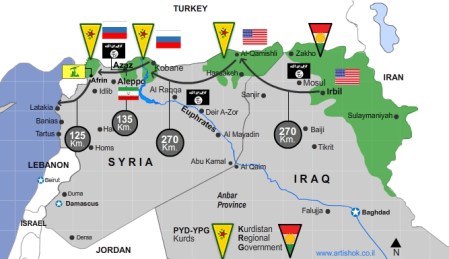
Syria_Iraq_Kurdsweekly

The US-Russian plan, approved by the UN Security Council as the lever for activating a political process towards ending the five-year Syrian war, can only go so far towards its objectives. The process is not capable of halting the fighting or removing Bashar Assad from power; just the reverse: progress in the talks is heavily dependent on the state of play on the battlefields of the north while the Syrian dictator’s ouster is a fading issue.

The limitations and obstacles facing the UN-endorsed US-Russian plan are summed up here by DEBKAfile’s analysts:

1. The understanding reached by the Obama administration and the Kremlin in the past month was first conceived as a stopgap measure. It was never intended to bring the calamitous Syrian war to an end or remove Assad, but rather to provide a pretext to account for the expansion of Russia’s ground operation and gloss over America’s military deficiencies in the Syrian conflict. Taking it as carte blanche from Washington, President Vladimir Putin felt able to announce Saturday, Dec. 19, that “the Russian armed forces have not employed all of their capability in Syria and may use more military means there if necessary.”

2. President Barack Obama has stopped calling for Assad’s removal as the condition for ending the war and is silent on the expanding Russian military intervention. Obama and Putin have in fact developed a working arrangement whereby Putin goes ahead with military operations and Obama backs him up..

3. Almost unnoticed, on Dec. 17, the day before the Security Council passed its resolution for Syria, all the 12 US warplanes that were deployed a month earlier at the Turkish air base of Incirlik for air strikes in Syria were evacuated. This happened at around the same time as Russia deployed to Syria its Buk-M2-SA-17 Grizzly antiaircraft missile systems. The presence of this system would have endangered American pilots had US air strikes over Syria not been halted. The upshot of the two evidently coordinated moves was the US withdrawal of most of its military resources for striking the Islamic State forces in Syria and the handover of the arena to the Russian army and air force.

4. In another related development, Friday, Dec. 18 the German intelligence service, BDN, leaked news that it had renewed its contacts with the Assad regime’s intelligence services and German agents were now visiting Damascus regularly. The import of this change is that Berlin no longer relies on US intelligence briefings from Syria and, rather than turn to Moscow, it prefers to tap its own sources in the Syrian capital.

5. Washington and Moscow are still far apart on the shape of the transitional government mandated by the Security Council resolution

The Obama administration wants Assad to hand presidential powers over the military and of all security-related and intelligence bodies to the transitional government, which is to be charged with calling general and presidential elections from which Assad will be barred.

Putin won’t hear of this process. He insists on a transitional government being put in place and proving it can function before embarking on any discussion of its powers and areas of authority.

The two presidents agree that the transition will need at least two years, overlapping the Obama presidency by about a year and dropping the issue in the lap of his successor in the White House.

6. The US and Russia don’t see to eye to eye either on which Syrian opposition organizations should be represented in the transitional government and which portfolios to assign them. On this question, both Washington and Moscow are at odds with the Persian Gulf states, Saudi Arabia, Qatar and the UAE, which back some of the organizations labeled as terrorist by Moscow.

7. But it is abundantly clear that the Obama administration is ready to wash its hands of the Syrian rebel movement and most of all, abandon Turkish President Tayyip Erdogan to give the Russians an open remit.

On Saturday, Dec. 19, Putin turned the screw again on Erdogan when he said he had no problem with the Turkish people, adding, “As for the current Turkish leadership, nothing is eternal.”

In support of Moscow, Obama meanwhile leaned hard on the Turkish president in a telephone conversation, to remove Turkish forces from northern Iraq. Ankara responded that Putin’s comment was not worth a response and denied hearing of any such US request.

Ankara may be feigning ignorance but it must realize by now that Moscow and Washington have joined forces to pus the Turkish military out of any involvement in northern Syria and Iraq.

8. This US-Russia collaboration against Turkey is having a dramatic effect on the war in northern Syria along the Turkish border. DEBKAfile’s military and intelligence sources report it opened the door to the secret deal between Washington and Moscow to divide the areas of influence in northern Syria between them – essentially assigning the Kurdish enclaves north of the Euphrates river and bordering on Iraq to American influence (see map), and the areas west of the Euphrates up to the Mediterranean to Russian control. This deal (first revealed by DEBKA Weekly 688 on Dec. 4) effectively squeezes Turkey out of any role in the Syrian conflict.

9. The ongoing battles in northern Syria near the Turkish border will have a greater impact in shaping the future of Syria and its unending conflict than any UN resolution. Participating in the fighting at present is a very big mixed cast: Russia, the Kurdish YPG militia, most of the important rebel groups, including radical Sunni organizations tied to Al Qaeda, such as the Nusra Front and Ahram al-Sham, Iran and Shiite Hizballah, and the Islamic State.

It is only when one of these forces gains the upper hand in this free-for-all, that there will be progress toward a political solution on ending the war.

Under secret Moscow-Cairo deal, first Egyptair passenger flights to Damascus, Aleppo

December 7, 2015

Under secret Moscow-Cairo deal, first Egyptair passenger flights to Damascus, Aleppo, DEBKAfile, December 7, 2015

Egyptair_resume_flights_toDamascus-and-Aleppo_2.12.15

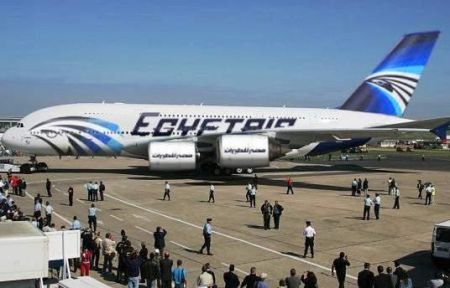
A new secret pact has taken shape in the Middle East. Last week, the offices of Russian Vladimir Putin and Egyptian President Abdel-Fatteh El-Sisi secretly formulated a tripartite accord for strengthening the ties between Moscow, Cairo and the Assad regime in Damascus, DEBKAfile’s exclusive military sources reveal. The pact had its first visible manifestation in the unannounced landings last Wednesday, Dec. 2, of the first Egyptair passenger flights at Damascus international airport and Aleppo in northern Syria.

The Egyptian national airline thus became the first of any Arab airline to renew flights to the war-torn Syrian capital since 2012. (see photo)

President El-Sisi’s gesture was tantamount to an eloquent vote of support for the Syrian ruler Bashar Assad in the face of his opponents in the Arab arena. It was also a demonstration of confidence in the Russian policy of preserving the Syrian ruler in power in the face of powerful voices in the West and the region calling for his ouster.

By sending a passenger plane to a Syrian airport, Egypt’ signaled its affirmation that Russian military intervention in Syria was making the embattled country a safer place where airliners could land without fear.

Moscow therefore attached supreme importance to the opening of the Egyptian-Syrian civilian air route, so much so that President Vladimir Putin pushed hard for it to take place ahead of the conference of Syrian rebel groups opening in Saudi Arabia Tuesday, Dec. 8.

In diplomatic communications with Riyadh, the Russians urged the Saudi hosts to prevail on the rebel groups whom they support with arms and cash to agree to enter into direct negotiations with Assad for ending the war.

Putin rewarded the Egyptian president for his gesture by ordering Russian airlines to resume their flights to Egypt. Those flights were suspended after the Russian Metrojet airliner was downed over Sinai by terrorists on Oct. 31 and 224 lives were lost in the crash. Their resumption will see Russian tourists again visiting Egypt, restoring a precious source of revenue to the strapped Egyptian economy, estimated at $5 bn per annum.

Our sources in Moscow declined to say whether the Russian passenger planes would again be calling at Sharm El-Sheikh like the ill-fated Metrojet. For the time being, they will most likely land at Cairo.

The Russian president is now trying to persuade El-Sisi to carry on making gestures for enhancing Assad’s standing.

Russia deploys antiaircraft missiles on warships crossing Bosphorus

December 6, 2015

Russia deploys antiaircraft missiles on warships crossing Bosphorus, DEBKAfile, December 6, 2015

Bosphorus_Russian_warships_6.12.15

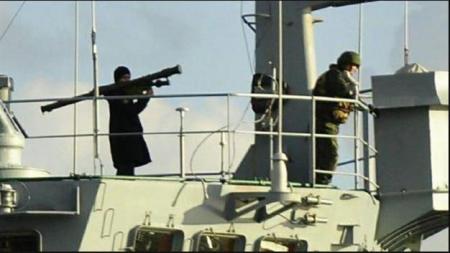
Turkish military sources reported Sunday that Russian warships passing through the Bosphorus Strait on their way to and from the Middle East have started taking measures against possible Turkish airstrikes. The sources pointed out that soldiers carrying shoulder-fired missiles have been placed on the decks and near the bridges of the ships. This picture shows a Russian soldier holding such a missile on the deck of the Russian warship Caesar Kunikov, one of the largest landing ships in the Russian fleet that is capable of transporting marines along with tanks or armored vehicles.

The sources also said that a flotilla of NATO warships from Portugal, Canada and Italy arrived in Istanbul during the last few hours.

Russia brings over heavy T-90 tanks to boost three Syrian warfronts

December 6, 2015

Russia brings over heavy T-90 tanks to boost three Syrian warfronts, DEBKAfile, December 6, 2015

russian-tank-army-t-90-Syria_12.15

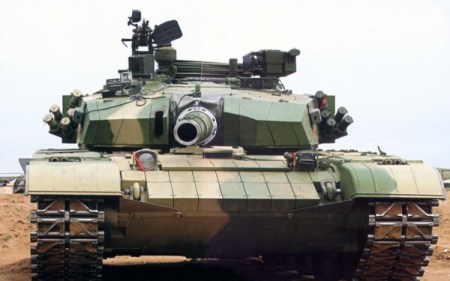
On Wednesday, Dec. 2, Russia started transferring dozens of advanced T-90 tanks to Syria, DEBKAfile’s military and intelligence sources report. They were moved immediately to two Syrian army fronts fighting rebel forces at the two most important cities, Aleppo and Damascus, and are expected to be sent to beef up the combined Syria, Iranian, Hizballah army poised to recover Palmyra from the Islamic State.

The shipment to the capital was delivered into the hands of the 4th armored division, Syria’s republican guard commanded by Gen. Ali Maher Assad, the younger brother of President Bashar Assad.

The attack on Palmyra in country infested by ISIS forces was scheduled to have begun two weeks ago but was delayed for the arrival of the heavy Russian tanks, among other reasons.

The T-90 weighs 46.5 tons and has a range of 375 kilometers, with an average speed of 45 km per hour under battle conditions or 65 km per hour on roads. It has three layers of defensive systems: composite armor plates on the turret; Kontact-5 third-generation explosive reactive armor on its front, sides, and turret that reduces penetration by kinetic energy bombs; and the “Shtora,” or curtain, an electro-optical active protection system that enables the tank to jam the systems of antitank missiles.

The T-90 also has 12 smoke mortars, a 125 mm cannon and AT-11 Sniper guided antitank missiles. The tank has proven itself in battle in recent years in Russia’s wars in Georgia and Chechnya against forces not unlike the Syrian rebels.

Until last week, Russia kept only a few T-90 tanks in Syria, mainly to protect its military bases around Latakia.

The new shipment, say Western military sources which are monitoring Russian movements, will eventually replace a large part of the Syrian army’s fleet of around 500 operational tanks, mostly T-72s – at least half of which are positioned to defend the capital.

But the pace of delivery will be dictated above all by the time needed for Russian instructors to retrain Syrian tank crews from scratch in the use of T-90s in battle conditions.

It should be noted meanwhile that, while the Syrian rebels have antitank missiles able to take out the T-72, they do not have advanced missiles capable of stopping the much heavier, reactively armed T-90. But  the Islamic State does, having captured US-made antitank missiles from the Iraqi armored divisions put to flight in June 2014. Some of those advanced missiles may be presumed to have been passed to ISIS forces in Syria.

For now, the Russian general staff shows no sign of preparing for a wide-scale operation against ISIS in Syria, so the newly-delivered T-90s are not immediately threatened from that quarter.

As far as Israel is concerned, the main worry is that Russian instructors will also be assigned to train Iranian and Hizballah tank crews in the use of the advanced T-90. Once they get hold of these tanks, they will be able to attain their objective of beefing up the Iranian-Hizballah front against Israeli defenses from southern Syria and the Syrian Golan.

Israeli finds cause for concern in the constant expansion of the Russian military presence and involvement in Syria. Preparations for a very long stay are signified by new developments every few days. A permanent Russian military presence in Syria would give Iran and Hizballah cover for a standing military buildup in Syria. This would confront Israel’s vital strategic interests with a major challenge.

Israel extremely nervous over Russian operations on its Golan border

December 2, 2015

Israel extremely nervous over Russian operations on its Golan border, DEBKAfile, December 2, 2015

Netanyahu_speaks_with_Putin_Paris_30.11.15

Moscow may be giving Hizballah and Iran an umbrella for achieving their longstanding design to displace the Syrian rebels with Revolutionary Guards and Hizballah forces and deploy them along Israel’s Golan border.

**********************

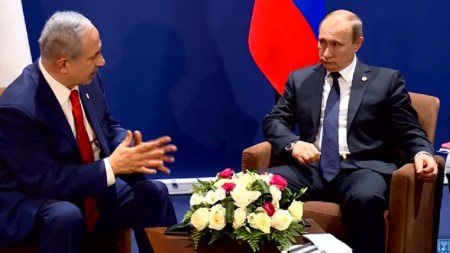
On the outside, Israel is all smiles and full of praise for way the coordination with Moscow is working for averting clashes between its air force and Russian warplanes over Syria. This goodwill was conspicuous in the compliments Prime Minister Binyamin Netanyahu and President Vladimir Putin traded when they met on the sidelines of the Paris climate summit Monday, Nov. 30.

But the first disquieting sign appeared Tuesday, Dec. 1. Senior Russian and Israeli officers were due to meet in Tel Avid to discuss strengthening the cooperation between the two army commands. But no word from Moscow or Jerusalem indicated whether the meeting had taken place.

DEBKAfile’s military sources report that this week, the show of optimism is giving way to an uneasy sensation in the offices of the prime minister, Defense Minister Moshe Ya’alon and the IDF Chief of Staff Lt. Gen. Gady. They suspect an ulterior motive behind Russia’s military movements in southern Syria, especially its air strikes against Syrian rebels, just across from Israel’s Golan border.

In particular, Moscow may be giving Hizballah and Iran an umbrella for achieving their longstanding design to displace the Syrian rebels with Revolutionary Guards and Hizballah forces and deploy them along Israel’s Golan border.

This suspicion gained ground when Tuesday, Dec. 1, the day after the Putin-Netanyahu encounter, the combined Iranian-Syrian-Hizballah units expanded their thrust from the southern Syrian town of Deraa to the Golan town of Quneitra, within sight of Israel’s defense positions.

All that day, heavy battles raged over the rebel-held line of hills running from a point just south of Quneitra to the Israeli-Syrian-Jordanian border junction. The combined force was supported by Russian air strikes and heavy tanks and artillery, seen for the first time in this war arena.

When the fighting resumed Wednesday, the IDF placed its Golan units on high alert and an extra-vigilant eye was trained on this battle.

The Iranian-Syrian-Hizballah side is gaining a distinct advantage from the deep feud dividing rebel ranks. The Islamic State and the al-Qaeda-affiliated Syrian Nusra Front forces are tearing into each other with suicide bombers and explosive cars. Tuesday, an ISIS-rigged bomb car blew up at Nusra headquarters near Quneitra (see photo).

ISIS_car_bomb_in_Quneitra_nusra_1.12.15

But this also means that an Islamic State force has come dangerously close to the Israeli border.

However, even more perils are in store if Bashar Assad’s army backed by Iran, Hizballah and Russia manages to capture the hills opposite the Golan:

1. Two years of unrelenting Israeli military and intelligence efforts to keep Hizballah and Iranian forces away from its Golan border will have gone to naught.

2.  Hizballah will open the door for Iranian Revolutionary Guards officers to set up a command center right up to the Israeli border.

3.  Israel’s steadfast policy and military action to prevent advanced Iranian weapons reaching Hizballah in Lebanon via Syria will be superseded. On the Golan, Hizballah will have gained direct access to any weapons it wants directly from Syria and be able to deploy them at far shorter distances from Israeli targets than from their firing positions in Lebanon.

4.  Vladimir Putin attaches extreme importance to recovering southern Syria from the rebel forces backed by the US and Israel, because he regards the threat to the Assad regime as great from the south as it is from the north or the center.

5.  Israel faces a grave dilemma between keeping up its “honeymoon” with Moscow by giving way on its essential security interests, or taking the bull by the horns and keeping the enemy at bay, whatever the cost to the understanding reached with Putin.

Officials in Jerusalem point out that the threat to Golan peaked just hours after the Russian leader met the prime minister in Paris. Putin is conducting a hands-on policy on Syria and keeps close track of the slightest occurrence on the battlefield. He must have been perfectly aware of the state of play on the Golan when he met Netanyahu, but nonetheless kept it out of their conversation.

US-Russian discord over Syria stoked by Turkey’s downing of the Russian warplane

November 25, 2015

US-Russian discord over Syria stoked by Turkey’s downing of the Russian warplane, DEBKAfile, November 25, 2015

WarOverSyria480


On Wednesday, Nov. 25, US President Barack Obama, in a conversation with Turkish President Tayyip Erdogan, said Turkey has the right to defend its territory just like any other country. He also said that the Russian Su-24 plane crossed the border and stayed in Turkey for 17 seconds. In other words, it was 1.6 km inside Turkish territory. However, when it was hit by an AIM-9X Sidewinder missile fired by the Turkish F-16, it was either right on the border or already inside Syrian territory. The pilots apparently landed on the Syrian side of the border and Moscow announced Wednesday that both were “in safe hands.”

No matter how the incident is interpreted, it has generated five points that could lead to an aerial or naval clash between US and Russian forces in the Syrian theater.

1. It was the first time in 65 years, since 1950, that an American-made warplane from a NATO member state shot down a Russian warplane with an American-made air-to-air missile. This ramifications of this incident were no doubt seriously pondered at the NATO session called after the event.

2. Obama did not only come out in support of the Turkish version of the incident, but asserted that Putin did not speak the truth when he said that the plane was 1 km inside Syrian territory when it was shot down. The Russian president has not yet answered the charge, but there is no doubt that he will.

3. The military clash between Russia and Turkey has now become part of the personal contest between Obama and Putin over the future of Syrian President Bashar Assad.

Obama says that as long as Assad remains in power, not only will there be no agreement on how to end the war in Syria, but it will be impossible to defeat ISIS.

Putin says, the exact opposite: that it is impossible to end the war, or to defeat ISIS, without Assad as president. After those goals are achieved, he says, Assad’s future may be discussed.

Moskva_11.15

4. On Tuesday night, Nov. 24, Putin made his next move in the ramped-up chess match between the US and Russia in Syria.

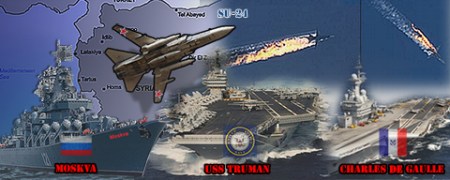
The Russian general staff announced that the missile cruiser Moskva, one of the largest warships in the world, was ordered to move closer to the Syrian coast opposite the port of Latakia, near the Turkish border, and to “destroy any target posing danger.”

DEBKAfile’s military sources say the Moskva serves as a floating missile base with a complement of advanced S-300 ground-to-air missiles.

This was a message for Ankara that any Turkish warplane nearing Syria, or flying in the Hatay province of southern Turkey – where the Su-24 incident occurred – was exposed to being shot down by Russian missiles. The Russian general command also announced that Russian warplanes would henceforth escort all Russian flights operating in Syrian airspace, including bombers.

5. Although he backed Erdogan verbally, Obama has not resorted to any military steps against Russia. But he does have a card up his sleeve. The USS Harry S. Truman carrier with strike force is on its way to the Mediterranean, having sailed from the US on Nov.16.

The Truman will join the French aircraft carrier Charles de Gaulle, whose planes started bombing ISIS targets in Iraq on Nov. 23. If Obama orders the Truman to enter the Syrian theater, there will be two warships from NATO member states facing Russian naval forces off the Syrian coast, led by the missile carrier Moskva.

First Iranian fighter jets over Syria alongside Russian bombers

November 22, 2015

First Iranian fighter jets over Syria alongside Russian bombers, DEBKAfile, November 22, 2015

RussianIranianSirforce480

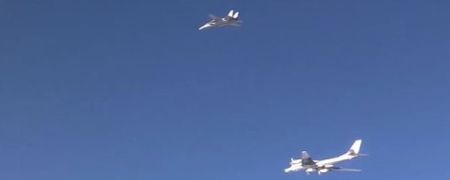
A series of videos apparently leaked by the Russian Defense Ministry reveal the presence of Iranian F-14 and MiG -29 fighters in Syrian skies for the first time. They were shown by “The Aviationist,” Italian magazine, escorting heavy Russian bombers, including the Tupolev TU-160, the heaviest, fastest and most destructive bomber ever built, on missions no more than 150 km from Israel’s northern border.

The ageing F-14s, built in the 1970s by American aviation giant Grumman, were originally sold to Iran when the Shah was in power and taken over by the reorganized Iranian air force after the 1979 Islamic revolution. Upgraded many times, the F-14s now feature state-of-the-art avionics, weapons and navigation systems, procured byTehran despite the strict UN embargo on their sale to the Islamic Republic.

Dozens of these upgraded warplanes, upgraded with intelligence-collection and tracking systems, have begun operating in Syrian air space near the Israeli border, under the pretense of escorting the Russian bombers. Iranian eyes in the sky are therefore studying the frontier area and gather valuable intelligence on Israel’s air defenses. Normally, if Iranian warplanes had turned up in Syrian air space, the Israeli Air Force would have fought them off and shot them down, but by flying alongside Russian bombers they are protecting themselves against Israeli action.

Tu95_F14

As DEBKAfile reported on Saturday, November 21, Russian air and missile attacks are systematically   destroying Raqqa, the ISIS capital in Syria, without consideration of civilian casualties. The Russian general staff is now gearing up to embark on an unprecedented assault on rebel and ISIS strongholds, a blitz involving hundreds of simultaneous sorties by warplanes and bombers, as well as cruise missile attacks from planes and warships in the Mediterranean and the Caspian Seas.

High-altitude surveillance planes as well as low-altitude drones, fitted with imaging and targeting systems that will send live video and images to the command center in Moscow, will provide an umbrella for the attack.

Russian President Vladimir Putin will personally manage the multilayered military coordination between Russia and Iran when he visits Tehran on Nov. 23, accompanied by top military officers.

Massive Russian blanket air bombardment is flattening Raqqa

November 21, 2015

Massive Russian blanket air bombardment is flattening Raqqa, DEBKAfile, November 21, 2015

For_Paris_20.11.15

Russia has launched a merciless blanket air campaign, backed by Kalibr cruise missiles fired from the Caspian and Mediterranean Seas, for the object of wiping the Islamic State’s Syrian center of Raqqa off the map, DEBKAfile’s military sources report.

Western and Middle East sources tracking the campaign since Friday, Nov. 20, report that at least 75 air sorties have been conducted and are systematically razing the town of 200,000 inhabitants 160km east of Aleppo, district by district, irrespective of civilian town dwellers.

Moscow wants the entire Middle East and Muslim world to see the price exacted for launching a terrorist attack on Russia after the downing of the Metrojet airliner that killed 224 people over Egyptian Sinai on Oct. 31. Russian bombers and cruise missiles rained death and destruction on the ISIS administration center after the jihadists claimed responsibility for that disaster and published photos of a soft drink can claimed to have been rigged as a bomb for blowing the plane up.

When the Russians are done, the town will be a pile of rubble, an intelligence source told DEBKAfile.

For_ours

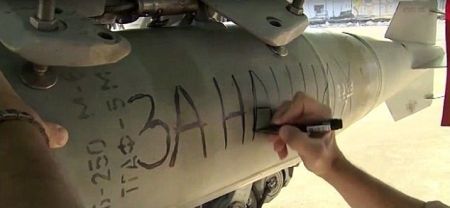
The Russian defense ministry ran photos Friday of Russian technicians loading bombs on the Tupolev 95 bombers (dubbed “Bears” in the West). Ground crews marked the bombs “For ours,” and “For Paris.”

Last Tuesday, our military sources first revealed that the Tupolev’s were taking off from Morozovsk air base in the Rostov district of southern Russia instead of from the Russian military enclave outside the Syrian town of Latakia.

Defense Minister Sergei Shoigu reported Friday that 15 Syrian oil facilities seized by ISIS had been destroyed this week and 525 of their trucks, costing the jihadists $1.5 million a day in revenue.

As for casualties, the published figure of 600 jihadists killed in one day is probably far below the real figure. Our sources report that the Islamist terrorists’ death toll most probably runs into thousands with many more injured.

To sustain the hectic tempo of its aerial war, Moscow has doubled the number of bombers assigned to Syria from 34 two weeks ago to 69 by Saturday, Nov. 21.

Our military sources add that this augmented air power allows the Russians to expand their targets to other parts of Syria. On Friday, they renewed sorties against Syrian rebel forces holding the southern town of Deraa near the Jordanian border.

Acting on secret Obama-Putin Syria deal, Moscow’s air strikes focus first on rebels, next on ISIS

November 18, 2015

Acting on secret Obama-Putin Syria deal, Moscow’s air strikes focus first on rebels, next on ISIS, DEBKAfile, November 18, 2015

Putin50

As a result of the deal between the two presidents, 75 percent of Russian attacks in Syria Tuesday were aimed against various rebel groups (around Hama and Aleppo), and only 25 percent against ISIS (at its Raqqa headquarters) and Al-Nusra Front targets.

************************

The secret deal for a political solution for the Syria conflict reached by Presidents Barack Obama and Vladimir Putin on the sidelines of the G20 summit in Antalya over the weekend has radically changed and intensified Russia’s air strike tactics in the last 24 hours.

For the first time since the intensified Russian military intervention in the Syrian civil war in the last week of September, Russian air force planes took off Tuesday, Nov. 17 for attacks on Syrian rebel and ISIS targets, from a home base, the Morozovsk airbase in the southern Rostov district. Until now, the Russian bombers had taken off from Hmeymim airbase near Latakia.

Also for the first time, they lofted Tupolev Tu-160 and Tupolev Tu-95 bombers. The Tupolev Tu-160 Blackjack is a long-range strategic bomber and the biggest combat aircraft in the world, while the Tu-95 Bear is a huge strategic bomber with four turboprop-powered engines that is also used to launch missiles.

DEBKAfile’s military sources note that that the entry of these heavy bombers marks an increase in the frequency of the attacks and in the firepower used by Russia against the rebels and ISIS. Together with the firing of advanced Russian Kalibr cruise missiles at targets in Syria – also for the first time on Tuesday – these changes substantially escalate the Russian military effort in Syria.

Western sources take these changes to mean that Putin is driving hell-bent to settle accounts with the Islamic State after the downing of the Russian plane over Sinai on Oct. 31, and that he will coordinate this effort with French President Francois Hollande, who is due in Moscow in the coming days.

However, DEBKAfile reports that the new, stepped up Russian aerial offensive is fact bringing forward certain – not necessarily jihadist – Syrian rebel groups as Moscow’s priority targets, with ISIS only in second place.

In their 30-minute conversation on Sunday, Nov. 15, our sources reveal, Obama secretly accepted most points of Putin’s plan for a political resolution of the Syrian conflict (first revealed by DEBKA Weekly earlier this month), with the exception of the point relating to Bashar Assad’s future.

The White House and the Kremlin consequently announced a joint decision on a cease-fire in Syria to be followed by UN-mediated negotiations between the rebels and the Assad regime.

The first point of the Russian blueprint called for intensified air strikes by the US and Russia against rebel groups refusing to enter into these negotiations in order to force them to toe the line.

As a result of the deal between the two presidents, 75 percent of Russian attacks in Syria Tuesday were aimed against various rebel groups (around Hama and Aleppo), and only 25 percent against ISIS (at its Raqqa headquarters) and Al-Nusra Front targets.

Obama agreed to Russian expanding its air campaign to this end for at least three weeks. It was also decided that Russia would beef it up with another 25 heavy bombers and addition warplanes.

Meanwhile, also on Tuesday, Russia released the findings of its investigation into the downing of a Russian airliner on October 31 in the Sinai Peninsula that caused the deaths of all 224 passengers and crew.

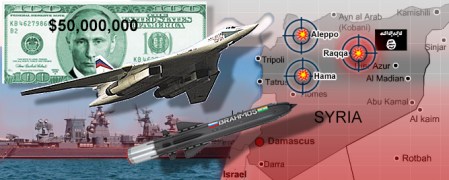
Putin and the heads of the Russian intelligence community have concluded that the destruction of Metrojet Flight 9268 soon after takeoff from Sharm El Sheikh was the result of a bomb planted on board by terrorists. Egypt quickly rejected the conclusion, claiming there was no proof of it whatsoever. But the conclusion led Putin to offer an unprecedented $50 million reward for information leading to the capture of those who planted the bomb.

According to our counterterrorism sources, Russian intelligence chiefs are convinced that certain top Egyptian military and security service officers know exactly who was responsible. The enormous reward was offered to draw them out and tempt them to break ranks with Egyptian President Abdel-Fatteh El-Sisi’s dogged resistance to the charges of a terrorist hand at work behind the Russian air disaster. After all, 50 million dollars must be hard to resist.

That Other Side of Russia’s Syria Campaign…

November 15, 2015

That Other Side of Russia’s Syria Campaign…, Independent Strategy and Intelligence Group, November 14, 2015

(Obama’s America isn’t “winning the war” against the (non-Islamic) Islamic State. If Putin’s Russia isn’t either, who will — France? — DM)

True to form, Vlad is increasing operations and the size of his military’s footprint in Syria while lowering the bar of what constitutes “success.” In a recent piece (“Russian-Backed Offensive in Syria Begins to Stall-What Now?”) we discussed how out of all the fronts in the multi-pronged offensive the pro-regime forces are engaged in, only Aleppo has seen any gains – although those gains have been mixed. The SAA and IRGC had to divert resources from the Hama and Idlib fronts just to sustain the Aleppo offensive and achieve the gains that they did – all while sustaining heavy casualties in the process. The diverting of personnel and resources grounded the remaining forces in Hama and Idlib to halt. In some cases they’ve actually lost ground in the two fronts. The only thing that has kept them from driven out of those areas completely is the fact that al-Nusra sent a lot of their fighters to Aleppo, meaning the opposition factions don’t have the manpower to seize the initiative. And so they wait.

Russian-Backed Offensive in Syria Begins to Stall-What Now?
http://isisstudygroup.com/?p=9219

Has Assad’s New Offensive Changed Syria’s Front Lines?
http://www.syriadeeply.org/articles/2015/11/8733/assads-offensive-changed-syrias-front-lines/
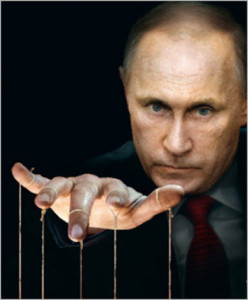
puppet-master-248x300The Puppet Master Source: Derek Bacon (Getty Images)

As of this writing the Russian military has 18 artillery pieces and 9 combat helicopters deployed west of Tadmur with a Spetsnaz unit also operating in the area. Initially these forces were focused on supporting the Assad regime’s multi-pronged offensive in the Northwest due to the major threat the opposition forces posed. Since mid to late-OCT Vlad has conducted airstrikes in Halab Province as part of the effort to disrupt the Islamic State’s (IS) push on the Aleppo supply line. Airstrikes have also been conducted on Raqqa City, Dayr az-Zawr and areas just outside of Damascus. That said, the Russian military is struggling to satisfy the fire support requests of pro-regime forces. The Russian military has 32 combat aircraft, 16 combat helicopters (with more than half in Tadmur) and a Brigade-sized element of artillery.

We’re not surprised that Vlad’s IO guys are trumpeting the recapture of a couple villages and a derelict airbase (Kweires) in Aleppo Province – especially since opposition forces operating in the Ghab Valley were blocking regime advances just a few days ago. Then there’s Jaysh al-Fatah seizing control of several villages in Hama Province. They’ve been poised to push deeper into the areas Northwest of Hama City as of 10 NOV. Regarding Kweires, the recapturing of the base has more symbolic than tactical value. Vlad is hoping the symbolic victory will galvanize the SAA (we’re not holding our breath).

Syrian Regime, Allies Boast of Breaking Aleppo Air Base Siege
http://www.wsj.com/articles/syrian-government-forces-allies-boast-of-breaking-aleppo-air-base-siege-1447265552

Vlad’s increased sense of urgency is understandable considering the current state of the SAA, not to mention the mounting losses of the Iranian military force in-country. Since OCT the IRGC has lost four senior officer to include their most senior official – BG Hossein Hamedani (Reference “Pro-Assad Forces Experience Setbacks Despite Russian Military Intervention”). Even Hezbollah has lost several senior commanders, such as Hassan al-Haj. GEN Suleimani deployed an additional 2,000 IRGC-Qods Force operators to Syria this past summer in response to combat losses. Our sources have informed us that even Ayatollah Khameini has been getting worried about the increase in casualties from the ongoing offensive, which was the driving force behind his decision to deploy additional conventional IRGC personnel (armor, artillery etc). Thing is Khameini is busy trying to keep the Iranian public from learning that things aren’t going as well as advertised. Vlad is already prepping his own domestic audience for a prolonged Russian mission in Syria.

Pro-Assad Forces Experience Setbacks Despite Russian Military Intervention
http://isisstudygroup.com/?p=8778

The Main Intelligence Directorate (GRU) is central to Vlad’s efforts to shape domestic and international opinion of the Syrian campaign – especially against the US. A great deal of the IO portion of this campaign involves messaging that highlights Russia’s humanitarian work (of course leaving out the part about indiscriminately targeting civilians) blames the US and its allies for the Syrian regional war and the rise of IS – even to the extent of claiming that Team Baghdadi is really an “American puppet” (FYI that messaging would work if the Obama administration wasn’t grossly incompetent). There’s actually been some inconsistencies with their messaging, because on one hand they’ll claim the US is “orchestrating” IS’ activities while running a parallel series of messaging highlighting American failures to combat the terror group – they may want to tighten up their shot group in that regards. Our in-country sources report the use of UAVs to distribute leaflets warning opposition fighters of their impending “annihilation” if they don’t flee the area. Another area GRU has been busy is employing the services of independent bloggers, sympathetic website admins and pro-Vlad organizations to distribute messaging. They’ve also been creating fake personas to convey IO themes and present counter-arguments to anything critical of Russia’s intervention, the Assad regime and Vlad himself. We’ve encountered a few of these personas on our Facebook and Twitter feed – they’re not hard to identify since they tried to bait us into divulging the identities of our sources (which isn’t going to happen).

In order to fully understand what’s going on, one must first understand Vlad himself. Our favorite KGB officer has gone his whole life trying to avoid the appearance of “weakness.” Also, his perception since the invasion of Crimea of being labeled a “pariah” by the West likely compels him to be aggressive on the international stage – especially when it comes to projecting power in the Middle East. His KGB service continues to drive his worldview. An example of this is time as a KGB officer in Dresden left a particular mark on his psyche as it was during the last days of the Soviet Union – which he refers to as “the most traumatic experience of his life.” So it should come as no surprise that he views himself as Russia’s lone “champion” that can stand up to defend against America. As such, he views Syria as an opportunity to replace US influence and more importantly, as a test of his reputation and Russia’s international prestige.
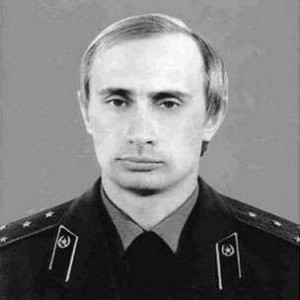
putin_Young-300x300A younger Vlad Source: PBS

He has a constant need for recognition and validation, which is why popularity polls are so important to him and why his cult of personality was crafted. Ever wondered why he’s always posing in photos lifting weights, doing the topless horse-riding thing or shooting things? That’s why. Interestingly enough, Vlad was his parents’ only surviving child, and was considered small, weak and sickly. Before that, his parents went through a great deal of hardships during the Siege of Leningrad during WWII. In other words, nothing came easy for him – which we respect. Still, he grew up being regarded as “special” – which resulted in the special snowflake growing up thinking that he was “superior” to everybody else (this is the one thing he has in common with President Obama). As for Vlad’s childhood, he grew up in a rat-infested one-room apartment. It certainly wasn’t the privileged childhood of traveling to exotic locales that his American counterpart got to enjoy. Since he was small, fights occurred regularly – which led to his current interest in martial arts. As for his signature unemotional facial expressions, those are a product of a well-cultivated effort to project strength and guard against unwelcome emotional responses, such as sadness or fear. Acts that he views are intended to undermine or humiliate him will result in his escalating a situation in response. He will only “back off” on his own terms – such as feeling a negative response might come from the public, for instance. For instance, his response to the 2011-2012 Moscow protests is a reflection of his sensitivity to internal dissent. His actions since that time – increased public outreach and propaganda efforts – are geared towards reinforcing the narrative he made of himself as being “indispensable.” The current fight against IS (and the West) is a big part of that plan.
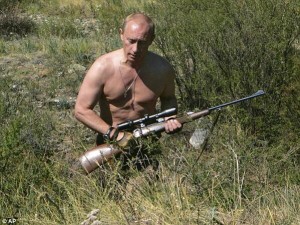
putin_gun-300x225He sure doesn’t seem to like wearing shirts, now does he? Source: Associated Press

The architect of Vlad’s Middle East strategy is GRU Chief Igor Sergun, who was added to the EU’s sanctions list last year in response to his involvement of Russia’s Ukraine campaign. Specifically, he’s a member of Vlad’s “circle of trust” who holds the distinction of being one of the few people involved in the decision-making process leading up to the Crimea invasion receiving the “green light.” More recently, Sergun became a major advocate for Russia to increase its presence in the Middle East. He was the point-man involved in the negotiations that led to the establishment of the joint-intelligence coordination centers in Iraq and Syria (Check out “Russia Providing Lethal Aid to Syria, Iran and Establishment of Intel Centers in Iraq” and “Russia Poised to Increase Military Presence in Middle East in Response to Islamic State’s Strength” for additional info). Of note is that Sergun sees bilateral ties as a means of learning about Western intentions and countering them. The US is just “gaga” over this guy’s smile, but the turn is that he’s the leading figure behind the current IO campaign against the US. This guy has a plethora of experience, having joined the GRU in 1984. From 1989-1992 he served undercover under the guise of being a “military attache” in Stockholm and Tirana in 1997. As a side note, we hear that Sergun loves gardening to unwind and has a nice little dacha near Moscow (we’re working to obtain pics).

Russia’s Military Chief and deputy PM added to EU’s sanctions list
http://www.ft.com/intl/cms/s/0/4a3ff1cc-cf71-11e3-bec6-00144feabdc0.html#axzz3rZBrt6dm

Ukrainian Rebel Commander Identified As Russian GRU Military Intelligence Colonel

Ukrainian Rebel Commander Identified As Russian GRU Military Intelligence Colonel

Russia Providing Lethal Aid to Syria, Iran and Establishment of Intel Centers in Iraq
http://isisstudygroup.com/?p=8532

Russia Poised to Increase Military Presence in Middle East in Response to Islamic State’s Strength
http://isisstudygroup.com/?p=8416
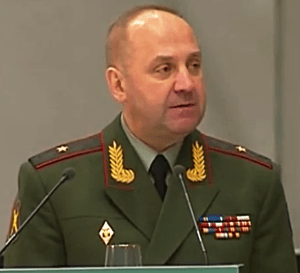
igor-sergun-300x273Igor Sergun: Likes to channel his “Inner-Martha Stewart” for relaxation. Source: The ISIS Study Group

The guy Sergun hand-picked to oversee intel and IO operations in Syria is COL Pavel Vladimirovich Petrunin. His duties involve the coordinating of intel-sharing with the SAA, IRGC and other pro-regime elements, such as Hezbollah. One of the things he’s been heavily involved with is overseeing the creation of IO messaging that emphasizes Russian/Syrian “successes” no matter how minor. According to our sources, he’s also been engaged in stream-lining offensive cyber-warfare operations with the Syrian Electronic Army in the targeting of opposition social media accounts and web sites – even targeting American and allied computer systems. One of the more interesting things we’ve learned is that he was the one who recommended spinning fratricide/civilian collateral damage incidents (which are a common occurrence on the Syrian front) as “IS attacks” as a means of masking SAA ineptitude. Just as important is the direct intel support that his subordinates provide to the Spetsnaz operators conducting CT-operations in the country against opposition leadership.

Apparent Russian raids kill 11 in Syria’s Idlib: monitor
http://news.yahoo.com/10-dead-syria-regime-raids-held-town-monitor-143407847.html

This fight isn’t going to end anytime soon and because of that, the GRU’s IO campaign is going to increase in importance. Keep in mind that Vlad feels that he’s “Russia” itself, and therefore views his failure as “Russia’s failure.” As we’ve stated previously, Vlad is now at the point where he has to escalate the Russian military mission in Syria so as to continue to project that image of “strength.” This becomes even more important after the Sinai Plane Bombing and Paris attacks. That said, the current situation on the ground in Syria and Vlad’s sensitivities to internal dissent presents several exploitable opportunities for the US to launch an IO campaign of its own – whether they’ll have the testicular fortitude to actually do it is another thing altogether…

Other Related Articles:

Russia Supports New Syrian Offensive and Begins Prepping For Russian Ground OPs
http://isisstudygroup.com/?p=8669

Amplifying Details on the Sinai Plane Bombing and the Egypt-Libya Nexus
http://isisstudygroup.com/?p=9230

Sinai Plane Crash Update
http://isisstudygroup.com/?p=9184

Islamic State Claims to Have Shot-Down Russian Plane in Sinai – But Did They?
http://isisstudygroup.com/?p=9157

US to cut 40,000 troops despite Russian and Chinese Belligerence and Rapidly Expanding Islamic State
http://isisstudygroup.com/?p=7563