Posted tagged ‘Putin’

Rockets on Golan, Pentagon flouts Obama, no truce

September 18, 2016

Rockets on Golan, Pentagon flouts Obama, no truce, DEBKAfile, September 17, 2016
 

syria_golankipat

The Pentagon and US army are not following the orders of their Commander-in-Chief Barack Obama in the execution of the military cooperation accord in Syria concluded by US Secretary of State John Kerry and Russian Foreign Minister Sergei Lavrov in Geneva on Sept. 12.

Five days after the truce they agreed would go into effect Monday, fighting was still raging Saturday, Sept. 17.

DEBKAfile was the only Western publication to foresee this eventuality in an article published on July 18.

It was already evident then that any military cooperation agreement between the two powers would be contingent on America exposing its intelligence-gathering methods to Russia – not just in Syria but worldwide.

As our military sources predicted, this new intelligence sharing arrangement would necessarily extend to the Syrian Air Force as a third partner.

In advance of the deal, Moscow deployed its aircraft carrier, the Admiral Kutzenov, post haste to Syrian waters, to make sure that the Joint Implementation Center set up by the Kerry-Lavrov deal for intelligence-sharing would also apply to the warplanes and cruise missiles on the carrier’s decks and its escort of missile cruisers.

This deal was perceived in Moscow as an opportunity to study the combat methods and tactics practiced by the US Navy and Air force in real battlefield conditions.

But this eventuality was far from the intentions of US security and intelligence chiefs at a time of deepening adversity between Washington and Moscow.

The remarks of State Department spokesman Mark Toner on Thursday, Sept. 5 hinted at these conflicting perceptions: “I don’t think anyone in the US government is necessarily taking at face value Russia’s – or certainly not the Syrian regime’s – commitment to this arrangement.” He went on to say: “What really matters here is that the president of the United States supports this agreement, and our system of government works in such a way that everyone follows what the president says.”

Is that really so?

The fact that Kerry’s spokesman found it necessary to emphasize that “everyone follows what the president says,” strongly indicated that not everyone in Washington was in fact obeying the president.

Such disobedience is almost unheard of and would never be admitted publicly. In this case, it is being kept carefully under wraps.

Defense Secretary Ashton Carter and Chairman of the US Chiefs of Staff Gen. Joseph F. Dunford will never on any account admit that, in the execution of military collaboration with Russia in the Syrian conflict, they are not exactly carrying out the president’s precise instructions.

syrianceasefire480

But Washington sources report that Defense Secretary Carter maintains that he can’t act against a law enacted by Congress. He was referring to the law that prohibits all military-to-military relations with Russia as a result of Moscow’s annexation of the Crimea region of Ukraine.

According to DEBKAfile’s military sources, they are simply dragging their feet in ground operations. This is driving Vladimir Putin and his generals into fits of rage.

Friday, Sept 16, Lavrov accused the US of “stalling on its promise to separate moderate rebel groups in Syria from terrorists,” adding, “US progress in delivering on the promise is slow.”

Saturday, Putin himself burst out that the rebels were “regrouping under the ceasefire.” He put the blame on those “rebels” for the failure of the agreed truce to take effect after five days.

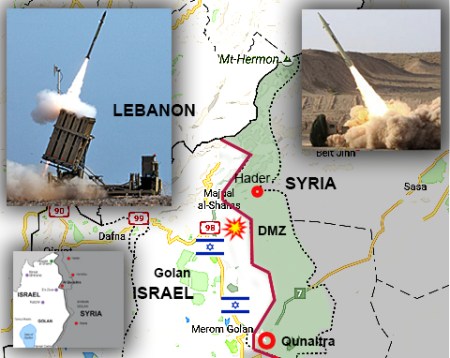
Our military and intelligence sources see a connection between Putin’s angry outburst and the rising tensions on the Syrian-Israeli border in the past week, culminating in the two Syrian rockets that were shot down Saturday over the Golan by Israel’s Iron Dome batteries.

For some time, the Russians and Syrians have made no bones about their objection to Israel’s policy of supporting a motley assortment of Syrian rebel groups in southern Syria close to its border. Among these groups is Al Qaeda’s Syrian arm Jabhat Al-Nusra (the Nusra Front) that has renamed itself Jahat Fath Al-Sham.

Whatever Assad, Iran or Hizballah may accept or reject, President Putin utterly refuses to tolerate Israel allowing the Nusra Front to control parts of this border sector.

Therefore, the rockets and missiles apparently “straying” across the border onto the Golan may well multiply in the coming days.

Yet another complication raised its head over the weekend when the US-backed rebel militia, the Free Syrian Army, vented its fury over the Kerry-Lavrov truce deal by driving away American Special Operations troops helping them in the battle for Al-Rai and abusing them as “infidels.”

The US blames the Russian leader for failing to force Bashar Assad to hold his fire and to let emergency supplies reach the beleaguered population in Aleppo, thereby undermining their ceasefire accord.

But it is becoming evident that the brutal standoff in Syria will be sustained until Putin is satisfied that the US is cooperating with Russian forces in Syria and the Mediterranean region in all spheres.

Before he decides to lean hard on Assad to cease hostilities, he will want to see the White House twisting the arms of the Pentagon and US forces to play ball in the most sensitive spheres.
Russia: Dissolve US-Arab-Israeli Syria war room

September 12, 2016

Russia: Dissolve US-Arab-Israeli Syria war room, DEBKAfile, September 12, 2016

jordan_mifkada480

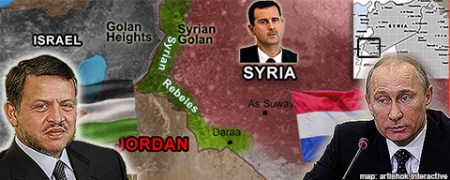
In another move to grab control of the Syrian arena, the Kremlin marked the start of the US-Russian brokered ceasefire in Syria on Sept 12 with a push for the United States to dissolve the war room that has been running anti-Assad operations from a venue north of the Jordanian capital Amman. DEBKAfile’s military and intelligence sources report that the demand was handed down from the Russian presidential office and Defense Minister Sergei Shoigu.

The US Central Command Forward Command in Jordan has for three years run the command and communications functions of select rebel ground operations against Bashar Assad, especially insofar as US special operations units and air force were involved.

Jordanian, Saudi, Israeli, Qatari and United Arab Emirates officers serve alongside American commanders.

This forward command has evolved, according to our sources, into the nerve center of the military campaigns waged by this coalition against the Syrian army and its allies in southern Syria and also against the Islamic State in southeastern Syria and parts of western Iraq.

In January 2016, President Vladimir Putin had the Saudis talk King Abdullah into establishing a Russian-Jordanian forward command outside Amman alongside the American war room. His pretext was the necessity to avert accidental collisions between the Russian and Jordanian warplanes operating in Syrian air space.

But over the past months, the Russian-led command center has gradually nudged the US war room into an inferior role in the control of ongoing operations.

Last week, in the course of the marathon talks on a Syrian truce held by US Secretary of State John Kelly and Russian Foreign Minister Sergei Lavrov in Geneva, the American delegation was suddenly confronted with a demand to shut down the Centcom forward command in Jordan and reassign the US officers staffing it to the Russian-Jordanian command center.

Although taken aback, the US delegation in Geneva did not immediately reject the demand, but agreed to give it due consideration provided that the 10-day truce in Syria holds up and can be extended.

If President Barack Obama submits to Moscow’s demand, our sources point out, it would mean curtains for Israeli, Saudi, Qatar and Emirate officers participation in the Amman command. They would be sent home and their governments would find themselves out in the cold in relation to coordinated Russia-US and Jordanian operations in Syria.

According to DEBKAfile’s intelligence sources, Israel and Gulf Arab military chiefs have concluded that Moscow’s move has the opposite goal of a ceasefire, and is in fact designed to clear the way for a major Russian-Syrian operation to seize Daraa, the main town of southern Syria, and drive all anti–Assad forces out of this region.

Since most of the rebel groups in control of the South are backed by Saudi Arabia, Israel and the Emirates, their expulsion would eliminate those nations’ influence and involvement in that part of Syria and sever their operational links with the United States.

This theory gained substance from the Syria ruler’s declaration Monday at the Daraya mosque:

“The Syrian state is determined to recover every area from the terrorists,” Assad said in an interview broadcast by state media. He made no mention of the ceasefire agreement going into effect that day, but said the army would continue its work “without hesitation, regardless of any internal or external circumstances”.

Obama hands Syria over to Putin

September 10, 2016

Obama hands Syria over to Putin, DEBKAfile, September 10, 2016

putin_obama_g-20_china-1

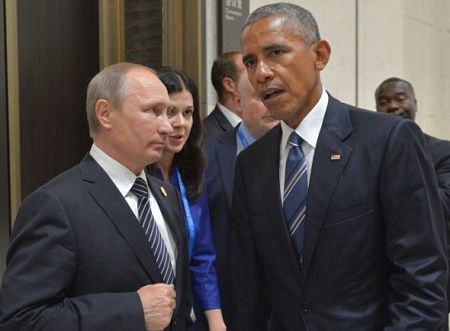
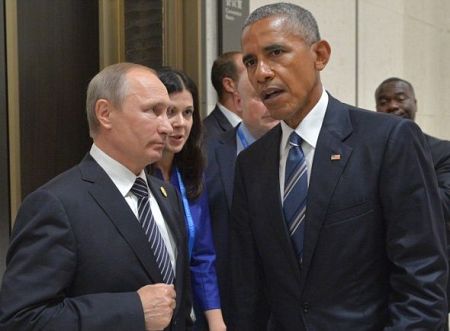
The Syrian cease-fire agreement that US Secretary of State John Kerry and Russian Foreign Minister Sergey Lavrov announced Friday night, September 9, in Geneva hands Syrian affairs over to Russia’s President Vladimir Putin and the country’s military.

The accord marked a sharp reversal for Washington. In his meeting with Putin in China last week, US President Barack Obama did not agree to those steps for the simple reason that such an agreement would be in line with the policy and stance of Republican presidential nominee Donald Trump, not those of the Democratic nominee Hillary Clinton.

Trump suggested several months ago that the US should let Putin finish the war in Syria, asserting that the Russian leader would be able to do it better.

Under the current situation it is no wonder that Kerry and Lavrov agreed not to release the details of the agreement.

Publication of the details would reveal that the rebels in the Aleppo area, and perhaps in all of Syria, have been abandoned.

The Syrian rebels now find themselves trapped by both the Russian-Turkish agreement and the Russian-US agreement, with a noose seemingly closing around them.

Meanwhile, on Friday, DEBKAfile released the following report:

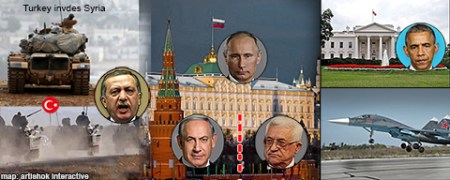
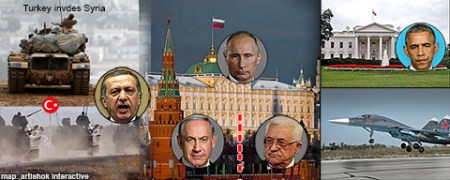
The fledgling “initiatives” reverberating this week in Washington, Moscow, Ankara, Jerusalem and the G20 summit were nothing but distractions from the quiet deals struck by two lead players, Russia and Turkey to seize control of the region’s affairs. Recep Tayyip Erdogan knew nothing would come of his offer on the G20 sidelines to US President Barack Obama to team up for a joint operation to evict ISIS from Raqqa. And, although Moscow was keen on hosting the first handshake in almost a decade between Israeli Prime Minister Binyamin Netanyahu and the Palestinian leader Mahmoud Abbas (Abu Mazen), neither were known to be ready for the last step toward a meeting.

But the game-changing events to watch out for took place in Hangzhou without fanfare – namely, the Obama-Putin talks and the far more fruitful encounter between Putin and Erdogan.

According to DEBKAfile’s intelligence and Mid East sources, Putin virtually shut the door on further cooperation with the United States in Syria. He highhandedly informed Obama that he now holds all the high cards for controlling the Syrian conflict, whereas Washington was just about out of the game.

Putin picked up the last cards, our sources disclose, in a secret deal with Erdogan for Russian-Turkish collaboration in charting the next steps in the Middle East.

The G20 therefore, instead of promoting new US-Russian understanding, gave the impetus to a new Russian-Turkish partnership.

Erdogan raked in instant winnings: Before he left China, he had pocketed Putin’s nod to grab a nice, 4,000-sq.km slice of northern Syria, as a “security zone” under the control of the Turkish army and air force, with Russian non-interference guaranteed.

This Turkish zone would include the Syrian towns of Jarablus, Manjib, Azaz and Al-Bab.

Ankara would reciprocate by withdrawing its support from the pro-US and pro-Saudi rebel groups fighting the Assad army and its allies in the area north of Aleppo.

Turkey’s concession gave Putin a selling-point to buy the Syrian ruler assent to Erdogan’s project. Ankara’s selling-point to the West was that the planned security zone would provide a safe haven for Syrian refugees and draw off some of the outflow perturbing Europe.

kremlinwhitehouse480-1

It now turns out that, just as the Americans sold the Syrian Kurds down the river to Turkey (when Vice President Joe Biden last month ordered them to withdraw from their lands to the eastern bank of the Euphrates River or lose US support), so too are the Turks now dropping the Syrian rebels they supported in the mud by re-branding them as “terrorists.”

The head of this NATO nation has moreover gone behind America’s back for a deal with the Russian ruler on how to proceed with the next steps of the Syrian conflict.

Therefore, when US Secretary of State John Kerry met Russian Foreign Minister Sergei Lavrov in Geneva Thursday and Friday, Sept. 8-9, for their sixth and seventh abortive sit-downs on the Syrian issue, there was not much left for them to discuss, aside from continuing to coordinate their air traffic over Syria and the eastern Mediterranean.

Washington and Moscow are alike fearful of an accidental collision in the sky in the current inflammable state of relations between the two powers.

As a gesture of warning, a Russian SU-25 fighter jet Tuesday, Sept 6, intercepted a US Navy P8 plane flying on an international route over the Black Sea. When the Russian jet came as close as 12 feet, the US pilots sent out emergency signals – in vain, because the Russian plane’s transponder was switched off. The American plane ended up changing course.

Amid these anomalies, Moscow pressed ahead with preparations to set up a meeting between the Israeli and Palestinian leaders, as the Russian Foreign Ministry announced Thursday.

Putin is keen to succeed where the Obama administration failed. John Kerry abandoned his last effort at peacemaking as a flop two years ago.  But it is hard to see Netanyahu or Abu Mazen rushing to play along with the Russian leader’s plan to demean the US president in the last months of his tenure – especially when no one can tell who will win the November 8 presidential election – Hillary Clinton or Donald Trump – or what policies either will pursue.

All the region’s actors will no doubt be watching closely to see how Turkey’s “Russian track” plays out and how long the inveterate opportunists can hang together.

Putin-Erdogan deal for Syria is ME exit for Obama

September 9, 2016

Putin-Erdogan deal for Syria is ME exit for Obama, DEBKAfile, September 9, 2016

putin_obama_g-20_china

The fledgling “initiatives” reverberating this week in Washington, Moscow, Ankara, Jerusalem and the G20 summit were nothing but distractions from the quiet deals struck by two lead players, Russia and Turkey to seize control of the region’s affairs. Recep Tayyip Erdogan knew nothing would come of his offer on the G20 sidelines to US President Barack Obama to team up for a joint operation to evict ISIS from Raqqa. And, although Moscow was keen on hosting the first handshake in almost a decade between Israeli Prime Minister Binyamin Netanyahu and the Palestinian leader Mahmoud Abbas (Abu Mazen), neither were known to be ready for the last step toward a meeting.

But the game-changing events to watch out for took place in Hangzhou without fanfare – namely, the Obama-Putin talks and the far more fruitful encounter between Putin and Erdogan.

According to DEBKAfile’s intelligence and Mid East sources, Putin virtually shut the door on further cooperation with the United States in Syria. He highhandedly informed Obama that he now holds all the high cards for controlling the Syrian conflict, whereas Washington was just about out of the game.

Putin picked up the last cards, our sources disclose, in a secret deal with Erdogan for Russian-Turkish collaboration in charting the next steps in the Middle East.

The G20 therefore, instead of promoting new US-Russian understanding, gave the impetus to a new Russian-Turkish partnership.

Erdogan raked in instant winnings: Before he left China, he had pocketed Putin’s nod to grab a nice, 4,000-sq.km slice of northern Syria, as a “security zone” under the control of the Turkish army and air force, with Russian non-interference guaranteed.

This Turkish zone would include the Syrian towns of Jarablus, Manjib, Azaz and Al-Bab.

Ankara would reciprocate by withdrawing its support from the pro-US and pro-Saudi rebel groups fighting the Assad army and its allies in the area north of Aleppo.

Turkey’s concession gave Putin a selling-point to buy the Syrian ruler assent to Erdogan’s project. Ankara’s selling-point to the West was that the planned security zone would provide a safe haven for Syrian refugees and draw off some of the outflow perturbing Europe.

kremlinwhitehouse480

It now turns out that, just as the Americans sold the Syrian Kurds down the river to Turkey (when Vice President Joe Biden last month ordered them to withdraw from their lands to the eastern bank of the Euphrates River or lose US support), so too are the Turks now dropping the Syrian rebels they supported in the mud by re-branding them as “terrorists.”

The head of this NATO nation has moreover gone behind America’s back for a deal with the Russian ruler on how to proceed with the next steps of the Syrian conflict.

Therefore, when US Secretary of State John Kerry met Russian Foreign Minister Sergei Lavrov in Geneva Thursday and Friday, Sept. 8-9, for their sixth and seventh abortive sit-downs on the Syrian issue, there was not much left for them to discuss, aside from continuing to coordinate their air traffic over Syria and the eastern Mediterranean.

Washington and Moscow are alike fearful of an accidental collision in the sky in the current inflammable state of relations between the two powers.

As a gesture of warning, a Russian SU-25 fighter jet Tuesday, Sept 6, intercepted a US Navy P8 plane flying on an international route over the Black Sea. When the Russian jet came as close as 12 feet, the US pilots sent out emergency signals – in vain, because the Russian plane’s transponder was switched off. The American plane ended up changing course.

Amid these anomalies, Moscow pressed ahead with preparations to set up a meeting between the Israeli and Palestinian leaders, as the Russian Foreign Ministry announced Thursday.

Putin is keen to succeed where the Obama administration failed. John Kerry abandoned his last effort at peacemaking as a flop two years ago.  But it is hard to see Netanyahu or Abu Mazen rushing to play along with the Russian leader’s plan to demean the US president in the last months of his tenure – especially when no one can tell who will win the November 8 presidential election – Hillary Clinton or Donald Trump – or what policies either will pursue.

All the region’s actors will no doubt be watching closely to see how Turkey’s “Russian track” plays out and how long the inveterate opportunists can hang together.

Canny Trump already negotiating with Russia

September 9, 2016

Canny Trump already negotiating with Russia, Washington Times

As a former military officer, I learned decades ago that when taking command of new unit, an officer has to be a strict disciplinarian. Rules have to be enforced and your subordinates need to respect and understand you are a determined person who takes your oath of office seriously. In reality, these first few months are a negotiation with your troops. First impressions count, they set the stage for your entire command.

Anyone who has followed this 2016 election cycle should know that Donald Trump is always negotiating. When the GOP nominee was talking about preventing Muslims from coming into the country “until we can figure out what is going on,” he was laying out a hard-line negotiating position that could be softened down the road if need be.

When he talks of deporting 12 million illegal immigrants, he is doing the same thing. Now amid hints of possibly softening that stand, he is seen as moderating and appeals to a larger swath of the electorate. I believe Mr. Trump will do the right thing for America when it comes to immigration, but the point is a negotiator starts negotiating long before the media spotlight highlights the actual bargaining begins.

I think Mr. Trump is doing the same thing with Russian President Vladimir Putin. He is laying the groundwork for what he believes will be future success dealing with Moscow. Mr. Trump has spent time in Russia. He has done business with Russians. He understands how they think. He understands they respect strength, not weakness. He understands they also want to be respected. Mr. Trump’s comments complimenting Mr. Putin as a strong leader “in a different system” are stroking the Russian president’s ego at a time when it will do the most good. The liberal media have freaked out because Mr. Trump refuses to follow the Obama administration line on Russia, but all he is doing is speaking nicely while carrying a big stick.

Mr. Putin has spent a lot of energy recasting the United States as Russia’s No. 1 enemy. Think about it — now that Mr. Trump is very popular among the Russian population, which for the most part yearns for peace just as Americans do, it will be more difficult for the Kremlin to cast America as an existential threat to the Motherland when Mr. Trump is in the White House.

Russians have a 1,000-year-old paranoia regarding the West. They have a deep need to be respected and a desire for prestige. Mr. Trump is playing to those psychological needs. He’s not being naively gushing like George W. Bush, or incompetently appeasing the Russians as Hillary Clinton and President Obama have repeatedly done. He is not narcissistically demeaning Russia is a third-rate power that doesn’t make anything, as our president has insinuated. He’s not making fun of Mr. Putin’s slouch. He is treating the Russian president as a leader worthy of respect, while at the same time looking out for the best interests of the United States.

Mr. Trump has not said he will surrender Western principles or values in the face of future Russian aggression. On the contrary, he wants to rebuild the U.S. military “so that no one will dare mess with us.” That has to give the Kremlin and the oligarchs pause. In the long run, rebuilding our hard and soft power at home will do more to enhance our national security than making promises we can’t or won’t keep. Our government owes $20 trillion, for heaven’s sake.

Mr. Trump’s comments on NATO members paying their fair share for defense are also spot on. The truth is that we do not have an alliance if all the other countries rely on the American nuclear umbrella while attacking our companies for monopolistic practices and tax violations in their own courts. Oh, the hypocrisy!

Russia belongs at the geopolitical table as a great power. Its history demands that. Mr. Trump is certainly aware of this and, by publicly acknowledging the fact, has cleverly already put down the opening marker in his negotiations with Mr. Putin. Mr. Trump’s not being what Lenin once called a “useful idiot” for Russia. He’s simply working the art of the deal.

What’s the Plan for Winning the War?

August 25, 2016

What’s the Plan for Winning the War?, Counter Jihad, August 25, 2016

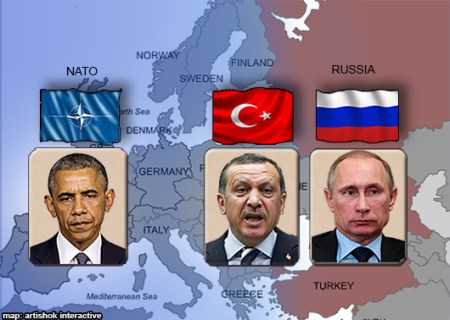
Who is even thinking about how to win the war?  Will the legacy of the Obama administration be a shattered NATO, a Turkey drawn into Russia’s orbit, an Iranian hegemony over the northern Middle East, and a resurgent Russia?  It certainly looks to be shaping up that way.  Russia is playing chess while the US is playing whack-a-mole.  The absence of a coherent governing strategy is glaring.

**********************

Michael Ledeen makes a clever observation:

Everyone’s talking about “ransom,” but it’s virtually impossible to find anyone who’s trying to figure out how to win the world war we’re facing.  The two keystones of the enemy alliance are Iran and Russia, and the Obama administration, as always, has no will to resist their sorties, whether the Russians’ menacing moves against Ukraine, or the Iranians’ moves against us.

The moves are on the chessboard, sometimes kinetic and sometimes psychological warfare.  Like a chess game, we are in the early stages in which maneuver establishes the array of forces that will govern the rest of the game.  Russia’s deployment of air and naval forces to Syria stole a march on the Obama administration.  Its swaying of Turkey, which last year was downing Russian aircraft, is stealing another.  Its deployment of bombers and advanced strike aircraft to Iran is another.  That last appears to be in a state of renegotiation, as Ledeen notes, but that too is probably for show.  The Iranians have too much to gain in terms of security for their nuclear program, at least until they’ve had time to build their own air force.

Iran is making strategic moves as well.  Ledeen notes the “Shi’ite Freedom Army,” a kind of Iranian Foreign Legion that intends to field five divisions of between twenty and twenty-five thousand men each.  Overall command will belong to Quds Force commander Qassem Suliemani, currently a major figure in the assault on Mosul, having recovered from his injury in Syria commanding Iranian-backed militia in the war there.  The fact of his freedom of movement is itself a Russian-Iranian demonstration that they will not be governed by international law:  Suliemani is under international travel bans for his assassination plot against world diplomats, but was received in Moscow and now travels freely throughout the northern Middle East.

Turkey, meanwhile, has been effectively cut off by Iran’s and Russia’s success in the opening game of this global chess match.  As late as the Ottoman Empire, the Turks looked south through Iran and Iraq to power bases as far away as Arabia.  Now the Ayatollahs are going to control a crescent of territory from Afghanistan’s borders to the Levant, leaving the Turks locked out.  One might have expected the Turks to respond by doubling their sense of connection to Europe and NATO.  Instead, the purge following the alleged coup attempt is cementing an Islamist control that leaves the Turks looking toward a world from which they are largely separated by the power of this new Russian-Iranian alliance.  The Turks seem to be drifting toward joining that alliance because being a part of that alliance will preserve their ties to the Islamic world.

For now, the Obama administration seems blind to the fact that these moves are closing off America’s position in the Middle East.  This is not a new policy.  Eli Lake reports that the Obama administration told the CIA to sever its ties to Iranian opposition groups in order to avoid giving aid to the Green revolution.  Their negotiation of last year’s disastrous “Iran deal” has led to Iran testing new ballistic missiles and receiving major arms shipments from Russia.  Yet while all these moves keep being made around them, the Obama administration proceeds as if this were still just an attempt to crush the Islamic State (ISIS).  The commander of the XVIIIth Airborne Corps has been given a task that amounts to helping the Iranians win.  Our incoherent policy has left us on both sides in Syria.  Our only real ally in the conflict, the Kurds, stand abandoned by America.

Who is even thinking about how to win the war?  Will the legacy of the Obama administration be a shattered NATO, a Turkey drawn into Russia’s orbit, an Iranian hegemony over the northern Middle East, and a resurgent Russia?  It certainly looks to be shaping up that way.  Russia is playing chess while the US is playing whack-a-mole.  The absence of a coherent governing strategy is glaring.

Putin said willing to host Israeli-Palestinian peace talks

August 22, 2016

Putin said willing to host Israeli-Palestinian peace talks Comments by Egypt’s president el-Sissi made to newspaper editors after Israeli delegation arrives in Cairo to discuss peace push

By Times of Israel staff August 22, 2016, 1:39 am

Source: Putin said willing to host Israeli-Palestinian peace talks | The Times of Israel

Russian President Vladimir Putin welcomes Prime Minister Benjamin Netanyahu at the start of a meeting at the Kremlin on June 7, 2016 (screen capture: Facebook)

Amid speculation over a developing Egyptian bid to revive stalled Israeli-Palestinian peace negotiations, Egypt’s President Abdel-Fattah el-Sissi said late Sunday that Russian President Vladimir Putin was willing to host Israeli and Palestinian leaders for direct talks.

In a briefing with newspaper editors in Cairo, Sissi said Israel is increasingly convinced of the need for achieving peace with the Palestinians, according to media reports in Israel and Egypt.

 No peace process could be successful, he told the journalists, without reconciliation between Fatah and Hamas.

He also said Israeli-Palestinian peace, which could enable further burgeoning of Israeli-Arab alliances generally, is the key to regional stability, a sentiment that echoed comments heard in recent months from Jordan’s King Abdullah and other Sunni Arab leaders.

Sissi’s comments follow meetings earlier Sunday between an Israeli delegation in Cairo and Egyptian officials on the Egyptian president’s proposal to revive the peace process.

Israeli officials were scheduled to meet their Egyptian counterparts on Palestinian peace talks, as well as other matters related to the two countries, the Germany news agency DPA reported.

The talks were said to last several hours, according to the report by the Germany agency.

Last week, Palestinian Authority President Mahmoud Abbas reportedly informed Egypt he is no longer opposed to participating in a regional or international peace summit in Cairo.

According to a report on Israel Radio on Friday, the Palestinian leader told an Egyptian delegation in Ramallah that he was willing to attend such a conference, but stressed that the Egyptian peace push would not replace the French initiative to revive talks, which the Palestinians have favored but Israel has strongly opposes.

The PA president also reportedly asked that France, Russia and Switzerland attend the summit.

Abbas urged Egypt to press Prime Minister Benjamin Netanyahu to freeze settlement construction and release Palestinian prisoners ahead of a meeting between the two leaders in Egypt, the report said, but Cairo’s position on the proposed preconditions was not immediately clear.

In July, Palestinian leaders presented several preconditions for participating in a trilateral Israeli-Egyptian-Palestinian peace summit in Cairo, including a freeze on Israeli settlement construction, a Palestinian official told The Times of Israel. Abbas also demanded that Israel acquiesce to negotiations based on the pre-1967 lines and pledge ahead of time to implement any agreements reached in the talks.

Netanyahu in July reportedly told Egyptian Foreign Minister Sameh Shoukry — on a rare visit to Jerusalem — he would be willing to meet with Abbas in Cairo for talks hosted by Sissi. The Prime Minister’s Office did not deny the report by the Saudi-owned, pan-Arab news outlet Al-Arabiya. It said in a statement that “whether the issue was discussed or not, Israel has always said it is prepared to conduct direct bilateral negotiations with no preconditions.”

Prime Minister Benjamin Netanyahu meets with Egypt's Foreign Minister Sameh Shoukry at the Prime Minister's Office in Jerusalem on Sunday, July 10, 2016 (Hadas Parush/Flash90)

Prime Minister Benjamin Netanyahu, right, meets with Egypt’s Foreign Minister Sameh Shoukry at the Prime Minister’s Office in Jerusalem on Sunday, July 10, 2016 (Hadas Parush/Flash90)

Sissi reportedly offered to host direct talks between the sides as part of Cairo’s initiative to kick-start the moribund peace process.

Shoukry’s visit to Israel was the first by an Egyptian foreign minister since 2007. The visit came amid speculation over the renewal of an Arab peace initiative and as Israel’s military recently saluted “unprecedented” intelligence cooperation with Egypt to combat the Islamic State group.

Egyptian President Abdel-Fattah el-Sissi, speaks at the United Nations Sustainable Development Summit in New York, September 25, 2015. (AFP Photo/Dominick Reuter)

Egyptian President Abdel-Fattah el-Sissi, speaks at the United Nations Sustainable Development Summit in New York, September 25, 2015. (AFP Photo/Dominick Reuter)

According to Israel’s Channel 2 television, Shoukry’s surprise visit was also aimed at arranging a first meeting between Netanyahu and Sissi in Egypt in the coming months.

The TV report said Shoukry’s first visit to Israel was coordinated between Egypt and Saudi Arabia, whose Arab Peace Initiative is backed by Sissi and much of the Arab world as the basis of any regional peace effort. Netanyahu has rejected the initiative in its current form, but said in late May that it “contains positive elements that could help revive constructive negotiations with the Palestinians.”

Krauthammer’s Take: Putin Ready to Move, “Sees Weakness in the White House”

August 13, 2016

Krauthammer’s Take: Putin Ready to Move, “Sees Weakness in the White House”, Fox News via YouTube, August 13, 2016

(Please see also, Europe’s armies are dysfunctional. –DM)

https://www.youtube.com/watch?v=3YhMv8qc8Ro

Putin-Erdogan deal deadlocks Aleppo, Manjib frays

August 13, 2016

Putin-Erdogan deal deadlocks Aleppo, Manjib frays. DEBKAfile, August 13, 2016

n syria flashpoints

This hopeless standoff is the result of Moscow’s refusal to provide the Syrian army and its allies with enough air support to pull ahead, in the wake of President Vladimir Putin talks with Turkish President Reccep Tayyip Erdogan in St. Petersburg Tuesday, Aug. 9.

*********************

All day Friday and Saturday, Aug.11-12, fighters of Hizballah’s elite Radwan Force – 3,000 in all – streamed to the pivotal Aleppo battlefield from all parts of Lebanon and Syria. DEBKAfile’s military and intelligence sources disclose that they were following the orders of their leader Hassan Nasrallah, who was warned by Tehran that the pro-Assad army fighting for Syria’s second city was flagging in the face of rebel assaults.

The Radwan Force was called in as the only military capable of saving the day for Assad and his allies. This step had been carefully avoided by Nasrallah was required in view of the heavy losses his organization had already suffered for backing the Syrian army – some 1,500 dead in three years – and intense fallout at home.

He has now been forced to sacrifice his last remaining military asset to fight in one of the bloodiest battles ever fought in recent times in the Middle East, even though it promises a swelling procession of Hizballah coffins returning to Lebanon.

According to our military sources, the battle to wrest Aleppo from rebel control, now in its second month, has claimed some 2,000 war dead and 4,000 injured on both sides – not counting the masses of civilians.

Some units have lost more than a quarter of their combatants and dropped out.

Nasrallah knows exactly what is happening in this critical arena. He also understands that a unit which loses 30 percent of its combatants is deemed in military terms unfit to continue fighting and that the battle for Aleppo will be drawn out and bloody. Yet he is willing to commit his entire deck of military resources to keep Bashar Assad’s fighting in Aleppo.

There is no hope of an early resolution in Aleppo, because stalemate between the combatants is exceptionally complicated and thankless. Whenever one side captures terrain, it quickly discovers it was drawn into a trap and under siege.

This hopeless standoff is the result of Moscow’s refusal to provide the Syrian army and its allies with enough air support to pull ahead, in the wake of President Vladimir Putin talks with Turkish President Reccep Tayyip Erdogan in St. Petersburg Tuesday, Aug. 9.

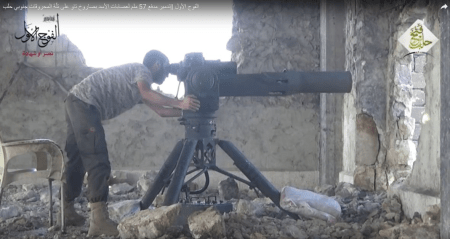
Aleppo_Rebels_ATGM-firings

Erdogan explained that if Assad’s army, along with Hizballah and Iran, defeated the Turkish-backed rebel forces holding Aleppo, he would suffer a serious knock to his prestige and setback for Syrian policy. This was more than he could sustain in the troubled atmosphere in Turkey in the wake of the failed coup against him.

He therefore asked the Russian president to abandon his Bashar Assad, Iran and Hizballah to their fate in Aleppo.

Erdogan was backed up in his request to Putin by a large Turkish military and intelligence delegation which arrived in St. Petersburg the next day to work with their Russian counterparts on setting up a joint military control center in Turkey.

DEBKAfile’s sources disclose the first two tasks assigned the new war room:

1. Russian aerial bombardments over Aleppo would not go beyond keeping the rebels from defeating Syrian and allied forces in Aleppo, but would refrain from supporting offensive action by the latter for routing the former.

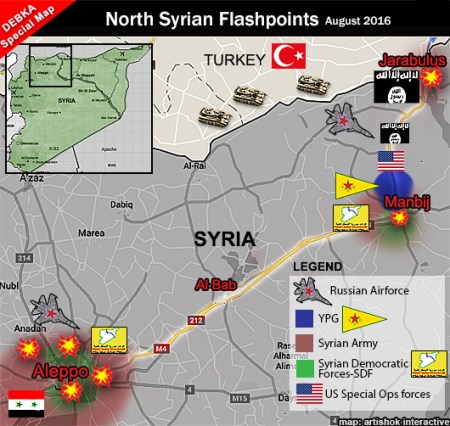
2. Turkish air and ground forces would remain in a state of preparedness to ensure that rebel Syrian Democratic Forces (SDF) and the Kurdish YPG militia never moved out of the town of Manjib, from most parts of which they ousted ISIS, to the town of Jarabulus on the Turkish border.I

ISIS had used Manjib as its primary way station for supplies from Turkey 30km to the north. (See attached map). But to drive the jihadists completely out of the Syrian-Turkish border region, the combined rebel forcesmust advance on Jarabulus and expel ISIS from there too.

However, Turkish officers in the joint command center with Russia made it clear that any Kurdish forces allowed to reach that border would come under Turkish army attack.

The Russian president complied with Erdogan’s wishes on the Manjib-Jarabulus front as well as Alepp

Israel’s let-down: Putin-Erdogan hook-up with Iran

August 9, 2016

Israel’s let-down: Putin-Erdogan hook-up with Iran, DEBKAfile, August 9, 2016

2 (1)

The talks between Presidents Vladimir Putin and Reccep Erdogen in St. Petersburg scheduled for Tuesday, Aug. 9, are causing trepidation among Israel’s policy-makers and military leaders. Their summit takes place on the sidelines of the G-20 summit, concluding nine months of hostility between the two capitals that was sparked by Turkish jets shooting down a Russian SU-24 warplane over the Syrian border on Nov. 24, 2015.

The feud was put to rest on July 17 – two days after Erdogan suppressed the attempted military coup against his rule. The Turkish ruler decided there and then to exploit the episode to expand his strength and use it not only for a massive settling of accounts with his critics, but also as a springboard for parlaying his reconciliation with Moscow for a strategic pact with Russia.

Israel, the worry is that while turning his back on the United States and NATO, Eerdogan will go all the way to bond with Russia to which Iran is also attached as a partner. Indeed, Erdogan has scheduled a trip to Tehran and a meeting with President Hassan Rouhani a few days after his talks with Putin.

The Turkish president’s latest moves look like spawning another new Middle East bloc that would consist of Turkey, Russia, Iran, Iraq, Syria and indirectly the Lebanese Hizballah terrorist group.

This prospect would upend Israel’s key policies for Turkey and Syria.

The Israeli détente with Ankara in recent months hinged on Turkey’s continuing to maintain its close military and intelligence ties with the United States and its integration in an anti-Iran Sunni alliance in partnership with Saudi Arabia, Egypt, the United Arab Emirates and Jordan.

But the Putin-Erdogan meeting Tuesday threatens to throw American, Israeli and moderate Arab rulers’ plans to the four winds. Turkey appears to have opted to line up with a Russian-Shiite front led by Tehran in preference to an anti-Iran Sunni alliance.

Therefore, the expanded military and intelligence cooperation which the Israeli-Turkish rapprochement was to have heralded will be low key at best for two reasons:

1. Israel will beware of sharing its military technology with Turkey lest it find its way to Iran. During the talks with Ankara for patching up their quarrel Israel was constantly on the lookout for indications that Turkey was prepared to break off its ties with Iran.

2. For the sake of keeping Iran and Hizballah away from its borders, Israel entered into arrangements with Russia, some of them never published, at the start of Moscow’s military intervention in Syria last September. Those arrangements included coordination of their air force operations over Syria.

Now, Israel finds itself suddenly up against a Russian-Turkish partnership aimed at strengthening Iranian domination of Syria – the exact reverse of the Netanyahu government’s objective in resolving its dispute with Ankara and forging deals with Moscow.