Posted tagged ‘President Trump’

White House to End Defense Sequester, Boost Military’s Cyber Capabilities

January 23, 2017

White House to End Defense Sequester, Boost Military’s Cyber Capabilities, Washington Free Beacon, January 23, 2017

(Now that we have a President who will use the military to the nation’s benefit, it needs additional resources. There is no truth to any rumor that Hillary Clinton will be hired as a cyber security expert.– DM)

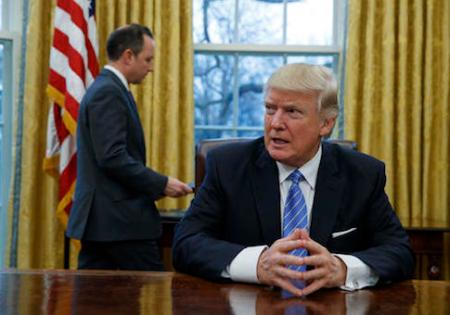
President Donald Trump sits at his desk as he waits for White House Chief of Staff Reince Priebus, left, to deliver three executive orders for his signature, Monday, Jan. 23, 2017, in the Oval Office of the White House in Washington. (AP Photo/Evan Vucci)

President Donald Trump sits at his desk as he waits for White House Chief of Staff Reince Priebus, left, to deliver three executive orders for his signature, Monday, Jan. 23, 2017, in the Oval Office of the White House in Washington. (AP Photo/Evan Vucci)

Donald Trump’s administration will end the defense sequester and direct U.S. military leaders to develop defensive and offensive cyber capabilities to bolster the armed forces.

The military budget, missile defense, and cyber defense are priorities for the new White House, according to a statement on its website laying out Trump’s plan to “make our military strong again.”

Military leaders have spotlighted how reductions in defense spending have compromised the future military readiness of the joint force. In congressional testimony last fall, service leaders disclosed that their forces would not be able to defend the United States against current and future threats if sequestration continued.

According to the White House, Trump plans to end the defense sequester and send a new budget to Congress outlining his plan to rebuild the military. It is unclear how much defense spending Trump will propose, but the White House said he will commit to providing military leaders “with the means to plan for our future defense needs.” The Pentagon operates on a roughly $600 billion annual budget.

The Budget Control Act of 2011 implemented a package of automatic spending cuts to defense and discretionary domestic spending. The cuts, designed to take place over a decade, are expected to erode defense spending by roughly $1 trillion.

Some Republican members of Congress have been vocal about the need to reverse cuts that have squeezed the defense budget, as well as force drawdowns authorized during the Obama administration. Sen. John McCain (R., Ariz.), who chairs the Senate Armed Services Committee, unveiled a plan last week that would boost national defense spending by $430 billion over five years, repeal the Budget Control Act, and increase the services’ force levels.

Defense Secretary James Mattis, who was confirmed by the Senate to lead the Pentagon on Friday, will be responsible for plans to bolster the military. Mattis underscored his commitment to ending the defense sequester during his confirmation hearing earlier this month, saying the military could not deter potential adversaries like Russia and China at present.

The Trump administration also plans to develop a “state-of-the-art missile defense system” to protect against missile threats from Iran and North Korea, given their development of ballistic missiles and nuclear weapons.

The United States last year deployed a missile defense system in Romania to protect NATO allies against missile threats from Iran and other rogue states. It plans to deploy the advanced THAAD anti-missile system to South Korea as soon as possible. Both Russia and China regard the U.S. missile defense shield as a threat, and have agreed to work on countermeasures against U.S. anti-missile technology.

Trump also intends to make cyber defense a priority of the U.S. military, according to the White House. Cyber attacks have become a source of serious concern among congressional lawmakers and the media as a result of the intelligence community’s conclusions about the Russian government’s hacking campaign aimed at the U.S. presidential election.

The intelligence community concluded in an unclassified report released this month that Russia used cyber attacks and disinformation to undermine the election and damage Democratic nominee Hillary Clinton.

“Cyberwarfare is an emerging battlefield, and we must take every measure to safeguard our national security secrets and systems,” the White House website states. “We will make it a priority to develop defensive and offensive cyber capabilities at our U.S. Cyber Command, and recruit the best and brightest Americans to serve in this crucial area.”

The Pentagon’s inspector general concluded at the end of last year that the department faces significant challenges in cyber security after it uncovered a “wide range of cyber security weaknesses” in Defense Department systems during fiscal year 2016.

Trump, who has sharply criticized the intelligence community’s conclusions about Russia, has already said he will appoint a team to develop a strategy to combat cyber attacks within 90 days of taking office.

President Of The Pro-Kremlin Think Tank RIAC: ‘The Process Of ‘Perestroika’ Induced By The New Global Balance Of Power… Will Probably Stretch Far Beyond Trump’s Presidency’

January 23, 2017

President Of The Pro-Kremlin Think Tank RIAC: ‘The Process Of ‘Perestroika’ Induced By The New Global Balance Of Power… Will Probably Stretch Far Beyond Trump’s Presidency’, MEMRI, January 23, 2017

A common assessment made by the Russian media is that with the advent of a Donald Trump presidency, a new “perestroika” has begun. Igor Ivanov, president of the pro-Kremlin think tank Russian International Affairs Council (RIAC) and formerly Russia’s Minister of Foreign Affairs (1998–2004), believes that this “perestroika” (i.e. reconstruction) process was induced by the “new global balance of power” and finds its representative in Trump. This process like Gorbachev’s “perestroika” is now out of the bag, unlikely to be “quick and easy”, and “will probably stretch far beyond Trump’s presidency”. A Trump-lead “perestroika” in the West by Trump will compel Washington “to take a fresh look at the role the United States plays in global affairs, the parameters of the country’s leadership, and the idea of American exceptionalism as such”.

As for Russia-U.S. relations, Ivanov predicts that under no circumstances will today’s international relations return to the “bipolar model of the second half of the 20th century”. Nevertheless the establishment of ground rules is a must irrespective of whether bilateral relations are head for rivalry or more hopefully partnership. However, he believes that “even limited success in this area would undoubtedly have a great positive impact on the overall situation in the world.”

Below are excerpts of Ivanov’s article, titled “Trump and Russia”, published in RIAC’s website:[1]
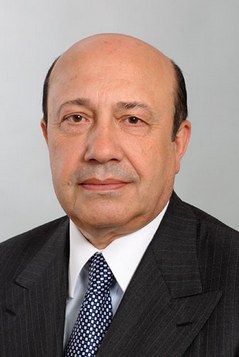
ivanIgor Ivanov (Source: Russiancouncil.ru)

‘Voting For Trump The American People Showed That They Were Tired Of Anti-Russian Propaganda’

“Donald Trump is the 45th president of the United States. How could this happen? Politicians, experts, journalists will long be debating this question. But no matter how analysts assess this event, they all agree that American society and the U.S. political system are experiencing serious, even fundamental shifts. The presidential election held in November, 2016 became the starting point of a new era in the American political and public life development.

“Such a major shift was bound to happen sooner or later. Stagnation cannot go on forever; Russia learned this lesson first hand. The old socio-political system that has existed virtually unchanged in the United States for decades is no longer compatible with the new reality that has developed both in the United States and in the world as a whole. The electoral campaign turned into a fierce battle between those who wanted to preserve the status quo no matter what, and those who made destroying the status quo their goal. The American people opted for change in domestic and foreign policies, sometimes without realizing the exact nature of those changes.

“What will be achieved during Trump’s presidency? Hardly anyone is ready to give a certain answer to this question. Judging by the President-elect’s statements, it appears that in the coming years, we will witness out-of-the-box decisions, some of which may be a success, while others may be quite the opposite. This applies both to domestic politics and economic development in the United States, as well as to the country’s foreign policy.

“Speaking of the long-term foreign policy implications of the Trump ‘revolution,’ it is likely that Washington will be forced to take a fresh look at the role the United States plays in global affairs, the parameters of the country’s leadership, and the idea of American exceptionalism as such. The process of ‘perestroika’ induced by the new global balance of power is unlikely to be quick and easy, and will probably stretch far beyond Trump’s presidency. But, as Mikhail Gorbachev’s favorite phrase goes, ‘the process has started,’ and it will not only affect the United States, but also the global situation as a whole.

“Russia, of course, is mostly interested in the way changes in the United States will affect relations between the two countries. Contrary to common sense, Russia all but became the primary focus of the presidential campaign. The Democrats followed the Cold War stereotypes and attempted to demonize Russia, while Donald Trump, on the other hand, spoke about his willingness to actively cooperate with Russia on a wide range of issues. Only time will tell whether he truly thought so, or whether he was just trying to distance himself and his party from the Democrats. In any case, the Washington hawks failed in their attempts to play the “Russian card.” Voting for Trump the American people showed that they were tired of anti-Russian propaganda and were less and less inclined to see Russia as a source of ‘evil’ threatening the interests of their country.

‘Under No Circumstances Will Today’s International Relations Return To The Bipolar Model Of The Second Half Of The 20th Century’

When we think about the future of Russia–United States relations, we would first need to explain the failure of the ‘reset’ policy announced by Barack Obama during his first presidential term. Both countries pinned significant hopes on this ‘reset’ policy. Eight years ago, many people believed that all the conditions for the ‘reset’ to succeed were there. Indeed, much has been done in terms of cooperation in various spheres, including security. Suffice it to mention the signing in April 2010 of the Measures for the Further Reduction and Limitation of Strategic Offensive Arms (the new START treaty) by presidents Dmitry Medvedev and Barack Obama. Nevertheless, the Obama administration leaves the White House with relations between Russia and the United States at their lowest point since the long since forgotten times of the Cold War.

“We can talk about certain mistakes and miscalculations made by both parties, unreasonably high expectations, and bureaucratic inertia here. All of that is true, but I believe that the ‘reset’ policy’s historical failure occurred due to deeper, systemic reasons. Since the latest détente in relations between Russia and the United States, both parties have focused on resolving important, yet quite specific issues, without paying proper attention to developing and articulating new basic bilateral relations principles that would reflect the strategic interests of both countries. As a result, stand-alone achievements failed to take US–Russia relations to a qualitatively new level and create the necessary margin of safety. This is why the ‘reset’ failed the test of the latest international crises – most notably the crisis in Ukraine.

“Hence the principal lesson for the future: when resolving important issues with the new U.S. administration, Russia should initiate a serious dialogue with regard to the strategic interests of the two countries, yet considering both the existing potential and the objective limits for bilateral cooperation. During my tenure as the Secretary of the Security Council of the Russian Federation, we tried to engage in such work with the George W. Bush administration, but as the United States was not ready for it, we did not achieve any viable results. However, this does not cross out the crucial importance of this task.

“What questions should be made a priority? The main question that both parties have to answer – both to each other and to themselves is: ‘Are Russia and the United States irreconcilable enemies in the world today? Or, given all their possible differences, could they still be partners?’ If the two countries are bound to be enemies, then our key task is to work out and agree on ‘rules of the game’ that would minimize the risks of a direct confrontation between Russia and the United States in the event of a conflict, for such a confrontation would threaten international security. We could turn to the experience of the Cold War, when Moscow and Washington knew very well where the ‘red line’ was located.

“If Russia and the United States are prepared to work together as partners, in the interests of advancing stability, security, and jointly respond to global challenges, then we need to construct effective forms of dialogue at all levels – from the very top down to specific agencies and civil society – so that the relations between the two countries can be open and predictable. Thus, should any differences arise, which is natural for U.S.–Russia relations, we are able to overcome them with mutual respect, without allowing the situation to escalate into a major crisis.

“Creating a multi-layered architecture of bilateral relations in this way would make these relations more stable and create opportunities for a constructive dialogue on key global issues today, which cannot be resolved without the active participation of both Russia and the United States. There is a significant pile of such issues: what the future world order should look like; how to restore manageability of international affairs; how to fight terrorism and the threat of weapons of mass destruction proliferation; what to do about the increasing number of regional conflicts; etc. Being permanent members of the UN Security Council, Russia and the United States bear special responsibility for these problems’ resolution, and they have a lot of potential to do just that.

“Clearly, even the most productive relations between Russia and the United States are not able to solve all the global issues. Under no circumstances will today’s international relations return to the bipolar model of the second half of the 20th century. Yet even limited success in this area would undoubtedly have a great positive impact on the overall situation in the world.”

[1] Russiancouncil.ru, January 20, 2017.
An Instant thaw of U.S.-Israeli Relations

January 23, 2017

An Instant thaw of U.S.-Israeli Relations, Power LinePaul Mirengoff, January 22, 2017

The Democratic Party and its media pals notwithstanding, it looks like Trump has correctly identified which nations are our friends and which are not. Our friends are the ones whose leaders he’s talking to and setting up meetings with right out of the gate.

It was Barack Obama who struggled to identify our friends. Or maybe, Groucho Marx style, he couldn’t form a bond with any nation that had a high regard for ours.

*****************************

President Trump is fond of saying of almost any problem he identifies “this stops right now.” Unfortunately, many of the problems in question are not so tractable.

But there’s one problem Trump has stopped already — the bad blood between the U.S. and its great ally Israel.

The Washington Post reports that the president talked by phone today with Israel’s prime minister Benjamin Netanyahu. Trump described the conversation as “very nice.” Netanyahu’s office called it “very warm.”

According to the White House, Trump and Netanyahu agreed to consult closely on regional issues, “including the threats posed by Iran.” Trump emphasized the close relationship between the two countries, promised to work toward Israeli-Palestinian peace, and stressed that countering the Islamic State and other radical Islamic terrorist groups will be an administration priority.

Netanyahu expressed his desire to work closely with the Trump administration so that there is “no daylight between” the two countries.

In addition, Trump invited Netanyahu to visit him at the White House in early February. We can be confident that Netanyahu won’t have to cool his heels in a conference room while the president has dinner with his family, as he did when Barack Obama had him at the White House.

Netanyahu won’t be the first foreign leader to meet with Trump. That honor will go to Theresa May, the prime minister of Great Britain. This is as it should be. Like Israel, Britain is a special ally. Unlike Israel, it needs our immediate help on a trade deal as a result of Brexit.

Trump will also have early meetings with Canada’s Justin Trudeau and Mexico’s Enrique Peña Nieto. He spoke with both by phone on Saturday. These talks will pertain to renegotiating NAFTA and, particularly in the case of Mexico, immigration and border security.

This is a president who appears to have his foreign policy priorities straight.

What about Russia? According to the Post, Trump hasn’t yet made contact with Vladimir Putin. A meeting appears to be months away. Meanwhile, Kremlin spokesman Dmitry Peskov told the BBC that it would be “a big mistake” to think that U.S.-Russian relations under Trump would be free from controversy.

The Democratic Party and its media pals notwithstanding, it looks like Trump has correctly identified which nations are our friends and which are not. Our friends are the ones whose leaders he’s talking to and setting up meeting with right out of the gate.

It was Barack Obama who struggled to identify our friends. Or maybe, Groucho Marx style, he couldn’t form a bond with any nation that had a high regard for ours.

This stops right now.

Faith Leaders For America Denounce Imam Mohamed Magid; Call On President Trump To Designate Magid’s Terrorist Muslim Brotherhood

January 22, 2017

Faith Leaders For America Denounce Imam Mohamed Magid; Call On President Trump To Designate Magid’s Terrorist Muslim Brotherhood, Center for Security Policy, January 21, 2017

(Who selected Imam Mohamed Magid? Someone in the Trump organization or the religious leaders who organized the event? Somebody screwed up big time.

Here is a video of Magid’s brief appearance. Little was in English and it seemed fairly innocuous. 

— DM)

islamist-imam

Mohamed Magid is the Obama administration’s go-to guy for Muslim outreach and advise on international affairs and counterterrorism. He is a regular visitor to the White House (even when the administration wants to conceal it), attends important administration speeches on the US Middle East policy at the State Department, he counsels the Department of Justice to criminalize defamation of Islam, he entertains the deputy national security adviser at his DC-area mosque, and he serves on the Department of Homeland Security’s Countering Violent Extremism Working Group. He also advises the FBI and many other federal agencies.

He has also been profiled by Time Magazine and the Huffington Post has even dubbed him “America’s Imam“. His ubiquitous presence across the Obama administration undoubtedly makes him the most influential and sought after Muslim authority in the country.

**********************************

Faith Leaders For America Denounce Imam Mohamed Magid; Call On President Trump To Designate Magid’s Terrorist Muslim Brotherhood

Washington, D.C.-  In his inaugural address yesterday, President Donald J. Trump powerfully pledged to “eradicate Radical Islamic Terrorism from the face of the earth.” Today, at the National Prayer Service in Washington, D.C., a prayer was offered by one of its most dangerous practitioners: Imam Mohamed Magid, a top leader of the Muslim Brotherhood in the United States.

Mohamed Magid is the Imam of the All Dulles Area Muslim Society (ADAMS) mosque complex in Northern Virginia, one of the most Sharia-adherent and jihadist in the country.  He was also for two terms, the president of the group that the U.S. government has established in court as a Muslim Brotherhood front, the Islamic Society of North America.  In fact, it is the largest Muslim Brotherhood organization in the country. (A partial dossier of Magid’s jihadist ties, his ominous policy prescriptions and his access to and influence during the Obama administration is below.)

At a National Press Club press conference last Thursday, the newly formed Faith Leaders for America warned that the Muslim Brotherhood is part of a “death cult” of Sharia supremacism and expressed their strong support for Donald Trump’s declared determination to designate it a terrorist organization.

In a joint statement issued on the eve of Mr. Trump’s inauguration, the 75-member multi-faith group of clerics and spiritual leaders told him: “We want you to know you have our prayerful support as you begin to counter jihad and protect Americans from Islamic terrorism. When you label the Muslim Brotherhood a terrorist organization, we support you.”

It is unclear how a top Muslim Brotherhood operative would be allowed to participate in an important public event organized for the new President of the United States.  But Faith Leaders of America urges President Trump to make this the last event in which he is put in such company and that he moves as swiftly as possible to designate the Muslim Brotherhood as what it is: a terrorist organization.

Faith Leaders for America is a dedicated group of clergy and leaders from various faith communities who share a common commitment to freedom—freedom of religion, freedom of speech and the other liberties guaranteed by our Constitution—along with a firm commitment to address the imminent threats to those freedoms.

To interview a representative from Faith Leaders for America, contact Beth Harrison at 610-584-1096, x104, Media@HamiltonStrategies.com, or Deborah Hamilton at 215-815-7716 or 610-584-1096, x102.

###


PARTIAL DOSSIER ON SHARIA-SUPREMACIST MOHAMED MAGID

The David Horowitz Freedom Center reports that:

[Magid was] born in northern Sudan in 1965, Mohamed Magid studied Islam under African Sunni scholars, one of whom was his own father, the Grand Mufti of Sudan. In 1987 Magid immigrated to the United States, where he took college courses in psychology and family counseling, and he taught classes on the Koran at Howard University in Washington, DC.  In 1997 Magid became imam of the All Dulles Area Muslim Society (ADAMS), a mosque located in Sterling, Virginia. Soon thereafter, he became affiliated with the Islamic Society of North America (ISNA), first as its East Zone representative, then as vice president, and finally as president (a post to which he was elected in September 2010).

The Investigative Project on Terrorism finds that:

ISNA has a troubling history, however, and its leadership ranks beyond Mattson include people who date back to the group’s foundation by Muslim Brotherhood members. The organization grew out of the Muslim Students Association (MSA), which also was founded by Brotherhood members. The Brotherhood is an 80-year-old Egyptian movement that seeks to spread Shariah, or Islamic law, far and wide.   Federal prosecutors included ISNA on a list of unindicted co-conspirators in the Hamas-financing prosecution of the Holy Land Foundation for Relief and Development (HLF). ISNA is listed among “individuals/entities who are and/or were members of the US Muslim Brotherhood.” The trial ended with guilty verdicts on 108 counts in November 2008.  Its conferences have featured rhetoric in support of terrorist groups and other radicalism. This continued at the 2009 convention, where panelists expressed extreme anti-Semitism and support for the terrorist group Hizballah.

The Investigative Project on Terrorism also found that:

Another group, the Assembly of Muslim Jurists of America (AMJA), which counts Magid as a member, published an article in 2008 written by Hatem al-Haj, a member of its fatwa committee, giving religious justification for not cooperating with authorities. Al-Haj wrote it was “impermissible” for Muslims to work with the FBI because of the “harm they inflict on Muslims…The AMJA issued a fatwa in August 2011 stating that zakat could be used to “support legitimate Jihad activities.”

As investigative journalist and counter-terrorism expert Patrick Poole reported in PJMedia in 2012, Magid had tremendous access to and influence during the Brotherhood-friendly Obama presidency:

Mohamed Magid is the Obama administration’s go-to guy for Muslim outreach and advise on international affairs and counterterrorism. He is a regular visitor to the White House (even when the administration wants to conceal it), attends important administration speeches on the US Middle East policy at the State Department, he counsels the Department of Justice to criminalize defamation of Islam, he entertains the deputy national security adviser at his DC-area mosque, and he serves on the Department of Homeland Security’s Countering Violent Extremism Working Group. He also advises the FBI and many other federal agencies.

He has also been profiled by Time Magazine and the Huffington Post has even dubbed him “America’s Imam“. His ubiquitous presence across the Obama administration undoubtedly makes him the most influential and sought after Muslim authority in the country.

Former Department of Homeland Security counter-terrorism official Philip Haney told the Senate Judiciary Committee last July that Magid was one of the Muslim Brotherhood-tied individuals that had a key advisory role in the Obama DHS:

…In the Spring of 2010, at least six individuals with known affiliations to MB front groups, including Omar Alomari (MAS and several other MB-linked organizations), Mohamed Magid (ISNA), Mohamed Elibiary (HLF leaders), Dahlia Mogahed (CAIR, ISNA, MAS & MPAC), Nadia Roumani (American Muslim Civic Leadership Institute AMCLI), and Los Angeles Deputy Mayor Arif Alikhan (MPAC & the Islamic Shura Council of Southern California ISCSC), were appointed to the Countering Violent Extremism (CVE) Working Group, which was convened under the authority of the Homeland Security Advisory Council (HSAC).”

Moscow acts to oust Iran from Syria, bombs ISIS

January 21, 2017

Moscow acts to oust Iran from Syria, bombs ISIS, DEBKAfile, January 21, 2017

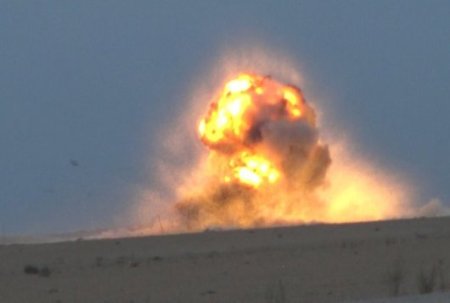
4-3ISIS suicide bombers at Deir ez-Zour

Although Vladimir Putin’s spokesman spoke reservedly Saturday, Jan. 21, about Donald Trump’s inauguration as US president the day before – It would be “an illusion” to expect Russian-US ties to be “free of disagreement” – Moscow’s actions in Syria were clearly designed to meet the new US president more than half way.

Trump in his inauguration speech pledged to wipe radical Islamist terrorism “off the face of the earth.”

His words were still reverberating when Russian long-range Tu-22M3 bombers flying in from bases in Russia smashed Islamic State targets in the eastern Syrian province of Deir ez-Zour the next day. The bombers hit ISIS base camps, weapons stockpiles and armored vehicles, covered overhead by Russian fighter jets from their Syrian air base at Hmeimim. After the sortie, the Tupolev bombers flew home.

DEBKAfile’s military and intelligence sources interpret the heavy Russian bombardment of ISIS as one of several signals Putin is sending out of his willingness to go the extra mile for a common effort with Trump to root ISIS and all its works out of the Middle East.

The Russians stepped in massively when, after holding out for many months of siege and assault at the important provincial town of Deir ez-Zor,, Syrian government forces were about to fold and the town and air base fall to ISIS.

Last Wednesday, Russian transport helicopters flew hundreds of Syrian troops to relieve them: Two brigades from the 15th Infantry Division, belonging to the elite Republic Guard, were lifted out of the northern Qamishli region.  When the Syrian lines were still in danger, the Russian helicopters turned around and flew back with members of the Lebanese Hizballah’s elite Radwan Force, to bolster the Syrian stand and save Deir ez-Zour.

For Putin, the injection of Hizballah into a major Syrian battle came at an awkward moment in terms of his diplomatic strategy on the eve of the Syrian peace conference that opens in Astana, Kazakhstan, Sunday, Jan. 23, under his joint sponsorship with Turkish President Tayyip Erdogan.

The Russian leader had already give his co-sponsor a commitment to initiate a resolution at Astana demanding the withdrawal of all pro-Iranian militias from Syria, including Hizballah. This aimed at pacifying Syrian opposition groups, but was also meant to demonstrate to President Trump that Moscow would be a strong partner in the war on ISIS while also ready to clip Iran’s wings and influence in the affairs of Syria and Lebanon.

At the same time, Russian war strategists appreciate the urgency of averting the fall of Deir ez-our and its air base to the Islamists. This catastrophe would negatively impact the entire campaign against the terrorist organization on its three main fronts, Mosul, Raqqa and Palmyra, and count as ISIS’ biggest victory in the past year.

After Trump Inauguration, Netanyahu Wastes No Time Putting Iran Back on Agenda

January 21, 2017

After Trump Inauguration, Netanyahu Wastes No Time Putting Iran Back on Agenda, Jerusalem PostHerb Keinon, January 21, 2017

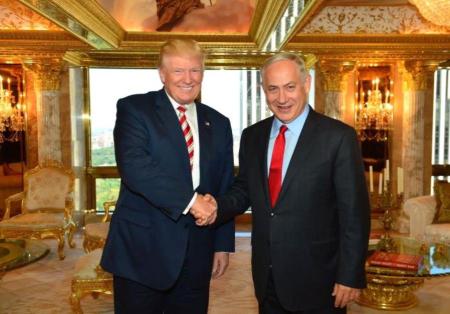
bibiandtrumpDonald Trump and Benjamin Netanyahu meet at the Trump tower. (photo credit:KOBI GIDON / GPO)

“This ruthless regime continues to deny you your freedom,” Netanyahu said in the English video, accompanied by Farsi subtitles.  “It prevents thousands of candidates from competing in elections, it steals money from your poor to fund a mass murderer like [Syrian President Bashar] Assad. By calling daily for Israel’s destruction, the regime hopes to instill hostility between us. This is wrong. We are your friend, not your enemy.”

***************************

Just 24 hours after US President Donald Trump spoke in his inaugural address about the need to eradicate radical Islamic terrorism, Prime Minister Benjamin Netanyahu put a brief video clip on social media aimed at placing the Iranian threat squarely back on the international agenda.

“I plan to speak soon with President Trump about how to counter the threat of the Iranian regime, which calls for Israel’s destruction,” Netanyahu said in the two-and-a-half minute video addressed directly to the Iranian people.

“This ruthless regime continues to deny you your freedom,” Netanyahu said in the English video, accompanied by Farsi subtitles.  “It prevents thousands of candidates from competing in elections, it steals money from your poor to fund a mass murderer like [Syrian President Bashar] Assad. By calling daily for Israel’s destruction, the regime hopes to instill hostility between us. This is wrong. We are your friend, not your enemy.”

This was the first video of this sort Netanyahu has put out in months, after putting out several in the spring and summer that addressed issues such as Palestinian incitement and the settlements. It is also the first time in a while that he has exclusively addressed the Iranian issue, other than in a  couple of sentences in public appearances here and there.

The release of the video now, just 24-hours after Trump took over from Barack Obama, is an obvious effort to get the world’s leaders – first and foremost Trump – to one again focus on the Iranian regime.

Trump has come out squarely against the Iranian nuclear deal.  The sense among sources close to Netanyahu is that when dealing with the new administration, Netanyahu will not only have a more receptive ear regarding the dangers that the Iranians pose, but also find an administration more willing to shine the light on Iran’s part in the spread of radical Islamic terrorism, and more vigilant in ensuring that Tehran lives up to its commitments under the nuclear deal.

“We’ve always distinguished between the Iranian people and the Iranian regime,” Netanyahu said in the video.

“The regime is cruel, the people are not; the regime is aggressive, the people are warm. I yearn for the day when Israelis and Iranians can once against visit each other freely – in Tehran and Isfahan, in Jerusalem and Tel Aviv,” he said. “The fanatics must not win, their cruelty must not conquer our compassion. Our two peoples can work together for a more peaceful and hopeful future for both of us. We must defeat terror and tyranny, and we must ensure that freedom and friendship win the day.”

Netanyahu referenced the Iranian student protests of 2009, which some say was a golden opportunity for change in Iran which was squandered by a lack of unequivocal moral and material support by Obama in the early days of his presidency.

“I will never forget the images of brave young students , hungry for change, gunned down in the streets of Tehran in 2009,” Netanyahu said. “And I will never forget beautiful Neda Soltan – gasping for her last breath on that sidewalk.”

This was a reference to Iranian student Neda Agha-Soltan, whose shooting-death during the protests was caught on video and went viral.

“You have a proud history, you have a rich culture,” Netanyahu said. “Tragically, you are shackled by a technocratic tyranny. In a free Iran you will once again be able to flourish without limit , but today a cruel regime is trying to keep you down.”

While Netanyahu said he will speak to Trump about Iran soon, no announcement has yet been made about when their first meeting will be held, though there have been recent reports it could be as early as the first week in February. Government officials said that the issue will be determined in the coming days.

Netanyahu congratulated Trump on his inauguration in a tweet Friday afternoon: “Congratulations to my friend President Trump,” he wrote. “I look forward to working closely with you to make the alliance between Israel and America stronger than ever. Shabbat Shalom.”

Guess who was left unpardoned!

January 21, 2017

Guess who was left unpardoned! American ThinkerRuss Vaughn, January 21, 2017

Obama has left town, and guess whom he has left holding the proverbial bag for possible criminality occurring during his presidency?  If you guess Hillary Clinton – and, by extension, her husband, her aide Huma Abedin, and her lawyer Cheryl Mills, among many others who hitched their wagons to the Clinton star – you’re right on the money.  Imagine the ominous sense of impending doom that must be spreading through the Clinton domain as all of them realize that they have lost forever the umbrella of protection from prosecution that a last-minute pardon from a friendly president of their own political party would have afforded them.  They now all stand fully exposed to the elements of criminal prosecution that they had thought themselves immune to during an Obama presidency followed by a Clinton election victory.

Wouldn’t you love to hear some of the phone conversations going on right now within that former empire?  John Podesta’s email revelations likely pale in significance compared to those email conversations underway even as you read this.  You say they couldn’t possibly be that stupid?  Remember, these are liberal Democrat operatives who have already demonstrated their limited grasp of and regard for cyber-security, so don’t be so sure.  What you can rest assured of is that there are a number of those operatives whose minds are working furiously to determine what they can do to save themselves – not their bosses, but themselves.  Surely the FBI agents who have an open investigation into Clinton corruption are at this moment sifting through their perp profiles to determine who will best respond to offers of immunity for cooperation.

Friday, the 20th of January, 2017 has to be a very dark day within the Clinton realm.  Don’t you just love it?

Thomas Lifson adds:

President Trump also has pardon power.  That gives him a lot of bargaining leverage if he ever decides to exercise his artistic skills in deal-making with the Clinton machine.


Donald and Melania Trump share first dance

January 21, 2017

Donald and Melania Trump share first dance, CNN via YouTube, January 20, 2017

(He did it his way — and our way. — DM)

FULL MEASURE: January 15, 2017 – Threat Matrix

January 20, 2017

FULL MEASURE: January 15, 2017 – Threat Matrix via YouTube, January 19, 2017


Trump Admin Inherits Continued Insecurity, Corruption in Afghanistan

January 12, 2017

Trump Admin Inherits Continued Insecurity, Corruption in Afghanistan, Washington Free Beacon, January 12, 2017

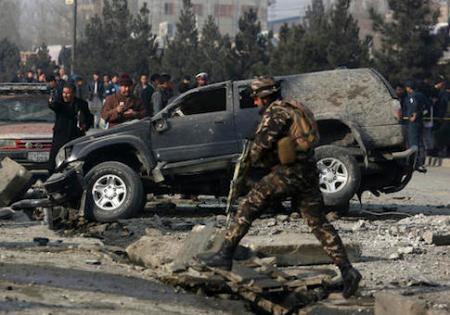
Afghan security personnel inspect at the site of roadside bomb blast in Kabul, Afghanistan, Wednesday, Dec. 28, 2016. Afghan officials say that at least three people have been wounded by a roadside bomb blast in the capital, Kabul. (AP Photo/Rahmat Gul)

Afghan security personnel inspect at the site of roadside bomb blast in Kabul, Afghanistan, Wednesday, Dec. 28, 2016.  (AP Photo/Rahmat Gul)

Donald Trump will need to confront the continued instability and corruption in Afghanistan as well as a resilient Taliban insurgency that continues to challenge Afghan military and police forces, according to the special inspector for Afghanistan reconstruction.

John Sopko, the U.S. government’s special inspector for Afghanistan reconstruction, offered a bleak assessment of the security situation and rebuilding efforts in the war-torn country on Wednesday during remarks at the Center for Strategic and International Studies, admitting that little has improved in Afghanistan over the past two years despite billions of dollars in investments from the United States.

The special inspector general unveiled a list of high-risk challenges facing the new administration in Afghanistan, including the capacity and capabilities of Afghan security forces, corruption, sustainability, on-budget assistance, counter-narcotics, contract management, general oversight, and planning and strategy.

Failure in any one of these eight areas, Sopko said Wednesday, could “fatally undermine the reconstruction mission in Afghanistan.”

The special inspector general identified corruption and poor leadership of the Afghan military and police forces as the root cause of the persisting insecurity in Afghanistan. He pointed to the tens of thousands of U.S. taxpayer-funded “ghost soldiers,” as well as evidence of Afghan forces selling U.S.-bought weapons and fuel for profit.

“Afghan commanders often pocket the paychecks of ghost soldiers for whom the U.S. is paying the salary,” Sopko said. “The number of ghost soldiers is not insignificant. It likely reaches into the tens of thousands of soldiers and police.”

“[Corruption] is so bad that there is evidence that the Taliban have instructed their field commanders to simply purchase U.S.-supplied weapons, fuel, and ammunition from the Afghan government because it is both easier and less expensive for the insurgents to do so,” he continued.

“There are reports that when fuel finally reaches the frontlines in Afghanistan, that some Afghan commanders refuse to use it, refuse to go on patrols, so they can save the fuel which they then can sell on the open market,” Sopko said.

The special inspector general has said as much as 50 percent of U.S.-purchased fuel is siphoned off and sold for profits.

“Our new administration and Congress should ask: Is it finally time to stop talking about combatting corruption and time for the Afghan government to start prosecuting senior officials who are either corrupt or feel they are above the law?” Sopko said.

The Taliban has continued to launch attacks and seize territory in Afghanistan, as U.S. and allied forces have withdrawn troops from the country. President Obama last year decelerated his planned drawdown of U.S. troops in Afghanistan, leaving some 8,400 service members in the country through the end of his term. Gens. Joseph Dunford, chairman of the Joint Chiefs of Staff, and John Nicholson, commander of U.S. and NATO troops in Afghanistan, have both characterized the security situation as a “stalemate.”

The Taliban on Tuesday set off two large bombs near a government compound in Kabul, killing at least 38 people and injuring dozens. The attack was among 56 security incidents that occurred over the last two days in 22 of Afghanistan’s 34 provinces, according to the special inspector general.

The Pentagon’s latest assessment of the Afghan military and police forces evaluated them as effective in repelling insurgents in key population areas and retaking territory seized by the Taliban. But Sopko on Wednesday offered a negative take on the assessment, saying that the Afghan forces are “basically playing whack-a-mole, following the Taliban around Afghanistan and retaking territory that was lost.”

“The DoD report reiterates this point by noting that the vast majority of the Afghan national army has little offensive capability,” the special inspector general said. “So, the best spin the Afghan security forces can put on their activities in 2016 is that they were able to retake strategic areas that had temporarily been lost to the Taliban. So, we’re defining success as the absence of failure. At a minimum, they are playing defense and are not taking the fight to the Taliban.”

The United States announced this week that it will send 300 Marines to Afghanistan’s southern Helmand province, in order to train, advise, and assist Afghan government forces fighting Taliban insurgents. Obama marked the end of combat in Afghanistan in December 2014.

Trump has not yet outlined a strategy for Afghanistan, which after 15 years has stretched to America’s longest war, but has pledged to end “nation building” by the United States. Under the new administration, the Pentagon will likely be led by retired Marine Gen. James Mattis, who faces a confirmation hearing to become defense secretary this week.

The United States has spent $115 billion on reconstruction in Afghanistan and is expected to contribute between $5 and $6 billion annually through 2020.

Sopko, who was appointed to the inspector general post in 2012 by President Obama, urged the incoming administration to “conduct a thorough assessment of resources and personnel to ensure they are sufficient to meet our military, law enforcement, and civilian objectives in Afghanistan.” He also recommended the new government work with Afghan and coalition allies to develop a “new and better strategy” in Afghanistan that avoids failures revealed by his office and other oversight investigations.

“Fifteen years in, there is no reason we should be seeing the problems we continue to witness and document in the nearly 250 reports my little office has released,” Sopko said. “My hope, and the hope of my staff, is that the high-risk report we are issuing today and the examples it provides will help guide Congress and the Trump administration as we move into 2017 to ensure a strong, better, and more effective reconstruction effort in what has become America’s longest war.”