Posted tagged ‘Peace Process’

New US military moves in the Mid-East & Israel’s Syria air raid were coordinated

December 3, 2017

New US military moves in the Mid-East & Israel’s Syria air raid were coordinated, DEBKAfile, December 3, 2017

(Please see also, Trump’s strategic vision. — DM)

By mid-week, the Trump administration should have reached a decision that indicates whether or not it has caved in under Palestinian threats. The next few days will also show whether the new US Middle East momentum is a flash in the pan or a fresh start to be continued.

*****************************************

The US hands-off to Iran’s top general in Iraq, Ali Abdullah Saleh’s changeover of sides in the Yemen war and Trump’s’ thinking on Jerusalem – all signal a new, proactive US strategy for the region.

Central Intelligence Agency chief Mike Pompeo was uncharacteristically frank when he addressed high-ranking US military and security officials on Saturday, Dec. 2, at the Reagan Presidential Foundation. He revealed that he had sent a note to the Iranian Revolutionary Guards Al Qods chief, Gen. Qassem Soleimani, and explained: “I sent it because he had indicated that forces under his control might in fact threaten US interests n Iraq.”

Soleimani replied that he had refused to open the letter, commenting: “It didn’t break my heart to be honest with you.” Pompeo went on to elaborate: “What we were communicating to him in that letter was that we will hold him and Iran accountable… and we wanted to make sure that he and the leadership of Iran understood that in a way that was crystal clear.”

Since words clearly don’t mean much without deeds, the United States, after being frozen in place for months in the Middle East, suddenly sprang into action in the past 48 hours, along with its senior Middle East allies, Israel and Saudi Arabia, on four fronts: Iraq, Syria, Yemen and the Palestinians.

IRAQ:  Large-scale US forces arrived at the Kaywan base-K1 west of the oil city of Kirkuk and then split into two contingents: several hundred troops stayed on base while the second contingent headed east on Friday, Dec. 1 towards Tuz Khumatu in eastern Iraq (See attached map)  and took control of the Siddiq military airport 35km to the west. Tuz Khumatu lies 100km west of the Iraqi-Iranian border and 163km north of Baghdad. DEBKAfile’s military sources report that American troops have never been deployed so close to the Iranian border since the 2003 US invasion of Iraq. This movement was meant to strongly advise Iraqi Prime Minister Haydar al-Abadi to stop playing ball with Iran to the extent that he did in mid-October, when he allowed pro-Iranian forces to grab Kirkurk and its oilfields from the Kurds. Washington was chiefly drawing a large X on Soleimani’s plan for bringing  Northern Iraq’s oil under Iranian control.

SYRIA: Early Saturday, Dec. 2, Israeli warplanes dropped missiles on a secret meeting of pro-Iranian Shiite militia chiefs taking place at the Syrian army’s 91st Brigade HQ, outside al-Kiswah – 14km southwest of Damascus and 50km from the Golan. These militias, which have been fighting for Bashar Assad under Gen. Soleimani’s command, were being briefed by Iranian and Hizballah officers on their next offensive. This was Israel’s first attack on any of his forces.

YEMEN: On Saturday, Ali Abdullah Saleh, former president of Yemen, the mainstay of the Iranian-backed Houthi insurgency, announced he was “turning the page.” He was ready to ditch the Houthis and their backer, Iran – provided that the coalition (Saudi Arabia and the United Arab Emirates) lifted the blockade they had imposed on Yemen to cut off incoming Iranian weapons and halted its attacks. Saleh’s announcement sparked violent clashes between his followers and the Houthis.

DEBKAfile’s military sources recall that Yemen’s ex-president had long maintained ties with the CIA. His change of sides was timed to coincide with a fresh US-Saudi intelligence push to restore Saleh to the pro-Western Arab camp and topple pro-Iranian positions in Yemen and the Arabian Peninsula.

ISRAEL AND THE PALESTINIANS: The Trump administration is fed up with dodgy Palestinian tactics on peace negotiations. Egyptian President Abdel-Fatteh El-Sisi and Saudi Crown Prince Muhammad bin-Salman are likewise ready to wash their hands of the Palestinian Authority Chairman Mahmoud Abbas (Abu Mazen). US officials tried threatening to shut down the PLO office in Washington unless the Palestinians finally came to the table for peace talks and are now holding over Palestinian heads a possible decision – either to move the US embassy from Tel Aviv to Jerusalem or recognize the city as Israel’s capital.

To ward off these actions, all Abu Mazen needs to do is to pick up the phone to the White House, the royal palace in Riyadh and the presidential residence in Cairo and declare his willingness to cooperate with their initiatives to restart the peace process. But so far, Abbas is holding out, resorting instead to his outdated tactics: threatening that the entire Middle East will go up in flames and Palestinian terrorism will again raise its head if the Trump administration goes through with new decisions on Jerusalem.

By mid-week, the Trump administration should have reached a decision that indicates whether or not it has caved in under Palestinian threats. The next few days will also show whether the new US Middle East momentum is a flash in the pan or a fresh start to be continued.

Saudis Fed Up: “Palestinians Milking Us for Decades”

November 30, 2017

Saudis Fed Up: “Palestinians Milking Us for Decades”, Gatestone InstituteBassam Tawil, November 30, 2017

(Please see also, Report: Trump expected to move embassy to Jerusalem within days. Might the apparent changes in relations between the “Palestinians” and Arab states reflect abandonment of the moribund peace process and hence of American reluctance to move the US Embassy to Jerusalem? — DM)

Most Arabs, in fact, do not seem to care about the Palestinian “cause” any more, as pointed out in a previous article, which showed how the Arab League ministers were focusing on Iran and Hezbollah while ignoring the Palestinians.

Many people in the West are not aware that the Palestinians are trying to torpedo any peace initiative in order to blame others.

********************************************************

Like most Arab countries, the Saudis too have finally realized that the Palestinians are ungrateful and untrustworthy. Saudi Arabia and most of the Arab countries are obviously fed up with the recurring attempts by the Palestinians to blackmail them and extort money from them.

The Palestinians are crying Wolf, Wolf! — but only a few in the Arab world are listening to them. This, in a way, is encouraging and offers hope for them finally to be released from decades of repressive and corrupt governance.

These are just some of the challenges Saudi Crown Prince is facing. It is important to support him in the face of attacks by some Palestinians and other spoilers.

A young Saudi man has posted videos on social media in which he calls the Palestinians “dogs” and “pigs.” The man says that Saudi Arabia has provided the ungrateful Palestinians with “billions of dollars” during the past few decades. “The Palestinians,” the Saudi man charges, “have been milking us for decades.”

The videos, which have since gone viral, have understandably drawn strong condemnations from Palestinians, who say they would not have been made public without the tacit approval of the Saudi authorities. For the Palestinians, the abusive videos represent yet another sign of increased tensions in their relations with Saudi Arabia.

Further evidence of Saudi disdain for the Palestinians was provided in a video posted by Saudi Arabia featuring a Palestinian gunman as a terrorist.

Last July, the Saudi ambassador to Algeria, Sami Saleh, shocked many Palestinians when he described Hamas as a terror group. Hamas responded by saying that such remarks were “harmful to Saudi Arabia and its record and stances towards the Palestinian cause and the legitimate rights of the Palestinian people.”

The apparent shift in Saudi Arabia’s position towards the Palestinians should not come as a surprise. Like most Arab countries, the Saudis too have finally realized that the Palestinians are ungrateful and untrustworthy. Saudi Arabia and most of the Arab countries are obviously fed up with the recurring attempts by the Palestinians to blackmail them and extort money from them.

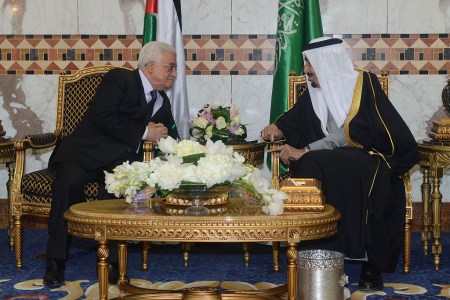
Saudi Arabia and most of the Arab countries are obviously fed up with the recurring attempts by the Palestinians to blackmail them and extort money from them. Pictured: Palestinian Authority President Mahmoud Abbas embraces Saudi King Salman bin Abdul Aziz Al Saud in Riyadh, Saudi Arabia, December 30, 2015. (Photo by Thaer Ghanaim/Palestinian Press Office via Getty Images)

The Palestinians were ungrateful to Kuwait when they supported Saddam Hussein’s invasion of the tiny emirate in 1990. Kuwait was one of the wealthy Arab countries that used to give the Palestinians millions of dollars in aid. The Palestinians were ungrateful to Lebanon, a country that opened its doors to them and allowed the PLO to create its own state within Lebanon. The Palestinians played an important role in tearing the country apart and brought disaster and death to Lebanon, until they were finally expelled in 1982.

Before that, in Jordan, in the armed conflict known as “Black September” (1970-71), the Palestinians did the same thing until the late King Hussein ordered his army to eradicate the PLO and all the terror groups in the country.

Now, the Palestinians are being disrespectful towards Saudi Arabia — a country that has provided them with billions of dollars over the past few decades. It is no wonder, then, that a growing number of Saudis are beginning to voice their disgust for the way the Palestinians are behaving and talking.

The Palestinians seek to continue holding Saudi Arabia and the rest of the Arab countries hostage. In fact, the Palestinians wish to retain their death grip against Israel at the cost of their Arab brethren. Any Arab who dares to challenge the Palestinians is denounced as a traitor and a Zionist.

Palestinian officials say that Palestinian Authority (PA) President Mahmoud Abbas, who visited Saudi Arabia in early November, left the kingdom with a bad taste in his mouth. A senior Palestinian official was quoted as saying that Abbas feels that Saudi Arabia and some Arab countries are would like to see him removed from power and replaced with someone who would be more acceptable to the Americans and Israelis.

The Palestinians believe that Saudi Arabia’s crown prince, Mohammed bin Salman, is personally spearheading his country’s rapprochement with Israel. Some of them are even convinced that it is only a matter of time before Saudi Arabia and Israel establish diplomatic ties as part of a peace treaty.

The general feeling among the Palestinian public is that their Saudi brothers have decided to “throw them under the bus” by signing a peace treaty with Israel. The Palestinians claim that Saudi Arabia has accepted the Trump administration’s “ultimate solution” for peace in the Middle East — a plan the details of which remain largely unknown, but is said to promote peace between the Arab countries and Israel before the Israeli-Palestinian conflict is solved. Their biggest fear is that once Saudi Arabia embarks on such a dramatic move, many other Arab countries will follow suit, leaving the Palestinians isolated in the international arena and abandoned by their Arab brethren.

The Palestinian Authority, however, is keen not to be seen as taking a public stance against a powerful and wealthy country such as Saudi Arabia. In an attempt to defuse tensions between Saudi Arabia and the Palestinians, some Palestinian officials have come out in defense of the kingdom.

Mahmoud Al-Assadi, the PA Consul-General in Jeddah, for example, said that reports claiming that Saudi Arabia was headed towards normalizing its relations with Israel were false and based on malicious rumors. “Saudi Arabia’s position towards the Palestinian cause and people is historic and consistent,” Al-Assadi said in an interview. “The Saudi leadership has repeatedly made it clear that there will be no normalization with Israel until the Palestinian issue is solved.”

The PA ambassador to Saudi Arabia, Bassam Al-Agha, has also taken pains to exonerate the kingdom from the “allegation” that it is seeking to normalize its relations with Israel. In an interview with a Saudi newspaper, Al-Agha heaped praise on Saudi Arabia for its continued support for the Palestinians. The Palestinians, he added, “Will always remember Saudi Arabia’s generosity, hospitality and support.”

The public statements of Palestinian officials, however, stand in jolting contrast with the sentiments of the Palestinian public, which seems to be overtly hostile towards Saudi Arabia and its crown prince.

The Palestinians believe that the abusive videos posted by the Saudi man and other derogatory remarks by Saudi citizens in the past few days are part of a larger campaign by the Saudi authorities to prepare the Saudis for a peace treaty between the kingdom and Israel.

The Palestinians point to a Twitter campaign launched by Saudi citizens under the title of “Riyadh is more important than Jerusalem.” The campaign is accompanied by abusive remarks against the Palestinians, who are blamed for the “loss of Jerusalem and Palestine.” The campaign also repeats the charge made by many Arab countries, namely that the Palestinian “dogs” have always been ungrateful in the face of massive financial aid from their Arab brothers.

The Palestinians have been firing back with full force to this unprecedented online onslaught by the Saudis.

“This is a media campaign spearheaded by the boys of the [Saudi] monarch to pave the way for Saudi normalization with Israel,” commented Khalid Omar. He and many Palestinians claimed that Mohammed bin Salman was behind the online campaign “that smears and discredits the Palestinian cause.”

Yusef Jadallah wrote in response:

“We’re not surprised to hear some Saudis say that Riyadh is more important than Jerusalem. The Saudis are returning to their Zionist origin, which is hostile to Arabs and Muslims. We used to say that the Saudis support us. Unfortunately, the Saudis support Israel publicly.”

Another comment from Radwan Al-Akhras, of the Gaza Strip: “This online campaign is aimed at fomenting strife among the Arabs and Muslims. The only ones who benefit from it are the Zionists and those who are trying to be Zionists.”

The Palestinians also point to more troubling voices emerging from Saudi Arabia in recent days.

Here, for instance, is what Saudi academic Sa’ad Al-Hussein tweeted on November 25, in reference to the 2007 Fatah-Hamas “reconciliation” agreement:

“History relates that it’s the Palestinians who sold out their cause. History is also witness that the Palestinians fought amongst each other and betrayed and violated the Mecca accord.”

Again, many Palestinians took to social media to attack the Saudi academic and the royal family in Saudi Arabia. They accused the academic of being “ignorant” and “illiterate” and claimed that his charges were also designed at paving the way for normalization between Saudi Arabia and Israel.

Mustapha Anan, a Palestinian, retorted: “You are a trivial and despicable person; shame on you and your king!”

Another Palestinian, Yusri Yusef, responded:

“What’s the secret behind this Saudi smear campaign against the Palestinians? If you [the Saudis] want to make peace and form an alliance with the Zionists, that’s your business. But why these unjustified attacks on the Palestinians?”

Echoing the Palestinian public’s sentiment, Palestinian political analyst Majed Abu Diak also voiced concern over the apparent rapprochement between Saudi Arabia and Israel. He accused the Saudis of bowing to pressure from the Trump administration.

“Saudi Arabia and Israel appear to be in a hurry to normalize their relations,” Abu Diak claimed.

“The Saudi regime is preparing for Mohammed bin Salman to succeed his father. That’s why the regime is prepared to pay the price [to the Americans], which includes normalizing relations with Israel as a way to improve Saudi relations with the US. For Israel, this is an old-new dream of ridding itself of the status of an alien body in the Middle East.”

Most Arabs, in fact, do not seem to care about the Palestinian “cause” any more, as pointed out in a previous article, which showed how the Arab League ministers were focusing on Iran and Hezbollah while ignoring the Palestinians.

Many people in the West are not aware that the Palestinians are trying to torpedo any peace initiative in order to blame others.

The Palestinians are crying Wolf, Wolf! — but only a few in the Arab world are listening to them. This, in a way, is encouraging and offers hope for them finally to be released from decades of repressive and corrupt governance.

These are just some of the challenges Saudi Crown Prince is facing. It is important to support him in the face of attacks by some Palestinians and other spoilers.

The question now is whether the Saudis and the rest of the Arabs have had enough of the great Palestinian shakedown.

Bassam Tawil is a Muslim based in the Middle East.

Palestinians vs. Trump: The Battle Begins

November 25, 2017

Palestinians vs. Trump: The Battle Begins, Gatestone InstituteBassam Tawil, November 25, 2017

Although the full details of the proposed plan have yet to be made public, the Palestinians have already made up their mind: Whatever comes from Trump and his Jewish team is against the interests of the Palestinians.

The Palestinians’ rhetorical attacks on the Trump administration are designed to prepare the ground for their rejection of the proposed “ultimate solution.”

Take careful note: these warning shots may well be translated into yet another intifada against Israel under the fabricated pretext that the Americans and Israelis, with the help of some Arab countries, seek to strip the Palestinians of their rights. One wonders when the world will wake up to the fact that those rights have already been stripped from the Palestinians — by none other than their own brainwashing, inciting and corrupt leaders.

Over the past year, the Palestinians have managed to keep under wraps their true feelings about US President Donald Trump and his Middle East envoys and advisors. In all likelihood, they were hoping that the new US administration would endorse their vision for “peace” with Israel.

Palestinian Authority (PA) President Mahmoud Abbas ensured that his spokesmen and senior officials spoke with circumspection about Trump and his Middle East advisors and envoys. The top brass of the Palestinian Authority in Ramallah felt it was worth giving Trump time to see if he was indeed gullible enough to be persuaded to throw Israel under the bus and fork over their demands.

Well, that bus has long passed.

The Palestinians are now denouncing Trump and his people for their “bias” in favor of Israel. Even more, the Palestinians are openly accusing the Trump administration of “blackmail” and of seeking to “liquidate the Palestinian cause.” To top off the tone, the Palestinians are insinuating that Trump’s top Jewish advisors and envoys — Jared Kushner, Jason Greenblatt and David Friedman — are more loyal to Israel than to the US.

The Palestinians’ unprecedented rhetorical attacks on the Trump administration should be seen as a sign of how they plan to respond to the US president’s plan for peace in the Middle East, which has been described as the “ultimate solution.” Although the full details of the proposed plan have yet to be made public, the Palestinians have already made up their mind: Whatever comes from Trump and his Jewish team is against the interests of the Palestinians.

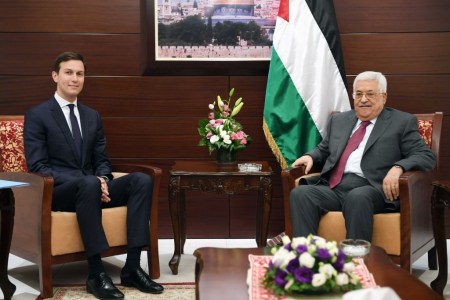
Palestinian Authority President Mahmoud Abbas (right) meets with Jared Kushner, Senior Advisor to U.S. President Donald Trump, on June 21, 2017 in Ramallah. (Photo by Thaer Ghanaim/PPO via Getty Images)

The Palestinian tone makes it clear that the Palestinian leadership and people have already relegated Trump’s peace plan to the trash-bin as nothing more than Israeli-American conspiracy, in collusion with some Arab countries, to impose a solution on the Palestinians and “liquidate” their cause.

To them, the “real” Trump is now apparent. This is how one Palestinian political analyst, Dr. Mazen Safi, reacted to Trump’s proposed peace plan and what he perceives as continued US support for Israel. “The US president and his administration have removed the mask from their face,” he stated. “They are paving the way for a new Israeli aggression on our people and moving the region toward an explosion.”

So what is really behind the Palestinian outrage with the Trump administration?

First, the Palestinians reject the idea of “regional peace” between Israel and Arab countries. The Palestinians maintain that peace between Israel and the Arab countries should come only after, and not before, the Palestinian issue is resolved. The Palestinians fear that any peace agreements between Israel and the Arab countries would come at their expense.

Echoing this fear, the Palestinian daily Al-Quds, which often reflects the views of the Palestinian Authority leadership, pointed out that the recent Arab League foreign minsters’ meeting in Cairo chose to focus on the Iranian and Hezbollah “threat,” breaking from the long-standing traditional obsession of the Arabs with the Palestinian issue. The Palestinians, according to the paper, feel abandoned by their Arab brothers.

“The Arab League meeting in Cairo came out with strong positions against the Iranian threat and didn’t hesitate to classify Hezbollah as a terrorist group,” Al-Quds complained in an editorial. “The meeting ignored the Palestinian cause. We are facing new Arab alliances against Iran, all under American pressure. This will have a negative impact on our cause.”

The Palestinian daily went on to lambast the floating Trump peace plan. It stated that the proposed plan, as published in various media outlets, “Doesn’t serve our interests and aspirations.”

Second, the Palestinians are furious with US threats to shut down the PLO’s diplomatic mission in Washington. They see the threat as an attempt to blackmail them not file charges of war crimes against Israel with the International Criminal Court. The Palestinians also see the threat as an attempt to force them to resume peace talks with Israel unconditionally.

“The US threat to close the PLO’s diplomatic mission in Washington shows disrespect for the Palestinian rights and blind bias in favor of Israel,” Al-Quds said in the same editorial. “It also coincides with growing hollow talk about a US peace plan that has been endorsed by President Trump.”

Third, the Palestinians are now openly talking about Trump’s Jewish advisors and envoys and their “influence” on him and his administration’s policies. This is something that Palestinian Authority officials had refrained from mentioning in the past year because it rings of out-and-out anti-Semitism. Now, however, Palestinian officials and political analysts do not seem to have a problem talking about the influence of the “Jewish lobby” on Trump’s decision-making process and policies.

Hassan Al-Batal, a political analyst closely associated with the Palestinian Authority, referred in a recent article to what he called “the three Jewish pillars of the Trump peace plan – Trump’s son-in law (Kushner), Middle East envoy (Greenblatt) and the US Ambassador to Israel (Friedman).”

Al-Batal expressed “regret” that the recent meeting of the Arab League foreign ministers chose to condemn Hezbollah and Iran. “Palestine is currently witnessing a crisis with Washington,” he said.

Bassam Abu Sharif, a former advisor to Yasser Arafat, went as far as referring to Trump’s Jewish advisors as a “dangerous clique.”

Abu Sharif said that he had no doubt that “what Kushner and his dangerous clique are planning is destructive and inhumane.” The US, he charged, has one major goal: to take full control of the Middle East and steal its resources for once and for all. This requires — according to their scheme — the liquidation of the Palestinian cause.”

Another political analyst, Talal Okal, who is also linked to the Palestinian Authority and its leadership, accused the Trump administration of “misinformation” and attempting to “blackmail” the Palestinians. Referring to the US demand that the Palestinians refrain from filing charges against Israel with the International Criminal Court and threatening to shut down the PLO’s diplomatic mission in Washington, Okal wrote:

“The US administration is practicing blackmail against the Palestinian leadership by demanding that the Palestinians engage in unconditional negotiations with Israel and that the Palestinians refrain from pursuing war crimes against Israel with the International Criminal Court. It’s obvious that the Trump administration is practicing a policy of misinformation.”

Palestinian political analyst Hani Habib claimed that the Trump administration was preparing to blame the Palestinians for the failure of the next peace process. The Palestinians, Habib said, “must be united in facing all forms of American-Israeli blackmail. The US administration’s threat to shut down the PLO’s diplomatic mission in Washington calls into question its ability to play the role of a fair and honest mediator.”

In an article entitled “Cheap American Blackmail,” columnist Omar Hilmi Al-Ghul complained: “The US administration is once again ignoring Palestinian rights and interests. It’s shamelessly and flagrantly seeking to confiscate the Palestinians’ independent decision-making process.”

Al-Ghul, too, made a reference to Trump’s Jewish team:

“The team surrounding Trump, which is in collusion with Israel, is acting in a way that contradicts what the Palestinian leadership wants — to maintain bridges with the US. The American blackmail of the Palestinian leadership is cheap and miscalculated.”

This conspiracy theory, which claims that Trump’s team cares more about Israel than US interests, is repeated in a statement by Fatah: “The US political blackmail contravenes international laws and resolutions pertaining to the Palestinian issue in particular and the peace process in general. This US position endorses the Israeli policy to end the two-state solution.”

The Palestinians’ rhetorical attacks on the Trump administration are designed to prepare the ground for their rejection of the proposed “ultimate solution.”

The Palestinians want it to be seen as a plan concocted by a few Jewish officials in the Trump administration who are more loyal to Israel than their own country, the US.

These officials, the Palestinians argue, have endorsed the position of the Israeli government and serve as its mouthpiece. That is why, they argue, the Palestinians are unable to accept a plan that is in effect a “Jewish-American conspiracy to eliminate the Palestinian cause.”

The Palestinians are also preparing the stage to accuse some Arab countries of “collusion” with this “conspiracy” — putting them on a collision course with Saudi Arabia.

The Palestinian message to the Arab countries, especially Saudi Arabia, should be seen as a warning shot: Collaborate with the Trump administration in the alleged scheme at your peril.

The anti-Trump Palestinian stance is sounding the death-knell for US administration’s effort to achieve comprehensive peace in the Middle East. Take careful note: these warning shots may well be translated into yet another intifada against Israel under the fabricated pretext that the Americans and Israelis, with the help of some Arab countries, seek to strip the Palestinians of their rights. One wonders when the world will wake up to the fact that those rights have already been stripped from the Palestinians — by none other than their own brainwashing, inciting and corrupt leaders.

Bassam Tawil, a Muslim, is based in the Middle East.

Holding the PLO Accountable

November 21, 2017

Holding the PLO Accountable, FrontPage MagazineCaroline Glick, November 21, 2017

(I have mixed feelings about Secretary of State Tillerson: bad and terrible. He appears to believe that he, not Trump, is the American president. Forget the moribund “peace process,” move the American Embassy to Jerusalem and do it now. Please see also The terrorist had reason to smile as he rammed people. — DM)

Originally published by the Jerusalem Post.

DeSantis argued that until the embassy is moved the Trump administration should take “incremental steps” that move it toward the goal.

Among the steps he advocated, DeSantis said “the American consulates in Jerusalem should report to the American embassy in Israel, not directly to the State Department.”

Tillerson’s letter to Zomlot was shocking because it represented the first time since 1993 that the PLO has been held accountable for its actions. The time has come for the State Department, too, to be held accountable for its behavior. And the best way to start this process is to follow DeSantis’s advice, subordinate the US consulates in Jerusalem to the US ambassador and end their boycott of Jews – US citizens and non-citizens – who live in the Jerusalem area, in Judea and Samaria.

**********************************

Is the PLO’s long vacation from accountability coming to an end? How about the State Department’s? In 1987 the US State Department placed the PLO on its list of foreign terrorist organizations. The PLO was removed from the list in 1994, following the initiation of its peace process with Israel in 1993.

As part of the Clinton administration’s efforts to conclude a long-term peace deal between the PLO and Israel, in 1994 then president Bill Clinton signed an executive order waiving enforcement of laws that barred the PLO and its front groups from operating in the US. His move enabled the PLO to open a mission in Washington.

Whereas Obama’s PLO upgrade was legally dubious, the PLO’s campaign to get recognized as a state breached both of its agreements with Israel and the terms under which the US recognized it and permitted it to operate missions on US soil.

The operation of the PLO’s missions in the US was contingent on periodic certification by the secretary of state that the PLO was not engaged in terrorism, including incitement of terrorism, was not encouraging the boycott of Israel and was not seeking to bypass its bilateral negotiations with Israel in order to achieve either diplomatic recognition or statehood. Under Obama, the State Department refused to acknowledge the PLO’s breach of all the conditions of US recognition.

Angry at the administration’s facilitation of PLO breaches, in 2015 Congress mandated stricter and more precise conditions for continued operation of the PLO’s mission in Washington. Starting in 2016, the PLO was explicitly banned from advocating the prosecution of Israelis by the International Criminal Court. In 2015 the PLO joined the ICC with the explicit purpose of advocating the prosecution of Israelis. And in conformance with this purpose, in his speech before the UN General Assembly in September 2017, PLO/PA chief Mahmoud Abbas called for the ICC to prosecute Israelis for building communities in Judea and Samaria.

Given his experience with US administrations since Clinton, Abbas had every reason to believe that he would suffer no repercussions for his statement. No US administration had ever called the PLO/PA to account for its open breach of the terms of US recognition. So it isn’t surprising that Abbas and his advisers were utterly shocked when on Friday, US Secretary of State Rex Tillerson sent a letter to the PLO mission in Washington informing PLO envoy Husam Zomlot that he could not renew certification of PLO compliance with US law in light of Abbas’s statement in September.

The only way for the mission to remain in place is if President Donald Trump certifies within 90 days that the PLO is engaged in “direct, meaningful negotiations with Israel.”

One of the primary functions of the PLO mission in Washington is to promote and fund the boycott movement against Israel – in contravention of the terms of its operation and the terms of its agreements with Israel.

In written testimony to the House Foreign Affairs subcommittee on the Middle East and North Africa in February, Jonathan Schanzer of the Foundation for Defense of Democracies revealed that the mission is “said to be actively promoting campus BDS [boycott, divestment and sanctions] activity in the US.”

“PLO operatives in Washington, DC,” Schanzer said, “are reportedly involved in coordinating the activities of Palestinian students in the US who receive funds from the PLO to engage in BDS activism. This, of course, suggests that the BDS movement is not a grassroots activist movement, but rather one that is heavily influenced by PLO-sponsored persons.”

In April 2016, Schanzer informed Congress that the PLO consulate in Chicago is a major funder of the BDS campus group Students for Justice in Palestine. The chairman of the US Coalition to Boycott Israel, which among other things funds BDS, is Ghassan Barakat, an official at the PLO’s Chicago consulate. His colleague, Senan Shaqdeh, is a member of the coalition. Shaqdeh also claims to be the founder of Students for Justice in Palestine, the antisemitic BDS group that operates on campuses throughout the US.

As Schanzer noted, in 2014 Shaqdeh traveled to Ramallah to meet with Abbas and PA Prime Minister Rami Hamdallah.

Aside from the fact that the US has refused to hold the PLO accountable for its actions for a quarter century, the PLO has another good reason to be shocked by Tillerson’s letter: the US consulate in Jerusalem operates as almost a mirror to the PLO mission in Washington.

The US consulate in Jerusalem has the same status as an embassy. Like the US ambassador in Tel Aviv, the US consul general in Jerusalem reports directly to the State Department. He is not accredited to Israel. His area of operations includes Jerusalem and its environs within and beyond the 1949 armistice lines, including Beit Shemesh, Mevasseret Zion, Judea and Samaria.

Israeli citizens who live within the consulate’s area of operations are not permitted to receive consular and visa services from the embassy in Tel Aviv. Among the hundreds of thousands of Israeli Jews that are required to receive US consular services from the consulate rather than the embassy are tens of thousands of Jewish dual nationals.

And yet, as Yisrael Medad has exhaustively documented, the Jerusalem consulate maintains an effective boycott of both these dual nationals and Israeli nationals who live in its area of operation. All of the consulate’s activities for US citizens are directed specifically and openly toward “Palestinian residents of Jerusalem and the West Bank.”

Consul General Donald Blome similarly directs all of his efforts toward reaching out to the Palestinians, ignoring as a regular practice the millions of Jews who live in his area of responsibility.

The consulate also openly rejects the notion that Israel and Jews have ties to its area of operations. For instance, Blome went on a hike around Judea and Samaria in July where he effectively erased the Jewish heritage sites in the areas. The consulate echoed UNESCO’s Jew-free version of the history of the land of Israel in a press release that celebrated his walk along the “Masar Ibrahim Al-Khalil” trail in celebration of “the connection of the people with the land.” Jews were not mentioned in the press release. And the historical name of the route he took is “Abraham’s path.”

Scholarships to study in the US and jobs listed on the website are open to “Palestinian residents of Jerusalem and the West Bank.”

In other words, while the PLO missions are pushing the BDS agenda in the US, the US consulate in Jerusalem is implementing it on the ground in Israel.

Tillerson’s letter to the PLO mission on Friday came two weeks before Trump will have to decide whether or not to sign a related waiver. On December 1, Trump will either allow the 1995 Jerusalem Embassy Act to come into force or he will sign a waiver postponing the embassy move for yet another six months.

In a congressional hearing on the issue of moving the embassy to Jerusalem on November 8, Rep. Ron DeSantis said that transfer of the embassy may be delayed due to the Trump administration’s “efforts to pursue a peace deal between Israel and the Palestinian Arabs.”

DeSantis argued that until the embassy is moved the Trump administration should take “incremental steps” that move it toward the goal.

Among the steps he advocated, DeSantis said “the American consulates in Jerusalem should report to the American embassy in Israel, not directly to the State Department.”

Tillerson’s letter to Zomlot was shocking because it represented the first time since 1993 that the PLO has been held accountable for its actions. The time has come for the State Department, too, to be held accountable for its behavior. And the best way to start this process is to follow DeSantis’s advice, subordinate the US consulates in Jerusalem to the US ambassador and end their boycott of Jews – US citizens and non-citizens – who live in the Jerusalem area, in Judea and Samaria.

The U.S. Middle East Peace Plan?

November 13, 2017

The U.S. Middle East Peace Plan? Gatestone Institute, Bassam Tawil, November 13, 2017

Abbas is now caught between two choices, both disastrous: On the one hand, he needs the political backing of his Arab brothers. This is the most he can expect from the Arab countries, most of whom do not give the Palestinians a penny. It is worth noting that, by and large, the Arab countries discarded the Palestinians after the PLO and Yasser Arafat openly supported Saddam Hussein’s invasion of Kuwait in 1990. Kuwait was one of several Gulf countries that used to provide the Palestinians with billions of dollars a year. No more.

Since then, the Palestinians have been almost entirely dependent on American and European financial aid. It is safe to assume, then, that the US and EU have more leverage with the Palestinians than most Arab countries.

*********************************

No American or European on the face of this earth could force a Palestinian leader to sign a peace treaty with Israel that would be rejected by an overwhelming majority of his people.

Trump’s “ultimate solution” may result in some Arab countries signing peace treaties with Israel. These countries anyway have no real conflict with Israel. Why should there not be peace between Israel and Kuwait? Why should there not be peace between Israel and Oman? Do any of the Arab countries have a territorial dispute with Israel? The only “problem” the Arab countries have with Israel is the one concerning the Palestinians.

The question remains: how will the Saudis and the rest of the international community respond to ongoing Palestinian rejectionism and intransigence?

Who said that Palestinians have no respect for Saudi Arabia and the rest of the Arab countries? They do.

Palestinians have respect for the money of their Arab brethren. The respect they lack is for the heads of the Arab states, and the regimes and royal families there.

It is important to take this into consideration in light of the growing talk about Saudi Arabia’s effort to help the Trump Administration market a comprehensive peace plan for the Middle East, the details of which remain intriguingly mysterious.

Last week, the Saudis unexpectedly summoned Palestinian Authority (PA) President Mahmoud Abbas to Riyadh for talks on Trump’s “ultimate solution” for the Israeli-Arab conflict, reportedly being promoted by Jared Kushner.

According to unconfirmed reports, the Saudis pressured Abbas to endorse the Trump Administration’s “peace plan.” Abbas was reportedly told that he had no choice but to accept the plan or resign. At this stage, it remains unclear how Abbas responded to the Saudi “ultimatum.”

Last week, the Saudis unexpectedly summoned Palestinian Authority President Mahmoud Abbas to Riyadh for talks on Trump’s “ultimate solution” for the Israeli-Arab conflict. Abbas was reportedly told that he had no choice but to accept the plan or resign. Pictured: Abbas on a previous visit to Saudi Arabia, on February 23, 2015, meeting with Saudi King Salman. (Photo by Thaer Ghanaim/PPO via Getty Images)

If true, the Saudi “ultimatum” to Abbas is tantamount to asking him to sign his death warrant. Abbas cannot afford to be seen by his people as being in collusion with an American “peace plan” that does not comply completely with their demands. Abbas has repeatedly made it clear that he will not accept anything less than a sovereign Palestinian state on all the pre-1967 lands, including east Jerusalem. He has also emphasized that the Palestinians will never give up the “right of return” for millions of “refugees” to their former homes inside Israel. Moreover, Abbas has clarified that the Palestinians will not accept the presence of any Israeli in their future Palestinian state.

Abbas has done his dirty work well. He knows that he cannot come back to his people with anything less than what he promised them. He knows that his people have been radicalized to the point that they will not agree to any concessions or compromise with Israel.

And who is responsible for this radicalization? Abbas and other Palestinian leaders, who continue unendingly to tell their people through the media, discourse and mosques that any concession to Israel constitutes treason, pure and simple.

So it would be naïve to think that Saudi Arabia or any other Arab country would be able to strong-arm any Palestinian leader to accept a “peace plan” that requires the Palestinians to make concessions to Israel. Abbas may have much respect for the ambitious and savvy young crown prince of Saudi Arabia, Mohammed bin Salman. This respect, however, certainly stops at the border of the political suicide – and extreme personal risk — from Abbas’s point of view.

Abbas is now caught between two choices, both disastrous: On the one hand, he needs the political backing of his Arab brothers. This is the most he can expect from the Arab countries, most of whom do not give the Palestinians a penny. It is worth noting that, by and large, the Arab countries discarded the Palestinians after the PLO and Yasser Arafat openly supported Saddam Hussein’s invasion of Kuwait in 1990. Kuwait was one of several Gulf countries that used to provide the Palestinians with billions of dollars a year. No more.

Since then, the Palestinians have been almost entirely dependent on American and European financial aid. It is safe to assume, then, that the US and EU have more leverage with the Palestinians than most Arab countries.

Nevertheless, no American or European on the face of this Earth could force a Palestinian leader to sign a peace treaty with Israel that would be rejected by an overwhelming majority of his people.

Trump’s “ultimate solution” may result in some Arab countries signing peace treaties with Israel. These countries anyway have no real conflict with Israel. Why should there not be peace between Israel and Kuwait? Why should there not be peace between Israel and Oman? Do any of the Arab countries have a territorial dispute with Israel? The only “problem” the Arab countries have with Israel is the one concerning the Palestinians.

For now, it appears that the vast majority of Arab regimes no longer care about the Palestinians and their leaders. The Palestinians despise the Arab leaders as much as they despise each other. It is a mutual feeling. The Palestinians particularly despise any Arab leader who is aligned with the US. They do not consider the US an honest broker in the Israeli-Arab conflict. The Palestinians, in fact, view the US as being “biased” in favor of Israel, regardless of whether the man sitting in the Oval Office is a Democrat or Republican.

The Saudi crown prince is viewed by Palestinians as a US ally. His close relations with Jared Kushner are seen with suspicion not only by Palestinians, but by many other Arabs as well. Palestinian political analysts such as Faisal Abu Khadra believe that the Palestinian leadership should prepare itself to face the “mysterious” Trump “peace plan.” They are skeptical that the plan would meet the demands of the Palestinians.

The Palestinians appear to be united in rejecting the Trump Administration’s effort to “impose” a solution on them. They are convinced that the Americans, with the help of Saudi Arabia and some Arab countries, are working towards “liquidating” the Palestinian cause. Abbas and his rivals in Hamas now find themselves dreading the US administration’s “peace plan.”

Like lemmings drawn to the sea, the Palestinians seem to be marching towards yet another scenario where they “never miss an opportunity to miss an opportunity.” The question remains: how will the Saudis and the rest of the international community respond to ongoing Palestinian rejectionism and intransigence?

Bassam Tawil, a Muslim, is based in the Middle East.

Palestinians: Meet Abbas’s New Partners

November 3, 2017

Palestinians: Meet Abbas’s New Partners, Gatestone InstituteBassam Tawil, November 3, 2017

(Please see also, Islamic Scholars Gather to Discuss Destroying Israel.

Ismail Haniyeh, the leader of terror organization Hamas, spoke in Beirut to assure conference attendees that Israel has no future and that Hamas would continue to attack the country, according to reports.

— DM)

This is a marriage of convenience intended first and foremost for internal consumption and then for tricking the international community. It’s time for the world to listen to what Palestinian leaders are telling their people in Arabic. In Arabic, Hamas and Islamic Jihad are being very honest and frank about their dream to destroy Israel.

Hamas and Islamic Jihad are indeed very serious about their intentions; they are not only talking, but are busy digging more tunnels and amassing weapons in preparation for the destruction of Israel. These are Abbas’s new partners, and the world needs to take notice.

********************************

Hamas and Islamic Jihad leaders are strongly opposed to Mahmoud Abbas’s political agenda and even see him as a collaborator with Israel.

Leaders of Hamas and Islamic Jihad announced at a rally on November 2 that they are determined to stick to their weapons “until the liberation of all of Palestine” — or, in other words, until the total destruction of Israel and the elimination of Jews.

When Zahar says that only a “crazy person” thinks he can disarm Hamas and other armed groups in the Gaza Strip, he is clearly referring to Abbas. Zahar’s statement should be seen as a direct threat to Abbas.

Abbas continues to tell the world that he is working to achieve a peaceful settlement with Israel. But will he be able to continue saying such things after he joins forces with his new partners in Hamas and Islamic Jihad? The answer is simple and clear: No.

As Palestinian Authority President Mahmoud Abbas and Hamas are moving forward towards implementing their “reconciliation” agreement, we are already getting an idea of what this new partnership is going to look like.

Abbas is trying to sell the agreement to the world as a deal that enables him and his Palestinian Authority (PA) to return to the Gaza Strip and assume full control there. He and his PA officials and spokesmen have also been working hard to convince the international community that only good will come out of the “reconciliation” agreement and that Hamas is even headed toward moderation and pragmatism.

However, Abbas and the PA seem to be engaged in yet another bid to deceive and lie to the international community.

Just last week, Israel foiled another plan by Hamas to dig a terror tunnel deep into Israeli territory.

The tunnel was supposed to be used by Hamas to dispatch terrorists into Israel to kill or kidnap as many Jews as possible. The tunnel was a joint Hamas-Islamic Jihad project. The terrorists have been working on the tunnel for some time — before and after the “reconciliation” accord that was reached in Cairo last month.

This means that for Hamas and Islamic Jihad it is business as usual — “reconciliation” or not, they are determined to continue their jihad to destroy Israel. The two terror groups may allow Abbas and his Palestinian Authority to return to the Gaza Strip, but Hamas and Islamic Jihad will continue to control what goes on under the earth. They will also continue to stick to their weapons in preparation for war against Israel.

Hamas, Islamic Jihad and the rest of the terror groups operating in the Gaza Strip continue to make it clear as day that they have no intention to disarm as a result of the “reconciliation” agreement. Abbas and the PA are welcome to assume civilian control of the Gaza Strip, but when it comes to security and weapons, Abbas is not entitled to raise this issue at all.

On November 2, Abbas received yet another indication of what awaits him and his Palestinian Authority as a result of the “reconciliation” agreement. Leaders of Hamas and Islamic Jihad announced that they are determined to stick to their weapons “until the liberation of all of Palestine” — or, in other words, until the total destruction of Israel and the elimination of Jews.

The announcement was made during a rally held by Hamas and Islamic Jihad in the town of Khan Yunis in the Gaza Strip to commemorate two Hamas terrorists who were killed when Israel blew up the tunnel two days earlier.

Mahmoud Zahar, a senior Hamas leader in the Gaza Strip, told the thousands of Palestinians attending the rally: “We will continue to resist the occupier until the liberation of all of Palestine.” He also cautioned “any crazy person against trying to take one rifle from the hands of the resistance.” Zahar sent his “blessings” to the Hamas and Islamic Jihad terrorists who are preparing around the clock to wage war against Israel. “We are training our sons to dig under the temporary borders so that they can reach the occupied territories [Israel].”

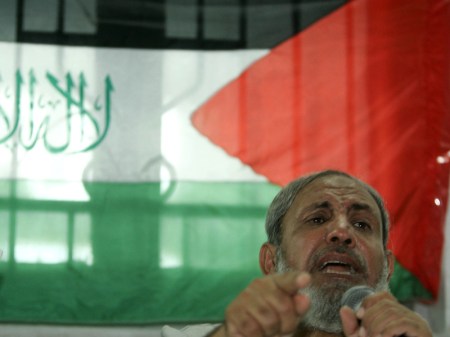
Mahmoud Zahar, a senior Hamas leader, pictured in 2005. (Photo by Abid Katib/Getty Images)

Islamic Jihad leader Sheikh Nafez Azzam, who spoke at the rally, also stressed his group’s adherence to its weapons. “For Hamas and Islamic Jihad, the option of jihad is a basic option. It’s a great honor to stand here today in front of our martyrs.”

These are the Hamas and Islamic Jihad leaders who are soon expected to become Abbas’s partners in managing the affairs of Palestinians in the Gaza Strip, in accordance with the “reconciliation” deal. These Hamas and Islamic Jihad leaders are strongly opposed to Abbas’s political agenda and even see him as a “collaborator” with Israel. At the rally, both Zahar and Azzam repeated their vehement opposition to any peaceful settlement with Israel and said that “armed resistance” is the only way to destroy Israel. The two men should be given credit for their honesty and straight-forward talk.

Zahar’s warning should ignite a red light with Abbas. When Zahar says that only a “crazy person” thinks he can disarm Hamas and other armed groups in the Gaza Strip, he is clearly referring to Abbas. Zahar’s statement should be seen as a direct threat to Abbas. Abbas, for his part, is not oblivious to such threats and he knows, more than anyone else, that the weapons of Hamas and other terror groups in the Gaza Strip are a red line. If he crosses it, he will be buried in one of the terror tunnels.

So why does Abbas insist on proceeding with his “reconciliation” agreement with Hamas? Because he wants to look good in the eyes of his people by showing them that he cares about Palestinian “unity” and is keen on ending the split between the West Bank and Gaza Strip. Abbas is hoping that the agreement will allow him to present himself as the president of all Palestinians, including those living in the Gaza Strip, and not just a powerless and weak president controlling small parts of the West Bank. Some Palestinians like to refer to Abbas as the “Mayor of Ramallah” – a hint at his limited power.

Abbas continues to tell the world that he is working to achieve a peaceful settlement with Israel. But will he be able to continue saying such things after he joins forces with his new partners in Hamas and Islamic Jihad? Will Zahar and Azzam allow Abbas to pursue any peace process with Israel after the “reconciliation” accord is implemented? The answer is simple and clear: No.

Abbas and the Palestinian Authority may be on their way to returning to the Gaza Strip, but nothing good will come out of this move. This is merely an internal Palestinian issue designed to benefit both Abbas and Hamas, each in their own way and according to their own interests. But at the end of the day, no dramatic changes should be expected as a result of the “marriage” between the PA and Hamas.

This is a marriage of convenience intended first and foremost for internal consumption and then for tricking the international community. It’s time for the world to listen to what Palestinian leaders are telling their people in Arabic. In Arabic, Hamas and Islamic Jihad are being very honest and frank about their dream to destroy Israel.

Hamas and Islamic Jihad are indeed very serious about their intentions; they are not only talking, but are busy digging more tunnels and amassing weapons in preparation for the destruction of Israel. These are Abbas’s new partners, and the world needs to take notice.

Bassam Tawil is a Muslim based in the Middle East.

Palestinian Normalization — With Hamas, Not Israel

October 11, 2017

Palestinian Normalization — With Hamas, Not Israel, Gatestone InstituteBassam Tawil, October 11, 2017

The most widespread conspiracy theory, which has been floating around for decades and can be heard in almost every coffee shop on the streets of Cairo, Amman, Ramallah and Beirut, is that Zionist Jews, together with American capitalists and imperialists, have a secret plan to take control over the Arab and Islamic countries and their resources.

How exactly are the “Zionists and imperialists” trying to “undermine” the Palestinian “national project”? And what, precisely, is this project? Is it the project of Hamas and many other Palestinians that seeks the destruction of Israel?

The corrupt Arab and Palestinian leaders spread such rumors to divert attention from problems at home, such as corruption and dictatorship. These leaders want their people too busy hating Jews and Westerners to demand reform, democracy and transparency from their leaders. Those valuables, of course, are what Arab and Palestinian leaders still refuse to offer their people.

Why do many Palestinians prefer peace with Hamas? Because they identify with Hamas’s dream of destroying Israel and killing Jews. It may be an unpleasant a truth, but that is the bottom line.

When Palestinian women took part in a march with Israeli women for peace this week, they were condemned in the harshest terms by many other Palestinians, who called for their punishment. The Palestinian women who participated in the October 8 event, organized by a group called Women Wage Peace, have been denounced by many of their own people as “traitors” and “whores.”

Conversely, when Palestinian Authority (PA) officials held “reconciliation” talks with Hamas leaders in the Gaza Strip and Egypt during the same period, many Palestinians praised them as “heroes” and “brave.”

Judging from the reactions of many Palestinians, especially on social media, they prefer peace with Hamas rather than with Israel.

The thousands of Palestinian women who participated in the march with Israeli women are being accused of promoting “normalization” with Israel. This, in the eyes of their critics, is an abhorrent and despicable act, tantamount to “high treason” — an offense punishable by death.

Palestinian and Israeli women from the “Women Wage Peace” group participate in an event on September 30, 2017. (Image source: Women Wage Peace/Facebook)

Prior to the women’s march, Palestinian activists waged an online bid to stop the Palestinian women from taking part in the “shameful” event. It was a vicious campaign that lasted for several days and that accused the Palestinian women of treason for promoting “normalization” with the “Israeli enemy.” One group, The Women’s Campaign for Boycotting Israeli Merchandise, said in a statement that the planned march was “hurtful to Palestinian and Arab and international efforts to boycott and isolate Israel.” The group pointed out that the march coincided with a “Zionist-imperialist onslaught to undermine the Palestinian national project.”

Exactly which “Zionist-imperialist” conspiracy these protesters are referring to remains unclear.

Such rhetoric, however, reflects the mindset in the Arab and Islamic world. The most widespread conspiracy theory, which has been floating around for decades and can be heard in almost every coffee shop on the streets of Cairo, Amman, Ramallah and Beirut, is that Zionist Jews, together with American capitalists and imperialists, have a secret plan to take control over the Arab and Islamic countries and their resources.

What does a peaceful march of Israeli and Palestinian women have to do with Zionism and imperialism? How exactly are the “Zionists and imperialists” trying to “undermine” the Palestinian “national project”?

And what, precisely, is this project? Is it the project of Hamas and many other Palestinians that seeks the destruction of Israel? Is it the project that still talks about a phased plan to destroy Israel by demanding a Palestinian state next to Israel so that it would be used in the future as a launching pad to eliminate Israel?

Palestinian and Arab leaders have long advanced anti-Israel, anti-Jewish and anti-Western conspiracy theories. Why do these leaders do so? For one purpose: distraction.

The corrupt Arab and Palestinian leaders spread such rumors to divert attention from problems at home, such as corruption and dictatorship. These leaders want their people too busy hating Jews and Westerners to demand reform, democracy and transparency from their leaders. Those valuables, of course, are what Arab and Palestinian leaders still refuse to offer their people.

Back to the controversial women’s march.

The abusive comments hurled against the Palestinian women who took part in the march are frankly embarrassing to read. Even the PLO committee that permitted the participation of the Palestinian women in the march is being pilloried by many Palestinians, with some calling for holding the PLO officials involved accountable.

The verbal abuse is reminiscent of the experience of teenage Palestinian girls who recently participated in a summer camp with Israeli girls in the US. The Palestinian girls endured a massive smear campaign for attending the summer camp, which was organized by Creativity for Peace, an organization in Santa Fe, New Mexico.

Like the women from the march, the teenage girls were also cursed on social media and dubbed as “sluts” and “traitors.” The abuse reached the parents of the Palestinian girls, for allowing their daughters to commit the sin of dancing and mixing with Israeli (Jewish) girls. The girls, like the women, were also accused of promoting “normalization” with Israel.

Sadly, only a handful of Palestinians have thus far dared to come out in defense of the summer camp girls or the women who participated in the October 8 march.

While many Palestinians may be opposed to the brutal and senseless attacks on the girls and women, they are terrified of voicing their views in public. No one wants to get targeted by the abusers, especially if some of these people are affiliated with terror groups such as Hamas, Islamic Jihad and the Popular Front for the Liberation of Palestine.

Palestinians have an unfortunate habit of allowing thugs and terrorists to intimidate them, control the discourse and set the agenda. This is certainly not new. Most Palestinians prefer to sit on the fence instead of speaking their minds. This is what happens when you live under ruthless dictatorships such as the Palestinian Authority and Hamas that suppress freedom of expression.

Yet this most recent exhibit has an ironic twist. Just as the women were shamed publicly for taking part in an event with Jewish women, many Palestinians were celebrating the “reconciliation” between the Palestinian Authority and Hamas. Palestinians in the West Bank and Gaza Strip took to the streets to express their jubilation over the “accord,” and when the PA Prime Minister and his delegation arrived in the Gaza Strip from the West Bank, scenes of kissing and hugging were easy to spot.

What does all this teach us?

First, that many Palestinians continue to consider any form of contact with Jews and “normalization” with the “Zionist entity” an act of treason.

Second, that Palestinians do not hesitate to designate their own women as prostitutes and traitors for engaging in the most basic activities with Jews. Such disrespect for women is not, by the way, something that should surprise us about conservative Arab and Islamic societies.

Third, that for many Palestinians, the priority remains making peace with Hamas and not Israel. Why do they prefer peace with Hamas? Because they identify with Hamas’s dream of destroying Israel and killing Jews. It may be an unpleasant a truth, but that is the bottom line.

Bassam Tawil is a Muslim based in the Middle East.

Israel asks US to plumb real motive behind Sisi-sponsored Palestinian talks

October 9, 2017

Israel asks US to plumb real motive behind Sisi-sponsored Palestinian talks, DEBKAfile, October 9, 2017

Jason Greenblatt, the president’s special envoy for the Israeli-Palestinian peace process, is due to arrive in Cairo Monday, Oct. 9, to ask the Egyptians what they are up to.

****************************************

Israel was startled by the Egyptian president’s comment that the Palestinian reconciliation process he is brokering would lead to peace with Israel.

Abdel Fatteh El-Sisi put it this way in an interview on Sunday, Oct. 8: “The Egyptian moves aimed at helping the Palestinian brothers to start a new stage of unity of the Palestinian ranks would pave the way for a just peace between Palestine and Israel.” He defined his goal as being: “The establishment of an independent Palestinian state to meet the legitimate aspirations of the Palestinian people for a secure, stable and prosperous life.”

El-Sisi added no further details, but he said enough to finally rattle the Netanyahu government. The Palestinian reconciliation process was clearly intruding on terrain that properly belonged to negotiations with Israel. Jerusalem’s policy of standing aside from Cairo’s efforts to broker the internal Palestinian rift between |Hamas and Fatah had left Israel without a say in the process as it advanced. It was becoming clear that Cairo was no longer briefing Israel, despite its promises to do so, on the directions to which Egyptian intelligence officials were leading the Palestinian negotiations for burying the hatchet. (On Oct. 3, DEBKAfile warned that Israel would pay a price for standing aloof from the process.)

The Netanyahu government had finally begun appreciating that trusting the Egyptians with closed eyes might lead to untoward circumstances and loss of control. The Trump administration was therefore asked to find out what was going on. As a result Jason Greenblatt, the president’s special envoy for the Israeli-Palestinian peace process, is due to arrive in Cairo Monday, Oct. 9, to ask the Egyptians what they are up to.

That is why the round of Cairo talks between the Palestinian Authority and Hamas was put back – albeit by just one day – from Monday to Tuesday.

The Trump administration was also taken by surprise by the direction indicated in the Sisi interview. His mediation effort was perceived in Washington as designed to remove the meddling hands of Iran, Turkey and Qatar from the Gaza Strip. The Egyptian effort was now revealing a quite different motivation.

Hamas negotiators, too,  are preparing to land a couple of surprises on the next round of talks in Cairo. DEBKAfile has received exclusive information on this nature of those surprises. They are clearly ploys to “pave the way for a just peace between Palestine and Israel,” in keeping with the Egyptian president’s words Sunday, while at the same time not giving an inch on their interests.

  1. Hamas will give Palestinian Authority Chairman Mahmoud Abbas and the Egyptian mediators a pledge to rescind its claim to representation in the future Palestinian unity government. In the absence of Hamas ministers, Israel will have no grounds for refusing to deal with a Palestinian administration which has no terrorist component.
  2. Hamas will also promise not to run as a movement against Abbas’ Fatah party in future elections to the presidency and parliament when it is called by the Palestinian Authority. Hamas is offering to establish a new party under a new name – such as the “Palestinian Justice Front” – for its adherents to elect, and assure Abbas and his party of victory in a general election.

By these stratagems, the extremist Hamas movement places itself on the road to achieving its two main objectives: One is to hand over full budgetary responsibility for administrating the Gaza Strip to the Palestinian Authority and Abbas; and other is to preserve the operational autonomy of its armed wing and arsenal.

Israel, Trump admin reach understanding on construction

October 9, 2017

Israel, Trump admin reach understanding on construction, Israel National News, David Rosenberg, October 9, 2017

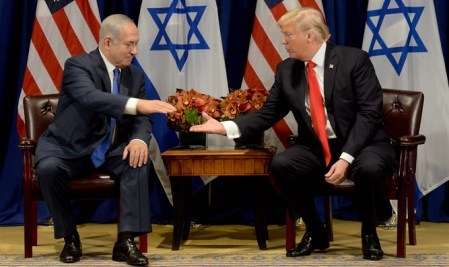
Netanyahu and Trump meet Avi Ohayon/GPO

The official added that Israel has established an unofficial understanding with the Trump administration regarding construction in Judea and Samaria, whereby Israel will build outside of the larger “settlement blocs”, but will limit announcements of large housing projects to once every few months. For its part, the Trump administration has pledged not to issue condemnations of Israeli housing projects in Judea and Samaria.

“After Trump came into office, Israel and the new American administration set clear criteria for construction that the Americans were not opposed to, such as canceling the distinction between settlement blocs and isolated settlements. In addition, it was made clear that the Americans no longer consider the settlements an obstacle to peace.”

*******************************************

The Civil Administration Higher Planning Committee is slated to meet next week and give final approval to nearly 4,000 new housing units across Judea and Samaria, including the first new construction in the Jewish community in Hevron in some four decades.

On Sunday night, Channel 2 reported that the Netanyahu government has okayed the move, following delays by the Higher Planning Committee, which had originally been scheduled to approve the projects in September.

The new wave of construction, totaling 3,829 homes, includes building in communities outside of the so-called “major settlement blocs”, a significant shift from the limits imposed on projects approved during the Obama administration. Along with larger ‘consensus’ towns such as Ariel and Givat Zeev, the new construction wave includes units in Beit El, Tzofim, Rehalim, Nogohot, Hevron, Tekoa, Kfar Etzion, Avnei Hefetz, Nofim, Kochav Yaakov, Har Bracha, and Maaleh Michmash [Michmas].

According to a government official who spoke with Yediot Ahronot on Sunday, next week’s planned approval for the projects signals the end of the Obama-era condemnations of Israeli housing projects.

The official added that Israel has established an unofficial understanding with the Trump administration regarding construction in Judea and Samaria, whereby Israel will build outside of the larger “settlement blocs”, but will limit announcements of large housing projects to once every few months. For its part, the Trump administration has pledged not to issue condemnations of Israeli housing projects in Judea and Samaria.

“There was a long dry period during the Obama era, and we were hit with condemnations for every construction in the settlement,” the official said.

“After Trump came into office, Israel and the new American administration set clear criteria for construction that the Americans were not opposed to, such as canceling the distinction between settlement blocs and isolated settlements. In addition, it was made clear that the Americans no longer consider the settlements an obstacle to peace.”

INTO THE FRAY: The Taylor Force Act – Putting “Palestine” in perspective

September 1, 2017

INTO THE FRAY: The Taylor Force Act – Putting “Palestine” in perspective, Israel National News, Dr. Martin Sherman, September 1, 2017

The proposed bill, which was recently passed in the Senate Foreign Relations Committee with overwhelming bipartisan support, is designed to stop American financial aid to the Palestinian Authority [PA] until it ceases its generous payments to individuals who commit acts of terrorism and to the families of deceased terrorists.

Perversely, under the prevailing conditions, the more gruesome the act of terror and the longer the sentence imposed on the perpetrator, the greater the remuneration!

Indeed, as the Wall Street Journal points out, under existing circumstances, “U.S. aid becomes a transfer payment for terrorists”.

This is clearly an unconscionable situation and hence legislation to contend with it, and correct it, was not only appropriate, but imperative.

At the end of the day, the clash between Jew and Arab over the Holy Land is a clash between two collectives. For the Jewish collective, the Palestinian collective is—and must be treated as it sees itself: An implacable enemy, not a prospective peace partner.

*********************************

Congress is finally considering legislation to stop the Palestinian Authority from incentivizing violence…This has to stop, and the Taylor Force Act…attempts to do that. As it currently stands, the act would cut U.S. foreign assistance to the ‘West Bank’ and Gaza in its entirety if the “payments for acts of terrorism against United States and Israeli citizens …do not stop…. There should definitely be no ‘pay to slay’, but…[b]eing smart counts for more than being right. And the smart approach is one that also recognizes that innocent Palestinians…should not be forced to pay for the mistakes of a government they cannot control. – David Makovsky et al“The Smart Way to End ‘Pay to Slay’”, Foreign Policy, August 2, 2017.

Lesley Stahl, on CBS’s 60 Minutes on the effects of US led sanctions against Iraq (May 12, 1996): We have heard that half a million children have died. I mean, that’s more children than died in Hiroshima. And, you know, is the price worth it?” 

Madelaine Albright, then U.S. ambassador to the United Nations , subsequently President Clinton’s Secretary of State: I think this is a very hard choice, but the price — we think the price is worth it.

Recently, three members of the well-known think-tank, the Washington Institute for Near East Policy, posted an article on the new legislative initiative, named the Taylor Force Act after the West Point graduate and veteran, who was killed in a terrorist attack in Israel last year.

Appropriate and imperative

The proposed bill, which was recently passed in the Senate Foreign Relations Committee with overwhelming bipartisan support, is designed to stop American financial aid to the Palestinian Authority [PA] until it ceases its generous payments to individuals who commit acts of terrorism and to the families of deceased terrorists.

Perversely, under the prevailing conditions, the more gruesome the act of terror and the longer the sentence imposed on the perpetrator, the greater the remuneration!

Indeed, as the Wall Street Journal points out, under existing circumstances, “U.S. aid becomes a transfer payment for terrorists”.

This is clearly an unconscionable situation and hence legislation to contend with it, and correct it, was not only appropriate, but imperative.

The need for a punitive response to the egregious “pay for slay” custom of the PA was conceded by the previously mentioned Washington Institute article, entitled “The Smart Way to End ‘Pay to Slay’”.

Penned by David Makovsky,  distinguished fellow  and director of the project on the Middle East Peace Process, veteran diplomat Dennis Ross, distinguished fellow and counsellor on the U.S.-Israel Strategic Relationship, and Lia Weiner, a research assistant, it clearly proclaims “There should definitely be no ‘pay to slay’… This has to stop.”

“…the ‘mistakes’ of a government they cannot control”.

However, it cautions against an across-the-board cessation of US funds to the PA, calling for a more nuanced (read “watered-down”) application of the punitive cuts: “Threats of sweeping cuts to Palestinian aid may hurt the cause more than they help.” They warn that “To entirely defund U.S. aid to the ‘West Bank’ and Gaza is…to halt economic and social progress there”, proposing instead an approach that “recognizes that innocent Palestinians…should not be forced to pay for the mistakes of a government they cannot control”.

But making the innocent members of the population pay for the nefarious deeds of governments they “cannot control” has been the hall mark of American policy across the globe for years—even when those governments have been far more tyrannical than the PA.

Indeed, why should “innocent Palestinians” merit greater consideration than “innocents”   in a range of despotic regimes against which the US has imposed punishing, at times crippling, economic penalties—such as Iraq, Iran and North Korea?

For example the US-led UN sanctions against Saddam Hussein-controlled Iraq inflicted wide-spread suffering (see introductory excerpt) on innocent Iraqis—including women, infants and the elderly—who, arguably, had much less chance of influencing the actions of their government than do the “innocent Palestinians” with regard to Abbas’s PA.

A government reflecting popular preferences

Indeed, while it is true that they “have not been able to vote in an election for more than a decade”, and to a large measure cannot “control” the current PA government, they certainly did empower it.  In fact, it is in many ways, a government of their making—and theirs alone.

After all, in the last elections held in 2006, the Islamist terror organization Hamas and PA president Abbas’s Fatah won just over 90% of the vote—with the former winning 74 and the later 45 of the 132 seats in the Palestinian Legislative Council. Interestingly, the third largest party was a faction representing the radical hardline Popular Front for the Liberation of Palestine (PFLP), a terrorist group founded by the infamous George Habash and headed today by Ahmed Saadat, currently in an Israeli prison for his part in planning the 2001 assassination of Israeli minister, Rehavam Zeevi .

Moreover, parties focusing on socio-economic reforms and human rights fared extremely poorly. Thus, the “Third Way” headed by former PA prime minister Salam Fayyad and a former PA Minister, the well-known Hanan Ashrawi, won a paltry 2 seats, while the National Coalition for Justice and Democracy,  headed by prominent physician and human rights activist  Eyad El-Sarraj won, well…none

“Palestine”: What the polls predict

However, not only did the last elections show a vast endorsement of rejectionist views (both Fatah and Hamas –and the PFLP–vehemently reject any recognition of Israel as the nation-state of the Jews), but recent public opinion polls provide little cause for optimism that this is likely to change.Indeed, should Abbas leave his post, the most popular candidates are Fatah’s Marwan Barghouti, currently serving multiple life sentences in Israel for a myriad of lethal acts of terror, and Hamas’s Ismail Haniyeh. 

Moreover, findings for legislatives elections show that almost 70% would vote for either Fatah or Hamas, 10% for all other parties, with over 20% being undecided.

Thus, there is little reason to believe that—were new elections to be held—they would produce a sea-change for the better in the composition of the PA, or its policy.  In fact, there is considerable room for concern that the very opposite might well be true.

But perhaps most damaging to Makovsky, Ross and Weiner’s contention that “innocent Palestinians…should not be forced to pay for the mistakes of a government they cannot control” is the finding that there is near unanimous public endorsement  for the very financial support that the Taylor Force Act is intended to terminate.

“Pay to Slay” & Vox Populi 

Stunningly (or not), a July 2017 survey by Palestinian Center of Policy and Survey Research, headed by the well-known Palestinian pollster, Dr. Khalil Shikaki, found that “an almost total consensus rejects pressure on the PA to terminate payments to Palestinian security prisoners” and   “91% are opposed to the suspension of PA payments to Palestinian security prisoners [i.e. jailed terrorists- MS] in Israeli jails; only 7% support such measure”.

This is precisely the reality mirrored in an article that appeared in Tablet Magazine this week by Alex Kane, according to which” the prisoner payment program is one of the most popular PA programs, and it would be political suicide for the PA to halt it.

So, in stark contradiction to the impression conveyed by Makovsky, Ross and Weiner, the “pay to slay” policy is not something foisted on a reluctant peace-seeking  “innocent” Palestinian population , but is, in fact enthusiastically embraced by it—reflecting nothing more (or less) than vox populi.

Indeed, it is more than a little disturbing to see such “luminaries” as Makovsky and Ross propagating views demonstrably detached from reality, in what appears to be  a misplaced endeavor to create the false impression that, overall, the Palestinians,  share their  worldview—when, in fact,  they clearly seem to have a very different one…

Self-contradictory, self-obstructive “rationale”

But beyond the fact that their contentions sit uneasily with the empirical evidence, they appear to have additional disconcerting implications. Thus, they endorse the view that “although a tough message [should be] sent to the PA about the consequences of incentivizing violence”, they recommend that measures undertaken should “prevent any deterioration in the quality of life for Palestinians lest that lead to greater radicalization”.

This appears to reflect a curious rationale which suggests that if one is punished for bad behavior, then one’s behavior will become…worse???

This never was a consideration in, say, Serbia, where markets, hospitals, buses, bridges and old age facilities—to name but a few civilian targets that were hit in high altitude bombing sorties in the US-led NATO attacks in the Balkans War of the 1990s.

Indeed, the claim that harsh punitive measures against an authoritarian regime will only make the regime –or the population under its control—more recalcitrant flies in the face of the most basic elements of deterrence theory. After all, if the threat of harsh measures cannot coerce the regime to modify its behavior, why should measures less harsh do the trick?

Moreover, if the collective is not forced to feel the consequences of actions carried out in its name- there is clearly no reason for these actions to cease.  This is particularly true in the case of the “pay to slay” practice, which, while it may be implemented by an authoritarian regime, is widely endorsed by the general public. In this context, the rationale advanced by Makovsky, Ross et al appears to be at once both self-contradictory and self-obstructive.

 Clash of collectives 

It is of course somewhat discomforting to see such well-placed and well-connected pundits misread the lay-of-the-land so profoundly. For such gross misperception can only help perpetuate the conflict and its attendant suffering.

Firstly, these misperceptions nourish the false premise that privation drives radicalization, which is clearly disproven by the radicalization of many seemingly well-integrated Muslim youth in Europe, and the fact that in several Arab countries the greatest animosity towards Israel is harbored by the professional, well-to-do echelons of society.

Secondly, they obscure the real nature of the Israel-Arab conflict and hence, hamper the efforts to bring it to an end—diverting efforts toward bogus “causes”.

In this regard, then-defense minister Moshe-“Bogey” Yaalon, in a November 2015 address, correctly diagnosed the conflict as a clash of collectives i.e.  “…predominantly a war of wills, of two societies with conflicting wills”.

But, if the clash is essentially one between collectives, surely victory will require one collective breaking the will of the rival collective. Accordingly, ensuring that said rival can maintain its daily routine hardly seems the most promising stratagem to adopt in an effort to break its will and achieve victory.Indeed, if anything, it would seem the exigencies for a collective victory over an adversarial collective would dictate the diametrically opposite endeavor – disrupt the daily routine of the adversary. After all, misdeeds perpetrated in the name of the Palestinian collective must carry a price, which the collective pays – for if not, it will have no incentive to curb them.

Implacable enemy not prospective peace partner

The Palestinian population is thus not some hapless victim of the terror groups, as some might suggest but the very crucible from which such groups have emerged. It has by its own hand, by its deeds and declarations, made it clear that it will not—except on some temporary, tactical basis –brook any manifestation of Jewish political independence/national sovereignty) “between the River and the Sea”.

At the end of the day, the clash between Jew and Arab over the Holy Land is a clash between two collectives. For the Jewish collective, the Palestinian collective is—and must be treated as it sees itself: An implacable enemy, not a prospective peace partner.

Accordingly, the conflict, as one between collectives cannot be individualized .One collective must emerge victorious, the other vanquished. Only then, after victory/defeat, can the issue of personal misfortune be addressed.

This, then, is the perspective in which Palestinian society must be placed—and the perspective from which the formulation of the Taylor Force Act be addressed.

Martin Sherman is the founder and executive director of the Israel Institute for Strategic Studies.