Posted tagged ‘Peace Process’

Je Suis Jihad

January 9, 2015

Je Suis Jihad, Center for Security Policy, Frank Gaffney, Jr., January 9, 2015

2865661987

It was an act of violence prescribed by shariah to punish what that code deems to be a capital offence: giving offense to Muslims by caricaturing, or even just portraying pictorially, the founder of their faith, Mohammed. Unfortunately, acknowledging this reality is a practice that continues to be eschewed by governments on both sides of the Atlantic and by many in the media – even as they decry the attacks.

Therefore, it would be clarifying if, as those who profess solidarity with the fallen and their commitment to freedom of expression by declaring “Je suis Charlie” (I am Charlie) would also acknowledge the impetus behind the perpetrators: “Je suis jihad.”

*****************

In the aftermath of the murderous attack on the staff of Charlie Hebdo, the iconically irreverent French satirical journal, there is a widespread – and welcome – appreciation that the Islamic supremacist perpetrators sought not only to silence cartoonists who had lampooned Mohammed. They wanted to ensure that no one else violates the prohibitions on “blasphemy” imposed by the shariah doctrine that animates them.

In other words, the liquidation of twelve of the magazine’s cartoonists and staff – and a police officer (a Muslim, as it turns out) assigned to protect them after an earlier 2011 firebombing of its offices – was an act of jihad. Not “workplace violence.” Not antisceptic “terrorism” or the even more opaque “violent extremism.”

It was an act of violence prescribed by shariah to punish what that code deems to be a capital offence: giving offense to Muslims by caricaturing, or even just portraying pictorially, the founder of their faith, Mohammed. Unfortunately, acknowledging this reality is a practice that continues to be eschewed by governments on both sides of the Atlantic and by many in the media – even as they decry the attacks.

Therefore, it would be clarifying if, as those who profess solidarity with the fallen and their commitment to freedom of expression by declaring “Je suis Charlie” (I am Charlie) would also acknowledge the impetus behind the perpetrators: “Je suis jihad.”

Such a step could begin a long-overdue correction in both official circles and the Fourth Estate. Both have actually encouraged the jihadists by past failures to acknowledge the reality of jihad and shariah, and by serial accommodations made to their practitioners.

One of the most high-profile and egregious examples of this phenomenon was President Obama’s infamous statement before the United Nations General Assembly in September 2012 – two weeks after he first, and fraudulently, blamed the attack on U.S. missions in Benghazi, Libya on a online video that had offended Muslims: “The future must not belong to those who slander the prophet of Islam.”

This outrageous submission of the constitutional freedom of speech to shariah not only tracked with the sorts of statements one might have heard from global jihadists like al Qaeda’s Osama bin Laden, the Taliban’s Mullah Omar or the Supreme Guide of the Muslim Brotherhood. It was of a piece with an agenda the Obama administration had been pursuing since its inception: finding ways to satisfy the demands of another, less well known, but exceedingly dangerous jihadist group – the supranational Organization of Islamic Cooperation (OIC).

As documented in a superb film on the subject entitled Silent Conquest: The End of Freedom of Expression in the West (spoiler alert: I appear in this documentary, as do most of the preeminent international champions of freedom of expression), starting in March 2009, Team Obama began cooperating with the OIC in its efforts to use the UN Human Rights Council (UNHRC) to impose what amounted to shariah blasphemy laws worldwide. This collaboration ultimately gave rise to UNHRC Resolution 16/18 entitled, “Combating Intolerance, Negative Stereotyping and Stigmatization of, and Discrimination, Incitement to violence, and Violence against Persons based on Religion or Belief,which was adopted with U.S. support in March 2011. Despite its pretense of protecting persons of any religion or belief, the motivation behind and purpose of Res. 16/18 was to give Islamic supremacists a new, international legal basis for trying to impose restrictions on expression they would find offensive.

Resolution 16/18 is, in other words, a form of what the Muslim Brotherhood calls “civilization jihad” – a stealthy, subversive means of accomplishing the same goals as the violent jihadists worldwide: the West’s submission, and that of the rest of the world, to shariah and a caliph to rule according to it.

It fell to then-Secretary of State Hillary Clinton to try to accommodate the Islamic supremacists’ demands. She launched something called the “Istanbul Process” which brought the United States, the European Union and the Organization of Islamic Cooperation together to find ways of giving force to Res. 16/18. On July 15, 2011, after paying lip service to the fact that, “for 235 years, freedom of expression has been a universal right at the core of our democracy,” Mrs. Clinton announced:

We are focused on promoting interfaith education and collaboration, enforcing anti-discrimination laws, protecting the rights of all people to worship as they choose, and to use some old-fashioned techniques of peer pressure and shaming, so that people don’t feel that they have the support to do what we abhor.

The Charlie Hebdo attack is a particularly vivid reminder of what comes of such appeasement and how it encourages jihadists – pursuant to their shariah ideology – to redouble their efforts, not just through stealth but through violence, to achieve our absolute submission. If are to have any hope of preventing more such incidents in the future, let alone far worse at the hands of shariah’s adherents, we must acknowledge the true nature of these enemies and adopt a comprehensive and effective counter-ideological strategy for defeating them.

IDF pulls units from locations bordering Gaza, ignoring rising Egyptian military and al Qaeda activity

January 4, 2015

IDF pulls units from locations bordering Gaza, ignoring rising Egyptian military and al Qaeda activity, DEBKAfile, January 4, 2015

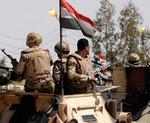
Egyptian_troops_SinaiEgyptian troops battling terrorists in Sinai

Israelis living in a string of villages and towns bordering on the Gaza Strip protested in vain against Defense Minister Moshe Ya’alon’s decision to withdraw the military presence keeping them safe, especially since the summer war on Gaza.

Four significant security events in the last 48 hours on both sides of the border added to their concerns:

Their government, at its weekly cabinet meeting in Jerusalem Sunday, Jan. 4, set up a committee to expedite the transfer of the bulk of IDF facilities from the center of the country to the south.

At the same time, Israelis living in the south within range of the Hamas-ruled Gaza Strip saw the soldiers heading out and were advised to put their trust in local paramilitary “preparedness squads” taking over from the army. The local population believes that they are not up to the job of safeguarding them from more terrorist aggression – by missile, tunnel or intrusion.

Also Sunday, Egypt began expanding the security buffer zone along the 14km of the Gaza-Sinai-Israel border, doubling its breadth from one half to a whole kilometer. The mostly Palestinian inhabitants of this zone were evacuated.

Saturday, Jan. 3, Egyptian troops raided three towns in northern Sinai: Rafah (which is part located in the Gaza Strip), El Arish and Sheikh Zuweid, killing 7 militants of Ansar Beit al-Maqdis, which last month pledged allegiance to the Islamic State of Iraq and the Levant, and jihad against Egypt and Israel.

A few hours later, an Egyptian army explosives expert was killed and several soldiers injured when a large bomb planted on a road in Sheikh Zuweid blew up when they tried to dismantle it.

Saturday night, the IDF commander of the Gaza Division, Brig. Gen. Itay Virov tried to calm dwellers across from the Gaza Strip, who were up in arms about the withdrawal of their military safety net. He addressed members of Kibbutz Nahal Oz with a rare burst of frankness. He spoke of military policy, but his words no doubt reflected the strategic thinking of Prime Minister Binyamin Netanyahu, Defense Minister Ya’alon, the outgoing Chief of Staff, Lt. Gen. Benny Gantz, and his successor next month Maj. Gen. Gadi Eisenkott.

The general may be commended for laying the truth about official policy on the table. However, instead of calming his audience, he bared evaluations that may give the rest of the country sleepless nights as well.

Here are the high points of his Nahal Oz lecture:

  • Israel can’t deter Gazan Palestinians from making war, because they have no other options. So deterrence in this case is an empty value.
  • Israel deliberately avoided going all the way to remove Hamas from power in Gaza in the summer war because salafist jihadists and al Qaeda would have moved in to replace them. It was deemed better to rely on Egypt to grapple with the terrorist threat, including al Qaeda, rather than the IDF.
  • Brig. Virov termed the last Gaza operation a campaign based on the doctrine of prevention rather than a war of aggression.
  • The political wing of Hamas looks after the population and wants peace and quiet, whereas the military wing lost no time in restoring the tunnels Israel blew up, conducting scores of test launches of rockets, and training hard for the next round of combat with Israel.
  • Israel therefore has no option but to prepare for a replay of Defense Edge with operations 2, 3 or even 4. Hamas must be degraded militarily each time – but not so far as to be rendered incapable of buttressing the Hamas regime.
  • The conclusion drawn from Gen. Virov’s lecture was that the Netanyahu government has provided Hamas-Gaza with a political and military guarantee of safety.

Like all policies, even those well thought out, this one too carries a price tag.

The general spoke of Hamas in terms of an independent entity whose operations and impact are confined to the Gaza Strip. He refrained from mentioning that, as recently as December, both of Hamas’ branches, the military and the political, jumped aboard the Iran-led Iraqi-Syrian-Hizballah alliance. This Palestinian group is now subject to Tehran’s policy decisions and directives. This omission from Israel’s policy calculations could be dangerous. Clearly, an undefeated Hamas remains a lasting menace.

Tehran’s decisions regarding Hamas may have an overarching effect, possibly touching on the moves directed by President Barack Obama. (See our Jan. 1 article on Obama’s New Year gift to Israel and the Middle East.).

Israel’s policy of relying on the Egyptian army to contain Al Qaeda’s Sinai network also comes at a price.

For now, Israel has quietly consented to large-scale Egyptian military strength entering Sinai: One and a half divisions, including fighter squadrons and tank battalions, have taken up positions, nullifying the key demilitarization clause of their 1979 peace treaty.

And that’s just for starters.

What Were Armed US Consulate Staff Doing near Adei Ad?

January 4, 2015

What Were Armed US Consulate Staff Doing near Adei Ad? Israel National News,  Ari Soffer, January 4, 2015

(Please see also ‘Deport US Consulate Staff Who Threatened Jews’ and related update links in my parenthetical comment there. This is a further update.– DM)

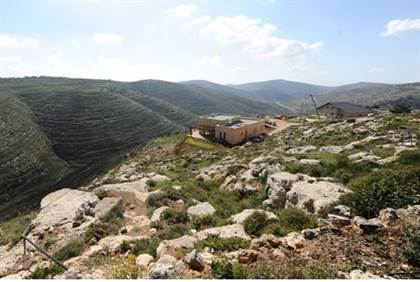
img557200Adei Ad is located in the Shiloh bloc north of JerusalemMendy Hechtman/Flash 90

Security source says ‘no question’ US Consulate staff pointed their weapons during Friday confrontation. Planned provocation or blunder?

****************

The full details of Friday’s clash between residents of the Jewish village of Adei Ad in Samaria and a delegation from the US Consulate in Jerusalem – which very nearly escalated into a fully-fledged shootout between the sides – are still emerging.

But those details which have emerged so far paint a worrying picture regarding the conduct of Consulate staff – who either willingly took part in a planned provocation, or else, in a staggering show of irresponsibility and unprofessionalism, recklessly blundered into a volatile and potentially deadly situation without the slightest idea of what they were doing.

Roughly two hours before the start of Shabbat, a group from the Consulate, escorted by armed (apparently American) guards and several residents of the Arab village of Turmus Ayya, descended en-masse and unannounced on an area within 50 meters of Adei Ad’s southwestern edge. Neither the IDF nor local residents were informed of the visit beforehand.

The Consulate delegation had apparently been “invited” by Palestinian Arabs from Turmus Ayya, many of whom hold US citizenship, ostensibly to see the site of what Arabs claim was an “attack” by Adei Ad residents on an olive orchard. That incident was originally reported Thursday night by the PA’s Bethlehem-based Maan News, which claimed that Jewish “settlers” had uprooted 5,000 olive trees – a rather incredible number to those familiar with quite what such a mammoth task would entail. Subsequent reports later revised the number down to 500, although no independent verification or evidence of the alleged damage has surfaced as yet.

Adei Ad residents, alarmed at the unannounced arrival of a large groupfrom a Palestinian village within meters of their community, rushed out to confront them. A brief verbal altercation ensued which quickly escalated, with youths from Adei Ad hurling rocks at the delegation, causing some damage to a Consulate vehicle.

At this point the accounts vary; witnesses from Adei Ad say Consulate staff drew their weapons – an M-16 and a handgun – following which residents called for backup from Adei Ad’s own security team. The Consulate, for its part, has denied any weapons were drawn at all. Either way, the American delegation beat a hasty retreat.

Notably, at no point during the confrontation was the IDF alerted by the Consulate team; only after leaving the scene did the Americans call the army, who quickly responded and launched an investigation, which is still ongoing.

img73901Damage to US Consulate vehicle Rabbis for Human Rights

Whatever the case, Jewish residents of Adei Ad and surrounding communities in the Shiloh bloc, located in the Binyamin region to the north of Jerusalem, are demanding answers. Angry residents say the incident was clearly a planned provocation, and have expressed their astonishment at the fact that an armed entourage from the US Consulate would arrive at a contested spot without coordinating their visit with the IDF in advance.

Indeed, regardless of the intent behind the visit, one Adei Ad resident pointed out that it was a clear recipe for disaster.

Apart from being the location of a protest in December 10th in which senior PA official Ziad Abu Ein died of a heart attack, the site of Friday’s confrontation is also the precise spot where a group of Palestinians attempted to infiltrate Adei Ad just two weeks ago.

“Two weeks ago at that exact place a horse was stolen,” said the resident, who asked to remain anonymous. “At 10 p.m. that same night dozens of Arabs from a nearby village came up to Adei Ad at the same spot, and residents came out to keep them away.”

Recounting Friday’s incident, he said residents had no idea Consulate staff were present at all. All they saw, he said, was “Arabs approaching, accompanied by what looked like a group of Europeans – we didn’t know who they were exactly. Often foreign anarchists join the Arabs in carrying out violence or provocation.”

Due to the tense relations between Jews and Arabs in the area, Arab farmers must contact the IDF before working land that abuts Adei Ad in order to avoid any confrontations. For their part, Adei Ad residents have long complained that they have been regularly targeted by Arab thieves and vandals.

“About two years ago a group of Arabs actually came right up to my house, right into the enter of Adei Ad, and stole a whole herd of sheep. In the past they’ve stolen horses, they stole a tractor, building equipment,” the resident recounted.

“The Arabs know that if they want to come that close to Adei Ad to do agricultural work they need to let the army know first to escort them. So any time Arabs approach without army supervision – particularly in that place where two weeks ago there was an incident – that’s a sign that they are coming to cause trouble… to attack or damage property,” he added.

He said locals had long given up on the prospect of receiving help from police, who he accused of totally avoiding their responsibilities and only agreeing to investigate Palestinian accusations against them.

“We receive no backing from the police,” he lamented. “Every time there is an incident of robbery by the Arabs the military refuses to deal with it because they don’t look at it as life-threatening; and the police… they tell us that it’s out of their jurisdiction.

“On the other hand, every time the Arabs steal something or cause trouble they then go and report us to the police – that’s how they work – so it’s always a one-sided investigation, because the police claim they have no jurisdiction over the Arab villages, only over us! No one has ever been charged, no property has ever been returned.”

He emphasized that despite the negative characterization of Adei Ad and surrounding Jewish communities in the area by some media outlets, residents are not interested in trouble and just want to get on with their daily lives in peace.

“We have much better things to do with our lives – we have our children and families, and we have jobs,” he said. “We don’t enjoy going out and having rock-throwing fights… no one seems to realize… but we feel we are under threat and that if we don’t do it the next step is a terrorist attack.”

Responding to American denials that Consulate staff pointed their guns at residents, a local security source said there was “no question” they hadindeed drawn their weapons, based on the individual testimony of numerous witnesses.

The security source, who also asked to remain anonymous, said one American “with ginger hair” was seen pointing his pistol at residents, who were unarmed, from inside of his car after rolling down the window. The other armed man then did the same with an M-16 rifle.

It was then that the situation threatened to get out of control.

“News spread that some people had approached the town with weapons, and they called for help,” prompting armed members of the local civilianfirst-response team to rush to the site, he recounted.

Luckily, “at that point it seems like the Americans thought it would be a good time to leave… and after that there was a brief confrontation between the Arabs and (Jewish) residents until the army arrived.”

He said that although an investigation was still ongoing, the conduct of the Consulate delegation was “suspicious.”

“Why didn’t they call anyone while the confrontation was going on?” he asked.

He also described the “strange” behavior of the Consulate guards when they were finally met by IDF forces and first-responders, describing them as looking sheepish and, unprompted, immediately insisting they hadn’t drawn their weapons.

Marc Prowisor, a resident of the nearby town of Shiloh, said the latest confrontation posed some “difficult questions.”

“Were members of the American Consulate knowingly taking part in a larger provocation – which is against the law?” asked Prowisor who, as Director of the One Israel Fund charity which helps secure local communities, is in regular contact with local security forces.

A Sad State of Affairs: The Kerry Record

January 2, 2015

A Sad State of Affairs: The Kerry Record, World Affairs JournalJoshua Muravchik, November/December, 2014

(Kerry likely agrees with Obama as to his quite foreign foreign policies and, equally likely, we are stuck with both at least until Obama leaves the White House.

Kerry I'm an idiot

The most bothersome current aspects of Obama-Kerry foreign policies are the extent to which they trust Iran and how they deal with it and the P5+1 negotiating group. — DM)

John_Kerry_and_Benjamin_Netanyahu_July_2014 (1)

Although Kerry’s anti-American ideology has moderated to some degree from his fiery days as an antiwar leader, he has misrepresented but never repudiated his past. Especially consistent has been his inclination to see the best in America’s enemies, from Madame Binh to Comandante Ortega to Bashar Assad. Israelis were shocked this summer that Kerry came up with a plan molded by Turkey and Qatar to fit the interests of Hamas at their own expense. Had they known him and his record better, they might not have been.

***************

The Gaza war of July and August 2014 occasioned the sharpest frictions in memory between the United States and Israel, highlighted by a cease-fire proposal offered by Secretary of State John Kerry that Israel’s security cabinet rejected unanimously. Kerry’s plan envisioned a seven-day cease-fire, during which the parties would negotiate “arrangements” to meet each of Hamas’s demands about the free flow of people and goods into Gaza and the payment of salaries of Hamas’s tens of thousands of employees. As for Israel’s demands about destruction of tunnels and rockets and the demilitarization of Gaza, these were not mentioned at all, except in the add-on phrase that the talks would also “address all security issues.”

The document cited the important role to be played by “the United Nations, the Arab League, the European Union, the United States, Turkey, [and] Qatar.” Conspicuous by their absence from this list were Israel, Egypt, and the Palestinian Authority. These three had also not been invited to the Paris meetings where Kerry worked on his ideas with leaders of the countries and bodies mentioned.

Barak Ravid, diplomatic correspondent for the liberal Israeli newspaper Haaretz, wrote that the proposal “might as well have been penned by Khaled Meshal [head of Hamas]. It was everything Hamas could have hoped for.” The centrist Times of Israel’s characteristically circumspect editor, David Horovitz, branded Kerry’s initiative “a betrayal.” And left-leaning author Ari Shavit commented that “Kerry ruined everything. [He] put wind in the sails of Hamas’ political leader Khaled Meshal, allowed the Hamas extremists to overcome the Hamas moderates, and gave renewed life to the weakened regional alliance of the Muslim Brotherhood.”

Turkey and Qatar are the mainstays of that alliance and were chosen by Kerry as his principal interlocutors because they are Hamas’s main backers. This brought protests from the Palestinian Authority, led by President Mahmoud Abbas’s movement, Fatah, the secularist rival to Hamas. That group declared that “whoever wants Qatar and Turkey to represent them can emigrate and go live there. Our only legitimate representative is the PLO.”

The shock of Palestinian and Israeli leaders would have been less, however, if they had been more familiar with the record of John Kerry. Spurning America’s friends in pursuit of deals with their nemeses was perfectly in character for the secretary of state. The hallmark of his career has been to denigrate America itself, while supporting the claims of its enemies.

That career began in 1969, when, months after returning from a tour of duty in Vietnam, Kerry sought and received a military discharge so that he might run for Congress. His campaign as a peace candidate sputtered, but his authenticity as a Vietnam vet established him as a presence in the burgeoning antiwar movement. In May 1970, he traveled to Paris for an unpublicized meeting with Viet Cong representatives, and, perhaps at their suggestion, he joined up upon his return with Vietnam Veterans Against the War. VVAW was headed by Al Hubbard, a former Black Panther. Kerry was instantly given a top role, twinning with Hubbard as the public face of the organization.

At a VVAW protest in Washington, DC, in April 1971, Kerry joined other veterans in throwing away their military medals in front of news cameras. The entire demonstration was punctuated by Kerry’s appearance before the Senate Foreign Relations Committee, where he offered dramatic testimony about American atrocities in Vietnam based on accounts heard at a VVAW inquest a few months earlier. He spoke of veterans who said:

They had personally raped, cut off ears, cut off heads, taped wires from portable telephones to human genitals and turned up the power, cut off limbs, blown up bodies, randomly shot at civilians, razed villages . . . poisoned food stocks, and generally ravaged the countryside.

These acts, Kerry emphasized, “were not isolated incidents but crimes committed on a day-to-day basis with the full awareness of officers at all levels of command.”

When, at the behest of aghast senators, the Naval Criminal Investigative Service conducted a formal inquiry into the stories presented at the VVAW inquest, it reported that many of the VVAW witnesses cited by Kerry refused to cooperate, although promised immunity. Others were clearly crackpots, and several swore, and provided witness corroboration, that they had not participated at the inquest at all and had no idea who had appeared in their names. The entire exercise had been inspired and largely engineered by Mark Lane, whose book on the same subject earlier that year had been panned by New York Times columnist James Reston Jr. as “a hodgepodge of hearsay,” while that paper’s book reviewer, Neil Sheehan, who had reported from Vietnam and would soon break the Pentagon Papers, revealed that some of Lane’s “witnesses” had not served in Vietnam. (The political scientist Guenter Lewy documents these events in his 1978 book America in Vietnam.)

In August 1971, four months after his Senate appearance, Kerry made another trip to Paris, to meet with Madame Nguyen Thi Binh, foreign minister of the Viet Cong, this time in full view, for his first exercise in international diplomacy. He returned touting the “peace plan” of the Viet Cong, explaining: “If the United States were to set a date for withdrawal, the prisoners of war would be returned.” Although he frequently accused American leaders of lying, he took the Communist leaders’ statements at face value, asserting that their peace plan “negates very clearly the argument of the president [Nixon] that we have to maintain a presence in Vietnam to use as a negotiating [chip] for the return of those prisoners.”

Kerry’s dismissal of the statements of US leaders as lies and his credulity toward those of the Vietnamese Communists reflected a broader difference in attitude toward the two sides to the conflict. Ho Chi Minh, who had spent long years as a henchman of Stalin’s, serving the Comintern in several countries, was in Kerry’s admiring eyes “the George Washington of Vietnam” who aimed only “to install the same provisions into the government of Vietnam” that appeared in the American Constitution. America, in contrast, had itself strayed so far from those principles that it needed a “revolution” to restore them.

Kerry’s colleagues in VVAW undoubtedly shared this sentiment, and in November 1971, at a conference of its leadership in Kansas, the group considered just how far down the path of revolution it was willing to go. It debated, although ultimately rejected, a proposal to commence a campaign of terrorist violence and assassination of pro-war US senators. When he ran for president in 2004, Kerry denied he had been present at this conclave, but when FBI files secured by the Los Angeles Times under the Freedom of Information Act placed him there, he retracted that denial in favor of the statement that he had “no personal recollection” of it.

Is this plausible? Gerald Nicosia, author of a highly sympathetic history of the antiwar movement, reported, in May 2004, that “several people at the Kansas City meeting recently said to me or to mutual friends that they had been told by the Kerry campaign not to speak about those events without permission.” Why the urgency to cover up? And how would the campaign know who was there, that is, whose silence to seek, if Kerry had no recollection of the meeting? One of Nicosia’s interviewees, John Musgrave, said “he was asked by Kerry’s veterans coordinator to ‘refresh his memory’ after he told the press Kerry was in Kansas City. Not only is Musgrave outraged that ‘they were trying to make me look like a liar,’ but he also says ‘there’s no way Kerry could have forgotten that meeting—there was too much going on.’”

This puts it mildly: the event was memorably raucous, with debates over the proposals for violence and for napalming the national Christmas tree, furious factional fighting, the discovery of eavesdropping bugs in the building leading to a quick move to another location, and above all an angry showdown between Kerry and Hubbard over revelations that the latter had never been in Vietnam. This particular contretemps was punctuated by Hubbard’s dramatically pulling down his pants to show scars he claimed he sustained in Vietnam. The mayhem culminated in Kerry’s announcing his resignation from the group’s executive. And Kerry had “no personal recollection” of being there?

Although Kerry appeared as a speaker for VVAW for about a year following this resignation, he then faded from national view for a decade, climbing the ladder of local and state politics in Massachusetts before winning election to the US Senate in 1984. The Senate, he later said, “was the right place for me in terms of . . . my passions. The issue of war and peace was on the table again.” What put it on the table were the anti-communist policies of President Ronald Reagan, which Kerry deeply opposed. A year earlier, Reagan had ordered the invasion of Grenada, which Kerry scorned as “a bully’s show of force [that] only served to heighten world tensions and further strain brittle US-Soviet and North-South relations.”

In contrast, Kerry ran on a platform of the Nuclear Freeze, a popular movement opposing US plans to counterbalance a large Soviet nuclear buildup over the previous decade. Kerry made sure to score one hundred percent on a test of candidates’ positions presented by a group called Freeze Voter ’84, and he proposed to cut the defense budget by nearly twenty percent, including “cancellation of twenty-seven weapons systems” and “reductions in eighteen other[s],” according to the Boston Globe. He cited his own work with VVAW as a counterpoint: “We were criticized when we stood up on Vietnam. . . . But we’ve been borne out. We were correct. Sometimes you just have to stand and hold your ground.”

In the Senate, he secured a coveted seat on the Foreign Affairs Committee and turned his attention to the fraught issue of policy toward Central America, a small region that had assumed inordinate geopolitical importance by becoming one of the front lines in the Cold War. A Marxist-Leninist party, the Sandinista National Liberation Front, had seized power in Nicaragua and was aiding likeminded movements in El Salvador and other nearby states while the Reagan administration supported anti-Communist guerrillas inside Nicaragua, the so-called “Contras.”

Kerry lent his name to Medical Aid for El Salvador, which gave non-lethal aid to the Communist side in that civil war. On February 16, 1982, an Associated Press story quoted actor Ed Asner, leader of a Hollywood group that raised much of the funding for this project, as explaining that “medical supplies are to be purchased in Mexico and shipped clandestinely to the Democratic Revolutionary Front in El Salvador.” However, the issue of US aid to El Salvador’s anti-Communist government became overshadowed by debate about aid to the Nicaraguan “Contras.”

As the Senate neared a decisive vote, Kerry and Senator Tom Harkin undertook a dramatic maneuver to try to head off approval of the Reagan administration’s request for Contra funding. They flew to Managua, the Nicaraguan capital, for their own summit meeting with the country’s strongman, “Comandante” Daniel Ortega. The results resembled those of his 1971 meeting with Madame Binh. Ortega handed Kerry a “peace plan” according to which the US would first end all aid to the Contras, and the Sandinistas would then initiate a cease-fire and restore civil liberties. Kerry justified undercutting the US government in this way by faulting Reagan’s failure “to create a climate of trust” with the Sandinistas. He, in contrast, offered them trust in abundance, calling Ortega’s plan “a wonderful opening.” He took to the Senate floor to say, “Here, in writing, is a guarantee of the security interest of the United States.”

A year later, in 1986, in another Senate debate on Contra aid, Kerry voiced one of the odder claims about his Vietnam experience. Warning against the slippery slope of military involvement and against the duplicity of our own government, Kerry delivered a floor speech containing this assertion:

I remember Christmas of 1968, sitting on a gunboat in Cambodia. I remember what it was like to be shot at by Vietnamese and Khmer Rouge and Cambodians, and have the president of the United States telling the American people that I was not there; the troops were not in Cambodia. I have that memory which is seared—seared—in me.

The “seared” part was a nice touch, especially in view of the fact that the whole thing had not happened (although Kerry had been repeating the story since as early as 1979). In the course of Kerry’s 2004 presidential campaign, the Swift Boat Veterans for Truth, former crewmen on the type of vessel on which Kerry served who were angered by his antiwar activities, attacked this claim among other aspects of Kerry’s military history. In this case, however, unlike in response to some points raised by Kerry’s detractors, no shipmate of Kerry’s could be found to corroborate his version. Soon, his spokesmen began to hedge. One aide explained that Kerry’s boat had been “between” Vietnam and Cambodia. But the two countries are contiguous: there is no “between,” so another spokesman backed down further, explaining that Kerry had merely been “near” Cambodia.

Then, Douglas Brinkley, who authored a laudatory history of Kerry’s military service, issued another explanation, apparently at the behest of the campaign. On Christmas 1968, the moment of Kerry’s “seared” memory, he was fifty miles from Cambodia, said Brinkley, but his boat “went into Cambodia waters three or four times in January and February 1969.” Oddly, however, Brinkley’s book, which covered those two months in painstaking detail at a length of nearly one hundred pages, even to the extent of locating the sites of battles, made no mention of Kerry’s having crossed into Cambodia. And the campaign soon pulled the rug from under Brinkley by issuing a new claim, namely, that Kerry’s boat had “on one occasion crossed into Cambodia.” Three of Kerry’s shipmates, two of whom were supporting his campaign, categorically denied even this minimized claim.

In that, they are supported by no less a source than Kerry himself, in the form of a journal he kept while on duty. Substantial passages of it are reproduced in Brinkley’s book, and one of them reads:

The banks of the [Rach Giang Thanh River] whistled by as we churned out mile after mile at full speed. On my left were occasional open fields that allowed us a clear view into Cambodia. At some points, the border was only fifty yards away and it then would meander out to several hundred or even as much as a thousand yards away, always making one wonder what lay on the other side.

He was never to learn the answer because this diary entry was from his final mission.

Kerry was of course right to link Central America to Southeast Asia. They were both nodes in the Cold War, the epic struggle that defined international politics for forty years, including the first two decades of Kerry’s political engagement, from the time he returned from Vietnam in 1969 until the Berlin Wall came down in 1989. Whatever the rights and wrongs of America’s entry into Vietnam, or its actions in Central America or elsewhere, Kerry perverted the basic issue of the Cold War, always viewing America’s actions as bellicose and malign, while casting those of the Communists, like “George Washington” Ho Chi Minh, in the most favorable light.

To many, the Cold War’s benign denouement—the fall of the Wall and the USSR’s disappearance into the ash bin of history—vindicated Reagan’s approach, but Kerry appears to have entertained no second thoughts despite these outcomes. When it came to addressing post–Cold War issues, he remained reflexively averse to the exercise of American power. Kerry had lamented as “not proportional” Reagan’s 1986 bombing of Libyan dictator Muammar el-Qaddafi’s residence in response to a Libyan terror attack on US servicemen in Germany. The Middle East was also the scene of the first military showdown after the Cold War, when Saddam Hussein’s Iraq swallowed whole the neighboring state of Kuwait, in 1990. At the time, Kerry opposed the Bush administration’s request for authorization of military action, saying that those “of the Vietnam generation . . . come to this debate with a measure of distrust [and] a resolve . . . not [to be] misled again.” He concluded his Senate speech by reading a passage from an antiwar novel by the American Communist Dalton Trumbo.

With the Cold War’s end, and America’s demonstration of will and strength in driving Hussein’s forces from Kuwait, the defining issue of the 1990s became the wars of Yugoslavia’s dissolution. Here, the prime issue was whether or not to lift an international arms embargo that rendered Bosnia’s Muslims naked before their predators, the well-armed Serbs. As public opinion reacted to news accounts of the grisly results of this imbalance, the Senate voted to lift the embargo, over the objections of Kerry, who helped to lead the opposition.

With the terrorist attacks of September 11, 2001, the American public was awakened from its post–Cold War indifference toward foreign affairs. A fierce patriotism burst forth, and with it a determination to take down those who had attacked us. Thus, preparing for a 2004 presidential bid, Kerry moved to reconfigure his image. The antiwar veteran was suddenly replaced by the military hero, and the Democratic nominating convention was replete with uniforms and military gestures, highlighted by Kerry’s sharp salute to the assemblage while uttering the words, “reporting for duty.” Already, his rejected service medals had miraculously reappeared mounted and framed on his Senate office wall. Asked how that was possible, as he had been photographed throwing them away, Kerry explained that the medals he tossed were not his own but actually belonged to another veteran.

The dramatic reincarnation did not quite come off, as Kerry was dogged by Vietnam veterans, led by fellow Swift Boat crewmen, still furious at how he had blackened their names. And the awkwardness of his transformation was symbolized by his much-ridiculed explanation of his stance on funding the 2003 US invasion of Iraq: “I actually did vote for the $87 billion before I voted against it.”

In his later years in the Senate, Kerry made the issue of Syria his own. He took several trips to Damascus where, according to a June 2011 account in the Wall Street Journal, he “established something approaching a friendship with [Syrian dictator Bashar] Assad.” When Barack Obama came to office, he made Kerry his point man in efforts to improve US-Syrian relations. Kerry put his endorsement on diplomatic proposals he received in Damascus, including an offer by Assad to engineer a Palestinian unity government embracing Fatah and Hamas. The benefits to the US, not to mention Israel, of such unity were not self-evident, but in any event, talks between the two Palestinian factions were already under way, mediated by Egypt, which was closer to Fatah. Why it would be advantageous to switch the sponsorship to Syria, the ally of Hamas, was hard to grasp. Nonetheless, Kerry saw in Assad’s proposal the prospect of “a major step forward in terms of how you reignite discussions for the two-state solution . . . . Syria indicated to me a willingness to be helpful in that respect.” In all, as the Journal put it, “Kerry . . . became . . . Assad’s champion in the US, urging lawmakers and policymakers to embrace the Syrian leader as a partner in stabilizing the Mideast.”

In sum, although Kerry’s anti-American ideology has moderated to some degree from his fiery days as an antiwar leader, he has misrepresented but never repudiated his past. Especially consistent has been his inclination to see the best in America’s enemies, from Madame Binh to Comandante Ortega to Bashar Assad. Israelis were shocked this summer that Kerry came up with a plan molded by Turkey and Qatar to fit the interests of Hamas at their own expense. Had they known him and his record better, they might not have been.
The Israelis who back UN hypocrisy

December 29, 2014

The Israelis who back UN hypocrisy, Israel Hayom, Dr. Limor Samimian-Darash, December 29, 2014

[T]he more one delves into the U.N.’s outrageous conduct, the harder it becomes to separate the actions of the international community from the tailwind provided by certain Israelis.

******************

The growing relationship between Iran and the Palestinian Authority, as well as Iran’s arms shipments and its involvement in terrorism, are, as always, not being condemned internationally. This is in addition to the world’s silence about the Palestinian terrorist attacks in recent months, which have included stabbings, vehicular rammings and firebombings. None of these produced a U.N. resolution against the Palestinians. And if the massacre at the synagogue in Jerusalem had not looked like a classic anti-Semitic attack in Europe, it is doubtful we would have heard any condemnation of it at all.

One can, of course, complain about the hypocrisy of the world, and particularly that of European nations, who have continued to ignore the growth of Islamic radicalism and terrorism in the world and have focused instead, in a biased manner, on the Israeli-Palestinian conflict. Alongside this, more and more nations are symbolically recognizing a Palestinian state and turning a blind eye to all Palestinian misdeeds. These moves are indeed symbolic, not just because they have no diplomatic meaning, but also, ironically, because Israel is once again being placed on the altar for sacrifice.

But the more one delves into the U.N.’s outrageous conduct, the harder it becomes to separate the actions of the international community from the tailwind provided by certain Israelis. Indeed, Tzipi Livni, Isaac Herzog and even Avigdor Lieberman have explained to us that this is all happening because of a lack of diplomatic initiative on the part of Prime Minister Benjamin Netanyahu. They do this, of course, without attributing any blame to Palestinian Authority President Mahmoud Abbas, who, despite all the concessions offered by Netanyahu, would not even agree to begin peace talks.

And there are now more false accusations being hurled around, such as the claim that the lack of negotiations following Operation Protective Edge is leading us toward a renewal of hostilities in the Gaza Strip. There is no mention of Hamas or its desire to expel us from the region. There is also no mention of the use of reconstruction funds by Hamas to re-arm itself ahead of the next round of fighting or the fact that the Palestinian Authority was kicked out of Gaza by the Palestinians themselves. No, they say, everything is the Israeli government’s fault for not initiating a diplomatic process.

And even more bluntly, Israeli politicians are directly appealing to the international community to apply pressure on the Israeli government. For example, Livni had the gall to implore U.S. Secretary of State John Kerry to not support the unilateral Palestinian move at the U.N., as this would have strengthened the Israeli Right. Herzog made a similar claim when he sought to dissuade the British parliament from recognizing a Palestinian state.

Former Labor MK Avraham Burg took a different tack, urging his British friends to recognize a Palestinian state and force a diplomatic solution on Israel. And if we look not too far back in history, this was the exact line taken by Livni when she was appointed foreign minister in 2006 by then-Prime Minister Ehud Olmert. Her first speech at the U.N. did not remind the nations of world about the historical right of the Jewish people to the land of Israel. Instead, her debut speech on the world stage was dedicated to presenting her vision of the establishment of a Palestinian state.

These are not some words uttered by one Palestinian government minister or another. And no, they are not a biased report by a BBC presenter. Rather, these are Israeli politicians who, whether they are just trying to butt heads with the government or if they truly believe in the righteousness of Abbas, are ultimately providing fuel for unilateral anti-Israel moves at the U.N. And when they do this, they are helping the lowlifes at the U.N.

The U.S. President is Not Omnipotent

December 28, 2014

The U.S. President is Not Omnipotent, Algemeiner, December 28, 2014. This article was originally published by Israel Hayom.

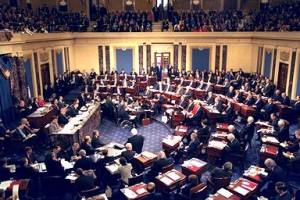
full-senate-300x200The United States Senate.

Will the 114th Congress follow in his footsteps, or will it abdicate its constitutional responsibilities?

Congress has often abdicated its constitutional power in the area of foreign policy, failing to fully leverage the power of the purse: funding, defunding and “fencing.”

***************

White House and State Department officials contend that, irrespective of Congress, President Barack Obama can apply effective diplomatic, commercial and national security pressure and coerce Israel to partition Jerusalem and retreat from Judea and Samaria to the 9-15 mile-wide pre-1967 sliver, surrounded by the violently turbulent and unpredictable Arab street.

U.S. Ambassador to Israel Dan Shapiro recently voiced this inaccurate underestimation of the power of Congress — which has traditionally opposed pressure on Israel, echoing the sentiments of most constituents — saying, “What is unmistakable about our foreign policy system is that the Constitution provides the president with the largest share of power.”

The assertion that U.S. foreign policy and national security are shaped by presidential omnipotence can be refuted by the U.S. Constitution as well as recent precedents. The Constitution was created by the Founding Fathers, who were determined to limit the power of government and preclude the possibility of executive dictatorship. They were apprehensive of potential presidential excesses and encroachment, and therefore assigned the formulation of foreign policy and national security to both Congress and the president. Obviously, the coalescing of policy between 535 legislators constitutes a severe disadvantage for the legislature.

According to the Congressional Quarterly, the U.S. Constitution rectified the mistakes of its predecessor, the Articles of Confederation, upgrading the role of Congress to the primary branch of the U.S. government. “Hence, the first article of the Constitution is dedicated to Congress. The powers, structure, and procedures of the national legislature are outlined in considerable detail in the Constitution, unlike those of the presidency and the judiciary.”

Unlike all other Western democracies — where the executive branch of government dominates the legislature, especially in the area of international relations and defense — the U.S. Constitution laid the foundation for the world’s most powerful legislature, and for an inherent power struggle over the making of foreign policy between the legislature and the executive, two independent, co-equal and co-determining branches of government. Moreover, while the president is the commander in chief, presidential clout depends largely on congressional authorization and appropriation in a system of separation of powers and checks and balances, especially in the areas of sanctions, foreign aid, military assistance, trade agreements, treaty ratification, appointment confirmation and all spending.

Congressional power has been dramatically bolstered since the Vietnam War, Watergate, the Iran-Contra affair and globalization, which have enhanced the involvement of most legislators in international issues, upgraded the oversight capabilities of Congress, dramatically elevated the quality and quantity of some 15,000(!) Capitol Hill staffers and have restrained the presidency.

However, Congress has often abdicated its constitutional power in the area of foreign policy, failing to fully leverage the power of the purse: funding, defunding and “fencing.” Legislators prefer to focus on domestic issues, which represent their constituents’ primary concerns and therefore determine their re-electability. Hence, they usually allow the president to take the lead in the initiation and implementation of foreign and national security policies, unless the president abuses their trust, outrageously usurping power, violating the law, assuming an overly imperial posture, pursuing strikingly failed policies, or dramatically departing from national consensus (e.g., the deeply rooted, bipartisan commitment to the Jewish state). Then, Congress reveals impressive muscle as befits a legislature, which is the most authentic reflection of the American people, unrestrained by design, deriving its power from the constituent and not from party leadership or the president, true to the notion that “the president proposes, Congress disposes.”

For example:

  • On August 1, 2014, Democratic senators forced Obama to separate the $225 million funding of Iron Dome batteries from the highly controversial $2.7 billion immigration and border security bill.
  • Since 1982 the Senate has repeatedly refused to ratify the Convention on the Law of the Sea, and since 1999 it has rejected ratification of the Comprehensive Test Ban Treaty.
  • The January 2013 defense authorization bill tightened restrictions on the transfer of terrorists from Guantanamo to the U.S. In May 2009, Majority Leader Harry Reid foiled Obama’s attempt to close down the detention camp.
  • On February 17, 2011, Obama reluctantly vetoed a U.N. Security Council condemnation of Israel’s settlement policy, due to bipartisan congressional pressure.
  • In September 2012, a $450 million cash transfer to the Muslim Brotherhood regime in Egypt was blocked by Congress.
  • The 2012 budget cut into Obama’s foreign aid spending request by more than $8 billion.
  • In 2009, bipartisan congressional opposition prevented the appointment of Charles Freeman to chair the National Intelligence Council.
  • In 1990-1992, Congress approved a series of amendments, expanding U.S.-Israel strategic cooperation to unprecedented levels despite presidential opposition.
  • In 1990, President George H. W. Bush failed in his attempt to cut Israel’s foreign aid by 5 percent due to congressional opposition.
  • In January 1975, the Jackson-Vanik Amendment was signed into law, in defiance of the president.
  • Congress ended U.S. military involvement in Vietnam (the 1973 Eagleton, Cooper and Church Amendments), Angola (the 1976 Clark Amendment) and Nicaragua (the 1982-1984 Boland Amendments).
  • In 1991, Senator Daniel Inouye fended off administration pressure to withdraw an amendment to upgrade the port of Haifa facilities for the Sixth Fleet: “According to the U.S. Constitution, the legislature supervises the executive, not vice versa.”

Will the 114th Congress follow in his footsteps, or will it abdicate its constitutional responsibilities?

Palestinians desire only true Islamic peace with Jews.

December 28, 2014

Palestinians desire only true Islamic peace with Jews, Dan Miller’s Blog, December 28, 2014

Palestinians are Islamic and Islam is the religion of peace. Don’t forget it, unless you are a hateful Islamophobe and look forward to being murdered.

A You Tube copy of a heart-warming Palestinian instructional video on how to achieve blessed Islamic peace with Jewish oppressors is embedded a few paragraphs below. The video has “gone viral” in the Palestinian social media.

The 1 minute and 13 second-video, as seen below, shows the “teacher” calmly walking up to a “victim,” stabbing him, and walking away.

One of the tactics appears to imitate the Islamic State method of beheading.

The guide to killing Jews teaches that after stabbing the victim, the knife should be twisted to maximize wounds and cause death.

To put the video in proper perspective, here’s an excerpt from Imam Obama’s October 3, 2014 Eid al-Adha greeting to Muslims around the world:

As our Muslim neighbors and friends gather for Eid celebrations, Muslim Americans are among the millions of pilgrims joining one of the world’s largest and most diverse gatherings.  Hajj brings together Muslims from around the world – Sunni and Shiite – to share in reverent prayer, side by side.  It serves as a reminder that no matter one’s tribe or sect, race or religion, gender or age, we are equals in humanity. [Emphasis added.]

On Eid, Muslims continue the tradition of donating to the poor and joining efforts with other faith communities in providing assistance to those suffering from hunger, sickness, oppression, and conflict.  Their service is a powerful example of the shared roots of the world’s Abrahamic faiths and how our communities can come together in shared peace, with dignity and a sense of justice. [Emphasis added.]

And now, the beautiful video showing Palestinian pathways to a shared humanitarian peace between Muslims and Jews with dignity and (social) justice for all:

In similar vein, a Palestinian envoy to Iran recently “said that ‘Israel is a cancer’ that ‘will be destroyed’ . . . ”

anti-Israel-allah

He is the envoy from the Palestinian Authority, Israel’s peace partner in discussions which Secretary Kerry has pushed ever since he first honored and delighted Israel by becoming the U.S. Secretary of State.

Kerry I'm an idiot

Here’s an Andrew Klavan video condemning Israel’s own brutal war on innocent cancer cells. They are probably not the types of cancer cells to which the esteemed Palestinian Authority envoy referred.

Finally, here’s an uplifting video from November of 2011 about the glories of the Arab Islamic Spring and the peace, enlightenment and happiness it is bringing to all whom it touches.

Israel, the Obsession

December 22, 2014

Israel, the Obsession, American ThinkerRichard Baehr, December 22, 2014

[T]here is no clear path back to sanity, nor is there a clear path to the end of the obsession with Israel.

*****************

It has been a pretty typical week on the hate Israel front.  A European Union Court has decided that Hamas is not a terrorist organization, and their previous designation as such had not been justified by real evidence that Europeans had developed, as opposed, say, to information supplied by the United States or Israel.  An international court in Geneva is hearing evidence of Israeli human rights violations.  The United Nations Security Council has been considering a resolution developed by the Palestinian Authority, as well as one by the French that would effectively lay out the terms for Israel’s capitulation over the next few years.  Israel’s peace camp has been working with U.S. Secretary of State John Kerry, encouraging a delay in consideration of the Security Council resolutions, since any action before the upcoming Israeli parliamentary elections could benefit the right-wing parties in Israel.  In other words, there is not even an attempt to hide anymore that the United States is putting its foot down for one particular side in the Israeli election.  Various European countries are endorsing Palestinian statehood on the terms demanded by the Palestinian Authority.  Academic groups, unions, and churches in Europe and the United States are endorsing the boycott, divestment, and sanctions (BDS) movement.  Certain European communities are now “Israeli-frei” – free of Israeli goods (or at least those they can identify and care to avoid).  The U.N. Human Rights Council and the General Assembly, as well as specific agencies whose only task is to bash Israel, are set to get back to work, creating more resolutions and condemnations of the Jewish state.

As Joshua Muravchik makes clear in his outstanding new book, Making David Into Goliath, this obsession with Israel by most nations of the world and the United Nations – or as they are collectively known, “the international community” – as well as by “the global left,” could not have been imagined a half-century back, prior to the Six-Day War.  At that time, Israel was championed by Socialist political parties, and viewed sympathetically as a beleaguered democracy fighting for its existence against a collection of larger anti-Western Arab tyrannies.  There was residual sympathy for Jewish survivors of the Holocaust, many of whom had moved to Israel.  There was no movement for Palestinian nationhood, though certainly violent actions by Arabs aimed at Israel and Jews in the region had been going on for decades.

Muravchik’s book attempts to explain what has happened during this period and why.  A lot changed after the 1967 war, when, instead of little Israel facing off with 21 Arab nations, the conflict was recast with Israel as the big dog, oppressing the Palestinians and occupying their land.  Since the left tends to root for the underdog, Israel no longer fit the bill.  The description of the conflict in the post-1967 telling is of course neither factual nor historical, since there had never been a unique nation of Palestinian Arabs, denied their nationhood – say, the way the Tibetans or the Kurds have been for sixty years, or forever.  The Palestinians became refugees because their leaders refused to accept half a loaf – a state on half of the mandate territory in 1947 – and instead chose to go to war to deny the Zionists their state.  The Arabs of Palestine, even with the support of armies from their Arab neighbor states, lost the war.

When you start a war and lose, there are consequences.

Since 1967, the Palestinians and their allies have been trying to reverse not just the war of 1967, but the 1948 war as well.  Refugees from the 1948 war (and there are not many of them left) are still in refugee camps, unlike any other refugees from any other conflicts then or in the years since, and the descendants of the original refugee population, now from three generations, demands a “right of return” to homes in Israel where they never lived and in fact to a country where they have never been.

The 1948 war produced a population exchange – a larger number of Jews were driven out of Egypt, Tunisia, Morocco, Algeria, Yemen, Iraq, Libya, and other countries than Arabs who left their homes in what became Israel.  Most of the Jewish refugees moved to Israel, where in relatively short order they were out of any temporary refugee camps and absorbed as regular citizens of the state.  That the Arabs have sacrificed generations of their own people to maintain their inflexible hatred of Israel is all one needs to know about why there has been no resolution of the conflict despite serious efforts over the years to accomplish this.

Muravchik, who was once a leftist himself, spends a fair amount of time in the book documenting the impact of Edward Said , who with his disciples has mentored the current U.S. president, Barack Obama.  Said, despite his faked personal history, has had enormous impact introducing moral relativism to studies of the regions, declaring that the West cannot understand “the Orient” and has no right to judge the regimes, the religions, the people.  What the West calls a terrorist group is instead viewed as a resistance fighting for freedom.  The combination of mosque and state is what those in the region know and prefer, not Western parliamentary systems.  Israel is not a beacon with much to offer those in the region, but an imperialist creation and a predator.  Muravchik outlines how in Israel itself, a part of the population is at war with Zionism and is in fact in league with Israel’s external enemies, assisting viperish non-governmental organizations (often funded by European nations) and bigoted journalists.  An increasing number of left-wing Jews in the United States behave as if Israel is an embarrassment, claiming that Israel’s behavior is “not in its name” and calling for an end to the “racist, apartheid“ state.

At one time, the United Nations consisted primarily of democracies who had fought the Axis powers.  With the decolonization of Africa and Asia after the war, dozens of new nations, since dubbed “the Third World,” became the dominant block at the U.N., particularly in the General Assembly and other international organizations.  These new nations included many Arab and Islamic countries, and their power in numbers shifted these organizations into full-blown assault forces directed at Israel.  Three quarters of all U.N. General Assembly resolutions that are directed at a single country are rebukes of Israel.  It is fairly obvious that the international community considers Israel the worst country in the world (or at least the closest thing to a piñata for the purposes of diplomatic assault) and has ignored the human rights disasters at play in Sudan, Somalia, Nigeria, Iran, North Korea, Pakistan, Bangladesh, Libya, Saudi Arabia, and dozens of other easy targets, since there is no real interest in fairness, and Israel is always held to a different standard.

The Palestinians and their allies have also scored with the terror weapon and the oil weapon.  One nation after another demonstrated that cowardice was the preferred policy for dealing with Palestinian terror groups, rather than risking confrontation with them, and many nations thought they could buy peace and security by becoming harsh critics of Israel and allies of the Palestinians.  In countries with large populations of Arab or Muslim immigrants, taking on Israel politically, and ignoring violence directed against Israel or threats against Jews, was seen as a safety valve to prevent terrorism and violence directed against such countries’ own citizens.  After the 1973 Yom Kippur War, OPEC, dominated by Arab oil producers, began a more systematic effort to use the threat of cutting off oil deliveries to force changes in policy by oil-importing nations, particularly in Europe.

Muravchik is an honest historian of the conflict, and he documents how Israel contributed to changing the narrative of the conflict.  Some of Israel’s leaders were poor spokespersons for the country.  The invasion of Lebanon in 1982, followed by the attacks carried out by Christian Phalangists in Sabra and Shatila to avenge the assassination of their leader by Palestinians, with Israeli forces seemingly looking the other way, were particularly damaging.  Many Israelis, not all on the hard left, have opposed the settlement enterprise in Judea and Samaria.  Muravchik makes clear, however, much as Caroline Glick has done in her book The Israel Solution, that to a large extent it is irrelevant what Israel has offered in any peace process to achieve a deal.  In essence, the country has entered a bidding war against itself.

Muravchik has laid out why Israel is now in the dock, facing more critics on more fronts all the time.  But what is most depressing is that there is no clear path back to sanity, nor is there a clear path to the end of the obsession with Israel.  In fact, the momentum is all with those ganging up on the Jewish state.  In the United States, Barack Obama is a president more comfortable with the thinking of the international community than any prior president since Israeli statehood in 1948, and he seems anxious to end America’s isolation on this issue (since it alone has stood in Israel’s corner for several decades) and move American policy so we are more in line with Sweden or Spain with regard to the conflict.

Muravchik calls for vigilance (Obama will be around only another two years and one month), but with America’s rapidly shifting demography, and the takeover of so many parts of the culture by the left – most of the media, the arts, the universities, Hollywood, many churches and synagogues – the struggle for those who stand with Israel will be uphill.


EU Gives Hamas Green Light to Attack Israel

December 22, 2014

EU Gives Hamas Green Light to Attack Israel, Gatestone InstituteKhaled Abu Toameh, December 22, 2014

Although the EU court has said that its controversial decision was “technical” and was not a reassessment of Hamas’s classification as a terrorist group, leaders of the Islamist movement believe that the move will eventually earn them legitimacy in the international arena.

The EU court’s decision represents a “severe blow to the Palestinian Authority and Egypt,” according to Palestinian political analyst Raed Abu Dayer.

Any victory for Hamas, albeit a small and symbolic one, is a victory for the Islamic State, Al-Qaeda, Islamic Jihad, the Muslim Brotherhood and other fundamentalist groups, and causes tremendous damage to those Muslims who are opposed to radical Islam.

Hours before the EU court’s decision was made public, Hamas leader Mahmoud Zahar announced that his movement would never recognize Israel, and that Hamas seeks to overthrow the Palestinian Authority and seize control of the West Bank.

The EU court’s decision also coincided with a rapprochement between Hamas and Iran. Now, the Iranians and other countries, such as Turkey and Qatar, are likely to interpret the EU court’s decision as a green light to resume financial and military aid, including rockets and missiles, to Hamas — not only to Gaza but to the West Bank as well — to support those Palestinians whose aim it is to eliminate Israel.

Less than 48 hours after a top European Union court ruled that Hamas should be removed from the bloc’s list of terrorist groups, supporters of the Palestinian Islamist movement responded by firing a rocket at Israel. The attack, which did not cause any casualties or damage, did not come as a surprise.

Buoyed by the EU court’s ruling, Hamas leaders and spokesmen see it as a “political and legal achievement” and a “big victory” for the “armed struggle” against Israel.

Musa Abu Marzouk, a top Hamas leader, issued a statement thanking the EU court for its decision. He hailed the decision to remove his movement from the terrorist list as a “victory for all those who support the Palestinian right to resistance.”

When Hamas leaders talk about “resistance,” they are referring to terrorist attacks, such as the launching of rockets and suicide bombings against Israel. In other words, Hamas has interpreted the court’s decision as a green light to carry out fresh attacks as part of its ambition to destroy Israel.

The rocket that was fired from the Gaza Strip at Israel only days after the court decision is not likely to be the last.

Although the EU court has said that its controversial decision was “technical” and was not a reassessment of Hamas’s classification as a terrorist group, leaders of the Islamist movement believe that the move will eventually earn them legitimacy in the international arena.

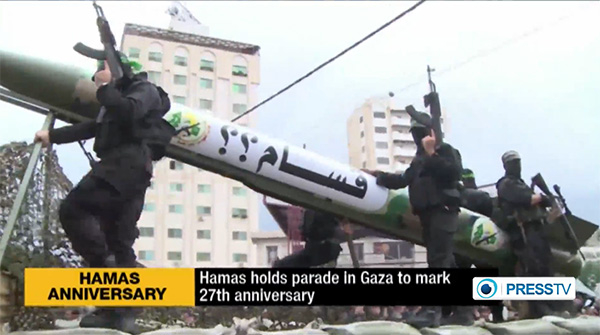
Ironically, the EU court’s decision coincided with Hamas celebrations marking the 27thanniversary of its founding. Once again, Hamas used the celebrations to remind everyone that its real goal is to destroy Israel. And, of course, Hamas used the event to display its arsenal of weapons that include various types of rockets and missiles, as well as drones.

845 (1)Thousands of armed Hamas troops showed off their military hardware at a Dec. 14, 2014 parade in Gaza, marking the organization’s 27th anniversary. (Image source: PressTV video screenshot)

Hours before the EU court decision was made public, Hamas leader Mahmoud Zahar announced that his movement would never recognize Israel. Zahar also made it clear that Hamas seeks to overthrow the Palestinian Authority [PA] regime and seize control over the West Bank.

The EU court’s decision also coincided with increased efforts to achieve rapprochement between Hamas and Iran. Recently, a senior Hamas leadership delegation visited Tehran as part of efforts to mend fences between the two sides. The main purpose of the visit was to persuade the Iranians to resume military and financial aid to Hamas. The visit, according to senior Hamas officials, appears to have been “successful.”

“There are many signs that our relations are back on the right track,” explained Hamas’s Musa Abu Marzouk. “Hamas and Iran have repaired their relations, which were strong before the Syrian crisis.” Relations between Hamas and Iran deteriorated due to the Islamist movement’s refusal to support the regime of Syrian President Bashar Assad.

Now the Iranians are likely to interpret the EU court decision to remove Hamas from the list of terrorist groups as a green light to resume financial and military aid to the movement.

Iran’s leaders recently announced that they intend to dispatch weapons not only to the Gaza Strip, but to the West Bank as well, as part of Tehran’s effort to support those Palestinians who are fighting to eliminate Israel.

Moreover, the EU court’s move will also embolden other countries that provide Hamas with political and financial aid, first and foremost Qatar and Turkey. Oil-rich Gulf countries such as Kuwait, Bahrain, Oman and Saudi Arabia will now face pressure from many Arabs and Muslims to join Qatar, Turkey and Iran in extending their support to Hamas.

The biggest losers, meanwhile, are Palestinian Authority President Mahmoud Abbas and Egypt’s President Abdel Fattah el-Sisi. Over the past few months, the two men have been doing their utmost to undermine Hamas and end its rule over the Gaza Strip.

Abbas has been fighting Hamas by blocking financial and humanitarian aid and arresting its supporters in the West Bank, while Sisi continues to tighten the blockade on the Gaza Strip and destroy dozens of smuggling tunnels along the border with Egypt.

The EU court’s decision represents a “severe blow to the Palestinian Authority and Egypt,” noted Palestinian political analyst Raed Abu Dayer. “As far is Abbas is concerned, the decision grants Hamas political legitimacy and challenges his claim to be the sole legitimate leader [of the Palestinians]. With regards to Egypt, the European court decision calls into question rulings by Egyptian courts that Hamas is a terrorist organization.”

Even if the EU court decision is reversed in the future, there’s no doubt that it has already caused tremendous damage, especially to those Muslims who are opposed to radical Islam.

Any victory for Hamas, albeit a small and symbolic one, is a victory for the Islamic State, Al-Qaeda, Islamic Jihad, the Muslim Brotherhood and other fundamentalist groups around the world.

The decision has left many Arabs and Muslims with the impression that Hamas, after all, is not a terrorist organization, especially if non-Muslims in Europe say so through one of their top courts. Even worse, the decision poses a real and immediate threat to Israel, as evident from the latest rocket attack.

If the Europeans have reached the conclusion that Hamas is not a terrorist organization, then why don’t their governments openly invite tens of thousands of Hamas members and supporters to move to London, Paris and Rome? And they should not forget to ask the Hamas members to bring along with them their arsenal of weapons.

Why is Israel blamed for evil while Islamic nations are not?

December 21, 2014

Why is Israel blamed for evil while Islamic nations are not? Dan Miller’s Blog, December 21, 2014

Blaming Israel for evil, rather than her many Islamic neighbors and enemies is, despite the views of Obama and His colleagues, contrary to American values. Doing so is based on Jew hatred, envy of success, and the multicultural absurdity that no culture or religion is better or worse than any other.

As I argued most recently here and here, Israel is fighting for her survival against regimes that want her to cease to exist because she is Jewish, not Islamic, and her government is free and democratic, not dictatorial. She is, therefore, an outsider in the Middle East.

This video identifies many of the reasons why Israel is viewed harshly by other Western civilizations while Islamic nations, which are neither free nor democratic, are viewed favorably.

I suspect that Dr. Ben Carson, who recently visited Israel and was much impressed, would agree with the points made in the video.

Although the U.S. remains Israel’s closest and most important ally, Obama and Israeli Prime Minister Benjamin Netanyahu have little personal chemistry and have frequently clashed. The U.S. has been outspoken in its criticism of Israeli settlement construction in the West Bank and east Jerusalem — captured areas claimed by the Palestinians as parts of a future state. At the same time, U.S. Secretary of State John Kerry has made numerous trips to the region and elsewhere to try to broker a peace deal.

Carson said the criticism of the settlements has been exaggerated, and he asserted that Palestinian hostility toward Israel is what is preventing peace in the region. Of Netanyahu, Carson said, “I think he’s a great leader in a difficult time.” [Emphasis added.]