Posted tagged ‘Palestinians’

Stunning: Egyptian Foreign Minister says Israel’s treatment of Palestinians not ‘terrorism’

August 24, 2016

Stunning: Egyptian Foreign Minister says Israel’s treatment of Palestinians not ‘terrorism’, American ThinkerThomas Lifson,, August 24, 2016

It is an article of faith in the Arab world that Israel is guilty, guilty, guilty of terrorizing the poor Palestinians, which is why Jews deserve to be terrorized worldwide.  The origins of violence lie exclusively on the Jews, too.  So Arabs and all Muslims have a duty to defend their brothers and sisters by acts of extreme cruelty against Israelis in particular, and Jews in general.

This dogma is extremely important because it avoids any scrutiny of Koranic and other scriptural incitements of violence – even genocide – against Jews. I thus serves a dual purpose. And as a result, it must remain unquestioned.  And for decades, there has been rhetorical solidarity on this point.

Until now.

The fall of the Muslim Brotherhood in Egypt and its replacement by the anti-MB regime of General Sisi, along with the spread of chaos in the Arab world has changed matters. Meanwhile, Israel is quietly building itself into a tiny superpower, its high tech economy and rapid development of offshore gas and onshore fracking making it a global economic power, able to finance a high tech military.

As a result, a stunning break with the past happened, beyond the notice of our mainstream media. The Jerusalem Post reports:

Egyptian Foreign Minister Sameh Shoukry said on Sunday that Israel’s actions against Palestinians does not constitute terrorism, eliciting an angry response from a Hamas spokesman who said Egypt’s top diplomat is blind.

Shoukry’s comments came during a Q&A session with students held at the Egyptian Foreign Ministry, where he was asked why Palestinians children killed in the conflict with Israel were not considered victims of terrorism.

“When looking at this issue, it can be defined as a ‘regime of force,’” the Egyptian media quoted Shoukry as saying. He said there was no evidence to link Israel to terrorist organizations.

“There is nothing that leads to this conclusion,” he said.

Shoukry added that Israel’s history has made it very sensitive to security issues, and as a result tightens control over its territory and border crossings to ensure its security.

The reaction has not been favorable among other Arab regimes. In public, at least. Speaking from Qatar, a major Clinton Foundation donor (and recipient of questionable favors):

Husam Badran, a Hamas spokesperson in Qatar, slammed the Egyptian foreign minister in a Twitter post, saying, “He who does not see the crimes of the Zionist occupation as terrorism is blind.”

The Egyptian cozying up with Israel is far ahead of public opinion there. It is inconceivable to me that Shoukry made these comments without first discussing them with Saudi Arabia, Egypt’s primary financial backer.

Tectonic plates are shifting in the Arab world, with some pragmatic leaders realizing that the primary problems of Arabs are created by themselves, and Israel has much more to offer as a friend than as a mortal enemy.

Hat tip: Clarice Feldman


Anti-Israel Double Standards Enable Assad’s Brutality

August 23, 2016

Anti-Israel Double Standards Enable Assad’s Brutality, Investigative Project on Terrorism,  Noah Beck,August 23, 2016

1789

Syria’s civil war claimed 470,000 lives since it started in March 2011, the Syrian Centre for Policy Research announced in February. That’s an average of about 262 deaths per day and 7,860 per month. The carnage has continued unabated, so, applying the same death rate nearly 200 days after the February estimate, the death toll is over 520,000.

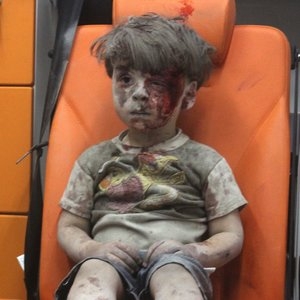
Such numbers are staggering, even by Middle East standards. However, the violence has become so routine that it only occasionally captures global attention, usually when a particularly poignant moment of human suffering is documented. The most recent example is Omran Daqneesh, a 5-year old Syrian boy who was filmed shell-shocked, bloody, and covered in dust after the airstrike bombing of his Aleppo apartment block.

The tragic image of Omran caused outrage around the world, as did the image of Aylan Kurdi, the drowned Syrian boy whose body washed up last September on a beach in Turkey. Yet Omran’s plight demonstrates that, nearly a year after the last child victim of Syrian horrors captured global sympathy, nothing has changed.

If anything, the violence in this multi-party proxy war seems to be getting worse. Since Aylan Kurdi’s drowning, Russia began blitz-bombing Syria in support of the Assad regime. The Syrian Observatory for Human Rights (SOHR) estimates that nine months of Russian airstrikes have killed 3,089 civilians – a toll that is greater, by some estimates, than the number of civilians killed by ISIS. By contrast, Syrian civilian deaths caused by U.S. airstrikes are probably in the hundreds (over roughly twice as much time, since U.S. airstrikes began in the summer of 2015).

But Syrian airstrikes are responsible for the bulk of civilian deaths in Syria. The Assad regime killed 109,347 civilians between March 2011 and July 2014 (88 percent of the total casualties at the time), according to estimates by the Syrian Network for Human Rights. That works out to about 91 civilian deaths per day. More recently, the SOHR documented 9,307 civilian deaths from 35,775 regime airstrikes over a 20-month period running from November 2014 through June 2016. Thus, roughly one innocent Syrian was killed every hour, during the 20 months that the SOHR documented civilian casualties caused by Russian and Syrian airstrikes.

Compare those figures to the number of innocent Palestinians killed by Israel from 2011 to 2014. According to Human Rights Watch (HRW), which has been accused of anti-Israel bias, 37 Palestinians were killed in 2011, 103 in 2012, 15 in 2013 and 1,500in 2014 – the year when Hamas fired rockets at Israel from highly populated Gazan areas. That’s a four-year total of 1,655. During roughly the same four-year period, the number of Syrian civilian deaths was about 76 times greater than the HRW total of Palestinian civilian casualties.

Yet the European Union singles out Israel for conflict-related consumer labels without any similar attempt to warn European consumers about goods or services whose consumption in any way helps the economies of countries responsible for the Syrian bloodshed, including Syria, Russia, and Iran. Human rights lawyer Arsen Ostrovsky has highlighted how none of those countries is targeted by those advocating a boycott of Israel out of a purported concern for human rights. Even more absurd, most of the results produced by a Google search for “academic boycott of Syria” or “academic boycott of Iran” concern academic boycotts of Israel. That asymmetry precisely captures the problem.

In addition to supporting the Assad regime in Syria and contributing to the violence there, Iran executes people for everything from drug offenses to being gay.

Indeed, the global outcry over Syrian suffering is embarrassingly weak when compared to reactions to Israel’s far less bloody conflict with the Palestinians. Imagine if Omran Daqneesh had been a Palestinian boy hurt by an Israeli airstrike on Gaza. College campus protests, the media, NGOs, and world bodies around the planet would be positively on fire. Israeli embassies would be attacked, French synagogues would be firebombed (eight were attacked in just one week during Israel’s 2014 war with Gaza), Jews around the world would be attacked, and condemnations would pour in from the EU, the United Nations, and the Obama administration. UN resolutions and emergency sessions would condemn the incident. International investigations would be demanded. Global blame would deluge Israel, regardless of whether Hamas, a terrorist organization, actually started the fighting or used human shields to maximize civilian deaths. Israel would be obsessively demonized despite any risky and unprecedented measures the Israeli military might have taken to minimize civilian casualties.

Moreover, when an occasional Syrian victim captures global attention, the protests are generally for some vague demand for “peace” in Syria, rather than blaming and demanding the punishment of Syria, Iran, and Russia, even though those regimes are clearly responsible for the slaughter. The starkly different reactions to Israel and Syria are even more shocking when it comes to the United Nations.

From its 2006 inception through August 2015, 62 United Nations Human Rights Council resolutions condemned Israel, compared to just 17 for Syria, five for Iran, and zero for Russia, according to the watchdog group UN Watch. The lopsided focus on Israel is equally appalling at the UN General Assembly, as UN Watch has highlighted. In each of the last four years, as the Syrian bloodbath claimed hundreds of thousands of lives, there were at least five times as many resolutions condemning Israel as those rebuking the rest of the world:

2012: 22 against Israel, 4 for the rest of the world

2013: 22 against Israel, 4 for the rest of the world

2014: 20 against Israel, 3 for the rest of the world

2015: 20 against Israel, 3 for the rest of the world

A corollary of the anti-Israel bias ensures that no Israeli victim will ever enjoy the kind of global sympathy expressed for Omran Daqneesh or Aylan Kurdi. When a Palestinian man enters the bedroom of a 13-year old girl and stabs her to death in her sleep,Obama says nothing even though she was a U.S. citizen and the world hardly notices. By contrast, imagine if the Israeli father of Hallel Yaffa Ariel had decided to take revenge by entering a nearby Palestinian home to stab a 13-year old Palestinian girl to death in her sleep. The global anger would be deafening.

Why do Israeli lives matter so much less? And why do student activists, the UN, the EU, the media, and the rest of the world focus so much more on alleged Palestinian civilian deaths than on Syrian civilian deaths? Doing so is woefully unjust to Syrians. It is also deeply unfair to Israel, which has endured terrorist attacks on its people throughout its existence as a state. It is the one country that, according to Col. Richard Kemp, former commander of British forces in Afghanistan, has done more to protect civilians during war than any other in the history of war.

The global obsession with condemning Israel not only defames a beleaguered democracy doing its best, it also enables the truly evil actors like the Assad regime and Hamas, by giving them a pass on some of the world’s worst crimes.

Robert Spencer on Black Lives Matter and the Leftist/Islamic Alliance

August 23, 2016

Robert Spencer on Black Lives Matter and the Leftist/Islamic Alliance, Jihad Watch via YouTube, August 23, 2016


Israel targeted ‘key Hamas strategic assets’ in Sunday’s barrage

August 23, 2016

Israel targeted ‘key Hamas strategic assets’ in Sunday’s barrage IDF takes advantage of rocket fire from Gaza to take out terrorist infrastructure; Liberman: ‘We won’t allow them to rearm’

By Judah Ari Gross

August 23, 2016, 4:12 pm

Source: Israel targeted ‘key Hamas strategic assets’ in Sunday’s barrage | The Times of Israel

Palestinian militants of the Islamic Jihad movement arrive to inspect a crater on August 22, 2016 in Beit Lahia in the northern Gaza Strip, following an Israeli airstrike the day before that targeted Hamas positions in the Gaza Strip in response to a rocket fired from the Palestinian enclave hits the Israeli city of Sderot. AFP / Mahmud Hams

In Sunday night’s bombardment, the Israel Defense Forces struck “key Hamas strategic assets” in the northern Gaza Strip, military sources said Tuesday, shedding more light on the harsher-than-expected response to a rocket attack from the coastal enclave.

After a projectile from Gaza landed in the southern Israeli town of Sderot on Sunday, the IDF retaliated with what has become the routine response of a limited strike, hitting two Hamas installations in the northern Gaza Strip, the army said.

Hours later, the IDF conducted another, considerably larger barrage, carrying out approximately 50 strikes against Hamas infrastructure in the Gaza Strip, using both tanks and aircraft.

These targets were not directly related to the rocket launch, nor were they only an attempt at creating a deterrent effect. Rather, the IDF took advantage of the opportunity presented by the attack to take out Hamas strategic assets.

An Israeli police sapper carries part of a rocket fired by Palestinian militants in the Gaza Strip from the yard of a house in the city of Sderot, southern Israel, Sunday, August 21, 2016. AP /Tsafrir Abayov.

An Israeli police sapper carries part of a rocket fired by Palestinian militants in the Gaza Strip from the yard of a house in the city of Sderot, southern Israel, Sunday, August 21, 2016. AP /Tsafrir Abayov.

With few exceptions, the army’s policy toward Hamas in Gaza has been only to retaliate, not to initiate, an officer in the IDF’s Southern Command told The Times of Israel in November.

Though the IDF often has extensive intelligence on the terrorist group’s dealings in the Gaza Strip, “we don’t respond to everything, because we don’t want to escalate the situation,” the officer said.

When a rocket is fired into Israel, however, that dynamic changes and the IDF has a certain legitimacy in targeting terrorist infrastructure in the coastal enclave, as occurred on Sunday night.

A Palestinian man loads stones on a cart next to a crater in Beit Lahia in the northern Gaza Strip on August 22, 2016, following an Israeli airstrike the night before that targeted Hamas positions in response to a rocket fired from the Palestinian enclave that hit the Israeli city of Sderot. (Mahmud Hams/AFP)

A Palestinian man loads stones on a cart next to a crater in Beit Lahia in the northern Gaza Strip on August 22, 2016, following an Israeli airstrike the night before that targeted Hamas positions in response to a rocket fired from the Palestinian enclave that hit the Israeli city of Sderot. (Mahmud Hams/AFP)

It was immediately noted that Israel’s bombardment on Sunday was larger than most retaliatory strikes.

“There were approximately 50 airstrikes within two hours,” a senior military official told The Times of Israel. “But there is no intention to escalate the situation further.”

Hamas quickly claimed the response was an attempt by Israel to change the status quo in Gaza — and Israel agreed.

“You can’t expect the State of Israel to allow [Hamas] to rearm itself, to steal money from the residents of Gaza. They are levying taxes and not constructing buildings, but tunnels,” Defense Minister Avigdor Liberman said on Tuesday morning at an army base in the Galilee.

Palestinian security sources in Gaza said several targets in the northern Strip were struck by Israeli fire, and that a reservoir in Beit Hanoun was damaged. Israel also hit a base belonging to Hamas’s military wing, the Izz ad-Din al-Qassam Brigades, in nearby Beit Lahiya, witnesses said. Palestinian health and security sources said between two and five people were lightly wounded by Israel’s retaliatory fire.

Hamas officials have decried the Israeli bombardment, but have not indicated that they intend to respond immediately.

Hamas, Palestinian Authority Target Journalists Ahead of Election

August 23, 2016

Hamas, Palestinian Authority Target Journalists Ahead of Election

by Khaled Abu Toameh

August 23, 2016 at 5:00 am

Source: Hamas, Palestinian Authority Target Journalists Ahead of Election

  • Both of the journalists who were arrested made the mistake of reporting on the suffering of Palestinians living under Hamas rule. These are not the kind of stories that Hamas wishes to see ahead of the local and municipal elections. Rather, Hamas wants to see printed lies of prosperity.
  • It is a puzzle why foreign journalists choose not to report about the campaign of intimidation facing their Palestinian colleagues.
  • One might wonder if the human rights groups neglect these abuses because of their continued obsession with destroying Israel.

Palestinian journalists are at the top of the Palestinian Authority (PA) and Hamas hit-list in the crackdown occurring alongside preparations for the Palestinian local and municipal elections, scheduled for October 8.

The crackdown is part of an ongoing campaign by the two rival parties to silence critics in the West Bank and Gaza Strip. Neither Hamas nor the PA tolerates a free and independent media — especially on the eve of a crucial election that could have far-reaching political implications in the Palestinian arena.

A Hamas victory in the upcoming elections would be catastrophic for President Mahmoud Abbas and his Palestinian Authority. Such an electoral outcome would be tantamount to a vote of no-confidence in their policies and performance.

Hamas, for its part, is investing a huge amount of resources in the election campaign, in hopes that the results would further boost its standing among Palestinians. Hamas fears that a defeat would undermine its power in the Gaza Strip and pave the way for its collapse.

As the election campaign heats up, it is clear that Hamas and the PA agree on one thing: intensifying their repressive measures against Palestinian journalists.

This media crackdown is essentially ignored by international human rights organizations. Why? One reason is that when Israel is not involved, assaults on freedom of the media and expression do not interest them.

Some Western journalists and human rights advocates also treat these cases as “internal Palestinian issues” that are of no relevance to international public opinion. A story about a Palestinian journalist who is arrested by Israel is news. A Palestinian journalist incarcerated or threatened by the Palestinian Authority or Hamas is not.

Take, for example, the case of Ahmed Said, a journalist from the Gaza Strip. Last week, he was arrested by Hamas security forces, who also confiscated his personal computer. Said has a radio show on the Sawt Al Sha’ab (Voice of the People) radio station, where Palestinians call in to voice their grievances and talk openly about the problems they are facing under Hamas rule in the Gaza Strip.

Before he was arrested, Said had phoned the spokesman of the Hamas police force, Ayman Al Batnihi, to discuss the recent rise in cases of homicide in the Gaza Strip. According to the journalist, the furious spokesman threatened him: “You are causing us a lot of problems and inciting people. I know how to deal with people. You need to be hanged.”

Said is no stranger to this sort of encounter. Last year, he was summoned for investigation for “incitement” against the Gaza City Municipality. The move came after Said used his talk show to talk about the case of street vendor Mohamed Abu Assi, who tried to commit suicide by ingesting poison after Gaza City Municipality inspectors banned him from selling corn at the beach.

Earlier, Hamas arrested another Palestinian journalist, this time for no clear reasons. Mahmoud Abu Awwad, who works for the Palestinian daily Al-Quds, was arrested from his home in the Shati refugee camp on July 25. He too had his personal computer and cellular phone seized.
Ahmed Said (left) and Mahmoud Abu Awwad (right) are two journalists living in the Gaza Strip who were recently arrested by Hamas security forces. Both journalists made the mistake of reporting on the suffering of Palestinians living under Hamas rule.

Abu Awwad’s family have since been banned from seeing him in prison. Their son, they were told by Hamas, is being held for “security reasons.” Abu Awwad, who has been working for Al-Quds for the past three years, had been reporting mostly about the hardships facing Palestinians in the Gaza Strip. In addition, he was also reporting for the Saudi London-based pan-Arab daily, Asharq Al Awsat.

“Hamas is trying to spread lies to distort the image of my son and justify his arrest,” Abu Awwad’s father told Al-Quds. “He was arrested because he was critical of the situation in the Gaza Strip and the Hamas government.”

Said and Abu Awwad have something in common. Both journalists made the mistake of reporting on the suffering of Palestinians living under Hamas rule. These are not the kind of stories that Hamas wishes to see ahead of the local and municipal elections. Rather, Hamas wants to see printed lies of prosperity.

In the context of its election campaign, Hamas has released a video featuring new houses and neighborhoods, as well as green and clean parks and smiling children. Entitled, “Thank You Hamas,” the video seeks to persuade Palestinian voters that life under Hamas is the best thing that could ever happen to them. And that is why they need to help Hamas extend its control from the Gaza Strip to the West Bank through the local and municipal elections. Journalists such as Said and Abu Awwad are spoiling the effect with their inconvenient truths.

Hamas, however, is the proverbial pot calling the kettle black. In the face of its own massive journalistic repression, Hamas dares to criticize the Palestinian Authority for taking similar measures in the West Bank.

Like Hamas, the PA leadership has always been intolerant towards Palestinian (and sometimes non-Palestinian) journalists who dare not toe the party line. Hardly a week passes without hearing about another Palestinian journalist who has been arrested or summoned for investigation by the Palestinian Authority.

In recent weeks, the crackdown on journalists in the West Bank seems to have increased in light of the upcoming elections. The PA too wants to remove from the scene any journalist who might harm its loyalists’ chances of winning the local and municipal vote. In this regard, journalists are easy prey.

One of the recent victims is Mohamed Abu Khabisah, who reports on economic issues for the Turkish news agency, Anadolu. Palestinian security officers who raided his home shortly after midnight in Al Bireh, near Ramallah, seized his personal computer and documents before taking him into custody. His wife, Hana, said she too was briefly questioned about her husband’s source of income and the nature of his work. Palestinian sources say he was apparently arrested for reporting about financial corruption in the Palestinian Authority’s official news agency, Wafa.

Abu Khabisah was the sixth journalist to be arrested by the PA since the decision to hold local and municipal elections was taken two months ago. The other four are Yehya Saleh, Raghid Tabisah Ibrahim Al Abed, Mohamed Abu Jheisheh and Ziad Abu Arrah. In another recent incident, Palestinian security officers raided the home of journalist Musab Kafisheh and seized his personal computer, but did not take him into custody.

It is anxiety that is driving Hamas and the Palestinian Authority in their crackdown on Palestinian journalists. The “security reasons” they tout as an excuse for their repression is a foil for their sense of instability: the less politically secure they feel, the more they strip Palestinian journalists of their ability to report how things really stand in the Gaza Strip and the West Bank.

So far, so good, from the point of view of Hamas and the PA. Palestinian reporters have been duly deterred. But they are far from the only ones affected.

Foreign journalists rely almost entirely on Palestinian “fixers” and producers for information about what is happening under the Palestinian Authority and Hamas. Now, local Palestinians will think ten times before they provide their foreign employers with information. Still, it is a puzzle as to why foreign journalists choose not to report about the campaign of intimidation facing their Palestinian colleagues.

One might wonder if the human rights groups neglect these abuses because of their continued obsession with destroying Israel.
WATCH: Dozens of illegal guns seized in West Bank crackdown

August 23, 2016

Dozens of illegal guns seized in West Bank crackdown IDF, police, Shin Bet conduct raids in Bethlehem, Hebron as part of ongoing campaign against illicit weapons

By Judah Ari Gross

August 23, 2016, 1:53 pm

Source: WATCH: Dozens of illegal guns seized in West Bank crackdown | The Times of Israel


In the largest operation of the year, Israeli security forces seized dozens of weapons, confiscated equipment and made arrests in Hebron and Bethlehem early Tuesday morning as part of an ongoing effort to crack down on illegal guns in the West Bank, an IDF official said.

In total, seven illegal gun workshops were raided and 22 pieces of gunsmithing machinery — drill presses and metal lathes — were seized, along with “approximately 50 weapons,” including handguns, shotguns, hunting rifles and Carlo-style submachine guns, a cheap and simple automatic weapon loosely based off the design of the Carl Gustav submachine gun, the official said.

 Security forces also recovered ammunition and dozens of gun pieces — grips, barrels, stocks, etc. — that would have been used to create more weapons, the official added.

Two of the alleged manufacturers were arrested in the raids. The suspects do not appear to be connected to any terrorist groups, but were more likely driven by financial motives, the army source said.

“It seems to be a combination of market demand and the ability to manufacture,” he said.

The IDF, along with the police and Shin Bet security service, seizes machinery believed to have been used to create illegal weapons in Bethlehem and Hebron on August 23, 2016, as part of a large crackdown effort on illicit guns in the West Bank. (IDF Spokesperson's Unit)

The IDF, along with the police and Shin Bet security service, seizes machinery believed to have been used to create illegal weapons in Bethlehem and Hebron on August 23, 2016, as part of a large crackdown effort on illicit guns in the West Bank. (IDF Spokesperson’s Unit)

Though the tools necessary to create Carlo-style submachine guns are “dual purpose” and can be found in almost any machine shop in the world, the factories raided early Tuesday morning appeared to be “specifically designed for the manufacturing of weapons,” the IDF official said.

More arrests are expected to come, as Shin Bet and Israel Police investigators will now begin interrogating the two suspects in order to locate the manufacturing and distribution network, the official said.

Dozens of illegal weapons seized by Israeli security forces in Bethlehem and Hebron on August 23, 2016, as part of a large crackdown effort on illicit guns in the West Bank. (IDF Spokesperson's Unit)

Dozens of illegal weapons seized by Israeli security forces in Bethlehem and Hebron on August 23, 2016, as part of a large crackdown effort on illicit guns in the West Bank. (IDF Spokesperson’s Unit)

The joint operation was conducted between 1 a.m. and 5:30 a.m. by five battalions from the Israel Defense Forces — the elite Duvdevan unit, the Nahal Brigade’s 50th Battalion, soldiers from an artillery battery and two reservist battalions — along with representatives from the Israel Police and Shin Bet security service, according to spokespeople for the organizations.

IDF soldiers break into a workshop  believed to have been used to create illegal weapons in Bethlehem and Hebron on August 23, 2016, as part of a large crackdown effort on illicit guns in the West Bank. (IDF Spokesperson's Unit)

IDF soldiers break into a workshop believed to have been used to create illegal weapons in Bethlehem and Hebron on August 23, 2016, as part of a large crackdown effort on illicit guns in the West Bank. (IDF Spokesperson’s Unit)

The raids in Bethlehem and Hebron were the culmination of months of gathering “signal intelligence, human intelligence and visual intelligence,” an IDF official said.

There was no immediate indication that any of the guns sold by the two alleged manufacturers were specifically sold for use in terror attacks. These types of guns can be used for any number of reasons, including terrorist attacks, self-defense and criminal activity, the IDF official said.

However, a weapon purchased for self-defense can still end up being used in a terror attack, the official added.

“Someone who has one of these weapons at home [for self-defense] might hide it in a closet. And when his son gets carried away by incitement, he goes and takes this weapon to carry out attacks,” the officer said.

IDF soldiers, along with the police and Shin Bet security service, seize dozens of illegal weapons in Bethlehem and Hebron on August 23, 2016, as part of a large crackdown effort on illicit guns in the West Bank. (IDF Spokesperson's Unit)

IDF soldiers, along with the police and Shin Bet security service, seize dozens of illegal weapons in Bethlehem and Hebron on August 23, 2016, as part of a large crackdown effort on illicit guns in the West Bank. (IDF Spokesperson’s Unit)

This year over 30 shooting attacks have been carried out with illegally produced weapons. In response, the IDF and other security agencies have been cracking down on illegally produced weapons in recent months, arresting more than 140 people suspected of being involved in the creation or distribution of illicit arms, police said.

Over 300 illegal guns and nearly 50 pieces of manufacturing equipment have also been confiscated in raids across the West Bank in recent months, according to police.

The ongoing crackdown has already had an effect on the market, driving up the price of guns Col. Roman Gofman told the Associated Press last month. For example, a crude Carlo-style submachine gun cost around $500 a few months ago, whereas now it can cost upward of $2,500, he said.

Putin said willing to host Israeli-Palestinian peace talks

August 22, 2016

Putin said willing to host Israeli-Palestinian peace talks Comments by Egypt’s president el-Sissi made to newspaper editors after Israeli delegation arrives in Cairo to discuss peace push

By Times of Israel staff August 22, 2016, 1:39 am

Source: Putin said willing to host Israeli-Palestinian peace talks | The Times of Israel

Russian President Vladimir Putin welcomes Prime Minister Benjamin Netanyahu at the start of a meeting at the Kremlin on June 7, 2016 (screen capture: Facebook)

Amid speculation over a developing Egyptian bid to revive stalled Israeli-Palestinian peace negotiations, Egypt’s President Abdel-Fattah el-Sissi said late Sunday that Russian President Vladimir Putin was willing to host Israeli and Palestinian leaders for direct talks.

In a briefing with newspaper editors in Cairo, Sissi said Israel is increasingly convinced of the need for achieving peace with the Palestinians, according to media reports in Israel and Egypt.

 No peace process could be successful, he told the journalists, without reconciliation between Fatah and Hamas.

He also said Israeli-Palestinian peace, which could enable further burgeoning of Israeli-Arab alliances generally, is the key to regional stability, a sentiment that echoed comments heard in recent months from Jordan’s King Abdullah and other Sunni Arab leaders.

Sissi’s comments follow meetings earlier Sunday between an Israeli delegation in Cairo and Egyptian officials on the Egyptian president’s proposal to revive the peace process.

Israeli officials were scheduled to meet their Egyptian counterparts on Palestinian peace talks, as well as other matters related to the two countries, the Germany news agency DPA reported.

The talks were said to last several hours, according to the report by the Germany agency.

Last week, Palestinian Authority President Mahmoud Abbas reportedly informed Egypt he is no longer opposed to participating in a regional or international peace summit in Cairo.

According to a report on Israel Radio on Friday, the Palestinian leader told an Egyptian delegation in Ramallah that he was willing to attend such a conference, but stressed that the Egyptian peace push would not replace the French initiative to revive talks, which the Palestinians have favored but Israel has strongly opposes.

The PA president also reportedly asked that France, Russia and Switzerland attend the summit.

Abbas urged Egypt to press Prime Minister Benjamin Netanyahu to freeze settlement construction and release Palestinian prisoners ahead of a meeting between the two leaders in Egypt, the report said, but Cairo’s position on the proposed preconditions was not immediately clear.

In July, Palestinian leaders presented several preconditions for participating in a trilateral Israeli-Egyptian-Palestinian peace summit in Cairo, including a freeze on Israeli settlement construction, a Palestinian official told The Times of Israel. Abbas also demanded that Israel acquiesce to negotiations based on the pre-1967 lines and pledge ahead of time to implement any agreements reached in the talks.

Netanyahu in July reportedly told Egyptian Foreign Minister Sameh Shoukry — on a rare visit to Jerusalem — he would be willing to meet with Abbas in Cairo for talks hosted by Sissi. The Prime Minister’s Office did not deny the report by the Saudi-owned, pan-Arab news outlet Al-Arabiya. It said in a statement that “whether the issue was discussed or not, Israel has always said it is prepared to conduct direct bilateral negotiations with no preconditions.”

Prime Minister Benjamin Netanyahu meets with Egypt's Foreign Minister Sameh Shoukry at the Prime Minister's Office in Jerusalem on Sunday, July 10, 2016 (Hadas Parush/Flash90)

Prime Minister Benjamin Netanyahu, right, meets with Egypt’s Foreign Minister Sameh Shoukry at the Prime Minister’s Office in Jerusalem on Sunday, July 10, 2016 (Hadas Parush/Flash90)

Sissi reportedly offered to host direct talks between the sides as part of Cairo’s initiative to kick-start the moribund peace process.

Shoukry’s visit to Israel was the first by an Egyptian foreign minister since 2007. The visit came amid speculation over the renewal of an Arab peace initiative and as Israel’s military recently saluted “unprecedented” intelligence cooperation with Egypt to combat the Islamic State group.

Egyptian President Abdel-Fattah el-Sissi, speaks at the United Nations Sustainable Development Summit in New York, September 25, 2015. (AFP Photo/Dominick Reuter)

Egyptian President Abdel-Fattah el-Sissi, speaks at the United Nations Sustainable Development Summit in New York, September 25, 2015. (AFP Photo/Dominick Reuter)

According to Israel’s Channel 2 television, Shoukry’s surprise visit was also aimed at arranging a first meeting between Netanyahu and Sissi in Egypt in the coming months.

The TV report said Shoukry’s first visit to Israel was coordinated between Egypt and Saudi Arabia, whose Arab Peace Initiative is backed by Sissi and much of the Arab world as the basis of any regional peace effort. Netanyahu has rejected the initiative in its current form, but said in late May that it “contains positive elements that could help revive constructive negotiations with the Palestinians.”

Iranian Dissidents Visit Israel, View Iran after the Nuclear Deal

August 21, 2016

Iranian Dissidents Visit Israel, View Iran after the Nuclear Deal, Jerusalem Center via YouTube, August 21, 2016


Gazan Rocket Hits Sderot

August 21, 2016

By: Jewish Press News Briefs

Published: August 21st, 2016

Source: The Jewish Press » » Gazan Rocket Hits Sderot

Rocket crossing!
Photo Credit: Asher Schwartz

Two rocket alerts went off in communities near the Gaza border and in Sderot at around 2:25PM on Sunday.

2:35 PM Residents near the Gaza border are reporting that they heard at least one explosion, possibly two.

2:43 PM Confirmed reports that one rocket from Gaza landed in Sderot between 2 houses. No one was injured.

The rocket was launched from Beit Hanoun.

Police are asking citizens to not go to the area where the rocket fell do the the danger.

3:00 PM Arab sources report that the IDF is striking Beit Hanoun area.

There are no reports on why Iron Dome did not take down he rocket.


Liberman presents plan to defeat Arab terror

August 17, 2016

Liberman presents plan to defeat Arab terror New Defense Minister proposes carrot-and-stick approach to Arab terror – rewarding towns who combat terror, and punishing those who aid it.

Kobi Finkler, 17/08/16 19:31 | updated: 19:45 Share

Source: Liberman presents plan to defeat Arab terror – Defense/Security – News –

Avigdor Liberman

Yonatan Sindel/Flash 90

Prior to his appointment to the Defense Ministry, Yisrael Beytenu chairman Avigdor Liberman boasted that if made Defense Minister, he would ‘crush the terror wave’ and restore security to Israel.

On Wednesday evening Liberman presented the first detailed plan towards that goal since assuming office in June.

The outline follows a carrot-and-stick approach to terror emanating from the Palestinian Authority, and includes benefits for towns not harboring terrorists, as well as punitive measures towards known terror centers.

Specifically, the plan would offer special privileges to 15 Palestinian Authority communities which have not been home to terrorists and which have maintained peaceful relations with Israel.

On the other hand, the 15 ‘worst offenders’ – towns which have had large numbers of locals become involved in terrorist attacks – will be deprived of all work permits into Israel, be subjected to more vigorous security checks, and face more arrests of residents suspected of terror ties.

Liberman listed some of the possible rewards for towns that cooperate with Israel and remain terror-free, including resources towards the construction of medical centers, soccer fields, and industrial zones.

In addition, Liberman proposed the establishment of an Arabic news website managed by the Civil Administration, which would provide Arabs in Judea, Samaria, and Gaza with a news outlet not contaminated with the anti-Israel bias and often violent anti-Semitic incitement found in Palestinian Authority news outlets.

“It’s very simple”, the Defense Minister said. “We’ll give benefits to those who live normal lives and want to coexist [with Israel], and we’ll take harsh [measures] against those who wish to do us harm.”

Liberman also praised the IDF’s policy of demolishing the homes of terrorists, calling it an important deterrent.

“If up until now it took a year before the house was demolished [after a terror attack], today it takes about a month, and that’s definitely effective. Add to that the closures [of towns where terrorists operated from], the refusal [by Israel] to return the bodies of slain terrorists, and you have an answer as to why there has been relative quiet on the ground.”

Regarding the ongoing fight against terrorism, Liberman pointed out that since the beginning of the year Israeli security forces had arrested 1,733 terrorists, prevented 208 terror attacks, and broken up 22 underground weapons factories in Judea and Samaria.


