Posted tagged ‘Obama’

UK MoD denies tabloid reports RAF ‘ready to shoot down’ Russian planes over Iraq

October 12, 2015

UK MoD denies tabloid reports RAF ‘ready to shoot down’ Russian planes over Iraq

Published time: 12 Oct, 2015 07:27

Edited time: 12 Oct, 2015 08:38

Source: UK MoD denies tabloid reports RAF ‘ready to shoot down’ Russian planes over Iraq — RT News

© Daily Star / The Sunday Times
UK media allegations that RAF pilots in Iraq had been authorized to shoot down Russian fighters in case of imminent threat have prompted a response from Moscow. Britain’s military says there is “no truth” in the reports.

The initial report was published by The Daily Star and The Sunday Times. It claimed that an “unidentified source” in the British military told the media that Royal Air Force’s Tornado GR4 involved in Operation Shader in Iraq against Islamic State from now on are going to be armed with ASRAAM (AIM-132) short range air-to-air heat-seeking missiles to be prepared to “to shoot down Vladimir Putin’s jets,” The Sunday Times reports.

So far, the RAF jets took off armed with “500lb satellite-guided bombs only,” but as the source in British Defense Ministry put it, “in the last week the situation has changed. We need to respond accordingly.”

British pilots have been allegedly instructed to avoid contact with Russian aircraft.

“The first thing a British pilot will do is to try to avoid a situation where an air-to-air attack is likely to occur — you avoid an area if there is Russian activity,” an unnamed source from the UK’s Permanent Joint Headquarters (PJHQ) told the Sunday Times. “But if a pilot is fired on or believes he is about to be fired on, he can defend himself. We now have a situation where a single pilot, irrespective of nationality, can have a strategic impact on future events.”

“No one knows what the Russians will do next. We don’t know how they will respond if they come into contact with a Western jet,” the source said.

The Russian Air Force is not executing any operations in Iraqi airspace, so in theory any interaction between Russian and British warplanes is out of the question. Yet the very raising of the issue provoked a hardline response from both the Russian Foreign Ministry and Defense Ministry.

Sergey Lavrov’s office issued an official request to the British Foreign Office, demanding explanations. The diplomatic note was delivered by Russian Ambassador to the UK Aleksandr Yakovenko.

“We are concerned by media reports as far as they refer to senior members of the Cabinet. We urgently requested the UK Foreign Office’s clarifications. At the same time, the hypothesis itself of a potential conflict between British and Russian aircraft in the skies over Iraq is incomprehensible. As is known, the Russian jets are not involved in attacks on ISIL targets on [Iraqi] territory,” the Russian ambassador told RIA Novosti.

The British military attaché in Moscow has also been summoned to the Russian Defense Ministry, where he was handed a note demanding that he explain whether it is true that British pilots have been given a “shoot to kill” order regarding Russian aircraft.

Although the MoD’s spokesperson said in their official news blog: “There is no truth in this story,” answers to both requests are pending.

British Tornado GR4 fighter jets operating in Iraq were manufactured more than a quarter of a century ago, whereas the Russian Sukhoi Su-30SM fighter jets ensuring air escort for the assault groups in Syria entered service in the 21st century and are a step ahead of their British counterparts in every way, including inventory and radar range.

“All operational flights [in Syria] are being performed with activated defensive onboard [radioelectronic combat] gear,” Igor Konashenkov, Russia’s Defense Ministry spokesman, said on October 3. This means that locking on to a missile on Russian 4++ generation fighter jet would be a tough assignment for a veteran British aircraft.


Reacting to the terror wave: action or inaction?

October 11, 2015

Reacting to the terror wave: action or inaction? | Anne’s Opinions, 11th October 2015


The Palestinian terror wave (the authorities are not calling it a 3rd intifada – yet) continues to sweep Israel. There were more stabbings in Jerusalem on Shabbat, rock throwing, and violent Arab protests in many towns. After Shabbat there were Israeli protests across Israel against the Arab violence.

Attempted car bombing outside Maale Adumim

This morning we saw an escalation as a female bomber blew up her car at a checkpoint outside Maale Adumim. Miraculously the only casualty was the bomber herself. severely injured. The circumstances of how the bomber was stopped sound almost like a spoof – but a diligent traffic cop stopped what could have been a massive terror attack in Jerusalem:

Police said officers noticed a “suspicious vehicle” driven by a woman toward a checkpoint en route to Jerusalem and signaled to her to stop. The woman then yelled “Allahu Akbar” and detonated a bomb in her car, a police statement said.

Army Radio reported the wounded officer is a traffic policeman who pulled over the bomber in her car for driving in a lane specified for public transport and carpooling.

Initial reports pointed to a possible suicide bombing, saying that the woman had died in the attack. Police later said the woman exited her car just before the bomb went off, indicating that it may not have been a suicide bombing attempt.

I wonder if the bomber was coerced into the attack to save herself from a “family honour” punishment. We’ll probably never know.

Hamas is obviously feeling neglected so they organized huge demonstrations at the border with Israel. After several protestors breached the border, the IDF opened fire, killing up to 7. In retaliation Hamas launched rockets at Israel last night, and in return the IAF bombed some Hamas targets.

Same old same old.

The question at the moment is how should the government, and Israeli citizens, react to this new uprising? Should we be taking a harsher stance with the Arabs or try to defuse the situation? Should Netanyahu be building more settlements davka now or is he right to placate and appease Obama and the Europeans?

I bring you some differing viewpoints here, and I find myself agreeing with them all, depending on the time of day and what’s on the news. I offer no solutions myself. I’m glad I’m not in the position to have to offer such and I don’t envy the government. On the other hand, that is what they were elected for, and the situation cannot be permitted to drift.

First I’ll quote from a few of Arlene Kushner‘s latest posts. She is well-worth following and reading on a regular basis. She always talks sense and her clarity is refreshing:

Boy, this is tough:

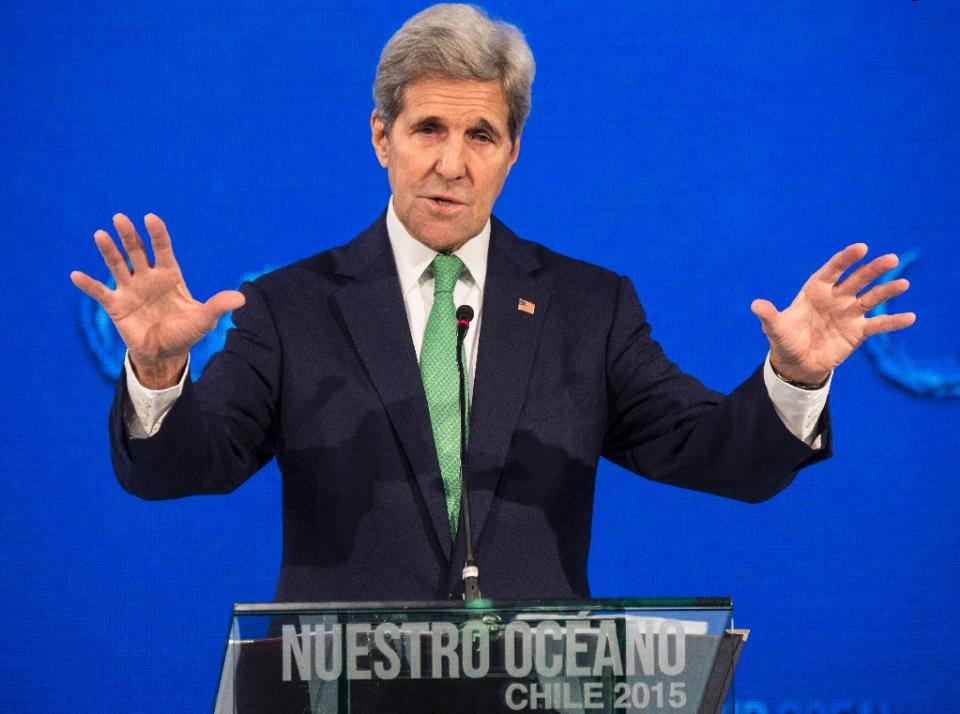
… I read what Kerry said yesterday in Valpariso, Chile, where he was giving a talk:

John Kerry

“Regarding Jerusalem, it absolutely is unacceptable on either side to have to have violence resorted to as a solution.

“And I would caution everybody to be calm, not to escalate the situation…it is very important to maintain a sense of calm that will minimize the instinct for escalation.”

http://www.timesofisrael.com/us-urges-rapid-end-to-unacceptable-violence-in-jerusalem/

~~~~~~~~~~

Let me get this straight: Arabs are killing Jews, but our government should not ratchet up the response to the terrorists? And whatever we do, we should not use violence in persuading those terrorists to stop what they are doing? We should, maybe, reason with them? Offer them perks if they stop?

This is moral equivalency run amuck. Politically correct thoughts from an empty head.

What it illustrates is the breath-taking international bias against Israel that we must contend with. No calling out the Arabs for their execrable behavior. No recognition of Israel’s right to defend her Jewish citizens. It helps us to understand (though not excuse) some of Netanyahu’s reluctance (until now) to take a strong stand against Arab terrorists.

In “Navigating choppy waters” she writes:

It has been revealed by media sources that during the Security Cabinet meeting Prime Minister Netanyahu held Monday night, after the close of Simchat Torah, the issue of threats by Obama was raised. Some of the right wing/nationalist members of the Cabinet (some within the Likud itself) were urging that part of the response to terrorism be increased building in Judea and Samaria.

This is not going to happen, Netanyahu informed them. For Obama has said that if there is building in Judea and Samaria, he will not veto a French resolution that is to be brought to the UN Security Council, a resolution that reportedly would declare “Palestine” a state and would declare the settlements “illegal.”

“We will not jeopardize international support for a declaration of building,” a senior source in the Netanyahu administration reportedly said, While the prime minister himself called for “a sober political maneuver.”

http://www.israelnationalnews.com/News/News.aspx/201499#.VhUukJuhfIX

The question I want to explore, then, is whether Netanyahu simply “caved” to the US, as Arutz Sheva suggests, and as is his pattern, or whether he has valid reason to be cautious here.

My gut impulse is to say, damn them all, go ahead and build. Now is the time for us to stand up for what is ours by right. But I know that my gut impulse is not necessarily the wisest course of action.

In exploring precisely what IS the wisest course, I contacted two highly respected and knowledgeable international lawyers, and here share their responses. Please, walk this through with me:

One lawyer, deeply involved in legal issues in Judea and Samaria, was interested in looking at the repercussions in terms of international law.

His opinion (this is not a legal opinion) is that a resolution would be tempered, and would

“call for an immediate return to negotiations, with the aim of establishing a Palestinian state and recommending a freeze in settlements.” All this, he says would not “really dramatically change the present situation.”

But the settlement issue as well as that of Jerusalem have regrettably reached panic proportions thanks to very clever Palestinian manipulation of Obama and the EU and their evidently existing predisposition to harm Netanyahu and hence harm Israel.” (My emphasis added here)

The other lawyer, a man with sterling international credentials, chose to look at other, non-legal aspects of the issue (my emphasis added):

”The SC resolution would be very very damaging. Not because of any particular legal point, but because it would lock in a fundamental delegitimization of Israel, trigger a wave of EU sanctions, and make it harder for future US presidents to support Israel.

“Unless Bibi has concrete assurances on this, it makes sense to assume there will be no veto and build anyway…His (Obama’s) promise may be worth something if made publicly or with some other additional indicia of reliability.”

What we see then is that this is not a simple matter and should be taken seriously, but received without panic. It is not easy, being the head of a state that is isolated internationally and against which much venom is directed.

In the end it may well be that now is the time to stand up and claim our rights. But I would not make light of Netanyahu’s hesitancy to move forward.

And here is Arlene in a more belligerent mood after detailing the active incitement promoted by Mahmoud Abbas and his PA, Hamas, Islamic Jihad and all the rest of those “peace-loving Palestinians”: War. Whatever they call it:

One way or another we must vanquish them, make them afraid of us. But how?

The war that should happen will not happen, because no one wants to call it a war.

I’ve read a lot of suggestions both on the Internet, and from readers’ emails. What I will say here is that some of the suggestions that seem appealing – from the gut – will not work. We cannot banish all the Arabs to Gaza. We cannot take down whole Arab villages. We cannot.

Abbas speaks with forked tongue

But please be assured, I am not suggesting that Abbas has us cornered and that there is nothing we can do. This is only the case if we allow ourselves to be cornered. I believe attitude has a great deal to do with it. We must convey a self-confidence – a belief that we are in the right – which we are, and IN CONTROL.

No expressions of gratitude to Abbas for his cooperation on security matters. How ludicrous. Rather, a very quiet message to Abbas that if he doesn’t let his people know that they should cool it, it will go very badly with them and he will pay the price.

David Rubin, former mayor of Shilo, makes a host of suggestions in a blog on Arutz Sheva.

http://www.israelnationalnews.com/Blogs/Message.aspx/7584#.VhaFlJuhfIW

Rubin makes other suggestions, including:

“Declare the Levy Report, which in 2012 proved the legal basis for Jewish sovereignty in Judea and Samaria, to be the basis for government policy in ‘the territories.’”

That last suggestion, to implement the Levy Report – a campaign for which. called We have Legal Grounds, is being run by Arlene and others – is probably the best suggestion anyone has made for a long time. Don’t expect it to be implemented any time soon.

The blogger Abu Yehuda is also an excellent read and I would highly recommend you follow him and read his insights. His two latest posts contain interesting advice for our leaders (which of course won’t be followed):

In “Learning from Putin” he writes:

The Prime Minister’s reaction to the escalating terrorism of the last few months is an example. On the one hand, he wants to get tough with the stone- and firebomb-throwers. But on the other, he rejects the idea of changing the status quo with the PA, either by increased building or cutting off subsides. This is an attempt to treat the symptoms while feeding and stimulating the disease.

In all of these situations Israel is being forced to give up its sovereignty bit by bit. In each case, the government chooses to give in to blackmail. Our ‘strategy’, if you can call it that, is to walk between the raindrops. Unfortunately, as time goes on it rains harder and there is less and less room. We may have reached the point in all three of these cases that the old non-strategy no longer works.

We have allowed our fear of international reactions to keep us from exercising our rights in Judea and Samaria, and our fear of terrorism to limit actions against the PA. But at the same time, the US and EU keep increasing the pressure, and the PA keeps inciting and financing terror. So what have we gained?

I’m not going to try to provide a detailed prescription for solving these difficult problems. But in all of them we are moving in the wrong direction, from strength to weakness, from more to less independence and sovereignty.

There is a reason for this: it is because we haven’t articulated a clear picture of the desired end result. Lacking clear objectives, we are passive. Everything we do is a reaction to our enemies’ actions. No wonder we get boxed in – they are writing the screenplay, and we are performing our role in it.

Do we think that all faiths should be able to worship on the Temple Mount, including Jews? If so, we should insist on it. Rav Shlomo Goren wanted to build a synagogue on the Mount (not a third Temple, a synagogue). Why should this be an impossible goal?

And isn’t it past time that the PLO, the organization that has murdered more Jews because they are Jews than any other since the Nazis, joined their Nazi role models in oblivion?

I am not a fan of Vladimir Putin, but we could learn from him. The chaos of recent times is also an opportunity.

I find myself nodding my head in support at these suggestions.

On a similar theme, in “Sovereign or satellite?” Abu Yehuda addresses the American threat not to veto anti-Israel UN resolution, and writes:

Israel ought to have a close relationship with the US, because we share many of the same ideals. We certainly have the potential to be a valuable ally in a dangerous part of the world. But the present administration in Washington does not behave like an ally. … the president and his appointees like to talk about how much they care about Israel’s security. But they continue to act in ways that directly damage it.

I propose that we do implement a freeze, not on construction, but on our relationship with the Obama Administration.

The Prime Minister should publicly announce that while Israel wishes to continue its close relationship with the American people, it does not see the Obama Administration as an appropriate partner with which to do so. Therefore, until January 20, 2017, Israel will downgrade its relationship with the administration to the minimum required for diplomatic relations.

The PM should say that Israel does not see the administration as an unbiased broker in any negotiations with the PLO or anyone else.

Questionable US personnel in Israel (those suspected of working for the CIA) should be made persona non grata and asked to leave. The US-operated X-band radar station on Mt. Keren in the Negev, which serves as much to spy on Israel as to warn of an Iranian attack, should either be transferred to IDF control or shut down. Intelligence cooperation with the US should be limited.

I admit I like this suggestion the best of all that I have read, but it’s probably in the realm of a pipe-dream. I’m prepared to be proven wrong however!

Meanwhile, Israeli citizens have been reacting in their usual courageous way – in addition to the many protests last night.

Read this message of outrage from the bereaved Henkin family (click “more) at the end of the English to see the whole message) or see the whole text below this:.

I have to offer you my sincere condolences, Ambassador Shapiro. It is your duty, after all to explain on a daily basis an unexplainable and unjustifiable policy.

You have to defend a US government which on the one hand demanded that Israel should not free Palestinian terrorists with American blood on their hands, and on the other hand demanded that Israel will free Palestinian terrorists with Israeli blood on their hand. Apart from the blatant hypocrisy the US government has seemed to forget that by doing so it raised the chances that more people, among them US citizens like my brother Eitam, would be murdered at the hands of cold blooded terrorists.

You have to defend a government that appeases its enemies and pressures its friends; A government that decided that its army will “no longer be sized to conduct large-scale, prolonged stability operations”, when apparently the government itself is no longer sized to conduct prolonged operations or policy of any sort, perhaps explaining how chemical weapons continued to be used in Syria and how Russia got back into the middle east with a vengeance. You have to defend a government which focuses more on Timetables than on results, succeeding in pulling out forces but and almost nothing else.

You have defend a government that was so full of itself, that in 2009 it let Rahm Emmanuel declare that that “in the next four years there is going to be a permanent status arrangement between Israel and the Palestinians… and it doesn’t matter to us at all who is prime minister”. How unfortunate it was that the Arab-Israel conflict cannot be solved by pulling US troops out and declaring that the war has been won.

And now we have Mr. Putin and co. making fun of the US in the Crimea, sending a clear message to the whole world not to trust America’s assurances and guarantees. We have him in Syria too. In 2012, President Obama has ridiculed senator McCain when the latter said that Russia is a bigger geopolitical threat than al-Qaeda. ” The 1980s are now calling to ask for their foreign policy back”, said the president. Well, now the 1980s are calling once again, to ask if we, if the US, if the current administrations needs them to lend us some leadership, since apparently they had way more than we have today, and we have less than we need.

You Ambassador Shapiro, have to defend all that and more. It is a heavy burden for any honest man. I offer you my sincere condolences.

These words, written in anger and bereavement, ring out with the truth.

And finally – a reminder to everyone that Israelis have not lost their humanity while under attack, in stark comparison to our enemies, one of whom named his new baby after a murderous terrorist:


At the site of the stabbing at the Petach Tikva mall last week, Shacharit (morning prayers) was held at that very site:

Let these be a reminder that we Israelis, we Jews, hold on to our humanity even in the darkest and harshest of times, especially when our enemies act in the most inhumane way possible.

Iraqi air force: We hit convoy of ISIS leader Baghdadi

October 11, 2015

Iraqi air force: We hit convoy of ISIS leader Baghdadi

Source: Iraqi air force: We hit convoy of ISIS leader Baghdadi – Middle East – Jerusalem Post


ISIL, led by Baghdadi, last year proclaimed a caliphate straddling Iraqi and Syria [AP]

BAGHDAD  – The Iraqi air force struck a convoy of Islamic State leader Abu Bakr al-Baghdadi in western Anbar province close to the Syrian border on Sunday, a military statement said.

The fate of the terrorist leader, who has declared himself the leader of a caliphate in areas Islamic State controls in Iraq and Syria, is still unknown, the statement said.

“Iraqi air forces have bombed the convoy of the terrorist Abu Bakr al-Baghdadi while he was heading to Karabla to attend a meeting with Daesh commanders”, the statement read, using the Arabic acronym for Islamic State.

Sunday’s report is not the first time Baghdadi is said to have been wounded by his enemies. The Islamic State leader was reportedly wounded in a March attack launched by the US-led coalition in the al-Baaja district of Nineveh, close to the Syrian border.

In November, Iraqi Defense Minister Khaled al-Abadi claimed that Baghdadi was wounded by a US air strike near Mosul. According to the post, Baghdadi’s deputy was killed in the attack.

Last week, a recording of al-Qaida leader Ayman Zawihri documenting his disapproval of Baghdadi was released.

“You spill blood and attack the Muslim people in order to rule,” Zawihri said. “Baghdadi’s caliphate is a caliphate of explosions, damage and destruction.”

Yasser Okbi and JPost.com staff contributed to this report.

Officials: CIA-backed Syrian rebels under Russian blitz

October 11, 2015

Officials: CIA-backed Syrian rebels under Russian blitz

By KEN DILANIAN Oct. 10, 2015 11:13 AM EDT

Source: Officials: CIA-backed Syrian rebels under Russian blitz


WASHINGTON (AP) — CIA-backed rebels in Syria, who had begun to put serious pressure on President Bashar Assad’s forces, are now under Russian bombardment with little prospect of rescue by their American patrons, U.S. officials say.

Over the past week, Russia has directed parts of its air campaign against U.S.-funded groups and other moderate opposition in a concerted effort to weaken them, the officials say. The Obama administration has few options to defend those it had secretly armed and trained.

The Russians “know their targets, and they have a sophisticated capacity to understand the battlefield situation,” said Rep. Mike Pompeo, R-Kan., who serves on the House Intelligence Committee and was careful not to confirm a classified program. “They are bombing in locations that are not connected to the Islamic State” group.

Other U.S. officials interviewed spoke on condition of anonymity because they were not authorized to discuss the matter publicly.

The CIA began a covert operation in 2013 to arm, fund and train a moderate opposition to Assad. Over that time, the CIA has trained an estimated 10,000 fighters, although the number still fighting with so-called moderate forces is unclear.

The effort was separate from the one run by the military, which trained militants willing to promise to take on IS exclusively. That program was widely considered a failure, and on Friday, the Defense Department announced it was abandoning the goal of a U.S.-trained Syrian force, instead opting to equip established groups to fight IS.

For years, the CIA effort had foundered — so much so that over the summer, some in Congress proposed cutting its budget. Some CIA-supported rebels had been captured; others had defected to extremist groups. The secret CIA program is the only way the U.S. is taking on Assad militarily. In public, the United States has focused its efforts on fighting IS and urging Assad to leave office voluntarily.

“Probably 60 to 80 percent of the arms that America shoveled in have gone to al-Qaida and its affiliates,” said Joshua Landis, a Syria expert at the University of Oklahoma.

But in recent months, CIA-backed groups, fighting alongside more extremist factions, began to make progress in Syria’s south and northwest, American officials say. In July and August, U.S.-supported rebels seized territory on the al-Ghab plain, in northwest Syria’s Idlib and Hama governorates. The plain is a natural barrier between areas controlled by Sunni Muslims and the Alawite sect to which Assad and his loyalists belong. The capture of the al-Ghab plain was seen as a breakthrough toward weakening the Alawites.

Those and other gains put Damascus, the capital, at risk, officials say.

But in recent days, Russian airstrikes have hit groups in the area, according to the Institute for the Study of War, a Washington think tank that closely tracks the situation. Russian bombs and missiles have hit specific buildings associated with the moderate Syrian opposition, according to a U.S. official briefed on the intelligence.

Russian officials have insisted they are bombing Islamic State militants and other terrorists.

U.S. intelligence officials see many factors motivating Russia’s intervention: Moscow’s reasserting its primacy as a great power, propping up Assad and wanting to deal a blow to the United States, which has insisted that Assad must go to end Syria’s civil war.

Russia is also interested in containing IS, an organization that includes thousands of Chechen fighters who may pose a threat to Russia, officials say.

But in the short term, “my conclusion is that the timing of their intervention was driven by Assad really going critical,” said Rep. Jim Himes, D-Conn., also a House Intelligence Committee member.

The administration is scrambling to come up with a response to Russia’s moves, but few believe the U.S. can protect its secret rebel allies. The administration has all but ruled out providing CIA-backed groups with surface-to-air missiles that can down aircraft, fearing such weapons would end up in the wrong hands, officials say.

Rep. Adam Schiff, the top Democrat on the committee, says the U.S. should consider establishing a no-fly zone that allows rebels a safe place from which to operate, and shooting down Syrian helicopters that are bombing civilians. He said the U.S. also should provide arms to the Ukrainian government fighting Russian-backed separatists.

A no-fly zone would require the U.S. military to be ready to engage in air battles with the Syrian government, something it is not prepared to do.

The administration “is debating the merits of taking further action or whether they are better off letting Putin hang himself,” he said, referring to Russian President Vladimir Putin.

“Our options are much narrower than they were two weeks ago,” said Sen. Angus King, I-Maine, who serves on the Intelligence and Armed Services committees. “I don’t think there is any simple answer. … Further air involvement has become very problematic because of the Russian engagement.”

63 ISIS targets hit in 64 Russian sorties over Syria – combat report

October 11, 2015

63 ISIS targets hit in 64 Russian sorties over Syria – combat report

Published time: 11 Oct, 2015 10:12

Edited time: 11 Oct, 2015 11:25

Source: 63 ISIS targets hit in 64 Russian sorties over Syria – combat report — RT News

© Russian Defence Ministry
Russian Aerospace Forces have extended the range of their airstrikes on Islamic State positions in Syria to four provinces, focusing primarily on demolishing fortified installations and eliminating supply bases and the terrorists’ infrastructure.

Over the last 24 hours Russian aircraft have attacked terrorist positions in the Hama, Idlib, Latakia and Raqqa provinces of Syria. In total, 64 sorties targeted 63 Islamic State installations, among them 53 fortified zones, 7 arms depots, 4 training camps and a command post.

The airstrikes were carried out by Sukhoi Su24M and Su-34 bombers and Su-25SM assault aircraft, with Sukhoi Su-30 fighter jets ensuring air escort for the assault groups.

“Having accomplished combat assignments, all aircraft of the task force operating in Syria successfully returned to the Khmeimim airbase,” said the spokesperson for the Russian Defense Ministry, Igor Konashenkov.

In the vicinity of the city of Saraqib in northwest Syria, an artillery position known for inflicting strikes on the nearby residential areas has been exposed and eliminated.

A group of Sukhoi Su-24M bombers attacked a terrorist field headquarters near the village of Salma in northwest Syria. This command post has been coordinating operations of the militants in whole of the Latakia province.

“A direct hit of a guided KAB-500 air bomb completely destroyed a building with militant commanders inside,” the Defense Ministry’s spokesperson reported. “The airstrike also eliminated five SUVs with ZU-23 double-barreled 23mm anti-aircraft guns mounted on them that were parked nearby.”

A Sukhoi Su-24M bomber attacked a thoroughly concealed position of SUVs with mortar launchers mounted on them near the village of Kafer-Delba. As a result of the attack, a mobile sub-artillery battery consisting of four vehicles was eliminated.

Aerial reconnaissance discovered a stronghold of terrorists near the village of Achan. A pinpoint airstrike carried out by Su-24M aircraft eliminated the installation, along with an ammunition and logistics depot.

The Russian Defense Ministry’s spokesman, Igor Konashenkov, also said that the Russian and American armed forces have held a second video conference regarding the operation in Syria. The two sides discussed in detail proposals voiced at the first such event and focused on issues of air security to be ensured by both sides, since both US and Russian aircraft are currently operating in Syria’s airspace.

The date for the next consultation is to be arranged later.

What’s Behind Carter’s Claim That Russia Will Suffer Casualties in Syria?

October 10, 2015

What’s Behind Carter’s Claim That Russia Will Suffer Casualties in Syria?

18:26 10.10.2015

(updated 18:27 10.10.2015)

Source: What’s Behind Carter’s Claim That Russia Will Suffer Casualties in Syria?

When US Defense Secretary Ash Carter said that he expects Russia will soon suffer casualties, his phrase sparked the question whether the Pentagon has a Soviet-Afghanistan redux in mind for Syria, Germany-based political scientist and analyst Phil Butler remarks.

The real life “war on ISIL” conducted by the US is completely different from what Washington’s tame media sources are telling the public: in fact it is a part of a US strategy of widespread regime change across much of the world, Germany-based American political scientist and analyst Phil Butler notes.

“Without expanding our story too far, the Arab Spring we heard so much about is not finished yet. As Barack Obama and other Western leaders have made abundantly clear, Bashar Assad’s government must be overthrown by whatever means. ISIL, or even al-Qaeda, they’re only bit players in an overall strategy to shift world affairs,” Butler pointed out in his article for New Eastern Outlook.

The US’ large-scale project in the Middle East is supported by its partners and NATO allies, such as Australia, Saudi Arabia, Qatar, Jordan, Bahrain, the UAE, Morocco, Canada, Turkey and the United Kingdom. Also allied with the coalition are the Kurdish administration in Northern Iraq, the so-called “Syrian opposition,” and, rather surprisingly, America’s bitter enemy al-Qaeda, along with numerous jihadist extremist groups like al-Nusra, the political scientist underscored.And here comes Russia…

“Russia is now flying support for a massive Syrian Army push to regain territory and control. The short story being, ISIL has suffered more losses in the last few days than throughout the US/Coalition campaign supposedly designed to eradicate these terrorists,” Butler emphasized.

It goes without saying that Russia has largely upset the US and Co.’s applecart in the region.

Butler quoted US investigative reporter Jeffrey Silverman, who told him that Washington has invested too much in this Middle Eastern project to allow Russia “to just fly in and sort out the terrorists once and for all.”

“We can expect that the US, its proxies, including Turkey, Jordan and Israel, will provide all necessary covert material support to try to save their joint project,” Silverman emphasized.

The question remains open how far Washington will go to halt the Russo-Syrian advance in the war zone.Commenting on the issue, Butler called attention to US Defense Secretary Ash Carter’s recent remarks over Russia’s involvement in Syria.

“This will have consequences for Russia itself. And I also expect that in the coming days, the Russians will begin to suffer casualties in Syria,” Carter said.

Furthermore, less than a week ago Barack Obama declared that Syria would become a “quagmire” for Russia, the US analyst highlighted.

Carter and Obama’s words were not just casual comments, according to Butler. The political scientist referred to the fact that about three decades ago the Reagan administration provided the Afghani Mujaheddin, the would-be Taliban fighters, with Stingers to inflict serious damage on the USSR’s Air Force in Afghanistan. So, is this the option Carter and Obama are hinting at?

“At this juncture, if Obama gives a green light to jihadists shooting down Russian planes, America will be exposed in the game. With millions of lives at stake in the region, and hundreds of millions more affected by the refugee crisis, sanctions, and America polarizing the world, the string pullers of Washington have few options,” the analyst pointed out.

“If I were Ash Carter, I’d make damn sure Russian pilots had an American wing man or two. Even a lucky hit on an SU-34 sends a signal — Afghanistan Redux — America is guilty of chaos again,” Phil Butler stressed.

‘Russia’s Success in Syria Pushes Europe From US Stance Into Kremlin Line’

October 10, 2015

Russia’s Success in Syria Pushes Europe From US Stance Into Kremlin Line’

15:57 06.10.2015 (updated 16:02 06.10.2015)

Source: ‘Russia’s Success in Syria Pushes Europe From US Stance Into Kremlin Line’

A DC think tank has proposed another narrative regarding Russia’s involvement in Syria; having failed to sell the idea of Moscow’s anti-ISIL campaign being a ruse for bombing ‘friendly’ militants, it now claims that “Putin aims to drive a wedge between the US and Europe”, coaxing the latter to embrace closer ties with the Kremlin.

Two research fellows from the Hudson Institute, a conservative DC-based think tank, have laid out their vision of what Russia is up to in the skies above Syria.

The real reason for Russia’s presence, they claim, is not to assist in the fight against the Islamic State, but rather to “drive a wedge between Europeans and Americans”.In their article, which was published on the institute’s website and in Foreign Policy, the authors insist that Europe certainly can’t manage on its own and should be shepherded, if not by the US, then by Russia.

“Should Russia’s narrative on Syria carry the day, the consequences will test the reliability of US leadership,” they say.

The authors reiterate that the true purpose of the US-led coalition in Syria is to oust its legitimate president rather than to merely fight a terrorist group, and lament that the fight against the Islamic State has now taken precedence.

“European governments that have spent political capital supporting Washington’s position from the start of the Syrian crisis, now pressured to prioritize the fight against the Islamic State instead of ousting Assad, are left to ponder if Putin has been right all along.”

“Is he a more reliable ally than Washington? In any case, Russia’s move is less of an enigma to European policymakers than it is to the White House. “If I [were] Russia and Iran, I would act exactly the same way,” they quote a senior European diplomat as telling Foreign Policy.

“Even more worrisome for the future of European liberal polities, Putin’s moves in Syria will only embolden the voices that turn to Moscow as an alternative to Washington and Brussels.”

The authors then get down to the real business of worrying that if President Putin hasn’t been wrong all along, then perhaps the anti-Russian sanctions should be called into question: “more dangerously, this goes beyond Syria. Russian involvement in Syria is inextricably linked to the ongoing conflict in Ukraine.”

“Should the Ukrainian situation remain calm, European leaders will have a hard time explaining why they must maintain sanctions on the very country they’re counting on to solve the Syrian problem.”

“Sanctions don’t come cheap for European economies. The European Commission projects that Ukraine-related sanctions cost European economies 0.3 GDP points in 2014 and 2015 — a non-negligible cut, when eurozone GDP is only expected to grow by 1.5 percent in 2015. In short, the sanctions regime is expensive, divisive, and European leaders are beginning to make noise about their desire to rebuild trade relations with Russia. Their business communities demand it, and Europe’s attention span for the conflict in Ukraine is waning.”

With these ‘grim’ prognostications, the authors conclude that “after his recent move, Vladimir Putin seems like a more coherent, reliable player than Washington,” warning that the “cost of American restraint may damage European and transatlantic unity for many years to come.”

A Few Thoughts on Syria From a Famous Russian Journalist (Vladimir Mamontov)

October 10, 2015

A Few Thoughts on Syria From a Famous Russian Journalist (Vladimir Mamontov)

Source: A Few Thoughts on Syria From a Famous Russian Journalist (Vladimir Mamontov)

Vladimir Mamontov is one of the best known journalists in Russia.  Formerly Editor-in-chief of Izvestia, Russia’s largest daily newspaper, he is currently the CEO of a large radio station and a popular blogger.  

The ideas in this short post, which originally appeared on Facebook, accurately reflect what a wide majority of Russians are saying about Syria, their response to Western reactions conveyed in the media.

Translated by Vladimir Gavryushin.

No sooner had the dust settled after the first strikes against terrorists in Syria, it became clear that:

1. The Syrian army will provide Russia with the identities of killed ISIS fighters, to the extent that this is possible.  These notices will contain the names of people who joined ISIS out of zealotry, greed or stupidity. At least 4000 ISIS troops come from countries of the former Soviet Union.

2. Our opponents will go above and beyond their usual efforts to “prove” that we are bombing the wrong people and that we are “bombing civilians or moderate opposition”. What do we have to say to that? – With all due respect ladies and gentlemen, piss off!

3. Assessing the validity of the oxymoron “military positions of the moderate opposition” will now be the responsibility of the Russian armed forces, who will gladly take over the task from the chattering classes.

4. Projecting power with our armed forces beyond our borders is from now on going to be a daily reality for Russian foreign policy, joining that other pillar of Russian power, our nuclear deterrent. This is not very pretty, but that’s the world we live in today.

5. People can argue about the legality of Russia’s action in Crimea, but in Syria we are acting in the strictest possible compliance with international law. This returns Russia to the moral high ground. Claims about “Assad’s tyranny” have become meaningless because he is fighting (with the support of our Air Force and Iran which is in a new phase of cooperation and raprochement with the West) against those who decapitate Christians and other ordinary civilians.

6. Boneheaded John McCain, who seemingly didn’t get enough war during his Vietnam captivity era, is now bawling that the US has lost the initiative. You had the place to yourself for three years!  What the hell were you doing all this time, playing footsie?

7. Amidst all the developments in Syria, Poroshenko (who at the UN was hanging on to Obama for dear life, while Obama spitefully reproached him with: “Well, Petro, when are you going to invite me to your Crimean resort?”) is now in a serious jam. I doubt the recent increase in the sales of his chocolate company will be enough to compensate the bitterness of the rest of his life.  As Alexander Lukashenko (the president of Belarus) pointed out in his speech to the UN, “God sees it all”.

8. Russia is waging a pre-emptive war in Syria.  It’s about time!

9. Guys, be careful, and fly with the angels!

Why hasn’t Sisi visited Washington yet?

October 9, 2015

Why hasn’t Sisi visited Washington yet? Al-MonitorMohamed Saied, October 8, 2014

(Obama thinks highly of the Islamist Muslim Brotherhood and rejects President Sisi because he supported the Egyptian masses who sought the overthrow of an increasingly dictatorial President Morsi. Obama’s rejection of Sisi’s Egypt pushed it into an alliance with Russia. Now Obama, et al, claim that alliance as a basis for the continuing hostility toward Sisi. Perhaps it is. Obama, et al, have also complained about Egyptian human rights violations in repressing the Muslim Brotherhood; few similar complaints have been made about far greater Saudi and Iranian human rights violations. Sisi is the only president of a Muslim nation who seeks to promote a more secular and hence moderate Islam, to which the Muslim Brotherhood is hostile. Please see also, Egypt’s secular culture minister ruffles Salafi feathers. — DM)

One of the most important issues that may hinder the return of US-Egyptian relations to their previous state is the strong relationship between Cairo and Moscow; Sisi has met his Russian counterpart Vladimir Putin four times so far, and Egypt is currently considered the most important ally of Moscow in the Middle East.

**********************

CAIRO — Ever since Egyptian President Abdel Fattah al-Sisi took office on June 8, 2014, US-Egyptian relations have been deteriorating. This has been further confirmed by the fact that Sisi has not visited Washington yet despite the shuttle visits he has made abroad.

Differences and conflicts plagued the US-Egyptian relationship during the era of President Gamal Abdel Nasser. These conflicts culminated in the 1967 Six-Day War, when diplomatic relations between the two countries were severed because of the economic and military support by the United States to Israel.

However, these relations started to take a positive turn based on the strengthening of the strategic interests shared between the two countries in the wake of the signing of the Camp David Accords with Israel — the US’ permanent ally — on Sept. 17, 1978, between Egyptian President Anwar Sadat and Israeli Prime Minister Menachem Begin, as per the State Information Service affiliated with the Presidency of the Republic.

Only one meeting was held between Presidents Sisi and Barack Obama on the sidelines of the 69th Session of the UN General Assembly in September 2014 in New York, but other than this the two presidents have been settling for phone calls to discuss the latest developments in the region.

According to The Washington Times, Obama refused to meet with Sisi on the sidelines of the 70th session of the UN General Assembly. Egyptian Foreign Minister Sameh Shoukry attributed this in a press statement on Sept. 24 to the mismatching agendas and schedules of the two presidents, which prevented them from holding individual talks.

According to the US Embassy in Egypt’s reports on the situation in the country following the revolution of June 30, 2013, Washington started a “comprehensive review” of its relations with Egypt on the background of the ouster of former Egyptian President Mohammed Morsi.

On Aug. 15, 2013, following the killing of hundreds of Muslim Brotherhood demonstrators in Al-Nahda Square and Rabia al-Adawiya Square, Obama announced the cancellation of the Bright Star maneuvers, which were launched in 1980 following the signing of the peace treaty between Egypt and Israel and consisted of a joint military exercise between the two countries.

By October 2013, the review of relations put a halt to the deal consisting of delivering arms to Egypt. Also in October 2013, the US administration suspended $260 million that was going to be directly transferred to the Egyptian government along with another $300 million in US loan guarantees.

However, in a telephone call on March 13, Obama told Sisi that the military aid amounting to $1.3 billion would continue.

Meanwhile, Dina Badawi, spokeswoman for the US State Department for the Middle East, expressed concerns in a live interview on the ONtv channel April 2 over the state of rights and freedoms in Egypt, and pointed out that aid is aimed at continuing the democratic track and the political reforms in the country.

Abdel Moneim Said, director of the Regional Centre for Strategic Studies, and Shai Feldman, the Judith and Sidney Swartz director at the Crown Center for Middle East Studies, said in a research paper titled “Resetting US-Egyptian relations,” which was published in March 2014 on the center’s website, that at the root of the downturn in the US-Egyptian relations is the huge gap between the two sides’ narratives regarding the events of June 30, 2013.

One of the most important issues that may hinder the return of US-Egyptian relations to their previous state is the strong relationship between Cairo and Moscow; Sisi has met his Russian counterpart Vladimir Putin four times so far, and Egypt is currently considered the most important ally of Moscow in the Middle East.

The dispute between Russia and the United States is in regard to several issues. Chief among these is the Syrian issue; Moscow launched airstrikes on Sept. 30, sparking criticism on the part of Obama during a press conference Oct. 2. Obama said that Moscow is acting “not out of strength, but out of weakness” in support of the losing party. The president was referring to Syrian President Bashar al-Assad, and he pointed out that Russia should help in reaching a political settlement.

Meanwhile, the Egyptian Foreign Ministry did not issue any statements condemning or supporting such strikes.

In January, spokeswoman for the US State Department Jennifer Psaki said during the daily press brief that a meeting she described as “routine” was held with a delegation of members of the former Egyptian parliament from the dissolved Muslim Brotherhood-affiliated Freedom and Justice Party, on the sidelines of their visit to Washington, which was organized and financed by Georgetown University in Washington.

This meeting raised the ire of the Egyptian political leadership, as well-informed sources told Reuters in June that the Egyptian government summoned the US ambassador in Cairo to express displeasure over visits to Washington by figures of the Muslim Brotherhood, which is banned in Egypt.

Concerning the fact that Egypt did not extend an official invitation to Obama to meet with Sisi, or vice versa, Atef el-Ghomri, former director of the office of the Egyptian Al-Ahram newspaper in Washington and a member of the Egyptian Council for Foreign Affairs, said, “There is an ongoing split within the US decision-making circles over the revolution of June 30, 2013, and the toppling of former President Mohammed Morsi, who belongs to the Muslim Brotherhood.”

Ghomri told Al-Monitor that over the past years, Egypt’s relations have been confined to its foreign relations with Washington as it only took into account its regional and international interests. This deprived Egypt of any international initiatives or insights about various issues. Also, Egypt had to give up its pivotal role in the Middle East as far as the African and Arab countries are concerned. This negatively affected Egypt over time.

“The Egyptian leadership is trying to diversify its foreign relations. It resorted to the Eastern bloc led by Russia, as well as East Asia represented by China and Singapore.” Ghomri added.

Washington is concerned about several files managed by the Egyptian leadership, mainly the human rights and political reforms issues. The United States has been expressing those concerns since the June 30 Revolution, when the Muslim Brotherhood was toppled and replaced by a military president.

Under such circumstances, Cairo had to resort to other countries, while the US-Egyptian relations are expected to witness further tension, especially with the differences in views concerning several international issues, namely Syria, Iran and Libya.


Obama Will Violate Law By Implementing Iran Nuclear Deal, Senior Officials Say

October 9, 2015

Obama Will Violate Law By Implementing Iran Nuclear Deal, Senior Officials Say

BY:
October 9, 2015 10:50 am

Source: Obama Will Violate Law By Implementing Iran Nuclear Deal, Senior Officials Say – Washington Free Beacon


Senior U.S. officials have said anonymously that the Obama administration will violate federal law by implementing the Iran nuclear agreement.

A sanctions relief provision included in the deal that directs the U.S. to allow foreign subsidiaries of U.S. businesses “to engage in activities with Iran” if Tehran abides by the deal’s stipulations violates a law signed by President Obama in 2012 that closed this foreign subsidiary loophole.

Fox News reported:

[The law, the Iran Threat Reduction and Syria Human Rights Act (ITRA)] also stipulated, in Section 218, that when it comes to doing business with Iran, … what is prohibited for U.S. parent firms has to be prohibited for foreign subsidiaries, and what is allowed for foreign subsidiaries has to be allowed for U.S. parent firms. What’s more, ITRA contains language, in Section 605, requiring that the terms spelled out in Section 218 shall remain in effect until the president of the United States certifies two things to Congress: first, that Iran has been removed from the State Department’s list of nations that sponsor terrorism, and second, that Iran has ceased the pursuit, acquisition, and development of weapons of mass destruction.

The  Iran Nuclear Agreement Review Act, which Obama signed in May before the nuclear agreement was finalized, holds that “any measure of statutory sanctions relief” provided to Iran in the deal must be “taken consistent with existing statutory requirements for such action.”

As Iran remains on the State Department’s list of countries that sponsor terrorism, the Obama administration would be violating the 2012 law by implementing the nuclear deal and allowing foreign subsidiaries to do business with Iran, the officials concluded.

While the State Department spokesman John Kirby expressed “confidence” Thursday that the administration has the authority to implement the provision of the deal related to foreign subsidiaries, Sen. Ted Cruz (R., Texas), a lawyer, said companies that allow foreign subsidiaries to engage in business with Iran could face criminal prosecution.

Lawmakers have previously accused the president of breaking the law in relation to the nuclear deal. Nearly 100 House Republicans, led by House Majority Leader Kevin McCarthy (R., Calif.), sent a letter to the president in August suggesting he was violating the Iran Nuclear Agreement Review Act by refusing to disclose side deals related to the agreement to Congress as it reviewed the deal.

Obama never released the side deals, but an apparent draft of one of the undisclosed agreements indicated that Iran would be able to use its own experts to inspect the Parchin nuclear site believed to have housed nuclear arms development.