Posted tagged ‘Obama and Russia’

Samantha Power Reinvents Obama’s Record on Russia

January 25, 2017

Samantha Power Reinvents Obama’s Record on Russia, PJ MediaClaudia Rosett, January 24, 2017

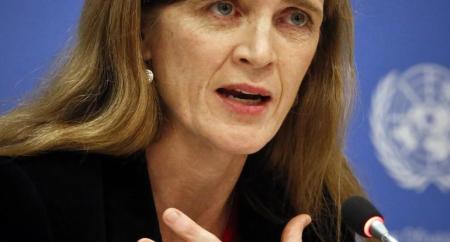
samantharussiaUnited States U.N. Ambassador Samantha Power speaks during her final press conference, Friday, Jan. 13, 2017 at U.N. headquarters. (AP Photo/Bebeto Matthews)

By all means, let’s have a debate about the dangers of American presidents and their administrations purveying “alternative facts.” But could the members of the media most ostentatiously seething over President Trump — and now busy presenting their own alternative facts — please spare us the pretense that the White House is suddenly in danger of losing its credibility. What’s left to lose? We’ve just had eight years of the Obama administration beaming out  alternative facts “narratives” to the mascot-media echo chamber, on the theory that saying something makes it so (“If you like your doctor, you can keep your doctor”; Iran’s “exclusively peaceful” nuclear program; the Benghazi “video”; etc.).

It is Trump’s job to reverse this rot, not to adapt Obama’s fiction techniques to suit himself. But if anyone’s curious about the kind of fakery that Trump and his team should strive to avoid — in the interest of integrity and good policy — Obama’s former ambassador to the United Nations, Samantha Power, has just given us a showcase example. In her farewell speech as UN ambassador, delivered Jan. 17 to the Atlantic Council, Power conjured an entire alternate universe, less by way of presenting alternative facts than by omitting a number of vital facts altogether. The result was to erase from the picture some of the most disastrous failures of the Obama administration, while insinuating that Trump is already complicit in the resulting mess.

Let me stipulate that Power did issue a warning that is valid, important, and urgent. Her topic, as she explained at the start of her speech, was “a major threat facing our great nation: Russia.”

Yep, no question about that. Vladimir Putin’s Russia is a growing threat, as some of us have been arguing for more than a decade.

But it was on Obama’s watch that Russia became a mushrooming threat to a degree that even Obama and his team could not in the end ignore — welcoming Edward Snowden, snatching Crimea from Ukraine, moving back into the Middle East, backing the Assad regime and bombing in Syria, hacking hither and yon, and frustrating Power at the UN with its veto on the Security Council.

It was Obama himself, with his policy of “engagement,” who helped lay the groundwork for this rising threat — deferring to dictators, betraying allies, downsizing the U.S. military, and sneering at those who warned there would be hell to pay. Putin drew the logical conclusions, read this U.S. retreat as an invitation, and made his moves. One might have supposed that after years of Obama apologizing for America, Samantha Power in her swan-song lecture could have summoned the strength of character to apologize for Obama, and for her own role, as one of his top envoys. (Don’t hold your breath).

For Putin, Obama offered the opportunity of a lifetime — to roll right over that old “rules-based order,” which always depended on American leadership, and which Power now warns us is threatened by Russia.  Obama began with the 2009 “reset,” including the gift to Putin of yanking missile defense plans for Eastern Europe. Obama went on to promise Putin “more flexibility” after his 2012 reelection. In the 2012 presidential campaign debates, Obama mocked Mitt Romney’s warnings about Russia, scoffing that “the Cold War’s been over for 20 years.”

When Putin gave asylum in 2013 to American-security cyber-vandal Edward Snowden, mocking Obama as he did so, Obama’s mini-mouse response was to attend a G-20 summit in Russia regardless, but punish Putin by refraining from any bilateral meetings. About that same time, Obama erased his own “red line” on chemical weapons in Syria by way of turning over the problem to Russia. When Russia in 2014 snatched Crimea from Ukraine, Obama answered with sanctions that have done nothing to reverse Russia’s grab. Meantime, Obama’s administration celebrated Russia’s presence as one of the main parties to an Iran nuclear deal that Israel, and many American lawmakers, protested as a grave threat. When Putin sent Russian warships into the Mediterranean and Russian bombers into Syria, Obama responded by hosting international talking shops, while Power gave impotent lectures at the UN.

None of this wilting U.S. policy figured in Power’s speech as part of the problem. She justified the “reset” on grounds that “2017 is not 2009.” (Right, and 2009 was not 1991, when post-Soviet Russia looked like a friend on the ropes. By 2009, Russia had already engaged in such feats as poisoning dissident spy Alexander Litvinenko with polonium-210, meddling in Ukraine’s elections, murdering a series of journalists, and transgressing into Georgia.) Power suggested that in 2009, when Putin’s sidekick, Dmitry Medvedev, was president of Russia, there was more common ground with the U.S. (surely she is aware, as was her flexible boss, that even during that interval, Putin, not Medvedev, was the real power in the Kremlin).

Power in her speech claimed that “anyone who has seen my debates in the UN Security Council with Russia knows that I and my government have long had serious concerns about its government’s aggressive and destabilizing actions.” But in her recitation of specifics, that “long” concern seemed to extend back only to about 2014, as if the previous five years of Obama’s engagement, reset, retreat, flexibility, disappearing red line, ineffectual sanctions and feckless dialogue were irrelevant.

For good measure, Power threw in a classic Obama apology for America (Russian Foreign Minister Sergey Lavrov, recipient of the 2009 “reset” button, must love this routine):

Now, I acknowledge there are times when actions the United States takes in the interest of defending our security and that of our allies can be seen by other nations as offensive moves that threaten their security, and we need to be alert to this, which is why dialogue is so important.

Power then deplored Russia’s policies in which “lying is a strategic asset,” and its goal of “creating a world where all truth is relative, and where trust in the integrity of our democratic system is lost.” Correct on all counts, and an important warning. Yet somehow disingenuous coming from a senior member of the administration that unapologetically turned the National Security Council into a Ben Rhodes narrative workshop, mind-melded with President Obama. She made no mention of that.

Amid all this, Power worked around to the punch line — “we must continue to work in a bipartisan fashion to determine the full extent of Russia’s interference in our recent elections… .” Here again, Russian hacking is without question a threat to be deterred, stopped, punished. But there’s that troubling administration timeline, in which Russian hacking merited merely a public warning before the 2016 presidential election. After the vote, and Trump’s victory, it suddenly emerged on the Obama administration’s twilight agenda as a threat of the first order.

Power made a number of recommendations, some worthy in their own right, but — coming from this particular speaker — staggering for the degree of hypocrisy involved. She said “we have to do a better job of informing our citizens about the seriousness of the threat the Russian government poses.” (Quite right, but where’s that apology owed to Mitt Romney?).

Most memorable was her urging that “we must reassure our allies that we have their backs, and ensure that Russia pays a price for breaking the rules.” Yes, absolutely. But that’s quite an utterance coming from Power, who just last month, as Obama’s willing envoy, betrayed one of America’s closest allies, Israel, at the UN Security Council. It was Power who raised her hand to abstain from the vote on Resolution 2334 — allowing the passage, absent a U.S. veto, of measures deeply damaging to the Jewish state, and extremely difficult for any U.S. administration to now reverse.

Having by turns revised, scrubbed, excused, fudged and recast the Obama record on Russia, Power wrapped up by quoting George Washington and prescribing — who could argue? — that we must be “clear-eyed about the threat Russia poses from the outside” and dedicated to “restoring citizens’ faith in our democracy on the inside.”

Hypocrisy, though unattractive, is not necessarily dangerous. But it becomes so when coupled with political power and employed to cover up important truths. Russia is indeed a serious and growing threat, on multiple fronts. But to confront this requires not a Potemkin facade erected to  deflect attention from years of terrible policy, but an accurate understanding of how we got here. Samantha Power and Barack Obama, with their exit warnings about Russia, owed us at least that much.

Which brings me back to alternative facts, and what we should require of Trump. He inherits a Russia that was in effect invited by the Obama administration to become the grave and growing threat we see today. Putin availed himself richly of that invitation. To remedy this will take American leadership, courage and candor. If anyone in the new Trump administration ends up giving at any stage a speech similar in its Orwellian manipulations to this farewell peroration by Samantha Power, Trump should fire that speaker forthwith. America deserves better.

What Obama Owes Putin—and Why Donald Trump Is Left Holding the Bag

January 17, 2017

What Obama Owes Putin—and Why Donald Trump Is Left Holding the Bag, Tablet MagazineLee Smith, January 17, 2017

(A long but fascinating analysis of Obamas’ Middle East policy, of which a strong Iran was the centerpiece and in which Putin was his tool, ally and master. — DM)

The Obama administration’s dual-track diplomacy was different because the public track was intended to cover for the real show going on behind the scenes. For instance, if it looked like Obama was at odds with Putin over Russia’s destructive escalation in Syria and its role in crushing the rebels and killing civilians, nothing could have been further from the truth. Yet Obama needed Putin to rescue Iran and save its regional position. So while Obama was denouncing Putin in public, his White House errand boys were actually meeting in private with Putin’s errand boys, helping the Russians to accomplish the very things that the administration—especially the State Department—then publicly denounced. On bad days, it could look like there were actually two U.S. governments, pursuing policies that were diametrically opposed to each other. In fact, there was only one government, led by Obama—and the policy of that government was entirely coherent, although not necessarily wise.

For what mattered most to Obama wasn’t Syria, nor even was it the Joint Comprehensive Plan of Action, which is typically referred to as Obama’s signature foreign-policy initiative. Even that was a feint, cover for a larger strategy that entailed a realignment of interests in the Middle East and a new form of foreign-policy “realism” that would get American troops out of the Middle East—and put America in the same column as Iran and its allies, including Vladimir Putin.

How could Obama cover America’s retreat, yet ensure a certain amount of stability in the Middle East? Israel was too small for the role of regional policeman, and besides, its policies toward the Palestinians pointed toward instability. The Sunni Arab states were fractious and incapable of working together, and their own internal problems gave rise to extremism. That left Iran.

Trump’s nominee for defense secretary, Gen. James Mattis, . . . thought crushing Assad would be a huge strategic setback for Iran. And that’s just what worried Obama, who hardly needed the Iranians to warn him that realignment would collapse if America targeted the Syrian regime. After all, realignment was predicated on the idea of a strong Iran with a can-do Quds Force that could act as the region’s new policeman. An Iran knocked back down to size, and where the country’s internal opposition would be emboldened, would be of no use to a White House keen to hand over the keys to the Middle East and get out. Obama needed a big Iran, a “successful regional power,” as he’s put it.

***************************

Is Donald Trump a Russian secret agent? Did he pay FSB hookers to pee on the bed the Obamas slept in at the Ritz in Moscow, overlooking the Kremlin? It’s silly season, so any drunk on a fat oppo-research expense account can write down any crazy foolishness they want and Buzzfeed will let you decide if it’s true because that, as Buzzfeed’s editor, Ben Smith, solemnly explained to The New York Times, is where American journalism is at in 2017. Duly noted, Buzzfeed. Enjoy the golden showers.

What’s being obscured by this grotesquerie is the origin and the actual substance of U.S. foreign policy toward Russia, which in turn affects the lives of hundreds of millions of people living in Syria, Iraq, Ukraine, and elsewhere. Or, to put it another way: Is Donald Trump likely to continue the policies of his predecessor, which set the Middle East on fire and led to 500,000 deaths in Syria, and to Putin biting off large chunks of the sovereign nation of Ukraine? Or is he likely to reverse those policies? Or can he, even if he wanted to?

The single-mindedness with which the White House and the remnants of the Clinton campaign have pursued the idea that Donald Trump is a pawn of Vladimir Putin is not based on silly stories about peeing prostitutes or secret computer servers that connect the Trump organization to the Kremlin. Rather, it’s an attempt to manufacture more smoke to obscure the reality of Obama’s own determination to collaborate with a hostile Russian leader in Syria, and elsewhere in the Middle East.

Sure, Obama recently sent 35 Russian diplomats packing and shuttered Russian diplomatic facilities in Maryland and New York, but this was after seven years of looking the other way while Russia seized Crimea, then Donbass; waged cyberattacks on the Baltic countries; brought down a passenger jet over Ukraine; sheltered Edward Snowden; and bombed schools and hospitals in Syria. All of these actions threatened global stability and American interests, yet Obama only puffed his chest after the cyberattacks on the Democratic National Committee and Clinton Campaign Chairman John Podesta’s emails—long after it mattered, and after the moving vans have already started to haul his stuff out of the White House.

The reason top national-security journalists, policy mandarins, and much of the Washington establishment can’t fathom Obama’s relationship with Putin is only partly due to partisanship. The real reason it’s so hard to see how much room the outgoing president gave Putin is because misdirection has been Obama’s guiding principle for seven years.

The president made it look like he was at odds with Putin for much of his two terms—for instance, loudly poo-pooing the Russian campaign in Syria and warning of Vietnam-style “quagmires,” dismissing Russia as a weak country, sending an LGBT delegation to the Sochi Olympics to underscore his differences with Russia’s treatment of the LGBT community. All this helped obscure the fact that when it really counted, Obama took special care to signal the Russian strongman that their interests were aligned. That wasn’t because he has a man-crush on Putin, but because he had a larger purpose in view—securing the Iran nuclear deal.

The point isn’t that Obama lied. Sure, he lied. All politicians lie all the time, right and left, Republican and Democrat. All governments lie, perhaps especially liberal democracies, which don’t have the luxury afforded authoritarian regimes to do whatever they want at no cost to their approval ratings, which hardly matter. Liberal democracies lie especially when they’re crafting policies that would make many of their constituents queasy.

For two terms the Obama White House staged a foreign-policy puppet show, while the real drama took place far from the spotlight—a mutant variation of dual-track diplomacy. Policy is often conducted along two tracks—maybe military and diplomatic, or hard power and soft power, like development assistance or cultural-exchange programs. Diplomacy is almost always conducted on two tracks. Track-two diplomacy is a term of art that refers to the nonofficial meetings held by private individuals or groups that give the official parties the nonofficials represent enough room to disclaim ownership if or when it blows up. The Oslo peace process began as track-two diplomacy, for example, as have plenty of other major diplomatic initiatives. The point is that whether we’re talking about foreign aid or political pressure, military force or moral suasion, the two tracks of dual-track diplomacy are almost always pointed in the same general direction, with the aim of securing the same outcome.

The Obama administration’s dual-track diplomacy was different because the public track was intended to cover for the real show going on behind the scenes. For instance, if it looked like Obama was at odds with Putin over Russia’s destructive escalation in Syria and its role in crushing the rebels and killing civilians, nothing could have been further from the truth. Yet Obama needed Putin to rescue Iran and save its regional position. So while Obama was denouncing Putin in public, his White House errand boys were actually meeting in private with Putin’s errand boys, helping the Russians to accomplish the very things that the administration—especially the State Department—then publicly denounced. On bad days, it could look like there were actually two U.S. governments, pursuing policies that were diametrically opposed to each other. In fact, there was only one government, led by Obama—and the policy of that government was entirely coherent, although not necessarily wise.

For what mattered most to Obama wasn’t Syria, nor even was it the Joint Comprehensive Plan of Action, which is typically referred to as Obama’s signature foreign-policy initiative. Even that was a feint, cover for a larger strategy that entailed a realignment of interests in the Middle East and a new form of foreign-policy “realism” that would get American troops out of the Middle East—and put America in the same column as Iran and its allies, including Vladimir Putin.

Yes, as Obama believed, Americans were sick of the problems and psychoses of the Middle East, and angry that George W. Bush failed to win his two Middle East wars. But neither Congress nor the U.S. foreign-policy establishment was keen to see the United States dismantle a regional security architecture it took 70 years to build, and which Obama and his young aides saw as a guarantee of future friction, and future U.S. military engagement. Someone needed to smash that architecture with a hammer.

So the Obama White House made stuff up. No one wanted to side with Iran and downgrade traditional allies like Israel. And so the Obama administration said that wasn’t happening. And the way it obscured the truth was to stage a dog-and-pony show with familiar Beltway names and faces to keep the Buzzfeed kids busy pondering the complexities of U.S. foreign policy while the adults went about their deadly serious business. What looked like the president of the United States pulling a rabbit out of his hat was actually Obama sawing a woman in half—and drawing blood.

***

Is that really what happened? Some former Obama officials, like the administration’s onetime Syria point man, Frederic Hof, argue that the reason the administration’s foreign policy is a mess is because the president and his men in the White House lacked experience in the federal bureaucracy. In this view, the Obama team—namely, National Security Adviser Susan Rice—didn’t know how to manage what people in the know call the “interagency process,” or how the various institutions, like the National Security Council staff, State Department, Pentagon, and intelligence community process policy.

The reality is that Obama and his closest aides were contemptuous of the institutions, staffed by those very same Beltway bureaucrats that collectively make up what Obama deputy Ben Rhodes disparagingly called “The Blob.” As both Obama and Rhodes have explained, the mediocrities worthy of contempt included members of Obama’s cabinet. The reason for tapping figures like Leon Panetta, Robert Gates, David Petraeus, Hillary Clinton, John Kerry, and Samantha Power was to use the establishment as cover, while the real players, like Obama and Rhodes, Rob Malley, and a few select others, maneuvered in the shadows, and spun covering fictions. By 2012, as Gates and Panetta detailed in their memoirs, the Wise Men came to understand they were simply pawns in the president’s larger game, and quit before the real bloodshed started.

Hillary Clinton, with an eye to her presidential campaign, was not about to cross Obama in public, as Gates, Panetta, Chuck Hagel, and others did, but she knew she was window dressing, too. Her State Department was surprised when John Kerry, then head of the Senate Foreign Relations Committee, was tasked to open a channel with the Iranians through Oman. The concessions Kerry offered Iran, especially the right to enrich uranium, angered Clinton’s staff. Kerry was screwing up badly, they leaked to reliable press contacts, they’d never have blundered like that.

Was the Clinton team really shocked and outraged? No, it was just cranking up its own fog machine, lest anyone realize the White House had done the worst thing anyone can do to someone else in Washington—make them irrelevant. Hillary Clinton’s job wasn’t to make policy—it was to rack up frequent-flier miles and stay out of the way while the White House handled the big-ticket items like Israel, Iran, China, and every other issue of any major importance. Nor did she particularly want the responsibility for decisions that she and her coterie may have opposed, and which certainly were likely to anger many of her prominent traditional liberal supporters. “The president,” as one official from a pro-Israel organization in Washington told me, “leapfrogged the State Department.”

Clinton’s successor, John Kerry, was either less ambitious or more vain than Clinton, or maybe both. He was the electronic rabbit while the real work of shaping the world was done by much younger men who represented the will of the president of the United States. What Kerry did in public, all those marathon negotiating sessions, all those windy speeches, was a sideshow. The fact that his tremendous vanity made him think that it was real only added conviction to his performance—all the better to generate buzz among 27-year-old reporters at Buzzfeed and their instant-foreign-policy-expert buddies at the newly-minted Washington “think tanks” led by Democratic political operatives like Neera Tanden, whose actual experience of any particular part of the world or area of human endeavor—warfare, diplomacy, nuclear engineering, you name it—was nil.

So while Buzzfeed—and the New Yorker—wrote articles about how John Kerry was manfully negotiating cease-fires in Syria with his Russian counterpart, Sergei Lavrov, it was, in fact, Obama’s own Middle East point man, Robert Malley, who conveyed the president’s real policy. Almost as soon as Obama called for Assad to step aside in August 2011, the administration came to regret that bit of grandstanding, and walked it back. As Tony Badran, a research fellow at the Foundation for the Defense of Democracies told me, “The administration went from ‘transitioning away from Assad’ to ‘de-escalating’ the conflict, or stopping the bloodshed. The White House used a veneer of humanitarian concern to elide the fact that removing Assad was no longer a part of the equation. It was now about shutting down the war against Assad.”

It wasn’t long before foreign officials came to understand that Obama was working two seemingly opposing channels—the trick was figuring out which channel was real. As a source close to the Turkish government explained to me, Turkey’s former prime minister, Ahmet Davutoglu, eventually concluded that Obama was using Clinton as a prop. Whatever promises she might make on Syria, for instance, were worthless. They were also often actively misleading, as they were unconnected to what the Americans were actually doing on the ground. The White House had sent its top diplomat out to lie, and without informing her she was lying.

No one saw more of the administration’s shell game than Israel. The White House reassured Jerusalem that it wasn’t going to sell Iran the farm—Israel was their ally, and Iran was the enemy. As one former senior U.S. official told me, “The Bush administration and Israel had developed a pressure track on Iran, primarily through the intelligence community. This was the track that produced Stuxnet. But Obama shut down the pressure track with the opening of the Oman channel since they didn’t believe that pressure and diplomacy work together. But the Obama White House couldn’t tell the Israelis they were shutting down the pressure track. So the president wrapped them up in planning, promising, for instance, a Stuxnet 2.0. So you have emissaries going back and forth, planning and planning and planning, which was actually just stalling.”

Moreover, said the former U.S. official, the Israelis knew that Obama was lying about the Oman channel. He added that the head of the U.S. team negotiating with Iran, Wendy Sherman, “would meet openly with the Iranians as part of the P5+1 talks, then fly to Jerusalem, and tell the Israelis, ‘We got your back.’ But the Israelis knew the Americans were meeting with Iran because they had the tail numbers of planes going to Oman. The Israelis went to Obama’s then national security adviser, Thomas Donilon, and said, ‘We know what’s going on.’ ”

In fact, the Israelis didn’t understand. They thought, like most critics of the Iran deal, that the administration was just flubbing negotiations and needed help. But the White House didn’t care that much about the particulars because the JCPOA was simply a device to allow for a larger, even more historic play—Obama wanted to get America out of the Middle East, and realigning with Iran was America’s exit strategy.

For the big problem with the region, from Obama’s perspective, is the lure of the “Washington playbook,” a set of guiding principles that typically point to the use of force, which was passed down by generations of government grandees—the kind he used as rodeo clowns. The question was: How could Obama cover America’s retreat, yet ensure a certain amount of stability in the Middle East? Israel was too small for the role of regional policeman, and besides, its policies toward the Palestinians pointed toward instability. The Sunni Arab states were fractious and incapable of working together, and their own internal problems gave rise to extremism. That left Iran.

Clearly, there are plenty of Obama administration officials enamored with the Islamic Republic, whether they’re attracted to the vintage patina of late 20th-century Third Worldism or classic Persian culture. What was most appealing to Obama, as he told a meeting of Gulf Arab officials at Camp David in 2015, was simply that the Iranians are capable of getting things done—a sentiment that he expressed in the context of his admiration for the Revolutionary Guards Corps’ expeditionary unit led by Qassem Soleimani. However, he also realized that this conviction and the policy it undergirded would have grossed out a large number, likely a majority, of Americans, and their elected representatives. So he lied, or misled and misdirected—and said the JCPOA was about stopping Iran from getting a nuclear weapon, and nothing more.

***

All the major foreign-policy issues of the Obama presidency (the fraying of the bilateral relationship with Israel, the withdrawal from Iraq, Russia, etc.) were subsets of realignment policy—including the administration’s management of the single largest strategic, political, and humanitarian catastrophe of the 21st century, the Syrian conflict. Obama’s cabinet held the mainstream view of the Syrian war—Panetta, Clinton, Kerry, Petraeus, and Power all supported arming the rebels to defeat Assad, or at least compel him to negotiate under harder circumstances. But that was exactly the opposite of what Obama wanted to do.

A more hawkish position was expressed by the U.S. officials like then-head of CENTCOM and now Trump’s nominee for defense secretary, Gen. James Mattis, who thought crushing Assad would be a huge strategic setback for Iran. And that’s just what worried Obama, who hardly needed the Iranians to warn him that realignment would collapse if America targeted the Syrian regime. After all, realignment was predicated on the idea of a strong Iran with a can-do Quds Force that could act as the region’s new policeman. An Iran knocked back down to size, and where the country’s internal opposition would be emboldened, would be of no use to a White House keen to hand over the keys to the Middle East and get out. Obama needed a big Iran, a “successful regional power,” as he’s put it.

A victory for the Syrian opposition—whom the White House could not help but disparage even as the president and his aides honored the victims of Assad’s depredations, i.e., the opposition—would have been a disaster for the Obama administration. It would have not only cashiered Obama’s hopes for a hegemonic Iran capable of managing American regional interests but would have required Washington to manage the varied and often conflicting interests of its regional allies, Israel, Jordan, Saudi Arabia, Turkey, etc. In other words, an opposition victory would have demanded more American involvement in the Middle East—more time, attention, energy, money, and perhaps blood.

The structural problem with Obama’s grand realignment is that Iran simply can’t handle the load. Obama should have understood this every time he had to tip the scales on behalf of the Iranians. When the administration leaked that Israel struck Iranian arms convoys headed to Hezbollah, Obama should’ve understood that he was tipping the scales, but it still wasn’t working. Qassem Suleimani turned out to be less than impressive, for his Quds Force couldn’t even tackle ISIS without the U.S. providing air support in Tikrit. The much-heralded operation to take back Mosul before Obama left office is such a mess that the White House simply doesn’t talk about it anymore.

When the Russians escalated in Syria in September 2015, Obama should have seen it as a clear sign he’d been wrong about Iran: The IRGC couldn’t even put down the farmers and carpenters the American president repeatedly disparaged. They needed the Russians to do it for them.

The White House said Putin’s action caught them by surprise, but that is unlikely to be true. The Russians were moving men and materiel for months through the Bosphorus—under the control of NATO member Turkey—at least since Suleimani’s July 2015 trip to Moscow to ask for Russian intervention.

The reality is that the Russian campaign in Syria served vital Obama interests. There was no point in realigning with Iran if Tehran’s regional position collapsed. Putin saved not only Assad and Iran, but Obama’s realignment policy. It was the second time the Russian president rescued Obama’s realignment policy—the first being when he offered the deal over Assad’s chemical weapons that allowed the commander-in-chief to walk back his red line.

Obama owes Putin, which is why he let the Russians get away with nearly everything it chose to do the last seven years, including its attacks on the American political system. What’s left for Trump is to manage the Russia policy he inherited from Obama—or overturn the table.
FULL MEASURE: January 08, 2017 – Russia Watching

January 11, 2017

FULL MEASURE: January 08, 2017 – Russia Watching via YouTube, January 11, 2017


U.S. Intelligence Report Contradicts Donna Brazile In Email Scandal

January 7, 2017

U.S. Intelligence Report Contradicts Donna Brazile In Email Scandal, Jonathan Turley’s Blog, Jonathan Turley, January 7, 2017

(Those damn Ruskies — or whoever — put the truth before the American public about the “dishonest, disloyal, and often despicable” conduct of the Dems. What jerks! It’s no wonder that Obama is so angry with them.  — DM)

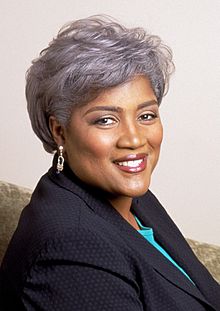
220px-donna_brazile_1

The report states that the email material did not contain “any evident forgeries.” In other words, they were real emails not forged.

The emails showed how the Washington establishment — including the press corp — misled the public and colluded behind the scenes. It is a hard sell to tell the public that they should be disgusted by Russia showing them how their leaders are dishonest, disloyal, and often despicable in their conduct.

************************

We discussed earlier how Donna Brazile, the interim chair of the Democratic National Committee, denied the legitimacy of emails that showed her leaking a question to Hillary Clinton that would be asked verbatim at the CNN downhill event. The media has largely declined to investigate the claim, including confirming the receipt of the earlier email from the Clinton staffer. Now additional emails allegedly show Brazile secretly feeding information to the Clinton campaign. Again, there has been relatively little media attention to the story and CNN issued a remarkably weak response that it was “uncomfortable” with the new disclosures on Brazile’s actions while a CNN commentator. While CNN Worldwide President Jeff Zucker called Brazile’s actions “disgusting” and others have denounced her actions, the DNC has stuck with Brazile and, despite the ease of questioning the other recipients to confirm or disprove Brazile’s claims. Now, the declassified intelligence report appear to directly dispute what Brazile has said but it is unclear if anyone in the media is willing to pursue the story against one of the most powerful figures in Washington Democratic circles.

The report states that the email material did not contain “any evident forgeries.” In other words, they were real emails not forged. Yet, Brazile repeatedly insisted that the emails were doctored or forged. She dismissed the email and told Megyn Kelly that “I have seen so many doctored emails. I have seen things that come from me at 2 in the morning that I don’t even send. I will not sit here and be persecuted, because your information is totally false.” At the time, I noted that no one seemed even remotely interested in questioning the recipient: Clinton Campaign Adviser Jennifer Palmieri. Media could have asked to see the original emails since both Brazile and Palmieri had them. Instead, it was complete silence.

Now the question is whether the Washington media corp will confront Brazile and demand to see these emails to determine whether she knowingly lied to the public and the press.

The report also highlights the difficulty that many in Washington are facing in trying to rally the public against Russian hacking. Many citizens may not be as mortified that Russia revealed how their leaders were lying to them. The emails showed how the Washington establishment — including the press corp — misled the public and colluded behind the scenes. It is a hard sell to tell the public that they should be disgusted by Russia showing them how their leaders are dishonest, disloyal, and often despicable in their conduct.

Stumping Earnest: Say, why didn’t Obama eject China diplomats over OPM hack?

January 6, 2017

Stumping Earnest: Say, why didn’t Obama eject China diplomats over OPM hack? Hot Air, Ed Morrissey, January 6, 2017

(Please see also, Why Trump and US intel clash over Russia. — DM)

However, the OPM hack  in particular was much more damaging, and was conducted directly against the government of the United States. The hack went on for over a year and exposed the background-check files of anyone who applied for a security clearance. That included the raw data from those checks, which means that China’s intel agencies have their hands on a lot of very sensitive information they can use to potentially blackmail people in highly sensitive positions. At the very least, they know who all of those people are and where they and their families live, which is a huge head start on forcing people into becoming moles and double agents.

*****************************

Call this the Question of the Week. ABC’s Jon Karl asked White House Press Secretary Josh Earnest on Tuesday about why Barack Obama expelled 35 Russian diplomats for hacking the DNC but didn’t expel any Chinese diplomats for hacking an actual government agency and stealing the highly confidential records of 21 million government employees. Earnest … really didn’t have much of an answer. Via RealClearPolitics and our pal Matt Vespa:

(Video at the link. — DM)

JON KARL, ABC: So when the Chinese hacked OPM in 2015, 21+ million current and former government employees and contractors had their personal data stolen by the Chinese. Why did the White House do nothing publicly in reaction to that hack? Which in some ways, was even more widespread than what we saw here from the Russians?

JOSH EARNEST: These are two cyber incidents that are malicious in nature but materially different.

KARL: 20 million people had their personal data taken… fingerprints, social security numbers, background checks. This was a far-reaching act–

EARNEST: I’m not downplaying the significance of it, I’m just saying that it is different than seeking to interfere int he conduct of a U.S. national election. I can’t speak to the steps that have been taken by the United States in response to that Chinese malicious cyber activity–

KARL: But nothing was announced. There was not a single step announced by the White House.

EARNEST: It is true that there was no public announcement about our response, but I can’t speak to what response may have been initiated in private.

KARL: But no diplomats expelled, no compounds shut down, no sanctions imposed, correct? You don’t do that stuff secretly.

When this popped up on Twitter, one person responded that the disparity was because the Russians hacked the election. Actually they didn’t hack the election; they conducted a propaganda campaign boosted in part by hacks on two private political organizations, one of which refused to cooperate with investigators afterward. That’s certainly serious enough to merit some kind of a diplomatic response, but the Russians didn’t change vote totals or crash electoral systems — in fact, they didn’t penetrate any government systems in this effort.

However, the OPM hack in particular was much more damaging, and was conducted directly against the government of the United States. The hack went on for over a year and exposed the background-check files of anyone who applied for a security clearance. That included the raw data from those checks, which means that China’s intel agencies have their hands on a lot of very sensitive information they can use to potentially blackmail people in highly sensitive positions. At the very least, they know who all of those people are and where they and their families live, which is a huge head start on forcing people into becoming moles and double agents.

And yet, the Obama administration did nothing to publicly rebuke China, except scold them in a speech. How well did that work out? Not impressively, as Sharyl Attkisson pointed out:

Last March, China government hackers continued a malicious pattern of cyber attacks on U.S. government and private networks, according to U.S. Cyber Command chief Mike Rogers. China has been linked by U.S. intelligence agencies to wide-ranging cyber attacks aimed at stealing information and mapping critical computer networks for future attacks in a crisis or conflict.

Karl’s question, and Earnest’s inability to provide a coherent response, is the question the media should have been asking ever since Obama and the Democrats suddenly embraced Mitt Romney’s formulation of Russia as our #1 geopolitical foe over the last two months. That question should also be aimed at Congress as they ask for joint select committees to delve into the Russian propaganda campaign. The basic question is this: Why didn’t you do anything about China first?

Why Trump and US intel clash over Russia

January 6, 2017

Why Trump and US intel clash over Russia, DEBKAfile, January 6, 2017

5-4

The furious clamor keeping the alleged Russian hacking scandal on the boil is being orchestrated by the outgoing president and his intelligence chiefs to ramp up US-Russian friction to an eve-of-cold war pitch.

It is important to note that Trump and his advisers, including designated Secretary of State Rex Tillerson, don’t propose rushing into détente with Moscow or any sort of honeymoon. They are acting to restore relations to an even keel and end the disequilibrium of the past eight years, during which Obama just talked and Putin did what he wanted, especially in East Europe and the Middle East.

****************************

America’s intelligence chiefs may have been singing their swan’s song Thursday and Friday (Jan. 5-6) when they hurled allegations of election-meddling “ordered at the highest Kremlin level” against Russia at a Senate Intelligence Committee hearing in Washington. The committee’s chair John McCain picked up the ball and declared that Russian hacking was “an act of war,” after hearing grim testimony from the Director of National Intelligence James Clapper and the National Security Agency head Adm. Michael Rogers.

They disclosed that they had compiled a confidential intelligence report that demonstrated how President Vladimir Putin interfered in the US election campaign in favor of the winner, Donald Trump. They declined to divulge its contents but promised to release a shorter, censored version to the public next Monday, Jan. 9.

CIA chief John Brennan and Homeland Secretary Jeh Johnson then proceeded to the White House to present the confidential report to President Barack Obama.

It will be put before President-elect Trump Friday.

The furious clamor keeping the alleged Russian hacking scandal on the boil is being orchestrated by the outgoing president and his intelligence chiefs to ramp up US-Russian friction to an eve-of-cold war pitch.

DEBKAfile’s Washington and intelligence sources find that the campaign is prompted by five motives:

1. The president-elect not only proposes to put relations with Moscow on a new and different footing, his transition teams are already at work with Putin’s advisers to chart areas of cooperation between the two powers, ready for the Trump administration to go forward when he moves into the White House on Jan. 20.

The most prominent area is the war on the Islamic State; another – the conflicts in Syria and Iraq. They are also exploring a joint US-Russian effort to resolve the decades-long Israeli-Palestinian dispute.

2. Obama, who has decided to retain a team for monitoring Trump’s policies, has plunged into a dogged fight against his successor’s decision to reset US-Russian ties.

Battling to salvage a part of his “legacy” is, Obama, exceptionally for departing American presidents, is determined to cast a long shadow over his successors’ actions and policies.

In the next four years, Barack Obama will keep hammering at the Russian hacking affair in order to keep the flames high against Trump’s “Russian steps.”

3. It is important to note that Trump and his advisers, including designated Secretary of State Rex Tillerson, don’t propose rushing into détente with Moscow or any sort of honeymoon. They are acting to restore relations to an even keel and end the disequilibrium of the past eight years, during which Obama just talked and Putin did what he wanted, especially in East Europe and the Middle East.

If the effort to restore balance to the relationship works, cooperation in common areas of concern might follow. But if not, the rivalry will continue, except that henceforth America will operate from a position of strength.

4. Working together in the war on Islamic terror will call for a large measure of cooperation between US intelligence agencies and the Russian secret services.

Sixteen years ago, after 9/11, Putin proposed this kind of cooperation to President George W. Bush in the fight against Al Qaeda.

In 2011, he stepped in again with an offer of assistance to Obama in the Libyan war.

Putin was rebuffed by both presidents rebuffed him. Donald Trump is the first US leader ready to seriously explore Putin’s intentions.

The US intelligence community is up on arms at this prospect, mainly because its clandestine branches were purpose-built to confront Russia, America’s historic Cold War enemy. It is hard for them to wrench the wheel round and head in the opposite direction at the bidding of the Trump administration.

5, Notwithstanding denials by administration officers, the president elect has every intention of overhauling the character and operational methods of America’s intelligence services. His overarching goal is to cut down the vast numbers off officers, analysts and computer operations, which turn out mountains of intelligence reports most of which he claims no one reads.

Trump plans to focus more on the product of secret agents in the field, and so save the hundreds of billions of dollars spent on desk staff and high-tech computer systems. His administration will prefer to rely more on human intelligence and less on technology-based input.

Trump encapsulated his approach to intelligence and computers in a remark to reporters on New Year’s day: “No computer is safe. You want something to really go without detection, write it out and have it sent by courier.”

SATIRE | Obama Blames Russia For Exposing Anti-Israel Move

December 31, 2016

Obama Blames Russia For Exposing Anti-Israel Move, Arizona Conservative, John Semmens, December 31, 2016

With a rash of news stories popping up contradicting the Obama Administration’s denial that the recent UN vote against Israeli settlements was, in fact, organized and led by Administration officials, President Obama charged the Russians with “once again exposing communications that were intended to remain private.”

One of these “private communications” entailed Secretary of State John Kerry’s meeting with senior Palestinian diplomat Saeb Erekat to coordinate strategy for advancing the UN censure of Israel. Another was Vice President Joe Biden’s phone call pressuring Ukrainian President Petro Poroshenko to vote for the censure.

“The revelation of official matters intended to remain confidential is precisely the same MO of the Russian hackers who tipped the recent US presidential election toward Moscow’s puppet—Donald Trump,” Obama contended. “This further provocation is an act so hostile that it qualifies as an act of war. Clearly, the retaliatory measures we have implemented thus far have been insufficient to deter our country’s greatest enemy.”

Konstantin Kosachev, head of the International Committee of the Russian Upper House of Parliament, called Obama’s actions “the agony of not only a lame duck, but of a political corpse.”

Meanwhile, Russian President Vladimir Putin’s refusal to retaliate in response to the Obama Administration’s expulsion of Russian diplomats was labeled “yet another diabolical and sinister effort to mislead the American public,” Presidential Press Secretary Josh Earnest charged. “Imitating a reasonable demeanor in order to make President Obama appear hysterical and unhinged is meant to drive a wedge between him the people who have loved and admired him during his term in office. It won’t work. Americans will rally behind their President just as Americans rallied behind FDR after Pearl Harbor.”

Earnest’s prediction seemed to be born out when Republican Sens. John McCain (Az) and Lindsey Graham (SC), demanded an even stronger retaliatory response toward Russia. “I didn’t spend seven years in a Communist POW camp in Vietnam only to sit idly and let the Soviet Union mock our President,” McCain blustered. Graham called for “an internationally enforced ‘no fly zone’ that would shoot down any Russian military aircraft operating outside the borders of their country.”

President-Elect Donald Trump’s attempt to assert a plea for everyone “to remain calm until adults are in charge after the inauguration,” was labeled “another example of his lack of fitness,” by House Minority Leader Nancy Pelosi (D-Calif). “At a time when patriots ought to be backing our President, Trump is showing he has more in common with our enemy.”

In related news, Alan Dershowitz, professor emeritus at Harvard Law School and two-time contributor to Obama’s successful election campaigns, denounced the Administration’s anti-Israel stance as “an appalling betrayal by a man I was twice duped into trusting.”

How Iran actually lost in Aleppo

December 26, 2016

How Iran actually lost in Aleppo, American ThinkerHeshmat Alavi, December 26, 2016

For 16 years America has failed to adopt a correct policy in the Middle East despite having huge opportunities to make significant changes. The 2003 war literally gift-wrapped Iraq to Iran, parallel to the highly flawed mentality of preferring Shiite fundamentalism to Sunni fundamentalism. This allowed Iran take full advantage of such failures and resulting voids.

Aleppo will be a short-lived success story for Iran. The tides are changing across the globe and Iran will no longer enjoy opportunities from West rapprochement. Understanding this very well, this is exactly why Tehran has resorted to such atrocities and sought to massacre all in Aleppo.

In contrast to how the U.S. handed Iraq in  a silver plate to Iran, Russia never entered the Syria mayhem to hand it over to Iran. The roots of Aleppo remain in the hearts of all Syrians. As world powers, especially the U.S. and Russia review their future objectives, Iran will be the first and ultimate party to suffer.

***********************************

Following a historic period of perseverance, Syrian rebels and their families were forced to evacuate eastern Aleppo after its liberation back in 2012. An unjust, intense war was launched upon Aleppo by Iran’s Revolutionary Guards (IRGC) and its proxy forces on the ground: Russia with its indiscriminate air strikes, and a lame-duck Syrian army of less than 20,000 deployable forces.

After more than 15 months continuous air raids and a long-lasting inhumane siege, Syrian rebels and civilians sealed an international agreement to depart Syria’s once economic and cultural hub.

In the past few weeks widespread bombing campaigns continued relentlessly on civilian areas. No Aleppo hospital was spared. The IRGC and its foot-soldiers, numbering at the tens of thousands, spearheaded the military of Syrian dictator Bashar Assad in horrific mass executions of innocent people. The United Nations reported 82 individuals, including women and children, were murdered on the spot in the streets and in their homes. God knows how many more incidents have gone unreported.

The amazing perseverance shown by Aleppo locals for years now in the face of atrocious airstrikes and artillery shelling is unprecedented to say the least. Amidst all this, the silence and inaction seen from the West, especially the United States, will remain forever a source of shame.

Conflict of Interests

In the pro-Assad camp there are three decision-makers. First Russia, second Iran, and third the Syrian regime. The role played by Assad and his military in such scenes is next to nothing.

The West and Turkey became frantic for a ceasefire in Aleppo in the early days of the war due to the negative public opinion resulting from shocking crimes. They sought to have the rebels and remaining civilians transferred to other Syrian opposition controlled areas.

On December 13th, Washington and Moscow reached what can be described a ceasefire agreement. Intense negotiations between Turkey and Russia were started afterwards, resulting in an agreement between the Syrian opposition with Russia and Turkey to evacuate Aleppo. Practically, the parties involved in the talks were Aleppo representatives and Russia, hosted by Turkey. All necessary preparations were made to begin evacuating the city from the morning of Wednesday, December 14th.

However, Iran disrupted this agreement and the IRGC hindered the evacuation process. It was crystal clear Russia and Iran were pursuing different objectives and sets of interests. Iran sought not to have Aleppo evacuated but to exterminate all Syrian rebels and civilians.

Twenty-four hours later, pressure from the international community forced the implementation of the Russia-Syrian rebel agreement on December 15th. On the morning of that day the first convoy carrying the wounded exited Aleppo, only to face roadblocks imposed by Iran-backed forces and the Assad military.

Iran raised certain conditions for the evacuation. Russia later threatened to airstrike any party hindering the evacuation, an obvious warning to Iran. Tehran was forced to wind back under Moscow pressure.

As a result, the last phase of this war and the method chosen to evacuate Aleppo was a defeat for Iran and a victory for the Syrian opposition. Especially since the conflict of interest between Iran/Assad and Russia became crystal clear. Politically speaking, Iran has become a secondary party in Syria.

“For Putin, a political settlement now makes sense. Staying involved in an ongoing insurgency does not. But for that, he needs the opposition — which is fractured — to accept a political outcome, and there is little prospect of that so long as Assad remains in power,” as explained by Dennis Ross, who served as the Director of Policy Planning in the State Department under President George H. W. Bush, the special Middle East coordinator under President Bill Clinton, and was a special adviser for the Persian Gulf and Southwest Asia (which includes Iran) to the former Secretary of State Hillary Clinton.

Is this the end?

The turn of events does not spell the end of the Syrian opposition. The opposition controls large swathes of Syria, with areas over ten times larger than Aleppo and millions of residents. Idlib Province has at a three million strong population; the western coast of the Euphrates in the Turkish border, recently liberated by the Free Syrian Army from Daesh (ISIS/ISIL); large portions of Deraa Province neighboring Jordan; a strategically important section in the north in Latakia Province on the Turkish border; large portions of areas in the Damascus vicinity and large portions in the Aleppo vicinity.

In contrast to Western mainstream media reporting, the Syrian opposition enjoys the capability to rise once again.

Despite all its differences, a comparison made to the Iran-Iraq War may help. In 1986, Iran made significant advances taking control over the Faw peninsula in southern Iraq. Western media and think-tanks all forecasted further advances by Iran and a defeat for Iraq. In 1988 Iran was forced into a U.N.-brokered ceasefire agreement.

Deep divisions between the Syrian nation and the Assad regime have reached the point of no return. Nearly 500,000 have been killed and more than half of the Syrian population displaced. The Syrian nation will never accept the continuation of this regime. Despite sporadic military advances, Assad has no place in Syria’s future.

Where Iran stands in Syria

Iran will not be the final victor in Syria.

First — For Iran, it is vital to maintain Assad in power. His fall will mark the end of Iran’s crusades in Syria. Even if the Syrian opposition becomes weaker, the overall crisis will continue while Assad remains in power. Assad is no longer acceptable in the international stage with an international consensus over his resort to war crimes and crimes against humanity.

Second — While Iran is financing and providing the ground forces, in this war, it no longer enjoys the first and final word. Russia calls the shots now with stark differences in interest, as seen in Aleppo.

Trump’s America

U.S. President Barack Obama’s weak foreign policy, especially the failed engagement with Iran, prolonged the Syrian crisis, allowed Tehran to take advantage, Russia to take the helm and America be sidelined.

Where will developments lead with Donald Trump in the White House? What will be the new U.S. foreign policy vis-à-vis Syria, Iran and the Middle East? How can we define Washington’s relationship with Moscow, and what practical measures will Trump take against Daesh (ISIS/ISIL)? Time will tell.

Good relations between the U.S. and Russia will at least not have a negative impact on the region, and this is good news for the Syrian opposition. Russia has weighable interests in Syria. However, what will Trump do with Iran? Considering Trump’s harsh tone on Iran to this day, far more positive outcomes can be forecasted for the Syrian opposition.

Second, Trump and secretary of state nominee Rex Tillerson have the potential of eventually convincing Russia to provide concessions. This is not in Iran’s interests, as Tehran remembers Russia ditching Libyan the dictator Muammar Qaddafi.

Lesson learned in Syria

For 16 years America has failed to adopt a correct policy in the Middle East despite having huge opportunities to make significant changes. The 2003 war literally gift-wrapped Iraq to Iran, parallel to the highly flawed mentality of preferring Shiite fundamentalism to Sunni fundamentalism. This allowed Iran take full advantage of such failures and resulting voids.

Aleppo will be a short-lived success story for Iran. The tides are changing across the globe and Iran will no longer enjoy opportunities from West rapprochement. Understanding this very well, this is exactly why Tehran has resorted to such atrocities and sought to massacre all in Aleppo.

In contrast to how the U.S. handed Iraq in a silver plate to Iran, Russia never entered the Syria mayhem to hand it over to Iran. The roots of Aleppo remain in the hearts of all Syrians. As world powers, especially the U.S. and Russia review their future objectives, Iran will be the first and ultimate party to suffer.


The sorrow and the pity in Syria

December 21, 2016

The sorrow and the pity in Syria, Washington Times

(Please see also, Lies and Hypocrisy over Aleppo. — DM)

iraninsyriaIllustration on Iran’s future role in Syria by Linas Garsys/The Washington Times

ANALYSIS/OPINION:

Over the last five years, Syria has been descending into a hell on Earth. Over the last four months, the lowest depths of the inferno have been on display in Aleppo, an ancient city, once among the most diverse and dynamic in the Middle East. On Friday, in the final press conference of his presidency, Barack Obama addressed this still-unfolding humanitarian and strategic catastrophe.

“So with respect to Syria,” he said, “what I have consistently done is taken the best course that I can to try to end the civil war while having also to take into account the long-term national security interests of the United States.”

An estimated 500,000 dead, 11 million displaced, millions more living in fear, sorrow and pitiful poverty, Iranian forces backed by Russian forces occupying the heart of the Arab world — yet no-drama Mr. Obama remains so casual, so confident that the decisions he’s made were “the best” and, what’s more, that he made them “consistently.” Is refusing to change one’s mind as conditions worsen and policies fail really a virtue?

To bolster his case, the president emphasized that he has spent lots of time — “if you tallied it up, days and weeks” — attending meetings on Syria. “We went through every option in painful detail with maps,” he said, “and we had our military and we had our aid agencies and we had our diplomatic teams, and sometimes, we’d bring in outsiders who were critics of ours.” Imagine that: painful detail, maps, aid agencies, even critical outsiders.

Count me among those not convinced. In 2011, during that hopeful moment known as the Arab Spring, peaceful protesters took to the streets of Damascus. The dynastic dictator Bashar Assad responded brutally. Before long, a civil war was ignited.

Mr. Obama’s top advisers recommended assisting non-Islamist and nationalist rebels — not with the proverbial boots on the proverbial ground but with secure communications devices, money, weapons and training. Mr. Obama rejected that advice. He had done the math: Mr. Assad, a member of the Alawite minority, hadn’t enough loyal troops to prevail against Syria’s insurgent Sunni majority. So the fall of the Assad regime had to be both inevitable and imminent.

What that failed to take into account: Iran’s theocrats would send in foreign Shia fighters, including those of Hezbollah, their Lebanese proxy, all under the leadership of their Islamic Revolutionary Guard Corps. Vladimir Putin also would deploy forces in support of the Assad regime. We can surmise his reasons: to have a Mediterranean port for his navy; to re-establish Russia’s influence in the Middle East; to show the world that, unlike Mr. Obama, he does not abandon his friends; to diminish American credibility and prestige.

Mr. Obama’s response was, as it so often is, mainly rhetorical. He warned Mr. Putin that he was stepping into a quagmire. He proclaimed, as so he often does, that there can be “no military solution.”

The Russian president, a product of the KGB rather than the faculty lounge, knew that was nonsense. In the Middle East, the law of the jungle trumps international law every time.

Having accused President George W. Bush of overreach, Mr. Obama adopted a policy that might be called underreach. He decided not to enforce the “red line” he had declared against Mr. Assad’s use of chemical weapons. He decided not to eliminate Mr. Assad’s air power, which would have ended the barrel-bombing of civilians. He wasn’t even willing to help establish “safe zones” where innocent Syrians might stand a chance to defend themselves.

I know: Mr. Obama saw his mission as ending wars and certainly not risking additional American entanglements. And he is among those who believe that the projection of American power generally does more harm than good.

Not mutually exclusive is the theory that he had a specific goal in mind: to bring Iran’s rulers into a strategic partnership with the United States. To achieve that, he had to demonstrate that he respected what he has called their “equities” in Syria. Were he to take action against Mr. Assad, the Islamic republic’s envoys might walk away from the table where they were negotiating the nuclear weapons deal Mr. Obama envisioned as his great foreign policy legacy.

The president has been nothing if not “consistent” in his pursuit of detente with Iran’s Islamic revolutionaries. In all likelihood, that is what explains his decision, just after taking office, to turn a blind eye to the clerical regime’s ruthless repression of the Green Movement that took to the streets of Iranian cities following a rigged presidential election in 2009.

History will record that these efforts failed. Nixon went to China. Mr. Obama will not be going to Iran — or to Syria, which Iran intends to incorporate into its version of a caliphate (which Shia call an “imamate”).

Aleppo,” U.S. Ambassador Samantha Power said last week at the U.N., “will join the ranks of those events in world history that define modern evil, that stain our conscience decades later. Halabja, Rwanda, Srebrenica, and, now, Aleppo. To the Assad regime, Russia, and Iran, your forces and proxies are carrying out these crimes.”

She went on to ask: “Are you truly incapable of shame? Is there literally nothing that can shame you? Is there no act of barbarism against civilians, no execution of a child that gets under your skin?”

Would it be unfair to suggest that the answers to these questions should have been apparent to her and the president years ago? Had that been the case, perhaps they would have formulated different policies and implemented a different course of action. Or perhaps not.

Obama to Putin: Cut It Out!

December 17, 2016

Obama to Putin: Cut It Out! Power LineJohn Hinderaker, December 16, 2016

[W]hy didn’t President Obama tell Vladimir Putin to cut it out back in 2014? If all it took was a stern warning by our president to bring Russian cyberwarfare to a halt, why didn’t Obama tell Putin to stop it two years ago? If he had done so, following his own logic, the Russians would have behaved and there would have been no Wasserman-Schultz hack two years later. Who knows, Hillary Clinton might be our president-elect!

**********************

Barack Obama has spent the last eight years resisting the idea that Russia is an adversary of the United States. First we had the “reset”; next the cancellation of the Eastern European missile shield; then we had Obama assuring President Medvedev that he would be able to give away the store, but the Russians would need to wait for his second term; and then the presidential debate where Obama mocked Mitt Romney’s statement that Russia is our number one geopolitical rival by saying that the 1980s called, and they want their foreign policy back. In between, we had a foreign policy that was supine in the face of Russian aggression in Crimea and Ukraine.

Now, in a typically head-snapping 180-degree turnabout, Obama and his fellow Democrats portray Republicans as soft on Communism Russia. It’s a throwback to the 1970s, but with the parties’ roles reversed.

In his press conference today, Obama described the stern measures he supposedly took after learning that the Russian government was involved in breaking into Debbie Wasserman Schultz’s email account:

And so in early September when I saw President Putin in China, I felt that the most effective way to ensure that that did not happen was to talk to him directly and tell him to cut it out, there were going to be some serious consequences if he did not.

And in fact, we did not see further tampering of the election process. But the leaks through Wikileaks had already occurred.

So all it took, apparently, was for President Obama to tell Vladimir Putin to cut it out.

This is what I don’t understand: in October 2014, the Russian government hacked into both the White House’s and the State Department’s computer systems. For an unknown period of time, weeks if not months, the Russians were reading White House and State Department emails–a far more significant security breach than the accounts of Debbie Wasserman Schultz and John Podesta. The Obama administration never did discover that its communications had been compromised, but an ally (I suspect it was Israel) alerted the administration to the Russian intrusion. The White House’s computer system was down for weeks while experts tried to deal with the Russian hack and improve security.

What was President Obama’s reaction to this hack, which could reasonably be seen as an act of war? There was none, apparently. The administration downplayed the significance of the intrusion. The Russian government had been reading White House and State Department emails? No big deal! The liberal press followed suit. The newspapers that are now hysterical about the alleged Russian hacking of Wasserman Schultz’s email account dutifully kept quiet about what happened in the White House and the State Department. It doesn’t take a genius to figure out that Democratic Party newspapers like the Washington Post and the New York Times remained silent because the midterm election was just a few weeks away, and the story reflected badly on the Obama administration.

So this is what I don’t get: why didn’t President Obama tell Vladimir Putin to cut it out back in 2014? If all it took was a stern warning by our president to bring Russian cyberwarfare to a halt, why didn’t Obama tell Putin to stop it two years ago? If he had done so, following his own logic, the Russians would have behaved and there would have been no Wasserman-Schultz hack two years later. Who knows, Hillary Clinton might be our president-elect!

This question is so blindingly obvious that one can only wonder why not a single reporter at today’s press conference thought to ask it.

I am just kidding, of course. The news outlets that covered up the Russian hack of White House and State Department computers in 2014 are not about to challenge their fellow Democrat today.

For background on the 2014 intrusion, which the Obama administration attributed to Russia after the fact, go here, here, here, here, here and here.