Posted tagged ‘Obama and Israel’

Towards the pending Abbas visit to Washington D.C.

April 19, 2017

Towards the pending Abbas visit to Washington D.C., Israel National News, David Bedein, April 17, 2017

(Please see also, UNRWA Won’t Be Changing School Textbooks and Curriculum. — DM)

With President Donald Trump set to greet Mahmoud Abbas, head of the Palestinian Authority, at the White House on May 3rd, the time has come to examine how the US allowed the PLO to  trample upon ten US government PLO policy guidelines, and to examine what the current US administration can do to see to it that the PLO does not trample on Trump.

The US recognized the PLO during  the final month of the Reagan administration December 1988, on the condition that the PLO would recognize UN resolution 242, which required the PLO to  recognize the right of every nation to secure boundaries  – especially Israel . The PLO immediately ignored this requirements for US recognition.

It is not too late for the US to ask the PLO, under the aegis of the Palestinian Authority, to recognize UN resolution 242, which it has yet to do.

The US acted as  a witness and guarantor of the PLO/Israel Oslo Accords, signed on the White House lawn on September 13, 1993. Known as the DOP, “The Declaration of Principles”, it spelled out mutual recognition of Israel and the PLO, and the formal denunciation of violence and terror. The DOP was premised on its ratification by the Israeli Knesset and by the central committee of the PLO. The Israeli Knesset ratified the DOP on Sept, 26, 1993, by a vote of 61 to 50, with nine abstentions. The PLO central committee was set to meet in Tunis to ratify the DOP on October 6, 1993. However, the one Israeli correspondent dispatched to Tunis to witness the PLO ratification, Pinhas Inbari, on the staff of the left wing newspaper Al HaMishmar, reported from Tunis that the PLO chairman announced that he could not get a quorum of the PLO to attend, so the PLO Central Committee did not convene to ratify the DOP.

It is not too late for the US, as witness and guarantor of the Oslo Accord, to insist the PLO, through the aegis of the PA, ratify the DOP.  Otherwise, the agreement between Israel and the PLO does not hold water.

US law allowed the PLO, all of whose components were designated by the US law as FTOs, Foreign Terrorist Organizations, to open an embassy in D.C. and allowed the PLO to dispatch representatives to the USA, but only if PLO would cancel the PLO Covenant, the document which defined the purpose of the PLO:  To replace and destroy the State of Israel. The PNC, the PLO National Council, met in special session on April 24, 1996, with the stated purpose that this session would renounce and cancel the PLO Covenant. The PLO, at that session, filmed by the Institute for Peace Education Ltd, only announced the formation of a committee to consider changes in the PLO Covenant.

A video and protocol of the session was sent to the US embassy in Tel Aviv, and to the US Congress. Prof. Yehoshua Porat, expert on the PLO and a candidate of  the left wing Meretz party for the Knesset, reviewed the video and protocols of the PNC session, and affirmed that the PLO had not cancelled the PLO Covenant.  The US embassy in Tel Aviv, however, ignored what had actually transpired at the PNC, and instead reported to the White House and to the US Congress that the PLO had fulfilled the requirements of US law with the cancellation of the PLO Covenant, allowing the US to roll out a red carpet to welcome PLO chairman Yassir Arafat as a dignitary in Washington one week later. The PLO was allowed to open an official embassy , which has functioned ever since, conditional on the US President signing a waiver every six months which extends the non- terror status of the PLO.

It is not too late for the US to insist the head of the PLO and the Palestinian Authority call the PNC into a special session to cancel the PLO covenant, as required by US law, before Abbas enters the White House on May 3rd, 2017.  Otherwise, the entry of Abbas to the US represents a challenge to US law.

As an integral part of the US Aid package to the Palestinian Authority, the US funds PA schools which instituted a war education curriculum, despite US objections. That PA curriculum does not prepare Palestinian Arab children to live in state alongside Israel. That curriculum indoctrinates all Palestinian Arab children to conduct a Jihad to liberate Palestine, all of what they considere Palestine, with no attempt to train the next generation for peace with Israel.

It is not too late for the US to demand an overhaul of PA education to prepare the next generation for peace.

US law forbids any agency that receives funds from the US from placing members of a designate FTO  – a foreign terrorist organization — on the payroll of  a US government funded entity. Yet the US funded UNRWA schools, which openly employ members and even leaders of HAMAS, putting them on the payroll. UNRWA, which now receives $400 million of its 1.2 billion dollar budget from the US, has ignored US directives to remove Hamas from the UNRWA  payroll.  And when UNRWA has removed some Hamas leaders from the UNRWA payroll, they simple return as senior employees  of UNRWA.

It is not too late for the US, as the leading donor of UNRWA, to insist that UNRWA fire members and leaders of Hamas who receive salaries from UNWRA – especially Hamas teachers, who dominate the Gaza UNRWA teachers union. Elections are imminent.

It is not too late for the US to reverse its decision to force Hamas into the PA electoral process.

The US helped to create the  PSF, the Palestinian Security Force of the Palestinian Authority. However, the US embassy and US State department have ignored all inquiries challenging the PSF inclusion of Palestinian terror organizations which have never demonstrated any peaceful intentions, to say the least.

It is not too late for the US to ask the PSF to remove  Palestinian terror groups from its ranks.

The US enacted the  Koby Mandell act which requires the US to pursue and prosecute thoe who maim or kill US citizens abroad. Until the inauguration of President Trump, the US would not enforce the act concerning American citizens attacked  in Israel by terrorists. The new Trump administration has begun to file indictments of terrorists who murdered US citizens in Israel.

It is not too late, Trump has demonstrated, for the US government to enforce the Koby Mandell act.

The US established an office in the US State Department to monitor anti Semitism in 2008. However, that office has  refused to examine PA anti-Semitism. While there are rumors that Trump will not renew funding for the US office that tracks anti-Semitism, it is not too late for the US to examine the tentacles of official Palestinian Authority ant-Semitism which can be tracked world- wide.

The US created a special commission to form a Palestinian Authority constitution. However, the Papal Nuncio, Archbishop Pietro Sambi , the late Vatican official who examined the draft of the proposed PA constitution, and reported to the US, wrote  that the current PA constitution, which would form the basis of PA law in a Palestinian Arab state, does not allow for any  juridical status of  any religion other than Islam. Futhermore,  the Papal Nuncio  warned that the proposed US-funded PA constitution was  based on the strict Sharia law used in Saudi Arabia, and not on a more tolerant Sharia law that Archbishop Sambi had witnessed in  his earlier postings in Indonesia and Bangladesh.

It is not too late for the US government to reconsider the nature of jurisprudence that would exist in any kind of future Palestinian Arab entity.


The Lessons of the Hamas War

March 3, 2017

The Lessons of the Hamas War, Front Page MagazineCaroline Glick, March 3, 2017

hamas-3

Originally published by the Jerusalem Post

Sunni regimes, led by Egypt under President Abdel Fattah al-Sisi, the Saudi regime and the United Arab Emirates, were shocked to discover that the Obama administration was siding with their enemies against them.

If Israel went into the war against Hamas thinking that the Obama administration would treat it differently than it treated the Sunni regimes, it quickly discovered that it was mistaken. From the outset of the battle between Hamas and Israel, the Obama administration supported Hamas against Israel.

America’s support for Hamas was expressed at the earliest stages of the war when then-secretary of state John Kerry demanded that Israel accept an immediate cease-fire based entirely on Hamas’s terms. This demand, in various forms, remained the administration’s position throughout the 50-day war.

Netanyahu asked Sisi for help in blunting the American campaign for Hamas. Sisi was quick to agree and brought the Saudis and the UAE into an all-but-declared operational alliance with Israel against Hamas.

************************************

The State Comptroller’s Report on Operation Protective Edge, Israel’s war with Hamas in the summer of 2014, is exceedingly detailed. The problem is that it addresses the wrong details.

Israel’s problem with Hamas wasn’t its tactics for destroying Hamas’s attack tunnels. Israel faced two challenges in its war with Hamas that summer. The first had to do with the regional and global context of the war. The second had to do with its understanding of its enemy on the ground.

War between Hamas and Israel took place as the Sunni Arab world was steeped a two-pronged existential struggle. On the one hand, Sunni regimes fought jihadist groups that emerged from the Muslim Brotherhood movement. On the other, they fought against Iran and its proxies in a bid to block Iran’s moves toward regional hegemony.

On both fronts, the Sunni regimes, led by Egypt under President Abdel Fattah al-Sisi, the Saudi regime and the United Arab Emirates, were shocked to discover that the Obama administration was siding with their enemies against them.

If Israel went into the war against Hamas thinking that the Obama administration would treat it differently than it treated the Sunni regimes, it quickly discovered that it was mistaken. From the outset of the battle between Hamas and Israel, the Obama administration supported Hamas against Israel.

America’s support for Hamas was expressed at the earliest stages of the war when then-secretary of state John Kerry demanded that Israel accept an immediate cease-fire based entirely on Hamas’s terms. This demand, in various forms, remained the administration’s position throughout the 50-day war.

Hamas’s terms were impossible for Israel. They included opening the jihadist regime’s land borders with Israel and Egypt, and providing it with open access to the sea. Hamas demanded to be reconnected to the international banking system in order to enable funds to enter Gaza freely from any spot on the globe. Hamas also demanded that Israel release its terrorists from its prisons.

If Israel had accepted any of Hamas’s cease-fire terms, its agreement would have constituted a strategic defeat for Israel and a historic victory for Hamas.

Open borders for Hamas means the free flow of armaments, recruits, trainers and money to Gaza. Were Hamas to be connected to the international banking system, the jihadist regime would have become the banking center of the global jihad.

The Obama administration’s support for Hamas was not passive.

Obama and Kerry threatened to join the Europeans in condemning Israel at the UN. Administration officials continuously railed against IDF operations in Gaza, insinuating that Israel was committing war crimes by insisting that Israel wasn’t doing enough to avoid civilian casualties.

As the war progressed, the administration’s actions against Israel became more aggressive. Washington placed a partial embargo on weapons shipments to Israel.

Then on July 23, 2014, the administration took the almost inconceivable step of having the Federal Aviation Administration ban flights of US carriers to Ben-Gurion Airport for 36 hours. The flight ban was instituted after a Hamas missile fell a mile from the airport.

The FAA did not ban flights to Pakistan or Afghanistan after jihadists on the ground successfully bombed airplanes out of the sky.

It took Sen. Ted Cruz’s threat to place a hold on all State Department appointments, and Canada’s Conservative Party government’s behind-the-scenes diplomatic revolt to get the flight ban rescinded.

The government and the IDF were shocked by the ferocity of the administration’s hostility. But to his great credit, Prime Minister Benjamin Netanyahu surmounted it.

Netanyahu realized that Hamas is part of the Muslim Brotherhood nexus of jihad and also supported by Iran. As a result the Egyptians, Saudis and UAE rightly view it as a major enemy. Indeed, Egypt was in a state of war with Hamas in 2014. Gaza serves as the logistical base of the Salafist forces warring against the Egyptian military.

Netanyahu asked Sisi for help in blunting the American campaign for Hamas. Sisi was quick to agree and brought the Saudis and the UAE into an all-but-declared operational alliance with Israel against Hamas.

Since the Egyptians were hosting the cease-fire talks, Egypt was well-positioned to blunt Obama’s demand that Israel accept Hamas’s cease-fire terms.

In a bid to undermine Egypt, Obama and Kerry colluded with Hamas’s state sponsors Turkey and Qatar to push Sisi out of the cease-fire discussions. But due to Saudi and UAE support for Sisi and Israel, the administration’s attempts to sideline the Egyptians failed.

The cease-fire terms that were adopted at the end of the war contained none of Hamas’s demands. Israel had won the diplomatic war.

It was a strange victory, however. Netanyahu was never able to let the public know what was happening.

Had he informed the public, the knowledge that the US was backing Hamas would have caused mass demoralization and panic. So Netanyahu had to fight the diplomatic fight of his life secretly.

The war on the ground was greatly influenced by the diplomatic war. But the war on the ground was first and foremost a product of the nature of Hamas and of the nature of Hamas’s relationship with the PLO.

Unfortunately, the Comptroller’s Report indicates that the IDF didn’t understand either. According to the report, in the weeks before the war began, the then-coordinator of government activities in the territories, Maj.-Gen. (res.) Eitan Dangot, told the security cabinet that the humanitarian situation in Gaza was at a crisis point and that hostilities were likely to break out if Israel didn’t allow humanitarian aid into the Strip.

On Wednesday we learned that Dangot’s view continues to prevail in the army. The IDF’s intelligence chief, Maj.-Gen. Herzi Halevi, told the Knesset’s Foreign Affairs and Defense Committee that Israel must send humanitarian aid to Gaza to avert a war.

There is truth to the IDF’s position. Hamas did in fact go to war against Israel in the summer of 2014 because it was short on supplies.

After Sisi overthrew the Muslim Brotherhood regime in Egypt the previous summer, he shut Egypt’s border with Gaza because Gaza was the logistical base of the insurgency against his regime. The closed border cut off Hamas’s supply train of everything from antitank missiles to cigarettes and flour.

The problem with the IDF’s view of Hamas is that providing aid to Gaza means supplying Hamas first and foremost. Every shipment into Gaza strengthens Hamas far more than it serves the needs of Gaza’s civilian population. We got a good look at Hamas’s contempt for the suffering of its people during Protective Edge.

After seeing the vast dimensions of Hamas’s tunnel infrastructure, the then-OC Southern Command, Maj.-Gen. Sami Turgeman, told reporters that Hamas had diverted enough concrete to its tunnel project to build 200 kindergartens, two hospitals, 20 clinics and 20 schools.

Moreover, the civilian institutions that are supposed to be assisted by humanitarian aid all serve Hamas. During the war, three soldiers from the IDF’s Maglan unit were killed in southern Gaza when they were buried in rubble of a booby-trapped UNRWA clinic.

The soldiers were in the clinic to seal off the entry shaft of a tunnel that was located in an exam room.

Hamas had booby trapped the walls of the clinic and detonated it when the soldiers walked through the door.

All of the civilian institutions in Gaza, including those run by the UN, as well as thousands of private homes, are used by Hamas as part of its war machine against Israel.

So any discussion of whether or not to allow humanitarian aid into Gaza is not a humanitarian discussion. It is a discussion about whether or not to strengthen Hamas and reinforce its control over the population of Gaza.

This brings us to the goals of the war in Gaza in 2014. At the time, the government debated two possible endgames.

The first was supported by then-justice minister Tzipi Livni. Livni, and the Left more generally, supported using the war with Hamas as a means of unseating Hamas and restoring the PLO-controlled Palestinian Authority to power in the area.

There were four problems with this notion. First, it would require Israel to reconquer Gaza.

Second, the Obama administration would never have agreed to an Israeli conquest of Gaza.

Third, Israel doesn’t have the forces to deploy to Gaza to retake control of the area without rendering its other borders vulnerable.

The final problem with Livni’s idea is that the PLO is no better than Hamas. From the outset of the war, the PLO gave Hamas unqualified support. Fatah militias in Gaza manned the missile launchers side by side with Hamas fighters. PLO chief Mahmoud Abbas represented Hamas at the cease-fire talks in Cairo. He led the political war against Israel in the West. And he financed Hamas’s war effort. Throughout the war Abbas sent a steady stream of funds to Gaza.

If PLO forces were returned to Gaza, they would behave precisely as they behaved from 2000 until Hamas kicked them out in 2007. That is, they would have acted as Hamas’s full partners in their joint war against Israel.

The second possible endgame involved a long-term strategy of defeating Hamas through attrition. This was the goal the government ended up partially adopting. The government ordered the IDF to destroy as much of Hamas’s missile arsenal as possible and to destroy its offensive tunnels into Israel. When the goals had been achieved to the point where the cost of opposing Obama grew greater than the battle gains, Netanyahu agreed to a cease-fire.

For the attrition strategy to have succeeded, the cease-fire would have only been the first stage of a longer war. For the attrition strategy to work, Israel needed to refuse to resupply Hamas. With its missile arsenal depleted and its tunnels destroyed, had Israel maintained the ban on supplies to Gaza, the residents would have revolted and Hamas wouldn’t have had the option of deflecting their anger onto Israel by starting a new war.

The IDF unfortunately never accepted attrition as the goal. From the Comptroller’s Report and Halevi’s statement to the Knesset this week, it appears the General Staff rejected attrition because it refuses to accept either the nature of Hamas or the nature of the PLO. Immediately after the cease-fire went into force, the General Staff recommended rebuilding Gaza and allowing an almost free flow of building supplies, including concrete, into Hamas’s mini-state.

The Comptroller’s Report is notable mainly because it shows that nearly three years after Protective Edge, official Israel still doesn’t understand what happened that summer. The problem with Hamas was never tactical. It was always strategic. Israel won the diplomatic battle because it understood the correlation of its strategic interests with those of the Sunni regimes.

It lost the military battle of attrition because it permitted Hamas to resupply.

Trump Admin, Congress Seek to Slash U.N. Funding in Wake of New Anti-Israel Action

March 3, 2017

Trump Admin, Congress Seek to Slash U.N. Funding in Wake of New Anti-Israel Action, Washington Free Beacon, March 2, 2017

“In a region where the use of civilians, including children, as human shields is routine, singling out Israel for condemnation is, in a word, ridiculous,” the White House official said. “If the United Nations’ Watchlist on Children and Armed Conflict has nothing better to do with the United States taxpayer dollars that fund it than engage in a vendetta against our ally Israel, perhaps we should rethink that support.”

***************************************

The White House and Congress are considering slashing U.S. funding to the United Nations in light of its most recent effort to declare the Jewish state’s fighting forces a chief violator of children’s rights, according to multiple conversations with U.S. officials.

The U.N. is working to add the Israeli Defense Forces, or IDF, to a list of entities such as terror groups that are responsible for inhumane acts against children.

The move would be just the latest anti-Israel salvo by the U.N., which caused controversy late last year when, with the backing of the Obama administration, it moved to condemn Israel for building homes for Jewish people in Jerusalem.

The latest action against Israel would add the IDF to the Watchlist on Children and Armed Conflicts, which would designate the Jewish state’s fighting forces as one of the worst offenders of children’s human rights in the world. Other groups and entities on the list include terrorist entities and forces that kill children en masse.

The move has prompted outrage in the White House and on Capitol Hill, where multiple U.S. officials told the Washington Free Beacon that they will no longer stand by as the U.N. singles out Israel for criticism. The effort to counter what they described as the U.N.’s anti-Israel bias is likely to include cutting a large portion of U.S. funding to the organization.

One senior White House official familiar with the Trump administration’s thinking on the matter told the Free Beacon that the president and his senior-most advisers are sick of seeing Israel treated as a pariah by the U.N.

“The Israeli Defense Forces are among the most humane, professional armed forces on the planet,” said the official, who was not authorized to speak on record. “Israel has been aggressively refining its protocols to minimize civilian casualties—so much so that after the 2014 conflict in Gaza the United States sent a delegation to study their best practices.”

The White House official signaled that the Trump administration would pursue a vastly different approach to the U.N. than its predecessor.

The Obama administration came under criticism from the pro-Israel community on numerous occasions for failing to defend Israel adequately in the face of international criticism. This culminated in a flurry of anger late last year when the Obama administration, in one of its final official acts, permitted the U.N. to officially chastise Israel in a break with decades of U.S. policy.

“In a region where the use of civilians, including children, as human shields is routine, singling out Israel for condemnation is, in a word, ridiculous,” the White House official said. “If the United Nations’ Watchlist on Children and Armed Conflict has nothing better to do with the United States taxpayer dollars that fund it than engage in a vendetta against our ally Israel, perhaps we should rethink that support.”

Rep. Peter Roskam (R., Ill.), a vocal defender of Israel, expressed disappointment in the U.N.’s latest action. He told the Free Beacon that Congress is prepared to reduce U.S. financial support for the U.N., which comprises a significant share of the organization’s operational budget.

“The United States Congress is already taking a serious look at United Nations funding levels in light of a number of recent actions unfairly targeting Israel,” Roskam said. “Classifying the IDF, one of the most professional and responsible military forces in the world, alongside terrorist groups like ISIS and Boko Haram is an absurdity.”

“If the U.N. goes through with this,” Roskam said, “the calls for reduced funding will grow even louder.”

Other sources who spoke to the Free Beacon about the matter said that the effort to single out the IDF is part of a broader strategy by anti-Israel organizations to mainstream hatred of the Jewish state in Turtle Bay.

“It’s a scam,” said one senior congressional adviser who is working with multiple offices on Capitol Hill to reform the U.N. “The U.N. wants excuses for its anti-Israel diplomacy, so it facilitates anti-Israel NGOs. Then those NGOs circle back and call on the U.N. to take anti-Israel actions, which provides the excuse that the U.N. wanted. It’s time for Congress to put a stop to this stupid game.”

Trump Admin, Congress Behind Effort to Cut U.S. Aid to Palestinians

February 28, 2017

Trump Admin, Congress Behind Effort to Cut U.S. Aid to Palestinians, Washington Free Beacon, February 28, 2017

(Please see also, Perez, Ellison and the Meaning of Anti-Semitism. How many leftist Democrats will vote for the bill? –DM)

A Palestinian hurls a stone during clashes with Israeli troops, near Ramallah, West Bank, Tuesday, Oct. 20, 2015. U.N. Secretary-General Ban Ki-moon called for calm during a surprise visit to Jerusalem on Tuesday ahead of meetings with Israeli and Palestinian leaders, in a high-profile gambit to bring an end to a monthlong wave of violence. (AP Photo/Majdi Mohammed)

A Palestinian hurls a stone during clashes with Israeli troops, near Ramallah, West Bank, Tuesday, Oct. 20, 2015. (AP Photo/Majdi Mohammed)

The White House is signaling its support for a new congressional effort to cut all U.S. funding to the Palestinian Authority due to its continued support of terrorism against Israelis and Americans, according to senior lawmakers and senior White House officials.

Leading lawmakers in the House and Senate gathered Tuesday on Capitol Hill to introduce legislation that would cut all U.S. funding to the Palestinian government, which has been criticized for providing financial incentives to terrorists who kill American and Israeli civilians.

The White House signaled its support for the legislation in a vast departure from the Obama administration, which worked against similar efforts when in power.

A senior White House official familiar with the effort told the Free Beacon that the Trump administration welcomes this effort and will sign it into law if it passes Congress.

“The Palestinian Authority’s use of its resources to provide material support for terrorism—indiscriminately targeted at American and Israeli civilians—is a grotesque example of how well-intentioned U.S. generosity can be turned against us,” a senior White House official told the Free Beacon.

The legislation, which aims to tighten the financial noose on the Palestinian government and force it to abandon its practice of paying terrorists, is a first step to reforming the notoriously corrupt government, the official said.

“This legislation highlights practical steps the PA can take to demonstrate a real commitment to ending the vicious cycle of hatred and violence that has prevented the Palestinian people from the prosperity and security they could otherwise be enjoying,” the official said.

The new legislative effort, titled the Taylor Force Act after an American who was killed in a Palestinian terror attack, cuts off all U.S. aid to the Palestinians as a direct response to its longstanding policy of paying salaries to terrorists and supporting those imprisoned for terrorist attacks.

“We can’t continue to financially support a government who looks to the so-called martyrs schedule,” said Sen. Roy Blunt (R., Mo.), who is spearheading the effort alongside Sens. Lindsey Graham (R., S.C.) and Tom Cotton (R., Ark.).

“It’s an outrageous concept to be in law anywhere,” Blunt said. “You can either stop doing what you’re doing or you won’t have our money at least to do it with.”

“We shouldn’t allow killers and ruthless attackers to become recognized as martyrs in a system that we’re part of,” Blunt added.

The Palestinian Authority receives around $300 million in aid annually from U.S. taxpayers. Lawmakers backing the bill expressed concern that at least a portion of this money is funding the Palestinian government-backed policy of paying salaries to terrorists imprisoned in Israeli jails.

“Most Americans have no idea this is a problem,” Graham said. “Not only are Israelis victims of this practice, Americans are victims of this practice. We’re going to change this. We’re going to get the Palestinian Authority’s attention by withholding their money.”

Graham also noted that “anti-Semitism is on the rise” in America. The bill represents an effort to push back against this.

“I want people to understand who America is when it comes to the one and only Jewish state,” Graham said.

Sen. Ted Cruz (R., Texas), who has long backed similar efforts, told the Free Beacon it is long past due for Congress to take the lead on this effort now that Obama administration officials can no longer lead efforts to block it.

“After eight years of the Obama administration, the U.S. must take long overdue action to hold the Palestinian leadership accountable for incentivizing and rewarding acts of terrorism,” Cruz told the Free Beacon. “Roughly $300 million annually is provided in monthly salaries and benefits to terrorists jailed in Israel, their families, and the families of those who died committing such horrific atrocities against Israeli and American citizens, including Taylor Force. Enough is enough. We must stand up for victims of Palestinian terrorism. No more U.S. taxpayer dollars should be provided until the Palestinian leadership stops engaging in this heinous practice. The incitement and glorification of terrorism must end.”

Trump-Netanyahu meeting can expose Obama collusion on Resolution 2334

February 14, 2017

Trump-Netanyahu meeting can expose Obama collusion on Resolution 2334, Israel National News, David Singer, February 14, 2017

Netanyahu issued a Press Release on 28 December 2016 declaring:

“We have it on absolutely incontestable evidence that the United States organized, advanced and brought this resolution to the United Nations Security Council. We’ll share that information with the incoming administration. Some of it is sensitive, it’s all true. You saw some of it in the protocol released in an Egyptian paper. There’s plenty more; it’s the tip of the iceberg.”

***********************************

One of the intriguing aspects of Israeli Prime Minister Netanyahu’s visit to the White House on February 15th will be the evidence he can produce to President Trump to establish former President Obama’s collusion in promoting Security Council Resolution 2334.

America abstained from voting on Resolution 2334 – but the language used in that Resolution was inimical to the national interests of Israel and the Jewish people by declaring that:

  • the establishment by Israel of ‘settlements’ in the Palestinian territory occupied since 1967, including East Jerusalem, had no legal validity and constituted a flagrant violation under international law
  • Israel immediately and completely cease all settlement activities in the occupied Palestinian territory, including East Jerusalem

This language identifies as “Palestinian territory”:

– and seeks to erase the legal rights vested in the Jewish people to reconstitute the Jewish National Home in these areas under the 1922 League of Nations Mandate for Palestine.

Such language gives credence to the PLO claim that the Mandate – a critical building block in the 100 years old Arab-Jewish conflict – is null and void.

Resolution 2334 contravenes article 80 of the United Nations Charter – exceeding the Security Council’s powers and condemning the hypocrisy of the Security Council which sanctimoniously professes to be concerned about “legal validity” and “international law”

The Egyptian newspaper Al-Youm Al-Sabea was the first to allege American collusion in promoting Resolution 2334 – claiming to have a transcript of a meeting in December – prior to the passage of Resolution 2334 – between Palestinian negotiator Saeb Erekat, US Secretary of State John Kerry, and US National Security Advisor Susan Rice in which Kerry said the US was prepared to cooperate with the Palestinians at the Security Council.

White House National Security Council spokesman Ned Price claimed no such tripartite meeting took place and that the ‘transcript’ was a total fabrication – although he admitted Erekat had met with Kerry and Rice separately.

Netanyahu issued a Press Release on 28 December 2016 declaring:

“We have it on absolutely incontestable evidence that the United States organized, advanced and brought this resolution to the United Nations Security Council. We’ll share that information with the incoming administration. Some of it is sensitive, it’s all true. You saw some of it in the protocol released in an Egyptian paper. There’s plenty more; it’s the tip of the iceberg.”

Netanyahu’s claim that some of the information is sensitive suggests that there has been an interception of emails or other classified American documents emanating from Obama or Kerry’s offices.

America’s cybersecurity record has been appalling – as the hacking of the Democrats web site and Hillary Clinton’s emails and private server has shown.

Netanyahu’s description of the transcript held by the Egyptian newspaper as “the tip of the iceberg” suggests Israel holds a Wiki-style treasure trove of incriminating documents.

Sensational claims of Israel-hacking will doubtless fuel the media.

There appears to be no evidence that this material has yet been given to the Trump Administration. If it had – some leak would surely have emerged by now.

Netanyahu’s visit to the White House presents the perfect opportunity to personally hand his evidence to President Trump – enabling him to decide whether to disclose such evidence publicly or not.

Netanyahu’s moment exposing Obama’s betrayal of Israel is fast approaching.

Israeli PM Netanyahu Becomes D.C. Darling as Democrats Clamor for Meetings

February 13, 2017

Israeli PM Netanyahu Becomes D.C. Darling as Democrats Clamor for Meetings, Washington Free Beacon, , February 13, 2017

(“Now that our Dear Leader is gone, we sure do love Israel.” — DM)

Israeli Prime Minister Benjamin Netanyahu chairs the weekly cabinet meeting in Jerusalem on February 12, 2017. / AFP PHOTO / GALI TIBBON

Israeli Prime Minister Benjamin Netanyahu chairs the weekly cabinet meeting in Jerusalem on February 12, 2017. / AFP PHOTO / GALI TIBBON

After years of tense relations with the United States under former President Barack Obama, Israeli Prime Minister Benjamin Netanyahu is emerging as one of the most prominent international personalities, according to multiple sources who told the Washington Free Beacon that Democrats, Republicans, and high-level White House officials are clamoring for a sit down with the Israeli leader when he arrives in town on Tuesday.

Senior officials across party lines hope to let Netanyahu know that America has Israel’s back and that years of tension during the Obama administration is just water under the bridge, according to both congressional sources and those close to the Trump administration.

Netanyahu’s schedule is already packed with powwows between President Trump, senior administration officials, and a cast of leading lawmakers on Capitol Hill from both sides of the aisle.

Meetings will center on U.S. lawmakers’ desire to reset relations with the Jewish state. Multiple sources told the Free Beacon that sit downs with White House officials will focus on holding Iran accountable for violations of the nuclear deal, moving the U.S. embassy in Israel to Jerusalem, and combatting efforts at the United Nations to delegitimize Israel.

Netanyahu already has confirmed a 6:30 p.m. dinner Tuesday evening with newly installed Secretary of State Rex Tillerson. The meeting will take place inside the State Department.

Netanyahu is expected to meet with Trump and other senior officials Wednesday before heading to Capitol Hill, where he will meet with leading Democrats and Republicans.

Netanyahu is expected to take separate meetings with Senate Majority Leader Mitch McConnell (R., Ky.) and Senate Minority Leader Chuck Schumer (D., N.Y.), sources told the Free Beacon.

Further meetings could take place with members of the Senate Foreign Relations Committee before Netanyahu travels to the House side of the Capitol for an evening meeting with House Speaker Paul Ryan (R., Wis.).

There is a strong desire among all parties to show Netanyahu that after nearly a decade of chilly relations during the former administration, the United States is prepared to restore the historic relationship with the Jewish state.

“Netanyahu’s schedule is so full that he literally can’t find time for all the high level meetings people want to have with him,” said one veteran foreign policy adviser who is closely in touch with the White House on Middle East issues. “The truth of this is, it’s nature taking its course.”

Recent polling shows that support for Israel is at an all-time high among Democrats and Republicans. Democratic lawmakers in particular are no longer being pressured by the former administration to distance themselves from Netanyahu and Israel.

“Without Obama trying to force Democratic lawmakers to choose between Israel and the United States nature is taking its course and everyone wants to see how they can help bolster the U.S.-Israel relationship,” the source said. “Voters want to see this.”

One source characterized Netanyahu as the “cool kid in town.”

On Capitol Hill, senior sources focused on the Middle East expect that lawmakers will emphasize a reset in relations with Israel. They also will seek to reassure Netanyahu that key foreign aid packages to Israel will remain robust and fully funded.

“There’s broad recognition that it’s time to turn a page on years of hostility towards Israel from the Obama administration. President Trump and the Republican Congress are focused on strengthening Israel’s security and the U.S.-Israel relationship—not condemning housing projects in disputed territories and pushing anti-Semitic U.N. resolutions,” said one senior congressional aide familiar with the Israeli leader’s travel itinerary.

“This provides a major opportunity for both the United States and Israel to stand up to Iran and all those who seek to defame and destroy the Jewish state,” the source said. “Given the warm relationship between Bibi and Trump, everyone seems upbeat and optimistic about the future of the alliance moving forward.”

Dennis Ross, a veteran Middle East hand who worked for former presidents Bill Clinton, George W. Bush, and Obama, told reporters on Monday that there is a strong desire to cast sour relations between the United States and Israel as a byproduct of the Obama administration.

That, Ross said during a conference call hosted by the Israel Project, is the “overriding message that emerges from this week,”

“Democrats will be anxious to show they’re close to Israel as well,” Ross said, adding that Netanyahu will convey the message that Israel’s relationship is with America as a whole, not any one administration.

White House Puts Palestinians, United Nations in Crosshairs

February 13, 2017

White House Puts Palestinians, United Nations in Crosshairs, Washington Free Beacon, February 13, 2017

U.S. President Donald Trump holds a joint press conference with Japanese Prime Minister Shinzo Abe following their talks at the White House in Washington on Feb. 10, 2017. (Kyodo) ==Kyodo

U.S. President Donald Trump holds a joint press conference with Japanese Prime Minister Shinzo Abe following their talks at the White House in Washington on Feb. 10, 2017. (Kyodo)

White House officials, as well as senior sources in Congress, told the Free Beacon that the move is part of a larger effort to solidify U.S. support for Israel and counter a range of last-minute moves by the former Obama administration aimed at severing U.S.-Israel ties.

****************************

The White House is sending a strong signal that it will no longer tolerate Palestinian intransigence at the United Nations or the international body’s long record of anti-Israel action, according to White House officials and sources in Congress who told the Washington Free Beacon that the Trump administration will “unabashedly support Israel” in the months and years ahead.

The Trump administration sent shockwaves through the U.N. late last week when it took a stance against the appointment of a senior Palestinian official to serve in a top post overseeing Libya.

Senior officials at Turtle Bay expressed outrage over the Trump administration’s move to block the appointment of former Palestinian Prime Minister Salam Fayyad as a special U.N. representative for Libya. The move was widely supported by U.N. members, and, for a time, the Trump administration.

Sources inside the White House told the Free Beacon that the move was meant to send a signal to the Palestinians that they can no longer manipulate the U.N. system in order to bolster their international clout. This type of action, the sources said, undermines Israel and the ongoing peace process.

White House officials, as well as senior sources in Congress, told the Free Beacon that the move is part of a larger effort to solidify U.S. support for Israel and counter a range of last-minute moves by the former Obama administration aimed at severing U.S.-Israel ties.

The Free Beacon first reported earlier this year that the Trump administration and Congress had already been working on a range of measures meant to boost U.S. support for Israel at the U.N.

“The United States was disappointed to see a letter indicating the intention to appoint the former Palestinian Authority Prime Minister to lead the U.N. Mission in Libya,” Nikki Haley, the U.S. ambassador to the U.N., said in a statement opposing the selection of Fayyad. “For too long the U.N. has been unfairly biased in favor of the Palestinian Authority to the detriment of our allies in Israel.”

“The United States does not currently recognize a Palestinian state or support the signal this appointment would send within the United Nations, however, we encourage the two sides to come together directly on a solution,” Haley said in a vast departure from Obama administration rhetoric. “Going forward the United States will act, not just talk, in support of our allies.”

A senior White House official familiar with the move told the Free Beacon that the Palestinians will no longer get a free pass to push their anti-Israel agenda and win statehood outside the parameters of the peace process.

“It is so refreshing to have an American ambassador to the United Nations who will unabashedly support our ally Israel,” one senior member of the White House’s National Security Council told the Free Beacon. “The appointment of Salam Fayyad as the official U.N. envoy to Libya would be an incremental step towards unilateral recognition of Palestinian statehood by the U.N. absent an agreement with Israel.”

“Ambassador Haley took the only appropriate action and we are looking to supporting her actions any way we can,” the source said.

One senior congressional aide who works on Middle East issues told the Free Beacon that Trump’s approach to the U.N. is centered on backing Israel from any action that could harm its interests.

“The U.N. is not a friend of Israel. After the Obama administration’s eleventh-hour attack on the Jewish state, President Trump is attempting to turn the page,”  the source said. “Our new administration is already pushing back against the U.N.’s rampant bias and reasserting America’s strong support for Israel. This is a good step in the right direction.”

Fayyad, who is widely viewed as a reformer in Palestinian society, appears to have been caught up in a larger battle between the White House and U.N. over the international body’s efforts to delegitimize Israel.

While Fayyad was seen as an acceptable pick for the Libya post, his ties to the Palestinian Authority and its rogue efforts to achieve statehood via the U.N. provoked ire in the White House, sources said.

The White House is determined to keep what it views as the U.N.’s anti-Israel bias in check, particularly after the Obama administration’s last-minute efforts to secure a resolution condemning Israel.

One senior official at a national pro-Israel organization said the Trump administration’s moves would help preserve international agreements barring the Palestinians from seeking statehood outside of the peace process.

“Pro-Palestinian officials at the U.N. thought they had found a clever way to mainstream the Palestinians as legitimate state actors, which is contrary to American policy and violates two decades of signed agreements between the Palestinians and Israel,” said the source, who was not authorized to speak on record. “They figured that the Trump White House would be too worried about optics to take a stand on behalf of our Israeli allies. The White House refused to be intimidated.”

Regional experts tracking the issue think Fayyad could become a lighting rod in a larger matter surrounding U.S. opposition to any U.N. action meant to elevate the Palestinians on the international stage.

Jonathan Schanzer, vice president of research at the Foundation for Defense of Democracies, told the Free Beacon that the controversy surrounding Fayyad actually benefits Palestinian leaders such as Mahmoud Abbas, who fought against Fayyad’s efforts to eradicate corruption.

“The thing people are not asking is why Fayyad was even considering working the Libya file instead of trying to reform the Palestinian Authority at home,” Schanzer said. “The answer is, Fayyad was pushed out by Mahmoud Abbas in 2013. He and Abbas were in an epic battle over corruption and clean governance and reform. Fayyad lost that battle, as Abbas went full dictator.”

The Obama administration is responsible for allowing Fayyad to be pushed out of the Palestinian Authority, Schanzer said.

“The U.S. refused to come to Fayyad’s defense. I lay this at the feet of the Obama administration,” he said. “Fayyad’s reform and clean governance program was gutted, and when Fayyad created an NGO it was raided by Abbas’ forces—and still the Obama admin refused to lift a finger to help him.”

Bravo to Ambassador Haley, for Blocking UN Ploy on ‘Palestine’

February 12, 2017

Bravo to Ambassador Haley, for Blocking UN Ploy on ‘Palestine’, PJ Media,  Claudia Rosett, February 11, 2017

(Please see also, US blocks former Palestinian prime minister from senior UN role in Libya ‘out of support for Israel’.  Thought experiment: what would the reactions, noted in the article linked in the preceding sentence, have been if a “right-wing” former Israeli cabinet minister had been named to the post?– DM)

nikkiUnited Nations, New York, USA, 27 January, 2017 – Nikki R. Haley, new United States Permanent Representative to the UN Presents Credentials to Secretary-General Antonio Guterres today at the United Nations Headquarters in New York. (Photo by Luiz Rampelotto/EuropaNewswire) (Sipa via AP Images)

Haley’s statement is important not only for its broad message — that President Trump’s administration will steer by his pledges of support to Israel — but also for calling out Guterres on his not-so-subtle attempt to abet the UN’s long push to confer by increments on the Palestinian Authority a legitimacy it has not earned.

****************************

On Thursday United Nations Secretary-General Antonio Guterres sent the Security Council a letter nominating as the new head of the UN’s mission to Libya a former prime minister of the Palestinian Authority, Salam Fayyad —  who was described in the letter as “Salam Fayyad (Palestine).”

America’s new ambassador, Nikki Haley, said no. Having thus blocked Fayyad’s appointment, Haley then put out a statement explaining why:

For too long the UN has been unfairly biased in favor of the Palestinian Authority to the detriment of our allies in Israel. The United States does not currently recognize a Palestinian state or support the signal this appointment would send within the United Nations, however, we encourage the two sides to come together directly on a solution. Going forward the United States will act, not just talk, in support of our allies.

Haley’s statement is important not only for its broad message — that President Trump’s administration will steer by his pledges of support to Israel — but also for calling out Guterres on his not-so-subtle attempt to abet the UN’s long push to confer by increments on the Palestinian Authority a legitimacy it has not earned.

The UN spokesman’s office responded by Haley’s objection by sending out a statement that:

The proposal for Salam Fayyad to serve as the Secretary-General’s Special Representative in Libya was solely based on Mr. Fayyad’s recognized personal qualities and his competence for that position.

United Nations staff serve strictly in their personal capacity. They do not represent any government or country.

This UN claim is disingenuous in the extreme, as the UN spokesman’s office itself then underscored, in the rest of the same statement quoted just above, by saying:

The Secretary-General reiterates his pledge to recruit qualified individuals, respecting regional diversity, and notes that, among others no Israeli and no Palestinian have served in a post of high responsibility at the United Nations. This is a situation that the Secretary-General feels should be corrected, always based on personal merit and competencies of potential candidates for specific posts.

In other words, Secretary-General Guterres, while disavowing any interest in the origins or potential loyalties of any candidate for a UN post, is simultaneously claiming a special interest in appointing — specifically — Israelis and Palestinians. And — lo and behold — Guterres just happens to have kicked off this erstwhile neutral campaign by nominating to a high-level post not an Israeli, but a Palestinian.

On a related note, to which Haley and her colleagues in the Trump administration might want to pay serious attention, there’s some news broken by Inner-City Press and further reported by veteran UN reporter Benny Avni, writing in the New York Sun (sources that often provide a lot more insight into the UN than you’re likely to find in, say, the New York Times; with further disclosure that the New York Sun has published many of my own articles on the UN). According to both Inner-City Press and the Sun, it appears that an influential voice behind Guterres’s nomination of Fayyad was that of the UN’s undersecretary general for political affairs, Jeffrey Feltman.

Feltman is an American, a former U.S. diplomat, who was appointed to his UN post in mid-2012, during President Obama’s first term in office. The UN fiction, as in the case of Fayyad’s nomination, is that such appointments have nothing to do with where a person comes from. That’s malarkey. Behind the scenes, a U.S. administration has plenty of say in such appointments.

In Feltman’s case, the longer he remains at the UN, the more opportunity he will have to try to inveigle more ground for Obama’s pro-Palestinian/anti-Israel policies, while undermining Trump’s agenda for decent treatment of Israel. According to Inner-City Press, Feltman has plenty of incentive to stay on at the UN “until July 4 so that his UN pension vests.” I have no direct confirmation of this situation, and Inner-City attributes its information to unnamed sources. But at the very least, Haley and her team should be in a position to find out what’s going on with Feltman’s continued presence as the UN’s senior official for political affairs, and do something about it. The UN’s chronic efforts to undermine Israel and confer undeserved legitimacy on the Palestinians are quite bad enough, without being driven by qualifying dates for UN pension packages.

For the U.S. to pressure the UN to replace Feltman immediately would be an excellent move. If Guterres — with his paradoxical prerequisites for UN staff —  still wants to place not only Palestinians but Israelis in high-level UN posts, surely to replace Feltman he could find an Israeli nominee who would be entirely acceptable to the U.S., not least on grounds of his or her personal qualities and competence.

According To Iranian Officials, Obama Administration Gave Unwritten Consent In The Nuclear Talks And In The JCPOA Negotiations For Iran To Develop Ballistic Missiles With A Range Of Only 2,000 km – That Is, Capable Of Striking Israel But Not Europe

February 3, 2017

According To Iranian Officials, Obama Administration Gave Unwritten Consent In The Nuclear Talks And In The JCPOA Negotiations For Iran To Develop Ballistic Missiles With A Range Of Only 2,000 km – That Is, Capable Of Striking Israel But Not Europe, MEMRI, A. Savyon and Yigal Carmon and U. Kafash*, February 2, 2017

“Likewise, the Zionist regime is the most important enemy of Iran in the regionregion, and is less than 1,200 km away. Therefore, short- and medium-range missiles are sufficient to strike U.S. bases near Iran, and long-range missiles are sufficient to strike the occupied territories [Israel]. The diagram shows several of these American bases and [also] the missiles that are counting [down] to the moment [when they will be able to] strike them.”

*********************

Introduction

On January 30, 2017, U.S. sources announced that Iran had conducted a failed test of a new ballistic missile, the Khorramshahr. According to reports, the missile exploded after a 965-km flight.[1] Both Iranian Foreign Minister Zarif (on January 31) and Defense Minister Dehghan (on February 1) stressed that Iran “asks permission from no one in the matter of its defense program.”[2]

It should be emphasized that contrary to statements by Iranian regime spokesmen who say that Iran’s missile program is defensive, missiles with a 2,000-km range are strictly offensive and strategic. This is why Iran has faced constant demands to stop developing them.

In the years that preceded the U.S.-Iran nuclear talks, Iran developed ballistic missiles with ranges of 2,500-5,000 km that threaten Europe and even the U.S.

Dr. Hassan Abbasi, theoretician of Iran’s Islamic Revolutionary Guards Corps (IRGC) and director of the IRGC Center for Borderless Security Doctrinal Analysis, said in 2004: “We have a strategy drawn up for the destruction of Anglo-Saxon civilization and for the uprooting of the Americans and the English.

“Our missiles are now ready to strike at their civilization, and as soon as the instructions arrive from Leader [Ali Khamenei], we will launch our missiles at their cities and installations… And because of Khatami’s policies and dialogue between the civilizations, we have been compelled to freeze our plan… and now we are [again] about to carry out the program… The global infidel front is a front against Allah and the Muslims, and we must make use of everything we have at hand to strike at this front, by means of our suicide operations or by means of our missiles.”[3]

The London-based Saudi daily Al-Sharq Al-Awsat also reported, on June 14, 2004, that the Shihab 4 and Shihab 5 long-range missile projects had been revived, on orders from Iranian Supreme Leader Ali Khamenei.[4]

It should be noted that a December 14, 2013 report on Iran’s missile program published by the IRGC-affiliated Mehr news agency immediately following the Geneva Agreement provided details on the various Shihab models. According to the report, Shihab 3D missiles, with a range of 2,200-3,000 km, “can easily reach the occupied territories [Israel]… and cover their entire area.” The report also stated that the Shihab 4 has a range of 3,000 km and the ability to launch satellites into orbit, and that “very little information” has been published about the Shihab 5. The diagrams in the article also feature a Shihab 6 model.[5]

U.S. Approves Iranian Development Of Missiles With A Range Of Only 2,000 km – That Is, Capable Of Reaching Israel

However, after U.S.-Iran negotiations began, and at the end of their first stage, in Geneva in November 2013, Iranian officials began reporting that Iran’s missile program for missiles with ranges above 2,000 km was being restricted.

Thus, for example, immediately after the interim agreement was reached in Geneva, on December 10, 2013, and in reference to it, IRGC commander Mohammad Ali Jafari said that Iran is capable of producing missiles with a range of over 2,000 km but that Khamenei had restricted the IRGC to a 2,000-km range: “We want to increase the range of the IRGC’s missiles, but despite this, the Leader [Khamenei] has restricted us to a range of 2,000 km. We have the capability to increase the range of our missiles, and our missiles should obviously reach Israel… The regime’s red lines were not crossed during the nuclear talks with the P5+1 [Group] and in the Geneva Agreement.”[6]

Indeed, IRGC commanders stressed that the most important thing for the regime was missiles capable of striking Israel; see, for example, comments by IRGC Aerospace and Missile Division director Amir Ali Hajizadeh, who said following a 2016 missile launch: “For us, Israel’s evil is totally clear, and the 2,000-kilometer range of our missiles [is intended] to confront the distant Zionist regime.”[7]

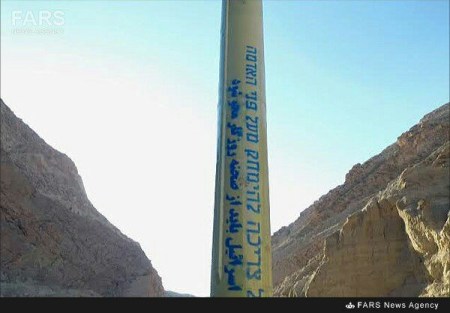
Extensive quotes regarding the Iranian regime’s explicit intent to target Israel with its missiles can be found in MEMRI Inquiry & Analysis No. 1135, Iranian IRGC Missile Unit Commanders: We’ve Developed 2,000-km Range Missiles And Equipped Hizbullah With 300-km Range Missiles; Fars News Agency: Israel’s Illusions About Its Natural Gas Fields Will Be Buried In The Mediterranean, December 3, 2014, and Special Dispatch No. 6349, Iran Launches Long-Range Missiles Emblazoned With Slogan: ‘Israel Should Be Wiped Off The Face Of The Earth’, March 16, 2016.

1298aIranian missile emblazoned with the slogan ‘Israel Should Be Wiped Off The Face Of The Earth” (Fars, Iran, March 9, 2016)

On November 17, 2014, the IRGC-affiliated Tasnim news agency posted a diagram explaining that Iran “makes do” with a range of 2,000 km, which it considers “desirable” and which covers all of Israel: “On the Firing Line – The commanders of the army of the Islamic Republic [of Iran] have said several times that with its attainment of long-range missiles with a range of up to 2,000 km, Iran has arrived at the range ceiling that it considers desirable, and that ‘in the meantime’ there is no need to increase this range. Although the U.S. is 11,000 km from Iran, in recent years it has approached the borders of Iran, [and therefore] its military bases, equipment, and forces are a target for Iran’s missiles.

“Likewise, the Zionist regime is the most important enemy of Iran in the region, and is less than 1,200 km away. Therefore, short- and medium-range missiles are sufficient to strike U.S. bases near Iran, and long-range missiles are sufficient to strike the occupied territories [Israel]. The diagram shows several of these American bases and [also] the missiles that are counting [down] to the moment [when they will be able to] strike them.”[8]

Additionally, Defense Minister Hossein Dehghan said on August 18, 2015 in response to a reporter’s question on the manufacture of missiles with a range greater than 2,000 km: “We do not produce missiles with ranges greater than 2,000 km.”[9]

Is U.S. Permission For Iran To Develop Missiles With Ranges Up To 2,000 km – Which Reach Israel – A Secret Annex Of The JCPOA, Or Simply Unwritten Consent?

In statements, IRGC officials hinted that restrictions on the range of Iranian missiles so that they reach Israel but not Europe were part of the Iran deal. Thus, for instance, IRGC commander Mohammad Ali Jafari referred to the IRGC’s November 2, 2015 consent to UN Security Council Resolution 2231, saying: “One of the points in this resolution was the matter of restrictions, which some military elements feared. Therefore, we held meetings in [Iran’s] Supreme National Security Council, and also went to the Leader [Khamenei]. The [Iranian] negotiating team told the Westerners that we do not agree to these restrictions. They [the Westerners] said that these issues must be included in the resolution. Even when I met with the Leader, he said that there were no restrictions on developing defensive capabilities. The only restriction relates to nuclear missiles, which, obviously, we never wanted.”[10]

The next day, on November 3, 2015, Iranian Army chief of staff Hassan Firouzabadi referred to Jafari’s remarks, saying: “I confirm statements by the IRGC commander that Iran’s missile activity is not restricted. We will follow two restrictions: The first is mentioned in the JCPOA, in the matter of no nuclear planning, and the second is the range of 2,000 km, which has already been noted previously by all elements in Iran.”[11]

It should be noted that the Hebrew version of this news, which IRIB published on November 4, 2015 explicitly mentioned, in both the headline and the text, that the JCPOA allows Iran to possess ballistic missiles of a range of 2,000 km. The Hebrew news item read:

Firouzabadi: The Nuclear Agreement Promises Iran Missiles With 2,000-km Range

“The chief of staff of Iran’s armed forces, Maj.-Gen. Hassan Firouzabadi, stressed that the state, under orders from the general commander [i.e. Khamenei] of the IRGC, undertakes, inter alia, to restrict nuclear planning, but that it is entitled to produce missiles with a range of 2,000 km.

“Firouzabadi made these statements yesterday (Tuesday) to a group of Islamic regime leaders and officials, and referred to [statements by] the IRGC general commander emphasizing that Iran would commit to the sections of the nuclear agreement with the West that include a restriction on nuclear planning, and that in addition, Iran is entitled to possess missiles with a range of 2,000 km.”[12]

These statements indicate that although the permission given to Iran to develop missiles capable of striking Israel is likely not a secret annex of the JCPOA, it still constitutes unwritten consent that is an integral part of the nuclear deal. It is convenient for both sides not to publish this understanding in written form – for Iran because it rejects any public reference to its missile program, which it defines as defensive but is in fact offensive; and for the Obama administration, because there would be repercussions if it were to be revealed that it had given Iran permission to develop missiles capable of striking Israel.

It should be noted that UN Security Council Resolution 2231 (2015) constitutes an additional concession by the Obama administration to Iran, in comparison with the previous resolution 1929 (2010). This concession has two components:

One, UNSCR 1929 banned Iran from conducting any activity concerning missiles capable of carrying nuclear warheads, while UNSCR 2231 replaced the word “capable,” which refers to objective specifications, with the word “intended,” which concerns fluid political matters.

Two, while UNSCR 1929 banned Iran from conducting any missile activity, UNSCR 2231 rescinds this ban.

Following Iran’s May 9, 2016 missile test, which took place after the JCPOA’s Implementation Day – and which embarrassed the Obama administration – IRGC Aerospace and Missile Division director Amir Ali Hajizadeh said: “The Americans are telling [us]: ‘Don’t talk about missile affairs, and if you conduct a test or maneuver, don’t mention it.'”[13]

*A. Savyon is Director of MEMRI’s Iran Media Project; Y. Carmon is President of MEMRI; U. Kafash is a Research Fellow at MEMRI.


[1] Foxnews.com, January 30, 2017.

[2] Yjc.ir, January 31, 2017; Tasnim (Iran), February 1, 2017.

[3] Shargh (Iran), June 5, 2004; Al-Sharq Al-Awsat (London), May 28, 2004. Also see MEMRI Inquiry & Analysis No. 181, The Internal Debate in Iran: How to Respond to Western Pressure Regarding Its Nuclear Program, June 17, 2004; MEMRI Special Dispatch No. 723, Iran’s Revolutionary Guards Official Threatens Suicide Operations: ‘Our Missiles Are Ready to Strike at Anglo-Saxon Culture… There Are 29 Sensitive Sites in the U.S. and the West…’, May 28, 2004; and MEMRI TV Clip No. 252, Iranian Revolutionary Guard Official In Tehran University Lecture (Part II): We Plan To Target US Nuclear Warheads On US Soil; Should Take Over England, May 22, 2004.

[4] A military source in the Iranian Defense Ministry stated: “In a meeting last week with Revolutionary Guards commanders, Khamenei said that Israel was planning to attack Iran’s nuclear installations and the Iranian military soon, and therefore defense and military preparedness should be boosted as soon as possible. Khamenei stressed that the increase in petroleum prices allowed Iran to allocate a larger budget to its military projects. [Iran’s] Ministry of Defense received $1 billion to resume its Shihab 4 and Shihab 5 project. It is known that in the past, Iran conducted an experiment with Shihab 3 missiles whose range is 1,200 kilometers [and which can reach Israel], but [President] Khatami halted the project of the Shihab 4, whose range is 2,800 [which covers Western Europe], and the Shihab 5, whose range is 4,900-5,300 km [and which can reach the U.S.], because he thought it was a project incompatible with Iran’s strategic interests and defense needs.” Al-Sharq Al-Awsat (London), June 14, 2004.

[5] Mehrnews.com, December 14, 2013.

[6] ISNA (Iran), December 10, 2013.

[7] Fars (Iran), March 9, 2016. See MEMRI Special Dispatch No. 6349, Iran Launches Long-Range Missiles Emblazoned With Slogan: ‘Israel Should Be Wiped Off The Face Of The Earth’, March 16, 2016.

[8] Tasnim (Iran), April 17, 2014. See MEMRI Inquiry & Analysis No. 1135, Iranian IRGC Missile Unit Commanders: We’ve Developed 2,000-km Range Missiles And Equipped Hizbullah With 300-km Range Missiles; Fars News Agency: Israel’s Illusions About Its Natural Gas Fields Will Be Buried In The Mediterranean, December 3, 2014.

[9] Yjc.ir, August 18, 2015.

[10] Fars (Iran), November 2, 2015.

[11] Mashregh (Iran), November 3, 2015.

[12] Hebrew.irib.ir, November 4, 2015.

[13] See MEMRI Special Dispatch No. 6430, IRGC Aerospace And Missile Force Commander: The Americans Are Telling Us ‘Don’t Talk About Missile Affairs, And If You Conduct A Test… Don’t Mention It’, May 15, 2016.

Trump Changes US Policy on Settlements, But Will Netanyahu Pick Up the Ball?

February 3, 2017

Trump Changes US Policy on Settlements, But Will Netanyahu Pick Up the Ball?, The Jewish PressStephen Leavitt, February 3, 2017

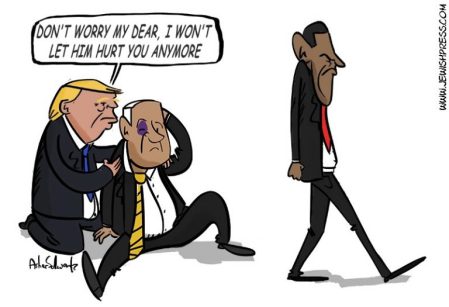
battered-bibi-syndrome-2-768x525Photo Credit: Asher Schwartz

The official White House statement thoroughly rejects the JPost’s quote, craftily eliminating both concerns: Trump is not committed to a two-state solution, and he does not consider the settlements an obstacle to peace.

**********************************

For the first time in many years, the White House on Thursday released a statement regarding Jewish settlements in Judea and Samaria without the adjectives “illegal” or “illegitimate” next to the word “settlements.”

While not 100 percent perfect — a policy of benign neglect would be best — it is clearly a complete turnaround from previous administration positions, particularly former-President Obama’s “not one brick anywhere” policy, including Jerusalem.

The White House
Office of the Press Secretary
For Immediate Release

Statement by the Press Secretary

“The American desire for peace between the Israelis and the Palestinians has remained unchanged for 50 years. While we don’t believe the existence of settlements is an impediment to peace, the construction of new settlements or the expansion of existing settlements beyond their current borders may not be helpful in achieving that goal. As the President has expressed many times, he hopes to achieve peace throughout the Middle East region. The Trump administration has not taken an official position on settlement activity and looks forward to continuing discussions, including with Prime Minister Netanyahu when he visits with President Trump later this month.”

In other words, what began a few months ago as a video of Prime Minister Benjamin Netanyahu asking why should having Jews living in Judea and Samaria be considered an impediment to peace – is now US foreign policy.


In addition to the biggest item of recognizing the legitimacy of the settlements, by omitting the words “illegal” and “illegitimate,” the statement actually declares, for all the world to see: “We don’t believe the existence of settlements is an impediment to peace.”

It should be noted that even that one seemingly negative-note in the Trump statement against new settlements or expansion isn’t exactly that:

“the expansion of existing settlements beyond their current borders may not be helpful in achieving that goal.”

First of all, the statement gives implicit approval to construction within existing settlements, and not just to communities within the settlement blocs (i.e. Gush Etzion, Ariel, etc), but rather to all settlements. This is a much wider definition, and includes many smaller Jewish communities that exist outside of the blocs, representing some 80,000 Jews.

Not to name names, but that’s more settlement legitimacy than what even some members of Netanyahu’s cabinet recognize.

Furthermore, it doesn’t actually forbid or rebuke Israel if it does build a new settlement or expand beyond the borders of an existing one. The White House statement merely questions if it is helpful to achieving peace, and leaves that question open for further discussion.

The other glaring omission in the Trump White House statement is the term “two-state solution,” so beloved by every Administration since the 1993 Oslo Accords. Why, only last Wednesday, the new, relatively pro-Israel UN Secretary-General, Antonio Guterres, had his spokesperson release a statement saying that,

“the recent announcement by the Israeli Government to advance 5,000 settlement units in the occupied West Bank could […] threaten to unravel plans for a two-State solution between Israelis and Palestinians. […] We once again warn against any unilateral actions that can be an obstacle to a negotiated two-state solution.”

Having praised the Trump statement so much, it’s also easy to realize that there must be some conflict within the Administration over the settlements issue, with one faction obviously pushing the traditional State Department line.

Rumor has it that the White House statement was released not so much as a response to Netanyahu’s recent settlement construction announcements, but in response to an unauthorized leak from within the Administration to the Jerusalem Post, which the latter reported Thursday:

“The White House warned Israel on Thursday to cease settlement announcements that are ‘unilateral’ and ‘undermining’ of President Donald Trump’s effort to forge Middle East peace, a senior administration official told The Jerusalem Post. For the first time, the administration confirmed that Trump is committed to a comprehensive two-state solution to the Israeli- Palestinian conflict negotiated between the parties.”

The official White House statement thoroughly rejects the JPost’s quote, craftily eliminating both concerns: Trump is not committed to a two-state solution, and he does not consider the settlements an obstacle to peace.

Indeed, the White House statement acknowledges the value and validity of the Israeli PM in forging US foreign policy:

“The Trump administration has not taken an official position on settlement activity and looks forward to continuing discussions, including with Prime Minister Netanyahu when he visits with President Trump later this month.”

This is tantamount to an Obama statement saying: “The Obama administration will decide on the Iran nuclear deal after continued discussions with Prime Minister Netanyahu when he visits to speak to Congress on March 3, 2015.” Yes, that’s how impossibly big this statement is.

It is now entirely up to Prime Minister Netanyahu.

Will Netanyahu have what it takes to change forever Israel’s future? Will he take full advantage of Trump’s invitation to help forge US foreign policy in a way that bolsters the Zionist vision? Will he step back from his Bar Ilan speech, and return to his former, maximalist positions?

From the White House statement it appears that the ball is completely in Netanyahu’s court.