Posted tagged ‘Obama and Iran’

Why Obama Turned His Back on the “Green Revolution” in Iran

August 25, 2016

Why Obama Turned His Back on the “Green Revolution” in Iran, Power LinePaul Mirengoff, August 25, 2016

Most readers, I’m pretty sure, recall that in the summer of 2009, after the dubious election of Mahmoud Ahmadinejad, Iranians began an uprising. They hoped for support of some kind from the United States. That that support didn’t come.

Instead, as Eli Lake reminds us, President Obama publicly downplayed the prospect of real change, saying that the candidates whom hundreds of thousands of Iranians were risking their lives to support did not represent fundamental change.

Contrast that with his laughable claim that the election of the puppet Rouhani years later showed that Iran had changed to the point where we should end sanctions as part of a nuclear deal.

Behind the scenes, Obama overruled advisers who wanted to do what America had done at similar transitions from dictatorship to democracy, and signal America’s support. He ordered the CIA to sever contacts it had with the green movement’s supporters — this according to a new book, The Iran Wars, by the Wall Street Journal’s Jay Solomon, which Lake discusses.

Obama’s approach to Iran’s “green revolution” stands in marked contrast to how the U.S. has reacted to other democratic uprisings. Lakes points out:

The State Department, for example, ran a program in 2000 through the U.S. embassy in Hungary to train Serbian activists in nonviolent resistance against their dictator, Slobodan Milosevic. Milosevic, too, accused his opposition of being pawns of the U.S. government. But in the end his people forced the dictator from power.

Similarly, when Georgian President Eduard Shevardnadze met with popular protests in 2003 after rigged elections, George W. Bush dispatched James Baker to urge him to step down peacefully, which he did. Even the Obama administration provided diplomatic and moral support for popular uprisings in Egypt in 2011 and Ukraine in 2014.

Egypt’s Mubarak was America’s staunchest ally in the Middle East other than Israel. Iran was (and is) our biggest enemy. Yet, Obama supported the overthrow of Mubarak but not the mullahs.

It has been clear to me for years that Obama failed to back the green revolution because he wanted to negotiate with the Iranian regime. Lake thinks so too:

Obama from the beginning of his presidency tried to turn the country’s ruling clerics from foes to friends. It was an obsession. And even though the president would impose severe sanctions on the country’s economy at the end of his first term and beginning of his second, from the start of his presidency, Obama made it clear the U.S. did not seek regime change for Iran.

(Emphasis added)

How much of an obsession?

As Solomon reports, Obama ended U.S. programs to document Iranian human rights abuses. He wrote personal letters to Iranian Supreme Leader Ayatollah Ali Khamenei assuring him the U.S. was not trying to overthrow him. Obama repeatedly stressed his respect for the regime in his statements marking Iran’s annual Nowruz celebration.

Obama’s obsession with dealing with the mullahs seems to have spilled over into his feckless Syria policy:

When he walked away from his red line against Syria’s use of chemical weapons in 2013, Solomon reports, both U.S. and Iranian officials had told him that nuclear negotiations would be halted if he intervened against Bashar al-Assad.

This was only the beginning of Obama’s disregard for his own red lines. As nuclear negotiations proceeded, the president and his Secretary of State demolished one red line after another. Lake provides the details, most of which we presented at or around the time of the deal.

What is the outcome?

“The Revolutionary Guard continues to develop increasingly sophisticated weapons systems, including ballistic missiles inscribed with threats against Israel on their nose cones,” Solomon writes in the book’s concluding chapter. “Khamenei and other revolutionary leaders, meanwhile, fine-tune their rhetorical attacks against the United States, seeming to need the American threat to justify their existence.”

Iran is also a key player in Iraq and Syria. It is the leading power in the Middle East and might well become the dominant one.

Would things have gone differently is the U.S. had backed the 2009 uprising? We’ll never know. Regime change might well have been a long shot, but its rewards would have been massive.

And the risk? Negligible, even if one likes the nuclear deal.

There’s no reason to believe that, in 2015, Iran would have turned down the super-generous nuclear deal Obama offered because of America’s stance in 2009. Either the deal is in Iran’s interests or it isn’t. If it is, the mullahs were always going to snap it up.

It is and they did — unfortunately for the U.S. and the Middle East.
What does America owe Iran?

August 11, 2016

What does America owe Iran? Israel Hayom, Clifford D. May, August 11, 2016

An unmarked cargo plane filled with $400 million in cash lands in Tehran, and four American hostages held by Iran’s rulers are set free. These revelations have sparked two controversies.

First: Did the Obama administration pay a ransom to Iran, the world’s leading state sponsor of terrorism? White House spokesmen insist it did not and there was no quid pro quo, while Iranian officials say that was precisely what happened. Who is more credible? More importantly, whom do you think prospective hostage-takers around the world believe?

Second: Did this payment violate American law? Justice Department officials opposed the payment. Former federal terrorism prosecutor Andrew C. McCarthy argued that the transaction involved the commission of several “felony law violations.” Former Attorney General Michael Mukasey opines that while the transaction was not “right,” it was not illegal.

The roots of this affair run deep. In early 1979, the shah of Iran, as part of an arrangement to purchase jet fighters, deposited $400 million into a Pentagon account. Soon afterward, he was overthrown in the Islamic Revolution. As White House spokesman Josh Earnest said: “Once the revolution took place, obviously that equipment was not transferred, but we also didn’t return Iran’s money.”

Return the money to whom? At what point does the property of a government that has been toppled become the rightful possession of those who have done the toppling? International law is murky on this matter, as it is on many matters.

One thing we can say with reasonable certainty: Had envoys representing Ayatollah Ruhollah Khomeini reached out to President Jimmy Carter, he would have done whatever was in his power to establish amicable relations.

But that did not happen. We know what did: On Nov. 4, 1979, followers of the supreme leader seized the U.S. Embassy in Tehran and took 52 diplomats hostage. The diplomats were held and, in many cases, tortured for 444 days. That such conduct violates international law — indeed, that it constitutes an act of war — is not a matter for legal debate. The hostages were released on Jan. 20, 1981, the day President Ronald Reagan was inaugurated.

Iran’s rulers have never apologized, much less compensated their victims. The Weekly Standard’s Lee Smith reports that President Bill Clinton considered using the $400 million to pay victims of Iranian terrorism who had won judgments against Iran in U.S. courts. In the end, however, he left it to American taxpayers to pick up the check. President George W. Bush could have reimbursed the Treasury using frozen Iranian funds. He did not.

There matters lay until, in January of this year, President Barack Obama boasted that thanks to “strong American diplomacy,” the United States and Iran “are now settling a long-standing Iranian government claim against the United States government and Iran will be returned its own funds, including appropriate interest, but much less than the amount that Iran sought.”

Note that the president neglected to mention claims against Iran. And shouldn’t there be some controversy over the notion of “appropriate interest” — which is how the $400 million “owed” to Iran rose to the $1.7 billion that is being paid?

Since the money was not loaned to the U.S. by Iran’s current regime, why should the assumption be that the U.S. invested it for the benefit of Iran’s current regime? As part of this hostage deal, the U.S. also freed seven Iranians charged or convicted of crimes and dropped extradition requests for 14 others. How much is that worth? Why does that not count as “interest”?

Surely, justice would have been better served had the shah’s funds been distributed to Iran’s many victims: the diplomats who were illegally imprisoned, to be sure, but also the families of those murdered on Iran’s orders, such as those in Beirut in 1983, at Khobar towers in 1996, and more recently in Iraq by Shiite militias armed and instructed by Tehran.

In addition, thousands of innocent Iranians were put to death by the leaders of the Islamic Revolution. Tens of thousands were forced to flee the country, and their businesses, homes, lands, and bank accounts were stolen by the regime. Why have these victims been forgotten?

Here is part of the reason: Carter, during his final days in office, negotiated the Algiers Accord, agreeing that in exchange for the release of the hostages, Iran’s new rulers would be granted immunity from criminal or civil penalties.

Congress did not approve the Algiers Accord, which was not a treaty but only an executive agreement. President Reagan could have revoked it, pointing out that his predecessor had negotiated it with a knife at his throat — or, more precisely, with knives at the throats of the hostages. But he did not.

Instead, in 1981, pursuant to the Algiers Accord, the Iran-U.S. Claims Tribunal was set up in The Hague. This international arbitration mechanism has further entrenched the perverse notion of moral equivalence between the United States and the Islamic republic.

It has led to President Obama and Secretary of State John Kerry attempting to satisfy Iran’s “claims” against the U.S. against the backdrop of the Iran deal, another executive agreement. Obama considers that deal vital to his legacy. By contrast, Iran’s Supreme Leader Ayatollah Ali Khamenei has made it plain that he is more than willing to walk away from the deal — and will should the river of American concessions not continue to flow.

So last week’s hostages-for-cash story turns out to be only one chapter in a long and sad saga. It should give rise to additional controversies, starting with this: Why are Iran’s negotiators so consistently more skillful than America’s?

RIGHT ANGLE: The $400M Iran Deal

August 10, 2016

RIGHT ANGLE: The $400M Iran Deal via YouTube, August 10, 2016

The blurb beneath the video states,

Iran takes hostages. Phone calls are made. Hostages are released. And $400M IN CASH finds its way into the hands of the world’s leading sponsor of state terrorism. So who are you going to believe: Barack Obama, or your own lying eyes?

Iran could have an operational nuke by 2017 end

August 6, 2016

Iran could have an operational nuke by 2017 end, DEBKAfile, August 6, 2016

The nuclear accord signed a year ago with Iran has become a hot US presidential campaign issue. On Thursday, Aug. 4, US President Barack Obama speaking at the Pentagon said the agreement “has worked exactly the way we said it would,” and even “Israeli defense officials are behind [it]… and now recognize the efficacy of the accord” and that the Iranians “no longer have the short term breakout capacity that would allow them to develop nuclear weapons.”

Hillary Clinton declared at the Democratic Party convention which gave her the presidential nomination: “We put a lid on Iran’s nuclear program without firing a single shot.”

Both these claims may be called hyperbolic at best and drew a response from Tel Aviv:

Iran_nuclear_clock

“The Israeli defense establishment believes that agreements have value only if they are based on reality. They have no value if the facts on the ground are opposite to the ones the agreement is based on.”

Documents reaching DEBKAfile’s intelligence sources in recent weeks bare some facts contained in unpublished sections of the nuclear accord – Joint Comprehensive Plan of Action (JCPA) – that Iran signed in Vienna with the US, China, France, Russia, retain and Germany on July 14 2015.

This data is at odds with the official version that accord delayed Iran’s short-term breakout capacity to a nuclear bomb by ten years plus one year. It is now demonstrated that if Tehran decides to violate the accord Iran retains the capability to achieve this goal in months – not years.

The strongest confirmation of this fact comes from the horse’s mouth: Ali Akbar Salehi, President of the Atomic Energy Organization of Iran, has said the nuclear deal stipulates that if any party violates it, then Iran can go back to enriching uranium at Natanz within 45 days at an even higher capacity than before the agreement was signed – – his deputy cited twenty-fold.

Their words followed supreme leader Ayatollah Ali Khamenei’s repeated allegations that the US is in violation of the JCPA.

US administration officials’ insistence that Iran will need a whole year to attain breakout capacity of its nuclear weapons program at the end of the 10-year moratorium is nullified by three cover Iranian steps:

1. Iran has concealed from International Atomic Energy Agency inspectors entire clusters of second-generation IR-2m centrifuges – some by upgrading IR machines at home and some imported from Pakistan and Germany. These hidden machines can substantially cut short the process of enriching uranium at the Natanz and Fordo plants up to weapons-grade.

2.  Before signing the nuclear accord, Tehran stock-piled in Natanz alone 15,420 centrifuges – 9,156 of the first-generation IR-1 version and 1,000 high-speed IR-2m enrichment machines. On the date of signing, the inspectors were shown 5,060 IR-1 centrifuges – all dismantled and stowed away in storage along with the relevant feed equipment such as pipes, cooling systems and electronics.

That Iran is now in a position to reassemble its enrichment facilities within 45 days was admitted by Salehi himself.

3.  The American calculation of the time Iran would need to build a nuclear bomb was based on the quantity of low-grade enriched uranium (LEU) left with Iran for further refinement to weapon-grade level. Washington was satisfied that Tehran abided by the 300 kilograms limit set by the accord.

However, Iran has since been revealed as cheating on that provision too by transferring a much larger LEU stock to Oman and continuing to clandestinely turn out further quantities disguised as materials required for “research.”

All this information adds up to Iran’s current ability to flout the JCPA at any time, having retained all its capabilities and means of production for breaking out to developing a nuclear weapon within months, up to the end of 2017 – rather than years. After marking strides in their missile program, the Iranians would also soon be able to mount a nuke on an intercontinental ballistic missile, which could wipe out a European or Middle East city.

Dr. Jasser reacts to the U.S. paying $400M ransom to Iran on Your World 08.05.2016

August 6, 2016

Dr. Jasser reacts to the U.S. paying $400M ransom to Iran on Your World 08.05.2016, Fox News via YouTube

More Obama Doublespeak on Iran

August 6, 2016

More Obama Doublespeak on Iran, Gingrich Productions, Newt Gingrich, August 5, 2016

“Iran’s Guardian Council approved the government’s 2017 budget that instructed Iran’s Central Bank to transfer the $1.7 billion [the ransom plus interest] to the military.”

******************

The Obama administration has instructed us that Obamacare’s tax is not a tax, that its policy of not enforcing immigration law is “prosecutorial discretion,” and that hundreds of American military personnel on the ground in Iraq and Syria are not “boots on the ground.” So it’s not surprising to hear from the President this week that money paid in exchange for hostages is not a “ransom”.

The administration insists that’s not what we should call the planeload of $400 million in cash that arrived in Iran at the same time as four American hostages were released in January.

Thankfully, the facts are in less dispute than the definition of the word.

In negotiations that led to the release of the hostages, the Wall Street Journal reports, “The Iranians were demanding the return of $400 million” sent to the U.S. in 1979, and “they also wanted billions of dollars as interest accrued since then.”

Since it would be a violation of U.S. law to pay the regime in U.S. dollars however, the Journal reports that the Treasury Department asked European central banks to change its payment into Euros and Swiss Francs before loading the notes on a plane and flying them to Iran.

There, one of the hostages involved told Fox News, the Iranian captors told the Americans they were “waiting for another plane” before they would be released.

So to review: the Iranians made a demand for $400 million in exchange for releasing the hostages. The U.S. government went to extraordinary lengths to deliver $400 million to Iran. And as a result, the hostages were released. But this wasn’t a ransom situation?

“No, it was not,” says White House Press Secretary Josh Earnest. “It is against the policy of the United States to pay ransom for hostages.”

“We do not pay ransom,” President Obama echoed. “We didn’t here, and we won’t in the future.”

In his famous essay, “Politics and the English Language,” George Orwell describes words for which “the person who uses them has his own private definition, but allows his hearer to think he means something quite different.” Perhaps President Obama’s own private definition of “ransom” requires the use of a paper bag–or U.S. dollars.

Whatever the President’s beliefs about what he’s done, however, clearly he has sent a signal to Iran that the regime can take hostages and extract concessions. The $400 million in cash will likely endanger more Americans and result in more false imprisonments.

It is worth remembering that prisoners whose stories are known to the public had done absolutely nothing wrong, and should never have been imprisoned to begin with. No payment should have been required to secure their release. And yet the same administration that recently arrested a police officer who tried to send $245 to ISIS has now sent hundreds of millions to the world’s leading state sponsor of terror.

That Iran would take innocent Americans hostage for ransom is a reminder of how untrustworthy and dangerous a regime the Obama administration is dealing with on nuclear weapons. Such actions are one of the reasons there are sanctions on the country in the first place.

Indeed, those restrictions made the $400 million in cash an even sweeter deal than it might seem. It solved a serious problem for the regime.

As a senior U.S. official explained to the Wall Street Journal, “Sometimes the Iranians want cash because it’s so hard for them to access things in the international financial system. They know it can take months just to figure out how to wire money from one place to another.”

In other words, Iran got more than its money’s worth out of the plane full of cash. And what did the regime do with it? As Bloomberg reported, the funds are going straight into their war chest: “Iran’s Guardian Council approved the government’s 2017 budget that instructed Iran’s Central Bank to transfer the $1.7 billion [the ransom plus interest] to the military.”

So the Obama administration hasn’t just struck a deal with Iran that will allow it to obtain nuclear weapons. In paying the ransom money, the U.S. has also funded the military that could seek to use those weapons against us.

English version of Iranian documentary on hostage swap dated 2/16

August 5, 2016

English version of Iranian documentary on hostage swap dated 2/16 viaYouTube, August 5, 2016

(Please see also OBAMA LIED! US Iranian Hostage Says Iran Would Not Let Plane Leave Until Ransom Plane Arrived. — DM)

https://www.youtube.com/watch?v=dzTKeALex3M

Iran: $400 Million In Cash Was Part of ‘Expensive Price’ to Free U.S. Hostages

August 5, 2016

Iran: $400 Million In Cash Was Part of ‘Expensive Price’ to Free U.S. Hostages, Washington Free Beacon, , August 5, 2016

(Please see also, OBAMA LIED! US-Iranian Hostage Says Iran Would Not Let Plane Leave Until Ransom Plane Arrived. — DM)

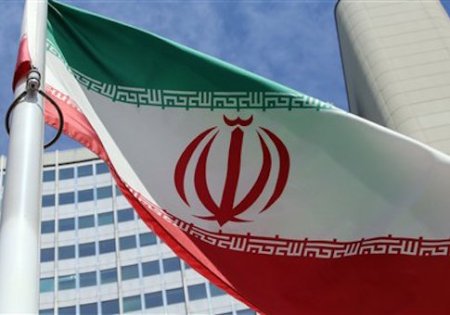
An Iranian flag flies in front of the building where closed-door nuclear talks take place in Vienna, Austria, Wednesday, July 2, 2014. (AP Photo/Ronald Zak)

An Iranian flag flies in front of the building where closed-door nuclear talks take place in Vienna, Austria, Wednesday, July 2, 2014. (AP Photo/Ronald Zak)

Iranian television has broadcast what some say is purported footage of the $400 million pallets of cash that officials claim was part of the “expensive price” paid by the Obama administration to free several U.S. hostages.

The footage, which could not be independently verified, shows images of large stacks of hard currency and features claims that the Obama administration sent this money over as part of an effort to free several U.S. hostages. The White House vehemently denied these claims this week following new reports about the cash exchange.

BBC Persian reporter Hadi Nili posted the footage on Twitter and describing it as showing the “pallets of cash” and quoting officials as saying “this was just part of the ‘expensive price’ to release Americans.”

The footage, which is from an Iranian documentary published a few months ago, contradicts claims by Obama administration officials maintaining that the payment was completely unrelated to the release of these U.S. hostages, despite the payment having been supplied on the same day these individuals were freed by Iran.

Iran experts who spoke to the Washington Free Beacon said that it is impossible to verify if the images show the same pallets of cash transferred by the Obama administration.

The footage also claims that the Obama administration insisted the negotiations over the matter take place in secret and threatened Iranian officials who may have leaked information to the media.

Republican Presidential candidate Donald Trump referenced the footage in remarks this week, claiming that it is part of an effort by Iran to embarrass the United States.

“They have a perfect tape, done by obviously a government camera and the tape is of the people taking the money off the plane, right?” Trump said. “That means that in order to embarrass us further, Iran sent us the tapes, right?”

“It’s a military tape; it’s a tape that was a perfect angle, nice and steady, nobody getting nervous because they’re gonna be shot because they’re shooting a picture of money pouring off a plane,” Trump said.

The footage is part of a February documentary published by Iran’s Tasnim News Agency, which is affiliated with the Iranian Revolutionary Guard Corps.

The documentary purported to reveal behind-the-scenes details of the negotiations with the United States to free the American hostages. It maintains the negotiations were tied up in efforts to push the Iran nuclear agreement forward as it moved towards implementation.

OBAMA LIED! US Iranian Hostage Says Iran Would Not Let Plane Leave Until Ransom Plane Arrived

August 5, 2016

OBAMA LIED! US Iranian Hostage Says Iran Would Not Let Plane Leave Until Ransom Plane Arrived, Fox News via YouTube, August 4, 2016

(Please see also, Obama’s Ransom Payment (4) — DM)

Obama’s Ransom Payment (4)

August 4, 2016

Obama’s Ransom Payment (4), Power LineScott Johnson, August 4, 2016

As in all matters related to the Obama administration’s dealing with Iran, the abasement of the United States is complete, the humiliation thorough, the lying pervasive, the damage devastating, the scandal hiding in plain sight.

********************

The United States purchased $400 million of cash in European currencies from European central banks; the cash was purchased with American dollars. The United States then delivered the $400 million in cash to the Iranian regime in an unmarked cargo plane on the day that four Americans held by the Iranian regime were released. The transaction was kept secret from the American people. Among other things, the Obama administration sought to conceal the obvious.

Jay Solomon and Carol Lee reported the transaction in a page-one Wall Street Journal story earlier this week. The Journal’s Devlin Barrett has now followed up with a story on the Department of Justice’s objections to the transaction.

Solomon and Lee explain the indirection in the cash payment: “The $400 million was paid in foreign currency because any transaction with Iran in U.S. dollars is illegal under U.S. law.” This is the kind of workaround that would land lesser mortals in prison.

Solomon and Lee somewhat cruelly note: “Since the cash shipment, the intelligence arm of the Revolutionary Guard has arrested two more Iranian-Americans. Tehran has also detained dual-nationals from France, Canada and the U.K. in recent months.”

In following developments related to the nuclear deal with Iran, I have frequently found the Iranian press and Iranian authorities to be a more reliable source of information on their dealing with the Obama administration than the administration itself. I believe that is the case here as well. Solomon and Lee add: “Iranian press reports have quoted senior Iranian defense officials describing the cash as a ransom payment. The Iranian foreign ministry didn’t respond to a request for comment.”

Obama administration spokesman Josh Earnest is not so shy. He was asked about Solomon and Lee’s story at his daily press conference yesterday. C-SPAN has posted the video here. The White House has posted the transcript here.

Earnest was in a tough spot. He defends the indefensible. He denies the undeniable. He castigates those who have observed that Emperor Obama wears no clothes. According to Earnest, they are liars and worse. It is truly a disgusting performance.

I have gone through the transcript to extract questions and excerpt answers of interest. I can only say that it is worth reading. What he says is as interesting as what he doesn’t say.

Has any of the cash gone to support Iran’s terrorist activities? Earnest responds at various points:

[T]he Iranian government has spent the money largely in the way that we expected that they would.

The analysis that we’ve done confirms what we predicted — is that, largely, that money was spent to address the dire economic condition of the nation of Iran.

The President was quite forward-leaning, in advance of the nuclear deal even being completed, in acknowledging that we know that Iran supports terrorism. We know that Iran supports Hezbollah and the Assad regime. And it certainly is possible that some of the money that Iran has is being used for those purposes too.

I think, Ron, the point is right now that we do know how Iran has spent a lot of that money. And the amount of money that Iran has received is far less than what critics predicted. So they were either wrong or lying. You can go ask them.

I trust you can translate the double-talk and disparagement on your own. It sets the pattern here.

Why are we only learning about this particular transaction now? Drawing on the classic scandal playbook, Earnest asserts that this is old news. This is almost laughable:

I guess the point that I’m trying to make, Margaret, is we could not possibly have been more transparent about this arrangement than to have the President of the United States announce it to all of you on live national television on the day that the agreement was reached.

What about the timing of the cash payment coincident with the release of the American prisoners? Analyze this:

Q This financial dispute you mentioned has been going on for 35 years. Why was it necessary to airlift in the pallets of cash on the very weekend that the American prisoners were released?

MR. EARNEST: Again, Scott, the reason is simple. The United States does not have a banking relationship with Iran. So —

Q That explains that it was cash, but it doesn’t explain the timing.

MR. EARNEST: Because we reached the agreement and Iran wanted their money back. So, again —

Q They waited 35 years.

MR. EARNEST: Right, so you might expect that they would be eager for them to get their money back. Again, this all stems from a payment that Iran had made into a U.S. account related to a military sale that didn’t actually go through. The military equipment wasn’t provided. So, again, you could understand why they’re quite eager for the money.

You also would understand that they’re quite eager for the money when you consider that the value of their currency has plummeted, that they haven’t been able to invest in infrastructure, that they’ve got debts that need to be paid, and that they’re in the middle of a recession. So at the time, they were eager to try to address the legitimate concerns of the Iranian people about the state of the Iranian economy.

Q And why was the U.S. government so eager to pay —

MR. EARNEST: I’m sorry?

Q Why was the U.S. eager to deliver the money so quickly?

MR. EARNEST: Well, again, I would not describe the United States as eager — I would describe the Iranians as eager. I think what the United States is, is we’re a country that lives up to the commitments that we make. And that’s exactly what we did.

Another reporter takes a whack:

Q So it’s been called a ransom payment by Iran. That’s not exactly surprising. But would those prisoners have been released had this payment not been made at the time that it was? And so it isn’t essentially a ransom payment then, even if the U.S. does not view it that way?

MR. EARNEST: No. It is not a ransom payment. The United States does not view it that way, and it’s not accurate to describe it that way.

Q So would those prisoners have been released then if this money hadn’t been paid then?

MR. EARNEST: Well, again, I think what is true is that there were a team of negotiators — let me just start from the beginning. What I know is true is there were a team of negotiators in the United States that were interacting with Iranian officials to secure the release of five Americans who were unjustly detained in Iran. That negotiating work was successful and those Americans are at home….

Hmmmm. He really doesn’t want to answer the question. He seems to be taking a long way around avoiding the answer. Then another reporter pursues the point and Earnest resorts to the ad hominem attacks that should be a red flag to sentient observer:

Q I think a lot more people find this interesting than just people who are opposed to it. But, again, would those prisoners have been released then if this money had not been paid then?

MR. EARNEST: What I can tell you is that our negotiators who were talking with the Iranians about what was necessary to secure the release of American citizens in Iran succeeded. That was different than the group of negotiators who were involved in The Hague negotiating with their Iranian counterparts to settle these longstanding financial claims.

Q So because U.S. policy is opposed to ransom payments, even if it were only for the appearance of this not being a ransom payment, why would you not have made Iran wait even a week longer? I mean, why would Iran’s eagerness to get their hands on their money be more important than making sure that this was not a quid pro quo that was based on the exact timing being right?

MR. EARNEST: Well, I think the answer to that is pretty obvious, which is that even a week delay would not have prevented Paul Ryan and Marco Rubio from falsely claiming that they’re a ransom. Because, Michelle, come on, I saw you sigh. If we announced this financial settlement on the same day that the prisoners were released, that’s fodder to our Republican critics. I get that.

After other questions a reporter comes back to the question of ransom:

Q Thanks, Josh. If I can circle back to Iran briefly. Is it your contention that it is not a ransom payment because there was no quid pro quo or because it was Iranian money that was flown in?

MR. EARNEST: It is our contention that there was no ransom paid to secure the release of U.S. citizens who were being unjustly detained in Iran because, A, it’s against the policy of the U.S. government to pay ransoms. And that’s something that we told the Iranians that we would not do. We would not — we have not, we will not pay a ransom to secure the release of U.S. citizens. That’s a fact. That is our policy and that is one that we have assiduously followed.

You don’t have to be a student of logic to observe that there is a certain circularity in Earnest’s answer.

As in all matters related to the Obama administration’s dealing with Iran, the abasement of the United States is complete, the humiliation thorough, the lying pervasive, the damage devastating, the scandal hiding in plain sight.