Posted tagged ‘Middle East’

Obama Admin Signed Secret Doc to Lift UN Sanctions on Iran Banks

September 30, 2016

Report: Obama Admin Signed Secret Document to Lift U.N. Sanctions on Iranian Banks

BY:
September 30, 2016 1:23 pm

Source: Obama Admin Signed Secret Doc to Lift UN Sanctions on Iran Banks

The Obama administration signed a secret document to lift United Nations sanctions on two Iranian state banks that were previously blacklisted for their involvement in financing Iran’s ballistic-missile program the same day Tehran released four American prisoners, the Wall Street Journal reported Friday.

Based on the nuclear agreement between Iran and six world powers, the two banks were initially under sanctions until 2023, but the administration agreed to delist the entities on Jan. 17. Senior U.S. officials told the Journal that State Department official Brett McGurk and an Iranian government representative met in Geneva and signed three documents that day.

One document committed the U.S. to dropping criminal charges against 21 Iranian nationals, and Tehran to releasing the Americans imprisoned in Iran.

Another committed the U.S. to immediately transfer $400 million in cash to the Iranian regime and arrange the delivery within weeks of two subsequent cash payments totaling $1.3 billion to settle a decades-old legal dispute over a failed arms deal.

The U.S. agreed in a third document to support the immediate delisting of the two Iranian banks, according to senior U.S. officials. In the hours after the documents were signed at a Swiss hotel, the different elements of the agreement went forward: The Americans were released, Iran took possession of the $400 million in cash, and the U.N. Security Council removed sanctions on Bank Sepah and Bank Sepah International, these officials said.

In February, a documentary by Iranian media outlet Tasnim News Agency, which is affiliated with the Islamic Revolutionary Guard Corps, claimed that Iranian government officials demanded that Bank Sepah  be delisted from U.N. sanctions as part of the deal to release four Americans. Despite previous sanctions on the bank by the Treasury Department, the Obama administration agreed to lift the sanctions under the nuclear deal reached in July 2015.

After the nuclear accord was inked, senior officials said they continued to have dialogue with Iran about the two banks before the three documents were officially signed in January. Tehran argued that Bank Sepah and Bank Sepah International were critical to international trade and their economy, the Journal reported.

Bank Sepah is Iran’s oldest bank and one of its three largest in terms of assets. Bank Sepah International, based in London, was key to financing Iran’s international trade before sanctions were imposed.

The U.S. Treasury was vehemently opposed to the banks back in 2007 for their alleged role in financially backing Iran’s missile program.

At the time, the Treasury said that Bank Sepah and Bank Sepah International had provided financial support to Iranian-state owned companies and organizations developing Iran’s missile program. These included Iran’s Aerospace Industries Organization and the Shahid Hemmat Industries Group.

“Bank Sepah is the financial linchpin of Iran’s missile procurement network and has actively assisted Iran’s pursuit of missiles capable of carrying weapons of mass destruction,” the Treasury said in a January 2007 statement.

Since the nuclear agreement was reached in July 2015, Iran has conducted up to 10 ballistic missile tests. The U.N. has been critical of these launches but has not imposed any new sanctions.

Senior Pentagon officials are upset about the prisoner deal, the Journal noted, despite U.S. officials saying the Obama administration closely vetted all entities and people associated with Bank Sepah before they agreed to the lifting of sanctions.

The dispute in Washington has only deepened in recent weeks, as senior Pentagon officials, including Secretary of Defense Ash Carter, told Congress in a hearing that they weren’t notified by the White House about the cash transfer. The chairman of the Joints Chief of Staff, Marine Gen. Joe Dunford, said at a hearing last week that he found it “troubling” that the U.S. provided Tehran with so much cash, which he argued could be used for “spreading malign influence.”

The Obama administration has repeatedly denied accusations that it sent $1.7 billion to Tehran to secure the release of four American prisoners. Many lawmakers have called the money transfer a ransom payment. A majority of lawmakers supported legislation last week that would legally ban the Obama administration from sending more cash payments to Tehran.

The Washington Free Beacon previously reported on House Majority Leader Kevin McCarthy (R., Calif.) praising the legislation.

While the Obama administration has threatened to veto the bill, McCarthy said the majority of Congress disagrees with the administration’s decision to pay Iran $1.7 billion prior to the release earlier this year of several U.S. hostages.

“The Obama administration paid a cash ransom to Iran for American hostages,” McCarthy told the Free Beacon. “No matter how the Obama administration chooses to redefine this payment, the message to Iran is crystal clear: You will be rewarded for taking hostages—not punished.”
Abbas to Arab Leaders: Go to Hell!

September 27, 2016

Abbas to Arab Leaders: Go to Hell!

by Khaled Abu Toameh

September 26, 2016 at 5:00 am

Source: Abbas to Arab Leaders: Go to Hell!


  • Abbas and Fatah leaders in Ramallah claim that Egypt, Saudi Arabia, Jordan and the United Arab Emirates (the “Arab Quartet”) are using and promoting Abbas’s rival, Mohamed Dahlan, in order to facilitate their mission of rapprochement with Israel.
  • Many Palestinians were surprised to see veteran Palestinian official Ahmed Qurei, a former Palestinian Authority (PA) prime minister and one of the architects of the Oslo Accord, come out in favor of the Arab plan, which basically envisions ousting Abbas from power.
  • This, and not Israeli policy, is Abbas’s true nightmare. After all, he knows that without Israel’s presence in the West Bank, his regime would have long fallen into the hands of Hamas or even his political rivals in Fatah.
  • The “Arab Quartet” plan shows that some Arab countries are indeed fed up with Abbas’s failure to lead his people towards a better life. These states, which have long been politically and financially supportive of the Palestinians, have had enough of Abbas’s efforts to secure unending power — at the direct cost of the well-being of his people.

In his speech last week before the United Nations General Assembly in New York, Palestinian Authority (PA) President Mahmoud Abbas trotted out his usual charges against Israel, citing “collective punishment,” “house demolitions,” “extrajudicial executions” and “ethnic cleansing.” However, Abbas’s thoughts seem to be elsewhere these days. He is facing a new challenge from unexpected parties, namely several Arab countries that have come together to demand that he reform his ruling Fatah faction and pave the way for the emergence of a new Palestinian leadership.

Yet this was not included in the UN speech. Indeed, why would Abbas share with world leaders that his Arab brothers are pressuring him to introduce major reforms in Fatah and end a decade-long power struggle with Hamas that has resulted in the creation of two separate Palestinian entities in the West Bank and Gaza Strip.

Abbas, his aides admit, is today more worried about the “Arab meddling” in the internal affairs of the Palestinians than he is about “collective punishment” or “settlement activities.” In fact, he is so worried that he recently lashed out at those Arab countries that have launched an initiative to “re-arrange the Palestinian home from within” and bring about changes in the Palestinian political scene.

The Arab countries behind the initiative — Egypt, Saudi Arabia, Jordan and the United Arab Emirates — are being referred to by many Palestinians as the “Arab Quartet.”

In an unprecedented critique of these countries, Abbas recently declared:

“The decision is ours and we are the only ones who make decisions. No one has authority over us. No one can dictate to us what to do. I don’t care about the discomfort of Washington or Moscow or other capitals. I don’t want to hear about these capitals. I don’t want the money of these capitals. Let’s free ourselves from the ‘influence’ of these capitals.”

Although he did not mention the four Arab countries by name, it was clear that Abbas was referring to the “Arab Quartet” when he was talking about “capitals” and their influence and money. Abbas’s message: “How dare any Arab country tell me what to do, no matter how wealthy and influential it may be.” Abbas sees the demand by these Arab countries for new Palestinian leadership, unity and reforms in Fatah as “unacceptable meddling in the internal affairs of the Palestinians.”

So what exactly is it in the new Arab initiative that has so enraged Abbas, to the point that he is prepared to place at risk his relations with four of the Arab world’s preeminent states?

According to reports in Arab media outlets, the “Arab Quartet” has drafted a plan to “activate the Palestinian portfolio” by ending the dispute between Abbas’s Fatah and Hamas. The plan also calls for ending the schism within Fatah by allowing some of its expelled leaders, including Mohamed Dahlan, to return to the faction. The overall aim of the plan is to unite the West Bank and Gaza Strip under one authority and end the state of political anarchy in the territories controlled by the Palestinian Authority and Hamas. The “Arab Quartet” has even formed a committee to oversee the implementation of any “reconciliation” agreements reached between Fatah and Hamas and Abbas and his adversaries in Fatah. According to the plan, if such an agreement is not reached, the Arab League will intervene to “enforce reconciliation” between the rival Palestinian parties.

When Palestinian Authority President Mahmoud Abbas addressed the UN General Assembly on Sept. 22, 2016, he did not share with world leaders that his Arab brothers are pressuring him to introduce major reforms in his Fatah faction, and allow some of its expelled leaders, including Abbas’s rival Mohamed Dahlan (inset), to return.

Abbas’s main concern is not a “reconciliation” with Hamas. In fact, he has repeatedly expressed his readiness to form a unity government with Hamas and end the dispute with the Islamist movement. In recent weeks, there has even been renewed talk of Fatah-Hamas talks in Qatar to achieve “unity” and “reconciliation” between the two rival parties. Rather, it is the attempt to coerce Abbas into reconciling with Dahlan that is really getting to the PA president. In the view of a source close to Abbas, he (Abbas) would rather make peace with Hamas than “swallow the cup of poison” of patching things up with Dahlan.

Abbas harbors a very particular dislike for Dahlan. Until five years ago, Dahlan was a senior Fatah official who had long been closely associated with Abbas. Once, Abbas and Dahlan, a former security commander in the Gaza Strip, formed an alliance against Yasser Arafat, the former president of the PA. But the honeymoon between Abbas and Dahlan came to an end a few tears ago after the Abbas and his lieutenants in Ramallah began suspecting that Dahlan has ambitions to replace or succeed Abbas. At the request of Abbas, Dahlan was expelled from Fatah and accused of murder, financial corruption and conspiring to overthrow Abbas’s regime. From his exile in the United Arab Emirates, Dahlan has since been waging a campaign against the 81-year-old Abbas, accusing him and his two wealthy sons of running the PA as if it were their private fiefdom.

Such is Abbas’s contempt for Dahlan that last week he reportedly instructed the PA authorities to ban Dahlan’s wife, Jalilah, from entering the Gaza Strip. Jalilah runs and funds a number of charities in the Hamas-controlled Gaza Strip. Her activities are seen by Abbas as an attempt to build power bases for her husband and pave the way for his return to the political scene. Abbas’s decision to ban her from entering the Gaza Strip came following reports that she and her husband were planning to organize and fund a collective wedding for dozens of impoverished Palestinian couples. The funding, of course, comes from the United Arab Emirates, whose rulers have been providing the Dahlan couple with shelter and money for several years.

When Abbas says that he “does not want the money” of certain Arab capitals, then, he is referring to the United Arab Emirates and Saudi Arabia. He strongly suspects that these two wealthy countries are investing funds in Dahlan as part of a scheme to replace him and pave the way for the emergence of a new Palestinian leadership. For Abbas, who has refused to name a deputy or promote a potential successor, this is a very serious threat to his autocratic rule and a “conspiracy” by outside parties against him and his Palestinian Authority leadership.

Abbas and Fatah leaders in Ramallah are convinced that the “Arab Quartet” members are actually planning to pave the way for promoting “normalization” between the Arab world and Israel — all at the expense of the Palestinians. They claim that the four Arab countries are using and promoting Dahlan in order to facilitate their mission of rapprochement with Israel. These countries have reached the conclusion that as long as Abbas and the current PA leadership are around, it would be very difficult to initiate any form of “normalization” or peace treaties between Arab countries and Israel. The PA leadership’s position has always been that peace between the Arab countries and Israel should come only after, and not before, the Israeli-Palestinian conflict is resolved.

According to Palestinian political analyst Mustafa Ibrahim:

“The plan of the Arab Quartet prepares for the transitional post-Abbas era and negotiations for peace between Arab countries and Israel. The plan is designed to serve the interests of Arab regimes more than ending divisions among the Palestinians. The goal is to eliminate the Palestinian cause and find an alternative to President Abbas.”

This analysis reflects the views of Abbas and his veteran Palestinian Authority leaders in Ramallah, who continue to be extremely wary of any talk about succession in the PA leadership.

Interestingly, the “Arab Quartet” initiative for now seems to have divided Palestinian officials, with some welcoming it, and others rejecting it.

Criticizing Abbas and the Fatah leadership for coming out against the plan, Hassan Asfour, a senior Fatah official and former PA minister of state, urged Abbas to reconsider his “impractical, irrational and hasty” decision to dismiss the initiative of the four Arab countries. Asfour pointed out that Abbas’s recent criticism of these countries was “harmful” and “unjustified.” Abbas’s close aides have retorted by claiming that Asfour was a political ally of Dahlan and therefore has a clear agenda.

Many Palestinians were surprised to see veteran Palestinian official Ahmed Qurei, a former PA prime minister and one of the architects of the Oslo Accord, come out in favor of the “Arab Quartet” plan, which basically envisions ousting Abbas from power. Abbas’s close advisors claim that Qurei has joined Dahlan in his effort to bring about regime change in Ramallah.

Dahlan, for his part, has launched his own initiative by calling for an “expanded” gathering of Palestinian factions in Cairo, to discuss ways of bringing about real change in the Palestinian political arena. Thus, Dahlan has moved from behind-the-scenes activities to topple Abbas to public moves. And in this he enjoys the political and financial backing of at least four important Arab countries that would also like to see an end to the Abbas era. This is the first time that a senior Palestinian official has openly challenged the PA leadership with the support of Arab countries. It is predicted that at least 600 people will attend the Dahlan-sponsored conference in the Egyptian capital. The PA leadership is now threatening to retaliate against anyone who attends the conference by cutting off their salaries. This will only deepen the crisis in Abbas’s Fatah and yield yet more infighting.

Abbas undoubtedly had these thoughts in mind when he addressed the UN General Assembly — the new Arab “conspiracy” to replace him with Dahlan, or someone else. This, and not Israeli policy, is Abbas’s true nightmare. After all, he knows that without Israel’s presence in the West Bank, his regime would have long fallen into the hands of Hamas or even his political rivals in Fatah.

The “Arab Quartet” plan shows that some Arab countries are indeed fed up with Abbas’s failure to lead his people towards a better life. These states, which have long been politically and financially supportive of the Palestinians, have had enough of Abbas’s efforts to secure unending power — at the direct cost of the well-being of his people. It will not take long before we see whether these Arab countries, now mocked by Abbas, will succeed in ridding the Palestinians of leaders who lead them toward nothing but ruin.

Southern Command: Hamas is ready for the next war

September 21, 2016

Southern Command: Hamas is ready for the next war Southern Command chief, Eyal Zamir, at a conference for southern residents explained that Hamas is preparing for the next round of fighting.

Arutz Sheva Staff,
21/09/16 13:13

Source: Southern Command: Hamas is ready for the next war – Defense/Security – News –

Zamir and Eizenkot on the border

Gefen Reznik

General of the Southern Command, Eyal Zamir, at a conference for southern residents explained that Hamas is preparing for the next round of fighting.

Zamir emphasized that, “we have no intentions to make the situation worse but we will react to any shot fired with the appropriate level of force.”

Regarding Hamas he said, “unfortunately they are utilizing this quiet period to prepare for the next battle.”

In the conference, the Major-General said, “in the last decade, and since the withdrawal from Gush Katif and the IDF’s exit from the Gaza Strip, we have had three military operations.” He explained that the past two years have been the quietest, relatively, in the past decade, and they are being used to expand settlements around Gaza.

Zamir clarified that the “IDF won’t let terrorist organizations, led by Hamas, harm Israeli citizens. We have no intentions of escalating the situation, but we will react to every hit with the appropriate amount of force.”

“On the idea of trying to lengthen the period of quiet, we are continuing to address the threats below and above ground in order to protect Israel’s citizens and destroy the threats.”

Yesterday an Israeli Air Force fighter jet shot down an unmanned aircraft from the Gaza Strip an army spokesman said.

The unmanned craft, believed to be controlled by Hamas, was detected flying along the Gaza coastline.

Iron Dome intercepts two rockets over Golan

September 17, 2016

Iron Dome intercepts two rockets over Golan For the first time ever, the anti-missile system is used operationally in the Golan Heights. The rockets were ‘strays.’

Orli Harari,
17/09/16 21:01

Source: Iron Dome intercepts two rockets over Golan – Defense/Security – News –

Iron Dome system

Flash 90

The Iron Dome anti-missile system intercepted two missiles or mortar shells fired from Syria Saturday afternoon at the Israeli Golan Heights. The interceptions – the system’s first ever in the Golan Heights – were reportedly successful.

No one was hurt and no damage was caused.

Sources in the security establishment estimated that the rockets or mortar shells were “strays” from the civil war in Syria and that they were not intended to hit Israel.

A warning siren did not go off, but the IDF said that this was because the Iron Dome radar predicted that the missiles’ trajectory would not carry them into Israeli territory.

This is the tenth time in the past two weeks that mortar shells or rockets are fired in Israel’s direction from Syria. In the previous incidents, the mortar shells exploded inside Israeli territory, in “open spaces”.

The Head of the Golan Regional Council, Eli Malka, said after the incident that he “trusts that the IDF is doing all that is needed to bring to a minimum the strays that hit the Golan Heights”.

“The Golan residents and the numerous travelers who are flocking to the recreational and leisure sites in the Golan are making no changes in their plans”, he said.


VIDEO: American commandos ‘forced to run away’ from US-backed Syrian jihadis to the cheers of “ALLAH AKBAR”

September 16, 2016

VIDEO: American commandos ‘forced to run away’ from US-backed Syrian jihadis to the cheers of “ALLAH AKBAR”

ByPamela Geller

on September 16, 2016

Source: VIDEO: American commandos ‘forced to run away’ from US-backed Syrian jihadis to the cheers of “ALLAH AKBAR” | Pamela Geller


This must be what Obama means when he says, “leading from behind.”

Look what Obama and Hillary have done to our military. Unrecognizable. This is the poison fruit of their policies which supported and armed  the enemy. What was at first ridiculous and incoherent, is now catastrophic.

Iran is humiliating us at sea, ISIS on land.

Obama continues to be woefully unprepared to face the threat of ISIS and their acolytes: he CREATED the threat by leaving Iraq precipitously and giving an opportunity to this group. Hillary has vowed to follow this failed and reckless strategy.

He has armed the Syrian rebels — many of these arms fell into the hands of ISIS, and the Syrian rebels he armed have the same jihad goal that ISIS does.

“A spokesman for US Central Command said they were aware of the video and looking into the incident. ” Well that instills great confidence ….

“American commandos ‘forced to run away’ from US-backed Syrian rebels,” By Raf Sanchez, Middle East Correspondent, The Telegraph, 16 September 2016:

US commandos are operating in a complex web of alliances and enmities in Syria

Video footage appears to show US commandos fleeing a Syrian town under a barrage of abuse and insults hurled at them by fighters from the American-backed Free Syrian Army (FSA) rebel group.

video appears to be the first evidence of US special forces cooperating with Turkish troops in their battle against Islamic State.The incident illustrates the complex web of alliances and enmities in Syria, where many of America’s allies are fighting each other and some rebel groups that receive US support still harbour strong anti-American sentiments.The footage shows a crowd of rebel fighters in the town of al-Rai near the Turkish border, which was captured from the Islamic State (Isil) by Syrian rebel groups with the backing of Turkey. Turkey, which launched a military incursion into Syria in late August, has been backing the FSA.

The fighters scream anti-American chants as a column of pick-up trucks carrying US commandos drives away from them.

“Christians and Americans have no place among us,” shouts one man in the video. “They want to wage a crusader war to occupy Syria.”

Another man calls out: “They collaborators of America are dogs and pigs. They wage a crusader war against Syria and Islam. ”

The US troops are not wearing traditional uniform but they carry American weapons and are wearing the distinctive round helmets favored by US special forces.

Another video shows the US troops looking nonchalant and waving at the camera even as some of the rebels tell them to leave.

What will Israel’s next war look like?

September 15, 2016

What will Israel’s next war look like? Could Israel be facing multi-front war with hundreds of thousands of rockets targeting Israeli cities? IDF presents war scenario to cabinet.

Uzi Baruch, 15/09/16 17:17

Source: What will Israel’s next war look like? – Defense/Security – News –

Patriot Missile Battery      IDF/Flash 90

Hundreds of thousands of rockets and missiles targeting Israel. More than 10,000 direct hits by rockets on buildings in Israeli towns. Three hundred and fifty people dead.

That is the scenario presented recently by the IDF to the Security Cabinet, highlighting the potential threats by Israel – and the army’s preparations to confront them.

According to IDF estimates, such a conflict could include attacks by Islamic terror groups from the Gaza Strip, Hezbollah in Lebanon, and the Syrian and Iranian militaries. In such a scenario, most of Israel – and most of Israel’s population – would be under direct threat from rocket and missile fire, though the majority of such weapons would likely hit open spaces.

In the scenario laid out in the IDF report, more than 230,000 rockets and missiles would be directed towards Israel, covering the country from the Haifa district in the north to the southern coast, leaving most of the population vulnerable.

While only 1% of rockets and missiles fired would be expected to cause damage in populated areas, given the large volume of projectiles, hundreds of casualties could result from the conflict.

Next week, Home Front Command will hold its annual emergency exercises. Beginning Sunday and continuing through Wednesday, this year’s exercises, code-names “Standing Firm”, will include emergency sirens in populated areas, to be sounded twice on Tuesday.

Residents are advised to plan a path to the nearest safe-room or bomb shelter as part of the exercises mock emergency sirens.

US issues travel advisory warning for the Golan Heights

September 15, 2016

US Embassy issues travel advisory warning for the Golan Heights following mortar fire Following the recent mortar fire into the Israeli controlled Golan Heights; the US Embassy has issued a travel advisory warning to the area. US federal employees are forbidden from traveling north of Route 87 and east of Route 918.

Sep 15, 2016, 3:50PM

Rachel Avraham

Source: US issues travel advisory warning for the Golan Heights – World News | JerusalemOnline

Photo Credit: Reuters/Channel 2 News

In the wake of mortars being constantly fired into the Israeli controlled Golan Heights due to the fighting in recent days between the Syrian Army and rebel forces in the town of Quneitra, the American Embassy “urges US citizens to carefully consider and possibly defer travel to that area until the situation stabilizes.” The US government has forbidden federal employees from traveling north of Route 87 and east of Route 918 in the “Israeli occupied Golan Heights.”

“The United States Embassy continues to closely monitor the security situation and advises US citizens to visit the website of the Government of Israel’s Home Front Command for further emergency preparedness guidelines,” the American Embassy stated in a recent press release. “Recent events underscore the importance of situational awareness. We remind you to be aware of your surroundings at all times, to monitor the media and to follow the directions of emergency responders.”

Mortar fire from Syria fell 15 kilometers inside Israel

September 8, 2016

Mortar fire from Syria fell 15 kilometers inside Israel A mortar shell that was fired from Syria into Israel yesterday apparently reached the farthest inside the Jewish state since the beginning of the Syrian Civil War. Israeli officials believe that it was spillover from the fighting in Syria.

Sep 8, 2016, 10:39AM

Rachel Avraham

Source: Mortar fire from Syria fell 15 kilometers inside Israel – Middle East | JerusalemOnline

Photo Credit: CBN

Yesterday, a mortar shell exploded in an open area in the Northern Golan Heights and the IDF had announced that it was a spillover from the fighting within Syria. However, it was revealed this morning that it landed 15 kilometers from the Syrian-Israeli border, which means that it reached the furthest inside Israel out of any Syrian mortar shell that landed in the Jewish state since the Syrian Civil War began.

It is said to be an artillery shell with a 100 millimeter diameter that fortunately did not hit a populated area even though it was shot from a long distance. This is the second time this week a mortar shell landed at a distance from the border fence unlike on previous occasions in recent months. Israeli officials appraised that even though the mortar was fired from a significant distance, it was still a spillover from the Syrian Civil War that was caused by the inaccurate firing of the Syrian organizations.

Muslim Terrorists and Jewish Anti-Semites Against Trump

September 2, 2016

Muslim Terrorists and Jewish Anti-Semites Against Trump, Front Page Magazine, Daniel Greenfield, September 2, 2016

donald-trump-wikimedia-commons_xmo4y6

“I was often the ‘designated yeller.’”

That’s how Hillary Clinton described her relationship with the Israeli prime minister. Yelling and cursing was her particular specialty.

One marathon Hillary yelling session allegedly lasted 45 minutes. Afterward the Israeli ambassador said that relations between the United States and Israel had reached their lowest point.

Her favorite name for Netanyahu was, “F____ Bibi.”

But it wasn’t just about her hatred of any particular Israeli leader. The same year that Hillary was yelling herself hoarse at a man who had fought terrorists on the battlefield, she addressed the American Task Force on Palestine, a leading terror lobby, and blasted Israel and praised Islamic terrorists.

Hillary told the terror lobby, “I may have been the first person ever associated with an American administration to call for a Palestinian state.” She praised Mahmoud Abbas, the PA terror dictator who had boasted, “There is no difference between our policies and those of Hamas.”

She celebrated Naomi Shihab Nye who had written of the Hamas rocket attacks on Israeli cities, “Oppression makes people do desperate things.” Echoing her, Hillary denounced the “indignity of occupation”.  A few years later she accused Israelis of a lack of “empathy” in understanding “the pain of an oppressed people.”

Perhaps they were too busy mourning their dead to emphasize with the terrorists who were killing them.

But fighting for her political life, Hillary and Huma dug through her closet and threw on a blue and white pantsuit. Her campaign placed an editorial in the Forward headlined, “How I Would Reaffirm Unbreakable Bond With Israel — and Benjamin Netanyahu.”

Probably by yelling “F___ Bibi” at him for another 45 minutes.

When Hillary Clinton promised to reaffirm her “Unbreakable Bond With Israel — and Benjamin Netanyahu” it was in the pages of The Forward. And, striving to sell a rotten radical to skeptical Jews, the left-wing paper has decided to run a piece claiming that “Trump Would Be Israel’s Worst Nightmare”. As if anyone in Israel goes to bed dreaming of eight years of Hillary.

The Forward shares Hillary’s view of Netanyahu. And it violently loathes Israel.

Its quick costume change from denouncing anything and everything about the Jewish State to a sudden bout of concern for Israel is as unconvincing as Hillary Clinton’s southern accent.

Jay Michaelson, the author of the editorial warning us how bad Trump would be for Israel, followed that up with another piece accusing Israel of being an apartheid state. During Passover, Michaelson’s seething hatred for the Jewish State had pushed him to declare, “I’m Seeking Freedom From the Organized Jewish Community This Passover.”

Should American Jews take their cues on how dangerous Trump would be for Israel from a guy who hates Israel? Who hates Israel so much that he can’t even stand the Jewish community?

The Forward, like Hillary, hates Israel. Its pages are dedicated to rationalizing, justifying and defending the Muslim hatred of Israel and Jews. There’s Lisa Goldman explaining that the Muslim anti-Semitism displayed at the Rio Olympics was really a “Jewish persecution complex” that lacked “nuance.” It’s not an outlier. The Forward’s view of Israel is as hostile and negative as any white supremacist website.

Or Hillary Clinton’s inbox where the likes of Max Blumenthal regularly made appearances.

Do the Forward or Hillary Clinton actually care about Israel? All they’re trying to do is keep the American Jews who don’t believe that Israel is an apartheid state or that Muslim anti-Semitism is the fault of the Jews on the Democratic reservation by scaring them with bedtime stories about Trump.

Michaelson warns us that Trump would destabilize the Middle East and endanger Israel. It’s hard to imagine how he could do so more than Hillary’s Arab Spring which turned Egypt over to the Muslim Brotherhood, sowed terrorist dragon’s teeth across the region, including an ISIS affiliate in the Sinai.

Trump would destroy American credibility, he tells us. What credibility? Nobody thinks we have any credibility now. Not on Syria, Iran, Libya, China, Russia or anything else. And much of that took place under Hillary Clinton.

Then we are told that Trump is an “extremist” because “moderate Saudi businessmen” don’t like him.

Whom should American Jews better take their guidance from than “moderate Saudi businessmen”? Perhaps Jay Michaelson, Hillary Clinton and the Forward. It’s hard to tell who in that gruesome bunch hates Israel more.

The “moderate” Saudi businessman whom Michaelson quotes is Saudi Arabia’s Prince Alwaleed bin Talal. Alaweed had his post 9/11 donation thrown back in his face after blaming America for the attack. And Moussaoui, the 20th hijacker, claimed that he was an Al Qaeda supporter.

He had also donated $27 million to terrorism against Israel at a telethon whose host declared on television, “Do not have any mercy, neither compassion on the Jews, their blood, their money, their flesh. Their women are yours to take, legitimately. Allah made them yours. Why don’t you enslave their women? Why don’t you wage jihad? Why don’t you pillage them?”

The Forward and Jay Michaelson would like American Jews to heed this warning about Trump’s extremism from a “moderate Saudi” who donated to the mass murder and rape of Jews.

Also, Jay Michaelson and the Forward warn American Jews not to vote for Trump because he “famously promised to “bomb the s___ out of ISIS.” This, according to Jay, ”would entail the murder of thousands of innocent people.” Some of whom might even be “moderate Saudi businessmen.”

Finally, we are warned that under Trump, “Egypt and Syria will soon resemble Hamas and Hezbollah: extremist, Islamist and violent.” This was formerly known as Obama and Hillary’s Arab Spring.

Michaelson contends that Republicans are voting from “that part of the brain that sends out constant ‘fight or flight’ messages based on threats and fear.” That’s an odd lack of self-awareness from a man who just desperately tried to hammer together some “fight or flight” messages on Trump.

But attacking Trump is easier than defending Hillary. And so we get this pathetic showing of Muslim terrorist financiers and Jewish anti-Semites against Trump. It’s as meaningful as Hillary’s pro-Israel pandering.

The real Hillary, the one caught with an inbox full of attacks on Israel, including approval for the bigotry of Max Blumenthal whose work was cited by the Kansas City Jewish Community Center gunman, is quite a different creature from the public Hillary who suddenly loves Israel.

The real Hillary, the one who kissed Arafat’s wife and listened placidly to her rant about Israeli poison gas, has a long anti-Israel history. Her time as Secretary of State has already given us a preview of her policies. She will continue demanding apartheid segregation for Jews living in ’67 Israel and she will go on pushing for more concessions to Islamic terrorists. She will back the Iran deal that she championed.

Hillary will go on financing Iran’s wave of Islamic terrorism while ignoring its nuclear violations.

But there is nothing extraordinary about any of this. Hillary is not a radical in a party of moderates. The Democratic Party has drifted so far into the fever swamps of the radical left that opposition to Israel is mainstream. The only reason that Hillary reserves her fulminations for phone calls and private emails is that even though her inner circle of advisers is vocally anti-Israel, some in her outer circle of donors are pro-Israel. And she still needs their support. At least while the election is still going on.

Israel has ceased to be a bipartisan issue. Jimmy Carter and Bill Clinton reversed JFK and LBJ’s pro-Israel policies. This rejection has been cloaked in euphemisms about “two states for two people”, but that really means championing the creation of Islamic terror states inside Israel.

This policy, which has until recently been bipartisan, represents the greatest threat to Israel.

Donald Trump is the first Republican presidential nominee to firmly break with it. Unlike Hillary, Trump hasn’t kissed Arafat’s wife or spent an hour on the phone yelling at the Prime Minister of Israel. Instead he has said that Jews should be able to keep on living and building houses in ’67 Israel.

Jews living as a free people in their own land is the essence of Zionism. And it’s a rejection of the hateful ravings of Hillary Clinton, the Forward and the “moderate” Saudi businessmen of Islamic terror.

What if Chaos Were Our Middle East Policy?

August 31, 2016

What if Chaos Were Our Middle East Policy? Front Page Magazine, Daniel Greenfield, August 31, 2016

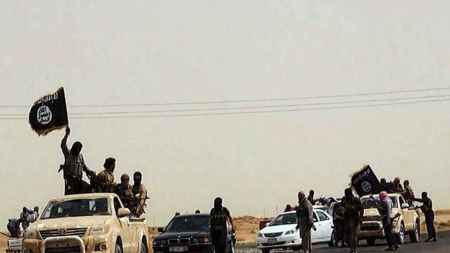
isis-caliphate

Sum up our failed Middle East policy in a nine-letter word starting with an S. Stability.

Stability is the heart and soul of nation-building. It’s the burden that responsible governments bear for the more irresponsible parts of the world. First you send experts to figure out what is destabilizing some hellhole whose prime exports are malaria, overpriced tourist knickknacks and beheadings. You teach the locals about democracy, tolerance and storing severed heads in Tupperware containers.

Then if that doesn’t work, you send in the military advisers to teach the local warlords-in-waiting how to better fight the local guerrillas and how to overthrow their own government in a military coup.

Finally, you send in the military. But this gets bloody, messy and expensive very fast.

So most of the time we dispatch sociologists to write reports to our diplomats explaining why people are killing each other in a region where they have been killing each other since time immemorial, and why it’s all our fault. Then we try to figure out how we can make them stop by being nicer to them.

The central assumption here is stability. We assume that stability is achievable and that it is good. The former is completely unproven and even the latter remains a somewhat shaky thesis.

The British wanted stability by replicating the monarchy across a series of Middle Eastern dependents. The vast majority of these survived for a shorter period than New Coke or skunk rock. Their last remnant is the King of Jordan, born to Princess Muna al-Hussein aka Antoinette Avril Gardiner of Suffolk, educated at the Royal Military Academy, Sandhurst, and currently trying to stave off a Muslim Brotherhood-Palestinian uprising by building a billion dollar Star Trek theme park.

The British experiment in stabilizing the Middle East failed miserably. Within a decade the British government was forced to switch from backing the Egyptian assault on Israel to allying with the Jewish State in a failed bid to stop the Egyptian seizure of the Suez Canal.

The American experiment in trying to export our own form of government to Muslims didn’t work any better. The Middle East still has monarchies. It has only one democracy with free and open elections.

Israel.

Even Obama and Hillary’s Arab Spring was a perverted attempted to make stability happen by replacing the old Socialist dictators and their cronies with the political Islamists of the Muslim Brotherhood. They abandoned it once the chaos rolled in and stability was nowhere to be found among all the corpses.

It might be time to admit that barring the return of the Ottoman Empire, stability won’t be coming to the Middle East any time soon. Exporting democracy didn’t work. Giving the Saudis a free hand to control our foreign policy didn’t work. Trying to force Israel to make concessions to Islamic terrorists didn’t work. And the old tyrants we backed are sand castles along a stormy shore.

Even without the Arab Spring, their days were as numbered as old King Farouk dying in exile in an Italian restaurant.

If stability isn’t achievable, maybe we should stop trying to achieve it. And stability may not even be any good.

Our two most successful bids in the Muslim world, one intentionally and the other unintentionally, succeeded by sowing chaos instead of trying to foster stability. We helped break the Soviet Union on a cheap budget in Afghanistan by feeding the chaos. And then we bled Iran and its terrorist allies in Syria and Iraq for around the price of a single bombing raid. Both of these actions had messy consequences.

But we seem to do better at pushing Mohammed Dumpty off the wall than at putting him back together again. If we can’t find the center of stability, maybe it’s time for us to embrace the chaos.

Embracing the chaos forces us to rethink our role in the world. Stability is an outdated model. It assumes that the world is moving toward unity. Fix the trouble spots and humanity will be ready for world government. Make sure everyone follows international law and we can all hum Lennon’s “Imagine”.

Not only is this a horrible dystopian vision of the future, it’s also a silly fantasy.

The UN is nothing but a clearinghouse for dictators. International law is meaningless outside of commercial disputes. The world isn’t moving toward unity, but to disunity. If even the EU can’t hold together, the notion of the Middle East becoming the good citizens of some global government is a fairy tale told by diplomats while tucking each other into bed in five-star hotels at international conferences.

It’s time to deal with the world as it is. And to ask what our objectives are.

Take stability off the table. Put it in a little box and bury it in an unmarked grave at Foggy Bottom. Forget about oil. If we can’t meet our own energy needs, we’ll be spending ten times as much on protecting the Saudis from everyone else and protecting everyone else from the Saudis.

Then we should ask what we really want to achieve in the Middle East.

We want to stop Islamic terrorists and governments from harming us. Trying to stabilize failed states and prop up or appease Islamic governments hasn’t worked. Maybe we ought to try destabilizing them.

There have been worse ideas. We’re still recovering from the last bunch.

To embrace chaos, we have to stop thinking defensively about stability and start thinking offensively about cultivating instability. A Muslim government that sponsors terrorism against us ought to know that it will get its own back in spades. Every Muslim terror group has its rivals and enemies waiting to pounce. The leverage is there. We just need to use it.

When the British and the French tried to shut down Nasser, Eisenhower protected him by threatening to collapse the British pound. What if we were willing to treat our Muslim “allies” who fill the treasuries of terror groups the way that we treat our non-Muslim allies who don’t even fly planes into the Pentagon?

We have spent the past few decades pressuring Israel to make deals with terrorists. What if we started pressuring Muslim countries in the same way to deal with their independence movements?

The counterarguments are obvious. Supply weapons and they end up in the hands of terror groups. But the Muslim world is already an open-air weapons market. If we don’t supply anything too high end, then all we’re doing is pouring gasoline on a forest fire. And buying the deaths of terrorists at bargain prices.

Terrorism does thrive in failed states. But the key point is that it thrives best when it is backed by successful ones. Would the chaos in Syria, Nigeria or Yemen be possible without the wealth and power of Saudi Arabia, Qatar and Iran? Should we really fear unstable Muslim states or stable ones?

That is really the fundamental question that we must answer because it goes to the heart of the moderate Muslim paradox. Is it really the Jihadist who is most dangerous or his mainstream ally?

If we believe that the Saudis and Qataris are our allies and that political Islamists are moderates who can fuse Islam and democracy together, then the stability model makes sense. But when we recognize that there is no such thing as a moderate civilizational Jihad, then we are confronted with the fact that the real threat does not come from failed states or fractured terror groups, but from Islamic unity.

Once we accept that there is a clash of civilizations, chaos becomes a useful civilizational weapon.

Islamists have very effectively divided and conquered us, exploiting our rivalries and political quarrels, for their own gain. They have used our own political chaos, our freedoms and our differences, against us. It is time that we moved beyond a failed model of trying to unify the Muslim world under international law and started trying to divide it instead.

Chaos is the enemy of civilization. But we cannot bring our form of order, one based on cooperation and individual rights, to the Muslim world. And the only other order that can come is that of the Caliphate.

And chaos may be our best defense against the Caliphate.