Posted tagged ‘Middle East’

Why hasn’t Sisi visited Washington yet?

October 9, 2015

Why hasn’t Sisi visited Washington yet? Al-MonitorMohamed Saied, October 8, 2014

(Obama thinks highly of the Islamist Muslim Brotherhood and rejects President Sisi because he supported the Egyptian masses who sought the overthrow of an increasingly dictatorial President Morsi. Obama’s rejection of Sisi’s Egypt pushed it into an alliance with Russia. Now Obama, et al, claim that alliance as a basis for the continuing hostility toward Sisi. Perhaps it is. Obama, et al, have also complained about Egyptian human rights violations in repressing the Muslim Brotherhood; few similar complaints have been made about far greater Saudi and Iranian human rights violations. Sisi is the only president of a Muslim nation who seeks to promote a more secular and hence moderate Islam, to which the Muslim Brotherhood is hostile. Please see also, Egypt’s secular culture minister ruffles Salafi feathers. — DM)

One of the most important issues that may hinder the return of US-Egyptian relations to their previous state is the strong relationship between Cairo and Moscow; Sisi has met his Russian counterpart Vladimir Putin four times so far, and Egypt is currently considered the most important ally of Moscow in the Middle East.

**********************

CAIRO — Ever since Egyptian President Abdel Fattah al-Sisi took office on June 8, 2014, US-Egyptian relations have been deteriorating. This has been further confirmed by the fact that Sisi has not visited Washington yet despite the shuttle visits he has made abroad.

Differences and conflicts plagued the US-Egyptian relationship during the era of President Gamal Abdel Nasser. These conflicts culminated in the 1967 Six-Day War, when diplomatic relations between the two countries were severed because of the economic and military support by the United States to Israel.

However, these relations started to take a positive turn based on the strengthening of the strategic interests shared between the two countries in the wake of the signing of the Camp David Accords with Israel — the US’ permanent ally — on Sept. 17, 1978, between Egyptian President Anwar Sadat and Israeli Prime Minister Menachem Begin, as per the State Information Service affiliated with the Presidency of the Republic.

Only one meeting was held between Presidents Sisi and Barack Obama on the sidelines of the 69th Session of the UN General Assembly in September 2014 in New York, but other than this the two presidents have been settling for phone calls to discuss the latest developments in the region.

According to The Washington Times, Obama refused to meet with Sisi on the sidelines of the 70th session of the UN General Assembly. Egyptian Foreign Minister Sameh Shoukry attributed this in a press statement on Sept. 24 to the mismatching agendas and schedules of the two presidents, which prevented them from holding individual talks.

According to the US Embassy in Egypt’s reports on the situation in the country following the revolution of June 30, 2013, Washington started a “comprehensive review” of its relations with Egypt on the background of the ouster of former Egyptian President Mohammed Morsi.

On Aug. 15, 2013, following the killing of hundreds of Muslim Brotherhood demonstrators in Al-Nahda Square and Rabia al-Adawiya Square, Obama announced the cancellation of the Bright Star maneuvers, which were launched in 1980 following the signing of the peace treaty between Egypt and Israel and consisted of a joint military exercise between the two countries.

By October 2013, the review of relations put a halt to the deal consisting of delivering arms to Egypt. Also in October 2013, the US administration suspended $260 million that was going to be directly transferred to the Egyptian government along with another $300 million in US loan guarantees.

However, in a telephone call on March 13, Obama told Sisi that the military aid amounting to $1.3 billion would continue.

Meanwhile, Dina Badawi, spokeswoman for the US State Department for the Middle East, expressed concerns in a live interview on the ONtv channel April 2 over the state of rights and freedoms in Egypt, and pointed out that aid is aimed at continuing the democratic track and the political reforms in the country.

Abdel Moneim Said, director of the Regional Centre for Strategic Studies, and Shai Feldman, the Judith and Sidney Swartz director at the Crown Center for Middle East Studies, said in a research paper titled “Resetting US-Egyptian relations,” which was published in March 2014 on the center’s website, that at the root of the downturn in the US-Egyptian relations is the huge gap between the two sides’ narratives regarding the events of June 30, 2013.

One of the most important issues that may hinder the return of US-Egyptian relations to their previous state is the strong relationship between Cairo and Moscow; Sisi has met his Russian counterpart Vladimir Putin four times so far, and Egypt is currently considered the most important ally of Moscow in the Middle East.

The dispute between Russia and the United States is in regard to several issues. Chief among these is the Syrian issue; Moscow launched airstrikes on Sept. 30, sparking criticism on the part of Obama during a press conference Oct. 2. Obama said that Moscow is acting “not out of strength, but out of weakness” in support of the losing party. The president was referring to Syrian President Bashar al-Assad, and he pointed out that Russia should help in reaching a political settlement.

Meanwhile, the Egyptian Foreign Ministry did not issue any statements condemning or supporting such strikes.

In January, spokeswoman for the US State Department Jennifer Psaki said during the daily press brief that a meeting she described as “routine” was held with a delegation of members of the former Egyptian parliament from the dissolved Muslim Brotherhood-affiliated Freedom and Justice Party, on the sidelines of their visit to Washington, which was organized and financed by Georgetown University in Washington.

This meeting raised the ire of the Egyptian political leadership, as well-informed sources told Reuters in June that the Egyptian government summoned the US ambassador in Cairo to express displeasure over visits to Washington by figures of the Muslim Brotherhood, which is banned in Egypt.

Concerning the fact that Egypt did not extend an official invitation to Obama to meet with Sisi, or vice versa, Atef el-Ghomri, former director of the office of the Egyptian Al-Ahram newspaper in Washington and a member of the Egyptian Council for Foreign Affairs, said, “There is an ongoing split within the US decision-making circles over the revolution of June 30, 2013, and the toppling of former President Mohammed Morsi, who belongs to the Muslim Brotherhood.”

Ghomri told Al-Monitor that over the past years, Egypt’s relations have been confined to its foreign relations with Washington as it only took into account its regional and international interests. This deprived Egypt of any international initiatives or insights about various issues. Also, Egypt had to give up its pivotal role in the Middle East as far as the African and Arab countries are concerned. This negatively affected Egypt over time.

“The Egyptian leadership is trying to diversify its foreign relations. It resorted to the Eastern bloc led by Russia, as well as East Asia represented by China and Singapore.” Ghomri added.

Washington is concerned about several files managed by the Egyptian leadership, mainly the human rights and political reforms issues. The United States has been expressing those concerns since the June 30 Revolution, when the Muslim Brotherhood was toppled and replaced by a military president.

Under such circumstances, Cairo had to resort to other countries, while the US-Egyptian relations are expected to witness further tension, especially with the differences in views concerning several international issues, namely Syria, Iran and Libya.
 

Column One: Abbas must be stopped

October 9, 2015

Column One: Abbas must be stopped, Jerusalem Post, Caroline Glick, October 8, 2015

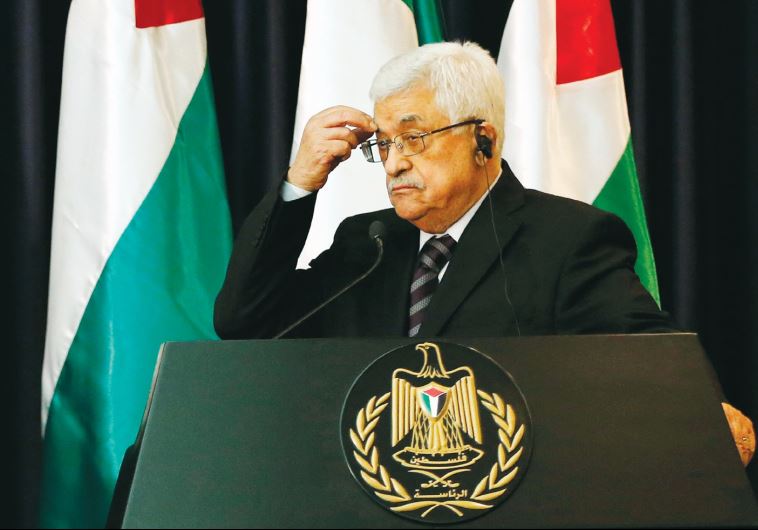
ShowImage (12)PA President Mahmoud Abbas.. (photo credit:AMMAR AWAD / REUTERS)

All the Palestinian terrorist attacks that have been carried out in recent weeks share one common feature. All the terrorists believe that by attacking Jews they are protecting the Temple Mount from destruction.

And why shouldn’t they believe this obscenity? Everywhere they go, every time they turn on their televisions, read the paper, go to school or the mosque they are told that the Jews are destroying al-Aksa Mosque. Al-Aksa, they are told, is in danger. They must take up arms to defend it from the Jews, whatever the cost.

One man stands at the center of this blood libel. The man who propagates this murderous lie and orchestrates the death and mayhem that is its bloody harvest is none other than the West’s favorite Palestinian moderate: PLO chief and Palestinian Authority Chairman Mahmoud Abbas.

On September 16 Abbas gave a speech. It was broadcast on PA television and posted on his Facebook page. In it, he incited the Palestinians to kill Jews. In his words, “Al-Aksa Mosque is ours.

They [the Jews] have no right to desecrate it with their filthy feet. We won’t allow them to do so and we will do everything in our power to defend Jerusalem.”

Abbas added, “We bless every drop of blood spilled for Jerusalem. This is clean and pure blood, blood that was spilled for God. It is Allah’s will that every martyr will go to heaven and every wounded [terrorist] will receive God’s reward.”

Two weeks later, Abbas opened his address before the UN General Assembly with the same lies, threats, and incitement.

Almost exactly a year ago, Abbas spewed the same bile in a speech, with the same murderous consequences. In a speech before Fatah’s executive committee last October, Abbas said, “We must prevent them [the Jews] from entering the holy site in every possible way. This is our holy site, this is our al-Aksa and our church [the Church of the Holy Sepulchre]. They have no right to enter them. They have no right to desecrate them. We must prevent them from entering. We must block them with our bodies to defend our holy sites.”

In subsequent weeks, Abbas’s words were rebroadcast 19 times on Palestinian television.

During that period, Arab terrorists massacred rabbis in prayer at a Jerusalem synagogue, attempted to assassinate human rights activist Yehudah Glick, and murdered Jews standing at light rail stops in the capital.

Eleven Israelis were butchered in that terrorist onslaught.

Then as now, Abbas and his lieutenants not only incited attacks, they incentivized would be perpetrators to kill Jews.

Every year, the same PA that claims perpetual poverty pays more than $100 million to terrorists imprisoned in Israeli jails. Their salaries range between four to seven times the average PA salary, depending on the lethality of the attacks they carried out.

Popular awareness of the financial benefits of terrorist activities has played a critical role in motivating Palestinians to attack Jews. This is made clear by the actions in recent weeks of several of the supposedly “lone wolf” attackers in the hours before they struck. Several of them – like their predecessors in last year’s onslaught – announced their intention to become martyrs to protect al-Aksa from the Jews on their Facebook pages immediately before they carried out their attacks.

Money may be the greatest incentive Abbas and his PA provide for potential terrorists. But it isn’t the only one. There is also the social status they confer on terrorists and their families. Every would-be terrorist knows that if he succeeds in killing Jews, he will be glorified by the Palestinian media and his family will be embraced by the PA establishment – first and foremost by Abbas himself, who has made a habit of meeting with terrorists and their families.

Presently, Israel’s security brass is embroiled in a bitter dispute with our elected leaders regarding the nature of the current terrorist offensive. The dispute bubbled to the surface Wednesday night when the generals used military reporters to criticize Prime Minister Benjamin Netanyahu for blaming Abbas for the violence.

The generals insist that Abbas is a good guy.

He’s trying to calm the situation, they argue, and Israel needs to support him.

From the looks of things, the IDF seems to have the upper hand in this fight. This is the only way to read Netanyahu’s announcement Wednesday night that he is barring government ministers and members of Knesset from visiting the Temple Mount until further notice. Netanyahu’s move is nothing less than a signal that he accepts Abbas’s premise that there is something wrong with Jews exercising their right to visit Judaism’s holiest site.

The generals’ rationale for defending Abbas is fairly straightforward. Throughout the current Palestinian terror onslaught they have continued to cooperate with Abbas-controlled Palestinian security forces in Judea and Samaria.

These forces cooperate with the IDF in seeking out and arresting terrorists from Hamas and other groups that are not subordinate to Abbas. The fact that Abbas has ordered his men to work with the IDF has convinced the generals that he is a positive actor. So as they see it, he must be protected.

In their view, Israel must limit its counterterrorism operations to tactical operations against trigger pullers and their immediate commanders and ignore the overarching cause of the violence.

In behaving in this manner, our security brass is being willfully blind to the fact that Abbas is playing a double game. On the one hand, he orders his forces to be nice to IDF officers in Central Command when they fight terrorist cells from Hamas and other groups not loyal to Abbas, and so wins their appreciation.

But on the other hand, Abbas works with those same terrorist forces, incites them to attack, and rewards them for doing so.

Perhaps the most outrageous aspect of the IDF’s insistence that Abbas is critical to its counterterrorism efforts is that the IDF’s own data demonstrate that Abbas has played an insignificant role in quelling terrorist attacks against Israel.

As Jerusalem Post columnist Evelyn Gordon showed in an article in Commentary this week, according to official data, from 2002 when Palestinian terrorist activities in the areas were at their peak until 2007, when Israel began transferring security control over some Palestinian cities to Abbas’s forces, levels of terrorism went down 97 percent. Even after Israel began permitting Abbas to deploy his security forces to Nablus and Jenin, the IDF has continued to operate at will in these areas, often on a nightly basis.

As Gordon noted, the only place Abbas has exercised sole security control was in Gaza. From September 2005, when Israel removed its military forces from Gaza until Hamas expelled Fatah forces from the areas in June 2007, Abbas’s forces had full control over Gaza. During this time, his forces did nothing to prevent Hamas – and Fatah forces – from attacking Israel with thousands of mortars and rockets. His forces did nothing to prevent the massive transfer of advanced weaponry to Gaza from Egypt and Iran.

True, since his forces were routed in Gaza, Abbas has ordered them to work with the IDF in Judea and Samaria to prevent Hamas from overthrowing him. But at the same time, he continuously seeks to form a unity government with Hamas.

He funds Hamas. He glorifies its terrorists. And he refuses to condemn their attacks against Israel.

Moreover, while ordering his men to help the IDF to protect him from Hamas, he leads the diplomatic war against Israel internationally. The goals of that war are to harm Israel’s economy and deny Israel the right to self-defense.

Our political leadership’s reluctance to stand up to the army is understandable. It is nearly impossible to order the IDF to take action it opposes.

At some point though, the government is going to rein in our insubordinate generals. Fortunately, the government doesn’t need the IDF to deal with Abbas and destroy his capacity to foment and direct attacks against Israel.

Our elected officials have the authority to go after the twin foundations Abbas’s terrorist offensive on their own. Those foundations are the incitement and the financial incentives he uses to motivate Palestinians to attack Jews.

On the financial end, the Knesset should pass two laws to dry up the wells of terrorism financing.

First, the Knesset should pass a law stipulating that all property belonging to terrorists, and all property used by terrorists to plan and carry out attacks, will be seized by the government and transferred to the victims of their attacks.

Moreover, all compensation paid to terrorists and their relatives pursuant to their attacks will be seized by the government and transferred to their victims.

The second law would relate to Israel’s practice – anchored in the Oslo Accords that Abbas revoked last month at the UN – of transferring tax revenues to the PA. The Knesset should pass a law prohibiting those transfers unless the Defense Minister certifies that the PA has ceased all terrorism- related activities including incitement, organization, financing, directing and glorifying terrorist attacks and terrorists.

Until he so certifies, all revenues collected should be used to pay PA debts to Israeli institutions and to compensate victims of Palestinian terrorism.

As for the incitement, the government needs to go to the source of the problem – Abbas’s blood libel regarding Jewish rights to the Temple Mount.

As things stand, Abbas is exacting a price in human lives for his obscene anti-Jewish propaganda about our “filthy feet defiling” the most sacred site in Judaism. By barring elected officials from visiting the Temple Mount, not only is the government failing to exact a price for Abbas’ obscene propaganda. It is rewarding him and so inviting Abbas to expand his rhetorical offensive.

To remedy the situation an opposite approach is required. Rather than bar elected officials from visiting the Temple Mount, Netanyahu should encourage them to do so. Just as he sent a letter to Jordan’s King Abdullah telling him that Israel is preserving the status quo on the Temple Mount, so he should write a similar letter to our lawmakers.

In his letter, Netanyahu should say that in keeping with the status quo, which protects the rights of members of all religions to freely enter the Temple Mount, so he commits the government to protect the rights of all believers of all religions to ascend the Mount.

The Palestinian terrorist onslaught now raging against us is not spontaneous. Abbas has incited it and is directing it. To stop this assault, Israel must finally take action against Abbas and his machinery of war. Anything less can bring us nothing more than a temporary respite in the carnage that Abbas will be free to end whenever he wishes.

Iran’s terror general plotted Russian strikes in Syria

October 8, 2015

Iran’s terror general plotted Russian strikes in Syria, Front Page Magazine, Daniel Greenfield, October 8, 2015

(Please see also, Obama Admin’s Iran Point Man Promotes Anti-Israel Conspiracy Theories as it relates to Soleimani. — DM)

Russian propaganda claims that Putin wants to protect Christians. If he really wanted to protect Christians, he would tell his Iranian pals to stop persecuting Christians.

*********************

First, a little background on Qassem Soleimani.

“He’s got American blood on his hands,” Senator John Cornyn said of Soleimani. “I’m not sympathetic to lifting sanctions on him, that’s for sure.”

“Soleimani is the guy that sent the copper-tipped IEDs into Iraq,” said Senate Armed Services Committee Chairman John McCain, referring to powerful improvised explosive devices, which Marine Corps Commandant General Joseph Dunford testified last week were responsible for the deaths of 500 soldiers and Marines. “That is really unbelievable,” McCain said when asked about Soleimani’s name showing up in the bowels of the Iran nuclear deal.

In practice, Soleimani’s IRGC is a terrorist group despite protests from Obama and other Democrats. It’s also the key lever Iran is using to transform the region.

At a meeting in Moscow in July, a top Iranian general unfurled a map of Syria to explain to his Russian hosts how a series of defeats for President Bashar al-Assad could be turned into victory – with Russia’s help.

Major General Qassem Soleimani’s visit to Moscow was the first step in planning for a Russian military intervention that has reshaped the Syrian war and forged a new Iranian-Russian alliance in support of Assad.

As Russian warplanes bomb rebels from above, the arrival of Iranian special forces for ground operations underscores several months of planning between Assad’s two most important allies, driven by panic at rapid insurgent gains.

Soleimani is the commander of the Quds Force, the elite extra-territorial special forces arm of Iran’s Revolutionary Guards, and reports directly to Iran’s Supreme Leader, Ayatollah Ali Khamenei.

Perversely, Soleimani already enjoys US air support from Obama for his Shiite terror militias in Iraq. Now he’s got Russian air power backing his Shiite terror militias in Syria.

One of the world’s top terrorists has two air forces to play with.

Russian propaganda claims that Putin wants to protect Christians. If he really wanted to protect Christians, he would tell his Iranian pals to stop persecuting Christians.

A leaked German document confirms what we already know about Turkish support to Syrian rebels

October 8, 2015

A leaked German document confirms what we already know about Turkish support to Syrian rebels

Published October 6th, 2015 – 09:44 GMT

via SyndiGate.info

Source: A leaked German document confirms what we already know about Turkish support to Syrian rebels | Al Bawaba

Ahrar al-Sham is an ally of al-Nusra Front, Syria's al-Qaeda affiliate. (AFP/File)

Ahrar al-Sham is an ally of al-Nusra Front, Syria’s al-Qaeda affiliate. (AFP/File)

It’s a report we’ve all heard before — that Turkey, along with Saudi Arabia, is supporting Syrian rebels to help take President Bashar al-Assad down.

According to the document leaked from the German Intelligence Services, Turkey is providing Ahrar al-Sham and the Islamic Front with weapons. Turkey denied the claim again in May, but it still doesn’t come as much of a surprise.

The document shows German parliamentarian Katrin Kunert’s written request from the German government on May 18.

Here’s a translation:

… Question 25 asked which Syrian parties are receiving which type of weapons from the Turkish government (if possible please list border cities where deliveries take place).

Answer: Since mid-November of 2014, information from Federal German Intelligence Service indicate that Ankara delivers weapons to armed Syrian rebel groups. Recipients are said to be the groups Ahrar al-Sham and Islamic Front. 

German paper Die Welt (“The World”), which published a photo of the document, seemed to confirm the document’s legitimacy when it reported Germany’s attempts to find the person who leaked it to PKK-owned media.

“The German Parliament is filing charges,” said Martin Steltner, a speaker of the prosecution, according to Die Welt. “We are investigating and the investigations will continue.”

So what’s the problem with Turkey supporting these rebels? Both Salafist groups, Ahrar al-Sham and the Islamic Front are known to have more extreme goals in the Syrian conflict. Ahrar al-Sham has partnerships with al-Nusra Front, which is affiliated with al-Qaeda and sometimes considered more dangerous than Daesh (ISIS) itself.

By Hayat Norimine


turkey-syria-border


The so-called “buffer zone” — allegedly established to protect refugees and stage military operations aimed at ISIS — is a de facto no-fly zone used to protect jihadist fighters entering the country from Turkey.

More Evidence of Turkish Collusion with ISIS

Earlier this week a leaked German intelligence document confirmed reports that Turkey is directly assisting Harakat Ahrar ash-Sham al-Islamiyya, a coalition of Islamist and Salafist units that have vowed to establish a Sunni Wahhabist state under Sharia law in Syria.

Ahrar ash-Sham is aligned with al-Nusra which has pledged allegiance to the Islamic State.

The Russians understand that Ahrar ash-Sham — currently the most powerful and effective jihadist group fighting in Syria — must be targeted if it hopes to turn back the effort to unseat Bashar al-Assad.

If NATO follows through on its promise to “defend all allies” by inserting troops in Turkey’s illegal “safe zone,” it will be effectively aiding and abetting the Islamic State.

In May declassified US Defense Intelligence Agency documents from 2012 revealed the United States and its partners in the Gulf states and Turkey supported the Islamic State and plan to establish a Salafist principality in Syria.

The Missiles of October, 2015 Edition

October 8, 2015

The Missiles of October, 2015 Edition

Author By Doug Hagmann —

Bio and Archives October 8, 2015

Source: The Missiles of October, 2015 Edition

When the farmer in Iowa plowing his field suddenly and unexpectedly hears a noise and feels the ground shake from missiles being fired from a hidden underground silo in retaliation against Russia, perhaps then Americans will wake up to the litany of lies we’ve been fed by our leaders and a complicit media. Even then, I suspect that most Americans will continue to believe the lies of the U.S. leaders and succumb to revisionist history that has little-to-nothing to do with the truth.

We are at the precipice of World War III, yet the average American has no idea. The average American is oblivious to the fact that America has been captured from within, its leadership is traitorous, and the media complicit in all aspects of seditious criminality. Many of those who might have a level of understanding however, don’t know the real story about how we arrived at this point in time. For both, we have our elected officials in Washington to thank…or to blame… or perhaps congratulate, depending upon which agenda you’re pushing.

In the event you missed the news, twenty-six cruise missiles were fired into Syria by Russian warships yesterday as Syrian ground troops launch an offensive against ISIS and U.S., NATO and Saudi-backed anti-Assad terrorists. Who didn’t see this coming?

Three years ago to the day – October 8, 2012, I wrote Lemmings…On the precipice of World War III, explaining that Barack Hussein Obama, in his capacity as the man selected for the Oval Office, was overseeing a private war in the Middle East at the direction of the Saudis. What was taking place in Syria at that time was the result of the Obama-Clinton parallel CIA/State Department’s “Fast & Furious, Libyan Edition.” To Hillary Clinton’s cackling delight, Gaddafi was deposed and killed, and Libya was being used as a supply depot for weapons funneled to Syria via Turkey and other areas in close proximity. The primary staging area in Libya was Benghazi, and specifically, the CIA complex that was attacked on September 11, 2012.

The actions by this rogue element within the U.S. government, many who are still in power and continue to hold positions of influence, led to the attack on the CIA compound that caused the murder of a U.S. Ambassador and three others. Although the attack was conducted by proxy groups, those groups were acting on behalf of Russia. Accordingly, the United States did not respond, as doing so would have certainly widened the conflict and exposed the largest weapons running operation in the Middle East. Stevens, having a rolodex full of unsavory contacts including those he met while on assignment in Syria, reportedly oversaw a portion of this operation, according to my contacts in the intelligence venue.

To fully understand the perilous situation the Renegade-in-Chief has created for us as a nation, it is critical to understand the truth regarding how we arrived here. That, of course is something that Obama, Clinton and their facilitators cannot have exposed at any cost. To understand Russia’s response in Syria, the current situation must be viewed through the larger lens of past events for accurate historical context, and those events include Benghazi. It is for this reason that the American people will never get the truth about Benghazi or the mysterious Clinton e-mails, as any truthful revelation would expose the criminally traitorous activities of this unlawful administration.

How deep the lies

The lies, however, go much deeper than most reasonable people can comprehend, as we are not dealing with reasonable or rational people. We do not have truth in the media, as all media outlets are controlled by only six corporations that act as chokepoints for truth. The large media conglomerates dutifully report only what they are told to report and nothing more. Included in this pattern of control are those media pundits, including most who are identified as conservative, and most who host talk shows and television panels.

The above, therefore, explains why the background of Barry Soetoro, a/k/a Barack Hussein Obama II, the Renegade-in-Chief was declared “off-limits” to discussion by even those “conservative” pundits. Anyone out of compliance was (and still is) publicly ridiculed. This complete takeover is overtly obvious even in Hollywood, where many night-time talk show hosts often mock and ridicule anyone daring to question the bona-fides and allegiance of the Communist Muslim occupant of the White House.

I stress the above in this report as it is relevant even today, for the events we are watching unfold could have been prevented with a true conservative effort and media pundits who could have chosen to place the fate of their nation over their careers. They chose their paycheck over the truth, and bowed to their corporate handlers as deeply as Obama bowed to his handler, the king of Saudi Arabia.

We have grown to expect as much from the toxic liberal “progressive” Marxists, but find it difficult to accept such from the self-proclaimed conservative media and pundits. Depicted as intellectual talking heads, they never seem to break through the thin veneer of lies that covers the truth. They entertain rather than inform, which appeals to the average, non-thinking American. They offer just enough “us versus them,” play-by-play action of the long-dead partisan paradigm to satisfy those addicted to mainstream news.

What every thinking American needs to understand is that the lies that have been and continue to be perpetuated by those in elected positions emanate from members of both political parties, for most members of both parties have chosen to take their assigned seats at the globalists’ table. It is easy to see how others may have been blackmailed into taking their assigned seats, especially after drinking from the fountain of power and wealth within the beltway. That assertion also applies to certain members of the Supreme Court, a body that has become an activist arm of the globalists.

We did not, however, arrive here overnight. The subjugation of America’s sovereignty was an incremental process. It seems that the tactics of the Fabian Socialists won out over those of the Communists. Their goals are the same, only their approach is different. The ultimate objective is nearly complete, and each of us has a front seat to the next act of this Orwellian play. From Woodrow Wilson to the Clinton cabal to the globalists currently in power, Americans have been led into servitude. Sadly, many Americans are enjoying their servitude, or have no idea that they are being held captive. Feel free to call it Stockholm syndrome, but dare not call it “battered wife syndrome,” for this phrase has been deemed off limits by the thought police.

For those reasons and many more, don’t expect to learn the truth about Benghazi, for the next act of this Orwellian play has already been written. While most Americans could not find Benghazi on a globe, those who could seem to have long forgotten about the attack and its implications. A dutiful and complicit press has made sure of that.

While many quickly dismiss ludicrous explanations concerning the Benghazi attack, including the embarrassingly laughable narrative relating to the anti-Muslim video The Innocence of Muslims, they will often stop there, purposely neglecting the evidence that is highly suggestive of a rogue CIA, Clinton, Obama and Brennan cover-up.  As I detailed in my report of that video, its creation appears to trace back to people and groups close to the CIA. Additionally, the same people and entities whose fingerprints appear on the video also appear to be involved in the breach of the passport office files in 2008. It was that breach that prompted the admission by Obama that he traveled to Pakistan in 1981, and also appears to have played a role in the murder of one of those involved at the periphery of that incident.

Although seemingly tedious and arguably off-topic, it is vital to understand that everything we are presently seeing taking place has been carefully orchestrated. We are not living in a world of coincidence, but one of conspiracy. Laugh if you must, but do so only after you’ve investigated all of the facts. And then, laugh at your own peril.

Three years ago, I wrote that World War III would begin in Syria, not Iran. Admittedly, Iran would play a role, but the flashpoint, Putin’s red line in the sand runs directly through Damascus. It still does, and now over two-dozen sophisticated Russian cruise missiles have served to emphasize and validate my assertions.

Obama’s deliberately destabilizing actions across the Middle East, known as the “Arab Spring,” was planned long ago in the bowels of a Saudi mansion. With the approval of Washington leadership of both parties, including the “gang of eight,” Obama was selected to oversee the operation. Obama is acting on orders from his Saudi and globalist handlers. John Boehner and other Republican leaders provided the necessary cover for Obama to complete his task. He was assisted by the Clinton criminal cabal, and given a pass by a complicit media.

If you look long enough and close enough, the evidence is there. Sadly, there are too few with the intellectual and moral integrity to report it. Or, they have already submitted their reservations for their seats at the globalists’ table.

For those with the temerity to report the truth, there is a solution to deal with you. If you’re not silenced by the restrictions of the soon-to-be-passed Trans-Pacific Partnership Treaty or its Atlantic counterpart, there’s always room for you at one of your local non-existent re-education centers. They’ll even leave the light on for you.

From there, you’ll have a front row seat to the series of final acts of the screenplay of the globalists. The “Missiles of October 2015 edition,” produced and written by the Globalista’s studios, although a bit behind schedule, has been “launched.” Pun intended.

Prepare. Pray.

The Conventional Wisdom on Putin is Dangerously Wrong

October 8, 2015

The Conventional Wisdom on Putin is Dangerously Wrong It’s not about ‘order’—it’s about empire

BY: Aaron MacLean October 8, 2015 5:00 am

Source: The Conventional Wisdom on Putin is Dangerously Wrong – Washington Free Beacon

 The official Washington line on Vladimir Putin’s military action is as follows: It is a mistake,

The official Washington line on Vladimir Putin’s military action is as follows: It is a mistake, demonstrating Russian weakness, sure to get the Russian military stuck in a “quagmire,” according to President Obama. Josh Earnest, the president’s press secretary, took that observation one further, comparing Putin’s policies to those of the Bush administration (the sickest of White House burns) by arguing the Russians “will not succeed in imposing a military solution” just as the U.S. did not succeed in imposing one in Iraq. Adopting the characteristic snark of his boss, at a later press conference Earnest assessed Putin not to be “playing chess—he’s playing checkers.” Ash Carter, the secretary of defense, weighed in by noting that the Russian strategy was “a backward approach that’s sure to backfire.”

If the Syria deployment is such an obvious mistake, why is Putin doing it? The conventional wisdom has concluded that his actions are driven by fear. The Assad regime, long friendly to Moscow, was about to fall, and Putin takes a dim view of the collapse of sovereign states as a consequence of popular uprisings or foreign interventions. Steven Lee Myers, long time Moscow correspondent for the New York Times, is out with a perfectly timed book assessing Putin’s life and ideology. Applying his broader argument to the case of Syria in the Times, Myers says:

Many have variously interpreted Mr. Putin’s intervention in Syria as a response to domestic pressures caused by an economy faltering with the drop in oil prices and sanctions imposed after Crimea; a desire to change the subject from Ukraine; or a reassertion of Russia’s position in the Middle East.

All are perhaps factors, but at the heart of the airstrikes is Mr. Putin’s defense of the principle that the state is all powerful and should be defended against the hordes, especially those encouraged from abroad. It is a warning about Russia, as much as Syria.

Myers’ argument fits well with the White House’s assessment, and has been echoed in publications friendly to the administration’s policies. You know who else agrees? Vladimir Putin—without the emphasis on fear and the expectation of failure, of course. But in his address last week to the United Nations, Putin made an argument that journalists like Myers have largely taken at face value:

It seems, however, that instead of learning from other people’s mistakes, some prefer to repeat them and continue to export revolutions, only now these are “democratic” revolutions. Just look at the situation in the Middle East and Northern Africa already mentioned by the previous speaker. Of course, political and social problems have been piling up for a long time in this region, and people there wanted change. But what was the actual outcome? Instead of bringing about reforms, aggressive intervention rashly destroyed government institutions and the local way of life. Instead of democracy and progress, there is now violence, poverty, social disasters and total disregard for human rights, including even the right to life.

I’m urged to ask those who created this situation: do you at least realize now what you’ve done?

It is no small irony that the same American politicos and journalists who are quick to accuse their domestic political opponents of acting in bad faith now go to impressive lengths to take the Russian president at his word, and to see him as a man whose actions are, if foolish, at least driven by an understandable sense of self-preservation and a realist’s principled opposition to disorder. Indeed, when there are no cameras around, those friendly to the administration will tell you that Putin’s intervention is actually a great boon to American policy, and that our opposition to Assad has been misguided from the start. This wing of American politics, the members of which seem to believe that they are “realists,” believes that the American presence in the Middle East is at the root of the instability there.

Putin understands this all too well, and much of his UN speech was pitched directly at the consciences of these men and women. It was impossible not to chuckle at the strongman’s chutzpah when, nearing his conclusion, Putin explained his hope to partner with other nations on an “issue that shall affect the future of the entire humankind”—climate change. In his recent 60 Minutes interview with Charlie Rose, Putin parried a question about the rule of law in Russia by invoking American race relations—a tried and true rhetorical gambit of the Soviet era:

How long did it take the democratic process to develop in the United States? Do you believe that everything is perfect now from the point of view of democracy in the United States? If everything was perfect there wouldn’t be the problem of Ferguson. There would be no abuse by the police. But our task is to see all these problems and to respond properly.

Putin understands American liberals better than most of them understand themselves, and lightyears better than they understand him. This is among the reasons their assessment of his motivations is so misleading and incomplete. By presenting his actions as essentially reasonable and defensive in nature, by continuing, humiliation after humiliation, to hope that Putin will one day be their partner, they fail to focus their analysis on the dark core of his beliefs, which are ironically the very traits they believe compromise American conservatism: toxic nationalism and neo-imperialism.

He’s not trying that hard to hide it. Consider the terrifying implications of this remark, also from the Charlie Rose interview:

I indeed said that I believe that the collapse of the USSR was a huge tragedy of the 20th century. You know why? … Because, first of all, in an instant 25 million Russian people found themselves beyond the borders of the Russian state, although they were living within the borders of the Soviet Union. Then, all of a sudden, the USSR collapsed—just overnight, in fact. And it’s turned out that in the former Soviet Republics—25 million Russian people were living. They were living in a single country. And all of a sudden, they turned out to be outside the borders of the country. You see this is a huge problem. First of all, there were everyday problems, the separation of families, social problems, economic problems. You can’t list them all. Do you think it’s normal that 25 million Russian people were abroad all of a sudden? Russia was the biggest divided nation in the world. It’s not a problem? Well, maybe not for you. But it’s a problem for me.

This is not an offhand aside. This is a casus belli, and racialist rhetoric one tends to identify with fascism. It is coming from a man who has invaded two nations in the last decade, has his sights set on NATO, and has just made a big play for dominance in the Middle East, to which Obama is all but certainly going to acquiesce completely. It is true that Putin fears phenomena like the Color Revolutions and the Arab Spring, but it is dangerously wrong to reason further that the man who seized Crimea in a surprise attack has some sort of principled preference for order over chaos. It isn’t order he wants. It’s the return of the Russian Empire.

Syrian armed forces launch large-scale offensive against ISIS – Syrian General Staff

October 8, 2015

Syrian armed forces launch large-scale offensive against ISIS – Syrian General Staff

Published time: 8 Oct, 2015 07:13

Edited time: 8 Oct, 2015 12:52

Source: Syrian armed forces launch large-scale offensive against ISIS – Syrian General Staff — RT News

Multiple rocket launchers Grad fire at positions of ISIS militants near the border between Homs and Hama Governorates, Syria. © Michael Alaeddin
The Syrian Army announced a large-scale offensive aimed at retaking several key cities and regions from terrorist forces after a week-long bombing campaign by Russia targeting the jihadists.

The government forces “have been keeping the initiative for several years,” said General Ali Abdullah Ayyoub, the head of the Syrian General Staff, announcing the offensive. The offensive was made possible by the effort made by Russia in supporting the Syrian government militarily, Ayyoub said.

“The airstrikes of the Russian Air Force have damaged the capabilities of the international terrorist organization Islamic State and other groups,” the general said.

READ MORE: Less talk, more action: Russian jets destroy ISIS HQs, tanks, munition depots – all in just 1 week

Russian warplanes began attacking terrorist targets in Syria last week, hitting over 100 targets throughout the country. According to Syrian Deputy Foreign Minister Faisal Mekdad, Russia “has produced significant results in several days that greatly surpass those achieved by the [US-led anti-ISIS] coalition in over a year.”

Earlier, local media reported that government forces were deployed in several Syrian provinces with the biggest operation taking place in Hama, 200 kilometers north of the capital, Damascus. Lebanese TV channel Al-Manar said the Syrian army group in Hama advanced some 50 kilometers on Wednesday, taking several towns and strategically important mountain strongholds from militants of the Al-Nusra Front, Al-Qaeda’s branch in Syria, and other terrorist groups operating in the area.

Syrian government forces also went on the offensive in the Idlib province.

‘Which side are you fighting for?’ Russia blasts US for refusing to share intel on ISIS

October 8, 2015

Which side are you fighting for?’ Russia blasts US for refusing to share intel on ISIS

Published time: 8 Oct, 2015 09:26

Edited time: 8 Oct, 2015 12:50

Source: ‘Which side are you fighting for?’ Russia blasts US for refusing to share intel on ISIS — RT News

A still image captured from U.S. Navy video footage shows a Tomahawk Land-Attack Missile (TLAM) is launched against ISIL targets from the guided-missile cruiser USS Philippine Sea in the Gulf, September 23, 2014. © Abe McNatt / U.S. Navy / Handout
Washington’s failure to share data with Russian intelligence about terrorist positions in Syria makes one question the goals that Americans have in their anti-ISIS campaign in Syria and Iraq, a senior Russian diplomat has said.

The refusal to share intelligence on terrorists “just confirms once more what we knew from the very start, that the US goals in Syria have little to do with creating the conditions for a political process and national reconciliation,” Deputy Foreign Minister Sergey Ryabkov said Thursday.

“I would risk saying that by doing this the US and the countries that joined the US-led coalition are putting themselves in a politically dubious position. The question is: which side are you fighting for in this war?”

Sergey Ryabkov, Deputy Minister of Foreign Affairs of the Russian Federation © Mikhail Voskresenskiy

Earlier, the Russian military said they would welcome American intelligence on the forces of terrorist group Islamic State (formerly ISIS/ISIL) to help with Russia’s bombing operation in Syria. But the US State Department said it would not be possible because Russia and the US do not share the same goals in Syria.

“I don’t know how you can share intelligence when you don’t share a basic, common objective inside Syria. We’re not at that – we’re nowhere near that point. There’s no shared, common objective here about going after ISIL,” said John Kirby, a State Department spokesman.

The US has accused Russia of failing to target ISIS and instead bombing moderate rebel forces, which Washington wants to replace the government of President Bashar Assad. Russia denies the allegations.

Ryabkov said that without US intelligence Russia would remain quite effective in the Syrian operation, considering that it has plenty of other sources.

“There are our own means of reconnaissance. We get intelligence from a number of other countries and coordinate its flow through the Baghdad information-sharing center,” the Russian diplomat said, referring to a facility in the Iraqi capital that is used by Syria, Iraq, Iran and Russia to coordinate their efforts in fighting ISIS.

The US-led coalition has been bombing ISIS targets for over a year and provided supplies and assistance to forces such as Iraqi and Kurdish militias, which are fighting the terrorists on the ground. But it has refused to deal with either Damascus or its key regional ally Tehran, saying that the downfall of the government of President Assad is part of the solution to the crisis. Despite the coalition’s efforts, ISIS has enlarged the territory under its control over the last year.

Senior Syrian and Iranian officials questioned America’s determination to defeat ISIS, saying that the coalition airstrikes are more of a show and are not intended to actually harm the terrorists. Instead Washington is trying to get ISIS topple the Assad government, hoping to deal with them later.

Russia voiced similar concerns on Wednesday, after reporting that its week-long effort had done serious harm to the jihadists in Syria.

“The US Air Force and other parties has been conduction airstrikes for a year. We have reasons to believe that they don’t often hit terrorist targets, or rather do so very rarely,” said Igor Konashenkov, the spokesman for the Russian Defense Ministry.

Meanwhile Russia’s effort seems to have paid off, as on Tuesday the Syrian Army announced a major offensive against various terrorist groups. Commenting on what role Russia’s support played in turning the tables on the jihadists, Syrian Deputy Foreign Minister Faisal Mekdad said that Russia “has produced significant results in several days that greatly surpass those achieved by the [US-led anti-ISIS] coalition in over a year.”

Russia’s endgame in Syria: Follow the Money

October 7, 2015

Russia’s endgame in Syria: Follow the Money, Center for Security Policy, John Cordero, October 6, 2015

(Is Putin engaging in a holy war against the Islamic State, an oily war or both? — DM)

3300795117

The one strategic motivation for Russia that has been widely ignored is the economic one.  Qatar, the richest country in the world per capita and also owner of the world’s largest natural gas field, proposed in 2009 to jointly construct a gas pipeline running through Saudi Arabia, Jordan, Syria, Turkey, and into Europe.  Assad, not wanting to provoke Moscow, refused to sign on.  Instead, he floated an alternative: an Iran-Iraq-Syria and possibly Lebanon pipeline, to then follow under the Mediterranean to Europe. The Qatar-Turkey pipeline would run through majority Sunni countries with the exception of Syria’s Alawite regime. Assad’s counter proposal follows the Shia crescent.

Russia, not wanting to lose its primary market in Europe, is adamantly opposed to a prospective Qatari project.  A military presence in Syria will guarantee that even if Assad is removed from power, the pipeline will not be built.  It will look on favorably to the Iranian proposal, provided Gazprom and other state-owned companies get their share of the pie.

****************************

As Vladimir Putin orders airstrikes against rebels of all stripes fighting Bashar al-Assad’s regime, there are important strategic economic goals behind Russia’s actions in Syria.  The short term goal is easy to discern: prevent Assad’s collapse as no alternative suitable to Russian interests exists, preserve Russia’s only naval base in the Middle East at Tartus, and promote Russia both at home and abroad as a world power that counterbalances American hegemony.

Much of the media has focused on Putin as a personal driver of Russian behavior.  While forays into Georgia and Ukraine have accomplished the tactical goals of preventing increased European Union presence in Russia’s sphere of influence, these have come at a high cost both politically and economically in the form of isolation and sanctions. Putin seems to have concluded that intervening in Syria in the name of fighting terrorism can only help repair Russia’s battered image.

It is important to at least try to understand Putin’s motivation without delving too much into psychoanalysis.  He is on record as lamenting the collapse of the Soviet Union as “the greatest geopolitical catastrophe of the 20th century.”  In power since 2000, the former KGB officer is an ardent Russian nationalist, a promoter of a personality cult concerned with his country’s standing and perception in the world.  With his career spent in the service of the state, he is not one to take a background role in world affairs. Putin has effectively used Russia’s alliance with Iran as an effective tool to undermine the US, both regionally in the Gulf and globally with the nuclear deal.

The current buildup at Tartus and Latakia is nothing new: since Hafez al-Assad’s rise to power in 1970, the Former Soviet Union and then Russia was and is a stalwart ally, long attempting to position Syria as a counterbalance to American and Israeli military superiority in the Middle East.

Russia’s actions are also a message to the world: unlike the US, which abandoned long-time ally Hosni Mubarak during his time of need in Egypt, Russia is prepared to intervene, militarily if necessary, to preserve a friendly regime in danger.  Therefore, it pays for autocrats to court Moscow, especially if they possess valuable resources or are in prime strategic locations.

While Vladimir Putin ostensibly espouses the acceptable goal of a global alliance against IS, the strategic context is that he has entered into a sectarian alliance with Shia Iran, Iraq, Syria, and the proxy army Hezbollah (The P4+1) against the American-backed Sunni alliance of Turkey, Saudi Arabia, Qatar, Jordan, and the UAE, all of whom insist that Assad has no future in Syria.

Through its airstrikes, Russia continues to advance the prior Syrian strategy of focusing efforts against pro-Western rebels, with the recognition that, while dangerous, the Islamic State is the one party in the conflict the West will never support.

The Islamic State will take advantage of both the respite, and the propaganda value of being the recognized number one enemy of the infidel coalition, which it uses to rally supporters simply by pointing out that its enemies are gathering to destroy the renewed Caliphate.

The one strategic motivation for Russia that has been widely ignored is the economic one.  Qatar, the richest country in the world per capita and also owner of the world’s largest natural gas field, proposed in 2009 to jointly construct a gas pipeline running through Saudi Arabia, Jordan, Syria, Turkey, and into Europe.  Assad, not wanting to provoke Moscow, refused to sign on.  Instead, he floated an alternative: an Iran-Iraq-Syria and possibly Lebanon pipeline, to then follow under the Mediterranean to Europe. The Qatar-Turkey pipeline would run through majority Sunni countries with the exception of Syria’s Alawite regime. Assad’s counter proposal follows the Shia crescent.

Russia, not wanting to lose its primary market in Europe, is adamantly opposed to a prospective Qatari project.  A military presence in Syria will guarantee that even if Assad is removed from power, the pipeline will not be built.  It will look on favorably to the Iranian proposal, provided Gazprom and other state-owned companies get their share of the pie.

Pipeline politics in the region have a long and varied history of Russian involvement.  The Baku-Tbilisi-Ceyhan oil pipeline was built only after Moscow’s demand for an alternative pipeline for Azeri oil to Russia was met.  During the 2008 Russia-Georgia war, US intelligence officials determined that an explosion on the pipeline near the Turkish-Georgian border was carried out via Russian government cyber warfare.  Days after the explosion, Russian fighter jets bombed positions in Georgia close to the pipeline. Although the BTC pipeline was built precisely to avoid Russian interference, the Kremlin has never let that stop them.

Turkey and Azerbaijan have also begun construction on a joint natural gas pipeline, theTANAP. This project’s stated goal is to reduce the EU’s dependence on Russian natural gas, a prospect that cannot please Moscow.   Both the BTC and TANAP bypass Armenia, a Russian ally and wary of its neighbors in the Caucasus.

As the endpoint for the Qatari project, Turkey is adamant in calling for Assad to step down or be removed, which dovetails with the proposed Sunni pipeline.  By clearing the way through Syria, Qatar and Saudi Arabia can receive a handsome return on their investment in backing jihadis fighting Assad.  On the other hand, Iran will not sit idly by and leave potential billions of dollars in the hands of its ideological and regional enemies.

Russian intervention in Syria is just beginning. There is every possibility that it will expand as more targets are found, perhaps those that are in the way of the proposed Iranian pipeline, directly threatening Damascus and by extension, the Russian monopoly of gas exports to Europe.  For the time being, Putin has the world’s attention.

Right Turn Opinion Our ‘Baghdad Bob’ president

October 7, 2015

Right Turn Opinion Our ‘Baghdad Bob’ president, Washington PostJennifer Rubin, October 7, 2015

(Ms. Rubin is WaPo’s token conservative. Do go to the link and read the generally unfavorable comments about her article. — DM). 

So it has come to this: We now can recognize that Carter was not malicious or indifferent to American influence; he was simply slow to catch on. If Carter, widely regarded as the weakest foreign policy president of the second half of the 20th century, looks good in comparison, you can understand how daft is Obama’s worldview. Had he been in Carter’s shoes, I suppose he would have cheered rather than take steps to mitigate imperialistic aggression. Umm, thank goodness Carter was in the White House and not Obama? Yes, it has come to that.

****************************

Mohammed Saeed al-Sahaf, better known as “Baghdad Bob,” was the unintentionally hilarious Iraqi information minister who, no matter what evidence to the contrary, emphatically predicted evisceration of U.S. forces during the Iraq war and denied any news suggesting otherwise. As NBC News recalled, “His last public appearance as information minister was on April 8, 2003, the day before the fall of Baghdad, when he said that the Americans ‘are going to surrender or be burned in their tanks. They will surrender, it is they who will surrender.’ ”

Baghdad Bob now seems to be the model for the Obama White House. Ramadi falls to the Islamic State? No bother, we are winning! Russia invades Ukraine? Russian President Vladimir Putin — take this! — is on the “wrong side of history,” is only going to “wreck his country’s economy and continue Russia’s isolation,” was “desperate” to talk to Obama (and the next day commenced bombing U.S.-backed rebels in Syria) and is about to get “stuck in a quagmire” in Syria. Russia moves more forces into Syria, changing the dynamic in the Middle East? President Obama brushes it aside. Putin is acting out of “weakness,” you see. Next thing you know, the Russians will have to “surrender or be burned in their tanks.”

One is tempted to assume, is hopeful even, that the president and his spokesmen don’t believe what they are saying. It is less frightening to imagine this is ham-handed excuse-mongering for a failed foreign policy than to imagine Obama thinks things are going swimmingly. If Obama actually believes we have Putin just where we want him, why not concede all of Ukraine — or the rest of the former Soviet Union, even. If it’s to our advantage to have Russia prop up Syrian President Bashar al-Assad and destroy the U.S.-backed rebels, then we should be thrilled Russia is now being invited into Iraq to bomb the Islamic State. For that matter, why not welcome Iranian domination of Iraq and a new Shiite-Russian-Iranian crescent?

This is the bizarre parallel universe in which U.S. marginalization is good, chaos is nothing to worry about, the worst human rights offenders are our partners and traditional U.S. allies (Israel, Sunni states, even Turkey) will just have to lump it. It’s a world in which the system of nation-state sovereignty is subsumed to zones of influence — without the United States getting a zone. About the only politician willing to buy into such insanity is Donald Trump, who thinks it is a swell idea to have Putin fighting the Islamic State (except he is not fighting the Islamic State).

You can see why conservatives consider Obama a sharp departure from decades of American foreign policy under Democratic and Republican presidents. Instead of acting as a guarantor of the West’s security, the friend of free peoples and a check against rogue states, we rationalize weakness and abandon innocents. We tend to describe the president’s foreign policy as “feckless,” but it is worse: It is monstrous.

Even Jimmy Carter woke up, it is said, when the Soviets invaded Afghanistan. He did not think it was a good thing that the Soviets were invading an independent nation or that the West should huff and puff but take no action.

To the contrary, in what was surely the best speech of his presidency, Carter told the country: “This invasion is an extremely serious threat to peace because of the threat of further Soviet expansion into neighboring countries in Southwest Asia and also because such an aggressive military policy is unsettling to other peoples throughout the world. This is a callous violation of international law and the United Nations Charter. It is a deliberate effort of a powerful atheistic government to subjugate an independent Islamic people.” Unlike Obama, Carter grasped the danger in letting aggressors succeed: “The United States wants all nations in the region to be free and to be independent. If the Soviets are encouraged in this invasion by eventual success, and if they maintain their dominance over Afghanistan and then extend their control to adjacent countries, the stable, strategic, and peaceful balance of the entire world will be changed. This would threaten the security of all nations including, of course, the United States, our allies, and our friends.” He went on to announce a series of concrete steps — “defer further consideration of the SALT II treaty,” “delay opening of any new American or Soviet consular facilities, and most of the cultural and economic exchanges,” “halt or to reduce exports to the Soviet Union,” suspend licensing of “high technology or other strategic items,” end grain sales, pull out of the Olympics and “provide military equipment, food, and other assistance to help Pakistan defend its independence and its national security against the seriously increased threat it now faces from the north.”

More important, unlike Obama, who is emphatic that we stay on the path of slashing our military, Carter began repairing our military and extending covert efforts, as historian Arthur Herman recalls:

The first was pledging that US defense spending would rise by 4.6 percent per year, every year for five years, starting in 1980. This shocked and infuriated his fellow Democrats — and greased the wheels for President Ronald Reagan’s military buildup. (In the event, Reagan wound up increasing defense outlays less than Carter had planned.)

The second step came in the 1980 State of the Union Address, with announcement of the Carter Doctrine: The United States would use military force if necessary to defend our interests in the Persian Gulf.

To back this up, the president authorized the creation of the first Rapid Deployment Force — the ancestor of US Central Command or CENTCOM, the wheelhouse from which the United States would direct Desert Storm in 1991 and the fall of Saddam Hussein a decade later, and which keeps the Straits of Hormuz, vital to global energy markets, safe and open today.

The last step was authorizing the first covert military aid to Afghan guerrillas fighting their Soviet occupiers. That marked the start of the Soviet quagmire in Afghanistan — a major landmark in the ultimate undoing of the Soviet Union.

You see, a “quagmire” happens only when a power is confronted, stalls and undergoes unjustified losses. Otherwise, it is called a successful invasion.

So it has come to this: We now can recognize that Carter was not malicious or indifferent to American influence; he was simply slow to catch on. If Carter, widely regarded as the weakest foreign policy president of the second half of the 20th century, looks good in comparison, you can understand how daft is Obama’s worldview. Had he been in Carter’s shoes, I suppose he would have cheered rather than take steps to mitigate imperialistic aggression. Umm, thank goodness Carter was in the White House and not Obama? Yes, it has come to that.