Posted tagged ‘Middle East’

U.S. Delivers 3,000 Tons Of Weapons And Ammo To Al-Qaeda & Co in Syria

April 9, 2016

U.S. Delivers 3,000 Tons Of Weapons And Ammo To Al-Qaeda & Co in Syria

by b

April 08, 2016

Source: M of A – U.S. Delivers 3,000 Tons Of Weapons And Ammo To Al-Qaeda & Co in Syria

The United States via its Central Intelligence Agency is still delivering thousands of tons of additional weapons to al-Qaeda and others in Syria.

The British military information service Janes found the transport solicitation for the shipment on the U.S. government website FedBizOps.gov. Janes writes:

The FBO has released two solicitations in recent months looking for shipping companies to transport explosive material from Eastern Europe to the Jordanian port of Aqaba on behalf of the US Navy’s Military Sealift Command.Released on 3 November 2015, the first solicitation sought a contractor to ship 81 containers of cargo that included explosive material from Constanta in Bulgaria to Aqaba.

The cargo listed in the document included AK-47 rifles, PKM general-purpose machine guns, DShK heavy machine guns, RPG-7 rocket launchers, and 9K111M Faktoria anti-tank guided weapon (ATGW) systems. The Faktoria is an improved version of the 9K111 Fagot ATGW, the primary difference being that its missile has a tandem warhead for defeating explosive reactive armour (ERA) fitted to some tanks.

The Janes author tweeted the full article (copy here).

One ship with nearly one thousand tons of weapons and ammo left Constanta in Romania on December 5. The weapons are from Bulgaria, Croatia and Romania. It sailed to Agalar in Turkey which is a military pier and then to Aqaba in Jordan. Another ship with more than two-thousand tons of weapons and ammo left in late March, followed the same route and was last recorded on its way to Aqaba on April 4.

We already knew that the “rebels” in Syria received plenty of weapons during the official ceasefire. We also know that these “rebels” regularly deliver half of their weapon hauls from Turkey and Jordan to al-Qaeda in Syria (aka Jabhat al-Nusra):

Hard-core Islamists in the Nusra Front have long outgunned the more secular, nationalist, Western-supported rebels. According to FSA officers, Nusra routinely harvests up to half the weapons supplied by the Friends of Syria, a collection of countries opposed to Assad, ..

U.S. and Turkey supported “rebels” took part in the recent attack on Tal al-Eis against Syrian government forces which was launched with three suicide bombs by al-Qaeda in Syria. This was an indisputable breaking of the ceasefire agreement negotiated between Russia and the U.S. It is very likely that some of the weapons and ammunition the U.S. delivered in December were used in this attack.

Millions of rifle, machine-gun and mortar shots, thousands of new light and heavy weapons and hundreds of new anti-tank missiles were delivered by the U.S.. Neither Turkey nor Jordan use such weapons of Soviet provenience. These weapons are going to Syria where, as has been reported for years by multiple independent sources, half of them go directly to al-Qaeda.

From historic experience we can be sure that the consequence of this weaponizing of takfiris will be not only be the death of “brown people” in the Middle East, but also attacks on “western” people and interests.

Skyscrapers falling in New York and hundreds of random people getting killed in Paris, Brussels, London and (likely soon) Berlin seem not enough to deter the politicians and “experts” that actively support this criminal war on Syria and its people.

Hamas’s New Way of Poisoning the Minds of Palestinian Children

April 9, 2016

Hamas’s New Way of Poisoning the Minds of Palestinian Children

by Khaled Abu Toameh

April 8, 2016 at 5:30 am

Source: Hamas’s New Way of Poisoning the Minds of Palestinian Children

  • The preachers, who belong to the Hamas-controlled Wakf (Islamic trust) Ministry in the Gaza Strip, enter schools and ensure, through the exorcism rite, that the children are repentant and faithful to Islam.
  • These are the children who are later recruited as “warriors” in the jihad against Israel and the “infidels.”
  • The Gaza City school video captures on camera the Palestinian leaders’ brainwashing and abuse of their own children.
  • Now the peace process in the Middle East awaits an exorcism of its own.

Hamas has spent years poisoning the hearts and minds of Palestinian children. The Islamist movement is now trying a new brainwashing tactic: exorcism.

The practice, which aims to cast out “demons” that might have wormed their way into the children’s souls, has shocked many Palestinians.

This newest Hamas-perpetrated child abuse was exposed in a video that was leaked to Palestinian social media. The cruelty of the behavior has caused an uproar among Palestinians.

The video shows hysterical children in the company of exorcising preachers belonging to the Hamas-controlled Wakf (Islamic trust) Ministry in the Gaza Strip. This humiliating and invasive rite is being practiced at the Al-Nil School in Gaza City.

Three boys cry as they undergo an exorcism ritual at the Al-Nil School in Gaza City, performed by preachers belonging to the Hamas-controlled Wakf (Islamic trust) Ministry.
The preachers belong to a group called The Ship of Missionary Salvation. They enter schools in the Gaza Strip and ensure, through the exorcism rite, that the children are repentant and faithful to Islam.

The group is managed by the Wakf Ministry’s General Administration for Preaching and Guidance.

Thriller movies come to mind as the video unfolds, shedding light on the nature of religious indoctrination performed by Hamas on schoolchildren in the Gaza Strip.

One of the Hamas preachers is heard in the video declaring that, “We did not come to enact a theater scene, but to expel the devil from the hearts and minds and enter the satisfaction of Allah into hearts.”

The video features terrified teenagers kneeling in the school yard, while others are crying out loudly. At the same time, the Hamas preachers hold microphones and shout the Islamic battle cry, “Allahu Akbar!” [“Allah is Great!”].”

The Hamas abuse of schoolchildren is far from new, and far from a surprise to those who have long been following the Islamist movement in Gaza. These are the children who are later recruited as “warriors” in the jihad (holy war) against Israel and the “infidels.”

Since its violent takeover of the Gaza Strip in 2007, Hamas has been using children as human shields and “soldiers” in the fight against Israel. Children dressed in military uniforms and brandishing automatic rifles and knives have become an integral part of Hamas’s military parades and rallies.

Caught on camera, Palestinian children are taught to hate those who are perceived as enemies of Islam. This is how new generations of Palestinians are raised on the glorification of suicide bombers and jihadists.

PLO Executive Committee member Hanan Ashrawi expressed revulsion over the video, noting that the preachers’ sermons were full of intimidation and horror. This behavior, Ashrawi, stated, demonstrates the “reactionary nature” of the Hamas regime in the Gaza Strip, which would have a negative impact on the development of society and the values of Palestinians. Ashrawi also denounced the practice as a blatant violation of conventions protecting children rights.

Even the Marxist terrorist group, the Popular Front for the Liberation of Palestine (PFLP), has come out against the video. The group voiced outrage at the “inhumane practices” against the children and called for an immediate inquiry into this form of mental torture and degradation. The group also warned against brainwashing the children and indoctrinating them through religious bigotry.

The Gaza City school video captures on camera the Palestinian leaders’ brainwashing and abuse of their own children.

It also captures the march of Palestinian society towards endorsing the tactics and ideology of radical Islam and groups such as ISIS and Al-Qaeda. Now the peace process in the Middle East awaits an exorcism of its own.

Khaled Abu Toameh, an award-winning journalist, is based in Jerusalem.

Palmyra mass grave: Tortured women & children among dozens of ISIS victims unearthed by Syrian Army

April 2, 2016

Palmyra mass grave: Tortured women & children among dozens of ISIS victims unearthed by Syrian Army

Published time: 2 Apr, 2016 04:58 Edited time: 2 Apr, 2016 08:11

Source: Palmyra mass grave: Tortured women & children among dozens of ISIS victims unearthed by Syrian Army — RT News

© Omar Sanadiki / Reuters

The Syrian Army is unearthing a mass grave consisting of at least 40 corpses, many of them women and children. They were butchered by Islamic State (IS, formerly ISIS/ISIL) in the recently liberated ancient city of Palmyra.

The grave was discovered by engineers and “popular defense forces” in the Masakin al-Jahizia neighborhood of the city, which lies only 500 meters from the ancient ruins, SANA reports.

So far the army has recovered 25 corpses. Among those killed by IS were three children and five females. As the excavation proceeded, 15 more corpses were unearthed – all of them women and children.

Read more

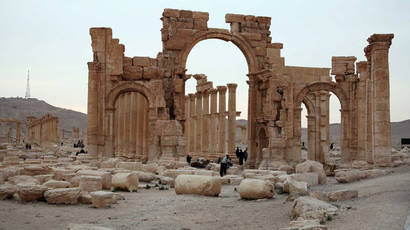
Historical city of Palmyra, Syria (Reuters / Nour Fourat)

Initial examination of the bodies revealed that some of the victims had been beheaded while other had been brutally tortured before their deaths.

The army continues to excavate the mass grave, fearing that more bodies may be found.

Engineering units continue their search for landmines and explosives as thousands were hidden by the jihadists before they were driven out of the city with the help of the Russian forces working with the Syrian Army.

Russian combat engineers arrived in Palmyra on Thursday with special robotic units to offer their expertise in detecting and dismantling mines in an area comprising over 180 hectares (445 acres), to save the UNESCO world heritage site, and help locals to return safely.

“At least 3,000 explosive devices were installed in the city,” the sapper explained to RT. He said IS created an almost invisible interconnected network, partially hidden under hard paved roads, which could blow up the entire city.

READ MORE:Palmyra booby-trap: ISIS had 3,000 bombs rigged, ready to level entire city with one click

A strategically important location, Palmyra was seized by IS jihadists in May 2015. That month, IS reportedly slaughtered 400 people, mostly women and children. At the time, Reuters reported that a video posted by IS’ supporters showed the militants entering governmental buildings in search of Syrian soldiers. They were also seen pulling down pictures of Syrian President Bashar Assad and his father, Hafez Assad.

Pakistan on the Mediterranean

March 28, 2016

Pakistan on the Mediterranean, Washington Free Beacon, March 28, 2016

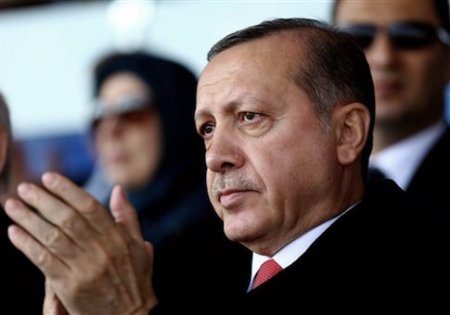
Turkish President Recep Tayyip Erdogan listens during a ceremony to commemorate the 101st anniversary of the Battle of Gallipoli in Canakkale, Turkey, Friday, March 18, 2016. Turkish President Recep Tayyip Erdogan on Friday warned Europe that it, too, could fall victim to attacks by Kurdish militants following a terror attack in Ankara that killed 37 people. (Kayhan Ozer, Presidential Press Service, Pool via AP)

Turkish President Recep Tayyip Erdogan listens during a ceremony to commemorate the 101st anniversary of the Battle of Gallipoli in Canakkale, Turkey, Friday, March 18, 2016. Turkish President Recep Tayyip Erdogan on Friday warned Europe that it, too, could fall victim to attacks by Kurdish militants following a terror attack in Ankara that killed 37 people. (Kayhan Ozer, Presidential Press Service, Pool via AP)

President Obama will welcome Erdoğan to Washington this week for a strategy meeting about countering the ISIS.

**********************

On March 18, European and Turkish diplomats signed off on a comprehensive deal on migrants pouring from Syria, Iraq, and elsewhere in the Middle East through Turkey and into the European Union. Under the terms of the deal, for every illegal migrant the E.U. returns to Turkey, Turkey would send one refugee for resettlement in Europe. Additionally, Turkey and Europe agreed to re-open discussions concerning the Muslim country’s efforts to join the E.U., and Europe agreed to allow Turks visa-free travel throughout the Schengen zone.

Two days after the deal was announced, a Turk who had joined the Islamic State blew himself up among tourists on Istanbul’s Istiklal Street, one of the city’s major shopping and tourism districts. Two days after that, ISIS suicide bombers killed dozens in two separate attacks in Brussels. ISIS called what occurred in Belgium “a drop in the sea” compared with what the terrorists have in store for “nations of disbelief.”

Turkey and its president, Recep Tayyip Erdoğan, have used the growing threat to argue that the West must better conform its policies to Turkey’s desires. In the wake of the Brussels attacks, Prime Minister Ahmet Davutoğlu chided Europe. “Europe has no partner other than Turkey to provide its regional security,” he declared, adding a subtle threat: “They should see this reality and act accordingly.” Meanwhile President Obama will welcome Erdoğan to Washington this week for a strategy meeting about countering the ISIS.

The reality Davutoğlu deliberately ignores, however, is his own country’s role in allowing ISIS to develop and metastasize. The Turkish government is adept at pulling the wool over Western officials’ eyes. Erdoğan pays lip service in meetings with European and American officials to the importance of both democracy and the Turkish partnership with the West, for example, declaring, “Secularism is the protector of all beliefs and religions.” He speaks differently to his Turkish audience. As mayor of Istanbul, he described himself as “the imam of Istanbul” and declared, “Thank God almighty, I am a servant of Shari‘a.” He is famous for his quip, “Democracy is like a streetcar. When you come to your stop, you get off.” In recent years, he has declared his goal to be to “raise a religious generation.”

This “religious generation” is flowing into the cauldron of Syria and Iraq. More than 30,000 foreign fighters from as many as 100 countries now fight with the Islamic State. The bulk of these soldiers—perhaps 90 percent—crossed into the Islamic State from Turkey. Turkish visa policy contributes to the problem. A direct correlation can be drawn between foreign fighters serving ISIS and those nationalities from which Turkish authorities require no visa or provide waivers: Several thousand more Moroccans and Tunisians, who need no visas to transit Turkey, fight with ISIS in Syria and Iraq than Algerians and Libyans, who do. If Erdoğan simply required visas in advance for those under the age of 40 coming from countries like Morocco, Tunisia, Lebanon, and Jordan—or, for that matter, from Russia, the United Kingdom, and Australia—the flood of recruits into the Islamic State would slow to a trickle.

ISIS terrorists regularly traverse the Turkish border, not only for medical care but also for rest and relaxation. Some merchants in Istanbul openly sell ISIS propaganda and promise that proceeds from their sale will benefit the group’s fight in Syria and Iraq. Smugglers peddling contraband oil to fund ISIS rely on Turkey to bring the oil to market, paying off local and perhaps even national officials of the AKP, Turkey’s governing party, along the way.

Turkey has done more than lend passive support to Islamist radicals. In his 13 years in power, Erdoğan has transformed Turkey from a Western-leaning democracy into Pakistan-on-the-Mediterranean. There was, for example,the leak of documents from the Millî İstihbarat Teşkilatı (MİT), Turkey’s intelligence service, showing Turkish support of the Nusra Front, an al Qaeda affiliate operating in Syria. And, rather than give medals to the Turkish soldiers who intercepted truckloads of weaponry destined for Syrian radicals, Erdoğan ordered their arrest.

Likewise, when Turkish journalists exposed—with photographic evidence—the transfer of munitions and other supplies from the Turkish border to ISIS, Erdoğan’s response was not to applaud the media but to seize the newspaper and arrest its editors and many of its reporters.

There is also evidence that, as Kurds fighting ISIS in Kobani in 2014 began to turn the tide against the radical group, Erdoğan and Turkish intelligence officials allowed ISIS fighters to pass through Turkey and attack Kobani from across the border, a flank the town’s largely Kurdish residents assumed was secure.

From the beginning, Erdoğan has looked at the Syrian refugee crisis not as a humanitarian tragedy but an arrow in his quiver. Inside Turkey, he has offered Sunni refugees Turkish citizenship if they settle in Turkish provinces currently dominated by the Shi‘ite offshoot Alevi sect. And, whereas the world condemns ISIS “genocide” against the Yezidi, the Yezidi who sheltered in Turkey were then victimized, again, by local AKP-run municipalities who refused to provide services offered to Sunni refugees.

Allowing Turkey to choose which refugees to send to Europe and promising to eliminate visa restrictions for Turks only rewards Erdoğan for his behavior and gives him additional leverage in his dealings with the West. Nor is this the type of policy Erdoğan’s neighbors would support. Earlier this year, King Abdullah II of Jordan told Congress, “The fact that terrorists are going to Europe is part of Turkish policy and Turkey keeps on getting a slap on the hand, but they are let off the hook.” He added that, “radicalization was being manufactured in Turkey.”

Abdullah’s message fell on deaf in ears in Washington, Brussels, Paris, and Berlin. It is Erdoğan who has the initiative as he pursues the Islamicization of Turkey and neo-Ottoman imperialism. He has built a Pakistan on the Mediterranean: an incubator of terror that markets itself as the only available partner of the West, with tragic results.

Israel Warns Citizens to Leave Turkey ASAP

March 28, 2016

Israel counter-terrorism bureau has warned Israelis to leave Turkey immediately due to a concrete terror threat.

By: Hana Levi Julian Published: March 28th, 2016

Source: The Jewish Press » » Israel Warns Citizens to Leave Turkey ASAP

Hebrew inscription above the entrance to the ancient Ahrida Synagogue in the Balat neighborhood in Istanbul. The synagogue is 500 years old but “because Jews no longer come to pray during the week” it opens only on the Sabbath, according to Turkish officials.
Photo Credit: Hana Levi Julian

Israel’s National Security Council Counter-Terrorism Bureau (NSCCTB) upgraded its travel warning for Turkey on Monday to that of a “high concrete threat.”

But the threat is not just terrorism, although that is where the current danger lies. Ultimately, there is a greater existential threat beneath.

The counter-terrorism bureau warned Israelis not to travel to the country, and told those who are already there to leave as soon as possible.

“The deadly 19 March 2016 attack in Istanbul, in which a group of Israeli tourists was hit, underscores the threat by Da’esh (ISIS) against tourist targets throughout Turkey and proves high capabilities of carrying out further attacks.

“Terrorist infrastructures in Turkey continue to advance additional attacks against tourist targets – including Israeli tourists – throughout the country,” the warning continued.

Although Da’esh has carried out most of the attacks and the outlawed PKK Kurdistan Workers’ Party terror group has carried out the rest, for Israelis, the Hamas terrorist organization presents an equal threat. The international Hamas headquarters is located in Istanbul, and yet no mention has been made of its existence despite its ongoing pledge to annihilate Israel and her Jewish citizens. Turkish President Recep Tayyip Erdogan’s ruling AK Party welcomed Hamas to the country; Erdogan is a passionate supporter of the Muslim Brotherhood which gave birth to Hamas.

This fact stands in stark contrast to Erdogan’s recent vows to “fight terrorist together with Israel,” leaving one to wonder where he really stands.

“In the wake of an NSCCTB assessment of the situation, it has been decided to upgrade the existing travel warning vis-à-vis Turkey from a basic concrete threat to a high concrete threat, and to reiterate our recommendation to the public to avoid visiting the country and – for Israelis currently in Turkey – to leave as soon as possible.”

There are many Israelis who live in Turkey. A large number are intermarried with Turkish citizens. Some are there because they simply love the beauty of the country, its music and its art. Others are there for reasons relating to their business or artistic concerns.

While it is possible to find a few imported kosher items here and there in Istanbul, one has to hunt very hard to track them down. There are no local kosher supervising agencies. The only exception is the hechsher provided by the Chief Rabbinate of Turkey on a few tourist-related items such as “Turkish Delight” candies.

For the kosher traveler, one can order La Casa packaged meals that are used by Turkish Airlines and under the hechsher of the Chief Rabbinate of Turkey. As it happens, La Casa is also a catering service and actually creates one of the best-quality meals in the industry. Jewish travelers rely on it when visiting Turkey — with the exception of one restaurant and a kosher butcher who stocks frozen foods, there are no other options.

JewishPress.com spoke exclusively with some Jews who live in the country during a recent visit to learn how Jews are faring in Turkey and to give them a voice, if possible.

Not one of the Turkish Jews with whom this news outlet spoke was willing to be identified and most were unwilling to meet in person. Of those who did agree to meet, the tension – nay, fear – was palpable. Even after assurances this reporter would not record the conversation, it took repeated promises that no names would be used before sources could relax enough to speak.

The following narrative is a mashup of the comments of several sources with whom this reporter spoke while in Turkey, in order to fulfill that promise of protecting their identities.

“We are not safe,” a Jewish source said in a theme that was repeated over and over, in every conversation with JewishPress.com. “In fact, no one is truly safe at the moment – my Muslim friends are in just as much danger right now as I am. Da’esh (ISIS) looks upon them as infidels because they drink coffee with me, we relate to each other. The PKK targets us all. Terrorism is a scourge that knows no boundaries. But for Jews there are other dangers besides anti-Semitism, which is also still rampant here.

“Those of us who still remember who and what we are, and want to remain as Jews, must consider our next steps carefully. Some have already left – many, in fact – quietly, carefully. It’s frowned upon because we are loyal Turks; but our loyalty is no longer appreciated by our government or even most of our countrymen.

“Most of the synagogues are closed. There are no kosher stores left. Our neighborhoods are gone. Those of us who want to marry have few options to find Jewish mates. Every time Israel gets involved in a war, we are blamed by extremists here, regardless of what happens — and we have nothing to do with it! But underneath, way deep, our neighbors hate us.

“Probably when those who decide to leave here, finally actually go, they will be allowed to take with them only a fraction of what they now own, if even that — just like any other Jew who has ever left anywhere else in this region.

“But Turkish Jews must soon make a choice: do we survive as Jews, or do we choose Islam?”

Putin congratulates Assad on liberating Palmyra, says Russia to aid in demining ancient city

March 28, 2016

Putin congratulates Assad on liberating Palmyra, says Russia to aid in demining ancient city

Published time: 27 Mar, 2016 15:15 Edited time: 27 Mar, 2016 21:14

Source: Putin congratulates Assad on liberating Palmyra, says Russia to aid in demining ancient city — RT News

Russian President Vladimir Putin has congratulated Syrian President Bashar Assad on retaking the ancient city of Palmyra from Islamic State terrorists. Putin stressed the importance of preserving the UNESCO World Heritage Site.
Read more

A view of the central part of modern Palmyra. © Mikhail Voskresenskiy

In a telephone conversation with the Syrian president, Vladimir Putin congratulated his counterpart on retaking the city of Palmyra from terrorists and noted the importance of preserving this unique historic site for world culture,” Kremlin spokesman Dmitry Peskov said Sunday.

Putin once again stressed that despite the withdrawal of the bulk of Russia’s military contingent from Syria, Russia’s forces will continue to help the Syrian authorities in their anti-terrorist efforts,” he added.

“Assad highly valued the help Russian air forces have provided and underlined that such successes as regaining Palmyra would have been impossible without Russia’s support,” Peskov said.

On Sunday, the Syrian Army retook the historic city of Palmyra from Islamic State (IS, formerly ISIS/ISIL), which had occupied it since last May. Russian warplanes were providing heavy support from the air.

The Russian Air Force has made 40 flights over the area of the Syrian city of Palmyra in the last 24 hours, hitting 117 targets and killing over 80 militants, the Russian Center for Reconciliation in Syria said Sunday.

Putin also held a phone call with UNESCO head Irina Bokova on Sunday. Peskov said Putin told Bokova that “representatives of the Russian contingent will participate in the demining of the ancient city.

READ MORE: Palmyra ‘not just an archaeological site but a symbol of Syria’ – UNESCO

The two agreed that UNESCO, Russia and Syria will soon take the necessary steps to evaluate the damage to the historic site and map out a “plan of restoring what can still be restored,” Peskov added.

According to the Kremlin spokesman, Bokova thanked Putin for Russia’s contribution and confirmed UNESCO’s readiness to cooperate.

While summarizing the results of Russia’s five-month anti-terror campaign in Syria earlier in March, Putin expressed hope that Palmyra would soon be returned to the Syrian people. On March 18, Russia’s military said that the groundwork had been laid for defeating IS in Palmyra.

Read more

© Mikhail Voskresenskiy

At that time, the Syrian Army had already taken control of all dominant heights and major roads around the city, and the terrorists’ logistical support had also been cut off, according to Sergey Rudskoy, chief of the Russian General Staff’s main operations department.

Palmyra shows Damascus strategy more effective than US-led efforts in Syria – Assad

Calling the Syrian Army’s liberation of Palmyra an “important achievement,” Assad told a delegation of French parliamentarians visiting Syria on Sunday that the victory is “new evidence” that the strategy being pursued by Damascus and its allies is effective, according SANA, Syria’s state news agency.

He also pointed out that the strategy’s success is especially apparent when compared to that of the US-led coalition, which involves more than 60 countries, but has achieved very little since its establishment one and a half years ago, for which he blamed a lack of seriousness in fighting terrorism.

The US-led coalition launched its air campaign in Syria in September of 2014 without permission from the Syrian government. Damascus has repeatedly called the intervention ineffective, saying it has failed to weaken terrorists in the region.


Before our eyes: Syria’s Battle for Palmyra in latest RT reports (VIDEOS)

March 26, 2016

Before our eyes: Syria’s Battle for Palmyra in latest RT reports (VIDEOS)

Published time: 26 Mar, 2016 06:36

Source: Before our eyes: Syria’s Battle for Palmyra in latest RT reports (VIDEOS) — RT News

© Joseph Eid / AFP

Syrian army is close to regaining full control of the ancient city of Palmyra. Check out some of RT’s exclusive footage and battleground reports on how Islamic State (IS, previously ISIS/ISIL) militants are being pushed from the UNESCO heritage site.

Fierce fighting rages on

RT’s agency Ruptly’s latest video footage shows units of the Syrian Arab Army (SAA) battling IS militants in and around Palmyra on Friday. The historical ruins of Palmyra are clearly visible from the position of Syrian mortar crews.

READ MORE: Syrian Army retakes historic citadel from ISIS continuing advance on Palmyra – state media

In the latest update, Syria state TV said that troops have regained control of the Syriatel hill near Palmyra’s castle and are a step closer to retaking the whole city, which has been under Islamic State control since last May.

Russia helping with air sorties

Russian warplanes offered crucial support to the Syrian forces on the ground this week by carrying out 41 sorties and destroying 146 terrorist targets from Tuesday to Thursday, Russia’s Defense Ministry said.

READ MORE: Russian Air Force carried out 41 sorties to support Syrian army’s Palmyra offensive

One of the stories that stood out was a report on Russian Special Operations Forces officer who called a strike onto himself when he was compromised and surrounded by IS militants near Palmyra. Thanks to the brave actions of this officer and others, Russian military planes have been able to pinpoint IS targets with precision – something absolutely crucial in the circumstances.

ISIS pillage of Palmyra

A Russian TV crew captured a striking footage of Palmyra revealing the damage endured under IS occupation. The iconic 2,000-year-old Arch of Triumph was blown up by the jihadists in October 2015.

READ MORE: Striking drone footage shows what remains of Palmyra after ISIS pillage

Good win or bad win? US undecided

The US government still seems on the fence on whether or not the ancient city should be liberated from the hands of Islamic State by Syrian President Bashar Assad’s forces. Only when pressed by reporters did the State Department call IS “probably a greater evil” than President Assad.

READ MORE: US State Dept fails to say if ISIS must be pushed out of Palmyra or not

Bomb traps danger 

The Syrian army is very close to retaking control of the whole city, but it fears that IS militants have hidden bombs at ancient sites. Before more information can be gathered, the troops will not know when to expect a full-scale offensive against IS.

IS has used this tactic in the past. Also, the extremist group has carried out brutal executions at historical parts of the city by binding individuals to ancient columns and blowing them up.

RT crews remain on battlefront

The RT crew was one of the few that filmed the fighting in Palmyra, offering an exclusive look into the progress of Syrian soldiers in pushing out Islamic State fighters.

READ MORE: RT EXCLUSIVE: ISIS position in Palmyra up-close, RT 1st intl TV crew to follow Syrian Army assault

The conditions they faced while on the ground were extremely dangerous. RT’s Lizzie Phelan and her team risked their lives to report from a position with direct sight of Islamic State militants.

Just meters from where the crew was filming, a mortar landed next to their car. Shrapnel injured one of the Syrian Army soldiers.

Palestinian Campuses “More Hamas than Hamas”

March 25, 2016

Palestinian Campuses “More Hamas than Hamas”

by Khaled Abu Toameh March 25, 2016 at 5:00 am

Source: Palestinian Campuses “More Hamas than Hamas”

  • While the anti-Israel activists are busy protesting against Israel on Western campuses, Palestinian students and professors are persecuted by their own Palestinian Authority (PA) and Hamas governments.
  • Let us redefine “pro-Palestinian.” Instead of bashing Israel, real pro-Palestinians will demand democracy for those they champion, and scream for public freedoms for Palestinians under the PA and Hamas regimes, which have always smashed dissent with an iron fist.
  • PA security forces systematically target students and academics under various pretexts. Hundreds of students have been rounded up. Many remain in detention without the possibility of seeing a lawyer or a family member.
  • Palestinians on campuses in the West Bank and the Gaza Strip have once again been reminded that they remain as far as ever from achieving a state that would look any different from the other Arab dictatorships in the region. The campus incidents, which have hardly caught the attention of the international media and anti-Israel activists in the West, also expose the media double standard about human rights violations.
  • In the first case of its kind under the PA, Kadoori University in Tulkarem suspended a student who hugged his fiancée in public.

These are the days when everything is backwards. The “pro-Palestinian” activists on university campuses throughout the Western world have gotten into the spirit: Palestinian students and academics in the West Bank and Gaza Strip endure daily harassment by the Palestinian Authority (PA) and Hamas, because all that gets the activists going are “Israeli abuses.”

Apparently, today, to be “pro-Palestinian” one has to be “anti-Israel.”

For the self-appointed advocates of the Palestinians at Western university campuses, the Palestinian issue is nothing but a vehicle for spewing hatred toward Israel. In good, backwards form, Israel is castigated, and the PA and Hamas are free to abuse their own people.

It seems that in the view of the anti-Israel folks, the Palestinians should not even hope for human rights under the Palestinian regimes.

So while the anti-Israel activists are busy protesting against Israel on Western campuses, Palestinian students and professors are left to be persecuted by their own governments.

Instead of campaigning for reform and democracy in the West Bank and Gaza, these activists spend precious energy trying to take down Israel. The Palestinian students and academics are left to their own devices.

Palestinians living under the Palestinian Authority and Hamas suffer an abysmal level of freedom of expression — and always have. This is the grim reality that the international community and protesting students prefer to ignore. For them, human rights violations must have a “made in Israel” sticker on them.

Here is a suggestion: Let us redefine “pro-Palestinian.” Instead of bashing Israel, the real pro-Palestinians will reveal themselves by demanding democracy for those they champion. True pro-Palestinian activists will scream for public freedoms for the Palestinians under the PA and Hamas regimes, which have always smashed dissent with an iron fist.

In the past few days, Palestinians on campuses in the West Bank and the Gaza Strip have once again been reminded that they remain as far as ever from achieving a state that would look any different from the other Arab dictatorships in the region. The campus incidents, which have hardly caught the attention of the international media and anti-Israel activists in the West, also expose the media double standard about human rights violations in the territories.

In the most recent case, Hamas security guards detained a number of students at Palestine University in the Gaza Strip who protested against the administration’s refusal to allow them to sit for examinations because they had not paid tuition in full.

The students complained that the guards conducted “humiliating” body searches and confiscated their mobile phones. Some said they were physically assaulted.

In another high-profile incident in the Gaza Strip last week, The Islamic University suspended UK-educated Professor Salah Jadallah for criticizing Hamas and the university administration on Facebook. The move drew sharp condemnation from many Palestinian students and academics, who took to social media to voice their fury over the suspension.

Professor Jadallah’s suspension is far from unusual in the Hamas-ruled Gaza Strip, where students, journalists and social media activists have repeatedly fallen victim to the Islamist movement’s harsh clampdowns.

A founder of Hamas in northern Gaza, Professor Jadallah was until recently considered within Hamas’s inner circle. His scathing remarks on Hamas, which he posted on his Facebook page, have turned him into a persona non grata on campus and he is being treated as a “fifth column” by his erstwhile Hamas colleagues. Professor Jadallah is being targeted: what, one might ask, is happening to ordinary Palestinians?

Campuses in the West Bank are faring no better. The Palestinian Authority’s security forces systematically target students and academics under various pretexts. Hundreds of students have been rounded up by these security forces in recent years as part of a crackdown on critics and Hamas “supporters.” Many of the students remain in detention without the possibility of seeing a lawyer or a family member.

Just this week, Palestinian security forces arrested four more university students and teachers: Izaddin Zaitwai, Ehab Ashour, Zuhdi Kawarik and Awni Fares.

It is not only political critics of the PA and Hamas, however, who are of interest to the security forces in Palestinian regimes.

In the first case of its kind under the Palestinian Authority, the Kadoori University in Tulkarem suspended a student who hugged his fiancée in public after offering her a wedding ring. The student, whose identity was not revealed, was accused of “immodest conduct” and is facing a disciplinary hearing. A university spokesman accused the “hugging” student of “slandering” the university’s reputation and defended the punishment.

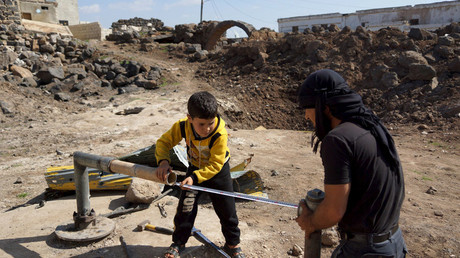
Left: Hamas supporters are shown in a video screenshot marching during a student council election rally at Bir Zeit University, near Ramallah, on April 20, 2015. Right: Kadoori University in Tulkarem this month suspended a student who hugged his fiancé in public. The student was accused of “immodest conduct” and is facing a disciplinary hearing.
The decision to suspend the student sparked a social media storm, with many Palestinians accusing the Palestinian Authority and Kadoori University of seeking to be “more Hamas than Hamas.”

If the putative champions of the Palestinians in the West continue to disregard the trampling of Palestinian human rights by the PA and Hamas, there may not be any Palestinians left to champion.

Khaled Abu Toameh, an award-winning journalist, is based in Jerusalem.

New Syrian constitution by August: Russia, US push for political solutions at Moscow talks

March 25, 2016

New Syrian constitution by August: Russia, US push for political solutions at Moscow talks

Published time: 25 Mar, 2016 03:16

Source: New Syrian constitution by August: Russia, US push for political solutions at Moscow talks — RT News

Russian Foreign Minister Sergei Lavrov (R) and U.S. Secretary of State John Kerry shake hands following a news conference at the Kremlin in Moscow, Russia, March 24, 2016. © Andrew Harnik / Reuters

Russia’s Sergey Lavrov and the US’ John Kerry agreed to push for a political transition in Syria by having a new draft constitution ready by August. The Kremlin-hosted talks revealed a softer, more cooperative tone on Syria, as well as Ukraine.

The discussions lasted over four hours and involved Russian President Vladimir Putin, Russian Foreign Minister Sergey Lavrov, US Secretary of State John Kerry, and US Ambassador to Russia John F. Tefft.

“We agreed on a target schedule for establishing a framework for a political transition [in Syria] and also a draft constitution, both of which we targeted by August,” Kerry told journalists at a joint news conference with Lavrov following the meeting.

Lavrov also said that both parties had agreed to use their influence to push the Syrian government to engage in “direct talks” with the opposition in order to accelerate discussions on a political transition that could help end Syria’s civil war.

“As the immediate task, we have agreed to push for the soonest start of direct talks between the government delegations and the whole spectrum of the opposition” that will help to create “a transitional governance structure” for Syria, Lavrov said.

Read more

Civilians fix damaged water pipes in the rebel held al-Ghariyah al-Gharbiyah town, in Deraa province, Syria February 28, 2016. © Alaa Al-Faqir

The Russian FM pointed out that there are still a number of issues that Moscow and Washington don’t agree on, but maintained that this would not prevent them from cooperating “on an equal footing” on the problems on which they have found common ground.

“The US has plenty of partners who do not agree with them… It does not mean that the differences on one particular issue should stop them from talking at all,” Lavrov said.

At the start of the talks, Kerry told Lavrov that the partial truce in Syria was working and reducing the level of violence in the country. “It’s fair to say three weeks ago there were very, very few people who believed a cessation of hostilities was possible in Syria,” Kerry said. “The result of that work has produced some progress. There has been a fragile nevertheless beneficial reduction in violence.”

The tone of Russia-US relations appeared softer than it has been for some time on many issues, including Syria and the conflict in eastern Ukraine, as both parties demonstrated an apparent desire to improve bilateral relations.

Kerry said that the productive eleven-month collaboration of Russian cosmonaut Mikhail Kornienko and American astronaut Scott Kelly on the International Space Station (ISS) should serve as an example for cooperation between the two world powers.

“When they were telling me about how they spent their time in space, they highlighted that their close cooperation demonstrated not only what the two astronauts could do, but what two countries could achieve together as well,” Kerry said at the press conference.

Read more

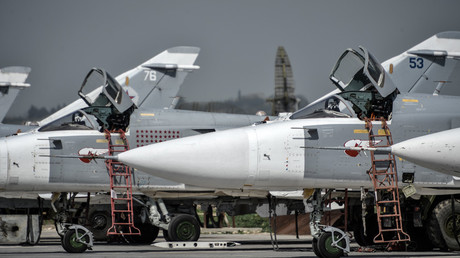
Russian Su-24 tactical bombers at the Hmeimim airbase in the Latakia Governorate of Syria. © Ramil Sitdikov

As an example, Lavrov noted that Russian and US experts could hold joint consultations to discuss the most effective ways to fight cybercrime.

When it came to Ukraine, both sides agreed that the Minsk Accords must be fully implemented.

“We have indeed pledged to ensure that Donbass, that the self-proclaimed republics of Donetsk and Lugansk [DPR and LPR], implement what they and their representatives signed under in Minsk,” Lavrov said, while calling on his US counterpart to ensure that similar pressure is put on Kiev.

Kerry reiterated that once the agreement is “fully implemented,” the US will be ready to roll back sanctions on Russia.

Meanwhile, Lavrov confirmed that Moscow is closely monitoring the health of Ukrainian national Nadezhda Savchenko. “We have confirmed that Savchenko’s health condition, that many try to speculate on, presents no concerns,” Lavrov said. “She is under constant monitoring of Russian doctors.”

Savchenko, a Ukrainian Air Force officer detained in Russia in 2014, was found guilty of murdering two Russian journalists near Lugansk in eastern Ukraine, and of illegally crossing the Russian border. The decision was made by a court in the southern Russian town of Donetsk on Monday.

Kerry, who has called for Savchenko to be sent back to Ukraine, told reporters that Putin indicated that at some point “we will be able to address the issue of Savchenko.”

Following the talks in Moscow, Aleksey Pushkov, the chairman of the Parliamentary Committee for International Relations, noted that Russia and the US are beginning to develop a closer relationship based on America’s pressing needs, which are forcing the US to forget about its previous goal to isolate Russia.

“About Kerry’s visit: there is nothing more powerful in politics than need. Under its influence, forgetting about isolating Russia, the US has begun to move,” Pushkov tweeted.

ISIS, oil & Turkey: RT films trove of jihadist docs detailing illegal trade with Ankara (EXCLUSIVE)

March 24, 2016

ISIS, oil & Turkey: RT films trove of jihadist docs detailing illegal trade with Ankara (EXCLUSIVE)

Published time: 24 Mar, 2016 03:00 Edited time: 24 Mar, 2016 05:12

Source: ISIS, oil & Turkey: RT films trove of jihadist docs detailing illegal trade with Ankara (EXCLUSIVE) — RT News

Islamic State documents, including invoices, which militants abandoned while retreating in haste. / RT

An RT Documentary crew filming in northern Syria has seen Islamic State (IS, ISIS/ISIL) documents abandoned by retreating terrorists and found by the Kurds that, along with captured IS recruits, provide a stunning insight into the alleged Turkey-IS oil trade links.

Shortly after the outbreak of the Syrian war, IS became a game-changer in Iraq and, in particular, Syria. Beheadings on camera, mass killings, and enslavement, as well as apparent connections to the Paris and Brussels attacks had become synonymous with the terror group, giving it wide publicity.

Running a viable militant organization with such remarkable capabilities would be impossible without some logistical and financial support from the outside.

Turkey, which has been actively engaged in the Syrian war since the outset, has repeatedly denied claims that it is aiding IS. However, while Ankara insists that it is the jihadist group’s sworn enemy, facts on the ground often tell a different story.

RT has spoken to several witnesses who were involved in Islamic State’s trade activities and accessed the terror group’s documents, which provide insight into how and where foreign militants enter Syria to join the terrorist “state.”

Abandoned buildings used by ISIS militants in northern Syria.

Detailed oil invoices

The RT Documentary team did most of its filming in the town of Shaddadi, located in the Syrian province Hasakah, which has been partly overrun by IS jihadists. Following the liberation of Shaddadi, which is home to some 10,000 people, RT filmed Kurdish soldiers walking around what used to be the homes of IS fighters and examining piles documents that had been left behind.

Some of the files seized at the scene turned out to be detailed invoices used by IS to calculate daily revenues from their oil fields and refineries, as well as the amount of oil extracted there. All the documents had Islamic State’s symbol at the top.

Example of an Islamic State invoice specifying the quantity of oil sold.

The files showed that “IS has kept very professional records of their oil business,” said the author of the new RT Documentary on Islamic State filmed in northern Syria, who chose to remain anonymous for security reasons.

Every invoice included the name of the driver, the vehicle type driven, and the weight of the truck, both full and empty, as well as the agreed upon price and invoice number.

One of the discovered invoices dated 11 January, 2016, says that IS had extracted some 1,925 barrels of oil from Kabibah oil field and sold it for $38,342.

IS oil goes to Turkey – IS fighters come via Turkey

RT spoke to local residents who had been forced to work in the IS oil industry about what it was like working at the terrorist-controlled oil refinery and where the extracted oil was sold.

The locals attested that “the extracted oil was delivered to an oil refinery, where it was converted into gasoline, gas and other petroleum products. Then the refined product was sold,” the RT documentary’s author said. “Then intermediaries from Raqqa and Allepo arrived to pick up the oil and often mentioned Turkey.”

Important information revealing the connection between IS and Turkey was provided by a Turkish militant previously captured by the Kurds. The IS recruit said on camera that the terrorist group does, in fact, sell oil to Turkey.

“Without even us asking the fighter directly, he admitted that the reason why it was so easy for him to cross the Turkish border and join IS was, in part, due to the fact that Turkey also benefited. When asked how, he said that Turkey gets something out of it – something such as oil.”

RT was also able to speak with a Kurdish soldier in the area, who displayed a collection of passports he had gathered from the dead bodies of IS fighters. The documentary crew’s exclusive footage shows the documents of several jihadists who had come from all over the world, including countries such as Bahrain, Libya, Kazakhstan, Russia, Tunisia, and Turkey.

Passports belonging to Islamic State fighters bearing stamps from Istanbul, Turkey.

Most of these foreign fighters seemed to have come via Turkey, as all of their passports contained entry stamps issued at Turkish border checkpoints.

A YPG member also provided some photos that were retrieved from a USB drive allegedly belonging to future IS militants. One photo showed three men standing in front of the Obelisk of Theodosius, known today as Sultanahmet Meydani, a famous landmark in Istanbul. The next photo showed the three among other fellow militants somewhere in Syria – all armed and equipped.

One of the IS fighters that RT interviewed revealed that there had been no border guards waiting for them when they crossed from Turkey into Syria.

Islamist propaganda printed in Istanbul

Turkey’s logistical support for extremist fighters trying to overthrow Syrian President Bashar Assad’s government, or at least its non-interference with their cross-border movements, has been widely reported, but little has been said about the ideological support coming from Turkish soil.

Among the documents left behind by the terrorists at an IS-run hospital, RT’s crew discovered an Islamist propaganda leaflet printed in Arabic titled “How to wage a perfect battle against the criminal Assad’s regime,” which described ways to combat the Syrian government.

Curiously, the brochure was printed in Turkey, with the cover openly displaying the postal address and phone number of an Istanbul printing house, supplemented by Facebook contacts.

Cover of an Islamist, anti-Assad propaganda leaflet printed in Istanbul, Turkey.

“Many of the people spoke about the connection with Turkey. Turkey is the direct neighbor of IS. If it was willing to close the ‘connection’ between Turkey and IS, the terrorist organization could no longer survive,” the author of the RT documentary said, recalling interviews with Kurds and captured IS recruits. “If IS would stop receiving weapons, new recruits, food, and other help from Turkey, then IS would lose a big sponsor.”

Turkey benefits from Islamic State because the terrorist group provides it with cheap oil and is fighting both Syria’s government and Kurdish population. This is an opinion shared by both Kurds and their mortal enemies from the jihadist organization. The IS documents obtained by RT may provide additional evidence revealing the dirty game being played by the government of Turkish President Recep Tayyip Erdogan in Syria.


