Posted tagged ‘Media and Israel’

Mainstream Media Distorts Reality on Israeli Settlements

April 4, 2017

Mainstream Media Distorts Reality on Israeli Settlements, Front Page MagazineGideon Israel, April 4, 2017

Reprinted from en.mida.org.il.

Yesterday, Israel’s government approved construction of a new settlement in Judea and Samaria (aka West Bank).  Media outlets CNN, BBC and the NY Times wasted no time publishing stories that distort the truth, if not outright lie.  These mistakes range from offering a false impression of reality to actually getting facts wrong. Such elementary mistakes expose the disconnect between mainstream media outlets and basic truths of the Israel-Palestinian conflict.

For example, CNN wrote that this is Israel’s ‘first new settlement in Palestinian territory in more than 20 years’. The first part of the sentence is misleading and the second part is false.  Israel has not built new communities in Judea and Samaria because it has given numerous chances for the Palestinian leadership to come to the table and reach an agreement. However, the Palestinians continually refused.  Instead, the article leads the reader to believe that this is a new policy meant to stifle any chance for a peace agreement.

The second part of the statement asserts that Israel is building in Palestinian territory. This is because CNN incorrectly believes that Israel has no legal rights to the West Bank. Israel’s legal rights to controlling the West Bank and building communities there under international law have been affirmed  time and again by respected authorities on the subject, including: Professor Eugene Rostow, Professor Julius Stone , Professor Eugene Kontorovich, Professor Avi Bell and more.

BBC wrote that this new settlement is being built after ‘the largest settlement, Amona, was evacuated by police last month.’  Amona, far from being the largest settlement, was probably one of the smallest settlements existing in the West Bank, approximately 40 families. Yet, this gives the impression that even the largest settlement in the West Bank was evacuated, and thus why not evacuate the entire West Bank.

And the New York Times topped it off by cherry picking statements to make it look as if Israel was disrespecting the Trump Administration.  Author of the article, Isabel Kershner, who has been accused of anti-Israel bias in the past, writes that Israel is building settlements despite President Trump’s request ‘to hold off on settlement activity’. Then she writes that ‘the United States has long considered the settlements an obstacle to peace.’ Those two statements are mixing apples with oranges.

The Trump Administration, while suggesting that Israel hold off on settlements for a little bit, explicitly said in a press release that they ‘don’t believe the existence of settlements is an impediment to peace’. This was a clear departure from past US policy, especially under the Obama Administration, yet Kershner ignores that, and prefers to think that Barack Obama is still president.

Kershner also ponders whether Netanyahu’s announcement was potentially a ‘provocative move to scuttle any prospect of a revival of peace talks’. She blatantly disregards the past eight years where Mahmoud Abbas refused to negotiate with the Israelis, and the past 25 years where Palestinian leaders have continually refused all peace deals offered to them. Even more, Kershner ignores the fact that building a new settlement was promised to the residents of Amona before the settlement was evacuated. She should know this, she lives in Israel.

Since the mainstream media continues its anti-Israel bias, here are some important facts to know about the settlements.

  • Jordan illegally occupied the West Bank in 1948, a move strongly condemned by both the Russian and US Ambassadors to the U.N at the time.  Besides for Great Britain and India, no other country recognized Jordan’s rights to the territory.  Thus, when Israel conquered the West Bank in 1967 after Jordan decided to attack Israel at the behest of other Arab leaders, Israel was merely reclaiming the territory that had been granted to them under the British Mandate prior to 1948.
  • Under the Mandate for Palestine, Article 25, it is clear that the eastern border of the future Jewish state would be the Jordan river, many years prior to the imaginary ‘green line’ which has no legal status.
  • The majority of the communities in the West Bank were built on government property, and in the few cases where a mistake was made and a settlement was established on private property, the Israeli government worked to ameliorate the situation by either offering compensation to the owner of the land, or in the extreme case of Amona, the settlement was dismantled.
  • According to statistics from January, 2017, there are approximately 421,000 Israelis living in Judea and Samaria. While many envision the makeup of the population as religious extremists, in reality, the population is made up of 1/3 religious Zionists, 1/3 secular Israelis, 1/3 ultra orthodox Jews.
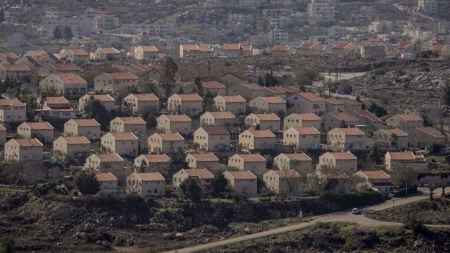
  • Israel has approximately 150 ‘settlements’ in the West Bank ranging from 100 people to around 70,000 people.  The term ‘settlements’ actually distorts reality as one imagines three tents on a hilltop. In reality, similar to any other country in the world,  Israeli citizens residing in Judea and Samaria live in areas that could be defined as villages, towns, boroughs and cities. For example, Maale Adumim, called a ‘settlement’ by the media and Arab countries, has a population of approximately 42,000 people, comparable to the populations of Atlantic City and Fort Lee located in NJ, and both would not be mistaken for a settlement.  Modiin Illit, with a population exceeding 65,000, is comparable to the population of Palo Alto, California.  Givaat Zeev, with a population exceeding 25,000, is slightly less than the population of Monterey, California, which would never be mistaken for a ‘settlement’ or an ‘outpost’.
  • The reasons for living in Judea and Samaria are varied. Some live there because of ideological reasons, others live there for the countryside atmosphere it provides, and some live there because housing is inexpensive and in close proximity to major cities such as Jerusalem and Tel Aviv. For example, more than 150,000 residents living in Judea are within a 15 minute drive of Jerusalem.  Just as some people choose to live in Hoboken, NJ, so they can be close to NY without paying Manhattan prices, the same applies for Israelis to living in Judea and Samaria.
  • Judea and Samaria is home to one of Israel’s eight universities – Ariel University. There are approximately 15,000 students (Jewish and Arab) that attend the University, comparable to the size of Duke University in North Carolina.
  • There are approximately 11,000 Arabs who work in over 800 factories spanning 14 industrial parks in industry and agriculture throughout Israeli controlled parts of the West Bank.  Salaries of Arabs working in these factories are more than double the average salary of Palestinians working in the Palestinian controlled areas, and according to a ruling by Israel’s Supreme Court, they are entitled to pension benefits just like Israelis.
  • The Palestinians have benefited tremendously since Israel took over the West Bank in 1967.  From 1967 until the signing of the Oslo Accords, Palestinian life expectancy increased from 56 to 68 years and infant mortality dropped from 13 to 5 deaths for every 1000 infants. Israel’s presence in the West Bank led to a massive overhaul of the infrastructure bringing electricity, sewage and increased amounts of water to Arab towns.
  • Israeli companies with factories in the West Bank have been targeted by the BDS movement, however the Arab workers are the ones who suffer most from these boycotts.  Sodastream was targeted by the BDS because of their West Bank factory, and eventually it moved its factory outside the West Bank.  As a result, almost 600 Palestinian workers were laid off.
  • Judea and Samaria has about one million visitors each year, and more than 80% of the events in the bible happened in the area of Judea and Samaria.

Media Misfeasance Exposed in “Eyeless in Gaza” Documentary

March 4, 2017

Media Misfeasance Exposed in “Eyeless in Gaza” Documentary, Investigative Project on Terrorism, Noah Beck, March 3, 2017

2021

Hamas operatives burst into the Associated Press (AP) Gaza bureau during the 2014 war with Israel, angered by a picture shot by an AP photographer. Gunmen threatened the AP staff, which never reported the incident.

The incident shows that Hamas can control what journalists report, and what they don’t, former AP Middle East reporter Matti Friedman says in a new documentary, “Eyeless in Gaza.”

Producer Robert Magid’s 50-minute film, which is screening via pay-per-view online, examines the flaws and challenges in reporting on the 50-day war.

Magid said he wanted to “set the record straight and provide context,” after being appalled at news coverage that ignored Hamas’ practice of launching rockets from civilian areas. That omission allowed the media to push a false narrative that “Israel was callous in their bombing.”

The sullied moral image of Israel that emerged from the media’s biased coverage sparked public outrage and anti-Semitism. “Muslims will crush the Jews as they did in Khyber 14 centuries ago,” protestors in the film shout. Another says: “I see the Jews in Israel as total Nazis.”

Reporters routinely failed to show the history leading up to the conflict or how Hamas instigated it. Magid provides viewers with some brief historical context: Israel expelled 10,000 of its own citizens from the Gaza Strip in 2005 and offered the Palestinians their first chance at self-rule. But Hamas took over the territory and turned it into an Islamist terror state, rather than a model for responsible self-rule and peaceful coexistence with Israel.

Viewers see how attack tunnels exemplify Hamas’s policy of diverting public resources to pursue terrorism. Israel allows high-quality cement into Gaza in response to the humanitarian need to rebuild damaged buildings, only to discover the same cement being used to build massive underground tunnels whose only purpose is to target Israelis. Each tunnel costs about $3 million, and an Israeli military spokesman interviewed in the film estimates $100 million in resources were diverted.

Despite Israel’s unprecedented efforts to minimize Gaza’s civilian casualties, the film shows how Hamas works to maximize them.

“The Israeli army called me, they asked me to leave Al-Sajaeya,” says one Gazan. “We stayed at home because Al Aksa and Al Quds [Hamas] radio stations told us ‘Don’t leave your homes, it’s rumors.’ We remained in our homes, but when we saw the bombs pouring on us, we miraculously got out…Five of my brothers’ sons were killed, and the houses destroyed.”

The Israel Defense Forces (IDF) went to great lengths to spare civilians, issuing warnings by leaflets, SMS messages, the “roof knock” technique, and social media. Col. Richard Kemp, the former commander of British forces in Afghanistan, notes in the film “the immense efforts that the IDF took when fighting in this very challenging environment, to minimize the number of civilian deaths [even though] Hamas used human shields virtually constantly. They deliberately site their weapon systems, and their fighters among the civilian population.”

“Eyeless in Gaza” shows the underreported perspective of Israelis trying to survive Hamas rocket attacks, including a huge explosion on a populated beach, and people racing to shelters with just 15 seconds to reach them. Israel’s Iron Dome defense system is no silver bullet: “10 percent [of] rockets…could hit you,” notes Tal Inbar, head of the Space Research Center at the Fisher Institute for Air and Space Strategic Studies in Herzliya. “And…if the enemy is firing thousands of rockets…10 percent…is quite a lot.” Even intercepted rockets can still cause shock and injuries from falling shrapnel.

Kneejerk global condemnations of Israel triggered by a lopsided casualty count resulted, at least in part, from the media’s failure to cover the true nature of the mass casualty-threat facing Israel. Hamas launched thousands of rockets at schools, hospitals, and densely packed Israeli neighborhoods, demonstrating the group’s intent to kill many thousands of civilians. Hamas failed only because Israel had invested billions in a rocket defense system and Israelis regularly scurried to bomb shelters despite the disruption to their lives.

Former Russia Today correspondent Harry Fear, who calls himself “one of the most Palestinian-sympathizing journalists in the world,” notes that Palestinians “rejected cease fires, which could have saved…thousands of lives…”

Fearing violent retribution from Hamas, journalists engaged in collective self-censorship, he told Magid. Just about all foreign correspondents witnessed Palestinian war crimes without reporting them. “Rockets were being fired consistently from densely populated areas,” he said. He was expelled from Gaza after reporting on Twitter such fire.

An Indian television crew aired footage of Palestinian terrorists firing rockets from civilian areas only after it had left Gaza. Its report, shown in “Eyeless in Gaza,” notes that the rocket fire “will obviously have serious consequences… for those who live here, should Israel choose to retaliate.”

Hamas’ intimidation of journalists produces flawed, misleading coverage, as Friedman elaborates: “Most of the work of the international media in Gaza is done not by western journalists … but by local Palestinians from Gaza: fixers, translators, reporters, photographers … their families are in Gaza, and they’re not going to get Hamas angry. And because these people largely shape the coverage, that ends up having a very significant effect.”

Fear decries the limits to free speech in Gaza, citing a 2014 poll indicating that 80 percent of Palestinian journalists exercise self-censorship for fear of retribution.

Similarly, Friedman says in the film, “I understand why reporters censor themselves … in Gaza. What I don’t understand is why the news organizations haven’t made clear the restrictions under which they operate in Gaza, so that news consumers can understand that they are seeing a warped picture.”

The intimidation can be worse for Palestinian journalists. Ayman Al Aloul describes his imprisonment and torture by Hamas after he refused to stop writing about Gaza’s extreme poverty, and Hamas’ failed economic policies. “They started beating me and cursing at me. When I went back inside [my cell], I feared someone would be sent to end my life… I was scared they would say, ‘He died from cold or hunger.’ I was really scared.”

While the Western media and United Nations Human Rights Council obsessively harp on any alleged Israeli human rights violation, it completely ignored Al Aloul’s case.

Conflicts that receive far less media attention than the Israeli-Palestinian conflict, despite being exponentially bloodier, also have been neglected, thanks to the media’s obsession with Israel. The film notes that, since 2011, nearly half a million people have been killed or wounded in Syria, compared to about 2,000 in Gaza. “160,000 Palestinians lived in Yarmouk prior to 2011. [Because of] Syrian…bombing and starvation policies, there are now 18,000.”

Thus, campus protesters who routinely accuse Israel of “genocide” and “massacre” are either grossly misinformed (at least in part because of media bias) or simply anti-Semitic.

UN Relief and Works Agency (UNRWA) spokesperson Chris Gunness acknowledges a double standard by the media and Arab governments’ in terms of attention given to the plight of Palestinians in Syria versus Gaza. But when asked why UNRWA failed to condemn Egypt’s security-motivated destruction of thousands of homes along the Gaza border, he says only, “we are not mandated to work in Egypt.”

Friedman notes, “If Israel did 1 percent of that, of course the international community would be in an uproar. I think people aren’t interested in Arabs in general, or what Arabs do to each other. I think they’re basically interested … in the actions of Jews. And that’s why Egypt can destroy entire neighborhoods [bordering] Gaza, as it did recently, and the world kind of yawns. That I think proves that … the story being told here by the international media is not a story about current events. It’s a story about something else. It’s a morality play starring a familiar villain [the Jews].”

This hostile paradigm explains the failure of Western media to report on the anti-Semitic nature of the Hamas charter, which blames all of the world’s woes – including every major war and revolution, and even the Holocaust – on the Jews, while calling for their annihilation, Friedman says in “Eyeless in Gaza.”

“If you say that Hamas is anti-Semitic, if you quote their charter, if you look too closely at exactly what their goals are, and who they are, then it would disrupt the narrative, according to which Israel is an aggressor, and the Palestinians are passive victims who have reasonable goals,” Friedman says.

Nevertheless, the media’s failure to include critical facts like those exposed in “Eyeless in Gaza” encourages terrorist groups like Hamas to embrace tactics intended to maximize civilian casualties. The resulting global condemnation of Israel for Gazan deaths only encourages Hamas to jeopardize civilians in the next round of violence.

As “Eyeless in Gaza” highlights, the kind of journalism that covered the 2014 war in Gaza distorted the truth, abetted a terrorist group, and strengthened the party most responsible for Gaza’s misery and ongoing hostilities with Israel. For more on the film, click here.

The Left Lost Its Logic On Israel

January 24, 2017

The Left Lost Its Logic On Israel, Investigative Project on Terrorism, Noah Beck, January 24, 2017

flagkicker

Support for Israel among Democrats has plummeted in recent years, a new Pew poll shows, with about as many – 31 percent – saying they sympathize more with the Palestinians than with Israel, which garnered 33 percent support.

By contrast, 74 percent of Republicans surveyed sympathize more with the Jewish state. That is the widest partisan gap since 1978.

A similar poll last year found a deep divide within the party, with conservative and moderate Democrats favoring Israel over the Palestinians by 53-19 percent.

This trend has accelerated during President Barack Obama’s tenure. During Israel’s 2014 war with Hamas, 61 percent of Democrats sympathized with Hamas and hundreds of left-wing historians openly sided with the terrorist group.

Bernie Sanders, whose liberal support nearly won him the 2016 Democratic primary, sought to empower anti-Israel figures like Cornel West – a supporter of the boycott, divestment, and sanctions (BDS) movement – and James Zogby of the Arab American Institute.

President Obama’s refusal to veto an anti-Israel U.N. resolution last month was ranked as the most anti-Semitic incident of 2016 by the Simon Wiesenthal Center. When Congress condemned that resolution, U.S. Rep. Keith Ellison, a leading contender to run the Democratic National Committee, voted against it.

This hostility toward Israel is not limited to the American Left.

In the UK, it often coincides with anti-Semitism. As Jonathan Tobin observed, Labour Party leader Jeremy Corbyn has been “openly sympathetic with Hamas and Hezbollah,” has “campaigned for the release of terrorists convicted of attacking Jewish targets,” and “praised vicious anti-Semites.” The co-chairman of the Oxford University Labour Club resigned after the organization voted to endorse Israel Apartheid Week. The club has a growing record of anti-Semitic and anti-Israel incidents. Last May, Britain’s Labour Party secretly suspended 50 of its members for anti-Semitic and racist comments.

France’s left-wing government just convened a 70-nation “peace conference” that was hostile to Israel. France has summoned far less international pressure to the exponentially bloodier conflict next door in Syria. Moreover, the French government funds French, Israeli, and Palestinian organizations that support and promote BDS campaigns against Israel, a report by NGO Monitor shows. Such boycotts are illegal under French law.

France also funds several other NGOs with alleged ties to the Popular Front for the Liberation of Palestine (PFLP) terror group, the report notes.

In the West, the political left considers itself “progressive,” yet it increasingly targets the only Mideast country that actually embraces progressive values such as the rule of law, gender and sexual equality, and freedom of religion and speech. “Progressives” attack the only Mideast country making progress for all of humanity in science, technology, and medicine – from a crowdsourced solution to traffic (Waze) to breakthrough research on melanoma and leukemia.

Yet, on university campuses, where the minds of future politicians are formed, hatred of Israel and Jews has become endemic. The AMCHA Initiative, a non-profit organization that tracks BDS and anti-Semitic activity on U.S. campuses, reported more than 600 instances of such activity in 2016.

So why do liberals embrace illiberal players in the Arab-Israeli conflict? Double standards, underdog favoritism, media bias and group think, and prejudice at institutions like the United Nations.

Because Israel is a country of laws and Western values, Western critics often hold Israel to a standard that no democracy could meet. Alan Dershowitz captures the standard that should apply: “Name a single country in the history of the world faced with internal and external threats comparable to those faced by Israel that has ever had a better record in human rights; a better record with compliance of the rule of law; a better record of concern for civilians?”

In addition, media coverage often is skewed by Palestinian intimidation and deception, by reporters who uncritically favor underdogs, and by sloppy journalism and outright bias.

Hamas physically intimidates journalists who dare to defy its propaganda goals, thus distorting both the “facts” and the photos distributed to the world.

Pallywood – the practice of staging casualties and defaming Israel – has been deceiving journalists for at least 16 years. A particularly galling Pallywood example from 2015 was the inflammatory lie – by “moderate” Palestinian Authority President Mahmoud Abbas – that Israeli forces “executed” a 13-year old after an attempted terrorist attack. The truth: the child was treated in the same Israeli hospital as the boy he tried to murder.

Even Amnesty International acknowledged the unreliability of “eyewitnesses” in the conflict.

By contrast, during the 2014 war, Hamas executed 23 Gazans and tortured dozens of others.

In September 2015, Hamas imprisoned Gazans for protesting over a lack of electricity, causing some Gazans to admit that they prefer Israeli rule to Hamas.

Consistently sloppy journalism also poisons public opinion against Israel. News organizations often fail to identify the terrorist and the victim when reporting on Arabs killed by Israelis trying to defend themselves from a terrorist attack. Such missing context creates the false impression that Israelis wake up every morning asking how they can hurt Arabs.

The BBC’s distortions often turn terrorists into victims. Its bias is so egregious that even its former chief complained: “Regrettably, this is not the first time the standard of reporting and impartiality has been unsatisfactory in recent weeks. On Saturday 3rd October, I was disappointed to see the BBC News website publish a misleading and counter-factual headline: ‘Palestinian shot dead after Jerusalem attacks kills two’. I note reports that this headline underwent four revisions following public criticism.” The BBC’s horrible headlines continue, describing the terrorist in last month’s Jerusalem track-ramming attack as a “Driver of a lorry…allegedly ramming pedestrians.”

Worse still, mainstream political figures sometimes promote anti-Israel calumnies. Last April, Sanders claimed that Israelis killed “over 10,000 innocents in Gaza,” an estimate nearly seven times higher than Hamas’s propaganda estimate of civilian deaths. Deputy National Security Adviser Ben Rhodes falsely claimed in a recent PBS interview that Israel has built “thousands of new settlements” (rather than about 200). PBS never corrected this falsehood.

Thus, the “free press,” which is supposed to act as a check on the government, ends up abetting its misinformation campaign against Israel.

The Obama administration and most of the political left promote a kind of anti-settlement religion that blames the lack of peace with the Palestinians on settlements. This position ignores the last century of Arab Muslim attacks on Israelis, starting decades before any settlements existed. The anti-settlement religion axiomatically affirms that settlements are illegal, even though legal scholars have concluded otherwise. The same religion also ignores Israel’s removing the settlement of Yamit for peace with Egypt in 1982, and its unilateral withdrawal from Gaza in 2005. Those actions did nothing to persuade Palestinians to pursue peace, as they responded with more than 10,000 jihadi rocket attacks aimed at Israeli civilians.

Liberal support for illiberal players is illogical and counterproductive. If “progressives” choose only to blame Israel and never ask Palestinians to embrace liberal values, stop their incitement to violence, renounce terror, and accept Israel as the nation-state of the Jewish people, then such “liberals” have mislabeled themselves while making peace less likely.

At the AP, Opinion Masquerades as Reporting

December 26, 2016

At the AP, Opinion Masquerades as Reporting, Power LineJohn Hinderaker, December 26, 2016

Yesterday the Associated Press published an article by its Jerusalem bureau chief, Josef Federman, on Benjamin Netanyahu’s reaction to President Obama’s betrayal of Israel in the U.N. The article is an opinion piece–a virulent one, in fact. It is suitable for publication in, say, the New York Times, as an anti-Israel op-ed. The piece is headlined Israel: humbled Netanyahu places hopes in Trump. It begins:

The Israeli government’s furious reaction to the U.N. Security Council’s adoption of a resolution opposing Jewish settlements in occupied territory underscores its fundamental and bitter dispute with the international community about the future of the West Bank and east Jerusalem.

Prime Minister Benjamin Netanyahu insists that there is nothing wrong with his controversial policy of building Jewish towns in occupied areas that the Palestinians, with overwhelming world support, claim for their state. But Friday’s U.N. rebuke was a stark reminder that the rest of the world considers it a crime. The embattled leader is now placing his hopes in the incoming administration of Donald Trump, which is shaping up as the first major player to embrace Israel’s nationalist right and its West Bank settlements.

Those are perhaps defensible statements of opinion, although I would argue that they are mostly incorrect. The overall thrust of the opening paragraphs–that the entire world other than Netanyahu’s administration and “Israel’s nationalist right” considers it a “crime” for Jews to live in their Biblical home of Judea Samaria, and that Donald Trump is the first “major player” to disagree, is blatantly false.

There is much more, for example:

In a series of statements, Netanyahu has criticized the Obama Administration for letting Resolution 2334 pass Friday by abstaining, using unprecedented language that has turned a policy disagreement into a personal vendetta.

Netanyahu’s language was unprecedented? What, did he call Obama a “chickens*t”? And was not Obama’s betrayal, coordinated with the Arabs and timed to avoid accountability to Congress or the voters, the culmination of a vendetta that included interference in Israel’s election to try to defeat the Prime Minister? That wasn’t a vendetta because, I suppose, Federman welcomed it.

Federman has opinions about Trump, too:

The recent diplomatic defeat would be much more damaging if not for a potential remaining and rather major ace in Netanyahu’s hand: the incoming Trump Administration.

In a striking departure from past policy of incumbent [Ed.: sic] presidents waiting on the sidelines, Trump tried to scuttle the resolution and called for a U.S. veto. After the vote, Trump vowed that “things will be different after Jan. 20th.”

So it’s Netanyahu and Trump who have disrupted the natural order of things by smashing precedents. How about this, Mr. Federman: what’s the precedent for a lame-duck president executing a major change in American foreign policy, against the wishes of Congress and the American people, less than 30 days before leaving office, in the face of no crisis or emergency, or even a change in circumstances?

Critically, he has appointed an outspoken supporter and donor to the settlements, his longtime attorney David Friedman, as ambassador to Israel. And aides say Trump is serious about a promise to move the U.S. Embassy from Tel Aviv to Jerusalem, which even many Israelis fear could spark violence. The Palestinians claim east Jerusalem, home to sensitive religious sites, as the capital of the future state to which they aspire.

Sensitive religious sites like Temple Mount, the Mount of Olives and the Jewish Quarter of the Old City. Moving the U.S. embassy to Israel’s capital has been part of the Republican Party’s platform for a long time. The suggestion that having the U.S. embassy on Jerusalem, along with the Knesset, Israel’s Supreme Court and other organs of Israel’s government “could spark violence” is sheer editorializing.

Mr. Federman’s article is a typical expression of the international Left’s pro-Palestinian view of the situation in Judea and Samaria. It is, as I said, an op-ed that could easily appear in a liberal organ like the New York Times. But there is not a shred of news anywhere in it. It is merely a recitation of Federman’s opinions, with the opinions of Netanyahu, Trump and their allies erected as straw men to be struck down by others.

This conclusion was so obvious that I thought the AP must have designated the Federman article an opinion piece. But no: it went out on the wire as a straight news story. In fact, as I understand the AP’s position, it doesn’t publish opinion pieces. In fact, it cautions its reporters against expressing opinions at all:

EXPRESSIONS OF OPINION:

Anyone who works for the AP must be mindful that opinions they express may damage the AP’s reputation as an unbiased source of news. They must refrain from declaring their views on contentious public issues in any public forum, whether in Web logs, chat rooms, letters to the editor, petitions, bumper stickers or lapel buttons, and must not take part in demonstrations in support of causes or movements.

How about expressions of opinion in AP news stories? That, apparently, is fine, as long as the opinions are on the left.

The Tribal Update Presents the UN Choir and the Media’s Expert Assessment

December 8, 2016

The Tribal Update Presents the UN Choir and the Media’s Expert Assessment, Latma TV via YouTube, September 23, 2011

(A flash from the not very different past. The situation is little different today. I wish Latma-TV were still functioning. — DM). 

The golden double standard

November 23, 2016

The golden double standard, Israel Hayom, Annika Hernroth-Rothstein, November 23, 2016

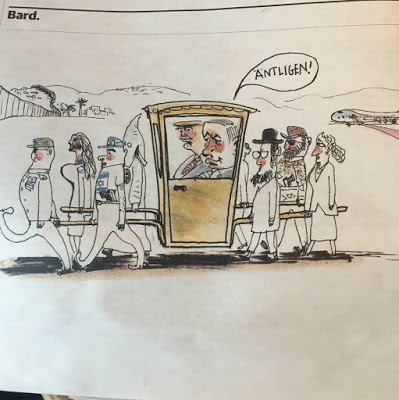
Benjamin Netanyahu, red-faced and happy, sits next to Donald Trump in a gold Roman-style litter. The ancient vehicle is being carried by big-nosed Orthodox Jews, a member of the Ku Klux Klan, a voluptuous woman and a few Israeli soldiers — marked with large Israeli flags on their chests. A speech bubble comes out of Netanyahu’s mouth, saying “Finally!”

The image I just described was published in Sweden’s largest-circulation daily paper, Dagens Nyheter, as a political cartoon, commenting on Trump’s victory in the American presidential election. It’s a bizarre mishmash of people and symbols, where IDF soldiers and a robed clansman are celebrating Trump side by side, and wildly stereotypical Orthodox Jews are hanging out with a pinup girl next to Israel’s security barrier. But the logical fail not withstanding, it reeks of anti-Semitic imagery and messaging, and it is the next step in normalizing something that has been underground for quite some time. One would assume the paper would realize this and issue a thorough apology. But that didn’t happen. Instead, the paper doubled down and defended the cartoon, saying that it was merited by the fact that Netanyahu celebrated Trump’s victory, despite Trump being supported by anti-democratic forces and white power movements. No mention of the fact that Netanyahu’s support of Trump extended only to the courtesy shown to a president-elect by any and every national leader or that Jews rarely stand shoulder to shoulder with the Klan, but just that Netanyahu “celebrated” Trump — as if the Israeli prime minister had thrown Trump an opulent party.

Dagens Nyheter calls itself an independent, liberal publication, and in the past year, it has taken a clear stand against Trump, saying he has made the world more extreme and xenophobic. Editor-in-Chief Peter Wolodarski has used his editorials to ride a very high moral horse, and his decision to run that particular cartoon is a fascinating portrait of the division between the right and wrong kinds of racism and bigotry.

What the cartoonist, known as “Bard,” is saying by this crude drawing is not only that the Jews and Israel orchestrated and celebrated the Trump win but also that the evil hook-noses side with anyone to get their way, including organizations known for wanting their annihilation.

Now, for the sake of entertainment and folly, let’s imagine another drawing: a cartoonish Barack Obama sitting in a golden carriage with a sweaty Mahmoud Abbas, being carried by big-nosed ISIS terrorists, voluptuous virgin brides and members of Iran’s Revolutionary Guard. Imagine that it was published by a country’s most popular publication and that the editor-in-chief defended it by saying that Obama had been supportive of Abbas and therefore, the imagery was fair game.

Do any of you, dear readers, think this would happen? Does anyone think that if it did, it would be go largely unnoticed and accepted? No, me neither, and I know this because we have an example of this very thing. When Charlie Hebdo was attacked and journalists were murdered in cold blood over their criticism of Islam, people still said that the portrayal of the Prophet Muhammad was inexcusable and unacceptable, and remained on the fence after the very heart of freedom had been ripped to bits. Famous writers such as Joyce Carol Oates, Junot Díaz and Michael Ondaatje protested Charlie Hebdo receiving the PEN award, and were supported by a wide array of liberals all across the globe who called the French satirical magazine racist.

So what is really fair game — what racism is allowed and celebrated in today’s society? We know that portraying Israel as the leader of a Zionist conspiracy that elects presidents is fine, as is literally painting anti-Semitic stereotypes of Jews side by side with white supremacists in a dog whistle loud enough to give you tinnitus. That elicits a few angry and summarily ignored letters from Jews, whereas similar imagery and messaging about any other group might close down the publication, if it were to survive the inevitable terrorist attacks.

Some of my friends filed a complaint against Dagens Nyheter, but I didn’t bother, as it is the activist equivalent of drawing a picture of a sandwich to feed the starving. Our voices mean little when others stay silent, and it is because of this silence that the largest paper in the land can go full Der Sturmer and no one even bats an eye.

Israel’s Resilient Decency Despite Extreme Terrorism

October 5, 2016

Israel’s Resilient Decency Despite Extreme Terrorism, Investigative Project on Terrorism, Noah Beck, October 5, 2016

1852

[I]n 2015, Israelis suffered about 10 terrorist attacks every day.

Adjusted for population size, the violence would equate to a staggering 150,160 attacks in a year in the United States (roughly 411 per day).

[S]tories of Israeli decency and the relative prosperity of Israel’s Muslims rarely appear in the mainstream media or get acknowledged by the EU, the UN, or human rights organizations.

The next time Western politicians, human rights groups, and journalists feel tempted to critique Israeli conduct, or demand more restraint from Israelis, they should ask themselves: “How would we respond if there were 411 jihadi terrorist attacks per day here? Would we also provide medical treatment to terrorists and their relatives? Would our society be nearly as tolerant and kind towards Muslims? Would our laws similarly protect Muslim rights and allow Muslim political groups to support organizations that want to destroy our country? How often would our headlines and coverage present a neutralized terrorist as a victim?”

*****************************

U.S. citizens got a small taste of the Islamist terror threat that hounds Israelis on Sept. 17, with four bombings or bombing attempts in the New York metropolitan area and a Minnesota stabbing attack.

Israel, a country about the size of New Jersey, endured eight terrorist attacks in a four-day period overlapping the American incidents. Even that frightening frequency does not represent “the scale of the attacks during the previous wave” of terror, according to the Meir Amit Intelligence and Terrorism Information Center, an Israeli think tank.

Israel’s experience shows that the war against Islamist terror is a long and difficult one, but it can be managed while maintaining a democracy’s core values.

Whereas the U.S. experienced about a dozen attacks during the 21 months from the start of 2015 through last month, an Israeli government list of terror attacks covering 12 months from 2015-16 totaled 407 attacks, including 165 stabbings, 87 attempted stabbings, 107 shootings, 47 vehicular (ramming) attacks, and one bus bombing. Those attacks killed 40 people and injured 558 others.

The Israeli government statistics don’t include stone throwing, petrol bombs, riots, IEDs, arson, stun grenade attacks, rocket attacks, and other types of attacks. When those are included, Israelis endured 3,754 terrorist attacks (including 3,635 by Palestinians and 119 by Israeli Arabs) from Jan. 1, 2015 to Jan. 5, 2016, according to a meticulously documented list compiled by analyst Nehemia Gershuni-Aylho.

Thus, in 2015, Israelis suffered about 10 terrorist attacks every day.

Adjusted for population size, the violence would equate to a staggering 150,160 attacks in a year in the United States (roughly 411 per day).

Of course, demographic, geographic and historic differences mean the U.S. is unlikely ever to experience that much Islamist terrorism.

Despite those differences, jihadi attacks in the United States during the last year have been enough to inject proposals like banning all Muslims from entering the country into the national political debate. No such proposals have ever been publicly discussed by any mainstream political parties in Israel.

By contrast, Israeli democracy is immensely tolerant of diverse opinions – to the point that the Arab party in the Knesset publicly supports terrorist organizations bent on destroying Israel. Last March, two Arab-Israeli political parties condemned Gulf Arab states for designating the Lebanese-based Iranian proxy Hizballah a terror organization. Hizballah openly seeks Israel’s destruction, and has more than 100,000 rockets and missiles aimed at the Jewish state. Could a parliamentary party in the EU or U.S. ever openly support an enemy terrorist group?

Remarkably, Israel spares no expense when providing medical help to the very terrorists attempting to murder Israelis.

Last December, at the height of the “Stabbing Intifida” – a series of seemingly spontaneous knife attacks by Palestinians on Israelis – the Israeli Medical Association issued a ruling requiring that the wounded be aided in order of injury severity, even if that means helping assailants before victims. Israeli medics treat Palestinian terrorists and murderers better than their Palestinian counterparts treat Israeli victims of Palestinian terror, such as the Palestinian medics who ignored an Israeli terror victim’s plea for help last November.

Another example of Israel’s incredible humanism despite extreme terrorism is the Israeli mother who was happy to donate the kidney of her son, who was murdered by a Palestinian suicide bomber, to save the life of a Palestinian girl.

The Israeli non-profit “Heart for Peace” is staffed by Israeli and Arab cardiologists who have saved the lives of more than 610 Palestinian children since 2005. Outrageously, in 2014, a Gazan mother whose young son’s heart was saved by Israeli doctors said that she hoped he would grow up to be a suicide bomber.

Israel has even provided medical services to the relatives of those seeking its destruction. Hamas leader Ismail Haniyeh may encourage ordinary Palestinians to embrace martyrdom for the sake of killing Israelis, but his mother-in-law, daughter, and granddaughter have all been treated by Israeli hospitals. During the last war with Hamas in 2014, Israel reportedly provided medical treatment to two Hamas terrorists who had infiltrated the country through a tunnel. Every year, Israel treats thousands of Gazans.

Examples of public generosity and decency may be rare in conflict zones, but they abound in Israel. When an Arab Israeli was wrongly beaten by police in May, the Israeli public raised money for the victim’s college tuition and legal fees, a story that went totally unreported by the mainstream media. Last August, a Palestinian girl whose bicycle was taken and broken by Israeli border police received a new bicycle donated by an Israeli man.

The EU routinely criticizes Israel for its relations with Muslims, yet Europe is far less tolerant of Islam in many respects. Last summer, three French cities – Corsica,Cannes, and Villeneuve-Loubet – banned “burkinis” from the beach. Germany’s interior minister called for a partial ban on burkinis, and a German public swimming pool reportedly prohibited them. By contrast, Israel allows burkinis, a fact highlighted in a New York Times video that went viral.

Four European countries – France, Belgium, the Netherlands, and now Bulgaria – ban full face veils in most public places. Israel imposes no such restrictions on Muslims.

Last summer provided an even more positive testament to how Israeli Muslims are treated, when Israel’s smartest high-school student was an Arab named “Mohammed” and the captain of Israel’s goalball team at the Rio Paralympics was a 26-year-old, Muslim woman. (Goalball is a sport created for blind athletes.)

But stories of Israeli decency and the relative prosperity of Israel’s Muslims rarely appear in the mainstream media or get acknowledged by the EU, the UN, or human rights organizations. World leaders routinely call for Israeli restraint, as if Israelis weren’t already exercising extraordinary restraint, a fact demonstrated by this graph showing how each of Israel’s last three wars with Hamas (in 2008, 2012, and 2014) was preceded by hundreds, and more often thousands, of Hamas rocket attacks against Israeli civilians. What country would tolerate thousands of deadly projectiles being fired on its civilians before responding with enough force to stop the attacks?

Similarly, when it comes to stabbings, car rammings, bombings, and other forms of Palestinian terrorism, world opinion reflexively calls for Israeli restraint and/or attempts to justify the attacks.

Last October, EU foreign affairs chief Federica Mogherini called for Israeli restraint after four Israelis had been murdered in a total of 19 terrorist attacks during the first 12 days of the month.  Secretary of State John Kerry tried to blame that wave of Palestinian terrorism on Israeli settlements. United Nations Secretary General Ban Ki-moon tried to justify Palestinian terrorism as a rational response to “occupation. “Such reactions would be unthinkable in response to similar terrorist attacks in the EU or U.S. World leaders and the global media seem unaware that Arab Muslims have been killing Jews for more than a century – long before any occupation, settlements, or even a Jewish state.

Palestinian terror attacks don’t reflect some miserably unfair existence – they are the product of raw hatred and incitement. Dozens of Israeli Arab Muslims have committed terrorist attacks even though they are not under occupation and enjoy better freedoms and living standards than most of the Arab world has. Like so many Palestinian terrorists, they are driven by the same hateful incitement that rejects any state for the Jews.

The next time Western politicians, human rights groups, and journalists feel tempted to critique Israeli conduct, or demand more restraint from Israelis, they should ask themselves: “How would we respond if there were 411 jihadi terrorist attacks per day here? Would we also provide medical treatment to terrorists and their relatives? Would our society be nearly as tolerant and kind towards Muslims? Would our laws similarly protect Muslim rights and allow Muslim political groups to support organizations that want to destroy our country? How often would our headlines and coverage present a neutralized terrorist as a victim?”

Anti-Israel Double Standards Enable Assad’s Brutality

August 23, 2016

Anti-Israel Double Standards Enable Assad’s Brutality, Investigative Project on Terrorism,  Noah Beck,August 23, 2016

1789

Syria’s civil war claimed 470,000 lives since it started in March 2011, the Syrian Centre for Policy Research announced in February. That’s an average of about 262 deaths per day and 7,860 per month. The carnage has continued unabated, so, applying the same death rate nearly 200 days after the February estimate, the death toll is over 520,000.

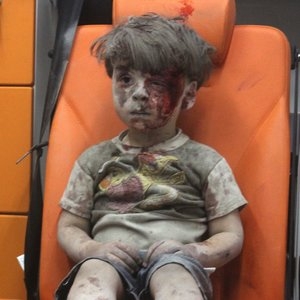
Such numbers are staggering, even by Middle East standards. However, the violence has become so routine that it only occasionally captures global attention, usually when a particularly poignant moment of human suffering is documented. The most recent example is Omran Daqneesh, a 5-year old Syrian boy who was filmed shell-shocked, bloody, and covered in dust after the airstrike bombing of his Aleppo apartment block.

The tragic image of Omran caused outrage around the world, as did the image of Aylan Kurdi, the drowned Syrian boy whose body washed up last September on a beach in Turkey. Yet Omran’s plight demonstrates that, nearly a year after the last child victim of Syrian horrors captured global sympathy, nothing has changed.

If anything, the violence in this multi-party proxy war seems to be getting worse. Since Aylan Kurdi’s drowning, Russia began blitz-bombing Syria in support of the Assad regime. The Syrian Observatory for Human Rights (SOHR) estimates that nine months of Russian airstrikes have killed 3,089 civilians – a toll that is greater, by some estimates, than the number of civilians killed by ISIS. By contrast, Syrian civilian deaths caused by U.S. airstrikes are probably in the hundreds (over roughly twice as much time, since U.S. airstrikes began in the summer of 2015).

But Syrian airstrikes are responsible for the bulk of civilian deaths in Syria. The Assad regime killed 109,347 civilians between March 2011 and July 2014 (88 percent of the total casualties at the time), according to estimates by the Syrian Network for Human Rights. That works out to about 91 civilian deaths per day. More recently, the SOHR documented 9,307 civilian deaths from 35,775 regime airstrikes over a 20-month period running from November 2014 through June 2016. Thus, roughly one innocent Syrian was killed every hour, during the 20 months that the SOHR documented civilian casualties caused by Russian and Syrian airstrikes.

Compare those figures to the number of innocent Palestinians killed by Israel from 2011 to 2014. According to Human Rights Watch (HRW), which has been accused of anti-Israel bias, 37 Palestinians were killed in 2011, 103 in 2012, 15 in 2013 and 1,500in 2014 – the year when Hamas fired rockets at Israel from highly populated Gazan areas. That’s a four-year total of 1,655. During roughly the same four-year period, the number of Syrian civilian deaths was about 76 times greater than the HRW total of Palestinian civilian casualties.

Yet the European Union singles out Israel for conflict-related consumer labels without any similar attempt to warn European consumers about goods or services whose consumption in any way helps the economies of countries responsible for the Syrian bloodshed, including Syria, Russia, and Iran. Human rights lawyer Arsen Ostrovsky has highlighted how none of those countries is targeted by those advocating a boycott of Israel out of a purported concern for human rights. Even more absurd, most of the results produced by a Google search for “academic boycott of Syria” or “academic boycott of Iran” concern academic boycotts of Israel. That asymmetry precisely captures the problem.

In addition to supporting the Assad regime in Syria and contributing to the violence there, Iran executes people for everything from drug offenses to being gay.

Indeed, the global outcry over Syrian suffering is embarrassingly weak when compared to reactions to Israel’s far less bloody conflict with the Palestinians. Imagine if Omran Daqneesh had been a Palestinian boy hurt by an Israeli airstrike on Gaza. College campus protests, the media, NGOs, and world bodies around the planet would be positively on fire. Israeli embassies would be attacked, French synagogues would be firebombed (eight were attacked in just one week during Israel’s 2014 war with Gaza), Jews around the world would be attacked, and condemnations would pour in from the EU, the United Nations, and the Obama administration. UN resolutions and emergency sessions would condemn the incident. International investigations would be demanded. Global blame would deluge Israel, regardless of whether Hamas, a terrorist organization, actually started the fighting or used human shields to maximize civilian deaths. Israel would be obsessively demonized despite any risky and unprecedented measures the Israeli military might have taken to minimize civilian casualties.

Moreover, when an occasional Syrian victim captures global attention, the protests are generally for some vague demand for “peace” in Syria, rather than blaming and demanding the punishment of Syria, Iran, and Russia, even though those regimes are clearly responsible for the slaughter. The starkly different reactions to Israel and Syria are even more shocking when it comes to the United Nations.

From its 2006 inception through August 2015, 62 United Nations Human Rights Council resolutions condemned Israel, compared to just 17 for Syria, five for Iran, and zero for Russia, according to the watchdog group UN Watch. The lopsided focus on Israel is equally appalling at the UN General Assembly, as UN Watch has highlighted. In each of the last four years, as the Syrian bloodbath claimed hundreds of thousands of lives, there were at least five times as many resolutions condemning Israel as those rebuking the rest of the world:

2012: 22 against Israel, 4 for the rest of the world

2013: 22 against Israel, 4 for the rest of the world

2014: 20 against Israel, 3 for the rest of the world

2015: 20 against Israel, 3 for the rest of the world

A corollary of the anti-Israel bias ensures that no Israeli victim will ever enjoy the kind of global sympathy expressed for Omran Daqneesh or Aylan Kurdi. When a Palestinian man enters the bedroom of a 13-year old girl and stabs her to death in her sleep,Obama says nothing even though she was a U.S. citizen and the world hardly notices. By contrast, imagine if the Israeli father of Hallel Yaffa Ariel had decided to take revenge by entering a nearby Palestinian home to stab a 13-year old Palestinian girl to death in her sleep. The global anger would be deafening.

Why do Israeli lives matter so much less? And why do student activists, the UN, the EU, the media, and the rest of the world focus so much more on alleged Palestinian civilian deaths than on Syrian civilian deaths? Doing so is woefully unjust to Syrians. It is also deeply unfair to Israel, which has endured terrorist attacks on its people throughout its existence as a state. It is the one country that, according to Col. Richard Kemp, former commander of British forces in Afghanistan, has done more to protect civilians during war than any other in the history of war.

The global obsession with condemning Israel not only defames a beleaguered democracy doing its best, it also enables the truly evil actors like the Assad regime and Hamas, by giving them a pass on some of the world’s worst crimes.