Iranian women by a poster of Ayatollah Khomeini Reuters
Analysts have pointed out how well Khomeini succeeded in deluding the Americans. “Unlike Carter, Khomeini pursued a consistent strategy and played his hand masterfully. Guided by a clear vision of establishing an Islamic republic, the ayatollah engaged America with empty promises, understood its intentions, and marched toward victory,” the BBC notes.
Though we are in a different century and Ayatollah Khomeini has been replaced by Ayatollah Khamenei, Secretary of State John Kerry and President Barack Obama regularly assured the public that Iran was negotiating in good faith and could be trusted, just as the Carter administration believed.
**********************
New information has come to light, showing how former US President Jimmy Carter blindly accepted false promises and helped Ayatollah Ruhollah Khomeini carry out the Iranian Revolution.
From 1941 to 1979, Iran was ruled by Mohammad Reza Shah Pahlavi, better known as the Shah (meaning “king”). Pahlavi’s modernization and anti-Communist policies won the backing of many Western countries, which saw oil-rich Iran as a valuable ally in a tumultuous region. At the same time, though, his secularism and suppression of political opponents left him strongly disliked domestically.
Pahlavi’s regime was ultimately overthrown in the 1979 revolution, led by Ayatollah Sayyid Ruhollah Mūsavi Khomeini.
The BBC now reports that Khomeini had made several overtures to US presidents, asking them to encourage the Iranian military to stand down and allow the uprising to succeed. In exchange, he promised to continue the warm relationship between the two countries.
The first message was sent to President John F Kennedy in 1963, but arrived only two weeks before he was assassinated. The next known attempt came in January 1979, as the Ayatollah prepared to return home from exile.
American officials in Tehran were already aware of the rumbles of discomfort and were looking for a way out of the situation, despite publicly supporting the Shah and Prime Minister Shapour Bakhtiar. “The best that can result, in my view, is a military coup against Bakhtiar and then a deal struck between the military and Khomeini that finally pushes the Shah out of power,” wrote Deputy National Security Adviser David Aaron.
A couple days later, President Carter encouraged the Shah to “leave promptly.” He never returned to Iran.
The Ayatollah’s message arrived just as US officials were thinking of ways to quietly back the Islamists. The two sides began secret talks, which culminated in American assurances that it was not opposed to overthrowing the monarchy. For his part, Khomeini repeatedly promised that Iran would view the US as a friend and would continue selling oil to all countries except for Israel and South Africa. He even convinced the US that there was no need to remove its weapons, because the US military would still be welcome to operate in the country.
Despite the assurances, revolutionaries broke into the US embassy in Tehran and held 52 diplomats and civilians hostage for over a year. The Ayatollah proudly bragged about how Iran had defeated the “Great Satan,” and that “America can’t do a damn thing.”
The humiliation over the Iranian Revolution is widely cited as a major cause for Carter’s loss in the 1980 election.
Analysts have pointed out how well Khomeini succeeded in deluding the Americans. “Unlike Carter, Khomeini pursued a consistent strategy and played his hand masterfully. Guided by a clear vision of establishing an Islamic republic, the ayatollah engaged America with empty promises, understood its intentions, and marched toward victory,” the BBC notes.
While this information has only now been revealed to the public, it would presumably have been available to the Obama administration during last year’s nuclear negotiations with Iran. Though we are in a different century and Ayatollah Khomeini has been replaced by Ayatollah Khamenei, Secretary of State John Kerry and President Barack Obama regularly assured the public that Iran was negotiating in good faith and could be trusted, just as the Carter administration believed.
After the deal was signed, Deputy National Security Adviser Ben Rhodes admitted that the US government lied to its constituents and allies, and had been secretly preparing for a nuclear agreement with hardliners in Tehran.
♦ Since Khamenei took power in 1989, he has shown no deviation from Khomeini’s revolutionary ideologies. Opposing the United States, “the Great Satan,” and the rejection of Israel’s existence are two of the most critical pillars of Iran’s revolutionary ideals — what defines the raison d’être of the Iranian regime, as well as what shapes Khamenei’s ideological and foreign policy.
♦ Other revolutionary core values that Khamenei desires the next supreme leader to hold include supporting Palestinian and Lebanese armed groups against Israel, maintaining Iran’s nuclear program, and being the supreme leader of the entire Islamic world — not only the leader of the Shiites. Khamenei’s official website refers to him as “the Supreme Leader of Muslims,” not the Supreme Leader of “Iran.”
Iran’s Supreme Leader, Ayatollah Ali Khamenei, in the past did not seem to wish to discuss topics linked to his successor — — the next Supreme Leader. Nevertheless, recently the trend has altered. Khamenei has begun dictating his policies, preferences, and priorities in what kind of Supreme Leader he would rather the Iranian regime have, and who, after his death, the Assembly of Experts ought to choose.
In a recent meeting, the 76-year-old Ayatollah Khamenei met with some members of the Assembly of Experts, and pointed out that “a supreme leader has to be a revolutionary” and he advised that members not to “be bashful” in selecting the next Supreme Leader.
Iran’s constitution yields the Supreme Leader the greatest authority in the country. The Supreme Leader is the single most crucial figure, the highest-ranking political and religious authority in Iran. He directly or indirectly controls the three branches of the government; the judiciary, the legislature and the executive branch.
But what does a “revolutionary” exactly mean to Khamenei? From Khamenei’s perspective, a revolutionary supreme leader would be someone who forcefully pursues the ideological principles of Ayatollah Ruhollah Khomeini, the founder of the Islamic Republic, and the core ideals of Iran’s 1979 Revolution.
Since Khamenei took power in 1989, he has shown no deviation from Khomeini’s revolutionary ideologies. Opposing the United States, “the Great Satan,” and the rejection of Israel’s existence are two of the most critical pillars of Iran’s revolutionary ideals — what defines the raison d’être of the Iranian regime, as well as what shapes Khamenei’s ideological and foreign policy.
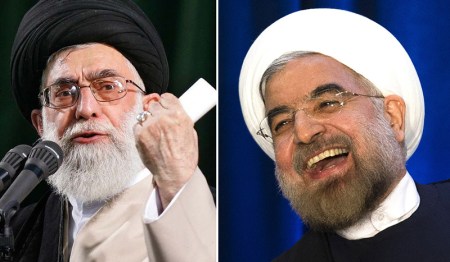
Who’s next? Ayatollah Ruhollah Khomeini (left) founded the Islamic Republic of Iran in 1979. He hand-picked Ayatollah Ali Khamenei (right) as his successor for Supreme Leader. Now Khamenei seems to be setting the stage to choose his own successor.
Khamenei believes that Iran would lose its Islamic character, its legitimacy, its appeal among its supporters and the essence of its revolution, as well as endanger the survival of its theocratic political establishment if it were to shift its stance and its policies towards the U.S. and Israel.
Khamenei is the second longest-ruling autocrat in the region. For him, his adherence to these revolutionary ideals are the real reasons behind his success in ruling for more than two decades. In addition, he sees that these are the underlying factors that made his regime immune from powerful opposition, popular uprisings and revolutions such as those in other countries in the region.
Other revolutionary core values that Khamenei desires the next supreme leader to hold include supporting Palestinian and Lebanese armed groups against Israel, maintaining Iran’s nuclear program, and being the vanguard of Islam and the supreme leader of the entire Islamic world — not only the leader of the Shiites. Khamenei’s official website refers to him as “the Supreme Leader of Muslims,” not the Supreme Leader of “Iran.”
Iran’s domestic and foreign policy is anchored in the three pillars of preserving the revolutionary ideology, national interests (regarding economic, strategic and geopolitical spheres) and Iranian nationalism. Khamenei is a firm advocate of prioritizing ideological norms over the other two backbones of the regime.
Khamenei is playing the same game that was played when he was chosen as the Supreme Leader. In this video, one can see how the former president and founder of the Iranian regime, Akbar Rafsanjani, and Ayatollah Khomeini chose Khamenei as the next Supreme Leader.
Unlike what the mainstream media depicts, the Assembly of Experts will not play a crucial role in determining who will be the successor to Khamenei. The Assembly of Experts is a ceremonial political body, with 86 members, who are said to determine the country’s next supreme leader.
It is important to point out that the Assembly of Experts is mainly a rubber-stamp organization; its 86 members were already vetted by the subjective decisions of the hardline political body; the Council of Guardians. The twelve members of the Council of Guardians are appointed directly by the Supreme Leader (six members), and indirectly (nominated by the head of the judiciary and appointed by the Supreme Leader).
The Islamic Revolutionary Guard Corps (IRGC), a hardline branch of the military that was once the child of Iran’s Islamic revolution and has since been transformed into the “Big Brother” of the Iranian regime, is another extremist organization that is acting hand-in-hand with Khamenei to choose the next Supreme Leader behind closed doors.
Khamenei’s efforts to direct the decision of the Assembly of Experts does not reflect the notion that he is concerned that this political body might elect a disqualified person as the next Supreme Leader.
Instead, Khamenei’s latest remarks highlight the notion that he and the senior cadre of the IRGC are setting the stage to elevate their favorite choice for the next Supreme Leader of the Iranian regime.
♦ Khamenei is sending a strong signal to Washington that Iran’s reintegration in global financial system does not mean that the Iranian regime will change its hostility towards the U.S. and Israel.
♦ “The Persian Gulf is the Iranian nation’s home and the Persian Gulf and a large section of the Sea of Oman belong to this powerful nation. Therefore, we be present in the region, hold war games and display our power.” – Iranian Supreme Leader Ali Khamenei
♦ In addition, Khamenei is sending a message to the Iranian people that the current process of implementing the nuclear agreement, lifting sanctions, and partial economic liberalization does not mean that Iran is going to liberalize its politics and allow freedom of speech, freedom of the press, and more political participation.
Some politicians and policy analysts argue that Iran’s sanctions relief and the continuing implementation of its nuclear program would push Iran towards moderation in dealing with the United States and Israel, as well as scaling down Iran’s expansionist and hegemonic ambitions. The realities on the ground suggest otherwise.
As Tehran’s revenues are rising, anti-American and anti-Semitic rhetoric by Iran’s Supreme Leader, Ayatollah Ali Khamenei, are escalating.
The Iranian regime continues to view the U.S. and Israel as their top geopolitical, strategic and ideological enemies. According to Iran’s Mehr News Agency, on May 1, Khamenei welcomed the Secretary General of Palestinian Islamic Jihad, Ramadan Abdullah Shalah, and his accompanying delegation in Tehran:
“Ayatollah Khamenei reaffirmed that with this perspective in regional issues, Iran sees the United States as the main enemy with the Zionist regime standing behind it. He pointed to extensive, unprecedented sanctions of the U.S. and its followers against the Islamic establishment in recent years and dubbed the objective of them as discouraging Iran from continuing its path; ‘but they failed to achieve their goals and will fail in future as well.’ “
Khamenei is sending a strong signal to Washington that Iran’s reintegration in the global financial system does not mean that the Iranian regime will change its hostility towards the U.S. and Israel.
In addition, Khamenei is sending a message to the Iranian people that the current process of implementing the nuclear agreement, lifting sanctions, and partial economic liberalization does not mean that Iran is going to liberalize its politics and allow freedom of speech, freedom of the press, and more political participation.
Khamenei is also making it clear that Iran is not going to fundamentally change its foreign policy objectives in the region.
Regarding Iran’s role in the Gulf, Iran’s Supreme Leader pointed out on May 2 that
“The Persian Gulf is the Iranian nation’s home and the Persian Gulf and a large section of the Sea of Oman belong to this powerful nation. Therefore, we should be present in the region, hold war games and display our power.”
When it comes to Syria, Iran’s Islamic Revolutionary Guard Corps (IRGC) has become more emboldened and empowered in supporting the Syrian regime financially, militarily, and in intelligence and advisory capacities. Even during the current peace talks, Iran is ramping up its presence in Syria to increase Bashar Assad’s leverage in the negotiations.
In Iraq, Iran’s sectarian agenda and support for Shiite militias continues to cause political instability. This week, hundreds of followers of the Iraqi Shia leader, Muqtada al-Sadr, stormed into the Iraqi parliament building, demanding its speaker halt the session. Prime Minister Haider al-Abadi warned that these protests could lead to the Iraqi state’s failure. After the protests, al-Sadr — who spent several years studying in Qom (Iran’s center of Islamic studies) — travelled to Iran.
Currently, some of the powerful Iraqi Shiite militias with which Iran has close connections, and in which it is investing its resources, are: Sadr’s Promised Day Brigade, the successor to the Mahdi Army; the Badr Organization, Asa’ib Ahl al Haqq (League of the Righteous) and Kata’ib Hezbollah (Battalions of Hezbollah).
In Yemen and Bahrain, Iran’s support for the Houthi rebels and Shiite groups continues to fuel the sectarian conflicts there.
Khamenei has also unleashed a series of anti-U.S. and anti-Israel tweets, including:
“Lebanon’s Hezbollah is strong enough not to be hurt by some pressures; today, no doubt Zionist regime is scared of Hezbollah more than past.” (1 May 2016)
“Shia-Sunni clash is colonialist, US plot. Top issue is to realize 2 sides of the extensive war & one’s stance to avoid being against Islam.” (1 May 2016)
Iran’s foreign policy is anchored in three areas: ideological principles (anti-Americanism and anti-Semitism), national interests (mainly economic gains), and nationalism.
Although Khamenei needed to emphasize Iran’s national and economic interests, there is no evidence that he is giving up on the revolutionary ideological norms. Khamenei is relying on the so-called moderates — President Hassan Rouhani and his U.S.-educated foreign minister, Javad Zarif — to continue the process of implementing the nuclear deal in order to benefit Iran economically and ensure the regime’s hold on power.
Iran’s Supreme Leader, Ayatollah Khamenei (left), is not giving up on the revolutionary ideological norms. He is relying on the so-called moderates, such as President Hassan Rouhani (right), to continue the process of implementing the nuclear deal in order to benefit Iran economically and ensure the regime’s hold on power.
Nevertheless, at the end of day, the key decision makers in Iran’s political establishments are Khamenei and the senior cadre of the IRGC, who prioritize Iran’s ideological and revolutionary principles. It is from them that Khamenei draws his legitimacy.
As long as the Supreme Leader is alive, one should not expect that Iran’s reintegration into the global economy to move the country to the moderate end of the spectrum, or that its anti-American, anti-Semitic sentiments and fundamentals of Tehran’s foreign policies will change.
(The views expressed in this article are mine and do not necessarily reflect those of Warsclerotic or any of its other editors. — DM)
A recent article by David Samuels at the New York Times Magazine, based on an interview with Obama’s foreign policy guru Ben Rhodes, purported to explain how, and about what, the Obama administration lied to get public support for the Iran Scam. According to the article, the principal Obama lie involved who was the Iranian president when the negotiations with Iran began. It’s much deeper and worse than that. As Paul Harvey would say, “Here’s “the rest of the story.”
Iranian President Rouhani was elected on June 15, 2013 and assumed office on August 3d. According to Rhodes,
negotiations started when the ostensibly moderate Hassan Rouhani was elected president, providing an opening for the administration to reach out in friendship. In reality, as Samuels gets administration officials to admit, negotiations began when “hardliner” Mahmoud Ahmadinejad was still president. [Emphasis added.]
There is no necessary inconsistency — about a month and a half elapsed between Rouhani’s election and becoming the Iranian president. However, that is of little if any consequences.
Mr. Rosen, interviewed in the above video, touches, very briefly, on other problems with the Iran scam. Back in the world of reality, “we” had been negotiating with Iran during Ahmadinejad’s presidency for a couple of years, during which “we” gave Iran everything it requested. This article is intended to provide substantially more information and analysis of what happened and why during “our” secret bilateral negotiations with Iran.
The Negotiations
According to interviews with Iranian vice president and Atomic Energy Organization head Ali Akbar Salehi, translated and published by the Middle East Media Research Institute (MEMRI) on August 17, 2015, secret bilateral negotiations between the Obama and Iranian regimes had begun much earlier and included Obama’s Assistant Secretary of State, William Burns. During those negotiations, the U.S. conceded that Iran’s right to Uranium enrichment would be respected, that Iran’s missile programs would be left out of any deal and that its efforts to develop nuclear warheads and other devices would be ignored. Obama had essentially caved in to Iran’s demands even before the existence of negotiations was acknowledged.
In an interview published in the daily Iran on August 4, 2015 under the title “The Black Box of the Secret Negotiations between Iran and America,” Iranian vice president and Atomic Energy Organization head Ali Akbar Salehi, who is a senior member of Iran’s negotiation team and was foreign minister under president Ahmadinejad, revealed new details on the secret bilateral talks between Iran and the U.S. that started during Ahmadinejad’s second presidential term. According to Salehi, U.S. Secretary of Energy Dr. Ernest Moniz, whom Salehi knew from his period as a doctoral student at MIT, was appointed to the American negotiation team at Salehi’s request, a request which the Americans met within hours. [Emphasis added.]
Salehi added that Khamenei agreed to open a direct channel of negotiations between Iran and the U.S. on the condition that the talks would yield results from the start and would not deal with any other issue, especially not with U.S.-Iran relations. Following this, Salehi demanded, via the Omani mediator Sultan Qaboos, that the U.S. recognize Iran’s right to enrich uranium, and received a letter from Qaboos expressing such American recognition, which he relayed to Ahmadinejad. [Emphasis added.]
The secret bilateral Iran-US negotiations had begun with a letter for Iran delivered to an Omani official. Salehi told an Omani intermediary.
‘I am not sure how serious the Americans are, but I will give you a note. Tell them that these are our demands. Deliver it on your next visit to Oman.’ I wrote down four clear issues, one of which was official recognition of rights to [uranium] enrichment. I figured that if the Americans were sincere in their offer, then they must agree to these four demands. Mr. Suri gave this short letter to the mediator, and stressed that these were Iran’s demands. [He added that]if the Americans wished to solve this issue, they were welcome to, otherwise dealing with White House proposals would be useless and unwarranted…
“All the demands in the letter were related to the nuclear challenge. These were issues we have always come against, such as closing the nuclear dossier [in the Security Council], official recognition of [Iran’s] right to enrich [uranium], and resolving the issue of Iran’s actions under the PMD [Possible Military Dimensions]. After receiving the letter, the Americans said: ‘We are certainly willing and able to easily solve the issues Iran has brought up.’ [Emphasis added.]
The first meeting between the Iranian and American negotiating teams began following eight months of coordination. Iran
sent a team to Oman that included the deputy foreign minister for European and American affairs, Mr. [Ali Asghar] Khaji, as well as several CEOs. The Americans were surprised in the first meeting and said, ‘We cannot believe this is happening. We thought Oman was joking. We aren’t even prepared for these talks with you.’
“Q: What was the level of the team that the Americans dispatched?
“A: It included Assistant Secretary of State William Burns. They said: ‘We only came to see if Iran was truly willing to negotiate.’ Our representative gave them the required response and eventually there were talks on this issue. The initial result was achieved and the ground was prepared for further coordination. [Emphasis added.]
“Q: How were the Americans convinced that the Iranian diplomats who were dispatched had the necessary authority?
“A: [Until] that phase, Iran and America had not been allowed to sit opposite each other at the negotiating table. The fact that Iran had sent a deputy foreign minister to the talks indicated its seriousness. The Americans also noticed how seriously [Iran was taking] the issue. At that meeting, Khaji pressed the Americans to set up a roadmap for the negotiations, and eventually the talks of a roadmap were postponed to the second meeting. At the second meeting, Khaji warned the Americans: ‘We did not come here for lengthy negotiations. If you are serious, you must officially recognize enrichment, otherwise we cannot enter into bilateral talks. But if you officially recognize enrichment, then we too are serious and willing to meet your concerns on the nuclear matter as part of international regulations.‘
International regulations were later agreed upon by the P5+1 negotiators, in the form of the Iran – IAEA secret deals concerning nuke inspections and a UN resolution dealing with Iranian missiles. Neither was included in the Joint Cooperative Plan of Action.
“Of course, at that time we were [still] exchanging various information with the Americans via the [Omani] mediation, and this is documented at the Foreign Ministry. We did not do it in the form of official letters, but rather unofficially and not on paper. The Omani mediator later came to Iran, held talks with us, and then later spoke to the Americans and told them our positions, so that the ties were not severed. But there was no possibility for direct talks.
“Thus, a real opportunity was squandered because, at the time, the Americans were genuinely prepared to make real concessions to Iran. Perhaps it was God’s will that the process progressed like that and the results were [eventually] in our favor. In any case, several months passed and Obama was reelected in America [in November 2012]. I thought that, unlike the first time, we must not waste time in coordinating [within regime bodies], so with the leader’s backing and according to my personal decision, I dispatched our representatives to negotiate with the Americans in Oman. [Emphasis added.]
“Q: Didn’t you have another meeting with the leader about the process and content of the talks?
“A: No. Obviously during the process I wrote a letter to the leader detailing the problems. He said ‘try to solve them.’ He was always supportive but told me to ‘act in a manner that includes necessary coordination [within the regime]. In this situation, I dispatched Khaji to the second meeting in Oman (around March 2013) and it was a positive meeting. Both sides stayed in Oman for two or three days and the result was that the Omani ruler sent a letter to Ahmadinejad saying that the American representative had announced official recognition of Iran’s enrichment rights. Sultan Qaboos sent the same letter to the American president. When Ahmadinejad received the letter, several friends said that this move would be fruitless and that the Americans do not keep [their] commitments. [But] we had advanced to this stage. [Emphasis added.]
. . . . We [then ] prepared ourselves for the third meeting with the Americans in order to set up the roadmap and detail the mutual commitments. All this happened while Iran was nearing the presidential elections [in June 2013]. At that time, the leader’s office told me that I had to cease negotiations and let the next government handle the talks after the results of the elections were known.
. . . .
“Q: What was the Americans’ position in the first meetings between Iran and the P5+1 held during the Rohani government [era]?
“A:After the Rohani government began to operate – along with the second term of President Obama – the new negotiations between Iran and the P5+1 were started. By then, Kerry was no longer an American senator but had been appointed secretary of state. As a senator, Kerry had been appointed by Obama to be in charge of handling the nuclear dossier, and then [in December 2012] he was appointed secretary of state. [Emphasis added.]
“Before that, the Omani mediator, who had close relations with Kerry, told us that Kerry would soon be appointed [U.S.] secretary of state. During the period when the secret negotiations with the Americans were underway in Oman, there was a situation in which it was easier to obtain concessions from the Americans. After the Rohani government and the American administration [of Obama’s second term] took power, and Kerry become secretary of state, the Americans spoke from a more assertive position. They no longer showed the same degree of eagerness to advance the negotiations. Their position became harder, and the threshold of their demands rose. At the same time, on the Iranian side, the situation [also] changed, and a most professional negotiating team took responsibility for negotiating with the P5+1. [Emphasis added.]
As to the reluctance of the American side to make concessions after Kerry had replaced Clinton as the Secretary of State, it must be remembered that “we” had already made all or most of the concessions Iran sought.
Another positive point was that [President] Rohani oversaw the dossier, knew its limits, and as a result succeeded in producing a good strategy to advance the nuclear dossier. At the same time, Rohani took responsibility for everything. Many may have reservations and ask why we were putting ourselves in danger, but Rohani’s willingness to take responsibility was very high. There are those who say, from a political standpoint, that he was willing to take a very great risk, because, had the negotiations not achieved certain results, and had the best results not been achieved, he would have faced waves of criticism. But he took upon himself the risk of [such] criticism. In any event, he agreed to take this responsibility, and, God be praised, even God helped him, and he emerged [from the negotiations] with his head held high.” [Emphasis added.]
At some point, the negotiations broke down over “technical issues.” Salehi, a technical expert as well as a diplomat, found a way to resolve those issues.
A . . . condition was that American experts would come to Iran and talk to me. I said that as vice president I would not enter into a discussion with their experts, because as far as the protocol was concerned, this would create a bad situation and they would say that Iran would capitulate in any situation. This was not good for Iran, but I was willing to quit and to come to the talks not as vice president but as the foreign minister’s scientific advisor. Larijani said ‘he’s right.’ The next day, Fereydoun asked me to come to his office and asked me who my [American] counterpart was. I said, the [U.S.] Department of Energy. Fereydoun called Araghchi and said, ‘Tell [U.S. Under Secretary of State for Political Affairs] Ms. [Wendy] Sherman that Salehi is joining the negotiations provided that the American secretary of energy also joins the negotiators.‘ Araghchi and Sherman were the liaison between Iran and America. Araghchi said in this conversation with Fereydoun that on such short notice it was unlikely that they [i.e. the Americans] would send their secretary of energy. I heard [Fereydoun’s conversation with Araghchi]. In short, Fereydoun asked and Araghchi contacted Sherman and a few hours later a report that they welcomed Iran’s proposal arrived. [Emphasis added.]
“Q: How many hours did it take before they [the Americans] said yes?
“A: It didn’t take long. I went to see Fereydoun in the evening and the next day they responded. This was because of the time difference [between Tehran and Washington].
“Q: The general perception was that because Moniz was brought into the negotiating team, you were brought into the Iranian team?
“A: [On the contrary,] Moniz came because of me. In any case, in February [2015] I joined [the negotiations], and praise God, matters moved forward with Moniz.
“Q: Did you and Moniz study together?
“A: Moniz knew me more than I knew him. I saw him at the annual IAEA meeting. When I was a doctoral student at MIT, he had just been accepted as a staff member. He is five years older than me.
“Q: Did you take one of his classes?
“A: No. He knew me because my doctoral studies advisor was his close friend and right hand man in scientific fields. Even now he is an advisor on many of Moniz’s scientific programs. Many of my fellow students are now experts for Moniz. One of them was Mujid Kazimi, who is of Palestinian origin. He recently died. He was two years older than me but we were friends in college. After graduating, he became the head of the MIT Department of Nuclear Science and was a prominent figure who carried out many programs with Moniz.
“Q: How did Moniz treat you initially?
“A: In light of our prior acquaintance, he was excited. We’ve known each other for years and he treated [me] very well. Our first meeting was in public.
“Q: How did you feel when you heard Moniz was coming [to the talks]?
“A: I was very happy. I was assured. I said that the prestige of the Islamic Republic remained intact [because] an Iranian official would not speak to an American expert but rather would negotiate with a high-ranking American official. This was very important. Second, as I said before, he could make a decision [while] an expert could not. We had a very interesting group meeting. The American experts were same ones who had dealt with disarmament vis-à-vis the Soviet Union.
“I said [to Moniz]: ‘I cannot accept your offer for various reasons.’ One American expert said, ‘We do not accept the basic assumption of your calculations.’ I said, ‘Tell us what is the basic assumption of [your] calculations so we can work from there.’ He said ‘we can’t do that.’ I said to them, ‘If you don’t accept our estimation, then tell us [yours]. You say that you cannot because this [exposes] your process. If we show [our] calculation, you will know our working secrets.’ So then I said ‘ok, what do we do now?’ The meeting stagnated.
“Later I thought about it… and said ‘Mr. Moniz, I am here with full authority from my country. Anything I sign will be acceptable to my country. Do you have full authority as well, or does any result achieved here need to be asked and clarified with officials from other countries?’ He said ‘no, I have full authority.’
“Q: Did you have full authority?
“A: Yes. In the scientific discussions, I knew the level of [Iran’s] demands. I said, ‘Mr. Moniz, you made an offer to Iran, and Iran rejects it. I want to ask you a question. If you can answer it [then] I will have no problem with your offer.’ I continued and said: ‘Show me one place on earth where enrichment is taking place using the method you are demanding of us. If you can give me even a single example then I will sign on the spot and we will become the second country to enrich in this method.’ He looked [at me] and then announced that the meeting was over, and we spoke. We had the first private meeting that lasted two or three hours. He said: ‘Mr. Salehi, when I was called [out of the negotiating room, it was because] Obama wanted to speak to me. Now I am free [to continue]. What you said is acceptable [but] there are practical problems with your offer.’ I said, ‘Do you agree? Then I relinquish that proposal.’ Eventually. we reached mutual understandings on this issue. I said ‘let’s start from the top.’ This diplomatic challenge should be published in a memoir so that everyone can understand how we reached 6,000 centrifuges. It is a very nice story… [Emphasis added.]
The Aftermath
Ultimately, Iran’s right to enrich Uranium was fully recognized in the Joint Plan of Action (JPOA) and in the subsequent Joint Cooperative Plan of Action (JCPOA). As to the missile aspects of the “possible military dimensions” of Iran’s nuclear program, neither document dealt with Iranian missiles. That was left up to the United Nations Security Council to deal with in its resolution approving the nuke “deal.” In light of Russia’s warm relations with Iran, Russia would most likely veto any proposed Security Council resolution finding Iran in violation of its missile provisions.
The “verification” mechanism was included only in separate and secret “side deal(s)” solely between Iran and the IAEAwhich members of the U.S. Congress were not permitted to see during the pseudo-approval process. According to Kerry, he was not permitted to see them either, but the details were “fully explained” to him.
Here’s a video of Secretary Kerry under questioning about the side deals:
Questions might have been better directed to this Kerry clone; more candid answers might have been provided.
Any pretense that the IAEA will have “any time, anywhere” access to Iran’s military sites was mere rhetoric, as acknowledged by US Under Secretary of State Wendy Sherman on July 16th
“I think this is one of those circumstances where we have all been rhetorical from time to time,” Sherman said in a conference call with Israeli diplomatic reporters. “That phrase, anytime, anywhere, is something that became popular rhetoric, but I think people understood that if the IAEA felt it had to have access, and had a justification for that access, that it would be guaranteed, and that is what happened.” [Emphasis added.]
Ms. Sherman was right about the rhetorical nature of administration assertions, but wrong about IAEA access, of which there will apparently be little or none pursuant to the secret deals between Iran and the IAEA.
In an interview on Al Jazeera TV last week Ali Akbar Velayati, Security Adviser to Iran’s Supreme Leader, stated that
United Nations nuclear inspectors from the International Atomic Energy Agency would not be given access to Tehran’s sensitive military nuclear sites.
. . . .
“First, allow me to emphasize that the issue of the missiles and of Iran’s defensive capabilities were not part of the negotiations to begin with,” Velayati said. [Emphasis added.]
“No matter what pressure is exerted, Iran never has negotiated and never will negotiate with others – America, Europe, or any other country – about the nature and quality of missiles it should manufacture or possess, or about the defensive military equipment that it needs. This is out of the question.” [Emphasis added.]
. . . .
Reza Najafi, Iran’s ambassador and permanent envoy to the IAEA, stated over the weekend that “no country is permitted to know the details of future inspections conducted by the IAEA.” [Emphasis added.]
Najafi’s statement could mean (a) that no details about inspection methodology will be disclosed, (b) that no details about inspection results will be disclosed or (c) both. If inspection methodologies — who did the inspections as well as when, where and how, are not disclosed, what useful purpose will they serve, other than for Iran? If details of the results of inspections are not disclosed, that will also be the case. How, in either or both cases, will the members of the P5+1 negotiating teams have sufficient information to decide whether to “snap back” sanctions — if doing so is now even possible — or anything else? [Emphasis added.]
Conclusions
One can only hope that our next president will dispose of the Iranian “deal” as a treaty which Obama refused to submit to the Congress as the Constitution requires or at least ostentatiously ignore it and grant no more concessions.
Otherwise, be not afraid; Obama the Great One — the smartest person in any room and the best President ever — has made us safe. How can one possibly be safer alive than dead?
“Mr. President, you bear responsibility for every martyr whose blood has been spilled. If you look at all the breaches of promise and disruptions by ‘the Great Satan,’ America, and declare firmly that you are cancelling the JCPOA because of America’s violations [of it], history will never forget your heroic and revolutionary move; the heart of the Imam Mahdi will also rejoice because of you.
**************************
In an April 12, 2016 interview, Mahdi Abdi, the director of affairs for the northwestern provinces and towns for the coordination council of the fundamentalist organization Hezbollah Iran, which is affiliated with Iran’s ideological circles, warned leaders of Iran’s pragmatic camp, including Expediency Council chairman and former president Hashemi Rafsanjani and former president Mohammad Khatami, not to undermine the status of Iranian Supreme Leader Ali Khamenei. The interview was published by the organization’s Hezbollah Press website.
Echoing Khamenei’s accusations of treason against Rafsanjani,[1]Abdi accused both Rafsanjani and Khatami of treason, and threatened them with physical harm. He also demanded that they stop calling for the release of the 2009 Green Protest leaders – former Majlis speaker Mehdi Karroubi and former prime minister Mir-Hossein Mousavi, as well as Mousavi’s wife – who have been under house arrest since 2011.
Reminding Iranian President Hassan Rohani of what happened to Iranian officials who criticized Iran’s Islamic Revolution and the path of its founder Ayatollah Ruhollah Khomeini, Abdi warned him to neither trust the U.S. nor follow it, or to face the consequences. He also called on him to cancel the JCPOA.
The following are the main points of the interview. It should be noted that following its publication, the piece was removed from the website.
“This Is Hezbollah’s Final Warning To Hashemi [Rafsanjani] And The Grey Fox, [Former President] Mohammad Khatami, And To Anyone Who Even Thinks About Marginalizing The Imam Khamenei”
“The heart of [Iranian] Hezbollah is bleeding because of the tremendous disloyalty and the great treason of the unwise and two-faced [pragmatic camp leaders Rafsanjani and Rohani]. Imam Khamenei need not feel alone today because certain individuals who are betraying Islam and the Revolution are daring to boast and to express opinions in society, while others dare to speak about an end to the arrest of the hated leaders of the ‘2009 fitna’ [Mousavi and Karroubi]. [These traitors are] publishing [such statements] freely online and talking about it, and [expecting] the security apparatuses to remain silent.
“The hated leaders of the ‘fitna’ should thank God that they are under arrest. Otherwise, Hezbollah would not have given them a chance to breathe. This is Hezbollah’s final warning to Hashemi [Rafsanjani] and the grey fox, [former president] Mohammad Khatami, and to anyone who even thinks about marginalizing the Imam Khamenei, trampling the principles and foundations of the Islamic Revolution, and seeking to present the plan for a leadership council [as Rafsanjani recently proposed as a replacement for the position of Supreme Leader] in order to weaken the Rule of the Jurisprudent.
“If they are thinking of sparking more ‘fitna’ in Iran, Hezbollah will activate its popular punishment units, the ones called The Martyrs For the Revolution and Islam, and, once and for all, blind the eyes of the ‘fitna.'”
To President Rohani: “Hezbollah Obeys The Orders Of The Imam Khamenei And Will Never Allow These Things, Which Contradict Islam, To Be Carried Out In Iran”
“Mr. President [Rohani], many times the Koran called on Muslims to learn from history. We look at history today and see what became of those who trusted foreigners, especially those who trusted the bloodthirsty ‘Great Satan’ America. They all suffered harm, and ultimately ended up regretting having trusted America.
“If Islamic Iran wishes today to receive aid from the ‘arrogant nations,’ chiefly America, it must turn its back on the civilization of Islam and on the descendants of [Imam] Ali [that is, the Shi’ites] and must melt into their false civilization, must deny jihad, must abandon the oneness of God, and must enable them [i.e. the ‘arrogant nations’] to boycott Iran, using the human rights [issue] as an excuse. Or, much like the backwards Arab countries, [Iran] must hand over its interests and its oil in favor of the interests of the arrogance and of America, must back down from the explicit Koranic commandment about supporting the oppressed, and must form a friendly alliance with the occupying Israel.
“All the above contradict the original, noble civilization of Mohammad’s Islam. Hezbollah obeys the orders of the Imam Khamenei, and will never allow these things, which contradict Islam, to be carried out in Iran – because all the days are [the days of] Ashura [the Shi’ite days of mourning for the Imam Hossein who died in the Battle of Karbala in 680] and all the lands are [the lands of] Karbala – unless we lose our minds. Hezbollah will never forget all of this.
“Mr. President, tomorrow history will judge, and coming generations will ask: ‘Has the nation achieved anything from pouring concrete into the heart of Iran’s science [i.e. into the heavy water reactor in Arak, as required under the JCPOA]? Why do the officials still trust foreigners, although they repeatedly break their promises?’
“Mr. President, you bear responsibility for every martyr whose blood has been spilled. If you look at all the breaches of promise and disruptions by ‘the Great Satan,’ America, and declare firmly that you are cancelling the JCPOA because of America’s violations [of it], history will never forget your heroic and revolutionary move; the heart of the Imam Mahdi will also rejoice because of you.
“In the Islamic Republic [of Iran], the president, in his various terms of office, is legitimate so long as he truly believes, in thought and in action, in the rule of the jurisprudent. We must learn from history – from the fate of people such as [president Abolhassan] Bani Sadr [deposed in 1981] and [Ayatollah Hossein Ali] Montazeri [designated heir of Ayatollah Khomeini, who spent the latter years of his life under house arrest until his death in 2009], who trampled the line of [the rule of the jurisprudent], and were shamed and humiliated.”
Abdi concluded the interview by referring to a tweet by Rafsanjani about the current era as “an age of talks and not missiles”[2] and said: “It is enough to respond to Rafsanjani with a single word, and to say that had the Islamic State [ISIS] entered Iran and captured your daughter, you would have known the value of Iran’s missile and defense industry, and of the heroic deeds of the brave men of the IRGC.”
In its April 11, 2016 editorial, the Iranian daily Kayhan, the mouthpiece of Iran’s ideological camp which is led by Iranian Supreme Leader Ali Khamenei, discussed Russia’s interests in Syria and the Middle East, and Iran-Russia relations. The editorial warned Moscow not to reach a secret agreement with Washington at the expense of Syrian President Bashar Al-Assad and Iran in exchange for Washington’s lifting its pressure on Russia over Ukraine and Crimea. It also underlined that such an agreement would in any case be doomed to failure, because it would not have Tehran’s knowledge or agreement, and stated that Tehran is opposed to Russia’s federal plan for Syria.
Noting that while it is important to Russia, Syria is not strategic to it as it is to Iran and Hizbullah. Russia’s might in the region stems solely from its protection of the Iran-Hizbullah-Syria resistance axis, it said, adding that if Moscow sells out Assad and Syria, it will become a minor player in the region, like France and the U.K.
The editorial revealed that the Russian military had entered Syria in October 2015 at Tehran’s request, and acknowledged that major parts of northern and southern Syria are directly controlled by Hizbullah and Iran. It added that Tehran has for some time been providing Assad with strategic weapons, and that Russia had withdrawn from Syria because its presence there was no longer needed.
The following are excerpts from the editorial:
“What Part Does Syria Play In Russian Foreign Policy?”
“…What part does Syria play in Russian foreign policy? Is it great or small? To what extent is Russia’s Syria policy based on cooperation with the West? Great or small? Is Russia’s security situation such that it would prefer to trade Syria for Ukraine – meaning that Russia will receive Ukraine and give Syria to the West? What weight does Russia have in Syria – meaning how much does Russia really influence the Syrian security issue? And on this matter, historically, in the past 50 years, was Syria, or was it not, part of the Eastern Bloc and [after the collapse of the Soviet Union] one of Russia’s satellite states?
“What is the extent of the military relations between Russia and Syria? How dependent is the Syrian army on Russian arms? What was Russia’s aim in becoming [physically] involved in Syria’s security situation this past October? What agreement was arrived at between the U.S. and Russia at the Geneva talks?
“Isn’t Russia’s becoming a main focal point at the Geneva talks, and isn’t its secret agreement with the U.S., aimed at weakening Iran’s role [in Syria] and placing the fate of Iran’s allies in the hands of Moscow-Washington agreements?
“According to this, and in light of the fact that it is clear what the outcome of the secret Kremlin-White House talks will be, what was the point of our five-year effort to protect the Syrian government, and our sacrifice of beloved martyrs? And, ultimately, in light of its past reputation, can Russia’s game be trusted?…”
“All Russia’s Might Lies In Its Preservation Of Iran, Hizbullah, And Syria; If It Does Not Do This, [Russia] Will Become A Minor Player, Like France And England”
“Syria plays a major part in Russia’s foreign policy… Syria and its Mediterranean coast is the only point in the Middle East and North Africa that has [physical] contact with the southern reaches of NATO territory. To some extent, these places are under Russian control, and any plan that impacts Russia’s ongoing presence in this sensitive region is certainly contrary to Russia’s interests and national security.”
“On the other hand, there is no way Russia can trust that any agreement with the West that rejects Assad will not also reject Russian influence. Therefore, we can say that in terms of geopolitics and strategic interests, there is no possibility that an agreement between Russia and the West about the current Syrian government would be achieved – unless the Russians make a mistake in the talks. But even if this happens, there is a possibility for rectification [of such a mistake by Russia], thanks to the good Iran-Russia relations. Additionally, in the past year or two, we have seen at least two such mistakes that were subsequently rectified.”
“Regarding Russian control over Eastern Ukraine and the Crimea, and Russian military control of the Black Sea: There is no reason for Russia to bring Syria in [to the equation] in order to obtain Ukraine. At this time, in the Ukrainian issue, the Westerners and the Western government in Kiev are apprehensive about Russia’s influence and about Russia’s military and security expansion in Eastern and Southern Ukraine. Therefore, the statement that is brought up in Iran – i.e. that Russia wants to trade Syria for Ukraine, is not compatible with reality.
“What weight does Russia carry in Syria? Undoubtedly, Russia is one of the countries that influence the Syrian issue. Russia’s military presence in the ports of Latakia and Tartus, as well as the Russia-Syria military agreements, give Russia prominent status. But in comparison with the status of Iran and Hizbullah, [Russia’s] status is not considered strategic.
“In principle, in some strategic matters, there are strategic points of contention between Russia and Syria – but there are no such disputes between Damascus and Tehran… Russia’s influence in Syria is not so great that [Russia] can make decisions on behalf of the Syrian government and its allies in the region… that is, Russia has no strategic relations either with the Syrian government or with the main rebels such as Jabhat Al-Nusra and ISIS, which would allow it to establish a particular situation in Syria. All Russia’s might lies in its preservation of Iran, Hizbullah, and Syria. If it does not do this, [Russia] will become a minor player, like France and England.”
“Major Parts Of The Line Of Defense And The Operations Of North And South Syria Are Now Directly In Hizbullah’s And Iran’s Hands”
“Over the past 50 years, Syria was never recognized as part of the Eastern Bloc, and never expressed solidarity with it, despite its good relations with the Soviet Union and Russia. Perhaps the main reason there was no such alliance is Russia’s active relations with the Zionist regime. In any event, Syria was not defined as part of Russia’s [interests], and has, since the beginning of the victory of [Iran’s Islamic] Revolution, been part of the resistance front and an ally of Iran – and now too it owes its existence to Iran’s special and influential aid.
“In contrast to Russia, that has nothing in Syria that belongs to it, major parts of the line of defense and the operations of north and south Syria are now directly in Hizbullah’s and Iran’s hands. If Russia reaches an agreement with a third country that is unacceptable to Iran, such an agreement will surely fail – because in the past 30 years, every decision made for the resistance states and movements in which Iran had no part failed.
“Syria has no absolute dependence on Russian arms, and Iran has been providing Syria with strategic weapons for a long time. Therefore, in the [second Lebanon] war, the Assad government gave its Russian weapons to Hizbullah in Lebanon, without fearing that this would violate either the military protocols [that were in place] with Russia or the Russians’ conditions. Russia also did not succeed in expressing serious opposition [to this move]. Therefore, if Moscow was Syria’s only source of weapons, Assad would not have been able to unilaterally violate the agreement.”
“On The First Of October 2015, Russia [Physically] Entered The Syrian Security Issue, After Iran Officially Asked It To Do So”
“On the first of October 2015, Russia [physically] entered the Syrian security issue, after Iran officially asked it to do so. Two days after a visit [to Moscow] by a high-ranking Iranian delegation, Moscow sent its air forces and missile defense systems into the war against terrorist elements in Syria, and five and a half months later, it withdrew part of its military forces from Syria. This was because the Islamic Revolutionary Guard Corps (IRGC) agreement with Putin was in force for five months at most. After the end of the [Russia-Iran] agreement, Russia withdrew only some of its forces from Syria.
“[It was at] Iran’s invitation that Russia entered Syria, when such a [military intervention] was necessary and worthwhile, and [Russia] withdrew part of its forces when even withdrawing them all would not have harmed the [Assad] government and the Syrian security apparatuses one bit. In this case, Iran’s conclusion was that the Russian forces should return [to Russia].
“The truth is that last summer, because of the advance of the terror elements in Idlib, Shaykh Maskin, Sakhaneh, and Tadmor, terror elements were enthused, and Syria needed a psychological shock; additionally, prior to Russia’s entrance, the sensitive region of Zabadani was taken by Hizbullah.
“This shock [i.e. Russia’s entrance into Syria] was implemented in early October, and it gave the [Syrian] army, and the forces connected to it, their second wind, and they carried out the Nasser 2 operation in the western part of the city of Aleppo and also determined the fate of the war in Syria. Therefore, when the Russians withdrew their forces [from Syria], there was no longer any need for their presence. So it is not at all correct to say that Iran and Syria were surprised when this happened.
“For Syria, there is a need for diplomatic talks, and Iran always stresses [the need for] this alongside military operations. Iran has had a useful presence in most [of these talks] particularly in the two recent rounds of talks held in Munich and Geneva. Here, Russia’s role was two-pronged: First, in the developments in the [war] arena; in this matter [Russia] is fully coordinating with Iran. Second is Russia’s special plan, the main point of which is [Syria’s] federalization. Iran has neither rejected nor approved [this plan], but it recognizes it as premature, and as not serving the interests of the participants in the diplomatic talks in Geneva.”
Following Khamenei’s recent harsh attacks on what he termed the U.S. administration’s misconduct and its failure to implement the economic and banking aspects of the JCPOA,[4] Khamenei’s representatives from Iran’s pragmatic camp have been openly talking with U.S. officials in order to extract from the U.S. more concessions that are not part of the JCPOA.
***************************
Intense U.S.-Iran negotiations appear to be underway at this time, on various levels. They have included meetings this week in New York between Iranian Foreign Minister Zarif and U.S. Secretary of State Kerry, and an April 14 Washington meeting between Central Bank of Iran governor Valiollah Seif and U.S. Secretary of the Treasury Jack Lew.[1]
According to an April 19 report on the Iranian website Sahamnews.org, which is affiliated with Iran’s Green Movement, President Obama asked to meet with Iranian President Hassan Rohani in two secret letters sent in late March to both Iranian Supreme Leader Ali Khamenei and President Rohani.
According to the report, Obama wrote in the letters that Iran has a limited-time opportunity to cooperate with the U.S. in order to resolve the problems in Syria, Iraq, and Yemen, and promised that if Iran agreed to a meeting between him and Rohani, he would be willing to participate in any conference to this end.
The Sahamnews report further stressed that Supreme Leader Khamenei discussed the request with President Rohani, that Rohani said that Iran should accept the request and meet with Obama, and that such a meeting could lead to an end to the crises in the region while increasing Iran’s influence in their resolution. Rohani promised Khamenei that any move would be coordinated with him and reported to him. According to the report, Khamenei agreed with Rohani.
The Sahamnews report also emphasized that Khamenei’s recent aggressively anti-U.S. speeches were aimed at maintaining an anti-U.S. atmosphere among the Iranian public, whereas in private meetings he expresses a different position.
Further hints regarding Obama’s wish to meet with Iranian officials could be found in both American[2] and Iranian[3] media.
Following Khamenei’s recent harsh attacks on what he termed the U.S. administration’s misconduct and its failure to implement the economic and banking aspects of the JCPOA,[4] Khamenei’s representatives from Iran’s pragmatic camp have been openly talking with U.S. officials in order to extract from the U.S. more concessions that are not part of the JCPOA.
After Secretary of State Kerry’s April 19 New York meeting with Foreign Minister Zarif, the two announced that their discussions would continue on April 22. Zarif said that the meeting had been aimed “to ensure that Iran obtains the interests that it anticipates [receiving] from the JCPOA… The main focus of the talks concerned the correct implementation of the JCPOA so that the sides, especially the Iranian people, will receive what is coming to them under this agreement.”[5]
Secretary of State Kerry said that progress had been made in several issues, and that the two would meet again on April 22: “We agreed to – we’re both working at making sure that the JCPOA, the Iran agreement – nuclear agreement – is implemented in exactly the way that it was meant to be and that all the parties to that agreement get the benefits that they are supposed to get out of the agreement. So we worked on a number of key things today, achieved progress on it, and we agreed to meet on Friday. After the signing of the climate change agreement, we will meet again to sort of solidify what we talked about today.”[6]
In two recent public speeches, Iranian Supreme Leader Ali Khamenei, in a pointed reference to a Tweet made by Expediency Council Chairman Rafsanjani, said that those who say that today is an era of talks, not of missiles, are committing treason. Khamenei rejected President Rouhani’s call to instate an economic and cultural model – which he termed JCPOA 2, 3, and 4 – for the benefit of society, and said that this would constitute an abandonment of the principles of Islam and of the Islamic Revolution. He further criticized the U.S., saying: “the Americans have not upheld their commitments” in the JCPOA.
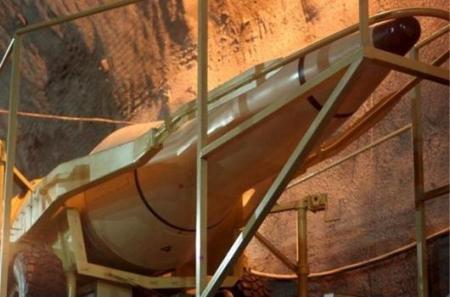
A missile is seen inside an underground missile base for Iran’s Islamic Revolutionary Guards Corps (IRGC) Aerospace Force at an undisclosed location in this undated handout photo courtesy of Fars News. REUTERS/farsnews.com/Handout via Reuters
President Barack Obama said Friday April 1, that “Iran has so far followed the letter of the [nuclear] agreement [with the six powers], but, he added, “the spirit of the agreement involves Iran also sending signals to the world community and business that it is not going to be engaging in a range of provocative actions that may scare business off,” such as fire-testing nuclear-capable ballistic missiles, calling for Israel’s destruction and providing Hizballah with missiles.
At a news conference ending the two-day nuclear summit in Washington, Obama went on to say: “Some of the concerns that Iran has expressed, we are going to work with them to address.” But meanwhile, he said, the US and its allies are taking steps to help Iraq benefit from the agreement by facilitating trade and banking transactions with the Islamic Republic; and the US Treasury Department is seeking to set clearer investment guidelines for Iran.
Two days earlier, on Wednesday, March 30, the Obama administration was reported acting to give Iran limited access to US dollars, since the almost complete lifting of sanctions in January, which netted Tehran an injection of approximately $150 billion “hasn’t provided the country with sufficient economic benefits.”
DEBKAfile’s analysts note the inherent contradiction in the US president’s approach to Tehran: He wants Iran to be compensated with a never-ending shower of dollars for agreeing to limit its nuclear program, but “the US and its allies” cannot question how the money is spent.
So while the West, under orders from Washington, must scramble to boost the Iranian economy, Tehran may continue to test ballistic missiles until they are nuclear capable, and top up the Hizballah terrorists’ arsenal with ever deadlier tools of death.
This glaring inconsistency arises from a fact largely hidden from the world public: last year’s landmark nuclear accord was concluded by Iran’s President Hassan Rouhani and Foreign Minister Mohammed Javad Zarif – not by the real powers in Tehran, supreme leader Ayatollah Ali Khamenei, the Revolutionary Guards chiefs and the ayatollahs at the head of the fundamentalist Shiite movement.
Indeed, even Rouhani was never allowed to formally sign the deal, much less gain Khamenei’s ratification.
But now, Rouhani’s fate depends on keeping those ruling elites happy. He has found himself in the position of their hostage, a cash machine for keeping the funds for the Islamic Republic’s projects termed by President Obama “provocative” constantly on tap.
Those projects which are currently in full spate clearly leave every little over from the $150bn to even start lifting the Iranian economy out of its mess, while the Rouhani’s government carries the can for that too. Indeed, DEBKAfile’s Iranians sources disclose, the president is forced to earmark 50 percent of the funds released by sanctions relief for items listed under “defense”, namely, the nuclear and missile development programs, Iran’s overseas military operations, including the Syrian war, subsidizing the Lebanese Hizballah, and establishing new terrorist organizations for attacks on Israel, such as the Al-Sabirin, on the Golan.
These enterprises eat up billions of dollars. Just Iran’s operations in Syria and support for Hizballah cost Tehran $2 billion every month.
Syrian president Bashar Assad didn’t surprise anyone when he revealed that the five-year civil war in his country had cost $200 billion so far. With this kind of spending on “defense,” the Iranian economy will continue to decay, while Rouhani’s government, which promised the people a better life after the nuclear accord, must bow to the will of the hard-liners or face the consequences.
Our Iranian sources report that Obama’s inconsistent approach to Iran has sharpened the discord between the two major political camps in Tehran and put the “reformists” in extreme peril should they dare to defy the hard-liners who hold the levers of power. Khamenei has publicly threatened to liquidate such opposition leaders as Rouhani and his ally, former president Ayatollah Akbar Hashemi Rafsanjani.
President Rouhani has been put by Obama’s policy in the position of having to keep Tehran’s hungry war- and terror-mongers flush with cash, if he is to save himself and fellow “reformists” from “liquidation.”
The supreme leader was pretty blunt when he said on Friday, March 29, “Those who say the future is in negotiations, not in missiles, are either ignorant or traitors.” This comment underlined Iran’s overriding commitment to developing nuclear missiles and a warning to “traitors” of their fate: execution or a life sentence in a grim Iranian jail.
Opposition leaders to Khamenei Hashemi Rafsanjani (l.) and President Hassan Rouhani
US President Barack Obama and Secretary of State Kerry fondly hoped that the nuclear agreement signed with Iran would bring to the surface a new type of leader – more liberal and less liable to restart the nuclear program – in the twin elections taking place in the Islamic Republic Friday, Feb. 26.
They are in for a disappointment, say DEBKAfile’s Iran analysts.
But one change is almost certain. The Iranian voter will be choosing for the first time on one day a new parliament (Majlis) and the Assembly of Experts, the only body competent to choose the republic’s next supreme leader. The incumbent, 75-year-old Ayatollah Ali Khamenei, is not expected to outlast the four-year term of the next Assembly of Experts. He has been struggling with prostate cancer for more than five years. Treatment and surgery have failed to halt its spread to other parts of his body. And strong medication is necessary to keep him looking alert and vigorous in his public appearances.
Speculation is already rife in Tehran about who the next Assembly of Experts will choose as his successor.
Seen from the perspective of Iran’s Islamic regime, the supreme leader’s overarching duty is to continue the legacy of its revolutionary founder, Ayatollah Ruhollah Khomeini and his successor, Ali Khamenei.
Rather than meeting the expectations of the US president, his main job is to continue strengthening Iran on its path of religious extremism, ideological subversion, export of the Shiite revolution (by terror) and the continuation of the nuclear program.
The biggest political bombshell of the election campaign was a proposal by former President Hashemi Rafsanjani to establish a national leadership council now, instead of choosing a new leader later. This was intended to replace the single dictatorial rule of the supreme leader by a collective leadership.
Iran’s fundamentalists, especially the powerful Revolutionary Guards Corps (IRGC), were in uproar about a proposal they viewed as so dangerous for the regime that they threatened to confiscate the Rafsanjani clan’s extensive property and put him on trial for corruption and fraud.
His beloved son Mahdi has already been in jail for months on those charges.
But Rafsanjani is not easily cowed. He knew that if he backed down, the extremists would crack down on him still harder.
So this week, he announced that he had pulled the strings which gave Hassan Rouhani victory in the last presidential election. And, in the campaign leading up to the Assembly of Experts vote, he threw his support behind a moderate cleric, Hassan Khomeini, who happens to be the grandson of the Islamic regime’s iconic founder.
The IRGC and radical mullahs thereupon launched an offensive to thwart what they believed to be Rafsanjani’s dangerous plan to establish a triumvirate with Rouhani and Khomeini Junior to head a future government.
Senior radical clerics, such as ayatollahs Ahama Alam-Alhoda, Mohammad Mesbah-Yazdi, Ahmad Jannati, and Mohammad Yazi, slandered him and fought to remove his candidates for the twin slates.
They branded the former president and members of a “reformist” list as British agents, a particularly malicious charge because the UK is still seen in Iran as a symbol of colonialism and meddler in foreign politics.
Ayatollah Khamenei himself harshly denounced “foreign agents” as “addicted to foreign influence,” who should be barred from the Assembly of Experts.
Young Khomenei saw the light and withdrew his candidacy for its membership. But Rafsanjani stood out to the last as a central figure in the two campaigns, even after a majority of the candidates condemned as “moderates and reformists” were barred from the elections.
In the end, the two slates were left with no more than 30 moderate candidates out of a total of 3,000 vying for the 375 seats in the two bodies.
Their defeat as a group was predestined, and the two elections leave Iran more politically and religiously radicalized than before.
A key figure expected to take center stage in the new parliament is Gholam-Ali Haddad-Adel, whose daughter is married to Khamenei’s mover-and-shaker son. Another is Haddad-Adel, one of Khamenei’s top advisers, who heads a faction of religious fundamentalists and IRGC officers. He is the frontrunner to succeed Ali Larijani as Speaker of the next Majlis.
They are all expected to gang up to prevent President Rouhani from running for a second term when it runs out in two years – contrary to the Obama administration’s hopes. They will also do their best to make him a lame duck and whipping boy for all the country’s economic ills for the remainder of his presidency.
He will find the new parliament less cooperative than the outgoing House under Larijani when he tries to introduce liberal policies.
Unofficial results of the two elections are expected to be released Friday night. The extremists and hardliners have engineered them so that they will win big and set Iran on a course that it is even more radical than before on such key issues as its nuclear weapons program and intervention in Syria and other Middle East conflicts. They will keep the feud with Saudi Arabia alive and pursue every possible means of venting their bottomless hatred of Israel and seeking its destruction.
 Iranian women by a poster of Ayatollah Khomeini Reuters






 anneinpt
 artaxes
 danmillerinpanama
 davidking1530
 Peter Hofman
 Joseph Wouk
 Peter
Peter Louisiana Steve
 WarSclerotic
Recent Comments