Posted tagged ‘Jihad’

Israel News – Hamas test-fired 10 rockets from Gaza into the sea

January 26, 2015

Hamas test-fired 10 rockets from Gaza into the sea

Hamas fired 10 rockets into the Mediterranean Sea today, testing its rocket range limit.

Jan 26, 2015, 01:30PM | Yael Klein

via Israel News – Hamas test-fired 10 rockets from Gaza into the sea – JerusalemOnline.


Archive photo

Archive photo Photo Credit: Reuters/Channel 2 News

Today (Sun), the Palestinians completed a series of rocket testing. They fired 10 rockets toward the Mediterranean Sea.

Hamas has been conducting many tests over the past several months.  However, a barrage of 10 rockets is considered rare. 70 rockets have been fired by Hamas in tests conducted since Operation Protective Edge. The Palestinians are attempting to improve the rockets’ range limit. However, they are facing difficulties in doing so due to the lack of supplies delivered to them from outside the Gaza Strip. Therefore, they manufacture the explosives themselves, which is another reason for conducting the many tests.

One month ago, a siren alarm went off in a number of communities in the Eshkol Regional Council, after a rocket fired from Gaza exploded in Southern Israel, without causing injuries or damage.

Eshkol Mayor Haim Yalin stated following the incident: “The state had an extraordinary opportunity to agree upon a long-term arrangement with the Palestinians. Instead, we find ourselves with a ticking clock in hour hands, counting down to the next war.”

Saudi Arabia Unveils Badass Anti-ISIS Wall That Makes U.S. Border Look Like Swiss Cheese

January 26, 2015

Saudi Arabia Unveils Badass Anti-ISIS Wall That Makes U.S. Border Look Like Swiss Cheese

By Jennifer Van Laar (1 week ago) | Military, Nation

via Saudi Arabia Unveils Badass Anti-ISIS Wall That Makes U.S. Border Look Like Swiss Cheese.


Getty – YASSER AL-ZAYYA
The oldest way to defend land is through a physical barrier, such as a wall. Yet some Americans dispute the efficacy of a wall when defending our southern border against infiltration from either illegal immigrants or terrorists.

One country is not buying into that notion: Saudi Arabia.

Last week, a Saudi general was killed in a skirmish with ISIS at the border with Iraq, along which Saudi Arabia is constructing a 600-mile-long wall:

Image Credit: Telegraph

Image Credit: UPI

The prospect of this wall separating Iraq from Saudi Arabia is not a welcome one for ISIS, whose goals include capturing Saudi Arabia – home to the Holy Mosques of Mecca and Medina.

Saudi Arabia’s oil fields are another key strategic goal for the terror group intent on creating a Sharia-run caliphate.

Construction began on the wall last September and, according to Jane’s,

“…consists of 78 monitoring towers, eight command centers, 10 mobile surveillance vehicles, 32 rapid-response centers, and three rapid intervention squads, all linked by a fiber-optic communications network.”

The Kingdom is also creating a 1,000 mile wall along its border with Yemen to the south.

If the Saudis are putting this much stock in a wall, why do some in the United States claim that tactic won’t work here?

For one thing, the Mexican-U.S. border wall being constructed is more of a fence and not a fully integrated security solution.

Also, the Saudi’s wall is solely constructed in a desert, while the United States boundary includes a river. Wildlife concerns make it difficult to place a fortified border wall next to a body of water.

But, with the economic and public health threat posed by illegal border crossings and potential terrorism concerns, some feel that Congress might do well to take a cue from the Saudi solution–especially with the reported weaknesses with our own border security.

Unfortunately, within the fortress they are building, Saudi Arabia is still denying its citizens the most basic human rights. According to Yahoo News, the kingdom has ‘sparked an international outcry’ for sentencing a blogger to 1,000 lashings for insulting Islam.

The New Antisemitism: Chesler

January 25, 2015

The New Antisemitism: Chesler, You Tube, January 23, 2015

(Phyllis Chester is — gasp — a Zionist! She even fails to understand that Islam is the religion of peace and claims that it is a danger to Western civilization which —  as all right left-thinking people know — is the cause of all evil in the world. I’m with her.– DM)

IDF sends reinforcement to north amid tensions with Syria, Hezbollah, Iran

January 22, 2015

IDF sends reinforcement to north amid tensions with Syria, Hezbollah, Iran

After airstrike attributed to Israel kills top Iranian general alongside six Hezbollah fighters, IDF shifts forces to north.

Yoav Zitun

Published: 01.22.15, 16:41 / Israel News

via IDF sends reinforcement to north amid tensions with Syria, Hezbollah, Iran – Israel News, Ynetnews.


The IDF is sending reinforcements to the north Thursday and Friday amid tensions along the border with Syria and Lebanon in wake of a deadly attack attributed to Israel by foreign media on military officials from Hezbollah and Iran in Syria.


Military vehicles travel north (Photo: George Ginsburg)

Massive IDF movement is expected in the upcoming day within Israel’s northern communities, top IDF sources told Ynet. The forces, they said, are part of the IDF’s attempt to address growing tensions in the north, which have seen both Hezbollah and Iran vow to take revenge for the alleged Israeli attack.


IDF forces in the north on Thursday (Photo: Avihu Shapira)

Meanwhile, reports in Lebanon claimed that supposed Israeli military aircraft were flying over the country’s south. According to the reports, the planes were launching decoy balloons that leave a white trail of smoke.

Report also said IAF helicopters were spotted flying at low altitude over Lebanese villages in the south of the country.

Security forces on the Lebanese border went on high alert briefly on Wednesday evening over an initial fear of a suspected infiltration in the upper Galilee, after suspicious figures were identified near the border fence.

Close to 6pm, residents of Manara, Yiftah, Malkia, Dovev and Avivim in the Ramim mountain range area were instructed to stay in their homes, while kibbutz security squads from Malkia to Metula were called to the area. Roads in the area were also closed for traffic.

After sending troops to the area, the IDF Spokesman announced no infiltration has occurred, but asked that residents remained in their homes.

Al Arabiya reported that five people, who were suspected to be infiltrators, disappeared when the IDF arrived in the area.

A senior Iranian Revolutionary Guard commander said Israel will be punished for killing one of its generals in the airstrike in Syria that also killed six Lebanese Hezbollah fighters.

Nasser Soltani says “Israel will certainly pay for what it did.” He spoke during a ceremony Wednesday for Brig. Gen. Mohammad Ali Allahdadi, who will be buried in his hometown of Sirjan in southeastern Iran on Thursday.

Soltani is quoted by the state TV as saying Allahdadi was “martyred while performing his advisory mission” in Syria.

The Kuwaiti newspaper Al Rai reported Thursday morning that – despite an Israeli official denying the claim to Reuters – Israel was well aware of who was in the convoy and that the Iranian general was the intended target.


Roi Kais, AP and AFP contributed to this report


Iran: We Will Continue Arming Terrorists

January 22, 2015

Iran: We Will Continue Arming Terrorists in Judea and Samaria

Iran plans to continue its efforts to “destroy the Zionist entity” – and that includes arming terrorists in Judea and Samaria, it said.

By Yaakov Levi

First Publish: 1/22/2015, 8:51 AM

via Iran: We Will Continue Arming Terrorists – Defense/Security – News – Arutz Sheva.


IDF soldier on Lebanese bordder

IDF soldier on Lebanese bordder
Ayal Margolin/Flash 90

Iran plans to continue its efforts to “destroy the Zionist entity” – and that includes arming terrorists in Judea and Samaria.

“The arming policy of the West Bank is one of the policies of Iran and we will use all our capabilities in this way,” said Iranian Defense Minister Hossein Dehghan.

Dehghan made the comments at a memorial service for General Abu Ali Tabtabai, who along with Jihad Mughniyeh and a crew of Hezbollah terrorists, were eliminated in an Israel Air Force strike Monday. The vehicles in which the two were riding had left Lebanon a few hours earlier, Lebanese sources said. The purpose of the tour, the sources said, was to allow Tabtabai to review the situation on the border with the purpose of developing new attacks on Israel.

Commenting on the attack, Deghan said “The Zionist attack will not be passed over,” and that Iran would take the “appropriate action” when it wished to.

Tensions remained high in northern Israel in the aftermath of the elimination of Mughniyeh, said to be Hezbollah’s “commander of the Golan Heights area,” and Iranian General Tabtabai.

Roads in the area of the Israel-Lebanon border have been closed, and tanks and armored personnel carriers were reportedly deployed along the northern border. Lebanese media outlets are reporting Israeli jets and helicopters over the Har Dov area along the Lebanese border.

Late Wednesday, the US issued a travel warning to American citizens and government personnel in Israel, citing the recent tensions along Israel’s northern borders and the terrorist stabbing attack in Tel Aviv.

“Because of concerns about security on Israel’s northern borders, U.S. government personnel are currently required to obtain advance approval if they wish to travel within 1.5 miles (2.4 kilometers) of the Lebanon border, or travel on or east of Route 98 in the Golan Heights,” the advisory said.

“Further, in light of the stabbing attack on a public bus in Tel Aviv on January 21, U.S. citizens are reminded that due to security concerns, U.S. government employees are prohibited from using public buses throughout Israel and the West Bank (Judea and Samaria -ed.),” the statement added.

Despite the increased tension, residents have been urged to continue with their regular daily routines.

Giora Zeltz, chairman of the Upper Galilee Regional Council, said Wednesday that despite the large deployment of IDF troops and the increased police and border guard presence in the area, “we have not received any instructions to change our normal activities. The message we are getting from security officials is that life should continue as usual.”

Zeltz said that IDF officials had given him three reasons for the increased vigilance: Besides concerns that Hezbollah will try to carry out revenge terror attacks against Israel – “for which we must be ready,” he said – “the IDF is also sending a message to our neighbors that we will not tolerate attacks, and to give residents a sense of safety

Op-Ed: Is the Middle East on the Verge of Exploding?

January 22, 2015

Op-Ed: Is the Middle East on the Verge of Exploding? Israel National News, Dr. Mordechai Kedar, January 21, 2015

The potential for destruction posed by all these disputes is enormous, and the explosion may shake Europe and even cross the Atlantic when Islamic extremists blow their minds at the deep crisis affecting the entire Middle East.

*************

Five separate sets of potential fireworks have been igniting simultaneously in the Middle East for the last few weeks, each of them adding fuel to the fires caused by the others. If and when these developments reach the kindling point, the entire region may go up in uncontrollable flames.

These are the sources of the fires:

a. the rivalry between Al Qaeda and ISIS

b. the intensifying struggle between the Sunni Jabhat al Nusra and the Shiite Hezbollah.

c. the successes of the Houthis in Yemen

d. Islamic fury at what is happening in Egypt

e. the struggle between Islamic extremists and European regimes

Here are the details::

a. In the militant Sunni arena there is a fierce struggle going on between organizations that identify with Al Qaeda’s ideology, headed by Jabhat al Nusra – and ISIS, which is in control over large swathes of Syria and Iraq and has established the most stringent form of Sharia law in those areas. The rivalry has caused Al Qaeda to increase its attacks on the Yemeni government, abort an American attempt to rescue two hostages from Yemen last December, accept responsibility for the Charlie Hebdo murders in Paris and announce that the brothers who perpetrate the murders received their training in an Al Qaeda camp in Yemen.

b. The war between the Shiite Assad regime and Hezbollah on the one hand and Sunni Jabhat al Nusra on the other is getting more fierce. Jabhat al Nusra managed to cause Hezbollah painful losses  recently, near the Hermon Mountain range and in a daring infiltration into the Bekaa Valley in Lebanon, by way of the city of Arsal. Hezbollah is feeling pressured, leading the Iranian revolutionary guards to send some top officers to help the organization plan its next operation and improve its results.

c. In Yemen, the Shiite Houthi militias have succeeded in taking over the capital city of Sana’a and appear as the winning side in the long, drawn out war the Houthis have been waging against that nation. Iran is backing the Houthis, the US is helping the regime, both against al Qaeda and the Houthis. Without doubt, Yemen is a battlefield where Iran is forcing its enemies to follow its agenda, including nearby Saudi Arabia, which sees the Houthis as a direct threat to its security. Several years ago, the Saudis built a separation fence all along their border with Yemen, in an attempt to keep out Al Qaeda and Houthi militants.

d. There is a fierce struggle in Egypt between the Muslim Brotherhood – the mother of all Sunni Jihad organizations – and the regime of Al Sisi. As far as this struggle goes, Sisi is reinstating the government of Gamal abdel Nasser, Sadat and Mubarak, all of whom waged relentless and bloody war against the “Brothers”.  As of now, Sisi has succeeded in pushing the “Brothers” from positions of rule into jail cells and from the streets to the cemetery. His successes are infuriating his detractors.    The fight is to the finish, and it is also being waged in the Sinai Desert between the government and the militias of Anṣār Bayt al-Maqdis, who recently switched its loyalties from al Qaeda to ISIS.

Europe is a relatively new battleground, but the last few weeks showed mounting escalation, both in jihadist activities against governments (see France) and in governmental activity against jihad cells (Belgium, Germany). Jihad activities in Europe are encouraged by ISIS as well as Al Qaeda, both sides of the rivalry mentioned above. People who return from Jihad in Syria, Iraq and Libya – but not just they – are participating in the heated struggle for Europe’s image.

These struggles are synergetic, they influence one another because an Islamic militant sees what is happening in one area and decides to take revenge for Allah in another. This sinking into chaos can lead to large number of large scale conflicts, with many more participants and deaths, especially if these organizations succeed in drawing Israel and the US into the fray. We have already heard of ground troups from the West fighting ISIS.

Israel must understand the dangers now permeating the atmosphere of the MIddle East with oil vapors that any spark can set on fire and that no one will be able to put out before the entire region is ablaze. The potential for destruction posed by all these disputes is enormous, and the explosion may shake Europe and even cross the Atlantic when Islamic extremists blow their minds at the deep crisis affecting the entire Middle East.

The massive Islamic immigration to Europe turned that continent into a branch of the Middle East’s disputes, so that Europe will not be immune to the many deep seated and broad Middle Eastern problems. And America is on the same planet, so that the Middle East disasters will find their way to its shores as well.


Iran escalates threats, vows to shower Israel with ‘Shahab’ missiles

January 22, 2015

Iran escalates threats, vows to shower Israel with ‘Shahab’ missiles

via Iran escalates threats, vows to shower Israel with ‘Shahab’ missiles – Middle East – Jerusalem Post.


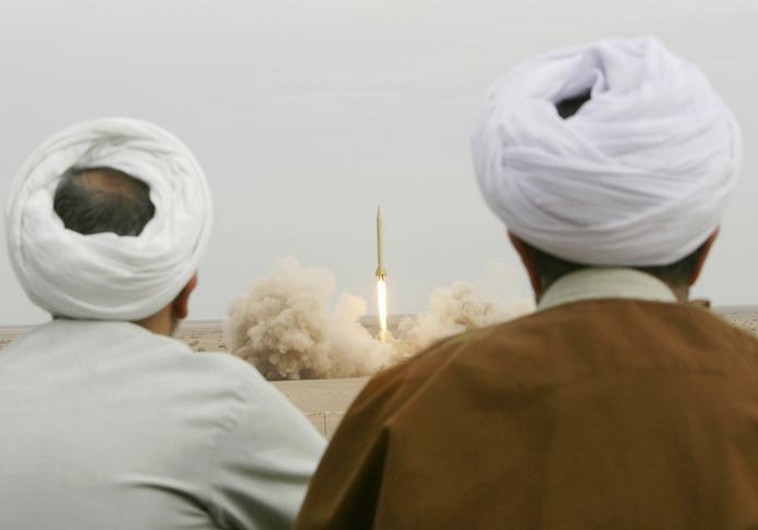
Iranian clerics watch the firing of missile of Shahab 3 during a war game near the holy city of Qom

Iranian clerics watch the firing of a Shahab-3 missile during a war game in a desert near the city of Qom. (photo credit:REUTERS)


Iranian clerics watch the firing of a Shahab-3 missile during a war game in a desert near the city of Qom. (photo credit:REUTERS)

Senior Iranian military officials on Thursday continued to threaten “crushing responses” against Israel for the death of a top Revolutionary Guards officer in an airstrike on the Syrian side of the Golan Heights earlier this week.

The attack also killed senior Hezbollah operatives, among them the son of the late arch-terrorist Imad Mughniyeh.

Brigadier General Hossein Salami, the second-in-command in the Revolutionary Guards, told Iranian state media on Thursday that his troops are capable of firing Shahab-3 missiles on Israel.

“[Israel] should be waiting for crushing responses,” Salami is quoted as saying.

The Iranian officer said that the Golan attack was an attempt to “change the balance of power in Syria” and help “the takfirist,” a reference to the Islamist elements working to topple the government of Tehran’s key ally, President Bashar Assad.

“[The Golan strike] was the reflection of numerous defeats that both Americans and Israelis have suffered in their current strategies,” he said.

“They have seen IRGC’s reactions before, and [therefore] they are worried, and they will witness destructive thunderbolts in practice,” he said.

Hamas Commander Deif to Hezbollah Leader Nasrallah: “Let’s fight Israel together”

January 22, 2015

Hamas Commander Deif to Hezbollah Leader Nasrallah: “Let’s fight Israel together”

The head of Hamas’ military wing signed a letter of condolence sent to Hezbollah’s Secretary General after the eliminations in Syria.

Jan 22, 2015, 04:00 PM | Gal Cohen

via Israel News – Hamas Commander Deif to Hezbollah Leader Nasrallah: “Let’s fight Israel together” – JerusalemOnline.


Photo Credit: Channel 2 News

Five months after the elimination attempt targeting the head of Hamas’ military wing, Mohammed Deif sent a message from hiding in Gaza and expressed his condolences regarding the attack that killed senior level Hezbollah officials, according to a report from Hezbollah’s television station.

Deif sent condolences to Hezbollah Secretary Genral Hassan Nasrallah following the elimination of senior level officials in his terror organization by Israel.  “We must unite our forces against the Zionist enemy and its allies,” Deif wrote to Nasrallah.

“Israel is the real enemy of the Islamic State and all guns should be pointed in its direction,” the Hamas terrorist added.  “We must carry out the next act together, so there will be crossfire throughout the occupied land.”

Sources close to Hezbollah said that earlier this week, the decision was made to respond to the attack in Syria that killed six senior level officials of the terror organization.  According to the report, the decision to respond was accepted by the joint resistance forces in Iran, Syria, and Hezbollah. 

Photo Credit: Channel 2 News/AP

According to the sources, the IDF’s attack did not weaken the terror organization in the Golan and did not disconnect the activities of Hezbollah from Rosh Ha-Nikra to Syria.  They claim Israel’s actions will not prevent the terror organization’s fighters from invading the Galilee in the next confrontation with the IDF.  

Iran, for its part, also addressed Israel’s actions.  Tehran admitted that one of their generals was killed in the incident and said they are committed to responding to the “Israeli aggression.”  An Iranian news site said “following the Zionist attack against the opposition in Syria, General Allahdadi, a former commander of the Iranian Revolutionary Guards, was killed along with Jihad Mughniyeh and three others, who were in the same car.”  An Iranian official added that “the resistance will respond forcefully at the right place and time to this terrorist attack.” 

CNN: Pentagon Pushing for Evacuation of US Embassy in Yemen Before Situation Worsens

January 22, 2015

CNN: Pentagon Pushing for Evacuation of US Embassy in Yemen Before Situation Worsens

by Edwin Mora21 Jan 2015Washington, DC

via CNN: Pentagon Pushing for Evacuation of US Embassy in Yemen Before Situation Worsens – Breitbart.


WASHINGTON — Obama’s State Department wants to keep the U.S. Embassy in Yemen’s capital open for as long as possible, but the Pentagon is pushing for an evacuation before the current situation worsens.

CNN made that revelation on Tuesday citing an unnamed U.S. official with direct knowledge of the evacuation planning.

“The military is aware the State Department wants to keep the embassy open as long as possible, the official said, noting that it’s a valuable tool to monitor Al Qaeda in Yemen,” revealed CNN. “But behind the scenes the Pentagon is pressing the point that if an evacuation becomes necessary they want to do it before the chaos in Sanaa descends into a ‘non permissive environment,’ akin to combat.”

An unnamed defense official told NBC News that the embassy is “not at risk,” adding that the Shiite Muslim Houthi fighters sympathetic to Iran “do not pose a risk to Americans.”

Iran is considered a major state sponsor of terrorism by the United States.

CNN reported on Wednesday that al-Qaeda, a Sunni jihadist group, is expected to benefit from the Houthi takeover of “government buildings, the main airport and a share of power” in Sanaa.

Al-Qaeda’s Yemeni branch is considered a “significant threat” by the United States.

The decision to evacuate State personnel and other Americans in Yemen ultimately lies within the State Department.

Unnamed defense officials “stressed that an evacuation would be ordered if Americans come under serious threat,” noted NBC News.

Roughly 100 U.S. Marines are providing security at the U.S. Embassy in Sanaa.

CNN reported that the Pentagon is prepared to evacuate Americans if necessary.

Two U.S. Navy warships, the USS Iwo Jima and the USS Fort McHenry, were reportedly moved into the Red Sea late on Monday as the Pentagon prepared to evacuate Americans from Yemen if asked to do so by the State Department.

The two Navy amphibious ships were moved “because they will be in the best position if asked,” by the State Department to remove Americans from the embassy, the U.S. official told CNN.

According to the official, the evacuation of “several hundred Americans” from the embassy would be complex and could take several days to carry out.

“Nobody should think this would be easy,” the official told CNN.

U.S. Embassy vehicle was fired upon on Tuesday in the Yemeni capital of Sanaa where U.S.-backed government security forces are clashing with Houthi rebels.

That same day, Houthi fighters reportedly stormed the presidential palace in Sanaa.

Yemeni security forces mounted a brief resistance before relinquishing control of the palace. Yemeni President Abdu Rabu Mansour is reportedly being held captive by the Houthi rebels.

Inside the Fight against ISIS in Iraq

January 21, 2015

Inside the Fight against ISIS in Iraq

January 21, 2015 by Victor Soehngen

via Inside the Fight against ISIS in Iraq | FrontPage Magazine.


Kurdish Brigadier General Qadir points to a plume of smoke that emerged immediately following a US airstrike on an ISIS target. Kirkuk, Iraq (Victor Soehngen).

Amongst the wheat fields of Iraq’s Fertile Crescent, the battle for the nation’s future and the safety of the Kurdistan regional capital of Erbil, continues to rage.

In this sector of the 650-mile Kurdish front Against ISIS (or its Arabic acronym- DAESH, as it is referred to locally) the fight is close quarters, intimate, and fought between relatively small groups of men. The terrain is wide, open, and grassy with features Americans would associate more with the state of Nebraska than with Iraq.

Just a few days ago this area was completely under the control of DAESH militants. They had taken over peoples homes, held local women captive for months, and implemented their own brand of Sharia Law. That just changed due to the brave actions of the Kurdish Peshmerga (with the help of closely coordinated US airstrikes) who liberated the town of Makhmour and several neighboring villages.

I met with the commander of Peshmerga forces in the area, General Najad, who candidly explained the situation from the Kurdish point of view. Holding a BA in political science and his masters in Foreign Policy, the general spoke (in English) with an air that was as much statesman as it was field commander. He was understandably busy; men under his command just retook 6 villages each with 25-30 ISIS fighters in them over the last 48 hours.

When asked if US airstrikes were helping his forces on the ground, his leathered and serious face produced a child like grin. “They have taken out their heavy weapons.” He went on to explain that DAESH has proven to be deadly accurate with artillery, armor, and mortars alike. Is that because some of its members had specialized military training or had experience from foreign armies? He simply replied, “I don’t know, no prisoners have been taken.”

Obama Not Doing Enough

When asked about whether or not he felt that President Obama was doing enough to help the Kurdish people, Najad pointed out how large and powerful America is and how (comparatively) small the fight is here. “If Mr. Obama really wanted to, DAESH could be destroyed in days,” he told me. That is a feeling I heard echoed up and down the front. One Peshmerga Sgt. told me in broken English plainly, “Bush good for Kurdistan, Obama bad,” adding a thumb up and thumb down sign to illustrate his point.

Historically, US support for the Kurds has been erratic going all the way back to the days when the Shah of Iran was Iraq’s greatest threat. The CIA worked with the Iranians at the time to arm the Kurdish rebels against the government in Baghdad, but after Iraq and Iran signed the Algiers Agreement in 1975, support ceased. To make matters worse, as the Iraqi army renewed its campaign to exterminate the (now almost defenseless) Kurds, the Shah denied them access to escape to Iran. For our part, the US under the Carter Administration did nothing to intervene. When asked about the crisis, Henry Kissinger famously quipped, “covert action should not be confused for missionary work.”

The Kurds Have Two Friends: The Mountains and the United States of America

Although temporarily soured, US-Kurdish relations would have a major turn around under the first Bush Administration. Not only did the US-led coalition blunt Saddam Hussein’s territorial ambitions, but Bush Senior also helped implement “Operation Southern Watch,” the no-fly zone that protected the Kurdish region from the feared chemical attacks for the next 12 years. This relationship was only to grow stronger when George W. Bush’s administration ordered Operation Iraqi Freedom (in which the Kurds were actively involved).

These are not things the Kurdish people have forgotten. The Bush family is spoken of more highly here than in west Texas. For the Kurds, who are literally surrounded by enemies on all sides, it is comforting to know you have a friend in the strongest military power on earth. More so than other allies, they have enthusiastically worked with US special operation units and have been strong advocates of democracy in a region not known for its free principles. Maybe because of their simple and good-hearted nature, the Kurds have always been a people who appreciate action over talk. After all the work previous administrations have done to create such a strong alliance, it would be very unwise for the current administration to use hot air and half measures to lose one of its only strong allies in the region.

The Flag of ISIS Flew Proudly in the Distance

Back on the front line, the General provided me with a military escort and allowed me to tour villages still being contested with ISIS. Aliawa, Geheba, Jewerla — these small hamlets are little know even amongst Kurds and would probably mean nothing to an American, but this is where the modern war on terror is playing out. Populated with not more than 100 people per village (mostly by wheat farmers and their families), these villages are of both a strategic importance for the Kurdistan Regional Government (KRG) and ISIS.

To begin with, they’re less than 50 miles from the regional capital of Erbil, which has served as an impromptu refugee camp for thousands of Christians, Yazidis, and other minorities seeking safety behind the Peshmerga line. Beyond that, they sit near a major crossroads between DAESH-occupied Mosul and the contested area around Kirkuk.

I first visited the village of Aliawa, where I met with Captain Ziryan and a small group of 20-25 soldiers. Theirs was the unit that just reclaimed the village — and the ISIS fighters did not leave without a fight. The captain took me to a house where two mornings prior he led a group of men in to a fierce firefight with eight militants who were lying in wait for them. Pools of blood were still damp on the floor where the Captain said he personally shot one of them who came charging down the stairs firing in either a last ditch effort at escape or suicide. Three more were killed in the house, while four others managed to escape, speeding away in a lightly armored pickup truck over the open expanse to the next ISIS-controlled village.

This is the type of combat that has come to characterize the fight against DAESH, at least along the Kurdish Front. They were able to achieve remarkable success fighting “symmetrically” at first — that is to say, using relatively conventional tactics to capture and control territory. However, as air strikes, numerical superiority, and the dogged determination of its adversaries begin to prevail against it, a serious question arises: Will we start to see ISIS begin returning to the tactics of one of its predecessors, Al Qaida?

If the fighting method DAESH has been using most recently is evidence of anything, then all signs point to yes.

When I visited the commander of the last Kurdish-controlled village before ISIS took control of the territory, buildings still smoldered in the aftermath of a US airstrike and the smell of burnt gasoline from destroyed enemy trucks lingered in the air. Colonel Shabak met me in traditional Kurdish style; sitting cross-legged on the floor and with a piping hot cup of tea waiting. When I asked him point blank what supplies he believed that America could offer him that would help most on the ground, he did not hesitate: “Military engineers to help train us against the bombs.” By that, of course, he meant specialized training in IED detection.

He told me that when DAESH first attacked, it used heavy weapons, even Abrams tanks (recently seized from an Iraqi brigade in nearby Mosul), but as American and European airstrikes have degraded its capability to utilize these weapons, the open plains of this territory have left small groups of militants defending increasingly isolated “island” villages that scatter the open countryside every few kilometers.

As the Peshmerga is “systematically” over running these positions one by one (with infantry, light armor, and air strikes), ISIS fighters are doing what the Kurdish officers are telling me they have been seeing up and down the front: They are littering roads, fields, and neighborhoods with IEDs. This has been slowing the advance of Kurdish forces and is perhaps evidence that the now highly visible ISIS might soon be shrinking in to a more shadowy, subversive role.

A role that is all too familiar for US military personnel, who spent years fighting that type of fight in the region.

The shrinking of ISIS will obviously not happen overnight. DAESH still occupies large swaths of territory, the recapturing of which will take the consolidated effort of several unlikely bedfellows. In much of the land that it occupies, there is a genuine support base amongst some of the populace, mostly old Ba’ath Party loyalists and Sunni Arabs who felt ostracized by Malaki’s government in Baghdad. In addition, the militants still have an arsenal at their disposal — an arsenal that, mind you, would put dozens of legitimate armies to shame — and they don’t appear to be giving up anytime soon.

Yet sipping tea with a Peshmerga Colonel on the front line, I couldn’t help but think that ISIS commanders, in this region at least, might just have bitten off more than they can chew.