TEHRAN (Tasnim) – A former military intelligence officer with the CIA said MKO works closely with the Israeli spy agency Mossad, noting that the terror group is seeking to create a “false narrative” about Tehran’s nuclear program in a bid to provoke the US to attack Iran.
“MKO (Mojahedin-e Khalq Organization, also known as MEK) works closely with the Israeli intelligence service Mossad and is also supported by many pro-Israel American former and current officials as well as congressmen. It has frequently surfaced documents, laptops and false information produced by the Israelis to convince the public that Iran is seeking a nuclear weapon and is cheating on the agreement to limit its nuclear research program. Its ultimate objective is to create a false narrative that would encourage the United States to attack Iran, killing Americans and Iranians but serving Israeli foreign policy objectives…,” Philip Giraldi told the Tasnim news agency.
Philip Giraldi is a former counter-terrorism specialist and military intelligence officer of the United States Central Intelligence Agency (CIA) and a columnist and television commentator who is the Executive Director of the Council for the National Interest, a group that advocates for more even handed policies by the US government in the Middle East.
Following is the full text of the interview.
Tasnim: The terrorist group Mujahedin-e Khalq Organization (MKO) recently claimed that the Islamic Republic is violating the 2015 nuclear agreement between Tehran and world powers by secretly conducting research on nuclear weapons components at the Parchin military site in Iran. The spokesman for the Atomic Energy Organization of Iran (AEOI) strongly dismissed the allegations by the terrorist group against Tehran’s nuclear program, saying the claims are of no value for the Islamic Republic. What is your take on this? What is behind such allegations?
Giraldi: MKO works closely with the Israeli intelligence service Mossad and is also supported by many pro-Israel American former and current officials as well as congressmen. It has frequently surfaced documents, laptops and false information produced by the Israelis to convince the public that Iran is seeking a nuclear weapon and is cheating on the agreement to limit its nuclear research program. Its ultimate objective is to create a false narrative that would encourage the United States to attack Iran, killing Americans and Iranians but serving Israeli foreign policy objectives. Iran does not, in fact, threaten either Israel or the United States.
Tasnim: It seems that the new US administration has breathed new life into the terrorist group. Republican US Senator John McCain praised the head of the MKO, in a recent meeting in the Albanian capital, Tirana. What do you think? What is terror group looking for under Trump?
Giraldi: I fear that the Trump administration, which has already warned Iran several times and is currently undertaking a policy review, will prove to be extremely hostile to Iran. Some congressmen like McCain and Lindsey Graham will be part of this process, using fabricated information provided by MKO to make a case that Iran must be treated as an enemy and dealt with accordingly. This propaganda is also coming directly to Washington from Saudi Arabia as well as Israel.
Tasnim: As you know, more than 17,000 Iranians, many of them civilians, have been killed at the hands of the MKO in different acts of terrorism including bombings in public places, and targeted killings. Why do Saudi Arabia, US, and certain European countries continue to support the anti-Iran terror group despite its heinous crimes?
Giraldi: MKO has also killed Americans and was until four years ago on the list of US recognized terrorist organizations. That MKO has killed many thousands of innocent Iranians is not reported in the western media, so no one knows about it. Those who support MKO do so because they believe it to be a legitimate opposition group to the Iranian government, which is a cause that they support. They fail to recognize that it continues to use terror as a weapon and that it operates as a cult that actually brainwashes and even kills its followers when they step out of line. It is a useful tool for the Iran haters.
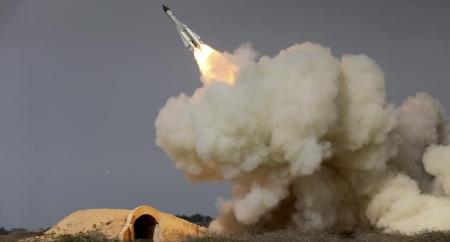
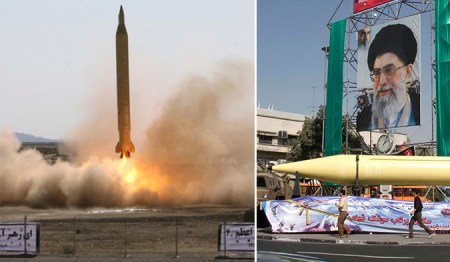
There is great shrieking from the “international community” over Iran’s ballistic missile test over the weekend, the latest of what the Wall Street Journal reports is nearly a dozen such tests since President Obama’s Iran nuclear deal — the Joint Comprehensive Plan of Action (JCPOA) — went into effect last year. The United Nations Security Council, which endorsed the deal even though no party has actually signed it, is set to hold an “emergency meeting” today to discuss the matter.
What is there to discuss?
French foreign minister Jean-Marc Ayrault said it best in complaining that such tests are “contrary to the spirit” of the JCPOA.
When they talk about a violation of the “spirit” of a pact, you can be certain that there has been no violation of the letter of a pact — i.e., the thing that is required for there to be a real, actionable violation.
The provocative missile tests further elucidate the obvious: Iran’s nuclear program is about developing nuclear weapons — which Iran will be able to do consistent with the terms of the JCPOA. But regardless of the crying and gnashing of teeth at the emergency meeting, the tests do not violate the JCPOA.
For that, we can thank Barack Obama.
Prior to the JCPOA, Iran’s ballistic missile activities were barred by a series of UN resolutions backed by American and international sanctions. But sensing Obama’s desperation to complete the JCPOA at any cost, and by indulging any fiction, Iran threatened to walk away from the table unless the restraints on missiles were eliminated.
Obama quietly accommodated the mullahs — despite having repeatedly told the American people that the negotiations were confined to nuclear activities, and that his administration would hold a hard line on Iranian missile development and terror promotion.
There was nothing in the JCPOA about ballistic missiles. When Obama brought the deal to the Security Council, however, he used its endorsement vehicle — Resolution 2231 — to undermine the missile sanctions. The pertinent paragraph is buried deep in the resolution (Annex B, Paragraph 3 — scroll all the way down to page 99 of 104). It states (italics is mine):
Iran is called upon not to undertake any activity related to ballistic missiles designed to be capable of delivering nuclear weapons, including launches using such ballistic missile technology, until the date eight years after the JCPOA Adoption Day[.] …
Notice three things:
The words “Iran is called upon” not to undertake ballistic missile activity. That is not the same as being forbidden to do so. Because of the way the JCPOA was codified in the resolution – for what the parties will call international law purposes — the former proscription against ballistic missile activity has been watered down to a mere encouragement of Iran not to engage in such activity. In UN-speak, a country’s ignoring what the Security Council “calls upon” it to do does not even rise to the level of a tsk-tsk letter from the principal. It is just a suggestion along the lines of “Pretty please don’t fire missiles after we’ve told everyone how moderate you are.”
Then there is the fiction: the paragraph refers to “missiles designed to be capable of delivering nuclear weapons.” Bear in mind the fraud on which the JCPOA is based: Iran has no intention of manufacturing or otherwise acquiring nuclear weapons. Therefore, so the story goes, Iran would not build missiles “designed to be capable of delivering nuclear weapons.” We, like the Obama administration, are supposed to ignore what Iran’s missiles are technologically capable of doing and trust the stated intentions of the world’s chief sponsor of jihadist terror.
The resolution not only abandons the prohibition against missile activity; even the insipid suggestion that Iran not engage in such activity is only operative for eight years. After that, they can do what they want … just as, after no more than 15 years, they are free to develop nuclear weapons free and clear.
How could Obama have agreed to such disastrous terms (in addition to giving the mullah’s over $100 billion in sanctions relief — including ransom cash)? The Obama administration illusion was that Iran was in the process of a powerful, inevitable reform movement that would, in the course of eight to 15 years, transmogrify it into a normal, reasonable, moderate nation-state. According to this thinking, by the time the JCPOA ran its course, Iran would be so benign it would probably not want nuclear missiles; and even if it did, that would be no problem because, by then, its regime would have evolved into a stable pillar of the international community.
Of course, we now know this was a consciously false narrative that Obama peddled to sell the Iran deal to the public — orchestrated by deputy national security adviser Ben Rhodes, with the help of an echo chamber media.
Iran ratcheted up missile development almost immediately after the JCPOA went into effect. The missiles test-fired last March were inscribed “Israel must be wiped out.” In Tehran, that’s known as “the spirit” of the agreement.
(The views expressed in this article are mine and do not necessarily reflect those of Warsclerotic or any of its other editors. — DM)
A recent article by David Samuels at the New York Times Magazine, based on an interview with Obama’s foreign policy guru Ben Rhodes, purported to explain how, and about what, the Obama administration lied to get public support for the Iran Scam. According to the article, the principal Obama lie involved who was the Iranian president when the negotiations with Iran began. It’s much deeper and worse than that. As Paul Harvey would say, “Here’s “the rest of the story.”
Iranian President Rouhani was elected on June 15, 2013 and assumed office on August 3d. According to Rhodes,
negotiations started when the ostensibly moderate Hassan Rouhani was elected president, providing an opening for the administration to reach out in friendship. In reality, as Samuels gets administration officials to admit, negotiations began when “hardliner” Mahmoud Ahmadinejad was still president. [Emphasis added.]
There is no necessary inconsistency — about a month and a half elapsed between Rouhani’s election and becoming the Iranian president. However, that is of little if any consequences.
Mr. Rosen, interviewed in the above video, touches, very briefly, on other problems with the Iran scam. Back in the world of reality, “we” had been negotiating with Iran during Ahmadinejad’s presidency for a couple of years, during which “we” gave Iran everything it requested. This article is intended to provide substantially more information and analysis of what happened and why during “our” secret bilateral negotiations with Iran.
The Negotiations
According to interviews with Iranian vice president and Atomic Energy Organization head Ali Akbar Salehi, translated and published by the Middle East Media Research Institute (MEMRI) on August 17, 2015, secret bilateral negotiations between the Obama and Iranian regimes had begun much earlier and included Obama’s Assistant Secretary of State, William Burns. During those negotiations, the U.S. conceded that Iran’s right to Uranium enrichment would be respected, that Iran’s missile programs would be left out of any deal and that its efforts to develop nuclear warheads and other devices would be ignored. Obama had essentially caved in to Iran’s demands even before the existence of negotiations was acknowledged.
In an interview published in the daily Iran on August 4, 2015 under the title “The Black Box of the Secret Negotiations between Iran and America,” Iranian vice president and Atomic Energy Organization head Ali Akbar Salehi, who is a senior member of Iran’s negotiation team and was foreign minister under president Ahmadinejad, revealed new details on the secret bilateral talks between Iran and the U.S. that started during Ahmadinejad’s second presidential term. According to Salehi, U.S. Secretary of Energy Dr. Ernest Moniz, whom Salehi knew from his period as a doctoral student at MIT, was appointed to the American negotiation team at Salehi’s request, a request which the Americans met within hours. [Emphasis added.]
Salehi added that Khamenei agreed to open a direct channel of negotiations between Iran and the U.S. on the condition that the talks would yield results from the start and would not deal with any other issue, especially not with U.S.-Iran relations. Following this, Salehi demanded, via the Omani mediator Sultan Qaboos, that the U.S. recognize Iran’s right to enrich uranium, and received a letter from Qaboos expressing such American recognition, which he relayed to Ahmadinejad. [Emphasis added.]
The secret bilateral Iran-US negotiations had begun with a letter for Iran delivered to an Omani official. Salehi told an Omani intermediary.
‘I am not sure how serious the Americans are, but I will give you a note. Tell them that these are our demands. Deliver it on your next visit to Oman.’ I wrote down four clear issues, one of which was official recognition of rights to [uranium] enrichment. I figured that if the Americans were sincere in their offer, then they must agree to these four demands. Mr. Suri gave this short letter to the mediator, and stressed that these were Iran’s demands. [He added that]if the Americans wished to solve this issue, they were welcome to, otherwise dealing with White House proposals would be useless and unwarranted…
“All the demands in the letter were related to the nuclear challenge. These were issues we have always come against, such as closing the nuclear dossier [in the Security Council], official recognition of [Iran’s] right to enrich [uranium], and resolving the issue of Iran’s actions under the PMD [Possible Military Dimensions]. After receiving the letter, the Americans said: ‘We are certainly willing and able to easily solve the issues Iran has brought up.’ [Emphasis added.]
The first meeting between the Iranian and American negotiating teams began following eight months of coordination. Iran
sent a team to Oman that included the deputy foreign minister for European and American affairs, Mr. [Ali Asghar] Khaji, as well as several CEOs. The Americans were surprised in the first meeting and said, ‘We cannot believe this is happening. We thought Oman was joking. We aren’t even prepared for these talks with you.’
“Q: What was the level of the team that the Americans dispatched?
“A: It included Assistant Secretary of State William Burns. They said: ‘We only came to see if Iran was truly willing to negotiate.’ Our representative gave them the required response and eventually there were talks on this issue. The initial result was achieved and the ground was prepared for further coordination. [Emphasis added.]
“Q: How were the Americans convinced that the Iranian diplomats who were dispatched had the necessary authority?
“A: [Until] that phase, Iran and America had not been allowed to sit opposite each other at the negotiating table. The fact that Iran had sent a deputy foreign minister to the talks indicated its seriousness. The Americans also noticed how seriously [Iran was taking] the issue. At that meeting, Khaji pressed the Americans to set up a roadmap for the negotiations, and eventually the talks of a roadmap were postponed to the second meeting. At the second meeting, Khaji warned the Americans: ‘We did not come here for lengthy negotiations. If you are serious, you must officially recognize enrichment, otherwise we cannot enter into bilateral talks. But if you officially recognize enrichment, then we too are serious and willing to meet your concerns on the nuclear matter as part of international regulations.‘
International regulations were later agreed upon by the P5+1 negotiators, in the form of the Iran – IAEA secret deals concerning nuke inspections and a UN resolution dealing with Iranian missiles. Neither was included in the Joint Cooperative Plan of Action.
“Of course, at that time we were [still] exchanging various information with the Americans via the [Omani] mediation, and this is documented at the Foreign Ministry. We did not do it in the form of official letters, but rather unofficially and not on paper. The Omani mediator later came to Iran, held talks with us, and then later spoke to the Americans and told them our positions, so that the ties were not severed. But there was no possibility for direct talks.
“Thus, a real opportunity was squandered because, at the time, the Americans were genuinely prepared to make real concessions to Iran. Perhaps it was God’s will that the process progressed like that and the results were [eventually] in our favor. In any case, several months passed and Obama was reelected in America [in November 2012]. I thought that, unlike the first time, we must not waste time in coordinating [within regime bodies], so with the leader’s backing and according to my personal decision, I dispatched our representatives to negotiate with the Americans in Oman. [Emphasis added.]
“Q: Didn’t you have another meeting with the leader about the process and content of the talks?
“A: No. Obviously during the process I wrote a letter to the leader detailing the problems. He said ‘try to solve them.’ He was always supportive but told me to ‘act in a manner that includes necessary coordination [within the regime]. In this situation, I dispatched Khaji to the second meeting in Oman (around March 2013) and it was a positive meeting. Both sides stayed in Oman for two or three days and the result was that the Omani ruler sent a letter to Ahmadinejad saying that the American representative had announced official recognition of Iran’s enrichment rights. Sultan Qaboos sent the same letter to the American president. When Ahmadinejad received the letter, several friends said that this move would be fruitless and that the Americans do not keep [their] commitments. [But] we had advanced to this stage. [Emphasis added.]
. . . . We [then ] prepared ourselves for the third meeting with the Americans in order to set up the roadmap and detail the mutual commitments. All this happened while Iran was nearing the presidential elections [in June 2013]. At that time, the leader’s office told me that I had to cease negotiations and let the next government handle the talks after the results of the elections were known.
. . . .
“Q: What was the Americans’ position in the first meetings between Iran and the P5+1 held during the Rohani government [era]?
“A:After the Rohani government began to operate – along with the second term of President Obama – the new negotiations between Iran and the P5+1 were started. By then, Kerry was no longer an American senator but had been appointed secretary of state. As a senator, Kerry had been appointed by Obama to be in charge of handling the nuclear dossier, and then [in December 2012] he was appointed secretary of state. [Emphasis added.]
“Before that, the Omani mediator, who had close relations with Kerry, told us that Kerry would soon be appointed [U.S.] secretary of state. During the period when the secret negotiations with the Americans were underway in Oman, there was a situation in which it was easier to obtain concessions from the Americans. After the Rohani government and the American administration [of Obama’s second term] took power, and Kerry become secretary of state, the Americans spoke from a more assertive position. They no longer showed the same degree of eagerness to advance the negotiations. Their position became harder, and the threshold of their demands rose. At the same time, on the Iranian side, the situation [also] changed, and a most professional negotiating team took responsibility for negotiating with the P5+1. [Emphasis added.]
As to the reluctance of the American side to make concessions after Kerry had replaced Clinton as the Secretary of State, it must be remembered that “we” had already made all or most of the concessions Iran sought.
Another positive point was that [President] Rohani oversaw the dossier, knew its limits, and as a result succeeded in producing a good strategy to advance the nuclear dossier. At the same time, Rohani took responsibility for everything. Many may have reservations and ask why we were putting ourselves in danger, but Rohani’s willingness to take responsibility was very high. There are those who say, from a political standpoint, that he was willing to take a very great risk, because, had the negotiations not achieved certain results, and had the best results not been achieved, he would have faced waves of criticism. But he took upon himself the risk of [such] criticism. In any event, he agreed to take this responsibility, and, God be praised, even God helped him, and he emerged [from the negotiations] with his head held high.” [Emphasis added.]
At some point, the negotiations broke down over “technical issues.” Salehi, a technical expert as well as a diplomat, found a way to resolve those issues.
A . . . condition was that American experts would come to Iran and talk to me. I said that as vice president I would not enter into a discussion with their experts, because as far as the protocol was concerned, this would create a bad situation and they would say that Iran would capitulate in any situation. This was not good for Iran, but I was willing to quit and to come to the talks not as vice president but as the foreign minister’s scientific advisor. Larijani said ‘he’s right.’ The next day, Fereydoun asked me to come to his office and asked me who my [American] counterpart was. I said, the [U.S.] Department of Energy. Fereydoun called Araghchi and said, ‘Tell [U.S. Under Secretary of State for Political Affairs] Ms. [Wendy] Sherman that Salehi is joining the negotiations provided that the American secretary of energy also joins the negotiators.‘ Araghchi and Sherman were the liaison between Iran and America. Araghchi said in this conversation with Fereydoun that on such short notice it was unlikely that they [i.e. the Americans] would send their secretary of energy. I heard [Fereydoun’s conversation with Araghchi]. In short, Fereydoun asked and Araghchi contacted Sherman and a few hours later a report that they welcomed Iran’s proposal arrived. [Emphasis added.]
“Q: How many hours did it take before they [the Americans] said yes?
“A: It didn’t take long. I went to see Fereydoun in the evening and the next day they responded. This was because of the time difference [between Tehran and Washington].
“Q: The general perception was that because Moniz was brought into the negotiating team, you were brought into the Iranian team?
“A: [On the contrary,] Moniz came because of me. In any case, in February [2015] I joined [the negotiations], and praise God, matters moved forward with Moniz.
“Q: Did you and Moniz study together?
“A: Moniz knew me more than I knew him. I saw him at the annual IAEA meeting. When I was a doctoral student at MIT, he had just been accepted as a staff member. He is five years older than me.
“Q: Did you take one of his classes?
“A: No. He knew me because my doctoral studies advisor was his close friend and right hand man in scientific fields. Even now he is an advisor on many of Moniz’s scientific programs. Many of my fellow students are now experts for Moniz. One of them was Mujid Kazimi, who is of Palestinian origin. He recently died. He was two years older than me but we were friends in college. After graduating, he became the head of the MIT Department of Nuclear Science and was a prominent figure who carried out many programs with Moniz.
“Q: How did Moniz treat you initially?
“A: In light of our prior acquaintance, he was excited. We’ve known each other for years and he treated [me] very well. Our first meeting was in public.
“Q: How did you feel when you heard Moniz was coming [to the talks]?
“A: I was very happy. I was assured. I said that the prestige of the Islamic Republic remained intact [because] an Iranian official would not speak to an American expert but rather would negotiate with a high-ranking American official. This was very important. Second, as I said before, he could make a decision [while] an expert could not. We had a very interesting group meeting. The American experts were same ones who had dealt with disarmament vis-à-vis the Soviet Union.
“I said [to Moniz]: ‘I cannot accept your offer for various reasons.’ One American expert said, ‘We do not accept the basic assumption of your calculations.’ I said, ‘Tell us what is the basic assumption of [your] calculations so we can work from there.’ He said ‘we can’t do that.’ I said to them, ‘If you don’t accept our estimation, then tell us [yours]. You say that you cannot because this [exposes] your process. If we show [our] calculation, you will know our working secrets.’ So then I said ‘ok, what do we do now?’ The meeting stagnated.
“Later I thought about it… and said ‘Mr. Moniz, I am here with full authority from my country. Anything I sign will be acceptable to my country. Do you have full authority as well, or does any result achieved here need to be asked and clarified with officials from other countries?’ He said ‘no, I have full authority.’
“Q: Did you have full authority?
“A: Yes. In the scientific discussions, I knew the level of [Iran’s] demands. I said, ‘Mr. Moniz, you made an offer to Iran, and Iran rejects it. I want to ask you a question. If you can answer it [then] I will have no problem with your offer.’ I continued and said: ‘Show me one place on earth where enrichment is taking place using the method you are demanding of us. If you can give me even a single example then I will sign on the spot and we will become the second country to enrich in this method.’ He looked [at me] and then announced that the meeting was over, and we spoke. We had the first private meeting that lasted two or three hours. He said: ‘Mr. Salehi, when I was called [out of the negotiating room, it was because] Obama wanted to speak to me. Now I am free [to continue]. What you said is acceptable [but] there are practical problems with your offer.’ I said, ‘Do you agree? Then I relinquish that proposal.’ Eventually. we reached mutual understandings on this issue. I said ‘let’s start from the top.’ This diplomatic challenge should be published in a memoir so that everyone can understand how we reached 6,000 centrifuges. It is a very nice story… [Emphasis added.]
The Aftermath
Ultimately, Iran’s right to enrich Uranium was fully recognized in the Joint Plan of Action (JPOA) and in the subsequent Joint Cooperative Plan of Action (JCPOA). As to the missile aspects of the “possible military dimensions” of Iran’s nuclear program, neither document dealt with Iranian missiles. That was left up to the United Nations Security Council to deal with in its resolution approving the nuke “deal.” In light of Russia’s warm relations with Iran, Russia would most likely veto any proposed Security Council resolution finding Iran in violation of its missile provisions.
The “verification” mechanism was included only in separate and secret “side deal(s)” solely between Iran and the IAEAwhich members of the U.S. Congress were not permitted to see during the pseudo-approval process. According to Kerry, he was not permitted to see them either, but the details were “fully explained” to him.
Here’s a video of Secretary Kerry under questioning about the side deals:
Questions might have been better directed to this Kerry clone; more candid answers might have been provided.
Any pretense that the IAEA will have “any time, anywhere” access to Iran’s military sites was mere rhetoric, as acknowledged by US Under Secretary of State Wendy Sherman on July 16th
“I think this is one of those circumstances where we have all been rhetorical from time to time,” Sherman said in a conference call with Israeli diplomatic reporters. “That phrase, anytime, anywhere, is something that became popular rhetoric, but I think people understood that if the IAEA felt it had to have access, and had a justification for that access, that it would be guaranteed, and that is what happened.” [Emphasis added.]
Ms. Sherman was right about the rhetorical nature of administration assertions, but wrong about IAEA access, of which there will apparently be little or none pursuant to the secret deals between Iran and the IAEA.
In an interview on Al Jazeera TV last week Ali Akbar Velayati, Security Adviser to Iran’s Supreme Leader, stated that
United Nations nuclear inspectors from the International Atomic Energy Agency would not be given access to Tehran’s sensitive military nuclear sites.
. . . .
“First, allow me to emphasize that the issue of the missiles and of Iran’s defensive capabilities were not part of the negotiations to begin with,” Velayati said. [Emphasis added.]
“No matter what pressure is exerted, Iran never has negotiated and never will negotiate with others – America, Europe, or any other country – about the nature and quality of missiles it should manufacture or possess, or about the defensive military equipment that it needs. This is out of the question.” [Emphasis added.]
. . . .
Reza Najafi, Iran’s ambassador and permanent envoy to the IAEA, stated over the weekend that “no country is permitted to know the details of future inspections conducted by the IAEA.” [Emphasis added.]
Najafi’s statement could mean (a) that no details about inspection methodology will be disclosed, (b) that no details about inspection results will be disclosed or (c) both. If inspection methodologies — who did the inspections as well as when, where and how, are not disclosed, what useful purpose will they serve, other than for Iran? If details of the results of inspections are not disclosed, that will also be the case. How, in either or both cases, will the members of the P5+1 negotiating teams have sufficient information to decide whether to “snap back” sanctions — if doing so is now even possible — or anything else? [Emphasis added.]
Conclusions
One can only hope that our next president will dispose of the Iranian “deal” as a treaty which Obama refused to submit to the Congress as the Constitution requires or at least ostentatiously ignore it and grant no more concessions.
Otherwise, be not afraid; Obama the Great One — the smartest person in any room and the best President ever — has made us safe. How can one possibly be safer alive than dead?
“Mr. President, you bear responsibility for every martyr whose blood has been spilled. If you look at all the breaches of promise and disruptions by ‘the Great Satan,’ America, and declare firmly that you are cancelling the JCPOA because of America’s violations [of it], history will never forget your heroic and revolutionary move; the heart of the Imam Mahdi will also rejoice because of you.
**************************
In an April 12, 2016 interview, Mahdi Abdi, the director of affairs for the northwestern provinces and towns for the coordination council of the fundamentalist organization Hezbollah Iran, which is affiliated with Iran’s ideological circles, warned leaders of Iran’s pragmatic camp, including Expediency Council chairman and former president Hashemi Rafsanjani and former president Mohammad Khatami, not to undermine the status of Iranian Supreme Leader Ali Khamenei. The interview was published by the organization’s Hezbollah Press website.
Echoing Khamenei’s accusations of treason against Rafsanjani,[1]Abdi accused both Rafsanjani and Khatami of treason, and threatened them with physical harm. He also demanded that they stop calling for the release of the 2009 Green Protest leaders – former Majlis speaker Mehdi Karroubi and former prime minister Mir-Hossein Mousavi, as well as Mousavi’s wife – who have been under house arrest since 2011.
Reminding Iranian President Hassan Rohani of what happened to Iranian officials who criticized Iran’s Islamic Revolution and the path of its founder Ayatollah Ruhollah Khomeini, Abdi warned him to neither trust the U.S. nor follow it, or to face the consequences. He also called on him to cancel the JCPOA.
The following are the main points of the interview. It should be noted that following its publication, the piece was removed from the website.
“This Is Hezbollah’s Final Warning To Hashemi [Rafsanjani] And The Grey Fox, [Former President] Mohammad Khatami, And To Anyone Who Even Thinks About Marginalizing The Imam Khamenei”
“The heart of [Iranian] Hezbollah is bleeding because of the tremendous disloyalty and the great treason of the unwise and two-faced [pragmatic camp leaders Rafsanjani and Rohani]. Imam Khamenei need not feel alone today because certain individuals who are betraying Islam and the Revolution are daring to boast and to express opinions in society, while others dare to speak about an end to the arrest of the hated leaders of the ‘2009 fitna’ [Mousavi and Karroubi]. [These traitors are] publishing [such statements] freely online and talking about it, and [expecting] the security apparatuses to remain silent.
“The hated leaders of the ‘fitna’ should thank God that they are under arrest. Otherwise, Hezbollah would not have given them a chance to breathe. This is Hezbollah’s final warning to Hashemi [Rafsanjani] and the grey fox, [former president] Mohammad Khatami, and to anyone who even thinks about marginalizing the Imam Khamenei, trampling the principles and foundations of the Islamic Revolution, and seeking to present the plan for a leadership council [as Rafsanjani recently proposed as a replacement for the position of Supreme Leader] in order to weaken the Rule of the Jurisprudent.
“If they are thinking of sparking more ‘fitna’ in Iran, Hezbollah will activate its popular punishment units, the ones called The Martyrs For the Revolution and Islam, and, once and for all, blind the eyes of the ‘fitna.'”
To President Rohani: “Hezbollah Obeys The Orders Of The Imam Khamenei And Will Never Allow These Things, Which Contradict Islam, To Be Carried Out In Iran”
“Mr. President [Rohani], many times the Koran called on Muslims to learn from history. We look at history today and see what became of those who trusted foreigners, especially those who trusted the bloodthirsty ‘Great Satan’ America. They all suffered harm, and ultimately ended up regretting having trusted America.
“If Islamic Iran wishes today to receive aid from the ‘arrogant nations,’ chiefly America, it must turn its back on the civilization of Islam and on the descendants of [Imam] Ali [that is, the Shi’ites] and must melt into their false civilization, must deny jihad, must abandon the oneness of God, and must enable them [i.e. the ‘arrogant nations’] to boycott Iran, using the human rights [issue] as an excuse. Or, much like the backwards Arab countries, [Iran] must hand over its interests and its oil in favor of the interests of the arrogance and of America, must back down from the explicit Koranic commandment about supporting the oppressed, and must form a friendly alliance with the occupying Israel.
“All the above contradict the original, noble civilization of Mohammad’s Islam. Hezbollah obeys the orders of the Imam Khamenei, and will never allow these things, which contradict Islam, to be carried out in Iran – because all the days are [the days of] Ashura [the Shi’ite days of mourning for the Imam Hossein who died in the Battle of Karbala in 680] and all the lands are [the lands of] Karbala – unless we lose our minds. Hezbollah will never forget all of this.
“Mr. President, tomorrow history will judge, and coming generations will ask: ‘Has the nation achieved anything from pouring concrete into the heart of Iran’s science [i.e. into the heavy water reactor in Arak, as required under the JCPOA]? Why do the officials still trust foreigners, although they repeatedly break their promises?’
“Mr. President, you bear responsibility for every martyr whose blood has been spilled. If you look at all the breaches of promise and disruptions by ‘the Great Satan,’ America, and declare firmly that you are cancelling the JCPOA because of America’s violations [of it], history will never forget your heroic and revolutionary move; the heart of the Imam Mahdi will also rejoice because of you.
“In the Islamic Republic [of Iran], the president, in his various terms of office, is legitimate so long as he truly believes, in thought and in action, in the rule of the jurisprudent. We must learn from history – from the fate of people such as [president Abolhassan] Bani Sadr [deposed in 1981] and [Ayatollah Hossein Ali] Montazeri [designated heir of Ayatollah Khomeini, who spent the latter years of his life under house arrest until his death in 2009], who trampled the line of [the rule of the jurisprudent], and were shamed and humiliated.”
Abdi concluded the interview by referring to a tweet by Rafsanjani about the current era as “an age of talks and not missiles”[2] and said: “It is enough to respond to Rafsanjani with a single word, and to say that had the Islamic State [ISIS] entered Iran and captured your daughter, you would have known the value of Iran’s missile and defense industry, and of the heroic deeds of the brave men of the IRGC.”
Following Khamenei’s recent harsh attacks on what he termed the U.S. administration’s misconduct and its failure to implement the economic and banking aspects of the JCPOA,[4] Khamenei’s representatives from Iran’s pragmatic camp have been openly talking with U.S. officials in order to extract from the U.S. more concessions that are not part of the JCPOA.
— DM)
On Tuesday Eli Lake reported on the State Department’s letter to the governors of all 50 states as well as some local officials asking them to reconsider any laws on the books that called for divesting state funds from businesses interacting with Iran’s economy, or laws that would deny contracts to companies that do business with Iran. Following up on Lake’s report, Seth Lipsky noted that the “delicate wording — the wheedling tone — of the administration letter suggests that Secretary of State Kerry knows he has no authority to demand that states retreat from their laws against the Iranian regime.” It is imperative in the view of the Obama administration that we fund and otherwise facilitate Iran’s ventures. Now Omri Ceren writes from the Israel Project to update readers on developments in our unfolding partnership with the Islamic Republic of Iran:
On Monday Secretary Kerry met with Iranian FM Zarif in New York. His comments after the meeting suggest that he and Zarif are preparing this Friday to announce new American concessions facilitating Iranian access to the U.S. dollar [a]:
QUESTION: Mr. Secretary, did you reach any agreement (inaudible) with the dollar issue and the (inaudible) sanctions issue?
SECRETARY KERRY: We agreed to – we’re both working at making sure that the JCPOA, the Iran agreement – nuclear agreement – is implemented in exactly the way that it was meant to be and that all the parties to that agreement get the benefits that they are supposed to get out of the agreement. So we worked on a number of key things today, achieved progress on it, and we agreed to meet on Friday. After the signing of the climate change agreement, we will meet again to sort of solidify what we talked about today.
Note specifically Kerry’s claim that the Iranians are entitled to the concession under the terms of the deal: “the benefits that they are supposed to get out of the agreement.” He made the same claim two weeks ago, in comments that were promptly picked up by Iranian state media [b]. That’s not how the deal was sold last summer. Back then top Treasury officials explicitly and repeatedly declared that prohibitions on Iranian dollar access would remain in place to maintain U.S. leverage on Iranian terrorism, human rights violations, ballistic missile development, etc. [c].
But then a month ago the Iranians started declaring that they weren’t getting the relief they’re entitled to because of banking sanctions, and they demanded dollar access lest they walk away from the deal [d][e][f][g]. Within weeks of the new Iranian demands the AP and WSJ confirmed that the administration was planning to offer dollar-related concessions, which the AP noted “would reverse a ban that… the administration had vowed to maintain” [h][i][j]. That triggered a Congressional backlash, forcing the administration to publicly declare that no new concessions were planned [k].
Now it looks like concessions are back on the agenda, and so are Secretary Kerry’s claims that the Iranians are entitled to them. On Monday evening – few hours after his meeting with Zarif – Kerry again suggested that the Iranians aren’t getting all the relief they’re due, saying they’ve only gotten $3 billion of $55 billion in escrowed oil funds [m]:
Do you remember the debate over how much money Iran was going to get?… We calculated it to be about $55 billion when you really take a hard look at the economy and what is happening. Guess what, folks; you know how much they have received to date as I stand here tonight? About $3 billion.
That’s a strange claim to make. 1st, there’s no reason it would be true: during the 17 month JPOA negotiation period the Iranians repatriated $700 million of escrowed oil funds per month, or $11.9 billion total. So a mechanism exists for getting Iran those funds. 2nd, statements from Iran suggest it’s false: the Iranians declared in February that they had been given full access to $100 billion in escrowed reserves [l]. The State Department’s Marie Harf responded by blaming Treasury for underestimating the windfall at $50 billion – an estimate that Kerry repeated – but she didn’t suggest that the Iranians were wrong about having been given access to their escrowed funds [n].
Journalists spent Tuesday trying to figure out what Kerry could have been suggesting, and if he was intentionally echoing the Iranian position. The debate spilled into the State Department press briefing [o]. The AP’s Matt Lee: “he’s making the Iranians’ argument here, right?… saying that the Iranians are correct when they complain… that the Iranians have a point here.” CNN’s Elise Labott: “he’s trying to tell the Iranians they’re going to get their money?” Reuters’s Lesley Wroughton: “Is it because of the financial restrictions that the Iranians are arguing about?”
State Department spokesman Kirby repeatedly denied that Kerry had intended to echo Iranian talking points.
Following Khamenei’s recent harsh attacks on what he termed the U.S. administration’s misconduct and its failure to implement the economic and banking aspects of the JCPOA,[4] Khamenei’s representatives from Iran’s pragmatic camp have been openly talking with U.S. officials in order to extract from the U.S. more concessions that are not part of the JCPOA.
***************************
Intense U.S.-Iran negotiations appear to be underway at this time, on various levels. They have included meetings this week in New York between Iranian Foreign Minister Zarif and U.S. Secretary of State Kerry, and an April 14 Washington meeting between Central Bank of Iran governor Valiollah Seif and U.S. Secretary of the Treasury Jack Lew.[1]
According to an April 19 report on the Iranian website Sahamnews.org, which is affiliated with Iran’s Green Movement, President Obama asked to meet with Iranian President Hassan Rohani in two secret letters sent in late March to both Iranian Supreme Leader Ali Khamenei and President Rohani.
According to the report, Obama wrote in the letters that Iran has a limited-time opportunity to cooperate with the U.S. in order to resolve the problems in Syria, Iraq, and Yemen, and promised that if Iran agreed to a meeting between him and Rohani, he would be willing to participate in any conference to this end.
The Sahamnews report further stressed that Supreme Leader Khamenei discussed the request with President Rohani, that Rohani said that Iran should accept the request and meet with Obama, and that such a meeting could lead to an end to the crises in the region while increasing Iran’s influence in their resolution. Rohani promised Khamenei that any move would be coordinated with him and reported to him. According to the report, Khamenei agreed with Rohani.
The Sahamnews report also emphasized that Khamenei’s recent aggressively anti-U.S. speeches were aimed at maintaining an anti-U.S. atmosphere among the Iranian public, whereas in private meetings he expresses a different position.
Further hints regarding Obama’s wish to meet with Iranian officials could be found in both American[2] and Iranian[3] media.
Following Khamenei’s recent harsh attacks on what he termed the U.S. administration’s misconduct and its failure to implement the economic and banking aspects of the JCPOA,[4] Khamenei’s representatives from Iran’s pragmatic camp have been openly talking with U.S. officials in order to extract from the U.S. more concessions that are not part of the JCPOA.
After Secretary of State Kerry’s April 19 New York meeting with Foreign Minister Zarif, the two announced that their discussions would continue on April 22. Zarif said that the meeting had been aimed “to ensure that Iran obtains the interests that it anticipates [receiving] from the JCPOA… The main focus of the talks concerned the correct implementation of the JCPOA so that the sides, especially the Iranian people, will receive what is coming to them under this agreement.”[5]
Secretary of State Kerry said that progress had been made in several issues, and that the two would meet again on April 22: “We agreed to – we’re both working at making sure that the JCPOA, the Iran agreement – nuclear agreement – is implemented in exactly the way that it was meant to be and that all the parties to that agreement get the benefits that they are supposed to get out of the agreement. So we worked on a number of key things today, achieved progress on it, and we agreed to meet on Friday. After the signing of the climate change agreement, we will meet again to sort of solidify what we talked about today.”[6]
On Monday, State John Kerry visited Hiroshima. While there meeting with this G-7 counterparts, Kerry strongly hinted that his visit was a precursor to a visit to the site of the first nuclear bombing by President Barack Obama next month.
The irony of course is that for all his professed commitment to ridding the world of nuclear weapons, Obama is responsible for drastically increasing the chance of nuclear war. Indeed, Obama’s own actions lend easily to the conclusion that he wishes to do penance for America’s decision to attack Hiroshima and Nagasaki with nuclear bombs, (and so end World War II with far fewer dead than a land invasion of Japan would have required), by enabling America’s enemies to target the US and its allies with nuclear weapons.
Obama views his nuclear deal with Iran – the so-called Joint Comprehensive Plan of Action – as his greatest foreign policy achievement.
Unfortunately for his legacy building and for global security, for the past several weeks news stories have made clear that critics of Obama’s nuclear deal with Iran – who claimed that far from preventing Iran from acquiring nuclear weapons, the deal would enable Iran to develop them in broad daylight, and encourage Iran to step up its support for terror and regional aggression – were entirely correct.
All of the warnings sounded by Prime Minister Binyamin Netanyahu and other leaders have been borne out. All of the warnings sounded by the leaders of the Persian Gulf kingdoms were correct.
Every major commitment Obama made to Congress and to US allies in the wake of the deal have been shown in retrospect to have been false.
Obama told Congress that while the deal did require the US to drop its nuclear sanctions against Iran, the non-nuclear sanctions would remain in place. In recent weeks, media reports have made clear that the administration’s commitment to maintain non-nuclear sanctions on Iran has collapsed.
This collapse is most immediately apparent in the administration’s helpless response to Iran’s recent tests of ballistic missiles.
When Obama and his advisers sold the nuclear deal to Congress last summer, they promised that the binding UN Security Council resolution that Ambassador Samantha Power rushed to pass to anchor the nuclear deal maintained the previous UN ban on Iranian ballistic missile development.
This, it works out, was a lie. The resolution significantly waters down the language. Given the weak language, today the Russians convincingly argue that Iran’s recent tests of ballistic missiles did not violate the UN resolution.
Then and now, Obama and his advisers argued that ballistic missiles are not part of the mullahs’ nuclear project. This claim, which made little sense at the time, makes no sense whatsoever today.
Ballistic missiles of course are the Iranians’ delivery systems of choice for their nuclear warheads.
This fact was driven home last week when the Iranian media reported the opening of a high explosives factory in Tehran. Iranian Defense Minister Hossein Dehgan participated in the opening ceremony.
According to nuclear experts, HMX or octogen high explosives are suitable for building nuclear triggers. In other words, Tehran just built, in a very public manner, a new facility for its military nuclear program. As Iran’s Tasnim news service explained, HMX is a “high explosive used almost exclusively in military applications, including as a solid rocket propellant.”
Last week at his nuclear conference, Obama said that Iran has been abiding by the letter, but not the spirit of the nuclear deal. But this is another lie. Last summer Obama insisted that the deal would prevent Iran from developing and building nuclear weapons by imposing an intrusive, unlimited inspections regime on all of Iran’s nuclear sites.
But this was a lie. As Eli Lake noted in Bloomberg News last week, in contravention of Obama’s explicit commitments to Congress, Iran is refusing to permit UN nuclear inspectors access to its military nuclear sites.
Not only were UN inspectors barred last fall from visiting the Parchin nuclear military site where the Iranians are suspected of developing nuclear warheads. The UN’s International Atomic Energy Agency admitted recently that far from expanding its access to Iran’s nuclear sites, the deal severely limited it. Out of fear that Iran will walk away from the deal, the US is allowing Iran to block IAEA inspectors.
So while the US gave up its right to unlimited inspection of Iran’s nuclear installations, and consequently has little way of knowing what is happening inside them, the US stands back and allows Iran to develop the means to deliver nuclear warheads which the US cannot know whether or not Iran possesses because it cannot access Iran’s nuclear facilities.
But for Obama, none of this is a reason to stop canceling the sanctions on Iran’s nuclear program. Indeed, as Obama sees things, Iran’s non-compliance with the letter of the deal seems to be a reason to cancel the non-nuclear sanctions as well.
Take the dollarization of the Iranian economy.
Obama administration officials pledged to Congress that in the aftermath of the deal, Iran would remain barred from using US financial institutions and so barred from trading in the dollar.
Yet, in what Omri Ceren from the Israeli Project refers to as a “one-hop, two-hops” process, the administration is allowing Iran to use foreign banks to gain access to the US dollar and dollarize is transactions.
Following his visit to Hiroshima, Kerry traveled to the Persian Gulf where the US’s spurned Arab allies and commanders of the US navy’s Fifth Fleet demonstrated to him how Iran has been emboldened by the deal.
Since it was concluded, they noted, Iran has stepped up its support for terrorism and its regional aggression. The leaders of Saudi Arabia, Bahrain, the UAE and other states told Kerry that since the deal was concluded Iran’s support for terrorism and insurgencies has expanded in Yemen and Syria. Naval commanders reported on the four shipments of illicit Iranian arms the navy commandeered en route to Yemen.
Although slightly embarrassed, Kerry was unmoved. He merely maintained Obama’s line that Iran is keeping the letter of the agreement if ignoring its spirit. He insisted that there are moderates in the regime that support the deal – although they have no power.
Then, as The New York Times reported, Kerry said the US would “continue to lift the economic sanctions against Iran that it agreed to as part of the nuclear accord, even while imposing new ones to counter Tehran’s missile launches, an effort now underway at the UN Security Council.”
But again, Russia has blocked further sanctions against Iran. Moreover Russia is doubling down on its deal to sell advanced SU-30 fighters to the Iranian air force. With the S-30, Iran will be able to end Israel’s air superiority and threaten all of its neighbors in the Persian Gulf.
As to air forces, Iran’s Hezbollah proxy have inherited a US-trained one.
According to testimony Middle East expert Tony Badran gave before the House Foreign Affairs Committee last week, the Lebanese Military Forces, generously supported by the US, is now a junior partner to Hezbollah.
As Badran put it, “The partnership between the Lebanese Armed Forces (LAF) and Hezbollah has grown to such an extent that it is now meaningful to speak of the LAF as an auxiliary force in Hezbollah’s war effort.”
At Hiroshima Monday, Kerry and his fellow foreign ministers signed a declaration reaffirming their “commitment to seeking a safer world for all and to creating the conditions for a world without nuclear weapons.”
They went on to pat themselves on the back for their nuclear deal with Iran, which they insisted showed that the Nuclear Non-Proliferation Treaty – which the Iran deal effectively gutted – remains “the cornerstone of the international non-proliferation architecture.”
Several commentators have urged Obama not to visit Hiroshima. But really, what would it matter? Obama’s lies about his nuclear deal launched the world on a course where the worst regimes now know that all they need to do to get immunity for their aggression is to develop nuclear weapons while the Obama administration hectors US allies to deplete their own nuclear arsenals.
Visiting Hiroshima and symbolically apologizing for the US strikes that ended World War II would be far less devastating to the cause of international peace than the war Obama ensured by permitting the world’s most prolific sponsor of terrorism to acquire a nuclear arsenal.
(Obama will act decisively by sending a letter to Khamenei explaining “that’s not who you are.” — DM)
Iranian Defense Minister Brigadier-General Hossein Dehqan
The U.S. administration claimed the agreement would mean that Iran’s break-out timeline to build a nuclear weapon would be at least one year for the next 10 years. With a nuclear detonator in place, that timeline would become significantly shorter.
*********************
Three months after the nuclear agreement with Iran was implemented, Iran just announced that it would be producing a powerful explosive that could be used to detonate nuclear weapons.
Iranian Defense Minister Brigadier General Hossein Dehqan announced plans to build a plant which produces Octogen (also known as HMX — High-velocity military explosive) to improve the penetration and destructive power of missile payloads while increasing their precision.
“Concurrently with its efforts to increase the precision-striking power of its weapons systems, the defense ministry has also paid attention to boosting the destructive and penetration power of different weapons’ warheads and has put on its agenda the acquisition of the technical know-how to produce Octogen explosive materials and Octogen-based weapons,” Dehqan said at the plant’s inauguration ceremony.
While Octogen can be used in non-nuclear applications, one of its main purposes is that of a detonator of atomic weapons. The production of the chemical does not violate the agreement, which failed to mention the issue of nuclear detonators, but raises a red flag concerning the timetable used to sell the agreement to Western countries.
The U.S. administration claimed the agreement would mean that Iran’s break-out timeline to build a nuclear weapon would be at least one year for the next 10 years. With a nuclear detonator in place, that timeline would become significantly shorter.
In addition, there is concern Iran will sell the explosive to any number of terrorist groups that the Islamic Republic supports. A 2004 report by The New York Times regarding the disappearance of 380 tons of HMX and RDX (rapid detonation explosive, another chemical explosive) from a Sadadam Hussein/al-Qaeda facility notes that HMX’s “benign appearance makes it easy to disguise as harmless goods, easily slipped across borders,” and that it is “used in standard nuclear weapons design.”
The new effort by Iran is part of a strategy outlined by Iran’s Supreme Leader Ayatollah Ali Khamenei on March 20, the beginning of the Iranian new year, in which Khamenei called for a concerted effort to increase the country’s power to confront its enemies while at the same time helping its economy.
“The main issue is that the Iranian nation should be able to do something to bring its vulnerabilities to zero point, and we should have the art of using opportunities and turning threats into opportunities,” Khamenei said
Echoing that sentiment, Dehqan said at the time, “We should strengthen ourselves to the level that we can prevent failure and acquire victory over our enemies.”
Just the day before the opening of the HMX plant, Iranian Revolutionary Guards Corps (IRGC) Commander Major-General Mohammad Ali Jafari, announced, “For years, we have been building power on the presumption of a widespread war with the US and its allies, and have developed all our capacities and capabilities for decisive victories over such enemies.”
“Before political and diplomatic options, we have gotten prepared for a military option,” he continued.
Jafari also bragged that If there is a military confrontation, the U.S. will not be able “to do a damn thing” about it.
The United Nations Security Council met in an “emergency” closed door session on Monday March 14th to discuss Iran’s recent testing of ballistic missiles reportedly designed to be capable of delivering nuclear weapons. The words “Israel must be wiped out” were written in Hebrew on the side of the missiles. These most recent tests followed in the wake of missile tests conducted last fall, which the Security Council did nothing about at the time.
While North Korea was finally hit with more UN sanctions for its nuclear and missile tests, North Korea’s nuclear weapons collaborators in Iran continue to be let off the hook without even a slap on the wrist.
U.S. Ambassador to the UN Samantha Power told reporters, after the March 14th meeting produced no concrete results, that she will keep trying “no matter the quibbling that we heard today about this and that.” She said that Iran’s missile tests were “in defiance of provisions of UN Security Council Resolution 2231, the resolution that came into effect on January 16, on Implementation Day for the JCPOA [Joint Comprehensive Plan of Action].”
The quibbler in chief is Russia. Its UN ambassador said that Iran has not violated the resolution and that there was no need for any punitive measures against Iran.
The truth is that the Obama administration is now hoisted with its own petard. Ambassador Power complained that “Russia seems to be lawyering its way to look for reasons not to act rather than stepping up and being prepared to shoulder our collective responsibility.” Yet that would not have been as easy for Russia to do if the Obama administration had not allowed a loophole in the nuclear deal wide enough for Iran to fire a whole bunch of missiles through.
President Obama wanted the nuclear deal with Iran so badly that he gave in to Iran’s last minute demands to preserve its missile program. Iran insisted that all prior UN Security Council resolutions which had unambiguously prohibited Iran’s development, testing or procurement of ballistic missiles designed to be capable of delivering nuclear weapons must be terminated. Otherwise, Iran would not go forward with the JCPOA. To make matters worse, even though Iran had held the JCPOA hostage to its missile demands, the Obama administration also bowed to Iran’s insistence that its missile program would not be covered by the JCPOA itself. Thus, Iran would not be subject to the automatic “snap back” of sanctions when Iran is found to have violated the JCPOA, because its missile tests would be outside the scope of the JCPOA. In fact, the Obama administration agreed to language in the JCPOA to clarify that such separation of Iran’s missile program from the JCPOA was the intent. All reliance for dealing with Iran’s missile tests would be placed on the much weaker Security Council Resolution 2231.
The new Security Council Resolution 2231, which endorsed the JCPOA but drafted as separate from the JCPOA, used weaker language than the outright prohibition that had existed under the prior resolutions that were now superseded. Calling upon Iran to refrain from doing something is not the same as an enforceable ban. Moreover, even this insipid “call upon” language is included in an annex to the resolution. This annex is little more than a statement of intent by the parties negotiating with Iran, which Iran does not consider binding on itself.
The Obama administration missed the window of opportunity to clamp down on Iran’s missile testing when those tests were being conducted last fall. The previous Security Council resolutions that prohibited Iran’s missile program outright, and the sanctions regime against Iran, were then still in effect. Those resolutions were referenced in the JCPOA itself as still being binding until the JCPOA was actually implemented. Implementation in turn was dependent on verification of Iran’s compliance with certain commitments set forth in the JCPOA having to do with its enrichment and plutonium programs. Until the JCPOA’s formal implementation date of January 16, 2016, when those resolutions were terminated, the missile program ban had not been technically untethered from the JCPOA.
All the Obama administration had to do last fall was to declare Iran in breach of the JCPOA because the missile ban under those resolutions that Iran breached were effectively incorporated into the JCPOA until terminated. The sanctions were still in place. Iran’s assets were still frozen. Russia’s “lawyering” would have done it little good last fall when the United States still had the upper hand both legally and in practical terms. But President Obama frittered away the last real chance to hold Iran’s feet to the fire before the sanctions were lifted. He wanted the nuclear deal to go forward as a centerpiece of his “legacy” and let the next president worry about its fallout.
In fact, instead of pressing the case against Iran and threatening to walk away from the JCPOA when he had the leverage, Secretary of State John Kerry actually defended Iran’s position on its missile tests. “The issue of ballistic missiles is addressed by the provisions of the new United Nations Security Council Resolution (UNSCR), which do not constitute provisions of the Joint Comprehensive Plan of Action (JCPOA),” Kerry wrote in a letter to Senator Marco Rubio last September. “Since the Security Council has called upon Iran not to undertake any activity related to ballistic missiles designed to be capable of delivering nuclear weapons, including launches using such ballistic missile technology, any such activity would be inconsistent with the UNSCR and a serious matter for the Security Council to review.”
Rubio raised his concern with Kerry that the language in the new Security Council resolution did not appear to require Iran to refrain from pursuing its ballistic missile tests. Rubio seized upon the weak “call upon” language discussed earlier as the basis for his concern. Kerry’s response was that “if Iran were to undertake them it would be inconsistent with the UNSCR and a serious matter for the Security Council to review.”
Senator Rubio had a right to be concerned. Kerry had deliberately agreed to a circular process to deal with Iran’s missile program violations, which was doomed to fail. To placate Iran, he kicked the can down the road until the JCPOA was actually implemented and the prior, much stronger Security Council missile resolutions that were initially tied into the JCPOA by reference went away. The separation of the JCPOA and the new Security Council resolution was completed as of the formal implementation date. Kerry had to know that once the JCPOA was implemented and in full force, with sanctions lifted and the missile program separated out from the JCPOA with its automatic “snap back” provisions, Russia would likely veto any separate sanctions resolution against its ally and missile purchaser based on Iran’s missile tests. The American people got suckered by President Obama’s reckless concessions.
Iran not only will have a pathway to nuclear enrichment sufficient to produce nuclear weapons when the deal’s restrictions sunset – if not before. Thanks to the Obama administration, Iran presently has a free hand to develop and test ballistic missiles capable of delivering those nuclear weapons along any pathway of attack it chooses.
(The article mentions, but otherwise provides little of substance concerning, Iran’s interpretation of the Joint Cooperative Plan of Action (JCPOA). This analysis by the Middle East Media Institute is about Supreme Leader Khamenei’s “guidelines” for its interpretation and implementation. They suggest something quite different from the document presented to the U.S. Congress.– DM)
The self-appointed P5+1, elected by no one but themselves, should be embarrassed to find that they have made a deal with no one but themselves.
The media’s emphasis on the JCPOA has sadly neglected any in-depth coverage of Iran’s own comprehensive plan of action, which seems to consist of developing nuclear weapons, ballisticmissiles and related systems to deliver them.
The IAEA cannot even confirm with certainty that Iran does not already possess a nuclear bomb, and yet is not expected to challenge Tehran’s assertion that it ceased nuclear weapons development more than a decade ago.
Although the U.S. also cannot be certain of Iran’s intentions, it would be advisable to assume that Iran means what it says: “Death to America” and “Death to Israel.”
Iran is cheating already — or is it? Iran has not signed anything, so presumably it cannot be cheating on something it never agreed to – as predicted on these pages half a year ago. The self-appointed P5+1 (the five permanent members of the UN Security Council plus Germany), elected by no one but themselves, should be embarrassed to find that they have made a deal with no one but themselves.
The lavishly touted and lavishly dangerous “Iran Deal” not only paves the way for Iran to have nuclear weapons, as it was planning, anyway; it also rewards Iran’s repeated violations of the Non-Proliferation Treaty — which it did sign — with up to $150 billion. With a punishment like that, we should all start violating commitments.
Iran’s recent missile tests have, been undermining the rationale of the Joint Comprehensive Plan of Action (JCPOA), which the P5+1 signed with itself. If Iran is concerned that its missile tests might have violated multiple UN Resolutions, a paltry detail such as that clearly has not bothered anyone before, so why should it bother anyone now?
The media’s emphasis on the JCPOA has sadly neglected any in-depth coverage of Iran’s own comprehensive plan of action, which seems to consist of developing nuclear weapons, ballistic missiles and related systems to deliver them.
While Western diplomats were congratulating themselves on their JCPOA arrangement, Iran sent a “slap-in-the-face” signal to the Free World by launching an Emad [“Pillar”] ballistic missile on October 10. On December 8, State Department spokesperson John Kirby indirectly acknowledged the launch of a second ballistic missile, fired on November 21. Kirby was quick to point out that test was not a violation of the JCPOA.
The launches are violations, however, of UN Security Council Resolution #2231, which bans ballistic missile tests by Iran. Although these tests do not defy the letter of the JCPOA, they do defy the spirit of it. Even though the initial missile test was denounced by the U.S. and allied UN representatives, no action has so far been taken against Iran. The U.S. Ambassador to the United Nations, Samantha Power, did condemn the October test and probably will also condemn the second test. But if this is outrage, that may be the extent of it.
What seems clear is that Iran’s Islamic Revolution Guard Corps (IRGC), which controls the ballistic missile program, is attempting to goad the West into additional punitive action against the Islamic Republic. Such response would serve to strengthen the hardline opposition to the JCPOA in Iran. Further, if the United States does nothing but issue condemnatory rhetoric, it will be interpreted by the regime as additional confirmation that the U.S. desires a nuclear agreement at virtually any cost.
The International Atomic Energy Association (IAEA), after its investigation into the Possible Military Dimensions (PMD) of Iran’s past nuclear weapons development activities, was forced, thanks to Tehran’s lack of cooperation and transparency to deliver an inconclusive initial report on December 2[1].
The Iranian regime’s officials, such as Deputy Foreign Minister Sayed Abbas Araghchi, have demanded the immediate lifting of the 12 UN Resolutions against Iran when the IAEA Board of Governors votes on the final PMD report on December 15.
The IAEA cannot therefore confirm with certainty that Iran does not already possess a nuclear bomb, or whether or not Tehran is presumably still pursuing one. The IAEA Board of Governors is, nevertheless, not expected to challenge Tehran’s assertion that it ceased any such activities more than a decade ago.
Iran currently has several types of ballistic missiles in varying stages of development. The range of these missiles extends from the regional to the intercontinental — with a version of one missile capable of reaching the continental United States. The most touted operational system is the Shahab (“Meteor”) program, with several follow-on versions. The Shahab system has benefited by seemingly close cooperation with North Korea’s ballistic missile program, Russian nuclear weapons engineers who were unemployed after the Soviet Union imploded, and China’s direct and indirect technical assistance.
The principal threat to regional states, particularly to Israel, is that one does not know what one does not know — in this instance, the stage of Iran’s nuclear weapons programs.
Action by the U.S. Congress to inquire why the public disclosure of Iranian ballistic missile tests is being disseminated in dribs and drabs is long overdue, especially as America’s technical intelligence collection methods provide immediate and certain knowledge of such tests.
Although the U.S. also cannot be certain of Iran’s intentions, it would be advisable to assume that Iran means what it says: “Death to America” and “Death to Israel.” If one assumes that these statements, made by a regime that stones women to death, are not mere propaganda, but ideological commitments, the time to demonstrate the Free World’s resolve by way of strategic military exercises on Iran’s borders is long overdue.
______________________________ [1]Initial PMD Report summary observations are that Iran had a coordinated program to develop a nuclear explosive device up through 2003 but the program appears not to have advanced beyond scientific testing which did permit Iran to acquire certain competencies and capabilities. However, some aspects of the program continued until 2009.







 anneinpt
 artaxes
 danmillerinpanama
 davidking1530
 Peter Hofman
 Joseph Wouk
 Peter
Peter Louisiana Steve
 WarSclerotic
Recent Comments