Posted tagged ‘Israel’

Op-Ed: Is the Middle East on the Verge of Exploding?

January 22, 2015

Op-Ed: Is the Middle East on the Verge of Exploding? Israel National News, Dr. Mordechai Kedar, January 21, 2015

The potential for destruction posed by all these disputes is enormous, and the explosion may shake Europe and even cross the Atlantic when Islamic extremists blow their minds at the deep crisis affecting the entire Middle East.

*************

Five separate sets of potential fireworks have been igniting simultaneously in the Middle East for the last few weeks, each of them adding fuel to the fires caused by the others. If and when these developments reach the kindling point, the entire region may go up in uncontrollable flames.

These are the sources of the fires:

a. the rivalry between Al Qaeda and ISIS

b. the intensifying struggle between the Sunni Jabhat al Nusra and the Shiite Hezbollah.

c. the successes of the Houthis in Yemen

d. Islamic fury at what is happening in Egypt

e. the struggle between Islamic extremists and European regimes

Here are the details::

a. In the militant Sunni arena there is a fierce struggle going on between organizations that identify with Al Qaeda’s ideology, headed by Jabhat al Nusra – and ISIS, which is in control over large swathes of Syria and Iraq and has established the most stringent form of Sharia law in those areas. The rivalry has caused Al Qaeda to increase its attacks on the Yemeni government, abort an American attempt to rescue two hostages from Yemen last December, accept responsibility for the Charlie Hebdo murders in Paris and announce that the brothers who perpetrate the murders received their training in an Al Qaeda camp in Yemen.

b. The war between the Shiite Assad regime and Hezbollah on the one hand and Sunni Jabhat al Nusra on the other is getting more fierce. Jabhat al Nusra managed to cause Hezbollah painful losses  recently, near the Hermon Mountain range and in a daring infiltration into the Bekaa Valley in Lebanon, by way of the city of Arsal. Hezbollah is feeling pressured, leading the Iranian revolutionary guards to send some top officers to help the organization plan its next operation and improve its results.

c. In Yemen, the Shiite Houthi militias have succeeded in taking over the capital city of Sana’a and appear as the winning side in the long, drawn out war the Houthis have been waging against that nation. Iran is backing the Houthis, the US is helping the regime, both against al Qaeda and the Houthis. Without doubt, Yemen is a battlefield where Iran is forcing its enemies to follow its agenda, including nearby Saudi Arabia, which sees the Houthis as a direct threat to its security. Several years ago, the Saudis built a separation fence all along their border with Yemen, in an attempt to keep out Al Qaeda and Houthi militants.

d. There is a fierce struggle in Egypt between the Muslim Brotherhood – the mother of all Sunni Jihad organizations – and the regime of Al Sisi. As far as this struggle goes, Sisi is reinstating the government of Gamal abdel Nasser, Sadat and Mubarak, all of whom waged relentless and bloody war against the “Brothers”.  As of now, Sisi has succeeded in pushing the “Brothers” from positions of rule into jail cells and from the streets to the cemetery. His successes are infuriating his detractors.    The fight is to the finish, and it is also being waged in the Sinai Desert between the government and the militias of Anṣār Bayt al-Maqdis, who recently switched its loyalties from al Qaeda to ISIS.

Europe is a relatively new battleground, but the last few weeks showed mounting escalation, both in jihadist activities against governments (see France) and in governmental activity against jihad cells (Belgium, Germany). Jihad activities in Europe are encouraged by ISIS as well as Al Qaeda, both sides of the rivalry mentioned above. People who return from Jihad in Syria, Iraq and Libya – but not just they – are participating in the heated struggle for Europe’s image.

These struggles are synergetic, they influence one another because an Islamic militant sees what is happening in one area and decides to take revenge for Allah in another. This sinking into chaos can lead to large number of large scale conflicts, with many more participants and deaths, especially if these organizations succeed in drawing Israel and the US into the fray. We have already heard of ground troups from the West fighting ISIS.

Israel must understand the dangers now permeating the atmosphere of the MIddle East with oil vapors that any spark can set on fire and that no one will be able to put out before the entire region is ablaze. The potential for destruction posed by all these disputes is enormous, and the explosion may shake Europe and even cross the Atlantic when Islamic extremists blow their minds at the deep crisis affecting the entire Middle East.

The massive Islamic immigration to Europe turned that continent into a branch of the Middle East’s disputes, so that Europe will not be immune to the many deep seated and broad Middle Eastern problems. And America is on the same planet, so that the Middle East disasters will find their way to its shores as well.
 

Iran escalates threats, vows to shower Israel with ‘Shahab’ missiles

January 22, 2015

Iran escalates threats, vows to shower Israel with ‘Shahab’ missiles

via Iran escalates threats, vows to shower Israel with ‘Shahab’ missiles – Middle East – Jerusalem Post.


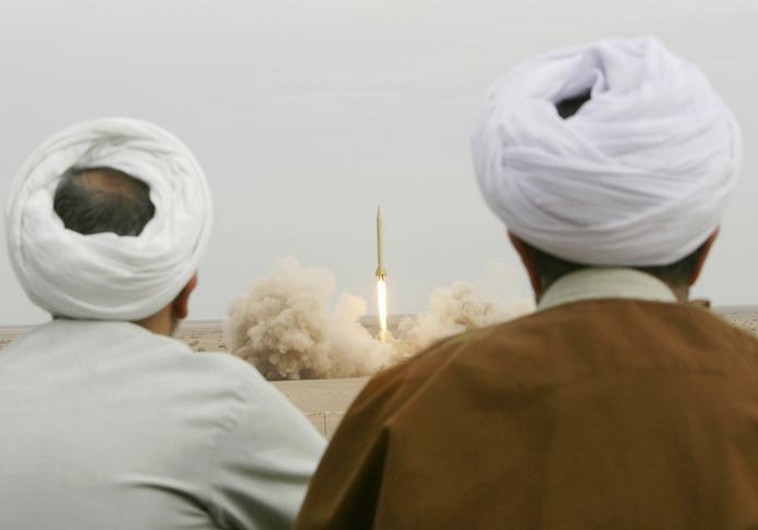
Iranian clerics watch the firing of missile of Shahab 3 during a war game near the holy city of Qom

Iranian clerics watch the firing of a Shahab-3 missile during a war game in a desert near the city of Qom. (photo credit:REUTERS)


Iranian clerics watch the firing of a Shahab-3 missile during a war game in a desert near the city of Qom. (photo credit:REUTERS)

Senior Iranian military officials on Thursday continued to threaten “crushing responses” against Israel for the death of a top Revolutionary Guards officer in an airstrike on the Syrian side of the Golan Heights earlier this week.

The attack also killed senior Hezbollah operatives, among them the son of the late arch-terrorist Imad Mughniyeh.

Brigadier General Hossein Salami, the second-in-command in the Revolutionary Guards, told Iranian state media on Thursday that his troops are capable of firing Shahab-3 missiles on Israel.

“[Israel] should be waiting for crushing responses,” Salami is quoted as saying.

The Iranian officer said that the Golan attack was an attempt to “change the balance of power in Syria” and help “the takfirist,” a reference to the Islamist elements working to topple the government of Tehran’s key ally, President Bashar Assad.

“[The Golan strike] was the reflection of numerous defeats that both Americans and Israelis have suffered in their current strategies,” he said.

“They have seen IRGC’s reactions before, and [therefore] they are worried, and they will witness destructive thunderbolts in practice,” he said.

Hamas Commander Deif to Hezbollah Leader Nasrallah: “Let’s fight Israel together”

January 22, 2015

Hamas Commander Deif to Hezbollah Leader Nasrallah: “Let’s fight Israel together”

The head of Hamas’ military wing signed a letter of condolence sent to Hezbollah’s Secretary General after the eliminations in Syria.

Jan 22, 2015, 04:00 PM | Gal Cohen

via Israel News – Hamas Commander Deif to Hezbollah Leader Nasrallah: “Let’s fight Israel together” – JerusalemOnline.


Photo Credit: Channel 2 News

Five months after the elimination attempt targeting the head of Hamas’ military wing, Mohammed Deif sent a message from hiding in Gaza and expressed his condolences regarding the attack that killed senior level Hezbollah officials, according to a report from Hezbollah’s television station.

Deif sent condolences to Hezbollah Secretary Genral Hassan Nasrallah following the elimination of senior level officials in his terror organization by Israel.  “We must unite our forces against the Zionist enemy and its allies,” Deif wrote to Nasrallah.

“Israel is the real enemy of the Islamic State and all guns should be pointed in its direction,” the Hamas terrorist added.  “We must carry out the next act together, so there will be crossfire throughout the occupied land.”

Sources close to Hezbollah said that earlier this week, the decision was made to respond to the attack in Syria that killed six senior level officials of the terror organization.  According to the report, the decision to respond was accepted by the joint resistance forces in Iran, Syria, and Hezbollah. 

Photo Credit: Channel 2 News/AP

According to the sources, the IDF’s attack did not weaken the terror organization in the Golan and did not disconnect the activities of Hezbollah from Rosh Ha-Nikra to Syria.  They claim Israel’s actions will not prevent the terror organization’s fighters from invading the Galilee in the next confrontation with the IDF.  

Iran, for its part, also addressed Israel’s actions.  Tehran admitted that one of their generals was killed in the incident and said they are committed to responding to the “Israeli aggression.”  An Iranian news site said “following the Zionist attack against the opposition in Syria, General Allahdadi, a former commander of the Iranian Revolutionary Guards, was killed along with Jihad Mughniyeh and three others, who were in the same car.”  An Iranian official added that “the resistance will respond forcefully at the right place and time to this terrorist attack.” 

Iran’s New Terror Base against Israel

January 22, 2015

Iran’s New Terror Base against Israel, The Gatestone InstituteYaakov Lappin, January 22, 2015

The new base in Syria gives Hezbollah the option of attacking Israel and drawing Israel’s return fire away from Lebanon, where its most precious assets are hidden: well over 100,000 rockets and missiles that might be saved for a future battle over Iran’s nuclear weapons program.

Hezbollah, exploiting its presence in Syria, has been attempting to open a new front against Israel.

Over the past 18 months, Hezbollah and its enablers from the Iran’s Islamic Revolutionary Guard Corps [IRGC] have begun launching a series of attacks on Israel from their new center of operations in southern Syria.

After Sunday’s air strike (attributed by the media to the Israel Air Force) that killed 12 high-ranking Hezbollah and IRGC operatives near Quneitra, Syria, along the Israeli border, Israel is bracing for the possibility of an attack by Hezbollah and Iran.

Although Israel has not officially taken responsibility for the strike, it would make sense to view the action as a preemptive move designed to remove a clear and present danger arising on Israel’s border with Syria. The danger is the formation of a second Hezbollah terrorism base, in addition to Hezbollah’s home base already in Lebanon.

The IRGC and Hezbollah have begun playing a dual role in the geographical area once known as the Syrian Arab Republic, a country that no longer exists as it appears on world maps. Iran and Hezbollah are acting as the life support machine for the shrunken but still functional Assad regime, now in control of just Damascus, Aleppo, and the Syrian Mediterranean coastline.

Since moving into Syria to rescue the regime of Bashar Al-Assad, Hezbollah, acting on orders from Iran, has expanded its presence in several areas of Syria. Iran too has boosted its presence in Syria, primarily though the presence of members of its Revolutionary Guards.

At the same time, the IRGC and Hezbollah have begun building a terrorism base in Syria that is directed against Israel, in addition to the Iranian-backed Hezbollah semi-state entity in southern Lebanon.

The new base in Syria, at Israel’s northeast border, gives Hezbollah the option of attacking Israel and drawing Israel’s return fire away from Lebanon, where its most precious assets are hidden: well over 100,000 rockets and missiles that might be saved for a future battle over Iran’s nuclear weapons program.

Hezbollah is also under domestic Lebanese pressure not to drag Lebanon into a new devastating conflict with Israel.

The Hezbollah and IRGC operatives that were targeted in Sunday’s airstrike were in the midst of significantly stepping up these attacks. Their plans included rockets and cross-border raids by terror cells. These attack plans were seriously larger in scale than past assaults.

It is in this context that Sunday’s air strike occurred.

Now, all eyes are on northern Israel to see whether Hezbollah and Iran retaliate there. The leader of the IRGC, Major General Mohammad Ali Jafari, on Tuesday threatened Israel with “devastating thunderbolts” — threats Israel cannot afford to take lightly.

896Israeli soldiers take part in a training exercise near the border with Syria, December 2013. (Image source: IDF)

It would be safe to assume, however, that Hezbollah wishes to avert the outbreak of an all-out conflict. Such a war would expose Lebanon to unprecedented Israeli firepower, and would also expose Israel to unprecedented Hezbollah rocket attacks and cross-border infiltrations by land, air and sea.

If such a conflict were to break out, many parts of southern Lebanon could lie in ruins, and Hezbollah’s many Sunni enemies in next-door Syria could seize on the weakness of their Shi’ite foes and pounce, dragging Lebanon into the Syrian war.

That kind of outcome would not benefit Hezbollah or Iran in any way. But in the Middle East, miscalculations have led to costly errors in the past, and events can take on a life of their own.

Canada’s FM: A Jewish state today is more important than even a few years ago

January 21, 2015

Canada’s FM: A Jewish state today is more important than even a few years ago

‘We have a fundamental difference with the Palestinians’ about their path to statehood, a thoroughly unapologetic John Baird tells The Times of Israel

By Raphael Ahren January 21, 2015, 3:32 pm

via Canada’s FM: A Jewish state today is more important than even a few years ago | The Times of Israel.


ohn Baird has no intention of apologizing. The Palestinians would like the Canadian foreign minister to say he’s sorry for his government’s unabashedly pro-Israel stance. They shouldn’t hold their breath.

In fact, Baird is waiting for an apology from Ramallah — not for having his car pelted with eggs and shoes Sunday during his visit there, but for a top Palestinian official’s comparison between Israel and terrorists of the Islamic State.

“People may disagree with our position with respect to Israel, but so be it,” Baird said Tuesday in Tel Aviv, as he wrapped up a three-day visit to the region. “It’s always wise to speak with moral clarity,” he submitted, adding that despite Ottawa’s unflinching friendship with the Jewish state, “we have a pretty good relationship with most of the Arab countries in the region.”

But evidently not so much with the Palestinians, as his visit to Ramallah Sunday underlined. While Palestinian protestors booed, hurled shoes and eggs at Baird and told him he was unwelcome in their land, senior Palestine Liberation Organization official and ex-chief peace negotiator Saeb Erekat released a statement denouncing Baird and urging him to ask the Palestinian people for forgiveness for his country’s consistent support for Israel.

“The Palestinian people as well as the rest of the Arab and Muslim countries deserve an apology from the Canadian government for years of systematic attempts at blocking the right of the Palestinian people to a state of their own,” Erekat declared. Canada stands “on the wrong side of history” by blindly supporting Israel’s “apartheid policies,” Erekat charged, attacking Baird personally for contributing to alleged Israeli violations of Palestinian rights.

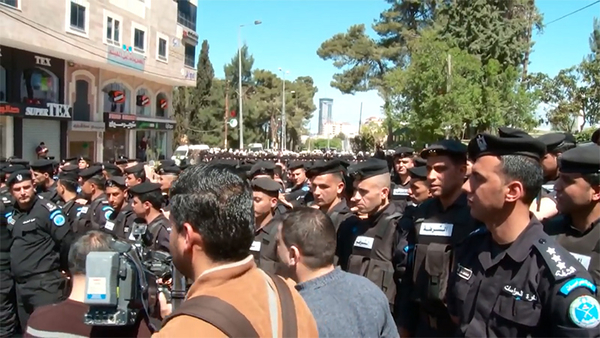
Policemen stand guard in front of Palestinian protesters holding placards before a meeting between Palestinian Authority Minister of Foreign Affairs Riyad al-Maliki and his Canadian counterpart John Baird on January 18, 2015, Ramallah. (AFP/ABBAS MOMANI)

Speaking to The Times of Israel in his Tel Aviv hotel, Ottawa’s top diplomat made crystal clear he makes no apology for his government’s positions on Israel. Instead, he noted that he is awaiting an apology from Erekat, who earlier this month said Israel’s settlement building in the West Bank was “terrorism” tantamount to that practiced by the Islamic State.

“That speaks volumes,” Baird said of Erekat’s comparison. “I’ll leave it to any fair-minded observer to come to conclusions about him,” he added diplomatically.

At the time, Baird’s spokesperson, Rick Roth, said Erekat’s comments “are offensive and ridiculous, and he should apologize immediately.” Such comparisons undermine efforts to combat the IS terrorists and could “inflame tensions in the region,” Roth stated in Baird’s name.

‘We strongly support a Palestinian state. We just believe it’s a byproduct of negotiations with Israel’

“We have a fundamental difference of opinion with the Palestinian leadership,” Baird said Tuesday. But he added that he has a “good relationship” with Palestinian Authority President Mahmoud Abbas and Foreign Minister Riyad al-Maliki, despite Ottawa’s opposition to their unilateral efforts to gain statehood recognition without having to negotiate without Israel.

“They know our position. We don’t say one thing to their face and another thing when we go back home. We strongly support a Palestinian state,” said Baird. “We just believe it’s a byproduct of peace negotiations with Israel. The way to accomplish a Palestinian state is dialogue with Israel and not taking unilateral action.”

A Palestinian protester holds a poster with a photo of Canadian Foreign Minister John Baird that reads in Arabic, "You should be ashamed of your biased position towards Israel," during Baird's meeting with Palestinian Authority Foreign Minister Riad Maliki, in the West Bank city of Ramallah, Sunday, Jan. 18, 2015. Dozens of Palestinian protesters have hurled eggs and shoes at the convoy of the visiting Canadian foreign minister. (photo credit: AP Photo/Nasser Nasser)

The Palestinians “made a huge mistake” by pressing war crimes charges against Israel at the International Criminal Court in The Hague, Baird declared Monday. On Tuesday, he reiterated his opposition to the PA’s move, but was reluctant to discuss which steps, if any, his government would take to in response. “We’ve registered our objection and will continue to advocate for them to take a different course,” he said.

Some pro-Israel activists have called on member states to defund the ICC if it doesn’t reject the Palestinians’ charges, but Baird said it was his government’s call and unfitting for him to speculate on such moves. “We’ll take it one step at a time.”

‘Palestinians should understand the importance of the Jewish state’

Canada is one of the few countries that recognizes Israel as a Jewish state, but Baird steered clear of endorsing Prime Minister Benjamin Netanyahu’s demand that the Palestinians need to recognize “Jewish” Israel as well before any peace deal could be signed.

Not wanting to interfere in an Israeli election campaign, Baird said he won’t tell the Palestinians what they should be doing. He did say, however, that “the Palestinians should have an understanding of the Israeli position and the importance of the Jewish state.”

The existence of a country that all Jews can call their home was important in the aftermath of World War II, and remains so in 2015, the 45-year-old foreign minister said. “With the anti-Semitism rising in so many parts of the world it’s probably more important today than it was even a few short years ago that there be a Jewish state where people can seek refuge.”

‘We will judge Iran by the action that it takes, not by its words’

On the topic of Iran, Baird sees mostly eye to eye with Netanyahu, saying that Tehran must not acquire the means to produce a nuclear weapon and condemning the regime for supporting terrorism and for human rights violations. However, he did not echo Netanyahu’s position that Iran must not be allowed to retain a single centrifuge in a future nuclear agreement with world powers, and hinted that Tehran could be allowed to keep a limited number.

“There is no right to enrichment; there is no need for enrichment,” he said. “In a perfect world, that’s what a deal would look like. We don’t live in a perfect world. Could you have a save facing few dozen, few hundred [centrifuges]? That’s one thing. Obviously, the higher the number goes the more concern that would cause Canada.”

Prime Minister Benjamin Netanyahu (right) shakes hands with Canada's Minister of Foreign Affairs John Baird (left) in Jerusalem, on January 19, 2015. (photo credit: Kobi Gideon/GPO)

Baird suggested that those hoping for rapprochement between Ottawa and Tehran in the wake of progressing nuclear negotiations between Tehran and the so-called P5+1 powers will probably be disappointed.

“We will judge Iran by the action that it takes, not by its words,” he said, adding that the country’s approach to human rights and its support for terrorism have gotten worse over the last two years.

“Iran could be a stabilizing element in the region — if they gave up their support of terrorism, cleaned up their human rights record and took a different path on the nuclear program. Iran can play a leadership role in the region and the world. But they have to change course.”

U.S. to Award Iran $11.9 Billion Through End of Nuke Talks

January 21, 2015

U.S. to Award Iran $11.9 Billion Through End of Nuke Talks

Another $490 million released on Tuesday under deal

via U.S. to Award Iran $11.9 Billion Through End of Nuke Talks | Washington Free Beacon.

BY:
January 21, 2015 5:00 am

The Obama administration on Wednesday paid $490 million in cash assets to Iran and will have released a total of $11.9 billion to the Islamic Republic by the time nuclear talks are scheduled to end in June, according to figures provided by the State Department.

Today’s $490 million release, the third such payment of this amount since Dec. 10, was agreed to by the Obama administration under the parameters of another extension in negotiations over Tehran’s contested nuclear program that was inked in November.

Iran will receive a total of $4.9 billion in unfrozen cash assets via 10 separate payments by the United States through June 22, when talks with Iran are scheduled to end with a final agreement aimed at curbing the country’s nuclear work, according to a State Department official.

Iran received $4.2 billion in similar payments under the 2013 interim agreement with the United States and was then given another $2.8 billion by the Obama administration last year in a bid to keep Iran committed to the talks through November, when negotiators parted ways without reaching an agreement.

Iran will have received a total of $11.9 billion in cash assets by the end of June if current releases continue on pace as scheduled.

The release of this money has drawn outrage from some Republican lawmakers who filed legislation last year to prevent the release of cash due to a lack of restrictions on how Iran can spend the money.

These cash payments by the United States have been made with no strings attached, prompting concerns that Iran could use the funds to finance its worldwide terror operations, which include the financial backing of Hamas, Hezbollah, and other rogue entities.

Senators—including Mark Kirk (R., Ill.), Kelly Ayotte (R., N.H.), and John Cornyn (R., Texas)—sought last year to put a hold on the cash infusions until the White House could certify that Iran was not using the money to support terrorism.

Kirk, who is preparing to offer legislation that would tighten sanctions on Iran, said that the ongoing payments could help Iran fuel its terror empire well into the near future.

“Between November 2014 and July 2015, the interim deal’s direct forms of sanctions relief will allow Iran access to roughly $4.9 billion in frozen money,” Kirk told the Washington Free Beacon “That’s equal to what it’d cost Iran to fund Hezbollah for as much as 50 years.”

The Pentagon estimates Iran has spent $100 to $200 million per year funding Hezbollah.

Entities likely to receive support from Iran include the Palestinian Islamic Jihad (PIJ) and the regime of President Bashar al-Assad of Syria, the legislation suggests.

When final negotiations between the United States and Iran failed in November, negotiators decided once more to extend the talks through June of this year. The terms of that extension granted Iran the 10 payments of $490 million, a State Department official said.

“With respect to sanctions relief, the United States will enable the repatriation of $4.9 billion of Iranian revenue held abroad during the extension,” the official said.

The first two payments were made in December, followed by Wednesday’s payment.

The next release is scheduled for Feb. 11, with two more scheduled for March. The rest of the frozen cash assets will be given back to Iran on April 15, May 6, May 27, and June 22, respectively.

Mark Dubowitz, the executive director of the Foundation for Defense of Democracies (FDD), said the ongoing release of these assets has provided Iran with a critical “financial lifeline.”

“The Obama administration provided Iran with a financial lifeline through both direct sanctions relief and the de-escalation of sanctions pressure that helped the regime stabilize its economy after a severe sanctions-induced economic crisis in 2012 and 2013,” Dubowitz said. “It is not a surprise that this has increased Iranian negotiating leverage and hardened the supreme leader’s nuclear intransigence.”

In addition to decrying the lack of restrictions in place to ensure that Iran does not use the released funds to sponsor terrorism, critics of the sanctions relief protest that Iran is benefitting while the United States receives little in return.

Iran has continued to enrich uranium under the interim deal, adding what one critic, Rep. Brad Sherman (D., Calif.) referred to as “about one bomb’s worth” to its reserves.

Iran also has continued to make advances on the plutonium track, which provides it with a second path to a nuclear bomb.

President Hassan Rouhani of Iran announced last week that the country has begun constructing two new light water nuclear reactors, a move that the U.S. State Department said is permissible under the terms of the interim agreement.

The West Bank Army of the “State of Palestine,” Thanks to the United States

January 21, 2015

The West Bank Army of the “State of Palestine,” Thanks to the United States, The Gatestone InstituteShoshana Bryen, January 21, 2015

(????????????? — DM)

The U.S. Consulate’s determination to provide the trappings of Palestinian statehood to the Palestinian Authority outside the negotiating process should come under scrutiny.

What plan do we have if the Palestinian army attacks the IDF in the future — instead of its presumed enemy, Hamas?

It is revealing that the U.S. appears determined to provide the Palestinian Authority with an army while it is still at war with our ally, Israel.

Last week, officials from the U.S. Consulate in East Jerusalem attended a Palestinian protest over Israel’s removal of olive trees illegally planted in the West Bank. Coordinated with the Palestinian Authority [PA] but not Israel, the Consulate personnel ended up clashing with Israelis living nearby. It was, perhaps, the quietest international almost-incident you never heard of.

This week, with the focus off Paris, the Middle East Quartet (the U.S., EU, Russia & the UN) plans to meet. The U.S. Consulate’s determination to provide the trappings of Palestinian statehood to the PA outside the negotiating process should come under scrutiny.

The olive tree incident prompted an article in the Israeli press about the Consulate, including the use of Palestinian security, rather than IDF combat veterans as required by a 2011 agreement. Some IDF guards were fired, according to the article. Others resigned, blaming the appointment of a new consulate security officer, who they said, established a Palestinian armed militia. “He is training them with weapons, combat and tactical exercises. There is a lack of responsibility here – who ensures that such weapons, once given over to Palestinian guards, won’t make their way to terror groups?”

The change in personnel from IDF veterans to a Palestinian Security Force [PSF] is part of a long series of steps to transform the Palestinian body politic into a state. If the U.S. Consulate becomes the U.S. Embassy to Palestine — a function it already observes — it is understandable that the PA would not want “occupying Israeli soldiers” to guard the symbol of America from Palestinian citizens in “its capital, Jerusalem.” The Consulate, with its mission to the PA, would agree.

Palestinian security forces have been in existence since 1994 and have steadily changed mandates. They have gone from a “police force” under the Oslo formulation of “dismantling the terrorist infrastructure” so Israel could have confidence in security after withdrawing from territory, to a protection force for Mahmoud Abbas so he would continue negotiations under U.S. auspices — but now to an army for the nascent state.

The Clinton Administration signed on to the police phase, but asked how Arafat could be expected to defeat “terrorists” without weapons. Unmentioned were a) Arafat was the prime funder and organizer of the terrorist organizations in question, and b) the PLO had already proven perfectly capable of killing its enemies.

The first funds for equipment and training came in 1994 from international donors including the U.S. Arafat, having a reasonable sized arsenal of his own, wanted arms, but settled for nonlethal items.

In 1996, Western trained Palestinian “police” attacked IDF personnel with weapons, killing 15 soldiers and border guards, after the opening of an exit from an ancient Hasmonean tunnel in Jerusalem, near the Western Wall in the Old City.

Despite these attacks, according to Jeffrey Boutwell, Director
 of the Pugwash Conferences on Science and World Affairs, the 1997 Hebron Protocol “provided for a Palestinian police force of some 30,000 personnel, equipped with 15,000 automatic rifles and pistols, 240 heavy machine guns, 45 armored vehicles, lightly armed shore patrol vessels, and associated communications and transportation equipment.” An Israeli-Palestinian Joint Security Coordination and Cooperation Committee [JSC] was formed to oversee “arrangements for entry of the Palestinian Police and the introduction of police arms, ammunition, and equipment.”

Between the onset of Western arms deliveries and a thriving black market, the PA “police” had all the lethal equipment they could handle.

Training stopped during the 2001-2004 so-called “second intifada” with the (unsurprising) revelation that the PA “police” found their Western assets invaluable in attacking Israelis. In 2005, however, history began again and the U.S. decided that the Palestinians should have a new security service. LTG William Ward USA (Deputy Commanding General, U.S. Army Europe, and Chief of Staff, U.S. Seventh Army) was the point man. In the words of then-Secretary of State Condoleezza Rice, his mission was:

  • “To make sure the parties understand each other and we understand what the parties are doing, so we can raise it at the appropriate level” if action is required.
  • “To provide a focal point for training, equipping, helping the Palestinians to build their security forces and also for monitoring, and if necessary, to help the parties on security matters.”

The missions were incompatible and inappropriate. The first involved “translating for the parties” with an eye toward U.S. intervention, a political job that should not have been done by a military officer. Further, having part of the mission directed toward a Palestinian force gave the General a stake in the success of the Palestinians over the concerns of Israel.

And so it happened. The Ward mission, the sole conduit for U.S. aid to the new Palestinian Security Force, resulted only in better-trained terrorists.

LTG Keith Dayton (Director of Strategy, Plans and Policy, Office of the Deputy Chief of Staff, G-3, U.S. Army), well respected and liked by Israel and the IDF, succeeded LTG Ward. His job, however, was complicated by the deterioration relations Hamas-Fatah in Gaza. According to acontemporaneous Ha’aretz story, Dayton was to arm and train “the Presidential Guard of PA Chairman Mahmoud Abbas to prepare it for a potential violent confrontation with Hamas forces in Gaza. Palestinian sources say the training of 400 Force 17 troops… started [in November 2006] in Jericho under the guidance of an American military instructor.” Force 17 had been Arafat’s Praetorian Guard, attacking recalcitrant Palestinians as well as Israelis. Abbas had inherited it.

Throwing American support to one Palestinian faction over another was a political decision to side with what our government assumed was “better” or more “moderate” Palestinians, hoping it would use our help to put down Hamas rather than using it to kill ever more Israelis.

What it did was legitimize the creeping movement of the Palestinians toward a full-fledged army.

This new mission needed IDF participation — which Israel approved in part because of its relations with LTG Dayton, and because it allowed Israel to operate in West Bank territory with a relatively free hand to arrest both Hamas operatives and Fatah bad guys. It also made Abbas beholden to Israel for his personal security and that of his kleptocracy. That part worked, and even now, PA figures have admitted publicly that without IDF cooperation, the PA would fall.

Dayton’s successors, LTG Michael Moeller, USAF and ADM Paul Bushong, USN, have quietly continued and upgraded both training and weapons.

893Hundreds of troops from the Palestinian Security Force line a street in Ramallah, in order to block anti-American protestors, during President Obama’s 2013 visit to the city.

The question always was twofold: What constitutes “appropriate” weapons for the PSF, and how does the U.S. justify training security forces the ultimate loyalty of whom will be a government that we cannot foresee and may become something — or already is something — we don’t like? The corollary is: What plan do we have if the Palestinian Army attacks IDF forces in the future — instead of its presumed enemy, Hamas?

To raise the questions is to understand that there are no sound answers from either the Consulate or the State Department. In their absence, concern over the choice of security guards by the U.S. Consulate in Jerusalem is appropriate, but insufficient. It is revealing that the U.S. appears determined to provide the PA with an army while it is still at war with our ally, Israel.

Iran Promises ‘Crushing Response’ to Israeli Strike

January 20, 2015

Iran Promises ‘Crushing Response’ to Israeli Strike

Strike killed six Iranian agents, five Hezbollah members

BY Adam Kredo
January 20, 2015 5:00 am

via Iran Promises ‘Crushing Response’ to Israeli Strike | Washington Free Beacon.


Lebanese Hezbollah supporters shout slogans as they march during Ashoura day in Beirut’s southern suburbs, Lebanon, Tuesday, Dec. 6, 2011 / AP

Iran on Monday promised that Hezbollah would deliver “crushing response” to the Israeli attack over the weekend, which killed six Iranian agents, including a top-level commander, and five Hezbollah members.

“The experience of the past shows that the resistance current will give a crushing response to the Zionist regime’s terrorist moves with revolutionary determination and in due time and place,” Ali Shamkhani, the secretary of Iran’s Supreme National Security Council (SNSC), was quoted as saying.

The Israeli strike came just days after Hezbollah leader Hassan Nasrallah declared that the terror group was preparing for a war in Israel’s northern Galilee region.

It also occurred just a week after Iranian military leaders announced that they are operating missile sites in Syria, which potentially include a nuclear facility.

Senior Iranian and Hezbollah commanders were likely planning a sophisticated invasion of Israel’s northern border in the weeks before they were killed by an Israeli airstrike over the weekend, according to Major General Eyal Ben Reuven, the former deputy head of the Israeli Defense Forces Northern Command.

The accuracy of Israel’s strike and the high-level nature of those Iranian and Hezbollah commanders killed indicates planning for a militant incursion into Israel’s northern region, according to Reuven, who said the airstrike shows a “very high level of intelligence” on Israel’s part.

The high-level nature of the Iranian and Hezbollah operatives targeted by Israel suggests that an attack on Israel was imminent, according to Reuven, who handled top intelligence in the region during his time serving in the IDF.

“If the highest level of Hezbollah commanders were in the Golan Heights and the high level of Iranians, it means that their idea, [what] they’re planning could be a kind of operation, an act against Israel on a high level,” Reuven said during a conference call Monday organized by the Israel Project (TIP). “It’s significant, the high level of this meeting, of this reconnaissance of the Iranians and Hezbollah.”

“It says something about what they plan, what kind of operation they planned,” he added. “If Israel has intelligence that says there is a kind of operation on the way to act against Israel, I think Israel would have a legitimate [reason] to do all we can to prevent it.”

The strike that killed these 11 militants was “very, very professional,” according to Reuven, and would require “very, very high level intelligence” and “very accurate” targeting information.

Iran quickly confirmed that one of its top commanders had been killed in the strike, according to Farsi language reports.

Multiple state-controlled Iranian news agencies confirmed that Iranian Revolutionary Guard Corps (IRGC) Brigadier General Mohammad Ali Allahdadi had been killed by “a military helicopter of the Zionist regime during a visit to the ‘Quneitra’ region of Syria.”

“As a result of this crime, this heroic general along with several members of Hezbollah reached martyrdom,” the Iranian Students News Agency (ISNA) wrote in a Persian language report independently translated for the Washington Free Beacon by the Foundation for Defense of Democracies (FDD).

Allahdadi had been sent to Syria by top Iranian commanders “so that he could combat the Zionist regime in Lebanon and Syria,” according to the Iranian media.

The IRGC official press organ also confirmed the death in a statement published by Iranian news outlets.

“Brigadier General Mohammad Ali Allahdadi was of the brave, devoted, and wise commanders of the Islamic Revolutionary Guard Corps whose effective contributions during the Holy Defense (the Iran-Iraq War) and after during his Commanding of the Al-Ghadir IRGC unit of Yazd province will always be enduring and inspiring to the generation of today and tomorrow of the Islamic nation,” read the IRGC communiqué also issued in Farsi.

The IRGC claimed that Allahdadi was in Syria to help embattled leader Bashar al-Assad combat “terrorists” there.

Allahdadi also helped in “neutralizing the atrocities and conspiracies [of] this Zionist-terrorist sedition in Syria’s geography,” according to the IRGC.

The IRGC went on to lash out at Israel for “violating the airspace of the country of Syria” and accused the Jewish state of emboldening terrorists affiliated with the Islamic State (IS), which is battling against Assad.

Israel’s actions against Iran and Syria are being “planned” along with “the cooperation [of] the heads of the White House and the occupying regime of Quds [Jerusalem],” the IRGC said in its statement.

Information about the other Iranians killed remains minimal at this point. Conflicting reports have emerged about whether the top militant killed, Abu Ali Tabatabai, was officially working on behalf of Iran or Hezbollah.

Tabatabai had been linked to Iran’s Al Radwan Special Operations Units, which is known to conduct combat operations, according to TIP.

“His presence would have suggested, and probably indicates, operations aimed at overrunning Israeli border towns,” TIP reported in an email to reporters.

The Hezbollah members killed include Mohammed Issa, a senior Hezbollah figure closely tied to Iran, and Jihad Mughniyeh, Hezbollah’s leading figure in the Golan Heights area near Israel’s border with Syria.

Behnam Ben Taleblu, an Iran expert and researcher for FDD, told the Free Beacon that Iran is expected to boost its presence in Syria and increase its support for Hezbollah.

“Given Iran’s heightened resolve and dedication to keeping Assad in power, we can expect the Islamic Republic to continue, if not deepen its commitment to the Assad regime and Hezbollah by way of such mercenaries,” he said.

Taleblu also noted that Iran continues to blame the rise of IS (also known as ISIL or ISIS) on America and Israel.

“The notion contained in the IRGC’s communiqué in the aftermath of the death of Commander Mohammad Ali Allahdadi, that the Islamic State (or DAESH, in Persian and Arabic) is linked to Israel and the U.S. is a common one promoted by the Islamic Republic’s hardline political elite and regime media,” he explained.

“Beyond narrative, this false linkage underscores an analytical shortcoming, Iran’s military and political class have failed to attribute agency to the Islamic State, be it in Syria or Iraq, and by claiming they are Western agents, misread and misdiagnosed the violent sectarian milieu that was growing in Iraq and Syria before the group’s emergence last summer,” he said.

Iranian IRGC chief vows ‘devastating thunderbolts’ on Israel

January 20, 2015

Iranian IRGC chief vows ‘devastating thunderbolts’ on Israel

Tehran threatens Israel after strike attributed to the IAF killed six Hezbollah fighters and six Iranian military men, including a general.

Roi Kais

Published: 01.20.15, 14:45 / Israel News

via Iranian IRGC chief vows ‘devastating thunderbolts’ on Israel – Israel News, Ynetnews.


After confirming one of its generals was among those killed in an airstrike attributed to Israel in the Syrian Golan on Sunday, the commander of Iran’s Revolutionary Guards (IRGC) said Tuesday that Israel should expect “devastating thunderbolts” in response to the attack.

This, Mohammad Ali Jafari said, will be “a new beginning point for the imminent collapse of the Zionist Regime.”

IRGC commander Mohammad Ali Jafari (Photo: Reuers)

IRGC commander Mohammad Ali Jafari (Photo: Reuers)

 Tensions in the Golan Heights have been high since Sunday, when a helicopter fired two missiles, killing Jihad Mughniyeh, Hezbollah’s commander of the Syrian Golan sector and the son of master terrorist Imad Mughniyeh, along with five other Hezbollah fighters and six Iranian military personnel – including Iranian General Mohammed Ali Allah Dadi of Iran’s Revolutionary Guard. The attack was largely attributed to Israel, but so the IDF has neither confirmed nor denied the reports.

Meanwhile, Iranian Defense Minister Hossein Dehqan said Tuesday in a meeting with his Russian counterpart Sergei Shoigu that “the terrorist act by the Zionist regime in the Golan Heights was the continuation of the regime’s crimes in Palestine, Syria, Iraq and Lebanon and their open support for Takfiri terrorists.”

Better days in Iran:Jihad Mughniyeh meets with Ayatollah Khamenei.

Better days in Iran:Jihad Mughniyeh meets with Ayatollah Khamenei.

The IDF raised its alert level on the northern front on Monday, in positions along the border with Syrian and Lebanon, as foreign media outlets reported that Iron Dome batteries were being deployed in the North.

Apart from the deployment of the missile interceptor batteries on the northern front – reported by Sky News in Arabic – there has not been a significant reinforcement of the forces on the border.

Better days in Iran:Jihad Mughniyeh meets with Ayatollah Khamenei.

Better days in Iran:Jihad Mughniyeh meets with Ayatollah Khamenei.

Yet, there are concerns in the security establishment that Hezbollah will attempt a retaliatory terror attack against Israeli forces which operate along the border. Thus, the soldiers were ordered to increase their level of alert and preparedness.

The international community is also concerned of a retalitory attack – France and the United States were working together on the diplomatic level in an attempt to keep restraint among all sides, Lebanese newspaper An-Nahar reported.

Hezbollah sources told the paper the organization’s response to the attack will likely happen outside of Lebanon.

Newspapers affiliated with Hezbollah estimated that organization chief Hassan Nasrallah will make a speech soon to respond to the attack. Nasrallah was scheduled to speak on February 16 on the 7th anniversary of Imad Mughniyeh’s death, as he does every year, but some believe he will speak as early as next week.


Iron Dome Deployed in North, Border Farms on War Footing

January 19, 2015

Farmers at northern border ordered off their fields. UNIFIL, Israeli and Lebanese soldiers on high alert.

By: Tzvi Ben-Gedalyahu

Published: January 19th, 2015

via The Jewish Press » » Iron Dome Deployed in North, Border Farms on War Footing.


Iron Dome system seen being transported at an undisclosed location in the north Monday night.
Iron Dome system seen being transported at an undisclosed location in the north Monday night. 

The IDF reportedly moved Iron Dome anti-missile systems to defend northern communities Monday night in the wake of Hezbollah threats to punish Israel for Sunday’s spectacular counter-terror bombing raid that killed approximately a dozen Hezbollah and Iranian Revolutionary Guards fighters.

The IDF told The Jewish Press, “We do not confirm or deny movements” of the Iron Dome systems, although the military previously has announced their redeployment against rockets from Gaza.

A picture of the Iron Dome being transported was posted on social media, but its location could not be verified.

Farmers in Metulla, which is smack on the northern border, were ordered off their fields by the IDF in SMS messages sent out Monday morning. Farmer Chaim Hod was quoted by Yediot Acharonot as saying that he and is workers began pruning apples tress at 6 a.m. and were ordered away from the orchards by mid-morning.

Several Metulla farms are located at the border, beyond a barbed wire fence, and are off-limits to anyone except the farmers and the IDF.

Reserve units stationed along the Lebanese border are on high alert, and several leaves of absence for regular soldiers have been cancelled.

Increased patrols were observed on both sides of the border, with UNIFIL, Lebanese and Israeli troops keeping an eye out for any suspicious activity.

UNIFIL troops are using night goggle and binoculars, according to sources quoted by the Beirut Daily Star.

Israel soldiers were seen patrolling the streets of Metulla, but civilians on both sides of the border do not seem concerned,

Hod said he actually feels safer when he sees both UNIFIL and Israeli soldiers beefing up patrols, and a Lebanese construction worker told the Star, “We are not afraid. As you see we are continuing construction work just a few kilometers from the Israelis.”

IDF Chief of Staff Benny Gantz said, “The IDF is prepared, tracking all developments, and ready to act as needed.” The air strike highlights the excellent level of Israeli intelligence operations, which are the key to carrying out counter-terror strikes and make Hezbollah leader Hassan Nasrallah think twice and three times every time he moves.

As in the past, Israel warned Lebanon that it will be held responsible for any attacks by Hezbollah, which controls southern Lebanon and is an influential part of the fragile government.

The threat of a fierce Israeli retaliation to any Hezbollah aggression is a strong deterrent. Hezbollah has fallen into growing disfavor in strife-torn Lebanon because it has brought the war in Syria into Lebanon by fighting rebels to the Assad regime. Lebanese hate Israel but a devastating retaliation by the IDF to Hezbollah rockets would make the terrorist army and party even more unwanted.

Below is a video of the aftermath of the attack on Hezbollah and Iranian commanders, as seen in a telecast from southern Lebanon.