Posted tagged ‘Islamic Jihad’

How to Answer the Paris Terror Attack

January 8, 2015

How to Answer the Paris Terror Attack, Wall Street Journal, Ayaan Hirsi Ali, January 7, 2015

If there is a lesson to be drawn from such a grisly episode, it is that what we believe about Islam truly doesn’t matter. This type of violence, jihad, is what they, the Islamists, believe.

Those responsible for the slaughter in Paris, just like the man who killed the Dutch filmmaker Theo van Gogh in 2004, are seeking to impose terror. And every time we give in to their vision of justified religious violence, we are giving them exactly what they want.

We appease the Muslim heads of government who lobby us to censor our press, our universities, our history books, our school curricula. They appeal and we oblige. We appease leaders of Muslim organizations in our societies. They ask us not to link acts of violence to the religion of Islam because they tell us that theirs is a religion of peace, and we oblige.

We have to acknowledge that today’s Islamists are driven by a political ideology, an ideology embedded in the foundational texts of Islam. We can no longer pretend that it is possible to divorce actions from the ideals that inspire them.

****************

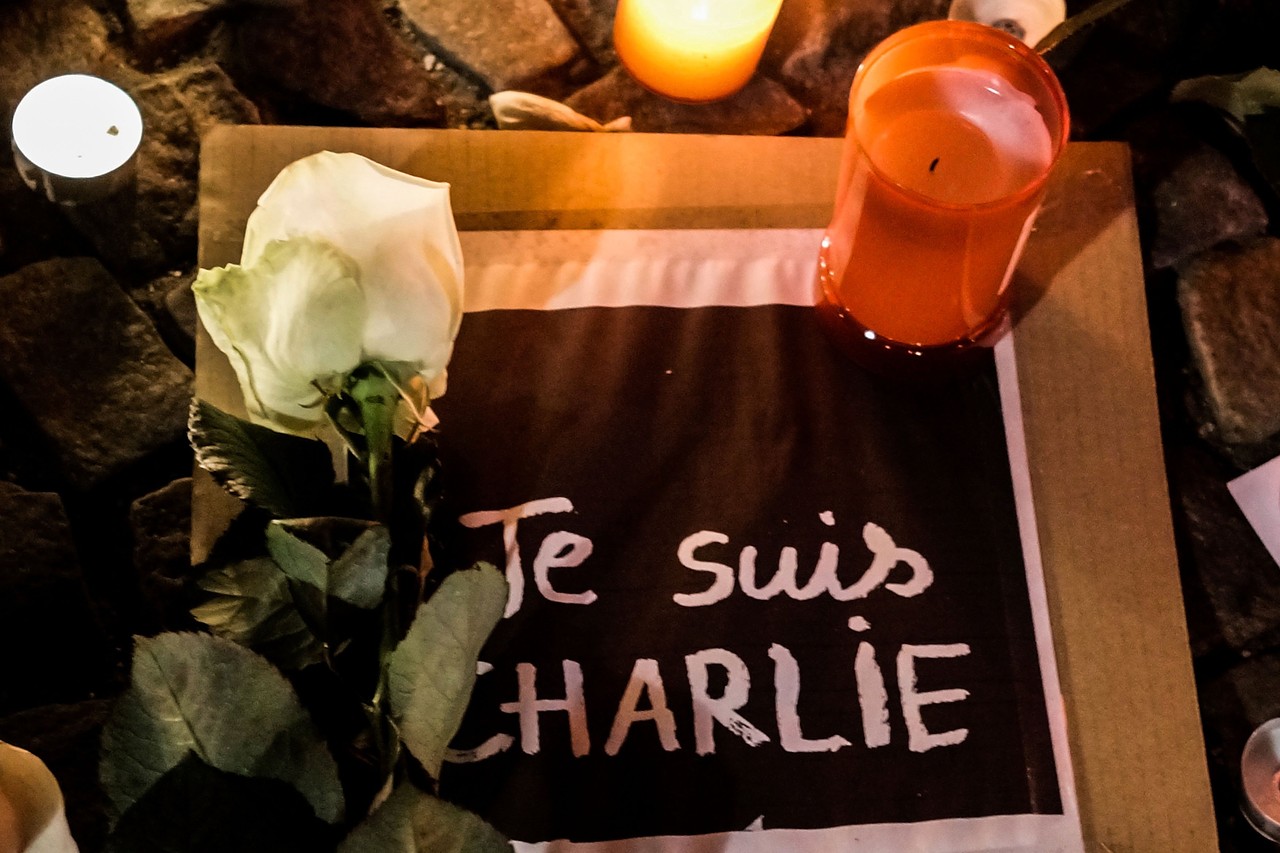
After the horrific massacre Wednesday at the French weekly satirical magazine Charlie Hebdo, perhaps the West will finally put away its legion of useless tropes trying to deny the relationship between violence and radical Islam.

This was not an attack by a mentally deranged, lone-wolf gunman. This was not an “un-Islamic” attack by a bunch of thugs—the perpetrators could be heard shouting that they were avenging the Prophet Muhammad. Nor was it spontaneous. It was planned to inflict maximum damage, during a staff meeting, with automatic weapons and a getaway plan. It was designed to sow terror, and in that it has worked.

The West is duly terrified. But it should not be surprised.
BN-GI167_EDPHir_M_20150107184019GETTY IMAGE

If there is a lesson to be drawn from such a grisly episode, it is that what we believe about Islam truly doesn’t matter. This type of violence, jihad, is what they, the Islamists, believe.

There are numerous calls to violent jihad in the Quran. But the Quran is hardly alone. In too much of Islam, jihad is a thoroughly modern concept. The 20th-century jihad “bible,” and an animating work for many Islamist groups today, is “The Quranic Concept of War,” a book written in the mid-1970s by Pakistani Gen. S.K. Malik. He argues that because God, Allah, himself authored every word of the Quran, the rules of war contained in the Quran are of a higher caliber than the rules developed by mere mortals.

In Malik’s analysis of Quranic strategy, the human soul—and not any physical battlefield—is the center of conflict. The key to victory, taught by Allah through the military campaigns of the Prophet Muhammad, is to strike at the soul of your enemy. And the best way to strike at your enemy’s soul is through terror. Terror, Malik writes, is “the point where the means and the end meet.” Terror, he adds, “is not a means of imposing decision upon the enemy; it is the decision we wish to impose.”

Those responsible for the slaughter in Paris, just like the man who killed the Dutch filmmaker Theo van Gogh in 2004, are seeking to impose terror. And every time we give in to their vision of justified religious violence, we are giving them exactly what they want.

In Islam, it is a grave sin to visually depict or in any way slander the Prophet Muhammad. Muslims are free to believe this, but why should such a prohibition be forced on nonbelievers? In the U.S., Mormons didn’t seek to impose the death penalty on those who wrote and produced “The Book of Mormon,” a satirical Broadway sendup of their faith. Islam, with 1,400 years of history and some 1.6 billion adherents, should be able to withstand a few cartoons by a French satirical magazine. But of course deadly responses to cartoons depicting Muhammad are nothing new in the age of jihad.

Moreover, despite what the Quran may teach, not all sins can be considered equal. The West must insist that Muslims, particularly members of the Muslim diaspora, answer this question: What is more offensive to a believer—the murder, torture, enslavement and acts of war and terrorism being committed today in the name of Muhammad, or the production of drawings and films and books designed to mock the extremists and their vision of what Muhammad represents?

To answer the late Gen. Malik, our soul in the West lies in our belief in freedom of conscience and freedom of expression. The freedom to express our concerns, the freedom to worship who we want, or not to worship at all—such freedoms are the soul of our civilization. And that is precisely where the Islamists have attacked us. Again.

How we respond to this attack is of great consequence. If we take the position that we are dealing with a handful of murderous thugs with no connection to what they so vocally claim, then we are not answering them. We have to acknowledge that today’s Islamists are driven by a political ideology, an ideology embedded in the foundational texts of Islam. We can no longer pretend that it is possible to divorce actions from the ideals that inspire them.

This would be a departure for the West, which too often has responded to jihadist violence with appeasement. We appease the Muslim heads of government who lobby us to censor our press, our universities, our history books, our school curricula. They appeal and we oblige. We appease leaders of Muslim organizations in our societies. They ask us not to link acts of violence to the religion of Islam because they tell us that theirs is a religion of peace, and we oblige.

What do we get in return? Kalashnikovs in the heart of Paris. The more we oblige, the more we self-censor, the more we appease, the bolder the enemy gets.

There can only be one answer to this hideous act of jihad against the staff of Charlie Hebdo. It is the obligation of the Western media and Western leaders, religious and lay, to protect the most basic rights of freedom of expression, whether in satire on any other form. The West must not appease, it must not be silenced. We must send a united message to the terrorists: Your violence cannot destroy our soul.

Europe’s Year of the Jihadist

December 29, 2014

Europe’s Year of the Jihadist, Investigative Project on Terrorism, Abigail R. Esman, December 29, 2014

(But the world is less violent than it has ever been. It is also more tolerant. Thus spake Obama.

— DM)

1107

Among the trends of 2014 – “Gone, Girl,” Lena Dunham, and $55,000 potato salad – was another the list-makers seem to have missed: it was also a very good year for Islamic jihad. And while this was true on the battlefields of Syria and the cities and villages of Pakistan, it was true, too, in more subtle ways throughout the West – and especially in Europe. It was, for instance, the year of Mehdi Nemmouche’s slaughter of four Jews at the Jewish Museum in Brussels.

It was the year that Belgium itself was named a “terrorist recruiting hub” by the Wall Street Journal. And in Germany, France, England, and the Netherlands, pro-Islamic State demonstrations laid bare the growing support of terrorism and Islamic jihad among Europe’s expanding Muslim population – all while politicians either stood back or even contributed to the praise.

Throughout 2014, Europeans faced pro-IS, anti-Jew demonstrations in Paris, Hamburg, Amsterdam, London and The Hague, and the establishment of “sharia zones” in London, Wupperthal, and elsewhere. True, such zones do not necessarily delineate areas in which sharia law, rather than state law, applies. But the term helps them define those largely-Muslim neighborhoods whose residents tend to be radical and who often support jihadist movements both at home and abroad.

Combined, these events signal the increasing success of Islamists who are working to change Europe from within – sometimes through violence, but more often through strategies known as “stealth jihad” – a way of applying social and political pressures to transform the current culture.

Take, for instance, the response of Josias van Aartsen, mayor of The Hague, to radical Muslims who called for the death of Dutch non-Muslims and Jews during pro-IS rallies in August: then on holiday, Van Aartsen declined to return home, ignoring even the throwing of stones at non-Muslims and the police. Only when a counter demonstration against IS was planned in the same, Muslim-majority neighborhood did Van Aartsen take action: he forbade it. “Too provocative,” he said.

Or there are the recently-leaked intelligence briefs in France, as reported by the Gatestone Institute, that “Muslim students are effectively establishing an Islamic parallel society completely cut off from non-Muslim students,” while “more than 1000 French supermarkets, including major chains such as Carrefour, have been selling Islamic books that openly call for jihad and the killing of non-Muslims.”

In England, an “Operation Trojan Horse” outlined plans to Islamize schools in Muslim neighborhoods. According to the Guardian, a government investigation of the program last summer found a “‘sustained, coordinated agenda to impose segregationist attitudes and practices of a hardline, politicised strain of Sunni Islam’ on children in a number of Birmingham schools.” Among those responsible for the “Operation” were the Association of Muslim Schools – UK and the Muslim Council of Britain – the same organization that, in 2011, declared that women who do not veil their faces “could be guilty of rejecting Islam.”

Ironically, it seems to have been England’s own culture that allowed the rise of Islamist teachings in its schools to begin with. Even Britain’s education secretary Nicky Morgan admitted to the New York Times that much of the operation’s success could be attributed to public “fear of being accused of racism and anti-Islamic views.” Not for nothing did former Obama advisor Lawrence Krauss declare the British “too polite” and “scared of offending ‘vocal and aggressive Muslims.'”

The government’s discovery of “Operation Trojan Horse” and immediate efforts to dismantle it are commendable, but it is difficult to assess the damage already done to Muslim children in the British schools. By some accounts, as many as 2,000 Britons have joined the (Sunni-led) jihad in Syria and Iraq. That includes the man known as “Jihadi John,” who beheaded U.S. journalists James Foley and Steven Sotloff. And, experts warn, the number of so-called “junior jihadis” – children under 10 who have become radicalized – is on the rise.

Not that such warnings are likely to do much good: The UK has, until recently, spent tremendous resources on programs aimed at preventing Muslim youth from joining militant groups, which have for the most part failed. “Having undertaken the ‘most significant domestic program by any Western country to foster a moderate version of Islam and prevent radicalization, the UK has effectively given up trying to stop jihadists from being created,” James Brandon, the former research director at one such program, told Reuters.

Despite such developments, European lawmakers have had a hard time figuring out how to deal with Muslim radicals, especially with returnees from Syria and Iraq. England is hardly the only place where politicians fear “offending” the sensibilities of Muslim groups. Although an estimated 450 Germans have joined the jihad in Syria, German Green Party domestic policy expert Irene Mihalic told the magazine Der Spiegel in September that tougher counterterrorism laws were unnecessary because “there are already ‘sufficient levers available to impose bans and limitations’ on terrorists and their supporters.” Majority parties apparently disagreed. Later that month, Germany became the first country to fully outlaw IS, along with all expressions of support for the terrorist group, from banners and graffiti to public demonstrations and endorsements by local mosques.

Such has hardly been the case in Denmark, though, where unwillingness to “offend” or “provoke” the country’s Muslim community has translated into a program that seeks to rehabilitate returning jihadists, rather than imprison them. In the country that boasts the second-largest number (per capita) of Muslims to join jihadist groups, returnees receive generous handouts in the form of government assistance in finding homes and jobs, or tuition aid in order to continue their education. In addition, the rehab program “does not try to change the fundamentalist beliefs of the returning fighters – as long as they don’t advocate violence,” CNN reports.

Evidently pampering jihadists isn’t working very well: Danish intelligence recently warned that returnees from IS and Al Nusra camps now pose a “significant” threat to the country. One jihadist profiled by CNN said that he plans to return to Syria to rejoin the caliphate once he completes his Danish government-funded education.

Other European governments have been reluctant to prosecute those recruiting for ISIS and other terrorist groups – groups that are in effect encouraging people to commit murder. In December, Dutch courts declared a 20-year-old woman “not guilty” of recruiting women to join the jihad in Syria on the grounds that women in IS are not permitted to fight – and hence cannot be considered terrorists. In another case, 23-year-old “Imad al-O” was found guilty of helping a 16-year-old girl travel to Syria via Egypt. His sentence? Three months prison time and 240 hours of community service.

Through it all, “lone wolf” radicals continue their attacks in European cities, such as the Dec. 21 attack in Dijon by a man who drove a car into a crowd of pedestrians, claiming he was “acting for the children of Palestine.”

The attack “for the children of Palestine” occurred just as French officials determined to join Sweden in recognizing a Palestinian state – a kind of international version, you might say, of England’s decision to stop trying to keep Muslim youth from radicalizing and becoming warriors for Islam. Unlike Kickstarter potato salads, it’s a trend we can well leave behind as we move into the new year.

How Western Media Enable Islamic Terrorism

December 19, 2014

How Western Media Enable Islamic Terrorism, Front Page Magazine, December 19, 2014

(Please see also Sharyl Attkisson’s Stonewalled for explanations of what happens in the legitimate “news” media and why. — DM)

la-epa-egypt-unrest2-jpg-20130819-450x300

If the West is experiencing a rise in the sort of terror attacks that are endemic to the Islamic world—church attacks, sex-slavery and beheadings—it was only natural that the same mainstream media that habitually conceals such atrocities, especially against Christians and other minorities under Islam, would also conceal the reality of jihadi aspirations on Western soil.

As The Commentator reports:

[T]he level of the [media] grovelling after the tragic and deadly saga in Sydney Australia over the last 24 hours has been astounding.

At the time of writing, the lead story on the BBC website is of course about that very tragedy, in which an Islamist fanatic took a random group hostage in a cafe, ultimately killing two of them.

He did this in the name of Islam. But you wouldn’t get that impression if you started to read the BBC’s lead story, which astoundingly managed to avoid mentioning the words Islam, Islamic, Islamist, Muslim, or any derivations thereof for a full 16 paragraphs. The New York Times, which led by calling the terrorist, Man Haron Monis an “armed man”, waited until paragraph 11.

In the Guardian’s main story – whose lead paragraph simply referred to a “gunman” — you had to wait until paragraph 24.

If you’d have blinked, you’d have missed it.

….

In the wider media, reports about Muslim fears of a “backlash” have been all but ubiquitous.

If these are the lengths that Western mainstream media go to dissemble about the Islamic-inspired slaughter of Western peoples, it should now be clear why the ubiquitous Muslim persecution of those unfashionable Christian minorities is also practically unknown by those who follow Western mainstream media.

As with the Sydney attack, media headlines say it all. The 2011 New Year’s Eve Coptic church attack that left 28 dead appeared under vague headlines: “Clashes grow as Egyptians remain angry after attack,”was the New York Times’ headline; and “Christians clash with police in Egypt after attack on churchgoers kills 21” was the Washington Post’s—as if frustrated and harried Christians lashing out against their oppressors is the “big news,” not the unprovoked atrocity itself; as if their angry reaction “evens” everything up.

Similarly, the Los Angeles Times partially told the story of an Egyptian off-duty police officer who, after identifying Copts by their crosses on a train, opened fire on them, killing one, while screaming “Allahu Akbar”—but to exonerate the persecution, as caught by the report’s headline: “Eyewitness claims train attacker did not target Copts, state media say.”

A February 2012 NPR report titled “In Egypt, Christian-Muslim Tension is on the Rise,” while meant to familiarize readers with the situation of Egypt’s Christians, prompts more questions than answers them: “In Egypt, growing tensions between Muslims and Christians have led to sporadic violence [initiated by whom?]. Many Egyptians blame the interreligious strife on hooligans [who?] taking advantage of absent or weak security forces. Others believe it’s because of a deep-seated mistrust between Muslims and the minority Christian community [what are the sources of this “mistrust”?].”

The photo accompanying the story is of angry Christians holding a cross aloft—not Muslims destroying crosses, which is what prompted the former to this display of Christian solidarity.

Blurring the line between victim and oppressor—recall the fear of “anti-Muslim backlashes” whenever a Muslim terrorizes “infidels” in the West—also applies to the media’s reporting on Muslim persecution of Christians.

A February 2012 BBC report on a church attack in Nigeria that left three Christians dead, including a toddler, objectively states the bare bone facts in one sentence.  Then it jumps to apparently the really big news: that “the bombing sparked a riot by Christian youths, with reports that at least two Muslims were killed in the violence. The two men were dragged off their bikes after being stopped at a roadblock set up by the rioters, police said. A row of Muslim-owned shops was also burned…”

The report goes on and on, with an entire section about “very angry” Christians till one confuses victims with persecutors, forgetting what the Christians are “very angry” about in the first place: nonstop terror attacks on their churches and the slaughter of their women and children.

A New York Times report that appeared on December 25, 2011—the day after Boko Haram bombed several churches during Christmas Eve services, leaving some 40 dead—said that such church bombings threaten “to exploit the already frayed relations between Nigeria’s nearly evenly split populations of Christians and Muslims…”  Such an assertion suggests that both Christians and Muslims are equally motivated by religious hostility—even as one seeks in vain for Christian terror organizations that bomb mosques in Nigeria to screams of “Christ is Great!”

Indeed, Boko Haram has torched 185 churches—to say nothing of the countless Christians beheaded—in just the last few months alone.

Continuing to grasp for straws, the same NYT report suggests that the Nigerian government’s “heavy-handed” response to Boko Haram is responsible for its terror, and even manages to invoke another mainstream media favorite: the poverty-causes-terrorism myth.

Whether Muslim mayhem is taking place in the Islamic or Western worlds, the mainstream media shows remarkable consistency in employing an arsenal of semantic games, key phrases, convenient omissions, and moral relativism to portray such violence as a product of anything and everything—political and historical grievances, “Islamophobia,” individual insanity, poverty and ignorance, territorial disputes—not Islam.

As such, Western mainstream media keep Western majorities in the dark about the Islamic threat, here and abroad.  Thus the “MSM” protects and enables the Islamic agenda—irrespective of whether its distortions are a product of intent, political correctness, or sheer stupidity.

Iran Publishes Plan to ‘Eliminate’ Israel | Washington Free Beacon

November 10, 2014

Iran Publishes Plan to ‘Eliminate’ IsraelNetanyahu hits back

BY:
November 10, 2014 12:35 pm

via Iran Publishes Plan to ‘Eliminate’ Israel | Washington Free Beacon.


Ali Khamenei / AP
ran’s Supreme Leader Ayatollah Ali Khamenei published early Sunday a 9-step plan to “eliminate” Israel, prompting Israel’s prime minister to file a formal complaint with Western negotiators involved in nuclear talks with Tehran.

Khamenei’s official Twitter account on Sunday tweeted out the 9-step plan explaining “the proper way of eliminating Israel.”

“Why should & how can #Israel be eliminated? Ayatollah Khamenei’s answer to 9 key questions,” Khamenei tweeted, along with a graphic illustrating the plan to annihilate Israel.

“The only means of bringing Israeli crimes to an end is the elimination of this regime,” Khamenei wrote. “And of course the elimination of Israel does not mean the massacre of the Jewish people in the region. The Islamic Republic has proposed a practical and logical mechanism for this to international communities.”

Khamenei accuses “the fake Zionist regime” of committing acts of “infanticide, homicide, violence, and iron fist while boasts about it blatantly [sic].”

Israel’s enemies must commit to “armed resistance” until Israel is eliminated, Khamenei says.

“Up until the day when this homicidal and infanticidal [sic] regime is eliminated through a referendum, powerful confrontation and resolute and armed resistance is the cure of this ruinous regime,” the supreme leader writes. “The only means of confronting a regime which commits crimes beyond one’s thought and imagination is a resolute and armed confrontation.”

Khamenei also reiterates his call for the West Bank to be armed like Hamas in the Gaza Strip.

Israeli Prime Minister Benjamin Netanyahu said that Khamenei’s plan is another example of Iran’s extremism.

Khamenei is “publicly calling for the annihilation of Israel as he is negotiating a nuclear deal,” Netanyahu said in videotaped remarks.

“There is no moderation in Iran,” said Netanyahu, who sent a letter to the P5+1 negotiators outlining Khamenei’s extremist rhetoric. “It is unrepentant, unreformed.”

Khamenei “calls for Israel’s eradication, promotes international terrorism … and [Iran] continues to deceive the international community about its nuclear weapons program,” Netanyahu said. “I call on the P5+1—don’t rush into a deal that will let Iran rush to the bomb.”

‘ISIS Sees Turkey as Its Ally’: Former Islamic State Member Reveals Turkish Army Cooperation

November 9, 2014

‘ISIS Sees Turkey as Its Ally’: Former Islamic State Member Reveals Turkish Army Cooperation

By Barney Guiton

Filed: 11/7/14 at 10:35 AM | Updated: 11/8/14 at 11:28 AM

via ‘ISIS Sees Turkey as Its Ally’: Former Islamic State Member Reveals Turkish Army Cooperation.

Read Omer’s full story: ‘It Was Never My Intention to Join ISIS’


Smoke rises from the Syrian town of Kobane, Turkish army tanks take position on the Turkish side of the border, October 8, 2014. Umit Bektas/Reuters


A former member of ISIS has revealed the extent to which the cooperation of the Turkish military allows the terrorist group, who now control large parts of Iraq and Syria, to travel through Turkish territory to reinforce fighters battling Kurdish forces.

A reluctant former communications technician working for Islamic State, now going by the pseudonym ‘Sherko Omer’, who managed to escape the group, told Newsweek that he travelled in a convoy of trucks as part of an ISIS unit from their stronghold in Raqqa, across Turkish border, through Turkey and then back across the border to attack Syrian Kurds in the city of Serekaniye in northern Syria in February.

“ISIS commanders told us to fear nothing at all because there was full cooperation with the Turks,” said Omer of crossing the border into Turkey, “and they reassured us that nothing will happen, especially when that is how they regularly travel from Raqqa and Aleppo to the Kurdish areas further northeast of Syria because it was impossible to travel through Syria as YPG [National Army of Syrian Kurdistan] controlled most parts of the Kurdish region.”

Until last month, NATO member Turkey had blocked Kurdish fighters from crossing the border into Syria to aid their Syrian counterparts in defending the border town of Kobane. Speaking to Newsweek, Kurds in Kobane said that people attempting to carry supplies across the border were often shot at.

YPG spokesman Polat Can went even further, saying that Turkish forces were actively aiding ISIS. “There is more than enough evidence with us now proving that the Turkish army gives ISIS terrorists weapons, ammunitions and allows them to cross the Turkish official border crossings in order for ISIS terrorists to initiate inhumane attacks against the Kurdish people in Rojava [north-eastern Syria].”

Omer explained that during his time with ISIS, Turkey had been seen as an ally against the Kurds. “ISIS saw the Turkish army as its ally especially when it came to attacking the Kurds in Syria. The Kurds were the common enemy for both ISIS and Turkey. Also, ISIS had to be a Turkish ally because only through Turkey they were able to deploy ISIS fighters to northern parts of the Kurdish cities and towns in Syria.”

“ISIS and Turkey cooperate together on the ground on the basis that they have a common enemy to destroy, the Kurds,” he added.

While Newsweek was not able to independently verify Omer’s testimony, anecdotal evidence of Turkish forces turning a blind eye to ISIS activity has been mounting over the past month.

Omer, the son of a successful businessman in Iraqi Kurdistan, initially went to Syria to join the Free Syrian Army’s fight against Bashar al-Assad, but found himself sucked in to ISIS, unable to leave. He was given a job as a communication technician, and worked at the ISIS communications bureau in Raqqa.

“I have connected ISIS field captains and commanders from Syria with people in Turkey on innumerable occasions,” said Omer.

“I rarely heard them speak in Arabic, and that was only when they talked to their own recruiters, otherwise, they mostly spoke in Turkish because the people they talked to were Turkish officials of some sorts because ISIS guys used to be very serious when they talked to them.”

Omer was then transferred to a battalion travelling to fight Kurdish forces in Serekaniya, north-eastern Syria, and describes travelling through Turkey in a convoy of trucks, staying at safehouses along the way, before crossing back into Syria at the Ceylanpinar border crossing.

Before crossing the border back into Syria, he says: “My ISIS commander reassured us once again that it was all going to be all right because cooperation had been made with the Turks. He frequently talked on the radio in Turkish.”

“While we tried to cross the Ceylanpinar border post, the Turkish soldiers’ watchtower light spotted us. The commander quickly told us to stay calm, stay in position and not to look at the light. He talked on the radio in Turkish again and we stayed in our positions. Watchtower light then moved about 10 minutes later and the commander ordered us to move because the watchtower light moving away from us was the signal that we could safely cross the border into Serekaniye.”

Once in Serekaniye, Omer says he surrendered to Kurdish forces when they attacked his camp. He was held for several months before his captors were convinced that he had not been a fighter in ISIS and had not taken part in violence.

Islamic State threat prompts new security warnings across U.S. military

October 31, 2014

Islamic State threat prompts new security warnings across U.S. military, Military TimesAndrew deGrandpreLance M. BaconJeff Schogol, October 30, 2014

bildeMilitary commands and individual service members are tightening up on security amid the growing threat posed by the Islamic State. (Tech. Sgt. Sandra Niedzwiecki / Air Force)

Perhaps the most chilling statement came from the Pentagon, where late last week officials with the building’s internal security force sent employees a memo calling service members and law enforcement officers “legitimate targets.” Such attacks, according to the memo, could involve knives, guns or bombs — and most likely would be perpetrated without warning. The memo cites unspecified sources within the intelligence and law enforcement communities.

****************

Military facilities around the U.S. are on alert, urging troops and their families to take precautions amid continued threats of violence from the Islamic State group.

The responses to that threat are being driven not just by the need to ensure protective measures are taken, but also to address increasing concerns being voiced by troops and family members who are worried about safety for their loved ones and themselves. It marks a shifting mindset, from one of full confidence that the military community was safe on its home turf to an unsettling sense that that is where they are newly vulnerable.

The Defense Department refuses to discuss the protective measures it has taken on behalf of the country’s 2.1 million service members, and to date Washington has not issued universal guidance. But many senior leaders and installation commanders are taking matters into their own hands, issuing clear warnings of the potential for “lone-wolf” style attacks like those carried out in mid-October on military personnel in Canada.

On Wednesday, for instance, the Marine Corps distributed a servicewide announcement instructing personnel to report “even the most minor suspicious activity” and to watch what they share on social media. Doing so, the message says, will help reduce the likelihood of an attack.

At MacDill Air Force Base in Tampa, Florida, officials with the 6th Air Mobility Wing took the Marine Corps’ warning a significant step further. Troops assigned to the base, home to the headquarters of U.S. Central Command and U.S. Special Operations Command, should downplay their military affiliation while in public. Uniforms, even military T-shirts and car bumper stickers, could put people at risk, it says.

‘Legitimate targets’

Perhaps the most chilling statement came from the Pentagon, where late last week officials with the building’s internal security force sent employees a memo calling service members and law enforcement officers “legitimate targets.” Such attacks, according to the memo, could involve knives, guns or bombs — and most likely would be perpetrated without warning. The memo cites unspecified sources within the intelligence and law enforcement communities.

“We disseminated this advisory, not because of a specific threat, but as a reminder for Pentagon employees to be vigilant at home, at work, during travel and in their communities, by using individual protective measures,” said Christopher Layman, a spokesman for the Pentagon Force Protection Agency.

At installations across the country, troops and their families are increasingly on edge, sources tell Military Times. “At least a third to half of my friends in the military spouse community have changed their last names on their Facebook profiles,” said Kristine, the wife of an active-duty Marine who, like other military spouses interviewed for this report, asked that her last name not be published.

“I have chosen to leave mine as it is, but I did change my profile picture to one which doesn’t show any military association,” she said.

Bonny, spouse of an Air Force crew chief, acknowledged feeling “scared to death” by recent communication from her husband’s command at Langley Air Force Base along the Virginia coast. They have since attended a commander’s call and a meeting with leaders in the Key Spouses program. Officials told the families gathered that they could not give details on the severity of the threat but recommended they shut down social media accounts.

While it was an initial consideration, “we came to the decision that we are not going to live our lives in fear over this,” Bonny said. She and her family opted instead to max out privacy settings, remove military and location references and teach their kids to be especially careful on social media, which the parents closely monitor.

A bigger problem for her is soothing the fears of other loved ones. “Our families and friends are worried more than us, probably because we are accustomed to threats, and extremely upset that they have to lose social media ties,” Bonny said. “For military families that’s huge because of distance.”

Distance of a different kind is an issue for Brandon, a sailor whose wife also serves on active duty.

“I am not scared for myself. I’ve got the man upstairs, along with 2,000 rounds and six weapons fighting on my side,” he said. “I am only scared for those times I am on duty and my wife and daughter are alone.”

Brandon said he takes seriously the threat posed by the Islamic State. He taught his wife how to shoot weapons and they both carry sidearms wherever they go. They deleted social media accounts, as well.

“It made me realize how ridiculously accessible we are through Facebook,” he said. “Little stuff like shutting that off gets you off the map. This terrorist group is organized and they are not dumb. I would not second-guess them at all.”

Ramping up precautions

Select Navy commands also issued warnings as airstrikes against Islamic State targets in Iraq and Syria, many carried out by Navy warplanes flying from aircraft carriers in the Persian Gulf, ramped up in October. Officials in Jacksonville, Florida, and Norfolk, Virginia, have encouraged sailors and their families to guard against common operational security mistakes like posting personnel rosters or scheduled ship movements.

And while the response varies from base to base and service to service, online safety is a consistent theme. Spokespersons for three Army posts — Fort Hood, Texas, Fort Bragg, North Carolina, and Fort Belvoir, Virginia — each said their installations had adopted no additional security measures. Yet a recent directive published by the Army Threat Integration Center calls on troops to disable mobile apps that track their whereabouts and to avoid posting anything on social media that reveals where their kids attend school or would otherwise allow someone to know ahead of time where they’ll be.

Kristine, who runs a family support site called USMC Life, has a substantial digital presence. Her site’s Facebook community alone has more than 200,000 followers. In recent days she rechecked her privacy settings to ensure her personal profile is locked down, and she’s purged from her website the last names of her staff members.

Even so, Kristine downplayed the risk associated with one’s digital footprint, saying it would take considerable effort to target someone electronically. Military officials are using these threats as an opportunity to compel people to behave more responsibly online, she said.

“There’s a larger chance of the Islamic State targeting us through random acts of violence around local military installations, or by following people’s cars by tracking DoD stickers, or additional military decals on their vehicles,” she said. “For me, this is just one more reason to move to 100-percent ID scan at the gate and ditch the military decals on our cars.”

The growing sense of troops and family members as individual targets owes not just to domestic concerns but also to recent incidents overseas, such as a bold Islamic State kidnapping plot in Turkey that raised questions about safety for the thousands of troops and family members stationed in that country.

Earlier in October, U.S. military officials in Europe told local-level commanders they should consider instructing troops not nor wear their uniforms off base.

And inside a week in the same month, two Canadian soldiers were killed in separate attacks by individuals believed to be terrorist sympathizers.

Ezra Levant with Mark Steyn – The aftermath of the jihad terror attack on Canada’s Parliament

October 24, 2014

Ezra Levant with Mark Steyn – The aftermath of the jihad terror attack on Canada’s Parliament, You Tube, October 23, 2014


The Poison Tree

October 24, 2014

The Poison Tree, Washington Free Beacon, October 24, 2014

(Rather than chopping the tree down, we are watering and fertilizing it. — DM)

APTOPIX Mideast Israel USArab protesters wave Islamic flags in front of the U.S. embassy in Tel Aviv, Israel / AP

Six years into the Obama presidency, not only has the vocabulary of jihad been removed from official rhetoric and counterterrorism policy, but troops have been removed from Iraq, troops are withdrawing from Afghanistan, the administration has condemned Israeli settlement activity while coddling Hamas’ backers in Ankara and Doha, “torture” has been banned, the White House intends to close Guantanamo unilaterally, Hosni Mubarak was abandoned in favor of the Muslim Brotherhood, and the president is desperate for a partnership with the Islamic theocracy of Iran.

We must recognize the global and unitary nature of the threat. We must recognize that there is only one way to deal with a poison tree: You chop it down.

***************

Last month, addressing the U.N. General Assembly, Benjamin Netanyahu made a connection between the Islamic State and Hamas. These terrorist entities, Netanyahu said, have a lot in common. Separated by geography, they nonetheless share ideology and tactics and goals: Islamism, terrorism, the destruction of Israel, and the establishment of a global caliphate.

And yet, Netanyahu observed, the very nations now campaigning against the Islamic State treated Hamas like a legitimate combatant during last summer’s Israel-Gaza war. “They evidently don’t understand,” he said, “that ISIS and Hamas are branches of the same poisonous tree.”

The State Department dismissed Netanyahu’s metaphor. “Obviously, we’ve designated both as terrorist organizations,” said spokesman Jen Psaki. “But ISIL poses a different threat to Western interests and to the United States.”

Psaki was wrong, of course. She’s always wrong. And, after the events of the last 48 hours, there ought not to be any doubt as to just how wrong she was. As news broke that a convert to Islam had murdered a soldier and stormed the Canadian parliament, one read of another attack in Jerusalem, where a Palestinian terrorist ran his car over passengers disembarking from light rail, injuring seven, and killing 3-month-old Chaya Zissel Braun, who held a U.S. passport.

Islamic State, al Qaeda, Hamas—these awful people are literally baby killers. And yet they produce a remarkable amount of dissension, confusion, willful ignorance, and moral equivalence on the part of the men and women who conduct U.S. foreign policy. “ISIL is not ‘Islamic,’” President Obama said of the terrorist army imposing sharia law across Syria and Iraq. “Obviously, we’re shaken by it,” President Obama said of the attack in Canada. “We urge all sides to maintain calm and avoid escalating tensions in the wake of this incident,” the State Department said of the murder of a Jewish child.

“Not Islamic,” despite the fact that the Caliphate grounds its barbarous activities in Islamic law. “Shaken,” not stirred to action. “All sides,” not the side that targets civilians again and again and again. The evasions continue. They create space for the poison tree to grow.

The persistent denial of the ideological unity of Islamic terrorism—the studied avoidance of politically incorrect facts that has characterized our response to the Ft. Hood shooting, the Benghazi attack, the Boston Marathon bombing, the march of the caliphate across Syria and Iraq, and the crimes of Hamas—is not random. Behind it is a set of ideas with a long history, and with great purchase among the holders of graduate degrees who staff the Department of Justice, the National Security Council, Foggy Bottom, and the diplomatic corps. These ideas are why, in the words of John McCain, the terrorists “are winning, and we’re not.”

A report by Katherine Gorka of the Council on Global Security, “The Bad Science Behind America’s Counter-Terrorism Strategy,” analyzes the soil from which the poison tree draws strength. Since the Iranian revolution of 1979, Gorka writes, U.S. policymakers have faced a dilemma: “how to talk about Islam in a way that is instructive in dealing with Muslims who are enemies but not destructive to those who are friends.” For decades, the preferred solution has been to declare America’s friendship with Islam, and to distinguish between jihadists and everyday Muslims.

One of Gorka’s earliest examples of this policy comes from former Assistant Secretary of State Edward Djerejian, who said in 1992, “The U.S. government does not view Islam as the next ‘ism’ confronting the West or threatening world peace.” Similar assurances were uttered by officials in the Clinton administration, by Clinton himself, and by President George W. Bush. The policy was meant to delegitimize terrorism by denying the terrorists’ claim that they are acting according to religious precepts. “Policymakers believed that by tempering their language with regard to Islam, they might forestall further radicalization of moderate Muslims and indeed even potentially win moderates into the American circle of friendship.”

George W. Bush, Gorka notes, combined his rhetorical appeals to moderate Muslims with denunciations of the immorality of terrorism and illiberalism. And yet, for the government at large, downplaying the religious and ideological component to terrorist activities became an end in itself.

The Global War on Terror was renamed the “global struggle against violent extremism.” In 2008 the Department of Homeland Security published a lexicon of terrorism that said, “Our terminology must be properly calibrated to diminish the recruitment efforts of extremists who argue that the West is at war with Islam.” State Department guidelines issued in 2008 said, “Never use the terms jihadist or mujahedeen to describe a terrorist.”

Then came Obama. As a candidate, he stressed his experiences in Indonesia and Pakistan. He told Nick Kristof of the New York Times that the call of the muezzin is “one of the prettiest sounds on Earth at sunset.” In one of his first major addresses as president, he traveled to Cairo to inaugurate a new beginning with the Muslim world. His counterterrorism adviser, now director of the CIA, called jihad a “legitimate tenet of Islam,” and referred to Jerusalem as “Al Quds.”

The change in the manner in which the government treated Islamism was profound. “Whereas the 9/11 Commission report, published under the presidency of George W. Bush in July 2004 as a bipartisan product, had used the word Islam 322 times, Muslim 145 times, jihad 126 times, and jihadist 32 times,” Gorka writes, “the National Intelligence Strategy of the United States, issued by the Obama administration in August 2009, used the term Islam 0 times, Muslim 0 times, jihad 0 times.” The omission is stunning.

For Bush, terrorism consisted of immoral deeds committed by evil men animated by anti-Western ideology. Obama downplayed such judgmental language. He preferred an interpretation of terrorism as discrete acts of wrongdoing by extremists, driven by resentments and grievances such as the American failure to establish a Palestinian state, American support for secular Arab dictatorships, American forces in the Middle East, U.S. wars in Afghanistan and Iraq, the terrorist prison at Guantanamo Bay, and, infamously, an anti-Islamic YouTube video. “The logic that follows,” Gorka writes, “is that once those grievances are addressed, the extremism will subside.”

Some logic. Six years into the Obama presidency, not only has the vocabulary of jihad been removed from official rhetoric and counterterrorism policy, but troops have been removed from Iraq, troops are withdrawing from Afghanistan, the administration has condemned Israeli settlement activity while coddling Hamas’ backers in Ankara and Doha, “torture” has been banned, the White House intends to close Guantanamo unilaterally, Hosni Mubarak was abandoned in favor of the Muslim Brotherhood, and the president is desperate for a partnership with the Islamic theocracy of Iran.

The result? The Islamic State rules Mosul, threatens Baghdad, and has conquered half of Syria as Bashar Assad gasses the other half. Libya has collapsed into tribal warfare. Egypt has gone from military dictatorship to Islamic authoritarianism and back again. An Islamic strongman rules Turkey, Hamas murders with impunity, Al Jazeera broadcasts anti-American and anti-Semitic propaganda around the world, and the Taliban are biding time in Afghanistan. Not only is al Qaeda not on the run, it governs more territory than at any point since 2001. It is once again the “strong horse,” attracting jihadists to its crusade who inevitably turn their attention to the West.

“Without an ideological catalyst,” Gorka writes, “grievances remain merely grievances. They are dull and banal. They only transform into acts of transcendental violence when ignited by Sayyid Qutb or Osama bin Laden or Abu Bakr al Baghdadi. It is the narrative of Holy War that gives value to local grievances, not the other way around.” Before we can hope to “degrade and ultimately destroy” the Islamic State or the al Qaeda movement, we must recognize the poison tree of jihad for what it is. We must recognize the global and unitary nature of the threat. We must recognize that there is only one way to deal with a poison tree: You chop it down.

Video: Hatchet-wielding attacker has “Islamic extremist leanings”

October 24, 2014

Video: Hatchet-wielding attacker has “Islamic extremist leanings” Hot Air, Ed Morrissey, October 24, 2014

(There may be a possible  connection with Islamist “extremism.” In other breaking news, there may be a possible  connection between the daily rising of the sun and mornings. However, we must not “jump to conclusions.” — DM)

Yesterday, a man wielding a hatchet attacked four New York City police officers, inflicting a head wound on one that left the officer in critical condition. The other officers opened fire on the attacker, killing him and wounding a bystander. At first, the attack could have been chalked up to simple insanity, but then SITE took a look at Zale Thompson’s Facebook page:

The man who attacked New York City police officers with a hatchet before being shot dead was reported to have Islamic “extremist leanings” police and a monitoring group said.

The man, identified in the US media as Zale Thompson, had posted an array of statements on YouTube and Facebook that “display a hyper-racial focus in both religious and historical contexts, and ultimately hint at his extremist leanings,” the SITE monitoring group said. …

SITE, which monitors radical Muslim groups, said that in a comment Thompson had posted to a pro-Islamic State video on September 13, 2014, he described “jihad as a justifiable response to the oppression of the ‘Zionists and the Crusaders.’”

Police commissioner Bill Bratton advised people not to jump to conclusions:

“There is nothing we know of at this time that would indicate that were the case,” he said.

“I think certainly the heightened concern is relative to that type of assault, based on what just happened in Canada and recent events in Israel — certainly one of the things that first comes to mind — but that’s what the investigation will attempt to determine,” Bratton said.

CNN’s Anderson Cooper asked Jim Sciutto, their national-security correspondent, about the issue later last night. Sciutto reports that the NYPD is looking at the same data as SITE:

The New York Daily News notes that Thompson had recently been talking about terrorism with a Facebook friend, according to the police:

Police are investigating the possibility that the attacker killed on a rainswept shopping corridor, identified by police sources as Zale Thompson, 32, had links to terrorism. A Zale Thompson on Facebook is pictured wearing a keffiyeh and had a recent terrorism-related conversation with one of his Facebook friends, according to a police source.

Thompson made no statements as he approached the four officers with hatchet in hand on Jamaica Ave. near 162nd St. in Jamaica at 2 p.m., officials said.

According to a CNN report this morning, Thompson had a criminal record and had been discharged from the US Navy for disorderly conduct, and some “commonalities” that have investigators worried enough to issue a warning to all law-enforcement agencies:

And there are uncomfortable commonalities with other Islamist attacks that have law enforcement in New York and Washington on high alert.

On a Facebook page bearing Thompson’s name, a warrior masked in a head and face scarf and armed with spear, sword and rifle gazes out at the beholder. The vintage black and white photo is the profile picture of the user, who lives in Queens.

A Quran quote in classic Arabic calligraphy mentioning judgment against those who have wandered astray serves as the page’s banner.

Some of the user’s Facebook friends posted articles about Thompson’s attack and death, referring to him by name and linking back to the Facebook page.

Thompson has been in trouble with the law before. He had a criminal record in California, a law enforcement official said, and the Navy discharged him for disorderly conduct.

This report notes another “commonality” — the somewhat similar circumstances of the murder of UK soldier Lee Rigby in London last December. There are also differences; two men conducted that murder on a single target, which they ran down in a car first. Both attacks, though, involve very personal attacks on figures of authority with cutting weapons by people who have publicly associated themselves with radical Islam. Sciutto notes that it’s these commonalities, plus the proximity of other lone-wolf attacks, that has police leaning toward terrorism as an explanation, rather than workplace violence.

Dutch Military Retreats Before… Tweets!

October 5, 2014

Dutch Military Retreats Before… Tweets!, Gatestone InstituteTimon Dias, October 5, 2014

A country that has to hide its soldiers on its own soil and protect its Jewish schools with Military Police cannot possibly maintain that its social cohesion is intact and that it has no real problems with elements of its Muslim minority. Sadly, just like the punch-line that “IS has nothing to do with Islam,” most top government officials and politicians are still in full blown denial about the scale and deep seriousness of this social and cultural problem.

By ordering Dutch soldiers to be “invisible” in The Netherlands, what message is the government sending to it enemies, let alone its own citizens?

Jihadists now know that a few tweets from a single Dutch jihadist can fundamentally alter Dutch defense policy. It will order the personnel tasked with keeping The Netherlands safe to hide.

A country that has to hide its soldiers on its own soil and protect its Jewish schools with Military Police cannot possibly maintain that it has no real problems with elements of its Muslim minority.

The Dutch Ministry of Defense has advised its soldiers not wear their uniforms in public. Dutch vice Prime Minister Lodewijk Asscher of the Labour Party emphasized that the proposal was merely advice.

The Dutch military, however, clearly ordered — instead of advised — its personnel to hide their military professions in public.

Dutch customs officials, whose uniforms could be mistaken as military, received the same advice.

The reason for this display of woefully misplaced ‘conscientiousness’ was a series of threats by the Dutch jihadist known as Muhajiri Shaam, a member of the al-Qaeda-affiliated group Jahbat-al Nusra.

Shaam tweeted: “So, now Dutch F-16’s. Dutch people: your government just made you a target”.

In a more elaborate threat, Shaam stated: “The West offered more than 90 million lives during the first and second World War for their self-glorified democracy. So the Ummah must be prepared to sacrifice even more lives for a righteous State which rules under the laws of Allah. The world has suffered the oppressive darkness of Western capitalism for long enough. It’s time they get a taste of divine justice.”


730Threats tweeted by the jihadist known as Muhajiri Shaam, pictured above, have caused the Dutch military to order its soldiers not to wear uniforms in public.

Shaam’s warnings followed in the wake of Dutch support for the military campaign against the new so-called “Islamic State” [IS].

The Dutch government last week pledged six F-16 fighter jets, two spare F-16’s, and a maximum of 130 military advisors to train forces opposing IS.

These threats are being taken very seriously. The Dutch government fears attacks on its military personnel; more specific threats against Dutch soldiers have now been voiced by Dutch jihadists. This is not the first time Dutch soldiers have been ordered to become unrecognizable as members of the military. The same order was issued during the beginning of the Iraq war in 2003 and during the release of Freedom Party leader Geert Wilders’ movie Fitna.

By ordering Dutch soldiers to become “invisible” in The Netherlands, what message is the government sending to its enemies, let alone its own citizens? Dutch-Iranian law professor Afshin Ellian rightfully asks: if Dutch soldiers aren’t safe anymore, than who is? Jihadists now know that a few tweets from a single Dutch jihadist can fundamentally alter Dutch defense policy. Dutch citizens now know that a few tweets from a single Dutch jihadist will send shivers down their government’s spine and that — instead of making sure all threats are neutralized — it will order the personnel tasked with keeping them safe, to hide.

The Dutch-Israeli psychotherapist and author Martin van Vliet voices his concern: “Are we supposed to be protected by a military that orders its soldiers to start wearing the invisibility cloak as soon as they find out combating Jihad is not a video game without risks? The Dutch would be right not to place their trust in their military.”

Such an operational transformation — due to a tweet — can only embolden Islamists to become more audacious and violent. At the same time, it can also prompt Dutch citizens to take more drastic measures to secure their own safety. Although the government was likely trying to deescalate the situation and safeguard its military personnel, its action can only work as a catalyst for further social unrest, inter-cultural tensions and overall escalation.

Fortunately, some soldiers are refusing the order. Lieutenant Colonel Willem Schoonebeek, for instance, stated: “I will not be led by the dictatorship of a loud minority. This uniform represents the organization that our Defense Department is. We provide safety in The Netherlands and beyond. It would be strange to participate in a mission in Iraq, while being too scared to advertise your profession in The Netherlands.”

In parallel to Dutch soldiers “disappearing” from the street scene, Amsterdam’s Jewish schools now have to be protected by the Royal Military Police [RMP] at the request of the City Council, the Justice Department and the police. As the RMP is a police unit, it is still allowed to be recognizable as such.

A country that has to hide its soldiers on its own soil and protect its Jewish schools with Military Police cannot possibly maintain that its social cohesion is intact and that it has no real problems with elements of its Muslim minority. Sadly, just like the punch-line that “IS has nothing to do with Islam,” most top government officials and politicians are still in full blown denial about the scale and deep seriousness of this social and cultural problem.