Posted tagged ‘Islam’

Obama Admin Signed Secret Doc to Lift UN Sanctions on Iran Banks

September 30, 2016

Report: Obama Admin Signed Secret Document to Lift U.N. Sanctions on Iranian Banks

BY:
September 30, 2016 1:23 pm

Source: Obama Admin Signed Secret Doc to Lift UN Sanctions on Iran Banks

The Obama administration signed a secret document to lift United Nations sanctions on two Iranian state banks that were previously blacklisted for their involvement in financing Iran’s ballistic-missile program the same day Tehran released four American prisoners, the Wall Street Journal reported Friday.

Based on the nuclear agreement between Iran and six world powers, the two banks were initially under sanctions until 2023, but the administration agreed to delist the entities on Jan. 17. Senior U.S. officials told the Journal that State Department official Brett McGurk and an Iranian government representative met in Geneva and signed three documents that day.

One document committed the U.S. to dropping criminal charges against 21 Iranian nationals, and Tehran to releasing the Americans imprisoned in Iran.

Another committed the U.S. to immediately transfer $400 million in cash to the Iranian regime and arrange the delivery within weeks of two subsequent cash payments totaling $1.3 billion to settle a decades-old legal dispute over a failed arms deal.

The U.S. agreed in a third document to support the immediate delisting of the two Iranian banks, according to senior U.S. officials. In the hours after the documents were signed at a Swiss hotel, the different elements of the agreement went forward: The Americans were released, Iran took possession of the $400 million in cash, and the U.N. Security Council removed sanctions on Bank Sepah and Bank Sepah International, these officials said.

In February, a documentary by Iranian media outlet Tasnim News Agency, which is affiliated with the Islamic Revolutionary Guard Corps, claimed that Iranian government officials demanded that Bank Sepah  be delisted from U.N. sanctions as part of the deal to release four Americans. Despite previous sanctions on the bank by the Treasury Department, the Obama administration agreed to lift the sanctions under the nuclear deal reached in July 2015.

After the nuclear accord was inked, senior officials said they continued to have dialogue with Iran about the two banks before the three documents were officially signed in January. Tehran argued that Bank Sepah and Bank Sepah International were critical to international trade and their economy, the Journal reported.

Bank Sepah is Iran’s oldest bank and one of its three largest in terms of assets. Bank Sepah International, based in London, was key to financing Iran’s international trade before sanctions were imposed.

The U.S. Treasury was vehemently opposed to the banks back in 2007 for their alleged role in financially backing Iran’s missile program.

At the time, the Treasury said that Bank Sepah and Bank Sepah International had provided financial support to Iranian-state owned companies and organizations developing Iran’s missile program. These included Iran’s Aerospace Industries Organization and the Shahid Hemmat Industries Group.

“Bank Sepah is the financial linchpin of Iran’s missile procurement network and has actively assisted Iran’s pursuit of missiles capable of carrying weapons of mass destruction,” the Treasury said in a January 2007 statement.

Since the nuclear agreement was reached in July 2015, Iran has conducted up to 10 ballistic missile tests. The U.N. has been critical of these launches but has not imposed any new sanctions.

Senior Pentagon officials are upset about the prisoner deal, the Journal noted, despite U.S. officials saying the Obama administration closely vetted all entities and people associated with Bank Sepah before they agreed to the lifting of sanctions.

The dispute in Washington has only deepened in recent weeks, as senior Pentagon officials, including Secretary of Defense Ash Carter, told Congress in a hearing that they weren’t notified by the White House about the cash transfer. The chairman of the Joints Chief of Staff, Marine Gen. Joe Dunford, said at a hearing last week that he found it “troubling” that the U.S. provided Tehran with so much cash, which he argued could be used for “spreading malign influence.”

The Obama administration has repeatedly denied accusations that it sent $1.7 billion to Tehran to secure the release of four American prisoners. Many lawmakers have called the money transfer a ransom payment. A majority of lawmakers supported legislation last week that would legally ban the Obama administration from sending more cash payments to Tehran.

The Washington Free Beacon previously reported on House Majority Leader Kevin McCarthy (R., Calif.) praising the legislation.

While the Obama administration has threatened to veto the bill, McCarthy said the majority of Congress disagrees with the administration’s decision to pay Iran $1.7 billion prior to the release earlier this year of several U.S. hostages.

“The Obama administration paid a cash ransom to Iran for American hostages,” McCarthy told the Free Beacon. “No matter how the Obama administration chooses to redefine this payment, the message to Iran is crystal clear: You will be rewarded for taking hostages—not punished.”

Reasoning about Islam

September 27, 2016

Reasoning about Islam, Bill Warner Political Islam via YouTube, September 27, 2016

The blurb beneath the video states,

The first key is do not use the Koran and Allah, because the Koran is structured to be hard to understand. Instead, use the Sunna of Mohammed. The Koran says 91 times that Mohammed is the perfect Muslim and he is very easy to understand. We find Mohammed in his traditions, the Hadith, and his biography, the Sira.

When we use Mohammed to explain Islam, we do what the Koran commands. Some Muslims might say that a particular hadith may not valid (meaning they don’t like what it says), but know that almost every hadith that I use is called Sahih (authentic), since I use Bukhari and Abu Muslim.

Sometimes you meet a Muslim who rejects all of the Sunna, so how do you use Mohammed? Simple, the Koran by itself cannot be understood by any person, without knowing the life of Mohammed. No Mohammed equals no understanding of the Koran.

Actually, there is an oddity about the Koran. It is said to be the perfect, exact words of Allah. However, the perfect Koran cannot be understood without knowing Mohammed. However, the life of Mohammed and his traditions were written by people who never met him, but wrote down what they heard from others. In a court of law, this is called hearsay. Hearsay is usually not admissible in our courts. So the perfect book cannot be understood without evidence that cannot be used in our courts. Odd, isn’t it?

Abbas to Arab Leaders: Go to Hell!

September 27, 2016

Abbas to Arab Leaders: Go to Hell!

by Khaled Abu Toameh

September 26, 2016 at 5:00 am

Source: Abbas to Arab Leaders: Go to Hell!


  • Abbas and Fatah leaders in Ramallah claim that Egypt, Saudi Arabia, Jordan and the United Arab Emirates (the “Arab Quartet”) are using and promoting Abbas’s rival, Mohamed Dahlan, in order to facilitate their mission of rapprochement with Israel.
  • Many Palestinians were surprised to see veteran Palestinian official Ahmed Qurei, a former Palestinian Authority (PA) prime minister and one of the architects of the Oslo Accord, come out in favor of the Arab plan, which basically envisions ousting Abbas from power.
  • This, and not Israeli policy, is Abbas’s true nightmare. After all, he knows that without Israel’s presence in the West Bank, his regime would have long fallen into the hands of Hamas or even his political rivals in Fatah.
  • The “Arab Quartet” plan shows that some Arab countries are indeed fed up with Abbas’s failure to lead his people towards a better life. These states, which have long been politically and financially supportive of the Palestinians, have had enough of Abbas’s efforts to secure unending power — at the direct cost of the well-being of his people.

In his speech last week before the United Nations General Assembly in New York, Palestinian Authority (PA) President Mahmoud Abbas trotted out his usual charges against Israel, citing “collective punishment,” “house demolitions,” “extrajudicial executions” and “ethnic cleansing.” However, Abbas’s thoughts seem to be elsewhere these days. He is facing a new challenge from unexpected parties, namely several Arab countries that have come together to demand that he reform his ruling Fatah faction and pave the way for the emergence of a new Palestinian leadership.

Yet this was not included in the UN speech. Indeed, why would Abbas share with world leaders that his Arab brothers are pressuring him to introduce major reforms in Fatah and end a decade-long power struggle with Hamas that has resulted in the creation of two separate Palestinian entities in the West Bank and Gaza Strip.

Abbas, his aides admit, is today more worried about the “Arab meddling” in the internal affairs of the Palestinians than he is about “collective punishment” or “settlement activities.” In fact, he is so worried that he recently lashed out at those Arab countries that have launched an initiative to “re-arrange the Palestinian home from within” and bring about changes in the Palestinian political scene.

The Arab countries behind the initiative — Egypt, Saudi Arabia, Jordan and the United Arab Emirates — are being referred to by many Palestinians as the “Arab Quartet.”

In an unprecedented critique of these countries, Abbas recently declared:

“The decision is ours and we are the only ones who make decisions. No one has authority over us. No one can dictate to us what to do. I don’t care about the discomfort of Washington or Moscow or other capitals. I don’t want to hear about these capitals. I don’t want the money of these capitals. Let’s free ourselves from the ‘influence’ of these capitals.”

Although he did not mention the four Arab countries by name, it was clear that Abbas was referring to the “Arab Quartet” when he was talking about “capitals” and their influence and money. Abbas’s message: “How dare any Arab country tell me what to do, no matter how wealthy and influential it may be.” Abbas sees the demand by these Arab countries for new Palestinian leadership, unity and reforms in Fatah as “unacceptable meddling in the internal affairs of the Palestinians.”

So what exactly is it in the new Arab initiative that has so enraged Abbas, to the point that he is prepared to place at risk his relations with four of the Arab world’s preeminent states?

According to reports in Arab media outlets, the “Arab Quartet” has drafted a plan to “activate the Palestinian portfolio” by ending the dispute between Abbas’s Fatah and Hamas. The plan also calls for ending the schism within Fatah by allowing some of its expelled leaders, including Mohamed Dahlan, to return to the faction. The overall aim of the plan is to unite the West Bank and Gaza Strip under one authority and end the state of political anarchy in the territories controlled by the Palestinian Authority and Hamas. The “Arab Quartet” has even formed a committee to oversee the implementation of any “reconciliation” agreements reached between Fatah and Hamas and Abbas and his adversaries in Fatah. According to the plan, if such an agreement is not reached, the Arab League will intervene to “enforce reconciliation” between the rival Palestinian parties.

When Palestinian Authority President Mahmoud Abbas addressed the UN General Assembly on Sept. 22, 2016, he did not share with world leaders that his Arab brothers are pressuring him to introduce major reforms in his Fatah faction, and allow some of its expelled leaders, including Abbas’s rival Mohamed Dahlan (inset), to return.

Abbas’s main concern is not a “reconciliation” with Hamas. In fact, he has repeatedly expressed his readiness to form a unity government with Hamas and end the dispute with the Islamist movement. In recent weeks, there has even been renewed talk of Fatah-Hamas talks in Qatar to achieve “unity” and “reconciliation” between the two rival parties. Rather, it is the attempt to coerce Abbas into reconciling with Dahlan that is really getting to the PA president. In the view of a source close to Abbas, he (Abbas) would rather make peace with Hamas than “swallow the cup of poison” of patching things up with Dahlan.

Abbas harbors a very particular dislike for Dahlan. Until five years ago, Dahlan was a senior Fatah official who had long been closely associated with Abbas. Once, Abbas and Dahlan, a former security commander in the Gaza Strip, formed an alliance against Yasser Arafat, the former president of the PA. But the honeymoon between Abbas and Dahlan came to an end a few tears ago after the Abbas and his lieutenants in Ramallah began suspecting that Dahlan has ambitions to replace or succeed Abbas. At the request of Abbas, Dahlan was expelled from Fatah and accused of murder, financial corruption and conspiring to overthrow Abbas’s regime. From his exile in the United Arab Emirates, Dahlan has since been waging a campaign against the 81-year-old Abbas, accusing him and his two wealthy sons of running the PA as if it were their private fiefdom.

Such is Abbas’s contempt for Dahlan that last week he reportedly instructed the PA authorities to ban Dahlan’s wife, Jalilah, from entering the Gaza Strip. Jalilah runs and funds a number of charities in the Hamas-controlled Gaza Strip. Her activities are seen by Abbas as an attempt to build power bases for her husband and pave the way for his return to the political scene. Abbas’s decision to ban her from entering the Gaza Strip came following reports that she and her husband were planning to organize and fund a collective wedding for dozens of impoverished Palestinian couples. The funding, of course, comes from the United Arab Emirates, whose rulers have been providing the Dahlan couple with shelter and money for several years.

When Abbas says that he “does not want the money” of certain Arab capitals, then, he is referring to the United Arab Emirates and Saudi Arabia. He strongly suspects that these two wealthy countries are investing funds in Dahlan as part of a scheme to replace him and pave the way for the emergence of a new Palestinian leadership. For Abbas, who has refused to name a deputy or promote a potential successor, this is a very serious threat to his autocratic rule and a “conspiracy” by outside parties against him and his Palestinian Authority leadership.

Abbas and Fatah leaders in Ramallah are convinced that the “Arab Quartet” members are actually planning to pave the way for promoting “normalization” between the Arab world and Israel — all at the expense of the Palestinians. They claim that the four Arab countries are using and promoting Dahlan in order to facilitate their mission of rapprochement with Israel. These countries have reached the conclusion that as long as Abbas and the current PA leadership are around, it would be very difficult to initiate any form of “normalization” or peace treaties between Arab countries and Israel. The PA leadership’s position has always been that peace between the Arab countries and Israel should come only after, and not before, the Israeli-Palestinian conflict is resolved.

According to Palestinian political analyst Mustafa Ibrahim:

“The plan of the Arab Quartet prepares for the transitional post-Abbas era and negotiations for peace between Arab countries and Israel. The plan is designed to serve the interests of Arab regimes more than ending divisions among the Palestinians. The goal is to eliminate the Palestinian cause and find an alternative to President Abbas.”

This analysis reflects the views of Abbas and his veteran Palestinian Authority leaders in Ramallah, who continue to be extremely wary of any talk about succession in the PA leadership.

Interestingly, the “Arab Quartet” initiative for now seems to have divided Palestinian officials, with some welcoming it, and others rejecting it.

Criticizing Abbas and the Fatah leadership for coming out against the plan, Hassan Asfour, a senior Fatah official and former PA minister of state, urged Abbas to reconsider his “impractical, irrational and hasty” decision to dismiss the initiative of the four Arab countries. Asfour pointed out that Abbas’s recent criticism of these countries was “harmful” and “unjustified.” Abbas’s close aides have retorted by claiming that Asfour was a political ally of Dahlan and therefore has a clear agenda.

Many Palestinians were surprised to see veteran Palestinian official Ahmed Qurei, a former PA prime minister and one of the architects of the Oslo Accord, come out in favor of the “Arab Quartet” plan, which basically envisions ousting Abbas from power. Abbas’s close advisors claim that Qurei has joined Dahlan in his effort to bring about regime change in Ramallah.

Dahlan, for his part, has launched his own initiative by calling for an “expanded” gathering of Palestinian factions in Cairo, to discuss ways of bringing about real change in the Palestinian political arena. Thus, Dahlan has moved from behind-the-scenes activities to topple Abbas to public moves. And in this he enjoys the political and financial backing of at least four important Arab countries that would also like to see an end to the Abbas era. This is the first time that a senior Palestinian official has openly challenged the PA leadership with the support of Arab countries. It is predicted that at least 600 people will attend the Dahlan-sponsored conference in the Egyptian capital. The PA leadership is now threatening to retaliate against anyone who attends the conference by cutting off their salaries. This will only deepen the crisis in Abbas’s Fatah and yield yet more infighting.

Abbas undoubtedly had these thoughts in mind when he addressed the UN General Assembly — the new Arab “conspiracy” to replace him with Dahlan, or someone else. This, and not Israeli policy, is Abbas’s true nightmare. After all, he knows that without Israel’s presence in the West Bank, his regime would have long fallen into the hands of Hamas or even his political rivals in Fatah.

The “Arab Quartet” plan shows that some Arab countries are indeed fed up with Abbas’s failure to lead his people towards a better life. These states, which have long been politically and financially supportive of the Palestinians, have had enough of Abbas’s efforts to secure unending power — at the direct cost of the well-being of his people. It will not take long before we see whether these Arab countries, now mocked by Abbas, will succeed in ridding the Palestinians of leaders who lead them toward nothing but ruin.

Jihadists Target Spain: “The actions of your ancestors are the reason for our actions today.”

September 27, 2016

Jihadists Target Spain “The actions of your ancestors are the reason for our actions today.”

by Soeren Kern

September 27, 2016 at 5:00 am

Source: Jihadists Target Spain: “The actions of your ancestors are the reason for our actions today.”

  • The Islamic State document said that since the establishment of the Spanish Inquisition in 1478, Spain “has done everything to destroy the Koran.” It said that Spain tortured Muslims, including burning them alive. Therefore, according to the Islamic State, “Spain is a criminal state that usurps our land.” The document calls on jihadists to “reconnoiter airline and train routes for attacks.” It also calls on followers to “poison food and water” with insecticides.
  • “We will kill any ‘innocent’ Spanish infidel we find in Muslim lands, and… whether we are European in origin or not, we will kill you in your cities and towns according to our plan.” — Islamic State document, May 30, 2016.
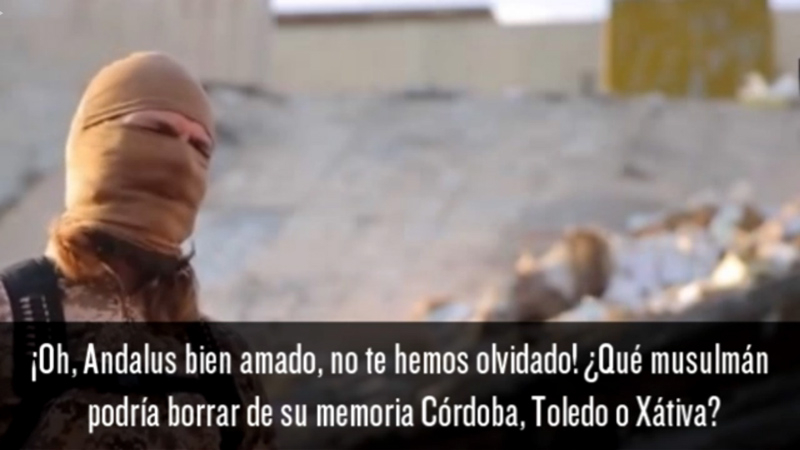
  • “We will recover al-Andalus, Allah willing. Oh dear Andalus! You thought we forgot about you. I swear by Allah we have never forgotten you. No Muslim can forget Córdoba, Toledo or Xàtiva. There are many faithful and sincere Muslims who swear they will return to al-Andalus.” — Islamic State video, January 31, 2016.
  • “Spain is the land of our forefathers and we are going to take it back with the power of Allah.” — Islamic State video, January 7, 2016.

Islamic militants are stepping up a propaganda war against Spain. In recent months, Islamic State and other jihadist groups have produced a flurry of videos and documents calling on Muslims to reconquer al-Andalus.

Al-Andalus is the Arabic name given to those parts of Spain, Portugal and France occupied by Muslim conquerors (also known as the Moors) from 711 to 1492. Many Muslims believe that territories Muslims lost during the Christian Reconquest of Spain still belong to the realm of Islam. They claim that Islamic law gives them the right to re-establish Muslim rule there.

A recent Islamic State document includes a list of grievances against Spain for wrongs done to Muslims since the Battle of Las Navas de Tolosa on July 16, 1212, when the Christian forces of King Alfonso VIII of Castile routed the Almohad Muslim rulers of the southern half of the Iberian Peninsula. More than 100,000 Muslims were killed in the battle, which was a key victory in the Catholic Monarchs’ “Reconquista” of Spain.

The document said that since the establishment of the Spanish Inquisition in 1478, Spain “has done everything to destroy the Koran.” It said that Spain tortured Muslims, including burning them alive. Therefore, according to the Islamic State, “Spain is a criminal state that usurps our land.” The document calls on jihadists to “reconnoiter airline and train routes for attacks.” It also calls on followers to “poison food and water” with insecticides.

The document concludes: “The actions of your ancestors are the reason for our actions today.”

On July 15, 2016, Islamic State released its first propaganda video with Spanish subtitles. The high quality of the Spanish translation, both in writing and in syntax, led some analysts to conclude that that the translator’s mother tongue is Spanish and that the subtitling may even have been done inside Spain.

On June 3, Islamic State released a video — “Month of Ramadan, Month of Conquest” — which mentions al-Andalus four times. Spain is the only non-Muslim country mentioned in the video.

On May 30, Islamic State released a two-page document in Spanish in which it issued threats directly against Spain. The document states:

“We will kill any ‘innocent’ Spanish infidel we find in Muslim lands, and if not we will reach your land. Our religion and our faith lives among you, and even though you do not know our names or what we look like and do not even know whether we are European in origin or not, we will kill you in your cities and towns according to our plan, in the same way that you are killing our families.”

On January 31, Islamic State released a video in which one of its Spanish jihadists warned Spain that it would “pay a very heavy price” for expelling Muslims from al-Andalus. The eight-minute video included the following statement:

“I swear by Allah that you will pay a very heavy price and your demise will be very painful. We will recover al-Andalus, Allah willing. Oh dear Andalus! You thought we forgot about you. I swear by Allah we have never forgotten you. No Muslim can forget Córdoba, Toledo or Xàtiva. There are many faithful and sincere Muslims who swear they will return to al-Andalus.”

An armed, masked Islamic State jihadist appears in a propaganda video, where he warns Spain that it would “pay a very heavy price” for expelling Muslims from al-Andalus hundreds of years ago. The Spanish subtitle above reads “Oh dear Andalus! You thought we forgot about you. I swear by Allah we have never forgotten you. No Muslim can forget Córdoba, Toledo or Xàtiva.”

On January 7, Al-Qaeda in the Islamic Maghreb, which is fighting Islamic State for hegemony of North Africa, released a video calling for jihadist attacks in Madrid as a strategy to help Muslims recover the Spanish North African exclaves of Ceuta and Melilla.

Another Islamic State video vowed to liberate al-Andalus from non-Muslims. A jihadist speaking in Spanish with a heavy North African accent said:

“I say to the entire world as a warning: We are living under the Islamic flag, the Islamic caliphate. We will die for it until we liberate those occupied lands, from Jakarta to Andalusia. And I declare: Spain is the land of our forefathers and we are going to take it back with the power of Allah.”

Meanwhile, 33 jihadists were arrested in Spain in 17 different raids during the first nine months of 2016, according to the Spanish Interior Ministry.

Most recently, two Spanish citizens of Moroccan origin — Karim El Idrissi Soussi, 27, and a second man identified as 18-year-old O.S.A.A — were arrested in Madrid on jihad terror charges. One of the detainees is a 27-year-old computer science student who watched jihadist propaganda videos in class and threatened to massacre his fellow students.

According to the Interior Ministry, Soussi tried to join the Islamic State but was detained by Turkish authorities while attempting to cross the border into Syria. He was deported and just recently returned to Spain.

The Interior Ministry said Soussi’s penchant for radical Islam became evident in November 2015, when the secondary school where he was studying computer science held a moment of silence to honor the victims of the jihadist attacks in Paris. According to teachers and students, Soussi shouted slogans in support of the attacks which killed 130 people, including 89 at the Bataclan Theater.

On other occasions, Soussi publicly justified jihadist attacks by Islamic State, which he said was the ideal form of government for all Muslims. According to the Interior Ministry, Soussi visited a public library almost daily to connect to the internet and browse jihadist websites. He allegedly created fake profiles and posted jihadist material on social media sites. Soussi also criticized so-called moderate Muslims and expressed hope that someday Spain would become an Islamic emirate.

Soussi allegedly watched Islamic State propaganda videos during his computer science class and repeatedly threatened to bring weapons to school to kill his classmates.

The other jihadist, O.S.A.A., was arrested for the offenses of “glorifying jihadist terrorism” and “self-indoctrination for terrorist purposes.” The Interior Ministry did not provide further details.

A total of 636 jihadists have been detained in the country since the March 2004 Madrid train bombings, in which nearly 200 people were killed and more than 2,000 injured.

A recent study by the Madrid-based Elcano Institute found that of the 150 jihadists arrested in Spain during the past four years, 124 (81.6%) were linked to Islamic State and 26 (18.4%) to al-Qaeda.

Of those linked to Islamic State, 45.3% were Spanish citizens, 41.1% were Moroccans and 13.6% had other nationalities. In terms of birth, 45.6% were born in Morocco and 39.1% were born in Spain. Only 15.3% were born in other countries.

In terms of immigration, 51.7% were first-generation immigrants, 42.2% were second- or third-generation immigrants, and 6.1% had no immigration background, which implies they are Spanish converts to Islam.

In terms of residency, 29.8% were arrested in Barcelona, 22.1% in Spain’s North African exclave of Ceuta, and 15.3% in Madrid. The others were arrested in more than a dozen other localities across the country.

Islamic State has suffered setbacks on the battlefields of the Middle East, but the jihadist terror threat remains undiminished. In the words of Spanish terrorism analyst Florentino Portero: “Islamic State is answering military defeats with more terror.”


Arab MK Hanin Zoabi describes how she wants to destroy Israel

September 27, 2016
Published on Sep 11, 2016

One, state, two state – it doesn’t matter as long as there is no Jewish or Zionist state.

ISIS suspected of gas attack against US, Iraqi troops

September 22, 2016

ISIS suspected of mustard attack against US and Iraqi troops

By Barbara Starr, CNN Pentagon Correspondent

Source: ISIS suspected of gas attack against US, Iraqi troops – CNNPolitics.com


Washington (CNN)ISIS is suspected of firing a shell with mustard agent that landed at the Qayyara air base in Iraq Tuesday where US and Iraqi troops are operating, according to several US officials.

The shell was categorized by officials as either a rocket or artillery shell. After it landed on the base, just south of Mosul, US troops tested it and received an initial reading for a chemical agent they believe is mustard.
No US troops were hurt or have displayed symptoms of exposure to mustard agent.
One official said the agent had “low purity” and was “poorly weaponized.” A second official called it “ineffective.”
A US defense official said troops had gone out to look at the ordnance after it landed. Based on seeing what they thought was a suspect substance, two field tests were conducted.
The first test was positive and the second was negative, the official said. The substance is now being sent to a lab for further examination.

Decontamination precaution

US troops involved in the incident went through decontamination showers as a precaution. No troops have shown any symptoms of exposure, such as skin blistering. CNN has reported on previous instances where ISIS has fired rounds with mustard agents in Iraq and Syria.
“I don’t know of a case like this where it was proximate to US forces like this before,” said one military official, noting that “potentially” the rocket round was “within hundreds of yards” of the US forces and “within the security perimeter” of the base.
The US officials said they “had expected” that ISIS might try use chemical weapons as US and Iraqi forces push towards Mosul in an effort to take the city back from ISIS. Several hundred US troops are using the base as a staging area for supporting Iraqi forces.
All of this has led the Pentagon to assess on a preliminary basis that it was ISIS that fired at the base, since the terror group has been making mustard agent for some time.
In the course of its air campaign against ISIS, US airstrikes have hit several locations the US believes are production sites for mustard agent.

Palestinian Author: We Can Sacrifice 1-2 Million Arabs a Year to Liberate Palestine

September 22, 2016

https://www.youtube.com/watch?v=7IheglSwoKg

Published on Sep 20, 2016

Palestinian Author Yousef Jad Al-Haq

Palestinian researcher and author Yousef Jad Al-Haq recently rejected the two-state solution and called to conduct organized resistance in order to liberate Palestine “from the [Jordan] River to the [Mediterranean] Sea.” Extrapolating the percentages from the birthrate of the Arab nation, he said: “If a million of us die, but we get to liberate Palestine… Well, that’s fine by me.” Al-Haq was speaking on Syria News TV on August 16.

Added by J.K

Jerusalem Online did not approved my comment existing out of this video !

 Iran Threatens to Turn Tel Aviv, Haifa to ‘Dust’

September 22, 2016

Iran is again threatening Israel, saying it will “turn Tel Aviv and Haifa to dust” pending mistakes by the “Zionist regime.”

By: Hana Levi Julian

Published: September 21st, 2016

Source: The Jewish Press » » Iran Threatens to Turn Tel Aviv, Haifa to ‘Dust’

Missile Strike’ — a new anti-Israel game launched by Iran.
Photo Credit: FNA

Tehran is back to threatening Israel, this time during a parade marking the anniversary of the 1980 Iraqi invasion of Iran, a war that lasted eight years.

A wide variety of military hardware was on display Wednesday during the parade, which made its way down the main drag in the nation’s capital. Included was the Qadr H missile, which allegedly has a range of 2,000 kilometers.

Long-range ballistic missiles, tanks and the Russian-produced S-300 surface-to-air missile defense system were all in full view as the gala parade was broadcast on state television.

One military truck displayed a banner shown prominently on the broadcast that read:

“If the leaders of the Zionist regime make a mistake, then the Islamic Republic will turn Tel Aviv and Haifa to dust.”

The Iranian Navy showed off 500 vessels, along with submarines and helicopters, at the port of Bandar Abbas on the Persian Gulf.

Iran has tested American mettle more than 30 times so far this year with close encounters in the Gulf between its vessels and those of the United States Navy, according to U.S. officials quoted by Reuters.

Palestinians: “The Mafia of Destruction”

September 21, 2016

Palestinians: “The Mafia of Destruction”

by Khaled Abu Toameh

September 21, 2016 at 5:00 am

Source: Palestinians: “The Mafia of Destruction”


  • Hamas and Palestinian Authority (PA) officials have turned medical care into a business that earns them hundreds of thousands of dollars per year. This corruption has enabled top officials in the West Bank and Gaza Strip to embezzle millions of shekels from the PA budget.
  • In 2013, the PA spent more than half a billion shekels covering medical bills of Palestinians who were referred to hospitals outside the Palestinian territories. However, no one seems to know exactly how the money was spent and whether all those who received the referrals were indeed in need of medical treatment. In one case, it appeared that 113 Palestinian patients had been admitted to Israeli hospitals at the cost of 3 million shekels, while there is no documentation of any of these cases. Even the identities of the patients remain unknown.
  • Hajer Harb, a courageous Palestinian journalist from the Gaza Strip, says she is now facing charges of “slander” for exposing the corruption. She has been repeatedly interrogated by Hamas. The PA regime, for its part, is not too happy with exposure about the scandal.
  • Gaza’s hospitals would be rather better equipped if Hamas used its money to build medical centers instead of tunnels for smuggling weapons from Egypt to attack Israel.

Question: How do Palestinian patients obtain permits to receive medical treatment in Israeli and other hospitals around the world? Answer: By paying bribes to senior Palestinian officials in the West Bank and Gaza Strip. Those who cannot afford to pay the bribes are left to die in under-equipped and understaffed hospitals, especially in the Gaza Strip.

Yet, apparently some Palestinians are more equal than others: Palestinians whose lives are not in danger, but who pretend that they are. These include businessmen, merchants, university students and relatives of senior Palestinian Authority (PA) and Hamas officials, who receive permits to travel to Israel and other countries under the pretext of medical emergency.

Many Palestinians point a finger at the PA’s Ministry of Health in the West Bank. They argue that senior ministry officials have been abusing their powers, in order to collect bribes both from genuine patients and from other Palestinians who only want medical permits in order to leave the Gaza Strip or the West Bank. Thanks to the corruption, many real patients have been denied the opportunity to receive proper medical care in Israel and other countries.
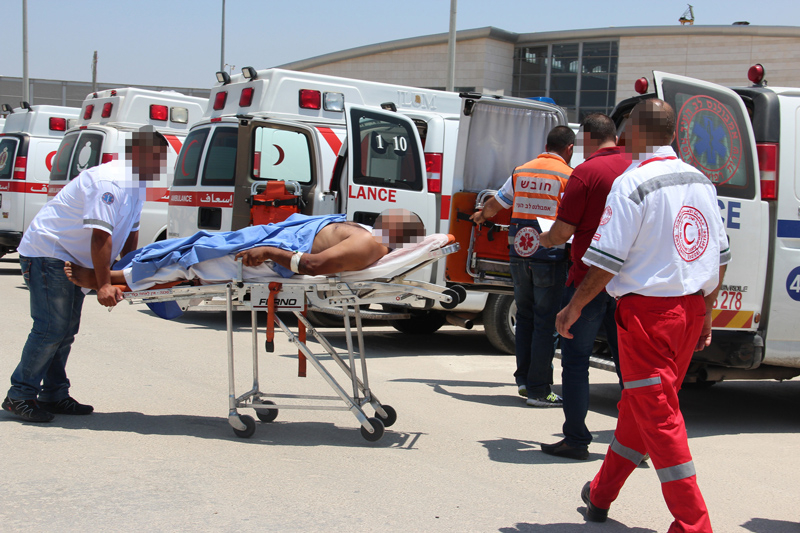
A Palestinian man is transferred to an Israeli ambulance at the Erez crossing between the Gaza Strip and Israel, on his way to an Israeli hospital, July 29, 2014. (Image source: Israeli Foreign Ministry)

This, of course, does not apply to senior Palestinian officials and their family members, who continue to make ample use of Israeli hospitals and other medical centers in Jordan, Egypt, the Gulf and Europe.

Even top Hamas officials enjoy access to Israeli hospitals. In 2013, Amal Haniyeh, the granddaughter of Hamas leader Ismail Haniyeh, was transferred to an Israeli hospital for urgent medical treatment. A year earlier, Haniyeh’s sister, Suheilah, was also brought to an Israeli hospital for urgent heart surgery.

Haniyeh, however, did not need to offer cash to get his daughter and sister medical treatment in Israel. Indeed, some Palestinians are evidently very much more equal than others.

The corruption in the Palestinian health system, both in the West Bank and Gaza Strip, has long been a well-known secret. Palestinians without the right connections and without money to hand over to a senior official or physician are fully aware that they would never be allowed to receive what is called “medical referrals abroad.” The signature of a physician or a senior health official is the most precious merchandise in the West Bank and Gaza Strip. This signature allows patients to receive free medical treatment in Israel and various countries.

The absence of clear regulations to define who is entitled to this privilege have facilitated widespread corruption in the Palestinian health system. Nepotism plays a major role in this form of corruption. The relative of a senior Palestinian official can easily be transferred for treatment in an Israeli, Jordanian or Egyptian hospital, while poor patients from the Gaza Strip can wait months and years before obtaining such permits.

Hamas and PA officials are trading with the lives of Palestinian patients. They have turned medical care into a business that earns them hundreds of thousands of dollars per year. This corruption, in the absence of transparency and accountability, has also enabled top officials in the West Bank and Gaza Strip to embezzle millions of shekels from the PA budget.

Although both the Palestinian Authority and Hamas have vowed to combat this exploitation of Palestinian patients, the Palestinians themselves report no improvement. They say that more than 70% of the cases of medical referrals to Israeli hospitals and abroad have never been documented, and it remains unclear how and where the money was spent.

In 2013, for instance, the PA spent more than half a billion shekels covering medical bills of Palestinians who were referred to hospitals outside the Palestinian territories. However, no one seems to know exactly how the money was spent and whether all those who received the referrals were indeed in need of medical treatment.

The PA maintains that in 2014, more than 54,000 Palestinians from Gaza received medical referrals for treatment outside the Strip. Health officials in the Gaza Strip, however, say they are aware of only 16,382 documented cases of real patients who received such permits.

Between 1994 and 2013, the Palestinian Authority did not ask Israeli hospitals for detailed bills of the medical treatment provided to Palestinian patients. The money is deducted on a monthly basis from tax revenues collected by Israel and later paid to the PA.

The Coalition for Accountability and Integrity (AMAN), a Palestinian group working in the fields of democracy, human rights and good government, to combat corruption and enhance integrity, principles of transparency and systems of accountability in Palestinian society, is one of the few bodies sounding an alarm bell about this abuse.

Last year, AMAN released a report in which it warned against corruption in the Department of Medical Referrals Abroad, which belongs to the PA Ministry of Health. The report pointed out discrepancies in the costs of medical treatment in Israeli and other hospitals, and the actual bills. For example, in one case it appeared that 113 Palestinian patients had been admitted to Israeli hospitals at the cost of 3 million shekels, while there is no documentation of any of these cases. Even the identities of the patients remain unknown.

The AMAN report stated that measures taken by Palestinian health officials to limit nepotism and bribes, and prevent the squandering of public funds, have been insufficient. Physicians, it said, faced pressure from Palestinian Authority officials to issue medical referrals to Israeli hospitals and other hospitals around the world, even to those not in need of them. Some of the cases, the report notes, could have been treated in Palestinian hospitals, and there was no need to transfer them to other hospitals at very high costs.

The PA says that it has asked its Anti-Corruption Commission to investigate the scandal. To date, it remains unclear whether substantive measures have been taken against those responsible for the corruption.

Hamas, for its part, continues to hold the PA responsible for the misery of patients in the Gaza Strip. The Islamist movement claims that the PA government is withholding the issuance of medical permits as a means to punish Palestinians for their support of Hamas.

The truth, however, is somewhat different: health officials in the Gaza Strip who are linked to Hamas have also been exploiting the plight of patients. Hamas is uninterested in this coming to light.

Hajer Harb, a courageous Palestinian journalist from the Gaza Strip, recently prepared an investigative report about the corruption of health officials in the West Bank and Gaza Strip. She has been repeatedly interrogated by Hamas.

Harb says she is now facing charges of “slander” for exposing the corruption. She was told by her interrogators that the decision to summon her for investigation came after a physician in the Gaza Strip filed a complaint against her for “defamation.”

Hamas interrogators demanded that Harb reveal her sources and the identity of those involved in the corruption scandal. “I told them that I am a journalist and I cannot provide them with the identities of my sources without a court order,” she said.

“The prosecution told me that I was facing the following charges: impersonation of another person (they claim I did not reveal my real identity during the investigative report); slandering the Ministry of Health, publishing inaccurate and incorrect information and working with ‘foreign parties’ (by preparing a report for a London-based television station under the pretext that the media organization is not registered with the Press Office in the Gaza Strip).”

In her report, Harb wrote about the middlemen who obtain medical referrals to Israeli and foreign hospitals in return for bribes. She approached one of the middlemen and claimed she wanted to travel from the Gaza Strip to the West Bank to marry a man living there. She wrote that she received a permit to leave the Gaza Strip and receive medical treatment in East Jerusalem’s Al-Makassed Hospital after she paid a bribe to a local physician. She also found several forged medical referrals in the name of the son of a senior Palestinian official in the Gaza Strip, who obtained them in order to complete his studies in the West Bank. Harb further located a man who claimed that he works for the PA’s Preventative Security Service and who boasted that he could get a permit for medical treatment outside the Gaza Strip in return for $200. Another Palestinian bought a medical permit to leave the Gaza Strip and work in a restaurant in Ramallah.

Hamas claims to be combating the corruption of officials who are tampering with the lives of Palestinian patients. In reality, it is busy harassing journalists who speak the truth. The Palestinian Authority regime, for its part, is not too happy with exposure about the scandal.

The Palestinian Journalists Syndicate (PJS), based in the West Bank, condemned Hamas for harassing Harb. But this critique should be seen more in the context of the power struggle between the PA and Hamas, rather than as stemming from a concern for public freedoms.

In a statement, the PJS criticized Hamas for interrogating Harb as a “grave breach of media work and freedom of expression” in the Palestinian territories. The syndicate emphasized the right of journalists not to reveal the identity of their sources, adding that Harb had abided by all moral, legal and professional standards.

Najat Abu Baker, a member of the Palestinian Legislative Council who belongs to PA President Mahmoud Abbas’s Fatah faction, was one of the few politicians in the West Bank who dared to come out against the corruption scandal.

In her words, the corruption in the PA’s Department of Medical Referrals has transformed it into a “real mafia headed by influential figures.” Abu Baker accused the ministry of exploiting the impoverished residents of the Gaza Strip and wasting public funds:

“The issue of medical permits has become a business and the only ones who are paying the price are the patients from the Gaza Strip. Hundreds of these patients who have died are the victims of the ministry’s measures.”

She called for a commission of inquiry into the corruption scandal. She noted that many patients from the Gaza Strip have died while waiting for medical referrals while others, who were not ill, were given the permits thanks to nepotism and bribery.

“The merchants of death are tampering with the fate of our patients. It is time to tell the truth so that we can get rid of the mafia of destruction and end their trade in the lives of our patients.”

The medical permit scandal is yet further proof that Hamas and the Palestinian Authority shamelessly exploit their people for political and financial purposes. The PA leverages its power to issue medical permits in order to pressure Palestinians in the Gaza Strip to turn against Hamas. Its officials sell the permits for cold hard cash. Hamas, which continues to hold the entire Gaza Strip hostage, has its own ideas about how money is well spent. Gaza’s hospitals would be rather better equipped if Hamas used the money it has to build medical centers instead of tunnels for smuggling weapons from Egypt to attack Israel. While medical permits are sold to the highest Palestinian bidder, we ask: What is the going rate for a permit for clarity concerning the behavior of Palestinian leaders?

Khaled Abu Toameh, an award-winning journalist, is based in Jerusalem.
Southern Command: Hamas is ready for the next war

September 21, 2016

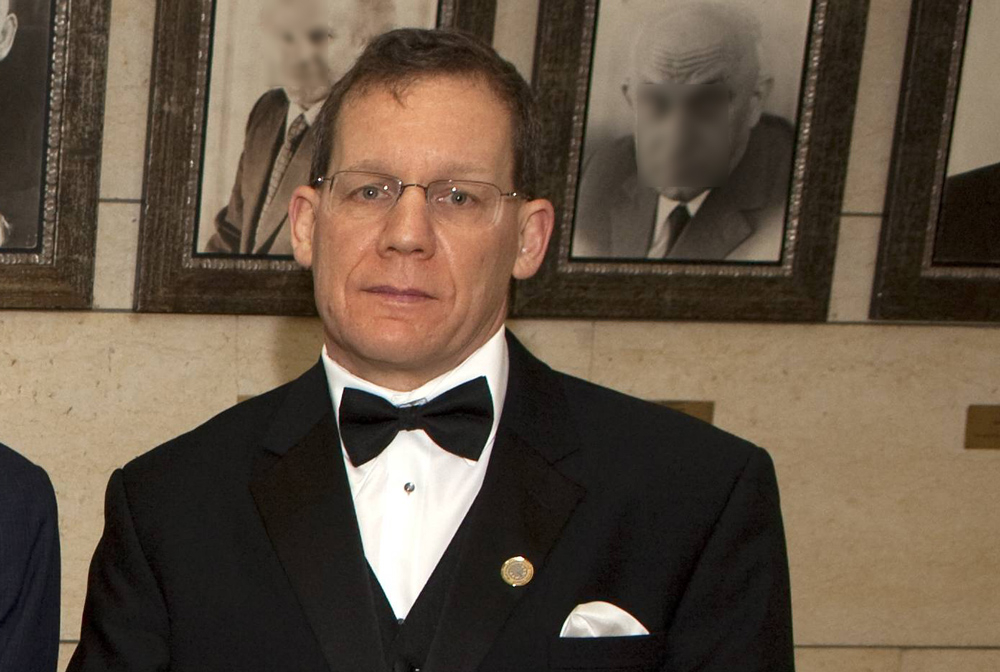
Southern Command: Hamas is ready for the next war Southern Command chief, Eyal Zamir, at a conference for southern residents explained that Hamas is preparing for the next round of fighting.

Arutz Sheva Staff,
21/09/16 13:13

Source: Southern Command: Hamas is ready for the next war – Defense/Security – News –

Zamir and Eizenkot on the border

Gefen Reznik

General of the Southern Command, Eyal Zamir, at a conference for southern residents explained that Hamas is preparing for the next round of fighting.

Zamir emphasized that, “we have no intentions to make the situation worse but we will react to any shot fired with the appropriate level of force.”

Regarding Hamas he said, “unfortunately they are utilizing this quiet period to prepare for the next battle.”

In the conference, the Major-General said, “in the last decade, and since the withdrawal from Gush Katif and the IDF’s exit from the Gaza Strip, we have had three military operations.” He explained that the past two years have been the quietest, relatively, in the past decade, and they are being used to expand settlements around Gaza.

Zamir clarified that the “IDF won’t let terrorist organizations, led by Hamas, harm Israeli citizens. We have no intentions of escalating the situation, but we will react to every hit with the appropriate amount of force.”

“On the idea of trying to lengthen the period of quiet, we are continuing to address the threats below and above ground in order to protect Israel’s citizens and destroy the threats.”

Yesterday an Israeli Air Force fighter jet shot down an unmanned aircraft from the Gaza Strip an army spokesman said.

The unmanned craft, believed to be controlled by Hamas, was detected flying along the Gaza coastline.