Posted tagged ‘Islam’

Khamenei Publishes Book About The Annihilation Of Israel

September 5, 2015

Khamenei Publishes Book About The Annihilation Of Israel

By Missing Peace

Source: Khamenei Publishes Book About The Annihilation Of Israel | Missing Peace | missingpeace.eu | EN

Khamenei during meeting with IRGC veterans

Iran’s Supreme Leader, Ayatollah Ali Khamenei, just published a book in which he outlines a ‘slow and painful’ strategy to annihilate Israel.

The 416-page book, titled Palestine, was edited by Saeed Solh-Mirzai–but received full approval from Khamenei’s office and is thus Khamenei’s most authoritative document regarding his views on the issue, the Goldstone Institute think tank reported.

The book was published only weeks after six world powers, including the United States, reached a controversial agreement about Iran’s nuclear weapons program.

Khamenei’s plan for Israel will promote “the hegemony of Iran” while it will remove “the West’s hegemony” from the Middle East, the Ayatollah claims in the book. How this goal will be reached is described in detail by Khamenei.

“Israel has no right to exist” is the central theme of the book. Khamenei uses three words to describe the destruction of Israel. “One is “nabudi,” which means “annihilation.” The other is “imha,” which means “fading out.” And finally, there is “zaval,” meaning “effacement,” the Gatestone Institute reported.

The annihilation of Israel will not be achieved via conventional warfare, Khamenei argues, but via a never ending string of terror attacks and low-intensity conflict that will make life unbearable for the Israeli Jews.

In the end, they would pack their bags and leave the country for another country in the West–or return to their country of origin–because many Israelis have dual citizenship, the Iranian Supreme Leader thinks. This same way of thinking caused Yasser Arafat to launch the Second Intifada, but Israelis never even contemplated leaving the country during the five years of continuing terror.

Khamenei writes that his strategy for the annihilation of the Jewish State has nothing to do with anti-Semitism but with “well-established Islamic principles.”

The overriding principle is that Israel was established on territory that belongs to the Ummah (Islamic nation) and, therefore, is part of the Dar al-Islam (house of Islam). Such land can never be ceded to non-Muslims and must be brought under Muslim control again.

There are, however, three other reasons Khamenei gave for the mandatory destruction of Israel.

The first is that Israel, which he labels “adou” (enemy) and “doshman” (foe), is the ally of the “Great Satan” (United States) and is conspiring with the U.S. in an “evil scheme” to dominate the heartland of the Ummah.

The second reason is that Israel has become “Kaffir al-Harbi,” a hostile infidel because of the numerous wars it fought against Muslim armies.

The third reason Israel must be destroyed is that it “occupies” Jerusalem, the third holy city in Islam, according to Khamenei, who is honored with the title “The flagbearer of Jihad to liberate Jerusalem” on the cover of the book. He writes that one of his “most cherished wishes” is to pray in Jerusalem one day.

Khamenei is counting on increasing “Israel fatigue” in the international community that makes it more likely that the world will force his version of the one-state solution upon Israel, he thinks.

What is this solution?

The Supreme Leader wants to organize a referendum among at least 8 million Palestinian Arabs and their descendants and only 2.2 million Israeli Jews, those who did not immigrate to Israel.

The United Nations would run the affairs in the new country until the referendum takes place; and after that, Khamenei would be willing to let the Jews continue to live in the new “Palestine” as second-class citizens (Dhimmi’s).

Khamenei also boasts that Iran was behind the Second Lebanon War between Israel and Hezbollah in 2006 and the 22-day long war with Hamas in Gaza last year.

In his book, Khamenei denies the Holocaust and writes that he regards it as “a propaganda ploy” or a disputed claim. “If there was such a thing we don’t know why it happened and how,” he claimed.

Amir Taheri, the Iranian journalist who wrote the Gatestone article, added the following:

Khamenei has been in contact with professional Holocaust deniers since the 1990s. In 2000, he invited Swiss Holocaust-denier Jürgen Graf to Tehran and received him in private audiences. French Holocaust-denier Roger Garaudy, a Stalinist who converted to Islam, was also feted in Tehran as “Europe’s’ greatest living philosopher.”

It was with Khamenei’s support that former President Mahmoud Ahmadinejad set up a “Holocaust-research center” led by Muhammad-Ali Ramin, an Iranian functionary with links to German neo-Nazis who also organized annual “End of Israel” seminars.

Despite efforts to disguise his hatred of Israel in Islamic terms, the book makes it clear that Khamenei is more influenced by Western-style anti-Semitism than by classical Islam’s checkered relations with Jews.

His argument about territories becoming “irrevocably Islamic” does not wash, if only because of its inconsistency. He has nothing to say about vast chunks of former Islamic territory, including some that belonged to Iran for millennia, now under Russian rule.

Nor is he ready to embark on Jihad to drive the Chinese out of Xinjiang, a Muslim khanate until the late 1940s.

Israel, which in terms of territory accounts for one per cent of Saudi Arabia, is a very small fry.

Khamenei’s book has been published in Farsi, the language of Iran. An Arab translation is expected soon.


Pentagon Not Targeting Islamic State Training Camps

August 29, 2015

Pentagon Not Targeting Islamic State Training Camps No airstrikes against 60 camps producing 1,000 fighters monthly

BY:
August 28, 2015 4:40 pm

Source: Pentagon Not Targeting Islamic State Training Camps | Washington Free Beacon

The Pentagon has not conducted airstrikes against an estimated 60 Islamic State (IS) training camps that are supplying thousands of fighters each month to the terror group, according to defense and intelligence officials.

The camps are spread throughout Islamic State-controlled areas of Iraq and Syria and are off limits in the U.S.-led international bombing campaign because of concerns about collateral damage, said officials familiar with planning and execution of the yearlong bombing campaign.

Additionally, the IS (also known as ISIS or ISIL) camps have been so successful that Islamic State leaders are considering expanding the camps to Libya and Yemen. Both states have become largely ungoverned areas in recent years.

The failure to target the training camps with U.S. and allied airstrikes is raising questions among some defense and intelligence officials about the commitment of President Obama and his senior aides to the current anti-IS strategy of degrading and ultimately destroying the terror group.

“If we know the location of these camps, and the president wants to destroy ISIS, why are the camps still functioning?” one official critical of the policy asked.

The camps are regarded by U.S. intelligence analysts as a key element in the terror group’s successes in holding and taking new territory. The main benefit of the training camps is that they are providing a continuous supply of new fighters.

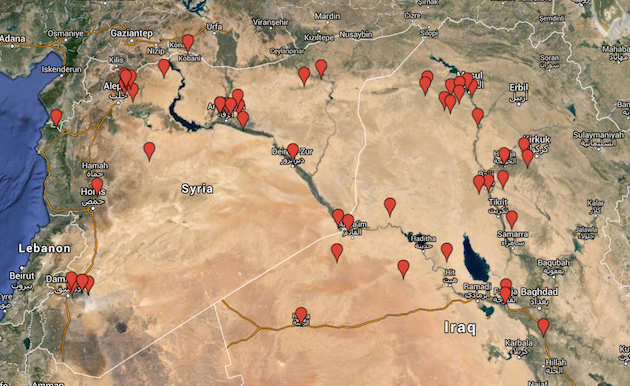
IS training camps

An additional worry of intelligence analysts is that some of the foreign fighters being trained in the camps will eventually return to their home countries in Europe and North America to carry out terror attacks.

A White House spokesman declined to comment on the failure to bomb the terror camps and referred questions to the Pentagon.

Pentagon spokesman Maj. Roger M. Cabiness declined to say why no training camps have been bombed. “I am not going to be able to go into detail about our targeting process,” he said.

Cabiness said the U.S.-led coalition has “hit ISIL [an alternative abbreviation for the Islamic State] with more than 6,000 airstrikes.”

“The coalition has also taken out thousands of fighting positions, tanks, vehicles, bomb factories, and training camps,” he said. “We have also stuck their leadership, including most recently on Aug. 18 when a U.S. military airstrike removed Fadhil Ahmad al-Hayali, also known as Hajji Mutazz, the second in command of the terrorist group, from the battlefield.”

Efforts also are being taken to disrupt IS finances and “make it more difficult for the group to attract new foreign fighters,” Cabiness said in an email.

A Central Command spokesman also declined to provide details of what he said were “operational engagements” against IS training camps.

“Once a target is identified as performing a hostile act, or is part of an obvious hostile force, a training camp for example, we prosecute that target in accordance with the coalition rules of engagement and the law of armed conflict,” the spokesman said.

According to the defense and intelligence officials, one reason the training camps have been off limits is that political leaders in the White House and Pentagon fear hitting them will cause collateral damage. Some of the camps are located near civilian facilities and there are concerns that casualties will inspire more jihadists to join the group.

However, military officials have argued that unless the training camps are knocked out, IS will continue to gain ground and recruit and train more fighters for its operations.

Disclosure that the IS training camps are effectively off limits to the bombing campaign comes as intelligence officials in the Defense Intelligence Agency (DIA) and U.S. Central Command, which is in charge of the conflict, have alleged that senior U.S. officials skewed intelligence reports indicating the U.S. strategy against IS is not working or has been less effective than officials have claimed in public.

The Islamic State controls large parts of Syria and Iraq and has attracted tens of thousands of jihadists in both countries and from abroad. The exact number of fighters is not known but intelligence estimates have indicated the numbers have increased over the past year.

The military campaign, known as Operation Inherent Resolve, appears to be floundering despite a yearlong campaign of airstrikes and military training programs aimed to bolstering Iraqi military forces.

A review of Central Command reports on airstrikes since last year reveals that no attacks were carried out against training camps.

Targets instead included Islamic State vehicles, buildings, tactical units, arms caches, fighting positions, snipers, excavators, mortar and machine gun positions, bunkers, and bomb factories.

The risk-averse nature of the airstrike campaign was highlighted last month by Brig. Gen. Thomas Weidley, chief of staff for what the military calls Combined Joint Task Force-Operation Inherent Resolve.

“The coalition continues to use air power responsibly,” Weidley said July 1. “Highly precise deliveries, detailed weaponeering, in-depth target development, collateral damage mitigation, and maximized effects on Daesh, are characteristics of coalition airstrike operation in Iraq and Syria.”

Daesh is another name for the Islamic State.

“The coalition targeting process minimizes collateral damage and maximizes precise effects on Daesh,” Weidley said earlier. “Air crews are making smart decisions and applying tactical patience every day.”

Other coalition spokesman have indicated that targeting has been limited to reaction strikes against operational groups of IS fighters. “When Daesh terrorists expose themselves and their equipment, we will strike them,” Col. Wayne Marotto said May 27.

The military website Long War Journal published a map showing 52 IS training camps and noted that some may no longer be operating because of the U.S.-led bombing campaign.

According the map, among the locations in Iraq and Syria where IS is operating training camps are Mosul, Raqqah, Nenewa, Kobane, Aleppo, Fallujah, and Baiji.

The group MEMRI obtained a video of an IS training camp in Nenewa Province, Iraq, dated Oct. 1, 2014.

The video shows a desert outpost with tan tents and around 100 fighters who take part in hand-to-hand combat exercises, weapons training, and religious indoctrination.

Aymenn Jawad Al-Tamimi, an analyst with the Middle East Forum, in June translated details of IS training purportedly obtained from a manual produced by a pro-IS operative in Mosul named Omar Fawaz.

Among those involved in ideological training for IS jihadists in Iraq is Bahraini cleric Turki Binali, who wrote an unofficial biography of IS leader Abu Bakr al-Baghdadi, Al-Tamimi stated in a blog post June 24.

According to a document thought to be written by Fawaz, training differs for native Iraqis and Syrians as opposed to foreign fighters, who generally are less experienced militarily than the regional trainees.

The document also reveals IS plans to export military manpower abroad, including Libya.

“Sessions for the muhajireen [foreign fighters] brothers last 90 days or more, and at the highest level deal with organization, determination, and intelligence operation, including training on heavy weaponry in addition to comprehensive Sharia sessions and multiple tests,” according to a translation of the document. “Sessions for the Ansar from the people of Iraq and al-Sham range between 30 to 50 days.”

The process begins with an application form and questionnaire regarding education, skills, viewpoints, and whether their backgrounds can be verified.

The training then includes physical fitness, martial arts practice, weapons training, and ideological indoctrination.

After a week of training, jihadists with special abilities are selected and placed in units. The units include special forces, air defense, sniper units, a “caliphate army,” an “army of adversity,” and administrative units for those capable of using electronic devices and accounting.

“The rest are distributed in fronts and camps after the end of the military camp training according to where they are needed,” the report said, noting that all graduates are tested in Sharia at the conclusion of their training.

The New York Times reported Tuesday that the Pentagon inspector general is investigating allegations that military officials doctored intelligence reports in an attempt to present more optimistic accounts of the U.S. military’s efforts in the conflict.

The probe was triggered by a DIA analyst who stated that Central Command officials were improperly rewriting intelligence assessments prepared for policy makers, including President Obama.

The Daily Beast reported Wednesday that senior military and intelligence officials inappropriately pressured U.S. terrorism analysts to alter estimates of the strength of the Islamic State to portray the group as weaker.

Central Command, on its website, stated that in the year since the Iraq operation began on Aug. 7, 2014, a total of 6,419 air strikes were carried out.
Targets damaged or destroyed include 119 tanks, 340 Humvees, 510 staging areas, 3,262 buildings, 2,577 fighting positions, 196 oil infrastructure targets, and 3,680 “other” targets not further identified.

Iran official: We will never end fight against Israel

August 29, 2015

Iran official: We will never end fight against Israel In third successive denial of softened stance, Khamenei aide says fighting ‘illegal Zionist regime’ is ‘immutable policy’ By Times of Israel staff August 29, 2015, 2:47 pm

Source: Iran official: We will never end fight against Israel | The Times of Israel

Iran's President Hassan Rouhani, right, welcomes British Foreign Secretary Philip Hammond at the start of their meeting in his office, in Tehran, Iran, Monday, Aug. 24, 2015. (AP Photo/Ebrahim Noroozi)

Iran’s President Hassan Rouhani, right, welcomes British Foreign Secretary Philip Hammond at the start of their meeting in his office, in Tehran, Iran, Monday, Aug. 24, 2015. (AP Photo/Ebrahim Noroozi)

An aide to Iranian Supreme Leader Ayatollah Ali Khamenei on Saturday dismissed remarks by British Foreign Secretary Phillip Hammond that Tehran has changed its stance on Israel, insisting that fighting the “illegal Zionist regime” is an ongoing policy of the Islamic Republic, the semi-official Fars news agency reported.

“[The] fight against the illegal Zionist regime is one of the immutable policies of Iran, which has always been maintained,” Seyed Mahmoud Nabavi said.

Hammond was in Iran on Sunday and Monday for the reopening of the British embassy in Tehran, and said that Iranian President Hassan Rouhani had indicated a “more nuanced approach” to Israel’s existence. Hammond said Khamenei’s “revolutionary sloganizing” should be distinguished from “what Iran actually does in the conduct of its foreign policy.”

Nabavi said Hammond’s comments were “incorrect since one of the driving goals of the Islamic Revolution has been campaign against the arrogant powers,” according to Fars.

“We haven’t recognized the Zionist regime since the beginning of the Islamic Revolution and such a policy will continue,” Nabavi said.

This is the third time this week that a senior Iranian official has repudiated Hammond’s claims of a shift in stance on Israel. The Iranian Foreign Ministry also dismissed the remarks, saying that Israel “had no place in diplomatic talks between Tehran and London,” Fars reported.

“We have rejected such media hype (before) and during Mr. Hammond’s trip to Iran, we just discussed potentials of bilateral relations, fighting extremism and terrorism, etc.,” Foreign Ministry spokeswoman Marziyeh Afkham told reporters in Tehran on Wednesday.

“There were no talks on the Zionist regime and the report that Iran has changed its position is denied,” she said.

On Tuesday, Hussein Sheikholeslam, a foreign affairs adviser to parliament speaker Ali Larijani, said that Israel “should be annihilated,” and that the thawing relations with the West would not translate into a shift in Tehran’s position on the Jewish state.

Sheikholeslam told Iranian media that contrary to remarks by Hammond, “Our positions against the usurper Zionist regime have not changed at all; Israel should be annihilated and this is our ultimate slogan.”

Sen. Cotton to Visit Israel for More Ammunition against Iran Deal

August 28, 2015

He will arrive Sunday and will be “updated on strategic issues,” meaning Iran. By: Tzvi Ben-Gedalyahu Published: August 28th, 2015

Source: The Jewish Press » » Sen. Cotton to Visit Israel for More Ammunition against Iran Deal

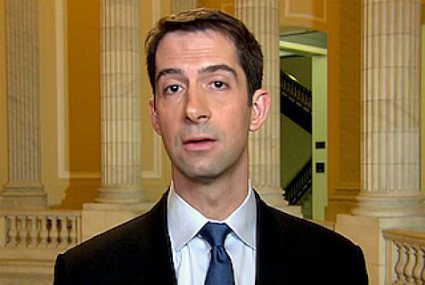
Arkansas Sen. Tom Cotton.

Sen. Tom Cotton, one of the loudest voices against the nuclear deal with Iran, will arrive in Israel on Sunday for a week-long visit that can be assumed is aimed at arming him with more ammunition to try to shoot down the nuclear Iran agreement in the Senate.

The Israel government announced:

U.S. Senator Tom Cotton (R-AR) will be visiting Israel from Sunday, August 30, to Saturday, September 5, 2015. During his trip to Israel, the Senator will be updated on strategic and diplomatic issues, as well as other major developments in the region.

Senator Cotton, in office as of January 2015, serves on the Armed Services, Intelligence, and Banking committees.

Updating him on “strategic and diplomatic issues” just before Congress returns from a summer recess with the Iran deal the number one item on the agenda means that Prime Minister Binyamin Netanyahu will send Sen. Cotton back with a suitcase full of arguments to try to win a veto-proof majority against the deal when it comes for a vote.

Sen. Cotton was behind the controversial letter that he and several senators sent to Iran to “inform” it that a nuclear deal would not be binding on the next president.

Earlier this month, he told Israeli reporters that the Obama administration has not made it clear to Iran that it could use force to prevent a nuclear-armed Iran. He then said that the U.S. Armed Forces could bomb Iran’s nuclear program “back to zero.”

Sen. Corker stated:

You can destroy facilities. I don’t think any military expert in the United States or elsewhere would say the U.S. military is not capable to setting Iran’s nuclear facilities back to day zero,

Can we eliminate it forever? No, because any advanced industrialized country can develop nuclear weapons in four to seven years, from zero. But we can set them back to day zero.

That is music to the ears of Prime Minister Netanyahu, and the timing of next week’s visit is not coincidental.

The Prime Minister and President Barack Obama are desperately campaigning against and for the deal, respectively.

Media continue to report more evidence that the deal is full of holes and that Iran already is has taken moves to get around it, such as the report Thursday that it has built an addition to its Parchin nuclear facility.

However, party loyalty usually is paramount to intellectual honesty. New York Democratic Sen. Charles Schumer came out against the deal and promptly faced a campaign prevent him from becoming the next party leader in the Senate to succeed retiring Sen. Harry Reid, who backs the deal.

Even Tennessee Republican Sen. Bob Corker admits that Obama will win. He told The Tennessean:

Understand that at this moment it looks very unlikely that we’ll have a veto-proof majority to disapprove, but I know we’re going to have a bipartisan majority that will disapprove.

The Hill reported that President Obama lacks only five out of 15 undecided Democratic senators to prevent a veto-proof majority against the agreement.

“There are monkeys of Jewish origin; none deny this who believe in the Quran”

August 27, 2015

There are monkeys of Jewish origin; none deny this who believe in the Quran,” Front Page Magazine, Daniel Greenfield, August 27, 2015

ham_the_chimp-635x357

Critics of Islam are often accused of bigotry. The accusers tend to overlook the kind of crazy racism that Islam teaches. And we are talking really, really crazy racism. (via Religion of Peace)

Al-Mosharraf, whose Elaph blog posts often contain anti-Semitic overtones, argues that some monkeys are Jews whom Allah punished for desecrating the Sabbath, as is told in the Quran. He included numerous photos of macaque monkeys in his post, and pointed out the similarities between their behavior and Jewish behavior.

Sure. Who can forget the time that six Muslim armies were defeated by an army of monkeys.

The term “offspring of apes and pigs” originates from the Quran: 2:65, 5:60, and 7:163-169 tell the story of the “Sabbath people’s” — i.e., the Jews’ — violation of Allah’s instructions and Allah’s punishment of them by turning them into apes and pigs.

Apes and pigs is one of the favorite racist taunts aimed at Jews. That and the usual Khaybar, Khaybar Ya Yahud call for genocide which you encounter at finer universities these days. And the claim that Jews are planting Gharkad trees in the hopes of escaping the coming Muslim genocide.

Because Islam is a religion of peace. And to have peace, you first have to kill everyone else. Because they’re really monkeys.

morsi

The [Jews who had become monkeys] continued to multiply, and were finally forced to disperse throughout the world. It seems that they chose to settle in the countries of Southeast Asia and the Far East, as can be seen today. “What is interesting is that there are two species of macaque — black and silver. This corresponds to the two types of Jews, of two [skin] colors: the Ashkenazim of European origin and the Sephardim of Asian origin.

Islam is racist? Who knew.

“It is noteworthy that [Charles] Darwin ([who was] of Jewish descent) kept the world preoccupied for a long time with his theory that man is descended from apes. Apparently, he arrived at this assumption from his study [of] the history of some of his forefathers amongst the Jewish monkeys.”

This is Islamic racism. This is Islamic racism ‘evolved’.

“It is indisputable that there are monkeys of Jewish origin; none deny this but those who do not believe in the Quran that Allah brought down to Muhammad. Allah said of these monkeys of Jewish descent: ‘And you had already known about those who transgressed among you concerning the Sabbath, and we said to them be apes, despised. And we made it a deterrent punishment for those who were present and those who succeeded [them] and a lesson for those who fear Allah’ (Quran 2:65-66).

Indisputable. I don’t think that word means what you think it does.

But I think we can conclusively prove that Jews aren’t monkeys even to Al-Mosharaff’s satisfaction. If these monkeys really were Jews, Muslims around the world would be trying to kill them.

islamic_antisemitism

Two Hundred Retired Generals, Flag Officers Call on Congress to Reject Iran Deal

August 27, 2015

Two Hundred Retired Generals, Flag Officers Call on Congress to Reject Iran Deal

BY:
August 26, 2015 2:02 pm

Source: Two Hundred Retired Generals, Flag Officers Call on Congress to Reject Iran Deal | Washington Free Beacon

John Kerry

John Kerry / AP

Nearly two hundred retired generals and admirals sent a letter to Congress asking members to oppose the Iran deal, the Washington Post reported Wednesday.

The retired officers warned in the letter that the nuclear deal was “unverifiable” and would “threaten the national security and vital interests of the United States” by providing Iran a 10-year path to a nuclear bomb and handing the regime $150 billion in sanctions relief:

In summary, this agreement will enable Iran to become far more dangerous, render the Mideast still more unstable and introduce new threats to American interests as well as our allies. In our professional opinion, far from being an alternative to war, the Joint Comprehensive Plan of Action makes it likely that the war the Iranian regime has waged against us since 1979 will continue, with far higher risks to our national security interests. Accordingly, we urge the Congress to reject this defective accord.

Earlier this month, a group of 36 flag officers sent a dueling letter to Congress in support of the nuclear deal. The letter was organized with help from the White House, the Washington Free Beacon reported.


Here the full letter :

http://apps.washingtonpost.com/g/documents/world/read-an-open-letter-from-retired-generals-and-admirals-opposing-the-iran-nuclear-deal/1703/


Unveiling new missile, Rouhani says Iran will obtain ‘any weapons we need’

August 22, 2015

Unveiling new missile, Rouhani says Iran will obtain ‘any weapons we need’

‘We can negotiate with other countries only when we are powerful,’ says president at ceremony displaying precision solid-fuel rocket

By Times of Israel staff August 22, 2015, 12:00 pm

via Unveiling new missile, Rouhani says Iran will obtain ‘any weapons we need’ | The Times of Israel.

In this photo released by the official website of the office of the Iranian Presidency on Saturday, Aug. 22, 2015, Iran's President Hassan Rouhani, left, briefs the media as Defense Minister Hossein Dehghan listens after unveiling the surface-to-surface Fateh-313, or Conqueror, missile in a ceremony marking Defense Industry Day, Iran. (Iranian Presidency Office via AP)

In this photo released by the official website of the office of the Iranian Presidency on Saturday, Aug. 22, 2015, Iran’s President Hassan Rouhani, left, briefs the media as Defense Minister Hossein Dehghan listens after unveiling the surface-to-surface Fateh-313, or Conqueror, missile in a ceremony marking Defense Industry Day, Iran. (Iranian Presidency Office via AP)

Iran on Saturday unveiled a new surface-to-surface ballistic missile with a 500-kilometer (310 miles) range, saying military might was a precondition for peace and effective diplomacy.

The Fateh 313 missile was unveiled during a ceremony marking the anniversary of Iran’s military industry, attended by Iranian President Hassan Rouhani.

The military industry called the solid-fuel missile one of the most exact ever manufactured, boasting that it has successfully hit multiple targets with great precision, Israel’s Walla website reported.

“We will buy, sell and develop any weapons we need and we will not ask for permission or abide by any resolution for that,” Rouhani said in a speech at the ceremony, which was broadcast live on state television, according to Reuters.

“We can negotiate with other countries only when we are powerful. If a country does not have power and independence, it cannot seek real peace,” the president said.

A senior commander in Iran’s Revolutionary Guards said Friday that the country is planning massive “ballistic missiles war games,” adding that the announcement comes after Tehran said it plans to begin phasing in a new generation of missiles.

“The IRGC Aerospace Force will hold a large-scale ballistic missiles war-games soon,” Brigadier Gen. Amirali Hajizadeh said, according to the state-run Fars news agency.

Tehran said last month that its ballistic missile program was not connected to the UN Security Council resolution endorsing the July 14 accord with world powers that limits its nuclear program.

Under the terms of the agreement, Iran is barred from developing ballistic missiles capable of carrying a nuclear warhead.

Iran says it has ballistic missiles with a range of 2,000 kilometers (1,200 miles), which are capable of striking both Israel and Saudi Arabia. But the Foreign Ministry said that the UN’s resolution endorsing the deal did not have jurisdiction over its missile development.

“Iran’s military capacities, especially ballistic missiles, are strictly defensive and, as they have not been conceived to carry nuclear weapons, they are outside the scope and competence of the Security Council resolution,” the ministry wrote in a statement.

“The Islamic Republic of Iran is committed to implementing its commitments… so long as world powers keep their side of the agreement to lift sanctions in exchange for guarantees that Tehran will not develop a nuclear program,” the statement said.

Israel defense chiefs see war with Hezbollah as matter of ‘when’, not ‘if’

August 20, 2015

Israel defense chiefs see war with Hezbollah as matter of ‘when’, not ‘if’

via Israel defense chiefs see war with Hezbollah as matter of ‘when’, not ‘if’ – Arab-Israeli Conflict – Jerusalem Post.


he State of Israel has already seen quite a number of wars on each of its fronts, yet after years in which its wars were against states across defined frontiers, today it is dealing with circumstances that are as complex as they have ever been.

Defense officials understand that the next military action in the North will be the most difficult we will ever know, and that the effort will be aimed at organizations that have no scruples and know no bounds.

If the next conflagration will erupt against Hezbollah in Lebanon, there is no doubt that the Shi’ite group, which already controls a number of strategically important points in Syria, will open fire across the frontier on the Golan Heights.

If Israel is attacked by global jihadist groups on the Golan Heights, there will also be a similar attack coming from Lebanon, where Islamist organizations are gaining greater traction.

Everyone knows how the scenario plays out. The home front in both the North and the South will be attacked – and with significant force. Military correspondents who cover the army say that they never recall a time during which the IDF high command has emphasized the need for defense as much as they have in recent months.

The situation in the North will be so severe that the army’s situational assessments first and foremost stress the need for defense before offense. Senior defense officials also know full well that the best way to win the next war in the North is to undertake a series of defensive measures while at the same time dealing the enemy a blow from which it will be unable to recover.

One of the reasons for this is that Israeli intelligence has long concluded its fact-finding efforts aimed at gauging the quantities of firepower possessed by Hezbollah.

Spies have since been hard at work in analyzing the types of weaponry. The conclusion they have reached is that these arms are not only lethal, but precise. Some of these weapons were developed and manufactured by Hezbollah itself, while a significant portion of the arms were provided by Iran. There was a time when Hezbollah was considered a small-time terrorist nuisance. Today, it is a consensus view that Israel is dealing with a full-fledged military organization. In recent  weeks, analysts have noticed a historic alignment that has taken hold between Hezbollah and the Lebanese military.

If Hezbollah was indifferent to the damage that was being wrought on Lebanon during the Second Lebanon War, the union being forged with the Lebanese military has become a deterrent.

For the first time ever, IDF Northern Command soldiers manning lookout posts have noticed that Hezbollah and Lebanese troops have been conducting joint patrols. Now Israeli military officials are wondering just how deep the cooperation between the two organizations extends.

Israel is disturbed by these developments, and it has communicated its concerns to world powers. In some cases, Israeli officials have made clear their red lines regarding the nature and quality of weaponry it will permit the Lebanese forces to possess.

An interesting dynamic has taken shape between Hezbollah and the Lebanese government, and Israel is not taking it lightly. Hezbollah today has members of parliament and enough government ministers that can tilt major decisions in its direction. Will the Lebanese military fight alongside Hezbollah in the next war? Israel does not rule this out, and as such is preparing for the eventuality.

Defense officials acknowledge that at the moment nobody on either side is interested in war. The chances of hostilities breaking out in the near future are low. At the same time, however, it is clear to all that the smallest incident could lead to a response that snowballs into the Third Lebanon War.

In January, Hezbollah killed two IDF soldiers in the Givati infantry brigades, firing Kornet anti-tank missiles at their patrol along the border. Immediately after the incident, the IDF went on high alert. At the time, however, there was a restraining element.

At the last minute, somebody pressed the “abort” button and stopped the next war from unfolding. One thing is certainly clear – if Hezbollah had exacted a higher price and the attack was even more successful, resulting in the deaths of more than two soldiers and perhaps a captive Israeli, today we’d be dealing with the formation of a commission of inquiry into the Third Lebanon War.

Both the defense establishment and Hezbollah are ready for such a conflict. The army has already concluded the construction of numerous roadblocks and obstacles near Shlomi, not far from the northern border, which are aimed at preventing terrorists from crossing the frontier and taking control of roadways, outposts, even townships. Preparatory work has long been concluded in towns and communities adjacent to the border.

In some areas, the army has built artificial trenches and put up walls. IDF officers acknowledge that not all preparations have been completed and not all emergency procedures have been put in place, but this is expected to be finished soon.

On the day that hostilities erupt, the northern communities will be evacuated. In their place will come battalions of combat troops. The evacuation plans have already been prepared, as have the plans for an attack on the other side of the border. Israel will unleash the full extent of its might and do all in its power in order to finish the next round within days.

The new strategic plan unveiled by the chief of staff leaves no room for excuses. When the IDF embarks on the next war, it will stop only after it completes its mission. That means it will cease its fire after the enemy raises the white flag of surrender – or after the world stops the army from battering Hezbollah and bombarding Lebanese territory.

Islamophobia: Fact or Fiction?

August 15, 2015

Islamophobia: Fact or Fiction? The Gatestone Institute, Denis MacEoin, August 15, 2015

  • Edward Said leaves us with the impression that all prejudice is only on the part of the West.
  • To the traditionally minded, news of such things as man-made laws based on objective evidence, free speech, equal justice under law, democracy, elections, freedom for women, freedom of religion and respect for the “other,” and so on, may have come as a sort of horror. Despots recoiled from the very thought of democracy. Religious leaders fumed at secular education, the freedom to question and say what one liked, even about religion.
  • “It is the nature of Islam to dominate, not to be dominated; to impose its law on all nations and to extend its power to the entire planet.” — Hasan al-Banna’, Founder of the Muslim Brotherhood, 1928.
  • The vast amount of what is called “Islamophobia,” however, is not that at all. Fair criticism is not phobic, responses to Islamic terrorism are reasonable reactions to violence.
  • Based on news reports of Muslims murdering other Muslims and killing Christians, there is, ironically, probably more Islamophobia among Muslims for each other than there is from Westerners toward Muslims. There is also probably more “Infidelophobia” by Muslims toward non-Muslims than by non-Muslims toward Muslims.
  • Again this year, the Organization of Islamic Cooperation held a conference calling for a universal blasphemy law — legislation it has repeatedly tried to pass for over a decade, with the help of U.S, Secretary of State Hillary Clinton. The aim is not to protect other religions (about which Muslims blaspheme without cessation), but to block any criticism of Islam.
  • Sometimes it seems as if Islam ceases to be treated as just another religion and becomes a religion intolerant of all others and unduly protective of its own rights and privileges. In democratic states, Islam is evidently already the only religion that may not be criticized, even though criticism of religion has for centuries been a cornerstone of free speech and transparency that are essential elements in democracy. These freedoms really matter, yet not one Muslim country can claim to implement or protect them, especially freedom of religion.

On July 9th, the European Commission against Racism and Intolerance, within the Council of Europe, published its annual report for 2014. The report identifies a dramatic increase in antisemitism, Islamophobia, online hate speech and xenophobic political discourse as main trends in 2014. It also indicates that “Islamophobia is reported in many countries, counteracting integration efforts for inclusive European societies. According to the report the rise of extremism and in violent Islamist movements has been manipulated by populist politicians to portray Muslims in general as unable or unwilling to integrate and therefore as a security threat.”

This is, of course, troubling, and it is right for the Commission to treat it as a growing problem. But just how widespread is the issue, and to what extent is it readily identifiable?

Some claims of Islamophobia have their roots in the perception of increasing Muslim violence within Europe; some are based on existing racist attitudes, and some are derived from Muslim perceptions of victimhood and charged sensitivities. The latter is the main reason why defining Islamophobia is not as simple as describing anti-Semitism, anti-immigrant prejudice, or anti-black racism.

To understand this more clearly, it is necessary to slip back briefly to the past.

In 1978, Palestinian-American professor Edward Said (1935-2003) published a book,Orientalism, which changed the way many people thought about the Middle East and Islam. Said’s book, deeply flawed, nevertheless became a bestseller translated into thirty-six languages. Those of us who were the first to read it – teachers and students in Islamic and Middle East Studies – were taken in by its façade of intellectual impartiality and the sense we all had that it opened our eyes to our own work in an original way. It was, to use Thomas Kuhn’s celebrated phrase, a paradigm shift that changed our understanding of our researches and the meaning they had, for we were precisely the ‘orientalists’ Said so tartly scolded. Some of moved away in later years, but many are still mesmerized by that smooth prose and challenging flair.

It wasn’t long before Said’s appeal moved into other disciplines and to other regions far from the Middle East. Orientalism even laid the foundations for a new item on the academic curriculum: “Post-colonial Studies.” The subject, now taught in universities in many countries, has produced a vast literature, has its own academic journals and numerous associations and institutes. Said, like Franz Fanon, Gayatri Spivak, Derek Gregory and others, remains a core figure, andOrientalism a central text.

According to Said, Westerners, by virtue of not being Muslims, have always falsified and distorted their writings about Islam and Muslims. Said claimed to see deeply-ingrained prejudice in the works of French, British, Russian and other Orientalist scholars and writers. To him, Orientalism was (and is) a tool of the colonial powers, assisting their mission supposedly to administer and subdue the peoples of the East. Since former colonies have achieved independence, he contends that the former imperialists still exert pressure on the ex-colonies in order to control them. Israel is regarded by most Marxists, socialists, and even many liberals as an entity created to colonize the Arab Middle East and is often condemned, even by people who are supposedly educated and should know better, in abrasive terms as a malign extension of the West.

Perhaps the best-known sentence in Said’s book is: “[S]ince the time of Homer every European, in what he could say about the Orient, was a racist, an imperialist, and almost totally ethnocentric.” As Bernard Lewis has been heard to remark, “If that were true, the only reports of marine biology would have to be by fish.” But for Said and his followers, the world is divided between Western guilt and Eastern victimhood.

What is missing from Said’s work is any attempt to deal with the long history of Islamic empires,[1] the conquest of, and permanent rule over, non-Muslim states and peoples, and the often distorted ways in which Muslim writers have sought to interpret and explain Christian, Jewish, Hindu and other worlds. Said leaves us with the impression that all prejudice is only on the part of the West.

Said continues to have admirers, most in academic departments of English or multicultural studies, but as time passes, more and more scholars are calling his views into question. Writers such as Bernard Lewis, Ibn Warraq, Efraim Karsh, and Robert Irwin have exposed a string of faults in Said’s narrative, from factual errors to staggering bias.[2]

Despite his bias, distortion of facts, and openly documented deceptions, many of Said’s followers, who are unwilling or unable to do their own work, see him as an intellectual to students and teachers who adhere to an anti-establishment, anti-Western, and socialist world view.

For many, his book, Orientalism played a role in delegitimizing the West and furthering causes such as multiculturalism or anti-Zionism. In the meantime, however, not surprisingly, the book’s influence spread, into the Islamic world and the smaller world of Muslim communities in the West. Better-educated Muslims read and digested Said’s message, in a manner rather different from Western readers, many or most of whom were atheists and agnostics. For Muslim readers, Said’s message that the West was hostile to Islam became the first strong antidote to their sense of failure. Muslims saw themselves as backward but now believed they were the victims of a Western conspiracy to deny them the fruits of their great civilization. To disparage the West became, for many, a religious imperative.

For religious Muslims, it was becoming increasingly important to deal with the stresses caused by their economic, political, and military subordination to a flourishing West, coupled with their own lack of progress in the non-Muslim world and at home. The repeated defeat of multinational Arab armies by the “despicable” Jews of Israel stood, and for millions of Muslims still stands, as a symbol of their need to reassert themselves on the world stage — as Iran is trying to do today.

For many Muslim immigrants, adjusting to their new environment is difficult, possibly even more than for other newcomers to the West, from Africa, say, or India. Their religious leaders often tell them that Muslims are superior to all unbelievers.[3] Their history tells them a story of almost uninterrupted conquest, when bands of early Muslims came out of the deserts of Arabia to fight and destroy the two great empires of the day, the Byzantines and the Iranian Sasanids. The same history tells Muslims how Islam spread to the ends of the known world and how for centuries Islamic civilization was superior to all others.

But with the re-emergence of Europe and the gradual subjection of the Muslim world to “infidel” powers, much of that sense of superiority evaporated. From the late nineteenth century, Muslim reformers repeatedly called for a revival of Muslim thought and practice. Renewal (tajdid) was, for more secularist rulers such as the founder of modern Turkey, Mustafa Kemal Atatürk (1881-1938), to be achieved by a process of secularization. But for religious thinkers such as Rashid Rida, it meant a revival of the faith as a reaction to the achievements and power of the West, and a reassertion of Islamic superiority.

It may not have been European military might alone that dismayed Muslims. It may also have been the West’s universities, science, parliaments, laws, police, press, advocacy for liberty and free speech, attire, culture, and all the psychological and material benefits that have accrued to us.[4]

This cultural collision might well have been difficult for some Muslims to take in. After all, had God not promised them victory, not just for a time, but until the entire world was conquered for the faith? And had God not fulfilled his promise? Conquest had followed conquest, empire had succeeded empire, and on the back of these advances, a great civilization had come into being, with all its variants across the globe. For centuries, Muslims, many uninformed about what the changes in Europe, had, as Lewis argues, indulged a sense of political and religious supremacy. And for centuries they appeared justified in this belief.

But things changed, and not for the better. In 1798, Napoleon conquered Egypt, with ease. Even though his forces remained only a short time, that conquest was the first chink in the armor of Islam. During the nineteenth and twentieth centuries, the British and French occupied and colonized much of the Middle East and Africa. Having been the undisputed masters of their realm for so long, and having ruled so effortlessly over the Jews and Christians who lived among them as second-class citizens, Muslims had grown complacent.

If it was irksome to become subordinate to non-believers, worse was to follow. The West did not just possess superior military might; it soon became clear that Westerners were far from the infidels of popular imagination.

Several countries – Turkey and Iran, notably, which never became fully colonized – started to send students and diplomats to European countries, chiefly Britain and France. In Europe these travellers were introduced to ways that may have made the West seem superior: parliaments, constitutions, manmade laws based on objective evidence, universities with academic freedom, free speech, equal justice under law, democracy, elections, high-quality schools, a general lack of corruption in public affairs and commerce, growing freedoms for women, freedom of religion and respect for the “other,” and so on.

To the traditionally minded, news of such things may have come as a sort of horror. Despots recoiled from the very thought of democracy. Religious leaders fumed at secular education, rights for women, the freedom to question and to say what one liked, even about religion.

But younger, modernizing minds were released from the shackles of the past. From the late nineteenth century, pressure for secular reform began to appear, and for a time it seemed as if important events lay on the horizon. The Young Turks in the Ottoman Empire and the reformist anti-clerical movement in Iran seemed to usher in better times and freer lives.

But despite this apparent Muslim Spring and the appetite for reform it inspired, the doors to change quickly slammed down again throughout most of the Islamic world. In Iran, the secularizing but brutal Pahlavi dynasty provoked the Iranian Revolution of 1979, led by the Ayatollah Khomeini. Out of that, as the Islamists sought to quell dissent and impose their own theocratic rule, emerged Iran’s current totalitarian and theocratic regime.

Muslims have constructed a variety of responses to these events. A common one, from the late nineteenth-century, was to stress the innate and absolute rightness of Islam in the conduct of all human affairs. During the 1920s, this Salafi thinking from Saudi Arabia took on a new life through the Muslim Brotherhood in Egypt. Its motto is: “Allah is our objective; the Qur’an is our Constitution; the Prophet s our leader; jihad is our way; dying for the sake of Allah is our wish.” Its political slogan – seen until recently on banners in the poorer parts of Cairo – is: “Islam is the solution” (for every problem). The movement’s founder, Hasan al-Banna’, is widely quoted as saying, “It is the nature of Islam to dominate, not to be dominated; to impose its law on all nations and to extend its power to the entire planet.”[5]

This response leads directly to the holy war currently being waged against the West (including Israel) by radical Muslims, through organizations such as al-Qaeda, the Taliban, Islamic Jihad, Hezbollah, Hamas, and, even more brutally, the Islamic State (Da’ish).

A second response, devoid of the tactic of violence, was to seek to reform Islam itself from within. These reformers, (such as Muhammad ‘Abduh or Rashid Reza), were Salafis who aimed, not at the modernization of Islam, but in the other direction: at its return to the values, mores and practices of seventh-century Arabia — the time when Muslims lived with, and were guided by, Muhammad and the first three generations of his followers. Their aim is bold: to purify Muslims of the accretions their religion has taken on down through the centuries.

There is an old Islamic juristic principle: innovation (bid’a) is heresy, and leads to hellfire. Valiant as this response may seem to be, it has clearly been unable to stem the tide of rapidly expanding modernity. What it did achieve, even while affording them access to the latest technology, was to drag Muslims backwards.

While science and technology have left a powerful mark on Muslim societies (best summed up in Iran’s nuclear program), they are often deployed within a context of old-fashioned religious beliefs that are not innovative in any way. Thus, for example, before and during the Islamic Revolution in Iran (1978-79), cassette tapes were used to powerful effect by the revolutionaries. And today, even the most backward-thinking Islamist groups all advance their cause for a return to basics through the internet and the use of social media.

A third tactic has been to place the blame on the West for each and every misfortune that assails the Islamic world. This applies, not just to military interventions such as Iraq or Afghanistan, but to economic failure; a fall in oil prices; the “immorality” of young people; the conversion of Muslims to Christianity, atheism, or anything that is not Islam; women’s rights; the creation and perpetuation of Israel; young people questioning their parents and other free speech; the failure of Muslim immigrants to Europe to flourish, and whatever else takes one’s fancy.

The psychological truth behind all this is plain to see: It is a form of Freudian projection: taking the qualities about oneself that one does not like and projecting them onto others. This defense against an affront to our good opinion of ourselves can also be one of many forms of denial, whereby someone with problems denies he has any and instead happily pins the blame for whatever goes wrong in his life on others.

For many Muslims – as for all of us – responses such as these play a particularly important role in making sense of what seems a hostile world. If Muslims thought that Islam itself had failed, that God’s promise of eventual triumph across the earth had been left unfulfilled (or worse, that it was hollow in the first place), then the psychological ramifications could be shattering.

For conservative Muslims, the greatest catastrophe would be if, as a result of Westernization, millions in the Islamic world would lose their faith. Societies, held together by mutual belief would fall apart. Better by far to blame outsiders. And, even better, to find that the outsiders responsible for all our woes have all the time been the Jews and Christians whom Scripture instructs Muslims to despise for plots against the true faith.

Out of this tortuous medley comes what some call “Islamophobia.” It is evidently not enough to cite Westerners as the agents of Islamic decline. They must, according to that view have a motive, and this Western motive is supposedly uncovered in an active hatred of Islam. It is a hatred, the claim seems to go, born of a jealousy already there at the time of the Prophet, when the Jews, they allege, “conspired” against him. This hatred was supposedly there again in the Crusades, when the Christian Church sought to dislodge Islam from its commanding heights around the Levant and beyond; and also during the colonial and post-colonial periods, not just abroad but also at home, within the borders of Islam itself, as in Morocco, Algeria, Libya, Egypt, India, Mali and elsewhere in Africa, and in Indonesia, Malaya, the Philppines, and Central Asia.

Although the term “Islamophobia” may go back as far as 1916 in French, and seems to have been introduced to English by Edward Said himself in 1985, its use has grown rapidly in the UK and the United States. Today, it is employed in vague and sloppy ways, often conflated with claims of a victimhood similar to racism.

The vast amount of what is called “Islamophobia,” however, is not that at all. Fair criticism is not phobic; responses to Islamic terrorism are reasonable reactions to violence just as we react against all other forms of terrorism. If you read Muslim or pro-Muslim accounts of Islamophobia, they find fault with just about everything that implies a negative view of something Islamic, whether texts, history, or customary practices. Curiously, the same people who complain about Islamophobia seem never to complain about Muslim anti-Semitism or hatred for homosexuals or other violations of human rights.

In that sense, many have constructed a hate crime that only exists sporadically, within small groups like the UK’s fading English Defense League or in comment pages remarks by individuals, few of whom seem well- educated or polite. The Council for American-Islamic Relations (CAIR), for instance, has a website called Islamophobia.org, but the offenses do not seem nearly as ubiquitous or as hateful as Muslims claim, and often seem to have occurred as a reaction to some kind of “Infidelophobia.”

Based on news reports of Muslims murdering other Muslims and killing Christians, there is, ironically, probably more Islamophobia among Muslims toward each other than there is from Westerners toward Muslims. There is also probably more “Infidelophobia” by Muslims toward non-Muslims than by non-Muslims toward Muslims.

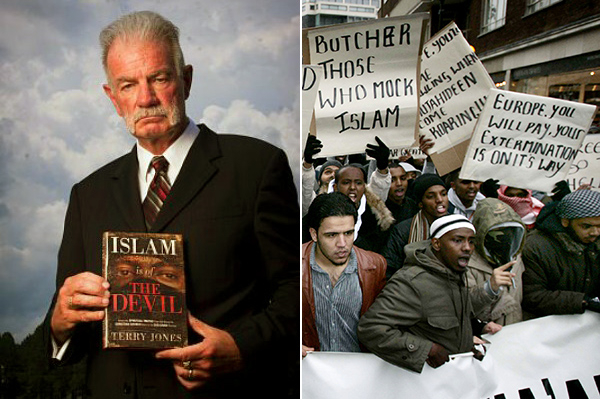
What true Islamophobia exists does so only on the margins of Western society. It reveals itself in the racist protests of the English Defence League; in the Reverend Terry Jones calling his bookIslam is of the Devil and his threats to burn the Qur’an; and in comments on some anti-Islamic websites.
1207Fair criticism is not phobic; responses to Islamic terrorism are reasonable reactions to violence just as we react against all other forms of terrorism. What true Islamophobia exists does so only on the margins of Western society. It reveals itself in the Reverend Terry Jones calling his book Islam is of the Devil and his threats to burn the Qur’an.

For all that, some haters make themselves quite visible; even so, they represent only a small number of the public, most of whom do not even know they exist. Most people are simply critical of what they see daily about Islam: violent acts across the globe, threats against freedom and democracy, hatred preached in mosques and Islamic centers – all justified as matters ordained by the Islamic faith.

Others are disturbed by the negative impact of Muslim immigration on Western societies. In America, the destruction of the twin towers and the attacks on the Pentagon on 9/11 were calculated to bring to the surface growing fears about the harm that growing Muslim radicalism could cause.

The accusation of Islamophobia has come to be a knee-jerk reaction to any, even wrongly-perceived, criticism of Islam. For centuries, Muslims have guarded their customs and their religion from criticism, and this has led to severe problems: a lack of safe arenas in both the Muslim world and within Muslim communities in the West, where Muslims may analyse and debate religious issues without fear of severe retribution for stepping across lines, such as declarations that intellect and logic are unIslamic; the prohibition of free speech, the use of murder to silence anyone who steps too far out of line, dissidents or apostates for instance. No healthy society can survive with such restrictions.

The West has thrived on its citizens’ freedom to challenge received ideas, to speak openly in debate, and to criticize without fear of reprisal. Accusations of Islamophobia are bandied about by Muslim organizations in Europe and North America, such as the Muslim Council of Britain (MCB) or the Council on American Islamic Relations (CAIR). Some of their concerns are genuine. Physical attacks on Muslims just because they are Muslims are totally unacceptable in any civilized society.

On the other hand, it often appears as if any questioning of Islam or Muslims, however minor, is inflated and rebutted by a charge of Islamophobia. Sometimes such questions are interpreted as criticism, and lead to the suppression of free debate and an exchange of ideas. It then seems as if Islam is no longer treated as just another religion and becomes a religion intolerant of all others and unduly protective of, and assertive of, its own rights and privileges.

Islamophobia also sometimes seems conflated with blasphemy. Almost any statement or act deemed disrespectful of Islam, when uttered or committed by a non-Muslim, may be counted by some as a form of hatred for Islam itself, and regarded as subject to punishment or, as we have seen recently, murder and attempted murder. In February, American-Bangladeshi secularist Avijit Roy was hacked to death in Dhaka, as were Washiqur Rahman in March, Anantaa Bijoy Das in May, and Niloy Neel on August 6. In France, the editors of a magazine , Charlie Hebdo, and the organizers of a Draw Muhammad exhibition in Garland Texas. Incidents such as those occurred apart from the unprovoked murder of Jews outside a religious school in Toulouse France, and in a kosher French grocery store.

In the West, blasphemy is no longer considered a crime worth rebuke, let alone capital punishment, even if many Christians or Jews deplore it as a mortal sin. Freedom of speech has become so vital to the functioning of a healthy, open society that even gross disrespect as shown in Andres Serrano’s controversial photograph, “Piss Christ”, though often protested, may be placed on public display without legal opposition.

For some Muslims, however, there appears to be a heightened sensitivity over anything that seems scandalous to the religious eye. On November 25 2007, for example, Sudanese mobs called for an English teacher, Gillian Gibbons, at a British school in Khartoum to be put to death because the young children in her classroom had decided to name their teddy-bear the popular name, Muhammad. She was reported for blasphemy and charged under the Sudanese Criminal Act with “insulting religion.” On 30 November approximately 10,000 protesters took to the streets in Khartoum some of them waving swords and machetes, demanding Gibbons’s execution after imams denounced her during Friday prayers. During the march, chants of “Shame, shame on the UK”, “No tolerance – execution” and “Kill her, kill her by firing squad” were heard. In this extreme case, Muslims around the world, including the Muslim Council of Britain, protested. Ms. Gibbons was granted a presidential pardon and returned to Britain. Had she not been a British teacher, her fate might not have had the same fortunate outcome. None of those who called for her death was brought to book for any breach of human rights.

More serious cases have included the Satanic Verses affair; the Danish cartoons controversy; the 2004 murder of the Dutch film-maker, Theo van Gogh, the 2007 controversy over a sketch by Swedish cartoonist Lars Vilks; or the attempted murders of the cartoonist Kurt Westergaard, or Lars Vilks; and the recent court cases against the Dutch MP, Geert Wilders. But there have been dozens of other cases, many of which have ended in imprisonment, flogging, and, on several occasions, murder. It makes little difference if the “blasphemer” is a non-Muslim or a Muslim, a journalist or an academic. Any perceived show of disrespect for Islam, the Prophet, the Qur’an or Muslim customs and beliefs contravenes a long-established principle that Jews and Christians living under Muslim rule must always act in a spirit of humility towards Muslims and Islam. Invoking blasphemy against non-Muslims who live beyond the realm of Islam, in countries not under Islamic rule, is supposed to be outside the original scope of Islamic law. Nevertheless these also now seem to be areas open to charges of Islamophobia.

Again this year, the Organization of Islamic Cooperation held a conference calling for a universal blasphemy law — legislation it has repeatedly tried to pass for over a decade, with the help of U.S, Secretary of State Hillary Clinton. The aim is not to protect other religions (about which Muslims blaspheme without cessation), but to block any criticism of Islam.

More troubling is that several European countries have been suborned by Muslim protests to bring their own citizens to court on charges of insulting Islam for their books, films, or speeches. In Austria, Elisabeth Sabaditsch-Wolff has stood trial for her remarks about Islam; Geert Wildersand Gregorius Nekschot have been tried in the Netherlands, and Wilders is now being charged by Austria; in 2002 Michel Houellebecq was charged in Paris for having called Islam stupid; in 2010, Queensland’s Anti-Discrimination Commission condemned Michael Smith for having criticized the burka, and forced him to go for “mediation” with one Omar Hassan, the Muslim who had complained about him. More recently, Lars Hedegaard, head of the Danish Free Press Society, was put on trial on similar charges. Mark Steyn and Ezra Levant in Canada were taken to task for their remarks about Islam.

Islamophobia is now a crime determined as much by Western courts and tribunals as by Muslims. As this trend grows in democratic states, Islam is, apparently, the only religion that may not be criticized, even though criticism of religion has for three centuries been a cornerstone of free speech and transparency that are essential elements in democracy and the rule of reason through open-minded, deductive processes.

Many of these accusations of blasphemy may seem trivial to the Western observer. A teddy bear, some cartoons, an article about the role of women in Islam that led to a 20-year sentence for Afghan journalist Parwiz Kambakhsh (the sentence was originally death) or the inadvertent touching by a Christian teacher of a bag that may have held a copy of the Qur’an. This last is a particularly gruesome story in which something totally trivial unleashed mob violence and resulted in the violent death of a young Christian woman, Christianah Oluwatoyin Oluwasesin, at the government school where she taught in Gombe, Nigeria.

In Pakistan, last November, a young Christian couple, Shama Bibi and Sajjad Masih were burned alive in a brick kiln for the alleged desecration of a Qur’an. This year, Saudi blogger Raif Badawiwas sentenced to 1000 lashes and ten years’ imprisonment for “insulting Islam.” Asia Bibi, a Pakistani Christian woman arrested in 2009 on a spurious charge of blasphemy remains in prison in poor health, beaten by the guards charged with protecting her under a sentence of death.

For many Muslims, however, these are not trivial occurrences at all. In a case in Malaysia in 2009, a ruling was made that non-Muslims might not use the word “Allah” to refer to God. The decree was upheld in a 2015 ruling by the country’s Supreme Court. The argument against the use of Allah was not frivolous. The government’s religious advisor, Abdullah Muhammad Zin, argued that as Christians, for example, believed in the Trinity; that Jesus was the Son of God; that God had died on the cross, and so on, it would represent a huge blasphemy to the one, indivisible and true Muslim God. There were arguments – and many Muslims made them at the time – that the ban was somewhat ridiculous: Arab Christians use “Allah” as a matter of course, as in “insha’allah,” [if God wills; hopefully]. It is clear, however, that that the motive for such a ruling was not frivolous in the way it certainly seems to Westerners, but a striking indication of the Islamic obsession with exerting power over non-believers even in what appear to Westerners to be minor things.

It is in cases such as this that a genuine rift can be seen between the West and Islam. The situation has been significantly blurred by political correctness from Western multiculturalists and those Muslims who adopt their tactics to argue that all cultures are equal and that any non-Muslim criticism of Islam is Islamophobic.

Such blurring misses the point. One of the most precious things for Westerners is freedom, hence our emphasis on human rights — which can only be guaranteed in free, open societies — and where the exercise of rights depends entirely on the preservation of freedom. Thus, free speech; freedom to criticize; freedom of the press; religious rights (above all, the rights to apostasize, convert or choose no religion); separation of church and state; political freedom, and freedom from arbitrary application of the law. These freedoms really matter, yet not one Muslim country can claim to implement or protect them, especially freedom of religion.

For Muslims, liberty of conscience and action, even within the constraints of the law, is anathema. A Muslim is, quite literally, one who submits, just as “Islam” means, literally, “submission.” Whether this means submission to God or to the Islamic state or to the clerics who define what is, and what is not, Islamic, the result is individual submission, voluntary or coerced, to the laws of the shari’a, the body of ordinances that constitute the totality of what a Muslim must believe and how he or she should act. Freedom does not enter into it. A man is not at liberty to pray or not as he sees fit: the law says he must pray five times a day, and he must be punished if he does not. Enforcement of this law reached its most explicit form when a Somali cleric decreedthat anyone who did not pray five times a day must be beheaded. That is far from typical, but it does show how easily a simple matter of dereliction may be transformed into a major criminal offence.

Here is where the enforcement of shari’a law, taking offence at blasphemy, and fear of Islamophobia come together. For a Muslim to utter something blasphemous, or to do something that infringes the dignity of the faith, leads directly to criminality or, in many jurisdictions, to apostasy. And the penalty for apostasy is, for the most part, death.

The reason for this seems to be that Islam is rooted in a dichotomy.[6] In the Qur’an, the world is depicted in stark black-and-white terms. There are the People of the Right Hand and the People of the Left hand. The former, who are Muslims, are the People of Paradise; the others, non-Muslims, are the People of Hellfire. There is belief and unbelief; there is no grey area between. There is Islam and there is all that is not Islam; all things are measured by this reckoning.

In the classical Islamic formulation, the entire world is divided between Dar al-Islam, (the Realm of Submission) and Dar al-Harb, (the Realm of War.) Thus, these twin realms co-exist in a state of potential or actual war, not just ideologically but also militarily.

From this perspective, the modern Western world presents an unwanted challenge to the realm of Islam.

At present, the West cannot be conquered, although many extremists, such as the fighters who serve with ISIS, believe that conquest is exactly what will happen in the end. Such a victory would embody the triumph of belief over unbelief, as it did in past centuries, when Muslims ruled most of the known world — but at a horrendous cost for mankind.

Worse still, Muslims living in the West are thought by conservative Muslims to be at risk of apostasy, seduced as they might be by the allurements, physical and intellectual, of non-Islam. Behind the face of apostasy, Islamists proclaim, lies the grinning skull of Satanic lures of debauchery set for the unwary. Freedom to change one’s religion, a core feature of the Universal Declaration of Human Rights, fills the traditionalist Muslim heart with horror; it portends the possibility that the realm of Islam may end up as nothing more than another province in the empire of non-Islam.

The absence of Islam does not necessarily threaten most religions: a healthy secular society, for instance – of which Israel is one of the best examples – tolerates and supports highly religious people, lightens the tax burden on churches, synagogues and temples, protects holy places, supports religious schools, and so forth.

But Islam in its full sense cannot exist outside the political and legal realms because it is not merely a religion but a system of government and law. For Islamists, their religion must govern, control, and legislate. If Muslims abdicate those responsibilities, they might as well be considered apostates.

Doubtless Islamophobia exists, just as anti-Semitism and anti-Christianity exist — and it should be resisted. But it is neither as widespread nor as penetrating as it is so often proclaimed to be.

In a piece just published by Sydney University research student Hussain Nadim, this crisis of identity is central:

The idea that the “problem lies not with Islam, nor even with some of the Muslims but with the environment Muslims are currently in” has no legs, since Sikhs and numerous other migrant communities are in equal if not lower socio-economic and political conditions than Muslims all over the world but without the radicalization and terrorism prevalent in their communities.

This tendency amongst the Muslim community leaders to remain in denial about the problem with religion is what is driving the identity crisis leading to radicalization among Muslim youth. Why is it so hard to accept that there is, in fact, a problem with Islam, as Egypt’s President, Abdel Fattah al-Sisi has said, at least in the way many are using the faith to hurt others?

Its real meaning is not so much active hostility on the part of Westerners as a need for many Muslims to assert their identity in the face of a world made up of unbelief, and the concomitant resistance to coercive expressions of it.

________________________________-

[1] See Efraim Karsh, Islamic Imperialism, London, 2009

[2] See, for example, Bernard Lewis, ‘The Question of Orientalism‘, The New York Review of Books, 24 June 1982, available through: Ibn Warraq, Defending the West: A Critique of Edward Said’s ‘Orientalism’, USA, 2007] Robert Irwin, For Lust of Knowing: The Orientalists and their Enemies, London, 2007] Efraim Karsh, ‘Did Edward Said Really Speak Truth to Power?‘, Middle East Quarterly, Winter 2008, pp. 13-21. See also Daniel Martin Varisco, Reading Orientalism: Said and the Unsaid, Washington, 2008; Alexander Lyon Macfie (ed.) Orientalism: A Reader, Edinburgh, 2000

[3] See, for example, the statement by Fautmeh Ardati of Hizbut Tahrir, when she speaks of ‘the superiority of Islamic values over Western values’. Cited in Savage Infidel, 20 September 2010. See also Shaykh Salih al-Munajjid, Superiority of Islam over Infidelity.

[4] For a comprehensive study of this situation, see Bernard Lewis, What Went Wrong? Western Impact and Middle Eastern Response, London, 2002. It is also important to study the writings of three Egyptian exponents of Islamic revival, Rashid Rida (1865-1935), Hasan al-Banna’ (1906-1949), the founder of the Muslim Brotherhood, and Sayyid Qutb (1906-1966), the Brotherhood’s leading ideologue. Nor should we neglect the theories of Indo-Pakistani Islamist Abu A’la Mawdudi (1903-1979).

[5] Cited Lawrence Wright, “The Looming Tower: Al-Qaeda and the Road to 9/11,” Vintage Books (New York), 2007, page 29.

[6] This characteristic of Islam was originally revealed in great detail in a magisterial study by M. M. Bravmann, The Spiritual Background of Early Islam.

Ayatollah Calls for Global Expulsion of Jews

August 10, 2015

Ayatollah Calls for Global Expulsion of Jews

ByPamela Geller on August 10, 2015

via Ayatollah Calls for Global Expulsion of Jews | Pamela Geller.

ByPamela Geller on August 10, 2015

Iran’s Friday Prayers Leader, Ayatollah Mohammad Emami Kashani, an Islamic cleric whose position grants him enormous influence in Tehran and who is appointed directly by Iran’s Supreme Leader, called on Friday for the Muslim nations of the world to “unite and expel the Zionists from this region.”

And the “first Jewish President” says, “give ’em nukes!”

The Islamic Republic of Iran has been making these bloody calls to annihilation almost daily, ever since the nuclear pact with America has been announced. There is no pretense, no charade. America is under the boot and Iran means to go for the kill. If not now, when? When a Cruz is a President? They wouldn’t dare. The day Reagan took office they released our hostages after 444 days.

Obama is a slob for these savages and they know it.


“Iranian Ayatollah Calls for Muslim World to Unite and ‘Expel’ Jews from the Region,” by Jordan Schachtel, Aug 8, 2015:

Ayatollah-Kashani-Atta-Kenare-AFP-Getty-Images-640x480

Iran’s Friday Prayers Leader, Ayatollah Mohammad Emami Kashani, a radical Shiite cleric whose position grants him enormous influence in Tehran and who is appointed directly by Iran’s Supreme Leader, called on Friday for the Muslim nations of the world to “unite and expel the Zionists from this region.”

The prayer leader, who often leads chants of ‘Death to America’ and ‘Death to Israel,’ took the time to thank Iran’s negotiators for reaching an agreement he believed was favorable to the regime in Tehran, Iran’s state-run IRIB news service reported.

Kashani told worshippers that Israel will only be satisfied with their position in the world “when all nations have perished and they alone remain in this world.” This is why Israel has “no qualms whatsoever about spilling innocent blood,” the Ayatollah said.

“This regime [Israel] is amongst the vilest, inhuman and bloodthirsty regimes in the world, and Muslim nations must unite and expel the Zionists from this region if they want to live in peace and security,” Kashani added.

By calling for the expulsion of “Zionists,” Kashani specifically singles out the Jews of Israel, and not its Arab population.

The cleric told the crowd that the United States–which is “the biggest supporter of terrorism in the world,” according to Kashani–is in cahoots with not only Saudi Arabia and Israel, but also with the Islamic State terror group. The three supposed allies of the U.S. are responsible for the poor conditions of Palestinians, he alleged.

“The U.S. trains and exports terrorists,” he told the Tehran University audience. “Terrorism is a tool in the hands of global powers. They cultivate and nourish terrorism, and they export terrorism,” he said of the U.S. and world powers.

Like most Ayatollahs who serve in leadership positions in Tehran, Kashani has often used vile language to attack the western world. In 2014, he called for the last Shiite messiah to come to earth and “behead Western leaders.” In 2005, he blamed the United States and Israel for the creation of Al Qaeda.