Posted tagged ‘Islam’

History of Cease-Fires Shows Israel as the Big Loser

August 14, 2014

A course in Israeli cease-fire 101: Agree to UN and US promises and hold the bag when they are broken.

By: Tzvi Ben-Gedalyahu

Published: August 14th, 2014

via The Jewish Press » » History of Cease-Fires Shows Israel as the Big Loser.


Obama to the rescue – of himself.
Photo Credit: White House Photo/Pete Sousa
 

President Barack Obama’s direct contact with Prime Minister Binyamin Netanyahu to devise a long-term cease-fire plan follows a long history of American and U.N. ventures that have flopped, all of them at Israel’s expense.

Egypt has been the power broker in trying to maintain a cease-fire between Hamas and Israel, and Obama is trying to put his foot in the Middle East door to reclaim American influence based by whittling down the popularity of Netanyahu.

His “poll numbers are a lot higher than mine” and “were greatly boosted by the war in Gaza,” Obama told Thomas Friedman of The New York Times last week. . “And so if he doesn’t feel some internal pressure, then it’s hard to see him being able to make some very difficult compromises, including taking on the settler movement.”

It’s always the fault of the settlers. If it rains on the picnic, it is because of the settlers. If Obama’s popularity drops, it is because of the settlers who are an obstacle to his illusions.

The war against terror n Gaza has made Netanyahu even more popular. A Knesset Channel poll released this week shows that the Likud party that he heads would win almost 50 percent more seats than it now has in the Knesset if elections were held today. That translated into 28 mandates compared with 19.

Obama must be politically jealous of Netanyahu, considering the president’s dismal ratings.

Jealous or not, Obama has the habit of most previous presidents to pressure Israel, often by blocking or threatening to block military aid. That is what happened during the war, when Obama stopped the United States from shipping missiles to Israel, according to The Wall Street Journal.

Obama’s phone conversation with Netanyahu was reported as “combative,” nothing new for the two leaders who have distrusted each other during the president’s two terms of office.

The American government’s one-track mind for the “peace process” blocks out all reality, which is a lot different in the Middle East than in the United States. The Jewish Home party’s Housing Minister Ur Ariel said it in a matter of fact way on Thursday – “Americans don’t understand what is happening in the region.”

But that doesn’t stop Obama from throwing his weight around and bullying himself into Iraq, Syria and Egypt only to look like a fish out of water.

Like Carter, Clinton and even Regan, Obama has the freedom to exploit Israel’s democracy and run roughshod over the government to “make peace” with cease-fires that make war.

That is what happened in 2012 to conclude the Pillar of Cloud campaign against Hamas terror, and that is what happened in 2009 to conclude the Operation Cast Lead campaign against terror.

That is what happened in 2006, when the United Nations and the United States brokered a cease-fire that ended the Second Lebanese War and promised the moon, whose location has not moved since. Hezbollah was supposed to be dis-armed under United Nations supervision, which is like Hamas agreeing to dis-arm under Mahmoud Abbas’ supervision.

“For proxies such as the Palestinian Sunni faction Hamas and the Lebanese Shiite group Hezbollah, the centuries old Islamic jurisprudence of Hudna (tactical truce) and Tahadiya (temporary calm) serve as a plausibly regrouping tactic that is continuously reshaped amid the changing face of modern warfare in the Middle East,” Israel Defense noted during the war.

Enter U.S. Secretary of State John Kerry, whose “peace process” and ceasefires self-destruct.

He and U.N. Secretary-General Ban Ki-moon orchestrated a humanitarian cease-fire last month. It lasted for 90 minutes. At least five other cease-fires failed.

Israel Defense reported, “Following the inability to transmute any ceasefire, Hudna or Tahadiya over the last decade into encompassing political progress, the tone is that ceasefires only exasperate the Israeli-Palestinian conflict in the medium-to long-term. Paradoxically, it is the achievement of these bitesize ceasefires as a short term benefit that has trampled on the utility of ceasefire.”

And that is one of the reasons Netanyahu cannot stomach Obama, who in his words knows what is best for Israel, more than Israel knows, just as he and his foreign policy advisers knew what is best for Egypt, Syria and Iraq.

“How can you create a State of Israel that maintains its democratic and civic traditions.” He rhetorically asked Friedman in last week’s interview.

“How can you preserve a Jewish state that is also reflective of the best values of those who founded Israel? And, in order to do that, it has consistently been my belief that you have to find a way to live side by side in peace with Palestinians. … You have to recognize that they have legitimate claims, and this is their land and neighborhood as well.”

That is why Obama wants a cease-fire. He is not concerned about Hamas, he is not concerned about Israel

He is concerned about the “peace process,” which for years has proven to be the “war process.”

Busting the Media’s ISIS Myths

August 14, 2014

Busting the Media’s ISIS Myths, Front Page Magazine, Daniel Greenfield, August 14, 2014

(Dear me! Mr. Greenfield is so politically incorrect that he blames the religion of peace death for bad things. How dare he? — DM)

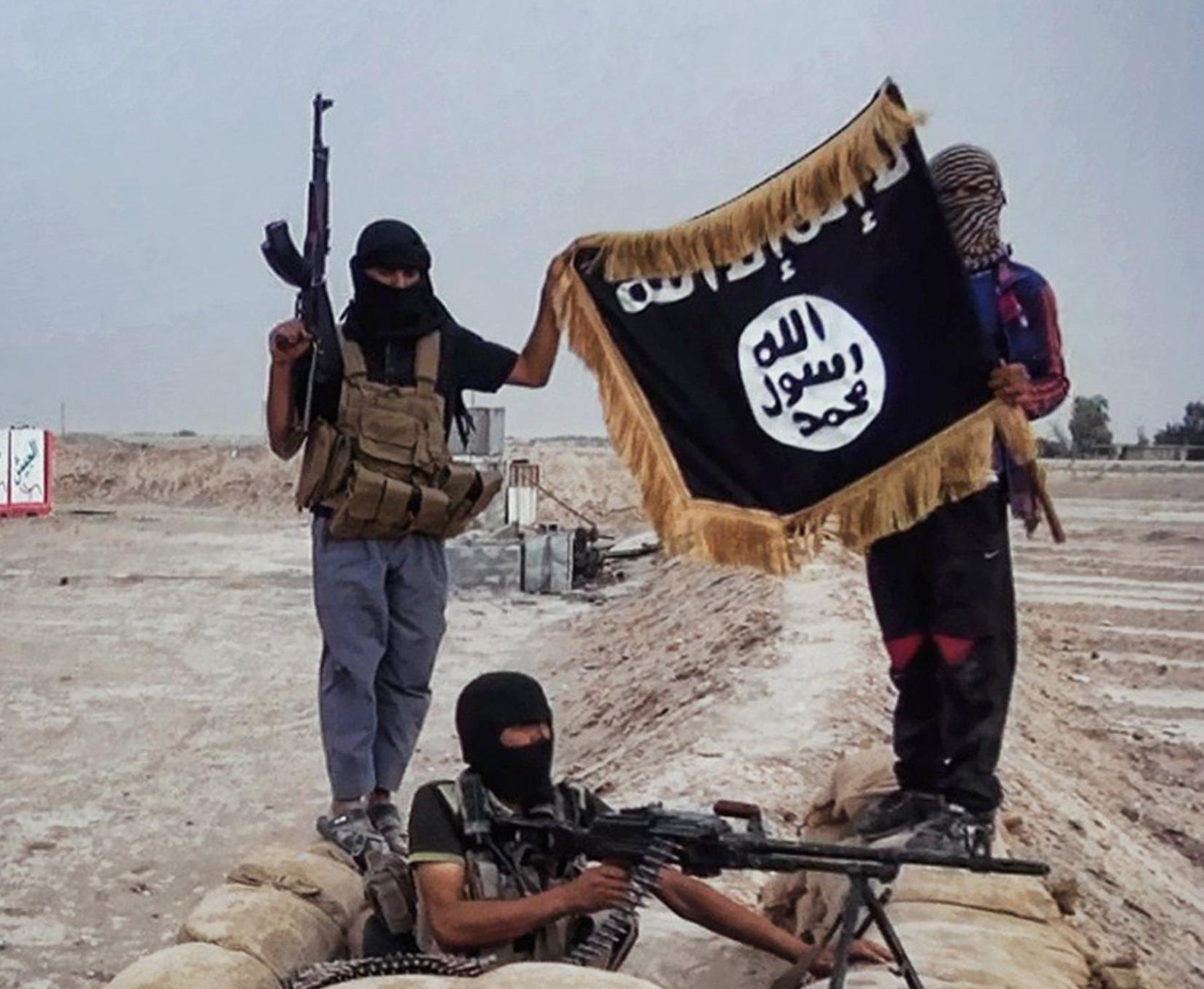
isis

The Caliphate, like the Reich, is a utopia which can only be created through the mass murder and repression of all those who do not belong. This isn’t a new vision. It’s the founding vision of Islam.

The narrative that ISIS was more extreme than Al Qaeda because it killed Shiites and other Muslims doesn’t hold up even in recent history.

The media finds it convenient to depict the rise of newly extremist groups being radicalized by American foreign policy, Israeli blockades or Danish cartoons. A closer look however shows us that these groups did not become radicalized, rather they increased their capabilities.

What is wrong with ISIS is what is wrong with Islam.

**********

Know your enemy. To know what ISIS is, we have to clear away the media myths about ISIS.

ISIS is not a new phenomenon.

Wahhabi armies have been attacking Iraq in order to wipe out Shiites for over two hundred years. One of the more notably brutal attacks took place during the administration of President Thomas Jefferson.

That same year the Marine Corps saw action against the Barbary Pirates and West Point opened, but even Noam Chomsky, Michael Moore and Howard Zinn chiming via Ouija board would have trouble blaming the Wahhabi assault on the Iraqi city of Kerbala in 1802 on the United States or an oil pipeline.

Forget the media portrayals of ISIS as a new extreme group that even the newly moderate Al Qaeda thinks is over the top; its armies are doing the same things that Wahhabi armies have been doing for centuries. ISIS has Twitter accounts, pickup trucks and other borrowed Western technology, but its ideology and brutality have always been part of Islam. They are not a new phenomenon.

Sunnis and Shiites have been killing each other for over a thousand years. Declaring other Muslims to be infidels and killing them is also a lot older than the suicide bomb vest.

Al Qaeda and ISIS are at odds because its Iraqi namesake had a different agenda. Al Qaeda always had different factions with their own agendas that were not more extreme or less extreme, but emerged from varying national backgrounds.

Bin Laden prioritized Saudi Arabia and America. That allowed Al Qaeda to pick up training from Hezbollah which helped make 9/11 possible. This low level cooperation with Iran was endangered when Al Qaeda in Iraq made fighting a religious war with Shiites into its priority.

That did not mean that Bin Laden liked Shiites and thought that AQIQ was “extreme” for killing them.

During the Iraq War, Bin Laden had endorsed Al Qaeda in Iraq’s goal of fighting the Shiite “Rejectionists” by framing it as an attack on America. AQIQ’s Zarqawi had privately made it clear that he would not pledge allegiance to Osama bin Laden unless the terrorist leader endorsed his campaign against Shiites.

Bin Laden and the Taliban had been equally comfortable with Sipahe Sahaba and Lashkar-e-Jhangvi which provided manpower for the Taliban while massacring Shiites in Afghanistan and Pakistan. Last year LEJ had killed over a hundred Shiite Hazaras in one bombing.

The narrative that ISIS was more extreme than Al Qaeda because it killed Shiites and other Muslims doesn’t hold up even in recent history.

The media finds it convenient to depict the rise of newly extremist groups being radicalized by American foreign policy, Israeli blockades or Danish cartoons. A closer look however shows us that these groups did not become radicalized, rather they increased their capabilities.

ISIS understood that targeting Shiites and later Kurds would make it more appealing to Sunni Arabs inside Iraq and around the Persian Gulf. Bin Laden tried to rally Muslims by attacking America. ISIS has rallied Muslims by killing Shiites, Kurds, Christians and anyone else who isn’t a proper Sunni Arab.

Every news report insists that ISIS is an extreme outlier, but if that were really true then it would not have been able to conquer sizable chunks of Iraq and Syria. ISIS became huge and powerful because its ideology drew the most fighters and the most financial support. ISIS is powerful because it’s popular.

ISIS has become more popular and more powerful than Al Qaeda because Muslims hate other Muslims even more than they hate America.

ISIS is not an outside force that inexplicably rolls across Iraq and terrorizes everyone in its path. It’s actually the public face of a Sunni coalition. When ISIS massacres Yazidis, it’s not just following an ideology; it’s giving Sunni Arabs what they want.

A surviving Yazidi refugee had told CNN that his Arab neighbors had joined in the killing. This wasn’t just ISIS terrorizing a helpless population. It was Islamic Supremacism in action.

ISIS is dominating Iraq and Syria because it draws on support from the Sunni Arab population. It has their support because it is killing or driving out Christians, Yazidis, Shiites and a long list of peoples who either aren’t Muslims or aren’t Arabs while giving their land and possessions to the Sunni Arabs.

The media spent years denying that the Syrian Civil War was a sectarian conflict between Sunnis and Shiites. It’s unable to deny the obvious in Iraq, but it carefully avoids considering the implications.

An army alone will have trouble committing genocide unless it has the cooperation of a local population that wants to see another group exterminated.

When we talk about ISIS, we are really talking about Sunni Arabs in Iraq and Syria. Not all of them, but enough that ISIS has become the standard bearer of the Sunni side in the civil wars in Syria and Iraq.

Hillary Clinton and John McCain can complain that we could have avoided the rise of ISIS if we had only armed the right sort of Jihadists in Syria, but if ISIS became dominant because its agenda had popular support, then it would not have mattered whom we armed or didn’t arm.

We armed the Iraqi military to the teeth, but it didn’t do any good because the military didn’t represent any larger consensus in an Iraq divided along religious and ethnic lines.

To understand ISIS, we have to unlearn what the media tell us. The media tells us that terrorists only represent an extreme edge of the population. If they have popular support, it’s only because the civilian population has somehow become radicalized. (And usually it’s our fault.)

And yet that model doesn’t hold up. It never did.

The religious and ethnic strife in the Middle East out of which ISIS emerged and which has become its brand, goes back over a thousand years. If support for terrorism emerges from radicalization, then the armies of Islam were radicalized in the time of Mohammed and have never been de-radicalized.

The Caliphate, like the Reich, is a utopia which can only be created through the mass murder and repression of all those who do not belong. This isn’t a new vision. It’s the founding vision of Islam.

What is wrong with ISIS is what is wrong with Islam.

We can defeat ISIS, but we should remember that its roots are in the hearts of the Sunni Muslims who support it. ISIS and Al Qaeda are only symptoms of the larger problem.

We can see the larger problem flying Jihadist flags in London and New Jersey. We can see it trooping through Australian and Canadian airports to join ISIS. We can see it in the eyes of the Sunni Arabs murdering their Yazidi neighbors.

ISIS is an expression of the murderous hate within Islam. We are not only at war with an acronym, but with the dark hatred in the hearts of Jihadists in Iraq and Pakistan… and next door.

FRIEDMAN: As The Middle East Burns, The UN Simply Blames Jews

August 14, 2014

FRIEDMAN: As The Middle East Burns, The UN Simply Blames JewsBoth the media and the United Nations are willing to legitimize Hamas while reprimanding Israel for defending herself against an existential threat

.8.14.2014 Israel Revolt Truth Revolt

via FRIEDMAN: As The Middle East Burns, The UN Simply Blames Jews | Truth Revolt.


Yesterday, Hamas broke yet another cease-fire, only hours after Israel had agreed to extend the lull in the fighting. On Monday, the United Nations announced the creation of a special three-person Human Rights Council panel that will review allegations of human rights and international law violations occurring in the current Israel-Gaza conflict. One of the members of this panel has openly stated that Prime Minister Benjamin Netanyahu would be his favorite person to have tried in the International Criminal Court. This council is supposed to be unbiased and impartial. While the United Nations was busy focusing all its energy on these allegations, they forgot to discuss a few other crises occurring in the Middle East.

In Iraq:

Over the last year and a half, the terrorist organization known as the Islamic State of Iraq and Syria, an Al-Qaeda splinter cell, has taken control of large swaths of territory via violent means. At a glance:

Over 13,300: is the number of civilians killed by ISIS since the beginning of 2013

6,000: is the number of Iraqi civilians butchered by ISIS this year

500: is the number of Yazidis (a Kurdish Iraqi minority) killed by ISIS, some of which were buried alive

0: is the number of practicing Christians left in Mosul, a city that is now controlled by ISIS; ISIS has made Christianity punishable by death, thus forcing all Christians to either convert or flee.

As ISIS is carrying out targeted killings against minority groups and Iraqi Christians, it is safe to say that they are successfully carrying out genocide in Iraq. Unlike the Israel-Gaza conflict, this crisis has gone almost unmentioned for the last year and a half, even though scores of more people have been killed in Iraq than in the current Israel-Gaza conflict.

In Syria:

More than 170,000: is the number of people killed since start of the civil war

More than 54,000: is a conservative estimate of the number of civilians killed in the Syrian Civil War

More than 14,100: is the number of women and children killed in the Syrian Civil War

More than 1800: is the number of Palestinian-Arabs killed in the Syrian Civil War

The media scarcely reports on the ongoing civil war that is still raging in Syria; this past July was one of the deadliest months of the conflict thus far. It is of note that the United Nations has stopped updating its count of the Syrian death toll; it claims it cannot verify the sources behind the numbers. Essentially, they refuse to take the time to verify the sources and keep track of the death toll.

Last but not least, for the sake of comparison, Israel:

Approximately 87,000: is the number of Palestinian-Arabs killed in the Israeli-Arab conflict since 1948. More people have died in the last three years alone in the Syrian Civil War, but these victims have largely been forgotten by the international community.

More than 3500: is the number of rockets launched at Israel since the start of Protective Edge, each one of which constitutes an attempt to murder Israeli civilians. This is a war crime.

Approximately 1900: is the number of Palestinian Arabs killed since the start of Protective Edge.

Approximately 900-1300: is the estimated number of Palestinian-Arabs civilians killed amongst the 1900 total. The lower number is that estimated by the IDF, while the higher number is that estimated by Palestinian sources, many of which are run by Hamas. There are varying other estimates that fall between these numbers.

Recently, reports have surfaced that disprove the claim that the majority of the people killed in this conflict have been Palestinian civilians. In fact, research done by both the BBC as well as an Israeli research group indicates that the numbers of civilians and militants killed may be closer to equal. This is not a means to justify the number of civilians killed, because loss of innocent life is terrible. However, it is unfair and unjust to inflate figures merely to claim that one party’s response is disproportionate to the other’s actions. If the validity of war were judged based on the number of casualties on each side, then the Allies would bear the blame for World War II.

As for the allegations Israel of committing war crimes, indiscriminately ordering strikes within Gaza and violating human rights:

4,762: is the number of terror targets the IDF struck between July 8 and August 5. Again, without trying to justify loss of civilian life and using the larger estimates for the number of civilian casualties, this works out to one civilian killed for every 3.6 strikes. If Israel were truly indiscriminately targeting Palestinian civilians, the number of civilians killed in each strike would be much higher.

Additionally, the mainstream media often states that the Gaza Strip is one of the most densely populated areas on Earth, and Hamas only fires from civilian areas because of this fact. This is a distortion of the truth.

Here is the salient point:

Information recently released by the Gatestone Institute indicates that while the city centers of Gaza are very densely populated, there are many emptier areas of Gaza. Mainstream media outlets never show these areas because there is scarcely fighting there. Additionally, maps that show the origin of rocket attacks show that almost none of the attacks originate in these empty areas. This begs the question, if Hamas were concerned with Gaza’s civilians, why not fire rockets from these emptier areas? Why fire them from some of the most populated areas in the world? The answer is that as a terrorist organization, Hamas has no regard for civilians of any kind.

Up to this point I have refrained from addressing the claim that Hamas uses the civilians of Gaza as human shields. There is real and jarring evidence to support this claim. Hamas hides behind the civilians of Gaza by choosing to launch rocket attacks from densely populated areas and leaves the IDF no choice but to carry out strikes in these areas. Hamas does this knowing that images of deceased civilians will flood TV screens throughout the world, and that the international community will cry out in rage against Israel. Hamas has the option to set up their headquarters in empty areas of Gaza instead of in hospitals and homes, but has repeatedly choose the latter. By making this choice, Hamas bears the blame for the loss of civilian life and is committing war crimes.

Lastly, during Operation Protective Edge, Israel provided the following supplies to Gaza:

40,550: is the number of tons of supplies transferred to Gaza

37,178: is the number of tons of food transferred to Gaza

1,694: is the number of tons of humanitarian goods transferred to Gaza

1,029: is the number of tons of medicine and medical supplies transferred to Gaza

1,856: is the number of trucks needed to carry these supplies

Many of these supplies were delivered via the Kerem Shalom crossing, which has been repeatedly attacked with barrages of Hamas rockets in order to prevent these aid shipments from entering the Gaza Strip. So even though Israel has been more than willing to give assistance to the people of Gaza, Hamas will not allow them to have it.

Given the force with which the United States carried out its strikes against terrorists in Afghanistan and Iraq, there is no doubt that they would have responded in the same manner to a barrage of rockets raining down on the United States homeland. Additionally, the United States has renewed airstrikes against ISIS in Iraq and is being credited not only with further securing the homeland, but with saving the lives of civilians in Northern Iraq. These airstrikes serve the same purpose to the people of the Iraq as Operation Protective Edge does to the people of Israel: to protect the lives of civilians against terrorist attacks. Throughout history, there have been numerous cases of countries striking back at terrorists in order to secure the safety of their people. In the larger majority of these instances, civilians have died, as war is mayhem. No other country in the world is forced to live under the constant fear that Israel lives with day in and day out, and yet no other country in the world has faced the amount of backlash that Israel continues to receive in the name of self-defense.

When the mainstream media reports on ISIS, they waste no time calling them a dangerous terrorist organization that must be stopped. ISIS and Hamas are incredibly similar; they are both extremist groups perverting the beliefs of a peace-loving religion to further their cause. It is truly mind-boggling that the mainstream media is willing to ignore this fact, as is the United Nations. Both the media and the United Nations are willing to legitimize Hamas while reprimanding Israel for defending herself against an existential threat. At the end of the day, all Israel wants is to live in peace with her neighbors; this operation must continue so that Israel is able to do just that.

Ashley Friedman is a 2014 graduate of the University of Miami with a Bachelor of Science in Biology. She is a proud Zionist and dual Israeli-American citizen.

The unraveling of the Gaza blockade?

August 14, 2014

The unraveling of the Gaza blockade?Restrictions on the Strip, in place since Hamas seized control in 2007, are at the heart of negotiations on a long-term deal.

Hamas says it wants freedom for Gaza, but is likely to exploit any eased access to bring in more arms

By Mitch Ginsburg August 14, 2014, 2:39 pm

via The unraveling of the Gaza blockade? | The Times of Israel.


The negotiations in Cairo, apparently renewed for five days Wednesday amid rocket fire and counterstrikes at the midnight hour, have been conducted behind closed doors. There is much to discuss – the role, henceforth, of the Palestinian Authority in Gaza, the return of the remains of two Israeli soldiers, the fate of the Palestinian gunmen arrested during the operation, the notion, perhaps, of the demilitarization of the Gaza Strip, the duration of the ceasefire. But at the heart of the discussion, quite likely, is the blockade, the mechanism that restricts, to a small extent, the goods entering Gaza, and, to a great extent, everything that leaves the 140-square-mile enclave boxed in between Israel, Egypt, and the sea.

A look at the different crossings, for people and goods, may help paint a picture of the current situation, the way it has evolved over the past several years, and where it might develop at the close of the current campaign.

Kerem Shalom is today the sole passageway for goods in and out of Gaza. In 2005, before the rise of Hamas to power, a monthly average of 10,400 trucks of supplies entered Gaza from Israel. After Hamas, a terrorist organization avowedly committed to the destruction of Israel, won a popular election and, with brutal efficiency, ousted the PA from power in Gaza in 2007, Israel imposed a blockade on the Gaza Strip. For the first three years, from June 2007 to June 2010, during which only “vital supplies” were allowed to enter the Strip, a monthly average of 2,400 trucks passed into Gaza, according to statistics provided by the Gisha organization, which promotes a freer flow of supplies in and out of Gaza.

The blockade, barring everything from benzene to beef, was altered significantly by the Mavi Marmara incident in May 2010, in which Israeli naval commandos, under assault, killed nine Turkish activists on a vessel seeking to break the blockade. In response, Israel eased the blockade, allowing nearly all commodities to enter the Strip.


Trucks carrying fuel for the Gaza Strip enter Rafah town through the Kerem Shalom crossing between Israel and the southern Gaza Strip on March 16, 2014. (photo credit: AFP PHOTO/ SAID KHATIB)
 

The central sticking point, though, was, and continues to be, the restrictions on dual-use supplies, those with the potential of being used for nefarious purposes. Foremost among them is cement.

The civilian population in Gaza is in need of building materials. Gisha estimates that the Strip is short 75,000 new housing units and 259 schools. Additionally, 10,000 homes were destroyed during Operation Protective Edge, both by Israeli munitions and Hamas IEDs. The construction industry in Gaza supports 70,000 workers, Gisha co-founder Sari Bashi said, and once accounted for 28 percent of the GDP.

And yet Hamas priorities in Gaza are evidently such that cement is funneled first toward military projects. Khaled Mashaal, head of Hamas’s political bureau, admitted as much at a conference held in Damascus several months after Operation Cast Lead in 2008-9, the Meir Amit Intelligence and Information Center reported. “Outwardly, the visible picture is talks about reconciliation… and construction; however, the hidden picture is that most of the money and effort is invested in the resistance and military preparations,” Mashaal said.

Nowhere was this more evident than in the uniform cement arches that were found to support the network of Hamas attack tunnels dug under the border and into Israel. Brig. Gen. Michael Edelstein, the commander of the Gaza Division, said during a briefing near the Gaza border two weeks ago that Hamas had created “a terror Metro” in Gaza, using dozens of millions of dollars and “thousands and thousands of pounds of cement.”

Rocket launch sites, internal tunnels, and bunkers were all also fortified with cement.


Section of a tunnel discovered running from the Gaza Strip to Israel, October 13, 2013. (photo credit: Times of Israel/Mitch Ginsburg)
 

According to the Meir Amit Center, an organization run by former Israeli intelligence officers, the cement was ferried into Gaza underground quite freely before Abdel Fatah el-Sissi rose to power in Egypt and staunched the flow of goods from his territory through the tunnels. Today, a recent report suggests, the concrete is either made in Gaza, out of raw materials like fly ash and sea sand, or seized from international organizations, which must formally request the import of cement and submit plans and update reports to the Israeli authorities in order to receive clearance for bringing cement into Gaza.

Bashi said that fuel, too, was once considered a dual-use substance – as it is used for rockets – and that today it is allowed freely into Gaza, with the IDF’s Coordinator of Government Activities in the Territories sending some 7.6 million liters of fuel and benzene into Gaza during the last month of war alone. (A total of 3,324 trucks of supplies have entered Gaza via Israel since the outbreak of Operation Protective Edge on July 7, according to COGAT figures.)

Citing a 45 percent unemployment rate in Gaza, up from 28 percent last year, Bashi said that the restrictions failed to prevent the tunnels and instead disproportionately punished the public, creating an economic situation that is anathema to stability. “It’s a mistake to think of it as a zero-sum game,” she said.

The price in blood, though, paid by Israeli soldiers in (at least temporarily) removing the threat of the tunnels, coupled with the life-changing insecurity felt by residents of the border region, make it highly unlikely that Israel will allow the free and open transport of cement to the Strip at this time, especially now that the tunnels under Rafah have been shut. More likely, it will be doled out to responsible actors and supervised to the extent possible. (Israel lost 64 soldiers in the first month of fighting — 11 of them killed by Hamas gunmen emerging from the tunnels inside Israel, and many more in the course of finding and demolishing the tunnels inside Gaza.)

Outgoing goods, too, can only pass through Kerem Shalom. The land border crossing to Egypt, in Rafah, is utterly closed to goods. And while Gazans are permitted to export preciously little, Israeli businesses profit from import sales of commodities such as mangoes and beef to Gaza.

Udi Tamir, a part owner of Eglei Tal, one of the largest Israeli cattle importers, said the industry sends roughly 35,000 head of live cattle into Gaza annually for beef, for example. He quipped during an earlier conversation, several years ago, that some Israeli raisers of cattle might be willing to offer Turkey’s newly elected president Recep Tayyip Erdogan a lifetime achievement award.


The Mavi Marmara is tugged out of Haifa harbor long after the raid (photo credit: Herzl Shapira/Flash 90)
 

From January to June 2014 an average of 17 truckloads of goods exited Gaza each month – 2% of the pre-2007 average, according to Gisha figures, and, while once Gaza exported 85 percent of its goods to the West Bank and Israel, today, based on an Israeli policy of separation between the PA-controlled West Bank and the Hamas-controlled Gaza Strip, virtually no goods at all are allowed to travel from Gaza, via Israel, to the West Bank. According to Gisha, a sum total of 49 truckloads of date bars for an international organization, four truckloads of school desks for the PA and two truckloads of palm fronds for Israel are all that have passed to Israel and the West Bank since March 2012.

In this arena, quite likely, progress could be made with relatively little security risk and palpable benefit.
Pedestrian crossing

The Erez Crossing is the pathway for people between Israel, Gaza, and the West Bank; the Rafah Crossing, intermittently opened and closed over the years and closely monitored by Egypt, is the central pathway out of the Strip for international travel. Thus far this year, from January to June, a monthly average of 6,445 people exited Gaza via Rafah – a number that represents some 16 percent of the average during those same months in 2013, when Egypt was in the hands of Sissi’s predecessor Mohammad Morsi. Since the outbreak of war, the crossing has been shut down almost entirely.

During that same period of time, Gisha figures show, a monthly average of 5,920 Palestinians exited Gaza via Erez. Most were medical patients and their companions, and business people.


Palestinian Christian couple from the Gaza Strip leaves through the Israeli Erez crossing, Thursday, Dec. 24, 2009 (photo credit: Tsafrir Abayov/Flash90)
 

According to Gisha, mourners for a first-degree relative are allowed to travel to the West Bank, as are Christians wishing to visit holy sites, first-degree relatives wishing to attend a wedding, students en route abroad, and orphans without first-degree relations in Gaza. Those wishing to marry in the West Bank, though, along with students seeking to study there, for example, are barred from exiting Gaza via Erez.

Bashi noted that 31 percent of the people in Gaza have relatives in the West Bank and called for increased freedom of travel, as permitted by security assessments. The Shin Bet, though, over the past year, has repeatedly intercepted messages between Gaza and the West Bank and has warned, even before the June 12 kidnapping and murder of the three Israeli teens, apparently orchestrated from Gaza, that Hamas has perpetually sought to reinvigorate the old terror cells in the West Bank.
Arms

With no airport and no seaport, the tried and true route of smuggling professionally made weapons into Gaza, a senior intelligence officer said during the current campaign, was from “the axis of resistance” — Iran, Hezbollah, Syria — to Sudan and from there north, via the Sinai peninsula to the Rafah tunnels and into Gaza. Perhaps because the flow of terror ideology and materiel did not only move northwest into Gaza but also southeast into Rafah, the Sinai Peninsula, and mainland Egypt, fueling violence there, Egyptian President Sissi has largely eradicated the Rafah tunnels, which were used to transport everything from cars and cement to M-302 rockets.

Like the drug trade, though, it may be that the flow of arms can never be fully staunched. In early March, Israeli naval commandos boarded the Panama-flagged Klos-C ship and found 40 M-302 rockets and 180 120mm. mortar rounds beneath many tons of cement. A UN report found that the arms were in fact sent from Iran but disputed the Israeli claim that they were bound for Gaza. Neither Israeli nor UN officials provided hard evidence for the ultimate destination of the weapons, but it is hard to fathom why Israeli troops would intercept a ship more than 1,000 nautical miles from its territorial waters unless Prime Minister Benjamin Netanyahu and others truly believed that the arms might otherwise later be fired at Israeli citizens.

Hamas demands the lifting of the blockade and the opening of a naval port, a tangible achievement that could be presented to the people of Gaza as a sign of autonomy and freedom. Such demands are weighed, however, against its ceaseless efforts to import the sort of arms that have made Hezbollah such a formidable fighting force in the region.

On Wednesday night, shortly before the ceasefire was extended, Hamas offered footage of the homemade assembly of the M-75 rocket, lovingly glossed and sanded like a surfboard. The metals it is made of, and the explosives in the warhead, are meant to be caught in the fine net of the Israeli blockade.

At the close of this campaign, as after the Mavi Marmara incident, many of the facets of the blockade will be addressed at the negotiating table. Israel, it stands to reason, will be relatively pliable on concessions that strengthen the economy – such as, say, the export of strawberries and other goods. It will be far less so on the importing of dual-use goods of the sort that enable the construction of the M-75.

The trick will be finding a formula that widens the holes in the netting so as to support ordinary Gazans, grants achievements to the PA rather than Hamas, and allows Israel to ensure that Hamas, with its sworn allegiance to jihad, is shackled in its bid to replicate the Lebanese Hezbollah terror group.

Hamas Breaches New Ceasefire With Rocket Attack

August 14, 2014

Hamas Breaches New Ceasefire With Rocket Attack

New five-day extension doesn’t even make it past a day, as Hamas renews rocket fire Thursday after missiles night before.

By Ari YasharFirst Publish: 8/14/2014, 10:03 AM

via Hamas Breaches New Ceasefire With Rocket Attack – Defense/Security – News – Arutz Sheva.


Rocket fire from Gaza (file) Flash 90

Hamas already breached the last 72-hour ceasefire three hours ahead of its conclusion Wednesday at midnight; on Thursday morning it proved that it does not intend to honor the newly achieved five-day ceasefire either.

Rocket warning sirens were sounded just after 10 a.m. on Thursday in the Eshkol Regional Council and Hof Ashkelon region, as well in the Kerem Shalom area.

Shortly afterwards it was reported that a rocket fell in open ground in the Eshkol Regional Council, causing no injuries or damage.

The attack comes after Hamas fired at least one rocket at the Hof Ashkelon region on Wednesday night around 9 p.m., hitting open ground.

The terrorist organization then continued firing into the night until 1 a.m., even after the ceasefire extension was announced, with the Iron Dome anti-missile system intercepting one rocket over the city of Netivot. Two other rockets exploded in the Sdot Negev region.

No injuries were reported in either of the rounds of rocket attacks Wednesday night. The IDF responded by launching several airstrikes on terror targets in the Hamas enclave of Gaza.

Israeli MKs on Wednesday night called for a strong response to the renewed rocket attacks, with Deputy Transportation Minister Tzipi Hotovely (Likud) saying “Israel cannot be a prisoner of Hamas. Operation Protective Edge must end with a mortal blow to Hamas’s capabilities, eliminating the leaders of Hamas and achieving deterrence.”

Likewise, MK Miri Regev (Likud) commented “all attempts to reach an agreement with Hamas have ended and are doomed to fail because it is a dangerous terrorist organization which aims to destroy Israel. We have seen that all the diplomatic elements cannot influence a terrorist organization.”

US President Barack Obama called Prime Minister Binyamin Netanyahu on Wednesday night ahead of the ceasefire extension, pressing him to achieve a “sustainable” ceasefire with Hamas.

Wall Street Journal reports late Wednesday night reveal Obama’s administration recently cancelled a shipment of Hellfire missiles to Israel due to Operation Protective Edge, and ordered all future arms requests to be closely scrutinized.

MKs Call for Strong Response to Rocket Attacks

August 14, 2014

MKs Call for Strong Response to Rocket Attacks

Nationalist MKs call for a strong Israeli reaction after Hamas violates a ceasefire and fires rocket toward Israel.

By Hezki EzraFirst Publish: 8/14/2014, 2:15 AM

via MKs Call for Strong Response to Rocket Attacks – Defense/Security – News – Arutz Sheva.


Gaza Flash 90
 

Nationalist MKs on Wednesday night called for a strong Israeli reaction in the wake of Hamas’s latest rocket attacks on Israel.

Hamas violated a 72-hour ceasefire hours before it was set to expire at midnight, then continued firing rockets even after an extension was announced.

Deputy Transportation Minister Tzipi Hotovely (Likud) said that as long as the residents of southern Israel continue to feel afraid, the military operation in Gaza was not completed.

“Israel cannot be a prisoner of Hamas. Operation Protective Edge must end with a mortal blow to Hamas’s capabilities, eliminating the leaders of Hamas and achieving deterrence,” she said.

MK Miri Regev (Likud), formerly the IDF Spokeswoman, called on the government to instruct the IDF to operate in Gaza until the Hamas terrorist infrastructure completely collapses.

“It is time that the Israeli government keep its promises to the public, bring back the security to the citizens of Israel and stop the rocket fire into Israel in general and communities in the south in particular,” she said.

“It seems there is no other way,” emphasized Regev. “All attempts to reach an agreement with Hamas have ended and are doomed to fail because it is a dangerous terrorist organization which aims to destroy Israel. We have seen that all the diplomatic elements cannot influence a terrorist organization.”

MK Orit Strook (Jewish Home) said, “Everything now depends on the strength of Israel’s response. The government must order the IDF to respond to any fire from Gaza with painful force. Hamas needs to understand the hard way that the rules of the game have changed: Israel will no longer restrain itself more when the security of its citizens is harmed.”

Israel launched several airstrikes on Gaza targets on Wednesday night, after Gaza terrorists fired rockets at southern Israel despite the ceasefire.

IAF Launches Airstrikes on Terror Targets in Gaza + Updates

August 14, 2014

IAF Launches Airstrikes on Terror Targets in Gaza

IAF attacks terror targets in Gaza after Hamas violates ceasefire and fires rockets at Israel.

By Elad BenariFirst Publish: 8/14/2014, 12:44 AM

via IAF Launches Airstrikes on Terror Targets in Gaza – Defense/Security – News – Arutz Sheva.


Israeli airstrike in Gaza Reuters

The Israel Air Force attacked targets in Gaza on Wednesday night, the IDF Spokesperson’s Unit confirmed in a statement.

The attacks came after Gaza terrorists fired rockets at southern Israel, the statement said.

“The IDF is prepared for this possibility and is determined to continue to maintain the security of the State of Israel,” the statement noted.

An official from the Palestinian Authority’s interior ministry told AFP there were four air strikes over open ground.

Gaza terrorists fired a barrage of rockets towards southern Israel on Wednesday night, just moments before one ceasefire was set to end and a new one to begin.

The Iron Dome anti-missile system intercepted one rocket over the city of Netivot. Two other rockets exploded in the Sdot Negev region.

There were no physical injuries or damages.

The latest rocket fire came just before midnight, when a 72-hour ceasefire was set to end.

Moments before midnight, Israel and the Palestinian Arabs agreed to extend the 72-hour ceasefire.

The new ceasefire will last five days, said senior Palestinian negotiator Azzam al-Ahmed, after he and other officials initially spoke of another 72-hour lull.


Latest updates [Thursday]:

00:56 A.M. According to an Israeli official, Israel had agreed to the cease-fire extension but ordered the IDF to strike once rocket fire breached the truce.

00:34 A.M. The Israeli army strikes targets in Gaza in response to rocket fire on Israel.

“The IDF has been prepared for this possibility, and is determined to continue to maintain the security of the citizens of the State of Israel,” the military said in a statement.

00:20 A.M. Officials: Prior to midnight, Prime Minister Benjamin Netanyahu and Defense Minister Moshe Ya’alon ordered the army to respond to Hamas’ violation of the cease-fire. (Barak Ravid)

00:13 A.M. Hamas leader Moussa Abu Marzouk confirms cease-fire extension.

00:07 A.M. A Western diplomat confirms: Cease-fire extended by five days. (Barak Ravid)

11:58 P.M. Two rockets hit open areas in Sdot Negev Regional Council. (Shirley Seidler)

11:52 P.M. Sirens sound in Sdot Negev and Shaar Hanegev regional councils moments after Palestinians announce extension of cease-fire. (Haaretz)


Light streaks and trails are seen as rockets are launched from Gaza towards Israel before a 72-hour cease-fire was due to expire August 13, 2014. Photo by Reuters

UPDATE :

10:50pm A child was killed and two other children were injured from a 9:57pm rocket launch from Gaza, according to a Reuters report.

The rocket landed in the Sinai.

The rocket hit their home in the town of el-Mattallah south of Rafah.

The murdered child was identified as Sara Salama, 13, and the injured children wwas her brother Khaled, 8, and her sister Rahaf, 2.

It is not clear if the rocket was a misfire, or a deliberate message to Egypt.


US Readies More Advisers for Iraq, Steps Up Air Strikes

August 13, 2014

US Sends More Advisers to Iraq, Steps Up Air Strikes

Tuesday, 12 Aug 2014 07:23 PM

via US Readies More Advisers for Iraq, Steps Up Air Strikes.


(AP)

Breaking:

The Obama administration has sent about 130 additional military personnel to Iraq, U.S Defense Secretary Chuck Hagel said on Tuesday, as Washington seeks to help Iraq contain the threat posed by hardline militants from the Islamic State.

Hagel, speaking to troops in California, said the soldiers had arrived in the area around Iraqi Kurdistan’s capital, Arbil, earlier in the day on Tuesday.

A U.S. defense official, in a statement issued as Hagel was speaking, said the soldiers sent to northern Iraq would “assess the scope of the humanitarian mission and develop additional humanitarian assistance options beyond the current airdrop effort in support of displaced Iraqi civilians trapped on Sinjar Mountain by the Islamic State of Iraq and the Levant.”
Earlier Story:

Iraq’s new prime minister-designate won swift endorsements from uneasy mutual allies the United States and Iran on Tuesday as he called on political leaders to end crippling feuds that have let jihadists seize a third of the country.

Haider al-Abadi still faces opposition closer to home, where his Shi’ite party colleague Nuri al-Maliki has refused to step aside after eight years as premier that have alienated Iraq’s once dominant Sunni minority and irked Washington and Tehran.

However, Shi’ite militia and army commanders long loyal to Maliki signaled their backing for the change, as did many people on the streets of Baghdad, eager for an end to fears of a further descent into sectarian and ethnic bloodletting.

Sunni neighbors Turkey and Saudi Arabia also welcomed Abadi’s appointment.

A statement from Maliki’s office said he met senior security officials and army and police commanders to urge them “not to interfere in the political crisis”. At least 17 people were killed in two car bombings in Shi’ite areas of Baghdad – a kind of attack that has become increasingly routine in recent months.

As Western powers and international aid agencies considered further help for tens of thousands of people driven from their homes and under threat from the Sunni militants of the Islamic State near the Syrian border, Secretary of State John Kerry said the United States would consider requests for military and other assistance once Abadi forms a government to unite the country.

However, U.S. officials said the Obama administration was already considering sending more military advisers to Iraq. Speaking on condition of anonymity, several said a decision to send at least 70 extra military personnel was likely later on Tuesday, although a final decision had not yet been made.

Underscoring the convergence of interest in Iraq that marks the normally hostile relationship between Washington and Iran, senior Iranian officials congratulated Abadi on his nomination, three months after a parliamentary election left Maliki’s bloc as the biggest in the legislature. Like Western powers, Shi’ite Iran is alarmed by Sunni militants’ hold in Syria and Iraq.

“Iran supports the legal process that has taken its course with respect to choosing Iraq’s new prime minister,” the representative of Supreme Leader Ayatollah Ali Khamenei on the Supreme National Security Council was quoted as saying.

“Iran favors a cohesive, integrated and secure Iraq,” he said, adding an apparent appeal to Maliki to concede.

Abadi himself, long exiled in Britain, is seen as a far less polarizing, sectarian figure than Maliki, who is also from the Shi’ite Islamic Dawa party. Abadi appears to have the blessing of Iraq’s powerful Shi’ite clergy, a major force since U.S. troops toppled Sunni dictator Saddam Hussein in 2003.

Iraqi state television said Abadi “called on all political powers who believe in the constitution and democracy to unite efforts and close ranks to respond to Iraq’s great challenges”.

One politician close to Abadi told Reuters that the prime minister-designate had begun contacting leaders of major groups to sound them out on forming a new cabinet. The president said on Monday he hoped he would succeed within the next month.

A statement from a major Shi’ite militia group, Asaib Ahl Haq, which has backed Maliki and reinforced the Iraqi army as it fell back from the north in June, called for an end to the legalistic arguments of the kind used by Maliki to justify his retaining power and urged “self-restraint by all sides”.

It said leaders should “give priority to the public interest over the private” and respect clerical guidance – a clear reference to indications that Grand Ayatollah Ali al-Sistani favors the removal of Maliki to address the national crisis.

While U.S. officials have been at pains not to appear to be imposing a new leadership on Iraq, three years after U.S. troops left the country, President Barack Obama was quick to welcome the appointment. Wrangling over a new government since Iraqis elected the new parliament in April has been exploited by the Islamic State to seize much of the north and west.

Obama has sent hundreds of U.S. military advisers and last week launched air strikes on the militants after they made dramatic gains against the Peshmerga forces of Iraq’s autonomous ethnic Kurdish region, an ally of the Baghdad authorities.

Kurdish president Masoud Barzani told U.S. Vice President Joe Biden that he would work with Abadi, the White House said.

U.S. officials have said the Kurds are also receiving direct military aid, and U.S. and British aircraft have dropped food and other supplies to terrified civilians, including from the Yazidi religious minority, who have taken refuge in remote mountains. The United Nations said on Tuesday that 20,000 to 30,000 Yazidis may still be sheltering on the arid Mount Sinjar.

U.N. Secretary-General Ban Ki-moon described the Yazidis’ plight on the mountain as dire. “I urge the international community to do even more to provide the protection they need,” he told reporters.

Kerry, who on Monday had warned Maliki not to resort to force to hold on to power, said on Tuesday that Abadi could win more U.S. military and economic assistance.

“We are prepared to consider additional political, economic and security options as Iraq’s government starts to build a new government,” he told a news conference in Australia, where he also reaffirmed that Washington would not send combat troops.

“The best thing for stability in Iraq is for an inclusive government to bring the disaffected parties to the table and work with them in order to make sure there is the kind of sharing of power and decision-making that people feel confident the government represents all of their interests,” Kerry added.

It remains unclear how much support Maliki, who remains acting premier, has to obstruct the formation of a new administration. One senior government official told Reuters that his fears of a military standoff in the capital had eased as police and troops had reduced their presence on the streets.

“Yesterday Baghdad was very tense,” he said. “But key military commanders have since contacted the president and said they would support him and not Maliki.”

In both Shi’ite and Sunni districts of the capital, many spoke of a sense of relief and cautious hope for change.

“I’m very happy Maliki will not be prime minister again. I hate him; he killed my sons and broke my heart,” said 68-year-old Um Aqeel as she walked in the Karrada shopping district.

Saying two of her sons had died in violence in the past year – one while serving as a soldier in the north in May – she said: “Maliki knows only the language of war and never believes in peace, just like Saddam. Yesterday when I heard he was out I felt justice has been done by God, and my two beloved sons who were killed because of him will rest in peace.”

But as Um Aqeel offered sweets to passers-by in the mainly Shi’ite area to share her satisfaction, one man, Murtadha al-Waeli, warned her angrily that she was wrong to celebrate.

“Soon you will all regret Maliki’s going,” he said. “It was he who built a strong army. Iraq will fall apart after Maliki, and we will lose the battle with the terrorists. Shi’ites will pay a high price for losing Maliki. Just wait and see.”

In the mainly Sunni district of Adhamiya, where many people have long resented what they saw as Maliki’s determination to keep Sunnis out of positions of influence, cafe owner Khalid Saad said he hoped Abadi would learn a lesson from the past by keeping his distance from Iran and leaving Sunnis in peace.

“Maliki treated us Sunni like aliens,” he said. “We hope Abadi will learn from Maliki’s fatal mistakes and pull the country back from its sea of troubles.

Ministers say Netanyahu concerned over cabinet dissent

August 13, 2014

Ministers say Netanyahu concerned over cabinet dissent

A day before the ceasefire ends, the Prime Minister is worried about the possibility that the cabinet will reject the developing agreement.

‘We didn’t get enough details, Netanyahu is trying to set a trap for us,” ministers say.

Attila Somfalvi Published: 08.13.14, 01:27 / Israel News

via Ministers say Netanyahu concerned over cabinet dissent – Israel News, Ynetnews.


The Israeli and Palestinian delegations will convene Wednesday for the third and final day of talks during the current 72-hour ceasefire, but Prime Minister Benjamin Netanyahu is concerned of the outcome of the cabinet vote on any agreement reached in Cairo.

Netanyahu summoned senior ministers late Tuesday night to discuss the developments in Cairo and to have a “preparation talk” as one minister called his conversation with the prime minister.

The impression gleaned by the ministers invited to the talks was that Netanyahu was troubled and worried from the possibility that the cabinet would reject the developing agreement.

“He is worried it will not pass,” said one of the ministers. “He is preparing for the day after, trying to soften the ministers. There are more than a few problems with this agreement, and Netanyahu is concerned about the possibility that we will say no, and then he will be mired in an international disaster.”

Though the cabinet agreed to send a delegation for the talks with Hamas in Cairo, there were more than a few clauses in the agreement that were deeply divisive. One of the issues revolves around the wages of Hamas officials in Gaza.

“How do we determine who gets paid and who doesn’t? Who supervises this money?” asked one of the cabinet ministers, who had a difficult conversation with Netanyahu.

If a nurse in a hospital receives her salary, maybe Mohammed Deif will also receive one. We need to supervise this cash.”

Netanyahu’s worries have opened the door for demands from his coalition partners. Cabinet ministers are formulating demands that Netanyahu will have to adhere to in order to win their vote in the upcoming vote on the agreement.

One minister stressed to the prime minister that he will lose his support if an international committee to draft a proposal to demilitarize and rehabilitate the Gaza Strip is not part of the agreement.

“Netanyahu is in crisis, that he decided to meet with us privately just reflects on the problems; it doesn’t solve them,” said another minister after his conversation with Netanyahu.

The ministers said that they were not fully involved in the details of the negotiations in Cairo. “We don’t really know. Netanyahu is trying to set a trap for us with this Egyptian agreement so we cannot reject him, but he has a problem.”

Among her other concerns, Justice Minister Tzipi Livni said she would not agree to the construction of a seaport.

Listening to the ministers present their assorted political plans and new demands, there is an understanding that beyond the diplomatic and defense issues, the agreement hinges on political issues – which will continue to rock the coalition after the calm returns to the south.

Elior Levy and Roi Kais contributed to this report.

Has ISIS reached the Gaza Strip?

August 13, 2014

By: Anav Silverman, Tazpit News Agency

Published: August 13th, 2014

via The Jewish Press » » Has ISIS reached the Gaza Strip?.


“I would rather die than accept Israeli blood.” A Gazan terrorist wrapped in an ISIS flag at his funeral.
 

According to a recent Gatestone Institute publication, the presence of the Islamic State of Iraq and Syria (ISIS) has begun to grow in the Gaza Strip, with both the PA and Israel convinced that followers of ISIS in Gaza have been responsible for some of the rocket attacks on Israel.

Last month, the Israel Intelligence and Terrorism Information Center reported that Salafist-jihadi operatives in the Gaza Strip uploaded a video clip to YouTube on July 8, documenting several instances of rockets being launched at Israel. The video clip, entitled “The Salafist-jihadi [movement[ in the Gaza Strip – lovers of the Islamic state [i.e. ISIS] launches rockets at the Jews.” The video showed at least 10 rockets being launched at Israel.

In addition, the Egyptian newspaper Al-Masry Al-Youm reported in late June that Egyptian security forces arrested 15 ISIS terrorists (known as ‘Daash’ in Arabic) who tried to infiltrate Sinai from the Gaza Strip. According to the report, the 15 who were arrested were instructed to begin the formation of an ISIS branch in Egypt among terrorist groups in the Sinai.

However, the Hamas Interior Ministry refuted the report, with Maan News Agency reporting that the ministry stated it was a lie and that “all tunnels between Gaza and Egypt have been closed completely after the Egyptian army destroyed them.” Iyad Al Bezem, a Hamas interior spokesman, stated that “there is no presence of the ISIS in the Gaza Strip.”

Hamas has dealt with expressions of ISIS support in the Strip strongly. Gatestone reports that ISIS followers organized a rally on June 12 to celebrate the military victories of the ISIS in Iraq, with Hamas policemen dispersing the Rafah rally in response. In addition, Hamas prevented local journalists from reporting the event “as part of its attempt to deny the existence of ISIS in the Gaza Strip.”

At the rally, dozens of Islamists were reported chanting, “Khaybar, Khaybar, Ya Yahud, Jaish Mohamed Saya’ud!” (O Jews, Mohamed’s army will return) in reference to the story of the 629 CE battle by the Prophet Mohamed against the Jews of Khaybar in northwestern Arabia, where many Jews were killed and Jewish women and children taken as slaves.

Additionally, at a funeral for two terrorists that Israel killed for firing rockets at Israeli communities, on Sunday, June 29, the black ISIS flags were seen flying, and the terrorists’ coffins were reportedly draped in ISIS flags according to a World Net Daily report.

The radical jihadi ISIS, which recently changed its name to The Islamic State, proclaimed itself an Islamic caliphate on June 29, claiming religious authority over all Muslims in the world, and having ushered in “a new era of international jihad.” The group has exterminated at least 500 people of Iraq’s Yazidi Kurdish ethnic minority, while burying some of its victims alive. Some 300 Yazidi women were kidnapped as slaves and around 150,000 Yazidi Kurds, who have been entrapped by ISIS on Iraq’s Sinjar mountains, are currently homeless and starving.


