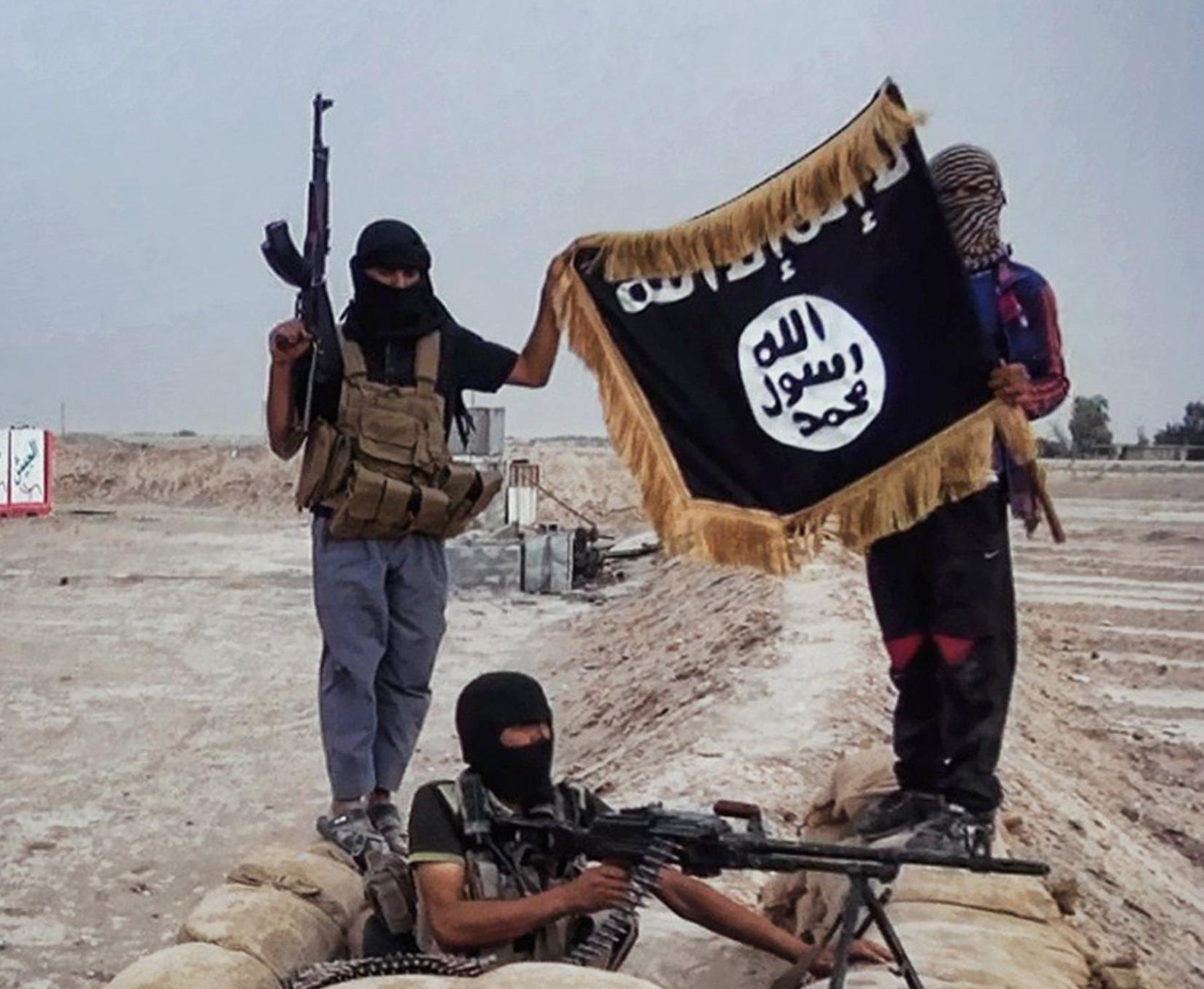
Posted tagged ‘Iraq’

Iran may end up the winner in Iraq

September 12, 2014

Iran may end up the winner in Iraq, Blackfive, September 11, 2014

The only winner that comes out of this in the short-term is Iran.  Shiite factions get defended in Iraq, Iran basically gets a free pass, and we (the west) end up doing the dirty work.  How is this beneficial to us?

**********************

I read thru the statement that President Obama made last night regarding his plan to address ISIS (which he kept calling ISIL) and I’d like to address some of the problems we will face with this.

As someone who’s actually developed the plans to address problems in Iraq and Syria, and had to brief them to senior leaders, I have a hard time understanding why it has taken so long for him to address this, and why he’s picking the ‘strategy’ that he has.  I have agreed, up to now, with the cautious approach- that ‘picking sides’ in Syria is fraught with huge problems.  NONE of the groups fighting in Syria are in any way trustworthy- it would be like trying to pick one Mafia family in NY to help clean up crime problems.  No one you work with would benefit you in the end.  And ultimately, you may end up with a result you still don’t like.

Syria plans had an especially troubling problem- we had ZERO guidance from above on exactly what the end state was to be- we ended up having to develop multiple plans based on assumptions that no senior leader had given guidance on.  No, the CENTCOM commander wasn’t the problem- HE wasn’t getting guidance either.  Neither Mattis nor Austin either one knew what we really wanted to end up with.  So, we built plans based on minimal intervention all the way thru full-on ops.  From humanitarian assistance missions thru ‘BOG’ ops.  From containment thru air power only, to SOF-only training assistance.  And then we went back and re-did them.  Several times.   We had no choice- we could only assume, based on our collective experience, on what the end state could be.  We used Bosnia, Iraq, AFG, DS-1, and a few others as ‘models’.  Plus, we considered different types of UN missions that may be used as approaches, in case we had to support only those.

What we also had to contend with was the fact that, at the time, Iraq was in NO WAY to be a part of the mission set.  We had zero troops there; we had no presence, and even tho our own intel told us that the border area of Iraq and Syria was the real ‘hot zone’ developing, we could not address any activity there.  All of our effort was to ‘contain’ within the borders of Syria, and try to prevent further refugee problems into Lebannon and Jordan.  Especially Jordan.  Pay SPECIAL attention to the Jordanian issue should we start hitting Syria hard- there are going to be real problems along that border as people flee areas of Syria and Iraq.  AQ and ISIS may use that as a ‘distraction’ to force our hand there, and really end up with problems we haven’t prepared for.  Remember, there are hundreds of thousands of refugees along the border, and its a complete powder keg readly to go up in flames at the slightest provocation.

Now that Iraq territory has to be worked into the mix, at least we will have areas of ‘safe zones’ working with the Kurds that allow us some help.  Erbil airport is a good backup location, and I’m assuming they will use that as a potential staging area.  It’s new, it’s got a HUGE runway, and it’s close-by.  Fueling will be the most logical, if we can secure it further.

As someone who worked ops in Yemen and SOM and other areas, using these as ‘models’ for what we intend to do in Iraq is fraught with enormous issues- these are missions that are very very different than what is needed to address ISIS (if you want a very good rundown of this, go to Bill Roggio’s column here.)  We have ‘advisors’ deep into these missions, and the end-states are very very different.  In fact, end-states in Syria and Iraq are completely different- so addressing ISIS across them is NOT going to be simple.  Air power alone isn’t going to do it, and you are not going to get Kurds or Iraqi’s to chase ISIS into Syria to combat them- and that’s exactly what ISIS is going to do.

The one issue that remains to be seen is how ISIS-supporting factions take on Baghdad; this is the nightmare scenario that could very well develop as a counter to US-centered actions.  The fact that Baghdad becomes a focus is a very real fear; it would force the Iraqi gov’t and forces to abandon northern Iraq to concentrate on securing that area alone, leaving the Kurds as the only support we’d have up north.  And that ain’t enough.

Another problem we could not solve internally was this issue of ‘sharing intel’ with anyone.  How the HELL do we share intel with these guys?  We can’t even legally brief the mayor of NYC (deBlasio) because he doesn’t have a clearance; there is NO such thing as ‘REL YEMEN’ or ‘REL IRAQ’ or ‘REL SYRIA’ for classified, useful intel info.  So we’d be breaking the law to even attempt it.  And we’ve been working with the Yems for years.

The only winner that comes out of this in the short-term is Iran.  Shiite factions get defended in Iraq, Iran basically gets a free pass, and we (the west) end up doing the dirty work.  How is this beneficial to us?

Let me ask all of you this- and leave your estimates in the comments- how big of a force do you think this is going to take to support?  PBO said 475 additional will be sent; that’s basically a company, and that ain’t gonna do it.  If we use air power alone, how many do you THINK that will take?  I’ll look at your estimates and let you know in a few days how close you are.

Wolf

Works and Days » Our ‘Face in the Crowd’

August 18, 2014

Our ‘Face in the Crowd’

by Victor Davis Hanson

August 17th, 2014 – 7:36 pm

via Works and Days » Our ‘Face in the Crowd’.


Elia Kazan’s classic A Face in the Crowd is a good primer on Barack Obama’s rise and fall. Lonesome Rhodes arises out of nowhere in the 1957 film, romancing the nation as a phony populist who serially spins yarns in the most folksy ways — confident that he should never be held to account. Kazan’s point (in the film Rhodes is a patsy for conservative business interests) is that the “folks” are fickle and prefer to be charmed rather than informed and told the truth. Rhodes’s new first name, Lonesome, resonates in the film in a way that Barack does now. Finally, an open mic captures Rhodes’s true disdain for the people he champions, and his career crashes.

So what is collapsing the presidency of the once mellifluous Obama? It is not the IRS, AP, VA, or NSA scandals. Nor did the nation especially fault him for Benghazi or the complete collapse of U.S. foreign policy, from failed reset to a Middle East afire. In each case, he either blamed Bush or denied there was a smidgeon of wrongdoing on his part.

Certainly, the stampede at the border, as disastrous as it was, did not ipso facto sink Obama’s ratings. Ditto the embarrassing Bergdahl deal, in which we traded a likely deserter for five Islamist kingpins. Was it the ISIS ascendance that is leading to genocide and a nascent caliphate? Not in and of itself.

We could go on, but you get the picture that it was all of the above that finally became too much, as Americans turned Obama off because they were all lied out. In all of these scandals a charismatic Barack wheeled out the teleprompter, smiled, dropped his g’s, soared with “make no mistake about it” and “let me perfectly clear,” and then, like Lonesome Rhodes, told the “folks” things that could not be true or at least were the exact opposite of what he himself had earlier asserted.

The result is that should Obama claim again that he is going to lower the seas, cool the planet, or that he is the man whom we are waiting for, Americans would laugh. They would chuckle about more promised recoveries, millions of new green jobs, an expanding economy, or a safer world abroad. Again, we are just too lied out to believe anything our slick version of Lonesome Rhodes says anymore. And that fact may best explain his 39-41% approval rating.

Barack Obama is once again lamenting the charge that he is responsible for pulling all U.S. peacekeepers out of Iraq, claiming that the prior administration is culpable. But Obama negotiated the withdrawal himself. We know that not because of right-wing talking points, but because of the proud serial claims of reelection candidate Obama in 2011 and 2012 that he deserved credit for leaving Iraq. That complete pullout prompted Joe Biden to claim the Iraq policy was the administration’s likely “greatest achievement” and buoyed Obama to brag that he was leaving a stable and secure Iraq. Think of the logic: pulling all soldiers out of Iraq was such a great thing that I now can brag that I am not responsible for it.

In regards to Syria, does Obama remember that he issued red lines should the Assad regime use chemical or biological weapons? Why then would he assert that the international community had done so, not Barack Obama? Think of the logic: I issued tough threats, and when my bluff was called, someone else issued them.

If Obama were to readdress Benghazi, would anyone believe him? What would he say? That he was in the Situation Room that evening? That he was correct in telling the UN that a (suddenly jailed) video maker prompted the violence? That the consulate and annex were secure and known to be so? That Susan Rice was merely parroting CIA talking points? Think of the logic: a video maker was so clearly responsible for the Benghazi killings that we will never have to mention his culpability again.

Does anyone believe the president that ISIS are “jayvees,” or that al Qaeda is on the run, or that there is no connection between the ascendance of ISIS and the loud but empty boasting of red lines in Syria and complete withdrawal from Iraq? (If we had taken all troops out of South Korea in 1953 — claiming that we had spent too much blood and treasure and that the Seoul government was too inept — would there be a Kia or Hyundai today, or a North Korea in control of the entire Korean peninsula?) Think of the logic: the ISIS threat is so minimal that we need not be alarmed and therefore Obama is sending planes and advisors back into Iraq to contain it. If Obama truly believes that pulling all troops out made Iraq more secure, what will putting some back in do?

Was there any Obama boast about his Affordable Care Act that proved true: Keep your doctor? Keep your health plan? Save $2,500 in annual premiums? Lower the deficit? Lower the annual costs of health care? Win the support of doctors? Simplify sign-ups with a one-stop website? Enjoy lower deductibles? Think of the logic: you will all benefit from a new take-over of health care by a government whose assertions of what it was going to accomplish were proved false in the first days of its implementation.

There are many possible explanations about why the president of the United States simply says things that are not true or contradicts his earlier assertions or both. Is Obama just inattentive, inured to simply saying things in sloppy fashion without much worry whether they conform to the truth? Or is he a classical sophist who believes how one speaks rather than what he actually says alone matters: if he soars with teleprompted rhetoric, what does it matter whether it is true? If Obama can sonorously assert that he got America completely out of Iraq, what does it matter whether that policy proved disastrous or that he now denies that he was responsible for such a mistake?

Is Obama so ill-informed that he embraces the first idea that he encounters, without much worry whether these notions are antithetical to his own prior views or will prove impossible to sustain?

On a deeper level, Obama habitually says untrue things because he has never been called on them before. He has been able throughout his career to appear iconic to his auditors. In the crudity of liberals like Harry Reid and Joe Biden, Obama ancestry and diction gave reassurance that he was not representative of the black lower classes and thus was the receptacle of all sorts of liberal dreams and investments. According to certain liberals, he was like a god, our smartest president, and of such exquisite sartorial taste that he must become a successful president. In other words, on the superficial basis of looks, dress, and patois, Obama was reassuring to a particular class of white guilt-ridden grandees and to such a degree that what he actually had done in the past or promised to do in the future was of no particular importance.

Then there is the media, the supposed public watchdog that keeps our politicians honest. In truth, Obama winks and nods to journalists, in the sense that as a good progressive Obama is about as liberal a president as we have ever had — or will have. Obama sees cross-examination as a sort of betrayal from journalists, who, for reasons of some abstract adherence to “journalistic integrity,” would by their own reporting subvert a rare chance of a progressive agenda. Obama’s anger is not just directed at Fox News and talk radio, but rather reflects a sense of betrayal that even slight fact checking by liberal journalists exists: why must Obama tell the truth when he never had to in any of his earlier incarnations?

In A Face in the Crowd, the charismatic Andy Griffith character could more or less get anything he wished by saying anything he wanted, largely because he said it mellifluously and in cracker-barrel fashion of an us-versus-them populism. His admirers knew that they were being lied to, but also knew that Lonesome knew that they did not mind. Lonesome had contempt for hoi polloi, largely because of his own easy ability to manipulate them for whatever particular careerist cause he embraced.

So Obama has disdain for those who passed out at his lectures, who put up the Greek columns at his speeches, who came up with his Latin mottoes, and who gushed at his teleprompted eloquence. He knows that we know he is not telling the truth, but likewise he knows that we don’t care all that much — at least until now. The secret to Lonesome’s success was to hide his contempt for those he lied to. When he is caught ridiculing his clueless listeners, he finally crashes and burns — sort of like Barack Obama serially vacationing with the 1% whom he so publicly scorns, or golfing in the aristocratic fashion of those who, he assures us, did not build their businesses.

Lonesome did not end up well, and neither will the presidency of Barack Obama.
(Artwork created using multiple elements from Shutterstock.com.)

Obama’s Hubris is His Undoing

August 18, 2014

Contentions Obama’s Hubris is His Undoing

Jonathan S. Tobin | @tobincommentary 08.17.2014 – 8:00 PM

via Obama’s Hubris is His Undoing « Commentary Magazine.


Historians will have the rest of the century to unravel the mess that is the Barack Obama presidency. While they can explore these years of foreign policy disaster and domestic malaise at leisure, the rest of us have 29 more months to see just how awful things can get before he slides off to a lucrative retirement. But those who want to start the post-mortem on this historic presidency would do well to read Jackson Diehl’s most recent Washington Post column in which he identifies Obama’s hubris as the key element in his undoing.

As our Pete Wehner wrote earlier today, the president’s reactions to what even Chuck Hagel, his less-than-brilliant secretary of defense, has rightly called a world that is “exploding all over” by blaming it all on forces that he is powerless to control. As Pete correctly pointed out, no one is arguing that the president of the United States is all-powerful and has the capacity to fix everything in the world that is out of order. But the problem is not so much the steep odds against which the administration is currently struggling, as its utter incapacity to look honestly at the mistakes it has made in the past five and half years and to come to the conclusion that sometimes you’ve got to change course in order to avoid catastrophes.

As has been pointed out several times here at COMMENTARY in the last month and is again highlighted by Diehl in his column, Obama’s efforts to absolve himself of all responsibility for the collapse in Iraq is completely disingenuous. The man who spent the last few years bragging about how he “ended the war in Iraq” now professes to have no responsibility for the fact that the U.S. pulled out all of its troops from the conflict.

Nor is he willing to second guess his dithering over intervention in Syria. The administration spent the last week pushing back hard against Hillary Clinton’s correct, if transparently insincere, criticisms of the administration in which she served, for having stood by and watched helplessly there instead of taking the limited actions that might well have prevented much of that country — and much of Iraq — from falling into the hands of ISIS terrorists.

The same lack of honesty characterizes the administration’s approach to the Israel-Palestinian conflict and the nuclear negotiations with Iran, two topics that Diehl chose not to highlight in his piece.

Obama wasted much of his first term pointlessly quarreling with Israel’s government and then resumed that feud this year after an intermission for a re-election year Jewish charm offensive. This distancing from Israel and the reckless pursuit of an agreement when none was possible helped set up this summer’s fighting. The result is not only an alliance that is at its low point since the presidency of the elder George Bush but a situation in which the U.S. now finds itself pushing the Israelis to make concessions to Hamas as well as the Palestinian Authority, a state of affairs that guarantees more fighting in the future and a further diminishment of U.S. interests in the region.

On Iran, Obama wasted years on feckless engagement efforts before finally accepting the need for tough sanctions on that nation to stop its nuclear threat. But the president tossed the advantage he worked so hard to build by foolishly pursuing détente with Tehran and loosening sanctions just at the moment when the Iranians looked to be in trouble.

On both the Palestinian and the Iranian front, an improvement in the current grim prospects for U.S. strategy is not impossible. But, as with the situation in Iraq, it will require the kind of grim soul-searching that, as Diehl points out, George W. Bush underwent in 2006 before changing both strategy and personnel in order to pursue the surge that changed the course of the Iraq War. Sadly, Obama threw away the victory he inherited from Bush. If he is to recover in this final two years in office the way Bush did, it will require the same sort of honesty and introspection.

But, unfortunately, that seems to be exactly the qualities that are absent from this otherwise brilliant politician. Obama is a great campaigner — a talent that is still on display every time he takes to the road to blame Republicans for the problems he created — and is still personally liked by much of the electorate (even if his charms are largely lost on conservative critics such as myself). But he seems incapable of ever admitting error, especially on big issues. At the heart of this problem is a self-regard and a contempt for critics that is so great that it renders him incapable of focusing his otherwise formidable intellect on the shortcomings in his own thinking or challenging the premises on which he has based his policies.

Saying you’re wrong is not easy for any of us and has to be especially hard for a man who has been celebrated as a groundbreaking transformational figure in our history. But that is exactly what is required if the exploding world that Obama has helped set in motion is to be kept from careening even further out of control before his presidency ends. The president may think he’s just having an unlucky streak that he can’t do a thing about. While it is true that America’s options are now limited (largely due to his mistakes) in Syria and Iraq, there is plenty he can do to prevent things from getting worse there. It is also largely up to him whether Iran gets a nuclear weapon or Hamas is able to launch yet another war in the near future rather than being isolated. But in order to do the right things on these fronts, he will have to first admit that his previous decisions were wrong. Until he shed the hubris that prevents him from doing so, it will be impossible.

‘Moderate’ Palestinian Authority Claims U.S. Created ISIS To Divide Muslims

August 16, 2014

Moderate’ Palestinian Authority Claims U.S. Created ISIS To Divide Muslims

The US, whose most advanced pawns include Israel and its new creation, ISIS, whose goal is to destroy the Arab world and eliminate the Palestinian cause.”

8.15.2014Israel RevoltJeff Dunetz

via ‘Moderate’ Palestinian Authority Claims U.S. Created ISIS To Divide Muslims | Truth Revolt.


he supposedly “moderate” Palestinian Authority led by President Abbas is rewarding the billions of dollars provided by this country by inciting its citizens to hate the United States, claiming America has established the radical Islamic movement Islamic State (ISIS or IS) with the long-term goal of controlling the Arab-Muslim states by dividing them through conflict and wars.​

On August 7th, the official Palestinian Authority TV Station, the “Palestine News Network,” reported Fatah Central Committee Member Abbas Zaki made the claim:

Fatah Central Committee Member and Commissioner of Arab Relations and Relations with China Abbas Zaki said the Palestinian language and terminology [employed] with the Zionist enemy must be changed, as whoever has seen the extent of the destruction, the ruins and the limbs torn from the pure bodies of our people in Gaza understands the goals of the Zionist attack (i.e., Operation Protective Edge) – [namely,] to exploit the terrible situation in the Arab world that has resulted from the lack of bravery, enthusiasm and willpower among those [countries] who have made subjugation to the US their way [of life]… [The US,] whose most advanced pawns include Israel and its new creation, ISIS, whose goal is to destroy the Arab world and eliminate the Palestinian cause.

Additionally five times in the past six week the official Palestinian Authority Newspaper “Al-Hayat Al-Jadida” published an op-ed slandering America with the same claim. Below are three examples:

A July 10th Op-ed by Adli Sadeq, PLO Ambassador to India and regular columnist for Al-Hayat Al-Jadida, said, in part:

It is Israel that, whenever it gets bored, returns to Gaza with military aircraft to destroy homes and facilities and kill children. Where is the help, you [Hezbollah] sectarian liars who collaborate with the Persian Ayatollahs… hostile [ones], and your ilk – the CIA’s collaborators from the ISIS -who destroy revolutions and give nations a bad name?

Palestinian Youth Union General Director Muharram Barghouti wrote on July 16th:

The ISIS (Islamic State of Iraq), Islamic Front, and Al-Nusra Front (i.e., all radical Islamists) are Muslims from various countries the US is using to fight in Iraq and Syria, in order to fragment the unity of these two Arab countries…

We are now more aware that the Americans – who want to fight for their own interests using Islamic, Jewish and Christian believers – are truly the head of the snake… ISIS’s declaration that it will fight Israel only after it has finished with the infidels merely proves that ISIS in Syria and Iraq will not fight the Jewish ISIS, because the plot is the same plot, the boss is the same boss, and the goal is the same goal: to tear [apart] the Arab homeland and gain control of its resources – through the blood of others.”

Palestinian Author Ibrahim Abd Al-Majid​’s op-ed on August 3rd:

This [ignorance] has peaked in [recent] years, with the radical terrorists of ISIS and those like them, who were created by Israel and the US, and are paving the way for Israel to act like them.”

These as well as the remaining examples were originally posted at Palwatch

EU ministers in search for united front on arming Iraq

August 15, 2014

EU ministers in search for united front on arming Iraq Conference of European foreign ministers in Brussels also to include discussion of situation in the Gaza Strip

By Alex Pigman August 15, 2014, 2:08 pm

via EU ministers in search for united front on arming Iraq | The Times of Israel.


Flags outside the European Union in Brussels (photo credit: Flickr/BY 2.0/motiqua )
 

russels (AFP) — EU ministers convened in Brussels on Friday in a rare summertime meeting to seek unanimous approval for the shipment of arms to Iraqi Kurds fighting Islamic State jihadists.

France and Britain have already moved ahead with plans to provide weapons to beleaguered Iraqi forces, but French Foreign Minister Laurent Fabius pushed for the talks to mobilize an EU-wide response to the crisis in Iraq.

“I asked for this meeting so that all of Europe mobilizes and helps the Iraqis and Kurds,” Fabius said as he arrived for the talks.

Italy, which currently holds the EU’s rotating leadership and whose foreign minister Federica Mogherini is shortlisted to become the next EU foreign affairs chief, also called for talks.

“The Kurds need our support,” she said as she arrived at the meeting.

“It is important for us that there be a European agreement,” she added.

Defense matters are strictly the purview of member states and the push for an EU stance to send arms to a conflict zone is a rare one.

But alarming images of Iraqi minorities, including Christians, under siege by jihadists have struck chords in European capitals.

EU governments are also alarmed by the Islamic State’s ability to attract radicals from Europe who then return home to the West battle-hardened.

Ahead of Friday’s meeting, support for a strong message on arming Iraq was growing, even from member states historically less inclined to back military adventures abroad.

Usually cautious Germany this week pledged to work “full-speed” on the supply of “non-lethal” equipment such as armored vehicles, helmets and flak jackets to Iraq.

Germany is a major arms manufacturer and going into the meeting, Foreign Minister Frank-Walter Steinmeier seemed ready to boost German action, despite national restrictions limiting arms exports to raging conflicts.

“Europeans must not limit themselves to praising the courageous fight of the Kurdish security forces. We also need to do something first of all to meet basic needs,” he said.

Sweden, which is usually reluctant to participate in military missions, stressed, however, that the EU’s “great power is in its humanitarian response.”

“Other countries have power to do other things,” said Swedish Foreign Minister Carl Bildt.

Current EU foreign policy chief Catherine Ashton, who officially convened the meeting, had been criticized earlier in the week for the bloc’s slow response to the unfurling crisis in Iraq.

But a senior European official, speaking in the run-up to the talks on Thursday, deplored the “distorted” view of a shut-down EU in August.

This was “at best unfair,” he said. The European Union “is not on holiday.”

Earlier this week, the European Commission announced it would boost humanitarian aid to Iraq to 17 million euros ($22 million), and gave the green light for special emergency measures to meet the crisis.

But Humanitarian Affairs Commissioner Kristalina Georgieva, who is also attending the meeting, said the real challenge in helping civilians was access, not funding.

Also on the agenda will be the crises in Ukraine and the Gaza Strip and a request by Spain to address the Ebola outbreak in West Africa.

Busting the Media’s ISIS Myths

August 14, 2014

Busting the Media’s ISIS Myths, Front Page Magazine, Daniel Greenfield, August 14, 2014

(Dear me! Mr. Greenfield is so politically incorrect that he blames the religion of peace death for bad things. How dare he? — DM)

isis

The Caliphate, like the Reich, is a utopia which can only be created through the mass murder and repression of all those who do not belong. This isn’t a new vision. It’s the founding vision of Islam.

The narrative that ISIS was more extreme than Al Qaeda because it killed Shiites and other Muslims doesn’t hold up even in recent history.

The media finds it convenient to depict the rise of newly extremist groups being radicalized by American foreign policy, Israeli blockades or Danish cartoons. A closer look however shows us that these groups did not become radicalized, rather they increased their capabilities.

What is wrong with ISIS is what is wrong with Islam.

**********

Know your enemy. To know what ISIS is, we have to clear away the media myths about ISIS.

ISIS is not a new phenomenon.

Wahhabi armies have been attacking Iraq in order to wipe out Shiites for over two hundred years. One of the more notably brutal attacks took place during the administration of President Thomas Jefferson.

That same year the Marine Corps saw action against the Barbary Pirates and West Point opened, but even Noam Chomsky, Michael Moore and Howard Zinn chiming via Ouija board would have trouble blaming the Wahhabi assault on the Iraqi city of Kerbala in 1802 on the United States or an oil pipeline.

Forget the media portrayals of ISIS as a new extreme group that even the newly moderate Al Qaeda thinks is over the top; its armies are doing the same things that Wahhabi armies have been doing for centuries. ISIS has Twitter accounts, pickup trucks and other borrowed Western technology, but its ideology and brutality have always been part of Islam. They are not a new phenomenon.

Sunnis and Shiites have been killing each other for over a thousand years. Declaring other Muslims to be infidels and killing them is also a lot older than the suicide bomb vest.

Al Qaeda and ISIS are at odds because its Iraqi namesake had a different agenda. Al Qaeda always had different factions with their own agendas that were not more extreme or less extreme, but emerged from varying national backgrounds.

Bin Laden prioritized Saudi Arabia and America. That allowed Al Qaeda to pick up training from Hezbollah which helped make 9/11 possible. This low level cooperation with Iran was endangered when Al Qaeda in Iraq made fighting a religious war with Shiites into its priority.

That did not mean that Bin Laden liked Shiites and thought that AQIQ was “extreme” for killing them.

During the Iraq War, Bin Laden had endorsed Al Qaeda in Iraq’s goal of fighting the Shiite “Rejectionists” by framing it as an attack on America. AQIQ’s Zarqawi had privately made it clear that he would not pledge allegiance to Osama bin Laden unless the terrorist leader endorsed his campaign against Shiites.

Bin Laden and the Taliban had been equally comfortable with Sipahe Sahaba and Lashkar-e-Jhangvi which provided manpower for the Taliban while massacring Shiites in Afghanistan and Pakistan. Last year LEJ had killed over a hundred Shiite Hazaras in one bombing.

The narrative that ISIS was more extreme than Al Qaeda because it killed Shiites and other Muslims doesn’t hold up even in recent history.

The media finds it convenient to depict the rise of newly extremist groups being radicalized by American foreign policy, Israeli blockades or Danish cartoons. A closer look however shows us that these groups did not become radicalized, rather they increased their capabilities.

ISIS understood that targeting Shiites and later Kurds would make it more appealing to Sunni Arabs inside Iraq and around the Persian Gulf. Bin Laden tried to rally Muslims by attacking America. ISIS has rallied Muslims by killing Shiites, Kurds, Christians and anyone else who isn’t a proper Sunni Arab.

Every news report insists that ISIS is an extreme outlier, but if that were really true then it would not have been able to conquer sizable chunks of Iraq and Syria. ISIS became huge and powerful because its ideology drew the most fighters and the most financial support. ISIS is powerful because it’s popular.

ISIS has become more popular and more powerful than Al Qaeda because Muslims hate other Muslims even more than they hate America.

ISIS is not an outside force that inexplicably rolls across Iraq and terrorizes everyone in its path. It’s actually the public face of a Sunni coalition. When ISIS massacres Yazidis, it’s not just following an ideology; it’s giving Sunni Arabs what they want.

A surviving Yazidi refugee had told CNN that his Arab neighbors had joined in the killing. This wasn’t just ISIS terrorizing a helpless population. It was Islamic Supremacism in action.

ISIS is dominating Iraq and Syria because it draws on support from the Sunni Arab population. It has their support because it is killing or driving out Christians, Yazidis, Shiites and a long list of peoples who either aren’t Muslims or aren’t Arabs while giving their land and possessions to the Sunni Arabs.

The media spent years denying that the Syrian Civil War was a sectarian conflict between Sunnis and Shiites. It’s unable to deny the obvious in Iraq, but it carefully avoids considering the implications.

An army alone will have trouble committing genocide unless it has the cooperation of a local population that wants to see another group exterminated.

When we talk about ISIS, we are really talking about Sunni Arabs in Iraq and Syria. Not all of them, but enough that ISIS has become the standard bearer of the Sunni side in the civil wars in Syria and Iraq.

Hillary Clinton and John McCain can complain that we could have avoided the rise of ISIS if we had only armed the right sort of Jihadists in Syria, but if ISIS became dominant because its agenda had popular support, then it would not have mattered whom we armed or didn’t arm.

We armed the Iraqi military to the teeth, but it didn’t do any good because the military didn’t represent any larger consensus in an Iraq divided along religious and ethnic lines.

To understand ISIS, we have to unlearn what the media tell us. The media tells us that terrorists only represent an extreme edge of the population. If they have popular support, it’s only because the civilian population has somehow become radicalized. (And usually it’s our fault.)

And yet that model doesn’t hold up. It never did.

The religious and ethnic strife in the Middle East out of which ISIS emerged and which has become its brand, goes back over a thousand years. If support for terrorism emerges from radicalization, then the armies of Islam were radicalized in the time of Mohammed and have never been de-radicalized.

The Caliphate, like the Reich, is a utopia which can only be created through the mass murder and repression of all those who do not belong. This isn’t a new vision. It’s the founding vision of Islam.

What is wrong with ISIS is what is wrong with Islam.

We can defeat ISIS, but we should remember that its roots are in the hearts of the Sunni Muslims who support it. ISIS and Al Qaeda are only symptoms of the larger problem.

We can see the larger problem flying Jihadist flags in London and New Jersey. We can see it trooping through Australian and Canadian airports to join ISIS. We can see it in the eyes of the Sunni Arabs murdering their Yazidi neighbors.

ISIS is an expression of the murderous hate within Islam. We are not only at war with an acronym, but with the dark hatred in the hearts of Jihadists in Iraq and Pakistan… and next door.

Iraq crisis: ‘It is death valley. Up to 70 per cent of them are dead’

August 12, 2014

Iraq crisis: ‘It is death valley. Up to 70 per cent of them are dead’On board Iraqi army helicopter delivering aid to the trapped Yazidis, Jonathan Krohn sees a hellish sight

via Iraq crisis: ‘It is death valley. Up to 70 per cent of them are dead’ – Telegraph.


Mount Sinjar stinks of death. The few Yazidis who have managed to escape its clutches can tell you why. “Dogs were eating the bodies of the dead,” said Haji Khedev Haydev, 65, who ran through the lines of Islamic State jihadists surrounding it.

On Sunday night, I became the first western journalist to reach the mountains where tens of thousands of Yazidis, a previously obscure Middle Eastern sect, have been taking refuge from the Islamic State forces that seized their largest town, Sinjar.

I was on board an Iraqi Army helicopter, and watched as hundreds of refugees ran towards it to receive one of the few deliveries of aid to make it to the mountain. The helicopter dropped water and food from its open gun bays to them as they waited below. General Ahmed Ithwany, who led the mission, told me: “It is death valley. Up to 70 per cent of them are dead.”

Two American aid flights have also made it to the mountain, where they have dropped off more than 36,000 meals and 7,000 gallons of drinking water to help the refugees, and last night two RAF C-130 transport planes were also on the way.

However, Iraqi officials said that much of the US aid had been “useless” because it was dropped from 15,000ft without parachutes and exploded on impact.

Handfuls of refugees have managed to escape on the helicopters but many are being left behind because the craft are unable to land on the rocky mountainside. There, they face thirst and starvation, as well as the crippling heat of midsummer.

Hundreds, if not more, have already died, including scores of children. A Yazidi Iraqi MP, Vian Dakhil, told reporters in Baghdad:

“We have one or two days left to help these people. After that they will start dying en masse.”

The Iraqi Army is running several aid missions every day, bringing supplies including water, flour, bread and shoes.

The helicopter flights aim to airlift out refugees on each flight, but the mountains are sometimes too rocky to land on, meaning they return empty.

Even when it can land, the single helicopter can take just over a dozen refugees at a time, and then only from the highest point of the mountain where it is out of range of jihadist missiles. Barely 100 have been rescued in this way.


Displaced Yazidi people rush towards an aid helicopter (RUDAW)
 

The flights have also dropped off at least 50 armed Peshmerga, Kurdish forces, on the mountain, according to Captain Ahmed Jabar.

Other refugees have made their way through Islamic State lines, evading the jihadists to reach safety, or travelling through

Kurdish-controlled sections of Syria to reach the town of Dohuk. So far the Yazidi refugees left behind have survived by hiding in old cave dwellings, drinking from natural springs and hunting small animals, but with families scattered across Mount Sinjar, a barren range stretching for around 35 miles near the border with Syria, there are fears aid will not reach them all unless the humanitarian relief operation is significantly stepped up .

Hundreds can now be seen making their way slowly across its expanse, carrying what few possessions they managed to flee with on their backs. Exhausted children lie listlessly in the arms of their parents, older ones trudging disconsolately alongside while the sun beats down overhead.

The small amount of relief the peshmerga militia can bring up into the mountain is not simply enough.

One pershmerga fighter, Faisal Elas Hasso, 40, said: “To be honest, there’s not enough for everyone,” he said. “It’s five people to one bottle.”

The refugees who made it out described desperate scenes as they awaited help from the outside world.

“There were about 200 of us, and about 20 of that number have died,” said Saydo Haji, 28. “We can live for two days, not more.”

Emad Edo, 27, who was rescued in an airlift on Friday at the mountain’s highest point explains how he had to leave his niece, who barely had enough strength to keep her eyes open, to her fate.

“She was about to die, so we left her there and she died,” he said.

Others shared similar stories. “Even the caves smell very bad,” Mr Edo added. According to several of the airlifted refugees, the Geliaji cave alone has become home to 50 dead bodies.

Saydo Kuti Naner, 35, who was one of 13 Yazidis who snuck through Islamic State lines on Thursday morning, said he travelled through Kurdish-controlled Syria to get to Kurdistan.

He left behind his mother and father, too old to make the rough trip, as well as 200 sheep. “We got lucky,” he said. “A girl was running [with us] and she got shot.” He added that this gave enough cover for the rest of them to get away.

Mikey Hassan said he, his two brothers and their families fled up into Mount Sinjar and then managed to escape to the Kurdish city of Dohuk after two days, by shooting their way past the jihadists. Mr Hassan said he and his family went for 17 hours with no food before getting their hands on some bread.

The Yazidis, an ethnically Kurdish community that has kept its religion alive for centuries in the face of persecution, are at particular threat from the Islamists, who regard them as ‘devil worshippers’, and drove them from their homes as the peshmerga fighters withdrew.

There have been repeated stories that the jihadists have seized hundreds of Yazidi women and are holding them in Mosul, either in schools or the prison. These cannot be confirmed, though they are widely believed and several Yazidi refugees said they had been unable to contact Yazidi women relatives who were living behind Islamic State lines.

Kamil Amin, of the Iraqi human rights ministry, said: “We think that the terrorists by now consider them slaves and they have vicious plans for them.”

Tens of thousands of Christians have also been forced to flee in the face of the advancing IS fighters, many cramming the roads east and north to Erbil and Dohuk. On Thursday alone, up to 100,000 Iraqi Christians fled their homes in the Plain of Ninevah around Mosul.


Refugees said the American air strikes on IS positions outside Erbil were too little, too late. They said they felt abandoned by everyone – the central government in Baghdad, the Americans and British, who invaded in 2003, and now the Kurds, who had promised to protect them.

“When the Americans withdrew from Iraq they didn’t protect the Christians,” said Jenan Yousef, an Assyrian Catholic who fled Qaraqosh, Iraq’s largest Christian town, in the early hours of

Thursday. “The Christians became the scapegoats. Everyone has been killing us.”

The situation in Sinjar has irreparably damaged the notion of home for the Yazidis. For a large portion of them, the unique culture of the area will never return, and they will therefore have nothing to go back for.

“We can’t go back to Sinjar mountain because Sinjar is surrounded by Arabs,” said Aydo Khudida Qasim, 34, who said that Sunni Arab villagers around Sinjar helped Islamic State take the area. Now he as well as many of his friends and relatives want to get out of Iraq

altogether. “We want to be refugees in other countries, not our own,” he said.

*Additional reporting by Richard Spencer, Erbil

Political crisis roils Baghdad as Maliki refuses to cede power

August 12, 2014

Political crisis roils Baghdad as Maliki refuses to cede power

By MICHAEL WILNERLAST UPDATED: 08/12/2014 01:16

Iraq’s president nominates successor to longtime PM; US warplanes conduct bombing campaign on Islamic State fighters at base of Mount Sinjar; Obama wants unity gov’t in Baghdad “as quickly as possible.”

via Political crisis roils Baghdad as Maliki refuses to cede power | JPost | Israel News.


US President Barack Obama delivers a statement on the situation in Iraq from his vacation home at Martha’U.S. President Barack Obama delivers a statement on the situation in Iraq from his vacation home at Martha’s Vineyard, Massachusetts August 11s Vineyard, Massachusetts August 11 Photo: REUTERS
 

WASHINGTON – In a political challenge to a country already under assault by an extremist Sunni army, Iraq’s longtime prime minister, Nouri al-Maliki, is refusing to cede control as his term of office nears its end, suggesting over the weekend a willingness to use force to stay in power.

The power struggle in Baghdad is compounding a military crisis in northern Iraq, where the Islamic State, a radical religious militia holding swaths of Iraqi and Syrian territory, has challenged the control of the government.

At the invitation of that government and citing a moral imperative, the United States continued a military assault on Islamic State assets on Monday, including targets outside the city of Erbil as well as its first airstrikes against targets near Mount Sinjar. One series of bombings, at the base of the mountain refuge for religious minorities, included checkpoints, trucks, and US-made humvees commandeered and operated by the terrorist network.

Earlier on Monday, Iraq’s President Fouad Masoum nominated Haider al-Abadi as Maliki’s successor, after strong encouragement from Washington to abide by the country’s decade-old constitution.

Speaking to reporters from Martha’s Vineyard, US President Barack Obama congratulated Masoum and Abadi, encouraging the leadership to “unite Iraq’s different communities” and to “form a new cabinet as quickly as possible.”

Reiterating America’s commitment to the Iraqi people, Obama repeated his belief that a diverse, representative government in Baghdad was a necessary partner to meet the difficult task of confronting the Islamic State.

Abadi is a Shi’ite and a member of Maliki’s Dawa Party.

But Abadi’s own party colleagues publicly rejected his appointment on Monday, charging that his nomination had “no legitimacy” and that Abadi “only represents himself.”

In a demonstration of his anger, Maliki – still technically prime minister after eight years in power – ordered a show of force on the streets of Baghdad on Sunday leading up to the announcement, which was welcomed by the US, United Kingdom and United Nations.

The US has noticed “no discernible change” in the security presence in Baghdad, State Department deputy spokeswoman Marie Harf told reporters in Washington, adding that Maliki is still the country’s prime minister.

Abadi has 30 days to form and present a new government before Maliki officially steps down.

US Vice President Joe Biden called Masoum and Abadi on behalf of the United States, to congratulate them on the step forward.

“The prime minister-designate expressed his intent to move expeditiously to form a broad-based, inclusive government capable of countering the threat of the Islamic State of Iraq and the Levant, and building a better future for Iraqis from all communities,” the White House said.

US Secretary of State John Kerry came out with a statement congratulating Abadi — and warning Maliki not to “stir the waters” with violence in the streets of the Iraqi capital.

UN secretary-general Ban Ki-moon extended his congratulations, but with a rare critique of the internal politics of a member state.

Ban “is concerned that heightened political tensions coupled with the current security threat of Islamic State could lead the country into even deeper crisis,” his spokesman said.

The US, meanwhile, continued its aid airdrop on Mount Sinjar, where thousands of members of the Yazidi religious minority remain trapped by IS fighters bent on their extermination.

A fourth US airdrop of ready-to-eat meals, tents and thousands of gallons of water successfully landed on the mountaintop overnight, as London committed to the effort with fighter jets to guide its own cargo planes full of aid.

The greater question of how to secure safe passage for the Yazidis is still challenging the US military, however, which is “right now gripped by the immediacy of the crisis,” in the words of one Pentagon official.

“We’re currently assessing what we can and can’t do,” a Pentagon spokesman said.

“What is most important right now is that we deliver the much-needed water and shelter and food.”

But the White House reiterated its commitment to the prevention of genocide against the Yazidis, which was one of two primary justifications Obama cited last week as he authorized the use of force against the Islamic State.

“We’re reviewing options for removing the remaining civilians off the mountain,” deputy US national security adviser Ben Rhodes said. “Kurdish forces are helping, and we’re talking to the [United Nations] and other international partners about how to bring them to a safe space.”

The UN mission in Iraq said it is preparing a humanitarian corridor to permit the Yazidis to flee to safety.

Yazidis are followers of an ancient religion derived from Zoroastrianism. They are viewed as “devil worshipers” by the Islamic State’s Sunni extremists, who ordered them to convert to Islam or face death.

US fighter jets continued firing on the Islamic State on Sunday, striking several vehicles en route to Erbil, where the US maintains a consulate.

The State Department said the US has begun to arm Kurdish fighters in “full cooperation and coordination” with Baghdad, to help defend the northern territories with ground forces.

Reuters contributed to this report.

ISIS-terror rooted in Islamic culture

June 30, 2014

ISIS-terreur geworteld in islamitische cultuur

Leon de Winter op 30 juni, 2014 – 10:14

via ISIS-terreur geworteld in islamitische cultuur | www.dagelijksestandaard.nl.


Bing translation from Dutch
Why fight thousands of young European Muslim men for the Foundation of a Caliphate, or a religious tyranny? For the ideologues that the problems of those young men want to see in socio-economic terms, is that a great puzzle.
In their progressive worldview are the problems of migrants and their children provided by the social context within which these groups must survive. But time and time again goes to show that the culture either: to the agricultural and religious traditions that those migrants have taken away from the country of departure.
Why not all children of migrants from Islamic countries take part in the progress of Netherlands? Why hooks so many Moroccan and Turkish young men off and they end up in crime? What goes wrong with these children at a young age making them, like their parents, not the move on from the poverty and ignorance of life from before the migration to the new life in Europe with knowledge, understanding, prosperity?
Enmity
In many immigrant families, children with distaste and hatred towards their new environment brought up. They get from their parents and by the Arab media to hear that they are entitled to much more than what they possess. That children grow up with frustration and enmity.
On the internet is swarming with young Moroccan Dutch people who applaud ISIS, the terror movement to gruesome mass murders makes guilty. Young Moroccans who identify themselves with the fury of the ISISfighters.
They too are furious – why? They get too little training, too little cell phones? Or the following plays: their status as Muslim, says their culture, is elevated above that of non-Muslim Dutchman, and yet their subordinate social position and relatively frugal?
On the micro level we see here what happens on a macro level between Arab countries and Israel. The small country is in every way better developed than any Arabic country. More prosperity, more freedom, more science. And that is unacceptable for Arabs. According to their tradition is the Jew an inferior human being who has rejected the message of Mohammed the perfect man and therefore subject to the Muslim.
And precisely this despicable people has managed to each Arab country. The successful existence of Israel makes the message of islam that is the final message of Allah ridiculous. And because this message can be not ridiculous, says Israel must be destroyed, the believer, at all costs. It Was Golda Meir who once said: the Arabs hate us more than they love their own children?
Mechanisms
I have the impression that migrants have taken this kind of mental mechanisms to Netherlands. Fortunately, there are many who let not stifle personal opportunities by rigid beliefs, but when believers encounter the alleged superiority of the faith and the archaic gender roles and parenting methods constantly on the wicked and yet rich and powerful environment.
So these believers continually demands more space on for their god. Their minarets are visible and their wives should be apparent. And for their sons around the non-believer is part of the Dar al-Harb, the world of war, where they sanctioned by their culture to your heart’s content because Rob and steal, as may those gay assassins of ISIS.
The problems of their religious culture, which the Arab (and other Muslim) peoples in backwardness and ignorance keep hostage, are no longer limited to the areas where islam traditionally the predominant culture is. Migration has brought to Europe these problems. And it is worrying that migrants the crippling forces of the culture of the country of origin is not neutralize with the unprecedented opportunities that exist in Europe.
France, land of liberty, equality, fraternity, has immense problems with Islamic criminal and radicalized young men. It’s not about access to food, education, clothing, no, it comes to intangibles that define self-esteem of many angry young Muslims. They want a form of respect, and a related pattern of consumption, that society their not slavishly on the basis of their superior origin offers.
Their embittered aggrieved parents, their spiritual leaders, their hate spewing sends the same message: television channels, all the power in the world are not and its not like our holy book promises us, and so we must fights such as the infidels and Mohammed fought with the sword topics.
May it be said: the germ to radicalisation is in the general cultural values of these migrants? The Koran is built on three contrasts; male-female, believerinfidel, master-slave. In the West, these three getechnologiseerde and individualized contrasts as good as raised.
Infallible
The West is, just like Israel, a negation of what islam follower promises: reign of the true believer on Earth and eternal life in heaven. The negation is not other than temporary, thus the believer, because islam is infallible.
The young men who are now in the Middle East are experiencing the adventures of their lives and robbing and raping and beheading, legitimised may one day come back. They are not radicalized because they were pathetic or too little, no, they are radicalized opportunities because their cultural traditions have made impossible integration and offer young men the concept of the Holy struggle, an idea that many young men to fine brings excitement.
Israel and Jordan are in the same period. They have about the same population. No raw materials. They belong to the same historical world. Why one country came to fruition and it became an open democracy, and why was the other hardly a dictatorship that contributes to the progress of humanity?
Possessed
A famous rabbi was once asked to the Torah in one phrase to sum up. He replied: what you don’t want others do you shall rest; This is the whole Torah now go home and study. This is the reason why Israel prospers, and not Jordan. This is the reason why the West knows prosperity and freedom, and the Arab world. It is tragic and dangerous that the ideology of ISIS, and of the possessed young men of colluding, that exactly the opposite values. It’s the culture, stupid.

The Islamist Plague

June 30, 2014

The Islamist Plague

By Rachel Ehrenfeld
Monday, June 30th, 2014 @ 3:56AM

via The Islamist Plague.


Many Western commentators have adopted the narrative that al Qaeda and its ilk are the exception to the “religion of peace” — Islam.

However, the rise of “political Islam,” the brainchild of the Muslim Brotherhood, is more akin to a highly infectious disease. No vaccine is available; its spread can only be halted by identifying and eliminating the sources of infection. Yet, despite the mortal danger posed by the increasingly violent global jihadist movement, willful blindness persists in the United States and the West.

Once the Soviet Union imploded and Islamist fundamentalism exploded, Muhammad replaced Marx and Lenin, and radical Islam replaced the socialist-nationalist doctrines of the Arab revolutionaries. The collapse of the Soviet Union served as the catalyst for an alliance between radical Sunni and Shiite movements that helped to revive Islamist fundamentalism. The spread of the Islamist ideology was paid for by the oil-rich Arab/Muslim states, which also used their money to buy Western “opinion makers,” including businessmen, politicians, the media, and academics.

New communication technologies allowed the increasingly vitriolic Islamist rhetoric to spread instantaneously. Instead of taking measures to stop the instructive incitement for murder, the West sank further into appeasement, thus encouraging the spread of the jihadist agenda.

While the bloody attacks of ISIS and Hezbollah in Iraq and Syria are portrayed as a Sunni vs. Shiite struggle, the role of Ayatollah Khomeini, as the leader of the “Islamic Revolution,” should not be forgotten.

After successfully taking over Iran, the Ayatollah Khomeini began calling for the unification of Muslims throughout the world, and for exporting his Muslim Revolution to wherever Muslims live so that Muslim domination could be achieved. “We are at war against Infidels,” the Ayatollah told a large group of Pakistani military officers on a pilgrimage to Qom in January 1980. “Take this message with you … I ask all Muslims [emphasis added] … to join the Holy War. There are many enemies to be killed or destroyed. Jihad must triumph.” He stressed that the “Iranian Experiment” should be followed, and that the realization of the true Islamic State should be carried out forcibly and without compromise.

These plans for Islamic unification were accelerated by the Gulf War. The war helped the leaders of Islamist groups throughout the globe to enforce their vision that jihad, holy war, is the only formula for protecting Islam from extinction by the West — led by the U.S. This opinion was and is repeatedly voiced by every Islamist leader. “Bush and Thatcher have revived in the Muslims the spirit of Jihad and martyrdom,” wrote the Palestinian leader of the Islamic Jihad, Sheikh As’ad Bayyud al-Tamimi. He promised that all Muslims “will fight a comprehensive war and ruthlessly transfer the battle to the heart of America and Europe.” Despite the advancement of the ISIS, many in the West continue to dismiss such statements as pure rhetoric. Instead, they are hanging on to statements, made by Muslim and Arab leaders and politicians, that ISIS and the other jihadists are aberrations that should be eliminated.

Yet, the U.S. and other Western countries are trying, again, to negotiate, i.e., submit to demands of their mortal enemies, supposedly to avoid further escalation, often accepting statements the like of which were made by Egyptian Sunni theologian Mahmud Shaltut (1893-1963), in his al-Qur’an wal-Qitāl:

“Muhammad revealed a book [the Quran] containing the principles of happiness. It commands to judge by reason, it propagate science and knowledge, it gives clear rules, it proclaims mercy, it urges to do good, it preaches peace, it gives firm principles concerning politics and society, it fights injustice and corruption.”

He also declared, “The Islamic community is commanded to do only what is good and are forbidden to do what is reprehensible and evil. The Islamic mission is clear and evident, easy and uncomplicated. It is digestible and intelligible for any mind. It is a call of natural reason, and therefore not alien to human intellect. This is the mission of Muhammad to humanity.”

While Shaltut’s argument that “it is the interest of humanity to gather enthusiastically under Islamic rule,” has not been accepted, yet, the U.S. efforts to ignore the Islamic plague and its sources, only help to spread it.