Posted tagged ‘Iraq’

The Trump Administration and the Kurds — A Conversation with Sherkoh Abbas

November 17, 2016

The Trump Administration and the Kurds — A Conversation with Sherkoh Abbas, Front Page MagazineJoseph Puder, November 16, 2016

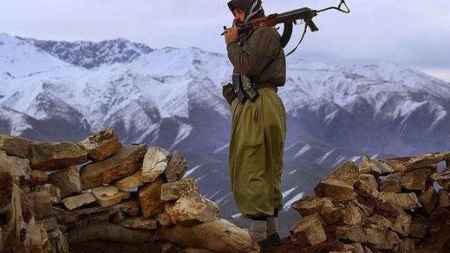
kurdishfighters

Kurdish Peshmerga forces fighting the Islamic State (IS) in both Iraq and Syria have exhibited courage, determination, and a unique pro-American attitude in the Arabic speaking world.  In Syria, however, the Kurdish forces combating the Islamic State bravely and successfully are being attacked by the Turkish army as ordered by President ErdoganHuman rights activist Dilovan Mirkhan told ARA News (November 13, 2016) that “The Turkish army stationed on the borderline with Syria, bombed residential buildings in the Mosako town in Afrin, adding that the bombardment led to massive destruction in the area.” Mirkhan reported that “Dead bodies of eight civilian victims were collected subsequent to the attack, and many others remained stranded under the rubble.”

It should be unacceptable for the incoming Trump administration to allow Turkey’s dictatorial president Erdogan to attack the very forces (the Kurds) who are liberating portions of Syria from the IS. Moreover, it is also high time for the U.N. and the U.S. to recognize the Kurdish people’s right to self-determination.  The U.N. has held endless sessions in support of Palestinian rights and requests for statehood. The Kurds, numbering tens-of-millions, deserve much more from the international community.  There are 22 Arab states but no Kurdish state.  Given the critical role the Kurds are playing in liberating Iraq and Syria from the barbarism of the IS, the time has come to reward the Kurds with a state of their own.

Kurds have been oppressed by Saddam Hussein in Iraq and gassed in Halabja. Hafez Assad, the dictator of Syria expelled hundreds of thousands of Kurds from the Al-Hasakeh region, with similar numbers becoming stateless.  The Islamic Republic of Iran has equally oppressed its largely Sunni-Muslim Kurds. It has denied political and cultural rights to its Kurdish citizens.  Turkey, where the Kurds count for almost 20% of the population, is currently bombing the Kurds at the Kurdish-majority region of southeastern Turkey, and in Syria.

This reporter asked Sherkoh Abbas, President of the Kurdish National Assembly of Syria (KNA-S), to respond to the current situation in Syria.

Joseph Puder (JP): With Donald Trump becoming the new occupant of the White House, and Republicans controlling both houses of Congress, what would you like the new administration to do in Syria?

Sherkoh Abbas (SA): I hope to see the Trump administration abandon the outdated policy of maintaining the unjust legacy of the colonial Sykes-Picot agreement. Similarly, Trump should reverse the previous U.S. administration’s investment in cozying up to ruthless Middle East regimes at the expense of its existing allies.  Instead, the new administration should support its natural allies such as the Kurds in the Middle East and the Amazigh people (Berbers) in North Africa.

Supporting an independent Kurdistan would help finish the Islamic State in Iraq and Syria, and reduce Iran’s influence in the region, particularly in Iraq and Syria.  Working with the Kurds would also sever the Shiite Crescent.  Moreover, open support for the Kurds would check Recep Tayyip Erdogan and his ambitious Neo-Ottoman Empire.

The U.S. under the Trump presidency, should provide full and direct support to the Kurds on all levels, including the delivery of arms, unlike the Obama administration.  Arms to the Kurds should bypass Baghdad, and go directly to the Kurds.

During the primaries, Trump expressed support for the Kurds.  We will call on him to do just that.  The Kurds share the same values with the U.S. and they are eager to work with America.

JP: What do you expect from the Trump administration with regards to an independent Kurdish state in Syria?

SA: Syrian Kurds are currently fighting on behalf of humanity in their struggle with the Islamic State.  As quid-pro-quo, the Kurds would like U.S. help in creating a federal system in Syria to start with, and ultimately supporting outright Kurdish independence in Syria. Israel, Russia, and some European nations are promoting a federal state for the failed states of Iraq and Syria.

JP: Are the leaders of the People’s Protection Units (YPG) ready for an independent Kurdish state in Syria?

SA: The YPG needs to distance itself from the Assad regime as well as the Kurdistan Workers Party (PKK), and work with all the Kurds, including over 5,000 Syrian Peshmerga forces currently fighting to take Mosul.  It must become inclusive instead of a dictatorial regime.  The YPG does not enjoy the overwhelming support of the Syrian Kurds.  The majority of Syrian Kurds want democracy and independence.

The YPG is vacillating between its work with the U.S., Russia, and the Assad regime.  The YPG has to face the Free Syrian Army (FSA) and IS, as well as other terror groups. The Arab Gulf states, particularly Qatar, is supporting the FSA, which is ideologically close to the Muslim Brotherhood.  Turkey, a NATO-member, is too close to the IS and al-Qaeda, and their agenda is to get rid of the Assad regime and the Kurds.

JP: What influence can you and the Kurdistan National Assembly of Syria (KNA-S) exert on the powers that be in your home town of al-Qamishli and Kurdish Syria?

SA: Most of the Syrian Kurds are loyal to Kurdish tribal and civic leaders, and have strong alliances with Iraqi Kurdistan Regional Government (KRG). The YPG opposes such relationships, and thus is not a consensus organization.  The Kurdistan National Assembly of Syria (KNA-S) is aligned with tribal and civic leaders and the KRG in Iraq.  We could deliver the “Kurdish street,” and additional soldiers to finish IS.

This year KNA-S has assembled a wide-ranging delegation of Syrian Kurds, including YPG officials, to come to Washington for talks with U.S. administration officials.  Unfortunately, the State Department did not furnish visas to the delegates from Syria to enter the U.S.  Hopefully, the Trump administration will invite the KNA-S to re-assemble the same delegation for talks in Washington.

JP: Given Erdogan’s dictatorial behavior toward the opposition in Turkey, and especially toward the Kurds in Southeastern Turkey, what would you advise the incoming President Donald Trump to do with regards to Erdogan and Turkey?

SA: Turkey ruled by Erdogan is a lost case, and it is not a friend of the U.S.  Turkey’s intimate relationship with radical Islamic groups requires explanation.  Erdogan’s regime has its eyes focused on Aleppo in Syria and Mosul in Iraq, ostensibly to prevent the formation of an independent and contiguous Kurdistan, comprised of Iraqi and Syrian Kurdistan.

The Trump administration should prevent the Turkish army forces from entering Syrian territory under the guise of fighting IS.  The reality is that Turkey is only interested in fighting the Kurds, and preventing the creation of an independent Kurdish state, or an autonomous Kurdish region in northeastern Syria.
Global Assembly of Islamic Awakening aims at rooting out Takfiri thought

October 22, 2016

Global Assembly of Islamic Awakening aims at rooting out Takfiri thought, AhlulBayt News, October 21, 2016

(The split between Shiite – Sunni Muslims began centuries ago due to disputes about who was Mohamud’s legitimate successor . A Takfiri 

is a Muslim who accuses another Muslim (or an adherent of another Abrahamic faith) of apostasy.[1] The accusation itself is called takfir, derived from the word kafir (unbeliever), and is described as when “one who is, or claims to be, a Muslim is declared impure.”[2]Accusing other Muslims of being takfiris has become a sectarian slur, particularly since the outbreak of the Syrian Civil War in 2011

Significant healing of the rift between Shiites and Sunnis seems unlikely anytime soon, but were it to happen it probably would not be advantageous for non-Muslims. — DM)

Velayati, also a top advisor to Supreme Leader Ayatollah Seyyed Ali Khamenei on international affairs, made the remarks during a joint press conference held in Baghdad on Thursday after he met with Head of the Supreme Islamic Council of Iraq Ammar Hakim.

Velayati travelled to Iraq on Wednesday to participate in the 9th meeting of the supreme council of the Global Assembly of Islamic Awakening.

He told reporters at the conference that the fact that most of the participants in the meeting are from some 22 Sunni Muslim countries and a few of them are from Shia countries has indicated the unity and solidarity among all Muslim nations.

He also stressed that Iran would continue its support for Iraq as the latter is an ‘oppressed country which was occupied by the US and liberated later with the help of God and is now being ruled completely based on democracy.’

Meanwhile, Hakim told reporters that the Assembly meeting is being held in Baghdad while Mosul liberation operation is underway in north of the country.

He noted that the Daesh (ISIS) terrorists are not only considered a threat for Iraq but for the entire world.

Hakim noted that the Assembly meeting aims at briefing the Shiite and Sunni Muslims and scholars on the latest developments in the Islamic world.

A ‘lasting defeat’ of the Islamic State will be elusive

October 18, 2016

A ‘lasting defeat’ of the Islamic State will be elusive, Long War Journal, October 18, 2016

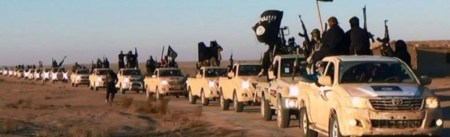
islamic-state-convoy-anbar-e1440694626820-1023x312

As the Iraqi government and Coalition forces launched the offensive to retake Mosul, the US military has optimistically said that the campaign will deal a “lasting defeat” to the Islamic State. But, if the recent history of the fight against jihadist groups in the Middle East, Africa, and South Asia is any indicator, a lasting defeat of the Islamic State will remain elusive.

On Oct. 16, the US military made the claim that the Mosul operation will “deliver ISIL [Islamic State] a lasting defeat” [emphasis mine]:

Tonight Iraqi Prime Minister Haider al-Abadi announced the start of Iraqi operations to liberate Mosul from ISIL. This is a decisive moment in the campaign to deliver ISIL a lasting defeat. The United States and the rest of the international coalition stand ready to support Iraqi Security Forces, Peshmerga fighters and the people of Iraq in the difficult fight ahead. We are confident our Iraqi partners will prevail against our common enemy and free Mosul and the rest of Iraq from ISIL’s hatred and brutality.

Keep in mind that many analysts were quick to pronounce the Islamic State’s predecessor, al Qaeda’s Islamic State of Iraq, as defeated after the US surge that began in 2007 rooted out the jihadists from its sanctuaries across Iraq. By 2010, Iraqi and US forces killed the Islamic State of Iraq’s emir, Abu Omar al Baghdadi, and War Minister Abu Ayyub al Masri a.k.a. Abu Hamza al Muhajir, and the group was driven underground. But these setbacks did not deter the Islamic State of Iraq. Its new leader, Abu Bakr al Baghdadi rallied the Islamic State of Iraq’s remaining forces and reconstituted the organization. In Syria, the Islamic State of Iraq took advantage of the Syrian civil war to rebuild its strength. By 2012, it created the Al Nusrah Front, its branch in Syria, and was launching large scale raids inside Iraq, such as the one in Haditha in March 2012, that presaged the events of 2014, which saw Iraqi forces defeated in Anbar, Salahaddin, Ninewa, and Diyala.

The Islamic State is not alone in its phoenix-like rebirth after losing ground to local forces backed by the US. Al Qaeda branches in Somalia, Yemen, and Mali, have experienced major setbacks and lost ground it held, only to regroup and retake territory. The same is true with Boko Haram in Nigeria and Taliban branches in Afghanistan and Pakistan. Each of these countries have been in a state of perpetual war for well over a decade due to jihadist insurgencies.

In Iraq, the political and security situation is ripe for an eventual Islamic State (or whatever jihadist entity may follow it) comeback. There are large rural areas in Iraq still under Islamic State control today, and it is highly unlikely that Iraqi forces will root out the Islamic State from all of these areas. Syria remains a security nightmare, and even with recent Islamic State losses, it still controls large areas. Iraq remains a fractured state divided between the Shia-led government, which is under pressure from Iran, the marginalized Sunnis that make up the recruiting base for the Islamic State, and the Kurds, who seek independence. The Islamic State has deftly taken advantage of Iraq’s political and sectarian fault lines to stoke the fires of conflict. Iran’s machinations in Iraq and its Shia militias provide the Islamic State all of the recruiting fodder it needs to convince Sunnis to join the fight.

The fight in Iraq, as in other jihadist theaters, ebbs and flows. For the Islamic State, it is currently retreating from many of the cities and towns in Iraq and Syria that it once held. But do not expect a lasting defeat of the Islamic State. The Islamic State has survived the full might of the US surge, and was able to regroup, wage a terrorist insurgency, and build an army that overran large areas of Iraq and Syria, all over the course of four years.

Turkey’s New Territorial Claims Threaten NATO

October 13, 2016

Turkey’s New Territorial Claims Threaten NATO, Counter Jihad, October 13, 2016

turkey-islamic

Should Russia be able to get a process of negotiation going between Turkey, Iraq and Iran on the issue of Turkish territorial expansion, Russia would assume the leadership role in the region.  Should it actually resolve the negotiations successfully, it could expect Turkey to become part of the Russian sphere of influence.  That would potentially derail NATO, as NATO’s decisions must be taken by a unanimous vote.  If Turkey becomes as strong a Russian ally as China, NATO could become as useless an organ for opposing Russian ambition as the United Nations Security Council (on which Russia has a veto).

American diplomatic weakness is partially a function of American military weakness in the region.  Russian diplomatic success is partially likewise a function of its deployment of air and naval-gunnery forces, as well as its so-far successful alliance with Iran.  Better American leadership might help, but for now, the situation is rapidly sliding away from America and towards the Russians.

****************************

A significant claim is being pushed by the Turkish government, one that could redraw the lines of the old Ottoman Empire:

Тhe spat erupted after Turkish President Recep Tayyip Erdogan took the country and the region by surprise last month by calling into question the 1923 Treaty of Lausanne, which defined modern Turkey’s borders.  He declared Turkey had been blackmailed by foreign powers into giving up vast swaths of territory that were once part of the Ottoman Empire….

[A]ccording to visiting Carnegie Europe scholar Sinan Ulgen[:]  “The message should be seen more of a signal in relation to Turkish polices towards the south, Syria and Iraq. I read it as a backdrop to a policy that tries to build domestic support for a more long-term presence, particularly in Syria, by pointing out, at allegedly past historical mistakes,” Ulgen said.

Turkish forces are currently in Syria and Iraq. But the Turkish presence at the Bashiqa base, close to the Iraqi city of Mosul, has become the center of a deepening dispute with Baghdad. The base is ostensibly tor training Sunni militia to fight Islamic State.

On Tuesday, Erdogan dismissed Iraqi Prime Minister Haider al-Abadi’s calls to withdraw Turkish troops, telling him “he should know his place.”

Ulgen went on to point out that Turkey has historical claims not only to Mosul, currently contested in the fight against the Islamic State (ISIS).   Both Mosul and oil-rich Kirkuk were part of the original design of the modern-day Turkey.  The Turks’ traditionalists and nationalists view the treaty that gave them away as having been forced on them at the end of World War I.

If Russian diplomacy can broker a deal that allows Turkey to expand into Iraq and Syria, it could cement Turkey’s move into Russia’s sphere.  Until recently, that looked unlikely at best.  Last year, Turkmen fighters shot down a Russian jet over repeated incursions by the Russian air force.  At that time, relations between the two nations became quite tense.  Russia is backing Iran’s play in the region, apparently in the hope that a powerful Shi’a Iran will create a buffer zone between Russia and the Sunni jihadist forces that have acted to inflame Muslim minorities in Central Asia.  Likewise, the war in the Middle East draws attention away from Russia’s strategic moves in Eastern Europe, such as last week’s deployment of nuclear missiles on the very borders of Poland and the Baltic States.

Turkey’s latest move appears likely to inflame Iraq’s government, and Russia’s ally Iran intends to control Iraq at the end of this conflict.  Surrendering territory, especially oil-rich territory, may be a difficult negotiation.  On the other hand, Kirkuk is also disputed with the Kurds, and whichever government formally holds it after the war is going to have to fight to keep it.  Iran may be willing to be persuaded to concede the fight to Turkey in return for a more firmly-controlled corridor between Tehran and the Levant.

That will require some subtle diplomacy to negotiate, but right now Russia is having significant success in its diplomatic moves.  In the wake of a new energy deal between Turkey and Russia, the Russian diplomatic corps seems to have a lot of momentum on its side.  Turkey was already looking away from NATO and Europe in the wake of its Islamist purge following an alleged attempted coup.  Should Russia be able to get a process of negotiation going between Turkey, Iraq and Iran on the issue of Turkish territorial expansion, Russia would assume the leadership role in the region.  Should it actually resolve the negotiations successfully, it could expect Turkey to become part of the Russian sphere of influence.  That would potentially derail NATO, as NATO’s decisions must be taken by a unanimous vote.  If Turkey becomes as strong a Russian ally as China, NATO could become as useless an organ for opposing Russian ambition as the United Nations Security Council (on which Russia has a veto).

American diplomacy is meanwhile spinning its wheels.  The United States broke off talks with Russia, and then called for war crimes investigations into Russia and Assad for their campaign in Syria.  American Secretary of State John F. Kerry also accused Russia of interfering with America’s elections.  However, it appears that Kerry now wants a new push for a cease-fire in Aleppo, which would require Syria and Russia to sign on.

American diplomatic weakness is partially a function of American military weakness in the region.  Russian diplomatic success is partially likewise a function of its deployment of air and naval-gunnery forces, as well as its so-far successful alliance with Iran.  Better American leadership might help, but for now, the situation is rapidly sliding away from America and towards the Russians.

Iraq demands that Turkey pull its ‘occupying’ troops out of military base near Mosul

October 5, 2016

Iraq demands that Turkey pull its ‘occupying’ troops out of military base near Mosul Published time:

5 Oct, 2016 07:52 Edited time: 5 Oct, 2016 10:07

Source: Iraq demands that Turkey pull its ‘occupying’ troops out of military base near Mosul — RT News

© Asmaa Waguih / Reuters

Outraged by Ankara’s decision to extend the stationing of its troops in northern Iraq, 30 kilometers from Mosul, Iraqi MPs have called on the government to review its relations with Turkey and lodge a complaint against the “occupation” with the UNSC.

On Tuesday, the majority of Iraqi legislators spoke out against the Turkish parliament’s decision to prolong the stationing of about 150 Turkish soldiers and some 25 tanks at the Bashiqa military camp in Iraq’s northern Nineveh Province, which is located at the forefront of the battle with Islamic State (IS, formerly ISIS/ISIL).

Read more

U.S soldiers walk on a bridge with in the town of Gwer northern Iraq © Azad Lashkari

In a written statement, the MPs decried the decision, appealing to the country’s prime minister, Haider al-Abadi, to summon the Turkish ambassador and file a complaint with the United Nations Security Council that would designate Turkey’s military contingent as an “occupying” force, according to Rudaw news agency.

On Saturday, the Turkish parliament green lighted the extension of the Turkish military’s engagement in both Iraq and Syria.

Since 2014, Turkish servicemen have provided training and support to Kurdish Peshmerga units and Sunni militia known as Hashd al-Watani forces at the camp, subject to agreement with the Iraqi government. However, on December 4 of last year, Turkey beefed up its military presence at the camp, allegedly to protect its advisers. The move infuriated Bagdad, which insisted that Turkey had not asked for permission from the Iraqi government to deploy additional troops, thus violating its sovereignty.

Turkish President Recep Tayyip Erdogan refused to acknowledge this at that time, claiming that Turkey was acting within the scope of the previous agreement.

“Turkish soldiers are in Basheeqa camp at the request of Haider al-Abadi in 2014. Now I am asking why he has been silent since 2014,” Erdogan said in December, disputing claims that Turkey was intervening in Iraq.

Read more

© Alaa Al-Marjani

Speaking in the wake of the vote, Abadi publicly called for Turkey’s troops to immediately leave its territory, saying that “the Turkish insistence on their presence inside Iraqi territories has no justification.”

The prime-minister told journalists on Tuesday that Iraq has managed to enlist the support of the ‘international community,’ as well as the US-led international coalition, in its bid to remove the Turkish military from its territory.

While Iraq doesn’t want to be dragged into a military conflict with Turkey, it finds the actions of its government “not acceptable by any standard,” he added.

Turkish Deputy Prime Minister Numan Kurtulmus stressed on Wednesday that Turkey’s military presence in the Bashiqa camp is intended solely to provide stability and train the local forces, and that Ankara does not aim to become an occupying force.

Turkey will not allow this to become a matter of debate,” he told reporters as cited by Reuters.

Both Turkey and Iraq summoned each other’s ambassadors on Wednesday to discuss the growing rift between the two states.

Turkey’s foreign ministry also condemned the vote, the Daily Sabah reported.

READ MORE:French fighter jets take off on mission against ISIS stronghold in Mosul, Iraq

Back in December, Iraq appealed to NATO to force Turkey to withdraw its forces, but the alliance found Ankara to be in compliance with the terms of the training agreement.

Iraq’s largest city, Mosul, fell into the hands of Islamic State in 2014, and Iraqi forces are currently preparing an offensive to retake the terrorist stronghold, aided by US-led anti-terrorism coalition.

If the operation is successful, Iraq wants to “ensure Turkish troops do not exploit the power vacuum after achieving victory against Islamic State in Mosul,” Abadi has stressed.

Thatcher’s PR guru ran Iraq propaganda for Pentagon

October 4, 2016

Thatcher’s PR guru ran Iraq propaganda for Pentagon

October 3 2016, 12:01am, 

Source: Thatcher’s PR guru ran Iraq propaganda for Pentagon | News | The Times & The Sunday Times

Bell Pottinger worked for the US between 2007 and 2011 producing propaganda and faked al-Qaeda videosJerome Delay/AP

Lord Bell, Margaret Thatcher’s PR guru, was hired by the United States to run a $540 million covert propaganda campaign after the invasion of Iraq.

Washington was reported to have paid his company Bell Pottinger’s conflict resolution division to produce fake al-Qaeda videos, which were dropped by US forces.

The films could be tracked by “web-based analytics” when they were played on computers, allowing the Americans to track potential terrorists, according to The Sunday Times.

Martin Wells, a video editor from Bath, was recruited by Bell Pottinger to work on a “psychological operations” campaign for the Pentagon in Iraq.

In Debate, Hillary Dodges Blame for Libya, What Obama Called His “Greatest Mistake”

September 27, 2016

In Debate, Hillary Dodges Blame for Libya, What Obama Called His “Greatest Mistake”, Counter Jihad, September 27, 2016

16live1

The first Presidential debate revealed a Democratic candidate who believes she has all the answers even though her failed performance as Secretary of State led directly to the formation of the Islamic State (ISIS), aided the rise of Iran, and furthered much of the chaos in the Middle East.  She cannot learn anything while she believes she already knows everything.  Electing her promises more of the same, and ‘the same’ has been a disaster.

The Republican challenger, meanwhile, has much still to learn about the security structure he would command as President.  Clinton’s strongest moment against him on foreign policy came as she chided him for appearing to suggest that America would not honor its mutual defense treaties with Japan or South Korea.  Nothing is more important to the world than the reliability of America’s word.  Clinton should know that:  it was her former boss, President Obama, who personally kicked off the refugee crisis bedeviling Europe by failing to enforce his red line against Syria’s use of chemical weapons against its own people. His failure to keep his word on a security agreement gave the Syrian regime free rein to wage war on its own population, putting millions on the road to Europe.

Trump’s strongest moment against Clinton came when he accused her of bad judgment in the formation of ISIS.  She attempted to respond by saying that George W. Bush had negotiated the withdrawal from Iraq, and that “the only way that American troops could have stayed in Iraq is to get an agreement from the then-Iraqi government that would have protected our troops, and the Iraqi government would not give that.”

That’s all true, but whose job was it to obtain such an agreement?  That was her job.  She was the one who was supposed to obtain that agreement, and she failed utterly.  As our earlier coverage states:

It was her job to negotiate an arrangement with the Iraqi government that would do two things:  allow a stabilizing US military presence to remain in Iraq, and allow the US Department of State the freedom of movement it would need to step up as guarantors of the peace.  The peace, you see, had been purchased not only by the US military’s victory on the battlefields, but also by its patient negotiation with militants formerly aligned with al Qaeda in Iraq.  These tribes, mostly but not exclusively Sunni, had rejected the terrorism of al Qaeda in Iraq in return for promises of fair treatment from the Iraqi central government.  This included jobs, assistance for communities recovering from the war, and many other things that the government promised to provide in return for the support of these former enemies.  The United States helped to negotiate all these agreements, and promised to see that they would be kept faithfully.

Instead, the Secretary of State failed to produce either a new Status of Forces agreement that would permit US troops to remain in Iraq, or an agreement that would allow State Department personnel to move about the country safely to observe whether agreements were being kept.  In the wake of the precipitous withdrawal of US forces, Prime Minister Maliki moved to arrest Sunni leaders in government, and broke all his promises to the tribes.

The result was that the western part of Iraq once again became fertile ground for an Islamist insurgency.

Clinton was similarly unreflective when she argued that Trump had supported “the actions we took in Libya,” without pausing for a moment to acknowledge what a destabilizing mistake it was.  Effecting regime change with no capacity to control the outcome is what allowed radical groups, including ISIS, to expand into the vacuum.  That one is also her fault personally, as she pushed President Obama to take this action.  Her own President says that he considers ataking her advice on Libya to be his “worst mistake.”  Yet again, she has learned nothing, and does not seem to be aware that there is even anything to learn.

A similar failure to understand the lessons of the recent past occurred in their exchange on NATO.  Trump is right to be critical of the institution’s continuing relevance, but he is criticizing it on the wrong grounds.  That the other nations do not pay their way is true, but it is not the problem with NATO.  That it does not focus on terrorism is partly true, but it does not render the organization obsolete because a resurgent Russia remains a security challenge for western Europe.

Nevertheless, Clinton’s smug response is un-reflective and wrong.

You know, NATO as a military alliance has something called Article 5, and basically it says this: An attack on one is an attack on all. And you know the only time it’s ever been invoked? After 9/11, when the 28 nations of NATO said that they would go to Afghanistan with us to fight terrorism, something that they still are doing by our side.

What Clinton fails to mention here is that, like all of NATO’s decisions, invoking Article 5 must be done unanimously.  The reason to question NATO’s continued relevance is that the Turkish drift into Islamist politics makes it unlikely that a unanimous vote could still be reached.  Turkey has also shown signs recently of falling into Russia’s orbit.  If Turkey becomes a Russian ally in the way that China is, NATO may be rendered obsolete simply because it can never take a decision.  If Turkey becomes a Russian satellite, NATO will indeed have been rendered obsolete.  In either case, NATO’s continued relevance turns on figuring out how to swing Turkey away from Islamist thought and Russian influence, eliminating the unanimity requirement on NATO actions, or else developing a mechanism to expel the Turks from the alliance.   None of that exists, and since Turkey would have to agree to any of those changes, none of it is likely to come to exist.

Finally, on Iran, Clinton is wedded to a policy that Trump rightly describes as a disaster.

You look at the Middle East, it’s a total mess. Under your direction, to a large extent.

But you look at the Middle East, you started the Iran deal, that’s another beauty where you have a country that was ready to fall, I mean, they were doing so badly. They were choking on the sanctions. And now they’re going to be actually probably a major power at some point pretty soon, the way they’re going.

The horror show in Syria is linked to the Iran deal, as Obama decided to let Syria fester in order to pursue Iran’s approval of his deal.  Clinton’s role in this deal is something she herself has celebrated, so she cannot walk away from it.  Since then, Iran has developed new ballistic missiles that make sense only as a delivery mechanism for nuclear payloads.  It has bought advanced anti-aircraft missiles, and installed them around one of the nuclear sites allegedly to be made harmless by this wonderful “deal.”  Why is it hardening this site against air strikes if it intends to live by the deal?  Why develop a delivery mechanism for weapons you don’t intend to build?

Clinton cannot even ask these questions, because she is wedded to her failures.

Dangerous Weakness in Iraq and Syria

September 23, 2016

Dangerous Weakness in Iraq and Syria, Counter Jihad, September 22, 2016

umbrellaman

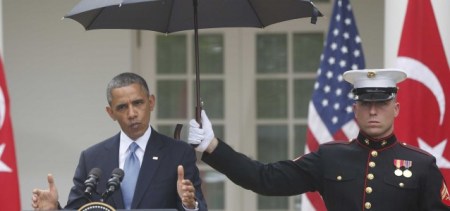
US Secretary of State John F. Kerry “urges” Russia and Syria to ground their military aircraft after the destruction of a humanitarian aid convoy. Meanwhile, in the eastern part of that same theater, American and Iraq forces came under a sulfur mustard (commonly known as “mustard gas”) attack from the Islamic State (ISIS).

This is not the first use of sulfur mustard by ISIS and their predecessors.  They used them in IEDs against American forces during the Iraq War, and against Kurdish forces as late as last year.  Nevertheless, they clearly do not fear to use them against Americans at this time.  Whatever message we are conveying to ISIS, it does not include a proper respect for violating the laws of war when dealing with our soldiers.

Likewise, the Russians are not going to ground their aircraft just because we ask them to do.  In fact, the Russians are sending their only active aircraft carrier to join the war in Syria.  Defying an empty “urging” by our Secretary of State is just another way for Russia to show that they, and not we, are in control of the conflict.

Syrian jets, meanwhile, came close to bringing American forces under aerial attack for the first time since World War II.  Only good fortune kept American soldiers from being killed by Syrian bombs.  Fighters had to be scrambled to prevent additional sorties by the Syrian bombers.

In addition to Russia, Syria, and ISIS, Iran’s challenges against US Navy forces are up 50% from last year.  The Iranians are violating international law on a regular and consistent basis in challenging American fleet ships over access to international waters.

According to U.S. officials, the incidents all involved the IRGC, which operates a navy in parallel to Iran’s regular naval force, and whose leaders answer directly to Iranian Supreme Leader Ayatollah Ali Khamenei, Defense News reported.

Ten American sailors and their two boats were seized by IRGC naval forces in January of this year in violation of international law.

Subsequent to the sailors’ release, Iran portrayed their capture as a victory against the U.S., releasing the sailors after claiming that Washington apologized for the incident. Khamenei proclaimed that the naval forces who captured the sailors did “God’s deed” and issued medals to the commanders involved, while the IRGC announced plans to build a statue to commemorate the seizure.

In May, the deputy commander of the IRGC threatened to close the strategic Straits of Hormuz to the U.S. and its allies if they “threaten us,” adding: “Americans cannot make safe any part of the world.”

The U.S. Navy reported last month that in 2015, there were close to 300 encounters or “interactions” between American and Iranian naval vessels in the Persian Gulf. While most of the encounters were not considered to be harassment, the behavior of the Iranian navy was found to be less disciplined than that of other navies.

Weakness is provocative in a military conflict.  Refusing to embrace strong measures that would control these aggressive moves is exactly how American servicemen get killed.  Across the Middle East, our President’s predilection for weakness is putting American lives in grave [danger.]

ISIS suspected of gas attack against US, Iraqi troops

September 22, 2016

ISIS suspected of mustard attack against US and Iraqi troops

By Barbara Starr, CNN Pentagon Correspondent

Source: ISIS suspected of gas attack against US, Iraqi troops – CNNPolitics.com


Washington (CNN)ISIS is suspected of firing a shell with mustard agent that landed at the Qayyara air base in Iraq Tuesday where US and Iraqi troops are operating, according to several US officials.

The shell was categorized by officials as either a rocket or artillery shell. After it landed on the base, just south of Mosul, US troops tested it and received an initial reading for a chemical agent they believe is mustard.
No US troops were hurt or have displayed symptoms of exposure to mustard agent.
One official said the agent had “low purity” and was “poorly weaponized.” A second official called it “ineffective.”
A US defense official said troops had gone out to look at the ordnance after it landed. Based on seeing what they thought was a suspect substance, two field tests were conducted.
The first test was positive and the second was negative, the official said. The substance is now being sent to a lab for further examination.

Decontamination precaution

US troops involved in the incident went through decontamination showers as a precaution. No troops have shown any symptoms of exposure, such as skin blistering. CNN has reported on previous instances where ISIS has fired rounds with mustard agents in Iraq and Syria.
“I don’t know of a case like this where it was proximate to US forces like this before,” said one military official, noting that “potentially” the rocket round was “within hundreds of yards” of the US forces and “within the security perimeter” of the base.
The US officials said they “had expected” that ISIS might try use chemical weapons as US and Iraqi forces push towards Mosul in an effort to take the city back from ISIS. Several hundred US troops are using the base as a staging area for supporting Iraqi forces.
All of this has led the Pentagon to assess on a preliminary basis that it was ISIS that fired at the base, since the terror group has been making mustard agent for some time.
In the course of its air campaign against ISIS, US airstrikes have hit several locations the US believes are production sites for mustard agent.

U.S. Military: We Meant to Attack Islamic State, Not Syrian Army

September 18, 2016

U.S. Military: We Meant to Attack Islamic State, Not Syrian Army

by Breitbart Jerusalem

17 Sep 2016

Source: U.S. Military: We Meant to Attack Islamic State, Not Syrian Army – Breitbart

Putin has to keep his cool til 20 January 2017 when trump is sworn in as president of the USA

AFP

The BBC reports: The US-led coalition has admitted its planes carried out an attack in eastern Syria that the Russian army says killed at least 62 Syrian troops fighting IS.

The US said its planes halted the attack in Deir al-Zour when informed of the Syrian presence and would not knowingly strike them.

The strikes allowed IS jihadists to advance, the Russians said.

…The US Central Command statement said the coalition believed it was attacking positions of so-called Islamic State and the raids were “halted immediately when coalition officials were informed by Russian officials that it was possible the personnel and vehicles targeted were part of the Syrian military”.

Read the full story here.