Posted tagged ‘Iraq war’

Tehran will fight Turkey’s role in Mosul operation

October 24, 2016

Tehran will fight Turkey’s role in Mosul operation, DEBKAfile, October 24, 2016

bashiqa_b

The involvement of Turkish special operations, armored and artillery forces in support of the Kurdish Peshmerga battle to drive ISIS out of Bashiqa, 12 south of Mosul, marks a pivotal moment in the US-led coalition’s anti-ISIS offensive to free Iraq’s second city. The entire Mosul operation hangs in the balance since Turkey stepped into the fighting in Iraq, at the initiative of the US. Instead of fighting ISIS, the coalition’s partners are squaring off to fight each other.

DEBKAfile’s military sources report that Turkey was allowed to gatecrash the fighting around Mosul after US Defense Secretary Ashton Carter visited the KRG capital of Irbil Sunday, Oct. 23. He urged Kurdish leaders to bow to President Tayyip Erdogan’s demands for a role in the battle.

The Kurdish leaders succumbed to the pressure with the proviso that Turkey cease its air and artillery assaults on Syrian Kurdish militias in northern Syria.

When Ankara accepted this condition, Ashton set out for the Bashiqa arena, becoming the first US defense secretary to come that close to a battlefront against ISIS in Iraq.

He visited the Turkish military encampment outside Bashiqa and was given a briefing by their commanders. As soon as he departed, Turkish units entered the fray in support of the Peshmerga fighters

According to Turkish Prime Minister Binali Yildrim, this involvement was limited to tank and artillery support for the Kurdish forces. Our military sources report, however, that it went much further and included Turkish special operations forces and tanks. By Monday, Oct. 24, Turkish troops were still backing up the Kurdish effort to purge Bashiqa of ISIS fighters.

Tehran’s reaction to this change on the game board was extreme. Our sources report that the pro-Iranian Iraqi Shiite militias assigned to subordinate tasks in the Mosul operation were immediately put on a state of readiness. Commanders of the Bader Brigades, the Population Mobilization Force and the Hashd eal-Shaabi reported that they were standing ready to attack the Turkish forces operating at Bashiqa, whom they termed “gangs of terrorists no less dangerous than ISIS.”

The Iranian government leaned hard on Iraq’s Shiite Prime Minister Haidar Al-Abadi to make him redirect Iraqi government forces from the Mosul arena to join the Shiite forces preparing to strike the Turkish troops at Bashiqa.

Al-Abadi had in the past week demanded the removal of Turkish troops from Iraqi soil, a demand Ankara just as steadily rebuffed.

Building up at present is an imminent head-to-head fight between Turkish and Kurdish forces on the one hand and Iraqi Shiites on the other.

In an effort to prevent the long-awaited Mosul operation degenerating into an all-out conflagration among US allies, with the Islamist State no doubt cheering on, the Obama administration Monday turned to Tehran, Baghdad, Ankara and Irbil and asked them back off lest they wreck their primary mission of evicting ISIS from Mosul.

Tehran may decide to give ground on this but the price it exacts will be steep: an overhaul of the Iraqi Shiite militias’ rear position and permission for their direct intervention in the battle for Mosul, including their entry into the city. This permission the US commanders have hitherto withheld.

This would be a big prize. Mosul has been coveted by Iranian strategists as a major transit point on the land bridge they have designed to link the Islamic Republic to Syria and the Mediterranean. This prize would go by the board if the Turks and Kurds were first in the liberated city first and assumed control.

ISIS’ Kirkuk raid spreads. US air force in action

October 22, 2016

ISIS’ Kirkuk raid spreads. US air force in action, DEBKAfile, October 22, 2016

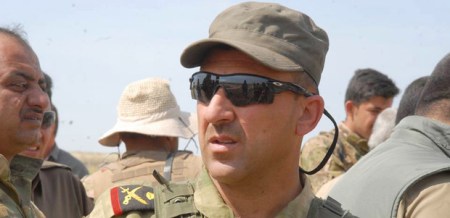
kurdish_gen-_mariwan_mohammed_21-10-16Kurdish General. Mariwan Mohammed

The raid of Iraq’s northern oil city of Kirkuk launched by the Islamic State Friday began to spread Saturday, Oct. 22 to surrounding towns. DEBKAfile’s military sources report that ISIS fighters headed south from Kirkuk in two heads. One tried to enter Laylan, a town 21 km south of the oil city, which was defended by Kurdish Peshmerga and Turkman paramilitary forces; the second seized the crossroads of Rtes 2, 3 and 24 to sever Kirkuk from Baghdad.

When Kirkuk first came under attack, the Kurdish defenders still left there appealed for US air support against the Islamist invaders. The US air force went into action late Friday. They first targeted ISIS sniper positions on the town’s highest rooftops. Then, the next day US aircraft struck twin targets: the jihadist fighters storming Laylan and the fighters heading down the roads to the south of Kirkuk.

Nonetheless, up until Saturday pm, ISIS was still in control of at least five of the oil city’s neighborhoods as well as buildings in the town center, including government offices.

Meanwhile, the Kurdish Peshmerga, according to our military sources, dispatched to Kirkuk their special counterterrorism unit to dislodge the raiders. Kurdish sources also warned that this city was only the first of a row of Iraqi towns still in ISIS sights. They added that they would not be surprised to find the Islamists heading out to strike European towns as well.

Iraqi and Kurdish sources have since Friday been throwing out high ISIS casualty figures and reporting that many were put to flight. They were attempting to play down the scale of the raid on Kirkuk.

In fact, our sources report that the Islamists found extra numbers and ammunition caches waiting for them in two places – sleeper cells in Kirkuk and local Sunni sympathizers.

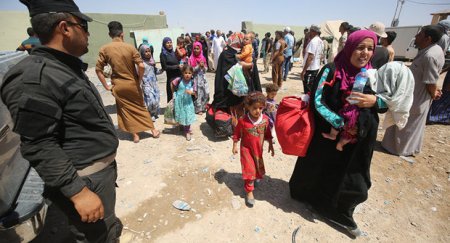
The numbers of civilian casualties and refugees mounting since the onset of the Mosul operation are mounting, causing grave concern to the UN and international aid agencies.

DEBKAfile first reported on the ISIS raid of Kirkuk Friday.

No one doubted that the US-Iraqi-Kurdish offensive to liberate Mosul would be drawn out and fraught with unforeseen setbacks before the Islamic State was finally thrown out of its Iraqi capital. But on Oct. 21, five days into the Mosul operation, the ISIS terrorists landed their most severe blow, when Islamist fighters and suicide bombers suddenly hurled themselves on the Iraqi oil city of Kirkuk in a coordinated attack.

DEBKAfile’s military sources report that taking advantage of a chance to catch the US, Iraqi and Kurdish generals leading the attack on Mosul unawares, the Islamist fighters were able to open a second front to the rear of the main battle arena against ISIS.

Kirkuk is some 175km southeast of Mosul and 230km from Baghdad. By hitting this important oil city, the terrorists came close to enough to menace the autonomous Kurdish Regional Government region and its capital, Irbil, and expose the Kurdish Peshmerga troops fighting for Mosul.

Our military sources note that a large Peshmerga force of some 11,000 troops had been posted to secure the town and its oil fields, under the command of Gen. Mariwan Mohammed.

But then, on Wednesday, Oct. 19, the US-Iraqi-Kurdish joint command of the Mosul offensive decided that Kurdish reinforcements were necessary to provide the operation with greater impetus. The extra Peshmerga troops were accordingly ordered to set out from Khazar, 40 km east of Mosul, and join the coalition offensive.

However, what they missed, despite the mainly American spy satellites, drones and reconnaissance planes collecting intelligence, was an ISIS concentration clandestinely building up at Hawja, 57km east of Kirkuk. According to our military sources, some of the jihadists reported by the Western media to have turned tail on the run from Mosul had been gathering to the southeast, some 57km from Kirkuk. They stood ready to attack that town.

Their opportunity came when the large Kurdish group exited Kirkuk and headed out to Mosul. Kirkuk was left exposed without defenders.

Friday morning, the Islamic State launched its surprise attack on the defenseless oil city. Its fighters and suicide bombers slammed into four police stations, Kurdish security offices, residential neighborhoods and a power station to the north. Clashes continued during the day with unknown casualty figures on both sides.

At some point, the governor claimed control of the city was regained but residents reported the clashes continued.

ISIS said in a statement it had seized “half the city” and had also attacked the Dubiz power plant, killing all the security forces inside, but the claims were not possible to verify.

ISIS hits Kirkuk, opens a 2nd front behind Mosul

October 21, 2016

ISIS hits Kirkuk, opens a 2nd front behind Mosul, DEBKAfile, October 21, 2016

kurdgenKurdish General. Mariwan Mohammed

No one doubted that the US-Iraqi-Kurdish offensive to liberate Mosul would be drawn out and fraught with unforeseen setbacks before the Islamic State was finally thrown out of its Iraqi capital. But on Oct. 21, five days into the Mosul operation, the ISIS terrorists landed their most severe blow, when Islamist fighters and suicide bombers suddenly hurled themselves on the Iraqi oil city of Kirkuk in a coordinated attack.

DEBKAfile’s military sources report that taking advantage of a chance to catch the US, Iraqi and Kurdish generals leading the attack on Mosul unawares, the Islamist fighters were able to open a second front to the rear of the main battle arena against ISIS.

Kirkuk is some 175km southeast of Mosul and 230km from Baghdad. By hitting this important oil city, the terrorists came close to enough to menace the autonomous Kurdish Regional Government region and its capital, Irbil, and expose the Kurdish Peshmerga troops fighting for Mosul.

Our military sources note that a large Peshmerga force of some 11,000 troops had been posted to secure the town and its oil fields, under the command of Gen. Mariwan Mohammed.

But then, on Wednesday, Oct. 19, the US-Iraqi-Kurdish joint command of the Mosul offensive decided that Kurdish reinforcements were necessary to provide the operation with greater impetus. The extra Peshmerga troops were accordingly ordered to set out from Khazar, 40 km east of Mosul, and join the coalition offensive.

However, what they missed, despite the mainly American spy satellites, drones and reconnaissance planes collecting intelligence, was an ISIS concentration clandestinely building up at Hawja, 57km east of Kirkuk. According to our military sources, some of the jihadists reported by the Western media to have turned tail on the run from Mosul had been gathering to the southeast, some 57km from Kirkuk. They stood ready to attack that town.

Their opportunity came when the large Kurdish group exited Kirkuk and headed out to Mosul. Kirkuk was left exposed without defenders.

Friday morning, the Islamic State launched its surprise attack on the defenseless oil city. Its fighters and suicide bombers slammed into four police stations, Kurdish security offices, residential neighborhoods and a power station to the north. Clashes continued during the day with unknown casualty figures on both sides.

At some point, the governor claimed control of the city was regained but residents reported the clashes continued.

ISIS said in a statement it had seized “half the city” and had also attacked the Dubiz power plant, killing all the security forces inside, but the claims were not possible to verify.

Obama vs Baghdad on Sunni cleansing of Mosul

October 20, 2016

Obama vs Baghdad on Sunni cleansing of Mosul, DEBKAfile, October 20, 2016

baaj_road_19-10-16

A major dispute on combat tactics which has sprung up between Washington and Baghdad hangs over the coalition’s Mosul offensive after three days of combat. Thursday, Oct. 20, President Barack Obama and US commanders challenged Iraq’s Shiite Prime Minister Haydar al-Abadi and is generals over a 500km long route, the Ba’aj Road, which does not appear on maps, but is pivotal for the offensive’s continuation, DEBKAfile’s exclusive military and intelligence sources report.

This route is a kind of “Burma road” developed by the Islamic State as a private corridor between Mosul in Iraq and Raqqa, the terrorist group’s Syrian capital, during the terrorist group’s two years of control. It runs through the Iraqi town of Tal Afar before crossing into Syria and passing south of areas controlled by Syrian Kurdish militias, among which US special operations forces are embedded.

The argument flared over a demand by President Obama and US commanders that Iraqi government forces turn to the Syrian border and block the Ba’aja Road, and so cut off the ISIS fighters’ escape route from Mosul to Syria. The Americans can’t bomb the corridor because it is also packed with a stream of refugees in flight from the fighting in Mosul.

So long as it is open, ISIS is free to move thousands of fighters and masses of weapons, ammunition and other supplies between its two strongholds. This freedom of action, Obama warned Al-Abadi, would prolong the Mosul operation beyond the Dec. 20 deadline set by the coalition for its termination.

However, according to our sources, the Iraqi prime minister countered this demand with a proviso unacceptable to Washington. He was prepared to order Iraqi forces to block the Ba’aja Road provided Mosul’s entire population of 750,000 Sunni Muslims was expelled from the city. He argued that ISIS could not be defeated until then because the Sunnis were supporting and collaborating with the Islamist terrorists.

Obama fiercely opposes the mass Sunni expulsion, seeing it as an attempt by the Shiite Iraqi prime minister to cleanse Iraq’s second city of its Sunni inhabitants and using the Mosul offensive against ISIS as a pretext for such action.

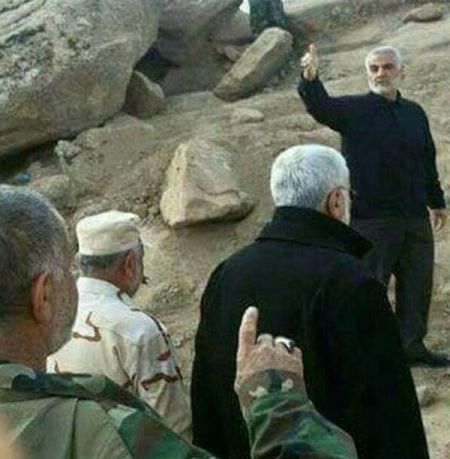
mosul_soulemeni_19-10-16EXCLUSIVE: Iranian Gen. Qassem Soleimani greets Shiite fighters outside Mosul.

DEBKAfile’s sources add that Al-Abadi has found support for his side of the argument with the arrival of the Iranian Al Qods chief Gen. Qassem Soleimani at the command posts of the pro-Iranian Iraqi Shiite militias, who have not yet been thrown into the Mosul battle.

The Mosul offensive came up in the third US presidential debate in Las Vegas early Thursday. The Republican candidate Donald Trump, who appeared to have been updated on the state of play there, commented that the big winner from that offensive would be Iran.

Our military sources report that three days of combat have not brought any major coalition forces advances against ISIS. On some sectors Iraqi forces are moving forward slowly, backed by US air strikes and rocket artillery fire; on others, they are stalled by Islamist resistance.

The big Mosul offensive is stuck, halted by ISIS

October 19, 2016

The big Mosul offensive is stuck, halted by ISIS, DebkaFile, October 19, 2016

mosul_offensive_declaration_16-10-16-1

Less than a day after its launch, the big Mosul offensive prepared for more than a year by the US, the Iraqi army, Kurdish forces and others, ground to a halt Tuesday Oct. 17, DEBKAfile’s military sources report – although none of the parties admitted as much.  Iraqi Prime Minister Haidar Al-Abadi said his troops were busy opening up corridors for some million civilians to escape, while US sources suggested that the Islamic State would use primitive chemical weapons against the advancing Iraqi and Kurdish forces.

Both had the ring of cover stories to account for the spearhead forces, the Iraq army’s 9th Armored Division and the Federal Police special anti-terror units, being thrown back Tuesday on their way to Mosul from the east and the south, while still 10-15km short of the city. They sustained heavy losses in lives and hardware.

The 9th Division and its newly-supplied heavy US Abrahams tanks were stopped at al-Hamdaniyah outside Mosul and retreated, recalling a previous defeat at ISIS hands in June 2014, when troops of the same division fled under Islamist attack, leaving their tanks behind.

The Iraqi anti-terror force withdrew from the village of al-Houd outside Mosul, a move which left the Kurdish Peshmerga no option but to stop its sweep of the villages around the city or expose their flanks to ISIS suicide and car bomb assaults.

Tuesday night, both Iraqi and Kurdish commanders announced a pause in their advance and said they would meet Wednesday to decide how to proceed.

The Kurdish Peshmerga’s role in the battle of Mosul has run into a further major impediment, which likewise has not been publicly aired. It turned out Tuesday that at least 3,000 of the 12,000 Kurdish fighters taking part in the offensive came from the banned Turkish underground PKK (Kurdish Workers Party) which is fighting the Turkish government. They came down from their northern Iraqi strongholds in the Sinjar and Qandil mountains. Ankara thereupon warned Washington and Baghdad in a strong ultimatum that unless those fighters were pulled off the field, Turkish troops would step in to attack them.

A second front within a front would effectively torpedo the entire Mosul liberation campaign against ISIS before it gets underway.

The first bricks of the military Tower of Babel predicted by DEBKAfile in the background report below were set in place sooner than expected.

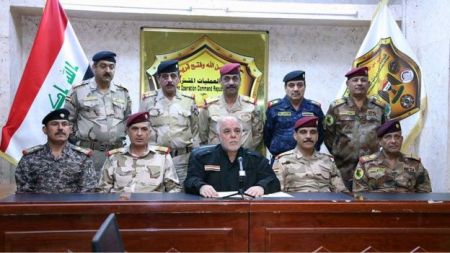
Sunday night, Oct. 16, Iraqi Prime Minister Haidar al-Abadi, supported by a bevy of generals, announced that the military operation to recapture Mosul from its two-year occupation by the Islamic State had begun.

Three formally approved participants are taking part in the operation, DEBKAfile’s military sources report:

1. American special operations, artillery and engineering units – equipped with floating bridges for crossing the Tigris River – plus the US air force for massive bombardment to crush enemy resistance.

2. Iraqi army armored divisions, special ops forces, regular troops and anti-terror police units.

3. The Iraqi Kurds’ Peshmerga.

The Iraqi prime minister pledged formally that only Iraqi fighters would enter Mosul, i.e. no Americans, Kurds or other non-Iraqi forces.

It was a pledge that neither the Iraqi Sunni and Shiite combatants nor the Kurdish and Turkmen fighters trusted him to uphold, after similar promises went by the wayside in the US-led coalition battles fought in the past two years to retake the Iraqi towns of Ramadi, Tikirit, Baiji and Fallujah from ISIS.

The first forces to enter those cities were by and large pro-Iranian Iraqi Shiite militias, especially the Bader Brigades and the Popular Mobilization Units, under Iran’s supreme Middle East commander Gen. Qassem Soleimani. Nonetheless, despite the ravages they wrought in those Sunni cities, US air support was forthcoming for their advance, while in Washington US officials pretended they were helping Iraqi government army units.

With regard to the Mosul campaign, Obama administration officials and military officers, like the Iraqi prime minister, insist there will be no repetition of the Iranian-backed Shiite invasion and conquest of yet another Sunni city, where a million inhabitants still remain.

mosul_offensive_17-10-16-1

They don’t explain how this will be prevented when those same pro-Iranian Iraqi Shiite forces are already massing northeast of Mosul, near the Iraqi-Syria border, and standing by for the order to advance into the city.

Tehran quite obviously has no intention of being left out of the epic capture of Mosul.

Neither is another uninvited party, Turkish President Tayyip Erdogan. He too has positioned a Turkish military concentration in Iraq, in defiance of strong objections from Washington and Baghdad. Turkish troops stand ready to move forward to do Erdogan’s will and achieve three strategic goals:

a) To actively frustrate Kurdish Peshmerga entry to Mosul, although its 15,000 fighters out of the 25,000 invasion force are a vital element of the spearhead thrust into the city. Ankara has warned that if Kurds set foot in Mosul, Turkish troops will follow.

b)  To block the path of Syrian Kurdish YPG militiamen from entering Iraq and linking up with their Iraqi brothers-in-arms.

c) To provide backing, including Turkish air support, for the Iraqi Turkmen militias still present in the Turkmen quarter of Mosul.

DEBKAfile’s military sources count six assorted military groupings taking part in the liberation of Mosul. They have nothing in common aside from their determination to drive the Islamic State out.

They are utterly divided on the two main aspects of the offensive: How to achieve their common goal and what happens to Mosul after the Islamist invaders are gone.

The underlying US rationale for embarking on this high-wire operation is President Barack Obama’s aspiration to achieve Mosul’s liberation before his departure from the White House in January, in the hope that this landmark success will provide a major distraction from his administration’s failed policies in Syria.

The Islamic State might have been expected to take advantage of the prior warning of the offensive for a stand in defense of the Iraqi capital of Abu Bakr Al-Baghdadi’s caliphate and so exploit the conflicting interests of the invading force.

But ISIS leaders decided against waiting for the combined offensive. Indeed, according to DEBKAfile’s sources, thousands of jihadis made tracks out of the city two or three months ago, relocating the bulk of their combat strength and institutions in two new locations: in the western Iraqi desert province of Anbar at a site between the Jordanian and Saudi borders and eastern Syria. Several hundred fighters were left behind in Mosul to harass the US-Iraq-Kurdish armies as they advance into the city and exploit the invaders’ discord to retain a foothold in Mosul.

Europe Braces for Post-Mosul Jihadi Onslaught

October 19, 2016

Europe Braces for Post-Mosul Jihadi Onslaught, Investigative Project on Terrorism, John Rossomando, October 18, 2016

(But please see, A ‘lasting defeat’ of the Islamic State will be elusive. — DM)

European leaders fear onslaught of jihadists fleeing from Mosul after Iraq’s government and its allies kick ISIS out of the city.

Last year’s Paris attacks and the Brussels attacks in March brought heightened awareness that ISIS established an underground network to move jihadis in and out of Europe at will. Thousands of European nationals traveled to Syria and Iraq to wage jihad for ISIS. An estimated 2,500 Europeans still belong to ISIS’s fighting force.

“The retaking of (the Islamic State of Iraq and the Levant’s) northern Iraq stronghold, Mosul, may lead to the return to Europe of violent (ISIS) fighters,” European Union Security Commissioner Julian King told The (London) Telegraph. “This is a very serious threat and we must be prepared to face it.”

Iraqi forces, together with Iranian-backed Shiite militia and Kurdish pershmerga, aim to deal a deathblow to ISIS’s caliphate in Mosul.

It is a day ISIS anticipated. In an online publication last December called Black Flags From the Islamic State, ISIS vowed to continue its fight.

“If they win this battle, they will capture a lot (sic) of weapons, and their soldiers morale will be boosted. Now they will have control over land and will be able to train more people to fight the enemy. If they continue the fight, they will keep winning, but if they start to lose and give up, their leadership will hide in the deserts and mountains again, only to start the: Lone wolf -> Clandestine Cells -> Insurgency -> Army technique, all over again,” Black Flags From the Islamic State promised.

Jihadis without a home base pose a direct threat to Europe and menace security officials around the world, warned Raffaello Pantucci, director of the International Security studies at the Royal United Services Institute.

This especially concerns France, which suffered the Paris attacks last November that claimed 130 lives at the hands of ISIS jihadis who fought in Syria. An estimated 400 French nationals are still fighting jihad in warzones.

The number of returnees on watch lists has overstretched European security services, just as ISIS hoped. More than 10 officers try to monitor each returnee around the clock.

“We’ve had hundreds returned to our country [UK.] Some estimates say it’s a thousand. We can’t monitor the people that are here. So, it is really important that they sit round the table, because there are potentially 9,000 ISIS jihadists sitting in Mosul at the moment, who are also looking to move across,” European Parliament member Janice Atkinson told Russia Today.

The conflict against ISIS is moving into a new, unpredictable phase that has Europe on edge worrying about what comes next.

Mosul assault – a military Tower of Babel

October 17, 2016

Mosul assault – a military Tower of Babel, DEBKAfile, October 17, 2016

mosul_offensive_declaration_16-10-16

The underlying US rationale for embarking on this high-wire operation is President Barack Obama’s aspiration to achieve Mosul’s liberation before his departure from the White House in January, in the hope that this landmark success will provide a major distraction from his administration’s failed policies in Syria.

****************************

Sunday night, Oct. 16, Iraqi Prime Minister Haidar al-Abadi, supported by a bevy of generals, announced that the military operation to recapture Mosul from its two-year occupation by the Islamic State had begun.

Three formally approved participants are taking part in the operation, DEBKAfile’s military sources report:

1. American special operations, artillery and engineering units – equipped with floating bridges for crossing the Tigris River – plus the US air force for massive bombardment to crush enemy resistance.

2. Iraqi army armored divisions, special ops forces, regular troops and anti-terror police units.

3. The Iraqi Kurds’ Peshmerga.

The Iraqi prime minister pledged formally that only Iraqi fighters would enter Mosul, i.e. no Americans, Kurds or other non-Iraqi forces.

It was a pledge that neither the Iraqi Sunni and Shiite combatants nor the Kurdish and Turkmen fighters trusted him to uphold, after similar promises went by the wayside in the US-led coalition battles fought in the past two years to retake the Iraqi towns of Ramadi, Tikirit, Baiji and Fallujah from ISIS.

The first forces to enter those cities were by and large pro-Iranian Iraqi Shiite militias, especially the Bader Brigades and the Popular Mobilization Units, under Iran’s supreme Middle East commander Gen. Qassem Soleimani. Nonetheless, despite the ravages they wrought in those Sunni cities, US air support was forthcoming for their advance, while in Washington US officials pretended they were helping Iraqi government army units.

With regard to the Mosul campaign, Obama administration officials and military officers, like the Iraqi prime minister, insist there will be no repetition of the Iranian-backed Shiite invasion and conquest of yet another Sunni city, where a million inhabitants still remain.

mosul_offensive_17-10-16

They don’t explain how this will be prevented when those same pro-Iranian Iraqi Shiite forces are already massing northeast of Mosul, near the Iraqi-Syria border, and standing by for the order to advance into the city.

Tehran quite obviously has no intention of being left out of the epic capture of Mosul.

Neither is another uninvited party, Turkish President Tayyip Erdogan. He too has positioned a Turkish military concentration in Iraq, in defiance of strong objections from Washington and Baghdad. Turkish troops stand ready to move forward to do Erdogan’s will and achieve three strategic goals:

a) To actively frustrate Kurdish Peshmerga entry to Mosul, although its 15,000 fighters out of the 25,000 invasion force are a vital element of the spearhead thrust into the city. Ankara has warned that if Kurds set foot in Mosul, Turkish troops will follow.

b)  To block the path of Syrian Kurdish YPG militiamen from entering Iraq and linking up with their Iraqi brothers-in-arms.

c) To provide backing, including Turkish air support, for the Iraqi Turkmen militias still present in the Turkmen quarter of Mosul.

DEBKAfile’s military sources count six assorted military groupings taking part in the liberation of Mosul. They have nothing in common aside from their determination to drive the Islamic State out.

They are utterly divided on the two main aspects of the offensive: How to achieve their common goal and what happens to Mosul after the Islamist invaders are gone.

The underlying US rationale for embarking on this high-wire operation is President Barack Obama’s aspiration to achieve Mosul’s liberation before his departure from the White House in January, in the hope that this landmark success will provide a major distraction from his administration’s failed policies in Syria.

The Islamic State might have been expected to take advantage of the prior warning of the offensive for a stand in defense of the Iraqi capital of Abu Bakr Al-Baghdadi’s caliphate and so exploit the conflicting interests of the invading force.

But ISIS leaders decided against waiting for the combined offensive. Indeed, according to DEBKAfile’s sources, thousands of jihadis made tracks out of the city two or three months ago, relocating the bulk of their combat strength and institutions in two new locations: in the western Iraqi desert province of Anbar at a site between the Jordanian and Saudi borders and eastern Syria. Several hundred fighters were left behind in Mosul to harass the US-Iraq-Kurdish armies as they advance into the city and exploit the invaders’ discord to retain a foothold in Mosul.

Turkey’s New Territorial Claims Threaten NATO

October 13, 2016

Turkey’s New Territorial Claims Threaten NATO, Counter Jihad, October 13, 2016

turkey-islamic

Should Russia be able to get a process of negotiation going between Turkey, Iraq and Iran on the issue of Turkish territorial expansion, Russia would assume the leadership role in the region.  Should it actually resolve the negotiations successfully, it could expect Turkey to become part of the Russian sphere of influence.  That would potentially derail NATO, as NATO’s decisions must be taken by a unanimous vote.  If Turkey becomes as strong a Russian ally as China, NATO could become as useless an organ for opposing Russian ambition as the United Nations Security Council (on which Russia has a veto).

American diplomatic weakness is partially a function of American military weakness in the region.  Russian diplomatic success is partially likewise a function of its deployment of air and naval-gunnery forces, as well as its so-far successful alliance with Iran.  Better American leadership might help, but for now, the situation is rapidly sliding away from America and towards the Russians.

****************************

A significant claim is being pushed by the Turkish government, one that could redraw the lines of the old Ottoman Empire:

Тhe spat erupted after Turkish President Recep Tayyip Erdogan took the country and the region by surprise last month by calling into question the 1923 Treaty of Lausanne, which defined modern Turkey’s borders.  He declared Turkey had been blackmailed by foreign powers into giving up vast swaths of territory that were once part of the Ottoman Empire….

[A]ccording to visiting Carnegie Europe scholar Sinan Ulgen[:]  “The message should be seen more of a signal in relation to Turkish polices towards the south, Syria and Iraq. I read it as a backdrop to a policy that tries to build domestic support for a more long-term presence, particularly in Syria, by pointing out, at allegedly past historical mistakes,” Ulgen said.

Turkish forces are currently in Syria and Iraq. But the Turkish presence at the Bashiqa base, close to the Iraqi city of Mosul, has become the center of a deepening dispute with Baghdad. The base is ostensibly tor training Sunni militia to fight Islamic State.

On Tuesday, Erdogan dismissed Iraqi Prime Minister Haider al-Abadi’s calls to withdraw Turkish troops, telling him “he should know his place.”

Ulgen went on to point out that Turkey has historical claims not only to Mosul, currently contested in the fight against the Islamic State (ISIS).   Both Mosul and oil-rich Kirkuk were part of the original design of the modern-day Turkey.  The Turks’ traditionalists and nationalists view the treaty that gave them away as having been forced on them at the end of World War I.

If Russian diplomacy can broker a deal that allows Turkey to expand into Iraq and Syria, it could cement Turkey’s move into Russia’s sphere.  Until recently, that looked unlikely at best.  Last year, Turkmen fighters shot down a Russian jet over repeated incursions by the Russian air force.  At that time, relations between the two nations became quite tense.  Russia is backing Iran’s play in the region, apparently in the hope that a powerful Shi’a Iran will create a buffer zone between Russia and the Sunni jihadist forces that have acted to inflame Muslim minorities in Central Asia.  Likewise, the war in the Middle East draws attention away from Russia’s strategic moves in Eastern Europe, such as last week’s deployment of nuclear missiles on the very borders of Poland and the Baltic States.

Turkey’s latest move appears likely to inflame Iraq’s government, and Russia’s ally Iran intends to control Iraq at the end of this conflict.  Surrendering territory, especially oil-rich territory, may be a difficult negotiation.  On the other hand, Kirkuk is also disputed with the Kurds, and whichever government formally holds it after the war is going to have to fight to keep it.  Iran may be willing to be persuaded to concede the fight to Turkey in return for a more firmly-controlled corridor between Tehran and the Levant.

That will require some subtle diplomacy to negotiate, but right now Russia is having significant success in its diplomatic moves.  In the wake of a new energy deal between Turkey and Russia, the Russian diplomatic corps seems to have a lot of momentum on its side.  Turkey was already looking away from NATO and Europe in the wake of its Islamist purge following an alleged attempted coup.  Should Russia be able to get a process of negotiation going between Turkey, Iraq and Iran on the issue of Turkish territorial expansion, Russia would assume the leadership role in the region.  Should it actually resolve the negotiations successfully, it could expect Turkey to become part of the Russian sphere of influence.  That would potentially derail NATO, as NATO’s decisions must be taken by a unanimous vote.  If Turkey becomes as strong a Russian ally as China, NATO could become as useless an organ for opposing Russian ambition as the United Nations Security Council (on which Russia has a veto).

American diplomacy is meanwhile spinning its wheels.  The United States broke off talks with Russia, and then called for war crimes investigations into Russia and Assad for their campaign in Syria.  American Secretary of State John F. Kerry also accused Russia of interfering with America’s elections.  However, it appears that Kerry now wants a new push for a cease-fire in Aleppo, which would require Syria and Russia to sign on.

American diplomatic weakness is partially a function of American military weakness in the region.  Russian diplomatic success is partially likewise a function of its deployment of air and naval-gunnery forces, as well as its so-far successful alliance with Iran.  Better American leadership might help, but for now, the situation is rapidly sliding away from America and towards the Russians.

Turkey’s Dangerous Moves in Iraq

October 11, 2016

Turkey’s Dangerous Moves in Iraq, Gatestone Institute, Burak Bekdil, October 11, 2016

Turkey’s primary concern is not to drive ISIS out of Mosul but to make it a “Sunni-controlled city” after ISIS has been pushed out. And this ambition jeopardizes the planned assault on ISIS.

Turkey’s pretext is that its troops are in Iraq to “fight ISIS.” That does not convince anyone.

In a span of five years Turkey has had serious political and military tensions with several countries in its vicinity: Israel, Syria, Russia, Jordan, Egypt, Cyprus and Greece. Most recently, Iraq has also joined the club of hostilities surrounding Turkey.

Despite the Iraqi government’s vehement requests that Turkey withdraw its troops in Iraq, Ankara shrugs it off and says it will maintain its military presence in the neighboring country for “Iraq’s stability.” What a nice neighborly gesture! Behind the Turkish indifference lies sectarian concerns and ambitions.

On October 1, Turkey’s parliament extended the mandate of Turkish troops deployed in Iraqi territory by one more year. The troops are stationed near Bashiqa in northern Iraq — as unwanted guests. That sparked a row with Baghdad and may further complicate the cold sectarian war between the Sunnis in the region, supported by Turkey, Saudi Arabia and Qatar, and their Shiite enemies, supported by Iran and the Shiite-controlled government in Baghdad.

1937(Image source: TRTWorld video screenshot)

Iraqi Prime Minister Haider al-Abadi renewed the call for the withdrawal of Turkish soldiers from his country and warned that Turkey’s military adventurism could trigger another war in the Middle East. He said: “We do not want to enter into a military confrontation with Turkey … The Turkish insistence on [its] presence inside Iraqi territories has no justification.”

The Iraqi parliament said in a statement: “The Iraqi government must consider Turkish troops as hostile occupying forces.”

Baghdad has also requested an emergency meeting of the United Nations Security Council (UNSC) to discuss the issue. The UNSC should “shoulder its responsibility and adopt a resolution to end to the Turkish troops’ violation of Iraq’s sovereignty,” said Ahmad Jamal, spokesman for the Iraqi Foreign Ministry.

The Turkish move does not annoy only Iraq, but also its Western allies. Col. John Dorrian, the spokesman for the US-led coalition of 65 countries that fight the Islamic State (ISIS), said that Turkish troops in Iraq are not acting as part of the alliance. Dorrian said that Turkey is operating “on its own” in Iraq. He added that the coalition position is that every unit “should be here with the coordination or and with the permission of the government of Iraq.”

By October 9, things started to get more annoying. Iraq’s Ambassador to Turkey, Hisham Alawi,said:

“If we do not reach some result, the Iraqi government will be forced to consider other options, and by doing so, Iraq would be practicing its right to defend its sovereignty and Iraq’s interests.”

Ankara remains defiant. Prime Minister Binali Yildirim said that Turkish troops would remain in Iraq. Turkey’s pretext is that its troops are in Iraq to “fight ISIS.” That does not convince anyone. Turkey’s intention is largely sectarian (read: pro-Sunni) and Yildirim admitted that in a not-so-subtle way when he said that the Turkish troops were in Iraq also “to make sure that no change to the region’s ‘demographic structure’ is imposed by force.”

Turkey fears that the aftermath of a planned assault on Mosul, Iraq’s second largest city and ISIS’s Iraqi stronghold, could see a heavy Shiite and Kurdish dominance in the Mosul area. Turkish Foreign Minister Mevlut Cavusoglu said: “Involving Shiite militias in the operation [against IS] will not bring peace to Mosul. On the contrary, it will increase problems.” Unsurprisingly Turkey’s pro-Sunni Islamists want Sunni dominance in a foreign country. This is not the first time they passionately do so.

The problem is that Turkey’s sectarian ambitions come at a time when the coalition is preparing a heavy offensive on ISIS-controlled Mosul. Turkey’s primary concern is not to drive ISIS out of Mosul but to make it a “Sunni-controlled city” after ISIS has been pushed out. And this ambition jeopardizes the planned assault on ISIS.

Iraqis think that the offensive to retake Mosul from ISIS is unlikely to begin as long as Turkish troops remain in Iraq. “I think that as long as these Turkish troops remain around Mosul, the operation to control the city will not start, or there must be a new agreement for the Turkish force not to take part in the offensive,” said Iraqi lawmaker Abdelaziz Hasan, also a member of the defense and security committee at the Iraqi parliament.

Turkey’s sectarian ambitions in neighboring Syria have ended up in total failure and bloodshed. Now Ankara wants to try another sectarian adventure in another neighboring and near-failed state, under the pretext of “bringing stability.” Yildirim said that Turkey “bears responsibility for stability in Iraq.” That is simply funny. You cannot bring stability to a country that looks more like a battleground of multiple religious wars than a country with just a few hundred troops.

The Obama administration is pushing Iraq into further chaos

September 30, 2016

The Obama administration is pushing Iraq into further chaos, Washington Post, Editorial Board, September 29, 2016

mideast_islamic_state_analysis-6073a-1671A member of Iraqi counterterrorism forces stands guard near Islamic State group militant graffiti in Fallujah, Iraq, in June. (Hadi Mizban/Associated Press)

Though the absence of such political solutions facilitated the rise of the Islamic State, the Obama administration is not pushing for them. It is not using its considerable leverage — U.S. air support will be vital to liberating Mosul — to insist on better political preparations or the exclusion of Shiite militias. Instead, eager for the operation to begin before President Obama leaves office, it has been encouraging Mr. Abadi to speed up the Mosul offensive, while leaving the Day After problem to the Iraqis. That is a highly risky course.

******************************

AN ASSAULT by U.S.-backed Iraqi forces on Mosul, the largest stronghold of the Islamic State, is expected within weeks — far sooner than seemed likely a few months ago. Unfortunately, the acceleration is not good news. The government of Iraqi Prime Minister Haider al-Abadi is rushing the operation forward even though it lacks a strategy to secure and govern the multiethnic city of roughly 1 million people once the terrorists are driven out. It is recruiting sectarian militia forces that have a record of abusing civilians and seizing territory for themselves. Plans for protecting refugees, who may number in the hundreds of thousands, are sketchy.

In short, the Mosul offensive is setting the stage for a potentially catastrophic Day After problem. Though the United States has painfully experienced what such poor preparation can lead to, in Baghdad in 2003 and Libya a decade later, it is pushing the Abadi government to move still faster.

Military experts are more concerned about the aftermath than the fight itself. Brig. Gen. William F. Mullen, who was deputy commander for U.S. operations in Iraq until June, predicted last week that Islamic State defenses in Mosul could collapse quickly. “And then what?” he asked at a forum at the Washington Institute for Near East Policy. The Iraqi government’s plan, he said, amounts to “chips will fall and we’ll sort it out when we get to that.”

“That’s not a good plan,” Mr. Mullen said. “This is going to be ugly.”

It’s not hard to foresee where the ugliness will come from. Though the Mosul attack is expected to be led by U.S.-trained Iraqi counterterrorism units, Mr. Abadi has said Shiite militia forces also will participate. Iraqi Kurdish units may also move in from the north. Controlled by Iran rather than the Baghdad government, several of the Shiite militias were accused of atrocities during and after operations in the Sunni cities of Ramadi and Fallujah. There is ample reason to fear similar abuses against Sunnis in Mosul.

Once the Islamic State is vanquished, the various forces may turn on one another. Kurdish and Shiite fighters already have sparred in nearby Diyala province. Turkey has threatened to intervene on behalf of ethnic Turks in the city. Though a Sunni police force is being trained, it is a fraction of the size needed to prevent human rights abuses and factional fighting.

Plans for governance are equally threadbare. Iraqi leaders reportedly want to restore the former provincial governor and council, but that could be contested by another former governor with his own Sunni force. More important, the Baghdad government has taken no serious steps to resolve long-standing disputes with Sunni and Kurdish leaders over territory, revenue and the delegation of powers to local governments.

Though the absence of such political solutions facilitated the rise of the Islamic State, the Obama administration is not pushing for them. It is not using its considerable leverage — U.S. air support will be vital to liberating Mosul — to insist on better political preparations or the exclusion of Shiite militias. Instead, eager for the operation to begin before President Obama leaves office, it has been encouraging Mr. Abadi to speed up the Mosul offensive, while leaving the Day After problem to the Iraqis. That is a highly risky course.