Posted tagged ‘Iranian proxies’

In its Last Days, Obama Administration Clings to Hope of a Positive Role for Iran

January 8, 2017

In its Last Days, Obama Administration Clings to Hope of a Positive Role for Iran, Iran News Update, January 7, 2017

(Iran News Update 

Iran News Update (INU) features news, analysis, and commentary on events inside Iran and the Iranian Diaspora around the world.  News and information is provided in cooperation with the National Council of Resistance of Iran (NCRI), the parliament in exile of the Iranian Resistance, and the People’s Mojahedin Organization of Iran (PMOI/MEK).

— DM)

hstaee-750

Kerry’s remarks seem to imply that the Obama administration’s early claims about Iranian moderation will continue to be repeated until it departs the office. But the incoming administration cannot be expected to pick up that thread. And articles like the above-mentioned Fox News editorial indicate that on such issues as Iran’s coordination with America’s enemies, Donald Trump and his advisors will recognize the continuance of Tehran’s worst behaviors.

**********************

On Friday, Fox News published an editorial on the topic of recent nuclear threats from North Korea. As well as being a longstanding thorn in the side of the United States, the Korean dictatorship’s obsession with nuclear weapons development has also variously exposed the cooperation between Iran and other enemies of Western democracies.

This cooperation was highlighted in the Fox News article, with specific reference to a number of instances of Iran helping North Korea with its nuclear program. In the view of the author and other critics of recent US foreign policy, this assistance has effectively been further enabled by a conciliatory approach to dealing with the Iranian nuclear program. As well as failing to address this alleged cooperation while negotiating the 2015 Iran nuclear agreement, the Obama administration has also taken very little punitive action against Iran following its post-agreement ballistic missile tests, which were conducted in defiance of UN Security Council resolutions on the matter.

This has arguably given North Korea the impression that the United States is presently either unwilling or unable to react to such tests, of which the Fox News article says the east Asian dictatorship conducted 20 in the past year alone. But to whatever extent Obama-era permissiveness encouraged these activities, that permissiveness is all but certain to end when Donald Trump assumes the presidency on January 20. And the Fox News article concludes with recommendations as to what Trump can do to prevent North Korea’s nuclear development and missile testing.

Those recommendations include bolstering US defensive capabilities along the West Coast, and also constraining “enablers” of North Korean development, chiefly the Islamic Republic of Iran. However, the appropriate means for such constraint remain a serious topic of dispute. On the campaign trail, Trump frequently accused the Obama administration of handing the Iranians a nuclear agreement that brought little benefit to the West. He also threatened to tear it up – a measure that theoretically would have taken the world community back to the drawing board and allowed it to pursue a more comprehensive suite of Iranian concessions.

But subsequent to his election, Trump has taken a different tack, promoting renegotiation of the existing deal instead of its cancellation. Even some Republicans who opposed the deal or viewed it as seriously flawed have taken a similar view. As an example, The Guardian featured an article on Friday that detailed the input offered to Trump by Bob Corker, the Republican head of the Senate Foreign Relations Committee. He has been insistent that tearing up the nuclear deal would create more problems than it would solve, and that the best way forward is to enforce its existing provisions much more strictly than the Obama administration has done.

Iran has at various times been caught in the midst of small violations of the Joint Comprehensive Plan of Action, including two instances of exceeding the deal’s defined limits on Iranian stockpiles of heavy water, a nuclear byproduct. The absence of consequences for these violations has gone a long way toward promoting the perception of the outgoing administration’s permissiveness. And there has been a great deal of associated speculation and analysis of the reasons for this. The most natural explanations deal with the administration’s fear of endangering Iranian participation in the agreement. But the situation may also be more complex than this and include worries about antagonizing Iran at a time when its participation in regional conflicts is occasionally viewed as a positive thing.

Real Clear Politics points out that this perspective was explicitly expressed by Obama’s Secretary of State John Kerry in an interview with MSNBC’s Andrea Mitchell. “Together, Iran and Russia had to prop [Assad] up, and save him from the possibility that the extremists might take over the country,” Kerry said, apparently deviating from previous US positions calling for Assad’s ouster and promoting the possibility of a victory by moderate rebel groups led by the Free Syrian Army.

Iran and Russia have widely been credited with not only preventing Assad’s fall to these groups, but also with damaging them so severely as to push the Syrian Civil War toward a situation in which the only choices for the country’s future are the established Assad dictatorship and the militant rebels affiliated with ISIL and the Al Nusra Front. Meanwhile, Iran has done its best to advance the notion that its own interests in the region are adverse to Islamic extremism. But Tehran’s pro-democratic opposition the National Council of Resistance of Iran has often referred to the Islamic Republic as the “prototype” for Islamic extremism throughout the world.

On Friday, The Iran Project pointed to recent statements by Alaeddin Boroujerdi, the chairman of Iran’s National Security and Foreign Policy Commission, claiming that Iran has always been committed to a political solution in Syria. If taken at face value, those comments can be expected to encourage Kerry’s notion that under current circumstances, a victory for Iran in Syria is a defeat for Islamic terrorism. But the trouble with this claim is that it can only be reasonably defended if one takes “Islamic terrorism” to refer only to “Sunni terrorism.”

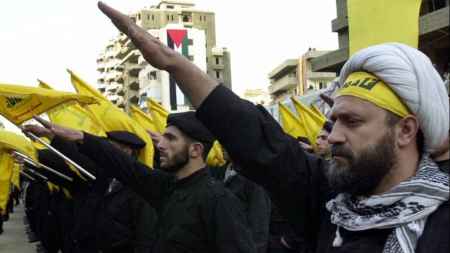
As a major part of Iran’s strategy not only in Syria but also in Iraq and Yemen, it has directed recruitment and deployment of multitudes of Shiite militant groups to those battlefields. Previous reports have confirmed that many of these groups swear allegiance to the Islamic Republic over and above the governments of the countries in which they are operating. In this way, Iran is evidently extending its Hezbollah model of foreign influence into other part of the region. And in Syria, it is a well-known fact that Iran is actually utilizing the Lebanese paramilitary group to strengthen its operations and build a large-scale network that spans several nearby countries.

On Thursday, Xinhua News Agency pointed out that the Iranian leadership had fervently disputed rumors that Hezbollah would be withdrawing from the Syrian Civil War. It is not clear what the ultimate source of those rumors was. But they are possibly rooted in Turkey’s demands for such a withdrawal as part of a political solution to the crisis, or else in the outgoing US administration’s optimism about Iranian “moderation” and willingness to cooperate over important foreign affairs. But although Boroujerdi’s comments about a desire for a political solution promote this perception, they are belied by the Iranian leadership’s clear unwillingness to withdraw its militant proxies, even as they continue to violate ceasefire agreements negotiated by Turkey, Russia, and others.

Nevertheless, Kerry’s remarks seem to imply that the Obama administration’s early claims about Iranian moderation will continue to be repeated until it departs the office. But the incoming administration cannot be expected to pick up that thread. And articles like the above-mentioned Fox News editorial indicate that on such issues as Iran’s coordination with America’s enemies, Donald Trump and his advisors will recognize the continuance of Tehran’s worst behaviors.

How Iran actually lost in Aleppo

December 26, 2016

How Iran actually lost in Aleppo, American ThinkerHeshmat Alavi, December 26, 2016

For 16 years America has failed to adopt a correct policy in the Middle East despite having huge opportunities to make significant changes. The 2003 war literally gift-wrapped Iraq to Iran, parallel to the highly flawed mentality of preferring Shiite fundamentalism to Sunni fundamentalism. This allowed Iran take full advantage of such failures and resulting voids.

Aleppo will be a short-lived success story for Iran. The tides are changing across the globe and Iran will no longer enjoy opportunities from West rapprochement. Understanding this very well, this is exactly why Tehran has resorted to such atrocities and sought to massacre all in Aleppo.

In contrast to how the U.S. handed Iraq in  a silver plate to Iran, Russia never entered the Syria mayhem to hand it over to Iran. The roots of Aleppo remain in the hearts of all Syrians. As world powers, especially the U.S. and Russia review their future objectives, Iran will be the first and ultimate party to suffer.

***********************************

Following a historic period of perseverance, Syrian rebels and their families were forced to evacuate eastern Aleppo after its liberation back in 2012. An unjust, intense war was launched upon Aleppo by Iran’s Revolutionary Guards (IRGC) and its proxy forces on the ground: Russia with its indiscriminate air strikes, and a lame-duck Syrian army of less than 20,000 deployable forces.

After more than 15 months continuous air raids and a long-lasting inhumane siege, Syrian rebels and civilians sealed an international agreement to depart Syria’s once economic and cultural hub.

In the past few weeks widespread bombing campaigns continued relentlessly on civilian areas. No Aleppo hospital was spared. The IRGC and its foot-soldiers, numbering at the tens of thousands, spearheaded the military of Syrian dictator Bashar Assad in horrific mass executions of innocent people. The United Nations reported 82 individuals, including women and children, were murdered on the spot in the streets and in their homes. God knows how many more incidents have gone unreported.

The amazing perseverance shown by Aleppo locals for years now in the face of atrocious airstrikes and artillery shelling is unprecedented to say the least. Amidst all this, the silence and inaction seen from the West, especially the United States, will remain forever a source of shame.

Conflict of Interests

In the pro-Assad camp there are three decision-makers. First Russia, second Iran, and third the Syrian regime. The role played by Assad and his military in such scenes is next to nothing.

The West and Turkey became frantic for a ceasefire in Aleppo in the early days of the war due to the negative public opinion resulting from shocking crimes. They sought to have the rebels and remaining civilians transferred to other Syrian opposition controlled areas.

On December 13th, Washington and Moscow reached what can be described a ceasefire agreement. Intense negotiations between Turkey and Russia were started afterwards, resulting in an agreement between the Syrian opposition with Russia and Turkey to evacuate Aleppo. Practically, the parties involved in the talks were Aleppo representatives and Russia, hosted by Turkey. All necessary preparations were made to begin evacuating the city from the morning of Wednesday, December 14th.

However, Iran disrupted this agreement and the IRGC hindered the evacuation process. It was crystal clear Russia and Iran were pursuing different objectives and sets of interests. Iran sought not to have Aleppo evacuated but to exterminate all Syrian rebels and civilians.

Twenty-four hours later, pressure from the international community forced the implementation of the Russia-Syrian rebel agreement on December 15th. On the morning of that day the first convoy carrying the wounded exited Aleppo, only to face roadblocks imposed by Iran-backed forces and the Assad military.

Iran raised certain conditions for the evacuation. Russia later threatened to airstrike any party hindering the evacuation, an obvious warning to Iran. Tehran was forced to wind back under Moscow pressure.

As a result, the last phase of this war and the method chosen to evacuate Aleppo was a defeat for Iran and a victory for the Syrian opposition. Especially since the conflict of interest between Iran/Assad and Russia became crystal clear. Politically speaking, Iran has become a secondary party in Syria.

“For Putin, a political settlement now makes sense. Staying involved in an ongoing insurgency does not. But for that, he needs the opposition — which is fractured — to accept a political outcome, and there is little prospect of that so long as Assad remains in power,” as explained by Dennis Ross, who served as the Director of Policy Planning in the State Department under President George H. W. Bush, the special Middle East coordinator under President Bill Clinton, and was a special adviser for the Persian Gulf and Southwest Asia (which includes Iran) to the former Secretary of State Hillary Clinton.

Is this the end?

The turn of events does not spell the end of the Syrian opposition. The opposition controls large swathes of Syria, with areas over ten times larger than Aleppo and millions of residents. Idlib Province has at a three million strong population; the western coast of the Euphrates in the Turkish border, recently liberated by the Free Syrian Army from Daesh (ISIS/ISIL); large portions of Deraa Province neighboring Jordan; a strategically important section in the north in Latakia Province on the Turkish border; large portions of areas in the Damascus vicinity and large portions in the Aleppo vicinity.

In contrast to Western mainstream media reporting, the Syrian opposition enjoys the capability to rise once again.

Despite all its differences, a comparison made to the Iran-Iraq War may help. In 1986, Iran made significant advances taking control over the Faw peninsula in southern Iraq. Western media and think-tanks all forecasted further advances by Iran and a defeat for Iraq. In 1988 Iran was forced into a U.N.-brokered ceasefire agreement.

Deep divisions between the Syrian nation and the Assad regime have reached the point of no return. Nearly 500,000 have been killed and more than half of the Syrian population displaced. The Syrian nation will never accept the continuation of this regime. Despite sporadic military advances, Assad has no place in Syria’s future.

Where Iran stands in Syria

Iran will not be the final victor in Syria.

First — For Iran, it is vital to maintain Assad in power. His fall will mark the end of Iran’s crusades in Syria. Even if the Syrian opposition becomes weaker, the overall crisis will continue while Assad remains in power. Assad is no longer acceptable in the international stage with an international consensus over his resort to war crimes and crimes against humanity.

Second — While Iran is financing and providing the ground forces, in this war, it no longer enjoys the first and final word. Russia calls the shots now with stark differences in interest, as seen in Aleppo.

Trump’s America

U.S. President Barack Obama’s weak foreign policy, especially the failed engagement with Iran, prolonged the Syrian crisis, allowed Tehran to take advantage, Russia to take the helm and America be sidelined.

Where will developments lead with Donald Trump in the White House? What will be the new U.S. foreign policy vis-à-vis Syria, Iran and the Middle East? How can we define Washington’s relationship with Moscow, and what practical measures will Trump take against Daesh (ISIS/ISIL)? Time will tell.

Good relations between the U.S. and Russia will at least not have a negative impact on the region, and this is good news for the Syrian opposition. Russia has weighable interests in Syria. However, what will Trump do with Iran? Considering Trump’s harsh tone on Iran to this day, far more positive outcomes can be forecasted for the Syrian opposition.

Second, Trump and secretary of state nominee Rex Tillerson have the potential of eventually convincing Russia to provide concessions. This is not in Iran’s interests, as Tehran remembers Russia ditching Libyan the dictator Muammar Qaddafi.

Lesson learned in Syria

For 16 years America has failed to adopt a correct policy in the Middle East despite having huge opportunities to make significant changes. The 2003 war literally gift-wrapped Iraq to Iran, parallel to the highly flawed mentality of preferring Shiite fundamentalism to Sunni fundamentalism. This allowed Iran take full advantage of such failures and resulting voids.

Aleppo will be a short-lived success story for Iran. The tides are changing across the globe and Iran will no longer enjoy opportunities from West rapprochement. Understanding this very well, this is exactly why Tehran has resorted to such atrocities and sought to massacre all in Aleppo.

In contrast to how the U.S. handed Iraq in a silver plate to Iran, Russia never entered the Syria mayhem to hand it over to Iran. The roots of Aleppo remain in the hearts of all Syrians. As world powers, especially the U.S. and Russia review their future objectives, Iran will be the first and ultimate party to suffer.


The sorrow and the pity in Syria

December 21, 2016

The sorrow and the pity in Syria, Washington Times

(Please see also, Lies and Hypocrisy over Aleppo. — DM)

iraninsyriaIllustration on Iran’s future role in Syria by Linas Garsys/The Washington Times

ANALYSIS/OPINION:

Over the last five years, Syria has been descending into a hell on Earth. Over the last four months, the lowest depths of the inferno have been on display in Aleppo, an ancient city, once among the most diverse and dynamic in the Middle East. On Friday, in the final press conference of his presidency, Barack Obama addressed this still-unfolding humanitarian and strategic catastrophe.

“So with respect to Syria,” he said, “what I have consistently done is taken the best course that I can to try to end the civil war while having also to take into account the long-term national security interests of the United States.”

An estimated 500,000 dead, 11 million displaced, millions more living in fear, sorrow and pitiful poverty, Iranian forces backed by Russian forces occupying the heart of the Arab world — yet no-drama Mr. Obama remains so casual, so confident that the decisions he’s made were “the best” and, what’s more, that he made them “consistently.” Is refusing to change one’s mind as conditions worsen and policies fail really a virtue?

To bolster his case, the president emphasized that he has spent lots of time — “if you tallied it up, days and weeks” — attending meetings on Syria. “We went through every option in painful detail with maps,” he said, “and we had our military and we had our aid agencies and we had our diplomatic teams, and sometimes, we’d bring in outsiders who were critics of ours.” Imagine that: painful detail, maps, aid agencies, even critical outsiders.

Count me among those not convinced. In 2011, during that hopeful moment known as the Arab Spring, peaceful protesters took to the streets of Damascus. The dynastic dictator Bashar Assad responded brutally. Before long, a civil war was ignited.

Mr. Obama’s top advisers recommended assisting non-Islamist and nationalist rebels — not with the proverbial boots on the proverbial ground but with secure communications devices, money, weapons and training. Mr. Obama rejected that advice. He had done the math: Mr. Assad, a member of the Alawite minority, hadn’t enough loyal troops to prevail against Syria’s insurgent Sunni majority. So the fall of the Assad regime had to be both inevitable and imminent.

What that failed to take into account: Iran’s theocrats would send in foreign Shia fighters, including those of Hezbollah, their Lebanese proxy, all under the leadership of their Islamic Revolutionary Guard Corps. Vladimir Putin also would deploy forces in support of the Assad regime. We can surmise his reasons: to have a Mediterranean port for his navy; to re-establish Russia’s influence in the Middle East; to show the world that, unlike Mr. Obama, he does not abandon his friends; to diminish American credibility and prestige.

Mr. Obama’s response was, as it so often is, mainly rhetorical. He warned Mr. Putin that he was stepping into a quagmire. He proclaimed, as so he often does, that there can be “no military solution.”

The Russian president, a product of the KGB rather than the faculty lounge, knew that was nonsense. In the Middle East, the law of the jungle trumps international law every time.

Having accused President George W. Bush of overreach, Mr. Obama adopted a policy that might be called underreach. He decided not to enforce the “red line” he had declared against Mr. Assad’s use of chemical weapons. He decided not to eliminate Mr. Assad’s air power, which would have ended the barrel-bombing of civilians. He wasn’t even willing to help establish “safe zones” where innocent Syrians might stand a chance to defend themselves.

I know: Mr. Obama saw his mission as ending wars and certainly not risking additional American entanglements. And he is among those who believe that the projection of American power generally does more harm than good.

Not mutually exclusive is the theory that he had a specific goal in mind: to bring Iran’s rulers into a strategic partnership with the United States. To achieve that, he had to demonstrate that he respected what he has called their “equities” in Syria. Were he to take action against Mr. Assad, the Islamic republic’s envoys might walk away from the table where they were negotiating the nuclear weapons deal Mr. Obama envisioned as his great foreign policy legacy.

The president has been nothing if not “consistent” in his pursuit of detente with Iran’s Islamic revolutionaries. In all likelihood, that is what explains his decision, just after taking office, to turn a blind eye to the clerical regime’s ruthless repression of the Green Movement that took to the streets of Iranian cities following a rigged presidential election in 2009.

History will record that these efforts failed. Nixon went to China. Mr. Obama will not be going to Iran — or to Syria, which Iran intends to incorporate into its version of a caliphate (which Shia call an “imamate”).

Aleppo,” U.S. Ambassador Samantha Power said last week at the U.N., “will join the ranks of those events in world history that define modern evil, that stain our conscience decades later. Halabja, Rwanda, Srebrenica, and, now, Aleppo. To the Assad regime, Russia, and Iran, your forces and proxies are carrying out these crimes.”

She went on to ask: “Are you truly incapable of shame? Is there literally nothing that can shame you? Is there no act of barbarism against civilians, no execution of a child that gets under your skin?”

Would it be unfair to suggest that the answers to these questions should have been apparent to her and the president years ago? Had that been the case, perhaps they would have formulated different policies and implemented a different course of action. Or perhaps not.

U.S. Accused of Training Iranian-Tied Forces in Iraq

December 16, 2016

U.S. Accused of Training Iranian-Tied Forces in Iraq, Washington Free Beacon, December 26, 2016

(It all depends on what “Iranian-tied” means. — DM)

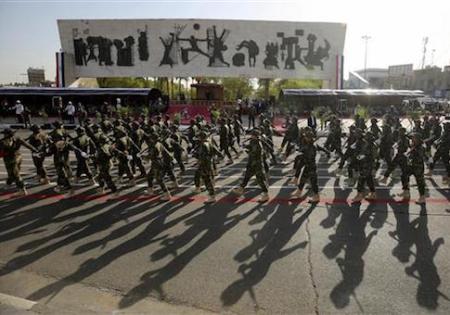
pmfIraqi government-backed Popular Mobilization forces take part in a joint military parade with Iraqi security forces in Baghdad / AP

“There are militiamen, Sunni, Shias, and Christians who are not part of the Iranian-backed network in Iraq and are not necessarily amenable to Tehran’s influence,” he said. “However, these are dwarfed, out-financed, and out-gunned by the IRGC-backed militias, who promote the brand of Islamic identity as espoused by the IRGC, and openly display ideological loyalty to the velayat-e faghih (the Islamic Republic’s founding ideology) and Iran’s supreme leader.”

*****************************

The United States military is facing accusations that it has been training Iraqi militia fighters who are tied to Iran, a charge that military officials who spoke to the Washington Free Beacon denied this week while insisting that the United States and Iran share common goals in the war-torn country, as both sides fight to eradicate the threat of Islamic State terrorists.

The latest charge that the United States may be directly involved in the training of Iranian-backed militia fighters has reignited concerns that America is becoming too cozy with Iranian interests operating in Iraq, an issue that highlights the difficultly facing U.S forces as they seek to counter the influence of ISIS.

Video recently emerged of U.S. military advisers training Iraqi militia fighters in Makhmur. Some foreign policy observers assessed that these militia fighters may have ties to Iran, which controls an increasing number of Iraqi militia fighters taking on ISIS.

The charge was picked up this week in a lengthy Los Angeles Times exposé claiming, “The U.S. is helping train Iraqi militias historically tied to Iran.”

Senior military sources who spoke to the Free Beacon denied the United States is directly working with Iranian forces, but acknowledged the United States and Iran do share similar goals in Iraq when it comes to combatting the threat of ISIS.

“In Iraq, with regards to ISIL, our interests and Iranian interests have some convergence,” said one senior military official who spoke to the Free Beacon on background, using another acronym for the Islamic State.

Iranian influence over militias in Iraq continues to be a challenge for the United States, which is barred by law from working with any such group. Foreign policy insiders who spoke to the Free Beacon about the issue warned that U.S. intervention against ISIS in Iraq is serving to bolster and legitimize Iran’s regional influence.

During last spring’s campaign in Fallujah, the U.S. provided air cover to Iraqi fighters, some of whom came from militias tied to Iran. Iranian media reported that some of the fighters belonged to Iran’s state-controlled militia.

“The forces that the LA Times observed in that story are not affiliated with Iran,” Col. John Dorrian, a spokesman for the U.S. Joint Task Force operating in Iraq, told the Free Beacon. “They are approved as hold forces ‎for terrain that has been liberated by the Iraqi Security Forces. They are being trained by coalition forces. They are local forces, and they represent diverse ethnic and sectarian backgrounds. The local tie is a key element in their acceptance by the population they are going to keep secure.”

Dorrian added that the headline on the LA Times article discussing the training of these militias “is very misleading.”

“There’s a lot of good information ‎in the article but the Iranian tie is nonexistent,” Dorrian said. “The Government of Iraq has enrolled these forces as Popular mobilization forces. I think LAT conflated that fact with Iran. Despite my telling them there’s no tie, they went with that headline.”

Multiple other military officials, Obama administration sources, and outside experts familiar with the matter told the Free Beacon that the militia fighters depicted in recent videos have no ties to Iran.

However, they said the United States and Iran share common goals in Iraq, where the threat of ISIS has sparked sectarian battles and endangered the Western-backed government.

A State Department official authorized only to speak on background told the Free Beacon that the United States does not train any Iranian-tied fighters, even if they are officially backed by the Iraqi government.

“The U.S. provides support to the Iraqi Security Forces, and those aligned with the Iraqi government,” the official said. “The U.S. does not, and will not, provide direct support to any group proscribed by American law, or which does not operate under the aegis of the Iraqi government.”

Much of Iraq’s Popular Mobilization Forces, or PMFs, are comprised of Shia Muslim fighters, many of whom are ideologically aligned with Iran’s hardline regime.

Maj. Adrian J.T. Rankine-Galloway, a Defense Department official, confirmed to the Free Beacon that some Iraqi units have been barred from receiving U.S. training due to their inability to pass background checks.

“Some Iraqi units have been restricted from receiving assistance because their commander didn’t pass vetting,” Rankine-Galloway said. “Because that quarterly report is classified, we cannot release which units were disqualified from receiving ITEF assistance.”

Rankine-Galloway further maintained that the United States has not changed its policy with regards to training in Iraq.

“U.S. government support to the counter-ISIL campaign remains by, with, and through the central Government of Iraq—and only to forces under the command and control of the Iraqi Security Forces,” Rankine-Galloway said. “Department of Defense policies on the provision of military assistance to foreign military forces have not changed. Iraqi Security Forces units who receive Iraq Train and Equip Fund assistance are strictly vetted” for ties to terror groups and the government of Iran.

Critics of the Obama administration’s policy in Iraq charge that even if the forces are not directly under the Iranian government’s orders, they are influenced by its senior military leaders.

“For proof the Obama administration treats our enemies like friends, look no further than their efforts to train armed militias loyal to Qassem Soleimani, commander of the IRGC-Qods Forces, in Makhmur,” said one senior congressional aide who works on the matter. “Incoming national security adviser Michael Flynn knows intimately what Iran is capable of, so it’s hoped that he and the Trump administration will reverse this disgrace.”

Amir Toumaj, an Iran analyst at the Foundation for Defense of Democracies, said that militia fighters tied to Iran far outnumber other fighters in Iraq.

“There are militiamen, Sunni, Shias, and Christians who are not part of the Iranian-backed network in Iraq and are not necessarily amenable to Tehran’s influence,” he said. “However, these are dwarfed, out-financed, and out-gunned by the IRGC-backed militias, who promote the brand of Islamic identity as espoused by the IRGC, and openly display ideological loyalty to the velayat-e faghih (the Islamic Republic’s founding ideology) and Iran’s supreme leader.”

“Key leaders” in the PMF “are beholden to Qassem Soleimani,” a top Iranian military leader, Toumaj said. “For example, the PMF operations commander is Abu Mahdi al Muhandis, Iran’s number one man in Iraq who has been designated as a terrorist by the U.S. Treasury and has overseen lethal attacks against U.S. soldiers during the occupation of Iraq. Iraqi militia and party leaders openly travel to Iran, and have received royal treatment, such as Akram al Kabi, head of Harakat al Nujaba, or the Movement of the Noble. The group under his command has committed war crimes and summary executions of women and children in east Aleppo this past week, according to the U.N.”

“The law legalizing the PMF has been welcomed in Iran. When Supreme Leader Ali Khamenei this past week received Ammar Hakim, head of the National Alliance Shia party that helped passed that bill, he called the PMF a ‘great wealth’ for Iraq that should be ‘supported and consolidated.’”

“The current U.S. policy of defeating the Islamic State above all else is empowering the IRGC-backed network, which has worked to infiltrate the Iraqi government and cement itself into a part of the state and establish an Iraqi version of the IRGC, crystallized in the PMF,” Toumaj said.

Israel’s First Project with Trump

December 9, 2016

Israel’s First Project with Trump, Front Page MagazineCaroline Glick, December 9, 2016

firstproject

Originally published by the Jerusalem Post

[R]ecently Hezbollah commander Hassan Nasrallah bragged, “We’re open about the fact that Hezbollah’s budget, its income, its expenses, everything it eats and drinks, its weapons and rockets are from the Islamic Republic of Iran.”

******************************

Israeli officials are thrilled with the national security team that US President-elect Donald Trump is assembling. And they are right to be.

The question now is how Israel should respond to the opportunity it presents us with.

The one issue that brings together all of the top officials Trump has named so far to his national security team is Iran.

Gen. (ret.) John Kelly, whom Trump appointed Wednesday to serve as his secretary of homeland security, warned about Iran’s infiltration of the US from Mexico and about Iran’s growing presence in Central and South America when he served as commander of the US’s Southern Command.

Gen. (ret.) James Mattis, Trump’s pick to serve as defense secretary, and Lt.-Gen. (ret.) Michael Flynn, whom he has tapped to serve as his national security adviser, were both fired by outgoing President Barack Obama for their opposition to his nuclear diplomacy with Iran.

During his video address before the Saban Forum last weekend, Prime Minister Binyamin Netanyahu said that he looks forward to discussing Obama’s nuclear Iran nuclear deal with Trump after his inauguration next month. Given that Netanyahu views the Iranian regime’s nuclear program – which the nuclear deal guaranteed would be operational in 14 years at most – as the most serious strategic threat facing Israel, it makes sense that he wishes to discuss the issue first.

But Netanyahu may be better advised to first address the conventional threat Iran poses to Israel, the US and the rest of the region in the aftermath of the nuclear deal.

There are two reasons to start with Iran’s conventional threat, rather than its nuclear program.

First, Trump’s generals are reportedly more concerned about the strategic threat posed by Iran’s regional rise than by its nuclear program – at least in the immediate term.

Israel has a critical interest in aligning its priorities with those of the incoming Trump administration.

The new administration presents Israel with the first chance it has had in 50 years to reshape its alliance with the US on firmer footing than it has stood on to date. The more Israel is able to develop joint strategies with the US for dealing with common threats, the firmer its alliance with the US and the stronger its regional posture will become.

The second reason it makes sense for Israel to begin its strategic discussions with the Trump administration by addressing Iran’s growing regional posture is because Iran’s hegemonic rise is a strategic threat to Israel. And at present, Israel lacks a strategy for dealing with it.

Our leaders today still describe Hezbollah with the same terms they used to describe it a decade ago during the Second Lebanon War. They discuss Hezbollah’s massive missile and rocket arsenal.

With 150,000 projectiles pointed at Israel, in a way it makes sense that Israel does this.

Just this week Israel reinforced the sense that Hezbollah is more or less the same organization it was 10 years ago when – according to Syrian and Hezbollah reports – on Tuesday Israel bombed Syrian military installations outside Damascus.

Following the alleged bombing, Defense Minister Avigdor Liberman told EU ambassadors that Israel is committed to preventing Hezbollah from transferring advanced weapons, including weapons of mass destruction, from Syria to Lebanon.

The underlying message is that having those weapons in Syria is not viewed as a direct threat to Israel.

Statements like Liberman’s also send the message that other than the prospect of weapons of mass destruction or precision missiles being stockpiled in Lebanon, Israel isn’t particularly concerned about what is happening in Lebanon.

These statements are unhelpful because they obfuscate the fact that Hezbollah is not the guerrilla organization it was a decade ago.

Hezbollah has changed in four basic ways since the last war.

First, Hezbollah is no longer coy about the fact that it is an Iranian, rather than Lebanese, organization.

Since Iran’s Revolutionary Guards founded Hezbollah in Lebanon in 1983, the Iranians and Hezbollah terrorists alike have insisted that Hezbollah is an independent organization that simply enjoys warm relations with Iran.

But today, with Hezbollah forming the backbone of Iran’s operations in Syria, and increasingly prominent in Afghanistan and Iraq, neither side cares if the true nature of their relationship is recognized.

For instance, recently Hezbollah commander Hassan Nasrallah bragged, “We’re open about the fact that Hezbollah’s budget, its income, its expenses, everything it eats and drinks, its weapons and rockets are from the Islamic Republic of Iran.”

What our enemies’ new openness tells us is that Israel must cease discussing Hezbollah and Iran as separate entities. Israel’s next war in Lebanon will not be with Hezbollah, or even with Lebanon. It will be with Iran.

This is not a semantic distinction. It is a strategic one. Making it will have a positive impact on how both Israel and the rest of the world understand the regional strategic reality facing Israel, the US and the rest of the nations of the Middle East.

The second way that Hezbollah is different today is that it is no longer a guerrilla force. It is a regular army with a guerrilla arm and a regional presence. Its arsenal is as deep as Iran’s arsenal.

And at present at least, it operates under the protection of the Russian Air Force and air defense systems.

Hezbollah has deployed at least a thousand fighters to Iraq where they are fighting alongside Iranian forces and Shi’ite militia, which Hezbollah trains. Recent photographs of a Hezbollah column around Mosul showed that in addition to its advanced missiles, Hezbollah also fields an armored corps. Its armored platforms include M1A1 Abrams tanks and M-113 armored personnel carriers.

The footage from Iraq, along with footage from the military parade Hezbollah held last month in Syria, where its forces also showed off their M-113s, makes clear that Hezbollah’s US platform- based maneuver force is not an aberration.

The significance of Hezbollah’s vastly expanded capabilities is clear. Nasrallah’s claims in recent years that in the next war his forces will stage a ground invasion of the Galilee and seek to seize Israeli border towns was not idle talk. Even worse, the open collaboration between Russia and Iran-Hezbollah in Syria, and their recent victories in Aleppo, mean that there is no reason for Israel to assume that Hezbollah will only attack from Lebanon. There is a growing likelihood that Hezbollah will make its move from Syrian territory.

The third major change from 2006 is that like Iran, Hezbollah today is much richer than it was before Obama concluded the nuclear deal with the ayatollahs last year. The deal, which canceled economic and trade sanctions on Iran, has given the mullahs a massive infusion of cash.

Shortly after the sanctions were canceled, the Iranians announced that they were increasing their military budget by 90%. Since Hezbollah officially received $200 million per year before sanctions were canceled, the budget increase means that Hezbollah is now receiving some $400m. per year from Iran.

The final insight that Israel needs to base its strategic planning on is that a month and a half ago, Hezbollah-Iran swallowed Lebanon.

In late October, after a two-and-a-half-year fight, Saad Hariri and his Future Movement caved to Iran and Hezbollah and agreed to support their puppet Michel Aoun in his bid for the Lebanese presidency.

True, Hariri was also elected to serve as prime minister. But his position is now devoid of power.

Hariri cannot raise a finger without Nasrallah’s permission.

Aoun’s election doesn’t merely signal that Hariri caved. It signals that Saudi Arabia – which used the fight over Lebanon’s presidency as a way to block Iran’s completion of its takeover of the country – has lost the influence game to Iran.

Taken together with Saudi ally Egyptian President Abdel Fattah al-Sisi’s announcement last week that he supports Syrian President Bashar Assad’s remaining in power, Aoun’s presidency shows that the Sunnis have accepted that Iran is now the dominant power in Iraq, Syria and Lebanon.

This brings us back to Hezbollah’s tank corps and the reconstruction of the US-Israel alliance.

After the photos of the US-made armored vehicles in Hezbollah’s military columns were posted online, both Hezbollah and the Lebanese Armed Forces insisted that the weapons didn’t come from the LAF.

But there is no reason to believe them.

In 2006, the LAF provided Hezbollah with targeting information for its missiles and intelligence support. Today it must be assumed that in the next war, the LAF, and its entire arsenal will be placed at Hezbollah-Iran’s disposal. In 2016 alone, the US provided the LAF with $216m. in military assistance.

From Israel’s perspective, the most strategically significant aspect of Hezbollah-Iran’s uncontested dominance over all aspects of the Lebanese state is that while they control the country, they are not responsible for it.

Israeli commanders and politicians often insist that the IDF has deterred Hezbollah from attacking Israel. Israel’s deterrence, they claim, is based on the credibility of our pledge to bomb the civilian buildings now housing Hezbollah rockets and missiles in the opening moments of the next conflict.

These claims are untrue, though. Since Hezbollah- Iran are not responsible for Lebanon despite the fact that they control it through their puppet government, Iranian and Hezbollah leaders won’t be held accountable if Israel razes south Lebanon in the next war. They will open the next war not to secure Lebanon, but to harm Israel. If Lebanon burns to the ground, it will be no sweat off their back.

The reason a war hasn’t begun has nothing to do with the credibility of Israel’s threats. It has to do with Iran’s assessment of its interests. So long as the fighting goes on in Syria, it is hard to see Iran ordering Hezbollah to attack Israel. But as soon as it feels comfortable committing Hezbollah forces to a war with Israel, Iran will order it to open fire.

This then brings us back to the incoming Trump administration, and its assessment of the Iranian threat.

Trump’s national security appointments tell us that the 45th president intends to deal with the threat that Iran poses to the US and its interests.

Israel must take advantage of this strategic opening to deal with the most dangerous conventional threat we face.

In our leaders’ conversations with Trump’s team they must make clear that the Iranian conventional threat stretches from Afghanistan to Israel and on to Latin America and Michigan. Whereas Israel will not fight Iran in Iraq and Afghanistan, or in the Americas, it doesn’t expect the US to fight Iran in Lebanon. But at the same time, as both allies begin to roll back the Iranian threat, they should be operating from a joint strategic vision that secures the world from Iran’s conventional threat.

And once that it accomplished, the US and Israel can work together to deal with Iran’s nuclear program.

Making Sense of the Mess in Syria

December 6, 2016

Making Sense of the Mess in Syria, Front Page MagazineAri Lieberman, December 6, 2016

syriamess

The vacillating and pusillanimous policies pursued by the Obama administration have enabled the Russians and Iranians to fill the void. Meanwhile, as Syria’s death toll nears 500,000 and its migrants – some with radical Islamic connections – continue to stream into Europe, it is clear that the nation state of Syria, Balkanized after five years of brutal conflict, is no more.

***********************

On July 30, 1970 a squadron of Israeli air force F-4E Phantoms and Mirages laden with bombs and missiles took off from their airbase in Sinai and flew westward toward Egypt. Their target was an Egyptian radar station.

The action occurred during the height of the War of Attrition between Israel and Egypt. The Egyptians were faring badly and their armed forces had suffered a series of public humiliations at the hands of the Israel Defense Forces. As a consequence, the Soviets stepped into the fray to save their client state and deployed 10,000 military personal and technical experts to the theater. The Soviets also assumed full control of Egypt’s air defenses. Surface-to-air missile batteries were manned by Soviet personnel and Soviet piloted MiG 21Js – the Soviet Union’s latest MiG-21 variant – patrolled Egyptian airspace. A direct clash between the Soviet Union and Israel was inevitable.

As the Israeli fighters zeroed in on their target, 16 Soviet MiGs moved in to intercept. In the melee that followed, five MiGs were shot down for no Israeli losses. The remaining 11 MiGs beat a hasty retreat. The Soviets were simply no match for the seasoned Israeli pilots.

The clash brought regional tensions – already heightened after one year of near constant border clashes – to a boiling point but neither side wanted an escalation. A ceasefire was eventually brokered by the superpowers and tensions deescalated.

Russia’s present military deployment in Syria is not dissimilar to its deployment in Egypt 46 years ago but the chances of an Israeli-Russian aerial clash today is virtually nil. There are some salient differences between the two circumstances. Israel and Russia are no longer bitter enemies and currently maintain cordial relations. Lines of communications between the two nations are good. Potential misunderstandings – to the extent that any exist – are channeled through liaisons to prevent accidental confrontations.

But war can best be summed up as organized chaos and given the clutter over the skies of Syria, with Russian, Israeli, Turkish and Coalition aircraft all operating within the confines of a limited space, mishaps are certainly possible. The Russians maintain formidable air defenses in Syria and Israel views them warily.

Underscoring this, last week IAF fighter jets launched two strikes in Syria, one targeting ISIS, in which four ISIS terrorists were killed and the second, targeting a Hezbollah weapons convoy and a Syrian military compound just outside Damascus. Though the Israelis have understandably remained moot on the specifics of the latter attack, according to published sources, Israeli fighters launched a number of Israeli made Popeye air-to-surface missiles from Lebanese airspace at a facility housing elements of Syria’s 4th Armored Division as well as a Hezbollah-bound weapons convoy traveling along the Beirut-Damascus highway.

Israel cognizant of Russia’s S-400 and S-300 air defense platforms in Syria opted to circumvent the possibility of an accidental confrontation by launching its attack from Lebanese airspace. It should be noted that the S-400s were deployed by the Russians last year following the downing of a Russian Su-24 by a Turkish F-16. The move was meant to serve as a deterrent to Turkey and no hostile intent was directed at Israel. Additionally, the term “Lebanese airspace” is a rather generous term that implies that Lebanon is a fully sovereign nation. In reality, Lebanon is sovereign in name only, having been swallowed whole by Hezbollah, Iran’s genocidal Shia proxy.

Israel’s interest in Syria is limited to ensuring that game-changing weapons of strategic import don’t fall into the hands of Hezbollah. Thus, on several occasions, Israeli fighter jets have launched successful interdicting operations aimed at destroying sophisticated weaponry – including SA-22 anti-aircraft missiles, Scud D ballistic missiles and Yakhont cruise missiles – clandestinely shipped from Iran via Syria.

A secondary goal is to ensure that border areas remain free of Hezbollah, Iranian and ISIS influence. In January 2015, an Israeli airstrike liquidated 12 senior Hezbollah and Iranian Revolutionary Guard Corps operatives, including an IRGC general, who were reconnoitering the border near Israel’s Golan Heights for future operations against the Jewish State.

Russia, which has a much broader interest in Syria, understands Israel’s concerns and has no interest in needlessly antagonizing the Israelis. Syria has been under Soviet and now Russia’s sphere of influence since the early 1950s and Russia is intent on maintaining its air and naval bases in Syria. To that end, it is keen on maintaining Assad’s hold on power, or for that matter, any Assad replacement that commits to friendly relations with Moscow and continued Russian military presence.

Russia is also looking to project military power and reassert its role as a superpower. The high profile deployment of a sizable Russian fleet in the Eastern Mediterranean, which includes the Russian aircraft carrier and Cold War relic, Admiral Kuznetsov, represents part of this strategy. However, it appears that the Kuznetsov has been a bit of an embarrassment for Putin.

On November 14, a carrier-based MiG-29K crashed while attempting a failed landing on the Kuznetsov. The carrier was encountering problems with its arrestor cables and the MiG crashed while circling and waiting for repairs. Just three weeks later, a Russian Navy Su-33 encountered a similar fate while attempting a landing on the Kuznetsov. Recent Satellite imagery taken of the Russian air base at Khmeimim, near Latakia, shows rows of Su-33 and MiG-29K carrier-based aircraft parked alongside Russian land-based fighter jets indicating that the Russians have given up on the notion of launching strikes from the Kuznetsov.

While the Israelis and Russians maintain clear strategies and objectives for Syria, under Obama, the U.S. strategy in Syria can best be described as befuddled and lacking any clear direction. The U.S. had initially called for Assad’s unconditional departure but seems to have backed away from that position and now calls for an orderly transition of power, seemingly giving Assad some wiggle room.

Obama had threatened to use military force if Assad employed poison gas against his own people but back peddled on that position as well. In late 2015 it was revealed that the Obama administration spent an astonishing $500 million to train four or five Free Syrian Army rebels, clearly demonstrating that Obama’s policy on Syria represents nothing short of a farcical tragic comedy.

The Obama administration had initially ignored the ISIS menace and its current pinprick military campaign against the terror group is utilizing but a fraction of America’s military strength. Finally, while the Obama administration has publicly sought to end Syria’s civil war peacefully, its transfer of billions in cash to the Islamic Republic has only served to fuel the fire. There is no doubt that this cash has been utilized to pay the salaries of Iran’s mercenary forces in Syria, Lebanon, Yemen and Iraq.

The vacillating and pusillanimous policies pursued by the Obama administration have enabled the Russians and Iranians to fill the void. Meanwhile, as Syria’s death toll nears 500,000 and its migrants – some with radical Islamic connections – continue to stream into Europe, it is clear that the nation state of Syria, Balkanized after five years of brutal conflict, is no more.

Israel jets mark go-it-alone policy on Syria

November 30, 2016

Israel jets mark go-it-alone policy on Syria, DEBKAfile, November 30, 2016

raidfire480Arab media show damage caused by air strikes to Syrian army compound in Damascus

Although Erdogan is notorious for his wildly unpredictable decision-making, it is more than likely that before going public on his radical change of heart on Assad, he was in touch with the new national security team taking shape in Washington. If that was the case, then Donald Trump was using Erdogan to notify Putin that the entire architecture of their understandings on Syria was now at risk.

If the Arab media reporting on Israeli air attacks on Syrian military and Hizballah targets in Damascus from Lebanese air space are confirmed, Jerusalem will be shown to have followed Ankara in backing away from those short-lived, understandings, opting instead for an independent policy in its own security interests with regard to Syria.

*****************************

Arab media carried conflicting reports wich described Israeli warplanes striking in and around Damascus overnight Tuesday, Nov. 29, with “four long-range Popeye” missiles fired from Lebanese air space on the government-held town of Al-Saboorah, a western suburb of Damascus, near the highway to Beirut.

A Lebanese newspaper reported that a Syrian army ammunition depot was destroyed in one of the raids, while other strikes hit and damaged a Hizballah arms convoy bound for Lebanon on the Damascus-Beirut Highway. There was also speculation, later denied, that one of the air strikes aimed at assassinating a senior Hizballah figure.

None of these reports were confirmed by Israel or any other official source.

Even so, Israel’s reported military action against enemy targets in Syria is bound to have repercussions in the next 24 hours, since, whatever took place, broke out of the secret overarching understandings on Syria reached provisionally this month between US President elect Donald Trump, Russian President Vladimir Putin and Turkey’s Recep Tayyip Erdogan.

Those understandings hinged strongly on joint US-Russian cooperation in the war on the Islamic State in Syria, supported by the coalition fighting for the Assad regime, namely, the Syrian army and its allies, the Lebanese Hizballah and foreign Shiite militias under the command of the Iranian Revolutionary Guards.

As the sub-text of the “big power” understandings, an outline was drafted between the next US administration, Moscow, Jerusalem, Amman and the UAE on arrangements for stabilizing Syria’s southern borders with Israel and Jordan.

Talks on these arrangements were first disclosed in an exclusive DEBKAfile report on Nov. 21, after they had already produced the unheralded return of the UN observers to the Golan demilitarized zone outside Quneitra.

But then, Sunday, Nov. 27, Russian warplanes staged a sudden series of airstrikes against Syrian rebel concentrations in the very region under discussion, southern Syria. After a three-month pause in these attacks, Moscow appeared to have waited for major Syrian government progress in Aleppo, to go against those understandings and send Russian jets into action over Jasim and Daraa in order to wipe out the rebel forces holding out in the South. Heavy casualties were sustained by those forces.

The Russian action was seen by the incoming Trump administration and Jerusalem as presaging the next danger-fraught step: To round out the raids, the Syrian army would come flooding into the South, along with Hizballah and other Shiite militias fighting under Iranian Revolutionary Guards command.

Tuesday saw two further ruptures in the trilateral understandings on Syria.

Assad announced he was gearing up for a decisive victory in Aleppo, notwithstanding a request from Trump’s advisers to Putin to hold back from the final step and refrain from retaking every last eastern district from rebel hands..

This was followed by an unforeseen statement by Erdogan: “The Turkish military launched its operations in Syria to end the rule of President Bashar al-Assad.”

This sentiment pivoted sharply away from the secret Trump-Putin understandings endorsed by the Turkish leader that was contingent on Assad remaining in power.

Although Erdogan is notorious for his wildly unpredictable decision-making, it is more than likely that before going public on his radical change of heart on Assad, he was in touch with the new national security team taking shape in Washington. If that was the case, then Donald Trump was using Erdogan to notify Putin that the entire architecture of their understandings on Syria was now at risk.

If the Arab media reporting on Israeli air attacks on Syrian military and Hizballah targets in Damascus from Lebanese air space are confirmed, Jerusalem will be shown to have followed Ankara in backing away from those short-lived, understandings, opting instead for an independent policy in its own security interests with regard to Syria.

Giuliani’s Ties to Iranian Resistance Group MEK Should be Viewed as a Valuable Contribution

November 29, 2016

Giuliani’s Ties to Iranian Resistance Group MEK Should be Viewed as a Valuable Contribution, Iran Focus, November 29, 2016

(The objected-to Politico article was written by Daniel Benjamin, often referred to below but not identified as author of that article. — DM)

trumpandgu

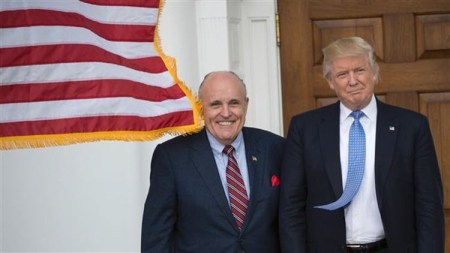
London, 29 Nov – On November 28, in an article for Politico Magazine, Robert G. Torricelli, former U. S. Senator from New Jersey, and a former member of the U.S. House of Representatives, wrote about the Iranian Resistance Group, Mujahidin e-Khalq (MEK).  His article was written  in response to an article published in Politico last week, criticizing the MEK and the U.S. politicians who support them, particularly former New York Mayor Rudy Giuliani.

Torricelli, a former Democratic member of the Senate Foreign Relations Committee, who is familiar with the MEK and with Giuliani’s work on behalf of the organization says, “I can say unequivocally that Benjamin’s assertions are outrageous—so outrageous that I must respond.” 

A large bipartisan coalition supports the MEK in its campaign for regime change in Iran, including two former chairmen of the joint chiefs, two former CIA directors, a former attorney general and the former chairs of both political parties. People with such varied political ideals, such as Howard Dean and Patrick Kennedy to Newt Gingrich and John Bolton support the MEK. Torricelli says, “From this perspective, the outlier isn’t Rudy Giuliani; it’s Daniel Benjamin.” 

The history of the MEK began when it was part of the coalition opposing the shah of Iran in the late 1970s. The shah’s secret police executed and imprisoned most of their leadership. That vacuum was briefly filled by a Marxist group who were rejected by the incarcerated MEK leaders. Most of the Marxist leaders were killed by the shah or by the mullahs after their ascent to power in 1979. The MEK eventually regained its original leadership, and the MEK became an opposition group to the theocratic regime, and fled into exile in Paris and Iraq.

Torricelli writes, “Throughout this time, the MEK did take part in legitimate political and military action against the Iranian regime, but I have seen no evidence to support the assertion Benjamin makes that it took part in terrorist activities against Iranians or Americans.”

In Iraq in the 1980s, the refugee camps of the MEK were under the protection of the government of Iraq. MEK fighters were aligned with Iraqi Army during Iran/Iraq War. “But Benjamin’s claims that they assisted in Saddam Hussein’s repression of the Kurds have been denied by both MEK and U.S. Army leaders in Iraq. Upon the arrival of U.S. forces in 2003, the MEK willingly handed over its weapons, accepted U.S. protection and actively exposed the Iranian regime and its proxies’ terrorist activities. This included saving American lives by identifying IED locations. This, more than anything, explains the group’s support by former U.S. military personnel, including the former army anti-terror officer and the U.S. military police general assigned to the camp,” writes Torricelli.

The MEK provided invaluable intelligence regarding the Iranian nuclear program that helped counter Tehran’s efforts to develop atomic weapons. Maryam Rajavi, leader of the movement, committed herself publicly to a democratic, non-nuclear, secular Iran at peace with its neighbors with gender equality and a ban on capital punishment. The MEK organized thousands in the Iranian diaspora and built political support in Congress and parliaments across Europe. It is now the most organized and disciplined of the Iranian opposition groups.

“Some current and former State Department employees, including Mr. Benjamin, have a different concept. They remain committed to the idea that the MEK was a terrorist organization—a notion, I believe, which stems from an illusion of American reconciliation with the mullahs. In 1997, a group at State succeeded in convincing President Bill Clinton to place the MEK on the State Department list of terrorist organizations. Some claimed at the time that this decision was mainly intended as a goodwill gesture to Iran. The State Department gave as its reasons the MEK’s long record of violence, but I can tell you that as a member of the Foreign Relation Committee, I reviewed the State Department file on the MEK and found no evidence, no testimony and no reason for the designation except placating Tehran,” Torricelli writes, adding, “Thousands of Iranian-Americans and literally hundreds of members of Congress protested. In 2011, as a private attorney, I led a team of lawyers in a State Department inquiry to resolve the issue. After four hours of testimony, we yielded to the State Department to present their contradictory evidence. They had nothing.”

Without evidence, an order by the U.S. District Court was issued.  The MEK was removed from the State Department list of terrorist organizations by Secretary Hillary Clinton in 2012.

Torricelli continues, “Defeat came hard for the Iran apologists within the department. Mr. Benjamin isn’t the first to argue that the broad coalition of former U.S. intelligence, military, diplomatic and congressional leaders can’t be believed because some accepted speaking fees to attend MEK meetings around the world. The fact that these people faced combat for or dedicated their entire careers to our country, and are among our most respected leaders seems to be of no consequence. It’s an argument that requires no rebuttal except to note that by this standard the views of Thomas Paine, Elie Wiesel and Winston Churchill—all of whom accepted speaking fees from various international organizations—would have been silenced as well.”

Rudy Giuliani was one of the most outspoken supporters. The 3,000 MEK refugees settled along the Iran/Iraq border were under imminent threat in 2012. Iraqi relations with the United States were tense. Torricelli writes,  “Secretary Clinton requested that I assemble a persuasive group of distinguished Americans to travel to Europe and persuade Mrs. Rajavi to relocate the refugees to a former U.S. military base near Baghdad. I appealed to Louis Freeh, Ed Rendell, Michael Mukasey and Rudy Giuliani. Each accepted, canceled commitments, paid his own transportation to Paris and argued persuasively that the MEK assist the United States by relocating.”

Such a broad coalition of diverse Americans has varied perspectives. Torricelli says that, “Some believe that in the political vacuum following an economic or political collapse in Tehran, a determined and well-funded political opposition like the MEK could seize power. Others believe that the MEK might simply be part of a broader coalition, a simple pressure point or just a source of continuing intelligence.” Although rationales for support might differ, this group of Americans is united by the beliefs that the MEK is a genuine democratic force, and that regime change in Tehran is the best option to keep the peace, avoid a nuclear Iran, and benefit American interests.

Going back to Mr. Benjamin’s argument that Rudy Giuliani’s participation in this coalition should disqualify him for consideration as secretary of state, Torricelli has this to say, “Experience and participation in public policy issues was once a condition for high government service. It’s now a complication, because a record of advocacy creates controversy. But the selection of secretary of state needs to be different. Among the most likely crises facing the new president is an escalation in the struggle with the fundamentalist Islamic Republic of Iran. Rudy Giuliani has lived that struggle for a decade. Mr. Benjamin may quarrel with his efforts but it’s important to note that voices in the American foreign policy establishment as diverse as Senator McCain, Secretary Clinton, Deputy Secretary Blinken and John Kerry’s own personal representative on the MEK, Jonathan Weiner disagree. Each has thanked Rudy Giuliani and the other Americans involved in these efforts.”

Whether or not the president-elect chooses Mr. Giuliani as secretary of state, countering Tehran and assisting our country should not be seen as anything other than a valuable contribution to his consideration.

Iran’s Forces Outnumber Assad’s in Syria

November 24, 2016

Iran’s Forces Outnumber Assad’s in Syria, Gatestone Institute, Majid Rafizadeh, November 24, 2016

Pursuing a sectarian agenda, Iranian leaders have also fueled the conflict by sending religious leaders to Syria to depict the conflict as a religious war.

Iran’s military forces and operations in Syria are significantly more than what has been generally reported so far.

The Syrian war has led to the rise and export of terrorism abroad as well as to one of the worst humanitarian tragedies, in which more than 470,000 people have been killed.

Iran has played a crucial role in maintaining in power President Assad, who has repeatedly used chemical weapons on civilians. Iran has promoted continuing the conflict.

2070

While, according to reports by Iran’s Islamic Revolutionary Guard Corps (IRGC), the Syrian military has fewer than 50,000 men, Iran has deployed more than 70,000 Iranian and non-Iranian forces in Syria, and pays monthly salaries to over 250,000 militiamen and agents. According to a report entitled, “How Iran Fuels Syria War,” published by the National Council of Resistance of Iran (NCRI), non-Iranian mercenaries number around 55,000 men; Iraqi militias are around 20,000 men (from 10 groups), Afghan militias are approximately 15,000 to 20,000 men, Lebanese Hezbollah are around 7,000 to 10,000 men, and Pakistani, Palestinian and other militiamen number approximately 5,000 to 7,000.

In addition, the composition of Iranian IRGC forces are around 8,000 to 10,000 men, and 5,000 to 6,000 from the regular Iranian Army.

The major Iranian decision-makers in the Syrian conflict are Supreme Leader Ayatollah Ali Khamenei and the senior cadre of the Revolutionary Guards. Iran’s so-called moderate leaders — including President Hassan Rouhani and Foreign Minister Javad Zarif — are also in favor of Iran’s military, advisory, financial, and intelligence involvement in Syria. Rouhani repeatedly announced his support for Assad and pledged to “stand by [Syria].”

Khamenei insists on using more military power in Syria:

“[I]n December 2015, Khamenei ordered the IRGC to stand fast in the Aleppo region. He reiterated that if they retreated, their fate would be similar to the Iran-Iraq war and the regime would ultimately be defeated in Syria. Thus, in January 2016, the IRGC doubled the number of its forces in Syria to about 60,000 and launched extensive attacks in the region. However, despite tactical advances in some areas, these forces have been unable to even take control of southern Aleppo. IRGC faced a deadlock. In March 2016, Khamenei ordered the regular Army’s 65th Division (special operations) to be deployed around Aleppo, and increased the number of other forces as well. Plans for a major offensive to capture Aleppo were set in motion. During attacks by the IRGC and the Iranian army in April 2016, dozens of the regime’s forces, including IRGC commanders and staff, Iranian army personnel and foreign mercenaries from Iraq, Lebanon and Afghanistan, were killed. Although the IRGC and the Iranian regime’s regular army forces have failed to change the balance of military power in Syria, Khamenei insists on sending more IRGC and army forces into the Syrian quagmire. Seeing no way forward, and no way back.”

Iran has also played critical role in pushing Russia to intensify its military involvement in Syria by providing air support, so that the IRGC and its allies could help Iran’s military make quick territorial gains.

Iran has spent approximately USD $100 billion on the Syrian war. The sanctions relief given to Iran as a result of the “nuclear agreement” has significantly assisted the Iranian leaders’ ability to continue the war.

Iran also pays salaries to non-Iranian militias to participate in the war: “The Tehran regime spends one billion dollars annually in Syria solely on the salaries of the forces affiliated with the IRGC, including military forces, militias, and Shiite networks.”

Iran, for example, pays nearly USD $1,550 a month to the IRGC’s Iraqi mercenaries who are dispatched to Syria for a month-and-a-half, and approximately USD $100-200 a month to the Syrian militia fighters from the Syrian National Defense.

Pursuing a sectarian agenda, Iranian leaders have also fueled the conflict by sending religious leaders to Syria to depict the conflict as a religious war.

“Iran’s ruling regime has deployed a vast network of its mullahs to Syria, where their warmongering stirs up the fighters. And much like during the Iran/Iraq War, religious zealots are also sent to Syria to fuel the flames of religious fervor among the IRGC’s Basiij fighters and Afghan and Iraqi mercenaries.”

Iran has divided Syria into five divisions and haד over 13 military bases including the “Glass Building” (Maghar Shishe’i), which is the IRGC’s main command center in Syria, located close to the Damascus Airport. The IRGC placed its command center near the airport because,

“the airport would be the last location to fall. IRGC forces airlifted to Syria are dispatched to other areas from this location. One of the commanders stationed at the Glass Building is IRGC Brig. Gen. Seyyed Razi Mousavi, commander of IRGC Quds Force logistics in Syria. Between 500 and 1,000 Revolutionary Guards are stationed there.”

Other Iranian bases are scattered across Syria including in Allepo, Hama, and Latakia.

Since Brig. General Hossein Hamedani was killed in Syria, the current command of Iran’s forces in Syria lies with the Command Council, whose members include: IRGC Brig. Gen. Esmail Qaani (deputy of Qassem Soleimani who is the commander of the Quds Force) and IRGC Brig. Gen. Mohammad Jafaar Assadi (aka Seyyed Ahmad Madani).

The Syrian conflict has become the “root cause” of terrorism, which does not recognize borders and has spread to Europe and America. Since the Syrian war is the epicenter of terrorism, fighting terrorist groups such as ISIS without resolving the Syrian conflict is fruitless.

Terrorist groups such as ISIS are the symptoms, and the Syrian war is the disease. We need to address the disease and the symptoms simultaneously.

The best strategic and tactical approach is to cut off the role of a major player in the conflict: i.e. Iran. Without Iran, Assad would most likely not have survived the beginning phase of the uprising.

Iran kept Assad in power and gave birth to terrorist groups such as ISIS. In other words, Iran and Assad are the fathers of ISIS. Iran and Assad also played the West by claiming that they are fighting terrorism.

Considering the military forces and money invested in Syria, Iran is the single most important player in the Syrian war, and has tremendously increased radicalization of individuals, militarization and terrorism. Iran benefits from the rise of terrorism because it expands its military stranglehold across the region. Iran is top sponsor of terrorism, according to the latest report from U.S. State Department.

Iran will not agree to abandon Assad diplomatically.

In order to resolve this ripe environment of conflict for terrorism in Syria, Iran’s financial and military support to Assad should be strongly countered and cut off.

Iran, Hamas and the Dance of Death

November 23, 2016

Iran, Hamas and the Dance of Death, Gatestone InstituteKhaled Abu Toameh, November 23, 2016

It now appears that the Obama Administration’s failed policies in the Middle East have increased the Iranians’ appetite, such that they are convinced that they can expand their influence to the Palestinians as well.

Iran has one goal only: to eliminate the “Zionist entity” and undermine moderate and progressive Arabs and Muslims.

“Relations between Iran and Hamas are currently undergoing revitalization, and are moving in the right direction,” announced Osama Hamdan, a senior Hamas official. He went on to explain that “moving in the right direction” means that Iran would “continue to support the resistance” against Israel.

Hamas and Iran have no meaningful ideological or strategic differences. Both share a common desire to destroy Israel and replace it with an Islamic empire. Iran expects results: Hamas is to use the financial and military support to resume attacks on Israel and “liberate all of Palestine, from the Jordan River to the Mediterranean Sea.”

As far as Iran is concerned, there is nothing better than having two proxy terror organizations on Israel’s borders — Hezbollah in the north and Hamas in the south.

The biggest losers, once again, will be President Mahmoud Abbas and his Palestinian Authority in the West Bank.

Israel’s presence in the West Bank has thus far thwarted Iran’s repeated attempts to establish bases of power there.

The Iranians and Hamas are exploiting the final days of the Obama Administration to restore their relations and pave the way for Tehran to step up its meddling in the internal affairs of the Palestinians in particular and the Israeli-Palestinian conflict in general.

Emboldened by the nuclear deal framework with the world powers, Iran has already taken the liberty of interfering in the internal affairs of other Arabs, particularly the Iraqis, Lebanese, Syrians, Yemenites and some Gulf countries.

It now appears that the Obama Administration’s failed policies in the Middle East have increased the Iranians’ appetite, such that they are convinced that they can expand their influence to the Palestinians as well.

Thanks to the civil war in Syria, relations between Hamas and Iran have been strained over the past few years. Hamas’s refusal to support the regime of Bashar Assad — Iran’s chief ally in the region — has led the Iranians to suspend financial and military aid to the Islamist movement in the Gaza Strip. However, recent signs indicate that Iran and Hamas are en route to a kind of Danse Macabre — a move that will undoubtedly allow Tehran to become a major player in the Israeli-Palestinian conflict.

1162-2Iran used to funnel money to Hamas because the terrorist group shares Iran’s desire to destroy Israel and replace it with an Islamic empire. Relations between Iran and Hamas foundered a few years back, when Hamas leaders refused to support the Iranian-backed Syrian dictator, Bashar Assad. Pictured above: Hamas leader Khaled Mashaal (left) confers with Iranian “Supreme Leader” Ali Khamenei, in 2010. (Image source: Office of the Supreme Leader)

This, of course, bodes badly for any future peace process between Israel and the Palestinians. Iran has one goal only: to eliminate the “Zionist entity” and undermine moderate and progressive Arabs and Muslims.

The new US administration would do well to take very seriously Iran’s comeback to the Israeli-Palestinian conflict, because of its implications not only concerning prospects for peace, but also because it means that this will lead to an upsurge in violence and terror attacks against Israel.

Proof of Iran’s renewed effort to infiltrate the Palestinian arena was provided this week by statements made by a senior Hamas official, Osama Hamdan, who is in charge of the Islamist movement’s “external affairs.” Asked about Hamas’s relations with Iran, Hamdan was quoted as saying that he had good reason to be optimistic.

“Relations between Iran and Hamas are currently undergoing revitalization, and are moving in the right direction,” Hamdan announced. He went on to explain that “moving in the right direction” means that Iran would “continue to support the resistance” against Israel:

“Relations between Iran and Hamas extend over a period of 25 years. Undoubtedly, any flaw in this relationship has a negative impact. But this relationship is capable of renewing itself. This is a relationship that is based on supporting the resistance and the Palestinian cause.”

In reality, Hamas and Iran have no meaningful ideological or strategic differences. Both share a common desire to destroy Israel and replace it with an Islamic empire. The two entities are also committed to an “armed struggle” against Israel, and are vehemently opposed to any compromise with it.

The crisis between the two sides over the civil war in Syria is no more than a minor, tactical dispute. When it comes to the real agenda, such as destroying Israel and launching terror attacks, Iran and Hamas continue to be in total alignment.

Another sign of the apparent rapprochement between Iran and Hamas came in the form of reports that the Islamist movement has appointed a new leader in the Gaza Strip with close ties to Tehran. According to the reports, Emad El Alami, who previously served as Hamas’s first emissary to Tehran, has been entrusted with temporarily replacing Ismail Haniyeh as the ruler of the Gaza Strip. Haniyeh has in recent months relocated from the Gaza Strip to Qatar. At this stage, it remains unclear when and if Haniyeh will return to the Gaza Strip. Some Palestinians have surmised that Haniyeh may replace the Doha-based Khaled Mashaal as head of the Hamas “Political Bureau.” If this happens, then El Alami, who is regarded by many Palestinians as Iran’s agent, will become the permanent de facto ruler of the Gaza Strip.

El Alami’s rise to power will undoubtedly further facilitate Iran’s ambition to become a significant player in the Israeli-Palestinian conflict through the gates of the Gaza Strip. This means that Hamas can expect more cash and weapons to enter Gaza in the coming weeks and months. Such an influx would significantly increase the likelihood of another war between Hamas and Israel. Iran’s millions will not be used by Hamas for building schools and hospitals, or providing desperately needed jobs for Palestinians in the Gaza Strip. Nor will the Iranian-supplied weapons be stored in Hamas warehouses and tunnels, or used in military parades.

Iran expects results: Hamas is to use the financial and military support to resume attacks on Israel and “liberate all of Palestine, from the Jordan River to the Mediterranean Sea.”

When Hamas leaders talk about Iranian support for the Palestinian “resistance,” they mean suicide bombings, rocket attacks and other forms of terrorism. They are saying with unmistakable clarity that they seek a resumption of Iranian support for the “resistance” — not for the tens of thousands of unemployed and impoverished Palestinians living under the Hamas regime in the Gaza Strip. The well-being of the Palestinians living under its rule is the last thing on Hamas’s mind.

The Iranians, for their part, appear to be extremely eager to resume their role as enablers and funders of any group that vows to eliminate Israel. As far as Iran is concerned, there is nothing better than having two proxy terror organizations on Israel’s borders — Hezbollah in the north and Hamas in the south.

Iran is already backing other terror groups in the Gaza Strip, such as the Palestinian Islamic Jihad and Al-Sabireen. But these are tiny groups compared to Hamas, which has tens of thousands of gunmen and a strong military group, Ezaddin Al Kassam. And there is nothing to prevent Iran from extending its control to the Gaza Strip through Hamas, especially in the wake of the Obama Administration’s policy of appeasing not only the Iranians, but also the Muslim Brotherhood.

In the coming months, Hamas is scheduled to hold secret elections to elect a replacement for Khaled Mashaal. Mashaal’s departure from the scene is also set to facilitate Iran’s effort to infiltrate the Gaza Strip. The three candidates who are seen as potential successors to Mashaal — Ismail Haniyeh, Musa Abu Marzouk and Yehya Al Sinwar — have all pledged to improve their movement’s ties with Iran.

The biggest losers, once again, will be President Mahmoud Abbas and his Palestinian Authority (PA) in the West Bank.

PA officials continue to express deep concern over Iran’s meddling in Palestinian affairs, especially its financial and military support for terror groups in the Gaza Strip and even some parts of the West Bank. Yet Israel’s presence in the West Bank has thus far thwarted Iran’s repeated attempts to establish bases of power there. Abbas has no choice but to work with Israel if he wishes to prevent Iran and its supporters from overthrowing his regime, and perhaps dragging him to the center of Ramallah and hanging him as a traitor.

Abbas and his senior aides are nonetheless plenty worried about Iran’s increased efforts to infiltrate the Palestinian arena. At a lecture in Bahrain last week, PLO Secretary-General Saeb Erekat sounded an alarm bell when he said:

“Iran has no right to interfere in the internal affairs of the Palestinians. Iran must respect the particularity of our country. We hope that Iran will focus on placing Palestine back on the map and not intervene through this or that group.”

But this warning is likely to fall on deaf ears in the waning Obama Administration, which obviously no longer shares the widespread concern among Arabs and Palestinians that Iran remains a major threat to stability and security in the region, including Israel. Perhaps the new US administration will see Iran and its machinations a bit more clearly. The alternative is allowing Iran and its proxy terror groups further to drench the region in blood.