U.S. Warships On Watch – Leading From Behind – Lt Col Ralph Peters – Willis Report, Fox News via You Tube, April 21, 2015
(It’s from yesterday and the situation remains fluid. Still, it’s worth watching. — DM)
U.S. Warships On Watch – Leading From Behind – Lt Col Ralph Peters – Willis Report, Fox News via You Tube, April 21, 2015
(It’s from yesterday and the situation remains fluid. Still, it’s worth watching. — DM)
Iranian General Threatens Strikes on Saudi Arabian Soil, Clarion Project, April 21, 2015
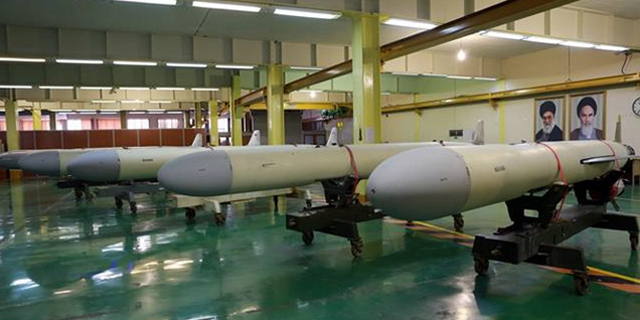 Iranian missiles.
The commander of the ground troops in the Iranian army, General Ahmad Reza Pourdastan, threatened Saudi Arabia with military strikes if it doesn’t stop the fighting in Yemen.
According to the Iranian Arabic language channel El-Alam, Pourdastan said that the Islamic Republic is not interested in getting into a conflict with Saudi Arabia. He called on Riyadh to stop fighting against her brothers in Yemen and said “by doing so she is entering a war of attrition which might expose her to severe strikes.”
Pourdastan reportedly claimed that his country will bomb Saudi Arabia if she won’t stop her attacks.
He added that “the Saudi army needs combat experience and that is why it is a weak army. If she will stand against a war of attrition she will be struck very hard and will be defeated. That’s why Riyadh should drop the option and turn to a diplomatic option and to negotiation.”
Pourdistan praised the successes of the Shiite aligned Yemini forces fighting against President Hadi, saying “The next stage will be carrying out strikes against Saudi Arabia.”
Pourdistan declared “the Islamic Republic is not interested in a confrontation with Saudi Arabia for she is a friend nation and our neighbor. The military advisor in the Saudi Embassy is currently in Iran. We invited him to the ceremonies of the Army Day that was on Saturday.
We want to have relations with Saudi Arabia and we don’t want bloody relations. There are still tables for dialogue and they can solve the problems. There is no need to use weapons or military equipment.”
Yet he also threatened Saudi Arabia saying “explosions might occur in Saudi Arabia through rockets falling on the ground. It is clear that dealing with that will be very hard for the Saudi officials.”
He suggested that forces in Yemen strike Saudi Arabia. He said “Based on the military purchases and the abilities of the Yemeni army, it is capable of inflicting painful strikes on Saudi Arabia.”
Arab states snub Obama’s D.C. summit as Iran Mocks Obama, Breitbart, Joel B. Pollak, April 21, 2015
 The Associated Press
As the U.S.S. Theodore Roosevelt heads to Yemen to confront a convoy of Iranian ships, including destroyers, it is worth asking why President Barack Obama is still talking to the Iranian regime about its nuclear program. The Iranians, who used the Houthi militia to knock over the American-aligned Yemeni government, clearly has no fear that Obama will suspend negotiations. If anything, Iranian tactics are winning more concessions.
When you strike a deal with an enemy who continues to attack you, that is not called “peace,” but “surrender.”
It is a wonder Obama is even bothering to send an aircraft carrier to the region at all. His hand has been forced by two factors: first, that Saudi Arabia has gone to war in Yemen without bothering to ask for American approval; second, Yemen is key to Obama’s drone policy against Al Qaeda, his only modest military success.
America has lost more than an ally in Yemen or a foothold in Iraq. It has lost the opportunity to defend hundreds of thousands of innocent lives from being murdered by Iran’s Syrian ally, which is using chemical weapons against civilians. It has lost the opportunity to demilitarize Lebanon—an achievement then-Sen. Joe Biden foolishly claimed in his debate with Sarah Palin in 2008. It may even have lost the chance to stop a nuclear Iran.
Iranian foreign minister Javad Zarif made clear in his New York Times op-ed this week that the regime sees a nuclear deal as the key to regional domination. He offered—no, demanded—American cooperation on ISIS and other issues, not as a possible outcome of a deal but as a condition for a deal.
Yet the White House refuses to make its own regional demands—such as recognition of Israel, or an end to Iran’s global terrorism.
Israel has made clear that the Iran deal is an existential threat, and even that has not moved Obama to reconsider. The Arab nations are not waiting to be double-crossed, and are making their own plans, which likely include Saudi Arabia obtaining nuclear warheads from Pakistan.
In an attempt to save face, Obama has invited the Arab nations to a May 13 summit at the White House—long after final negotiations with Iran have begun
Already, some Arab states have indicated that they will not be attending (Oman), or will only send junior delegations (Saudi Arabia, United Arab Emirates). Amir Taheri of theNew York Post quotes one Arab official: “He is going to give a Churchillian speech. But we know that you can’t be Chamberlain one day and Churchill the next.”
Meanwhile, Israel quietly signals that it is not going to wait for a Churchill to arrive in the Oval Office.
U.S. Navy warships to intercept Iranian weapons shipments in Yemeni waters, Associated Press via Washington Times, April 20, 2015
U.S. Navy officials say the aircraft carrier USS Theodore Roosevelt is steaming toward the waters off Yemen and will join other American ships prepared to intercept any Iranian vessels carrying weapons to the Houthi rebels fighting in Yemen.
The U.S. Navy has been beefing up its presence in the Gulf of Aden and the southern Arabian Sea amid reports that a convoy of Iranian ships may be headed toward Yemen to arm the Houthis.
The Houthis are battling government-backed fighters in an effort to take control of the country.
There are about nine U.S. ships in the region, including cruisers and destroyers carrying teams that can board and search other vessels.
The officials spoke on condition of anonymity because they were not authorized to discuss the ship movement on the record.
Al Qaeda on winning streaks in Yemen and Iraq, exploiting stalemate in proxy wars, DEBKAfile, April 17, 2015
Thursday and Friday, April 16-17, two branches of Al Qaeda took the lead in violent conflicts, catapulting key areas of the Middle East into greater peril than ever. In Yemen, Al Qaeda in the Arabian Peninsula (AQAP) and in Iraq, the Islamist State in Iraq and the Levant (ISIS), launched new offensives 3.050 kilometer apart.
DEBKAfile’s military sources report that both branches of the Islamist terror movement used the absence of professional adversarial troops on the ground – American and Saudi – to push forward in the two arenas. Washington and Riyadh alike had decided to trust local forces to carry the battle – Iran-backed Shiite militias alongside Iraqi troops against ISIS in Iraq, and the Yemeni army against Iran-backed Houthi rebels in Yemen.
This gave Al Qaeda a free passage to carry on, especially when offered the further benefit of contradictions in the Obama administration’s attitude toward its foe, Tehran: On the one hand, Iran was offered lead role in the region for the sake of a nuclear deal; on the other, it faced US opposition for its support of rebel forces in Yemen.
The conflict in Yemen is no longer a straight sectarian proxy war between Sunni-ruled Saudi Arabia and Shiite Iran (that also stretches to Iraq and Syria.), as a result of what happened Thursday, April 16.
AQAP embarked on a broad offensive in southern Yemen’s Hadhramaut region on the shore of the Gulf of Aden and captured the important seaport of Mukalla as well as the coatal towns of Shibam and Ash-Shirh. The group also overran Yemen’s Ryan air base in the absence of real resistance from the Yemen army’s 27th Brigade and 190th Air Defense Brigade – both of which are loyal to the escaped president Mansour Hadi.
This winning AQAP offensive was instructive in four ways:
1. For the first time in two decades, Al Qaeda in Arabia is operating on professional military lines. Its sweep across Yemen’s southern coastland showed the Islamists to be plentifully armed with antiair missiles and other air defense systems.
2. AQAP’s smuggling rings run a large fleet of vessels which collaborate with Somali pirates. This fleet is now preparing to seize control of the strategic Socotra archipelago of four islands opposite Hadhramaut and only 80 kilometers from the Horn of Africa. Socotra sits in the bottleneck for shipping from the Arabian Sea and Persian Gulf to the Gulf of Aden and on to the Suez Canal.
On one of the Socotra islands, the US set up an air base and deployed special forces in 2011, in readiness for an attack on Iran’s nuclear facilities. AQAP does not have enough strength to capture this island, but is capable of holding it siege and under barrage from sea and land.
3. The Arabian branch of Al Qaeda has for the first time gained control of a large sweep of territory in Yemen, a feat analogous to its fellow branch’s advances in Iraq since last June.
4. Hadramauth is bounded to the north and the east by the Saudi Arabian Rub’ al Khali or Empty Quarter, which is the world’s second largest desert region. AQAP has therefore gained proximity to the oil kingdom through its desolate back door.
Our military sources note that Saudi Arabian and United Arab Emirate air forces have controlled Yemeni air space since March 26, supported by US intelligence assistance. They might have been expected to bomb AQAP units and stall their advance through Hadhramaut.
But they refrained from doing so for a simple reason: Both Riyadh and its Gulf ally are unwilling to throw their own ground forces into the war against the Shiite Houthi rebels. Still in proxy mode, they expect Al Qaeda’s Arabian jihadis to save them the trouble of putting their troops on the ground to vanquish the Shiite rebels.
The same principle guides Washington in Iraq – albeit with different players. There, the Americans rely increasingly on the pro-Iranian Iraqi Shiite militias, under the command of Iranian Revolutionary Guards officers, rather than the Iraq army, to cleanse the ground of ISIS conquests.
Two weeks after Western publications trumpeted the militias’ success in liberating the Iraqi town of Tikrit from its ISIS conquerors, it turns out that the fighting is still ongoing and the jihadis are still in control of some of the town’s districts.
Iraqi Prime Minister Haidar al-Abadi, while on a visit to Washington this week, told reporters that, after the Tikrit “victory,” his army was to launch an offensive to recapture the western province of Anbar on the Syrian border from the grip of ISIS.
The situation on the ground is a lot less promising. As Abadi and President Barack Obama discussed future plans for the war to rid Iraq of the Islamists, ISIS launched fresh offensives for its next goals, Ramadi, a town of half a million inhabitants 130 kilometers west of Baghdad, and the oil refinery town of Baiji
The jihadis have already moved in on Ramadi’s outskirts after the Iraqi army defenders started falling back.
PART II: Michael Rubin on Obama: ‘He is Constructing an Imaginary Iran’ Breitbart, Adelle Nazarian, April 17, 2015

Obama doesn’t understand that the Middle East isn’t a neighborhood to organize. He doesn’t understand that he’s the leader of the free world and not a zoning commissioner. In effect, the bad guys are running all over him. And the problem is, he’s too naive or too arrogant to care.
****************************
Breitbart’s Adelle Nazarian had the opportunity to speak with renowned Middle East expert and resident scholar at the American Enterprise Institute (AEI) Dr. Michael Rubin recently. Dr. Rubin provided his analysis on U.S.-Iran relations under the Obama Administration and provided a look into the future through the periscope of the past.
This is Part II of a two-part series. For the first installment, click here.
BREITBART: Why didn’t the Obama administration look back at Khomeini’s letter from 1988 calling for nuclear weapons and compare it to Khamenei’s supposed nuclear fatwa today when approaching the nuclear talks?
RUBIN: You’ve got a situation where the Obama Administration is cherry picking dishonestly. And frankly, if Obama acted this way as a university professor, he would be dismissed. He is constructing an imaginary Iran. Take the case of the fatwa.
Does the fatwa actually exist? According to open source center there was something delivered in 2014 that purports to be the text of the fatwa to the United Nations. But in that text — according to the open source center of the United States — it doesn’t use the word “never.”
Here’s another problem. It’s Diplomacy 101 to know that you don’t rely on anything that’s not written down. Even with North Korea, we got the North Koreans and the Americans to agree on a piece of paper.
I’m not sure John Kerry is even competent to negotiate with a 5-year-old over chocolate or vanilla ice cream. I mean how could you not get something in writing? It’s the same thing with Obama and the fatwa. Get it in writing. How come Obama can’t put this up on the White House website? He puts up everything else.
BREITBART: Is it true that a fatwa, either verbalized or written, can be changed at any time?
RUBIN: Yes. It can. And Obama is operating in a vacuum.
It’s like Groundhog Day. In 2003, Mohammaed Javad Zarif negotiated with the Americans with regard to non-interference in Iraq. According to the Iranian press, the Iranians proceeded to break that agreement and inserted 2,000 Revolutionary Guardsmen into Iraq.
Now the question is, did Zarif lie? Or was he sincere but he didn’t have the power to ensure that all aspects of the Iranian government would abide by the agreement? And why is it that, 12 years later, we’re having the same discussion about the same man? Either Zarif is a liar, in which case we never should have sat down with him again. Or he’s powerless and a conman, in which case we should have never sat down with him again.
There is a major misconception under the current administration– with Obama and Kerry– that it was due to a lack of diplomacy under the Bush Administration that the number of centrifuges skyrocketed in Iran.
#1: Between 2000-2005, the European Union almost tripled its trade with Iran and sat down with them regularly. That directly corresponds to the rapid increase in Iranian centrifuges. It was because of diplomacy, not because of coercion.
#2. During that same period, the price of oil almost quintupled and the bulk of hard-currency windfall went into Iran’s nuclear and ballistic missile programs. That was under the so-called “reformists,” and this is why the so-called reformists like to claim that they are responsible for the success of the nuclear program. But this raises questions about why Obama would again repeat the same issue.
The Iranian economy, according to Iran’s Central Bank, had declined 5.4% in the year before we sat down to negotiate the joint plan of action. Now, Iran’s economy is in the black because we’ve given them an infusion of cash. But if we hadn’t given them that infusion of cash in conjunction with the halving of the price of oil, then we could literally force Iran to drink from the chalice of poison.
Those were the words that Khomeini said when he ended the Iran-Iraq War after swearing he would never do it until Jerusalem was liberated.
Giving someone $12 billion is not forcing them to drink from a chalice of poison. What Obama did was the equivalent to giving a five-year-old dessert first and then asking him to eat his spinach.
BREITBART: What has to be done strategically to stop Iran from expansion?
RUBIN: It’s the same thing with Putin and any other expansionist dictators. The more you appease, the more you show that your red lines are drawn in pink crayon and the more they are going to test you. What we forget is when Iran tested the U.S. under Reagan, Reagan responded with Operation Praying Mantis. He sank the Iranian Navy which gave way to a joke from that time. “Why does the Iranian Navy have glass bottomed-boats? So they can see their air force as well.”
Operation Praying Mantis was the largest surface naval engagement since WWII and it taught the Iranians that you don’t mess with the United States. Obama doesn’t understand that the Middle East isn’t a neighborhood to organize. He doesn’t understand that he’s the leader of the free world and not a zoning commissioner. In effect, the bad guys are running all over him. And the problem is, he’s too naive or too arrogant to care.
BREITBART: Should the next President of the United States of America be an expert on Iranian issues?
RUBIN: What you need in a presidential candidate is not someone that knows the Iran issue inside and out. What you need is someone that is true to their values, can provide moral leadership, is not afraid of moral clarity and understands the following:
#1. The importance of individual liberty, because individual liberty is a character which no dictatorship can withstand. You need someone who isn’t afraid of understanding that we should not live in a morally and culturally equivalent world.
#2. The United States is not the equal to countries like Iran or Russia. We are their moral superiors and as such it is important that we win and our adversaries lose. It’s important that freedom and liberty triumph.
You don’t need to be an expert in Iran to understand that. But you need to be someone who is not going to calibrate their foreign policy to the latest poll. Principles have to trump polls and I think that’s where Bush and Clinton are going to be disasters.
Arab world: Egypt’s dangerous stalemate, Jerusalem Post, Zvi Mazel, April 17, 2015
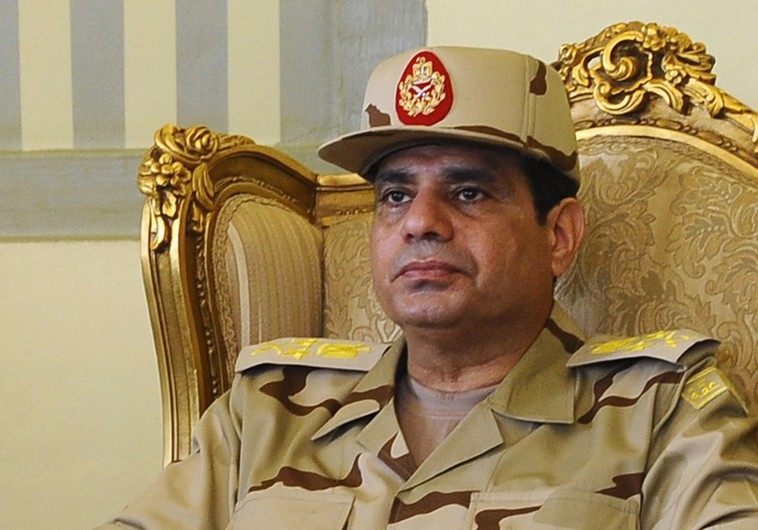 Abdul Fattah Sisi. (photo credit:REUTERS)
Vainly did the Egyptian president try to convince the US-led coalition against Islamic State to extend its activities to the whole Middle East. But US President Barack Obama is unwilling to acknowledge that there is a regional and international dimension to the movement.
*****************
Egyptian President Abdel Fattah al-Sisi is fighting for his country’s survival – and his own.
Islamic terrorism is not abating, hampering vital efforts to bring a better life to the people through a revitalized economy and political stability. Sisi knows he has to show results soon to prevent Egypt from slipping back into anarchy and chaos.
Despite the army’s all-out effort to defeat Islamist insurgency in Sinai, there is no end in sight. F-16 fighter planes and Apache helicopters have joined the campaign, security forces have killed or wounded hundreds of terrorists, destroying their haunts and their training groups – but more keep coming.
Ansar Bayt al-Maqdis gunmen, who have pledged allegiance to Islamic State, continue making daring raids against police stations and other security targets, leading to loss of life and heavy damage.
In one instance on April 14, the commander of the central police station of El-Arish was wounded in a raid; the assailants were able to escape.
For all intents and purposes the situation has reached a stalemate, though the army has managed to contain the terrorists in the northern part of the Sinai Peninsula, preventing them from extending their activities to the south and to the Suez Canal – where they could have inflicted untold damage to economic and security infrastructure, and severely undermined public morale.
However, there are still sporadic terrorist attacks in Cairo and other parts of the country.
Bombs explode, killing and maiming; power lines are blasted. A number of terrorist groups are involved, from Ansar Bayt al-Maqdis and the so-called Soldiers of Egypt to the ever-present Muslim Brotherhood; many of their members have been arrested, their leaders sentenced to death – though no one has been executed yet – but they keep on demonstrating against the regime (though in diminishing numbers).
In Yemen, Iranian-backed Houthi tribes are poised to take over the strategic Red Sea straits, threatening free passage to the Suez Canal – a reminder, if one was needed, of the fact that Islamic terrorism knows no border.
Vainly did the Egyptian president try to convince the US-led coalition against Islamic State to extend its activities to the whole Middle East. But US President Barack Obama is unwilling to acknowledge that there is a regional and international dimension to the movement.
The fact remains that Islamic State dispatches terrorists and weapons to Ansar Bayt al-Maqdis in the Sinai Peninsula from Libya, where there is an unlimited supply of both. No matter how many guerrillas are intercepted or killed by the Egyptian army, more are coming through the vast mountainous and desert region, along the 1,200-km border between the two countries.
Then there is Gaza, where terrorists can find refuge, regroup and train, and where new weapons can be tested.
Cairo is desperately trying to cut off the peninsula from the Strip. The Rafah crossing is closed most of the time, and when it opens it is under the strict supervision of Egyptian authorities. More than 2,000 contraband tunnels have been destroyed and a 1-km.-deep sanitized zone has been installed; thousands of families have been uprooted.
They have been compensated but resentment is high, and the move has prompted widespread condemnation by human rights associations.
Against this backdrop, the regime is weighing extending the zone to 5 km. and making the digging of contraband tunnels punishable by life imprisonment. A court in Cairo has forbidden Hamas activities in Egypt, and another has declared Hamas a terrorist organization; however, the central government is appealing that decision for the sake of its ongoing dialogue with Gaza’s leaders on the Palestinian issue.
The Iranian-Houthi threat has led Sisi to call for the creation of a rapid-response Arab unit, as Saudi Arabia has rallied neighboring states to form a coalition against the rebels in Yemen – who are threatening its border in the south, and were about to take control of the strategic port of Aden.
Though the creation of a united Arab unit was decided at a summit in Sharm e-Sheikh last month, implementation will not be easy. A number of states such as Lebanon and Iraq have warned they would not allow any infringement to their sovereignty; some Gulf states and Jordan have been more forthcoming, and meetings between army commanders are scheduled.
The problem is that these countries are not keen to risk their troops in a ground operation in neighboring states. Armies are the traditional bulwark of Arab regimes; a failed intervention outside their borders could cause their downfall. Nevertheless, since the West is largely indifferent to what is happening, Sisi and his Gulf allies have no choice but to unite against the common threat of Islamic terrorism, be it Sunni or Shi’ite.
On the home front, Sisi has launched a series of impressive projects – a new canal parallel to the old one to enable simultaneous crossing in both directions, thereby doubling receipts; an industrial, commercial and tourist zone between the two canals; 3,000 km of modern roads. Perhaps his most ambitious project is the creation of a new administrative capital city east of Cairo, at an estimated cost of $45 billion. Arab states have rallied to his side, pledging billions of dollars at a special economic summit last month; international groups have indicated their interest in some of the projects – a significant victory for the embattled president.
But Egypt’s endemic problems – population explosion, illiteracy leading to widespread unemployment and enduring poverty, as well as corruption on an epic scale – are not making Sisi’s task easier.
He is also calling to reform Islam by purging it of its extremist discourse, and has already instructed the Education Ministry to eliminate extremist content such as the call to jihad and attacks on other religions.
Meanwhile, the political situation is still unclear and elections are repeatedly postponed, allegedly because of ambiguities in the election law.
The fact is that the president has not been able to secure a large enough block to ensure his electoral victory, while the Muslim Brotherhood – though banned – and other Islamic parties can still muster a sizable vote.
Can Sisi win all his battles? How long will the Egyptian people wait for some much-needed economic results? Egypt is going it alone, still waiting for the West to understand that Cairo remains its best ally against the rising tide of terrorism now lapping at its shores.
Nuclear Iran’s “Spillover Effects” Gatestone Institute, Vijeta Uniyal, April 13, 2015
As President Obama tries to sell the world his mysterious nuclear “framework agreement,” India’s defense establishment is just not buying it. The U.S. and Western commentators might be expecting “peace dividends” from Iran, but India cannot afford to harbor such illusions.
The Iranians have already announced that they plan to sell “enriched uranium” in the international marketplace, and will be “hopefully making some money” from it. To whom will they sell?
A nuclear Iran would be able to hold the world hostage by blocking one-third of the world’s oil supply at the Strait of Hormuz. Iranian proxies have also been trying to seize control of the Bab-el-Mandeb Strait, the maritime choke point of the Suez Canal.
The only question is whether the West would rather have an adversary such as Iran before it has nuclear weapons or after.
When the West and Iran agreed — or not, depending on whether one believes the U.S. version or Iran’s — on the parameters of a supposed nuclear “framework,” India’s foreign office hailed the agreement as a “significant step.”
India’s foreign office might have joined the international chorus welcoming the deal, but as U.S. President Barack Obama aggressively tries to sell the world his mysterious nuclear “framework,” India’s defense establishment is just not buying it.
India’s defense establishment seems to be having acute qualms about this “framework.”
One day after the P5+1’s mysterious “agreement” with Iran, India began gearing up for a more effective nuclear defense, and unveiled plans to equip the country’s capital, New Delhi, with a comprehensive missile defense shield to avert a nuclear attack.
Once in place, the shield could intercept missiles fired from a range of 5,000 km, roughly double the aerial distance between New Delhi and Tehran.
The first step would be to install the long-range “Swordfish” radars, developed with the help of Israel. They can track missiles from a range of 800 km.
India’s missile interceptor capability is expected to be functional by 2016. India also plans to set up a missile shield for its commercial capital, Mumbai.
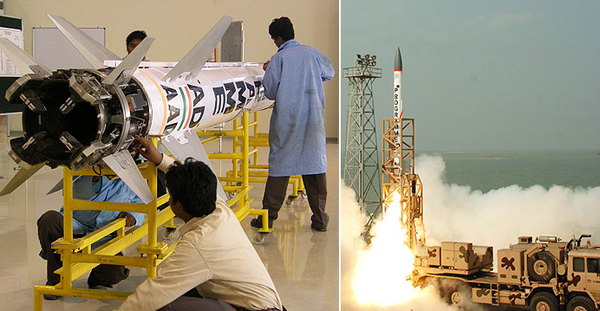 At left, Indian defense contractors work on an Advanced Air Defence (AAD) interceptor missile. At right, an Indian AAD missile is test-launched.
On April 4, India’s Defence Research and Development Organisation (DRDO) also reiterated the country’s ability to hit targets well beyond its adjoining region.
India has always been seriously concerned about prospect of nuclear proliferation in the Middle East. If Arab and Muslim countries decide to counter the Iranian nuclear threat with nuclear arsenal of their own, India’s hostile neighbor, Pakistan, is likely to want to play a crucial role.
India is not only vulnerable to nuclear threats from Pakistan. Both the Islamic State (ISIS) and Al-Qaeda have also openly declared hostility toward it. India has long been concerned about nuclear capabilities or materiel falling into the hands of Islamists in Pakistan. By now, it is no secret that if Iran acquires nuclear weapons capability, nuclear proliferation in the Middle East will increase exponentially. The Iranians have already announced that they plan to sell “enriched uranium” in the international marketplace and will be “hopefully making some money” from it. To whom will they sell?
President Obama and Western commentators might be expecting “peace dividends” from this “historic reconciliation” and be awaiting all sorts of positive “spillover effects” as a result of lifting sanctions — from changing Iran’s attitude towards Israel to democratizing the Iranian regime — but India cannot afford to harbor such illusions. Islamist terror has claimed more than 30,000 Indian lives in just the last two decades.
Indians are now bracing for the real spillover effects of a nuclear Iran.
Thanks to Washington’s indifference, Iran now controls four Arab capitals — Damascus, Baghdad, Beirut, and now Sana’a, while the U.S. has retreated from three: in Libya, Yemen and Iraq. If Iran can hold the Obama administration hostage without any leverage, a nuclear Iran would be able to hold the whole world hostage by blocking one-third of the world’s oil supply at the Strait of Hormuz — with impunity. Iranian proxies have also been trying to seize control of the Bab-el-Mandeb Strait, the maritime choke point of the Suez Canal.
European leaders who failed to show any resoluteness in face of Russian aggression against Ukraine, and even failed to vote against a “framework” that threatens global security, can hardly be expected to stand up to Tehran. The only question is whether the West would rather have an adversary such as Iran before it has nuclear weapons or after.
Once major European powers such as Russia, France and Germany start investing in Iranian infrastructure and entangling themselves with Iran economically, one can forget about rolling back sanctions.
Western leaders can spin the “framework” agreement all they want to cover up their abysmal diplomatic failure, but as Tehran’s centrifuges keep spinning as a result of the deal, the region turns more and more volatile.
Regardless of the diplomatic chorus and the media circus, the defense planers in New Delhi are just not buying this agreement. Other countries that care about the free world would be wise not to buy it, too.
King Abdullah II: We’re War With “Outlaws Of Islam” – Special Report via You Tube, April 13, 2015
(He seems quite diplomatic, but what does he actually think? — DM)
Statement by PM Netanyahu, April 12, 2014




 WarSclerotic
Recent Comments