Posted tagged ‘Iranian nukes’

Facing North Korea and Iran, Trump Must Strengthen Nuclear Deterrence

January 3, 2017

Facing North Korea and Iran, Trump Must Strengthen Nuclear Deterrence, National Review, Tom Rogan, January 3, 2017

Ultimately, the nuclear issue is just one challenge the incoming Trump administration faces in foreign policy. The U.S. needs a new strategy of realist resolution. After years of Obama’s fraying credibility with allies and foes alike, the United States must resume leading. Kim Jong-un and Iranian supreme leader Khamenei are arrogant. If given an inch, they will walk the nuclear mile. And history tells us that great power and totalitarian zealots rarely blend positively.
***********************************

How President Trump should strengthen America’s ICBM-deterrence posture. Like Big Brother in George Orwell’s Nineteen Eighty-Four, North Korean dictator Kim Jong-un holds absolute power. And Kim, the same as his father and grandfather, wants to forcibly unify the Korean peninsula under a xenophobic ideology of self-sufficiency.

Since the end of the Korean War, the Kims’ wacky “Juche” ideology has sparked Western laughter as much as fear. We have rightly assumed the Kims are deterred by their understanding that a conventional-arms conflict with America would destroy them. While the U.S. has had to occasionally reinforce this conventional deterrence, it has been sustained for 60 years.

Over the weekend, Kim Jong-un announced that the North’s development of an intercontinental ballistic missile (ICBM) is advancing rapidly. Unless America appeases him, Kim warned, he will build a “preemptive striking capacity with a main emphasis on nuclear force.” Recently successful rocket tests suggest we should take Kim at his word.

Still, it’s not just North Korea the West should be concerned about here.

Today, alongside other malevolent activities, the Islamic Revolutionary Republic’s ballistic-missile research is advancing unabated. In his wisdom, President Obama decided to exclude a ban on such research from his legacy Iran deal. He lacked the threat-of-force credibility to compel the Iranians to cease their missile development. Unfortunately, when Iran perfects ballistic-missile technology, it will break the nuclear deal. By then, sanctions relief will have made Iran tens of billions of dollars richer.

Collectively, these developments threaten not just the stability of international peace, but the civilian population of the United States. They demand a robust response in U.S. nuclear-deterrent posture. President Trump should deliver it.

First, Trump should reform the Iran nuclear deal to include prohibitions on Iranian ballistic-missile development. This is the realist compromise between scrapping the nuclear deal entirely and attempting to make it work better.

Second, Trump should enforce a new, proactive strategy to deal with North Korea’s increasingly advanced ICBM program. Whereas, in the past, the U.S. has simply monitored North Korean missile tests, stronger action is now required. North Korean ICBMs demand it. After all, the base-minimum range of an ICBM is 3,400 miles. But seeing as 1960s-era Soviet and U.S. ICBMs easily exceeded 6,200-mile ranges, we must assume North Korean ICBMs will exceed the minimum range. And with just 125 miles more than the minimum, North Korea could strike Darwin, Australia. An extra 270 miles would put Anchorage, Alaska, in range. Hawaii, a little over 4,300 miles from North Korea, would also be vulnerable.

Countering this threat, Trump should supplement the U.S military’s multi-phase missile-defense programs. He should publicly announce that if the North tests an ICBM, he will establish three North Korea focused missile-test defense sectors. Trump should be clear that any North Korean ICBM that enters or passes these sectors will be shot down. U.S. military planners would, of course, fine-tune such proposals, but here’s one example of what the defense zones might look like.

Trump could establish a northern sector — focused on protecting Alaska — off the Japanese coast in the Sea of Okhotsk. Second, a western sector — focused on protecting Hawaii and the U.S. west coast — could be set up approximately 1,000 miles west of Midway Island, at the southern tip of the Emperor seamounts. Third, a southern sector — to protect Australia — could be established south of Palau Island between Papua and Papua New Guinea. These sectors should be maintained by U.S. Navy destroyers and cruisers (and hopefully allied assets), equipped with the Aegis missile-defense system.

Next, Trump should clarify his willingness, where facing imminent nuclear attack, to use nuclear weapons in a “first strike” role. That demand is urgent because President Obama has equivocated on this fundamental precept of U.S. nuclear-deterrent posture. Namely, the understanding that U.S. nuclear weapons serve both deterrence (preventing an attack) and capability (destroying an enemy). A retained first-strike capability is necessary to prevent the loss of millions — or tens of millions . . . or hundreds of millions — of American lives in a nuclear showdown. Yes, ideally, the U.S. would be able to use conventional non-nuclear capabilities to achieve that objective. But idealism is a dangerous master. For one, U.S. military pilots might not be able to penetrate enemy air defenses in time to prevent a ballistic-missile attack. Similarly, conventional bunker-busting bombs might not destroy enemy nuclear platforms.

Fourth, Trump should aggressively confront illicit ICBM research-and-development networks. Specifically, Trump should push Pakistan, Russia, and the former Soviet states to take action against smugglers in their nations. In the case of Pakistan and the former Soviet states, such action should be tied to U.S. aid payments. A philosophical evolution of U.S. tactics is equally important here. Put simply, instead of treating nuclear smuggling as a law-enforcement matter, the U.S. must be prepared to coerce or kill those who support the illicit nuclear industry. Fear is always the best guarantor against a nuclear holocaust.

Ultimately, the nuclear issue is just one challenge the incoming Trump administration faces in foreign policy. The U.S. needs a new strategy of realist resolution. After years of Obama’s fraying credibility with allies and foes alike, the United States must resume leading. Kim Jong-un and Iranian supreme leader Khamenei are arrogant. If given an inch, they will walk the nuclear mile. And history tells us that great power and totalitarian zealots rarely blend positively.
The Audacity of Silence On Possible Iran-North Korea Nuclear Ties

December 16, 2016

The Audacity of Silence On Possible Iran-North Korea Nuclear Ties, Canada Free Press, , December 15, 2016

(Does the unwritten, never-produced or otherwise verified Khamenei “fatwa” against nukes — but not against missiles to deliver them —  upon which Obama, Kerry et al relied apply to North Korea? — DM)

If the silent officials of the Obama administration are confident that there has been no nuclear cooperation between Iran and North Korea, it’s time to put that assessment in writing and send it to Cruz. If, on the other hand, Clapper, Kerry, Lew or Obama himself have any information that points to nuclear collaboration, it’s past time to inform Cruz, the rest of Congress and the American public of the staggering extent of the radioactive debacle they are about to hand off to President-elect Donald Trump, under the heading of Obama’s legacy Iran nuclear deal.

************************

It’s now more than eight weeks since Senator Ted Cruz sent a letter to three senior officials of the Obama administration, detailing his concerns that North Korea and Iran might be working together on developing nuclear missiles.

In particular, Cruz had a question for Director of National Intelligence James Clapper. Referring to the period since the Iran nuclear deal took effect on Jan. 16, Cruz asked: “Has the U.S. intelligence community observed any possible nuclear collaboration between Iran and North Korea…”?

That’s one of the huge questions looming behind the Iran nuclear deal, officially titled the Joint Comprehensive Plan of Action, which President Obama has been urging President-elect Donald Trump to preserve.

It’s a question that deserves an immediate answer. If there has been any such nuclear teamwork between Tehran and rogue, nuclear-testing Pyongyang, that would be a violation by Iran that should immediately blow up the Iran deal — which the Obama White House currently touts on its web site as “The Historic Deal that Will Prevent Iran from Acquiring a Nuclear Weapon.”

Questions about possible Iran-North Korea teamwork on nuclear weapons are well-founded, as Cruz explained in his seven-page letter, referencing numerous open-source reports (including two of my own). North Korea and Iran have been strategic allies since just after Iran’s 1979 Islamic revolution. They have a long history of weapons deals, in which the usual arrangement has been that North Korea works on the weapons, oil-rich Iran pays the bills, and technicians shuttle between both countries.

While there’s been no official U.S. confirmation that this Iran-North Korea partnership extends to nuclear collaboration, there’s plenty of official U.S. documentation that it includes cooperation on developing ballistic missiles. That has long raised questions about whether the two countries are also in nuclear cahoots, because ballistic missiles are basically cost-efficient only as vehicles for delivering nuclear warheads.

And though it could be mere coincidence, it is striking that during the past year, in which Iran — to multi-billion dollar emolument — has officially relinquished any interest in nuclear weapons, cash-hungry North Korea has never been busier. North Korea has carried out two nuclear tests this year alone, in January and September, bringing its total number of nuclear tests to five since 2006, four of them during Obama’s presidency.

Over many years, North Korea and Iran have both carried out numerous ballistic missile tests, including multiple tests by both countries since the Iran nuclear deal took effect this January. That raises the question of why Iran, having promised not to make nuclear weapons, continues to pour resources into testing ballistic missiles. If not for nuclear weapons, then for what? One obvious question is whether North Korea’s nuclear program might be secretly doubling as a nuclear backshop for Iran.

Cruz, in his letter, raised specific worries about North Korea’s test this September of a powerful new rocket booster, which according to North Korean state media had a thrust of 80 tons — enough power to carry “a heavier, or less-minaturized nuclear warhead to the United States.” That happens to be exactly the same amount of thrust referenced in a Jan. 17 Treasury press release that mentioned the excursions of “Iranian missile technicians,” who “within the past several years” have “traveled to North Korea to work on an 80-ton rocket booster being developed by the North Korean government.”

Cruz asked Treasury Secretary Jack Lew to confirm that the capability of North Korea’s new rocket engine, tested in September, was the same as that of the North Korean rocket on which Iranian technicians had been working in North Korea.

Cruz also had some questions for Secretary of State John Kerry, including “What penalties do you plan to announce against Iran in light of its JCPOA violations?” He also wanted to know, “What is the United States doing to ensure that the $1.7 billion paid to Iran in cash earlier this year is not used to finance nuclear weapons research in North Korea?”

From all these Administration officials, Cruz requested answers no later than Nov. 1. To date, according to his staff, he has received no answers at all.

State and Treasury have not even extended the courtesy of acknowledging the letter. From Clapper’s office, at National Intelligence, came a message in October, saying they had received the letter, and would respond. They have not.

That’s an alarming silence. For years, Obama administration officials have dodged questions about possible Iran-North Korea nuclear teamwork by reciting the talking point that any signs of such cooperation would be cause for serious concern. Now it seems Administration officials are skirting even that customary evasion. Why?

My own queries to State, Treasury and National Intelligence, asking why they had not answered Cruz, ran into the same blank walls. State and Treasury made no response. National Intelligence emailed back on Dec. 6 only to say that they had received Cruz’s letter, and “are working to respond as soon as possible.”

Obama’s administration has racked up a record that suggests silence on Iran-related issues is not a good sign. Back in January, when Obama celebrated a $1.7 billion settlement of an old financial dispute with Iran, a number of lawmakers wrote to the Administration asking for details of this transaction, and whether it was a ransom for Iran’s release of American prisoners.

The Administration took weeks to provide even partial replies, denied paying ransom and omitted entirely the manner in which the $1.7 billion had been dispatched to Iran. It took more than six months for Congress and the press to eke out of the Administration the information that the entire $1.7 billion, converted into European hard currency, had been paid to Iran in stacks of cash — hard to trace and convenient chiefly for illicit purposes — with the first installment of $400 million conveyed, ransom-style, on the same day as the prisoner release, and held in Geneva until the airplane carrying the released American prisoners was on its way out of Iran.

For the Obama administration, invested in the Iran nuclear deal as one of Obama’s signature legacies, there is tremendous temptation to ignore or bury any evidence that Iran is cheating. There is also enormous incentive to downplay another of Obama’s legacies: the dramatic enhancement, since he took office in 2009, of the nuclear arsenal and proficiency of North Korea, now honing its increasingly powerful missiles, beefing up its stockpile of nuclear fuel, and preparing for its sixth nuclear test.

If the silent officials of the Obama administration are confident that there has been no nuclear cooperation between Iran and North Korea, it’s time to put that assessment in writing and send it to Cruz. If, on the other hand, Clapper, Kerry, Lew or Obama himself have any information that points to nuclear collaboration, it’s past time to inform Cruz, the rest of Congress and the American public of the staggering extent of the radioactive debacle they are about to hand off to President-elect Donald Trump, under the heading of Obama’s legacy Iran nuclear deal.

Iran Vows Nuclear Retaliation for U.S. Breach of Deal

December 14, 2016

Iran Vows Nuclear Retaliation for U.S. Breach of Deal, Washington Free Beacon, , December 14, 2016

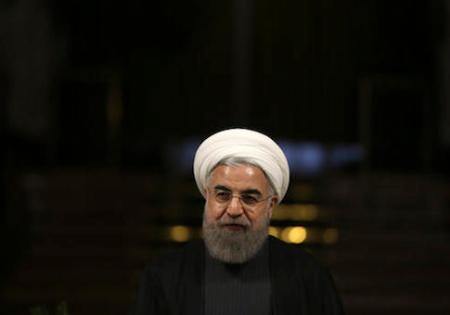
Iranian President Hassan Rouhani speaks in a news briefing after his meeting with his Slovenian counterpart Borut Pahor at the Saadabad palace in Tehran, Iran, Tuesday, Nov. 22, 2016. (AP Photo/Vahid Salemi)

Iranian President Hassan Rouhani  (AP Photo/Vahid Salemi)

“But the Obama administration counted on Iran waiting until the next president before revealing the game, and the Iranians sprung the trap early,” the source added. “So now the administration will do everything it can to look the other way and get through the next few weeks, so they can blame the inevitable collapse on Trump.”

***************************

Senior Iranian officials vowed on Wednesday to continue moving forward with nuclear weapons work and other banned activities as retaliation against the United States for breaching last year’s nuclear accord, according to reports in the country’s state-controlled media.

Iranian leaders instructed the country’s atomic energy organization to move forward with sensitive nuclear work, including the construction of nuclear-powered ships and submarines.

Further provocative actions will be announced in the coming days, according to these Iranian leaders, who described the country’s actions as revenge for recent moves by the U.S. Congress to extend sanctions on Iran, a move the Islamic Republic claims is a breach of the nuclear deal.

Iran’s latest moves have not elicited concern from Obama administration officials, who continue to pursue a series of measures meant to decrease international pressure on Tehran and provide it with greater financial resources.

“Considering that the US administration has ignored and delayed compliance with its undertakings under the [nuclear agreement] and given the recent extension of the Iran Sanctions Act (ISA) that had already been declared as a violation of the nuclear deal by the Islamic Republic of Iran… the Atomic Energy Organization of Iran is ordered to develop the country’s peaceful nuclear program within the framework of the Islamic Republic of Iran’s international undertakings as defined in the following missions,” Iranian President Hassan Rouhani wrote in a letter Tuesday to the country’s top nuclear agency.

Iran will move forward with a “plan for designing and building propulsion systems to be used in marine transportation in cooperation with scientific and research centers,” according to Rouhani’s letter.

It also will engage in the “production of fuel for nuclear propulsion systems,” Rouhani wrote.

This is the first in a range of responses planned by Tehran, according to Ali Akbar Velayati, a senior aide to Iran’s Supreme Leader Ali Khamenei.

The renewed nuclear work is “the first but not the last measures to be taken by Iran,” Velayati was quoted as saying on Wednesday.

Iran’s announcement did not draw a sharp response from Obama administration officials, who declined to say whether the nuclear work would constitute a breach of the deal.

“This announcement itself does not constitute a violation,” State Department spokesman John Kirby told reporters. “I think there’s a lot we just don’t know. I mean, this announcement just got made. There’s a lot we don’t know about it and what it means. And so I think we’d have to reserve some judgment here about the degree to which this could present any kind of problem.”

Kirby expressed faith in international nuclear inspectors, telling reporters that they would likely catch a breach of the deal.

Michael Rubin, a former Pentagon adviser and expert of rogue regimes, told the Washington Free Beacon that Iran is using the renewal of sanctions as an excuse to ramp up its illicit research activities

“The JCPOA [Joint Comprehensive Plan of Action], which they have never officially signed, was a gift made possible by Obama’s ego and Kerry’s naiveté,” Rubin said. “If they disagree with the United States, they can follow a legal process to pursue that but the fact that they are having a temper tantrum shows their insincerity. Especially because no new sanctions have been applied to Iran. After all, the U.S. president can waive any sanctions so long as Iran complies with its commitments.”

One senior foreign policy consultant who has worked with Republican and Democratic offices in Congress on the issue told the Free Beacon that Iran always planned to breach the deal once it received promised economic relief.

“The Iran deal was deliberately structured to prevent American leaders from pressuring Iran. Kerry and his Iranian counterparts wrote the deal so that Iran would get most of the benefits immediately, so that they could blackmail American lawmakers by threatening to costlessly walk away, which is exactly what they’re doing,” the source said.

“But the Obama administration counted on Iran waiting until the next president before revealing the game, and the Iranians sprung the trap early,” the source added. “So now the administration will do everything it can to look the other way and get through the next few weeks, so they can blame the inevitable collapse on Trump.”

Iranian Official Reveals ‘Uncovering’ of Major US Cyber-Attack Plot — Failing to Mention Info Obtained From American Docu-Drama

December 13, 2016

Iranian Official Reveals ‘Uncovering’ of Major US Cyber-Attack Plot — Failing to Mention Info Obtained From American Docu-Drama, AlgemeinerRuthie Blum, December 12, 2016

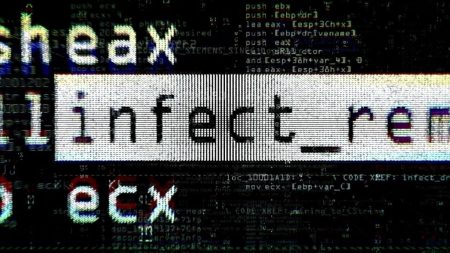
maxresdefault-4-1024x576The slide of a clip in which ‘Zero Days’ is discussed. Photo: YouTube.

As The Algemeiner has reported extensively, Iranian officials have been issuing daily threats against Washington — particularly since last month’s election of Donald Trump to the presidency — about the Islamic Republic’s “fierce” response to any American breaches of the JCPOA, alongside muscle-flexing about the quality and quantity of its long-range missiles. Two weeks ago, the Senate passed a motion to extend the Iran Sanctions Act for an additional 10 years, which spurred the regime in Tehran to warn President Barack Obama not to approve the move.

********************

An Iranian Civil Defense Organization official announced on Monday that the United States is plotting a major cyber-attack on the Islamic Republic that will be more dangerous and wreak far more havoc that the Stuxnet virus, the semi-official state news agency Fars reported.

Addressing a conference in Tehran, Alireza Karimi said, “At present, the US has launched a project named Nitro Zeus with the aim of attacking Iran’s defense and telecommunication infrastructures.”

Karimi failed to mention, however, that he was actually referring to information revealed in “Zero Days,” an Alex Gibney docu-drama that premiered in July at the Berlin International Film festival. The film claimed that Nitro Zeus was developed as a backup plan in the event that Western efforts to curb Iran’s nuclear program by diplomatic means failed.

According to a description of the movie in the Tech Times, the major operation “took on great urgency as the [US] government believed that Israel Prime Minister Benjamin Netanyahu would launch a strike on the nuclear facilities of Iran, a move that would draw in the United States into the hostilities that [would] follow.”

However, the film claims that Nitro Zeus, the code name given to the mass malware operation that cost many millions of dollars, was shelved when the Joint Comprehensive Plan of Action — otherwise known as the nuclear deal — was signed between six world powers and Iran last year in July 2015.

In an extensive piece about the film, Newsweek wrote:

Gibney traces the development of Stuxnet to the last years of George W. Bush’s administration. It was a major operation, participants tell him, involving the CIA, the National Security Agency (NSA) and U.S. Cyber Command. On the Israeli side, it involved the Mossad…and Unit 8200, its military signals intelligence division. Britain’s General Communications Headquarters, its signals intelligence corps, also played a role. After the code for Stuxnet was written, it was tested both in the US and Israel on centrifuges identical to those used by Iranians. When CIA officials showed Bush the shards of a centrifuge that Stuxnet had destroyed, the president gave the OK to use it against Iran. The era of cyberwarfare had officially begun.

The participants who confirmed Stuxnet’s American and Israeli origins did so anonymously and off-camera, for fear of violating strict prohibitions against discussing classified information. That’s why Gibney used an actor…through [whom he] breaks his news in the film. “Stuxnet was just part of a much larger Iranian mission,” the character says… “Nitro Zeus would take out Iran’s strategic communications, air defenses, power grid, civilian communications, transportation and financial system…Nitro Zeus was the plan for a full-scale cyberwar with no attribution.”

Fars reported that Karimi’s remarks about Nitro Zeus came on the heels of a statement by the Civil Defense Organization chief, Brigadier General Mohammad Hassan Mansourian, who boasted his office’s capability to “defuse cyberattacks and cultural invasions.”

As The Algemeiner has reported extensively, Iranian officials have been issuing daily threats against Washington — particularly since last month’s election of Donald Trump to the presidency — about the Islamic Republic’s “fierce” response to any American breaches of the JCPOA, alongside muscle-flexing about the quality and quantity of its long-range missiles. Two weeks ago, the Senate passed a motion to extend the Iran Sanctions Act for an additional 10 years, which spurred the regime in Tehran to warn President Barack Obama not to approve the move.

Israel’s First Project with Trump

December 9, 2016

Israel’s First Project with Trump, Front Page MagazineCaroline Glick, December 9, 2016

firstproject

Originally published by the Jerusalem Post

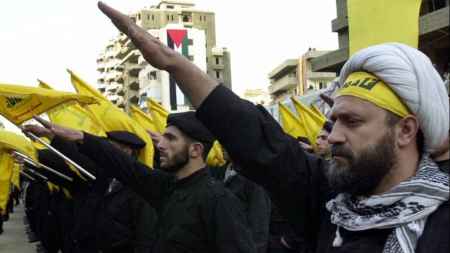
[R]ecently Hezbollah commander Hassan Nasrallah bragged, “We’re open about the fact that Hezbollah’s budget, its income, its expenses, everything it eats and drinks, its weapons and rockets are from the Islamic Republic of Iran.”

******************************

Israeli officials are thrilled with the national security team that US President-elect Donald Trump is assembling. And they are right to be.

The question now is how Israel should respond to the opportunity it presents us with.

The one issue that brings together all of the top officials Trump has named so far to his national security team is Iran.

Gen. (ret.) John Kelly, whom Trump appointed Wednesday to serve as his secretary of homeland security, warned about Iran’s infiltration of the US from Mexico and about Iran’s growing presence in Central and South America when he served as commander of the US’s Southern Command.

Gen. (ret.) James Mattis, Trump’s pick to serve as defense secretary, and Lt.-Gen. (ret.) Michael Flynn, whom he has tapped to serve as his national security adviser, were both fired by outgoing President Barack Obama for their opposition to his nuclear diplomacy with Iran.

During his video address before the Saban Forum last weekend, Prime Minister Binyamin Netanyahu said that he looks forward to discussing Obama’s nuclear Iran nuclear deal with Trump after his inauguration next month. Given that Netanyahu views the Iranian regime’s nuclear program – which the nuclear deal guaranteed would be operational in 14 years at most – as the most serious strategic threat facing Israel, it makes sense that he wishes to discuss the issue first.

But Netanyahu may be better advised to first address the conventional threat Iran poses to Israel, the US and the rest of the region in the aftermath of the nuclear deal.

There are two reasons to start with Iran’s conventional threat, rather than its nuclear program.

First, Trump’s generals are reportedly more concerned about the strategic threat posed by Iran’s regional rise than by its nuclear program – at least in the immediate term.

Israel has a critical interest in aligning its priorities with those of the incoming Trump administration.

The new administration presents Israel with the first chance it has had in 50 years to reshape its alliance with the US on firmer footing than it has stood on to date. The more Israel is able to develop joint strategies with the US for dealing with common threats, the firmer its alliance with the US and the stronger its regional posture will become.

The second reason it makes sense for Israel to begin its strategic discussions with the Trump administration by addressing Iran’s growing regional posture is because Iran’s hegemonic rise is a strategic threat to Israel. And at present, Israel lacks a strategy for dealing with it.

Our leaders today still describe Hezbollah with the same terms they used to describe it a decade ago during the Second Lebanon War. They discuss Hezbollah’s massive missile and rocket arsenal.

With 150,000 projectiles pointed at Israel, in a way it makes sense that Israel does this.

Just this week Israel reinforced the sense that Hezbollah is more or less the same organization it was 10 years ago when – according to Syrian and Hezbollah reports – on Tuesday Israel bombed Syrian military installations outside Damascus.

Following the alleged bombing, Defense Minister Avigdor Liberman told EU ambassadors that Israel is committed to preventing Hezbollah from transferring advanced weapons, including weapons of mass destruction, from Syria to Lebanon.

The underlying message is that having those weapons in Syria is not viewed as a direct threat to Israel.

Statements like Liberman’s also send the message that other than the prospect of weapons of mass destruction or precision missiles being stockpiled in Lebanon, Israel isn’t particularly concerned about what is happening in Lebanon.

These statements are unhelpful because they obfuscate the fact that Hezbollah is not the guerrilla organization it was a decade ago.

Hezbollah has changed in four basic ways since the last war.

First, Hezbollah is no longer coy about the fact that it is an Iranian, rather than Lebanese, organization.

Since Iran’s Revolutionary Guards founded Hezbollah in Lebanon in 1983, the Iranians and Hezbollah terrorists alike have insisted that Hezbollah is an independent organization that simply enjoys warm relations with Iran.

But today, with Hezbollah forming the backbone of Iran’s operations in Syria, and increasingly prominent in Afghanistan and Iraq, neither side cares if the true nature of their relationship is recognized.

For instance, recently Hezbollah commander Hassan Nasrallah bragged, “We’re open about the fact that Hezbollah’s budget, its income, its expenses, everything it eats and drinks, its weapons and rockets are from the Islamic Republic of Iran.”

What our enemies’ new openness tells us is that Israel must cease discussing Hezbollah and Iran as separate entities. Israel’s next war in Lebanon will not be with Hezbollah, or even with Lebanon. It will be with Iran.

This is not a semantic distinction. It is a strategic one. Making it will have a positive impact on how both Israel and the rest of the world understand the regional strategic reality facing Israel, the US and the rest of the nations of the Middle East.

The second way that Hezbollah is different today is that it is no longer a guerrilla force. It is a regular army with a guerrilla arm and a regional presence. Its arsenal is as deep as Iran’s arsenal.

And at present at least, it operates under the protection of the Russian Air Force and air defense systems.

Hezbollah has deployed at least a thousand fighters to Iraq where they are fighting alongside Iranian forces and Shi’ite militia, which Hezbollah trains. Recent photographs of a Hezbollah column around Mosul showed that in addition to its advanced missiles, Hezbollah also fields an armored corps. Its armored platforms include M1A1 Abrams tanks and M-113 armored personnel carriers.

The footage from Iraq, along with footage from the military parade Hezbollah held last month in Syria, where its forces also showed off their M-113s, makes clear that Hezbollah’s US platform- based maneuver force is not an aberration.

The significance of Hezbollah’s vastly expanded capabilities is clear. Nasrallah’s claims in recent years that in the next war his forces will stage a ground invasion of the Galilee and seek to seize Israeli border towns was not idle talk. Even worse, the open collaboration between Russia and Iran-Hezbollah in Syria, and their recent victories in Aleppo, mean that there is no reason for Israel to assume that Hezbollah will only attack from Lebanon. There is a growing likelihood that Hezbollah will make its move from Syrian territory.

The third major change from 2006 is that like Iran, Hezbollah today is much richer than it was before Obama concluded the nuclear deal with the ayatollahs last year. The deal, which canceled economic and trade sanctions on Iran, has given the mullahs a massive infusion of cash.

Shortly after the sanctions were canceled, the Iranians announced that they were increasing their military budget by 90%. Since Hezbollah officially received $200 million per year before sanctions were canceled, the budget increase means that Hezbollah is now receiving some $400m. per year from Iran.

The final insight that Israel needs to base its strategic planning on is that a month and a half ago, Hezbollah-Iran swallowed Lebanon.

In late October, after a two-and-a-half-year fight, Saad Hariri and his Future Movement caved to Iran and Hezbollah and agreed to support their puppet Michel Aoun in his bid for the Lebanese presidency.

True, Hariri was also elected to serve as prime minister. But his position is now devoid of power.

Hariri cannot raise a finger without Nasrallah’s permission.

Aoun’s election doesn’t merely signal that Hariri caved. It signals that Saudi Arabia – which used the fight over Lebanon’s presidency as a way to block Iran’s completion of its takeover of the country – has lost the influence game to Iran.

Taken together with Saudi ally Egyptian President Abdel Fattah al-Sisi’s announcement last week that he supports Syrian President Bashar Assad’s remaining in power, Aoun’s presidency shows that the Sunnis have accepted that Iran is now the dominant power in Iraq, Syria and Lebanon.

This brings us back to Hezbollah’s tank corps and the reconstruction of the US-Israel alliance.

After the photos of the US-made armored vehicles in Hezbollah’s military columns were posted online, both Hezbollah and the Lebanese Armed Forces insisted that the weapons didn’t come from the LAF.

But there is no reason to believe them.

In 2006, the LAF provided Hezbollah with targeting information for its missiles and intelligence support. Today it must be assumed that in the next war, the LAF, and its entire arsenal will be placed at Hezbollah-Iran’s disposal. In 2016 alone, the US provided the LAF with $216m. in military assistance.

From Israel’s perspective, the most strategically significant aspect of Hezbollah-Iran’s uncontested dominance over all aspects of the Lebanese state is that while they control the country, they are not responsible for it.

Israeli commanders and politicians often insist that the IDF has deterred Hezbollah from attacking Israel. Israel’s deterrence, they claim, is based on the credibility of our pledge to bomb the civilian buildings now housing Hezbollah rockets and missiles in the opening moments of the next conflict.

These claims are untrue, though. Since Hezbollah- Iran are not responsible for Lebanon despite the fact that they control it through their puppet government, Iranian and Hezbollah leaders won’t be held accountable if Israel razes south Lebanon in the next war. They will open the next war not to secure Lebanon, but to harm Israel. If Lebanon burns to the ground, it will be no sweat off their back.

The reason a war hasn’t begun has nothing to do with the credibility of Israel’s threats. It has to do with Iran’s assessment of its interests. So long as the fighting goes on in Syria, it is hard to see Iran ordering Hezbollah to attack Israel. But as soon as it feels comfortable committing Hezbollah forces to a war with Israel, Iran will order it to open fire.

This then brings us back to the incoming Trump administration, and its assessment of the Iranian threat.

Trump’s national security appointments tell us that the 45th president intends to deal with the threat that Iran poses to the US and its interests.

Israel must take advantage of this strategic opening to deal with the most dangerous conventional threat we face.

In our leaders’ conversations with Trump’s team they must make clear that the Iranian conventional threat stretches from Afghanistan to Israel and on to Latin America and Michigan. Whereas Israel will not fight Iran in Iraq and Afghanistan, or in the Americas, it doesn’t expect the US to fight Iran in Lebanon. But at the same time, as both allies begin to roll back the Iranian threat, they should be operating from a joint strategic vision that secures the world from Iran’s conventional threat.

And once that it accomplished, the US and Israel can work together to deal with Iran’s nuclear program.

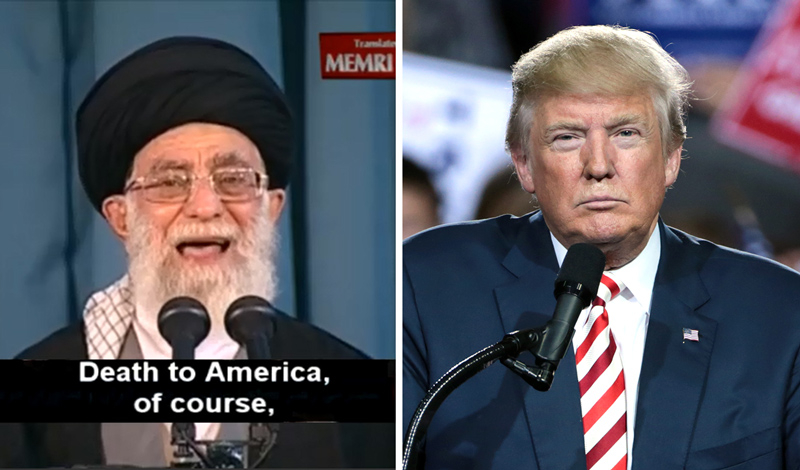
Iran to Trump: Death to America Will Live On

December 5, 2016

Iran to Trump: Death to America Will Live On

by Majid Rafizadeh

December 5, 2016 at 4:00 am

Source: Iran to Trump: Death to America Will Live On

  • Ayatollah Ali Khamenei made it clear that Trump’s presidency causes “no difference” to Iran-US relationships. He called the Americans’ election “a spectacle for exposing their crimes and debacles.”
  • “Thank God, we are prepared to confront any possible incident.” — Iran’s Supreme Leader, Ayatollah Ali Khamenei.
  • From the perspective of Iranian moderates, reformists and hardliners, the US is not a superpower anymore; but a weak actor in the Middle East and on the global stage.
  • Iranian leaders also made it clear that Tehran will continue supporting Hezbollah and other groups that have been designated as terrorist groups by the US Department of State. These groups pursue anti-American and anti-Israeli agendas.

Ideologically speaking, Iran’s hardliners, primarily Supreme Leader Ayatollah Ali Khamenei and senior officials of the Islamic Revolutionary Guard Corps (IRGC) who enjoy the final say in Iran’s domestic and foreign policies, have made it clear that Iran will not change the core pillars of its religious and revolutionary establishment: Anti-Americanism and hatred towards the “Great Satan” and the “Little Satan”, Israel.

Supporters of Ayatollah Khamenei and the IRGC enthusiastically shouted “Death to America” in response to a recent speech that Khamenei gave, applauding the 1979 hostage-taking and takeover of the US Embassy in Tehran.

Iran’s major state newspapers carried anti-American headlines this week, quoting the Supreme Leader. In his latest public speech to thousands of people, which was televised via Iran’s state TV, Khamenei made it clear that Trump’s presidency will cause “no difference” to Iran-US relationships. Khamenei pointed out that, “We have no judgment on this election because America is the same America”. In his speech, Khamenei attacked President-elect Donald Trump and the American people. The Ayatollah called the US election “a spectacle for exposing their crimes and debacles.”

Other hardliners echoed the same message that there would be no change in Iran’s revolutionary principles and ideals against the US and its allies. The deputy commander of the Revolutionary Guards, Hossein Salami, told Iran’s Fars news agency: “When the Republicans were in power, they threatened us and showed their hostility… and when the Democrats were in power, the policies of the United States were the same.”

Khamenei also remarked that the US will remain the evil, or the “Great Satan,” saying:

“In the past 37 years, neither of the two parties who were in charge did us any good and their evil has always been directed toward us….We neither mourn nor celebrate, because it makes no difference to us… We have no concerns. Thank God, we are prepared to confront any possible incident.”

He added that the remarks made by Donald Trump “over the last few weeks on immoral issues — which are, for the most part, not baseless accusations — are enough to disgrace America.”

Militarily, strategically and geopolitically, Tehran’s core pillars of damaging US national interests, and scuttling US foreign policy objectives will remain intact.

Iran’s semi-official Fars news agency reported that Iran’s armed forces chief of staff, General Mohammad Hossein Bagheri, has heavily criticized Donald Trump for stating that the US will confront Iranian boats in the Gulf if they harass US Navy ships. In the last year, Iran has increasingly harassed and provoked US Navy ships, and detained 11 American sailors.

General Bagheri stated out that, “The person [Trump] who has recently achieved power, has talked off the top of his head! Threatening Iran in the Persian Gulf is just a joke.”

In 2016, the number of incidents of boats from Iran’s navy and Revolutionary Guards provoking and harassing the US Navy ships rose significantly to 31 incidents, highlighting that the IRGC evidently feels sufficiently emboldened to damage US national security publicly and on a regular basis. From the perspective of Iranian moderates, reformists and hardliners, the US is not a superpower anymore; but a weak actor in the Middle East and on the global stage.

In addition, Iran, with underlying anti-American objectives, is aggressively expanding its military presence and naval bases in foreign nations and international waters. Major General Mohammad Hossein Baqheri said, as cited by the Iranian Tasnim news agency, that the expanding presence in international waters and naval bases in foreign countries “could be ten times more efficient than nuclear power.” For the first time, the Iranian Navy’s 44th flotilla, comprised of a Bushehr logistic warship and an Alvand destroyer, has now sailed into the Atlantic Ocean as well.

Tehran is also considering having naval bases on the coasts of Yemen and Syria to support the Assad government and the Houthis. As Iran’s Chief of the General Staff told a gathering of senior naval commanders, “One day, we may need bases on the coasts of Yemen and Syria, and we need the necessary infrastructures for them under international maritime law.”

Iran’s naval commander, Rear Admiral Habibollah Sayyari, also told the gathering of senior naval commanders that boosting military presence in international waters reflects Iran’s power.

According to the Tasnim news agency, Iran’s navy has already deployed 49 flotillas to various maritime zones. Sayyari added that the flotillas showcased Iran’s symbol of power.”

Iranian leaders also made it clear that Tehran will continue supporting Hezbollah and other groups that are designated as terrorist groups by the US Department of State.

These groups pursue anti-American and anti-Israel agendas.

Khamenei and IRGC are sending a strong message that Iran will neither alter its core religious and revolutionary pillar of anti-Americanism, nor change its foreign policy and military objectives of damaging US interests. Iran’s policy towards the “Great Satan” will remain as it has been since the establishment of the Islamic Republic of Iran in 1979.

Dr. Majid Rafizadeh, political scientist and Harvard University scholar is president of the International American Council on the Middle East. He can be reached at Dr.rafizadeh@post.harvard.edu.

CIA’s Brennan says tearing up the Iran deal would be “height of folly”

December 1, 2016

CIA’s Brennan says tearing up the Iran deal would be “height of folly”, Jihad Watch

(Brennan’s statement is not the “clearest indication yet” that the Iran Scam needs to be rejected; many others predated it. It is, however, another pretty good indication of Brennan’s level of competence. — DM)

This is the clearest indication yet that tearing up the Iran deal is just what the U.S. needs to do. “Do the opposite of what John Brennan recommends” would be the wisest course the next administration could possibly take. John Brennan is the person who — after U.S. Muslim groups demanded he do so – “purged” all mention of Islam and jihad from law enforcement counter-terror training materials in 2011.

john_brennan

“CIA’s Brennan says tearing up Iran deal would be ‘folly,’” CNBC, November 30, 2016 (thanks to Lookmann):

Outgoing CIA Director John Brennan has said it would be the “height of folly” for U.S. President-elect Donald Trump to tear up Washington’s deal with Tehran because it would make it more likely that Iran and others would acquire nuclear weapons.

“It could lead to a weapons program inside of Iran that could lead other states in the region to embark on their own programs,” Brennan said in an interview with the BBC aired on Wednesday.

“So I think it would be the height of folly if the next administration were to tear up that agreement.”…

Obama Admin Covering Up Key Iran Deal Details in Final Days

November 22, 2016

Obama Admin Covering Up Key Iran Deal Details in Final Days Rubio spox: Senator looks forward to helping Trump shred Iran deal

BY:
November 22, 2016 5:00 am

Source: Obama Admin Covering Up Key Iran Deal Details in Final Days

Secretary of State John Kerry talks with Iranian Foreign Minister Mohammad Javad Zarif in Vienna / AP

Senior Obama administration officials in their final days in office are seeking to cover up key details of the Iran nuclear deal from Congress, according to documents and sources who spoke to the Washington Free Beacon about continued efforts by the White House to block formal investigations into secret diplomacy with Tehran that resulted in a $1.7 billion cash payment by the United States.

As leading members of Congress petition the Obama administration for answers about what many describe as a $1.7 billion “ransom” payment to Iran, Obama administration officials are doubling down on their refusal to answer questions about the secret negotiations with Iran that led to this payment.

Sen. Marco Rubio (R., Fla.), a vocal opponent of last year’s nuclear deal with Iran, has been seeking answers from senior Obama administration officials since at least late September. However, officials continue to stonewall the senator’s inquiries, according to senior congressional sources and formal communications between Rubio and the State Department obtained by the Free Beacon.

Rubio and several other lawmakers have petitioned the Obama administration for documents and information about the secret negotiations that resulted in Tehran receiving $1.7 billion in cash and a promise from the United States to further roll back sanctions on an Iranian financial institution that helped finance the country’s illicit ballistic missile program.

A spokesman for Rubio told the Free Beacon that the administration’s continued obfuscation has motivated the senator to take steps to help President-elect Donald Trump kill the nuclear agreement once he enters office next year.

“Senator Rubio looks forward to working with President-elect Trump and his team to scrap this fundamentally flawed deal and hold Iran accountable for its cheating and regional aggression,” the spokesman said.

Rubio submitted a list of questions about the deal to Deputy Secretary of State Antony Blinken on Sept. 29 during a hearing aimed at examining these payments to Iran.

Blinken finally provided answers to these questions last week, but declined to address all specific questions Rubio posed about the secret negotiations over the $1.7 billion payment.

While the Obama administration has maintained for months that the payment was not part of a ransom package, the Free Beacon and other publications have disclosed in recent weeks that the United States did engage in secret diplomacy with Iran on a range of issues, including the release of American hostages and the $1.7 billion payment.

These issues were addressed in three separate agreements that were only finalized once the United States agreed to provide Tehran with the $1.7 billion payment. Secret documents stored on Capitol Hill and treated in a classified manner show that each of the agreements hinged on the cash payment, the Free Beacon first disclosed in October.

Rubio and other lawmakers have also sought answers from Attorney General Loretta Lynch, who would have played a role in signing off on the agreements. Lynch has declined to answer questions, prompting Rubio and Rep. Mike Pompeo (R., Kan.), the incoming CIA director, to accuse her of “pleading the fifth” before Congress.

The White House has not responded to similar questions submitted by Rubio on Sept. 10, and Treasury Secretary Jack Lew has not answered a series of queries posed on Oct. 25, according to sources who accused the administration of intentionally dodging congressional oversight.

Rubio asked Blinken to provide information on any U.S. official who signed off on the secret deals, and to specify if the agreements were part of the formal nuclear agreement or were inked separately. He also asked whether the deals were tied to the release of U.S. hostages.

Rubio hopes to obtain the name of the Iranian official or officials who signed these documents. Sources familiar with the deals and secret documents stored on Capitol Hill told the Free Beacon it is likely the United States inked these deals with a representative of Iran’s intelligence apparatus.

Blinken did not provide firm answers to any of these questions, according to a copy of his formal communication to Rubio viewed by the Free Beacon. He maintained that the cash payment was part of a decades-old legal dispute with Tehran before the international claims tribunal at the Hague.

“The timing of the Hague settlement was a consequence of the United States taking advantage of the opening of diplomatic opportunities with Iran on several fronts simultaneously, including the opportunity to minimize litigation risk with respect to Iran’s contract claims arising under the U.S.-Iran Foreign Military Sales (‘FMS’) Program,” Blinken wrote, repeating a talking point issued by several Obama administration officials.

The payment was not a ransom, Blinken said.

“Regarding the allegations that this settlement constituted ransom to free American citizens who were released from prison in Iran on January 17, the Administration has repeatedly made it clear since January, and President Obama recently reiterated, that this settlement did not constitute ransom and that the United States has not and will not pay ransom,” he wrote. “Upon Iran’s release of several unjustly detained Americans, the United States provided relief to certain Iranian citizens charged with primarily sanctions-related crimes, several of whom are dual U.S.-Iranian nationals, as a one-time reciprocal humanitarian gesture.”

Clinton: “Israel can’t harm Iran”

October 16, 2016

Clinton: ” Israel isn’t capable of causing substantial damage to Iranian nuclear program” Wikileaks reveals Clinton’s speech from 2013 regarding the Iranian nuclear issue: “Israel estimates that even if it will only cause a small set back to the program, an attack might be the best option. But it lacks the ability to cause serious damage.”

Oct 16, 2016, 12:49PM

Ophir Raz

Source: Clinton: “Israel can’t harm Iran” – World News | JerusalemOnline

Reuters

On a speech the Democratic Presidency candidate held in front of the finance company Goldman Sacks in 2013, Hillary Clinton spoke of Israel’s military abilities to face the Iranian nuclear program. “Israel isn’t capable of inflicting substantial damage on the nuclear program” said Clinton during a speech that has been leaked by WikiLeaks.

“The Israelis have investigated the subject closely for several years and are estimating that even if they will just be able to hinder the Iranian nuclear program for a number of years, it will be worth it and they will be able to withhold any retaliation” said Clinton.

“America’s policy regarding the Iranian nuclear program is to absolutely prevent their capability to achieve nuclear armament” said Clinton and added that if Iran will achieve a nuclear weapon, a nuclear arms race will ensue, and that must be prevented at all costs, “bombing Iran’s nuclear power plants is an option.”

image description
Iranian Nuclear Facility Reuters

The speech is part of the documents leaked out through the hacking to Clinton’s campaign manager e-mail account, in which there were thousands of mails between the two. The Democratic Party have yet to confirm the authenticity of the document, but also haven’t denied any of them.

WikiLeaks: Podesta Agreed that Iran Deal is Disastrous

October 15, 2016

WikiLeaks: Podesta Agreed that Iran Deal is Disastrous, Power Line, Paul Mirengoff, October 14, 2016

Among the recent WikiLeaks documents is an exchange between John Podesta, Hillary Clinton’s campaign manager, and John Anzalone of something called Anzalone Liszt Grove Research. Anzalone sent Podesta an email that consisted of a quote from Sen. Mark Kirk contained in a BuzzFeed article about the Iran deal. Analone also included a link to the article.

In the quoted portion of the article, Kirk said that the Iran deal “condemns the next generation to cleaning up a nuclear war in the Persian Gulf.” Kirk added: “This is the greatest appeasement since Chamberlain gave Czechoslovakia to Hitler.”

Podesta responded to this email by saying: “Yup.”

Hillary Clinton backed the Iran deal and continues to do so. Nor is she alone. Virtually the entire Democratic Party publicly supports this disastrous agreement.

Neither Podesta nor the Clinton campaign has denied the authenticity of the email exchange, according to this report from a Chicago television station. Instead, Podesta condemned Russia for the leaks which he says are designed to help Donald Trump.

Regardless of how one views the leaks, many of them have been enlightening. The Podesta-Anzalone exchange is no exception. I see no explanation for Podesta’s “yup” other than his concurrence with Sen. Kirk’s grim assessment of the Iran deal. Thus, we can conclude that Podesta agreed with Kirk that the centerpiece of President Obama’s foreign policy, supported by Hillary Clinton, is atrocious.

I wonder whether Hillary agrees. If so, it’s another example of her duplicity, but also a rare instance of sound judgment.