Posted tagged ‘Iranian nukes’

Thawing U.S. ties: Cuba today, Iran tomorrow?

December 26, 2014

Thawing U.S. ties: Cuba today, Iran tomorrow? Al Arabiya NewsMajid Rafizadeh, December 26, 2014

(Please see also Obama’s Worst Lie About his Dirty Castro Deal is in his First Sentence.

Obama Cuba negotiations

Also, Obama’s need for a legacy consistent with his ideology trumps all else, including Iran’s abysmal human rights record, its theocratic government, its support for terrorism, its hatred for Israel and desire to eliminate her, its duplicity in its P5+1 negotiations and its insistence on getting (or keeping) nukes. True, removal of statutorily based sanctions would require congressional action. However, Obama has little interest in avoiding constitutional irregularities. No congressional approval was granted for the “temporary suspension” of sanctions and laws inconsistent with Obama’s desires can be and are waived. Litigation over the de facto removal of sanctions by executive order would take many years.– DM)

After almost 53 years of Cold War between the U.S. and Cuba, the transformation of ties between these two adversaries has sparked a considerable amount of debate with respect to the normalization of ties with other longstanding rivals. The possibility of resolving other diplomatic imbroglios, specifically the revival of diplomatic ties between the U.S. and Iran is a case that comes to mind.

Some Iranians showed their excitement on Twitter with regards to the Cuban deal. Some showed hope that their government will be next and they could soon see an American embassy in Tehran. However, others thought that an Iran-U.S. deal is an idealistic and unreachable dream.

Indeed, any normalization of diplomatic relationships between the Islamic Republic and the U.S. will likely have significant positive impacts on both nations, leading to a critical strategic and geopolitical shift in the Middle Eastern political chessboard. Currently, both countries have some shared strategic and geopolitical objectives in Iraq and Syria particularly when it comes to fighting ISIS.

A possible Iranian deal will remove the economic sanctions on the Islamic Republic, assisting Tehran to achieve its highest economic potential in exports, imports and wealth. The tourist industry would be revived in Iran, with many European and Americans fond of visiting thousands of years old historical sites in Esfahan Shiraz, Hamadan, and other provinces. Normalization of diplomatic ties will lead to the flow of (primarily) European companies to do business with the Islamic Republic. In addition, as Iranian youth have shown to be in favor of American brands and products, American manufactures will find a share in Iran’s market as well. Further, U.S. airplane companies will begin cooperation with Iranian airlines.

As many people are pondering on the likelihood of a deal similar to the recent Cuba agreement with Iran, the question is whether the executive order to lift the embargo on the Islamic Republic and conducting back channel diplomacy to fully open ties with Tehran is possible?

Iran’s file is more complicated and multilayered

There are some partial similarities between the Obama administration’s method to initiate a deal with Raul Castro’s government and the way it has recently approached the Islamic Republic. The major commonalities are the back channel diplomacy and talks.

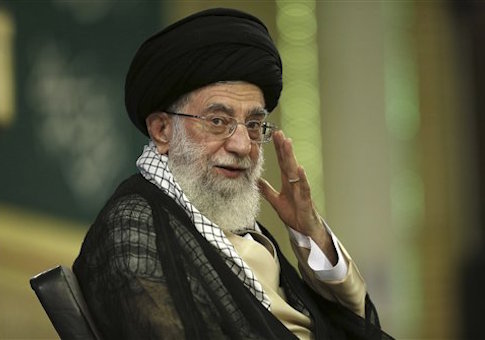
Similar to the Cuban deal, the Obama administration has conducted back channel talks with Iranian politicians with respect to Iran’s nuclear program. In addition, President Obama sent a clandestine letter to Iran’s Supreme Leader Ayatollah Ali Khamenei highlighting some of the shared strategic, national and geopolitical interests that both nations have in the Middle East.

Nevertheless, these commonalities in diplomatic approaches have led some scholars, politicians, and policy analysts to jump to the conclusion that the same deal should be applicable to the case of Iran because such an approach was possible with Cuba and the embargo on Cuba was lifted.

But, not too fast.

Iran’s file is much more complicated, multifaceted and multilayered than the Cuban case. While Cuba is a small island close to the state of Florida with a population of approximately 11 million, Iran, with a population of over 80 million, is located in the complex geopolitical chessboard of the Middle East, and entangled among mixture of alliances and enmities in the oil rich region.

Second of all, from Washington’s perspective, Cuba has hardly been a serious threat to American strategic, geopolitical, or economic interests. On the other hand, the Islamic Republic has been a major player in scuttling U.S. foreign policy objectives and opposing its allies (including Israel) in the Middle East.

Third, several crucial regional developments are viewed from the prism of a zero-sum game for both Iranian and American officials. Iranian leaders are less likely to accept any compromises on their top foreign policy priorities, such as: keeping President Bashar al-Assad in power, withdrawing its financial, advisory, intelligence, and military support to the Iraqi and Syrian government, and assisting formidable proxies such as Hezbollah.

Fourth, there was no international consensus on the U.S. embargo and economic sanctions against the Cuban government. As a result, President Obama can issue an executive order to lift the embargo. Many European countries were doing business with the Cuban government and the United Nations repeatedly condemned U.S. sanctions. On the other hand, the four rounds of economic sanctions on Tehran came with the approval of the U.N. Security Council. Unlike Cuba, many regional and global powers are dubious about Iran’s nuclear and regional hegemonic ambitions.

Fifth, several developments in Iran, such as revelations of clandestine nuclear sites, the possibility of testing exploding detonators for nuclear weapons in Parchin military site, and the military dimension of Tehran’s nuclear program, have led to regional and international strain.

Finally, and more fundamentally, unlike Castro, Khamenei has shown no interest in fully normalizing diplomatic ties with the United States. For example, the Obama administration received no positive response from Khamenei through its diplomacy. In addition, there is no official public debate among Iranian politicians, across various spectrums of Iran’s political system, of even allowing the opening of an American embassy in Tehran. The U.S. domestic opposition to normalize ties with Iran, particularly from the Republicans, is much higher in comparison to the Cuban case. Although the Obama administration has taken some back channel steps to negotiate with the Islamic Republic, Iran’s supreme leader has not responded with signs of willingness to normalize relationships and he has been clear in not trusting the “Great Satan. “

The signal that Iranian leaders received from the Cuban deal is not what the Western media depicts- that Iran is optimistic about normalizing ties with the U.S.. The message that Tehran received was that the Islamic Republic has to persist in its policies and that economic sanctions will ultimately fail. As foreign ministry spokeswoman Marzieh Akfham articulated: “The defense by the Cuban government and people of their revolutionary ideals over the past 50 years shows that policies of isolation and sanctions imposed by the major powers against the wishes of independent nations are ineffective.”


Satire: How Obama briefly shut down North Korea’s internet

December 23, 2014

How Obama briefly shut down North Korea’s internet, Dan Miller’s Blog, December 23, 2014

Obama’s confidential adviser on all matters Islamic, Mohamed Allah-dork, is disgusted with Obama’s recent attack on North Korea’s internet because the methods He used were contrary to true Islamic doctrine. Concerned that his silence might be viewed as agreement with Obama’s methods, Allah-dork decided to divulge what really happened and how.

Mohamed Allah-dork

Mohamed Allah-dork

Great technological sophistication was needed to take down North Korea’s internet. Therefore, experts who had created the ObamaScare website, together with experts from the Federal Communications Commission (FCC), managed the project. Together, they provided an elegant solution which, unlike the ObamaScare website, worked perfectly (if only briefly) on the second attempt.

First, all of the glitches thus far identified in the ObamaScare website were recycled and combined in one enormous package. Next, FCC experts working diligently to degrade the U.S. internet devised a set of protocols to accomplish the same for North Korea. ObamaScare website experts then translated the FCC protocols into binary code and placed it in a massive glitch package for transmission by the National Security Agency (NSA) to all computers and internet hubs in North Korea.

Initially, the outages were limited, sporadic and hence disappointing. NSA had been unaware of the substantial time differences between Washington and North Korea and therefore made their transmissions during periods of highest internet usage in the Washington, D.C. area (during the day and early evening hours). When it was discovered that North Korea does not operate on Eastern Standard Time, NSA repeated the transmissions during periods of lowest D.C. area internet usage (late at night). That required overtime pay, but the necessary funds were easily diverted from the Department of Defense. The cyber attack worked beautifully until it failed.

According to Mohamed Allah-dork, the technology that Obama used to take down North Korea’s internet was un-Islamic for at least two reasons. First: no modern technology, including computers and the internet, is mentioned in the Holy Koran and all are therefore prohibited. Second: such technology — unlike tried and true Islamic methods — does not kill apostates and other infidels efficiently. Indeed, the first (but not, of course, the second) was the basis for the unwritten fatwa issued by Iran’s Supreme Leader declaring nuclear weapons un-Islamic. Iran does not even use modern technology to execute its domestic enemies.

Iran hangings by crane

Obama Clinton and Muslim Brotherhood

Allah-dork had explained to Obama that the Islamic Republic of Iran would never develop nuclear weapons due to the Supreme Leader’s fatwa and its basis in proper Koranic interpretation. Obama agreed, and that continues to be the foundation of His superb leadership of the P5+1 negotiations with Iran which, as all true Islamic scholars know, desires only Islamic peace and tranquility for all.

North Korea’s internet has recovered from Obama’s efforts. Although not previously reported, it is due to Allah’s displeasure with Obama’s deviation from true Islamic doctrine. Despite His universally understood transparency and candor, Obama will never admit the truth of Allah-dork’s revelations because He is embarrassed about the un-Islamic methods He used and their ultimate failure due to Allah’s displeasure. Hence, it is my civic duty to relay here what really happened and why.

The very highest credibility should be assigned to Allah-dork’s revelations because, as is well known, truth telling and the enlightenment it brings are among the greatest and most treasured of all Islamic values. Truth telling is no less important than slaughtering all who are unwilling to submit to the proper version of Islam, the religion of true (Islamic) peace everlasting.

Israeli Ambassador: Obama “Worldview Not in Accord w/Any Israeli Government.”

December 14, 2014

Israeli Ambassador: Obama “Worldview Not in Accord w/Any Israeli Government.” Front Page Magazine, Daniel Greenfield, December 13, 2014

But it certainly is in accord with Iran.

Former ambassador Michael Oren provided a little reminder that the issue isn’t Netanyahu and that Obama’s radical politics would put him at odds with any Israeli government.

This is an administration which makes the racist claim that Jews living in Jerusalem are “settlers”, which funds terrorists and takes their side against Israel.

Michael Oren was the consummate diplomat. He was dignified, thoughtful, articulate, knowledgeable and tactful.

In a dialogue at The Plaza here last week at the annual Scholar-Statesman dinner of the Washington Institute for Near East Policy, Oren said that “this administration [in Washington] has a worldview that is not in accord with any Israeli government,” not just the current one.

Describing the Obama administration as “ideological” on the Mideast, with the president’s 2009 outreach-to-the-Arab-world Cairo speech as its source, Oren said the White House views east Jerusalem communities like Gilo, for example, as not necessarily part of the Jewish state, a position he said no Israeli government would accept.

(Gilo is over the Green Line but part of the Jerusalem municipality, with a largely Jewish population.)

After the March 17 elections, Israel’s next government “likely will move to the right,” Oren predicted, “and America may be going a different way.”

Though he said the U.S.-Israel relationship is crucial — “we [Washington and Jerusalem] have no choice but to be allies” — he asserted on several occasions that “Israel has to take responsibility for itself.”

Asked by moderator Robert Satloff, the executive director of the Washington Institute, about the West’s negotiations with Iran over its nuclear program, Oren first noted that Israel’s “margin for error is exactly zero” on this issue, given Iran’s longstanding threat to destroy the Jewish state.

Then, his voice rising, he said that if you believe that Iranian President Hassan Rouhani is indeed the moderate he claims to be, if you believe that Iran has reversed its policy of being the world’s leading exporter of terror, if you believe that its leaders have changed their long pattern of lying about the nuclear program, and if you believe the West is capable of and willing to respond militarily to prevent the production of a nuclear bomb, then yes, you should support the U.S. effort to reach an agreement with Iran.

“But if your children and grandchildren’s’ lives depended on it, you may reach a different conclusion,” he asserted, adding: “We [the Jewish people] have not come back after 2,000 years to disappear.”

And it goes without saying, that if you believe that you’ve chosen to completely ignore everything happening in the world.

I am not Oren’s biggest fan and what he is saying is simply common sense. Obama isn’t just at odds with Netanyahu or with Israel. He’s at odds with the remaining US allies in the Middle East. If Obama is at odds with Muslim allies of the US because he supports Muslim terrorists like the Muslim Brotherhood, it goes without saying that his relationship with Israel will be toxic.

The incestuous Government-Media-Business farce

December 13, 2014

The incestuous Government-Media-Business farce, Dan Miller’s Blog, December 13, 2014

(Mainstream media reports in the United States, and reports elsewhere reliant upon them, seem to affect perceptions in Israel and elsewhere of Israel, Islam, Iran and the Iran Scam. Here’s a question. To what extent do Israeli media mimic the U.S. mainstream media? — DM)

All the news that fits the desired narrative, and none other, shall be reported by the legitimate “news” media.

12102014_b1crowleylgprotecti8201_c0-260-1800-1309_s561x327

On February 11, 2013 Vice President Biden said that he and Obama are “counting on…legitimate news media” to help in their gun control efforts.

He said he knew people would continue to “misrepresent” the positions taken by himself and Obama, but that “legitimate news media” would cover them in a way that’s helpful to the administration.

In this post, I use the term “legitimate ‘news’ media” in the same sense that Biden apparently did.

I have been reading Sharyl Attkisson’s November 2014 book Stonewalled. Its thesis is that favored businesses, Government agencies and politicians set the agenda of the legitimate “news” media, which defer to them in what they report and how they report it.

Since Obama’s 2008 nomination and subsequent election, the legitimate “news” media have embraced Him by reporting (or creating) good news for Him and His administration while ignoring or disparaging any reports that they consider inconsistent with their pro- Obama ideological talking points. In doing so, they have relied excessively on administration spokespersons without verifying, independently, what they have been told.

On December 11th, The Washington Times published an article by Monica Crowley titled How do we protect Barack Obama today? It relates to the ideological perspective of the media as related by a broadcast journalist shortly before the 2012 presidential elections.

When I asked her for an example, she replied, “Every morning, we hold a meeting about how to build that evening’s broadcast. We’ve been doing this for decades. Everybody talks about which stories we’re going to air, what the line-up looks like, and which reporters we’ll have live in the field and which ones will be filing taped pieces. In the past, the left-wing bias was always left unspoken. People just ‘got it,’ because they all thought the same. [Emphasis added.]

“Once Obama pulled ahead of Hillary and certainly once he became president,” she said, “the bias came out of the closet. Now, every morning when we meet to discuss that night’s show, they literally say — out loud — ‘How do we protect Barack Obama today?’” [Emphasis added.]

Shocking? No more shocking than any other common but unpleasant reality. And it is congruent with Ms. Attkisson’s multiple accounts in Stonewalled. Less than half way through her book, I have learned more than I had previously understood about what, how and why the media reported — and did not report — on the green scam, the Benghazi scam, the Fast and Furious scam, the IRS scam and others. It’s disgusting but neither shocking nor surprising.

We have a “free press” in the legitimate “news” media. They are free to lie, to accept officially authorized “news” and to reject as not newsworthy or wrong anything which disputes, or is even merely inconsistent with, the prevailing narrative based on the official line.

Here are two interviews with Ms. Attkisson:

Many viewers and readers of the legitimate “news” media seem to be catching on. Perhaps that explains the decline in their numbers of viewers and readers. Do the legitimate “news” media care? They must, because it impacts their bottom lines. Will they continue their march into oblivion by running ever more bland pap while hoping for change they can believe in? Or will they, eventually, begin to report hard news, regardless of whom it might distress?

Please read Stonewalled. Depending on where you live, it may (or may not) be available at your local public library.

Iran: U.S. Military Option Is Off the Table

December 12, 2014

Iran: U.S. Military Option Is Off the Table

Iran unveils flurry of new long-range missiles, lasers, satellites

via Iran: U.S. Military Option Is Off the Table | Washington Free Beacon.


A credible U.S. military option against Iran is off the table and something the Obama administration can “no longer even think about,” according to one of Iran’s top military leaders, who claimed in a wide-ranging interview that Iran has deployed advanced missiles and satellites capable of tracking foreign militaries.

Hossein Salami, the deputy commander of Iran’s elite Revolutionary Guard Corps (IRGC), scoffed at the Obama administration’s insistence that a credible military option exists against Iran and discussed the Islamic Republic’s offensive military capabilities during a wide-ranging interview on Iranian state-run television.

On the heels of another deal with Iran that extends talks with Western powers over the country’s contested nuclear program through July 2015, Salami accused the United States of bluffing about the threat of military action against Tehran.

“We have denied our enemy any military option,” Salami said in an interview on Iranian television just days after the Nov. 24 extension in talks was announced. “The enemy can no longer even think about a military option.”

“When senior U.S. officials use the term ‘military option,’ it is only for psychology purposes,” Salami said, according to a translation of his Farsi language remarks provided by the Middle East Media Research Institute (MEMRI). “It is an outdated bluff. It is a banal and decayed theory. To use the Americans’ own words, it is ‘political decay.’”

Salami went on to declare that U.S. sanctions against Iran—which have been significantly weakened under the terms of an interim deal with the West—no longer have an impact on the Iranian economy and will not push the Islamic Republic to make concessions in the nuclear negotiations.

“The Americans believe that their economic sanctions have had an effect on our people or on our economy,” the military leader said. “They believe that they can take their time, wear us down in negotiations, and continue the sanctions.”

“That way, they hope to bring our people to despair, and to lead to political defeat [in the negotiations],” he continued. “We can and must throw these beliefs into the garbage-can of history.”

In the weeks since the extension in nuclear talks was announced—along with around $50 billion in cash payments to Tehran over the next months—Iranian officials have accused the White House of lying about concessions the Islamic Republic has made.

It also has unveiled a range of advanced military hardware following a call by Supreme Leader Ayatollah Khamenei ordering the nation’s military to be on the ready.

IRGC official Salami warned that the country’s ground-to-ground missiles are “capable of reaching enemy targets thousands of kilometers away.”

Israel for instance is about 1,600 kilometers, or 1,000 miles, away from Tehran.

These ballistic missiles “are able to deal deadly blows of various magnitudes to our enemies,” Salami said.

These include missiles that can reach around 2,000 kilometers, making them capable of hitting portions of Europe and much of the Middle East.

The continued construction of ballistic missiles by Iran was not barred under the terms of the interim nuclear agreement with Iran.

Salami also issued a veiled threat to U.S. ships in the Persian Gulf region.

“Our land-to-sea missiles are capable of reaching naval targets deep in the sea,” Salami said. “Our radars are able to detect enemy satellites. Our drones are able to track enemy movements thousands of kilometers beyond our borders. Our helicopters can fly, and our cannons can fire.”

Salami also claimed that Iran has satellites in space that “can see tiny objects on the ground,” as well as “send us photographs and connect us to the entire world.”

The military leader went on to provide further confirmation that Iran is arming Palestinian terrorist in the West Bank and Gaza Strip. Relatedly, Hamas officials were in Tehran this week to renew its anti-Israel military alliance with Iran.

“I am sure that the day will come—and that day is not far off—when the West Bank will become a living hell for the security of the Zionists,” he said. “We shall see the day when the children of the West Bank and Gaza will hold hands. Allah willing, that day is near.”

Meanwhile, Iranian commanders announced that the country will test new radar systems and fire at least five new “homemade” missiles next month, according to the country’s state-run press.

Iran unveiled earlier this week a laser simulator to help the country’s troops learn how to fire rocket-propelled grenades.

Iran Launches ‘We Love Fighting Israel’ Campaign

December 10, 2014

Iran Launches ‘We Love Fighting Israel’ Campaign, Washington Free Beacon, ,December 10, 2014

(But the humanitarian, peace-loving Islamic Republic of Iran, where sanity, good will toward all and freedom flourish, needs nukes to take its rightful place in our multicultural International Community. Right? — DM)

Ali KhameneiAli Khamenei / AP

The Iranian regime has launched a nationwide social media campaign called, “We Love Fighting Israel,” which encourages Iranian children, teens, and Internet users to photograph themselves alongside messages of hate for the Jewish state.

The movement has sprouted online in the last few days across social media sites such as Twitter, Instagram, and other platforms as a result of a recent call by Iranian Supreme Leader Ayatollah Ali Khamenei rallying the nation to take on Israel.

The campaign drew outrage from opponents of Iran’s hardline regime and calls for sites such as Instagram to shut it down for violating policies against hate speech.

Thousands of Iranians are reported to have already joined the electronic movement following comments by Khamenei’s outlining Iran’s goal of destroying the Jewish state.

“Our people love fighting against the Zionists and the Islamic Republic has proved this as well,” Khamenei was quoted as saying in a recent speech by the country’s state-run media. “By Allah’s Favor and Grace, we have passed through the barrier of denominational discord.”

These remarks inspired Iranian social media users to take to the Internet and launch the “We Love Fighting Israel” movement. The campaign even has spawned its own hashtag on Twitter, “#FightingtheZionists.”

The anti-Israel campaign now “has gone viral on the web,” according to Iran’s state-controlled Mehr News Agency, “getting more and more boost from individuals who post photos reading similar sentences, [and] sharing the #Fightingthezionists hash tag.”

More than 300 pictures have already been posted to an Instagram account titled, “FightingTheZionists.” The account, which had some 3,000 followers as of Tuesday evening, links to Khamenei’s personal Instagram account.

Users post pictures with messages declaring, “We love fighting against Israel,” “I love to fight Israel,” “We are lovers of fighting Israel,” and “I love fighting against Zionists,” among other similar messages.

One picture in particular has caught the eye of Iran critics on the web and prompted a harsh response to the anti-Israel campaign.

The photo shows a young child decked out in military gear and holding a sign that translates from Farsi as, “I love fighting against Zionists.”

Captioned alongside the photo is an English language message that reads: “Our people love fighting against the Zionists and the Islamic Republic has proved this as well, Ayatollah Khamenei.”

[Please see Washington Free Beacon article for a photo which I can’t reproduce here. Many other photos are available here. — DM]

It is not the only photo to depict young children as participating in the campaign to fight Israel.

The photos posted on the Instagram page depict “several groups of people including war veterans, students, journalists, and people from all walks of life joining the campaign,” according to Mehr News.

The American nonprofit group United Against Nuclear Iran (UANI), which works to prevent Tehran from obtaining a nuclear weapon, expressed disgust at the campaign on its Twitter account.

UANI lashed out at the Iranian regime for promoting “vile hate” and the “indoctrination of hate children.”

Additionally, Matan Shamir, UANI’s director of research, called on social media sites to immediately take steps to remove the Iranian campaign.

“The Iranian regime’s brazen exploitation and indoctrination of innocent children to hate and commit violence is utterly deplorable,” Shamir said. “Instagram and its parent company Facebook must enforce their own guidelines prohibiting hate speech and incitement to violence, and remove such propaganda immediately.”

Shamir went on to criticize Iran for its own domestic human rights abuses, such as preventing average citizens from accessing the Internet.

“It is intolerable that while the regime blocks its own citizens from accessing many popular social media platforms, it uses them to advance its own crude and hateful ideology,” he said.

Netanyahu’s epic understandings with Egyptian, Saudi and UAE rulers – a potential campaign weapon

December 6, 2014

Netanyahu’s epic understandings with Egyptian, Saudi and UAE rulers – a potential campaign weapon, DEBKAfile, December 6, 2014

Abdullah-al_sisiEgyptian and Saudi rulers take charge of Arab affairs

Netanyahu may or may not opt to brandish Israel’s diplomatic breakthrough to the Arab world as campaign fodder to boost his run for re-election.  Whatever he decides, the rulers of Saudi Arabia, the Arab emirates and Egypt are turning out to have acquired an interest in maintaining him in office as head of the Israeli government, in direct opposition to President Obama’s ambition to unseat him.

******************

The six Gulf Cooperation Council (GCC) rulers meet in the Qatari capital of Doha next week amid high suspense across the Arab world. Its agenda is topped by moves to finally unravel the 2010 Arab Spring policy championed by US President Barack Obama, moves that also bear the imprint of extensive cooperation maintained on the quiet between Israel and key Arab rulers.

DEBKAfile reports that the Doha parley is designed to restore Egypt under the rule of President Abdel Fatteh El-Sisi to the lead role it occupied before the decline of Hosni Mubarak. Another is to root out the Muslim Brotherhood by inducing their champion, the young Qatari ruler, Emir Tamim bin Hamad Al Thani, to drop his government’s support.

At talks taking place in Riyadh ahead of the summit, Qatari officials appeared ready to discontinue the flow of weapons, funds and intelligence maintained since 2011 to the Brothers and their affiliates across the Arab world (Libya, Egypt, Syria, Jordan and Hamas-ruled Gaza), as well shutting down the El Jazeera TV network – or at least stopping the channel’s use as the Brotherhood’s main propaganda platform.

The Doha summit is designed to crown a historic effort led by Saudi King Abdullah, UAE ruler Sheikh Mohammed bin Zayed and President El-Sisi to undo the effects of the Obama administration’s support for elements dedicated to the removal of conservative Arab rulers, such as the Brotherhood.

They have found a key ally in this drive in Israel’s Prime Minister Binyamin Netanyahu, who took advantage of the chance of an epic breakthrough in relations with the leading bloc of Arab nations, with immediate and far-reaching effect on Israeli security and its standing in the region.

Yet at the same time, Netanyahu has kept this feat under his hat – even while smarting under a vicious assault by his detractors – ex-finance minister Yair Lapid and opposition leader Yakov Herzog of Labor – on his personal authority and leadership credibility (“everything is stuck,” “he’s out of touch.”) and obliged to cut short the life of his government for a general election on March 17.

He faces the voter with the secret still in his pocket of having achieved close coordination with the most important Arab leaders – not just on the Iranian nuclear issue and the Syrian conflict, but also the Palestinian question, which has throughout Israel’s history bedeviled its ties with the Arab world.

When Yair Lapid, whom Netanyahu sacked this week, boasted, “I am talking to the Americans” while accusing the prime minister of messing up ties with Washington, he meant he was talking to the Americans close to Barack Obama, whom Egypt, Saudi Arabia and Abu Dhabi, hand in hand with Netanyahu, have judged adverse to their regimes.

This Arab-Israeli collaboration encompasses too many areas to keep completely hidden. Its fruits have begun breaking surface in a string of events.

This week, Israel apparently out of the blue, quietly agreed to Egypt deploying 13 army battalions in Sinai (demilitarized under their 1979 peace treaty), including tanks, and flying fighter jets over terrorist targets.

A joint Saudi-Israeli diplomatic operation was instrumental in obstructing a US-Iran deal on Tehran’s nuclear program.

Another key arena of cooperation is Jerusalem.

Friday, Dec. 5, Jordan announced the appointment of 75 new guards for the Al Aqsa Mosque compound on Temple Mount. The director of the mosque, Sheikh Omar al-Kiswani, said they will begin work in the coming days.

This was the outcome of Jordanian King Abdullah’s talks with the Egyptian president in Cairo Sunday, Nov. 30, in which they agreed that the Muslim Waqf Authority on Temple Mount must change its mode of conduct and replace with new staff the violent elements from Hamas, the Al Tahrir movement and Israeli Arab Islamists, which had taken charge of “security.”.

The Moslem attacks from the Mount on Jewish worshippers praying at the Western Wall below and Israeli police have accordingly ceased in the two weeks since Israel lifted its age restrictions on Muslim worshippers attending Friday prayers at Al Aqsa. Israel groups advocating the right to Jewish prayer on Temple Mount were discreetly advised to cool their public campaign.

The Palestinian riots plaguing Jerusalem for months have died down, except for isolated instances, since, as DEBKAfile revealed, Saudi and Gulf funds were funneled to pacify the city’s restive Palestinian neighborhoods.

Cairo and the Gulf emirates have used their influence with Palestinian Authority Chairman Mahmoud Abbas to get him to moderate his invective against Israel and its prime minister, and slow his applications for Palestinian membership of international bodies as platforms for campaigning against the Jewish state.

Concerned by the way the mainstream Arab world was marginalizing the Palestinian question, Hamas leader Khaled Meshaal chose his moment Friday – ahead of the White House meeting between the Jordanian monarch and President Obama – to try and re-ignite the flames of violence in Jerusalem. He went unheeded.

Netanyahu may or may not opt to brandish Israel’s diplomatic breakthrough to the Arab world as campaign fodder to boost his run for re-election.  Whatever he decides, the rulers of Saudi Arabia, the Arab emirates and Egypt are turning out to have acquired an interest in maintaining him in office as head of the Israeli government, in direct opposition to President Obama’s ambition to unseat him.

ISIS Will Take Over The Most Dangerous Muslim Nation On Earth, Take Its Nukes.

November 25, 2014

ISIS Will Take Over The Most Dangerous Muslim Nation On Earth, Take Its Nukes, And Commit The Bloodiest Massacre Of Christians

By Shoebat Foundation on November 24, 2014

via ISIS Will Take Over The Most Dangerous Muslim Nation On Earth, Take Its Nukes, And Commit The Bloodiest Massacre Of Christians We Will See – Walid Shoebat.


By Walid Shoebat (Shoebat Exclusive)

ISIS now has camped in Pakistan and all across Pakistan, the black standard of the Islamic State has been popping up all over from urban slums to Taliban strongholds, the ISIS logo and name have appeared in graffiti, posters and pamphlets and a cluster of militant commanders in Pakistan declared their allegiance to Abu Bakr al-Baghdadi, the caliph of the Islamic State as ISIS presence there increases by the day. But the one trillion dollar question is will the world leaders secure Pakistan’s nuclear weapons from falling into the hands of ISIS? It doesn’t look like it and the prospects of ISIS gaining nuclear bombs are very likely as the news from Pakistan reveals.

To ensure that no nuclear weapons falls into the hands of ISIS, there is only one option, that the US takes control of Pakistan’s nukes and disarms Pakistan. But is this scenario even feasible? Hardly.

The problem in the West is that its comparing the ISIS problem with its previous predecessor Al-Qaeda so the western news consumers are not paying as much attention to how fast the Islamic State is moving and it’s not wasting time like al-Qaida did before and its moving in lightening speed.


140804068ISIS-ajakan264434b2e2b1d9c2aa84a0cb273e4df55f712a3c


ISIS is moving quick. And now there is even more. The Pakistani media reported recently that a group of 10 commanders from ISIS are currently in Baluchistan to seek allegiance of Tehrik-i-Taliban Pakistan (TTP) and the Baloch freedom movement. This happened just a few weeks after a group of TTP under Maulana Fazlullah, voiced support for the terror group and swore allegiance to ISIS leader Abu Bakr al-Baghdadi. It was not only Maulana Fazlullah who teamed up with ISIS, another local group called Jamaatul Ahrar, also declared its support for ISIS. Jamaatul Ahrar’s leader, Ehsanullah Ehsan, was quoted by Reuters as saying: “We respect them. If they ask us for help, we will look into it and decide.” According to the Daily Mail, the spokesperson of TTP and six senior figures have declared loyalty to ISIS.

The presence of ISIS was also confirmed by the Pakistani government. The presence of ISIS in Pakistan and allegiance of TTP groups is truly a disturbing news and is likely to have serious consequences for a country that is already in turmoil due to incompetent governance, economic crises and political tension. However, this is not the sole reason behind ISIS desire to start operations in Pakistan. There are multiple encouraging points that brought ISIS to the country that is already in turmoil. Large parts of Pakistan, Baluchistan and FATA are at the age of bifurcations. ISIS support to the freedom fighters of Baluchistan and jihadis of FATA will accelerate the freeing process of these provinces which will eventually become basis for ISIS in the region.

“The message they’re trying to convey is they are brutal to their enemies, and they are righteous in their cause,” says Karl Kaltenthaler, an expert on the rise of Islamic extremism and professor at the University of Akron. “If you mess with them, you’re going to pay a high price, and they will stop at nothing to achieve the triumph of their vision for Islam.”

And to top it all, just in the last two months, Shoebat.com reported all across the Muslim world, ISIS has magnetized a litany of major terrorist organizations to give the Bay’at (allegiance) and join under ISIS such as Jund al-Khilafah (Soldiers of the Caliphate, In North Africa), Ansar al-Shariah (Libya), Taliban (Pakistan), The Islamic Movement of Uzbekistan (Pakistan’s North Waziristan), Al-Tawhid ​Battalion (Pakistan, Afghanistan), Al-Nusra (Lebanon), Al Qaeda in the Arabian Peninsula (Yemen), Ansar al-Tawhid in the Land of Hind (India), Anṣār Bayt al-Maqdis (Sinai) and Jund al-Khilafah (Egypt).

And if you think the situation in Iraq and Syria is bad think again, 98% of Pakistanis support Jihad and they have no problems with all the blood and gore of ISIS. Shoebat.com interviewed Farrukh Seif who is on the ground in Pakistan and had some very interesting observations about the seriousness of the situation:

The Nuclear Danger

Pakistan has some unprotected nuclear weapons and ISIS certainly has its eyes on that and beyond any doubt it will strive to reach those weapons.While the global leaders certainly understand that there is an extreme threat to global security if the risk that ISIS could get a hold of nuclear weapons, yet all world leaders especially Americans do is hold several international conferences on addressing the issue. ISIS is much stronger than Al-Qaeda and was able to hold some sort of chemical weapons in Iraq which they used against the Kurds.


nasr-missile-test

The way one can predict the outcome of things is to study the track record, if chaos happened in a corrupt nation with such an abysmal record, the rule is, that chances of worse repetitions are not far off, its not as if Pakistan, the most corrupt and most Islamist nation in the world is immune from smuggling the capability, among all the nuclear states Pakistan is the only country that leaked and transferred nuclear technology to the countries that are still under UN and US sanctions. It is also the only nuclear state that shelters and protect terrorist organizations such as Al-Qaeda, the Taliban, Haqani Network and now the infamous ISIS. The Pakistani nuclear scientist Abdul Qadeer Khan, leaked nuclear secrets to North Korea, Libya and Iran. Abdul Qadeer Khan not only accepted the full responsibility for transferring sensitive technology to mentioned states but he also revealed in 2004, that the former military ruler, General Pervez Musharraf, the top authority in Pakistan himself was involved neck-deep in nuclear proliferation.

465127033_v2

ISIS will strive for acquiring nuclear weapons in Pakistan and will get it, its only a matter of time. Assuming even if ISIS don’t fight for it, there are elements in Pakistan that may sell either nuclear technology or nuclear weapons to ISIS. If ISIS obtains nuclear weapons in Pakistan a new chapter of terrorism will emerge, and ISIS will turn into an invincible force. This time the world will have to deal with nuclear terrorism in Pakistan which will be fueled by drug money from Afghanistan and ISIS oil money from Iraq and will certainly have severe consequence not only for Pakistan but for the whole world.

Pakistan not only sheltered the worlds most wanted terrorist, Osama Bin Laden, but also protected him for several years inside its military town, Abbottabad while for years it denied it had anything to do with Al-Qaeda while its leader was in close proximity of the main military basis. And if Pakistan also protects Ayman Al Zawahiri, Jalal din Haqani, Mullah Omer and many others whats to stop it from protecting Caliph Abu-Bakr al-Baghdadi? Pakistan unlike any other nation in the world has thousands of radical madrassas (Muslim religious schools) that can easily produce as many warriors for ISIS as they want and has the major bulk of radical mullahs (preachers) that can easily justify ISIS’s mission and activities in Pakistan to produce and supply as many suicide bombers as needed and the killing machine will catapult into apocalyptic scenario.

beheading

Pakistan’s military establishment is the most terrorist friendly entity in the world and considers terrorist groups as strategic assets for proxy wars in India and Afghanistan. Currently the ongoing sectarian violence in Pakistan’s Baluchistan and Khyber Pakhtunkhwa provinces offer greater opportunities for ISIS to operate in Pakistan.

There is little time left and the situation for Christians in Pakistan will be dire for Rescue Christians to move as fast as possible to rescue enslaved Christians. One can imagine when ISIS rules regions in north Pakistan, Christian persecution will be unlike anything we have ever seen.

PLEASE HELP US HELP PAKISTANI CHRISTIANS

McCain: Failed Korea Nuke Negotiators Now Bringing You Iran Talks

November 24, 2014

McCain: Failed Korea Nuke Negotiators Now Bringing You Iran Talks, National ReviewMichael Auslin, November 24, 2014

Halifax — As news spreads that the failed Iranian nuclear talks require a second extension, this time for seven-months, U.S. officials at an international security conference here essentially admitted that North Korea was now a nuclear power, underscoring the failure of decades of high-level diplomacy. Yet the White House is doubling-down on its equally suspect negotiations with Tehran.

General Charles H. Jacoby, outgoing commander of U.S. Northern Command and NORAD, told the Halifax International Security Forum that he was treating North Korea as a “practical threat” due to its nuclear and ballistic missile capability that could potentially reach the U.S. homeland. Jacoby did not specify whether this meant that North Korea’s missiles and nukes were an operational threat, nor how he had changed NORAD’s operating posture, if at all. Admiral Cecil Haney, commander of U.S. Strategic Command (in control of all of America’s nuclear weapons), refused to answer whether he also considered Pyongyang a practical threat, but noted that he wanted more focus on trying to understand North Korean dictator Kim Jong-un. The generals’ comments came just weeks after General Curtis Scaparotti, commander of U.S. Forces Korea, testified before Congress that he believed Pyongyang could build a nuclear warhead and mount it on a ballistic missile.

There is little doubt that America’s policy towards North Korea has failed, and that Pyongyang has played Democratic and Republican administrations alike, promising concessions, making agreements, and playing for time. Time enough to be close to a nuclear break out, which may be imminent. When Pyongyang mates a functional nuclear warhead with a reliable long-range or intercontinental ballistic missile, then two things will happen: first, the nuclear balance in Asia will tip, second, the Iranians will be opening their checkbooks immediately for access to both technologies. Above all, Japan will begin thinking seriously about either dramatically expanding its strike capabilities or maybe even its own nuclear deterrent. After all, given that two decades of American diplomacy resulted in a rogue regime with nukes, how much can the U.S. nuclear umbrella be trusted? Will Washington really be willing to trade Los Angeles for Tokyo? Our ally won’t admit it publicly, but highly doubts it.

To paraphrase: Diplomacy has consequences. Unfortunately, it seems that Washington doesn’t quite get that. Instead, the dialogue dependency trap continues to ensnare our top officials, who convince themselves that talking is always better than the opposite, that rationality and self-interest will ultimately win out. That’s probably true, but the Obama administration’s problem (like the Bush administration’s) is that they don’t understand North Korean concepts of self-interest. Hence, an Asia about to get much more dangerous.

The real dangers of our failed diplomacy were summed up by Senator John McCain in Halifax, who bluntly stated that the North Koreans have nuclear weapons and delivery systems. “It’s a wake up call,” said McCain, who topped it off by looking at the greater danger of Iran. “The same people who negotiated with North Korea are now negotiating with the Iranians,” McCain explained, likely referring to Acting Deputy Secretary of State and Under Secretary of State for Political Affairs Wendy Sherman. Sherman, who is lead negotiator for the flailing Iranian talks, was the point person for talks with the North Koreans back in the Clinton administration, under Madeleine Albright. If McCain is right, then expect years more of failed negotiations and a nuclear Iran sometime this decade or next.

West seen easing demands on Iran atom bomb ‘mea culpa’ in deal

November 22, 2014

West seen easing demands on Iran atom bomb ‘mea culpa’ in deal, Reuters via Yahoo News, Fredrik Dahl and Louis Charbonneau, November 22, 20014

(The past indicates what the future will bring. Since Iran continues to refuse to acknowledge its past efforts to get nukes, and even to permit inspections to determine what it did and is doing now, there is no  reason to assume — or even to hope — that it will permit effective future inspections of its efforts to get and  use nukes. — DM}

Iran has made clear that it is not an issue it is ready to budge on. “PMD [possible military dimensions] is out of question. It cannot be discussed,” an Iranian official said.

IAEA Director General Yukiya Amano this week said Iran had again failed to provide explanations needed for the inquiry, making clear it has made scant headway in recent months.

**********

VIENNA (Reuters) – World powers will press Iran to cease stonewalling a U.N. atomic bomb investigation as part of a wider nuclear accord, but will likely stop short of demanding full disclosure of any secret weapon work by Tehran to avoid killing an historic deal.

Officially, the United States and its Western allies say it is vital that Iran fully addresses the concerns of the U.N. nuclear agency if it wants a diplomatic settlement that would end sanctions severely hurting its oil-based economy.

“Iran’s previous activities have to come to light and be explained,” a senior Western diplomat said.

Privately, however, some officials acknowledge that Iran would probably never admit to what they believe it was guilty of: covertly working in the past to develop the means and expertise needed to build a nuclear-armed missile.

Iran denies this and says its nuclear program is peaceful.

The six powers face a delicate balancing act: Israel and hawkish U.S. lawmakers – wary of any rapprochement with old foe Iran – are likely to pounce on a deal if they believe it is too soft on Tehran’s alleged nuclear arms activity.

A senior Western official said the six would try to “be creative” in coming up with a formula that would satisfy demands by those who want Iran to come clean about any atomic bomb research and those who say it is unrealistic to expect the country to openly acknowledge it.

The outcome could also affect the standing of the International Atomic Energy Agency (IAEA), which for years has been trying to investigate what it calls the possible military dimensions (PMD) of Iran’s nuclear program.

While the global powers – the United States, France, Germany, Russia, China and Britain – seek to persuade Iran to scale back its uranium enrichment program to lengthen the timeline for any bid to assemble nuclear arms, the IAEA is investigating possible research on designing an actual bomb.

The aim is to reach a comprehensive solution to end a 12-year nuclear dispute by a Nov. 24 deadline, though diplomats say it is more likely that the negotiations will be extended.

If an eventual accord does not put strong pressure on Iran to increase cooperation with the IAEA by making it a condition for some sanctions relief, it may hurt its future credibility, according to some diplomats accredited to the agency.

“You don’t want to undermine the integrity of the IAEA,” one said.

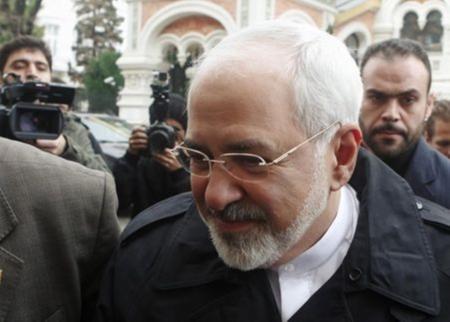
2014-11-22T141622Z_1_LYNXNPEAAL04H_RTROPTP_2_IRAN-NUCLEARIranian Foreign Minister Mohammad Javad Zarif arrives at the Iranian embassy for lunch with former European Union foreign policy chief Catherine Ashton in Vienna November 18, 2014. REUTERS/Heinz-Peter Bader

The IAEA issued a report in 2011 with intelligence information indicating concerted activities until about a decade ago that could be relevant for developing nuclear bombs, some of which the U.N. agency said may be continuing.

“SIMPLY IRRELEVANT”

Iran has made clear that it is not an issue it is ready to budge on. “PMD is out of question. It cannot be discussed,” an Iranian official said.

IAEA Director General Yukiya Amano this week said Iran had again failed to provide explanations needed for the inquiry, making clear it has made scant headway in recent months.

“I believe the PMD issue is not a deal-breaker even though it probably should be,” another Western official said. The official added that many inside the IAEA and Western governments shared concerns about the deadlocked investigation and felt uneasy about compromising on the issue.

Iran denies ever harboring any nuclear bomb ambitions and its supreme leader, Ayatollah Ali Khamenei, has issued a religious decree against atomic weaponry.

Because of this, experts say, it is virtually impossible for the Iranian leadership to make any “mea culpa” about activity geared toward developing nuclear bombs.

Another reason Tehran might be reluctant to admit to any wrongdoing is that it could later be used as a justification for Iran’s enemies to attack it out of “self-defense”.

As a result, the powers are weighing how hard to press it.

A U.S. official said it was “a fine line” that needs to be walked on PMD. The six want to make sure the Iranians address the issue to some extent, but do not want to hit them so hard with it that they feel like they will lose face.

Experts differ on whether Iran must come completely clean: some argue it is necessary to ensure that any such work has since been halted but others say this can be achieved without a “confession”.