Posted tagged ‘Iranian nukes’

Deep meaning of the Iran deal

July 18, 2015

Deep meaning of the Iran deal, Power LineScott Johnson, July 18, 2015

This deal does the opposite of rolling back Iran’s nuclear program. It funds, protects, and perfects the nuclear program.

*****************

Omni Ceren sent out several email messages yesterday updating his readers on the Iran agreement (Joint Comprehensive Plan of Action or “JCPOA”). I would like to bring the following excerpt from one of the messages to your attention. Omri writes:

The agreement commits the international community to actively helping Iran perfect its nuclear program over the life of the deal (!) On a policy level, it means Iran’s breakout time will be constantly shrinking. On a political level, it means that the deal will be seen as accomplishing the exact opposite of what the Obama administration promised Congress: instead of rolling back Iran’s nuclear program, it will commit the U.S. and its allies to funding and boosting it.

The commitments are sprinkled across the JCPOA and obligate a range of global powers:

Russian sponsorship/cooperation on nuclear research at Fordow — The Fordow Fuel Enrichment Plant (FFEP) will be converted into a nuclear, physics, and technology centre and international collaboration will be encouraged in agreed areas of research. The Joint Commission will be informed in advance of the specific projects that will be undertaken at Fordow…The transition to stable isotope production of these cascades at FFEP will be conducted in joint partnership between the Russian Federation and Iran on the basis of arrangements to be mutually agreed upon.

European sponsorship of nuclear security, including training against sabotage— E3/EU+3 parties, and possibly other states, as appropriate, are prepared to cooperate with Iran on the implementation of nuclear security guidelines and best practices…Co-operation through training and workshops to strengthen Iran’s ability to protect against, and respond to nuclear security threats, including sabotage.

International sponsorship/cooperation of Iranian fuel fabrication, which will help Iran complete its mastery of fuel cycle, making Iran’s program harder more opaque and difficult to regulate — The Joint Commission will establish a Technical Working Group with the goal of enabling fuel to be fabricated in Iran while adhering to the agreed stockpile parameters… This Technical Working Group will also, within one year, work to develop objective technical criteria for assessing whether fabricated fuel and its intermediate products can be readily converted to UF6.

This deal does the opposite of rolling back Iran’s nuclear program. It funds, protects, and perfects the nuclear program.

Iran’s Khamenei hails his people for demanding Death to America and Israel

July 18, 2015

Iran’s Khamenei hails his people for demanding Death to America and Israel

WATCH: Supreme leader says he hopes God will answer these prayers; vows nuclear deal won’t change Iran’s position for Palestine, against ‘arrogant US’

By Times of Israel staff and AFP July 18, 2015, 4:37 pm

via Iran’s Khamenei hails his people for demanding Death to America and Israel | The Times of Israel.

ran’s supreme leader on Saturday hailed the Iranian masses for demanding the destruction of Israel and America, and said he hoped that God would answer their prayers.

In a speech in Tehran four days after Iran and the world powers signed an accord designed to thwart Iran’s nuclear program, Ayatollah Ali Khamenei praised “the slogans of the people of Iran” which “indicated what directions they’re heading for,” according to the English translation of his speech by Iran’s Press TV.

At Al-Quds day rallies last week, Khamenei noted appreciatively, “You heard ‘Death to Israel’, ‘Death to the US.’ You could hear it. The whole nation was shaken by these slogans. It wasn’t only confined to Tehran. The whole of the nation, you could hear, that was covered by this great movement. So we ask Almighty God to accept these prayers by the people of Iran.”

Khamenei also vowed in the speech, which was broadcast live on state television, that the nuclear agreement with the major powers would not change Iran’s policy against the “arrogant American government” nor would it change the Islamic Republic’s policy of supporting its “friends” in the region.

“The Islamic Republic of Iran will not give up support of its friends in the region — the oppressed people of Palestine, of Yemen, the Syrian and Iraqi governments, the oppressed people of Bahrain and sincere resistance fighters in Lebanon and Palestine… Our policy will not change with regards to the arrogant US government,” said Khamenei.

Crowds in Tehran listen to Ayatollah Ali Khamenei on July 18, 2015 (YouTube screenshot)

His remarks were greeted intermittently by chants of “Death to America” and “Death to Israel” at the ceremony, held in Tehran to mark the end of the Muslim fasting month of Ramadan

Under the deal announced Tuesday, Iran’s nuclear program will be scaled back and closely monitored as the US and world powers seek to cut off its ability to develop an atomic weapon. In exchange, Iran will see biting economic sanctions gradually lifted, freeing up tens of billions of dollars in oil revenue and frozen assets.

President Barack Obama on Saturday defended the deal with Iran, saying it “actually pushes Iran further away from a bomb. And there’s a permanent prohibition on Iran ever having a nuclear weapon.”

Khamenei backed up his words Saturday with a series of Twitter posts repeating his key messages. “Even with #IranDeal, our policies toward US Arrogant system will see no change. US policies in the region differ through 180° from Iran’s,” said one.

“The text approved or not, we won’t stop supporting the oppressed nation in Palestine, Yemen, Syria, Bahrain and Lebanon,” said another.

He added: “We have no talks with US on any intl& regional issues.We’ve had occasional talks with US on basic issues like NuclearTalks based on prudence.”

Iran has long been a sponsor of the Syrian regime headed by embattled President Bashar Assad, as well as Lebanon-based terror group Hezbollah. The Shiite Hezbollah, an Iranian proxy, has sent forces to fight alongside the Assad regime against rebels sworn to overthrow it.

The supreme leader’s comments reflected his longstanding position that Iran‘s engagement with the six powers was solely to reach a nuclear deal that was in its national interest.

He stressed that the deal with Britain, China, France, Russia and the United States plus Germany was not yet law and would have to be carefully scrutinized.

“They really took pains and worked hard,” Khamenei said of Iran‘s negotiating team.

“The text that has been prepared, whether it is approved or not, they have done their part and they should have their reward,” he added.

As Iran‘s supreme leader, Khamenei has the final word on all policy matters, foreign and domestic, including on the nuclear deal.

In numerous speeches before this week’s accord, he appeared ambiguous about the talks, consistently talking down the chances of success but at the same time praising Iran‘s negotiators as trustworthy and brave.

In his first comment on the deal, Khamenei had warned Wednesday that some of the world powers are unreliable, and that the agreement must be scrutinized to ensure the other parties don’t violate it.

“We know it well that some of the six governments from the opposite party are by no means reliable,” Khamenei told Iranian President Hassan Rouhani in a letter published on the supreme leader’s Persian-language website, in a possible allusion to the United States. Translations of the letter’s text were published on Iranian English news sites.

Khamenei had the final say in approving the deal, despite cautioning weeks earlier that the United States couldn’t be trusted in the talks. On the Saturday before the deal was struck, Khamenei also told students that Iran would continue to fight the US’s “global arrogance” whether or not an accord was reached.

Iran Deal: The Great Bamboozle Festival

July 18, 2015

Iran Deal: The Great Bamboozle Festival, Gatestone InstituteDouglas Murray, July 18, 2015

(Would Chamberlain, in the context of British military weakness but in otherwise comparable circumstances, have made a similar “deal” with Hitler and declared “peace in our time?”  — DM)

  • A generous person might say that this is unimportant — that in Iran, chanting “Death to America” is like throat-clearing.
  • Surely only an uncharitable person would wonder why Iran’s rulers are buying the technology they would need to repel any attack on their nuclear project at the same time as they are promising the Americans that they are not developing nuclear weaponry.

What exactly is it that the Obama administration thinks has changed about the leadership of Iran? Of all the questions which remain unanswered in the wake of the P5+1 deal with Iran, this one is perhaps the most unanswered of all.

There must, after all, be something that a Western leader sees when an attempt is made to “normalize” relations with a rogue regime — what Richard Nixon saw in the Chinese Communist Party that persuaded him that an unfreezing of relations was possible, or what Margaret Thatcher saw in the eyes of Mikhail Gorbachev, which persuaded her that here was a counterpart who could finally be trusted.

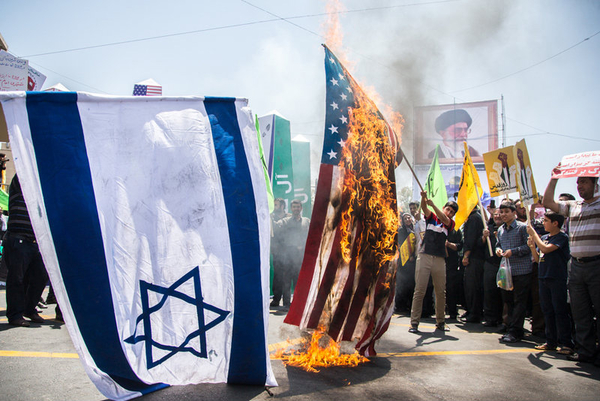
After all, the outward signs with Iran would seem to remain unpromising. Last Friday in Tehran, just as the P5+1 were wrapping up their deal with the Iranians, the streets of Iran were playing host to “Al-Quds Day.” This, in the Iranian calendar, is the day, inaugurated by the late Ayatollah Khomeini, when anti-Israel and anti-American activity come to the fore even more than usual. Encouraged by the regime, tens of thousands of Iranians march in the streets calling for the end of Israel and “Death to America”. Not only Israeli and American flags were burned — British flags were also torched, in a touching reminder that Iran is the only country that still believes Britain runs the world.

The latest in a long line of “moderate” Iranian leaders, President Hassan Rouhani, turned up at one of these parades himself to see the Israeli and American flags being burned. Did he intervene? Did he explain to the crowd that they had got the wrong memo — that America is now our friend and that they ought at least to concentrate their energies on the mass-burning of Stars of David? No, he took part as usual, and the crowds reacted as usual.

1153Participants in Tehran’s Quds Day rally burn U.S. and Israeli flags, on July 10, 2015. (Image source: ISNA)

It was the same just a few weeks ago, when the Iranian Parliament met to discuss the Vienna deal. On that occasion, after some authorized disputation, the Iranian Parliament broke up, with the representatives chanting “Death to America.”

A generous person might say that this is unimportant — that in Iran, chanting “Death to America” is like throat-clearing. This is just what we are being told — that these messages are “just for domestic consumption,” and don’t mean anything.

Putting aside what they say for a moment, what is it about Iran’s actions that have changed enough to persuade the U.S. government that the Iranian regime might be a regime in transition?

Internally there has been no let-up in the regime’s campaign of oppression against their own Iranian people: hanging people for a range of “crimes,” from being gay to being a poet found guilty of “blasphemy,” continue.

Iran has hanged more than a thousand of these internal “enemies” in the last eighteen months alone, as negotiators sat in Vienna thrashing out a deal. In the wider region, Iran remains the most voraciously ambitious, and perhaps the only successfully outgoing, regional power. In the years since the “Arab Spring” began, only Iran has been able significantly to extend its reach and grip in the region. It now has a vastly increased presence and influence in Yemen, Iraq, Syria and Lebanon. It continues to arm its terrorist proxies, including Hezbollah, which in turn continues to increase its build-up of rockets and other munitions on the northern border of Israel.

Iran has not released the four American hostages it continues to hold — Pastor Saeed Abedini, for the crime of converting to Christianity; Washington Post journalist Jason Rezian, on the patently nonsensical charges of espionage; former U.S. Marine Amir Mirza Hekmati, who went to Iran to visit his grandmother; and retired DEA and FBI agent Robert Levinson, who was abducted eight years ago and has not been heard from since early 2013. This, in spite of last-minute requests from Iran to lift a ban on conventional weapons, acceded to by the members of the P5+1, wasting yet another abandoned opportunity actually to get something in return for their total surrender.

From the outside, it would seem that very little has changed in the rhetoric of Iran and very little has changed in the regime’s behavior. That is why the mystery of what change the U.S. administration and its partners see in the eyes of the Ayatollahs is so doubly curious.

Because the nature of the deal makes it exceptionally important that there is some change. In the next decade, in exchange for the supposed “managed inspections” of limited Iranian sites, the Ayatollas are going to enjoy a trade explosion with a cash bonanza of $140 billion unfrozen assets, just to start them off. Throughout that same decade, there will be a lifting of restrictions on — among other things — the sale and purchase by Iran of conventional arms and munitions. Iran will finally be able to purchase the long-awaited anti-aircraft system that the Russians (also of course present at the table in Vienna) want to sell them. This system — among the most advanced surface-to-air missile systems — will be able to shoot down any American, Israeli or other jets that might ever come to destroy Iran’s nuclear project. And surely only an uncharitable person would wonder why Iran’s rulers are buying the technology they would need to repel any attack on their nuclear project at the same time as they are promising the Americans that they are not developing nuclear weaponry.

And it is even more important that the signs of hope located by the U.S. administration are correct, because after all, barring an internal uprising — which the Vienna deal makes more unlikely than ever (having strengthened the diplomatic and financial hand of the regime) — it is safe to say that over the next decade and beyond the Mullahs will remain in charge in Iran.

In the U.S., Germany, France and Britain, by contrast, who knows who will be in charge? In Britain, the Labour party may have romped to victory with, at its head, Jeremy Corbyn MP (currently Labour leadership contender) — a man who has openly and repeatedly praised Hamas and Hezbollah as his “friends.” That would certainly change the dynamics.

But put aside such a potentially unlikely situation and assume that Britain and America simply do politics as usual. In ten years, there will have been four U.S. governments overseeing the implementation of this deal and scrutinizing the inspections-compliance of the Iranian regime.

In the UK, there will have been at least two new governments. Who is to say that all these different governments — of whatever party or political stripe — will pay the same attention, know what to look out for, and feel as robust about totally unenforceable “snapback sanctions” and other details of the implementation of this deal as the signatories to the deal appear to expect? Is it possible that the Iranians actually know this?

Perhaps, after all, there is something in the eyes of the Ayatollahs. Maybe US Secretary of State John Kerry and President Barack Obama really have looked into the Iranian leaders’ eyes and seen a smile. But whether it is for the reason they appear to believe is, of course, quite another matter.

Khamenei vs. Rouhani: Projecting Very Different Views on the Nuclear Deal

July 18, 2015

Khamenei vs. Rouhani: Projecting Very Different Views on the Nuclear Deal, World Affairs JournalMehdi Khalaji, July 16, 2015

(If Khamenei reneges on the deal, it will likely be impossible to “snap back” the sanctions. With improved Russian rockets, an attack on Iran’s nuclear facilities will be much more difficult.– DM)

In the United States, the same political body that was in charge of negotiating with Iran is also in charge of implementing the agreement. But in Iran, the president and his negotiators have little authority over foreign policy, the nuclear program, or military activities.

If [Khamenei] decides to stop implementing the deal in the next year or so, he would likely blame the West or the negotiating team for cutting such a deal, as he did in 2003 and 2004. His initial reaction to the new agreement has already sent discouraging signals about Iran’s willingness to comply with its commitments in the long term.

****************

The Supreme Leader’s initial reaction has sent discouraging signals about Iran’s willingness to comply with its commitments in the long term.

As expected, Ayatollah Ali Khamenei’s reaction to the nuclear deal was utterly different from that of President Hassan Rouhani. Right after the agreement was announced on July 14, Rouhani appeared on state television and praised the outcome. Yet when he and other officials visited Khamenei’s home a few hours later, the Supreme Leader did not say anything about the deal apart from a few lines thanking the negotiators. This reticence signaled to hardliners that they should increase their attacks on the agreement.

On July 15, in order to protect himself against these critics, Rouhani told the cabinet that Khamenei was “carefully following up” on the details of the final negotiations and “had meticulous supervision” over the process, to the point where the Supreme Leader “truly undertook much heavier responsibility in this regard” than any other official. But even this did not help him much. On July 14, Rouhani sent Khamenei a letter reporting on the deal’s results, but the Supreme Leader delayed his response by a day in order to show his lack of excitement about it. The letter thanked Khamenei for his “intelligent guidance and perpetual and explicit support to the negotiating team,” who “could successfully implement all policies determined by the Supreme Leader and respect redlines set” by him. Khamenei’s delayed answer — hardly a third as long as the president’s letter — avoided any wording that might indicate his total satisfaction with the accord, his direct role in the negotiations, or his responsibility for the deal. Instead he wrote, “The text needs to be studied carefully and go through the predicted legal process. Then, if it is approved, it needs to be protected against potential violations of the deal by the other party.”

Khamenei also failed to mention who should approve the deal. Rouhani’s team and the hardliners are currently in the midst of a hot dispute about whether that responsibility lies with the Majlis or the Supreme National Security Council. The hardliners insist on parliament, arguing that all international agreements should be adopted by the legislative branch of the government. Yet Rouhani’s team says that only the Supreme Council should review and endorse it. Not coincidentally, the president is the titular head of that council.

SHARP HARDLINER CRITICISM

On July 16, hardliner website Raja News published the third part of an article series titled “Some Aspects of the Deal Which Should Remain Unveiled,” by Ali Akbar Taheri. The article explains how the final deal reached by Rouhani’s negotiating team crosses six different redlines previously set by the Supreme Leader:

  1. Long-term limitations on the nuclear program. Khamenei has said that Iran should not agree to ten-year limitations because “ten years is a lifetime.” According to the article, however, the signed agreement contains at least fourteen Iranian commitments lasting ten or more years (e.g., a twenty-five-year limit on inspections and surveillance over enrichment of mined uranium; a fifteen-year ban on uranium enrichment at the Fordow facility).
  2. Unconventional inspections and access to military facilities. Khamenei has explicitly rejected such measures, but the final agreement allows the International Atomic Energy Agency (IAEA) to conduct surveillance in all factories that enrich mined uranium, among other things. The agency can also ask to inspect military facilities such as Parchin if they deem it necessary.
  3. Limitations on enrichment at Fordow. Khamenei has opposed any such restrictions at the mountain facility, but the final agreement contains several.
  4. Delayed lifting of some sanctions. Khamenei previously insisted that all sanctions be rescinded as soon as the deal is signed, but the agreement indicates that some U.S. congressional sanctions and EU sanctions will not be lifted right away, if at all.
  5. IAEA conditionality. Khamenei has often expressed his distrust of the IAEA and declared that sanctions relief should not be conditioned on Iran’s implementation of the deal. Yet UN sanctions will not be lifted until the IAEA verifies that Tehran has complied with the agreement’s terms.
  6. Limits on centrifuge research. Khamenei has said that no restrictions should be placed on Iran’s nuclear research for the duration of the deal. Yet the agreement includes a ten-year limit on enrichment R&D related to the IR-4, IR-5, IR-6, and IR-8 centrifuges, among other things.

The article also downplays Rouhani’s claim about lifting sanctions related to weapons, noting that “these sanctions would be replaced by limits [imposed on Iran’s weapons trade]…[E]very missile that is able to carry a nuclear warhead would be limited, all Shahab missiles and satellite carriers and so on.” In addition, the article claims that Russian foreign minister Sergei Lavrov said the following: “Russia and China wanted weapons sanctions to be lifted, but despite our support the Iranian team itself agreed to continuation of the sanctions for the next five years!”

On July 16, at an event called “The Beginning of the Math Class” (a sarcastic title indicating that the time of verification has begun), hardline analyst Fouad Izadi criticized the deal from a different angle: “If the U.S. Congress rejects the agreement, America would not be bound to implement it, but if Iran implements the agreement, it will lose all leverage.” Izadi, who is close to the Islamic Revolutionary Guard Corps, went on to claim that in the case of disagreement between Iran and the P5+1, “the arbiter is the UN Security Council,” which means that the United States and other P5+1 members would essentially become the arbiters of their own dispute. “If Iran gets accused of violating the agreement, [these countries] can issue a resolution against it,” he said, but if the United States or another party is so accused, “the Security Council cannot issue a resolution because one of them could just veto it.” He also pointed out that the Majlis should approve the agreement, and that it should condition Iran’s implementation of the deal on U.S. congressional approval, explaining that “the U.S. president will not be in office in nineteen months, and after him the U.S. administration would not be bound by the agreement if Congress disapproves it.”

Also on July 16, the hardline newspaper Kayhan claimed that the largely insignificant financial reaction to the nuclear deal — i.e., no sharp changes in the stock market or exchange rate — shocked those who have been “overexcited” about the negotiations. “People expected the foreign currency rate to drop and the national currency value to go up,” said one article, “and now they ask why the opposite has happened.”

CONCLUSION

In the United States, the same political body that was in charge of negotiating with Iran is also in charge of implementing the agreement. But in Iran, the president and his negotiators have little authority over foreign policy, the nuclear program, or military activities. Instead, those sectors are under the purview of Supreme Leader Khamenei, who is usually reluctant to take any public responsibility for major decisions. Furthermore, he has repeatedly expressed his distrust toward Americans, the West, the UN, and the IAEA. And while he has more or less supported Iran’s negotiators in his public statements, he has clearly sought to distance himself from them as well. If he decides to stop implementing the deal in the next year or so, he would likely blame the West or the negotiating team for cutting such a deal, as he did in 2003 and 2004. His initial reaction to the new agreement has already sent discouraging signals about Iran’s willingness to comply with its commitments in the long term.

How Israel Might Destroy Iran’s Nuclear Program

July 17, 2015

How Israel Might Destroy Iran’s Nuclear Program, National Review Online, Daniel Pipes, via Middle East Forum, July 16, 2015

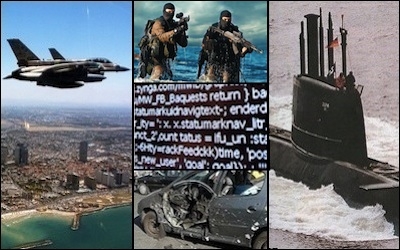
1505Israeli alternatives in dealing with the Iranian nuclear threat

The Vienna deal has been signed and likely will soon be ratified, which raises the question: Will any government intervene militarily to stop the nearly inevitable Iranian nuclear buildup?

Obviously it will not be the American or Russian governments or any of the other four signatories. Practically speaking, the question comes down to Israel, where a consensus holds that the Vienna deal makes an Israeli attack more likely. But no one outside the Israeli security apparatus, including myself, knows its intentions. That ignorance leaves me free to speculate as follows.

Three scenarios of attack seem possible:

Airplanes. Airplanes crossed international boundaries and dropped bombs in the 1981 Israeli attack on an Iraqi nuclear installation and in the 2007 attack on a Syrian one, making this the default assumption for Iran. Studies show this to be difficult but attainable.

Special ops. These are already underway: computer virus attacks on Iranian systems unconnected to the Internet that should be immune, assassinations of top-ranking Iranian nuclear scientists, and explosions at nuclear installations.

Presumably, Israelis had a hand in at least some of these attacks and, presumably, they could increase their size and scope, possibly disrupting the entire nuclear program. Unlike the dispatch of planes across several countries, special operations have the advantage of reaching places like Fordow, far from Israel, and of leaving little or no signature.

Nuclear weapons. This doomsday weapon, which tends to be little discussed, would probably be launched from submarines. It hugely raises the stakes and so would only be resorted to, in the spirit of “Never Again,” if the Israelis were desperate.

Of these alternatives, I predict the Netanyahu government will most likely opt for the second, which is also the most challenging to pull off (especially now that the great powers promised to help the Iranians protect their nuclear infrastructure). Were this unsuccessful, it will turn to planes, with nuclear weapons as a last resort.

Cartoon of the day

July 17, 2015

H/t Joopklepzeiker


screenshot_442

State Dept. Ignores Question on Iran’s Wanting to Wipe Out Israel [video]

July 17, 2015

The US refused to condition ObamaDeal on Iran’s stopping its threat to destroy Israel. State Dept.: “That’s a question for Iran’s leaders.”

By: Tzvi Ben-Gedalyahu

Published: July 17th, 2015

via The Jewish Press » » State Dept. Ignores Question on Iran’s Wanting to Wipe Out Israel .

Indian Globe reporter "Goyal" and Sate Dept. spokesman John Kirby.

Indian Globe reporter “Goyal” and Sate Dept. spokesman John Kirby.


The U.S. State Dept. fumbled a golden opportunity Thursday to ask, beg or insist that Iran stop threatening to wipe Israel off the map.

Indian Globe reporter Raghubir Goyal asked State Dept. spokesman John Kirby:

In the past, Iranian president said that Israel will be wiped off the world map. Are they going to turn back this and – this as far as this renouncing Israeli – Israel’s existence?

Kirby asked, for clarification, “Who going to turn back what?,” and Goyal, as he is called in Washington, asked again, until he was cut off, “If they are going to denounce terrorism and also what they said in the past that Israel will be wipe –”

Kirby answered by not answering:

Will Iran? Well, I think you’d have to – I mean, that’s a question for Iran’s leaders.

It would seem that U.S. Secretary of State John Kerry never asked Iran during the marathon talks with Iran if the Islamic Republic might at least tone down, just for a bit of good public relations, its constant threat to annihilate Israel, as was reiterated on the eve of the agreement.

But Kirby reassured everyone that the United States is “not going to turn a blind eye to Iran’s other destabilizing activities in the region, to include the state sponsorship of terrorists and terrorist networks. Nothing’s going to change about our commitment to continuing to press against those kinds of activities through a broad range of methods, whether it’s our unilateral sanctions, UN sanctions which will stay in effect, or U.S. military presence in the region.”

He is right. The United States is not turning a blind eye to Iranian terror. It is looking at it straight in the eye and figuring it will go away by freeing up to $150 billion for Iran.

President Barack Obama said at his press conference Wednesday night:

Do we think that with the sanctions coming down, that Iran will have some additional resources for its military and for some of the activities in the region that are a threat to us and a threat to our allies? I think that is a likelihood that they’ve got some additional resources. Do I think it’s a game-changer for them? No.

They are currently supporting Hezbollah, and there is a ceiling — a pace at which they could support Hezbollah even more, particularly in the chaos that’s taking place in Syria.

Out of $150 billion, President Obama says Iran will have “some” additional funds. Then he assumes there is a “ceiling” of how much Iran can support Hezbollah.

ObamaDeal raised the ceiling sky-high.

But President Obama is not worried that Iran will “only” pocket “some” of $150 billion to wipe out Israel, which makes its procurement of a nuclear weapon less urgent.

The video below. at 0:42 seconds, shows Goyal and Kirby’s exchange:


Iran Bans U.S. Inspectors from All Nuclear Sites

July 17, 2015

Iran Bans U.S. Inspectors from All Nuclear Sites

No Americans permitted under final nuclear deal

BY:
July 16, 2015 4:20 pm

via Iran Bans U.S. Inspectors from All Nuclear Sites | Washington Free Beacon.

U.S. and Iranian officials confirmed Thursday that no American nuclear inspectors will be permitted to enter the country’s contested nuclear site under the parameters of a deal reached with world powers this week, according to multiple statements by American and Iranian officials.

Under the tenants of the final nuclear deal reached this week in Vienna, only countries with normal diplomatic relations with Iran will be permitted to participate in inspections teams organized by the International Atomic Energy Agency (IAEA).

The revelation of this caveat has attracted concern from some analysts who maintain that only American experts can be trusted to verify that Iran is not cheating on the deal and operating clandestine nuclear facilities.

The admission is the latest in a series of apparent concessions made by the United States to Iran under the deal. Other portions of the agreement include a promise by the United States to help Iran combat nuclear sabotage and threats to its program.

“Iran will increase the number of designated IAEA inspectors to the range of 130-150 within 9 months from the date of the implementation of the JCPOA, and will generally allow the designation of inspectors from nations that have diplomatic relations with Iran, consistent with its laws and regulations,” the deal states, according to text released by the Russians and Iranians.

Susan Rice, President Obama’s national security adviser, confirmed this in an interview with CNN.

“There are not going to be independent American inspectors separate from the IAEA” on the ground in Iran, Rice said. “The IAEA will be doing the inspections on behalf of the U.S. and the rest of the international community.”

Rice said that the Obama administration trusts those countries whose relations with Iran are normalized to carry out inspections of the Islamic Republic’s sensitive nuclear sites.

“The IAEA, which is a highly respected international organization will field an international team of inspectors, and those inspectors will in all likelihood come from IAEA member states, most of whom have diplomatic relations with Iran,” Rice said. “We of course are a rare exception.”

Elliott Abrams, a former White House National Security Council director under George W. Bush, criticized the administration for consenting to Iranian demands.

“It’s ironic that after Wendy Sherman told us about how Kerry and Zarif had tears in their eyes thinking about all they had accomplished together, we learn that the Islamic Republic won’t allow one single American inspector,” Abrams said, referring to John Kerry and Javad Zarif, Iran’s foreign minister. “No member of the P5+1 [negotiating team] should be barred, and this is another example of how badly the administration negotiated.”

“We should have insisted that the ‘no Americans’ rule was simply unacceptable,” Abrams said. “But there was no end to U.S. concessions.”

One American source who was present in Vienna for the talks said the ban on all U.S. inspectors is the result of Iranian demands in the negotiating room.

“The administration promised the American people and their lawmakers that we would be implementing the most robust inspection regime in the history of the world and that we would know what’s happening on the ground,” the source said. “Now they tell us America can’t have anything to do with the inspection regime because we don’t have diplomatic relations with Iran. I guess we should be grateful they’re not solving this problem by opening up a U.S. embassy in Tehran.”

Obama administration officials also admitted recently that promises for “anytime, anywhere” inspections of Iran’s nuclear sites were a rhetorical flight of fancy.

“I think this is one of those circumstance where we have all been rhetorical from time to time,” lead U.S. negotiator Wendy Sherman told reporters this week. “That phrase, ‘anytime, anywhere,’ is something that became popular rhetoric, but I think people understood that if the IAEA felt it had to have access, and had a justification for that access, that it would be guaranteed, and that is what happened.”

U.S. concessions on the structure of the inspections regime have allowed Iran to delay inspections of sensitive sites for at least 24 days.

Column One: Obama’s age of nuclear chaos

July 16, 2015

Column One: Obama’s age of nuclear chaos, Jerusalem Post, Caroline Glick, July 16, 2015

ShowImage (2)Iranian Foreign Minister Mohammad Javad Zarif gestures as he talks with journalist from a balcony of the Palais Coburg hotel where the Iran nuclear talks meetings are being held in Vienna, Austria. (photo credit:REUTERS)

Not only will the US and its allies remove the sanctions imposed on Iran over the past decade and so start the flow of some $150 billion to the ayatollahs’ treasury. They will help Iran develop advanced centrifuges.

They even committed themselves to protecting Iran’s nuclear facilities from attack and sabotage.

Israel still may have the ability to attack Iran’s nuclear sites. If it does, then it should attack them as quickly and effectively as possible.

*********************

On Tuesday, we moved into a new nuclear age.

In the old nuclear age, the US-led West had a system for preventing the proliferation of nuclear weapons. It had three components: sanctions, deterrence and military force. In recent years we have witnessed the successful deployment of all three.

In the aftermath of the 1991 Gulf War, the UN Security Council imposed a harsh sanctions regime on Iraq. One of its purposes was to prevent Iraq from developing nuclear weapons. After the US-led invasion of Iraq in 2003, we learned that the sanctions had been successful. Saddam largely abandoned his nuclear program due to sanctions pressure.

The US-led invasion of Iraq terrified several rogue regimes in the region. In the two to three years immediately following the invasion, America’s deterrent strength soared to unprecedented heights.

As for military force, the nuclear installation that Syrian dictator Bashar Assad built in Deir a-Zour with Iranian money and North Korean technicians wasn’t destroyed through sanctions or deterrence. According to foreign media reports, in September 2007, Israel concluded that these paths to preventing nuclear proliferation to Syria would be unsuccessful.

So then-prime minister Ehud Olmert ordered the IDF to destroy it. The outbreak of the Syrian civil war three years later has prevented Assad and his Iranian bosses from reinstating the program, to date.

The old nuclear nonproliferation regime was highly flawed.

Pakistan and North Korea exploited the post-Cold War weaknesses of its sanctions and deterrence components to develop and proliferate nuclear weapons and technologies.

Due to American weakness, neither paid a serious price for its actions.

Yet, for all its flaws and leaks, the damage caused to the nonproliferation system by American weakness toward Pakistan and North Korea is small potatoes in comparison to the destruction that Tuesday’s deal with Iran has wrought.

That deal doesn’t merely show that the US is unwilling to exact a price from states that illicitly develop nuclear weapons. The US and its allies just concluded a deal that requires them to facilitate Iran’s nuclear efforts.

Not only will the US and its allies remove the sanctions imposed on Iran over the past decade and so start the flow of some $150 billion to the ayatollahs’ treasury. They will help Iran develop advanced centrifuges.

They even committed themselves to protecting Iran’s nuclear facilities from attack and sabotage.

Under the deal, in five years, Iran will have unlimited access to the international conventional arms market. In eight years, Iran will be able to purchase and develop whatever missile systems it desires.

And in 10 years, most of the limitations on its nuclear program will be removed.

Because the deal permits Iran to develop advanced centrifuges, when the agreement ends in 10 years, Iran will be positioned to develop nuclear weapons immediately.

In other words, if Iran abides by the agreement, or isn’t punished for cheating on it, in 10 years, the greatest state sponsor of terrorism in the world will be rich, in possession of a modernized military, a ballistic missile arsenal capable of carrying nuclear warheads to any spot on earth, and the nuclear warheads themselves.

Facing this new nuclear reality, the states of the region, including Jordan, Egypt, Saudi Arabia, Turkey and perhaps the emirates, will likely begin to develop nuclear arsenals. ISIS will likely use the remnants of the Iraqi and Syrian programs to build its own nuclear program.

Right now, chances are small that Congress will torpedo Barack Obama’s deal. Obama and his backers plan to spend huge sums to block Republican efforts to convince 13 Democratic senators and 43 Democratic congressmen to vote against the deal and so achieve the requisite two-thirds majority to cancel American participation in the deal.

Despite the slim chances, opponents of the deal, including Israel, must do everything they can to convince the Democrats to vote against it in September. If Congress votes down the deal, the nuclear chaos Obama unleashed on Tuesday can be more easily reduced by his successor in the White House.

If Congress rejects the deal, then US sanctions against Iran will remain in force. Although most of the money that will flow to Iran as a result of the deal is now frozen due to multilateral sanctions, and so will be transferred to Iran regardless of congressional action, retaining US sanctions will make it easier politically and bureaucratically for Obama’s replacement to take the necessary steps to dismantle the deal.

Just as the money will flow to Iran regardless of Congress’s vote, so Iran’s path to the bomb is paved regardless of what Congress does.

Under one scenario, if Congress rejects the deal, Iran will walk away from it and intensify its nuclear activities in order to become a nuclear threshold state as quickly as possible. Since the deal has destroyed any potential international coalition against Iran’s illegal program, no one will bat a lash.

Obama will be deeply bitter if Congress rejects his “historic achievement.” He can be expected to do as little as possible to enforce the US sanctions regime against his Iranian comrades. Certainly he will take no military action against Iran’s nuclear program.

As a consequence, regardless of congressional action, Iran knows that it has a free hand to develop nuclear weapons at least until the next president is inaugurated on January 20, 2017.

The other possible outcome of a congressional rejection of the deal is that Iran will stay in the deal and the US will be the odd man out.

In a bid to tie the hands of her boss’s successor and render Congress powerless to curb his actions, the day before the deal was concluded, Obama’s UN Ambassador Samantha Power circulated a binding draft resolution to Security Council members that would prohibit member nations from taking action to harm the agreement.

If the resolution passes – and it is impossible to imagine it failing to pass – then Iran can stay in the deal, develop the bomb with international support and the US will be found in breach of a binding UN Security Council resolution.

Given that under all scenarios, Tuesday’s deal ensures that Iran will become a threshold nuclear power, it must be assumed that Iran’s neighbors will now seek their own nuclear options.

Moreover, in light of Obama’s end-run around the Congress, it is clear that regardless of congressional action, the deal has already ruined the 70-year old nonproliferation system that prevented nuclear chaos and war.

After all, now that the US has capitulated to Iran, its avowed foe and the greatest state sponsor of terrorism, who will take future American calls for sanctions against nuclear proliferators seriously? Who will be deterred by American threats that “all options are on the table” when the US has agreed to protect Iran’s nuclear installations and develop advanced centrifuges for the same ayatollahs who daily chant, “Death to America”? For Israel, the destruction of the West’s nonproliferation regime means that from here on out, we will be living in a region buzzing with nuclear activity. Until Tuesday, Israel relied on the West to deter most of its neighbors from developing nuclear weapons. And when the West failed, Israel dealt with the situation by sending in the air force. Now, on the one hand Israel has no West to rely on for sanctions or deterrence, and on the other hand, it has limited or no military options of its own against many of the actors that will now seek to develop nuclear arsenals.

Consider Israel’s situation. How could Israel take action against an Egyptian or Jordanian nuclear reactor, for instance? Both neighboring states are working with Israel to defeat jihadist forces threatening them all. And that cooperation extends to other common threats. Given these close and constructive ties, it’s hard to see how Israel could contemplate attacking them.

But on the other hand, the regimes in Amman and Cairo are under unprecedented threat.

In theory they can be toppled at any moment by jihadist forces, from the Muslim Brotherhood to ISIS. It’s already happened once in Egypt.

The same considerations apply to Saudi Arabia.

As for Turkey, its NATO membership means that if Israel were to attack Turkish nuclear sites, it would run the risk of placing itself at war not only with Turkey, but with NATO.

Given Israel’s limited military options, we will soon find ourselves living under constant nuclear threat. Under these new circumstances, Israel must invest every possible effort in developing and deploying active nuclear defenses.

One key aspect to this is missile defense systems, which Israel is already developing.

But nuclear bombs can be launched in any number of ways.

Old fashioned bombs dropped from airplanes are one option.

Artillery is another. Even suicide trucks are good for the job.

Israel needs to develop the means to defend itself against all of these delivery mechanisms. At the same time, we will need to operate in hostile countries such as Lebanon, Syria and elsewhere to destroy deliveries of nuclear materiel whether transferred by air, sea or land.

Here is the place to mention that Israel still may have the ability to attack Iran’s nuclear sites. If it does, then it should attack them as quickly and effectively as possible.

No, a successful Israeli attack cannot turn back the clock. Israel cannot replace the US as a regional superpower, dictating policy to our neighbors. But a successful attack on Iran’s nuclear program along with the adoption of a vigilantly upheld strategy of active nuclear defense can form the basis of a successful Israeli nuclear defense system.

And no, Israel shouldn’t be overly concerned with how Obama will respond to such actions.

Just as Obama’s nuclear capitulation to Iran has destroyed his influence among our Arab neighbors, so his ability to force Israel to sit on the sidelines as he gives Iran a nuclear arsenal is severely constrained.

How will he punish Israel for defying him? By signing a nuclear deal with Iran that destroys 70 years of US nonproliferation strategy, allows the Iranian regime to grow rich on sanctions relief, become a regional hegemon while expanding its support for terrorism and develop nuclear weapons? Years from now, perhaps historians will point out the irony that Obama, who loudly proclaims his goal of making the world free of nuclear weapons, has ushered in an era of mass nuclear proliferation and chaos.

Israel can ill afford the luxury of pondering irony.

One day the nuclear Furies Obama has unleashed may find their way to New York City.

But their path to America runs through Israel. We need to ready ourselves to destroy them before they cross our border.

The President Holds a Press Conference on the Nuclear Deal with Iran

July 16, 2015

The President Holds a Press Conference on the Nuclear Deal with Iran, The White House, July 15, 2015

(Iran’s centrifuges continue to spin and so does Obama. — DM)