Posted tagged ‘Iran’

Did Clinton’s Email Negligence Lead to the Execution of an Iranian Defector? Front Page Magazine

August 8, 2016

Did Clinton’s Email Negligence Lead to the Execution of an Iranian Defector? Front Page Magazine,  Ari Lieberman, August 8, 2016

defector

But then came the Clinton email dump which may have spelt doom for Amiri.Two emails in particular, which were made public and which were undoubtedly read by the Iranians shed light on the voluntary nature of Amiri’s defection and attempts by the U.S. to address his concerns and facilitate his return to Iran.

*********************

In 2009, Shahram Amiri, an Iranian nuclear scientist, traveled to Saudi Arabia, ostensibly to visit Muslim holy sites located in the Kingdom. Once there, he disappeared only to reappear later in some peculiar online rants, claiming to be residing in Virginia and alternatively, in Arizona, and expressing a desire to return to Iran.

Amiri, who conducted nuclear research at the military affiliated Malek Ashtar University of Technology and worked for Iran’s Atomic Energy Organization, was said to possess a treasure trove of classified information on Iran’s illicit nuclear program. On his YouTube channel, he alleged that he was kidnapped by CIA and Saudi intelligence and was offered large sums of money in exchange for information on Iran’s nuclear program.

For reasons known only to Amiri, and which will undoubtedly be the subject of much speculation, Amiri arrived at the Iranian interest section of the Pakistani embassy in Washington and two weeks later, returned to Iran. Approximately one year had elapsed from the time of his defection until his return to Iran.

Some have speculated that he feared for his family’s well-being and returned to spare them harassment by the Iranian authorities or perhaps he was genuinely homesick and thought the Iranians would buy his story of a CIA orchestrated kidnapping. Whatever the case, On August 3, 2016 Amiri was executed by the Mullahs in their favorite method of execution – hanging.

Amiri undoubtedly provided the administration with vital intelligence on Iran’s rogue nuclear program and that clearly did not sit well with Iranian officials. Upon his return, Amiri repeated the allegation of being kidnapped in Saudi Arabia in a joint CIA/Saudi operation. While the Iranians initially welcomed him, likely for public consumption, he was soon transformed into a treasonous enemy of the state and imprisoned and almost certainly tortured while undergoing grueling interrogation.

The Iranians could not be 100 percent certain of Amiri’s story. Iran is a nation built upon conspiracy theories and fantasy and in their view, the possibility of a CIA/Saudi operation to kidnap a nuclear scientist didn’t seem far-fetched and in fact, could have been plausible.

But then came the Clinton email dump which may have spelt doom for Amiri. Two emails in particular, which were made public and which were undoubtedly read by the Iranians shed light on the voluntary nature of Amiri’s defection and attempts by the U.S. to address his concerns and facilitate his return to Iran.

The first email, sent to Clinton on July 5, 2010, and processed through her home-brewed bathroom server, was authored by Richard Morningstar, acting special envoy of the U.S. secretary for Eurasian energy. This email implied that Amiri needed a cover story to return to Iran and that the U.S. should make an effort to address his concerns. He writes, “Per the subject we discussed, we have a diplomatic, ‘psychological’ issue, not a legal issue,” and notes further that “Our friend has to be given a way out. We should recognize his concerns and frame it in terms of a misunderstanding with no malevolent intent and that we will make sure there is no recurrence. Our person won’t be able to do anything anyway. If he has to leave, so be it.”

The second email was sent to Clinton by her senior foreign policy adviser, Jake Sullivan. In the email, which was sent on July 12, 2010, Sullivan writes, “The gentleman you have talked to Bill Burns about has apparently gone to his country’s interests [sic] section because he is unhappy with how much time it has taken to facilitate his departure. This could lead to problematic news stories in the next 24 hours. Will keep you posted.”

Sullivan was referencing Amiri’s earlier contact with Iran’s interest section in the Pakistani embassy. It also implies that the U.S. was attempting to facilitate his return to Iran. If this was in fact a kidnapping as alleged by Amiri, why then would the U.S. facilitate his return to an enemy country? And why would it need to address his concerns? Kidnappers do not normally carry out their victim’s wishes when their victims ask to be returned. That would defeat the entire purpose of kidnapping.

The Iranians are no fools. They probably suspected that Amiri voluntarily defected all along and the kidnapping element was nothing but a cover story. But the emails confirmed their suspicions and Amiri then paid for his decision with his life. If that was indeed the case, Hillary Clinton, through gross negligence and dereliction of duty, may have sealed Amiri’s gruesome fate.

What the Arab League Meeting Reveals

August 1, 2016

What the Arab League Meeting Reveals, Gatestone InstituteLawrence A. Franklin, August 1, 2016

♦ The most significant aspect of this year’s Arab League conference was the downgrading in significance of Palestinian issues on the agenda.

♦ The community of Arab states is bereft of the confidence to act collectively in its own interests, and has a fearful inability to meet the challenge of either Iran or radical Islamic terrorism, which threaten the very existence of their regimes.

The Arab League concluded its 27th annual summit on July 28 in Nouakchott, Mauritania. The sessions exposed the deep divisions in the Arab world, the bloc’s decreased influence in regional affairs, and the declining importance of Palestinian issues in the Middle East.

The annual affair apparently failed to make progress on last year’s Saudi proposal to establish an all-Arab, multinational force in response to Iran’s aggressive policies in Yemen, Iraq, and Syria. The Nouakchott-hosted sessions also seem to have made no progress toward developing a unified anti-terrorist agenda. The growth of the Islamic State presence in Libya and elsewhere in North Africa was evidently a prime motivator for the perceived need for an anti-terrorism policy.

1739The Arab League concluded its annual summit on July 28, which was held this year in a tent in Nouakchott, Mauritania. (Image source: CCTV News video screenshot)

The Arab League’s precipitous decline in political clout was symbolically exposed by the failure of many key national leaders to attend the conference. The leaders of Egypt, Saudi Arabia, Jordan and Tunisia did not attend. Only eight national leaders from the 22-member organization attended the conference.

However, the most significant aspect of this year’s conference was the downgrading in significance of Palestinian issues on the agenda. Perhaps aware of this development, Palestinian Authority (PA) President Mahmoud Abbas also decided not to attend. However, PA Minister of Foreign Affairs Riyad al-Maliki explained that Abbas could not attend due to the recent death of his brother. Later, Maliki, somewhat quixotically, called upon the Arab League to help sponsor a UN Resolution to initiate a lawsuit against the United Kingdom for having embraced the 1917 Balfour Declaration, which made it official London policy to support the creation of a national home for the Jewish People.

Nevertheless, when the representative of the Popular Front for the Liberation of Palestine (PFLP) hectored delegates that they no longer seem to treat the depressed state of the Palestinian people as the overriding issue that should unite all Arabs, his pleas seemed to fall on deaf ears. The PFLP gave public evidence of the Palestinian issue’s fall from priority, stating on their website that “this year’s resolutions are no more than a carbon copy of the resolutions of the Arab Summits made in previous years. It reflects the situation too of the Arab League which long ago lost the Arab peoples’ confidence.”

Hamas also ruefully expressed similar frustration with the Arab League delegates, saying the summit “reflects the status of decline which the Arabs are suffering, even at the official level.”

Ironically, the only commentator who assessed that the Palestinian issue remains paramount in Arab minds was the French Consul General in Jerusalem, Herv Magro, who commented that “the Israeli-Palestinian Conflict is the central issue in the Middle East.”

Arab and Islamic states traditionally give lip service to the Palestine issue and Israel’s “occupation” of Arab lands. However, from the substance discussed at the Arab Summit, it seems apparent that Palestinian affairs and the so-called Arab-Israeli peace process are not currently the primary concerns of Arab states. Certainly, there was little evidence at this year’s annual meeting that Palestine was any representative’s principal concern, except that of the PFLP delegate.

The tenor of this year’s conference demonstrates the politically reality of a divided Arab world, a community of Arab states that is bereft of the confidence to act collectively in its own interests, and its fearful inability to meet the challenge of either Iran or radical Islamic terrorism, which threaten the very existence of their regimes.

‘Obama increased aid to Arab countries, but not to Israel’

July 28, 2016

Obama increased aid to Arab countries, but not to Israel’ GOP Senator Lindsey Graham reveals White House shot down aid package requested by Israel.

David Rosenberg, 28/07/16 14:42

Source: ‘Obama increased aid to Arab countries, but not to Israel’ – Defense/Security – News –

UAE Crown Prince Mohammed bin Zayed al-Nahayan, Barack Obama

Reuters

South Carolina Republican Senator Lindsey Graham blasted President Obama this week, condemning his refusal to increase American aid to Israel, as well as his efforts to bar Israel from spending the aid money within the Jewish state.

Speaking to Haaretz, Graham revealed that Israel had previously requested an increased aid package from the White House, with $4 billion a year for regular military funding, plus $600 million towards Israel’s missile defense network.

But, Graham said, the administration rejected the request, despite similar increases to Arab states, such as Jordan.

“I made a decision, given the deterioration in the region, that Israel needs more funding,” said Graham. “In the last three years, we increased funding to Jordan by $275 million outside of the MoU, because Jordan was under siege.”

“The administration didn’t object to that increase, but they are objecting to the increase to Israel for 2017.”

In 2015 the White House announced plans to raise the amount of aid to Jordan by more than 50%, topping $1 billion per year.

Despite Obama’s rejection of Israel’s aid request, Graham noted, Congress is under no obligations to abide by any agreements the White House makes with Israel.

“I am not bound by the MoU as a member of Congress. Congress is not a party to the MoU and the MoU can’t bind Congress. Everybody in Congress wants to be generous to Israel like we did with Jordan.”

Graham added that Congress overwhelmingly backed not only an increase in funding for Israel, but opposed the president’s goal of ending the convertibility of a portion of the aid package to shekels, allowing Israel to use the money to pay for fuel or purchase arms from domestic producers.

While Israel is currently allowed to spend a portion of the aid money in Israel, Obama has sought to gradually end the practice, requiring that the aid be spent entirely within the US.

“Eighty-three senators signed a letter to the president that we be generous towards Israel. It is my belief that there are not even 10 members of Senate who object to allowing the IDF to buy fuel from U.S. aid money or [object] that the money be used to boost Israeli defense industries. I have never heard one member of Congress concerned about this.”

In voicing his support for elevated levels of military aid to the Jewish state, Graham noted the increased geostrategic threats facing Israel.

“Netanyahu told me Hezbollah received from Iran precision-guided missiles that are military game-changers,” he said. “According to the prime minister and his team, these missiles present a greater threat than presented previously.”

“I want Iran to see that Israel gets more support from the U.S. and not less. I want to send a signal to Iran that while they get stronger, our allies in the region also get stronger. I don’t think it is an American interest for Iran to think we are negotiating a deal with Israel that is less generous.”

Iranian military official: We have 100,000 missiles in Lebanon ready to hit Israel

July 7, 2016

Iranian military official: We have 100,000 missiles in Lebanon ready to hit Israel

Source: Iranian military official: We have 100,000 missiles in Lebanon ready to hit Israel – Arab-Israeli Conflict – Jerusalem Post

President Hassan Rouhani said the last year’s nuclear deal “was the cheapest way to achieve Iran’s goals and interests.”

Speaking in Tehran on Saturday at an iftar meal breaking the Ramadan fast, Rouhani said the pre-Iran nuclear-deal era is past and Iran now needs to take advantage of the new atmosphere to pursue its “national interests more than before,” Iran’s Islamic Republic News Agency reported.

The country’s supreme leader Ayatollah Ali Khamenei on Saturday called for student associations to establish a “unified anti-US and anti-Zionist front” among the Muslim world’s students, Tasnim News Agency reported.
“By using advanced means of communication and in cyberspace, general campaigns can be formed by Muslim students based on the opposition to the policies of the US and the Zionist regime of Israel so that when needed, millions of young Muslim students create a big movement in the Islamic world,” he said.

Khamenei also warned against plots by enemies seeking to sabotage the country.

Separately, on Saturday, Fars News Agency reported a senior official of the Islamic Revolutionary Guards as having said Israel’s Iran Dome anti-rocket system has vulnerabilities that were revealed in recent wars.
On a similar note, the deputy commander of the Revolutionary Guards, Brig.-Gen.

Hossein Salami, said on Friday “more than 100,000 missiles are ready to fly from Lebanon,” according to Tasnim.

“Today, the grounds for the annihilation and collapse of the Zionist regime are [present] more than ever,” he declared, saying there are “tens of thousands of destructive long-range missiles” from Islamic territories aiming at all of “occupied” Israel.

“If the Zionists make a wrong move, all the occupied territories will come under attack from dedicated fighters and, God willing, the territories will be liberated,” Salami warned.

On Friday, Rouhani accused Western powers of trying to exploit differences between the world’s Sunni and Shi’ite Muslims to divert attention from the Israel-Palestinian conflict, state television reported.

“We stand with the dispossessed Palestinian nation,” he said.

Reuters contributed to this report.

Iranians demand ‘Death to Israel,’ burn flag, at al-Quds Day rallies

July 1, 2016

Iranians demand ‘Death to Israel,’ burn flag, at al-Quds Day rallies US also condemned as tens of thousands of protesters march in Tehran, other demonstrations held nationwide

By AP July 1, 2016, 10:58 am

Source: Iranians demand ‘Death to Israel,’ burn flag, at al-Quds Day rallies | The Times of Israel

Iranian protesters burn an Israeli flag during a demonstration to mark al-Quds (Jerusalem) Day in Tehran on July 10, 2015. (AFP/Atta Kenare)

TEHRAN — Iranians staged anti-Israel rallies across the country Friday for the annual al-Quds Day events established by the late ayatollah Ruhollah Khomeini, with protesters condemning the Israeli occupation of Palestinian territories and chanting “death to Israel.”

Tens of thousands of people marched in the capital Tehran for the rallies held each year on the last Friday of Ramadan. Some protesters trampled the Israeli flag, and also chanted “down with the USA.”

 Iranian state media reports that similar rallies were taking place throughout the country.

Iran, which does not recognize Israel and has called for its destruction, has marked al-Quds Day since the start of its 1979 Islamic revolution. Al-Quds is the historic Arabic name for Jerusalem, and Iran says the day is an occasion to express support for the Palestinians and emphasize the importance of Jerusalem for Muslims.

In this August 2, 2013 file photo, Hezbollah leader Sheikh Hassan Nasrallah speaks during a rally to mark Jerusalem day, or Al-Quds day, in the southern suburb of Beirut, Lebanon. (AP Photo/Hussein Malla)

Hezbollah leader Sheikh Hassan Nasrallah speaks during a rally to mark Jerusalem Day, or al-Quds Day, in Beirut, Lebanon, August 2, 2013. (AP/Hussein Malla, File)

The Lebanon-based Hezbollah terror group on Thursday cancelled its annual al-Quds Day event in Beirut’s southern suburbs, amid security concerns gripping the country in the wake of deadly suicide bombings earlier this week in a Christian village along the Syrian border.

In a statement, the Iran-backed Shiite group said it was scrapping the commemorations, citing the prevailing “security situation.”

It was the first time the group, which also participates as a political party in Lebanon’s government, cancelled the annual commemoration.

Lebanese security forces secure the site of multiple suicide bombings which took place early on June 27, 2016 in the predominantly Christian village of Al-Qaa, in eastern Lebanon near the border with Syria. (AFP/ STRINGER)

Lebanese security forces secure the site of multiple suicide bombings that took place early on June 27, 2016, in the predominantly Christian village of al-Qaa, in eastern Lebanon near the border with Syria. (AFP/Stringer)

Lebanon has been on high alert since nine bombs exploded in the eastern border village of Qaa on Monday, killing five residents. Eight were detonated by suicide bombers. No group has so far claimed responsibility for the attacks.

Violence from neighboring Syria’s devastating civil war has on occasion spilled into Lebanon’s border regions. The Islamic State and al-Qaeda militants briefly seized the Lebanese border town of Arsal in 2014, before security forces pushed them back across the frontier.

Humor? | Let’s give all immigrants and Muslim “terror” groups what they want and need.

June 28, 2016

Let’s give all immigrants and Muslim “terror” groups what they want and need. Dan Miller’s Blog, June 28, 2016

(I marked the post as “Humor?” but it comes very close to reflecting Obama’s world view. The opinions implicit in this article are mine and do not necessarily reflect those of Warsclerotic or its other editors. — DM)

This is a guest post by Loretta Lynchmob, Supreme Attorney of Imam Obama’s Loving America. Her younger sister is among the singers in the following inspirational video, as is Hillary Clinton. Here are her, er, inspiring words.

I also participated in this dazzling performance on my way to support an abortion clinic:

Unfortunately, I did not have enough time to sing What the World Needs Now is Love before or after making my remarks following the White supremacist hate-group’s attack in Orlando, Florida during which almost two hundred innocent  homosexuals and lesbians were killed or wounded. That sad incident, of course, had nothing — absolutely nothing — to do with the wonderful Religion of Peace and Tolerance. Rather than listen to the haters who claim that it was on account of our their beautiful Islam, we must give all Muslims at home and abroad love, not hate.

This brings me to the major point of this article: Since everyone — including Muslim “terror” groups — wants the same loving sort of life that all good Americans want, we must give them what they want and need to end their totally justified “depredations.” To do so is Imam Obama’s Loving American way and we cannot do otherwise; that would not be who we are and would put us on the wrong side of hisherstory.

What do immigrants and the so-called terror groups want and what can we give them?

“Terror” groups, like the immigrants fleeing the poverty and repression they suffer in much of Latin America, want to have the same prosperity and freedom that we have in Imam Obama’s already-great America; America was never greater than under the heel of Obama. The Latin American immigrants want it here, the “terror groups” want it in the countries we wrongfully took from them to give to radical firebrands such as President al-Sisi in Egypt and Prime Minister Netanyahu in Occupied Palestine. They will have the prosperity and freedom they want and deserve only when we give them love, not hate. Trump offers hate, we offer love. Surely, ours is not only the better way, it is the only way.

Aside from our abiding, non-judgmental love, what can we give them? They are poor so we need to give them money and the stuff that money can buy. Based on our outpourings of love, they will not use the money to purchase automatic weapons and other types of assault rifles to use against innocents or even against us. Obama’s wonderful peace deal with Iran is a case in point: due to His wisdom in returning to Iran economic power and money of which she had been unjustly deprived, Iran has joined the world community as a peaceful power, opposed to “terrorism,” and will never have nuclear bombs. Only those in America who cling hatefully to their guns and their religion of hate see the world differently and use weapons of war on innocents.

We can, and must, also help them to learn more about democracy. We encouraged democracy when the Egyptian masses overthrew “their” dictator Mubarak and replaced him with their own peace-loving, tolerant President Morsi. That’s the way true democracy works. Then, sadly, a few thousand Egyptian enemies of the brave and peace-loving Muslim Brotherhood conducted a coup, led by an Egyptian general, and replaced President Morsi with a fascist dictator named al-Sisi. The people of Egypt have not forgotten about how democracy should work, and given a chance will again rebel against fascist al-Sisi and depose him in favor of another brave, peace-loving Muslim Brotherhood advocate. We must do everything we can to help them in their loving quest for true freedom and true democracy.

Much of Occupied Palestine is rich; that’s where the Jews live and parade with their filthy feet in what they call “Temple Mount.”

What do the Jews give their Palestinian brothers — who want only their love and sustenance? When they provide water, they poison it. They often cut off electricity to Gaza, with no better excuse than that their poverty-stricken supplicants there can’t pay for it! Is money all that matters? Is gross human suffering of no consequence?

We can, and must, do everything possible to send the Jews festering in Occupied Palestine back to wherever they came from. It’s only just and fair! The blessed United Nations is one hundred percent with us on this; too long have we vetoed Security Council resolutions even modestly adverse to “Israel.” Were we to sponsor a decree by the UN Security Council to rid Occupied Palestine of its Jews, it would pass without veto. If we believe in love — not the hate spewed by “Israel” — that’s precisely what we must do.

Hillary Clinton is indisputably the best-qualified person to take up Obama’s great work when He, sadly, must leave office next January. There is much left to be done, and only She can and will do it. Even the proprietor of this vile right-wing hate blog has said so. Trump, on the other hand, would destroy everything that Obama has done and thereby destroy America as we know and love her. A vote for Hillary is a vote for honesty, candor and, most important, love. A vote for he-of-the-orange hair is a vote for dishonesty, lies and hate.

****************

Editor’s comments

Ms. Lynchmob does a good job of articulating the differences between Trump and the Obama-Clinton cabal and their visions for America as seen by the left. How many in Obama’s America see things as she does?


Israeli-Turkish accord: core of new lineup vs Iran

June 28, 2016

Israeli-Turkish accord: core of new lineup vs Iran, DEBKAfile, June 27, 2016

(Please see also, Israel and Turkey restore relations – peace in our time? — DM)

Turkey_Israel480

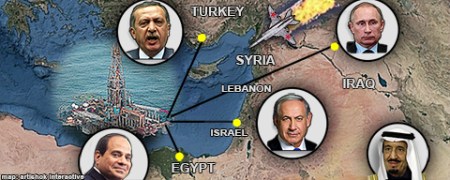
The reconciliation agreement announced Monday, June 27 for restoring full normalization between Israel and Turkey after six years of animosity will restart intelligence and security cooperation between the two countries and entail joint military exercises, and investments in energy and defense.

DEBKAfile’s security experts evaluate the deal as offering a valuable and timely increment for Israeli’s national interests on eight scores:

1. It fits neatly into the current joint Saudi-Egyptian bid for Israel to bolster their emerging alliance with Turkey that is designed for drawing a Sunni line against Iran’s expansionist moves in the Horn of Africa, the Red Sea, the Straits of Aqaba and in uncomfortable proximity to the Mediterranean shores of Israel and Egypt.

2. It is designed as the forerunner of a series of interlocking deals. DEBKAfile can disclose that the next bilateral accord expected to be concluded is a reconciliation agreement between Turkey and Egypt for Presidents Recep Tayyip Erdogan and Abdel-Fatteh El-Sisi to bury the hatchet. In at least one respect, this ont will be modeled on the Turkish deal with Israel: Turkey is committed not to let Hamas act against Israel from its soil and, by the same token, not to permit Hamas’s parent and El-Sisi’s archenemy, the Muslim Brotherhood, operate from Turkey.

3. In this regard, Egypt and Turkey will maintain intelligence cooperation.

4. The bilateral intelligence mechanisms to be set up between Turkey and Israel and Turkey and Egypt will pool their input on Iran.

5.  This key aspect of the renewed cooperation between Ankara and Jerusalem lends it a military-intelligence dimension rather than that of a diplomatic protocol. This dimension finds expression in the decision to devolve its implementation not on the holders of political office but the heads of the military-intelligence services of the two countries.

IDF Chief of Staff Lt. Gen. Gady Eisenkot, to whom the head of military intelligence defers, will in fact be in charge of these exchanges, as well as the joint military exercises which are in the active planning stage.

Realizing he had been passed over for this important facet of cooperation with Turkey, Israel’s new defense minister Avigdor Lieberman announced he was opposed to the deal. This was treated as no more than a token protest that will not impede it.

6.  Jordan has been slated as another member of the new alliance. King Abdullah is currently in the process of quietly dismantling the Muslim Brotherhood networks in his kingdom. Many of is members belong to the Palestinian Hamas.

7.  Under the agreement, Israel and Turkey will begin formal talks to build a gas pipeline between the two countries, through which Israel might sell its natural gas, with Turkish assistance, to Europe.

DEBKAfile rates this provision as fundamental to the entire process and of cardinal importance to both their interests. Israel is in need of a major client to boost the development of its offshore gas fields, whereas Turkey wants to be that client and, at the same time, Russia is after a piece of the energy bonanza and most of all a contract to build the pipeline to Europe.

Up until recently, Israel put up a keep out sign for Moscow, mainly under pressure from Washington. But in recent months the conversations between Binyamin Netanyahu and Vladimir Putin have progressed into an inclusive strategic dialogue on Middle East issues, especially on Syria. This opened the door to a Russian role being broached in the export of Israeli gas.

8. This role took another step forward Monday. On the table now is Israeli-Turkish-Russian military and intelligence collaboration for securing the Israeli offshore gas in the Mediterranean – a prospect that brought the Turkish president to finally apologize for his air force downing a Russian Su-24M bomber over the Syrian-Turkish border on Nov. 24, 2015.

For the sake of these promising relations, Turkey was ready to offer compensation in the case of the dead pilot, just as Israel agreed to pay compensation for the nine Turks killed in a clash with Israeli troops during an illicit attempt too breach Israel’s blockade of the Gaza Strip.

Israeli-Turkish-Russian cooperation and goodwill for their mutual benefit on the gas issue may also generate joint efforts in other spheres too.

Obama Administration Admits Iran Worked on Nuclear Weapons

June 20, 2016

The Obama Administration says two radioactive particles found at Parchin prove Iran was working on nuclear weapons, at least in the past.

By: Hana Levi Julian

Published: June 20th, 2016

Source: The Jewish Press » » Obama Administration Admits Iran Worked on Nuclear Weapons

The Parchin military complex
Photo Credit: Institute for Science and International Security

The Obama Administration has belatedly come to the realization that Iran really was working on a nuclear weapon of mass destruction, just as Israeli and other intelligence sources said prior to the signing of the nuclear pact with Tehran in 2015. Current and former government officials told the Wall Street Journal that the administration has concluded radioactive particles discovered last year were tied to an Iranian nuclear weapons program.

Two man-made uranium particles discovered in soil samples at the Parchin facility southeast of Tehran by the United Nations International Atomic Energy Agency were too small to confirm exactly what kind of nuclear weapons work took place at the site. But they were big enough to make it clear that nuclear weapons-related activity was indeed going on there.

Iranian explanations for their presence — chemical storage for use in developing conventional weapons — were not supported by the evidence of satellite imagery and test results.

The issue was raised in an article written by Jay Solomon for the Wall Street Journal, in which the Obama administration was said to have underlined the discovery mentioned in a 16-page December 2015 report by the IAEA indisputably points to an Iranian weapons program, contradicting denials by Tehran.

On Saturday an Iranian government spokesman in fact denied uranian was found at Parchin, WSJ reported, adding the spokesman quoted a 2005 IAEA report that found no “unusual activities” there.

The terms of the pact signed by Iran with the six world powers last July required Tehran to address the evidence compiled by the IAEA showing that Iran had a program to create a nuclear weapon of mass destruction until at least 2003. Iranian officials repeatedly denied the charge.

In exchange for suspending its nuclear technology activities for a 10-year period, Iran would receive the $150 billion that had been held in frozen assets in addition to international sanctions being rolled back.

Now that Iran is receiving all those benefits, however, Tehran’s lies are also becoming clear. And the critics of the deal who were opposing it from the start are citing this latest news as confirmation that opposition of the deal was justified, and that Obama didn’t go far enough in his demands that Iran come clean on its nuclear activities before lifting sanctions in January.

Evidence of the man-made uranium that was found at Parchin has only low levels of fissionable isotopes, according to WSJ. But this can be used as a substitute for weapons-grade materials in the development of nuclear bombs and can also be used as a component in a neutron initiator — a triggering device for a nuclear weapon, WSJ reported.

But now the IAEA is blocked from any further investigation of the Parchin site, thanks to the deal signed last year. And although the deal forces Iran to allow the agency access to “all” suspected nuclear technology sites, that does not include Iranian military sites — where the weaponry is most likely to be developed.

Strategic Outlook for Saudi Arabia and Iran

June 20, 2016

Strategic Outlook for Saudi Arabia and Iran

by Shmuel Bar

June 20, 2016 at 4:30 am

Source: Strategic Outlook for Saudi Arabia and Iran

  • In Saudi Arabia, Mohammad bin Salman’s “Vision 2030” is totally identified with his leadership. If it succeeds, he will harvest the praise; on the other hand, many in the Saudi elite will latch on to any sign of failure of his policies in order to block his ambitions.
  • Mohammad bin Salman’s social-political agenda to broaden the power base of the regime to include the young and educated — and to a great extent relatively secular or moderate — will certainly be seen by the Wahhabi clerics and the tribal social conservatives as geared towards reducing their control over the populace and hence their weight in the elite.
  • Another serious risk is that the economic plan entails reducing the Saudi welfare state. The economic and social fallout of weaning the Saudis away from entitlements will be exploited by domestic opposition elements and by Iran.
  • In Iran, the electoral process within the Assembly showed what was not evident during the parliamentary elections held in February, namely that even a formal preeminence of moderates does not and cannot influence the decision making of the Iranian regime and that Khamenei succeeds to pull the strings despite seemingly democratic procedures.
  • After having won the chairmanship of the Assembly, Jannati delivered a speech demanding total loyalty to Khamenei, which can be considered as targeting the moderates.

Following the announcement of Saudi Arabia’s “Vision 2030” Economic Plan by Deputy Crown Prince Muhammad bin Salman on April 25, King Salman announced a reshuffling of the government. The reshuffling was clearly orchestrated by the Deputy Crown Prince and reflects his agenda. This shuffle probably is not the last word even in the near term; the changes in the government strengthen the political position of Mohammad bin Salman, because the new ministers owe him their posts, and through them he will strengthen his hold on the levers of government, especially in the economic sphere. His next step may be to move to neutralize Prince Mitab bin Abdullah, the minister in charge of the Saudi Arabian National Guard (SANG) and a close ally of Crown Prince Mohammad bin Nayef. He could do this by absorbing SANG into the Ministry of Defense.

Such a step would probably not sit well with many of the members of the royal family; however, if Mohammad bin Salman takes such a step, it will only be with the consent of his father, King Salman, and none would actively oppose him. Such a step would have significant ripple effects; international influence in Saudi Arabia has focused for decades on acquiring sectorial influence in the various centers of power of the Kingdom – the different factions of the royal family, the business sector, the army, the SANG etc. The continuing concentration of power in the hands of Mohammad bin Salman will reduce the political relevance of many of these assets of international players and they will be obliged to restructure their connections and sources of information on the politics and economic decision making of the Kingdom.

Farther down the road — in our assessment not in the short term — King Salman may appoint his son to the position of Prime Minister – a title that he presently holds himself. Such a promotion would pave the way for Mohammad bin Salman to depose the Crown Prince, Mohammad bin Nayef, to be appointed as the next Crown Prince and to succeed his father. A possibility exists — though in our assessment it is not likely in the near future — that the King will even abdicate and pass the reins of the Kingdom to his son after he has been duly appointed as Crown Prince. These scenarios will be a disappointment to policy-shapers in Washington who prefer — or at least feel more comfortable with Mohammad bin Nayef. This too will call for a significant shift in the international disposition towards the Saudi regime; development of channels of influence with Mohammad bin Salman and his confidantes, adapting to a new and unfamiliar paradigm of decision-making in the Kingdom and coping with Mohammad bin Salman’s not-typically-Saudi regional policies towards Iran and other threats.

Mohammad bin Salman’s “Vision 2030” is totally identified with his leadership. If it succeeds, he will harvest the praise; on the other hand, many in the Saudi elite will latch on to any sign of failure of his policies in order to block his ambitions. However, none of them will actively attempt to disrupt Mohammad bin Salman’s plans; such a power struggle could precipitate the end of the rule of the al-Saud family and the very existence of the Saudi state, and they are aware that either they “hang together or they hang separately”. The risks to the regime from the economic reform process, however, do not necessarily come from proactive efforts to disrupt it. Mohammad bin Salman’s social-political agenda to broaden the power base of the regime to include the young and educated — and to a great extent relatively secular or moderate — will certainly be seen by the Wahhabi clerics and the tribal social conservatives as geared towards reducing their control over the populace and hence their weight in the elite. Another serious risk is that the economic plan entails reducing the Saudi welfare state. The economic and social fallout of weaning the Saudis off entitlements will be exploited by domestic opposition elements and by Iran.

Saudi Prince Mohammed bin Salman meets with U.S. Secretary of State John Kerry in Riyadh, Saudi Arabia, on May 7, 2015. (Image source: U.S. State Department)

The changes in the Saudi Oil Ministry reflect Mohammad bin Salman’s strategic policy of using Saudi oil to minimize Iran’s economic and political profits from the lifting of sanctions, even at the expense of Saudi profit from its oil. This policy has broad support in the Saudi elite, with the possible exception of some of the government oil bureaucracy and the oil-related business community. But the latter do not have the power to derail the regime’s priorities in this regard. Therefore, we are likely to see a continuation of the Saudi policy of high production, willingness to offer attractive deals in order to undercut Iranian overtures to existing Saudi markets, and a high level of sensitivity to any threats to the oil industry. The chances of Iranian retaliation for the Saudi economic warfare are high. These could take the shape of cyber-attacks on installations inside Saudi Arabia, or terrorist attacks (including rocket attacks) against pipelines, refineries and other installations, and even attacks – without taking responsibility — on Saudi oil shipping inside the Persian Gulf or — more likely further away from the theater. Such attacks may normally be seen as providing Iran plausible deniability from the point of view of international law, but they will be attributed to Iran by the Saudi regime, that will see itself as obliged to react. Therefore, in the current state of relations between Saudi Arabia and Iran, and assuming that the chances of rapprochement are slim, the chances of actual limited military conflict between Iran and Saudi Arabia remain.

* * *

The Islamic State has come under increasing military pressure in both Iraq and Syria in recent weeks, and it is likely to lose territory. Yet this will not make Iraq more united or stable, nor will it bring the civil war in Syria any closer to an end. Iran’s influence in Iraq will grow, while the Sunnis will see the US as Iran’s enabler. The Islamic State will try to respond to its losses by launching major terror attacks in the West. The Islamic State lacks the manpower to defend all the Iraqi and Syrian territory it has occupied since 2014. Consequently, its strategy consists first and foremost of defending strategically or symbolically important assets, primarily al-Raqqah, Fallujah and Mosul, as well as key supply routes. In addition, it is compensating for its defeats by carrying out lethal terror attacks in Syria and Iraq in order to demonstrate that while these regimes can, with foreign backing, regain territory, they cannot defend their citizens.

The military successes against the Islamic State will entail a number of long-range problematic political implications: exacerbation of the Sunni-Shiite conflict in Iraq and in the region in general, strengthening Iranian influence on the back of American military power, increased animosity towards the US, and widening the gap between the Baghdad government and the Kurds. The Islamic State will eventually be pushed out of Fallujah, thanks to the American support. Once the Islamic State is pushed out of Fallujah and perhaps out of Mosul, Shiite militias will move in to exact their revenge. Fallujah will again be a fertile ground for Sunni radicalism and a new Sunni insurgency in the area is almost inevitable; the Sunni populace will probably rebel again under some successor of the Islamic State and Fallujah will have to be “liberated” again. Furthermore, the American airstrikes in support of the Shiite ground offensive will strengthen the image of the US as enabler of the Iranian takeover of Iraq and as responsible for Shiite atrocities. Atrocities committed in Fallujah by the Shiite militias under American auspices will give pause to the plans for initiating an offensive on Mosul.

The Iraqi political system which the Americans constructed is on the verge of final collapse. The stalemate over the election of a new cabinet and “popular” demonstrations staged by Muqtada al-Sadr are indicative of the inherent failure of the Iraqi political system. While al-Sadr had proven that he can paralyze the government and the Parliament, he cannot become the solution. He has helped to demolish an already dysfunctional political system, but his sources of political influence draw on the very factors that made that system dysfunctional: sectarianism, a politicized military, use of “popular” violence to challenge democratic procedures, involvement of religious authorities in the democratic process, involvement of external actors (particularly Iran) and the implicit threat of armed militias. Since the current crisis derives from the power struggle within the Shiite community, it will hinge to a great degree on Iran. It may escalate to a Shiite civil war, and such a scenario would probably draw Iran to intervene directly, or to encourage a Shiite military commander to stage a coup and establish military rule, then pledge his allegiance to Iranian Supreme Leader Khamenei. We assess that the US, under the current administration, would probably acquiesce to “Pax Iranica” in Iraq, but the more influence any settlement would accord Iran, the more it would be unacceptable to the Gulf States, and they would use their influence with the Sunnis and the Kurds to block it, inter alia, by increasing support of radical Sunni groups in the country.

The cause of Kurdish independence is gaining momentum; all the Kurdish factions seem to be dedicated to holding a referendum on Kurdish independence before the elections in the US in order to create a fait accompli for the next administration. The issue of independence, however, is linked to the demand of the new PUK-Gorran alliance for parliamentary elections and for the inclusion of mixed Arab-Kurdish areas that the Peshmerga seized from the Islamic State in those elections and in the independence referendum. (Foremost of these areas are the oil-rich area of Kirkuk, the provinces of Nineveh, Diyala, and Salah ad-Din and the regional capital of Mosul that is still in the hands of the Islamic State). If the Kurdish Region succeeds in annexing these areas, it will also signify a watershed event in the process of the breakup of Iraq.

Turkey and Iran will both oppose these plans and the current US administration will not lend its support to a move that, in essence, proves the failure of its Iraq policy and signals the breakup of Iraq. Specifically, the prize of Kirkuk for the Kurdish state would be prodigious; the Baghdad government has halted the export of oil produced by its oil company in Kirkuk to Turkey in retaliation for the KRG’s independent oil exports. If Kirkuk Province joins the Kurdish Region, the KRG would presumably be able to take control of Kirkuk’s oil and resume its export to Turkey or — if the PUK-Gorran alliance comes to power in the KRG — to opt for the Iranian offer of export through Iran to the Persian Gulf.

Turkey views the Raqqa offensive in Syria with great concern. The American connection with the Kurdish YPG, which is viewed in Ankara as an extension of the PKK, is seen as yet another indication of the US inching towards support of an independent Kurdistan — the chronic nightmare of Turkey. Furthermore, if the Islamic State is pushed out of al-Raqqa and surrounding areas by the YPG, these areas will come under the control of Syrian Kurdistan (Rojava). Even before such a scenario emerges, the Islamic State’s priority of defending its regional capital, Raqqa will probably bring it to redeploy its forces now deployed in the Jarablus-Azaz Corridor, the stretch of land along the Syrian-Turkish border which separates the eastern Kurdish territory from the western enclave around the town of Afrin, north of Aleppo. The withdrawal of Islamic State forces from this corridor would tempt the YPG to launch an offensive westward from Jarablus in order to link up with the Afrin enclave. Such a prize would be a far greater achievement for the YPG than the capture of the non-Kurdish Raqqa area, and it would probably prefer it. If the YPG indeed takes such a step, it is likely to precipitate Turkish intervention, turning Turkey — a NATO member — into an active participant in the Syrian civil war against a party that is allied with both the US and Russia.

* * *

In Iran, Despite the hopes of the moderate camp, the hardliner 90-year-old Ayatollah Ahmad Jannati was elected (May 24) as head of the Assembly of Experts, after having gained 55 of 88 votes. This nomination does not bode well for President Rouhani’s future, should he insist on implementing deeper liberalizing reforms.

More than anything else, Ayatollah Jannati’s election highlights the Supreme leader’s grip on power. Ayatollah Khamenei did his best to help Jannati’s election by delivering his directives to some members of the Assembly. The electoral process within the Assembly showed what was not evident during the parliamentary elections held in February, namely that even a formal preeminence of moderates does not and cannot influence the decision making of the Iranian regime, and that Khamenei pulls the strings despite seemingly democratic procedures. The Assembly of Experts is rather formal and ceremonial body, unlike the Majles, however its role might become crucial at some circumstances, should the Assembly be summoned to nominate the following leader in the event of Khamenei’s death.

Ahmad Jannati, is important by virtue of what he epitomizes as a symbol rather than by his current political capacity, which won’t persist long, given his age. He has been serving as secretary of the Guardian Council since 1992, and in this capacity was instrumental in consolidating Khamenei’s power and, in all elections, was responsible for weeding out “undesirable” candidates to the Majles and Assembly of Experts. After having won the chairmanship of the Assembly, Jannati delivered a speech demanding total loyalty to Khamenei, which can be considered as targeting the moderates. Jannati is not alone with this mindset: his respective first and second deputies are hardliners: Mohammad Kermani and Mahmoud Shahroudi. The latter served for many years as the head of the judiciary, is close to Khamenei and is mentioned as a potential successor to Khamenei. This casting of the Assembly of Experts highlights that Khamenei is preparing to guarantee his ideological legacy and the ideological continuity of the regime after his death.

The election of Jannati was even more conspicuous in the light of the corresponding withdrawal of the chief candidate of the moderates, who they had hoped would serve as an ally within the regime — former President Hashemi Rafsanjani. Rafsanjani decided to withdraw from the electoral competition under pressure by the hardliners, including attacks on his children, his daughter, Faezah and his son, Mehdi.

On May 28, Ali Larijani was elected as the speaker of the Majles for the third term. Larijani is considered a hardliner; for over 30 years, he has been a confidant of Supreme Leader Ali Khamenei. His brother Sadeq Larijani is chief of the judiciary, and his other brothers have played important roles in diplomacy and government affairs. A veteran of the Islamic Revolutionary Guard Corps (IRGC), Larijani is also the son of Grand Ayatollah Hashem Amoli and son-in-law to prominent Islamic ideologue Morteza Motahhari. The moderate conservative politician Ali Motahhari is his brother-in-law. Given this multifaceted background, he has been able to establish strong, longstanding ties with both the military and the clergy, and with different factions in the Majles, with the exception of former president Mahmoud Ahmadinejad, who became Larijani’s nemesis. During Ahmadinejad’s second term, Larijani openly confronted him.

By contrast, Larijani is considered close to President Hassan Rouhani. During the nuclear negotiations, Larijani contained anti-Rouhani moves in the legislature and got the Majles to ratify the agreement. However, it must be clear that he did this not because he is Rouhani’s ally, but because he was ordered to carry out this mission by the Supreme Leader. Hence, Larijani will remain supportive of Rouhani, but only on the condition that the latter complies with the wishes of the Supreme Leader. If Larijani decides to stand for office, he may leverage his position in the Majles and his status with the Supreme Leader to whittle away at Rouhani’s popularity.

In the meantime, the Majles will be more supportive of Rouhani. Out of the 80 Majles members who opposed the nuclear agreement, fewer than a dozen remain. None of them is high profile, and their low numbers prevent them from establishing a bloc of their own, as they did in the previous parliament. Instead, they will have to operate within a “Principlists” bloc that is dominated by more moderate “Principlist” figures. This means that the remaining hardliners will be less likely to stage the theatrics that were so successful in challenging the government during the last Majles, particularly through their repeated summoning of various ministers to answer questions; and the impeachment of the minister of science, technology and higher education. Their absence will lead to a calmer parliamentary environment, more focused on addressing the serious economic issues Iran faces such as unemployment, reform of the banking sector, and the steep economic slowdown. This notwithstanding, one should bear in mind that the above scenario is confined to the functioning of the Majles vis-à-vis Rouhani, whereas the real chances of success of his program depend on other foci of power.

Dr. Shmuel Bar is a senior research fellow at the Samuel Neaman Institute for National Policy Studies at the Technion in Haifa, Israel, and a veteran of Israel’s intelligence community.

The Untold Story Behind The “Mutiny At The State Department” Where Dozens Demand War With Syria

June 19, 2016

The Untold Story Behind The “Mutiny At The State Department” Where Dozens Demand War With Syria

by Tyler Durden – Jun 17, 2016 6:37 PM

Source: The Untold Story Behind The “Mutiny At The State Department” Where Dozens Demand War With Syria | Zero Hedge

Confirming once again that the entire US Middle-East campaign over the past 4 years has been one ongoing plan to destabilize and eliminate Syria’s president Bashar al-Assad from power – certainly including the involvement of ISIS which as we reported a year ago was “created” and facilitated by the Pentagon as a tool to overthrow Assad, an analysis which yesterday gained renewed prominence – overnight the WSJ reported that dozens of State Department officials this week protested against U.S. policy in Syria, signing an internal document that calls for “targeted military strikes against the Damascus government and urging regime change as the only way to defeat Islamic State.”

In other words, over 50 top “diplomats” are urging to eliminate Assad in order to “defeat ISIS”, the same ISIS which top US “diplomats” had unleashed previously in order to… eliminate Assad.

While one can understand the US state department’s relentless eagneress to create yet another failed state led by a US puppet ruler, one wonders if at least the boilerplate justification could not have used some more fine tuning.

Amusingly, the whole thing is wrapped in a narrative that the State Department is ready and willing to “mutiny” against Obama’s pacifism, because you see it was Obama who has been so successful in extricating and removing US troops from harm’s way in both the middle east and Afghanistan. Oh wait…

Here are the full details from he WSJ:

The “dissent channel cable” was signed by 51 State Department officers involved with advising on Syria policy in various capacities, according to an official familiar with the document. The Wall Street Journal reviewed a copy of the cable, which repeatedly calls for “targeted military strikes” against the Syrian government in light of the near-collapse of the ceasefire brokered earlier this year.


The views expressed by the U.S. officials in the cable amount to a scalding internal critique of a longstanding U.S. policy against taking sides in the Syrian war, a policy that has survived even though the regime of President Bashar al-Assad has been repeatedly accused of violating ceasefire agreements and Russian-backed forces have attacked U.S.-trained rebels.

More spin: why has Obama been so “against” unleash a full blown invasion on Syria? “Obama administration officials have expressed concern that attacking the Assad regime could lead to a direct conflict with Russia and Iran.”

Oh so that’s why the nuclear arms race is now officially back, just a few weeks after the US launched a ballistic missile shield over Europe, in the process shifting the entire post-cold war nuclear proliferation balance of power. Got it.

Meanwhile, the attempt to paint Obama as a liberal, peace loving dove continue:

“It’s embarrassing for the administration to have so many rank-and-file members break on Syria,” said a former State Department official who worked on Middle East policy. These officials said dissent on Syria policy has been almost a constant since civil war broke out there in 2011. But much of the debate was contained to the top levels of the Obama administration. The recent letter marked a move by the heart of the bureaucracy, which is largely apolitical, to break from the White House.

Oh, if only Obama would be more willing to install even more pro-US puppet regimes… like in Afghanistan, Libya, Egypt, Tunisia, Iraq, Ukraine and so on, and so on… Clearly all of these have turned out so well, that certainly things would be so much better in the middle east. Well, maybe not, but at least that damn Qatari pipeline would finally start flowing.

So why leak this now:

The internal cable may be an attempt to shape the foreign policy outlook of the next administration, the official familiar with the document said. President Barack Obama has balked at taking military action against Mr. Assad, while Democratic presidential hopeful Hillary Clinton has promised a more hawkish stance toward the Syrian leader. Republican candidate Donald Trump has said he would hit Islamic State hard but has also said he would be prepared to work with Russia in Syria.


The cable warns that the U.S. is losing prospective allies among Syria’s majority Sunni population in its fight against the Sunni extremist group Islamic State while the regime “continues to bomb and starve” them. Mr. Assad and his inner circle are Alawite, a small Shiite-linked Muslim sect and a minority in Syria. In Syria’s multisided war, the regime, Islamic State and an array of opposition rebel groups are all battling each other.

It gets better:  “Failure to stem Assad’s flagrant abuses will only bolster the ideological appeal of groups such as Daesh, even as they endure tactical setbacks on the battlefield,” the cable reads, using an Arabic acronym for Islamic State.

But wait, as the Pentagon itself admitted, the “Daesh” was carefully bred by the US government precisely for this reason: to overthrow Assad. Don’t believe us? Read the following line from the leaked document:

“… there is the possibility of establishing a declared or undeclared Salafist Principality in eastern Syria (Hasaka and Der Zor), and this is exactly what the supporting powers to the opposition want, in order to isolate the Syrian regime, which is considered the strategic depth of the Shia expansion (Iraq and Iran).”

Does not compute.

There is more: “The cable asserts Mr. Assad and Russia haven’t taken past cease-fires and “consequential negotiations” seriously and suggests adopting a more muscular military posture to secure a transitional government in Damascus.”

The Russian-led force is also pushing toward Raqqa from the south, making the march on the Islamic State stronghold a strategic and symbolic competition between the rival coalitions. Islamic State is also being rolled back in Iraq, where U.S.-allied government forces have retaken major cities and are advancing in Fallujah, the first city the extremists fully occupied back in 2014

Well, sure: with Russia’s backing of a sovereign nation, why should Assad fold to relentless US pressure. Actually that may well be the point: the US is humiliated that a small, feeble middle-eastern nation dares to defy it for years, just because it has the backing of the Kremlin. We don’t need to explain the ugly optics of this.

Perhaps the real reason why the cable has “emerged” now is because due to Russian intervention, ISIS will soon be history:

Although Islamic State is losing ground to multiple, U.S.-backed offensives in Syria, Iraq and Libya, Western diplomats say they worry the group has embedded itself so deeply in the population that it will be a major influence for years to come, eventually going underground as its quasi-army is defeated.

And finally, one last reason emerges: the US is merely pandering to Saudi demands, something it has clearly done very well ever since the Sep 11 attacks which covered up Saudi involvement:

The cable also echoes the growing impatience among U.S. Gulf allies with the lack of military intervention targeted at the Damascus government to force Mr. Assad to resign and make way for a transitional government. Peace talks between Syria’s government and opposition collapsed in April over Mr. Assad’s fate, with the regime insisting he should stay in power, while the negotiated cease-fire continued to disintegrate. Saudi Arabia and the United Arab Emirates have pressed the U.S. to provide more sophisticated weapons to rebels. But Washington has resisted.

In other words, if the US does fold and proceeds with military strikes, i.e. full blown invasion and war, on Assad, it will once again be Saudi Arabia that is running US foreign policy, and pushing the US nation into what may be a state of open war with Russia.

We can only hope the American people wake up and stop this travesty before Saudi Arabia’s favorite presidential candidate is elected president.