Posted tagged ‘Iran’

Imperialism, Obama style

December 20, 2014

Imperialism, Obama style, Dan Miller’s Blog, December 20, 2014

Obama condemns “wicked” U.S. imperialism for supporting American values such as freedom and democracy abroad. Simultaneously, he tries to precipitate “regime change” in Israel so that she will support His values and those of Palestinians rather than American and Israeli values of freedom and democracy.

The Palestinians have placed before the United Nations Security Council a “peace proposal” intended to force Israel to agree to creation of a Palestinian state and “an Israeli withdrawal to the pre-1967 lines” by the end of 2017. Secretary Kerry has argued that the matter should not be considered until after the Israeli Knesset elections in March. According to an article in Foreign Policy,

Speaking at an annual luncheon with the 28 European Union ambassadors, Kerry cautioned that any action by the U.N. Security Council would strengthen the hands of Israeli hardliners who oppose the peace process. . . . [Emphasis added.]

“Kerry has been very, very clear that for the United States it was not an option to discuss whatever text before the end of the Israeli election,” according to a European diplomat.

The diplomat, who spoke on condition of anonymity because the luncheon was confidential, said that Kerry explained that Israel’s liberal political leaders, Shimon Peres and Tipzi Livni, had expressed concern that a Security Council move to pressure Israel on the eve of election would only strengthen the hands of Israeli hardliners, including Prime Minister Benjamin Netanyahu, and Naftali Bennett, an implacable foe of a Palestinian state and leader of the right-wing Jewish Home party. Netanyahu is also fiercely opposed to the Palestinians effort to secure Security Council backing for its statehood drive. [Emphasis added.]

Kerry said Livni had “told him that such a text imposed by the international community would reinforce Benjamin Netanyahu and the hardliners in Israel,” as well as the hardliners in Palestine, according to the European diplomat.

The message, said another European diplomat, was that U.N. action would “give more impetus to more right-wing parties, that there was a risk this could further embolden the more right-wing forces along the Israeli political spectrum.” [Emphasis added.]

Kerry’s remarks highlight the Obama administration’s delicate balancing act when it comes to its tense relationship with the Israeli government. On the one hand, senior  administration officials make little attempt to hide the personal dislike between Netanyahu and President Barack Obama or their sharp disagreements on issues ranging from the peace process to Iran. On the other hand, Kerry and other top policymakers have tried to avoid saying or doing anything that could be seen as meddling in the Israeli election in an effort to oust Netanyahu and replace him with a more centrist prime minister. [Emphasis added.]

On an open microphone in March of 2012, Obama

told Dmitry Medvedev that he would have more flexibility after November’s election to deal with contentious issues such as missile defence. . . .

Obama’s candid remark was considered a gaffe because He made it assuming that the microphone had been turned off and that no one other than Medvedev would hear Him. Kerry, however, candidly but intentionally told twenty-eight European Union ambassadors that it is U.S. policy to encourage the Israeli left, to diminish the Israeli right and to make it more difficult for Prime Minister Netanyahu to remain in office. Aside from his incredible naivete, why did Kerry do that?

For Obama and European leaders, Israel is reducible to the peace process. And the Israeli left depends on the support of foreign governments for its network of foreign funded non-profit organizations. The Israeli left can’t let go of its exploding version of ObamaCare [Palestine] because the left is becoming a foreign organization with limited domestic support. Its electorate isn’t in Israel; it’s in Brussels. [Emphasis and bracketed insert added.]

. . . .

Escalating a crisis in relations has been the traditional way for US administrations to force Israeli governments out of office. Bill Clinton did it to Netanyahu and as Israeli elections appear on the horizon Obama would love to do it all over again.

There’s only one problem.

The United States is popular in Israel, but Obama isn’t. Obama’s spats with Netanyahu ended up making the Israeli leader more popular. The plan was for Obama to gaslight Israelis by maintaining a positive image in Israel while lashing out at the Jewish State so that the blame would fall on Netanyahu. [Emphasis added.]

Kerry’s remarks — covered by Israeli media — seem, contrary to his intentions, likely to enhance the chances of Israeli “hardliners” on the “right,” to hurt the chances of those on the left and hence to increase PM Netanyahu’s chances of remaining in office. Even leaving that aside, how will Kerry’s remarks favoring regime change be viewed by other increasingly reluctant U.S. allies in the Middle East?

Israeli “hardliners” have already yielded to the Palestinians as much as, if not more than, they can without greatly endangering the security of Israel because there is no Palestinian entity with which peace can be made other than through Israel’s suicide.

The remarks of the Islamic preacher at the mosque in Jerusalem reflect a general Palestinian view.

Interestingly, the speaker doesn’t mention the longing for Palestinian statehood or independence. Instead, he talks of the establishment of the “Islamic Caliphate.” “Oh Allah’” he states, “Hasten the establishment of the State of the Islamic Caliphate,” and further rants, “Oh Allah hasten the pledge of allegiance to the Muslim Caliph.” He spews forth the latter statement three times to chants of “Amen!” from the large, approving crowd congregating around him.

These comments, which would register horror and revulsion in the West (at least in some quarters) are almost banal among Palestinians. In fact, a similar video featuring a different speaker some days earlier at the same venue, conveyed identical sentiment, expressing admiration for the Islamic State and calling for murder of Jews and annihilation of America. [Emphasis added.]

Here’s the other video referenced in the article:

Guttural anti-Semitism is ingrained and interwoven in the fabric of Palestinian society. Despite their minuscule numbers, 78% of Palestinians believe that Jews are responsible for most of the world’s wars while a whopping 88% believe that Jews control the global media and still more believe that Jews wield too much power in the business world. [Emphasis added.]

Much of the blame for this can be placed squarely on the doorstep of Mahmoud Abbas’s Palestinian Authority, which subjects the Palestinian population to a steady diet of hate-filled, Judeophobic rhetoric through state-controlled media and educational institutions. It is so well entrenched that the process of deprogramming, if it were ever attempted, would take generations to reverse. [Emphasis added.]

As noted in the Wall Street Journal article linked in the quote immediately above,

To understand why peace in Palestine is years if not decades away, consider the Palestinian celebrations after Tuesday’s murder in a Jerusalem synagogue of five Israelis, including three with joint U.S. citizenship. Two Palestinian cousins armed with meat cleavers and a gun attacked worshipers during morning prayers, and the response was jubilation in the streets.

The Popular Front for the Liberation of Palestine claimed responsibility, while Hamas praised the murders as a “response to continued Israeli crimes.” The main obstacle to peace isn’t Jewish settlements in the multireligious city of Jerusalem. The barrier is the culture of hatred against Jews that is nurtured by Palestinian leaders. [Emphasis added.]

Palestinian Prime Minister Mahmoud Abbas condemned the killings, but not without calling for Israel to halt what he called “invasions” of the holy Al Aqsa Mosque in Jerusalem. Mr. Abbas has previously said the Temple Mount was being “contaminated” by Jews, despite assurances by Prime Minister Benjamin Netanyahu that the Dome of the Rock and Al Aqsa Mosque are for Muslim worship only. The Memri news service reports that the Oct. 29 issue of the Palestinian daily Al-Hayat Al-Jadida was full of false accusations that Israel is damaging Jerusalem’s holy sites. [Emphasis added.]

Moreover,

An overwhelming majority of Palestinian Arabs support the recent spate of terrorist attacks against Israelis, an opinion poll released Tuesday finds, according to The Associated Press (AP).[Emphasis added.]

The poll also found that more than half of Palestinian Arabs support a new “intifada” (uprising) against Israel, and that Hamas would win presidential elections if they were held today. [Emphasis added.]

Palestinian Arab pollster Khalil Shikaki said the results reflected anger over Israeli statements about Jerusalem, as well as a loss of hope following the collapse of U.S.-brokered peace talks and Israel’s recent war with Hamas in Gaza.

Shikaki heads the Palestinian Center for Policy and Survey Research, which interviewed 1,270 people in the Palestinian Authority-assigned areas of Judea and Samaria and Gaza last week. The poll had an error margin of 3 percentage points.

“There is an environment in which violence is becoming a dominant issue,” Shikaki told AP. “This seems to be one of the most important driving forces.”

Hamas is, if possible, even worse than Abbas’ Palestinian Authority.

Both Hamas and Abbas’ Palestinian Authority seek the death of Israeli Jews and the destruction of Israel, the only democratic and free nation in the Middle East. Kerry’s ill-conceived efforts to assist them at the expense of Israel, most recently by actively seeking to promote Israel’s left wing, to diminish its right wing and hence to empower Palestinians intent upon the death of Israel, may well fail. Succeed or fail, those efforts are consistent with Obama’s preference for Islamic dictators over democracy coupled with freedom.

Barack Mitsvah

Slow rocket fire from Gaza after Hamas goes back to accepting Tehran’s domination

December 19, 2014

Slow rocket fire from Gaza after Hamas goes back to accepting Tehran’s domination, DEBKAfile, December 19, 2014

Hamas-on-Temple-Mount_19.12.14Hamas flexes its muscles on Temple Mt., Jerusalem

The red alert for the incoming rocket from Gaza which exploded in the Eshkol District Friday morning, Dec. 19, may well be the harbinger of more to come. In parts of Beersheba too the dull thumps of explosions were heard on Thursday.

According to DEBKAfile’s military and intelligence sources, Hamas has once again fallen under Tehran’s sway after patching up their quarrel.

Iran lost no time in directing the Palestinian terrorist group to revoke the ceasefire it accepted in June for halting Israel’s summer operation in the Gaza Strip and revive low-key rocket fire. An apparently “anonymous” organization will take responsibility – in reality it will be Hamas’ military wing.

Israel’s security authorities are aware of this ominous turn of events, but prefer to keep it quiet for the time being.

Hamas is reverting to its old terrorist ways, DEBKA reports, after not only spurning, but omitting to send a reply, to a Saudi package which Riyadh believed would be too generous to resist. The Saudis offered to put up the funds for Hamas’ entire annual budget, including military spending, as well as covering the full cost of rebuilding the Gaza Strip after the ravages of the summer war.

There were two conditions:

1. The Palestinian extremists must throw their unreserved support behind Egyptian President Abdel-Fattah El-Sisi and henceforth synchronize its operations with Cairo – i.e. desert its traditional allegiance to the Muslim Brotherhood.

2.  They must totally sever their military, political and financial ties with Iran. In token of this action, Hamas’ political chief Khaled Meshaal must call off his impending trip to Tehran, scheduled to mark the public announcement of the organization’s reconciliation with Iran and its leading ally, Syrian President Beshar Assad.

Instead of any sort of direct response to Riyadh’s offer, Hamas opted to use its 27th anniversary celebrations on Sunday Dec. 14, for a display of loyalty to Iran by 2,000 marching Izz e-din al-Qassam fighters. Every detail of the event was cleared in advanced by Tehran and broadcast live over all of Iran’s TV channels – an unprecedented honor.

As we first reported last week, a high-powered Hamas delegation visited Tehran on Dec. 9 to draft with Iranian officials the text of the Hamas reconciliation accord with Assad and map out future operations.

The most prominent members were Meshaal’s right hand, Muhammed Nasser; two members of the Hamas overseas military branch, Maher Abdullah and Jemal Ismail; and Lebanese agent, Osama Hamdan.

One item on this accord provided for the gradual resumption of rocket attacks on Israel from the Gaza Strip.

Hours after the first rocket was launched Friday, Hamas staged its first ever parade on Temple Mount, Jerusalem, marching around the golden Dome of the Rock, and shouting calls to revive the Palestinian rocket offensive against Israeli locations. They were clad uniformly in green with jihadi headbands and hoisted Hamas banners aloft.

Hamas’ riotous demonstration of defiance contrasted sharply with the calm observed in Friday worship at Al Aqsa in the last three weeks.

Iran Is Basically Running The Iraqi Government’s Air War Against ISIS

December 17, 2014

Iran Is Basically Running The Iraqi Government’s Air War Against ISIS, Business Insider, Joel Wing, December 16, 2014

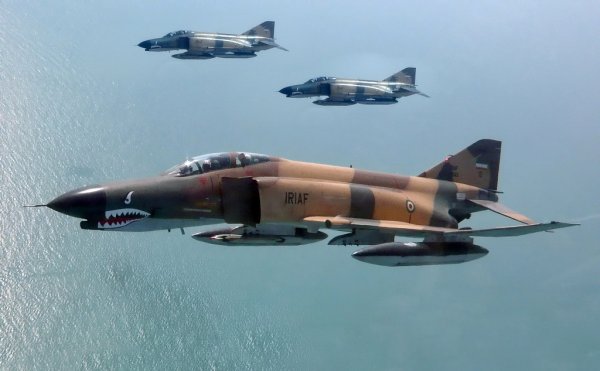
Iranian air forceIran Air Force F 4 Phantom II

Tehran is now considered one of the main defenders of the country and Iraqi politicians regularly praise its help and give it cover for its operations. It has also garnered popular support as well amongst some Iraqis.

This will all go a long way to make sure that Iran maintains its power within the country after the war is over.

***********

In November 2014 an Iranian jet was filmed carrying out a bombing mission in Iraq’s Diyala province. Iran was already known to have mobilized its militia allies, sent in advisers and military equipment, and brought in Lebanon’s Hezbollah to help Baghdad.

General Qasim Suleimani, the head of the Iranian Revolutionary Guards’ Quds Force, is all over social media with pictures showing him providing leadership to Iraqi forces.

Sending in air support seemed like the next natural step for Iran’s strategy in Iraq.

Iranian planes supported an Iraqi military operation to retake two villages from the Islamic State (ISF) in Diyala. In the middle of November Iraqi Security Forces, militias, and the peshmerga started a campaign to retake Jalawla and Sadiya in northeast Diyala, which was completed on November 23.

During that period Al Jazeera filmed an Iranian F-4 Phantom jet flying over the area. According to an Iranian military expert, Tehran was carrying out air missions there from November 18-23 using F-5 and F-4 jets as well as UAVs.

The planes were said to be flying out of Kermanshah air base in Iran. An Iranian politician was quoted in the Los Angeles Times saying that Tehran considered the Sadiya and Jalawla area a buffer zone because it is close to the border, thus explaining Iranian intervention there.

This was the first hard evidence that Iran had committed air assets to the fight in Iraq. But they had been there for some time and still continue to operate.

Iranian air power was supposedly part of a security agreement between Iraq and Iran. After the fall of Mosul Prime Minister Nouri al-Maliki allegedly signed a deal with Tehran to provide military assistance to the Iraqi forces, including through air assets.

By the end of June there were the first reports of Iranian drones based out of Baghdad flying over Iraq to collect intelligence. In July several Su-25 fighter-bombers were delivered to Iraq from Russia. But that included planes from Iran as well.

That same month an Iranian Revolutionary Guards pilot named Shojat Almdari was killed in the Samarra area of Salahaddin. He was probably acting as a forward air controller for air strikes there.

Iranians were carrying out many of these missions and flying the Su-25s as well. In November an Iraqi pilot told the Guardian that Iranians were regularly manning Iraqi air force planes and helicopters in combat and supply missions.

He said they were operating out of Rasheed air base in Baghdad. There were more reports of bombing and close air support missions on November 29 and 30 and December 1 and 2 in Iraq. Iranians are supposedly in the air in Salahaddin and flying in support of ongoing ISF and militia operations there.

Finally, Iran is providing training to Iraqi pilots on Su-25s, and MiG-23s and 29s at the Kermanshah air base. The Iraqi Air Force is undermanned and lacks fighter jets and trained pilots. Given that situation and all the other military support Iran has already given it was no surprise that it would send in some of its air power as well to help Baghdad.

Only now is the extent of this support becoming public. But Iran should have been expected this to happen.

Iran has a two-fold strategy in Iraq. First, it wants to provide military assistance to make sure that the Islamic State is turned back and eventually defeated. It also wants to expand its influence within the Iraqi state through the military and bureaucracy.

It is currently achieving both of these goals. Tehran is now considered one of the main defenders of the country and Iraqi politicians regularly praise its help and give it cover for its operations. It has also garnered popular support as well amongst some Iraqis.

This will all go a long way to make sure that Iran maintains its power within the country after the war is over.

In Nuke Talks, Obama Still Iran’s Best Asset

December 16, 2014

In Nuke Talks, Obama Still Iran’s Best Asset, Commentary Magazine, December 14, 2014

President Obama’s goal is not so much to fulfill his campaign promise about the nuclear threat as it is to launch a new détente with the Iran. This is a crucial point since it not only makes him more reluctant to stick to Western demands about nuclear issues but makes it impossible for him to contemplate abandoning the negotiations.

**************

For the first time since the Iran nuclear talks were extended for the second time last month, the United States and its allies will meet again with Tehran’s negotiators in Vienna on Wednesday. To listen to public statements from the Obama administration, the allied team will be there to insist on a deal that will prevent Iran from getting a nuclear weapon. But the same factors that have tilted these negotiations in Iran’s direction throughout the process still seem to be pushing the outcome toward an agreement that will be touted as a desperately needed foreign-policy triumph for the administration. With both the French becoming more vocal about their dissatisfaction with America’s leadership in the talks and the Islamist regime making no secret of their unwillingness to make more concessions, the question facing the negotiators is not so much whether a deal is possible, but whether the U.S. is able to resist the temptation to continue giving ground to the Iranians in order to get a deal at virtually any price.

As the next round of talks begins, observers need to think back to the allies’ position prior to the signing of the interim deal to understand just how far the U.S. has retreated from its current perilous position. In 2012 when he was running for reelection, President Obama vowed during his foreign-policy debate with Mitt Romney that any deal must end Iran’s nuclear program. The allies were similarly united behind a position that Iran had no right to enrich uranium for nuclear fuel under any circumstances and that its plutonium plant at Arak must be dismantled.

Since then, the U.S. has accepted the notion that Iran has the right to a nuclear program and that its infrastructure will remain largely in place no matter what the terms of an agreement might say. It has also tacitly recognized Iran’s right to enrichment while claiming that the low levels permitted freeze its progress toward a bomb even though everyone knows these restrictions can easily be reversed. The U.S. has also given every indication it will allow Iran to keep its centrifuges as well as showing no sign that it will press Tehran to give up its plutonium option or stop producing ballistic missiles whose only purpose would be to deliver nuclear warheads. Even worse, the administration seems to be giving up any effort to find out just how much progress the Iranians have made toward weaponizing their nuclear project or to force them to admit International Atomic Energy Agency inspectors to get the answers to this vital question.

Based on the experience of the last year and a half of talking with Obama’s envoys, Iran’s negotiators know they only have to stand their ground and it’s only a matter of time until the Americans give in to their demands one by one until they get terms that will let them become a nuclear threshold power as well as lifting the economic sanctions that continue to cripple Iran’s economy.

That the Iranian people are clamoring for an end to the sanctions is clear. As the New York Times reported on Friday, anticipation of the collapse of the restrictions is the talk of Tehran. The eagerness of their would-be European trading partners is just as vocal. In theory, this desire to reconnect Iran to the global economy ought to give the U.S. the leverage to make the Iranians give up their nuclear ambitions. On top of that, the collapse of the price of oil should have Iran even more desperate and the position of the allies even stronger.

But the Iranians know whom they are dealing with. As has become increasingly clear in the last year in which the talks went into two overtime periods despite administration promises that the talks would be finite in length, President Obama’s goal is not so much to fulfill his campaign promise about the nuclear threat as it is to launch a new détente with the Iran. This is a crucial point since it not only makes him more reluctant to stick to Western demands about nuclear issues but makes it impossible for him to contemplate abandoning the negotiations. That means that the Iranians know the president isn’t even thinking, as he should be, of ratcheting up the economic pressure with tougher sanctions, or of making the Islamists fear the possibility that the U.S. would ever use force to ensure the threat is eliminated.

Under these conditions the chances of the U.S. negotiating a deal that could actually stop Iran from ever getting a bomb are slim and none. Instead, the only question remains how far the Iranians are willing to press the president to bend to their will in order to let him declare a victory and welcome this terrorist-sponsoring regime moving closer to regional hegemony as well as a nuclear weapon.

Rather than the renewed diplomacy being a signal for congressional critics from both parties of the president’s policy to pipe down, the new talks should encourage them to work harder to pass the sanctions the president claims he doesn’t need. Unless they act, the path to appeasement of Iran seems to be clear.

Israeli Ambassador: Obama “Worldview Not in Accord w/Any Israeli Government.”

December 14, 2014

Israeli Ambassador: Obama “Worldview Not in Accord w/Any Israeli Government.” Front Page Magazine, Daniel Greenfield, December 13, 2014

But it certainly is in accord with Iran.

Former ambassador Michael Oren provided a little reminder that the issue isn’t Netanyahu and that Obama’s radical politics would put him at odds with any Israeli government.

This is an administration which makes the racist claim that Jews living in Jerusalem are “settlers”, which funds terrorists and takes their side against Israel.

Michael Oren was the consummate diplomat. He was dignified, thoughtful, articulate, knowledgeable and tactful.

In a dialogue at The Plaza here last week at the annual Scholar-Statesman dinner of the Washington Institute for Near East Policy, Oren said that “this administration [in Washington] has a worldview that is not in accord with any Israeli government,” not just the current one.

Describing the Obama administration as “ideological” on the Mideast, with the president’s 2009 outreach-to-the-Arab-world Cairo speech as its source, Oren said the White House views east Jerusalem communities like Gilo, for example, as not necessarily part of the Jewish state, a position he said no Israeli government would accept.

(Gilo is over the Green Line but part of the Jerusalem municipality, with a largely Jewish population.)

After the March 17 elections, Israel’s next government “likely will move to the right,” Oren predicted, “and America may be going a different way.”

Though he said the U.S.-Israel relationship is crucial — “we [Washington and Jerusalem] have no choice but to be allies” — he asserted on several occasions that “Israel has to take responsibility for itself.”

Asked by moderator Robert Satloff, the executive director of the Washington Institute, about the West’s negotiations with Iran over its nuclear program, Oren first noted that Israel’s “margin for error is exactly zero” on this issue, given Iran’s longstanding threat to destroy the Jewish state.

Then, his voice rising, he said that if you believe that Iranian President Hassan Rouhani is indeed the moderate he claims to be, if you believe that Iran has reversed its policy of being the world’s leading exporter of terror, if you believe that its leaders have changed their long pattern of lying about the nuclear program, and if you believe the West is capable of and willing to respond militarily to prevent the production of a nuclear bomb, then yes, you should support the U.S. effort to reach an agreement with Iran.

“But if your children and grandchildren’s’ lives depended on it, you may reach a different conclusion,” he asserted, adding: “We [the Jewish people] have not come back after 2,000 years to disappear.”

And it goes without saying, that if you believe that you’ve chosen to completely ignore everything happening in the world.

I am not Oren’s biggest fan and what he is saying is simply common sense. Obama isn’t just at odds with Netanyahu or with Israel. He’s at odds with the remaining US allies in the Middle East. If Obama is at odds with Muslim allies of the US because he supports Muslim terrorists like the Muslim Brotherhood, it goes without saying that his relationship with Israel will be toxic.

The Middle East realists: Old and new

December 14, 2014

The Middle East realists: Old and new, Israel Hayom, Richard Baehr, December 14, 2014

America, according to Friedman and the Israel Lobby professors ‎should also ignore Israeli concerns and push forward with a nuclear ‎deal with Iran. A successful negotiation, even one which leaves Iran ‎with nuclear breakout capability in a few months, is certain to ‎change Iran’s pattern of international behavior, as it becomes a ‎regular member of the “community of nations” and gets back to ‎enjoying more robust economic relations with many other nations. ‎Iranian aid to Hezbollah, Hamas, Assad in Syria, Yemeni Shiite ‎rebel groups, Iraqi Shiites, all of these aggressive efforts will soften ‎or go away once Iran becomes America’s latest and greatest strategic ‎partner.‎

Friedman has been one of the great lap dogs for the Obama ‎administration, and his loyalty cost the president very little.

A touch of realism would be welcome in the White House at this ‎point. But it won’t happen because the self-styled realists are ‎wearing the blinkers, and think they know all there is to know.

*********************

Professor Stephen Walt of Harvard University’s John F. Kennedy School of ‎Government and Professor John Mearsheimer of the University of Chicago like to ‎call themselves foreign policy realists. Realists are, in their minds, people who can ‎assess international situations without any ideological blinders or bias. Walt and ‎Mearsheimer co-authored “The Israel Lobby,” originally as a lengthy article in the ‎London Review of Books in 2006, and then as a much longer book version in 2007. In both ‎the article and book, the professors argued that America’s very tight relationship ‎with Israel was strategically unsound for the United States. The authors claimed ‎that the closeness between the two countries was a product of the behavior of the ‎Congress of the United States, which they believe had been unduly influenced by ‎the political power of the American Israel Public Affairs Committee and ‎other supporters of the Jewish state, such as evangelical Christians. ‎

In less academic, and blunter terms, New York Times columnist Tom Friedman ‎welcomed Israel’s Prime Minister Benjamin Netanyahu to his address to a joint session ‎of Congress in 2011, writing that the applause for Netanyahu reflected the fact that the ‎Congress was “bought and paid for by the Israel lobby.”‎

Of course, Friedman had been out ahead of Walt and Mearsheimer, with a similar ‎themed comment in a column in The New York Times in February 5, 2004:‎

‎”Israel’s prime minister has had George Bush under ‎house arrest in the Oval Office. Mr. Sharon has Mr. ‎Arafat surrounded by tanks, and Mr. Bush surrounded ‎by Jewish and Christian pro-Israel lobbyists, by a vice ‎president, Dick Cheney, who’s ready to do whatever Mr. ‎Sharon dictates, and by political handlers telling the ‎president not to put any pressure on Israel in an election ‎year all conspiring to make sure the president does ‎nothing.”

Friedman styles himself as an “eminence grise,” sitting high up in ‎New York Times land, a platform from where he can speak as an ‎equal with the likes of academic intellectuals such as Mearsheimer ‎and Walt, but also foreign leaders too numerous to name, and ‎American presidents, all of whom understand the significance of ‎receiving a favorable column from Tom Friedman. As a presumably ‎great strategic thinker and realist like Walt and Mearsheimer, ‎Friedman has come to the same conclusions as the professors on ‎where America’s strategic interests lie in the Middle East. America ‎must challenge Israel and force a two-state solution with the ‎Palestinians. This is in Israel’s interests as well, of course, since the ‎absence of peace creates so much ill will for both Israel and its ally ‎America among other nations in the region and around the world. ‎Friedman always claims he has Israel’s real interests at heart, while ‎their elected government digs deeper holes. Clearly, if Israel were ‎only to be more forthcoming, the deal with the Palestinians could ‎finally get done this time (next time, some time, whenever…). ‎

America, according to Friedman and the Israel Lobby professors ‎should also ignore Israeli concerns and push forward with a nuclear ‎deal with Iran. A successful negotiation, even one which leaves Iran ‎with nuclear breakout capability in a few months, is certain to ‎change Iran’s pattern of international behavior, as it becomes a ‎regular member of the “community of nations” and gets back to ‎enjoying more robust economic relations with many other nations. ‎Iranian aid to Hezbollah, Hamas, Assad in Syria, Yemeni Shiite ‎rebel groups, Iraqi Shiites, all of these aggressive efforts will soften ‎or go away once Iran becomes America’s latest and greatest strategic ‎partner.‎

Friedman has been one of the great lap dogs for the Obama ‎administration, and his loyalty cost the president very little. In his ‎case, the president revealed that he reads Friedman’s columns, and ‎then followed it up by inviting Friedman into the Oval Office to ‎offer up his invaluable insights. With all that respect and notoriety, ‎nothing could possibly stop the love coming from the Times ‎columnist for everything Obama. Friedman’s latest service to President Barack ‎Obama was to trash the critics of the president’s Iran policy:‎

‎ ‎‎”Never have I seen Israel and America’s core Arab allies ‎working more in concert to stymie a major foreign policy ‎initiative of a sitting U.S. president, and never have I seen ‎more lawmakers — Democrats and Republicans — more ‎willing to take Israel’s side against their own president’s. ‎I’m certain this comes less from any careful consideration ‎of the facts and more from a growing tendency by many ‎American lawmakers to do whatever the Israel lobby asks ‎them to do in order to garner Jewish votes and campaign ‎donations. “‎

Friedman and Walt and Mearsheimer are locked into an old and ‎predictable thesis that America’s real strategic interest in the region ‎is securing its oil supplies, and cozying up with the oil-rich nations ‎of the Gulf and Saudi Arabia. Improving relations with Iran fosters ‎a new climate where American is not so isolated as a result of its ‎support for Israel. And if Israel and the Palestinians make peace, ‎there will be a warm glow everywhere, improving the atmospherics ‎to address other regional issues.‎

There is however a new realism which has overtaken some of those ‎countries who have been patronized by the American realists for ‎decades. For years, many oil rich nations subsidized the efforts of ‎Islamists in schools, universities, mosques, and in politics. They ‎believed they had bought them off to a large extent in their own ‎countries, but could tip the scales against Israel by aiding Hamas ‎and could satisfy the aggressive demands for Islamist expansion in ‎other places. ‎

The new realism, demonstrated most prominently by Egypt, but ‎also by Saudi Arabia and the United Arab Emirates, all Sunni Arab states, is that ‎Iran, in particular a nuclear Iran, will become more assertive, not ‎less, and represents the biggest threat to their own regimes. Sunni ‎Islamists are also a threat to stability — witness Iraq, Libya, Syria, the ‎Sinai in Egypt. Increasingly, Turkey and Qatar are now grouped ‎with Iran as advancing an agenda that is unhelpful to the Saudis, ‎Egypt, and the UAE. Saudi Arabia and Egypt will not vote with ‎Israel at the United Nations, and they will continue to sign onto the ‎usual collection of resolutions condemning Israeli human rights ‎violations against the Palestinians. But it is Egypt that has gone to ‎war with jihadists in Sinai, and effectively shut its border with ‎Gaza. Egyptian soldiers and civilians are being murdered by Hamas ‎and other allies of the Muslim Brotherhood. Defeating this threat is ‎as important to Egypt, as defeating Hamas is for Israel.‎

Caroline Glick makes the argument this way:‎

‎”But the alliance that emerged this summer between Israel and ‎Egypt, with the participation of Saudi Arabia and the UAE, is ‎also a highly significant strategic development. For the first time, ‎a major regional power is basing its strategic posture on its ‎understanding that the threats against itself and against Israel ‎stem from the same sources and as a consequence, that the ‎war against Israel is a war against it.‎

“Israelis have argued this case for years to their Arab neighbors ‎as well as to the Americans and other Western states. But for ‎multiple reasons, no one has ever been willing to accept this ‎basic, obvious reality.‎

“As a consequence, everyone from the Americans to the ‎Europeans to the Saudis long supported policies that empower ‎jihadist forces against Israel.‎

‎‎ ‎“[Egyptian President Abdel-Fattah] Sissi is the first major leader to break with this consensus, as a ‎result of actions Hamas took before and since his rise to power. ‎He has brought Saudi Arabia and the UAE along on his ‎intellectual journey.‎

‎ ‎“Sissi’s reassessment of the relationship between the war against ‎Israel and the war against Egypt has had a profound impact on ‎regional realities generally and on Israel’s strategic posture ‎specifically.‎

‎”From Israel’s perspective, this is a watershed event.‎

‎ ‎“The government must take every possible action, in economic ‎and military spheres, to ensure that Sissi benefits from his ‎actions.”‎

Of course, the Obama administration seemed enthralled with the ‎Muslim Brotherhood government in Egypt, and both threatened ‎and for a time carried out an aid suspension when Sissi and his supporters engineered the ‎overthrow. There have been rumors, denied of course, that the White House has entertained similar notions for Israel due to its ‎‎”unconstructive” policy on settlement construction. More likely, ‎the administration may be trying to intervene in a none too ‎subtle fashion with the upcoming Israeli elections, to signal how ‎much better relations would be between Israel and America if ‎only Netanyahu were gone. If that is the White House strategy, it is not, ‎to use a word, realistic. Most Israelis expect nothing but the ‎back of the hand from Obama at this point, and Obama’s ‎blessing will not enhance the candidates of the Left in the ‎election.

A touch of realism would be welcome in the White House at this ‎point. But it won’t happen because the self-styled realists are ‎wearing the blinkers, and think they know all there is to know.‎

IAEA Publicly Rebuffs Iranian Offer to Inspect Suspected Nuclear Site, Insisting on Access to Parchin Complex Instead

December 12, 2014

IAEA Publicly Rebuffs Iranian Offer to Inspect Suspected Nuclear Site, Insisting on Access to Parchin Complex Instead, Algemeiner, Ben Cohen, December 12, 2014

Parchin siteA satellite image of Iran’s Parchin military complex, where IAEA inspectors have been refused access. Photo: Twitter

Amano will have received scant comfort from the comments yesterday of State Department spokeswoman Jen Psaki that the public was “just going to have to trust” that Iran wasn’t in violation of the November 2013 Joint Plan of Action (JPOA) agreement, despite a UN report claiming that the regime had violated international sanctions by acquiring materials for its Arak nuclear facility.

****************

The International Atomic Energy Agency (IAEA) has for the first time publicly refused an Iranian offer to inspect a suspected nuclear site at Marivan, an area near the border with Iraq.

In 2012, the IAEA believed that Marivan was the location of high-explosive experiments linked to setting off a nuclear charge. However, those concerns were not borne out and the Agency shifted its attention to Parchin, a military complex south-east of Tehran.

Diplomats have said that Iran first suggested a visit to Marivan instead of Parchin two years ago and the agency has repeatedly refused any tradeoff, AP reported. But Thursday appeared to be the first time it did so publicly, possibly reflecting exasperation with the lack of progress in its probe since its first attempts more than a decade ago.

The probe is separate from newly extended talks between Iran and six world powers meant to reduce Iran’s technical capacity to make nuclear weapons, AP said. However, its failure would throw hopes of a deal at the talks into doubt because the U.S. says an agreement can be reached only if the IAEA is satisfied with the probe and its final results.

The latest dispute with the Iranian regime comes just as IAEA chief Yukiya Amano asked key members of the organization to provide $5.7 million in extra funding. Amano said the extra cash is needed if the IAEA is to continue monitoring a preliminary deal that temporarily restrains Iran’s nuclear programs as negotiators work on a longer-term agreement. Both the UK and the US have agreed to assist, Reuters reported, quoting Laura Kennedy, the U.S. Ambassador to the IAEA, saying “We would like to announce our intent to make an additional extra-budgetary contribution.”

In an interview with CNN last month, Amano stated that “Iran is not fully cooperating with the Agency to clarify the information that may have military aspects.”

The IAEA chief added, “Another problem is that Iran is not allowing us to implement a more powerful verification tool which is called an ‘Additional Protocol.’ Agreement was not reached.”

Amano will have received scant comfort from the comments yesterday of State Department spokeswoman Jen Psaki that the public was “just going to have to trust” that Iran wasn’t in violation of the November 2013 Joint Plan of Action (JPOA) agreement, despite a UN report claiming that the regime had violated international sanctions by acquiring materials for its Arak nuclear facility.

After the failure of negotiators to reach an agreement on the nuclear program by last November 24, new talks have been scheduled in Geneva next week. Those discussions on December 17 will be preceded by two days of bilateral talks between the US and Iran, the official Iranian Mehr News Agency reported.

SecDef Nominee Says Iranian Nukes ‘Most Significant Strategic Threat’

December 10, 2014

SecDef Nominee Says Iranian Nukes ‘Most Significant Strategic Threat,’ Washington Free Beacon, December 10, 2014

(If Mr. Carter fails to change his views on Iran, or at least stop talking about them, how long will he last as Obama’s Secretary of Defense? — DM)

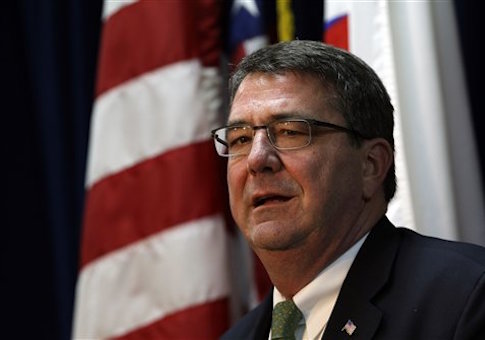
Ashton CarterAshton Carter / AP

President Barack Obama’s nominee for secretary of defense Ashton Carter has a very strong position on nuclear non-proliferation issues, the Tower reports.

Some of those positions stand in contrast with those of the Obama administration.

Politico on Tuesday described him as a “leading member of a clique of defense intellectuals long concerned with the possibility of a nuclear terrorist attack” and suggested he “could be more consequential when it comes to Obama’s plans for dealing with Iran’s nuclear program.”

Two months before President Obama’s 2008 election, Carter argued, in a paper coauthored with diplomatic heavyweights including former Special Middle East Coordinator Dennis Ross and Nonproliferation Policy Education Center Executive Director Henry Sokolski, that “Iran’s nuclear development may pose the most significant strategic threat to the United States during the next Administration.” The Times of Israel covered Carter’s nomination, noting that he was a “vocal proponent of stronger action to stymie nuclear proliferation.” Carter had visited the Jewish state in 2013, and was quoted as telling a group of Israeli soldiers that “protecting America means protecting Israel, and that’s why we’re here in the first place.”

The Jerusalem Post reported on Friday that as part of the Pentagon’s Defense Advisory Acquisition Group, Carter played an “instrumental” role in the transfer of F-35 fighter jets from the U.S. to Israel. Israel recently placed a preliminary order to purchase 25 more of the state of the art fighters. Speaking Friday to reporters at the State Department press briefing about U.S.-Israel ties, Deputy Spokesperson Marie Harf reaffirmed the closeness of the relationship, calling ties between the countries “incredibly close, essential” and “unshakable” and noting that it is “arguably the closest military-to-military relationship” the countries have ever had.

Implications of Iranian Cheating at Arak

December 10, 2014

Implications of Iranian Cheating at Arak, Commentary Magazine, December 10, 2014

[T]he State Department never conducts lessons-learned exercises to determine why previous episodes of diplomacy have failed.

Kerry is like a gambler who has lost everything, but figures if only he is given one more round at the craps table, he can win big. American national security, however, is nothing with which to gamble. Especially when a gambler is desperate, the house will always win. In this case, however, the house is not Washington, but rather Tehran.

**********

As Jonathan Tobin notes, Colum Lynch’s Foreign Policy bombshell report about Iran’s covert efforts to buy equipment for its Arak plant, a facility which could produce plutonium for a nuclear bomb, raises questions about the logic of the Obama administration, and the recent comments by both Vice President Joe Biden and Secretary of State John Kerry with regard to the wisdom of extending nuclear talks with Iran.

If Lynch’s report is true—and it appears very much to be so—then there are two possibilities as to what happened vis-à-vis American diplomacy. The first is that Iranian diplomats were always insincere in pursuit of a nuclear resolution, and lied outright to Kerry, Undersecretary Wendy Sherman, Clinton, Biden-aide Jake Sullivan, and other officials who have championed the drive for nuclear talks with the current Iranian administration. That possibility is troubling enough, but the second scenario is as troubling, and that is that Iranian diplomats were perfectly sincere, but that the regime simply couldn’t care less what its diplomats said and pursued its own goals irrespective of any commitments they made.

A key theme of my recent book exploring the history of U.S. diplomacy with rogue regimes (of which Iran is the marquee example) is that the State Department never conducts lessons-learned exercises to determine why previous episodes of diplomacy have failed. One example they might consider is the pre-Iraq War negotiations with Iran: Immediately prior to the U.S.-led invasion of Iraq, National Security Council official Zalmay Khalilzad along with Ambassador Ryan Crocker met with Mohammad Javad Zarif, Iran’s UN ambassador (and its current foreign minister) in secret talks in Geneva. Almost simultaneously, British Foreign Secretary Jack Straw met with Iranian Foreign Minister Kamal Kharrazi. Both talks solicited the same Iranian pledge: Iranian officials would not interfere with coalition forces in Iraq, and Iran would not insert its own personnel or militias into Iraq.

In hindsight, the Iranians there, too, lied. Soon after Saddam’s fall, the Islamic Revolutionary Guard Corps (IRGC) infiltrated 2,000 fighters, militiamen, and Qods Force personnel into Iraq replete with radio transmitters, money, pamphlets, and supplies. The source for that statement? Iranian journalists. Those most enthusiastic for rapprochement, however, are now placing their hopes in the same Mr. Zarif, the man who a decade ago either lied shamelessly or bluffed about the power he did have to control the behavior of the IRGC and influence the supreme leader. Then again, there is a reason why, before he became vice president, Joe Biden was Tehran’s favorite senator.

Kerry is like a gambler who has lost everything, but figures if only he is given one more round at the craps table, he can win big. American national security, however, is nothing with which to gamble. Especially when a gambler is desperate, the house will always win. In this case, however, the house is not Washington, but rather Tehran.

Iran Launches ‘We Love Fighting Israel’ Campaign

December 10, 2014

Iran Launches ‘We Love Fighting Israel’ Campaign, Washington Free Beacon, ,December 10, 2014

(But the humanitarian, peace-loving Islamic Republic of Iran, where sanity, good will toward all and freedom flourish, needs nukes to take its rightful place in our multicultural International Community. Right? — DM)

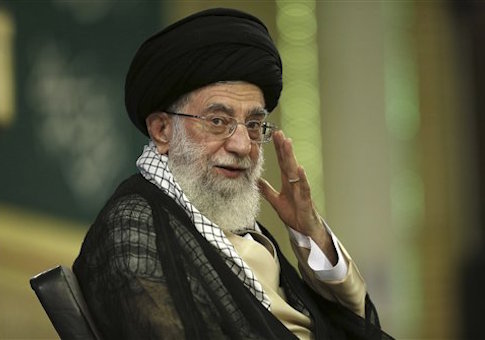
Ali KhameneiAli Khamenei / AP

The Iranian regime has launched a nationwide social media campaign called, “We Love Fighting Israel,” which encourages Iranian children, teens, and Internet users to photograph themselves alongside messages of hate for the Jewish state.

The movement has sprouted online in the last few days across social media sites such as Twitter, Instagram, and other platforms as a result of a recent call by Iranian Supreme Leader Ayatollah Ali Khamenei rallying the nation to take on Israel.

The campaign drew outrage from opponents of Iran’s hardline regime and calls for sites such as Instagram to shut it down for violating policies against hate speech.

Thousands of Iranians are reported to have already joined the electronic movement following comments by Khamenei’s outlining Iran’s goal of destroying the Jewish state.

“Our people love fighting against the Zionists and the Islamic Republic has proved this as well,” Khamenei was quoted as saying in a recent speech by the country’s state-run media. “By Allah’s Favor and Grace, we have passed through the barrier of denominational discord.”

These remarks inspired Iranian social media users to take to the Internet and launch the “We Love Fighting Israel” movement. The campaign even has spawned its own hashtag on Twitter, “#FightingtheZionists.”

The anti-Israel campaign now “has gone viral on the web,” according to Iran’s state-controlled Mehr News Agency, “getting more and more boost from individuals who post photos reading similar sentences, [and] sharing the #Fightingthezionists hash tag.”

More than 300 pictures have already been posted to an Instagram account titled, “FightingTheZionists.” The account, which had some 3,000 followers as of Tuesday evening, links to Khamenei’s personal Instagram account.

Users post pictures with messages declaring, “We love fighting against Israel,” “I love to fight Israel,” “We are lovers of fighting Israel,” and “I love fighting against Zionists,” among other similar messages.

One picture in particular has caught the eye of Iran critics on the web and prompted a harsh response to the anti-Israel campaign.

The photo shows a young child decked out in military gear and holding a sign that translates from Farsi as, “I love fighting against Zionists.”

Captioned alongside the photo is an English language message that reads: “Our people love fighting against the Zionists and the Islamic Republic has proved this as well, Ayatollah Khamenei.”

[Please see Washington Free Beacon article for a photo which I can’t reproduce here. Many other photos are available here. — DM]

It is not the only photo to depict young children as participating in the campaign to fight Israel.

The photos posted on the Instagram page depict “several groups of people including war veterans, students, journalists, and people from all walks of life joining the campaign,” according to Mehr News.

The American nonprofit group United Against Nuclear Iran (UANI), which works to prevent Tehran from obtaining a nuclear weapon, expressed disgust at the campaign on its Twitter account.

UANI lashed out at the Iranian regime for promoting “vile hate” and the “indoctrination of hate children.”

Additionally, Matan Shamir, UANI’s director of research, called on social media sites to immediately take steps to remove the Iranian campaign.

“The Iranian regime’s brazen exploitation and indoctrination of innocent children to hate and commit violence is utterly deplorable,” Shamir said. “Instagram and its parent company Facebook must enforce their own guidelines prohibiting hate speech and incitement to violence, and remove such propaganda immediately.”

Shamir went on to criticize Iran for its own domestic human rights abuses, such as preventing average citizens from accessing the Internet.

“It is intolerable that while the regime blocks its own citizens from accessing many popular social media platforms, it uses them to advance its own crude and hateful ideology,” he said.