Posted tagged ‘Iran’

US-Saudi summit in Riyadh to deal with pivotal issues of oil prices, Iran and Yemen

January 24, 2015

US-Saudi summit in Riyadh to deal with pivotal issues of oil prices, Iran and Yemen, DEBKAfile, January 24, 2015

He will want to clear the air most urgently on three controversial items of burning interest to both leaders: Riyadh’s flat opposition to the multilateral nuclear deal with Iran and skepticism in the face of Obama’s conviction that a comprehensive accord will curtail the Islamic Republic’s drive for a nuclear weapon.

(Only if King Salman is truly demented would he agree with Obama on Iran and oil prices. Increases in Saudi oil production have hurt Iran while Obama’s Iran scam and relief from sanctions continue to help it. — DM)

Obama_King_Salman_bin_Abdulaziz__27.1.15Past meeting between President Barack Obama and King Salman, then Crown Prince

President Barack Obama, having decided to cut short the third day of his India visit, will arrive in Riyadh Tuesday, Jan. 27 with the First Lady, to offer US condolences on the death of King Abdullah and hold critical talks with his successor, King Salman Bin Abdulaziz.

He will want to clear the air most urgently on three controversial items of burning interest to both leaders: Riyadh’s flat opposition to the multilateral nuclear deal with Iran and skepticism in the face of Obama’s conviction that a comprehensive accord will curtail the Islamic Republic’s drive for a nuclear weapon.

Next, the US leader will try and persuade the new Saudi ruler to slow down oil production in order to put the brakes on plunging prices, an example which other OPEC members are sure to follow.

Finally, Obama and Salman must decide how to handle the fall of Yemen into the hands of Shiite Houthi rebels, who have seized the capital Sanaa with Iranian support and brought down the US-Saudi-sponsored president Abed Rabbo Mansour Hadi.

Two secondary issues will be the struggle against the Islamic State of Iraq and the Levant in the oil kingdom’s back yard, in which the US and Saudi Arabia are coalition partners; and the situation in the Syrian conflict.

Since this is an outsize agenda for one meeting, DEBKAfile’s sources in Washington and the Gulf expect Obama to focus in his initial encounter with Salman on the broad lines of the nuclear Iran dispute and oil prices. Detailed discussions on these and other issues will be set aside for US and Saudi officials of lower rank to hammer out in the coming weeks, as the new king begins to take hold of the reins of government.

A number of Middle East leaders will be following the outcome of this Riyadh summit with bated breath. Many are worried that Obama may persuade the new monarch to play ball with his Middle East policies, so effecting a radical reversal of the late Abdullah’s stance of flat opposition to Obama’s tactics in the region, aside from isolated cases.

A decision by Salman to accept America’s lead on the Iranian nuclear question and oil prices would be a serious blow for the anti-US Arab front, spearheaded hitherto by Saudi Arabia, Egypt and some of the Gulf emirates. It would also be a setback for Israeli Prime Minister Binyamin Netanyahu’s fight against Obama’s nuclear diplomacy for Iran. This policy was underpinned by the Saudi-Egyptian political and military partnership that aimed at stalling the deal crafted by Washington, which purported to lay to rest the nuclear controversy with Iran.

‘It will be hard to trust Netanyahu’ after latest bust-up, US officials reportedly say

January 23, 2015

It will be hard to trust Netanyahu’ after latest bust-up, US officials reportedly say

In row over PM’s March trip to US, Israeli officials counter that he must speak to Congress on Iran because Obama is ‘worryingly’ ready to compromise

By Times of Israel staff January 23, 2015, 10:19 pm

via ‘It will be hard to trust Netanyahu’ after latest bust-up, US officials reportedly say | The Times of Israel.


Prime Minister Benjamin Netanyahu at a press conference held in Jerusalem, December 17, 2014. (Emil Salman/POOL/FLASH90)

Prime Minister Benjamin Netanyahu at a press conference held in Jerusalem, December 17, 2014. (Emil Salman/POOL/FLASH90)

The public spat between Prime Minister Benjamin Netanyahu’s government and US President Barack Obama’s administration escalated further Friday evening, with US officials reportedly charging that it will be “hard to trust” Netanyahu, following the fallout from the announcement Wednesday that the PM would address Congress in two months, a move he failed to coordinate with the White House.

“It will be difficult to trust Netanyahu in the future,” unnamed senior US officials told Channel 2. “At a critical juncture that requires close cooperation on strategic matters, he preferred to advance his political interests while disrupting the correct working relationship” between the two governments. The reference to “strategic matters” was understood to refer to the effort to thwart Iran’s nuclear weapons program, an issue on which the Israeli and American governments are deeply divided.

Senior Israeli sources told Channel 2 in response that given “the deep disagreements between Israel and the US” on the Iranian nuclear talks, Netanyahu felt that “he must present his stance even if that doesn’t suit Obama. This is a matter of substance.” The sources charged that the US was proving “worryingly” willing to over-compromise in the nuclear talks and was ready to allow Iran to keep more than 6,000 centrifuges for enriching uranium.

The Israeli sources further said that the US administration was taking advantage of the Israeli election season to seal a deal with Iran, and that this move must be opposed, Channel 2 reported. The fear in Jerusalem is that a US-led deal with Iran “is weeks away,” the TV report said.

In his address to Congress in early March, the Israeli leader is expected to speak about the nuclear negotiations with Iran, and to urge lawmakers to slap Tehran with a new round of tougher sanctions in order to force it to comply with international demands. The Mossad intelligence service on Thursday went to the rare length of issuing a press statement to deny claims, cited by US Secretary of State Kerry, that its chief Tamir Pardo had told visiting US politicians that he opposed further sanctions.

Haaretz reported that Obama had personally demanded that Netanyahu tone down his pro-sanctions rhetoric in a phone call between the two last week. The president has said a sanctions bill would cripple negotiations with Iranian leaders at a critical stage, and has threatened to veto such a bill should it come through.

Earlier Friday, American officials reportedly told Haaretz that Netanyahu had “spat” in Obama’s face in agreeing to speak to Congress without alerting the White House.

“We thought we’ve seen everything,” the newspaper quoted an unnamed senior US official as saying. “But Bibi managed to surprise even us.

“There are things you simply don’t do. He spat in our face publicly and that’s no way to behave. Netanyahu ought to remember that President Obama has a year and a half left to his presidency, and that there will be a price,” he said.

Obama and Kerry have already indicated that they will not meet with Netanyahu during his US visit.

The White House officially criticized on Friday the timing of the upcoming address, planned for March 3, just two weeks before Israeli national elections, claiming that the US president does not habitually meet with world leaders before foreign elections.

“I can’t give you a specific time period. I’m not sure there is a big difference between, you know, 28 days or 45 days or 90 days or whatever it is,” said White House spokesman Josh Earnest Friday. “I think we can all probably, as reasonable observers of the political process would, conclude that having a meeting about two weeks before a national election might raise questions in some quarters about whether or not that was an attempt to try to interfere and try to influence the outcome of a democratically held election. That is precisely what we are trying to avoid. We are trying to avoid even the appearance of doing so. That’s why the president has decided on this trip that is planned for March, that he will not be meeting with Prime Minister Netanyahu.”

Earlier Friday, officials in Washington said that the “chickenshit” epithet — with which an anonymous administration official branded Netanyahu several months ago — was mild compared to the language used in the White House when news of Netanyahu’s planned speech came in.

The Washington Post reported that Netanyahu’s apparent disrespect for the US leadership was particularly offensive to Kerry, who over the past month had made frenzied efforts on Israel’s behalf on the world stage — making dozens of calls to world leaders to convince them to oppose a UN Security Council resolution which would have set a timeframe for the establishment of a Palestinian state.

“The secretary’s patience is not infinite,” a source close to Kerry told the Post. “The bilateral relationship is unshakable. But playing politics with that relationship could blunt Secretary Kerry’s enthusiasm for being Israel’s primary defender.”

Netanyahu will be in Washington in part for a March 3 address to a joint session of Congress. House Speaker John Boehner invited Netanyahu to speak to Congress without consulting the Obama administration.

The White House initially reacted icily to Netanyahu’s plans to address Congress, an appearance apparently meant to bolster opposition to a nuclear deal with Iran as it is currently shaping up, as well as opposition to new sanctions against Tehran.

Earnest suggested Wednesday that Netanyahu and Boehner had broken with protocol in not informing Obama of the prime minister’s travel plans.

“We haven’t heard from the Israelis directly about the trip at all,” he said, adding the White House would “reserve judgment” about any possible face-to-face meeting until explanations are made.

“The typical protocol would suggest that the leader of a country would contact the leader of another country when he is traveling there. That is certainly how President Obama’s trips are planned,” explained Earnest.

“So this particular event seems to be a departure from that protocol.”

Speaking several hours after Earnest, Kerry said Netanyahu was welcome to give a speech at “any time” in the United States. But Kerry agreed it had been a “little unusual” to hear about the Israeli leader’s speech to US Congress next month from the office of Boehner and not via the usual diplomatic channels.

Rep. Nancy Pelosi, leader of the House Democrats, said that Boehner blundered when he invited Netanyahu to address Congress amid sensitive negotiations about Iran’s nuclear program and in the shadow of Israel’s elections.

Prime Minister Benjamin Netanyahu, left, meets with US president Barack Obama, at the White House, Washington DC on October 01, 2014. (Photo credit: Avi Ohayon/GPO)

“If that’s the purpose of Prime Minister Netanyahu’s visit two weeks before his own election, right in the midst of our negotiations, I just don’t think it’s appropriate and helpful,” Pelosi told reporters Thursday at her weekly news conference. The speech, Pelosi suggested, could give Netanyahu a political boost in elections a few weeks later and inflame international talks aimed at stopping Iran’s nuclear program.

Netanyahu confirmed Thursday that he would address Congress in early March. He was initially slated to speak on February 11, but changed the date so he could attend the AIPAC conference.

“The Prime Minister is expected to arrive in the US at the beginning of March and will also participate in the AIPAC conference,” read a statement from the PMO. “The speech in front of both houses of Congress will give the prime minister the opportunity to thank President Barack Obama, Congress, and the American people for their support of Israel.

“I look forward to the opportunity to express before the joint session Israel’s vision for a joint effort to deal with [Islamist terrorism and Iran’s nuclear program], and to emphasize Israel’s commitment to the special bond between our two democracies,” Netanyahu said, according to the statement.

Israel and the United States are close allies, but personal relations between Obama and Netanyahu have reportedly deteriorated over the years.

The pair have publicly clashed over Israeli settlement building in the West Bank and about how to tackle Iran’s disputed nuclear program.

Obama’s allies fear Netanyahu’s March trip could be used by Israel and by Republicans to rally opposition to a nuclear deal, undercutting years of sensitive negotiations just as they appear poised to bear fruit.

In November the already faltering ties between the leaders were served a new blow when an anonymous US official was quoted calling Netanyahu a “chickenshit” in an article published by journalist Jeffrey Goldberg in the American magazine The Atlantic. The article portrayed the rift between the United States and Israel as a “full-blown crisis.”
John Bolton on WMAL 1-22-15

January 23, 2015

John Bolton on WMAL 1-22-15, via You Tube, January 22, 2015

(Audio only. Amb. Bolton speaks of PM Netanyahu’s address to Congress, no-go zones and Obama’s fantasies about Islamic terrorism, the Islamic State and Iran. — DM)


Argentine Prosecutor Death in Iran Terror Case Gets Curiouser

January 23, 2015

Argentine Prosecutor Death in Iran Terror Case Gets Curiouser, Legal Insurrection, January 23, 2015

He documented enough of his charges that Interpol issued “red notices” for seven high-ranking Iranian officials, including Ali Akbar Rafsanjani and Ali Velayati, who were Iran’s president and foreign minister respectively at the time of the AMIA bombing. (Interpol does not have the power to arrest, so a “red notice” is as close as it comes to issuing an arrest warrant) Rafsanjani, despite being implicated in an act of terrorism in another nation is often referred to as a “moderate” nowadays. He is also considered to be a mentor to Iran’s current president, also often referred to as a “moderate,” Hassan Rouhani.

Alberto Nisman’s work exposed the danger that Iran poses to world security. Iran continues to violate international law with impunity and unfortunately there are too few Nisman’s daring to challenge Iran’s brazen misbehavior. His death will make the task of reining in Iran’s ambitions that much more difficult.

****************

2015-01-23_074410_Nisman-620x426

Sunday night Argentinian prosecutor Alberto Nisman was found shot to death in his apartment. Nisman had been scheduled the following day to present his criminal complaint against Argentinian President  Cristina Fernández de Kirchner before a closed session of Argentina’s congress.

The initial claim (one made by Kirchner herself on her Facebook page) that Nisman committed suicide hardly seemed credible at the time. How many people would kill themselves before the high point of their careers? Nisman had spent ten years investigating the 1994 AMIA Jewish center bombing in Buenos Aires and now he was about to charge the president and other officials of his country with conspiring to cover up the Iranian involvement in that attack. (Now Kirchner says he was killed but “suggests that Nisman was murdered on the instructions of his foreign masters in order to create a scandal damaging to her and to her government.”)

Subsequent revelations during the week have made the claim of suicide even less credible now. At Business Insider, Armin Rosen recounted some of those revelations.

The lack of an exit wound suggested the fatal shot was fired at a further distance than Nisman could have managed had the wound been self-inflicted. His last WhatsApp was a photo of stacks of documentation related to the next day’s testimony and Nisman had apparently given his maid a grocery list for the following week. A 10-person government security detail was reportedly pulled off of his apartment the night of his assassination. Most damningly, there was no gunpowder residue found on Nisman’s hands, physical evidence that he didn’t discharge a firearm prior to his death.

Fausta has more, including some gleaned from the Spanish press. Notably despite earlier claims that Nisman’s apartment was locked from the inside, there are reports that there were two other ways into his apartment that were not locked. Fausta is also right that Nisman’s murder is all about Iran. (Rosen also wrote, “no matter who’s responsible for Nisman’s death, the Iranian regime benefits.”)

Nisman’s work on the AMIA case was invaluable in documenting Iran’s efforts to build a terror infrastructure in South America. Matt Levitt, an expert on Hezbollah, who recently published a book about the Iran-backed terror organization, wrote this week, “As I was writing my book, trying to navigate the convoluted details of the AMIA bombing and other Hezbollah plots, Nisman was an invaluable resource.”

Nisman’s work wasn’t just academic though. He documented enough of his charges that Interpol issued “red notices” for seven high-ranking Iranian officials, including Ali Akbar Rafsanjani and Ali Velayati, who were Iran’s president and foreign minister respectively at the time of the AMIA bombing. (Interpol does not have the power to arrest, so a “red notice” is as close as it comes to issuing an arrest warrant) Rafsanjani, despite being implicated in an act of terrorism in another nation is often referred to as a “moderate” nowadays. He is also considered to be a mentor to Iran’s current president, also often referred to as a “moderate,” Hassan Rouhani.

The AMIA bombing was not the only time Iran’s leadership was implicated in an attack on foreign soil. In addition to Rafsanjani and Velayati, a red notice was issued for Ali Fallahian for the AMIA bombing. Rafsanjani, Velayati and Fallahian were all implicated in another terror attack on foreign soil.

A German prosecutor “without naming them … implicated Supreme Leader Ayatollah Khamenei, President Akbar Hashemi Rafsanjani, Foreign Minister Ali Akbar Velayati and Intelligence Minister Ali Fallahian” in the 1992 massacre at the Mykonos restaurant in Berlin.

Iran’s revolutionary government is lawless. The Iranian actors in these foreign terror attackes weren’t rogue operators but members of the country’s political elite. It’s something to keep in mind when the Obama administration insists that it will make a nuclear agreement with Iran that will make everyone safer and more secure.

Even assuming the P5+1 nations can come to an agreement with Iran (an agreement is hardly a foregone conclusion, Iran would probably be very happy with a series of temporary agreements that free up billions and don’t force it to dismantle any element of their nuclear program), what grounds are there to trust Iran to keep its commitments?

Remember that the crisis with Iran over its nuclear program stems from Iran’s violations of the Nuclear Non-Proliferation Treaty that it signed. Six UN Security Council resolutions – three of them unanimous – were passed imposing sanctions on Iran for its violations. Iran isn’t looking to come into compliance but to be granted absolution for its violations.

Alberto Nisman’s work exposed the danger that Iran poses to world security. Iran continues to violate international law with impunity and unfortunately there are too few Nisman’s daring to challenge Iran’s brazen misbehavior. His death will make the task of reining in Iran’s ambitions that much more difficult.

King Abdullah of Saudi Arabia dead at 90, state TV reports

January 23, 2015

King Abdullah of Saudi Arabia dead at 90, state TV reports, Fox News, January 22, 2015

abdullahinternal15151June 27, 2014: Saudi King Abdullah speaks before a meeting with U.S. Secretary of State John Kerry at his private residence in the Red Sea city of in Jiddah, Saudi Arabia. (AP)

A former American diplomat close to the Saudi royal family told Fox News the death of King Abdullah, coupled with the collapse of the government in Yemen, is a “worst case scenario” for the U.S. because current events are allowing Iran to extend its reach and influence in the region.

***************

DEVELOPING: King Abdullah of Saudi Arabia, the powerful U.S. ally who joined Washington’s fight against Al Qaeda and sought to modernize the ultraconservative Muslim kingdom has died at 90, according to Saudi state TV.

His expected successor is his 79-year-old half-brother, Prince Salman, who recently has taken on the ailing Abdullah’s responsibilities.

The announcement came in statement read by a presenter on Saudi state TV, which aired video of worshippers at the Kaaba in Mecca.

Saudi state TV said he died after midnight Friday.

A former American diplomat close to the Saudi royal family told Fox News the death of King Abdullah, coupled with the collapse of the government in Yemen, is a “worst case scenario” for the U.S. because current events are allowing Iran to extend its reach and influence in the region.

With the collapse of President Hadi’s government in Yemen, the former diplomat said Teheran’s influence is now seen in at least four Middle Eastern capitals – Sana’a in Yemen, Baghdad in Iraq, Damascus in Syria, and to a lesser extent in Beirut, Lebanon.

More than his guarded and hidebound predecessors, Abdullah assertively threw his oil-rich nation’s weight behind trying to shape the Middle East. His priority was to counter the influence of rival, mainly Shiite Iran wherever it tried to make advances. He and fellow Sunni Arab monarchs also staunchly opposed the Middle East’s wave of pro-democracy uprisings, seeing them as a threat to stability and their own rule.

And while the king maintained the historically close alliance with Washington, there were frictions as he sought to put those relations on Saudi Arabia’s terms. He was constantly frustrated by Washington’s failure to broker a settlement to the Israel-Palestinian conflict. He also pushed the Obama administration to take a tougher stand against Iran and to more strongly back the mainly Sunni rebels fighting to overthrow Syrian President Bashar Assad.

The death of an Iranian general on the Golan gave US Senators’ Iran sanctions bills military muscle

January 22, 2015

The death of an Iranian general on the Golan gave US Senators’ Iran sanctions bills military muscle, DEBKAfile, January 22, 2015

This was a dual threat: Israel would not stand by if Iranian and Hizballah forces moved into the Syrian Golan right up against its frontier. But in the wider context, Binyamin Netanyahu was signaling Obama in Washington and Khamenei in Tehran, that he no longer had any qualms about striking Iranian military targets if the two rulers failed to forge a workable, credible accord for keeping nuclear weapons out of Iranian hands.

The Israeli action added military muscle to the US Senate legislation on Iran –  in the face of Obama’s reluctance to embrace tactics he believes would be disincentives for Khamenei to play ball on the ongoing multilateral nuclear diplomatic track in Geneva.

*****************

netanyahu_us_congress_11.2.15Binyamin Netanyahu in former address to US Congress

It is hard to believe that the White House was caught by surprise over House leader John Boehner’s unusual invitation for Israeli Prime Minister Binyamin Netanyahu to address Congress on Feb. 11. After all, prior arrangements must have kept the Israeli embassy in Washington busy for weeks in a city, whose life blood is kept flowing by the mining and trading of information and secrets about friends and rivals alike.

All the same, it suited the four parties involved in this extraordinary event – Republican and Democratic lawmakers, the White House and Netanyahu – to pretend they were taken aback on Wednesday, Jan. 21 by the Speaker’s announcement of the prime minister’s coming address on “the grave threats radical Islam and Iran pose to our security and way of life.”

He accused President Barack Obama of “papering over” these threats over in his State of the Union speech a few hours earlier.

The White House said the invitation breached “typical protocol” but the administration would reserve judgment until they heard from Netanyahu about his plans.

The assumed air of astonishment greeting the invitation added an element of drama to the event. It also had the effect of further polarizing the camps for and against the Obama administration’s insistence on banking solely on diplomacy for containing Iran’s nuclear program.

Inevitable showdown

Obama and Netanyahu, who could never stand each other, have been at loggerheads for most of the six years of the former’s presidency over what is widely seen as the dead-end US Middle East policies he pursued in most major arenas such as Iraq, Yemen and Libya, the futile US air strikes against marching Islamist State soldiers, the unending Syrian conflict and the Palestinian issue.

The showdown building up for years between them may now be at hand. It will catch Obama and Secretary of State John Kerry fully engaged in a desperate pursuit of a comprehensive nuclear deal between Iran and the Six-World-Powers group. This deal could then be presented as an unquestioned success of Obama’s Middle East policies – indeed the only one.

Together with Iran’s President Hassan Rouhani and Foreign Minister Mohamed Zarif, US officials have roughed out a draft accord. But most American nuclear experts and Israel’s top political and military leaders view this paper as a bad agreement, because it would leave Tehran with the freedom and resources to jump back from low-grade enrichment to full-dress production of a nuclear bomb and missiles when international and economic circumstances were more convenient.

But Obama and Kerry are counting on the ayatollahs holding their horses until the end of 2016, when the US administration changes hands. The Iranian nuclear deal’s inevitable breakdown would then land squarely on the shoulders of the next president and secretary of state taking over in Washington, while Obama would have formally honored his commitment to prevent Iran from acquiring a nuclear bomb.

Khamenei between two compulsions

But this plan faces an outsize impediment: Rouhani and Zarif are holding back from putting pen to paper because of the strong objections posed by supreme leader Ayatollah Ali Khamenei and the Revolutionary Guards military chiefs.

Earlier this month, the issue reached boiling point in Tehran, DEBKAfile’s Iranian sources report: The Guards threatened to unseat Khamenei by a military coup if he let Rouhani and Zarif sign the draft into a comprehensive, binding nuclear accord.

Khamenei, never lost for a devious maneuver, began weaving between the two compulsions – American demands for more concessions to finalize the deal and demands by hardliners at home not to give way. The move he made was to throw a bone in the form of an offer to cut down on the number of centrifuges used in uranium enrichment.

Obama and Kerry hailed this as a breakthrough toward a deal, although the experts dismissed it as meaningless.

Obama propositions Netanyahu

On this basis, Obama phoned Netanyahu Monday night, Jan. 13, to ask him for Israel’s support for the evolving comprehensive nuclear accord with Iran.

In return, he offered closer US cooperation in various areas of interest to Israel, such as the Palestinian issue, if the prime minister would withhold or cool his support for US Senate sanctions legislation:

The Republican Mark Kirk and Democrat Robert Menendez seek to enact new sanctions on Iran if nuclear negotiations fail to meet their June 30 deadline for an accord.

Bob Corker, chairman of the Senate Foreign Relations Committee — supported by Republican Senators Lindsay Graham and John McCain — is pushing for legislation which does not contain sanctions but would require a Senate vote on any pact that is agreed upon in Geneva.

Netanyahu rejected Obama’s proposition.

The US President was therefore adamant in his State of the Union references to the Iranian nuclear issue: “New sanctions on Iran would all but guarantee that diplomacy fails, heightening the prospects of war.” He said.: “Between now and this spring, we have a chance to negotiate a comprehensive agreement that prevents a nuclear-armed Iran, secures America and our allies – including Israel – while avoiding yet another Middle East conflict.”

Obama did not elaborate on the parties who would take part in this hypothetical conflict, or explain why he limited himself to only two extreme scenarios – either a deal with Iran or tighter sanctions that would precipitate war.

Israel takes direct aim at Iran

It was no accident that two days before this speech, Obama had his answer from Israel. Sunday, Jan. 19, Israeli Air Force drones struck an Iranian-Hizballah military convoy near the Syrian Golan town of Quneitra. Six Iranian officers were killed, led by Gen. Mohamad Ali Allah Dadi, as well as the same number of high-ranking Hizballah operatives.

This was a dual threat: Israel would not stand by if Iranian and Hizballah forces moved into the Syrian Golan right up against its frontier. But in the wider context, Binyamin Netanyahu was signaling Obama in Washington and Khamenei in Tehran, that he no longer had any qualms about striking Iranian military targets if the two rulers failed to forge a workable, credible accord for keeping nuclear weapons out of Iranian hands.

The Israeli action added military muscle to the US Senate legislation on Iran –  in the face of Obama’s reluctance to embrace tactics he believes would be disincentives for Khamenei to play ball on the ongoing multilateral nuclear diplomatic track in Geneva.

It also explains why John Boehner invited Netanyahu to address Congress on Feb. 11.

However, until then, Iran, Hizballah, Syria and even Israel may not stand idle. And the Obama administration may also decide to round up its assets in a bid to spoil the prime minister’s run for re-election on March 17.

IDF sends reinforcement to north amid tensions with Syria, Hezbollah, Iran

January 22, 2015

IDF sends reinforcement to north amid tensions with Syria, Hezbollah, Iran

After airstrike attributed to Israel kills top Iranian general alongside six Hezbollah fighters, IDF shifts forces to north.

Yoav Zitun

Published: 01.22.15, 16:41 / Israel News

via IDF sends reinforcement to north amid tensions with Syria, Hezbollah, Iran – Israel News, Ynetnews.


The IDF is sending reinforcements to the north Thursday and Friday amid tensions along the border with Syria and Lebanon in wake of a deadly attack attributed to Israel by foreign media on military officials from Hezbollah and Iran in Syria.


Military vehicles travel north (Photo: George Ginsburg)

Massive IDF movement is expected in the upcoming day within Israel’s northern communities, top IDF sources told Ynet. The forces, they said, are part of the IDF’s attempt to address growing tensions in the north, which have seen both Hezbollah and Iran vow to take revenge for the alleged Israeli attack.


IDF forces in the north on Thursday (Photo: Avihu Shapira)

Meanwhile, reports in Lebanon claimed that supposed Israeli military aircraft were flying over the country’s south. According to the reports, the planes were launching decoy balloons that leave a white trail of smoke.

Report also said IAF helicopters were spotted flying at low altitude over Lebanese villages in the south of the country.

Security forces on the Lebanese border went on high alert briefly on Wednesday evening over an initial fear of a suspected infiltration in the upper Galilee, after suspicious figures were identified near the border fence.

Close to 6pm, residents of Manara, Yiftah, Malkia, Dovev and Avivim in the Ramim mountain range area were instructed to stay in their homes, while kibbutz security squads from Malkia to Metula were called to the area. Roads in the area were also closed for traffic.

After sending troops to the area, the IDF Spokesman announced no infiltration has occurred, but asked that residents remained in their homes.

Al Arabiya reported that five people, who were suspected to be infiltrators, disappeared when the IDF arrived in the area.

A senior Iranian Revolutionary Guard commander said Israel will be punished for killing one of its generals in the airstrike in Syria that also killed six Lebanese Hezbollah fighters.

Nasser Soltani says “Israel will certainly pay for what it did.” He spoke during a ceremony Wednesday for Brig. Gen. Mohammad Ali Allahdadi, who will be buried in his hometown of Sirjan in southeastern Iran on Thursday.

Soltani is quoted by the state TV as saying Allahdadi was “martyred while performing his advisory mission” in Syria.

The Kuwaiti newspaper Al Rai reported Thursday morning that – despite an Israeli official denying the claim to Reuters – Israel was well aware of who was in the convoy and that the Iranian general was the intended target.


Roi Kais, AP and AFP contributed to this report


Iran: We Will Continue Arming Terrorists

January 22, 2015

Iran: We Will Continue Arming Terrorists in Judea and Samaria

Iran plans to continue its efforts to “destroy the Zionist entity” – and that includes arming terrorists in Judea and Samaria, it said.

By Yaakov Levi

First Publish: 1/22/2015, 8:51 AM

via Iran: We Will Continue Arming Terrorists – Defense/Security – News – Arutz Sheva.


IDF soldier on Lebanese bordder

IDF soldier on Lebanese bordder
Ayal Margolin/Flash 90

Iran plans to continue its efforts to “destroy the Zionist entity” – and that includes arming terrorists in Judea and Samaria.

“The arming policy of the West Bank is one of the policies of Iran and we will use all our capabilities in this way,” said Iranian Defense Minister Hossein Dehghan.

Dehghan made the comments at a memorial service for General Abu Ali Tabtabai, who along with Jihad Mughniyeh and a crew of Hezbollah terrorists, were eliminated in an Israel Air Force strike Monday. The vehicles in which the two were riding had left Lebanon a few hours earlier, Lebanese sources said. The purpose of the tour, the sources said, was to allow Tabtabai to review the situation on the border with the purpose of developing new attacks on Israel.

Commenting on the attack, Deghan said “The Zionist attack will not be passed over,” and that Iran would take the “appropriate action” when it wished to.

Tensions remained high in northern Israel in the aftermath of the elimination of Mughniyeh, said to be Hezbollah’s “commander of the Golan Heights area,” and Iranian General Tabtabai.

Roads in the area of the Israel-Lebanon border have been closed, and tanks and armored personnel carriers were reportedly deployed along the northern border. Lebanese media outlets are reporting Israeli jets and helicopters over the Har Dov area along the Lebanese border.

Late Wednesday, the US issued a travel warning to American citizens and government personnel in Israel, citing the recent tensions along Israel’s northern borders and the terrorist stabbing attack in Tel Aviv.

“Because of concerns about security on Israel’s northern borders, U.S. government personnel are currently required to obtain advance approval if they wish to travel within 1.5 miles (2.4 kilometers) of the Lebanon border, or travel on or east of Route 98 in the Golan Heights,” the advisory said.

“Further, in light of the stabbing attack on a public bus in Tel Aviv on January 21, U.S. citizens are reminded that due to security concerns, U.S. government employees are prohibited from using public buses throughout Israel and the West Bank (Judea and Samaria -ed.),” the statement added.

Despite the increased tension, residents have been urged to continue with their regular daily routines.

Giora Zeltz, chairman of the Upper Galilee Regional Council, said Wednesday that despite the large deployment of IDF troops and the increased police and border guard presence in the area, “we have not received any instructions to change our normal activities. The message we are getting from security officials is that life should continue as usual.”

Zeltz said that IDF officials had given him three reasons for the increased vigilance: Besides concerns that Hezbollah will try to carry out revenge terror attacks against Israel – “for which we must be ready,” he said – “the IDF is also sending a message to our neighbors that we will not tolerate attacks, and to give residents a sense of safety

Iran escalates threats, vows to shower Israel with ‘Shahab’ missiles

January 22, 2015

Iran escalates threats, vows to shower Israel with ‘Shahab’ missiles

via Iran escalates threats, vows to shower Israel with ‘Shahab’ missiles – Middle East – Jerusalem Post.


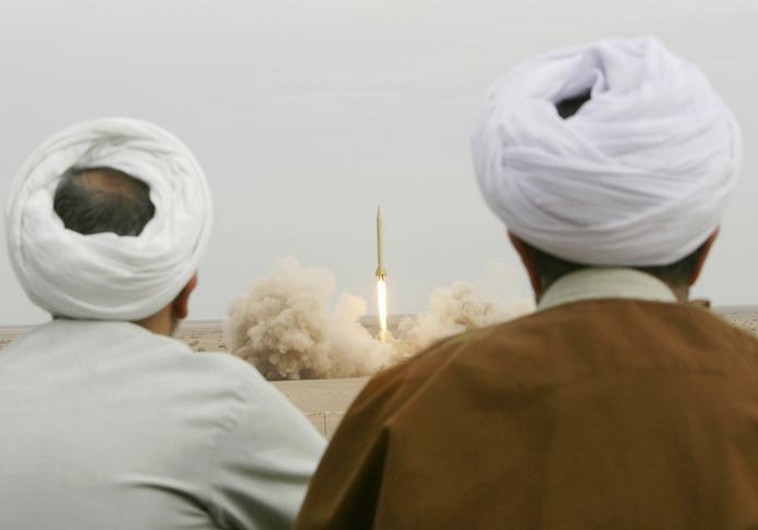
Iranian clerics watch the firing of missile of Shahab 3 during a war game near the holy city of Qom

Iranian clerics watch the firing of a Shahab-3 missile during a war game in a desert near the city of Qom. (photo credit:REUTERS)


Iranian clerics watch the firing of a Shahab-3 missile during a war game in a desert near the city of Qom. (photo credit:REUTERS)

Senior Iranian military officials on Thursday continued to threaten “crushing responses” against Israel for the death of a top Revolutionary Guards officer in an airstrike on the Syrian side of the Golan Heights earlier this week.

The attack also killed senior Hezbollah operatives, among them the son of the late arch-terrorist Imad Mughniyeh.

Brigadier General Hossein Salami, the second-in-command in the Revolutionary Guards, told Iranian state media on Thursday that his troops are capable of firing Shahab-3 missiles on Israel.

“[Israel] should be waiting for crushing responses,” Salami is quoted as saying.

The Iranian officer said that the Golan attack was an attempt to “change the balance of power in Syria” and help “the takfirist,” a reference to the Islamist elements working to topple the government of Tehran’s key ally, President Bashar Assad.

“[The Golan strike] was the reflection of numerous defeats that both Americans and Israelis have suffered in their current strategies,” he said.

“They have seen IRGC’s reactions before, and [therefore] they are worried, and they will witness destructive thunderbolts in practice,” he said.

Hamas Commander Deif to Hezbollah Leader Nasrallah: “Let’s fight Israel together”

January 22, 2015

Hamas Commander Deif to Hezbollah Leader Nasrallah: “Let’s fight Israel together”

The head of Hamas’ military wing signed a letter of condolence sent to Hezbollah’s Secretary General after the eliminations in Syria.

Jan 22, 2015, 04:00 PM | Gal Cohen

via Israel News – Hamas Commander Deif to Hezbollah Leader Nasrallah: “Let’s fight Israel together” – JerusalemOnline.


Photo Credit: Channel 2 News

Five months after the elimination attempt targeting the head of Hamas’ military wing, Mohammed Deif sent a message from hiding in Gaza and expressed his condolences regarding the attack that killed senior level Hezbollah officials, according to a report from Hezbollah’s television station.

Deif sent condolences to Hezbollah Secretary Genral Hassan Nasrallah following the elimination of senior level officials in his terror organization by Israel.  “We must unite our forces against the Zionist enemy and its allies,” Deif wrote to Nasrallah.

“Israel is the real enemy of the Islamic State and all guns should be pointed in its direction,” the Hamas terrorist added.  “We must carry out the next act together, so there will be crossfire throughout the occupied land.”

Sources close to Hezbollah said that earlier this week, the decision was made to respond to the attack in Syria that killed six senior level officials of the terror organization.  According to the report, the decision to respond was accepted by the joint resistance forces in Iran, Syria, and Hezbollah. 

Photo Credit: Channel 2 News/AP

According to the sources, the IDF’s attack did not weaken the terror organization in the Golan and did not disconnect the activities of Hezbollah from Rosh Ha-Nikra to Syria.  They claim Israel’s actions will not prevent the terror organization’s fighters from invading the Galilee in the next confrontation with the IDF.  

Iran, for its part, also addressed Israel’s actions.  Tehran admitted that one of their generals was killed in the incident and said they are committed to responding to the “Israeli aggression.”  An Iranian news site said “following the Zionist attack against the opposition in Syria, General Allahdadi, a former commander of the Iranian Revolutionary Guards, was killed along with Jihad Mughniyeh and three others, who were in the same car.”  An Iranian official added that “the resistance will respond forcefully at the right place and time to this terrorist attack.”