Posted tagged ‘Iran’

El-Sissi against the Arab world

October 31, 2016

El-Sissi against the Arab world, Israel Hayom, Dr. Reuven Berko, October 31, 2016

(How different would the situation be now if Obama, Clinton et al had supported Sisi’s “coup” rather than Morsi and the Muslim Brotherhood? — DM)

The attitude of the Arab Gulf states toward Egypt under President Abdel-Fattah el-Sissi is a good example of the insanity of considerable parts of the Arab world, whose twisted suicidal reasoning is unclear to many people outside it.

Given the American wipeout in the Middle East, leaders of the Persian Gulf states are very well aware that the only support they can expect against the expected Iranian aggression on the Arabian Peninsula comes from Egyptian military might. Nevertheless, megalomania, hypocrisy, double talk, and in particular a divisive and violent radical Islamist agenda are leading the Arab leaders to saw off the very branch they sit on.

The competition for hegemony, a tangle of conflicting economic and political interests and defensive manipulations, along with drives for expansion and survival, are leading the Gulf states to arm and fund the radical Sunni terrorist movements in Syria and Iraq to check the growth and terrorism of Shiite Iran, whose military provocations and threat to the Sunni Arab Gulf states is increasing.

But in effect they are encouraging Islamic terrorism in Egypt.

Turkey and Qatar have not accepted the loss of former President Mohammed Morsi and the Muslim Brotherhood, and have not relinquished their dream of an Islamic empire. The Saudis, because of their money, reject Egypt as the “Arab mother state.” Mistaken U.S. policy confers transient status on el-Sissi’s regime. All of Egypt’s attempts to ingratiate itself with Saudi Arabia — the military guarantees, the delegations, and the gifts of the Tiran and Sanafir islands — failed to do the trick.

There is an Arab proverb that says, “Starve your dog so he will obey you.” While battling Iran, the Gulf states are inciting for el-Sissi to be ousted while supplying stingy amounts of money and fuel just to humiliate him and keep him “alive,” beaten, and needy — a thug who can attack Tehran for them. While the Al Jazeera network presents the Egyptian president as a sex criminal, an agent of Iran, Israel, and America, a corrupt official who sells weapons to the Houthi rebels in Yemen, the Egyptian government is vulnerable to incitement and terrorism from the Muslim Brotherhood and their protectors in the Gulf (Al Jazeera), flooding, monstrous demographics (thanks to the Islamic ban on birth control), inflation, shortages of fuel, sugar, rice and raw materials, as well as the threat of the water level in the Nile River dropping and a hit to its $55 billion tourism industry.

To encourage his suffering, restive, exposed-to-incitement people, el-Sissi told them that he lived for a decade with nothing in the refrigerator other than a bottle of water. In response, the Saudi king mocked him, delayed shipments of fuel and visas to Saudi Arabia for Egyptians and made threats that el-Sissi would fall, like then-President Hosni Mubarak. In response to the intra-Arab scheming, el-Sissi invited the Russians to conduct a joint military exercise and recently voted against the Arabs — and with Iran, Russia and Syria — in the U.N. Security Council on a solution to the Syrian crisis, knowing that the fall of Syrian President Bashar Assad and the success of the Islamists would make him the next target. If the Gulf states don’t change their policy soon, they’ll wind up getting a refrigerator full of explosives from him.

Has World War 3 Already Started?

October 20, 2016

Has World War 3 Already Started?

by Nick Giambruno, Senior Editor

Source: Has World War 3 Already Started? | International Man

It took 3 million soldiers, 3,000 tanks, 7,000 artillery pieces, and 2,500 aircraft…

“Operation Barbarossa” was the code name for Nazi Germany’s invasion of the Soviet Union in 1941.

It was the largest military operation in human history.

The Nazis had already conquered most of Europe. Hitler had grown overconfident from his recent military victories. Now he was hunting for big game… Stalin’s USSR.

Throughout history, many European invaders, including Napoleon, suffered monumental defeats when they took on Russia. Despite this, Hitler thought he could succeed where they had failed.

The idea was to inflict a total defeat on the Soviets in a matter of months, before the notoriously brutal Russian winter began.

At first, it looked like the Germans might succeed. The Soviets were taken by surprise and were disorganized.

But those initial victories wouldn’t be enough. Thanks to stubborn resistance and a seemingly inexhaustible supply of Soviet troops, Operation Barbarossa stalled.

The Germans didn’t make it to Moscow before winter. The ruthless cold weather would prove to be a far more effective weapon than anything in the Soviet arsenal. Hitler’s hopes of quickly taking out the USSR perished in the brutal cold. It ultimately turned the tide of the war against Germany.

But the Soviet victory cost millions of lives. By the end of the war, the Soviets had lost over 20 million people. Some estimate they lost many millions more. By comparison, the U.S. lost around 400,000 people.

So, it shouldn’t be surprising that the Russians get a little prickly when a foreign military starts marching toward their borders.

And recently… for the first time since Operation Barbarossa, German tanks are once again advancing on Russia’s border.

You probably haven’t heard this extraordinary piece of news. That’s because the mass media has basically ignored and obscured it. They’ve been busy covering far more important things… like transgender issues and Kim Kardashian’s latest stunt.

That’s why I want to tell you about Operation Anaconda 2016.

It’s the largest war game in Eastern Europe since the end of the Cold War. It’s essentially a rehearsal to secure a quick NATO victory in the event of war with Russia.

It was launched from Warsaw, Poland, recently and involves 31,000 NATO troops.

Operation Anaconda 2016 is one of the most important stories you’re not hearing about. It shows how perilously close the world is to another global war.

I found out about Operation Anaconda 2016 while in Warsaw with Doug Casey earlier this year.

(Incidentally, Poland is one of the cheapest, enjoyable countries I’ve ever been to. A 30-minute taxi ride from the middle of Warsaw to the airport is only $5. You’ll be hard-pressed to find an entrée in one of the nicest restaurants for over $15.

Poland does not use the European currency, the euro. It has its own currency, the zloty. And the zloty’s weakness is a big reason Poland is so inexpensive today. By the way, “zloty” means “gold” in Polish. But the currency has no tie to gold. It’s just a paper currency, like the dollar and euro are.)

Operation Anaconda 2016 is controversial even within NATO. German Foreign Minister Frank-Walter Steinmeier recently said:

Whoever believes that a symbolic tank parade on the alliance’s eastern border will bring security is mistaken. We are well advised to not create pretexts to renew an old confrontation.

Although Steinmeier said Operation Anaconda 2016 is symbolic, he failed to mention exactly what it symbolizes.

First, an anaconda is a giant snake. It kills its prey by squeezing it. From the Russian perspective, they’re the ones who feel squeezed. This is precisely what the U.S. has been doing by fomenting so-called colored revolutions in Ukraine and Georgia (both on Russia’s periphery) and trying to absorb them into NATO.

Second, this unprecedented “tank parade” on Russia’s borders symbolizes nothing less than World War 3.

(Doug Casey: It’s provocative, and actually quite insane. The Western media paints the Russians as the aggressors, which—let me shock you by saying this—is the opposite of the truth. Russia is an economic minnow, producing nothing but oil and gas, and mostly unprofitably, at current prices. Its population is in permanent decline, and it’s actually a disintegrating empire with a dozen secession movements. Its only serious industrial sector is manufacturing weapons, but even the most advanced Sukhois and MiGs (like the F-22 and F-35) are artifacts of a bygone era. The Russians aren’t in a position to threaten anyone—entirely apart from the fact that conquering neighboring countries no longer makes sense. In today’s world, you’re no longer acquiring an asset to be looted, but taking on a liability.

As for NATO, it’s outlived its usefulness by over 25 years. The huge military bureaucracy is just a hammer in search of a nail. It should be abolished before it gets everyone in a lot of trouble.)

Russian President Vladimir Putin has reacted to Operation Anaconda 2016 with alarm. At a recent press conference, he warned Western mainstream media journalists that the world is sleepwalking into World War 3, saying:

We know year by year what’s going to happen, and they know that we know. It’s only you that they tell tall tales to, and you buy it, and spread it to the citizens of your countries. Your people in turn do not feel a sense of the impending danger—this is what worries me.

How do you not understand that the world is being pulled in an irreversible direction? While they pretend that nothing is going on. I don’t know how to get through to you anymore.

U.S. politicians like to use Putin as a piñata to show how tough they are. Hillary Clinton has declared Putin to be the new Hitler. This is the kind of thinking that fueled Operation Anaconda 2016.

Now, we’re not referees charged with deciding which political players are good guys and which are bad guys.

However, the portrait of Putin as a Hitler or a crazy man leading his country toward disaster—the picture you get from the mainstream media and from many politicians—is suitable only for propaganda posters.

I don’t give two you-know-whats about what happens in Eastern Europe, except to the extent it might spark World War 3 and cause us to get vaporized in a nuclear exchange.

Albert Einstein once said, “I know not with what weapons World War 3 will be fought, but World War 4 will be fought with sticks and stones.”

Editor’s Note: It’s always been true, as Bourne said, that “war is the health of the State.” But it’s especially true when economic times get tough. That’s because governments like to blame their problems on outsiders; even an imagined foreign threat tends to unify opinions around those of the leaders.

Since economies around the world are all weakening, and political leaders are all similar in essential mindset, there’s good reason to believe the trend toward World War 3 is accelerating.

Unfortunately, there’s little any individual can do to practically change the trajectory of this trend in motion. The best you can and should do is to stay informed so that you can protect yourself in the best way possible and even profit from the situation.

That’s exactly why New York Times best-selling author Doug Casey and his team just released an urgent video. Click here to watch it now.

Iranian ships in Gulf of Aden: How far might Yemen escalation go? Op-Edge

October 16, 2016

Iranian ships in Gulf of Aden: How far might Yemen escalation go?

Source: Iranian ships in Gulf of Aden: How far might Yemen escalation go? — RT Op-Edge

The U.S. Navy guided-missile destroyer USS Mason © Blake Midnight / Reuters

With Iranian warships in the Gulf of Aden, political analyst and expert on American studies, Sayed Mohammad Marandi says the Iranians feel their presence is to facilitate trade and shipping while the American presence serves to create further chaos.

Iran has established a military presence off the coast of Yemen hours after Washington carried out its first direct strikes against Houthi forces. Two Iranian warships were sent to the Gulf of Aden reportedly to protect trade vessels from piracy.

The White House insists its strike was a defensive measure against a reported attempt by the Houthis to target a US navy vessel in the Red Sea.

Read more

FILE PHOTO Iranian navy warship © Stringer

RT: Now there are Iranian warships in the Gulf of Aden. How far might this escalation over Yemen go?

Sayed Mohammad Marandi: I don’t think this is all that important. The Iranians have a permanent presence in that part of the world because of the problems with shipping thanks to the American policies over the past few decades. There is a lot of instability in the Red Sea. And the Iranian ships are there basically to prevent pirates from boarding Iranian ships. They’ve been doing this for a number of years now. The Iranians have also protected the ships of other countries as well. The problem really is the US presence. Iranians are confident the Americans are lying about missile attacks on American vessels. They say this is a fabricated story that the US could enter the fray on behalf of Saudi Arabia to boost Saudi morale.

Because after all the Saudis after bombing weddings, funerals, schools and hospitals despite the fact that the Western media is completely silent about it and Western leaders like Boris Johnson don’t seem to care about the Yemenis who are being massacred in the country. But despite all that the Saudis are losing the war. They have lost the war. And the Yemeni resistance, the Houthis and Ansar Allah and the Yemeni army they have succeeded in defeating Saudi-backed forces and Saudi forces on the border between Yemen and Saudi Arabia. The Iranians feel that their presence is one to help facilitate trade and shipping while the American presence as in the past few decades is only serving to create further chaos.

Middle East affairs commentator Ali Rizk says the Americans and Saudis are guilty of double standards: “Some US figures who favor intervention are now saying: “Look, the Houthis are attacking the US navy vessels therefore we have to get more deeply involved. That is in a very contrast to Syria. I think it shows the clear double standards and that shows also very clearly that the US and Saudi Arabia in particular have no interest in democracy or anything else. What is going on is part of the geopolitical game.”

RT: Isn’t it a danger here that now both sides will see each other as a threat?I

MM: The Iranians believe that the Americans have already lost the war in Yemen. Their support for Saudi Arabia has failed. And the Americans are just as responsible for the atrocities in Yemen as is the Saudi regime. The American president has blood on his hands just like the Saudi King, Crown Prince and the Deputy Crown Prince. The Iranians feel the Americans are not really in a position to escalate further. What they want to do is put pressure on Ansar Allah so that the Saudis could negotiate from a stronger position. And also I think in order to increase pressure on the US after the Saudi regime deliberately targeted the funeral killing 150 people and injuring hundreds more. A lot of people in the West have been increasingly protesting in the media and otherwise against America’s support for the Wahhabi regime.

Read more

A still image from video released October 13, 2016 shows U.S. military launching cruise missile strikes from U.S. Navy destroyer USS Nitze to knock out three coastal radar sites in areas of Yemen controlled by Houthi forces. ©

This latest fabricated accusation by the US that Ansar Allah fired missiles despite the denials by Ansar Allah and the Yemeni army. This was basically to draw attention away from the killings in the funeral to ease pressure so that the US could continue supporting the Wahhabi regime in Saudi Arabia.

RT: Do you expect Washington to in any way review its co-operation with Saudi Arabia which it suggested it might do after Saturday’s carnage at the funeral in Sana’a?

MM: No, they are being completely dishonest. The Americans from the very beginning when the Saudis were using cluster bombs, they continued to give them weapons, when they bombed hospitals, they continued to support them, when they bombed weddings…The Americans have no problem with what the Saudis are doing on Yemen. It is uncomfortable so they every now and then, they complain about it…

The statements, views and opinions expressed in this column are solely those of the author and do not necessarily represent those of RT.

Clinton: “Israel can’t harm Iran”

October 16, 2016

Clinton: ” Israel isn’t capable of causing substantial damage to Iranian nuclear program” Wikileaks reveals Clinton’s speech from 2013 regarding the Iranian nuclear issue: “Israel estimates that even if it will only cause a small set back to the program, an attack might be the best option. But it lacks the ability to cause serious damage.”

Oct 16, 2016, 12:49PM

Ophir Raz

Source: Clinton: “Israel can’t harm Iran” – World News | JerusalemOnline

Reuters

On a speech the Democratic Presidency candidate held in front of the finance company Goldman Sacks in 2013, Hillary Clinton spoke of Israel’s military abilities to face the Iranian nuclear program. “Israel isn’t capable of inflicting substantial damage on the nuclear program” said Clinton during a speech that has been leaked by WikiLeaks.

“The Israelis have investigated the subject closely for several years and are estimating that even if they will just be able to hinder the Iranian nuclear program for a number of years, it will be worth it and they will be able to withhold any retaliation” said Clinton.

“America’s policy regarding the Iranian nuclear program is to absolutely prevent their capability to achieve nuclear armament” said Clinton and added that if Iran will achieve a nuclear weapon, a nuclear arms race will ensue, and that must be prevented at all costs, “bombing Iran’s nuclear power plants is an option.”

image description
Iranian Nuclear Facility Reuters

The speech is part of the documents leaked out through the hacking to Clinton’s campaign manager e-mail account, in which there were thousands of mails between the two. The Democratic Party have yet to confirm the authenticity of the document, but also haven’t denied any of them.

Iranian warships deployed off Yemen coast after US bombs Houthi targets

October 13, 2016

Iranian warships deployed off Yemen coast after US bombs Houthi targets

report Published time: 13 Oct, 2016 13:32

Source: Iranian warships deployed off Yemen coast after US bombs Houthi targets – report — RT News

FILE PHOTO Iranian navy warship © Stringer / Reuters

Iran has deployed a fleet of warships to the Gulf of Aden, according to the Tasnim news agency. The deployment follows US cruise missile strikes on Yemeni positions thought to be under Houthi rebel control.

The Iranian Navy has sent the warships to international waters for a mission that includes entering the area off the southern coast of Yemen, Tasnim reported on Thursday. The area is among the world’s busiest maritime trade routes.

“Iran’s Alvand and Bushehr warships have been dispatched to the Gulf of Aden to protect trade vessels from piracy,” Tasnim reported earlier, as quoted by Reuters.

Read more

FILE PHOTO © Eric Garst

Saudi Arabia, which has fought a long war with Yemen’s Houthi rebels, accuses Iran of supporting the group – a charge denied by Tehran.

The US military carried out “limited self-defense strikes” in Yemen on Thursday, in retaliation for recent attacks on an American naval destroyer, USS Mason, which has been operating north of the Bab Al-Mandab Strait.

According to the Pentagon’s initial assessments, three “radar sites” in the Houthi rebel-controlled area of Yemen were destroyed in the attack.

The attack on coastal targets was carried out by Tomahawk cruise missiles launched from the destroyer USS Nitze, NPR reported.

The Houthis have denied carrying out the attack, however. A military source reportedly told Saba news agency – a media outlet run by the group – that the assault did not come from areas under its control.

More from RT.com

Obama Admin Hiding Docs Signed With Iranian Intel Officials

October 6, 2016

Obama Admin Hiding Secret Hostage Docs Signed With Iranian Intel Officials Obama admin sequesters key docs relating to secret deals.

BY:
October 5, 2016 4:10 pm

Source: Obama Admin Hiding Docs Signed With Iranian Intel Officials

Key documents relating to the Obama administration’s secret negotiations with Iran, including a $1.7 billion cash payment, are being stored at a highly secure site on Capitol Hill, preventing the public and many in Congress from accessing them, according to multiple sources who described the situation to the Washington Free Beacon.

The documents are not technically classified but are being kept in a “secure reading space” where the majority of congressional officials cannot access them. Those cleared are forced to relinquish their cellular devices and are barred from taking notes, undermining the ability of staffers to brief their lawmakers on the contents, according to the sources.

Sources further disclosed that joint U.S.-Iranian signatures across the three documents add up to a package deal between Washington and Iran’s Intelligence Ministry, the country’s internal spy agency. Sources familiar with a closed-door January briefing by senior Obama administration officials told the Free Beacon they were informed the United States negotiated with “the Iranian intelligence apparatus.”

The terms of the arrangement—which was signed by Special Presidential Envoy Brett McGurk—had Iran releasing several U.S. hostages and obligated Washington to pay Tehran $1.7 billion in cash, removed international sanctions on a key financial node of Iran’s ballistic missile program, and dropped charges against 21 Iranian operatives linked to terrorism.

“There are three of them [agreements], and one specifically relates to the $1.7 billion [payment] and is a commitment of the U.S. to make arrangements to transfer the money,” said one congressional official familiar with the agreements.

A second document “lays out the commitments regarding Iranians that the U.S. was going to pardon, as well as the release of [imprisoned] Americans,” the source explained.

A third document “relates to assurances” the United States would allow international sanctions to be dropped on Iran’s Bank Sepah, a bank the Treasury Department described in 2007 as the “linchpin of Iran’s missile procurement.”

Multiple sources told the Free Beacon all three documents are part of one package deal. Each document was initially dated Jan. 16, but that was subsequently “crossed out and the 17th was scribbled in,” according one congressional source who spoke to the Free Beacon.

“They were all signed at the same time and ties it to the hostage release,” the source said. It further debunks claims made for months by the Obama administration that the negotiations over each concession were kept separate.

A second senior congressional source familiar with the contents of these secret documents told the Free Beacon that they provide proof that each of these three concessions to Iran was bound up in the hostage release.

“If it looks like ransom and sounds like ransom, it’s probably ransom,” the source said. “Why else would Brett McGurk deal with his Iranian counterparts and sign agreements on all these seemingly unrelated issues on the same day and in the same place if they weren’t connected?”

A third senior congressional official told the Free Beacon that officials were never notified by the Obama administration that these documents were partially being made available. The source speculated the administration did this to avoid rigorous oversight of its diplomacy with Iran.

“The State Department knows that its Iran policy is embarrassing and often semi-illegal, so it hides documents related to Iran,” the official said. “State delays publication, refuses to answer questions, and puts extra restrictions preventing the Hill from even accessing the materials.”

The handling of these documents is similar to the Iran deal itself, which the Free Beacon first disclosed could only be viewed by congressional officials in a highly classified manner.

The Free Beacon disclosed on Tuesday that the administration misled journalists and lawmakers for more than nine months about a secret agreement lifting international sanctions on Bank Sepah.

A State Department official declined to provide the Free Beacon with the name and affiliation of the Iranian official or officials who took part in negotiations with McGurk. The State Department also would not provide information about the process by which Congress can view these documents.

“As part of the JCPOA [Joint Comprehensive Plan of Action] negotiations, the United States made the determination that it would remove Bank Sepah from our Specially Designated Nationals and Blocked Persons List (SDN List) on Implementation Day,” the State Department official told the Free Beacon.

“In general, we are committed to ensuring that Congress has documents and information it may need to conduct effective oversight, and have transmitted these in a fashion that both protects sensitive information while giving all Members the ability to review them,” the official said.

Germany tells Iran it will push US to ‘dismantle sanctions’

October 4, 2016

Germany tells Iran it will push US to ‘dismantle sanctions’

Published time: 3 Oct, 2016 21:10

Source: Germany tells Iran it will push US to ‘dismantle sanctions’ — RT News

© Raheb Homavandi / Reuters

German Economy Minister Sigmar Gabriel has promised to press Washington loosen its economic restrictions on Iran, as it promised to do as part of last year’s nuclear deal.

During a public speech during a landmark two-day economic cooperation visit to Tehran, Gabriel said Germany intends to “remind the United States of the commitment to get to an effective dismantling of sanctions.”

The SPD politician, who also serves as Germany’s Vice Chancellor, said that Washington “should act on its responsibilities concerning Iran so the outcome of the nuclear deal becomes visible in Iran.”

For its part, Germany said it planned to sign 10 key deals, and boost economic turnover with Iran by €2.5 billion, as a result of the visit, during which 120 senior business leaders joined Gabriel.

Iran's Economy Minister Ali Tayebnia (L) and German vice chancellor, Economy and Energy Minister Sigmar Gabriel pose for a picture after signing agreements during a German-Iranian Joint Economic Commission (GWK) meeting in Tehran on October 3, 2016 © Atta Kenare

Iran’s banks, oil producers and government had been under severe economic restrictions from the US following the Islamic Revolution, which had been subsequently tightened several times, as a reaction to the country’s nuclear program, and ostensible support for organizations Washington classifies as terrorists, such as Hamas and Hezbollah.

Read more

© Stephen Hird

Many of those, and others imposed by the EU and the UN, were officially lifted in January this year, after Iran was adjudged to have been following the terms of the Joint Comprehensive Plan of Action (JPA) – an agreement between Iran and China, France, Russia, United Kingdom, United States, Germany and the EU – that promised more favorable economic conditions in exchange for greater restrictions and tighter supervision of the country’s nuclear program.

But according to Iranian President Hassan Rouhani, the implementation of the sanctions reprieve has been “flawed.” Most problematically, many European banks are still reluctant to do business inside Iran, as they fear this may endanger their dealings with US financial institutions that are still banned from having dealings with the Islamic Republic.

But the US said that it is fulfilling its state obligations, and it is now down to individual companies if they want to invest in Iran. Last week, US Energy Secretary Ernest Moniz said that Iran’s oil exports were “essentially back to pre-sanctions levels” – Washington and Brussels imposed an embargo on Iranian petrochemicals in 2012 – and said that the Islamic Republic was now the beneficiary of “a considerable additional cash flow.”

Obama Admin Signed Secret Doc to Lift UN Sanctions on Iran Banks

September 30, 2016

Report: Obama Admin Signed Secret Document to Lift U.N. Sanctions on Iranian Banks

BY:
September 30, 2016 1:23 pm

Source: Obama Admin Signed Secret Doc to Lift UN Sanctions on Iran Banks

The Obama administration signed a secret document to lift United Nations sanctions on two Iranian state banks that were previously blacklisted for their involvement in financing Iran’s ballistic-missile program the same day Tehran released four American prisoners, the Wall Street Journal reported Friday.

Based on the nuclear agreement between Iran and six world powers, the two banks were initially under sanctions until 2023, but the administration agreed to delist the entities on Jan. 17. Senior U.S. officials told the Journal that State Department official Brett McGurk and an Iranian government representative met in Geneva and signed three documents that day.

One document committed the U.S. to dropping criminal charges against 21 Iranian nationals, and Tehran to releasing the Americans imprisoned in Iran.

Another committed the U.S. to immediately transfer $400 million in cash to the Iranian regime and arrange the delivery within weeks of two subsequent cash payments totaling $1.3 billion to settle a decades-old legal dispute over a failed arms deal.

The U.S. agreed in a third document to support the immediate delisting of the two Iranian banks, according to senior U.S. officials. In the hours after the documents were signed at a Swiss hotel, the different elements of the agreement went forward: The Americans were released, Iran took possession of the $400 million in cash, and the U.N. Security Council removed sanctions on Bank Sepah and Bank Sepah International, these officials said.

In February, a documentary by Iranian media outlet Tasnim News Agency, which is affiliated with the Islamic Revolutionary Guard Corps, claimed that Iranian government officials demanded that Bank Sepah  be delisted from U.N. sanctions as part of the deal to release four Americans. Despite previous sanctions on the bank by the Treasury Department, the Obama administration agreed to lift the sanctions under the nuclear deal reached in July 2015.

After the nuclear accord was inked, senior officials said they continued to have dialogue with Iran about the two banks before the three documents were officially signed in January. Tehran argued that Bank Sepah and Bank Sepah International were critical to international trade and their economy, the Journal reported.

Bank Sepah is Iran’s oldest bank and one of its three largest in terms of assets. Bank Sepah International, based in London, was key to financing Iran’s international trade before sanctions were imposed.

The U.S. Treasury was vehemently opposed to the banks back in 2007 for their alleged role in financially backing Iran’s missile program.

At the time, the Treasury said that Bank Sepah and Bank Sepah International had provided financial support to Iranian-state owned companies and organizations developing Iran’s missile program. These included Iran’s Aerospace Industries Organization and the Shahid Hemmat Industries Group.

“Bank Sepah is the financial linchpin of Iran’s missile procurement network and has actively assisted Iran’s pursuit of missiles capable of carrying weapons of mass destruction,” the Treasury said in a January 2007 statement.

Since the nuclear agreement was reached in July 2015, Iran has conducted up to 10 ballistic missile tests. The U.N. has been critical of these launches but has not imposed any new sanctions.

Senior Pentagon officials are upset about the prisoner deal, the Journal noted, despite U.S. officials saying the Obama administration closely vetted all entities and people associated with Bank Sepah before they agreed to the lifting of sanctions.

The dispute in Washington has only deepened in recent weeks, as senior Pentagon officials, including Secretary of Defense Ash Carter, told Congress in a hearing that they weren’t notified by the White House about the cash transfer. The chairman of the Joints Chief of Staff, Marine Gen. Joe Dunford, said at a hearing last week that he found it “troubling” that the U.S. provided Tehran with so much cash, which he argued could be used for “spreading malign influence.”

The Obama administration has repeatedly denied accusations that it sent $1.7 billion to Tehran to secure the release of four American prisoners. Many lawmakers have called the money transfer a ransom payment. A majority of lawmakers supported legislation last week that would legally ban the Obama administration from sending more cash payments to Tehran.

The Washington Free Beacon previously reported on House Majority Leader Kevin McCarthy (R., Calif.) praising the legislation.

While the Obama administration has threatened to veto the bill, McCarthy said the majority of Congress disagrees with the administration’s decision to pay Iran $1.7 billion prior to the release earlier this year of several U.S. hostages.

“The Obama administration paid a cash ransom to Iran for American hostages,” McCarthy told the Free Beacon. “No matter how the Obama administration chooses to redefine this payment, the message to Iran is crystal clear: You will be rewarded for taking hostages—not punished.”

Meet the New Authoritarian Masters of the Internet

September 29, 2016

Meet the New Authoritarian Masters of the Internet

by John Hayward

29 Sep 2016

Source: Meet the New Authoritarian Masters of the Internet – Breitbart

Getty Images

President Barack Obama’s drive to hand off control of Internet domains to a foreign multi-national operation will give some very unpleasant regimes equal say over the future of online speech and commerce.

In fact, they are likely to have much more influence than America, because they will collectively push hard for a more tightly controlled Internet, and they are known for aggressively using political and economic pressure to get what they want.

Here’s a look at some of the regimes that will begin shaping the future of the Internet in just a few days, if President Obama gets his way.

China

China wrote the book on authoritarian control of online speech. The legendary “Great Firewall of China” prevents citizens of the communist state from accessing global content the Politburo disapproves of. Chinese technology companies are required by law to provide the regime with backdoor access to just about everything.

The Chinese government outright banned online news reporting in July, granting the government even tighter control over the spread of information. Websites are only permitted to post news from official government sources. Chinese online news wasn’t exactly a bastion of freedom before that, of course, but at least the government censors had to track down news stories they disliked and demand the site administrators take them down.

Unsurprisingly, the Chinese Communists aren’t big fans of independent news analysis or blogging, either. Bloggers who criticize the government are liable to be charged with “inciting subversion,” even when the writer in question is a Nobel Peace Prize winner.

Chinese citizens know better than to get cheeky on social media accounts, as well. Before online news websites were totally banned, they were forbidden from reporting news gathered from social media, without government approval. Spreading anything the government decides is “fake news” is a crime.

In a report labeling China one of the worst countries for Internet freedom in the world, Freedom House noted they’ve already been playing games with Internet registration and security verification:

The China Internet Network Information Center was found to be issuing false digital security certificates for a number of websites, including Google, exposing the sites’ users to “man in the middle” attacks.

The government strengthened its real-name registration laws for blogs, instant-messaging services, discussion forums, and comment sections of websites.

A key feature of China’s online censorship is that frightened citizens are not entirely certain what the rules are. Huge ministries work tirelessly to pump out content regulations and punish infractions. Not all of the rules are actually written down. As Foreign Policy explained:

Before posting, a Chinese web user is likely to consider basic questions about how likely a post is to travel, whether it runs counter to government priorities, and whether it calls for action or is likely to engender it. Those answers help determine whether a post can be published without incident — as it is somewhere around 84 percent or 87 percent of the time — or is instead likely to lead to a spectrum of negative consequences varying from censorship, to the deletion of a user’s account, to his or her detention, even arrest and conviction.

This was accompanied by a flowchart demonstrating “what gets you censored on the Chinese Internet.” It is not a simple flowchart.

Beijing is not even slightly self-conscious about its authoritarian control of the Internet. On the contrary, their censorship policies are trumpeted as “Internet sovereignty,” and they aggressively believe the entire world should follow their model, as the Washington Post reported in a May 2016 article entitled “China’s Scary Lesson to the World: Censoring the Internet Works.”

China already has a quarter of the planet’s Internet users locked up behind the Great Firewall. How can anyone doubt they won’t use the opportunity Obama is giving them, to pursue their openly stated desire to lock down the rest of the world?

Russia

Russia and China are already working together for a more heavily-censored Internet. Foreign Policy reported one of Russia’s main goals at an April forum was to “harness Chinese expertise in Internet management to gain further control over Russia’s internet, including foreign sites accessible there.”

Russia’s “top cop,” Alexander Bastrykin, explicitly stated Russia needs to stop “playing false democracy” and abandon “pseudo-liberal values” by following China’s lead on Internet censorship, instead of emulating the U.S. example. Like China’s censors, Russian authoritarians think “Internet freedom” is just coded language for the West imposing “cultural hegemony” on the rest of the world.

Just think what Russia and China will be able to do about troublesome foreign websites, once Obama surrenders American control of Internet domains!

Russian President Vladimir Putin has “chipped away at Internet freedom in Russia since he returned to the Kremlin in 2012,” as International Business Times put it in a 2014 article.

One of Putin’s new laws requires bloggers with over 3,000 readers to register with the government, providing their names and home addresses. As with China, Russia punishes online writers for “spreading false information,” and once the charge is leveled, it’s basically guilty-until-proven-innocent. For example, one of the “crimes” that can get a blogger prosecuted in Russia is alleging the corruption of a public official, without ironclad proof.

Human-rights group Agora estimates that Russian Internet censorship grew by 900% in 2015 alone, including both court orders and edicts from government agencies that don’t require court approval. Censorship was expected to intensify even further throughout 2016. Penalties include prison time, even for the crime of liking or sharing banned content on social media.

Putin, incidentally, has described the entire Internet as a CIA plot designed to subvert regimes like his. There will be quite a few people involved in the new multi-national Internet control agency who think purging the Web of American influence is a top priority.

The Russian government has prevailed upon Internet Service Providers to block opposition websites during times of political unrest, in addition to thousands of bans ostensibly issued for security, crime-fighting, and anti-pornography purposes.

Many governments follow the lead of Russia and China in asserting the right to shut down “extremist” or “subversive” websites. In the United States, we worry about law enforcement abusing its authority while battling outright terrorism online, arguing that privacy and freedom of speech must always be measured against security, no matter how dire the threat. In Russia, a rough majority of the population has no problem with the notion of censoring the Internet in the name of political stability, and will countenance absolutely draconian controls against perceived national security threats. This is a distressingly common view in other nations as well: stability justifies censorship and monitoring, not just physical security.

Turkey

Turkey’s crackdown on the Internet was alarming even before the aborted July coup attempt against authoritarian President Recep Tayyip Erdogan.

Turkey has banned social media sites, including temporary bans against even giants like Facebook and YouTube, for political reasons. Turkish dissidents are accustomed to such bans coming down on the eve of elections. The Turkish telecom authority can impose such bans without a court order, or a warning to offending websites.

Turkey is often seen as the world leader in blocking Twitter accounts, in addition to occasionally shutting the social media service down completely, and has over a 100,000 websites blacklisted. Criticizing the government online can result in anything from lost employment to criminal charges. And if you think social-media harassment from loyal supporters of the government in power can get pretty bad in the U.S., Turks sometimes discover that hassles from pro-regime trolls online are followed by visits from the police.

Turkish law infamously makes it a crime to insult the president, a law Erdogan has already attempted to impose beyond Turkey’s borders. One offender found himself hauled into court for creating a viral meme – the sort of thing manufactured by the thousands every hour in America – that noted Erdogan bore a certain resemblance to Gollum from Lord of the Rings. The judge in his case ordered expert testimony on whether Gollum was evil to conclusively determine whether the meme was an illegal insult to the president.

The Turkish example introduces another idea common to far too many of the countries Obama wants to give equal say over the future of the Internet: intimidation is a valid purpose for law enforcement. Many of Turkey’s censorship laws are understood to be mechanisms for intimidating dissidents, raising the cost of free speech enough to make people watch their words very carefully. “Think twice before you Tweet” might be good advice for some users, but regimes like Erdogan’s seek to impose that philosophy on everyone. This runs strongly contrary to the American understanding of the Internet as a powerful instrument that lowers the cost of speech to near-zero, the biggest quantum leap for free expression in human history. Zero-cost speech is seen as a big problem by many of the governments that will now place strong hands upon the global Internet rudder.

Turkey is very worried about “back doors” that allow citizens to circumvent official censorship, a concern they will likely bring to Internet control, along with like-minded authoritarian regimes. These governments will make the case that a free and open Internet is a direct threat to their “sovereign right” to control what their citizens read. As long as any part of the Internet remains completely free, no sector can be completely controlled.

Saudi Arabia

The Saudis aren’t too far behind China in the Internet rankings by Freedom House. Dissident online activity can bring jail sentences, plus the occasional public flogging.

This is particularly lamentable because Saudi Arabia is keenly interested in modernization, and sees the Internet as a valuable economic resource, along with a thriving social media presence. Freedom House notes the Internet “remains the least repressive space for expression in the country,” but “it is by no means free.”

“While the state focuses on combatting violent extremism and disrupting terrorist networks, it has clamped down on nonviolent liberal activists and human rights defenders with the same zeal, branding them a threat to the national order and prosecuting them in special terrorism tribunals,” Freedom House notes.

USA Today noted that as of 2014, Saudi Arabia had about 400,000 websites blocked, “including any that discuss political, social or religious topics incompatible with the Islamic beliefs of the monarchy.”

At one point the blacklist included the Huffington Post, which was banned for having the temerity to run an article suggesting the Saudi system might “implode” because of oil dependency and political repression. The best response to criticism that your government is too repressive is a blacklist!

The Saudis have a penchant for blocking messaging apps and voice-over-IP services, like Skype and Facetime. App blocking got so bad that Saudi users have been known to ask, “What’s the point of having the Internet?”

While some Saudis grumble about censorship, many others are active, enthusiastic participants in enforcement, filing hundreds of requests each day to have websites blocked. Religious figures supply many of these requests, and the government defends much of its censorship as the defense of Islamic values.

As with other censorious regimes, the Saudi monarchy worries about citizens using web services beyond its control to evade censorship, a concern that will surely be expressed loudly once America surrenders its command of Internet domains.

For the record, the Saudis’ rivals in Iran are heavy Internet censors too, with Stratfor listing them as one of the countries seeking Chinese assistance for “solutions on how best to monitor the Iranian population.”

North Korea

You can’t make a list of authoritarian nightmares without including the psychotic regime in Pyongyang, the most secretive government in the world.

North Korea is so repressive the BBC justly puts the word “Internet” in scare quotes, to describe the online environment. It doesn’t really interconnect with anything, except government propaganda and surveillance. Computers in the lone Internet cafe in Pyongyang actually boot up to a customized Linux operating system called “Red Star,” instead of Windows or Mac OS. The calendar software in Red Star measures the date from the birth of Communist founder Kim Il-sung, rather than the birth of Christ.

The “Internet” itself is a closed system called Kwangmyong, and citizens can only access it through a single state-run provider, with the exception of a few dozen privileged families that can punch into the real Internet.

Kwangmyong is often compared to the closed “intranet” system in a corporate office, with perhaps 5,000 websites available at most. Unsurprisingly, the content is mostly State-monitored messaging and State-supplied media. Contributors to these online services have reportedly been sent to re-education camps for typos. The North Koreans are so worried about outside contamination of their closed network that they banned wi-fi hotspots at foreign embassies, having noticed information-starved North Korean citizens clustering within range of those beautiful, uncensored wireless networks.

This doesn’t stop South Koreans from attempting cultural penetration of their squalid neighbor’s dismal little online network. Lately they’ve been doing it by loading banned information onto cheap memory sticks, tying them to balloons, and floating them across the border.

Sure, North Korea is the ultimate totalitarian nightmare, and since they have less than two thousand IP addresses registered in the entire country, the outlaw regime won’t be a big influence on Obama’s multi-national Internet authority, right?

Not so fast. As North Korea expert Scott Thomas Bruce told the BBC, authoritarian governments who are “looking at what is happening in the Middle East” see North Korea as a model to be emulated.

“They’re saying rather than let in Facebook, and rather than let in Twitter, what if the government created a Facebook that we could monitor and control?” Bruce explained.

Also, North Korea has expressed some interest in using the Internet as a tool for economic development, which means there would be more penetration of the actual global network into their society. They’ll be very interested in censoring and controlling that access, and they’ll need a lot more registered domains and IP addresses… the very resource Obama wants America to surrender control over.

Bottom line: contrary to left-wing cant, there is such a thing as American exceptionalism – areas in which the United States is demonstrably superior to every other nation, a leader to which the entire world should look for examples. Sadly, our society is losing its fervor for free expression, and growing more comfortable with suppressing “unacceptable” speech, but we’re still far better than anyone else in this regard.

The rest of the world, taken in total, is very interested in suppressing various forms of expression, for reasons ranging from security to political stability and religion. Those governments will never be comfortable, so long as parts of the Internet remain outside of their control. They have censorship demands they consider very reasonable, and absolutely vital. The website you are reading right now violates every single one of them, on a regular basis.

There may come a day we can safely remand control of Internet domains to an international body, but that day is most certainly not October 1, 2016.

Dangerous Weakness in Iraq and Syria

September 23, 2016

Dangerous Weakness in Iraq and Syria, Counter Jihad, September 22, 2016

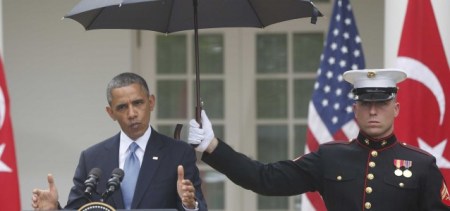
umbrellaman

US Secretary of State John F. Kerry “urges” Russia and Syria to ground their military aircraft after the destruction of a humanitarian aid convoy. Meanwhile, in the eastern part of that same theater, American and Iraq forces came under a sulfur mustard (commonly known as “mustard gas”) attack from the Islamic State (ISIS).

This is not the first use of sulfur mustard by ISIS and their predecessors.  They used them in IEDs against American forces during the Iraq War, and against Kurdish forces as late as last year.  Nevertheless, they clearly do not fear to use them against Americans at this time.  Whatever message we are conveying to ISIS, it does not include a proper respect for violating the laws of war when dealing with our soldiers.

Likewise, the Russians are not going to ground their aircraft just because we ask them to do.  In fact, the Russians are sending their only active aircraft carrier to join the war in Syria.  Defying an empty “urging” by our Secretary of State is just another way for Russia to show that they, and not we, are in control of the conflict.

Syrian jets, meanwhile, came close to bringing American forces under aerial attack for the first time since World War II.  Only good fortune kept American soldiers from being killed by Syrian bombs.  Fighters had to be scrambled to prevent additional sorties by the Syrian bombers.

In addition to Russia, Syria, and ISIS, Iran’s challenges against US Navy forces are up 50% from last year.  The Iranians are violating international law on a regular and consistent basis in challenging American fleet ships over access to international waters.

According to U.S. officials, the incidents all involved the IRGC, which operates a navy in parallel to Iran’s regular naval force, and whose leaders answer directly to Iranian Supreme Leader Ayatollah Ali Khamenei, Defense News reported.

Ten American sailors and their two boats were seized by IRGC naval forces in January of this year in violation of international law.

Subsequent to the sailors’ release, Iran portrayed their capture as a victory against the U.S., releasing the sailors after claiming that Washington apologized for the incident. Khamenei proclaimed that the naval forces who captured the sailors did “God’s deed” and issued medals to the commanders involved, while the IRGC announced plans to build a statue to commemorate the seizure.

In May, the deputy commander of the IRGC threatened to close the strategic Straits of Hormuz to the U.S. and its allies if they “threaten us,” adding: “Americans cannot make safe any part of the world.”

The U.S. Navy reported last month that in 2015, there were close to 300 encounters or “interactions” between American and Iranian naval vessels in the Persian Gulf. While most of the encounters were not considered to be harassment, the behavior of the Iranian navy was found to be less disciplined than that of other navies.

Weakness is provocative in a military conflict.  Refusing to embrace strong measures that would control these aggressive moves is exactly how American servicemen get killed.  Across the Middle East, our President’s predilection for weakness is putting American lives in grave [danger.]