Posted tagged ‘Iran Scam’

Rhodes is just the messenger

May 8, 2016

Rhodes is just the messenger, Israel Hayom, Boaz Bismuth, May 8, 2016

This is the story of one young man — Ben Rhodes is his name — who aspired to become a novelist. He realized that dream, in a manner of sorts, by becoming a storyteller, and he would tell those stories at the White House, as the president’s deputy national security advisor for strategic communications.

Storyteller is too elegant a title, perhaps, for the person who sold us the tale known as the Iran nuclear deal. A profile piece on Rhodes, one of President Barack Obama’s closest advisers, by the New York Times Magazine reveals facts that we already knew, facts that led to the outrageous nuclear deal between Iran and world powers on July 14, last year:

1. The story of the elections in Iran and the victory of the “moderate” camp was a well-planned spin — an invention — to sell the nuclear deal to the American public (which opposed it) and to the world.

2. Obama desired a nuclear deal with Iran as early as 2009. He wanted it even more than the Iranians did, and was even prepared to sign such a deal with extremist President Mahmoud Ahmadinejad. 

3. Obama upgraded Iran’s international and regional standing in order to shirk his commitments toward U.S. allies in the region, among them Israel, Saudi Arabia, Egypt and Turkey.

4. The Obama administration exploited journalists who are “27 years old … and know literally know nothing” (in the words of Rhodes himself), having them sing the administration’s tune to the world.

Even more experienced reporters like Jeffrey Goldberg (The Atlantic) and Laura Rozen (Al-Monitor) were relegated, at least on the Iranian issue, to “mouthpieces” for the administration.

5. Even had Iran failed to fulfill its obligations or concealed figures pertaining to its nuclear project, Obama would not have followed through on his threat to order a pre-emptive strike against it. This is according to former Defense Secretary Leon Panetta, whose job, according to the New York Times article, was to make sure that Israel wouldn’t attack Iran.

The giant scam, revealed by the person tasked with executing these deceitful manipulations (the same Rhodes), is nothing short of scandalous. It is testimony to how in July 2012, then-Secretary of State Hillary Clinton’s close aide Jake Sullivan was dispatched to Muscat in Oman to coordinate the details of the interim and permanent nuclear deal with the Iranians.

The New York Times story also reveals that three months before “moderate” Iranian President Hassan Rouhani was elected to office in the summer of 2013, Sullivan and then-Deputy Secretary of State William Burns had already met at the White House to approve the interim deal, which served as the basis for the permanent deal.

The Rhodes profile piece sheds light on things we already knew, or at the very least suspected, to have transpired during these manipulative negotiations. We witnessed the charade at Laussane from up close, in November 2013. Looking back, those talks were supposedly on the verge of collapsing, but in actuality the sides had already planned out the signing ceremony.

Rhodes is not waiting for Obama’s term in office to end to explain the roots of his boss’ worldview: the boy who grew up in Southeast Asia, in Indonesia, whose revulsion against a certain kind of global power politics was influenced by the interactions with power he had there.

As a young man, Obama, according to Rhodes, was revolted by the notion of a superpower. Thus, Rhodes explains, if someone tries tracing the origins of the idea of “leading from behind,” which Obama implemented in Libya, the answers can be found in the president’s childhood.

While the New York Times article focuses on Rhodes, he is only the executioner of policy. The person responsible for the scam is Obama. He is not the first to manipulate the media; many have done so before him. In 1967, President Lyndon B. Johnson “sold” Congress on the idea that the U.S. had met the challenges it faced in Vietnam, which was not the case. Other presidents, as well, such as Nixon and even George W. Bush in regard to Iraq, cynically used the media. But here we are talking about Obama — “Mr. Clean” — the man who is allegedly without flaw.

A storyteller’s festival

The New York Times piece illustrates yet again the extent to which the president is living in a virtual reality. Remember how just two weeks ago he called this the most peaceful era of human history? Now we understand that his comments have no place in the real world. Perhaps they are more befitting a storyteller’s festival.

Throughout the nuclear talks with Iran, Rhodes also gave interviews to Israeli news outlets. The New York Times article about him went online Thursday; did anyone over the weekend hear those Israeli news outlets mention even one word of what Rhodes himself has just revealed?

Of course not. After all, it’s one thing to hurt Israel — but to hurt Obama’s narrative? Heaven forbid.

Obama’s Ex-Secretary of Defense Doesn’t Believe He’ll Stop Iran from Getting The Bomb

May 7, 2016

Obama’s Ex-Secretary of Defense Doesn’t Believe He’ll Stop Iran from Getting The Bomb, Front Page Magazine, Daniel Greenfield, May 7, 2016

(The Bomb? What bomb?

–DM)

Panetta

Panetta isn’t Gates. He’s a career Democrat and a Clinton guy. He’s a conformist. He goes along. And yet he’s still making the admission.

As secretary of defense, he tells me, one of his most important jobs was keeping Prime Minister Benjamin Netanyahu of Israel and his defense minister, Ehud Barak, from launching a pre-emptive attack on Iran’s nuclear facilities. “They were both interested in the answer to the question, ‘Is the president serious?’ ” Panetta recalls. “And you know my view, talking with the president, was: If brought to the point where we had evidence that they’re developing an atomic weapon, I think the president is serious that he is not going to allow that to happen.”

Panetta stops.

“But would you make that same assessment now?” I ask him.

“Would I make that same assessment now?” he asks. “Probably not.”

Not news to anyone with any common sense. But probably a big admission within the echo chamber.

Rosen: Clear deception by Rhodes, Obama administration to sell Iran nuclear deal

May 7, 2016

Rosen: Clear deception by Rhodes, Obama administration to sell Iran nuclear deal, Fox News via YouTube, May 7, 2016

White House blames allegations of Iran nuclear deal deceit on ‘sour grape

May 6, 2016

White House blames allegations of Iran nuclear deal deceit on ‘sour grape, Washington Free Beacon, May 6, 2016

(Please see also, Obama’s Foreign Policy Guru Boasts of How the Administration Lied to Sell the Iran Deal. — DM)


Obama’s Foreign Policy Guru Boasts of How the Administration Lied to Sell the Iran Deal

May 5, 2016

Obama’s Foreign Policy Guru Boasts of How the Administration Lied to Sell the Iran Deal, Weekly Standard, Lee Smith, May 5, 2016

It’s hardly any wonder that Deputy National Security Adviser Ben Rhodes has a “mind meld” with his boss, the president. According to a David Samuels New York Times Magazine article to be published Sunday and already posted to the website, Rhodes, like Barack Obama, is contemptuous of “the American foreign-policy establishment.” What Obama calls the “Washington playbook” dictating the sorts of responses available to American policymakers, Rhodes calls the “Blob.”

The Blob includes “editors and reporters at The New York Times, The Washington Post, The New Yorker,” etc. It also encompasses, according to Rhodes, Obama’s former secretary of state Hillary Clinton, and the administration’s first defense secretary Robert Gates. Presumably Leon Panetta, former Pentagon chief and CIA director, who goes on the record to criticize Rhodes and the president, is also part of the Blob, alongside “other Iraq-war promoters from both parties who now whine incessantly about the collapse of the American security order in Europe and the Middle East.” In other words, the emotion driving the administration’s foreign policy is contempt—contempt for allies, colleagues, and the generations of American policymakers who built the post-WWII international order, ensuring relative global stability, and peace and prosperity at home.

Samuels’s profile is an amazing piece of writing about the Holden Caulfield of American foreign policy. He’s a sentimental adolescent with literary talent (Rhodes published one short story before his mother’s connections won him a job in the world of foreign policy), and high self regard, who thinks that everyone else is a phony. Those readers who found Jeffrey Goldberg’s picture of Obama in his March Atlantic profile refreshing for the president’s willingness to insult American allies publicly will be similarly cheered here by Rhodes’s boast of deceiving American citizens, lawmakers, and allies over the Iran deal. Conversely, those who believe Obama risked American interests to take a cheap shot at allies from the pedestal of the Oval Office will be appalled to see Rhodes dancing in the end zone to celebrate the well-packaged misdirections and even lies—what Rhodes and others call a “narrative”—that won Obama his signature foreign policy initiative.

Rhodes is a storyteller who uses a writer’s tools to advance an agenda that is packaged as politics but is often quite personal. He is adept at constructing overarching plotlines with heroes and villains, their conflicts and motivations supported by flurries of carefully chosen adjectives, quotations and leaks from named and unnamed senior officials. He is the master shaper and retailer of Obama’s foreign-policy narratives, at a time when the killer wave of social media has washed away the sand castles of the traditional press.

As Rhodes admits, it’s not that hard to shape the narrative. “All these newspapers used to have foreign bureaus,” Rhodes said. “Now they don’t. They call us to explain to them what’s happening in Moscow and Cairo. Most of the outlets are reporting on world events from Washington. The average reporter we talk to is 27 years old, and their only reporting experience consists of being around political campaigns. That’s a sea change. They literally know nothing.”

In Rhodes’s “narrative” about the Iran deal, negotiations started when the ostensibly moderate Hassan Rouhani was elected president, providing an opening for the administration to reach out in friendship. In reality, as Samuels gets administration officials to admit, negotiations began when “hardliner” Mahmoud Ahmadinejad was still president. It was Rhodes who framed the Iran deal as a choice between peace and war, and it was Rhodes who set up a messaging unit to sell the deal that created an “echo chamber” in the press. “[Al Monitor reporter] Laura Rozen was my RSS feed,” says Tanya Somanader, the 31-year-old who managed @TheIranDeal twitter feed. “She would just find everything and retweet it.”

“In the spring of last year,” Samuels writes:

legions of arms-control experts began popping up at think tanks and on social media, and then became key sources for hundreds of often-clueless reporters. “We created an echo chamber,” [Rhodes] admitted, when I asked him to explain the onslaught of freshly minted experts cheerleading for the deal. “They were saying things that validated what we had given them to say.”

When I suggested that all this dark metafictional play seemed a bit removed from rational debate over America’s future role in the world, Rhodes nodded. “In the absence of rational discourse, we are going to discourse the [expletive] out of this,” he said. “We had test drives to know who was going to be able to carry our message effectively, and how to use outside groups like Ploughshares, the Iran Project and whomever else. So we knew the tactics that worked.” He is proud of the way he sold the Iran deal. “We drove them crazy,” he said of the deal’s opponents.

It’s not clear whether or not Panetta supported the deal, but he admits he was wrong about Obama’s willingness to take all measures to stop Iran from getting a bomb.

As secretary of defense, he tells me, one of his most important jobs was keeping Prime Minister Benjamin Netanyahu of Israel and his defense minister, Ehud Barak, from launching a pre-emptive attack on Iran’s nuclear facilities. “They were both interested in the answer to the question, ‘Is the president serious?’ ” Panetta recalls. “And you know my view, talking with the president, was: If brought to the point where we had evidence that they’re developing an atomic weapon, I think the president is serious that he is not going to allow that to happen.”

Panetta stops.

“But would you make that same assessment now?” I ask him.

“Would I make that same assessment now?” he asks. “Probably not.”

Rhodes tells Samuels that Don DeLillo is his favorite novelist. “That’s the only person I can think of who has confronted these questions of, you know, the individual who finds himself negotiating both vast currents of history and a very specific kind of power dynamics,” he tells Samuels. “And that’s what it’s like to work in the U.S. foreign-policy apparatus in 2016.”

So that’s it. For the last seven years the American public has been living through a postmodern narrative crafted by an extremely gifted and unspeakably cynical political operative whose job is to wage digital information campaigns designed to dismantle a several-decade old security architecture while lying about the nature of the Iranian regime. No wonder Americans feel less safe—they are.

Iranian Hezbollah Organization Issues Threats Of Physical Harm Against Former Iranian Presidents Rafsanjani And Khatami, Calls On President Rohani To Cancel JCPOA

May 3, 2016

Iranian Hezbollah Organization Issues Threats Of Physical Harm Against Former Iranian Presidents Rafsanjani And Khatami, Calls On President Rohani To Cancel JCPOA, MEMRI, May 3, 2016

“Mr. President, you bear responsibility for every martyr whose blood has been spilled. If you look at all the breaches of promise and disruptions by ‘the Great Satan,’ America, and declare firmly that you are cancelling the JCPOA because of America’s violations [of it], history will never forget your heroic and revolutionary move; the heart of the Imam Mahdi will also rejoice because of you.

**************************

In an April 12, 2016 interview, Mahdi Abdi, the director of affairs for the northwestern provinces and towns for the coordination council of the fundamentalist organization Hezbollah Iran, which is affiliated with Iran’s ideological circles, warned leaders of Iran’s pragmatic camp, including Expediency Council chairman and former president Hashemi Rafsanjani and former president Mohammad Khatami, not to undermine the status of Iranian Supreme Leader Ali Khamenei. The interview was published by the organization’s Hezbollah Press website.

Echoing Khamenei’s accusations of treason against Rafsanjani,[1] Abdi accused both Rafsanjani and Khatami of treason, and threatened them with physical harm. He also demanded that they stop calling for the release of the 2009 Green Protest leaders – former Majlis speaker Mehdi Karroubi and former prime minister Mir-Hossein Mousavi, as well as Mousavi’s wife – who have been under house arrest since 2011.

Reminding Iranian President Hassan Rohani of what happened to Iranian officials who criticized Iran’s Islamic Revolution and the path of its founder Ayatollah Ruhollah Khomeini, Abdi warned him to neither trust the U.S. nor follow it, or to face the consequences. He also called on him to cancel the JCPOA.

The following are the main points of the interview. It should be noted that following its publication, the piece was removed from the website.

“This Is Hezbollah’s Final Warning To Hashemi [Rafsanjani] And The Grey Fox, [Former President] Mohammad Khatami, And To Anyone Who Even Thinks About Marginalizing The Imam Khamenei”

“The heart of [Iranian] Hezbollah is bleeding because of the tremendous disloyalty and the great treason of the unwise and two-faced [pragmatic camp leaders Rafsanjani and Rohani]. Imam Khamenei need not feel alone today because certain individuals who are betraying Islam and the Revolution are daring to boast and to express opinions in society, while others dare to speak about an end to the arrest of the hated leaders of the ‘2009 fitna’ [Mousavi and Karroubi]. [These traitors are] publishing [such statements] freely online and talking about it, and [expecting] the security apparatuses to remain silent.

“The hated leaders of the ‘fitna’ should thank God that they are under arrest. Otherwise, Hezbollah would not have given them a chance to breathe. This is Hezbollah’s final warning to Hashemi [Rafsanjani] and the grey fox, [former president] Mohammad Khatami, and to anyone who even thinks about marginalizing the Imam Khamenei, trampling the principles and foundations of the Islamic Revolution, and seeking to present the plan for a leadership council [as Rafsanjani recently proposed as a replacement for the position of Supreme Leader] in order to weaken the Rule of the Jurisprudent.

“If they are thinking of sparking more ‘fitna’ in Iran, Hezbollah will activate its popular punishment units, the ones called The Martyrs For the Revolution and Islam, and, once and for all, blind the eyes of the ‘fitna.'”

To President Rohani: “Hezbollah Obeys The Orders Of The Imam Khamenei And Will Never Allow These Things, Which Contradict Islam, To Be Carried Out In Iran”

“Mr. President [Rohani], many times the Koran called on Muslims to learn from history. We look at history today and see what became of those who trusted foreigners, especially those who trusted the bloodthirsty ‘Great Satan’ America. They all suffered harm, and ultimately ended up regretting having trusted America.

“If Islamic Iran wishes today to receive aid from the ‘arrogant nations,’ chiefly America, it must turn its back on the civilization of Islam and on the descendants of [Imam] Ali [that is, the Shi’ites] and must melt into their false civilization, must deny jihad, must abandon the oneness of God, and must enable them [i.e. the ‘arrogant nations’] to boycott Iran, using the human rights [issue] as an excuse. Or, much like the backwards Arab countries, [Iran] must hand over its interests and its oil in favor of the interests of the arrogance and of America, must back down from the explicit Koranic commandment about supporting the oppressed, and must form a friendly alliance with the occupying Israel.

“All the above contradict the original, noble civilization of Mohammad’s Islam. Hezbollah obeys the orders of the Imam Khamenei, and will never allow these things, which contradict Islam, to be carried out in Iran – because all the days are [the days of] Ashura [the Shi’ite days of mourning for the Imam Hossein who died in the Battle of Karbala in 680] and all the lands are [the lands of] Karbala – unless we lose our minds. Hezbollah will never forget all of this.

“Mr. President, tomorrow history will judge, and coming generations will ask: ‘Has the nation achieved anything from pouring concrete into the heart of Iran’s science [i.e. into the heavy water reactor in Arak, as required under the JCPOA]? Why do the officials still trust foreigners, although they repeatedly break their promises?’

“Mr. President, you bear responsibility for every martyr whose blood has been spilled. If you look at all the breaches of promise and disruptions by ‘the Great Satan,’ America, and declare firmly that you are cancelling the JCPOA because of America’s violations [of it], history will never forget your heroic and revolutionary move; the heart of the Imam Mahdi will also rejoice because of you.

“In the Islamic Republic [of Iran], the president, in his various terms of office, is legitimate so long as he truly believes, in thought and in action, in the rule of the jurisprudent. We must learn from history – from the fate of people such as [president Abolhassan] Bani Sadr [deposed in 1981] and [Ayatollah Hossein Ali] Montazeri [designated heir of Ayatollah Khomeini, who spent the latter years of his life under house arrest until his death in 2009], who trampled the line of [the rule of the jurisprudent], and were shamed and humiliated.”

Abdi concluded the interview by referring to a tweet by Rafsanjani about the current era as “an age of talks and not missiles”[2] and said: “It is enough to respond to Rafsanjani with a single word, and to say that had the Islamic State [ISIS] entered Iran and captured your daughter, you would have known the value of Iran’s missile and defense industry, and of the heroic deeds of the brave men of the IRGC.”


Endnotes:


[1] See MEMRI Special Dispatch No. 6373, Power Struggle Between Iranian Supreme Leader Khamenei’s Ideological Camp And Rafsanjani’s Pragmatic Camp Intensifies – Part III: Iranian Supreme Leader Ali Khamenei Speaks Out Against Pragmatic Camp Leaders Rafsanjani, Rohani, April 5, 2016.

[2] MEMRI Special Dispatch No. 6373, Power Struggle Between Iranian Supreme Leader Khamenei’s Ideological Camp And Rafsanjani’s Pragmatic Camp Intensifies – Part III: Iranian Supreme Leader Ali Khamenei Speaks Out Against Pragmatic Camp Leaders Rafsanjani, Rohani, April 5, 2016.


Cessation of hostilities in Aleppo to be announced in coming hours

May 3, 2016

Cessation of hostilities in Aleppo to be announced in coming hours – Lavrov

Published time: 3 May, 2016 11:55 Edited time: 3 May, 2016 13:34

Source: Cessation of hostilities in Aleppo to be announced in coming hours – Lavrov — RT News

A cessation of hostilities in the Syrian city of Aleppo will be announced in the coming hours, Russian Foreign Minister Sergey Lavrov said on Tuesday after talks with UN Syria envoy Staffan de Mistura.

Lavrov added that the US and Russian militaries are currently holding talks on the Aleppo ceasefire.
“I hope that in the coming hours such an agreement will be announced,” the minister said after the meeting in Moscow.

According to UN special envoy Staffan de Mistura, the stalled Syria peace talks could be resumed if an Aleppo ceasefire is agreed. He added that there is now a possibility to relaunch the ceasefire by extending local truces.

I have a feeling and a hope that we can relaunch this,” De Mistura said. “We all hope that … in a few hours we can relaunch the cessation of hostilities. If we can do this, we will be back on the right track.”

Lavrov also announced the creation of a new Russian-US monitoring center in Geneva, Switzerland, which will oversee ceasefire violations in Syria.

“We are grateful to the UN for its help in solving logistical issues on the creation of this center in Geneva where the militaries of the two countries will discuss face-to-face specific developments on the ground,” he said.

Moscow is also urging Washington to distinguish between extremists and the Syrian opposition, Lavrov added.

To make the ceasefire work and make it inclusive, our partners must do everything possible to remove the moderate opposition, which relies on foreign support, from the positions occupied by the terrorists.

Lavrov also called for an extended ceasefire in Syria. “Of course, there are separate groups who would like to undermine the cessation of hostilities, to provoke an escalation [of the crisis]. We can’t let them do it,” he said.

Lavrov also warned against any calls for a ground operation in Syria.

Russia is concerned, and not just us alone, about Turkey’s shelling of the Syrian territory, continued creation of certain security zones in Syria, not to mention the increasing calls for a ground operation.”

Moscow is convinced “that such calls come from those who are not interested in the real political settlement [of Syrian crisis] and who rely on a military solution.”

“We are convinced that this is the way to a catastrophic situation, and such appeals should be stopped,” Lavrov said.

In April, the Geneva peace talks were gridlocked after the Saudi-backed Syrian opposition withdrew from the negotiations, citing the deteriorating situation in Aleppo.

Acknowledging the increasingly shaky state of the ceasefire in Syria, de Mistura then expressed hope that Russia and the US could breathe new impetus into the process, halting the fighting on the ground and solidifying the political transition process.

On Monday, the Free Syrian Army refused to recognize partial ceasefires or local lulls in violence, claiming that if the UN-backed truce was not implemented in full, the group would reserve its right to withdraw from the Geneva talks and respond to any attacks.

Obama Admin Withholding Details of ‘Potentially Illegal’ Deal to Buy Iranian Nuke Materials

April 27, 2016

Obama Admin Withholding Details of ‘Potentially Illegal’ Deal to Buy Iranian Nuke Materials, Washington Free Beacon, April 27, 2016

"part
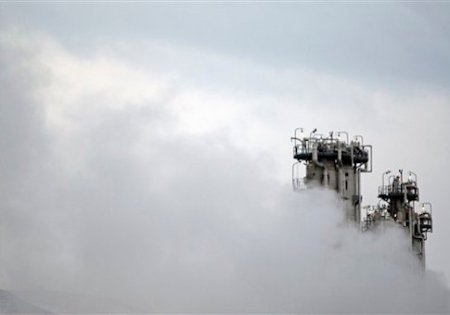
Part of Arak heavy water nuclear facilities is seen, near the central city of Arak, 150 miles southwest of the capital Tehran / AP

Officials from both the Treasury and Energy departments told the Free Beacon that details about the payment are being withheld until the purchase is complete. Iran is expected to deliver the heavy water to the United States in the “coming weeks,” officials confirmed.

**********************************

Obama administration officials are declining to provide specific details about an unprecedented upcoming purchase of Iranian nuclear materials, an $8.6 million exchange that is likely to be funded using American taxpayer dollars, according to conversations with multiple administration officials and sources in Congress.

The administration is preparing to purchase from Iran 32 tons of heavy water, a key nuclear material, in a bid to keep Iran in compliance with last summer’s comprehensive nuclear agreement.

But administration officials have declined to provide specific details to Congress and reporters about how exactly it will pay for the purchase, as well as other information, until the deal has been completed.

The effort to withhold key information about the purchase, which is likely to be paid in some form using U.S. taxpayer dollars, is causing frustration on Capitol Hill, according to multiple sources who disclosed to the Washington Free Beacon that the administration is rebuffing congressional attempts to discern further information about the deal.

Experts further disclosed to the Free Beacon that the exchange is likely to legitimize Iran’s research into plutonium, knowledge that would provide the Islamic Republic with a secondary pathway to a nuclear weapon capability.

Officials from both the Treasury and Energy departments told the Free Beacon that details about the payment are being withheld until the purchase is complete. Iran is expected to deliver the heavy water to the United States in the “coming weeks,” officials confirmed.

“We cannot discuss details of the payment until after the purchase is complete,” a Treasury Department official who was not authorized to speak on record told the Free Beacon. “The Department of Energy’s Isotope Program plans to pay Iran approximately $8.6 million dollars for 32 metric tons of heavy water.”

The administration will use an offshore third party to facilitate the transfer of cash to Iran, according to officials in both the Treasury and Energy departments.

“Regardless of whether or not this is in U.S. dollars, this licensed transaction is limited in scope. This routing through third-country financial institutions is similar to the mechanism that has been used for years to allow other authorized transactions—such as for exports of food and medicine—between the United States and Iran,” the treasury official said, referencing a loophole in U.S. sanctions that permits transactions of a humanitarian nature.

An Energy Department official confirmed that officials “cannot discuss details of the payment until after the purchase is complete.”

The exchange is being handled by the Energy Department’s Isotope Program, which routinely conducts transactions of this nature, according to the official.

“DOE’s Isotope Program produces and distributes a variety of isotopes that are in short supply for industrial and medical purposes,” an Energy Department official told the Free Beacon. “Transactions like this one are regular business for the program.”

Iran’s excess heavy water “will help to fulfill a substantial portion of U.S. domestic market demand this year,” according to the official, who said that “over the past few years, there have often been constrained supplies of heavy water.”

The administration further “expects to resell the purchased heavy water at commercially reasonable prices to domestic commercial and research buyers, including Oak Ridge National Laboratory’s Spallation Neutron Source, where it would be used to increase the efficiency of the facility,” the source said.

Congressional critics of the arrangement accuse the administration of using this sale as part of a larger plan to help Iran gain access to the American financial system and U.S. dollar.

“Subsidizing Iran’s production of heavy water is a dangerous move,” Sen. Tom Cotton (R., Ark.) told the Free Beacon. “It stimulates Iran’s nuclear industry, opens the door to the use of U.S. dollars to facilitate Iranian trade and illicit financing, and provides U.S. tax dollars to the world’s top state sponsor of terrorism.”

Energy Secretary Ernest Moniz “is aware of these dangers, which is why he stressed that this is a one-time purchase,” said Cotton, the author of a new amendment that would block the administration from engaging in similar purchases with Iran in the future. “I want to hold him and President Obama to that vow, particularly in light of the many promises broken and redlines erased by this administration in the course of negotiating the Iran deal.”

Rep. Mike Pompeo (R., Kan.), a member of the House intelligence committee, accused the administration of funding Iran’s nuclear pursuits in contradiction of last summer’s agreement aimed at winding down Tehran’s nuclear ambitions.

“The Obama administration’s deal with the Mullahs in Tehran to purchase heavy water demonstrates a disturbing, potentially illegal, willingness of the administration to subsidize Iran’s nuclear program,” Pompeo told the Free Beacon. “This purchase allows the Iranians to offload previously unsellable product and it destigmatizes the act of doing business in Iran.”

Pompeo said it is irresponsible to pursue this deal without first providing lawmakers detailed information about whether Iran will directly receive taxpayer dollars.

“This purchase is being made without explanation as to how Iran will receive these funds or what steps the administration is taking to prevent what will almost certainly be U.S. taxpayer dollars from possibly being used to support terrorist activities, Syrian dictator Bashar al-Assad, or Iran’s ballistic missile program,” Pompeo said. “Of course, the reality is that once that money is in the hands of the Ayatollah, there is no way to prevent the funds from being diverted toward any of those purposes—a fact that seems to concern no one at the White House.”

A larger debate has been taking place in Washington over Iranian and European demands that the United States grant Iran access to dollars, a move the administration has publicly opposed and promised Congress would not take place.

However, sources indicate that the heavy water exchange could be the first sign that the administration is caving on this promise.

 Mark Dubowitz, head of the Foundation for Defense of Democracy’s Center on Sanctions and Illicit Finance, told theFree Beacon that Iran is producing excess nuclear material in order to wring more cash from the nuclear deal.

“Iran has created a clever scheme—produce too much heavy water so as to break the nuclear agreement, then get the Obama administration and eventually U.S. companies to pay Tehran using the U.S. dollar to get rid of it,” Dubowitz explained. “These U.S. subsidies will help Tehran perfect its heavy water production skills so it will be fully prepared to develop its plutonium bomb-making capabilities when restrictions on the program sunset over the next 10-15 years.”

“This scheme also will open the door to further dollarized transactions as the administration green-lights the greenback for a regime with a decades-long rap sheet of financial crimes,” he added.

A senior congressional source familiar with the trade disclosed that administration officials are declining to disclose key details about the deal.

“The administration is being coy about how the financial mechanics of this deal will work,” the source told the Free Beacon. “But the bottom line is that U.S. taxpayer dollars will be used, and used for a purchase directly connected to Iran’s nuclear program. This is an attempt by the administration to slowly open a door that leads to the wide acceptance of Iran’s nuclear industry and to the use of U.S. dollars by Iran to conduct trade.”

“Many in Congress—on both the Republican and Democratic sides—won’t stand for that, and will move to shut that door tightly,” the source said.

Obama’s Double Standard Toward Netanyahu

April 26, 2016

Obama’s Double Standard Toward Netanyahu, The Gatestone InstituteAlan M. Dershowitz, April 26, 2016

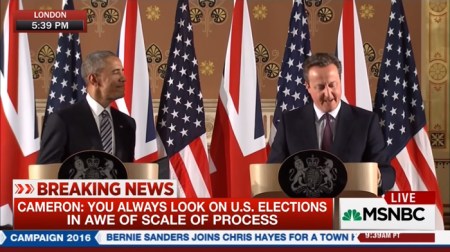
As President Obama winds up his farewell tour of Europe, it is appropriate to consider the broader implications of the brouhaha he created in Great Britain. At a joint press conference with Britain Prime Minister, David Cameron, President Obama defended his intrusion into British politics in taking sides on the controversial and divisive Brexit debate. In an op-ed, Obama came down squarely on the side of Britain remaining in the European Union — a decision I tend to agree with on its merits. But he was much criticized by the British media and British politicians for intruding into a debate about the future of Europe and Britain’s role in it.

Obama defended his actions by suggesting that in a democracy, friends should be able to speak their minds, even when they are visiting another country:

“If one of our best friends is in an organization that enhances their influence and enhances their power and enhances their economy, then I want them to stay in. Or at least I want to be able to tell them ‘I think this makes you guys bigger players.'”

Nor did he stop at merely giving the British voters unsolicited advice, he also issued a not so veiled threat. He said that “the UK is going to be in the back of the queue” on trade agreements if they exit the EU.

1562UK Prime Minister David Cameron and US President Barack Obama take a question at a press conference, on whether it is appropriate for Obama to say whether or not the UK should remain in the European Union, April 22, 2015.

President Obama must either have a short memory or must adhere to Emerson’s dictum that “foolish consistency is the hobgoblin of little minds.” Recall how outraged the same President Obama was when the Prime Minister of a friendly country, Benjamin Netanyahu, spoke his mind about the Iran Deal.

There are, of course, differences: first, Israel has a far greater stake in the Iran Deal than the United States has in whatever decision the British voters make about Brexit: and second, Benjamin Netanyahu was representing the nearly unanimous view of his countrymen, whereas there is little evidence of whether Americans favor or oppose Brexit in large numbers.

Another difference, of course, is that Obama was invited to speak by Cameron, whereas, Netanyahu was essentially disinvited by Obama. But under our tripartite system of government — which is different than Britain’s Unitary Parliamentary system — that fact is monumentally irrelevant. Netanyahu was invited by a co-equal branch of the government, namely Congress, which has equal authority over foreign policy with the president and equal authority to invite a friendly leader. Moreover, not only are the British voters divided over Brexit, but Britain’s Conservative Party itself is deeply divided. Indeed, the leading political figure in opposition to Britain remaining in the European Union is a potential successor to Cameron as leader of the Conservative Party. So these differences certainly don’t explain the inconsistency between Obama’s interference in British affairs and his criticism of Netanyahu for accepting an invitation from Congress to express his country’s views on an issue directly affecting its national security.

So which is it, Mr. President? Should friends speak their minds about controversial issues when visiting another country, or should they keep their views to themselves? Or is your answer that friends should speak their minds only when they agree with other friends, but not when they disagree? Such a view would skew the market place of ideas beyond recognition. If friends should speak about such issues, it is even more important to do so when they disagree.

A wit once observed that “hypocrisy is the homage vice pays to virtue.” It is also the currency of diplomacy and politics. That doesn’t make it right.

The President owes the American people, and Benjamin Netanyahu, an explanation for his apparent hypocrisy and inconsistency. Let there be one rule that covers all friends — not one for those with whom you agree and another for those with whom you disagree. For me the better rule is open dialogue among friends on all issues of mutual importance. Under this rule, which President Obama now seems to accept, he should have welcomed Prime Minister Netanyahu’s advocacy before Congress, instead of condemning it. He owes Prime Minister Netanyahu an apology, and so do those Democratic members of Congress who rudely stayed away from Netanyahu’s informative address to Congress.

A policy of hypocrisy

April 25, 2016

A policy of hypocrisy, Israel Hayom, Dr. Haim Shine, April 25, 2016

Judging by his approach to complex national and international issues, U.S. President Barack Obama is very frustrated. The frustration is natural for someone who made big promises, almost messianic ones, and is now leaving behind nothing more than a trail of shattered dreams. During his eight years in office, the United States has gone from being a leading superpower, a pillar of Western civilization, to a state that is hesitant, indecisive and alarmingly slow to respond. Its domestic economy is faltering, sowing uncertainty and insecurity among the large middle class.

Needless to say, the success enjoyed by Republican presidential candidate Donald Trump is an expression of a great number of Americans who grew up hearing about how their flag was raised on Japan’s Mount Suribachi on the island of Iwo Jima toward the end of World War II, and who are now watching with heartache as their beloved flag is being lowered to half-mast before being taken down altogether.

In an effort to gather up the pieces of his crumbling legacy, Obama set out on his final trip to the Middle East and Europe. America’s long-time allies feel betrayed. Their resentment is clear. Relationships between countries are not disposable. The Obama administration’s deference to Iran has had major implications on its ties with Saudi Arabia and the Gulf States. A divided Egypt is still paying the price for Obama’s support for the Muslim Brotherhood.

The state of Israel, which has led the struggle against a nuclear Iran for a long time, has by now come to terms with the fact that the United States was duped by the fake smiles of Iranian Foreign Minister Mohammad Javad Zarif and his friends in Tehran. Singing Passover songs in Hebrew won’t change the fact that Obama has not changed, after having sided entirely with the mendacious Palestinian narrative of victimhood.

Leaders in the Middle East cannot decide whether Obama is a naive president or one who is willing to sacrifice his fundamental values and his credibility just so he can leave behind what he sees as a positive sentence in the books of history — a sentence that will be erased with record speed.

Europe is also discouraged by the United States. Obama’s indecisiveness regarding the madness in Syria has allowed Russia to take significant steps in the Middle East and Europe. The failed efforts to confront the Syrian problem have contributed to the tsunami of migrants flooding Europe and all the resulting consequences for European society and its security. Add to this, of course, the financial crisis currently threatening to destroy the European Union, the seeds of which were sown in 1992 with the signing of the Maastricht Treaty in 1992.

It is against this backdrop that the British are expected to decide via referendum whether or not to remain a part of the European Union. During his recent visit to England, Obama spoke out strongly against Britain’s potential separation from the EU. This was a crude and disproportionate effort to meddle in another state’s affairs — an expression of his desire to evade blame for the collapse of the European Union. In his mind, British citizens are expected to forgo their opinions and best interests in favor of his legacy.

It is therefore unclear why Obama unleashed his fury at Prime Minister Benjamin Netanyahu when the latter made tireless efforts to convince Congress and the American public not be deceived by the dangerous nuclear deal. How much hypocrisy does it take to allow yourself to do things that you reprimand others for doing? Immanuel Kant saw this kind of behavior as a basic moral failure. Luckily for Britain’s citizens, Obama cannot veto their decision.