Posted tagged ‘Iran – sanctions relief’

The Mullahs’ Plan to Hit Israel

April 7, 2016

The Mullahs’ Plan to Hit Israel, Front Page MagazineDr. Majid Rafizadeh, April 7, 2016

ws (2)

The Islamist state of Iran’s blatant aggression and provocative attitudes have reached an unprecedented level.

After the nuclear deal, and Obama’s appeasement policies towards Iran, the ruling Islamists of the country have become very public and vocal about their ideological objectives.

Most recently, the Fars News Agency, the Islamic Republic’s state-controlled news outlet, quoted Iranian Deputy Chief of Staff, Brigadier General Maassoud Jazzayeri, warning the United States to stay away from Iran’s redlines―one of which is Iran’s ballistic missiles.

In addition, Brigadier General Amir Ali Hajizadeh was also quoted by the ISNA agency as stating, “The reason we designed our missiles with a range of 2000 km is to be able to hit our enemy the Zionist regime from a safe distance.” Iran has increased its short–and medium–range ballistic missiles, and currently boasts the largest ballistic missile stockpile in the Middle East.

But what will Obama’s response to these threats be? Most likely there would be more bowing to the ruling clerics of Iran and giving them more carrots. Iranian theocrats have learned that intransigence works with Obama.

There is a simple rule that if you reward a student or your kid for bullying and breaking the rules, you will be encouraging his/her bad behavior, which can ultimately become dangerous for everyone around that person. In addition, if you show students your weakness–such as being willing to give them extra points so that they give you good reviews at the end of the year–they will take advantage of that, or as the Persian proverbs goes: “they will milk you to the end.”

And this is exactly what Iran is doing and how President Obama is encouraging the Islamic Republic’s aggression. Iranian leaders have become cognizant of the fact that intransigence absolutely works with the White House, and threatening Obama with pulling out of the nuclear deal will lead to Obama offering more concessions to the mullahs.

There is a basic rule in Iran’s politics and in Iran’s Supreme Leader’s philosophy: concessions means weakness.  Once someone shows you his/her weakness, you have to speed up getting more concessions from him or her until there is nothing left to get from them.

Here is a chain of events that can easily help us understand how we got here with Iran. It also helps predict how President Obama and the White House will respond to Iran’s recent aggression and threats to the US and Israel.

When the nuclear negotiations were initiated, Obama announced his terms. Iran’s Supreme Leader, Khamenei, gave an inflammatory speech, lashing out at the US. Obama’s response was to increase the number of centrifuges that Iran can hold and give Tehran more leverage in uranium enrichment. Obama also agreed not to include issues such as Iran’s ballistic missiles, human rights or the fate of those Americans imprisoned in Iran during the negotiations.

Now Khamenei knew the game. He used another shrewd tactic by giving another speech threatening the US that he will pull out of the negotiations if certain conditions were not met. Obama’s response was to immediately allow the Islamic Republic to receive all sanctions relief (including the removal of United Nations Security Council’s sanctions), even before Iran finishes its 10-year obligations. Obama also gave Iran a green light to become a nuclear state by enriching uranium at a level that they desire, spinning as many centrifuges as they like, and buying arms with no limits, after the 10-year period.

Khamenei and the IRGC leaders wanted to more forcefully milk the cow, as the Persian proverb goes. Iran launched its ballistic missiles in violation of the JCPOA (UNSCR 2231 Annex II, paragraph three), which states that Iran should not undertake any ballistic missiles activity “until the date eight years after the JCPOA Adoption Day or until the date on which the IAEA submits a report confirming the Broader Conclusion, whichever is earlier.”

President Obama ignored it. Iran launched ballistic missiles several times more. President Obama issued a superficial statement criticizing Iran. Khamenei immediately gave his Nowruz speech heavily lashing out at the United States, the “Great Satan,” and implying that he will pull out of the nuclear deal.

To appease the ruling clerics of Iran, Obama immediately backed off his statements by breaking the promises that he made to the Congress when he was trying to get his nuclear deal through. In other words, he is now preparing to give Iran access to the US’s banking and financial system, and he has already lifted sanctions against Iran that are not related to the nuclear program, but to Iran’s ballistic missiles, terrorism and human rights violations. Iran was also removed from the list of countries for which there is a travel ban, although it is prominent sponsor of terrorism.

Thanks to Obama’s weak leadership and appeasement policies towards the mullahs, Iran is already publicly attacking several countries in the region directly or through its proxies Hamas, Hezbollah, Badr, Kataeb Imam Al Ali, Harakat Al Islam, etc. Iran would have never dared to be so intransigent and aggressive when the UNSC sanctions were previously imposed on Iran. However, sanctions are being completely lifted, thanks to Obama.

Iran has a history spanning over 2,500 years and it goes without saying that that the mullahs are among the shrewdest politicians. They can smell weakness from thousands of miles away and they know how to exploit it. Obama’s weakness–that he fears his so-called crowning foreign policy achievement (the nuclear deal) might fall apart–has led to Iran’s bullying, and has driven his carrots-but-no-stick policy towards Tehran. It appears that Obama is indeed focused on scoring superficial records in his name, such as the nuclear deal or visiting Cuba. But there is no doubt that his so-called “accomplishments” will be forgotten soon. The things that are important are the lives that have been lost, the human rights violations, and the escalation of regional conflicts on the part of Iranian leaders thanks to Obama’s decisions.
Obama Admin Advising Global Banks On Ways To Give Iran Money

April 6, 2016

Obama Admin Advising Global Banks On Ways To Give Iran Money, Washington Free Beacon, April 6, 2016

Primary distractions from Iran

April 5, 2016

Primary distractions from Iran, Israel Hayom, Ruthie Blum, April 5, 2016

Ahead of Tuesday’s Wisconsin presidential primaries, U.S. Speaker of the House Paul Ryan was in Israel, the destination he chose for his first foreign trip since assuming his post at the end of October.

In meetings with Israeli leaders — and in an interview with Times of Israel editor David Horovitz — Ryan reaffirmed his commitment to the Jewish state and his opposition to the nuclear deal with Iran. He also stated, in no uncertain terms, that — contrary to increasing rumor and pressure — he is not going to end up becoming the Republican nominee at what threatens to be a contested GOP convention. Nobody really believes he means it, however, because he had been equally adamant about not wanting the position he is currently occupying.

But, while distraught Americans from both parties are obsessing over whether Donald Trump can win the nomination — and if he does, whether he can beat likely Democratic rival Hillary Clinton — the Obama administration is being given a free pass to get away with murder, figuratively. More literally, it is enjoying the benefit of the doubt caused by the distraction of the public away from the havoc the White House and State Department are continuing to wreak, which is enabling the actual death of a lot of people in the present, and a whole lot more in the future.

The terrorism of the Islamic State group is only a tiny part of this, though it seems to be the only jihadist organization that gets a rise out of Westerners, whom it makes no bones about targeting for mass murder. Indeed, as the suicide bombings in Brussels on March 22 indicated, Europeans and Americans only wake up when a lot of people with whom they can identify get slaughtered senselessly. That this kind of thing is going on routinely everywhere else in the world barely elicits a yawn.

But as evil as ISIS is, it is still small fry compared to the Islamic Republic of Iran, the world’s greatest state sponsor of terrorism, with tentacles reaching far and wide. And now, thanks to the Obama administration, it also has multibillions of dollars at its disposal with which to build its nuclear arsenal. Nor does it hide its ambitions to wipe Israel off the map and its loathing for America, the “great Satan.”

Iran’s supreme leader, Ayatollah Ali Khamenei, has made this clear to the point of warning his own underlings to follow suit.

“Those who say the future is in negotiations, not in missiles, are either ignorant or traitors,” he said last week.

How has the Obama administration responded to this and previous Iranian muscle-flexing, abduction of American sailors, celebration of U.S. abdication and assertion that nothing Tehran does violates the nuclear agreement?

It has conceded to Iran on every point. Or worse.

As was revealed in a piece by Adam Kredo in The Washington Free Beacon on Monday, “Congress is investigating whether the Obama administration misled lawmakers last summer about the extent of concessions granted to Iran under the nuclear deal, as well as if administration officials have been quietly rewriting the deal’s terms in the aftermath of the agreement.”

Rep. Mike Pompeo (R-Kansas) told Kredo that “the gap between [the administration’s] promises … and today’s scary reality continues to widen. We are now trying to determine whether this was intentional deception on the part of the administration or new levels of disturbing acquiescence to the Iranians.”

He was referring to issues such as Iran’s ballistic missile testing, which the administration initially said constituted a violation of nuclear-deal codifier U.N. Resolution 2231, and then backtracked. Perhaps even more disturbing were statements from the Treasury Department indicating that international business transactions with Iran could be done in dollars — releasing the ban in place on Iran’s access to the U.S. financial system.

In other words, not only was the deal America made with the devil a dangerous one to begin with, but apparently, we don’t know the half of it.

This sentiment was expressed in an op-ed in The Wall Street Journal on Sunday by United Arab Emirates Ambassador to the U.S. Yousef Al Otaiba, who wrote that, in spite of President Barack Obama’s claim about the world being safer place as a result of the nuclear deal, “The Iran we have long known — hostile, expansionist, violent — is alive and well, and as dangerous as ever.”

It is this sorry situation, and the Democrats who brought us here, that Americans must keep in mind come November, no matter who the Republican candidate is.

U.S. Seizes More Iranian Weapons at Sea

April 4, 2016

U.S. Seizes More Iranian Weapons at Sea, Investigative Project on Terrorism, April 4, 2016

A U.S. naval vessel intercepted a large Iranian weapons shipment, seizing massive quantities of arms and sophisticated weaponry destined for Yemen, the Pentagon announced Monday.

The seizure occurred in the Arabian Sea on March 28, officials said, marking the third interception of an Iranian weapons shipment in recent weeks. The ship was carrying 1,500 AK-47 rifles, 200 rocket-propelled grenade launchers, and 21 .50-caliber machine guns. They were en route to Houthi insurgents battling in Yemen’s civil war at Iran’s behest.

The U.S. Navy let the crew go after seizing the weapons, in line with current rules of engagement, according to a U.S. official speaking with Fox News.

This incident marks another major development in a string of recent Iranian provocations, indicating growing belligerence among the Islamic Republic’s decision makers.

Last month, Iran tested missiles in violation of a United Nations Security Council resolution associated with the nuclear deal, which prohibits Iran from developing its ballistic missile program for eight years.

Iran also continues to expand its presence throughout the Middle East in line with its regional hegemonic ambitions.

On Monday, Iranian General Ali Arasteh said that the Islamic Republic deployed special forces to Syria as “advisers.” Last month, Arasteh revealed that Iran may deploy commandos and snipers from its regular armed forces as military advisers in Iraq and Syria.

Iran expert Ali Alfoneh told the Jerusalem Post that “the regular army has begged for some time to get involved in Syria because it would be a source of prestige and funding.”

The deployment indicates a shift in the army’s constitutional mission focused on ensuring Iran’s territorial integrity, writes Iran expert Amir Toumaj of The Long War Journal.

These developments support critics of the nuclear deal who argue that financial sanctions relief emboldens Iran to increase its sponsorship of terrorism throughout the region and worldwide.

Khamenei Criticizes Top Political Rivals: Favoring Talks over Missiles Constitutes Treason

April 4, 2016

Khamenei Criticizes Top Political Rivals: Favoring Talks over Missiles Constitutes Treason, MEMRITV via You Tube, April 4, 2016

According to the blurb posted beneath the video,

In two recent public speeches, Iranian Supreme Leader Ali Khamenei, in a pointed reference to a Tweet made by Expediency Council Chairman Rafsanjani, said that those who say that today is an era of talks, not of missiles, are committing treason. Khamenei rejected President Rouhani’s call to instate an economic and cultural model – which he termed JCPOA 2, 3, and 4 – for the benefit of society, and said that this would constitute an abandonment of the principles of Islam and of the Islamic Revolution. He further criticized the U.S., saying: “the Americans have not upheld their commitments” in the JCPOA.

Rouhani threatened unless he keeps Iran’s “provocative”

April 2, 2016

Rouhani threatened unless he keeps Iran’s “provocative” DEBKAfile, April 2, 2016

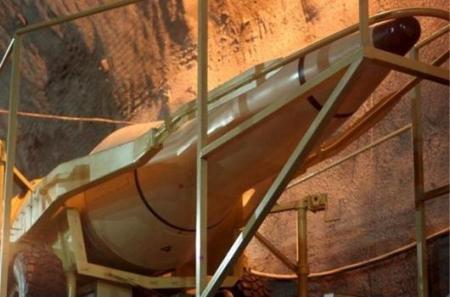
A missile is seen inside an underground missile base for Iran's Islamic Revolutionary Guards Corps (IRGC) Aerospace Force at an undisclosed location in this undated handout photo courtesy of Fars News. REUTERS/farsnews.com/Handout via Reuters

A missile is seen inside an underground missile base for Iran’s Islamic Revolutionary Guards Corps (IRGC) Aerospace Force at an undisclosed location in this undated handout photo courtesy of Fars News. REUTERS/farsnews.com/Handout via Reuters

President Barack Obama said Friday April 1, that “Iran has so far followed the letter of the [nuclear] agreement [with the six powers], but, he added, “the spirit of the agreement involves Iran also sending signals to the world community and business that it is not going to be engaging in a range of provocative actions that may scare business off,” such as fire-testing nuclear-capable ballistic missiles, calling for Israel’s destruction and providing Hizballah with missiles.

At a news conference ending the two-day nuclear summit in Washington, Obama went on to say: “Some of the concerns that Iran has expressed, we are going to work with them to address.” But meanwhile, he said, the US and its allies are taking steps to help Iraq benefit from the agreement by facilitating trade and banking transactions with the Islamic Republic; and the US Treasury Department is seeking to set clearer investment guidelines for Iran.

Two days earlier, on Wednesday, March 30, the Obama administration was reported acting to give Iran limited access to US dollars, since the almost complete lifting of sanctions in January, which netted Tehran an injection of approximately $150 billion “hasn’t provided the country with sufficient economic benefits.”

DEBKAfile’s analysts note the inherent contradiction in the US president’s approach to Tehran: He wants Iran to be compensated with a never-ending shower of dollars for agreeing to limit its nuclear program, but “the US and its allies” cannot question how the money is spent.

So while the West, under orders from Washington, must scramble to boost the Iranian economy, Tehran may continue to test ballistic missiles until they are nuclear capable, and top up the Hizballah terrorists’ arsenal with ever deadlier tools of death.

This glaring inconsistency arises from a fact largely hidden from the world public: last year’s landmark nuclear accord was concluded by Iran’s President Hassan Rouhani and Foreign Minister Mohammed Javad Zarif – not by the real powers in Tehran, supreme leader Ayatollah Ali Khamenei, the Revolutionary Guards chiefs and the ayatollahs at the head of the fundamentalist Shiite movement.

Indeed, even Rouhani was never allowed to formally sign the deal, much less gain Khamenei’s ratification.

But now, Rouhani’s fate depends on keeping those ruling elites happy.  He has found himself in the position of their hostage, a cash machine for keeping the funds for the Islamic Republic’s projects termed by President Obama “provocative” constantly on tap.

Those projects which are currently in full spate clearly leave every little over from the $150bn to even start lifting the Iranian economy out of its mess, while the Rouhani’s government carries the can for that too. Indeed, DEBKAfile’s Iranians sources disclose, the president is forced to earmark 50 percent of the funds released by sanctions relief for items listed under “defense”, namely,  the nuclear and missile development programs, Iran’s overseas military operations, including the Syrian war, subsidizing the Lebanese Hizballah, and establishing new terrorist organizations for attacks on Israel, such as the Al-Sabirin, on the Golan.

These enterprises eat up billions of dollars. Just Iran’s operations in Syria and support for Hizballah cost Tehran $2 billion every month.

Syrian president Bashar Assad didn’t surprise anyone when he revealed that the five-year civil war in his country had cost $200 billion so far. With this kind of spending on “defense,”  the Iranian economy will continue to decay, while Rouhani’s government, which promised the people a better life after the nuclear accord, must bow to the will of the hard-liners or face the consequences.

Our Iranian sources report that Obama’s inconsistent approach to Iran has sharpened the discord between the two major political camps in Tehran and put the “reformists” in extreme peril should they dare to defy the hard-liners who hold the levers of power. Khamenei has publicly threatened to liquidate such opposition leaders as Rouhani and his ally, former president Ayatollah Akbar Hashemi Rafsanjani.

President Rouhani has been put by Obama’s policy in the position of having to keep Tehran’s hungry war- and terror-mongers flush with cash, if he is to save himself and fellow “reformists” from “liquidation.”

The supreme leader was pretty blunt when he said on Friday, March 29, “Those who say the future is in negotiations, not in missiles, are either ignorant or traitors.” This comment underlined Iran’s overriding commitment to developing nuclear missiles and a warning to “traitors” of their fate: execution or a life sentence in a grim Iranian jail.

US to Iran: ‘You Can Have Your Missiles and Buy Them With US Dollars’

April 1, 2016

US to Iran: ‘You Can Have Your Missiles and Buy Them With US Dollars’, The Jewish PressLori Lowenthal Marcus, April 1, 2016

US-DollarsU.S. dollars will now be available to the Mullahs

The Obama administration, ever eager to hand out more benefits to the enemies of Israel, the United States, and the rest of Western Civilization, is now planning to help Iran obtain access to U.S. dollars — which will help Iran buy more on the international markets, the Wall Street Journal reports today.

This concession by the U.S. to Iran is apparently being made because Iran has asserted that the unsigned, non-binding deal Iran entered into last year with the United States and other countries does not provide enough benefits to Iran.

At the same time that the Obama administration is trying to figure out how to give Iran access to U.S. dollars, the administration’s own Treasury Department still maintains that the entire Iranian banking system is one big “primary money laundering concern.”

Money laundering is a financial transaction designed to conceal what money is used for or where it came from. President Obama’s Treasury Department, not yet having completely unmoored itself from reality or common sense, sees Iran’s financial system as a money laundering operation because Iran moves money around to support a variety of programs that the rest of the world asserts – usually – are impermissible for Iran to engage in, such as funding terror organizations all around the world like Hezbollah and Hamas, as well as Iranian missile programs that some still believe Iran is barred from operating. To accomplish this, Iran conceals the true sources and uses of the money. That’s the money laundering.

But while the Treasury Department doesn’t want Iran to have access to dollars, the Treasury Department and the State Department want Iran to have access to U.S. dollars. Yes, you read that correctly. After all, says Treasury Secretary Jack Lew, we here in the United States must of course comply with “the letter and the spirit” of the unsigned, non-binding-on-Iran “agreement.”

Surprisingly for the most powerful economy in the world, the big worry here is not only that Iran will be unhappy with the U.S., but also that a continued ban on Iranian access to dollars “will ultimately drive business activity away form the U.S. financial system.” To say that more clearly: While the U.S. might prefer that Iran not engage in all these transactions, it’s going to do so anyway, and if we don’t help, Iran will simply conduct the transactions in another currency. Since we can’t beat ‘em, we might as well join ‘em.

The combination of these two pressures is apparently simply irresistible to the Obama administration, and as a result, in March, Lew told a congressional committee that the administration “will make sure Iran gets relief” from restrictions that limit its access to dollars. The relief will come in the form of changes in Treasury regulations, so no pesky Congressmen, or annoyances like a vote of the U.S. legislature, will be involved.

A few of those irritating Congressmen have complained to the administration about these proposed changes. They’ve written angry letters to President Obama and Secretary Lew. Those letters have had as much impact as your letters to The New York Timesabout its coverage of Israel.

Of course, readers with long memories may recall that back in the summer, when the Iran agreement was not yet an unsigned unbinding – usually – deal, Lew said this about the agreement’s impact on Iran’s access to dollars: after the agreement becomes final (he did not tell us it would be unsigned, of course, or non-binding, at least on Iran) “Iranian banks will not be able to clear U.S. dollars through New York, hold correspondent account relationships with U.S. financial institutions, or enter into financial arrangements with U.S. banks.”

The changes proposed now by the Obama administration and Secretary Lew will render all of those reassuring prohibitions true but irrelevant. That is because Treasury will create administrative work-arounds that enable Iranian banks to achieve the same effects as all of these direct relationships with U.S. financial institutions without Iran actually having any such direct relationships. Isn’t that special?

They’ll just be indirect relationships. No doubt the indirectness of the relationship will be a great comfort to people around the world who are blown up by bombs purchased with U.S. dollars provided by Iran. After all, it’s so much more comforting to be murdered by bombs purchased indirectly.

Omri Ceren: Dollarizing Iran

March 28, 2016

Omri Ceren: Dollarizing Iran, Power LineScott Johnson, March 28, 2016

(Please see also, Congress Seeks Fight Over Obama Effort to Give Iran Access to US Markets. — DM)

Omri Ceren writes from The Israel Project with the first of three updates on the Obama administration’s latest assistance extended to our enemies in the Islamic Republic of Iran. This is at least a good place to begin and I thought readers would find it of interest. Omri writes with his usual alphabetized footnotes:

Last week the AP revealed the Obama administration is planning to provide Iran with another wave of sanctions relief, because the Iranians are demanding it [a]. The Iranians started prominently demanding new concessions a few weeks ago, and their calls were then taken up by Iran deal supporters [b][c][d][e]. The planned concessions go way beyond the nuclear-related sanctions lifted by the summer deal, and include giving Iran access to U.S. financial markets and the dollar, something administration officials swore last summer would never ever happen [f][g].

The administration’s collapse will drive the conversation this week. There have already been a range of responses from policy analysts, from Congress, and from the press. I’ll send around highlights this morning.

First up: the policy implications. Mark Dubowitz and Jonathan Schanzer – executive director and vice president for research at the Foundation for Defense of Democracies – have a new piece in the WSJ unpacking the debate over this new concession. Schanzer linked to it on Twitter this morning and summarized the argument: allowing Iran access to the U.S. dollar would be “a total implosion of US financial policy on Iran” [h].

The broad points from the piece:

The administration ruled out letting Iran dollarize until the Iranians made their new demand – Treasury Secretary Jacob Lew was adamant during a congressional grilling last July. “Iranian banks will not be able to clear U.S. dollars through New York,” he told the Senate Foreign Relations Committee, or “hold correspondent account relationships with U.S. financial institutions, or enter into financing arrangements with U.S. banks.”… What explains this possible reversal? Most likely, Iran demanded it. Secretary of State John Kerry and Foggy Bottom, always fearful that Tehran will walk away from the nuclear deal, may be ready to comply.

The administration ruled out letting Iran dollarize for a good reason: it will nuke the U.S. greenback and poison the global financial system – Congress is getting ready for a fight. It’s not hard to understand why. The Financial Action Task Force, a global antiterrorism finance body, maintains a severe warning about Iranian financial practices. Last month it warned that Iran’s “failure to address the risk of terrorist financing” poses a “serious threat… to the integrity of the international financial system.” The Treasury Department also recognizes the danger, in 2011 labeling the Islamic Republic a “jurisdiction of primary money laundering concern.” That finding, which remains in place, cites Iran’s “support for terrorism,” and “illicit and deceptive financial activities.”

And now the technical stuff.

The Obama administration will likely claim that letting Iran trade in dollars helps monitor the deal and gives the U.S. leverage to enforce it. The bottom half of the Dubowitz and Schanzer piece dismantles those arguments. Most broadly, Treasury long ago assessed that the cost of giving Iran access to the U.S. financial system outweighed the intelligence benefits. Regarding monitoring, the Iranians won’t directly use their dollars for nefarious purposes – exactly because they know we’d catch them – but will instead use the newfound credibility that dollar access gives their banks for those purposes. Regarding leverage, the U.S. won’t gain any new leverage because Iran will keep their dollars where the US can’t get them. In fact the administration argument on leverage is backwards: Obama officials told Congress over the summer that access to the dollar was being withheld specifically to provide the U.S. with leverage over non-nuclear activities – ballistic missiles, terrorism, human rights, etc – so “why throw away that leverage in exchange for no new concessions?”

The technical policy issues are devastating but they may get overshadowed by the even more devastating political optics: the administration told Congress that it had made a final set of concessions to Iran and promised that access to the dollar would never be granted, then the Iranians came back and demanded access to the dollar, and now the administration is collapsing.

[a] http://bigstory.ap.org/article/b2c1eb1820154a518deb12b85882536e/gop-worries-obama-leaving-door-open-new-iran-relief
[b] https://twitter.com/khamenei_ir/status/707981817434009600
[c] http://www.al-monitor.com/pulse/originals/2016/03/iran-sanctions-jcpoa-banking-khamenei-nowruz-speech.html
[d] http://www.reuters.com/article/us-iran-trade-finance-idUSKCN0WO1Y3
[e] http://thediplomat.com/2016/03/the-real-threat-to-the-iran-deal-tehrans-banking-system/
[f] https://www.treasury.gov/press-center/press-releases/Pages/jl0129.aspx%5D
[g] http://www.washingtoninstitute.org/uploads/Documents/other/SzubinTranscript20150916-v2.pdf
[h] https://twitter.com/JSchanzer/status/714420863991422977

Congress Seeks Fight Over Obama Effort to Give Iran Access to US Markets

March 28, 2016

Congress Seeks Fight Over Obama Effort to Give Iran Access to US Markets, Washington Free Beacon, March 28, 2016

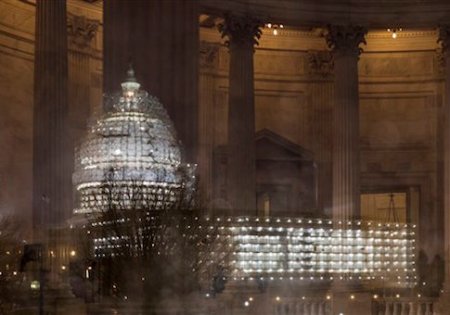
The Capitol in Washington is illuminated during a thunderstorm with the rotunda of the Russell Senate Office Building reflected on the rain-covered windows, late Wednesday afternoon, Feb. 24, 2016. (AP Photo/J. Scott Applewhite)

The Capitol in Washington is illuminated during a thunderstorm with the rotunda of the Russell Senate Office Building reflected on the rain-covered windows, late Wednesday afternoon, Feb. 24, 2016. (AP Photo/J. Scott Applewhite)

Leading foreign policy voices in Congress say they are preparing to fight against an Obama administration effort to provide Iran unprecedented access to U.S. financial resources as part of an expanded package meant to address new demands from the Islamic Republic’s for greater economic concessions, according to several conversations between the Washington Free Beacon and top lawmakers.

The Obama administration is currently exploring new options to grant Iran more sanctions relief than promised under the comprehensive nuclear agreement reached last year, just days after Iran’s Supreme Leader gave a speech accusing the United States of interfering with Iranian banking.

Top foreign policy voices in Congress told the Free Beacon in recent days that they are exploring a range of responses if the Obama administration goes through with reported plans to grant Iran further concessions beyond the purview of the nuclear deal, which dismantled key nuclear-related U.S. sanctions against Iran. At least part of this action could violate current U.S. laws, they said.

The planned concessions could include access to the U.S. dollar and financial markets, which the Obama administration promised would never take place under the deal, according to recent disclosures first reported by the Associated Press.

The Iranian government has recently heightened complaints that it is not being granted enough relief from international economic sanctions as a result of the recently implemented nuclear deal.

The Obama administration’s latest move to placate the Iranians comes on the heels of a Free Beacon report last week disclosing that U.S. officials engaged in secret talks with Iran for years before agreeing in January to pay it nearly $2 billion in taxpayer funds.

The reports have generated harsh responses from lawmakers, who say that the administration’s plans would endanger American economic influence and put the entire international financial system at risk from Iran’s illicit finance and money laundering activities.

“Any administration effort to get foreign financial institutions or foreign-based clearing houses to enable Iran’s terror-sponsoring regime to conduct transactions in U.S. dollars ignores American laws and the Financial Action Task Force,” Sen. Mark Kirk (R., Ill.) told the Free Beacon.

“Such an effort would benefit Iran’s terror financiers while fundamentally undermining the USA PATRIOT ACT 311 finding that Iran’s entire financial sector is a jurisdiction of primary money laundering concern,” Kirk said.

It would also undermine “the Financial Action Task Force’s ongoing calls for international countermeasures to protect financial sectors from Iran’s terrorist financing,” explained Kirk, who is backing a new effort in Congress to increase sanctions on Iran as a result of its recent ballistic missile tests, which violate United Nations resolutions.

Rep. Mike Pompeo (R., Kan.), a member of the House Permanent Select Committee on Intelligence, warned that the Obama administration’s latest move could set the stage for the Iranian Revolutionary Guards Corps, or IRGC, to gain a foothold in the U.S. economy.

“As if a windfall of over $100 billion in sanctions relief was too small, and the massive cash influx into Iran from new business deals too paltry, President Obama appears to be looking for ways to make further concessions to Iran,” said Pompeo, who also has backed new legislation to sanction Iran. “This would be comical if it wasn’t so dangerous.”

“American and international businesses can’t ignore the Islamic Revolutionary Guard Corps’ vast control of the Iranian economy and the threat Iranian banks pose to the international financial system,” Pompeo continued in a statement to the Free Beacon.

“In contrast with the absurd policies of the Obama administration, I work with my colleagues in Congress to protect America’s national security interests—just as we have in response to Iran’s recent ballistic missile tests.”

Pompeo is independently investigating the Obama administration’s recent $1.7 billion payment to Iran, which he and others viewed as a “ransom payment” for the Islamic Republic’s recent release of several captured Americans.

Other longtime Iran critics in Congress also expressed concern over administration efforts to provide Iran with even more economic freedom.

“Further sanctions relief would mark the death knell for U.S. sanctions and would represent a boon to the Iranian regime and its Revolutionary Guard Corp,” Rep. Ron DeSantis, a member of the House Foreign Affairs Committee, told the Free Beacon. “The lengths to which the Obama administration is willing to go to empower Iran is breathtaking.”

Rep. Peter Roskam (R., Ill.) explained that the “administration has lost all credibility on Iran” as a result of its efforts to accommodate Iranian demands.

“President Obama and Secretary Kerry have played the pied piper so many times now,” Roskam told the Free Beacon. “Western companies have to make the determination themselves whether or not they want to make their employees and shareholders complicit in funding terrorism.”

When asked to comment on concerns in Congress, a State Department official told the Free Beacon that it is aware of lawmaker requests for more information on “additional sanctions relief.”

The official added that as long as Iran continues to adhere to the nuclear agreement, the United States “will continue” to do the same.

Obama administration officials first guaranteed last year that Iran would not be permitted to conduct foreign transactions in dollars. This promise, however, is being reevaluated as the administration seeks to keep Iran from walking away from the nuclear deal.

Iran’s Free Hand in Testing Ballistic Missiles

March 16, 2016

Iran’s Free Hand in Testing Ballistic Missiles, Front Page MagazineJoseph Klein, March 16, 2016

rg

The United Nations Security Council met in an “emergency” closed door session on Monday March 14th to discuss Iran’s recent testing of ballistic missiles reportedly designed to be capable of delivering nuclear weapons. The words “Israel must be wiped out” were written in Hebrew on the side of the missiles. These most recent tests followed in the wake of missile tests conducted last fall, which the Security Council did nothing about at the time.

While North Korea was finally hit with more UN sanctions for its nuclear and missile tests, North Korea’s nuclear weapons collaborators in Iran continue to be let off the hook without even a slap on the wrist.

U.S. Ambassador to the UN Samantha Power told reporters, after the March 14th meeting produced no concrete results, that she will keep trying “no matter the quibbling that we heard today about this and that.” She said that Iran’s missile tests were “in defiance of provisions of UN Security Council Resolution 2231, the resolution that came into effect on January 16, on Implementation Day for the JCPOA [Joint Comprehensive Plan of Action].”

The quibbler in chief is Russia. Its UN ambassador said that Iran has not violated the resolution and that there was no need for any punitive measures against Iran.

The truth is that the Obama administration is now hoisted with its own petard. Ambassador Power complained that “Russia seems to be lawyering its way to look for reasons not to act rather than stepping up and being prepared to shoulder our collective responsibility.” Yet that would not have been as easy for Russia to do if the Obama administration had not allowed a loophole in the nuclear deal wide enough for Iran to fire a whole bunch of missiles through.

President Obama wanted the nuclear deal with Iran so badly that he gave in to Iran’s last minute demands to preserve its missile program. Iran insisted that all prior UN Security Council resolutions which had unambiguously prohibited Iran’s development, testing or procurement of ballistic missiles designed to be capable of delivering nuclear weapons must be terminated. Otherwise, Iran would not go forward with the JCPOA. To make matters worse, even though Iran had held the JCPOA hostage to its missile demands, the Obama administration also bowed to Iran’s insistence that its missile program would not be covered by the JCPOA itself. Thus, Iran would not be subject to the automatic “snap back” of sanctions when Iran is found to have violated the JCPOA, because its missile tests would be outside the scope of the JCPOA. In fact, the Obama administration agreed to language in the JCPOA to clarify that such separation of Iran’s missile program from the JCPOA was the intent. All reliance for dealing with Iran’s missile tests would be placed on the much weaker Security Council Resolution 2231.

The new Security Council Resolution 2231, which endorsed the JCPOA but drafted as separate from the JCPOA, used weaker language than the outright prohibition that had existed under the prior resolutions that were now superseded. Calling upon Iran to refrain from doing something is not the same as an enforceable ban. Moreover, even this insipid “call upon” language is included in an annex to the resolution. This annex is little more than a statement of intent by the parties negotiating with Iran, which Iran does not consider binding on itself.

The Obama administration missed the window of opportunity to clamp down on Iran’s missile testing when those tests were being conducted last fall. The previous Security Council resolutions that prohibited Iran’s missile program outright, and the sanctions regime against Iran, were then still in effect. Those resolutions were referenced in the JCPOA itself as still being binding until the JCPOA was actually implemented. Implementation in turn was dependent on verification of Iran’s compliance with certain commitments set forth in the JCPOA having to do with its enrichment and plutonium programs. Until the JCPOA’s formal implementation date of January 16, 2016, when those resolutions were terminated, the missile program ban had not been technically untethered from the JCPOA.

All the Obama administration had to do last fall was to declare Iran in breach of the JCPOA because the missile ban under those resolutions that Iran breached were effectively incorporated into the JCPOA until terminated. The sanctions were still in place. Iran’s assets were still frozen. Russia’s “lawyering” would have done it little good last fall when the United States still had the upper hand both legally and in practical terms. But President Obama frittered away the last real chance to hold Iran’s feet to the fire before the sanctions were lifted. He wanted the nuclear deal to go forward as a centerpiece of his “legacy” and let the next president worry about its fallout.

In fact, instead of pressing the case against Iran and threatening to walk away from the JCPOA when he had the leverage, Secretary of State John Kerry actually defended Iran’s position on its missile tests. “The issue of ballistic missiles is addressed by the provisions of the new United Nations Security Council Resolution (UNSCR), which do not constitute provisions of the Joint Comprehensive Plan of Action (JCPOA),” Kerry wrote in a letter to Senator Marco Rubio last September.  “Since the Security Council has called upon Iran not to undertake any activity related to ballistic missiles designed to be capable of delivering nuclear weapons, including launches using such ballistic missile technology, any such activity would be inconsistent with the UNSCR and a serious matter for the Security Council to review.”

Rubio raised his concern with Kerry that the language in the new Security Council resolution did not appear to require Iran to refrain from pursuing its ballistic missile tests. Rubio seized upon the weak “call upon” language discussed earlier as the basis for his concern. Kerry’s response was that “if Iran were to undertake them it would be inconsistent with the UNSCR and a serious matter for the Security Council to review.”

Senator Rubio had a right to be concerned. Kerry had deliberately agreed to a circular process to deal with Iran’s missile program violations, which was doomed to fail. To placate Iran, he kicked the can down the road until the JCPOA was actually implemented and the prior, much stronger Security Council missile resolutions that were initially tied into the JCPOA by reference went away. The separation of the JCPOA and the new Security Council resolution was completed as of the formal implementation date. Kerry had to know that once the JCPOA was implemented and in full force, with sanctions lifted and the missile program separated out from the JCPOA with its automatic “snap back” provisions, Russia would likely veto any separate sanctions resolution against its ally and missile purchaser based on Iran’s missile tests. The American people got suckered by President Obama’s reckless concessions.

Iran not only will have a pathway to nuclear enrichment sufficient to produce nuclear weapons when the deal’s restrictions sunset – if not before. Thanks to the Obama administration, Iran presently has a free hand to develop and test ballistic missiles capable of delivering those nuclear weapons along any pathway of attack it chooses.