Posted tagged ‘Iran nuke inspections’

US bows to Russian demand to keep Assad in office. Israel follows suit

December 16, 2015

US bows to Russian demand to keep Assad in office. Israel follows suit, DEBKAfile, December 16, 2015

kerry-meets-putin-moscow_15.12.15

After two tries, US Secretary of State John Kerry finally turned President Barack Obama away from his four-year insistence that Bashar Assad must go, as a precondition for a settlement of the Syrian conflict. Tuesday, night, Dec. 15, the Secretary announced in Moscow: “The United States and our partners are not seeking so-called regime change.”

After Kerry’s first try, Obama still stuck to his guns. He said in Manilla on Nov.19 that he didn’t believe the civil war in Syria “will end while the dictator remains in power.”

Almost a month went by and then, Tuesday night, after a day of dickering with Foreign Minister Sergei Lavrov culminating in a joint conference with Putin at the Kremlin, Kerry confirmed this evolution in US policy. The focus now, he said, is “not on our differences about what can or cannot be done immediately about Assad.” Rather, it is on facilitating a peace process in which “Syrians will be making decisions for the future of Syria.”

Rather, it is on facilitating a peace process in which “Syrians will be making decisions for the future of Syria.”

This statement brought Washington in line with Moscow’s demand for the Syrian president’s future to be determined by his own people.

This statement brought Washington in line with Moscow’s demand for the Syrian president’s future to be determined by his own people.

On this demand, Iran’s Ayatollah Ali Khamenei is even more obdurate than Putin.

DEBKAfile’s Middle East sources wonder about the measure of freedom the Syrian people can expect while it is clamped firmly in a military vice by Russia, Iran and Hizballah. However, this was of no immediate concern to the big power players. Washington’s surrender to the Russian and Iranian line on Assad’s future was offered in the short-term hope of progress at the major international conference on the Syrian question taking place in New York Friday.

Another major US concession – this one to Tehran – was scarcely noticed.

Earlier Tuesday, the UN nuclear watchdog’s 35-nation board in Vienna closed its investigation into whether Iran sought atomic weapons, opting to back the international deal with Tehran rather than dwell on Iran’s past activities.

This motif of going forward toward the future rather than dwelling on the past was a repeat of the argument for keeping Assad in power. It provided an alibi for letting Tehran get away with the suspicion of testing a nuclear detonation at its Parchin military complex, without forfeiting sanctions relief, by the simple device of denying access to UN nuclear agency monitors to confirm those suspicions.

In a single day, the Obama administration handed out certificates of legitimacy to the Syrian dictator, who is responsible for more than a quarter of a million deaths, and to Iran’s advances toward a nuclear weapon.

These epic US policy reversals carried three major messages:

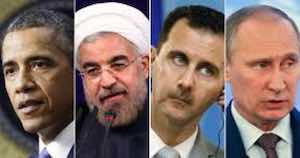
1. The Obama administration has lined up behind Putin’s Middle East objectives which hinge on keeping Bashar Assad in power.

2. Washington endorses Russia’s massive military intervention in Syria, although as recently as last month Obama condemned it as doomed to failure.

3. The US now stands behind Iran – not just on the Syrian question – but also on the existence of an Iranian-Syrian-Hizballah alliance, based on a solid land bridge from Iran and the Gulf up to the Mediterranean coast under Russian military and political protection and influence.

Even more surprising were the sentiments heard this week in Jerusalem.

Our military and intelligence sources cite officials urging the government to accept the American policy turnaround. In some military circles, senior voices were heard commenting favorably on Assad’s new prospects of survival in power, or advising Israel to jump aboard the evolving setup rather than obstructing it.

Those same “experts” long claimed that Assad’s days were numbered. They were wrong then and they are wrong now.

Israel was forced to yield on the Iranian nuclear program, but its acceptance of the permanence of Assad and the indefinite presence in Syria of his sponsors, Iran and Hizballah, will come at a high price for Israel in the next conflict.

The inspection joke

December 16, 2015

The inspection joke, Israel Hayom, Dan Margalit, December 16, 2015

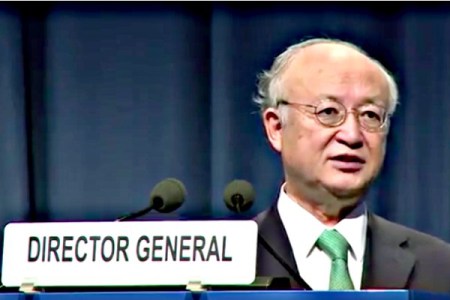
Amano knew very well what was expected of him as early as 2014, and he acted accordingly. Obama and other Western leaders wanted an agreement at any cost, and as a result they gave without taking. Rather than letting Amano visit the site on his terms, Iran handed over soil samples collected by Iran itself, with no supervision, making a mockery of the inspection process.

*************************

U.S. President Barack Obama addressed the American nation from the Oval Office following the San Bernardino terrorist attack earlier this month. In his address, he beat around the bush, doing all he could to avoid describing the attack as the work of Islamic terrorists. He opted instead for euphemism and bland language. This turned him into the butt of a viral joke online about how he would have responded to the Pearl Harbor attack almost exactly 74 years ago. “A few bad men arrived on planes and shot people on ships,” Obama would have told the nation, making no mention of “Japanese” “war” or “attack on America.” This approach neatly dovetails with what happened on Tuesday, when the International Atomic Energy Agency adopted a resolution ending its probe into Iran’s efforts to manufacture nuclear bombs.

The Iran nuclear deal stipulates that the IAEA director general “will provide by 15 December 2015 the final assessment on the resolution of all past and present outstanding issues” regarding “possible military dimensions” of Iran’s nuclear program. Although current IAEA chief Yukiya Amano is highly regarded, it was clear early in the negotiations that the Iran deal was skewed in favor of Tehran.

Almost two years ago, Defense Minister Moshe Ya’alon attended a panel in Munich. On stage were Iran’s Foreign Minister Mohammad Javad Zarif and Amano, among others. When Zarif was asked why his government would not let Amano visit Parchin [where some of the clandestine research was carried out], Zarif lied, telling the audience that such a visit was prohibited. When Ya’alon asked Amano why he didn’t interject and expose Zarif’s lie, Amano said the timing, and the venue, weren’t right. From that moment onward, it was clear that Amano would probably shirk his duty as chief inspector when it came to the Iranian nuclear deal, culminating with the Tuesday’s decision at the IAEA Board of Governors meeting (Iran, for its part, was not convinced that the IAEA would be on its side, and staged a conflict in the upper echelons of the regime, but it calmed down once it became clear that the IAEA would pass a very nonthreatening resolution.)

Amano knew very well what was expected of him as early as 2014, and he acted accordingly. Obama and other Western leaders wanted an agreement at any cost, and as a result they gave without taking. Rather than letting Amano visit the site on his terms, Iran handed over soil samples collected by Iran itself, with no supervision, making a mockery of the inspection process.

Why has Amano let Iran off the hook? Why has he forgone, at the very least, an effort to get to the bottom of Iran’s deception over the years? Why does Amano think that it is not worth exposing the truth, even if the West wants to look the other way and ignore Iran’s bomb making efforts? Only he knows.

Even the proponents of the deal should view Amano’s approach as a mistake. During the 2014 conference in Germany, Ya’alon warned that the West was fooling itself if it thinks the deal would work. Tuesday’s decision has two ramifications: First, Iran will consider it a concession and assume that this will define the West’s conduct down the road, and second, it will embolden the ayatollahs in Iran. From now on their approach to the West will be “anything goes, because we are always successful.” One day, a leader may rise in the West and try to end Iran’s lucky streak, but it may be too late.

History has proven that mistakes are bound to be repeated.

Kerry Welcomes End of Investigation into Iran’s Past Nuclear Efforts (Including Lies)

December 16, 2015

Kerry Welcomes End of Investigation into Iran’s Past Nuclear Efforts (Including Lies), The Jewish PressLori Lowenthal Marcus, December 15, 2015

IAEA-AmanoIAEA’S Dir. Gen. Yukiya Amano in Vienna. Sept. 14, 2015. Photo Credit: YouTube screen capture

U.S. Secretary of State John Kerry is thrilled that the world’s nuclear watchdog agency has decided, despite the continued lying by Iran about its nuclear weapons program and its violations of UN ballistic missile bans, to close its investigation into whether there had been any possible military dimensions to Iran’s nuclear weapons program.

Kerry’s statement, released on Tuesday, Dec. 15, noted that a Dec. 2 assessment by Yukiya Amano, Director General of the IAEA, revealed Iran had engaged in activities consistent with a nuclear weapons program as recently as a mere six years ago.

For some reason, Kerry seemed to find that reassuring.

The Secretary of State said that with the consensus adoption by the IAEA Board of Governors, it will now be able to “turn its focus now to the full implementation and verification of the Joint Comprehensive Plan of Action (JCPOA).”

In other words, everyone can now move towards lifting sanctions against Iran which not only continued to lie about its past nuclear activity, but which has already twice violated United Nations missile bans on it since the time the JCPOA was agreed to in July.

U.S. Ambassador to the U.N. Samantha Power acknowledged Iran’s October violation of the missile ban.

Iran’s latest violation of the missile ban was made public by a United Nations Panel in a report dated Dec. 11, Reuters reported on Tuesday. That report was forwarded to the UNSC’s sanctions committee.

Iran has consistently said it will defy any limitations on its ballistic missile program, whether enshrined in UN resolutions or otherwise.

Congressman Mike Pompeo (R-KS) was outraged by the IAEA’s decision, and the green light it gives to the administration’s willingness to move towards implementation of its nearly toothless Nuclear Iran Deal.

“The vote today is a total capitulation to the Iranian regime’s aggressively dishonest behavior with respect to its commitment under the Joint Comprehensive Plan of Action (JCPOA). Sadly, though not surprisingly, the IAEA Board of Governors closed the investigation into Iran’s nuclear program, despite proof of Iran’s dishonesty and in the absence of thorough, truthful answers to many outstanding issues. The president will now use this decision to lift sanctions on Iran without having the complete truth regarding its nuclear weapons related activity. This is a grave and historic error that sends the wrong message,” wrote Pompeo.

The Kansas member of Congress pointed out that the Iran deal, which lasts for more than a decade, means many more years of the U.S. and its partner nations look the other way while the world’s leading sponsor of terrorism continues “cheating, lying, and breaking the rules.”

“This is wholly unacceptable and will most assuredly lead to more of the same from Ayatollah Khamenei. Other rogue nations now know too that America will accept deceit and fraud in dealings with respect to nuclear proliferation.”

Kerry said on Tuesday that the watchdog agency can still investigate Iran if “there is reason to believe” that country is “pursuing any covert nuclear activities in the future, as it had in the past. In fact, the JCPOA – by providing for implementation of the Additional Protocol as well as other enhanced transparency measures – puts the IAEA in a far better position to pursue any future concerns that may arise.”

The IAEA may be able to continue to investigate, but given that past violations have been met with no consequences, it’s a cold assurance that such investigations can continue.

Incredibly, Kerry’s statement concludes:

Today’s resolution makes clear that the IAEA’s Board of Governors will be watching closely to verify that Iran fully implements its commitments under the JCPOA. We will remain intensely focused going forward on the full implementation of the JCPOA in order to ensure the exclusively peaceful nature of Iran’s nuclear program.

Isn’t that comforting?

What About Iran’s “JCPOA”?

December 15, 2015

What About Iran’s “JCPOA”? Gatestone InstituteLawrence A. Franklin, December 15, 2015

(The article mentions, but otherwise provides little of substance concerning, Iran’s interpretation of the Joint Cooperative Plan of Action (JCPOA).  This analysis by the Middle East Media Institute is about Supreme Leader Khamenei’s “guidelines” for its interpretation and implementation. They suggest something quite different from the document presented to the U.S. Congress.– DM)

  • The self-appointed P5+1, elected by no one but themselves, should be embarrassed to find that they have made a deal with no one but themselves.
  • The media’s emphasis on the JCPOA has sadly neglected any in-depth coverage of Iran’s own comprehensive plan of action, which seems to consist of developing nuclear weapons, ballistic missiles and related systems to deliver them.
  • The IAEA cannot even confirm with certainty that Iran does not already possess a nuclear bomb, and yet is not expected to challenge Tehran’s assertion that it ceased nuclear weapons development more than a decade ago.
  • Although the U.S. also cannot be certain of Iran’s intentions, it would be advisable to assume that Iran means what it says: “Death to America” and “Death to Israel.”

Iran is cheating already — or is it? Iran has not signed anything, so presumably it cannot be cheating on something it never agreed to – as predicted on these pages half a year ago. The self-appointed P5+1 (the five permanent members of the UN Security Council plus Germany), elected by no one but themselves, should be embarrassed to find that they have made a deal with no one but themselves.

The lavishly touted and lavishly dangerous “Iran Deal” not only paves the way for Iran to have nuclear weapons, as it was planning, anyway; it also rewards Iran’s repeated violations of the Non-Proliferation Treaty — which it did sign — with up to $150 billion. With a punishment like that, we should all start violating commitments.

Iran’s recent missile tests have, been undermining the rationale of the Joint Comprehensive Plan of Action (JCPOA), which the P5+1 signed with itself. If Iran is concerned that its missile tests might have violated multiple UN Resolutions, a paltry detail such as that clearly has not bothered anyone before, so why should it bother anyone now?

The media’s emphasis on the JCPOA has sadly neglected any in-depth coverage of Iran’s own comprehensive plan of action, which seems to consist of developing nuclear weapons, ballistic missiles and related systems to deliver them.

While Western diplomats were congratulating themselves on their JCPOA arrangement, Iran sent a “slap-in-the-face” signal to the Free World by launching an Emad [“Pillar”] ballistic missile on October 10. On December 8, State Department spokesperson John Kirby indirectly acknowledged the launch of a second ballistic missile, fired on November 21. Kirby was quick to point out that test was not a violation of the JCPOA.

The launches are violations, however, of UN Security Council Resolution #2231, which bans ballistic missile tests by Iran. Although these tests do not defy the letter of the JCPOA, they do defy the spirit of it. Even though the initial missile test was denounced by the U.S. and allied UN representatives, no action has so far been taken against Iran. The U.S. Ambassador to the United Nations, Samantha Power, did condemn the October test and probably will also condemn the second test. But if this is outrage, that may be the extent of it.

What seems clear is that Iran’s Islamic Revolution Guard Corps (IRGC), which controls the ballistic missile program, is attempting to goad the West into additional punitive action against the Islamic Republic. Such response would serve to strengthen the hardline opposition to the JCPOA in Iran. Further, if the United States does nothing but issue condemnatory rhetoric, it will be interpreted by the regime as additional confirmation that the U.S. desires a nuclear agreement at virtually any cost.

1388

The International Atomic Energy Association (IAEA), after its investigation into the Possible Military Dimensions (PMD) of Iran’s past nuclear weapons development activities, was forced, thanks to Tehran’s lack of cooperation and transparency to deliver an inconclusive initial report on December 2[1].

The Iranian regime’s officials, such as Deputy Foreign Minister Sayed Abbas Araghchi, have demanded the immediate lifting of the 12 UN Resolutions against Iran when the IAEA Board of Governors votes on the final PMD report on December 15.

The IAEA cannot therefore confirm with certainty that Iran does not already possess a nuclear bomb, or whether or not Tehran is presumably still pursuing one. The IAEA Board of Governors is, nevertheless, not expected to challenge Tehran’s assertion that it ceased any such activities more than a decade ago.

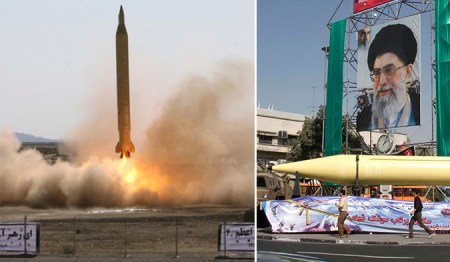
Iran currently has several types of ballistic missiles in varying stages of development. The range of these missiles extends from the regional to the intercontinental — with a version of one missile capable of reaching the continental United States. The most touted operational system is the Shahab (“Meteor”) program, with several follow-on versions. The Shahab system has benefited by seemingly close cooperation with North Korea’s ballistic missile program, Russian nuclear weapons engineers who were unemployed after the Soviet Union imploded, and China’s direct and indirect technical assistance.

The principal threat to regional states, particularly to Israel, is that one does not know what one does not know — in this instance, the stage of Iran’s nuclear weapons programs.

Action by the U.S. Congress to inquire why the public disclosure of Iranian ballistic missile tests is being disseminated in dribs and drabs is long overdue, especially as America’s technical intelligence collection methods provide immediate and certain knowledge of such tests.

Although the U.S. also cannot be certain of Iran’s intentions, it would be advisable to assume that Iran means what it says: “Death to America” and “Death to Israel.” If one assumes that these statements, made by a regime that stones women to death, are not mere propaganda, but ideological commitments, the time to demonstrate the Free World’s resolve by way of strategic military exercises on Iran’s borders is long overdue.

______________________________
[1] Initial PMD Report summary observations are that Iran had a coordinated program to develop a nuclear explosive device up through 2003 but the program appears not to have advanced beyond scientific testing which did permit Iran to acquire certain competencies and capabilities. However, some aspects of the program continued until 2009.

Nuclear Agency Says Iran Worked on Weapons Design Until 2009

December 2, 2015

Nuclear Agency Says Iran Worked on Weapons Design Until 2009, New York Times

(Please see also, Iran threatens to walk away from nuke deal. — DM)

[W]hile the International Atomic Energy Agency detailed a long list of experiments Iran had conducted that were “relevant to a nuclear explosive device,” it found no evidence that the effort succeeded in developing a complete blueprint for a bomb.

In part that was because Iran refused to answer several essential questions, and appeared to have destroyed potential evidence in others.

**********************

VIENNA — Iran was actively designing a nuclear weapon until 2009, longer than the United States and Western intelligence agencies have publicly acknowledged, according to a final report by the United Nations nuclear inspection agency.

The report, based on partial answers Iran provided after reaching its nuclear accord with the West in July, concluded that Tehran conducted “computer modeling of a nuclear explosive device” before 2004. It then resumed the efforts during President Bush’s second term and continued them into President Obama’s first year in office.

But while the International Atomic Energy Agency detailed a long list of experiments Iran had conducted that were “relevant to a nuclear explosive device,” it found no evidence that the effort succeeded in developing a complete blueprint for a bomb.

In part that was because Iran refused to answer several essential questions, and appeared to have destroyed potential evidence in others.

The report, issued here Wednesday evening to the 167 countries that make up the board of the agency, is intended to complete a decade-long attempt to determine what kind of progress Iran made toward the technological art of designing a warhead that could fit atop a nuclear missile.

The completion of the report is one of the steps that Iran had to take — along with dismantling centrifuges and shipping nuclear fuel out of the country — before sanctions will be lifted under the nuclear deal.

Mr. Obama and his secretary of state, John Kerry, concluded this year that it was more important to secure a deal that will, if carried out fully, prevent Iran from gaining the material to build a bomb for at least 15 years than making it admit to past activities. So, the report’s publication allows the deal to go through, no matter how definitive or inconclusive the final result.

But Iran’s refusal to cooperate on central points could set a dangerous precedent as the United Nations agency attempts to convince other countries with nuclear technology that they must fully answer queries to determine if they have a secret weapons program.

The agency’s bottom line assessment was that Iran had a “coordinated effort” to design and conduct tests on nuclear weapon components before 2003 — echoing a United States national intelligence estimate published in 2007 — and that it had conducted “some activities” thereafter.

“These activities did not advance beyond feasibility and scientific studies” and the acquisition of technical capabilities, the agency concluded. The efforts ended “after 2009,” or just as Mr. Obama was taking office and accelerating the sanctions and cyber sabotage program against Iran’s nuclear facilities that ultimately brought Iranian officials to the negotiating table.

Tehran gave no answer to one quarter of the dozen specific questions or documents it was asked about, leaving open the question of how much progress it had made.

The report, titled “Final Assessment of Past and Present Outstanding Issues Regarding Iran’s Nuclear Program,” will not satisfy either critics of the nuclear deal or those seeking exoneration for Iran. Instead, it draws a picture of a nation that was actively exploring the technologies, testing and components that would be needed to produce a weapon someday, without coming to a conclusion about how successful that effort was.

The agency’s director, Yukia Amano, said last week that the document would not be “black and white,” and that assessment proved correct.

Nothing in the report suggests that Iran will prevent the I.A.E.A. from monitoring its production of nuclear fuel for the next decade and a half, the crucial element of the July agreement. But Iran’s refusal to answer some of the questions also does not portend well for its transparency about its activities.

At Iran’s Parchin complex, where the agency thought there may have been nuclear experimental work in 2000, the agency said “extensive activities undertaken by Iran” to alter the site “seriously undermined the Agency’s ability” to come to conclusions about past activities.

Diplomats familiar with the compilation of the report said that they met “experts” in Iran, but would not say if they met the leader of the effort, Mohsen Fakhrizadeh. (Other diplomats said Mr. Fakhrizadeh was definitely not among those the inspectors met.) One diplomat said Iran had said it feared the scientists could be assassinated if they were identified. The agency appeared to have visited two laboratories.

Time and again, the agency seemed close to rejecting Iranian arguments that its experimentation was for civilian purposes. The inspectors found that Iran’s nuclear program was “suitable for the coordination of a range of activities relevant to the development of a nuclear explosive device” and that its experiments have “characteristics relevant to a nuclear explosive device.”

In one or two areas, notably a document provided by Western intelligence agencies indicating that Iran was looking at how to make uranium metal, a step needed for a weapon, it found “no indication of Iran having conducted activities” related to the document.

Recently, as the report’s publication approached, Iran’s position of complete denial that it had sought a bomb seemed to soften. In October, a former Iranian president, Ali Akbar Hashemi Rafsanjani, told journalists in Tehran that the nation had considered making nuclear arms during its war with Iraq in the 1980s but backed away.

“We sought to have that possibility for the day that the enemy might use a nuclear weapon,” he was quoted as saying. “That was the thinking. But it never became real.” He said nothing about what happened up to 2004 or the more sporadic efforts beyond.

The issues the I.A.E.A. addressed in Wednesday’s report date back a decade. Starting around mid-2004, thousands of pages of detailed evidence of Iran’s suspected research on how to design a weapon were collected by intelligence agencies in the United States, Israel and Europe, and eventually turned over to the agency’s inspectors here in Vienna.

Some of the evidence came from a laptop computer smuggled out of Iran by a person American and German officials identified as an Iranian technician, who had access to some of the most sensitive results from two secret Iranian nuclear projects. Both appeared related to different technologies needed to design a nuclear warhead, including the vital process of building a detonation system to fit inside the nose cone of Iran’s Shahab-3 missile, Persian for shooting star.

Iran claimed that the documents were fabrications, part of a Western conspiracy to set the groundwork for bombing the country’s nuclear facilities or overthrowing the government. The technician apparently never made it out of the country; he remained in Iran after sending the laptop out with his wife and family.

“We never figured out if he was imprisoned or executed,” a former intelligence officer involved in the operation said in an interview in 2008.

The year before that interview, however, the American intelligence community had warned the Bush administration of a surprising finding: While Iran once had a full-scale weapons development effort underway, it had suspended the project sometime in late 2003, shortly after the American invasion of Iraq.

“Prior to 2003 they had a full-scale Manhattan Project,” said Gary Samore, Mr. Obama’s top nuclear proliferation expert in the first term. After that, he said, the effort was sporadic, even as Iran pressed ahead to build the facilities to produce uranium fuel — the program that was rolled back and frozen by the agreement reached in July.

Even after the 2007 report, though, I.A.E.A. inspectors pressed Iran to address the questions raised in the documents. In 2008, the agency’s chief inspector gathered officials from around the world into a large auditorium here and displayed the evidence to them. This included, memos signed by Mr. Fakhrizadeh, the elusive academic who ran the program for the Islamic Revolutionary Guards Corps, and Iranian videos appearing to show how to detonate a weapon in an “air burst,” much as the bomb exploded high over Hiroshima, Japan, in 1945.

In 2011, frustrated that Iran had failed to honor several agreements to answer questions and turn over documents, the atomic agency published a list of a dozen issues — “possible military dimensions,” in bureaucratic jargon — that it had to clear up before it could close Iran’s file.

But as the deal got closer last spring, Mr. Obama and Mr. Kerry had to make a crucial decision: whether it was worth jeopardizing the deal by insisting that Iran must admit to its past activities. From all indications since then, the president seemed to have decided it was more important to get commitments about limiting future activities than forcing Iranian officials to admit to a past the country insists never happened.

Mr. Kerry, pressed on the question of Iranian disclosure of past activities by Judy Woodruff on the “PBS NewsHour,” said: “They have to do it. It will be done. If there’s going to be a deal, it will be done.” But weeks later, he said United States intelligence agencies already had “perfect knowledge” of Iran’s activities, suggesting that a public confession was not necessary.

The result was a carefully designed diplomatic compromise. Iran had to meet deadlines to turn over documents, but the agreement did not specify how complete the disclosures had to be, whether important scientists had to be interviewed or whether inspectors had to be allowed into the sensitive research sites, including some universities, where the work happened.

IAEA’s PMD Report Is Being Written In Negotiation With Iran, Not Independently

November 29, 2015

Statements By Iranian Deputy Foreign Minister Abbas Araghchi Indicate: IAEA’s PMD Report Is Being Written In Negotiation With Iran, Not Independently, MEMRI, November 27, 2015

(Here’s a link to a July 16, 2015 interview in which Kerry stated,

“The possible military dimensions, frankly, gets distorted a little bit in some of the discussion, in that we’re not fixated on Iran specifically accounting for what they did at one point in time or another,” Kerry said. “We know what they did. We have no doubt. We have absolute knowledge with respect to the certain military activities they were engaged in. What we’re concerned about is going forward. It’s critical to us to know that going forward, those activities have been stopped, and that we can account for that in a legitimate way.”

— DM)

Araghchi’s interview indicates that Iran has been following the writing of the IAEA report and has been submitting comments to the IAEA and the P5+1, and has in fact been exerting constant pressure on Amano and on the P5+1 in order to ensure that the PMD dossier be closed and the report be worded unequivocally and to Iran’s complete satisfaction.

********************

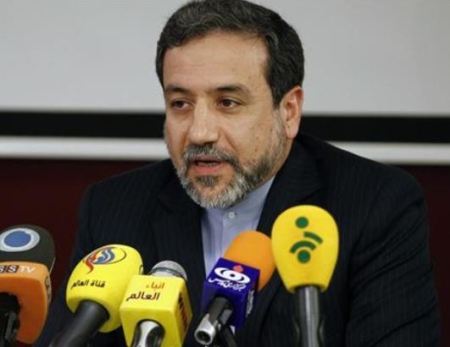
In a November 25, 2015 interview on Iranian television, Iran’s deputy Foreign Minister Abbas Araghchi said that he recently held talks with IAEA director-general Yukiya Amano on “closing the Possible Military Dimension (PMD) dossier”, and the latter filled him in about “some of the points he is to present” in the upcoming IAEA report on this issue. Araghchi noted that he had also spoken with the Americans and Europeans in Vienna, and had understood from them that “they too were heading towards closing the PMD dossier.” [1]

25842Abbas Araghchi (Image: Press TV, Iran)

It should be recalled that Ali Akbar Salehi, the head of Iran’s Atomic Energy Organization and a member of the nuclear negotiation team, said in a June 21, 2015 interview on Iranian television that Iran had “reached understandings with the IAEA” on the PMD issue, and added: “Now there is political backing [of the P5+1], and the [PMD] issue should be resolved.” He stated further: “By December 15, [2015], at the end of the year, the issue [of the PMD] should be determined. The IAEA will submit its report to [its] board of governors. It will only submit it. The Joint Comprehensive Plan of Action will continue independently of the results of this report. We have reached understandings with the IAEA… The technical issues are now being resolved in a political framework. They have set a time frame and, God willing, the issue must be resolved by December 15.” In response to the interviewers’ remark that the IAEA has “a bad record” (in terms of cooperating with Iran), Salehi stated: “In short, they [the IAEA] will be the losers. As I have said, the issue has received political backing. The work of [the IAEA] must be reasonable. They cannot do anything unreasonable. When there is no political backing, they do whatever they want, but now there is political backing, and the issue should be resolved.”[2]

In a recent news conference, Amano said that that “the report will not be black and white,” and that the PMD issue “is an issue that cannot be answered by ‘yes’ or ‘no'”.[3]

In his November 25 interview, Araghchi said: “In the next few days our experts will be in contact with the IAEA experts, and if necessary they will bring up additional points. I may also meet with Amano again… They [our experts] told us there were some weak points in the IAEA report and I commented on them. I am optimistic that they will be corrected…”

He added: “I don’t think there is any plan behind the scenes to leave the PMD dossier open. We have not received any indications that there is a plan [of this kind] behind the scenes. In any case I provided the Americans and Europeans with the necessary comments.”

He stated further: “On December 1, 2015, we expect this report to be published and submitted to the [IAEA] Board of Governors. A special board meeting has been scheduled for December 15, 2015, in which a resolution on the IAEA report will be taken. During this time [until December 15], the P5+1 group will submit a [draft] resolution [to the IAEA Board of Governors] with the objective of  closing the PMD dossier, and [this draft resolution] will come up for a vote in its December 15, 2015 meeting. Also, on December 7, 2015, there will be a meeting of the JCPOA Joint Commission in Vienna, attended by [representatives of] Iran and the P5+1, in which we will discuss the P5+1 [draft] resolution on closing the PMD. We have taken all the necessary steps so that on December 15, 2015, [the IAEA Board of Governors] will resolve to close the PMD dossier and this issue will be put to rest.”

According to Araghchi, “if the [IAEA] Board of Governors does not close the PMD dossier, the process of implementing the JCPOA will stop. Hence, the P5+1 must decide between the PMD and the JCPOA… In the past, the P5+1 chose the JCPOA. The [Supreme] Leader [Khamenei]’s letter on Iran’s implementation of the nuclear steps [a document published by Khamenei in October 21 detailing 9 additional conditions for Iranian compliance with the JCPOA][4] likewise emphasizes that they must choose between the JCPOA and the PMD.”[5]

According to Iran’s Press TV news agency, Araghchi said in the same interview: “If Yukiya Amano or the [IAEA’s] board of governors will present their report in such a way that it does not meet the stipulated commitments, the Islamic Republic of Iran will also stop [the implementation of] the JCPOA.”[6] In this statement, Araghchi implies that Iran has received commitments that the PMD dossier will be closed.

Araghchi’s interview indicates that Iran has been following the writing of the IAEA report and has been submitting comments to the IAEA and the P5+1, and has in fact been exerting constant pressure on Amano and on the P5+1 in order to ensure that the PMD dossier be closed and the report be worded unequivocally and to Iran’s complete satisfaction.

It should also be recalled that the inspection of the Parchin military facility, carried out to determine whether Iran’s program had military dimensions, consisted of Iran submitting samples that were not collected in the presence of IAEA inspectors and were later submitted to the IAEA, so that their origin cannot be absolutely determined.

As for the steps currently being taken by Iran to comply with the JCPOA, Araghchi clarified that “none of the steps so far taken by Iran in this matter contravenes the [Supreme] Leader’s letter…  and, as far as I know, [we] are still in the stage of dismantling the inactive centrifuges.” (Both Iranian Atomic Agency Spokesman  Behrouz Kamalvandi and Iranian National Security Council secretary Ali Shamkhani have indeed said that Iran has transferred inactive centrifuges from one facility to another, but no active centrifuges have been dismantled).[7]


Endnotes:

[1] ISNA (Iran), November 25, 2015.

[2] See MEMRI TV Clip No. 5014,  We Have Reached Understandings with the IAEA about the PMD; Technical Issues Are Now Being Resolved on a Political Level, July 21, 2015.

[3] Reuters.com, November 26, 2015.

[4] See MEMRI Daily Brief No.65, MEMRI: ‘The Emperor Has No Clothes,’ October 30, 2015.

[5] ISNA (Iran), November 25, 2015.

[6] Press TV (Iran), November 26, 2015.

[7] Kamalvandi: ISNA (Iran), November 3, 2015; Shamkhani: Fars (Iran), November 10, 2015.

The Moscow-Washington-Tehran Axis of Evil

October 3, 2015

The Moscow-Washington-Tehran Axis of Evil, Canada Free PressCliff Kincaid, October 3, 2015

(I am not posting this because I currently accept its conclusions or some of their bases. However, it’s frightening, interesting and has at least some food for thought. — DM)

KINCAID100315

The conventional wisdom is that Vladimir Putin has blindsided Barack Obama in the Middle East, catching the U.S. off-guard. It’s another Obama “failure,” we’re told. “Obama administration scrambles as Russia attempts to seize initiative in Syria,” is how a Washington Post headline described it. A popular cartoon shows Putin kicking sand in the faces of Obama and Secretary of State John Kerry on a beach.

The conventional wisdom is driven by the notion that Obama has the best of intentions but that he’s been outmaneuvered. What if his intention all along has been to remake the Middle East to the advantage of Moscow and its client state Iran? What if he knows exactly what he’s doing? Too many commentators refuse to consider that Obama is deliberately working against U.S. interests and in favor of the enemies of the U.S. and Israel.

In his U.N. address, Obama said, “As President of the United States, I am mindful of the dangers that we face; they cross my desk every morning. I lead the strongest military that the world has ever known, and I will never hesitate to protect my country or our allies, unilaterally and by force where necessary.”

This is laughable. We still have a strong military, but the inevitable conclusion from what’s recently transpired is that he doesn’t want to protect the interests of the U.S. or its allies in the Middle East. This is not a “failure,” but a deliberate policy.

The trouble with conventional wisdom is the assumption that Obama sees things the way most Americans do. In order to understand Obama’s Middle East policy, it is necessary to consult alternative sources of news and information and analysis. That includes communist news sources.

A fascinating analysis appears in the newspaper of the Socialist Workers Party, The Militant, one of the oldest and most influential publications among the left. You may remember the old photos which surfaced of Lee Harvey Oswald selling copies of The Militant before he killed the American president.

The headline over The Militant story by Maggie Trowe caught my eye: “‘Reset’ with US allows Moscow to send arms, troops to Syria.” It was not about Hillary Clinton’s reset with Moscow years ago, but a more recent one.

Here’s how her story began: “Moscow’s rapid military buildup in Syria is a result of the ‘reset’ in relations forged with the Russian and Iranian governments by the Barack Obama administration. The deal—reshaping alliances and conditions from Syria, Iran and the rest of the Middle East to Ukraine and surrounding region—is the cornerstone of U.S. imperialism’s efforts to establish a new order in the Mideast, but from a much weaker position than when the now-disintegrating order was imposed after World Wars I and II.”

Of course, the idea that “U.S. imperialism” is served by giving the advantage to Russia and Iran is ludicrous. Nevertheless, it does appear that a “reset” of the kind described in this article has in fact taken place. The author writes about Washington’s “strategic shift to Iran and Russia” and the “downgrading” of relations with Israel and Saudi Arabia. She notes that Moscow “seeks more influence and control of the country [Syria] and its Mediterranean ports and a stronger political hand in Mideast politics.” Iran “has sent Revolutionary Guard Quds forces to help prop up Assad, and collaborates with Moscow on operations in Syria,” she notes.

It is sometimes necessary to reject the conventional wisdom and instead analyze developments from the point of view of the Marxists, who understand Obama’s way of thinking. They pretend that Obama is a pawn of the “imperialists” but their analysis also makes sense from a traditional pro-American perspective. Those who accept the evidence that Obama has a Marxist perspective on the world have to consider that his policy is designed to help Moscow and Tehran achieve hegemony in the region.

At the same time, the paper reported, “Since Secretary of State John Kerry’s congenial visit with Putin in May, it has become clear that Washington would accept Moscow’s influence over its ‘near abroad’ in Ukraine and the Baltics, in exchange for help to nail down the nuclear deal with Tehran.” Hence, Obama has put his stamp of approval on Russian aggression in Europe and the Middle East. This analysis, though coming from a Marxist newspaper, fits the facts on the ground. It means that more Russian aggression can be expected in Europe.

The wildcard is Israel and it looks like the Israeli government is being increasingly isolated, not only by Obama but by Putin. The story notes that Israeli Prime Minister Benjamin Netanyahu met with Putin in Moscow on September 21, saying his concern was to “prevent misunderstandings” between Israeli and Russian troops, since Israel has carried out airstrikes in Syrian territory targeting weapons being transported to the Iranian-backed Hezbollah terrorists in Lebanon.

Some reports indicated that Israel had set up a joint mechanism with the Russian military to coordinate their operations in Syria.

However, the Russian leader reportedly told Obama during their U.N. meeting that he opposes Israeli attacks in Syria. The Israeli newspaper Haaretz ran a story that Russia intends to “Clip Israel’s Wings Over [the] Syrian Skies.” The paper added that Putin’s remarks to Obama showed that despite Netanyahu’s meeting with Putin in Moscow, “Russia intends to create new facts on the ground in Syria that will include restricting Israel’s freedom of movement in Syrian skies.”

It hardly seems to be the case that Obama has been outsmarted in the Middle East, or that Putin and Obama don’t like each other. Instead, it appears that Obama is working hand-in-glove with Putin to isolate Israel and that Obama is perfectly content to let the former KGB colonel take the lead.

Israel has always been seen by most U.N. members as the real problem in the region. Obama is the first U.S. President to see Israel in that same manner and to act accordingly. This is why Putin has not caught Obama off-guard in the least. They clearly see eye-to-eye on Israel and Iran.

Don’t forget that Obama actually telephoned Putin to thank him for his part in the nuclear deal with Iran. The White House issued a statement saying, “The President thanked President Putin for Russia’s important role in achieving this milestone, the culmination of nearly 20 months of intense negotiations.”

Building off the Iran nuclear deal, it looks like the plan is for Russia and the United States to force Israel to embrace a U.N. plan for a nuclear-free Middle East. That would mean Israel giving up control of its defensive nuclear weapons to the world body. Iran will be able to claim it has already made a deal to prohibit its own nuclear weapons development.

Such a scheme was outlined back in 2005 in an article by Mohamed Elbaradei, the director-general at the time of the U.N.‘s International Atomic Energy Agency (IAEA). That’s the same body that is now supposed to guarantee Iranian compliance with the terms of the nuclear deal signed by Russia and the U.S.

Elbaradei argued there would have to be “a dialogue on regional security as part of the peace process,” to be followed by an agreement “to make the Middle East a nuclear-weapons-free zone.”

The “dialogue” appears to be taking place now, mostly under the authority and auspices of the Russian government, with President Obama playing a secondary role.

The obvious danger is that Israel would be forced to comply with the plan for a “nuclear-weapons-free-zone,” while Iran would cheat and develop nuclear weapons anyway.

Netanyahu told the U.N. that “Israel deeply appreciates President Obama’s willingness to bolster our security, help Israel maintain its qualitative military edge and help Israel confront the enormous challenges we face.”

This must be his hope. But he must know that Israel’s security is slipping and that the survival of his country is in grave danger in the face of this Moscow-Washington-Tehran axis.

Before Putin further consolidates his military position in the Middle East and Iran makes more progress in nuclear weapons development, Netanyahu will have to launch a preemptive strike on the Islamic state. “Israel will not allow Iran to break in, to sneak in or to walk in to the nuclear weapons club,” the Israeli Prime Minister said.

In launching such a strike before the end of Obama’s second presidential term, Israel would bring down the wrath of the world, led by Russia and the U.S., on the Jewish state.

The Iran Nuclear Deal: What the Next President Should Do

October 2, 2015

The Iran Nuclear Deal: What the Next President Should Do, Heritage Foundation, October 2, 2015

(But please see, The Elephant In The Room. — DM)

The failure of Congress to halt the implementation of the Obama Administration’s nuclear agreement with Tehran means that the U.S. is stuck with a bad deal on Iran’s nuclear program at least for now. Iran’s radical Islamist regime will now benefit from the suspension of international sanctions without dismantling its nuclear infrastructure, which will remain basically intact. Iran’s path to a nuclear weapon is unlikely to be blocked by the Administration’s flawed deal, any more than North Korea was blocked by the Clinton Administration’s 1994 Agreed Framework.

The next President should not passively accept Obama’s risky deal with Tehran as a fait accompli. Instead, he or she should immediately cite any violations of the agreement by Iran, its continued support for terrorism, or other hostile policies as reason to abrogate the agreement. The Bush Administration, faced with bad deals negotiated by the Clinton Administration, eventually withdrew from both the Agreed Framework and the Kyoto Protocol.

Rather than endorsing a dangerous agreement that bolsters Iran’s economy, facilitates its military buildup, and paves the way for an eventual Iranian nuclear breakout, the next Administration must accelerate efforts to deter, contain, and roll back the influence of Iran’s theocratic dictatorship, which continues to call for “death to America.”

How the Next President Should Deal with Iran

Upon entering office, the next Administration should immediately review Iran’s compliance with the existing deal, as well as its behavior in sponsoring terrorism, subverting nearby governments, and attacking U.S. allies. Any evidence that Iran is cheating on the agreement (which is likely given Iran’s past behavior) or continuing hostile acts against the U.S. and its allies should be used to justify nullification of the agreement.

Regrettably, Tehran already will have pocketed up to $100 billion in sanctions relief by the time the next Administration comes to office because of the frontloading of sanctions relief in the early months of the misconceived deal. Continuing to fork over billions of dollars that Tehran can use to finance further terrorism, subversion, and military and nuclear expansion will only worsen the situation.

In place of the flawed nuclear agreement, which would boost Iran’s long-term military and nuclear threat potential, strengthen Iran’s regional influence, strain ties with U.S. allies, and diminish U.S. influence in the region, the new Administration should:

1. Expand sanctions on Iran. The new Administration should immediately reinstate all U.S. sanctions on Iran suspended under the Vienna Agreement and work with Congress to expand sanctions, focusing on Iran’s nuclear program; support of terrorism; ballistic missile program; interventions in Syria, Iraq, and Yemen; human rights violations; and holding of four American hostages (Washington Post reporter Jason Rezaian, Christian pastor Saeed Abedini, former U.S. Marine Amir Hekmati, and former FBI agent Robert Levinson, who has been covertly held hostage by Iran since 2007).

The new Administration should designate Iran’s Islamic Revolutionary Guard Corps (IRGC) as a foreign terrorist organization and apply sanctions to any non-Iranian companies that do business with the IRGC’s extensive economic empire. This measure would help reduce the IRGC’s ability to exploit sanctions relief for its own hostile purposes.

Washington should also cite Iranian violations of the accord as reason for reimposing U.N. sanctions on Iran, thus enhancing international pressure on Tehran and discouraging foreign investment and trade that could boost Iran’s military and nuclear programs. It is critical that U.S. allies and Iran’s trading partners understand that investing or trading with Iran will subject them to U.S. sanctions even if some countries refuse to enforce U.N. sanctions.

2. Strengthen U.S. military forces to provide greater deterrence against an Iranian nuclear breakout.Ultimately, no piece of paper will block an Iranian nuclear breakout. The chief deterrent to Iran’s attaining a nuclear capability is the prospect of a U.S. preventive military attack. It is no coincidence that Iran halted many aspects of its nuclear weapons program in 2003 after the U.S. invasion of and overthrow of hostile regimes in Afghanistan and Iraq. Libyan dictator Muammar Qadhafi, motivated by a similar apprehension about the Bush Administration, also chose to give up his chemical and nuclear weapons programs.

To strengthen this deterrence, it is necessary to rebuild U.S. military strength, which has been sapped in recent years by devastating budget cuts. The Obama Administration’s failure to provide for the national defense will shortly result in the absence of U.S. aircraft carriers from the Persian Gulf region for the first time since 2007. Such signs of declining U.S. military capabilities will exacerbate the risks posed by the nuclear deal.

3. Strengthen U.S. alliances, especially with Israel. The nuclear agreement has had a corrosive effect on bilateral relationships with important U.S. allies in the Middle East, particularly those countries that are most threatened by Iran, such as Israel and Saudi Arabia. Rather than sacrificing the interests of allies in a rush to embrace Iran as the Obama Administration has done, the next Administration should give priority to safeguarding the vital security interests of the U.S. and its allies by maintaining a favorable balance of power in the region to deter and contain Iran. Washington should help rebuild security ties by boosting arms sales to Israel, Saudi Arabia, and other members of the Gulf Cooperation Council (GCC) that are threatened by Tehran, taking care that arms sales to Arab states do not threaten Israel’s qualitative military edge in the event of a flare-up in Arab–Israeli fighting.

To enhance deterrence against an Iranian nuclear breakout, Washington also should transfer to Israel capabilities that could be used to destroy hardened targets such as the Fordow uranium enrichment facility, which is built hundreds of feet beneath a mountain. The only non-nuclear weapon capable of destroying such a target is the Massive Ordnance Penetrator (MOP), a precision-guided, 30,000-pound “bunker buster” bomb. Giving Israel these weapons and the aircraft to deliver them would make Tehran think twice about risking a nuclear breakout.

The U.S. and its European allies also should strengthen military, intelligence, and security cooperation with Israel and the members of the GCC, an alliance of Bahrain, Kuwait, Oman, Qatar, Saudi Arabia, and the United Arab Emirates, founded in 1981 to provide collective security for Arab states threatened by Iran. Such a coalition could help both to contain the expansion of Iranian power and to facilitate military action (if necessary) against Iran.

4. Put a high priority on missile defense. Iran’s ballistic missile force, the largest in the Middle East, poses a growing threat to its neighbors. Washington should help Israel to strengthen its missile defenses and help the GCC countries to build an integrated and layered missile defense architecture to blunt the Iranian missile threat. The U.S. Navy should be prepared to deploy warships equipped with Aegis ballistic missile defense systems to appropriate locations to help defend Israel and the GCC allies against potential Iranian missile attacks as circumstances demand. This will require coordinating missile defense activities among the various U.S. and allied missile defense systems through a joint communications system. The U.S. should also field missile defense interceptors in space for intercepting Iranian missiles in the boost phase, which would add a valuable additional layer to missile defenses.

5. Deter nuclear proliferation. For more than five decades, Washington has opposed the spread of sensitive nuclear technologies such as uranium enrichment, even for its allies. By unwisely making an exception for Iran, the Obama Administration in effect conceded the acceptability of an illicit uranium enrichment program in a rogue state. In fact, the Administration granted Iran’s Islamist dictatorship better terms on uranium enrichment than the Ford and Carter Administrations offered to the Shah of Iran, a U.S. ally back in the 1970s.

The Obama Administration’s shortsighted deal with Iran is likely to spur a cascade of nuclear proliferation among threatened states such as Saudi Arabia, Turkey, Egypt, and the United Arab Emirates. Such a multipolar nuclear Middle East, on hair-trigger alert because of the lack of a survivable second-strike capability, would introduce a new level of instability into an already volatile region. To prevent such an outcome, the next Administration must reassure these countries that it will take military action to prevent Iran from gaining a nuclear capability as well as to deter Iranian military threats to their interests.

6. Expand domestic oil and gas production and lift the ban on U.S. oil exports to put downward pressure on world prices. In addition to sanctions, Iran’s economy has been hurt by falling world oil prices. Its oil export earnings, which constitute more than 80 percent of the regime’s revenue, have been significantly reduced. By removing unnecessary restrictions on oil exploration and drilling in potentially rich offshore and Alaskan oil regions, Washington could help to maximize downward pressure on long-term global oil prices. Lifting the ban on U.S. oil exports, an obsolete legacy of the 1973–1974 energy crisis spawned by the Arab oil embargo, would amplify the benefits of increased oil and gas production. Permitting U.S. oil exports not only would benefit the U.S. economy and balance of trade, but also would marginally lower world oil prices and Iranian oil export revenues, thereby reducing the regime’s ability to finance terrorism, subversion, and military expansion.

7. Negotiate a better deal with Iran. The Obama Administration played a strong hand weakly in its negotiations with Iran. It made it clear that it wanted a nuclear agreement more than Tehran appeared to want one. That gave the Iranians bargaining leverage that they used shrewdly. The Administration made a bad situation worse by downplaying the military option and front-loading sanctions relief early in the interim agreement, which reduced Iran’s incentives to make concessions.

The next Administration should seek an agreement that would permanently bar Iran from acquiring nuclear weapons. At a minimum, this would require:

  • Banning Iran from uranium enrichment activities;
  • Dismantling substantial portions of Iran’s nuclear infrastructure, particularly the Fordow and Natanz uranium enrichment facilities and Arak heavy water reactor;
  • Performing robust inspections on an “anytime anywhere” basis and real-time monitoring of Iranian nuclear facilities;
  • Linking sanctions relief to Iranian compliance;
  • Ensuring that Iran comes clean on its past weaponization efforts; and
  • Determining a clear and rapid process for reimposing all sanctions if Iran is caught cheating.

The Bottom Line

The nuclear deal already has weakened relationships between the U.S. and important allies, undermined the perceived reliability of the U.S. as an ally, and helped Iran to reinvigorate its economy and expand its regional influence. After oil sanctions are lifted, Iran will gain enhanced resources to finance escalating threats to the U.S. and its allies. The next Administration must help put Iran’s nuclear genie back in the bottle by taking a much tougher and more realistic approach to deterring and preventing an Iranian nuclear breakout.

Iran wants to renegotiate parts of the nuke “deal.” That may be good.

September 22, 2015

Iran wants to renegotiate parts of the nuke “deal.” That may be good. Dan Miller’s Blog, September 22, 2015

(The views expressed in this article are mine and do not necessarily reflect those of Warsclerotic or those of its other editors. — DM)


Iran wants sanctions relief to be lifted, immediately, and not merely suspended. Iran should not get that. If it doesn’t, it may well terminate the “deal” unilaterally. If Iran gets what it wants, the Senate should review the “deal” as a treaty and reject it. Either outcome would be a substantial improvement over the current “deal” and the morass in which it is embedded.

This post is based on a September 21st article at Middle East Media Research Institute (MEMRI) titled “Expected September 28 NY Meeting Between P5+1 Foreign Ministers And Iran Could Signify Reopening Of Nuclear Negotiations To Address Khamenei’s September 3 Threat That If Sanctions Are Not Lifted, But Merely Suspended, There Will Be No Agreement.”

The MEMRI article cites statements by Supreme Leader Khamenei and one of his senior advisers, Ali Akbar Velayat. The latter said, on September 19th,  “the nuclear negotiations are not over yet.” Khamenei has said much the same thing.

Khamenei said, in a September 3, 2015 speech to the Assembly of Experts, that he did not accept the terms of the agreement and demanded that the sanctions be immediately lifted rather than merely suspended; otherwise, he said, there would either be no agreement, or Iran too would merely suspend its execution of its obligations under the JCPOA.

. . . .

“Freezing or suspension [of the sanctions] is unacceptable to me… If they suspend [the sanctions], we too will suspend [what is incumbent upon us]. If we are to implement what [is required of us], the sanctions must be [actually] cancelled.

Iran has thus made clear that it will not abide by the nuke “deal” as written; unless it gets the changes it now demands, it will either terminate the deal or violate it. If, as seems likely for the reasons cited in the MEMRI article, the September 28th meeting involves discussion of the deal, it will either be renegotiated or it won’t be.

If the “deal” is not renegotiated, or is renegotiated and Iran does not get what it demands, it may very well terminate the deal. Iran has already received substantial sanctions relief, is already open for business and is already doing lots of it with many more nations than previously. Termination would be a rebuff to the “Great Satan,” would not damage Iran much economically and it could proceed with its “peaceful” nuke program without even farcical nuke self-inspections.

If The Obama administration and others cave and Iran gets what it demands or enough to satisfy it, the “deal” will be very different from what was previously presented to the Congress under the Corker legislation. That legislation purported to eliminate the constitutional requirement of approval of the “deal” by a two-thirds Senate majority before going into effect and permitted it to go into effect unless rejected by half of the membership of both houses; Obama promised to veto such a rejection and put the “deal” into effect. The House has disapproved the “deal” but the Senate has not acted because of Democrat fillibusters, urged by the White House. Under the new “deal,” the ability of the United States to “snap back” sanctions would be vitiated; a possible but very difficult if not impossible to accomplish, “snap back” had been among the reasons cited by many of those who favored the “deal” (often despite its many other flaws) for supporting it.

If a deal eliminating the “snap back” is struck, Obama, et al, may well claim that it’s none of the business of the Congress since, by virtue of the Corker legislation, it has already eliminated its constitutional authority to deal with the JCPOA as a treaty, regardless of any “minor” change.

I hope, but am less than confident, that both houses of the Congress will reject this contention vigorously and repeal the Corker legislation. Whatever benefits or other legitimacy the Corker legislation may once have been thought to have it no longer has. Repeal will probably require use of the “nuclear option” to invoke cloture to end a Democrat filibuster in the Senate. If — as seems likely — Obama vetoes the rejection, the Congress should state that it no longer considers itself bound by the Corker legislation. Next, the Senate should treat the renegotiated “deal” as a treaty, regardless of whether Obama agrees to send it to the Senate, and reject it. It should do so even if, as also seems likely, that requires use of the “nuclear option” to invoke cloture.

Obama has precipitated what may well become a constitutional crisis. If the Congress does its job, Obama will be the loser and America will be the winner — even if it becomes necessary to take out Iran’s nukes militarily.

What Iran Is Permitted To Do Under The JCPOA

September 18, 2015

What Iran Is Permitted To Do Under The JCPOA, Middle East Media Research Institute, Yigal Carmon, September 17, 2015

Support or opposition to the nuclear deal should be predicated on the text of the JCPOA.

Here are a few examples of what Iran can do under the JCPOA. These actions – permitted under the JCPOA – clearly contradict statements and arguments raised recently by administration officials.

Iran Can Pursue The Development Of A Nuclear Device And Key Nuclear Technologies

Under the JCPOA, Iran can conduct activities “which could  contribute  to  the  design  and  development of a nuclear explosive device” if these activities are “approved by the Joint Commission for non-nuclear purposes and subject to monitoring.”[1]  If anything should have been totally and absolutely banned by this agreement it is activity suitable for the development of a nuclear device. President Obama’s declared rationale for the agreement is to distance Iran from a nuclear device. The JCPOA, under certain conditions allows even that.

Also nowhere in the JCPOA does Iran promise to refrain from development of key technologies that would be necessary to develop a nuclear device. To the contrary, Ali Akbar Salehi head of the Atomic Energy Organization of Iran stated that: “We are building nuclear fusion now, which is the technology for the next 50 years.”[2]

Iran Can Prevent The Inspection Of Military Sites

Under the JCPOA the IAEA cannot go wherever the evidence leads. The JCPOA allows Iran to reject a priori any request to visit a military facility. This exclusion was included in the JCPOA by introducing a limitation under which a request that “aims at interfering with military or other national security activities” is not admissible. [3]

The ban on visits to military sites has been enunciated by all regime figures from Supreme Leader Khamenei downwards. Supreme Leader Khamenei specified: “(The foreigners) shouldn’t be allowed at all to penetrate into the country’s security and defensive boundaries under the pretext of inspection, and the country’s military officials are not permitted at all to allow the foreigners to cross these boundaries or stop the country’s defensive development under the pretext of supervision and inspection.” [4]

Iranian Foreign Minister Javad Zarif said that such visits crossed a red line and were successfully rejected by Iran during the negotiations.[5] Supreme Leader Khamenei’s top adviser for international affairs Ali Akbar Velayati stated: “The access of inspectors from the IAEA or from any other body to Iran’s military centers is forbidden.”[6]

Administration spokespersons persist in claiming that military facilities will also come under inspection in total contradiction to the language of the JCPOA and the Iranian position.

There Will Be No Snap Back Of Sanctions

Under the JCPOA snap back is not automatic but will be dependent on UN Security Council approval.

Additionally, a declaration has been introduced into the JCPOA and thus became an integral part of the agreement, namely that “Iran has stated that it will treat such a re-introduction or re-imposition of the sanctions specified in Annex II, or such an imposition of new nuclear-related sanctions, as grounds to cease performing its commitments under this JCPOA in whole or in part.”[7] The inclusion of this clause in the agreement makes the reimposition of sanctions in the optimal case, the subject of litigation, when Iran can contend that the other side is in violation of the agreement.

Sanctions Duration On The Issue Of Missile Development Can Be Shortened To Less Than Eight Years

Under the JCPOA the sanctions on missile development need not remain in place for eight years but can be lifted earlier, namely whenever “the IAEA has reached the Broader Conclusion that all nuclear material in Iran remains in peaceful activities.”[8]

Arak Will Remain A Heavy Water And Hence A Plutonium Capable Facility; Iran’s Plutonium Pathway Was Not Totally Blocked

Arak houses Iran’s heavy water facility. Despite the vague wording in the JCPOA, (i.e. Iran will “redesign” and “modernize” the reactor),[9] it will also continue to operate partially as a heavy water facility a key element needed in plutonium production.

_______________________

[1] http://apps.washingtonpost.com/g/documents/world/full-text-of-the-iran-nuclear-deal/1651/

[2] Farsnews.com, August 9, 2015.

[3] JCPOA, Annex I, Q.74.

[4]  Ibid.

[5] Latimes.com, July 22, 2015

[7] JCPOA, Section I, Article C, Paragraph 26. See footnote 1 for link to text.

[8] JCPOA, Annex V, D.19. See footnote 1 for link to text.

[9] JCPOA, I.B.8. See footnote 1 for link to text.