Posted tagged ‘Iran – human rights’

Nothing New in Rouhani’s “Charter of Citizens Rights.” Just a Re-Hash of Past Election Statements

December 23, 2016

Nothing New in Rouhani’s “Charter of Citizens Rights.” Just a Re-Hash of Past Election Statements, Iran Focus, December 23, 2016

charter-of-citizens-rights-750

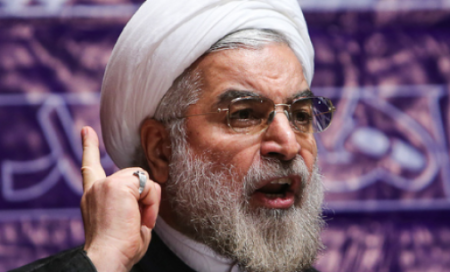
London, 23 Dec – On the very day that the UN General Assembly condemned violations of human rights in Iran, its president, Hassan Rouhani, published a statement, “Charter of Citizens Rights”, which merely repeats the Constitution and laws of the clerical regime, albeit rearranged. It’s shocking that this occurred in the midst of the justice seeking movement for the 1988 Massacre has gained strength both inside and outside Iran.

During 2013 election, Rouhani announced the same statements, and now he’s reusing them for next year’s election. What’s interesting is that he announced the initial report on implementation will be due after the election.

The Charter consists of 120 articles, none of which challenge the absolute authority of the Supreme Leader, or the complete denial of popular sovereignty, the violation of fundamental rights of women is not addressed, nor are other inhumane laws that have been institutionalized in the clerical regime.

The first article states, “The right to life cannot be denied from citizens except in accordance with law”. According to an article published by the National Council of Resistance of Iran (NCRI) on Wednesday, December 21, “This is nothing but confirmation of 120,000 political executions and mass executions that are happening every day. All these crimes are carried out based on the “law” of Velayat-e-Faqih. Rouhani has previously described all these executions as implementing law and divine command.”

Women’s rights are discussed within the framework of the law — the same law that denies all economic, social and political rights to women. The same law considers women’s rights as being half of men’s, and denies them many careers.

Here is what is said about freedom: “These freedoms are only limited based on necessity and according to the law.” He fails to mention various police organs established according to the law to quell all freedoms, whose wages are paid for by Rouhani’s cabinet and are under the command of his Interior Minister. Mercenaries titled as ‘Hijab (veiling) Police’, ‘Cyber Police’, ‘Mountain Police’, ‘Invisible Police’ and …

Ownership rights are referred to in Article 75, which reads that expropriation is banned, ‘unless it is according to the law’. “Rouhani, fails to explain the fate of the hundreds of billions of dollars stolen by the mullahs’ regime and senior regime officials from the Iranian people over the 38 years of the mullahs’ rule, and what happened to the $95 billion wealth in the ‘The Executive Headquarters of Imam’s Directive,’ practically becoming Khamenei’s personal wealth, all stolen from the Iranian people,” declares the NCRI.

The last part of the Charter speaks to the export of terrorism, calling the killings in Syria, Iraq, Yemen and other countries “foreign policy using various wise measures” for “combating violence, extremism and in defense of innocent people’s rights,” emphasizing “allocating adequate resources to equip and strengthen the armed forces” and “allocating enough supplies to strengthen the defense capability.” This is the same policy Khamenei and his inner circle, including Rouhani, have been imposing on the people of Iran and the rest of the region.

Spending The Iranian people are angry of the use of their assets on the wars like those in Syria and Iraq. “Undoubtedly, Rouhani deserves the medal of obscenity. When introducing this document he said, “These citizenship rights tell the world that Islamic Republic of Iran has this capacity; Islamic Revolution has this capacity to make the best use of all new legal characteristics of today’s world in the context of Iranian Islamic culture,” concludes the NCRI.

During My Five-Year Imprisonment I Witnessed Numerous Crimes of Iran Regime

December 9, 2016

During My Five-Year Imprisonment I Witnessed Numerous Crimes of Iran Regime, Iran Focus, December 9, 2016

shabnam-madadzadeh

“They pushed me and they hit me a lot…They grabbed my hair and pushed my head and wanted me to say what they wanted to hear. They tortured my brother, even more in front of my eyes. They increased the pressure and even more in the interrogation they said they would kill me and threatened to execute me. Nobody knew where I was, I was alone and I heard the sounds of other prisoners being tortured. They would cry out and it was the most horrible sound.”

****************************

London, 9 Dec – During My Five-Year Imprisonment I Witnessed Numerous Crimes of Iran Regime

A former Iranian political prisoner has told The Express about the barbaric way she was treated and why the West must support the democratic alternative to the Iranian Regime.

Shabnam Madadzadeh, 29, was imprisoned for seven years for her support of the political opposition group, the People’s Mojaheidn Organisation of Iran (MEK).

She was beaten and tortured, forced to listen as guards raped other female prisoners and forced to watch as intelligence agents beat her brother, Farzad.

Madadzadeh, a computer science student at Tarbiat Moalem University in Tehran, was arrested with her brother in 2009 for speaking out against the Iranian Regime’s human rights abuses.

She said: “I arrived and spent three months in solitary confinement and there was torture, both mental and physical. My cell was just 2x3m and I was alone with no connection to the world. My family was not allowed to contact me and they could not find out anything about me or what it was like for me in jail.”

When she was released from solitary confinement, Madadzadeh bravely smuggled letters out of prison to raise awareness of the brutality that she and other political prisoners were subjected to.

She refused to answer interrogators, to which they responded with violent interrogations of up to 10 hours each day.

She said: “They pushed me and they hit me a lot…They grabbed my hair and pushed my head and wanted me to say what they wanted to hear. They tortured my brother, even more in front of my eyes. They increased the pressure and even more in the interrogation they said they would kill me and threatened to execute me. Nobody knew where I was, I was alone and I heard the sounds of other prisoners being tortured. They would cry out and it was the most horrible sound.”

She revealed that prisoners were often electrocuted or tortured via the medieval method of stretching on a rack before being beaten.

After her release, Madadzadeh fled the country in fear for her life. She urges Western governments to stand up to the Iranian Regime and President Hassan Rouhani.

She said: “The West cannot negotiate with the regime. It’s the most criminal in the world. The face of the regime is not the smiling faces and shaking of hands. My message to European leaders is stop negotiating with the regime.”

She recommended that Western leaders side with the National Council of Resistance of Iran, a democratic group which acts as a government-in-exile and works alongside the MEK.

Earlier this week, Madadzadeh spoke to the European Parliament about the horrors of the Regime.

She said: “During my five-year imprisonment I witnessed numerous crimes of this regime particularly against Iran’s innocent women and girls and today I am here to be the voice of the voiceless, the voice of those being crushed in the clutches of this misogynist regime in face of the world’s silence and inaction.”

She continued: “The message of the Iranian people to western governments, and my message today is that you must adhere to the three decades of struggle by the Iranian people to break free from the clutches of this regime and accept the true freedom fighters, the National Council of Resistance of Iran as the true representative of the Iranian people, and refrain from any type of negotiations or deals with this notorious regime, because the true price of your deals is human lives, gallows in the streets of Iran.”

This references the numerous executions in Iran, which has the highest per capita execution rate in the world. In 2015 alone, the Regime ordered the deaths of around 1,000 people for mostly low-level, non-violent crimes.

Madadzadeh said: “The Iranian people have the will power to overthrow this regime, and with the tireless efforts of the Iranian resistance they will overthrow this regime.”

Islamic Republic of Iran detains dozens of converts to Christianity

December 5, 2016

Islamic Republic of Iran detains dozens of converts to Christianity, Jihad Watch

Obama’s cash contributions to the Islamic Republic of Iran at work.

housechurchiran

“Iran Detains Dozens Of Christian Converts As Rights Group Urge World To Intervene,” BosNewsLife, December 3, 2016:

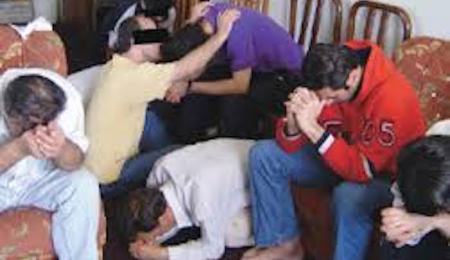
TEHRAN, IRAN (BosNewsLife)– A group of 19 influential human rights groups have urged the United Nations and the international community to help protect Christian converts in Iran saying scores of believers were detained for leaving Islam. In a statement to BosNewsLife the activists said that the “Islamic Republic of Iran” has been “homing in on converts from a Muslim background”.

Between May and August 2016 security forces forces arrested at least 79 Christians, according to activists, family members and friends.

“The majority of those arrested were interrogated and detained for periods ranging from a few days to months.” the groups said.

“At the time of writing some of these 79 Christians remain in detention and have still not been formally charged.”

Rights groups say “the true number of Christians apprehended by the authorities could be notably higher” as “many” arrests would have gone unreported.

In 2012, Iran’s government began to bar converts from Muslim backgrounds from attending services in official churches. Instead Christian converts “are forced” to gather in informal groups known as “house churches”, the activists said. “These gatherings are considered illegal by authorities and are often raided. In August 2016 alone security agents allegedly raided at least four house churches and the house church members were arrested and interrogated.”…

Iran’s Qur’an Reciter – And Child Rapist

December 5, 2016

Iran’s Qur’an Reciter – And Child Rapist, Front Page MagazineDr. Majid Rafizadeh, December 5, 2016

tousu

The Supreme Leader of Iran has called the child rapist a “model to be followed.”

It is crucial to point out that this is not a rare case. There are tens of thousands of religious Islamic figures, from every village and city of Iran, who use their Islamic authority to rape, abuse, and molest children, girls and women. Raping children, boys and little girls is not considered an important issue for the Islamic judiciary of Iran. In addition, if such rapes are conducted by a religious figure, he can be confident that there would be no legal case against him. In fact, the victims who speak up are the ones who would be charged for endangering Iran’s Islamic establishment.

***************************

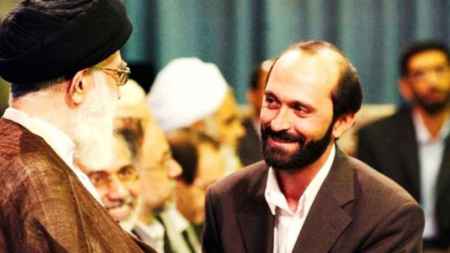
Iran’s best-known Quran reciter, Saeed Tousi, has been molesting and raping children as young as 9 years old, for years.

Tousi is very close to the political and religious establishment of the Islamic Republic.  He is a personal friend to, and Quran reciter for, the Supreme Leader Ayatollah Ali Khamenei, is a member of the Supreme Council of the Quran, and has been given many awards by Ayatollah Khamenei.

The Supreme Council of the Quran was founded 26 years ago and it is operated under the supervision of the Supreme Leader Ayatollah Khamenei.

The Supreme Leader of Iran has called the child rapist a “model to be followed.”

According to the Economist:

For years, the victims say, he touched boys memorizing holy texts at the Supreme Koran Council in Tehran. On trips abroad, the Koranic reciter would allegedly lure Islam’s equivalent of choirboys, some as young as 12, to his hotel room.

The Iran Wire wrote:

According to the victims’ accounts, Saeed Tousi took advantage of young students he was supposed to be offering support to, discussing private sexual matters with them before raping them, often in public bathhouses or hotel rooms. Victims filed their original complaints against Tousi in 2011, but Ali Moghadam [who is the president of the Supreme Council of the Quran] interfered in the judicial process, thereby protecting Tousi and saving him from the consequences of his actions.”It adds: “Tousi’s alleged victims say that when they accompanied Tousi on trips, he showed them pornographic videos and magazines and tried to arouse them by talking about sex.

The victims finally talked to Voice of America’s Persian-language TV network, after losing hope on bringing Tousi to justice. The chief justice, Sadegh Larijani, immediately warned that anyone who talks to a foreign news outlet “in opposition to the values of the Islamic Republic” would be guilty and could be encountering charges for “abetting and giving assistance to a crime.”

BBC Persian conducted an interview with the victims as well, which “was viewed an unprecedented 400,000 times on its Telegram channel.” According to the BBC: “One of the accusers described to the BBC an assault which he said took place in a public bath house when he was 12 years old.”

The victim, who was 12 years old at the time, recounted:

I was so shocked I couldn’t understand what was going on….I was so afraid to say anything because of the shame it would bring upon my name, but then I found out that there were so many other cases among his students. So I broke my silence.

People reacted fiercely. “Another shameful page in the history of the Islamic republic,” wrote Meysam. “People are being abused under the banner of religion… and no-one is going to be held accountable.”

“If the victims had been girls, [the authorities] would’ve accused them of being dressed inappropriately and provocatively. And they would argue that the assault was understandable” wrote Somayeh, according to BBC.

Efforts to bring the child rapist to justice have been fruitless. A spokesman for the judiciary, Gholam Hossein Mohseni-Ejei, argued that there was “insufficient evidence” to look into Tousi’s case.

The intriguing issue is that Tousi has confessed to his crimes:

In 2012, Tousi signed a letter in the presence of Ali Moghadam stating that he repented for his actions. He promised there would be no further instances of sexual harassment. In most courts of law, such a letter would serve as evidence of guilt and wrongdoing. But not only did the letter protect Tousi from any punishment, it did not appear to signal the stopping point for Tousi’s abuse. According to plaintiffs in the case against the Koranic expert, the rapes and abuse continued, and students were left vulnerable to his predatory actions.

Instead of investigating the case, the Islamic judiciary is now accusing his victims of being anti-establishment and foreign conspirators for speaking with foreign media outlets. The religious authorities would have preferred that the children remained silent.

The famous Quran reciter is not only currently walking free, but is also being continuously invited by government officials to recite the Quran at major official ceremonies. He is totally protected by the religious establishment.

It is crucial to point out that this is not a rare case. There are tens of thousands of religious Islamic figures, from every village and city of Iran, who use their Islamic authority to rape, abuse, and molest children, girls and women. Raping children, boys and little girls is not considered an important issue for the Islamic judiciary of Iran. In addition, if such rapes are conducted by a religious figure, he can be confident that there would be no legal case against him. In fact, the victims who speak up are the ones who would be charged for endangering Iran’s Islamic establishment.

Giuliani’s Ties to Iranian Resistance Group MEK Should be Viewed as a Valuable Contribution

November 29, 2016

Giuliani’s Ties to Iranian Resistance Group MEK Should be Viewed as a Valuable Contribution, Iran Focus, November 29, 2016

(The objected-to Politico article was written by Daniel Benjamin, often referred to below but not identified as author of that article. — DM)
trumpandgu

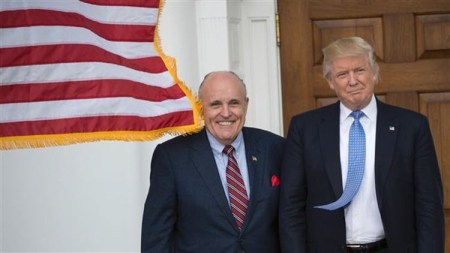
London, 29 Nov – On November 28, in an article for Politico Magazine, Robert G. Torricelli, former U. S. Senator from New Jersey, and a former member of the U.S. House of Representatives, wrote about the Iranian Resistance Group, Mujahidin e-Khalq (MEK).  His article was written  in response to an article published in Politico last week, criticizing the MEK and the U.S. politicians who support them, particularly former New York Mayor Rudy Giuliani.

Torricelli, a former Democratic member of the Senate Foreign Relations Committee, who is familiar with the MEK and with Giuliani’s work on behalf of the organization says, “I can say unequivocally that Benjamin’s assertions are outrageous—so outrageous that I must respond.” 

A large bipartisan coalition supports the MEK in its campaign for regime change in Iran, including two former chairmen of the joint chiefs, two former CIA directors, a former attorney general and the former chairs of both political parties. People with such varied political ideals, such as Howard Dean and Patrick Kennedy to Newt Gingrich and John Bolton support the MEK. Torricelli says, “From this perspective, the outlier isn’t Rudy Giuliani; it’s Daniel Benjamin.” 

The history of the MEK began when it was part of the coalition opposing the shah of Iran in the late 1970s. The shah’s secret police executed and imprisoned most of their leadership. That vacuum was briefly filled by a Marxist group who were rejected by the incarcerated MEK leaders. Most of the Marxist leaders were killed by the shah or by the mullahs after their ascent to power in 1979. The MEK eventually regained its original leadership, and the MEK became an opposition group to the theocratic regime, and fled into exile in Paris and Iraq.

Torricelli writes, “Throughout this time, the MEK did take part in legitimate political and military action against the Iranian regime, but I have seen no evidence to support the assertion Benjamin makes that it took part in terrorist activities against Iranians or Americans.”

In Iraq in the 1980s, the refugee camps of the MEK were under the protection of the government of Iraq. MEK fighters were aligned with Iraqi Army during Iran/Iraq War. “But Benjamin’s claims that they assisted in Saddam Hussein’s repression of the Kurds have been denied by both MEK and U.S. Army leaders in Iraq. Upon the arrival of U.S. forces in 2003, the MEK willingly handed over its weapons, accepted U.S. protection and actively exposed the Iranian regime and its proxies’ terrorist activities. This included saving American lives by identifying IED locations. This, more than anything, explains the group’s support by former U.S. military personnel, including the former army anti-terror officer and the U.S. military police general assigned to the camp,” writes Torricelli.

The MEK provided invaluable intelligence regarding the Iranian nuclear program that helped counter Tehran’s efforts to develop atomic weapons. Maryam Rajavi, leader of the movement, committed herself publicly to a democratic, non-nuclear, secular Iran at peace with its neighbors with gender equality and a ban on capital punishment. The MEK organized thousands in the Iranian diaspora and built political support in Congress and parliaments across Europe. It is now the most organized and disciplined of the Iranian opposition groups.

“Some current and former State Department employees, including Mr. Benjamin, have a different concept. They remain committed to the idea that the MEK was a terrorist organization—a notion, I believe, which stems from an illusion of American reconciliation with the mullahs. In 1997, a group at State succeeded in convincing President Bill Clinton to place the MEK on the State Department list of terrorist organizations. Some claimed at the time that this decision was mainly intended as a goodwill gesture to Iran. The State Department gave as its reasons the MEK’s long record of violence, but I can tell you that as a member of the Foreign Relation Committee, I reviewed the State Department file on the MEK and found no evidence, no testimony and no reason for the designation except placating Tehran,” Torricelli writes, adding, “Thousands of Iranian-Americans and literally hundreds of members of Congress protested. In 2011, as a private attorney, I led a team of lawyers in a State Department inquiry to resolve the issue. After four hours of testimony, we yielded to the State Department to present their contradictory evidence. They had nothing.”

Without evidence, an order by the U.S. District Court was issued.  The MEK was removed from the State Department list of terrorist organizations by Secretary Hillary Clinton in 2012.

Torricelli continues, “Defeat came hard for the Iran apologists within the department. Mr. Benjamin isn’t the first to argue that the broad coalition of former U.S. intelligence, military, diplomatic and congressional leaders can’t be believed because some accepted speaking fees to attend MEK meetings around the world. The fact that these people faced combat for or dedicated their entire careers to our country, and are among our most respected leaders seems to be of no consequence. It’s an argument that requires no rebuttal except to note that by this standard the views of Thomas Paine, Elie Wiesel and Winston Churchill—all of whom accepted speaking fees from various international organizations—would have been silenced as well.”

Rudy Giuliani was one of the most outspoken supporters. The 3,000 MEK refugees settled along the Iran/Iraq border were under imminent threat in 2012. Iraqi relations with the United States were tense. Torricelli writes,  “Secretary Clinton requested that I assemble a persuasive group of distinguished Americans to travel to Europe and persuade Mrs. Rajavi to relocate the refugees to a former U.S. military base near Baghdad. I appealed to Louis Freeh, Ed Rendell, Michael Mukasey and Rudy Giuliani. Each accepted, canceled commitments, paid his own transportation to Paris and argued persuasively that the MEK assist the United States by relocating.”

Such a broad coalition of diverse Americans has varied perspectives. Torricelli says that, “Some believe that in the political vacuum following an economic or political collapse in Tehran, a determined and well-funded political opposition like the MEK could seize power. Others believe that the MEK might simply be part of a broader coalition, a simple pressure point or just a source of continuing intelligence.” Although rationales for support might differ, this group of Americans is united by the beliefs that the MEK is a genuine democratic force, and that regime change in Tehran is the best option to keep the peace, avoid a nuclear Iran, and benefit American interests.

Going back to Mr. Benjamin’s argument that Rudy Giuliani’s participation in this coalition should disqualify him for consideration as secretary of state, Torricelli has this to say, “Experience and participation in public policy issues was once a condition for high government service. It’s now a complication, because a record of advocacy creates controversy. But the selection of secretary of state needs to be different. Among the most likely crises facing the new president is an escalation in the struggle with the fundamentalist Islamic Republic of Iran. Rudy Giuliani has lived that struggle for a decade. Mr. Benjamin may quarrel with his efforts but it’s important to note that voices in the American foreign policy establishment as diverse as Senator McCain, Secretary Clinton, Deputy Secretary Blinken and John Kerry’s own personal representative on the MEK, Jonathan Weiner disagree. Each has thanked Rudy Giuliani and the other Americans involved in these efforts.”

Whether or not the president-elect chooses Mr. Giuliani as secretary of state, countering Tehran and assisting our country should not be seen as anything other than a valuable contribution to his consideration.

Hassan Rouhani: Iran’s Executioner

November 23, 2016

Hassan Rouhani: Iran’s Executioner, American ThinkerHeshmat Alavi, November 23, 2016

As we begin to wind down to the end of Hassan Rouhani’s term as president of the regime in Iran, it is time to take a look back at the past four years. We all remember how the West joyfully welcomed his election — read selection — as a change of gear in Iran aimed at moderation. However, what the world witnessed ever since has been anything but. An atrocious rise in executions, continued public punishments and an escalating trend of oppression has been Rouhani’s report card during his tenure. With a new administration coming into town, Washington must make it crystal clear to Tehran that human rights violations will no longer be tolerated.

Unprecedented executions

Despite pledging to hold the “key” to Iran’s problems, Rouhani has failed to provide even an iota of the freedoms the Iranian people crave and deserve. His record has revealed an unrelenting loyalty to the regime establishment in regards to social oppression and continued crackdowns. Iran sent 18 to the gallows last week alone, according to official reports.

As the international community continued its policy of appeasement, Rouhani and the entire regime used this opportunity to launch an execution rampage. Over 2,500 people have been sent to the gallows ever since Rouhani came to power, shattering all records held by this regime itself in over two decades.

In 2015 alone, Iran was executing an individual every eight hours, as reported by Dr. Ahmed Shaheed, former United Nations special rapporteur on human rights in Iran.

Vast social crackdown

Rouhani’s commitment to regime supreme leader Ali Khamenei and the ruling elite has rendered a wide-ranging, escalating crackdown. In addition to the executions mentioned above, state-sponsored social oppression has resulted in horrific scenes of public hangings, floggings, and even limb amputations.

The prisons are overwhelmed with inmates, leading to intolerable and inhumane conditions. Political prisoners, specifically, are subject to horrendous treatment by the authorities. Renowned human rights organization Amnesty International has recently issued an Urgent Action call expressing major concerns over the case of Maryam Akbari Monfared, a Green Movement organizer still in prison two years after her family put up her bail.

And this is merely a single example of the dreadful results of Rouhani’s domestic policies. The regime, with the West unfortunately falling in line, had claimed that the Iranian nation welcomed Rouhani’s presidency with open arms. While such assertions were politically motivated from the very beginning, the ordinary Iranian has been the first to pay the price of such a failed engagement policy.

A call for justice

The Iranian population is extremely fond of the Internet and millions are actively using social media. Despite its vast censorship efforts, the regime has failed to completely firewall the entire globe from the clever and highly motivated Iranian netizen. Various clips, images, and stories from inside Iran are leaking to the outside world as we speak, revealing ever more the regime’s atrocities.

rouhanifinger

One significant case involves the exposure of a controversial sound file shedding light on a private meeting between the late Ayatollah Hossein-Ali Montazeri and the main officials involved in the horrendous 1988 summer massacre of over 30,000 political prisoners across Iran. Montazeri was the successor to Iranian regime founder, mullah Ruhollah Khomeini, set aside by Khomeini himself considering his opposing perspectives.

This disclosure sent shockwaves amongst the Iranian people from all walks of life, and throughout the globe. As a result a global movement is demanding accountability from those responsible for the horrific massacre of thousands of innocent political prisoners. The victims of this carnage included members and supporters of the main Iranian opposition entity, People’s Mojahedin Organization of Iran, and other dissident groups and minorities. The PMOI, more commonly known as the MEK in the West, has also been the focus of a lobbying campaign launched by Iran. Tehran’s mullahs are terrified of MEK supporters such as former New York City mayor and ambassador John Bolton being considered for senior cabinet posts in a Donald Trump White House.

Conclusion

The entire regime in Iran, including the so-called “hardliners” and “moderates,” are shifting gear for the upcoming presidential elections in June 2017. Members of the Rouhani faction have described U.S. President Barack Obama’s tenure as a “golden era.” This signals how Tehran took full advantage of Obama’s rapprochement as a green light to escalate executions and further implement social crackdown.

With a new administration set to take the reins in Washington, the opportunity has arrived for America to raise the issue of Iran’s human rights violations. Such outrageous crimes have no place in the 21st century, and all eyes are on U.S. president-elect Donald Trump. Supporting the call to hold all senior Iranian regime officials involved in the 1988 massacre accountable for their crimes is a good start.

Iran: Latest on a Female Political Prisoner

November 4, 2016

Iran: Latest on a Female Political Prisoner, Iran Focus, November 4, 2016

golrokh-ebrahimi

London, 4 November – A political prisoner in Iran had a visit from her mother for the first time since her imprisonment on October 24.

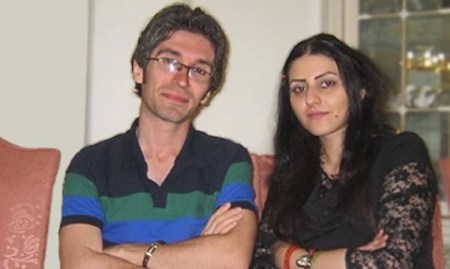
Golrokh Ebrahimi Iraee was imprisoned for writing an unpublished story about the brutal act of stoning in Iran.

The Intelligence Revolutionary Guards were dressed in plain clothes when they came to arrest her; they kicked and punched the door in order to intimidate her, refuses to give their identities or produce ID or a court order.

Iraee was prevented from taking her asthma medication and according to her mother, the IRGC taunted Iraee, asking what use the medicine would be as she wouldn’t live very long anyway.
They handcuffed and blindfolded her in front of her neighbours and took her to Evin Court.

When in court Iraee explained the mistreatment she had suffered and she was finally allowed her medication before being transferred to prison.

Her mother, who is recovering from one surgery and on the waiting list for another, gave an interview to a Persian newspaper.

She said: “Golrokh is very much concerned about Arash’s (her imprisoned husband) hunger strike because he takes medicine and he is injured in [the] shoulder area while he was being detained by the Revolutionary Guards forces.”

Iraee requested that the person in charge of Evin Prison (where she is being held) call the person in charge of Hajiloo prison (where Arash is being held) to ask him to stop his hunger strike, as he will be unable to visit his wife unless he stops.

Iraee’s mother was told that this would be the only time she could visit and is unsure whether the Regime will change their minds.

Arash Sadeghi is a political prisoner who went on hunger strike to protest his wife’s imprisonment.

Stop the Hanging of a Child Bride in Iran

October 19, 2016

Stop the Hanging of a Child Bride in Iran, Front Page MagazineDr. Majid Rafizadeh, October 19, 2016

childbrideexecution

Zeinab can be executed any day. Instead of continuing with sanctions relief and appeasement policies, the Obama administration should bring attention to Iran’s crimes against humanity. Iran ranks as the world’s top executioner per capita. 

*****************************

She was born into poverty and an abusive family. As a young child she was forced by her family to marry an older man. According to the Islamic and Sharia law of Iran, this was a perfectly legal and moral arrangement. Islam encourages young girls to become child brides. Iranian authorities point out that the Prophet Muhammad’s life also demonstrates a similar model for his followers.

After being forced to marry, Zeinab Sekaanvand Lokran was repeatedly raped. But in Iran’s Islamist law, even if a husband beats and forces his wife into having sex with him, it is not considered rape or abuse of any kind, since they are married.  According to the clerics, a wife’s duty is to please the man. The Quran in Sura (Chapter) 2:223 says: Your women are your fields, so go into your fields whichever way you like.

Zeinab was also repeatedly beaten after her wedding day. Despite the risk she knew she faced, she attempted to leave her husband multiple times, but with no success. She begged the police to help her, but they ignored her complaints, and reprimanded her for leaving her tormentor. The Islamist law of the land does not provide any protection for girls like her. In addition, neither her family nor friends would accept her if she left her husband.

More tragedies were to unfold for Zeinab. Her husband’s brother began also repeatedly raping her.

She begged for a divorce, but her husband would not accept her request for one. She did not have any legal base according to Iran’s Islamist codes to get a divorce. Everything was against this brave, unyielding girl. Yet, the worst was still to come.

At the age of 17, her husband was found stabbed to death. Because Zeinab had tried to escape him so many times, her community accused her of perpetrating her husband’s death. She was arrested and tortured for the next few months. After endless abuse and torment, she was forced to confess that she was a murderer.

It did not take long for the judge to issue a death sentence for Zeinab. She was not allowed to have access to a lawyer at any point of her trial. Once more, men made the decisions about her life and her death.

Zeinab insisted that her brother-in-law was the one who killed her husband. He threatened her to be silent, and told her that if she pleaded guilty, he would pardon her, according to Islamic law, so she wouldn’t be executed.

Just as she was about to be executed by the medieval method of hanging, it was discovered that she was pregnant. Soon after, she gave birth to a stillborn child, most likely due to the stress and physical abuse that she endured at the hands of her captors. Not long after she gazed at her lifeless baby, she was told by the Iranian authorities to be ready for execution.

Philip Luther, Amnesty International’s research and advocacy director for the Middle East and North Africa, said: “This is an extremely disturbing case. Not only was Zeinab Sekaanvand under 18 years of age at the time of the crime, she was also denied access to a lawyer and says she was tortured after her arrest by male police officers through beatings all over her body.”

Mansoureh Mills, the Iran campaigner at Amnesty International, pointed out:

“I can only imagine how extremely difficult her life must have been. That is why this case is extremely shocking and disturbing, She was relying on adults to protect her and unfortunately no adults were able to do that. Not the authorities and not her family. She tried the police, but they wouldn’t help. She tried her family and they wouldn’t take her back. And she is just a teenager so she had nowhere to turn and so she was forced back to this allegedly abusive marriage until the day her husband was killed.”

The Islamic Republic has hypocritically signed on to the Convention on the Rights of the Child, which prohibits the death penalty for and execution of children. But Iran repeatedly uses the death penalty to execute people under 18.

Zeinab is one case of many female children who live such tragic lives and then get executed. Last year, Iran executed Fatemeh Salbehi for reportedly killing her abusive husband at the age of 17.

According to the Islamic penal code of Iran, girls are treated as adults when they reach the age of nine.

Zeinab can be executed any day. Instead of continuing with sanctions relief and appeasement policies, the Obama administration should bring attention to Iran’s crimes against humanity. Iran ranks as the world’s top executioner per capita. It is incumbent on human rights organizations, the UN, Amnesty International and the international community to stop this execution and many other similar child executions, which are occurring in the Islamic Republic of Iran.

Iran Rejects UN Chief’s Human Rights Report as Fundamentally Flawed

October 5, 2016

Iran Rejects UN Chief’s Human Rights Report as Fundamentally Flawed, Tasnim “News” Agency, October 5, 2016

(It all depends on the meaning of the phrase “human rights.” — DM)

humanrightsiniran

TEHRAN (Tasnim) – Iran’s Foreign Ministry spokesman slammed UN Secretary-General Ban Ki-moon’s recent report on human rights situation in Iran as baseless, saying there are fundamental flaws in the report, which has been drafted on the basis of unfair resolutions with political purposes.

“Such reports have fundamental flaws in essence and that is why they lack validity from Iran’s viewpoint,” Foreign Ministry Spokesman Bahram Qassemi said on Wednesday, after the UN chief gave a negative assessment of human rights in Iran in a 19-page report, released this week.

Ban has said he remains “deeply troubled” by what he called accounts “of executions, floggings, arbitrary arrests and detentions, unfair trials, denial of access to medical care and possible torture and ill-treatment” in Iran.

In response, Qassemi said the report lacks credibility since it has been prepared on the basis of “cruel, unfair and politically-motivated resolutions” with the purpose of exerting pressure on Iran.

What casts more doubt on the credibility of the report is that it has used unclear and unreliable sources, he added.

“The report makes an unfair, one-sided and incorrect judgement on Iran’s human rights situation and has missed the opportunity for an evenhanded and fair assessment based on facts,” the spokesman added.

Highlighting Iran’s efforts to promote human rights and protect civil rights under the Constitution, Qassemi said Ban’s report has ignored the Islamic Republic’s struggle against major challenges, such as the fight against narcotics trafficking and dealing with cruel sanctions.

The spokesman finally warned of erosion of trust in the United Nations as a result of continued politicization of issues, adoption of double standards on human rights and turning a blind eye to the killing of women and children in Yemen.

Such a poor performance dashes hopes about the UN’s role in promoting the human rights situation in the world, he deplored.

Iranian Fatwa: Women May Not Ride Bicycles

October 3, 2016

Iranian Fatwa: Women May Not Ride Bicycles, Front Page MagazineDr. Majid Rafizadeh, October 3, 2016

(When will Obama instruct us that such fatwas by The Islamic Republic’s Imam in Chief have nothing to do with Islam? When will Hillary tell us that Trump’s “fat shaming” of an obese beauty pageant contestant was worse than such fatwas? — DM)

fg

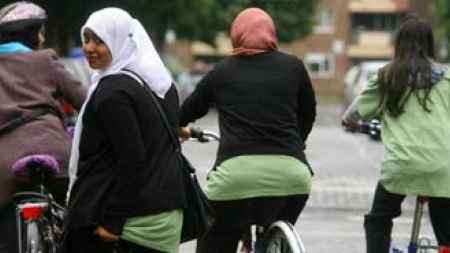
Iran’s Supreme Leader and autocrat, Ayatollah Ali Khamenei, has issued an Islamic fatwa regarding officially banning women from riding bicycles. This is only the latest in a growing multitude of activities that the Islamic Republic of Iran had declared haram (religiously forbidden).

A mullah from the Islamic Republic once described the reasoning behind this fatwa to me. He explained that if a male sees a woman in the act of riding a bicycle he would be exposed to her body physique, which will cause him to become aroused. In other words, Iran’s clerics believe that a man cannot control his sexual desires when he sees a woman on a bicycle even when she is fully covered.

Merely for engaging in an activity that millions of women around the world participate in, many women across Iran have recently been arrested. Signs declaring the new law have been installed on the streets reading, “Bicycle riding for women is prohibited.”

This is not the only absurd restriction that the women of Iran must endure. They are also prohibited from watching men’s volleyball games. A British-Iranian woman, Ghonche Ghavami, was detained and jailed in solitary confinement in Evin, notorious political prison, for attempting to watch a men’s volleyball game.

Iran’s President, the so-called moderate, has not raised any objection to this law or similar ones. In fact, under his presidency, the repressive and restrictive laws against women and their inalienable rights have increased.

What are the reasons behind the most recent fatwa and Islamic law? According to the Muslim clerics of Iran, if a man observes a woman riding a bicycle, it will lead to corruption in the society. They list all kinds of terrible consequences, including corruption that will lead to crime, sexual offenses, financial crimes, spiritual infidelity, religious disobedience, and numerous others.

Ayatollah Khamenei pointed out that “riding bicycles often attracts the attention of men and exposes the society to corruption, and thus contravenes women’s chastity, and it must be abandoned,” according to Iran’s state-run media.

So what can a woman do for fun or exercise if she can’t sing, listen to music, ride a bicycle, wear what she likes, etc.? According to the Islamic and sharia laws of Iran, she should focus all of her attention on being a good mother.

This is reflected in the societal belief that women should only stay at home, bear children, raise children, cook, wash clothes, and satisfy the husband’s sexual desires when he comes home after work. There are no pleasures or luxuries allowed for women, aside from the pleasure they are expected to take in serving others.

Ayatollah Khamenei defined women’s only “role and mission” as “motherhood and housekeeping.”

Aside from these ridiculous reasons for issuing the anti-bicycling fatwa, the underlying drive behind the restrictions and lies is the fact that the ruling Islamist clerics desire to exert control through their male-dominated system and religion.

In fact, there are other constitutional laws preventing women from working outside the house. Article 1117 of Civil Code states: “The husband can prevent his wife from an occupation or technical profession which is incompatible with the family’s interests or the dignity of him or his wife.”

In its latest report, the Foreign and Commonwealth Office stated that women’s situation in Iran has worsened. According to the Foreign and Commonwealth Office,

“Women do not enjoy the same rights and privileges as men in Iran. We expect that the next round of the UN Human Rights Council will be dominated by women’s rights issues, which will raise awareness of this issue; we hope to see progress as a result…Two proposed bills which were making their way through the Iranian parliament in 2015 caused outrage both inside and outside Iran. Human rights groups said the bills would set Iranian women back decades and reduce them to ‘baby-making machines’. The bills were drafted after the Supreme Leader, Ayatollah Ali Khamenei, described family planning as an imitation of Western lifestyles, and requested that Iran’s population be doubled.”

Rather than praising Rouhani’s so-called moderate government, it is incumbent on the United Nations and human rights organizations to pay more attention to the increasing anti-woman Islamist laws of Iran that subjugate, dehumanize and oppress women.