Posted tagged ‘human rights’

Column One: Managing Obama’s war against Israel

March 27, 2015

Column One: Managing Obama’s war against Israel, Jerusalem Post, Caroline Glick, March 26, 2015

ShowImageUS President Barack Obama meets with Prime Minister Benjamin Netanyahu at the White House, October 1, 2014. (photo credit:REUTERS)

As Max Boot explained Wednesday in The Wall Street Journal, the administration’s animosity toward Israel is a function of Obama’s twin strategic aims, both evident since he entered office: realigning US policy in the Middle East toward Iran and away from its traditional allies Israel and the Sunni Arab states, and ending the US’s strategic alliance with Israel.

Obama has reached a point in his presidency where he is prepared to give full expression to his plan to end the US’s strategic alliance with Israel.

He thinks that doing so is both an end to itself and a means of succeeding in his bid to achieve a rapprochement with Iran.

*********************

On Wednesday the Jerusalem Municipality announced it is shelving plans to build 1,500 apartments in the Har Homa neighborhood. Officials gave no explanation for its sudden move. But none was needed.

Obviously the construction of apartments for Jews in Jerusalem was blocked in the hopes of appeasing US President Barack Obama.

But is there any reason to believe he can be appeased? Today the White House is issuing condemnations of Israel faster than the UN.

To determine how to handle what is happening, we need to understand the nature of what is happening.

First we need to understand that the administration’s hostility has little to do with Israel’s actions.

As Max Boot explained Wednesday in The Wall Street Journal, the administration’s animosity toward Israel is a function of Obama’s twin strategic aims, both evident since he entered office: realigning US policy in the Middle East toward Iran and away from its traditional allies Israel and the Sunni Arab states, and ending the US’s strategic alliance with Israel.

Over the past six years we have seen how Obama has consistently, but gradually, taken steps to advance these two goals. Toward Iran, he has demonstrated an unflappable determination to accommodate the terrorism supporting, nuclear proliferating, human rights repressing and empire building mullahs.

Beginning last November, as the deadline for nuclear talks between the US and its partners and Tehran approached, Obama’s attempts to accommodate Tehran escalated steeply.

Obama has thrown caution to the winds in a last-ditch effort to convince Iranian dictator Ali Khamenei to sign a deal with him. Last month the administration published a top secret report on Israel’s nuclear installations. Last week, Obama’s director of national intelligence James Clapper published an annual terrorism threat assessment that failed to mention either Iran or Hezbollah as threats.

And this week, the administration accused Israel of spying on its talks with Iran in order to tell members of Congress the details of the nuclear deal that Obama and his advisers have been trying to hide from them.

In the regional context, the administration has had nothing to say in the face of Iran’s takeover of the Bab el-Mandeb Strait and the Gulf of Aden this week. With its Houthi-proxy now in charge of the strategic waterway, and with its own control over the Straits of Hormuz, Iran is poised to exercise naval control over the two choke points of access to Arab oil.

The administration is assisting Iranian Shi’ite proxies in their battle to defeat Islamic State forces in the Iraqi city of Tikrit. It has said nothing about the Shi’ite massacres of Sunnis that come under their control.

Parallel to its endless patience for Tehran, the Obama administration has been treating Israel with bristling and ever-escalating hostility. This hostility has been manifested among other things through strategic leaks of highly classified information, implementing an arms embargo on weapons exports to Israel in time of war, ending a 40-year agreement to provide Israel with fuel in times of emergency, blaming Israel for the absence of peace, expressing tolerance and understanding for Palestinian terrorism, providing indirect support for Europe’s economic war against Israel, and providing indirect support for the BDS movement by constantly accusing Israel of ill intentions and dishonesty.

Then there is the UN. Since he first entered office, Obama has been threatening to withhold support for Israel at the UN. To date, the administration has vetoed one anti-Israel resolution at the UN Security Council and convinced the Palestinians not to submit another one for a vote.

In the months that preceded these actions, the administration exploited Israel’s vulnerability to extort massive concessions to the Palestinians.

Obama forced Benjamin Netanyahu to announce his support for Palestinian statehood in September 2009. He used the UN threat to coerce Netanyahu to agree to negotiations based on the 1949 armistice lines, to deny Jews their property rights in Jerusalem, Judea and Samaria, and to release scores of terrorist murderers from prison.

Following the nationalist camp’s victory in last week’s election, Obama brought to a head the crisis in relations he instigated. He has done so for two reasons.

First, next week is the deadline for signing a nuclear agreement with Iran. Obama views Netanyahu as the prospective deal’s most articulate and effective opponent.

As Obama sees it, Netanyahu threatens his nuclear diplomacy with Iran because he has a unique ability to communicate his concerns about the deal to US lawmakers and the American people, and mobilize them to join him in opposing Obama’s actions. The letters sent by 47 senators to the Iranian regime explaining the constitutional limitations on presidential power to conclude treaties without Senate approval, like the letter to Obama from 367 House members expressing grave and urgent concerns about the substance of the deal he seeks to conclude, are evidence of Netanyahu’s success.

The second reason Obama has gone to war against Israel is because he views the results of last week’s election as an opportunity to market his anti-Israel and pro-Iranian positions to the American public.

If Netanyahu can convince Americans to oppose Obama on Iran, Obama believes that by accusing Netanyahu of destroying chances for peace and calling him a racist, Obama will be able to win sufficient public support for his anti-Israel policies to intimidate pro-Israel Democratic lawmakers into accepting his pro-Iranian policies.

To this end, Obama has announced that the threat that he will abandon Israel at the UN has now become a certainty. There is no peace process, Obama says, because Netanyahu had the temerity to point out that there is no way for Israel to risk the transformation of Judea and Samaria into a new terror base. As a consequence, he has all but made it official that he is abandoning the peace process and joining the anti-Israel bandwagon at the UN.

Given Obama’s decision to abandon support for a negotiated peace between Israel and the Palestinians, modes of appeasement aimed at showing Israel’s good faith, such as Jewish building freezes, are no longer relevant. Scrapping plans to build apartments in Jewish neighborhoods like Har Homa will make no difference.

Obama has reached a point in his presidency where he is prepared to give full expression to his plan to end the US’s strategic alliance with Israel.

He thinks that doing so is both an end to itself and a means of succeeding in his bid to achieve a rapprochement with Iran.

Given this dismal reality, Israel needs to develop ways to minimize the damage Obama can cause.

Israel needs to oppose Obama’s policies while preserving its relations with its US supporters, including its Democratic supporters. Doing so will ensure that it is in a position to renew its alliance with the US immediately after Obama leaves office.

With regards to Iran, such a policy requires Israel to act with the US’s spurned Arab allies to check Iran’s expansionism and nuclear progress. It also requires Israel to galvanize strong opposition to Obama’s goal of replacing Israel with Iran as America’s chief ally in the Middle East and enabling it to develop nuclear weapons.

As for the Palestinians, Israel needs to view Obama’s abandonment of the peace process as an opportunity to improve our diplomatic position by resetting our relations with the Palestinians. Since 1993, Israel has been entrapped by the chimerical promise of a “two-state solution.”

By late 2000, the majority of Israelis had recognized that there is no way to achieve the two-state solution. There is no way to make peace with the PLO. But due to successive governments’ aversion to risking a crisis in relations with Washington, no one dared abandon the failed two-state strategy.

Now, with Obama himself declaring the peace process dead and replacing it with a policy of pure hostility toward Israel, Israel has nothing to gain from upholding a policy that blames it for the absence of peace.

No matter how loudly Netanyahu declares his allegiance to the establishment of a Palestinian state in Israel’s heartland, Obama will keep castigating him and Israel as the destroyer of peace.

The prevailing, 23-year-old view among our leadership posits that if we abandon the two-state model, we will lose American support, particularly liberal American support. But the truth is more complicated.

Inspired by the White House and the Israeli Left, pro-Israel Democrats now have difficulty believing Netanyahu’s statements of support for the establishment of a Palestinians state. But those who truly uphold liberal values of human rights can be convinced of the rightness of Israel’s conviction that peace is currently impossible and as a consequence, the two-state model must be put on the back burner.

We can maintain support among Republicans and Democrats alike if we present an alternative policy that makes sense in the absence of an option for the two-state model.

Such a policy is the Israeli sovereignty model. If the government adopts a policy of applying Israeli sovereignty over Judea and Samaria in whole – as I recommend in my book The Israeli Solution: A One- State Plan for Peace in the Middle East, or in part, in Area C, as Economy Minister Naftali Bennett recommends, our leaders will be able to defend their actions before the American people, including pro-Israel Democrats.

Israel must base its policy of sovereignty on two principles. First, this is a liberal policy that will ensure the civil rights of Palestinians and Israelis alike, and improve the Palestinians’ standard of living.

Second, such a policy is not necessarily a longterm or permanent “solution,” but it is a stable equilibrium for now.

Just as Israel’s decision to apply its laws to united Jerusalem and the Golan Heights in the past didn’t prevent it from conducting negotiations regarding the possible transfer of control over the areas to the Palestinians and Syrians, respectively, so an administrative decision to apply Israeli law to all or parts of Judea and Samaria will not block the path for negotiations with the Palestinians when regional and internal Palestinian conditions render them practicable.

The sovereignty policy is both liberal and strategically viable. If the government adopts it, the move will rebuild Israel’s credibility and preserve Israel’s standing on both sides of the aisle in Washington.

Never before has Israel had to deal with such an openly hostile US administration. Indeed, until 2009, the very notion that a day would come when an American president would prefer an alliance with Khamenei’s Iran to its traditional alliances with Israel and the Sunni Arab states was never even considered. But here we are.

Our current situation is unpleasant. But it isn’t the end of the world. We aren’t helpless. If we act wisely, we can stem Iran’s nuclear and regional advance. If we act boldly, we can preserve our alliance with the US while adopting a policy toward the Palestinians that for the first time in decades will advance our interests and our liberal values on the world stage.
The Kobani Precedent

March 25, 2015

The Kobani Precedent, [Bary] Rubin Center, March 25, 2015

(Whose side are “we” on in Iraq? Not the Kurds. Why not? Do “we” prefer an Iranian theocracy with nukes?– DM)

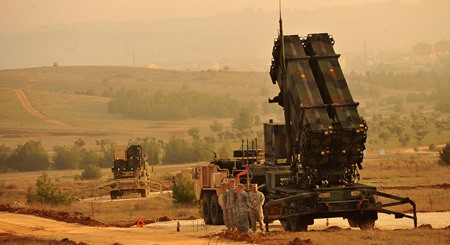
???????????????????U.S. Service members stand by a Patriot missile battery in Gaziantep, Turkey, Feb. 4, 2013, during a visit from U.S. Deputy Secretary of Defense Ashton B. Carter, not shown. U.S. and NATO Patriot missile batteries and personnel deployed to Turkey in support of NATO’s commitment to defending Turkey’s security during a period of regional instability. (DoD photo by Glenn Fawcett)

Unlike in Syria . . . in Iraq the US relates to the official government, mistakenly, as an ally.  This is leading to a potentially disastrous situation  whereby US air power is currently partnering with Iran-supported Shia militias against the Islamic State.

The most powerful of these militias have a presence in the government of Iraq. But they do not act under the orders of the elected Baghdad government, but rather in coordination with their sponsors in the Qods Force of the Iranian Revolutionary Guards Corps.

The Kurds, because of the existence among them of a secular, pro-western nationalist politics with real popular appeal, have unsurprisingly emerged as the only reliable partner.    On both the Shia and the Sunni sides, the strongest and prevailing forces are anti-western.

This reality is denied both by advocates for rapprochement with Iran, and by wishful-thinking supporters of the Syrian rebellion.  But it remains so.

*****************

Recently,  I attempted to undertake a reporting trip into the Kurdish Kobani enclave in northern Syria.  It would not have been my first visit, neither to Syria nor to Kobani.  For the first time, however, I found myself unable to enter.  Instead, I spent a frustrating but, as it turns out, instructive four days waiting in the border town of Suruc in south-east Turkey before running out of time and going home.

The episode was instructive because of what it indicated regarding the extent to which Kurdish control in the enclaves established in mid 2012 is now a fact acknowledged by all neighboring players, including the enemies of the Kurds.  This in itself has larger lessons regarding US and western policy in Syria and Iraq.

But I am getting ahead of myself.  First, let me complete the account of the episode on the border.    My intention had been to enter Kobani ‘illegally’ with the help of the Kurdish YPG and local smugglers.  This sounds more exciting than it is.    I have entered Syria in a similar way half a dozen times over the last two years, to the extent that it has become a not very pleasant but mundane procedure. This time, however, something was different.  I was placed in a local center with a number of other westerners waiting to make the trip. Then, it seemed, we were forgotten.

The westerners themselves were  an interesting bunch, whose varied presence was an indication of the curious pattern by which the Syrian Kurdish cause has entered public awareness in the west.

There was a group of European radical leftists, mainly Italians, who had come after being inspired by stories of the ‘Rojava revolution.’  A little noted element of the control by the Syrian franchise of the PKK of de facto sovereign areas of Syria has been the interest that this has generated in the circles of the western radical left.  These circles are ever on the lookout for something which allows their politics to encounter reality, in a way that does not bring immediate and obvious disaster.  As of now, ‘Rojava,’ given the leftist credentials of the PKK, is playing this role.  So the Europeans in question  wanted to ‘contribute’ to what they called the ‘revolution.’

Unfortunately, their preferred mode of support was leading to a situation of complete mutual bewilderment between themselves and the local Kurds.   Offered military training by their hosts, the radical leftists demurred.  They would not hold a gun for Rojava before they had seen it and been persuaded that it did indeed represent the peoples’ revolution that they hoped for.

Instead, they had a plan for the rebuilding of Kobani along sustainable and environmentally friendly lines, using natural materials  In addition, the health crisis and shortage of medicines in the devastated enclave led the radicals to believe that this might offer an appropriate context for popularizing various items of alternative and naturopathic medicine about which they themselves were enthusiastic.  (I’m not making any of this up).

All this had elicited the predictable reaction from the Kurds, who were trying to manage a humanitarian disaster and a determined attempt by murderous jihadis to destroy  them.  ‘Perhaps you could do the military training first and then we could talk about the other stuff?’ suggested Fawzia, the nice and helpful representative of the PYD who was responsible for us.  This led to further impassioned and theatrical responses from the Italians.

Apart from this crowd, there was a seasoned Chilean war reporter who looked on the leftists with impatience.  He was looking to get down to the frontlines south of Kobani, where the YPG was trying to cut the road from Raqqa to Aleppo at an important point close to the Euphrates.

Also, there was a polite and friendly lone American, a Baptist Christian, who had come to volunteer his services to the YPG.  That was us.

But as the days passed, it became clear that none of us appeared to be getting anywhere near Kobani any time soon.

The reasons given for the delay were plentiful, and unconvincing.  ‘It is the weather,’ Fawzia would say vaguely, ‘too much mud.’  But the presence of mud on the border in February was hardly a new development, so this couldn’t be the reason.

Finally, frustrated at the lack of information, I called a PKK friend based in Europe and asked for his help in finding out why we weren’t  moving.  He got back to me a little later.  ‘It seems the Turkish army is all over the border, more than usual. That’s the reason,’ he told me.

This was more plausible, if disappointing.  After four days on the border, I was out of time and set off back for Gaziantep and then home.  The Italians went to Diyarbakir to take part in a demonstration.  The Chilean and the American volunteer stayed and waited.

When I got back to Jerusalem, all rapidly became clear.  News reports were coming in about a large operation conducted by the Turkish army through Kobani and into Syria.  The operation involved the evacuation of the Turkish garrison at the tomb of Suleiman Shah, south of the enclave.  The American volunteer sent me a picture of the Turkish tanks on tank transporters driving though Suruc at the conclusion of the operation.

This operation was astonishing on a number of levels.

Despite stern Turkish denials, it could only have been carried out on the basis of full cooperation between the Turkish armed forces and the Kurdish fighters of the YPG in Kobani.  Obviously, any unauthorized entry of Turkish troops into the Kurdish canton would have meant an armed battle.

During the fight for Kobani last year, the Turkish government was very clearly quite content for the enclave to fall.  The Turkish army waited on the border, as the prospect of a generalized slaughter of the Kurds in Kobani came close to realization.

But of course, the slaughter didn’t happen.  In the end, the partnering of US air power with the competent and determined forces of the YPG on the ground delivered the first real defeat to the forces of the Islamic State in Syria.

This effective partnering has continued, and has now become the main military element in northern Syria in the battle against IS.

The combination of the YPG and the USAF is now nudging up to a second strategic achievement against the jihadis – namely, the cutting of the road from Tel Hamis to the town of al-Houl on the Iraqi border.   This road forms one of the main transport arteries linking the Islamic State’s conquests in Iraq to its heartland in the Syrian province of Raqqa.  If the links are cut, the prospect opens for the splitting of the Islamic State into a series of dis-connected enclaves.

The YPG-US partnership is particularly noteworthy, given that the YPG is neither more nor less than the Syrian representative of the PKK.  The latter, meanwhile, is a veteran presence on the US and EU lists of terror organizations.  Despite a faltering peace process, the PKK remains in conflict with Turkey, a member of NATO.

But the reality of the Kurdish-US alliance in northern Syria has clearly now been accepted by the Turks as an unarguable fait accompli, to the extent that they are now evidently willing to work together with the armed Syrian Kurds, where their interests require it.

It is an astonishing turnabout in the fortunes of the Kurds of Syria, who before 2011 constituted one of the region’s most brutally oppressed, and most forgotten minority populations.

This raises the question as to why this reversal of fortune has taken place.

Why is the YPG the chosen partner of the Americans in northern Syria, just as the Kurdish Pesh Merga further east is one of the preferred partners on the ground in Iraq?

The answer to this is clear, but not encouraging.  It is because in both countries, the only reliable, pro-western and militarily effective element on the ground is that of the Kurds.

Consider:  in northern Syria, other than the forces of the Islamic State, there are three other elements of real military and political import.  These are the forces of the Assad regime, the al-Qaeda affiliated Jabhat al-Nusra and the YPG.

In addition, there are a bewildering variety of disparate rebel battalions, with loyalties ranging from Salafi Islamism to Muslim Brotherhood style Islamism, to non-political opposition to the Assad regime.  Some of these groups operate independently.  Others are gathered in local alliances such as the Aleppo based Jabhat al-Shamiya (Levant Front), or the Syria-wide Islamic Front, which unites Salafi factions.

Despite the reported existence of a US staffed military operations room in Turkey, the latter two movements are either too weak, or too politically suspect (because of their Islamist nature), to form a potential partner for the US in northern Syria.

Nusra is for obvious reasons not a potential partner for the US in the fight against the Islamic State.  And the US continues to hold to its stated  goal that Bashar Assad should step down.  So the prospect of an overt alliance between the regime and the US against the Islamic State is not on the cards (despite the de facto American alliance with Assad’s  Iran-supported Shia Islamist allies in Iraq).

This leaves the Kurds, and only the Kurds, to work with.  And the un-stated alliance is sufficiently tight for it to begin to have effects also on Turkish-Kurdish relations in Syria, as seen in the Suleiman Shah operation.

But what are the broader implications of this absence of any other coherent partner on the ground?

The stark clarity of the northern Syria situation is replicated in all essentials in Iraq, though a more determined attempt by the US to deny this reality is under way in that country.

In Iraq, there is a clear and stated enemy of the US (the Islamic State), a clear and stated Kurdish ally of the west (the Kurdish Regional Government and its Pesh Merga) and an Iran-supported government which controls the capital and part of the territory of the country.

Unlike in Syria, however, in Iraq the US relates to the official government, mistakenly, as an ally.  This is leading to a potentially disastrous situation  whereby US air power is currently partnering with Iran-supported Shia militias against the Islamic State.

The most powerful of these militias have a presence in the government of Iraq. But they do not act under the orders of the elected Baghdad government, but rather in coordination with their sponsors in the Qods Force of the Iranian Revolutionary Guards Corps.

It is possible that the current partnering with Shia Islamist forces in Iraq is the result of a general US attempt now under way to achieve a historic rapprochement with Iran, as suggested by Michael Doran in a recent essay.  Or it may be that this reality has emerged as a result of poor analysis of the realities of the Levant and Iraq, resulting in a confused and flailing policy.  But either way, the result is an astonishing mess.

In northern Syria, the obvious absence of any partners other than the Kurds has produced a momentary tactical clarity.  But as the larger example of Iraq shows, this clarity is buried in a much larger strategic confusion.

This confusion, at root, derives from a failure to grasp what is taking place in Syria and in Iraq.

In both countries, the removal or weakening of powerful dictatorships has resulted in the emergence of conflict based on older, sub-state ethnic and sectarian identities.  The strength and persistence of these identities is testimony to the profound failure of the states of Syria and Iraq to develop anything resembling a sustainable national identity.  In both Syria and Iraq, the resultant conflict is essentially three-sided.  Sunni Arabs, Shia/Alawi Arabs and Kurds are fighting over the ruins of the state.

Because of the lamentable nature of Arab politics at the present time, the form that both Arab sides are taking is that of political Islam.   On the Shia side, the powerful Iranian structures dedicated to the creation and sponsorship of proxy movements are closely engaged with the clients in both countries (and in neighboring Lebanon.)

On the Sunni Arab side, a bewildering tangle of support from different regional and western states to various militias has emerged.  But two main formations may be discerned. These are the Islamic State, which has no overt state sponsor, and Jabhat al-Nusra, which has close links to Qatar.

In southern Syria, a western attempt to maintain armed forces linked to conservative and western-aligned Arab states (Jordan, Saudi Arabia) has proved somewhat more successful because of the close physical proximity of Jordan and the differing tribal and clan structures in this area when compared with the north.  Even here, however, Nusra is a powerful presence, and Islamic State itself recently appeared in the south Damascus area.

The Kurds, because of the existence among them of a secular, pro-western nationalist politics with real popular appeal, have unsurprisingly emerged as the only reliable partner.    On both the Shia and the Sunni sides, the strongest and prevailing forces are anti-western.

This reality is denied  both by advocates for rapprochement with Iran, and by wishful-thinking supporters of the Syrian rebellion.  But it remains so.  What are its implications for western policy?

Firstly, if the goal is to degrade the Islamic State, reduce it, split it, impoverish it, this can probably be achieved through the alliance of US air power and Kurdish ground forces.  But if the desire, genuinely, is to destroy the Islamic State, this can only be achieved through the employment of western boots on the ground.  This is the choice which is presented by reality.

Secondly, the desire to avoid this choice is leading to the disastrous partnering with Iraqi Shia forces loyal to Iran.  The winner from all this will be, unsurprisingly,  Iran. Neither Teheran nor its Shia militias are the moral superiors to Islamic State. The partnering with them is absurd both from a political and an ethical point of view.

Thirdly, the determination to maintain the territorial integrity of ‘Syria’ and ‘Iraq’ is one of the midwives of the current confusion.  Were it to be acknowledged that Humpty cannot be put back together again, it would then be possible to accurately ascertain which local players the west can partner with, and which it can not.

As of now, the determination to consider these areas as coherent states is leading to absurdities including the failure by the US to directly arm the pro-US Pesh Merga because the pro-Iranians in Baghdad object to this, the failure to revive relations with and directly supply Iraqi Sunni tribal elements in IS controlled areas for the same reason,  and the insistence on relating to all forces ostensibly acting on behalf of Baghdad as legitimate.

Ultimately, the mess in the former Syria and Iraq derives from a very western form of wishful thinking that is common to various sides of the debate in the west.  This is the refusal to accept that political Islam, of both Shia and Sunni varieties, has an unparalleled power of political mobilization among Arab populations in the Middle East at the present time, and that political Islam is a genuinely anti-western force, with genuinely murderous intentions.

For as long as that stark reality is denied, western policy will resemble our Italian leftist friends on the border, baffled and bewildered as they go about proposing ideas and notions utterly alien to and irrelevant to the local situation.

The reality of this situation means that the available partners for the west are minority nationalist projects  such as that of the Kurds (or the Jews,) and traditional, non-ideological conservative elites – such as the Egyptian military, the Hashemite monarchs, and in a more partial and problematic way, the Gulf monarchs.  Attempts to move beyond this limited but considerable array of potential allies will result in the strengthening of destructive, anti-western Islamist forces in the region, of either Sunni or Shia coloration.

As for the Syrian Kurds, they deserve their partnership with US air power, and the greater security it is bringing them.

The American Baptist volunteer, to conclude the story, made it across the border and is now training with the YPG.  He, at least, has a clear sense of who is who in the Middle East.  Hopefully, this sense will eventually percolate up to the policymaking community too.

Why Islam Needs a Reformation

March 21, 2015

Why Islam Needs a Reformation, Wall Street Journal, Ayaan Hirsi Ali, March 20, 2015

(What are the chances of such a reformation over the next hundred years or so? — DM)

bn-hm855_cover_m_20150319160506A man prays during the Muslim festival of Eid al-Adha, or the Festival of Sacrifice, at Jama Masjid in New Delhi on Oct. 6, 2014. Eid al-Adha marks the end of the Hajj, the annual pilgrimage to Mecca. PHOTO: AGENCE FRANCE-PRESSE/GETTY IMAGES

“Islam’s borders are bloody,” wrote the late political scientist Samuel Huntington in 1996, “and so are its innards.” Nearly 20 years later, Huntington looks more right than ever before. According to the International Institute for Strategic Studies, at least 70% of all the fatalities in armed conflicts around the world last year were in wars involving Muslims. In 2013, there were nearly 12,000 terrorist attacks world-wide. The lion’s share were in Muslim-majority countries, and many of the others were carried out by Muslims. By far the most numerous victims of Muslim violence—including executions and lynchings not captured in these statistics—are Muslims themselves.

Not all of this violence is explicitly motivated by religion, but a great deal of it is. I believe that it is foolish to insist, as Western leaders habitually do, that the violent acts committed in the name of Islam can somehow be divorced from the religion itself. For more than a decade, my message has been simple: Islam is not a religion of peace.

When I assert this, I do not mean that Islamic belief makes all Muslims violent. This is manifestly not the case: There are many millions of peaceful Muslims in the world. What I do say is that the call to violence and the justification for it are explicitly stated in the sacred texts of Islam. Moreover, this theologically sanctioned violence is there to be activated by any number of offenses, including but not limited to apostasy, adultery, blasphemy and even something as vague as threats to family honor or to the honor of Islam itself.

It is not just al Qaeda and Islamic State that show the violent face of Islamic faith and practice. It is Pakistan, where any statement critical of the Prophet or Islam is labeled as blasphemy and punishable by death. It is Saudi Arabia, where churches and synagogues are outlawed and where beheadings are a legitimate form of punishment. It is Iran, where stoning is an acceptable punishment and homosexuals are hanged for their “crime.”

As I see it, the fundamental problem is that the majority of otherwise peaceful and law-abiding Muslims are unwilling to acknowledge, much less to repudiate, the theological warrant for intolerance and violence embedded in their own religious texts. It simply will not do for Muslims to claim that their religion has been “hijacked” by extremists. The killers of Islamic State and Nigeria’s Boko Haram cite the same religious texts that every other Muslim in the world considers sacrosanct.

Instead of letting Islam off the hook with bland clichés about the religion of peace, we in the West need to challenge and debate the very substance of Islamic thought and practice. We need to hold Islam accountable for the acts of its most violent adherents and to demand that it reform or disavow the key beliefs that are used to justify those acts.

As it turns out, the West has some experience with this sort of reformist project. It is precisely what took place in Judaism and Christianity over the centuries, as both traditions gradually consigned the violent passages of their own sacred texts to the past. Many parts of the Bible and the Talmud reflect patriarchal norms, and both also contain many stories of harsh human and divine retribution. As President Barack Obama said in remarks at the National Prayer Breakfast last month, “Remember that during the Crusades and the Inquisition, people committed terrible deeds in the name of Christ.”

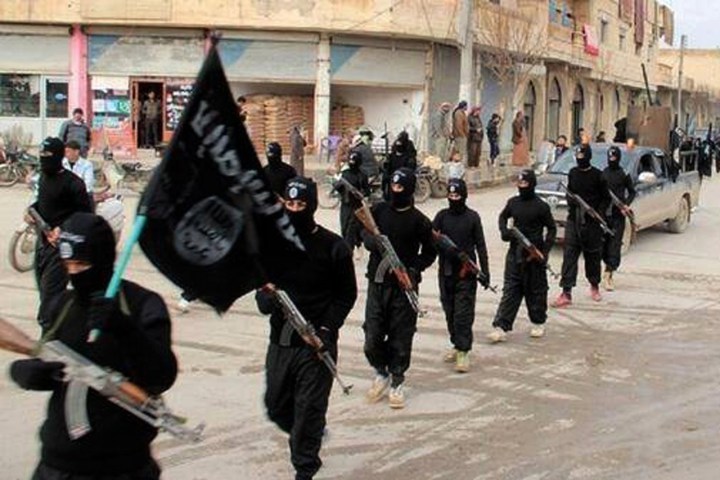
bn-hm858_cover_m_20150319160800Islamic State militants marching through Raqqa, Syria, a stronghold of the Sunni extremist group, in an undated file image posted on a militant website on Jan. 14, 2014. PHOTO: ASSOCIATED PRESS

Yet today, because their faiths went through a long, meaningful process of Reformation and Enlightenment, the vast majority of Jews and Christians have come to dismiss religious scripture that urges intolerance or violence. There are literalist fringes in both religions, but they are true fringes. Regrettably, in Islam, it is the other way around: It is those seeking religious reform who are the fringe element.

Any serious discussion of Islam must begin with its core creed, which is based on the Quran (the words said to have been revealed by the Angel Gabriel to the Prophet Muhammad) and the hadith (the accompanying works that detail Muhammad’s life and words). Despite some sectarian differences, this creed unites all Muslims. All, without exception, know by heart these words: “I bear witness that there is no God but Allah; and Muhammad is His messenger.” This is the Shahada, the Muslim profession of faith.

The Shahada might seem to be a declaration of belief no different from any other. But the reality is that the Shahada is both a religious and a political symbol.

In the early days of Islam, when Muhammad was going from door to door in Mecca trying to persuade the polytheists to abandon their idols of worship, he was inviting them to accept that there was no god but Allah and that he was Allah’s messenger.

After 10 years of trying this kind of persuasion, however, he and his small band of believers went to Medina, and from that moment, Muhammad’s mission took on a political dimension. Unbelievers were still invited to submit to Allah, but after Medina, they were attacked if they refused. If defeated, they were given the option to convert or to die. (Jews and Christians could retain their faith if they submitted to paying a special tax.)

No symbol represents the soul of Islam more than the Shahada. But today there is a contest within Islam for the ownership of that symbol. Who owns the Shahada? Is it those Muslims who want to emphasize Muhammad’s years in Mecca or those who are inspired by his conquests after Medina? On this basis, I believe that we can distinguish three different groups of Muslims.

The first group is the most problematic. These are the fundamentalists who, when they say the Shahada, mean: “We must live by the strict letter of our creed.” They envision a regime based on Shariah, Islamic religious law. They argue for an Islam largely or completely unchanged from its original seventh-century version. What is more, they take it as a requirement of their faith that they impose it on everyone else.

I shall call them Medina Muslims, in that they see the forcible imposition of Shariah as their religious duty. They aim not just to obey Muhammad’s teaching but also to emulate his warlike conduct after his move to Medina. Even if they do not themselves engage in violence, they do not hesitate to condone it.

It is Medina Muslims who call Jews and Christians “pigs and monkeys.” It is Medina Muslims who prescribe death for the crime of apostasy, death by stoning for adultery and hanging for homosexuality. It is Medina Muslims who put women in burqas and beat them if they leave their homes alone or if they are improperly veiled.

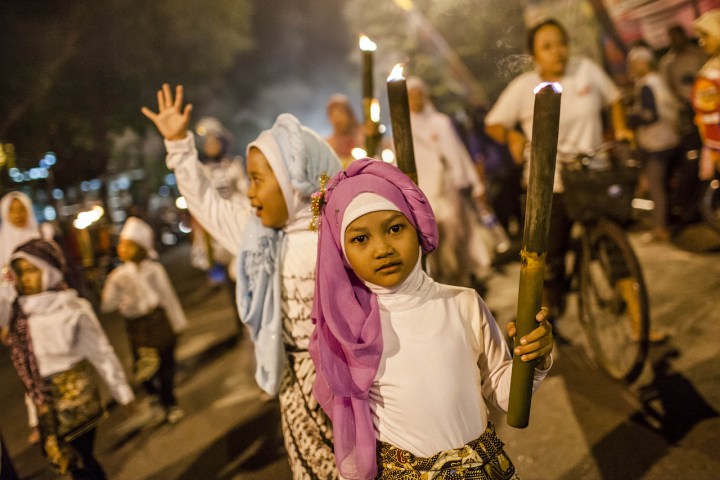
bn-hm863_cover_m_20150319161118Muslim children carry torches during a parade before Eid al-Fitr, at the end of the holy month of Ramadan, on July 27, 2014, in Yogyakarta, Indonesia. PHOTO: GETTY IMAGES

The second group—and the clear majority throughout the Muslim world—consists of Muslims who are loyal to the core creed and worship devoutly but are not inclined to practice violence. I call them Mecca Muslims. Like devout Christians or Jews who attend religious services every day and abide by religious rules in what they eat and wear, Mecca Muslims focus on religious observance. I was born in Somalia and raised as a Mecca Muslim. So were the majority of Muslims from Casablanca to Jakarta.

Yet the Mecca Muslims have a problem: Their religious beliefs exist in an uneasy tension with modernity—the complex of economic, cultural and political innovations that not only reshaped the Western world but also dramatically transformed the developing world as the West exported it. The rational, secular and individualistic values of modernity are fundamentally corrosive of traditional societies, especially hierarchies based on gender, age and inherited status.

Trapped between two worlds of belief and experience, these Muslims are engaged in a daily struggle to adhere to Islam in the context of a society that challenges their values and beliefs at every turn. Many are able to resolve this tension only by withdrawing into self-enclosed (and increasingly self-governing) enclaves. This is called cocooning, a practice whereby Muslim immigrants attempt to wall off outside influences, permitting only an Islamic education for their children and disengaging from the wider non-Muslim community.

It is my hope to engage this second group of Muslims—those closer to Mecca than to Medina—in a dialogue about the meaning and practice of their faith. I recognize that these Muslims are not likely to heed a call for doctrinal reformation from someone they regard as an apostate and infidel. But they may reconsider if I can persuade them to think of me not as an apostate but as a heretic: one of a growing number of people born into Islam who have sought to think critically about the faith we were raised in. It is with this third group—only a few of whom have left Islam altogether—that I would now identify myself.

These are the Muslim dissidents. A few of us have been forced by experience to conclude that we could not continue to be believers; yet we remain deeply engaged in the debate about Islam’s future. The majority of dissidents are reforming believers—among them clerics who have come to realize that their religion must change if its followers are not to be condemned to an interminable cycle of political violence.

How many Muslims belong to each group? Ed Husain of the Council on Foreign Relations estimates that only 3% of the world’s Muslims understand Islam in the militant terms I associate with Muhammad’s time in Medina. But out of well over 1.6 billion believers, or 23% of the globe’s population, that 48 million seems to be more than enough. (I would put the number significantly higher, based on survey data on attitudes toward Shariah in Muslim countries.)

In any case, regardless of the numbers, it is the Medina Muslims who have captured the world’s attention on the airwaves, over social media, in far too many mosques and, of course, on the battlefield.

The Medina Muslims pose a threat not just to non-Muslims. They also undermine the position of those Mecca Muslims attempting to lead a quiet life in their cultural cocoons throughout the Western world. But those under the greatest threat are the dissidents and reformers within Islam, who face ostracism and rejection, who must brave all manner of insults, who must deal with the death threats—or face death itself.

For the world at large, the only viable strategy for containing the threat posed by the Medina Muslims is to side with the dissidents and reformers and to help them to do two things: first, identify and repudiate those parts of Muhammad’s legacy that summon Muslims to intolerance and war, and second, persuade the great majority of believers—the Mecca Muslims—to accept this change.

Islam is at a crossroads. Muslims need to make a conscious decision to confront, debate and ultimately reject the violent elements within their religion. To some extent—not least because of widespread revulsion at the atrocities of Islamic State, al Qaeda and the rest—this process has already begun. But it needs leadership from the dissidents, and they in turn stand no chance without support from the West.

What needs to happen for us to defeat the extremists for good? Economic, political, judicial and military tools have been proposed and some of them deployed. But I believe that these will have little effect unless Islam itself is reformed.

Such a reformation has been called for repeatedly at least since the fall of the Ottoman Empire and the subsequent abolition of the caliphate. But I would like to specify precisely what needs to be reformed.

I have identified five precepts central to Islam that have made it resistant to historical change and adaptation. Only when the harmfulness of these ideas are recognized and they are repudiated will a true Muslim Reformation have been achieved.

Here are the five areas that require amendment:

1. Muhammad’s semi-divine status, along with the literalist reading of the Quran.
Muhammad should not be seen as infallible, let alone as a source of divine writ. He should be seen as a historical figure who united the Arab tribes in a premodern context that cannot be replicated in the 21st century. And although Islam maintains that the Quran is the literal word of Allah, it is, in historical reality, a book that was shaped by human hands. Large parts of the Quran simply reflect the tribal values of the 7th-century Arabian context from which it emerged. The Quran’s eternal spiritual values must be separated from the cultural accidents of the place and time of its birth.

2. The supremacy of life after death.
The appeal of martyrdom will fade only when Muslims assign a greater value to the rewards of this life than to those promised in the hereafter.

3. Shariah, the vast body of religious legislation.
Muslims should learn to put the dynamic, evolving laws made by human beings above those aspects of Shariah that are violent, intolerant or anachronistic.

4. The right of individual Muslims to enforce Islamic law.
There is no room in the modern world for religious police, vigilantes and politically empowered clerics.

5. The imperative to wage jihad, or holy war.
Islam must become a true religion of peace, which means rejecting the imposition of religion by the sword.

I know that this argument will make many Muslims uncomfortable. Some are bound to be offended by my proposed amendments. Others will contend that I am not qualified to discuss these complex issues of theology and law. I am also afraid—genuinely afraid—that it will make a few Muslims even more eager to silence me.

But this is not a work of theology. It is more in the nature of a public intervention in the debate about the future of Islam. The biggest obstacle to change within the Muslim world is precisely its suppression of the sort of critical thinking I am attempting here. If my proposal for reform helps to spark a serious discussion of these issues among Muslims themselves, I will consider it a success.

Let me make two things clear. I do not seek to inspire another war on terror or extremism—violence in the name of Islam cannot be ended by military means alone. Nor am I any sort of “Islamophobe.” At various times, I myself have been all three kinds of Muslim: a fundamentalist, a cocooned believer and a dissident. My journey has gone from Mecca to Medina to Manhattan.

For me, there seemed no way to reconcile my faith with the freedoms I came to the West to embrace. I left the faith, despite the threat of the death penalty prescribed by Shariah for apostates. Future generations of Muslims deserve better, safer options. Muslims should be able to welcome modernity, not be forced to wall themselves off, or live in a state of cognitive dissonance, or lash out in violent rejection.

But it is not only Muslims who would benefit from a reformation of Islam. We in the West have an enormous stake in how the struggle over Islam plays out. We cannot remain on the sidelines, as though the outcome has nothing to do with us. For if the Medina Muslims win and the hope for a Muslim Reformation dies, the rest of the world too will pay an enormous price—not only in blood spilled but also in freedom lost.

Obama’s Iran scheme is laid bare

March 13, 2015

Obama’s Iran scheme is laid bare, Washington Post, Jennifer Rubin, March 13, 2015

We surmised yesterday that the Obama administration had the idea to go to the United Nations to pass by resolution what Congress would never agree to: a lifting of sanctions on Iran in exchange for a nearly worthless deal in which Iran would keep thousands of centrifuges and get a 10-year glide path to nuclear breakout. Sen. Bob Corker (R-Tenn.), seeing what was afoot, demanded an explanation from the White House, calling such a scheme an “affront to the American people.”

On Thursday evening, after being pressed by irate Republicans, the National Security Council issued a defensive statement insisting that it would do no such thing. The story was handed to BuzzFeed:

The U.S. has “no intention” of using the United Nations to lock into place any potential deal with Iran over its nuclear program, a senior U.S. official said on Thursday.

The United States will not be “converting U.S. political commitments under a deal with Iran into legally binding obligations through a UN Security Council resolution,” Bernadette Meehan, spokesperson for the U.S. National Security Council, said in a statement emailed to BuzzFeed News.

“Past UNSC resolutions on Iran have called for a negotiated settlement of the Iran nuclear issue, and accordingly we would fully expect the UNSC to ‘endorse’ any deal with Iran and encourage its full implementation so as to resolve international concerns about Iran’s nuclear program,” Meehan continued. “But any such resolution would not change the nature of our commitments under such a deal, which would be wholly contained in the text of that deal.”

What is going on here? For starters, the existing U.N. resolutions obtained by President George W. Bush are much, much stricter than anything President Obama has indicated would be forthcoming. Those resolutions don’t permit Iran to keep thousands of centrifuges. They don’t give Iran a 10-year sunset. They require complete dismantling of Iran’s illicit program, full inspections and an accounting of past illicit behavior. In other words, any new deal negotiated by the administration would be weaker than — and in fact, in violation of — existing U.N. resolutions. That is why Obama would need to go back to the U.N., to water down, to cave into Iran’s demands.

This is not an original thought. For quite some time, former U.N. spokesman Richard Grenell has been warning that this is exactly what is coming down the pike. Last year Grenell wrote: “President Obama’s Geneva proposal to the permanent members of the United Nations Security Council allowing Iran to enrich some uranium violates previous UN resolutions demanding the Islamic Republic stop ‘all’ uranium enrichment activity. To avoid a violation of current UN resolutions, the permanent members must ask the entire Security Council to vote to weaken and supersede their previous demands.” He continued, “The UN’s four rounds of hard-fought sanctions on Iran and several other resolutions demanding compliance call for a full suspension of all enrichment activities, including research and development, then full verification of that suspension before negotiations on a permanent diplomatic solution begin. The sequencing was strategic. It was designed to build international confidence in a secretive country’s deceitful past.” But Obama deliberately departed from these restrictions, so he has always planned to go back. Otherwise, his deal would be in violation of existing international law.

That brings us to U.S. law. The U.N. resolutions don’t automatically become law, the administration was forced to concede. But under currentU.S. sanctions law, the president can waive them. And that is just what Obama intends to do. He will get the U.N. to water down international sanctions while he suspends U.S. sanctions. Why is this so dangerous? Mark Dubowitz, whose research and expertise helped lawmakers to construct the sanctions legislation, e-mails me:

President Obama risks undermining the entire sanctions edifice on which continued economic leverage depends. A future US president will need this leverage to enforce an Iran deal so that he can respond to Iranian noncompliance without resorting to either military strikes or surrender. But it increasingly appears that UN, EU and perhaps some US sanctions will be suspended and then reimposed or snap backed if Iran cheats. The snapback is a delusion. Reimposing sanctions is harder than it sounds. Amongst the United States, EU and UNSC, there are bound to be significant disputes on the evidence, differing assessments of the seriousness of infractions, fierce debates about the appropriate level of response and concerns about Iranian retaliation.

It’s also important to remember that when sanctions were first implemented, it took years before a critical mass of international companies terminated their business ties with Tehran. Once strictures are loosened, with so many international companies positioning to get back into Iran, it will be very difficult to persuade these companies to leave again. The Iranian regime will also adopt countermeasures to minimize its economic exposure to Western pressure when it anticipates that it will violate any nuclear agreement.

Obama’s legacy becomes demolition of the sanctions regime and an opening for Iran to either make a dash for breakout or to wait 10 years and get its stamped permission slip. The word for this is “containment.” The next president can reverse the waiver, but the Iranian economy will be on the road to recovery and the next president’s options will be severely limited. Iran might even have a bomb by then. As one conservative wag cracked, “If you like your sovereignty you can keep your sovereignty.” Yes, Obama tells us many soothing things but does whatever he wants.

What can Congress do? Well, it can express bipartisan outrage and pass a resolution deploring the president’s end run. But it must do more. Ideally, one would summon a bipartisan veto-proof majority to fix U.S. sanctions in law with no presidential waiver unless a deal meeting the existing U.N. resolutions was agreed upon. (I suppose Congress could use the power of the purse to defund our U.N. contributions, but let’s not get carried away.) But we also have to consider that this might simply be unattainable or susceptible to the argument that Congress can’t constitutionally eliminate all executive discretion. The next best option would be to increase the threshold for waiving existing and new sanctions — in other words, to narrow severely the president’s ability to waive U.S. sanctions, and require officials in the intelligence community and/or the military to add their certification (and thereby put their own credibility on the line as well). For example, U.S. sanctions would not be waived unless and until Iran gave a complete accounting of past nuclear activities and dismantled the Arak facility, things that the Iranians have refused to do and are objective criteria the president and the intelligence community could not honestly certify have occurred.

We have seen this again and again from this president — the complete contempt for coequal branches of government and determination to act in ways contrary to our constitutional structure and overwhelming public opinion (84 percent of Americans don’t favor a 10-year glide path to Iran getting a bomb). In the case of immigration, it took the form of an executive order overriding existing immigration laws under the theory that the president was using “discretion” to delay deportation of certain illegal immigrants. That is now in the courts. But his dual strategy of sabotaging strict U.N. resolutions and waiving U.S. sanctions is far more dangerous and nefarious. It gives primacy to an international body over Congress and the laws of the United States. It assumes sole authority in foreign affairs, something not envisioned in the Constitution, which divides powers between the two branches. Lawmakers have every right to feel as though they were misled and are being entirely marginalized once again.

A senior Republican on Capitol Hill tells me, “Everyone knows, including Democrats, that Obama and [Secretary of State John] Kerry are dangerously close to cutting a bad deal and lifting sanctions and shutting out Congress. If you don’t believe that just ask Democrats privately. They know it.” He remarks, “Instead of talking about that, we have a parade of faux outrage about Republicans and protocol, first the Bibi [Netanyahu] speech and now the letter. Historians will wonder why we did nothing to curb Iranian expansionism or shut down the nuclear program.”

The American people should demand that Congress affix existing sanctions in non-waivable legislation and tighten them as envisioned under the Menendez-Kirk legislation unless the new deal does what the president and the existing U.N. resolutions originally pledged to do — deprive Iran of an enrichment capacity sufficient to make a bomb.

Moreover, voters must demand that 2016 candidates disclose whether they would continue Obama’s explicit appeasement of Iran. Perhaps if Congress acted and 2016 candidates pledge to refuse to carry out this charade, the president would stiffen his spine and use all that as leverage to extract more concessions from Iran. Former Texas governor Rick Perry issued a forceful statement on Thursday. Wisconsin Gov. Scott Walker has also said “Republicans need to ensure that any deal President Obama reaches with Iran receives congressional review. Unless the White House is prepared to submit the Iran deal it negotiates for congressional approval, the next president should not be bound [by] it. I will continue to express that concern publicly to the President and directly to the American people.” Non-candidate Mitt Romney, who garnered respect for having been right on so many Obama foreign policy debacles, reiterates the Israeli prime minister’s message: “Walk away from a Swiss-cheese agreement; institute even more punitive and crippling sanctions than have been imposed; and remove those sanctions only when Iran agrees to dismantle its nuclear enrichment capability and to submit to unrestricted inspections. Finally, if contrary to reason and expectation those sanctions don’t bring Iran to its senses, prepare for a kinetic alternative.” But where are other candidates? Jeb Bush sounded sympathetic about the circumstances giving rise to Sen. Tom Cotton’s letter but refused to say he would not abide by a rotten deal not approved by Congress. His caution conveys weakness. All the top 2016 contenders need to stand up on this one.

If Congress and the 2016 contenders act forcefully, the White House may have to rethink its gambit. If not, the Iranians will know they won’t have a free ride (relief from sanctions) for very long.

There is one more problem for Obama. Our Sunni allies are not dim. They have every reason to be alarmed. They are already taking steps to “to match the nuclear capabilities Iran is allowed to maintain as part of any final agreement reached with world powers. This could include the ability to enrich uranium and to harvest the weapons-grade plutonium discharged in a nuclear reactor’s spent fuel.” An Obama deal of the type described would set off a Middle East arms race. Perhaps Congress should invite the king of Jordan or of Saudi Arabia to speak.

No wonder the White House was infuriated with Cotton: By suggesting there is a flaw in Obama’s scheme to leave out Congress, he made it less likely that the Iranians will be rewarded for their conduct and more likely that the next president would be able to extract concessions from Iran. He shined a light on what the administration was up to and let Democratic colleagues know they were being entirely left out of the loop by the president of their own party. He alerted the public to Obama’s belief that the U.N., not Congress, will be driving the Iran appeasement train. If the result of Cotton’s letter is to cement sanctions in law so that the president cannot waive them in his quest to appease Iran, the senator will be heralded as a heroic defender of the West’s security. If the result is to set the stage for a massive repudiation of Democratic leadership in both the Senate (should Democrats choose to drag their feet on cementing sanctions) and the White House, we can draw some comfort in the prospect of a large GOP majority in both houses and a Republican in the White House. Maybe they will have the gumption to prevent Iran from going nuclear. In any case, the message to Iran should be clear: The president’s shenanigans will not guarantee your quest for nuclear power; the only real insurance that your regime will survive is a binding treaty — and that is not happening unless you comply with existing U.N. resolutions.

Obama Gives Sisi the Netanyahu Treatment

March 12, 2015

Obama Gives Sisi the Netanyahu Treatment, Commentary Magazine, March 11, 2015

[O]ne of the major changes that took place on President Obama’s watch was a conscious decision to downgrade relations with Cairo, a nation that his predecessors of both parties had recognized as a lynchpin of U.S. interests in the region. The current weapons supply squeeze is not only a blow to the efforts of a nation that is actually willing to fight ISIS and other Islamist terrorists; it’s a statement about what it means to be an American ally in the age of Obama.

******************************

In a Middle East where Islamist terror groups and the Iranian regime and its allies have been on the offensive in recent years, the one bright spot for the West in the region (other, that is, than Israel) is the way Egypt has returned to its old role as a bulwark of moderation and opposition to extremism. The current government led by former general Abdel Fattah el-Sisi has clamped down on Hamas terrorists and has been willing to deploy its armed forces to fight ISIS in Libya while also clamping down on a Muslim Brotherhood movement that seeks to transform Egypt into another Islamist state. Yet despite this, the Obama administration is unhappy with Egypt. Much to Cairo’s consternation, the United States is squeezing its government on the military aid it needs to fight ISIS in Libya and Sinai terrorists. As the Israeli government has already learned to its sorrow, the Egyptians now understand that being an ally of the United States is a lot less comfortable position than to be a foe like Iran.

The ostensible reason for the holdup in aid is that the Egyptian government is a human-rights violator. Those concerns are accurate. Sisi’s government has been ruthless in cracking down on the same Muslim Brotherhood faction that was running the country until a popular coup brought it down in the summer of 2013. But contrary to the illusions of an Obama administration that hastened the fall of Hosni Mubarak and then foolishly embraced his Muslim Brotherhood successors, democracy was never one of the available options in Egypt.

The choice in Egypt remains stark. It’s either going to be run by Islamists bent on taking the most populous Arab country down the dark road of extremism or by a military regime that will keep that from happening. The obvious Western choice must be the latter, and Sisi has turned out to be an even better ally than Washington could have dreamed of, as he ensured that the Brotherhood would not return to power, took on Hamas in Gaza, and even made public calls for Muslims to turn against religious extremists.

But rather than that endearing him to the administration, this outstanding record has earned Sisi the Netanyahu treatment. Indeed, like other moderate Arab leaders in the Middle East, Sisi understands that President Obama has no great love for his country’s allies. Besotted as he is by the idea of bringing Iran in from the cold, the American government has allied itself with Tehran in the conflicts in both Iraq and Syria. He also understands that both of those ongoing wars were made far worse by the president’s dithering for years, a stance that may well have been motivated by a desire to avoid antagonizing Iran by seeking to topple their Syrian ally.

But those issues notwithstanding, one of the major changes that took place on President Obama’s watch was a conscious decision to downgrade relations with Cairo, a nation that his predecessors of both parties had recognized as a lynchpin of U.S. interests in the region. The current weapons supply squeeze is not only a blow to the efforts of a nation that is actually willing to fight ISIS and other Islamist terrorists; it’s a statement about what it means to be an American ally in the age of Obama.

As the Times of Israel reported:

On Monday Sisi was asked what he and the other Arab allies thought of U.S. leadership in the region. It is hard to put his response in words, mainly due to his prolonged silence.

“Difficult question,” he said after some moments, while his body language expressed contempt and disgust. “The suspending of US equipment and arms was an indicator for the public that the United States is not standing by the Egyptians.”

It turns out that although the American administration recently agreed to provide the Egyptian Air Force with Apache attack helicopters; it has been making it increasingly difficult for Cairo to make additional military purchases.

For example, the U.S. is delaying the shipment of tanks, spare parts and other weapons that the army desperately needs in its war against Islamic State.

This development raises serious questions not only about U.S.-Egyptian relations but the administration’s vision for the region.

This is, after all, a time when the administration is going all out to make common cause with Iran, an open enemy that is currently the leading state sponsor of terrorism in the world. President Obama is pursuing a diplomatic arrangement that will strengthen the Iranian regime and guarantee the survival of a nuclear program that moderate Arabs see as being as much of a threat to them as it is to Israel or the West.

The Egyptians understand that Washington isn’t interested in their friendship. Nor is the administration particularly supportive of Cairo’s efforts to rein in Hamas or to fight ISIS. Indeed, the Egyptians are now experiencing the same sort of treatment that has heretofore been reserved for the Israelis. That’s especially true in light of the arms resupply cutoff against Israel Obama ordered during last summer’s war in Gaza.

Despite flirting with Russia, Egypt may, like Israel, have no real alternative to the United States as an ally. Perhaps that’s why Obama takes it for granted. But if the U.S. is serious about fighting ISIS as opposed to just talking about it, Washington will have to start treating Egypt and its military as a priority rather than an embarrassment.

The leader of the free world

March 6, 2015

The leader of the free world, Truth Revolt, Bill Whittle, via You Tube, March 5, 2015

Scott Ott first described him thus… a brave, thoughtful, serious man doing a brave, thoughtful serious job. In his latest FIREWALL, Bill Whittle provides the amazing and disturbing contrast between The President of the United States and The Leader of the Free World

Dealing With the Iranian Death Cult

March 6, 2015

Dealing With the Iranian Death Cult, American ThinkerWarren Adler, March 2, 2015

The surprise attack on Pearl Harbor and the resultant bloodbath should stand as an example of how a rigidly brainwashed death cult like Iran will choose the apparent path of negotiation while hiding its lethal ambition under a camouflage of lies.

*****************

While Prime Minister Benjamin Netanyahu of Israel laid out a strong case for mistrusting Iranian intentions, he did not define the bedrock reason why Iran cannot be trusted. To do that, one must understand the captive mentality of the cult phenomena and how it distorts reason, brainwashes its adherents, and creates unquestioning followers.

For those of us with strong cognizant memories of the events before, during and after the stunning Japanese attack on Pearl Harbor on December 7th, 1941, the current negotiations with Iran to prevent this terror-sponsoring cultist state from developing a nuclear weapon seems chillingly similar.

Prior to that “day of infamy” as then President Franklin Roosevelt so aptly characterized it, the United States was locked in tense and complicated negotiations with Japan to settle conflicts that divided our two countries. They were many, involving a clash of perceived power divisions in the Pacific with underlying territorial and psychological issues leaving both countries at loggerheads.

The United States, satisfied that it had broken the Japanese military codes, felt secure enough that it could divine the Japanese positions on its statecraft and military plans. The Japanese, who had entered into a tripartite agreement with Hitler and Mussolini, felt secure in their military might and those of their Axis allies in the face of a largely militarily unprepared America to extract whatever concessions they were seeking from the United States.

It is true that America is not negotiating alone with Iran, but its position in the discussion and eventual outcome, by virtue of its historical leadership role, makes the comparison worth noting.

America in 1941 was facing comparative angst. President Roosevelt, who had promised to stay out of the war, was dealing with a reluctant public that had little appetite to enter the fray, although he had been persuaded by Winston Churchill to assist the Allies by providing armaments through the Lend-lease program. Even as negotiations with the Japanese proceeded, the Japanese had no intention of rapprochement and had actually been planning the assault on Pearl Harbor for many months before.

Worse, the American intelligence community was divided in their assessment of Japanese intentions and had not a clue about its cultist discipline. They were monstrously naive about the power of cult psychology and, unfortunately, they still are. Iran is run by death cult adherents operating under the guise of religion with all power, despite all the outward signs of alleged diversity, vested in one man.

Japan at that time was also being manipulated by cultists enmeshed in the doctrines of State Shinto, based on a degraded interpretation of the samurai Bushido code. They later initiated the suicide bomber pilot program, finding recruits eager to kill themselves for the emperor by smashing their planes into American ships. If that isn’t death cult conduct, then I’d like to know what is.

At the time of Pearl Harbor, Adolf Hitler, a charismatic and ruthless megalomaniac, had turned the Nazi Party into a brutal master race entitlement cult determined to make “Deutschland Uber Alles” a reality. Indeed, by then the Nazis had brainwashed the German people into the fanatic belief that they were going to fulfill that destiny in a thousand-year Reich, and Hitler had demonstrated his military prowess designed to reach that goal. He held total sway over the Germans, not unlike Ayatollah Khamenei and his cult followers in their control over Iran.

Nothing happens in Iran without the ayatollah’s approval. Indeed, the Islamic terrorist tentacles of the Iranian regime is considerable and unlikely to be deterred by mere negotiations. “Death to America” and “Death to Israel” are not just empty slogans. They are chosen statements of intent officially approved by the regime leader.

The State Shinto cult of emperor worship was manipulated by Japan’s power-hungry military to have the Japanese people believe in the inevitability of their own destiny to carve out their own empire in the Pacific. Indeed, they managed to persuade the revered Emperor Hirohito himself to agree to their machinations. His naive approval was all that was needed to bring the Japanese people on board, a typical cult scenario.

The weakest partner in this ménage a trois, Benito Mussolini, had earned himself some cred by an African adventure in Eritrea and North Africa.

Using the cult comparison, there seems to be little difference between Khomeini and Hitler, at least in terms of power. Hitler, like Khamenei today, calls the shots. Khamenei, his minions, and their vast network of Iranian-armed and financially-supported death cult Islamic terror cells is, by any rational measure, an existential danger to America, and certainly to Israel.

Indeed, nuclear bombs and long-range missiles in the hands of this cult could easily transform a mere perceived danger into a planetary disaster and fulfill their “death to” sloganeering.  Such power in the hand of the Iranian death cult will create a destructive capacity that by comparison makes Hitler’s armies seem like toy soldiers.

What history has taught us is that cults that have gained total power over their adherents will always use any means to gain their ends. They will employ any tactic that hastens their victory. They will lie, cheat, charm, brutalize, and kill anyone who stands in their way. They will demolish any obstacle that confronts them and inhibits their goals. They will dissimulate and deceive.

The idea that sanity will prevail when it comes to cult leaders is a false notion. Hitler, by the evidence of his suicide, appeared to have understood that death was a finality. Islamic terrorist’s have been brainwashed to believe that death, by sacrificing oneself to what they believe is their Prophet’s desire, is a continuation of physicality, offering perpetual pleasure through eternity in some imagined paradise.

The comparison with Pearl Harbor may seem farfetched and hysterical to some, but as 9/11 has illustrated, a cult in which adherents have no fear of death is a weapon of enormous power. Those who believe that leadership sanity and logic will prevail if Iran gets its bomb and actually uses it against their “Death to” objectives should understand that retaliation, which will surely come, could be welcomed by the Iranian perpetrators of the Jihad cult as a glorious suicide mission guaranteeing an entry ticket to their imagined paradise.

The surprise attack on Pearl Harbor and the resultant bloodbath should stand as an example of how a rigidly brainwashed death cult like Iran will choose the apparent path of negotiation while hiding its lethal ambition under a camouflage of lies.


Dr. Jasser gives reaction to Israeli Prime Minister Netanyahu’s speech

March 6, 2015

Dr. Jasser gives reaction to Israeli Prime Minister Netanyahu’s speech, You Tube, March 3, 2015

(Dr. Jasser is an American citizen and a Muslim. Is he also an “Islamophobe?” Please see also The ‘Islamophobia’ scam returns.– DM)


The ‘Islamophobia’ Scam Returns

March 6, 2015

The ‘Islamophobia’ Scam Returns, Front Page Magazine, March 6, 2015

(I hadn’t been aware that the scam had gone away. — DM)

LEISURE USA

[A]s far as the hard-Left Center for American Progress (CAP) is concerned, people aren’t suspicious of Muslims and Islam because of jihad terror and Islamic supremacism, but because of “the efforts of a small cadre of funders and misinformation experts” which were amplified by an echo chamber of the religious right, conservative media, grassroots organizations, and politicians who sought to introduce a fringe perspective on American Muslims into the public discourse.”

****************

In recent weeks, the terror group calling itself the Islamic State (aka ISIS and ISIL) has beheaded journalists and social workers, burned a pilot alive, and forced hundreds of captive women into sex slavery – all while citing Islamic texts to justify their actions and appeal for new recruits. A Muslim in the latest Islamic State beheading video cited two Qur’an verses (8:12 and 47:4) to refute “those who say [beheading] is cruel.” In New York Wednesday, a Muslim was found guilty of plotting to bomb the New York subway system. The previous day in London, a woman from Nigeria pleaded for asylum, as she faces certain death if she returns to her homeland: an Islamic court has sentenced her to die for being lesbian.

All this and a great deal more like it – a daily horror show of jihad attacks and plots, boasts of coming catastrophic attacks in the West, declarations of imminent conquest, and more, all carried out by people claiming to represent the truest and purest form of Islam  is why, according to a poll released last summer, only twenty-seven percent of Americans have a favorable view of Muslims. Yet as far as the hard-Left Center for American Progress (CAP) is concerned, people aren’t suspicious of Muslims and Islam because of jihad terror and Islamic supremacism, but because of “the efforts of a small cadre of funders and misinformation experts” which were amplified by an echo chamber of the religious right, conservative media, grassroots organizations, and politicians who sought to introduce a fringe perspective on American Muslims into the public discourse.”

This claim appears in the CAP’s new edition of its “Islamophobia” reportFear, Inc. 2.0: The Islamophobia Network’s Efforts to Manufacture Hate in America,” by Matthew Duss, Yasmine Taeb, Ken Gude, and Ken Sofer. It might seem to be peculiarly tone-deaf of the CAP to release this report while the Islamic State is horrifying the world and attacks by lone jihadis (and regular threats that more are on the way) are becoming more frequent in the West, but that is most likely why they felt they had to release it now: with reality threatening to break through their fog of disinformation, they have to pour on more dry ice. 

It wasn’t accidental that Hitler’s Reich had an entire Ministry of Propaganda: lying to the public is a major job, as the cleverest of propaganda constructs is always threatened by the simple facts. CAP is trying to compel non-Muslims to disregard what they see every day — Muslims committing violence against non-Muslims and justifying it by referring to Islamic texts — and instead embrace a fictional construct: Islam is the religion of peace and tolerance. This takes a relentless barrage of propaganda, and “Fear, Inc. 2.0” is just the latest in a steady stream from CAP and its allies, which are exponentially wealthier and better-funded than the groups CAP vilifies in this report

“Fear, Inc. 2.0” is filled with assertions that white is black, and that your lying eyes are deceiving you. We’re told that I myself am “the primary driver in promoting the myth that peaceful Islam is nonexistent and that violent extremism is inherent within traditional Islam. CAP doesn’t offer any evidence for this being a “myth” – it doesn’t have to, as its Leftist constituency takes that as self-evident. 

But CAP flatters me, as it flatters all of us named in “Fear, Inc. 2.0,” simply by suggesting that we have such persuasive power that we can create a nationwide climate of hate and fear against MuslimsI cannot accept their proffered honor of being the “primary driver in promoting the myth that peaceful Islam is nonexistent.” Innumerable others have noted the same reality, including Imran Ahsan Khan Nyazee, Assistant Professor on the Faculty of Shari’ah and Law of the International Islamic University in Islamabad. In his 1994 book The Methodology of Ijtihad, he quotes the twelfth century Maliki jurist Ibn Rushd: “Muslim jurists agreed that the purpose of fighting with the People of the Book…is one of two things: it is either their conversion to Islam or the payment of jizyah.” Nyazee concludes: “This leaves no doubt that the primary goal of the Muslim community, in the eyes of its jurists, is to spread the word of Allah through jihad, and the option of poll-tax [jizya] is to be exercised only after subjugation” of non-Muslims.

But neither Nyazee nor Ibn Rushd are prominent enough to claim the role of “primary driver in promoting the myth that peaceful Islam is nonexistent.” How about the Ayatollah Khomeini, who said: “There are hundreds of other [Qur’anic] psalms and Hadiths [sayings of the Prophet] urging Muslims to value war and to fight. Does all this mean that Islam is a religion that prevents men from waging war? I spit upon those foolish souls who make such a claim.” Better yet, how about Muhammad himself, who is depicted in a hadith saying: “I have been commanded to fight against people, till they testify to the fact that there is no god but Allah, and believe in me (that) I am the messenger (from the Lord) and in all that I have brought.” (Bukhari 1.31)

Another “don’t believe your lying eyes” moment in “Fear, Inc. 2.0” occurs when the report charges the David Horowitz Freedom Center with “promoting the myth that Muslim extremists infiltrated an array of political organizations on both the left and the right. How about the White House? In December 2012, while the Muslim Brotherhood was still in power in Egypt, the Egyptian magazine Rose El-Youssef boasted that Brotherhood infiltrators in the Obama Administration had changed American policy “from a position hostile to Islamic groups and organizations in the world to the largest and most important supporter of the Muslim Brotherhood.”

It may have been an empty boast, but that would be hard to prove in light of Barack Obama’s foreign policy. Similarly, the CAP report claims (quoting Nathan Brown, a George Washington University professor) that the notorious captured internal Muslim Brotherhood document detailing U.S. Muslim groups’ strategy to work toward “eliminating and destroying Western civilization from within, and sabotaging its miserable house” was “the daydream of one enthusiast.” Brown doesn’t explain why a copy of this “daydream” turned up in the offices of the Holy Land Foundation (once the largest Islamic charity in the United States, shut down for funding Hamas) years after it was first written, but an even more telling indication that Brown and CAP are the enthusiasts doing the daydreaming when they dismiss this report is the fact that the Council on American-Islamic Relations and other Muslim groups work indefatigably to oppose virtually every counter-terror measure that has ever been proposed or implemented. Stigmatizing defense against the jihad threat as “bigotry” isn’t trying to “sabotage its miserable house”? Pull my other leg.

I hope the next CAP report will focus on how the “Islamophobes” are so devastatingly effective that they have even been able to infiltrate mosques and Islamic schools, so as to convince young Muslims that the Islamic State is authentically Islamic and has a claim on their loyalties: over 20,000 foreign Muslims have now traveled from all over the world to join the Islamic State, indicating either that imams and other Muslim authorities are singularly failing to communicate to all too many young Muslims the true, peaceful Islam that CAP will charge you with “hatred” and “bigotry” for not believing exists, or that the “Islamophobes” have a reach far greater than Matthew Duss, Yasmine Taeb, Ken Gude, and Ken Sofer ever imagined even in their worst fever dreams.

I also hope that new CAP report will address motive. Nowhere does “Fear, Inc. 2.0” explain why these fiendish “Islamophobes” would care to devote their lives to spreading hatred and fear of a noble, oppressed minority group. Apparently they want us to believe that it’s for the money, but since CAP’s budget is so very much larger than those of all the “Islamophobic” groups combined, if money is all it’s about then the “Islamophobes” would be well-advised to run up the white flag and pick up a copy of How to Get Rich By Betraying One’s Friends and Principles, by David Brock. So is it racism? Then where are the supposedly well-organized, well-heeled groups of smear and fear merchants who are dedicating their time to vilifying Hindus, or Buddhists, or Mormons, or Hard-Shell Baptists?

The effect, intended or not, of the CAP report and others like it is clear enough. When CAP and its cohorts smear those who speak out against jihad and Islamic supremacism as “bigots” and “hatemongers,” they intimidate others into backtrackingapologizing, and looking the other way when they should instead be pressing the Muslim community to address the jihad problem realistically and back up its pro-forma condemnations of terrorism with honest work against the Islamic teachings that jihadists use to justify terror.

The perfect world for the likes of Matthew Duss, Yasmine Taeb, Ken Gude, Ken Sofer and other Islamophobia-mongers would be one in which no one speaks up against jihad violence and Islamic supremacism: they have never, ever seen a counter-jihadist for whom they had any positive words. This would render the U.S. and the West in general mute and hence defenseless before the advancing jihad. As the blood and chaos spreads, will Duss and his cohorts stand up and take a bow?

Netanyahu, Not Obama, Speaks for Us

March 2, 2015

Netanyahu, Not Obama, Speaks for Us, National Review On Line, Quin Hilleyer, March 2, 2015

Benjamin Netanyahu of course speaks first for Israel, but he speaks also for you and for me, for decency and humaneness, and for vigilance and strength against truly evil adversaries. Congress, by inviting him, is wise. Obama, by opposing him, is horribly wrong. And the civilized world, if it ignores him, will be well-nigh suicidal.

************************

While under fierce attack from President Obama, the Israeli prime minister defends Western values and speaks the truth about Iran.

The leader of the free world will be addressing Congress on Tuesday. The American president is doing everything possible to undermine him.

Israeli prime minister Benjamin Netanyahu leads a nation surrounded by enemies, a nation so small that it narrows at one point to just 9.3 miles. Yet, in a world where the Oval Office is manned by someone openly apologetic for most American exercises of power; and where Western Europe’s economy is enervated, its people largely faithless, and its leadership feckless; and where Freedom House has found “an overall drop in [global] freedom for the ninth consecutive year,” the safeguarding of our civilization might rely more on leaders who possess uncommon moral courage than on those who possess the most nukes or biggest armies.

Right now, nobody on the world stage speaks for civilization the way Netanyahu does. While Barack Obama babbles about the supposedly “legitimate grievances” of those who turn to jihad, Netanyahu talks like this (from his speech to the United Nations on September 27, 2012):

The clash between modernity and medievalism need not be a clash between progress and tradition. The traditions of the Jewish people go back thousands of years. They are the source of our collective values and the foundation of our national strength.

At the same time, the Jewish people have always looked towards the future. Throughout history, we have been at the forefront of efforts to expand liberty, promote equality, and advance human rights. We champion these principles not despite of our traditions but because of them.

We heed the words of the Jewish prophets Isaiah, Amos, and Jeremiah to treat all with dignity and compassion, to pursue justice and cherish life and to pray and strive for peace. These are the timeless values of my people and these are the Jewish people’s greatest gift to mankind.

Let us commit ourselves today to defend these values so that we can defend our freedom and protect our common civilization.

When Hamas fired thousands of rockets into Israel last year, Netanyahu, in his necessary military response, did something almost unprecedented in the history of warfare. As he accurately described in his U.N. speech last year, on September 29:

Israel was doing everything to minimize Palestinian civilian casualties. Hamas was doing everything to maximize Israeli civilian casualties and Palestinian civilian casualties. Israel dropped flyers, made phone calls, sent text messages, broadcast warnings in Arabic on Palestinian television, always to enable Palestinian civilians to evacuate targeted areas.

No other country and no other army in history have gone to greater lengths to avoid casualties among the civilian population of their enemies.

As Barack Obama complains (with scant grasp of the historical context) about how Christians were such gosh-darn meanies a thousand years ago in the Crusades, Netanyahu protects the ability of Muslims today to have free access to the Old City of Jerusalem, even as Jews and Christians are prohibited from visiting the Temple Mount. At the beginning of his first term, in his first trip overseas as president, Obama delivered a speech to Turkey’s parliament, under the thumb of the repressive Tayyip Erdogan. “The United States is still working through some of our own darker periods in our history,” he confessed, sounding like America’s therapist-in-chief. “Our country still struggles with the legacies of slavery and segregation, the past treatment of Native Americans.”

Netanyahu, in contrast, in a 2011 Meet the Press interview, offered unabashed words of praise for the United States: “Israel is the one country in which everyone is pro-American, opposition and coalition alike. And I represent the entire people of Israel who say, ‘Thank you, America.’ And we’re friends of America, and we’re the only reliable allies of America in the Middle East.” (Netanyahu was accurate in his description of how much Israelis appreciate Americans, as I saw last summer during a visit to the country.)

In thanking America, Netanyahu was not posturing for political advantage. Netanyahu — who spent far more of his formative years on the American mainland than Obama did, and who took enemy fire at the age when Obama was openly pushing Marxist theory, and who learned and practiced free enterprise at the same age when Obama was practicing and teaching Alinskyism — has spoken eloquently for decades in praise of the Western heritage of freedom and human rights. He also speaks and acts, quite obviously, to preserve security — for Israel, of course, but more broadly for the civilized world. On Tuesday, as he has done for more than 30 years, Netanyahu will talk about the threat to humanity posed by Iran.

It’s mind-boggling to imagine that any national leader in the free world would fail to understand the danger. The ayatollahs have never backed down from their stated aim of destroying Christendom. They have never wavered from their depiction of the United States as the “Great Satan.” Just last week, Iran bragged about its recent test-firing of “new strategic weapons” that it says will “play a key role” in any future battle against the “Great Satan U.S.”

Iran also continues developing, while trying to keep them secret, new missiles and launch sites with devastatingly long-range capability. It continues to enrich uranium, including an allegedly secret program, to a level that’s a short jump-step from bomb strength. It has a lengthy record of lying and cheating about its military activities, its compliance with U.N. mandates (not that the U.N. is worth much anyway), and its protections of even the limited human rights it actually recognizes as such.

About the only thing Iran never lies about is its absolute, unyielding determination to wipe Israel off the face of the earth. It was only a few months ago, for example, that the “revolutionary” regime’s “Supreme Leader,” the Ayatollah Ali Khamenei, released a nine-point plan for how to “annihilate” the Jewish state.

Yet Obama not only begrudges the Israeli prime minister the opportunity to make his case against this existential threat to his nation, but he conducts a diplomatic and political assault against Netanyahu of a ferocity rarely seen in the annals of American foreign policy. Obama’s actions aren’t just wrongheaded; they are malignant. They pervert American tradition and American interests, and they attempt to deprive the entire free world of its single most clarion voice for enlightenment values.

Benjamin Netanyahu of course speaks first for Israel, but he speaks also for you and for me, for decency and humaneness, and for vigilance and strength against truly evil adversaries. Congress, by inviting him, is wise. Obama, by opposing him, is horribly wrong. And the civilized world, if it ignores him, will be well-nigh suicidal.