Posted tagged ‘Human rights organizations’

Qatar’s Shopping Spree to Buy and Displace the West?

November 11, 2016

Qatar’s Shopping Spree to Buy and Displace the West? Gatestone Institute,Giulio Meotti, November 11, 2016

Qatar sits on the executive board of the United Nations Educational, Scientific and Cultural Organization (UNESCO), the UN agency that has just erased 3000 years of Jewish history in Jerusalem, and has set its sights on the main chair at UNESCO: as the successor of UNESCO’s secretary general, Irina Bokova.

Human rights organizations have already promoted a campaign to prevent Qatar’s Kawari from taking the UNESCO seat. Citing a vast amount of anti-Semitic material present at the Doha Book Fair, Kawari’s flagship, the Simon Wiesenthal Center launched a campaign against his candidacy.

Qatar is the puppeteer behind UNESCO’s anti-Semitic resolution on Jerusalem, and a world center of Islamic extremism. Qatar does not make a secret of trying to submit Western culture to the Muslim crescent.

The Soviet Union, during the Cold War, invested in propaganda operations in the West to subvert capitalism and democracy. Communism found precious allies in the so-called “useful idiots” who facilitated Soviet work in academia, newspapers and publishing houses. Political Islam has been using the same convenient outlets and mechanisms to spread Islamic sharia law in the West.

The old role of Soviet propaganda has now been taken up by Islamic regimes. Qatar, for instance, is not only interested in buying large segments of Europe’s economy (Hochtief, Volkswagen, Porsche, Canary Wharf and Deutsche Bank), but also in playing a key role in Europe’s culture.

Qatar sits on the executive board of the United Nations Educational, Scientific and Cultural Organization (UNESCO), the UN agency that has just erased 3000 years of Jewish history in Jerusalem, and has set its sights on the main chair at UNESCO: as the successor of UNESCO’s secretary general, Irina Bokova.

The favorite for this race is, in fact, the former minister of culture of Qatar from 2008 to 2016, Hamad bin Abdulaziz al Kawari, who currently serves as “cultural adviser to the Emir,” Sheikh Tamim bin Hamad Al Thani. In 2017, the UNESCO leadership is supposed to go to a representative of the Arab world, according to the rule of geographic rotation; Kawari will have to defeat the candidacy of a Lebanese and an Egyptian.

Kawari recently landed in Rome, apparently to start his promotional tour, and he met with its mayor, Virginia Raggi, who received the Islamic emirate’s delegation. Kawari received an honorary degree from Tor Vergata University, Rome’s second most important university. The photo of the ceremony speaks volumes about political Islam’s level of penetration in Europe’s academic culture. Abdullah Bin Hamad Al Attiyah, Qatar’s former deputy prime minister, even spoke at Tor Vergata.

2037Qatar’s Hamad bin Abdulaziz al Kawari (center), who serves as “cultural adviser to the Emir,” is pictured receiving an honorary degree from Rome’s Tor Vergata University last month. (Image source: Askanews video screenshot)

Kawari also had a meeting with Italy’s minister of culture, Dario Franceschini and minister of education, Stefania Giannini.

Last June, Kawari was also in the Vatican to meet with Pope Francis and sign an agreement between the Vatican Apostolic Library and the Qatar Foundation for Education. Kawari, fluent in Arabic, English and French, is an affable man of the world, at home in Paris, where he graduated from Sorbonne University; his climb to the leadership of UNESCO has the support of the rulers of the Gulf and Saudi Arabia.

Human rights organizations have already promoted a campaign to prevent Kawari from taking the UNESCO seat. Citing a vast amount of anti-Semitic material present at the Doha Book Fair, Kawari’s flagship, the Simon Wiesenthal Center launched a campaign against his candidacy. In a letter to Kawari, Shimon Samuels, Director for International Relations of the Wiesenthal Center, said the material on display every year in Doha “violates the values promoted by Unesco“.

Samuels listed at least 35 anti-Semitic titles, including nine editions of the anti-Semitic forgery The Protocols of the Elders of Zion, four editions of Mein Kampf by Adolf Hitler, and four editions of Henry Ford’s The International Jew. “From this point of view, Doha is far from Paris,” said Samuels, referring to the general headquarters of UNESCO.

Qatar is the puppeteer behind UNESCO’s anti-Semitic resolution on Jerusalem, and a world center of Islamic extremism. Doha just held a meeting between the Palestinian Authority’s leader, Mahmoud Abbas, and the heads of Hamas, a terrorist organization devoted to the destruction of the State of Israel. Qatar does not make a secret of trying to submit Western culture to the Muslim crescent. The only question is, which country’s culture will UNESCO erase next?

The Qatari royal family is now much involved in “the arts.” According to the BBC, “To take a recent example, the Qatari royal family sponsored the Tate’s Damien Hirst retrospective. It’s now moved to Doha, where Tate director Nicholas Serota attended the official launch.” Major works by Warhol, Bacon, Rothko, Koons and Hirst are all thought to have made their way to Qatar.

Qatar is buying academic chairs in Europe’s universities, such as the pact between Doha and Rome’s Tor Vergata. What is the university presumably expected to do for Qatar in exchange for that? Qatar academic purchases are also the subject of Le Monde’s investigation entitled, “Tariq Ramadan: le sphinx,” which details how Tariq Ramadan, the well-known European Muslim intellectual, was been able to obtain a chair at the University of Oxford. Mediapart, the French leftist magazine, ran a long exposé about Tariq Ramadan as “Qatar’s showcase.”

The Qatari monarchy, in 2015 alone, donated £11 million to renew Oxford’s St Antony’s College, where Tariq Ramadan works. Sheikha Moza, the wife of Emir Al Thani, inaugurated the magnificent building designed by the late architect, Zaha Hadid.

Qatar also financed the creation of an Islamic section at the Bloomsbury publishing house and the “Doha Debates” program that aired on the BBC. It would be interesting to know how Qatar’s sharia can find agreement with the sybaritic Bloomsbury’s British culture.

The attorney-general of Qatar also signed an agreement with the president of Sorbonne University, Philippe Boutry, in Paris, for the enrollment of hundreds of migrants from the Middle East. The Sorbonne accepted 600,000 euros a year, for three years.

Many British universities also receive large donations from Qatar. University College London, for example, has an archeology campus in Qatar. The Qatar Development Fund recently donated $4.3 million to the Margaret Thatcher Scholarship Trust at Oxford University.

Qatar is also having a shopping spree in American universities, and is funding their university departments in the Arabian desert. Universities such as Cornell, Carnegie Mellon, Georgetown, Texas A&M and Virginia Commonwealth have all signed agreements with Emir Al Thani. Each will receive $320 million dollars a year.

Students of American Universities based in Doha are also invited to attend the sermons of Yusuf al-Qaradawi, the spiritual mentor of the Muslim Brotherhood, who is known for his hate-ridden religious edicts. The Simon Wiesenthal Center has called it “outrageous” for Cornell University to decide to open a campus in Doha while the kingdom funds Hamas’s war against Israel.

The Financial Times once called Qatar “the world’s most aggressive deal hunter.” Emir Al Thani is now promoting a takeover of Western culture. But very few in Europe seem to care about that. Is it because “it is difficult to avoid its money and influence“, especially for an economically depressed Europe? With their telling silence, are they simply aligning with Qatar’s sharia rulers, and hoping they will chosen to be bought out next?
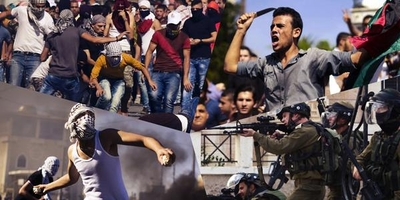

Israel’s Resilient Decency Despite Extreme Terrorism

October 5, 2016

Israel’s Resilient Decency Despite Extreme Terrorism, Investigative Project on Terrorism, Noah Beck, October 5, 2016

1852

[I]n 2015, Israelis suffered about 10 terrorist attacks every day.

Adjusted for population size, the violence would equate to a staggering 150,160 attacks in a year in the United States (roughly 411 per day).

[S]tories of Israeli decency and the relative prosperity of Israel’s Muslims rarely appear in the mainstream media or get acknowledged by the EU, the UN, or human rights organizations.

The next time Western politicians, human rights groups, and journalists feel tempted to critique Israeli conduct, or demand more restraint from Israelis, they should ask themselves: “How would we respond if there were 411 jihadi terrorist attacks per day here? Would we also provide medical treatment to terrorists and their relatives? Would our society be nearly as tolerant and kind towards Muslims? Would our laws similarly protect Muslim rights and allow Muslim political groups to support organizations that want to destroy our country? How often would our headlines and coverage present a neutralized terrorist as a victim?”

*****************************

U.S. citizens got a small taste of the Islamist terror threat that hounds Israelis on Sept. 17, with four bombings or bombing attempts in the New York metropolitan area and a Minnesota stabbing attack.

Israel, a country about the size of New Jersey, endured eight terrorist attacks in a four-day period overlapping the American incidents. Even that frightening frequency does not represent “the scale of the attacks during the previous wave” of terror, according to the Meir Amit Intelligence and Terrorism Information Center, an Israeli think tank.

Israel’s experience shows that the war against Islamist terror is a long and difficult one, but it can be managed while maintaining a democracy’s core values.

Whereas the U.S. experienced about a dozen attacks during the 21 months from the start of 2015 through last month, an Israeli government list of terror attacks covering 12 months from 2015-16 totaled 407 attacks, including 165 stabbings, 87 attempted stabbings, 107 shootings, 47 vehicular (ramming) attacks, and one bus bombing. Those attacks killed 40 people and injured 558 others.

The Israeli government statistics don’t include stone throwing, petrol bombs, riots, IEDs, arson, stun grenade attacks, rocket attacks, and other types of attacks. When those are included, Israelis endured 3,754 terrorist attacks (including 3,635 by Palestinians and 119 by Israeli Arabs) from Jan. 1, 2015 to Jan. 5, 2016, according to a meticulously documented list compiled by analyst Nehemia Gershuni-Aylho.

Thus, in 2015, Israelis suffered about 10 terrorist attacks every day.

Adjusted for population size, the violence would equate to a staggering 150,160 attacks in a year in the United States (roughly 411 per day).

Of course, demographic, geographic and historic differences mean the U.S. is unlikely ever to experience that much Islamist terrorism.

Despite those differences, jihadi attacks in the United States during the last year have been enough to inject proposals like banning all Muslims from entering the country into the national political debate. No such proposals have ever been publicly discussed by any mainstream political parties in Israel.

By contrast, Israeli democracy is immensely tolerant of diverse opinions – to the point that the Arab party in the Knesset publicly supports terrorist organizations bent on destroying Israel. Last March, two Arab-Israeli political parties condemned Gulf Arab states for designating the Lebanese-based Iranian proxy Hizballah a terror organization. Hizballah openly seeks Israel’s destruction, and has more than 100,000 rockets and missiles aimed at the Jewish state. Could a parliamentary party in the EU or U.S. ever openly support an enemy terrorist group?

Remarkably, Israel spares no expense when providing medical help to the very terrorists attempting to murder Israelis.

Last December, at the height of the “Stabbing Intifida” – a series of seemingly spontaneous knife attacks by Palestinians on Israelis – the Israeli Medical Association issued a ruling requiring that the wounded be aided in order of injury severity, even if that means helping assailants before victims. Israeli medics treat Palestinian terrorists and murderers better than their Palestinian counterparts treat Israeli victims of Palestinian terror, such as the Palestinian medics who ignored an Israeli terror victim’s plea for help last November.

Another example of Israel’s incredible humanism despite extreme terrorism is the Israeli mother who was happy to donate the kidney of her son, who was murdered by a Palestinian suicide bomber, to save the life of a Palestinian girl.

The Israeli non-profit “Heart for Peace” is staffed by Israeli and Arab cardiologists who have saved the lives of more than 610 Palestinian children since 2005. Outrageously, in 2014, a Gazan mother whose young son’s heart was saved by Israeli doctors said that she hoped he would grow up to be a suicide bomber.

Israel has even provided medical services to the relatives of those seeking its destruction. Hamas leader Ismail Haniyeh may encourage ordinary Palestinians to embrace martyrdom for the sake of killing Israelis, but his mother-in-law, daughter, and granddaughter have all been treated by Israeli hospitals. During the last war with Hamas in 2014, Israel reportedly provided medical treatment to two Hamas terrorists who had infiltrated the country through a tunnel. Every year, Israel treats thousands of Gazans.

Examples of public generosity and decency may be rare in conflict zones, but they abound in Israel. When an Arab Israeli was wrongly beaten by police in May, the Israeli public raised money for the victim’s college tuition and legal fees, a story that went totally unreported by the mainstream media. Last August, a Palestinian girl whose bicycle was taken and broken by Israeli border police received a new bicycle donated by an Israeli man.

The EU routinely criticizes Israel for its relations with Muslims, yet Europe is far less tolerant of Islam in many respects. Last summer, three French cities – Corsica,Cannes, and Villeneuve-Loubet – banned “burkinis” from the beach. Germany’s interior minister called for a partial ban on burkinis, and a German public swimming pool reportedly prohibited them. By contrast, Israel allows burkinis, a fact highlighted in a New York Times video that went viral.

Four European countries – France, Belgium, the Netherlands, and now Bulgaria – ban full face veils in most public places. Israel imposes no such restrictions on Muslims.

Last summer provided an even more positive testament to how Israeli Muslims are treated, when Israel’s smartest high-school student was an Arab named “Mohammed” and the captain of Israel’s goalball team at the Rio Paralympics was a 26-year-old, Muslim woman. (Goalball is a sport created for blind athletes.)

But stories of Israeli decency and the relative prosperity of Israel’s Muslims rarely appear in the mainstream media or get acknowledged by the EU, the UN, or human rights organizations. World leaders routinely call for Israeli restraint, as if Israelis weren’t already exercising extraordinary restraint, a fact demonstrated by this graph showing how each of Israel’s last three wars with Hamas (in 2008, 2012, and 2014) was preceded by hundreds, and more often thousands, of Hamas rocket attacks against Israeli civilians. What country would tolerate thousands of deadly projectiles being fired on its civilians before responding with enough force to stop the attacks?

Similarly, when it comes to stabbings, car rammings, bombings, and other forms of Palestinian terrorism, world opinion reflexively calls for Israeli restraint and/or attempts to justify the attacks.

Last October, EU foreign affairs chief Federica Mogherini called for Israeli restraint after four Israelis had been murdered in a total of 19 terrorist attacks during the first 12 days of the month.  Secretary of State John Kerry tried to blame that wave of Palestinian terrorism on Israeli settlements. United Nations Secretary General Ban Ki-moon tried to justify Palestinian terrorism as a rational response to “occupation. “Such reactions would be unthinkable in response to similar terrorist attacks in the EU or U.S. World leaders and the global media seem unaware that Arab Muslims have been killing Jews for more than a century – long before any occupation, settlements, or even a Jewish state.

Palestinian terror attacks don’t reflect some miserably unfair existence – they are the product of raw hatred and incitement. Dozens of Israeli Arab Muslims have committed terrorist attacks even though they are not under occupation and enjoy better freedoms and living standards than most of the Arab world has. Like so many Palestinian terrorists, they are driven by the same hateful incitement that rejects any state for the Jews.

The next time Western politicians, human rights groups, and journalists feel tempted to critique Israeli conduct, or demand more restraint from Israelis, they should ask themselves: “How would we respond if there were 411 jihadi terrorist attacks per day here? Would we also provide medical treatment to terrorists and their relatives? Would our society be nearly as tolerant and kind towards Muslims? Would our laws similarly protect Muslim rights and allow Muslim political groups to support organizations that want to destroy our country? How often would our headlines and coverage present a neutralized terrorist as a victim?”

