Posted tagged ‘Hamas’

The Federal Program Funding Hamas Supporters on College Campuses

August 1, 2017

The Federal Program Funding Hamas Supporters on College Campuses, Front Page Magazine, Daniel Greenfield, August 1, 2017
When President Trump presented his budget, he defunded Title VI from $72 million to zero. But it’s up to Congress to make it happen.

What’s Title VI?

Title VI of the Higher Education Act set out to fund international studies that would promote our national security. But on many campuses, Title VI centers undermine our national security by supporting Islamic terrorists.

The Higher Education Opportunity Act mandated that Title VI centers reflect a “wide range of views”. Instead when it comes to the Middle East, Title VI centers have only one point of view.

Title VI centers are the organizing points for Islamist and anti-Israel activities on college campuses.  The attacks on Jewish speakers and students, the BDS resolutions and terror support begin with Title VI. So do the pro-Hamas speakers who spew hatred on campuses across America.

Instead of a wide range of views, 6 Title VI Middle Eastern studies directors have backed an academic boycott of Israel. Not only do they not promote a range of views, but they suppress pro-Israel views.

Title VI faculty play a crucial role in supporting campus hate groups from SJP to JVP to MSA. And Title VI material then finds its way from colleges into school classrooms.

All of this hatred is funded by taxpayers. But it doesn’t have to be.

Rep. Grothman, joined by Rep. Allen, Rep. Garrett and Rep. Lamborn are trying to defund Title VI and move funding over to the National Security Education Program (NSEP).  But they face an uphill battle.

Defunding Title VI would do a great deal to neutralize the ugliness and hatred on campuses.

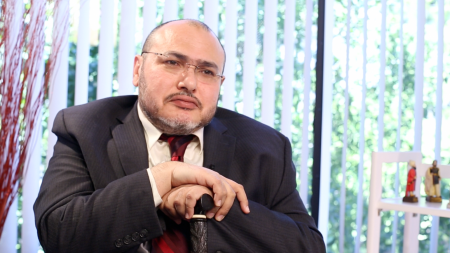
Take the Center for Near East Studies at UCLA. The Center is busy touting a faculty member’s attack on Trump. The faculty includes Khaled M. Abou El Fadl, a leading authority on Sharia Islamic law, whom Daniel Pipes named a “stealth Islamist.” El Fadl provided an “Affidavit of Support” for top Hamas terrorist Abu Marzook. He donated to and defended the Holy Land Foundation: a Hamas front group.

In more recent articles, Abou El Fadl has defended Hamas and the Muslim Brotherhood regime in Egypt. He distinguished between “countries and movements adhering to ideologies of resistance” including “Iran, Syria, Hizbullah, Hamas” in contrast to the “moderate” appeasers of America and Israel.

“Why is Saudi Arabia so hostile to political Islam movements such as Hamas, Hizbullah, or the Muslim Brotherhood?” El Fadl asks. And the answer is that the Saudis have become “westernized and secular”.

El Fadl has been touted as a moderate because he criticizes the Wahhabis. But his criticism is not moderate, but Jihadist. He complains that Wahhabis care more about whether a Muslim woman wears a veil than “about the invasions of Iraq, Gaza, or the fate of Jerusalem.”

Should Title VI be in the business of funding centers that echo Osama bin Laden?

“Israel wants to destroy Hamas because Israel wants to continue controlling the fate of Palestinians, neutralizing their nationalism and ideological foundations, and breaking their will to resist,” El Fadl rants.

Should Title VI be in the business of funding Hamas propaganda?

But you don’t have to be an Islamist at the Center for Near East Studies to hate Israel and defend the terrorists.

Take Gabriel Piterberg, the Center’s former director. Piterberg has been at the center of a firestorm, not over his support for terrorists, but over allegations that UCLA officials had attempted to cover up accusations that he had tried to shove his tongue into the mouths of two female grad students.

Piterberg was forced to resign as director of the Center for Near East Studies, but is still on staff.

Gabriel Piterberg backs an academic boycott of Israel and associates with Students for Justice in Palestine. He appeared at a American Muslims for Palestine event. AMP has links to Hamas. He has described Islamic terrorist attacks on Israel as “a frightening piece of consciousness raising.”

Sexual harassment and contempt for the victims of terrorism are all part of the Title VI package.

Piterberg appeared at a Center for Near Eastern Studies event on a panel with Richard Falk. The Gaza and Human Rights symposium came complete with chants of “Zionism is Nazism” and F___ Israel”. Falk is a 9/11 Truther and a fan of the Ayatollah Khomeini who has supported domestic terrorism. His ugly behavior was so extreme that he was condemned by the UN Secretary General.

Falk had described the Boston Marathon bombings as “blowback” to “American global domination.” He was on good terms with an anti-Israel activist had written a book in which he wondered whether “Hitler might have been right.”

A UCLA conference organized by Piterberg included Falk and the latter had been present at a number of CNES events. That is a truly notable accomplishment for a man who had been condemned by the United States government even while it kept on funding Title VI. But that is what Title VI gets you.

UCLA’s Center for Near Eastern Studies is notorious, but it’s not unique.

“For most of human history, human beings have not thought of consent as the essential feature of morally correct sexual activity,” explained Jonathan Brown, the Alwaleed bin Talal Chair of Islamic Civilization in the School of Foreign Service at Georgetown University.

The Islamic Studies professor was justifying Islamic sex slavery.

“Slave women do not have agency over their sexual access, so their owner can have sex with them,” he had claimed in the past. And, he asserted, “It’s not immoral for one human to own another human.”

The School of Foreign Service has been a recipient of Title VI funding.

John Esposito, a professor at the School of Foreign Service, testified on behalf of the Holy Land Foundation’s money men for Hamas. Esposito has defended some terrorist attacks by Hamas. He complained that, “despite HAMAS’ victory in free and democratic elections, the United States and Europe failed to give the party full recognition and support.”

Georgetown’s Center for Contemporary Arab Studies is Title VI supported. Elliot Colla, who is affiliated with the Center, signed on to a letter claiming that Hamas’ “missile assault was in direct response to Israel’s terrifying the entire population of the West Bank”. Fida Adely, of the Center, pushes BDS and has denounced Israel for raids on Hamas. At a Center event, George Mason University professor Noura Erakat complained that Israel was indiscriminately targeting Hamas people.

These are a few examples out of many. The Freedom Center, the Amcha Initiative, the Canary Mission, Stand With Us, and a great number of other groups have been battling campus anti-Semitism.

This is an opportunity to make a difference.

Defenders of Title VI claim that it will help us fight terrorism. But how can Title VI help us fight terrorism when it promotes terrorism?

While we fight terrorists abroad, Title VI spreads terror at home.

Title VI has become an outlet for anti-Semitism and for anti-American propaganda on campus. If we can change that, then we will send a message that the college campus is no place for terrorists and bigots.
U.S. Islamists Promote Nationwide Protests Despite Israeli Concessions

July 28, 2017

U.S. Islamists Promote Nationwide Protests Despite Israeli Concessions, Investigative Project on Terrorism, July 28, 2017

(Their cause for anger is not Temple Mount but the existence of Israel. — DM)

In solidarity with Palestinian factions and terrorist groups, pro-Palestinian Islamist organizations in the United States are gearing up for more anti-Israel protests today, even though the original cause for their anger has been rescinded.

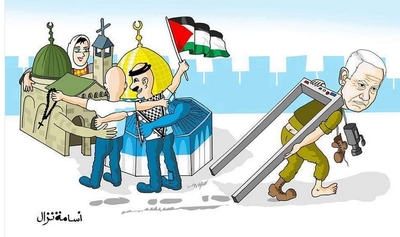
Israel removed metal detectors Tuesday which were installed near an entrance to Jerusalem’s Al Aqsa Mosque in response to a deadly July 14th terrorist attack. Terrorists managed to smuggle their guns into the mosque the morning of the attack. Yet Israel’s acquiescence has not silenced its main detractors.

Still, rallies planned throughout the country are being pushed by American Muslims for Palestine (AMP), the Council on American-Islamic Relations (CAIR), and Jewish Voice for Peace. Similar gatherings last week featured harsh anti-Israel rhetoric.

In a published set of talking points, AMP claimed the removal of metal detectors “doesn’t mean that the sanctity of the Noble Sanctuary is guaranteed, nor that Israel will not try other methods in the future to alter the status quo in the Aqsa mosque.”

This message builds on years of false Palestinian claims that Israel is keeping Muslims from praying at the mosque.

The metal detectors were installed only after Palestinian terrorists attacked and killed two police officers.

U.S.-based Islamist figures and groups are even challenging Israel’s right to install additional surveillance cameras on the Temple Mount – the compound that houses the mosque and site of the last Jewish temple. While enhanced surveillance measures often follow terrorist attacks, any action to improve Israel’s national security – no matter how minor – is met with a disproportionate anger from groups opposed to Israel’s existence in any form.

AMP held an “All Out for Al Aqsa” rally last Saturday in Times Square, featuring speakers who called for Israel’s destruction and radical chants from the crowd.

“You [Israel] are a hypocrisy state that will eventually be, will eventually go away. Israel will not last long,” said AMP-New Jersey president and national board member Sayel Kayed.

The rally featured similarly threatening chants made in Arabic.

“With life, with blood/we sacrifice for you Al Aqsa” and “the gate of Al Aqsa is of iron [Hadid], no one can open it but a martyr [Shahid].” These chants, translated by the Investigative Project on Terrorism (IPT), show how U.S. Islamist groups cultivate an atmosphere where terrorism and violence against Israel is openly encouraged.

“There is only one solution; Intifada, revolution… “Long live the Intifada”.

Other anti-Israel student groups are joining the fray. Students for Justice in Palestine (SJP) at the University of Illinois-Urbana Champaign (UIUC) posted a statement on Facebook last Friday inciting violence, the Algemeiner reported.

“Long live the Intifada!,” the group exclaimed, adding in Arabic “Long live resistance,” words commonly invoked by anti-Israel activists referring to violent uprisings and terrorism against Israel.

The growing anti-Israel hysteria permeated the Islamic Center of Davis in California July 21, when American imam Ammar Shahin delivered an anti-Semitic sermon.

“Oh Allah, liberate the Al-Aqsa Mosque from the filth of the Jews. Oh Allah, destroy those who closed the Al-Aqsa Mosque…Oh Allah, count them one by one and annihilate them down to the very last one. Do not spare any of them,” preached Shahin, the Middle East Media Research Institute (MEMRI) reports.

Council on American-Islamic Relations Executive Director Nihad Awad did not comment on the Shahin sermon. But he did urge all imams to talk about the issue, saying “Israeli occupiers are suppressing religious freedom in #Jerusalem.”

Again, this is purportedly over metal detectors and security cameras following a deadly terrorist shooting.

CAIR’s St. Louis chapter organized a march last Sunday that cast metal detectors and security cameras as a “siege” of the mosque and featured chants of “free Al-Aqsa.”

CAIR’s Georgia chapter is co-hosting an anti-Israel event, with the far-left Jewish Voice for Peace outside the Israeli Consulate in Atlanta.

AMP alerted its network to additional nationwide protests, including today at noon outside the Israeli embassy in Washington D.C. There is also a planned demonstration the same day in downtown Chicago at 4:30 p.m. and in New York City. On Sunday, a “March for Al Aqsa” is scheduled to take place at the Wilshire Federal Building in Los Angeles at 3:00 p.m.

U.S.-based Islamists are joining Palestinian factions from across the political spectrum who continue to call on Palestinians to protest against Israel on Friday.

For the second straight week, Hamas has called for a “day of rage” while Mahmoud Abbas’ Fatah incites violence by encouraging its supporters to “intensify”confrontations with Israeli authorities throughout the West Bank and Jerusalem. Abbas went a step further on Wednesday and gave the green light for Fatah’s Tanzim terrorist group to organize mass demonstrations on Friday.

On July 14, the Muslim Brotherhood led the way with calls for an “Islamic Intifada” – a violent uprising – against Israel following the day’s deadly Palestinian terrorist attack.

“The Muslim Brotherhood calls upon the sons of the Islamic Umma (nation), its Ulema (Muslim religious scholars), figures and blocs for an Intifada in order to stop the (alleged Israeli) violations of holy sites…,” the Brotherhood wrote on its official Arabic-language website and translated by the Investigative Project on Terrorism (IPT).

The Brotherhood admitted its main motivation for “our intended uprising” is to “pressure all Western governments, Arab regimes and international organizations to intervene to stop violations by gangs of the Zionist entity…”

Muslim Brotherhood-affiliated groups in the U.S. are heeding this call, organizing nationwide protests, inciting violence, and seeking to pressure the U.S. government into forcing more Israeli concessions.

Video: Muslims murder two Israeli police officers in Temple Mount jihad attack

July 14, 2017

Video: Muslims murder two Israeli police officers in Temple Mount jihad attack, Jihad Watch

Hamas praised these jihad murders as “heroic,” which is a good example of the morally inverted world of Hamas and its U.S.-based front groups, along with their Leftist supporters.

“2 Israeli police officers confirmed dead following Temple Mount shooting,” RT, July 14, 2017 (thanks to the Geller Report):

Two police officers were fatally shot during an attack at the Temple Mount in Jerusalem Friday morning. Police Chief Roni Alsheich confirmed the deaths following the incident involving three assailants.

The two officers were amongst three people initially injured. Three armed assailants were then pursued, shot and killed by police.

The gunmen, reported by Reuters to be Arab-Israeli, arrived at the site which is holy to both Jews and Muslims, and made their way towards the Lions Gate in the Old City. “When they saw policemen they shot towards them and then escaped towards one of the mosques in the Temple Mount compound,” police spokeswoman Luba Simri.

According to Simri three firearms were found on the bodies of the attackers.

The officers were named by authorities as Hail Stawi, 30, and Kaamil Snaan, 22.

A spokesperson from Hamas praised the operation as “heroic” in a statement.

Authorities shut down the area following the attack, blocking access to the Aqsa Mosque. Palestinian Grand Mufti of Jerusalem, Mohammad Hussein encouraged Muslims to defy the shutdown, telling Reuters “We have urged our Palestinian people to rush to al Aqsa today and every day to hold their prayers.”

Israeli Prime Minister Benjamin Netanyahu, said the area, which can be accessed but not prayed at by Jews, will continue to be shared by both communities.

In a phone call to Netanyahu, Palestinian President Mahmoud Abbas condemned the attack. According to Palestinian news agency WAFA, Abbas urged Netanyahu to reopen access to the al-Aqsa Mosque.


The attackers’ identities have not yet been released.

 Friday prayers at the site were canceled for the first time in years, according to Haaretz….

Palestinians: Mohammad Dahlan, the New Mayor of the Gaza Strip?

July 3, 2017

Palestinians: Mohammad Dahlan, the New Mayor of the Gaza Strip? Gatestone InstituteKhaled Abu Toameh, July 3, 2017

(Please see also, What Hamas Wants. — DM)

This new reality could buy quiet in the short term. In the long term, however, Hamas is likely to emerge as stronger and more prepared for the next war with Israel.

***********************************

Dahlan will be functioning under the watchful eye of Hamas, which will remain the real de facto and unchallenged ruler of the Gaza Strip. Hamas is willing to allow Dahlan to return to the Palestinian political scene through the Gaza Strip window. But he will be on a very short leash.

Dahlan’s presence in the Gaza Strip will not deter Hamas from continuing with its preparations for another war with Israel.

Dahlan will find himself playing the role of fundraiser for the Palestinians in the Gaza Strip while Hamas hides behind his formidable political shoulders.

Mohammed Dahlan is an aspiring Palestinian with huge political ambitions. Specifically, he hopes to succeed Mahmoud Abbas as president of the Palestinian Authority (PA). Knowing this, Abbas expelled him from the ruling Fatah faction in 2011. Since then, Dahlan has been living in the United Arab Emirates.

Hamas, the Islamist movement that has controlled the Gaza Strip for the past decade, used to consider Dahlan one of its fiercest enemies.

As commander of the notorious Preventive Security Service (PSS) in the Gaza Strip in the 1990s, Dahlan was personally responsible for the PA’s security crackdown on Hamas. On his instructions, hundreds of Hamas activists were routinely targeted and detained.

The enmity was mutual; Dahlan too considered Hamas a major threat to him and the PA regime in the Gaza Strip.

Dahlan’s contempt for Hamas knew no limits. On his orders, Hamas founder and spiritual leader Ahmed Yassin was placed under house arrest.

Two other senior Hamas officials, Mahmoud Zahar and Abdel Aziz Rantisi, were repeatedly detained and tortured by Dahlan’s agents. At one point, Dahlan ordered his interrogators to shave the two men’s beards as a way of humiliating them.

During and after its violent takeover of the Gaza Strip in 2007, Hamas targeted Dahlan’s PSS and loyalists. Some were killed or incarcerated, while many others were forced to flee the Gaza Strip to Egypt and the West Bank. For many years, Dahlan was at the top of Hamas’s most wanted fugitives. No longer.

Erstwhile enemies, Dahlan and Hamas today have a common foe: Mahmoud Abbas. They seem about to join forces to repay him for the humiliation they have suffered at his hands.

Dahlan has long sought revenge for Abbas’s decision to expel him from Fatah and prosecute him on charges of murder and embezzlement. Dahlan will never forgive Abbas for dispatching security officers to raid his Ramallah residence and confiscate documents and other equipment. On that day, Dahlan slunk out of Ramallah.

Dahlan found refuge in the United Arab Emirates, a wealthy Gulf country whose rulers seem very fond of him. He receives millions of dollars from his Gulf hosts. Until today, Abbas regards Dahlan, who was once an intimate associate, as his main enemy.

Exile has been good for Dahlan. Thanks to the United Arab Emirates and Egypt, Dahlan has amassed enough power and money to become a major player in the Palestinian arena.

In the past few years, he has succeeded in building bases of power in the West Bank and Gaza Strip, largely with the cash that he has been providing to his loyalists and others.

More importantly, Dahlan has succeeded in building a personal relationship with Egyptian President Abdel Fattah el-Sisi, who also seems rather partial to him. While this relationship has alienated Abbas, Hamas sees it as an opportunity to rid itself of its increased isolation in the Gaza Strip.

Hamas’s predicament has been exacerbated by the continued Egyptian blockade on the Gaza Strip, specifically the closure of the Rafah border crossing, and a series of punitive measures taken by Abbas in recent weeks.

These measures, which are being described by Hamas as a “declaration of war” on the Gaza Strip, include refusing to pay for electricity that Israel supplies to the Gaza Strip, halting the shipment of medicine from the West Bank, denying permits to patients to leave the Gaza Strip for medical treatment, and cutting off salaries to thousands of PA and Hamas civil servants and former security prisoners (who had served time in Israeli prisons).

Dahlan is desperate to make a comeback to the Palestinian political scene. He is fed up with exile, far from his friends in the West Bank and Gaza Strip. He is also aware that the 82-year-old Abbas may be nearing his end, especially in light of rumors concerning his failing health.

Mohammed Dahlan addresses a political rally on January 7, 2007 in Gaza City. (Photo by Abid Katib/Getty Images)

Dahlan also sees Hamas’s desperation now that its main patron, Qatar, is facing massive pressure from Saudi Arabia and other Arab countries to cease funding the Islamist movement and its mother group, Muslim Brotherhood.

Hamas wants to hold on to power in the Gaza Strip at any cost, even if that means swallowing the poison pill of aligning itself with someone like Dahlan.

Hamas has no intention of changing its ideology or engaging in any peace process with Israel. It will not recognize Israel’s right to exist or abandon the “armed struggle” to liberate all of Palestine, “from the Mediterranean Sea to the Jordan River.” The name of the game, as far as Hamas is considered, is survival.

Hamas fears that the continued Egyptian blockade and Abbas’s draconian measures may undermine its rule over the Gaza Strip.

Even worse, Hamas fears that the pressure and sanctions could trigger a Palestinian “intifada” in the Gaza Strip. Hamas knows full well that the electricity crisis and lack of medicine is destined to explode in its face.

Hamas believes it has now found a way out of the crisis.

Ironically, yesterday’s number one enemy, Dahlan, could prove to be the savior — the very Dahlan who imprisoned and tortured and killed many Hamas members and leaders. The same Dahlan who, as a security commander in the Gaza Strip, was responsible for security coordination with the “Zionist enemy.” The Dahlan who is one of the main byproducts and symbols of the Oslo Accords, which Hamas continues to reject to this day.

Last month, Hamas leaders traveled to Cairo for talks with Egyptian intelligence officials and representatives of Dahlan, on ways of ending the “humanitarian crisis” in the Gaza Strip. It was the first meeting of its kind between Dahlan’s men and Hamas leaders.

Mahmoud Zahar, a senior Hamas official, disclosed that the two sides reached “understandings” over a number of issues, including the reopening of the Rafah crossing between Egypt and Gaza, and allowing entry of medicine and fuel for the power plants in the Gaza Strip.

Hamas also reached an agreement with the Egyptians to build a security buffer zone along the border between the Gaza Strip and Egypt, to stop the smuggling of weapons and the infiltration of terrorists. This week, Hamas bulldozers were already seen breaking ground along the border.

The unexpected rapprochement between Dahlan and Hamas has already resulted in the return of some of Dahlan’s loyalists to the Gaza Strip. Now, everyone is waiting to see if and when Dahlan himself will be permitted to return to his home in the Gaza Strip.

Sources in the Gaza Strip believe that the countdown for Dahlan’s return has begun. The sources also believe that he may be entrusted with serving as “prime minister” of a new government, while Hamas remains in charge of overall security in the Gaza Strip.

In fact, Hamas already has its own “administrative committee” that functions as a government.

Dahlan’s role will be to help break the blockade on the Gaza Strip, attract Arab and Western funds, and improve living conditions and the economy.

Dahlan, in short, may be on his way to become Mayor of the Gaza Strip.

Already this week, there were signs that Dahlan may have already succeeded in convincing Hamas that he is indeed the long-awaited savior: Egyptians began dispatching trucks loaded with fuel to the Gaza Strip to help solve the electricity crisis. Moreover, the Egyptian authorities have expressed readiness to reopen the Rafah terminal.

The “understandings” reached between Dahlan and Hamas may help alleviate the suffering of the Palestinians in the Gaza Strip and pave the way for improving the economy. However, the biggest winner will be Hamas, which is not being required to make any meaningful concessions other than allowing Dahlan and his loyalists back into the Gaza Strip.

Dahlan will be functioning under the watchful eye of Hamas, which will remain the real de facto and unchallenged ruler of the Gaza Strip. Hamas is willing to allow Dahlan to return to the Palestinian political scene through the Gaza Strip window. But he will be on a very short leash.

Dahlan’s presence in the Gaza Strip will not deter Hamas from continuing with its preparations for another war with Israel.

Hamas is not going to stop digging tunnels along the border with Israel for fear of Dahlan. He will likely enjoy extensive civilian powers, but security matters will remain in the hands of Hamas and its military wing, Ezaddin al-Qassam.

Dahlan will find himself playing the role of fundraiser for the Palestinians in the Gaza Strip while Hamas hides behind his formidable political shoulders.

This new reality could buy quiet in the short term. In the long term, however, Hamas is likely to emerge as stronger and more prepared for the next war with Israel.

For Dahlan and Hamas, it’s win-win. No wonder, then, that Abbas and his friends in the West Bank are angry and anxious.

The unholy alliance between Dahlan and Hamas, in their view, is nothing less than an attempt to establish a separate Palestinian state in the Gaza Strip.

The international audience might wish to take note: it is now official — the division between the West Bank and Gaza Strip marks the end of the so-called two-state solution. On the Palestinian street, it appears that the Palestinians are closer than ever to achieving two separate entities of their own — one that is run by Abbas’s Palestinian Authority and another controlled by Hamas and Dahlan.

Khaled Abu Toameh, an award-winning journalist and television presence, is based in Jerusalem.

Hamas’ Catch-22

June 29, 2017

Hamas’ Catch-22, Israel Hayom, Prof. Eyal Zisser, June 29, 2017

The dilemma facing Israel, and perhaps Egypt as well, is whether to tighten the noose around Hamas’ neck or, conversely, turn on the power and ease the pressure in an effort to sidestep entanglement in Abbas’ own grudge match with Hamas. Abbas, for his part, is trying to kill three birds with one stone: Hamas, Dahlan, and Israel — trying to embarrass the latter by making it the focus of international criticism. Water and electricity are one thing; visas abroad for Haniyeh and his cohort another thing altogether.

**********************

The voices rising from Gaza are not of war and certainly not of triumph, but of distress. It has been 10 years since its people took Gaza by force, and Hamas is not only looking at a dead end, but a Catch-22. Even as Qatar, its primary benefactor, is under a diplomatic barrage from its neighbors; the cries of despair are still emanating from Gaza, where residents are paying the price for Hamas’ isolation in the Arab world.

These are no longer the days of Muslim Brotherhood rule in Egypt, when Turkey and Qatar did as they pleased across the Arab world, and when Hamas leaders freely globe-trotted from capital to capital. Now, Hamas leader Ismail Haniyeh is caged in; forced to wait until his Egyptian guard feels like letting him out.

Cairo has its own grudge against Hamas. It wants to see action first and foremost, such as the buffer zone being built along Gaza’s border with Egypt, intended to prevent terrorists from Islamic State’s Sinai branch from finding shelter inside Gaza under Hamas’ blind eye.

Thus, bereft of outside support and facing boiling distress at home, the Strip is convulsing from one crisis to the next. With so many people struggling to keep their heads barely above water (in the dark no less), Hamas is now even willing to consider waiving a white flag and handing over the keys to Mohammed Dahlan — Palestinian Authority President Mahmoud Abbas’ detested political rival — who could very well be the only one capable of turning things around in Gaza.

Hamas hopes that Dahlan will suffice with the symbolic and powerless position of prime minister. But Dahlan is not a child, and with backing from Egyptian President Abdel-Fattah el-Sissi — and perhaps with a wink and a nod from Israel, as well — he can pull the rug out from under Hamas.

The dilemma facing Israel, and perhaps Egypt as well, is whether to tighten the noose around Hamas’ neck or, conversely, turn on the power and ease the pressure in an effort to sidestep entanglement in Abbas’ own grudge match with Hamas. Abbas, for his part, is trying to kill three birds with one stone: Hamas, Dahlan, and Israel — trying to embarrass the latter by making it the focus of international criticism. Water and electricity are one thing; visas abroad for Haniyeh and his cohort another thing altogether.

Articles In Gulf Press: The Escalation In Gaza – A Result Of Qatar, Iran, Turkey Toying With Lives Of Innocent Palestinians

June 28, 2017

Articles In Gulf Press: The Escalation In Gaza – A Result Of Qatar, Iran, Turkey Toying With Lives Of Innocent Palestinians, MEMRI, June 28, 2017

Following the June 27, 2017 Israeli airstrikes in Gaza in response to the firing of a rocket from Gaza into Israel, articles in the Gulf press attacked Hamas and the countries that support it: Qatar, Iran and Turkey. The articles – published against the backdrop of the inter-Gulf tension and the Boycott imposed on Qatar, chiefly by Saudi Arabia, the UAE, Bahrain and Egypt – blamed Hamas of the firing of the rocket into Israel, and claimed that it was escalating the situation in Gaza on purpose in order to serve the interests of its three patron countries. These countries, said the articles, place innocent Palestinians in danger in order to divert global attention away from the Gulf crisis. 

The following are excerpts from two articles on this topic:   

‘Al-Ittihad’ Editorial: Qatar, Iran, Turkey Use Gaza As Bargaining Chip, Toying With The Lives Of Its Innocent People

Muhammad Al-Hamadi, editor of the UAE daily Al-Ittihad, wrote: “On June 27, without any warning, the Arabs woke up to discover that Gaza had been bombarded. Why? What has happened that we don’t know about? What did the Gazan Palestinians do to find themselves under Israeli fire? Has a third intifada broken out? Has the battle for the liberation of Jerusalem begun?

“In practice, none [of the above] happened. All [that happened was] that those who trade in the Palestinian problem, who are themselves in trouble, remembered an old bargaining chip that they have long been using successfully, [and decided] to use it in the dire circumstances that have befallen their friend Qatar, which serves as their open bank [account]. They thought that [using this bargaining chip] would be a good way to divert the Arabs’ attention away from Qatar and focus it [instead] on Gaza and its residents who are being bombarded with missiles by the Israeli enemy.

“This conduct of Qatar and its allies, in Palestine and elsewhere, is despicable. How disgraceful it is that some are willing to toy with the lives of innocents and with the future of small children in Gaza in order to achieve political aims. For a long time now, some [elements] – chiefly Iran, Qatar and Turkey – have been toying with the Palestinian cause and they were successful, but the cost was high: hundreds and even thousands of innocent Palestinians who have been martyred or wounded and crippled. What was the [Palestinian’s] reward? The reward was a donation drive among Arab and Muslim countries that raised millions. [But only] a handful of riyals and dinars was handed out to the disaster-stricken Palestinians. It is always the case that the [Gazan] people get crumbs, while the rest goes to the loyal partner, Hamas.

“We have said from the beginning of the boycott of Qatar that the game is over, but Qatar apparently isn’t listening. Continuing this transparently [wicked] behavior will no longer avail [it], because the peoples are no longer fooled. If in the past they trusted the propaganda of the ideologically recruited Al-Jazeera channel, which serves certain goals, today the peoples no longer watch Al-Jazeera and are no longer influenced by it and by other Arab or foreign channels. Information has become very accessible, and [cyber]space has opened up in [this] era of new media. Nobody has a monopoly on the facts, and it is no longer possible to deceive the peoples. That is what the Palestinian people discovered on July 27. It discovered that there are those who want to exploit it and drag it into a new confrontation with the Israeli enemy, while those who plan [the confrontation] stay in five-star hotels in Doha and Istanbul and in other capitals that shelter the leaders of the Muslim Brotherhood and of terror.

“Our friends in Gaza informed us that the [Gaza] Strip was not bombarded and that only two Israeli missiles were fired in response to the rocket fired from Gaza into Israel. Everyone knows that Qatar is the one that is ‘bombarded’ and boycotted. Who gains from the firing of the rocket and from the situation in which Gaza is bombarded?”[i]

Saudi Columnist: Qatar, Iran Sponsor Hamas, Which Uses Gazans As Human Shields

Hani Al-Zahiri wrote in the Saudi ‘Okaz daily: “It has been centuries since our region has seen a political gamble as terrible as the Iranian and Qatari regimes’ [current] gamble with the lives and the cause of the Palestinians. These two [regimes] adopted the Muslim Brotherhood’s Hamas organization, and supported it by every means when it staged an uprising against the legal Palestinian leadership [the PA] and took over Gaza, and then turned the innocent residents [of Gaza] into a human shield for the Hamas leadership.

“The state of the Gaza Strip in the face of the Israeli bombardments, which usually come in direct response to Hamas actions, reminds us of  [a situation in which] a man kidnaps a girl and then provokes [the soldiers in] a military base to open fire on him and uses the girl as a human shield. The kidnapper in this case is Hamas and the girl is Gaza and its helpless people. The portly Hamas leaders meet in Doha and Tehran, laugh around tables laden with delicacies and order their young [fighters] to open the gates of Hell to the Palestinians by [shooting] firecrackers – which they call ‘rockets’ – at Israeli [army] posts, so that Gaza will be bombarded and women, children and the elderly will die. Then Hamas [officials] will come out, condemn this on satellite channels, and demand support and funds to rescue the Palestinian people, before going back to their feast, safe and sound. In the meantime the entire world will watch the suffering of an unarmed people that has no means to defend itself.

“Everything that has happened to the Palestinians since Hamas took over them indicates that their second enemy, after Israel, is Qatar and Iran, which are using a tinderbox named Hamas to burn them in order to achieve purely political aims… The question now is why, on the day before yesterday [June 26], Qatar and its allies prompted Hamas to fire on Israeli positions, thus inviting Israel to respond by bombarding Gaza. The answer is clearly that this was a despicable attempt and a new political gamble by the Qatari regime, aimed at easing the noose of the Gulf boycott [of Qatar, a boycott] which prompted calls to sue [this regime] in the international [court] for the black [crime] of supporting terror. Today [Qatar] desperately needs to divert the world’s attention in another direction, even at the expense of the life and blood of a defenseless people… The Qataris and Iranians will exploit the event to utter phrases of pretended sympathy for the Palestinians, but only the people in Gaza know that they are the victims of this pair of plotters [Qatar and Iran].”[ii]

______________________

[i] Al-Ittihad (UAE), June 28, 2017.

[ii] ‘Okaz (Saudi Arabia), June 28, 2017.

Suffering to Purchase Sympathy

June 25, 2017

Suffering to Purchase Sympathy, Clarion ProjectElliot Friedland, June 25, 2017

(Please see also, Illuminating Gaza, which suggests satirically that Hamas relinquish some of its weapons for electricity:

For example, what if Israel agreed to provide Hamas with 2 MWh for every stockpiled Qassam rocket turned over to us? They have thousands of these, which could keep the lights on for weeks. Not to mention longer-range rockets, which would be worth more. And tunnels – I’m sure we would be happy to give them a whole day’s worth of electricity for the precise location of a terror tunnel. Just give us the coordinates and we’ll do the rest! Anti-tank and anti-aircraft weapons are valuable, too. A nice shoulder-fired SAM is probably worth 10 MWh. Even rifles and mortar shells could help keep the juice flowing.

— DM)

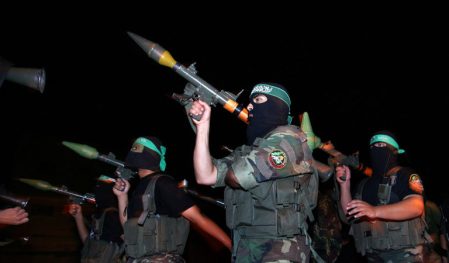
Hamas fighters in Gaza. (Photo by Abid Katib/Getty Images)

The choices made by Palestinian leaders are deliberately spurring on a crisis over electricity for their own benefit, with Palestinians as the victims.

Here’s the crisis explained in brief:

Palestinian Authority President Mahmoud Abbas, himself a dictator (since he cancelled elections after becoming president in 2005) has informed Israel that he will no longer pay for electricity to Gaza. He made the decision because Hamas is unable to pay for its electricity anymore.

This electricity is provided on behalf of the Palestinian Authority to Gaza by the Israeli electric company. Abbas asked Israel to cut power to the Gaza Strip since he decided not to foot the bill. Israel complied, reducing electricity supply by 40 percent.

News of the cuts spread internationally. Since Gaza consists of a small area where two million people live, a humanitarian disaster is in the making. Gaza’s power plant has already been shut down since April, again because of unpaid bills by Hamas, so the territory already only had power for around four hours a day.

Egypt stepped in on Thursday to ease the crisis, sending one million liters of fuel to restart Gaza’s power plant.

However this measure is only a temporary stop gap measure, and the crisis will reemerge when the fuel is used up.

What Does This Have to Do With Anything?

Gaza’s electricity crisis is symptomatic of a broader policy of Islamist terror factions, in general, and Hamas, in particular. Understanding and refusing to engage in this manipulative cycle is essential to defeating these groups and essential for ending the cycle of deprivation hitting those living in areas controlled by jihadis.

How does the cycle work? It can be loosely broken up into three stages:

1.Spend all the money on terrorism.

Hamas collects 100 million shekels ($29,000,000) a year in taxes from residents in Gaza. It has also been given hundreds of million dollars in international aid for reconstruction and humanitarian assistance. Yet, this year, Israel’s security services arrested Muhammad Murtaja, the head of the Gaza branch of the Turkish charity IHH, for siphoning off aid money for terror purposes.

“The egotistical Hamas terror organization has robbed funds that are meant for the needy of Gaza from international organizations. Hamas prospers at the expense of the residents of the Strip and uses donations meant for them to finance terror,” Major General Yoav Mordechai, coordinator of government activities in the territories said of the arrests.

Nor is this case isolated. In 2016, Israel arrested Waheed al Borsh, an engineer working for the United Nations Development Program (UNDP), for stealing aid money to build a jetty for Hamas’ naval forces.

More egregiously the manager of international charity World Vision has been charged with funneling at least $43 million earmarked for international aid to Hamas’ military wing to pay for fighters and weapons.

As the independent think tank the Begin-Sadat Center for Strategic Studies notes, “According to the budget and expenditures for the 2013 fiscal year released by the last official Hamas government in 2014, a mere 2% of total expenditures of $348 million went to development and only 11.2% to social welfare transfers (compared to 25% in Egypt, which has a similar socio-economic profile). The rival PA estimates that over two-thirds of Hamas expenditures went to the production of terror.”

Spending in this way harms the inhabitants of Gaza. This, however, is a win for Hamas, because …

2.Manipulate the Ensuing Humanitarian Crisis

It’s important to note that the humanitarian crisis is real. According to Israel itself, in addition to the blackouts, 96% of Gaza’s water is reportedly not fit for drinking, due to the strain on the aquifers. There are widespread shortages. Unemployment is at 42%.

At this stage, Hamas’ goal is now to use these crises to extract concessions from Israel and malign Israel in the international press.

During the recent electricity crisis, Hamas spokesman Sami Abu Zuhri thundered that Israel “bears responsibility for the consequences of the reduction.”

“Israel is trying to cause a humanitarian crisis in Gaza to oust Hamas,” accused Vice, in an incredibly misleading headline, despite the fact that even the Palestinian Authority blamed Hamas for the current crisis.

The UN Special Envoy on the Peace Process Nikolay Mladenov warned that the humanitarian crisis could spark another war, giving as the reason that “people will be angry, increasingly desperate…”

“UN warns of Gaza’s ‘total collapse’ amid power crisis,” writes Al-Jazeera, lamenting that, “Further cuts to Gaza’s already diminished electricity supply has besieged Strip on the brink of humanitarian catastrophe.”

The UN humanitarian coordinator for the occupied territories, Robert Piper, warned of the disastrous effect of further power cuts. A joint statement signed by 16 NGOs, including Rabbis for Human Rights, B’Tselem and Peace Now, called on the Israeli attorney general to intervene and force Israel to give Gaza free electricity on the grounds that Israel is legally responsible for the humanitarian welfare of the Gaza strip.

Amnesty International and other global NGOs also joined the condemnation.

All these condemnations harm Israel’s image  and increase pressure on it, creating strategic opportunities for Hamas to exploit for …

3.Profit

If Israel gives Gaza free electricity, it will, in effect, be subsidizing Hamas terrorism by freeing up resources that would be spent on paying for its own electricity, thus paying for terrorism.

This money will be coming from the pocket of the Israeli taxpayer.

If Israel refuses to pay for Hamas’ electricity, it tarnishes its already battered international image. It also puts itself in a moral quandary as images of beleaguered Palestinians roll across the news. This can also create social and political tension in Israel.

If Israel decides enough is enough and invades Gaza to replace Hamas, this will also benefit Hamas. As soon as the body count starts racking up, international and Palestinian sympathy will swing to support Hamas, as happened during and after the last Gaza war.

As the Jerusalem Post noted in their editorial on the electricity crisis, “Ultimately, the so-called electricity crisis is of Hamas’s making. As with the Islamist movement’s use of human shields, its purposeful positioning of combatants and rocket launchers in the midst of population centers, so too the default on Gaza’s electricity bill presents Israel with a difficult moral dilemma.

“Hamas is willing to sacrifice the lives of Gaza’s civilians in order to win the battle of public opinion. The image of a sick Palestinian baby lying untreated in a darkened Rantisi Pediatric Hospital in Gaza City is a blow to the gut that is impossible to explain away.”

There is yet another benefit: the international aid that can be extracted from the international community when Gaza faces a humanitarian crisis.

Hamas has already asked the UN, Europe and the Arab states to intercede with Abbas over the crisis. Meanwhile a ship containing 10,000 tons of aid from the Turkish IHH charity — the same charity whose head was arrested for using aid money to fund Hamas terror — docked in Ashdod so the goods could be taken to Gaza.

International donors give millions in aid to Gaza and will in all likelihood do so again if the situation worsens.

If this happens, Hamas will reap the benefits and steal the fresh aid money to fund terrorism while ignoring those who live under its rule.

Theirs is the strategy of the boa constrictor, aiming to slowly choke out Israel, not through brute force, but through relentless attrition and making all choices bad choices. The fact that Palestinians suffer is not only not a moral consideration, but it is actually part of the plan.

It is both brilliant and evil.

Illuminating Gaza

June 18, 2017

Illuminating Gaza, The Jewish PressVic Rosenthal, June 18, 2017

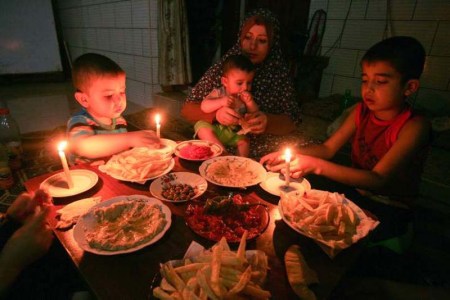
An Arab family eats a Ramadan dinner by candlelight in the Rafah refugee camp, in the southern Gaza Strip, during a power outage on June 12, 2017.

I’m calling it the Watts for Weapons program. I’m sure they’ll go along with it. Only someone who prefers killing Jews to keeping his own people alive could possibly turn it down.

***************************

{Originally posted to the author’s website, Abu Yehuda}

Gaza’s electricity shortage has recently become critical. Gaza gets its power from Israel and Egypt, and has a small power station of its own. But due to a decision of the Palestinian Authority to further reduce the amount it pays Israel  for electricity, the 3-4 hours a day during which Gaza is illuminated will be reduced by another 45 minutes or so – unless money is found somewhere.

Hamas is threatening that there will be an “explosion” unless something is done. It is a big problem for the population, because food is not being refrigerated, sewage is not being processed, water is not being pumped, and hospitals are unable to operate. And the weather is getting hotter.

Israel presently supplies Hamas with about 125 megawatt-hours (MWh) per day, and Egypt provides a smaller amount. Gaza’s own power station is presently not operating due to lack of fuel. It’s estimated that a 24-hour supply of electricity would require 400-500 MWh per day.

Negotiations are under way (Wednesday) for Western and Arab countries to pick up some of the slack. After all, think of the children. And nobody wants an “explosion.”

But there is a solution that nobody seems to have proposed yet. Let’s begin by asking a question: why doesn’t Hamas have money for electricity? After all, it levies heavy taxes on goods coming into the strip (both legally via the crossings from Israel and illegally via tunnels from Egypt) and on almost every other form of economic activity. It got money from Qatar until recently, and has now started receiving aid from Iran again. International donors pledged large sums for reconstruction after the 2014 war, although there was very little rebuilding done. Where did the money go?

The answer is simple: some of it enriched Hamas insiders, but most of it was used to dig tunnels, to manufacture rockets and for other weapons and military infrastructure. Hamas officials were ready to see their children (well, the children of other Gaza residents) hungry and wading in sewage if it advanced their project to destroy Israel.

In effect money was converted into weapons. And that provides a way to solve the problem: we can convert it back.

For example, what if Israel agreed to provide Hamas with 2 MWh for every stockpiled Qassam rocket turned over to us? They have thousands of these, which could keep the lights on for weeks. Not to mention longer-range rockets, which would be worth more. And tunnels – I’m sure we would be happy to give them a whole day’s worth of electricity for the precise location of a terror tunnel. Just give us the coordinates and we’ll do the rest! Anti-tank and anti-aircraft weapons are valuable, too. A nice shoulder-fired SAM is probably worth 10 MWh. Even rifles and mortar shells could help keep the juice flowing.

You get the idea. From Israel’s point of view, it would be far cheaper than the tamir rockets used by Iron Dome to shoot down the Qassams ($50k -$100k each!), and the amount of effort needed to find the tunnels. Hamas would get its electricity – and we would get some peace and quiet for a change.

I’m calling it the Watts for Weapons program. I’m sure they’ll go along with it. Only someone who prefers killing Jews to keeping his own people alive could possibly turn it down.

Russia’s Terrorist Double Game

June 17, 2017

Russia’s Terrorist Double Game, Investigative Project on Terrorism, June 16, 2017

A Muslim Russian national from Kyrgyzstan detonated an explosive device in St. Petersburg’s subway system in April, killing 14 people and injuring many others. The attack signaled a growing Islamist threat facing Russia, following several high profile terrorist attacks in recent years. More people have been killed in Russia from terrorism than any other European state since 1970. Yet Russia maintains a glaring double standard when it comes to terrorist violence and now sponsors some of the deadliest terrorist groups in history.

For the Russian government, terrorists aren’t “terrorists” if they avoid targeting Russian citizens or interests. In this light, Russian officials consistently avoid classifying groups like Hamas and Hizballah as terrorist organizations. The latest example came directly from Russia’s ambassador to Israel, Alexander Shein, in an interview last Friday with Israel’s Russian-language Channel 9 and translated by the Middle East Media Research Institute (MEMRI).

Shein admitted that while both groups were “radical organizations, which sometimes adhere to extremist political views,” Russian law only designates organizations as terrorists when they “intentionally conduct acts of terror in Russian territory, or against Russian interests abroad – installations, embassies, offices, or citizens.”

Despite the lack of a universal definition, “terrorism” generally refers to a non-state actor’s deliberate threat or use of violence for primarily political, religious, or ideological purposes. According to many conceptions, terrorism tends to intentionally target civilians, but also to create a broader psychological reaction beyond those killed or injured. By these well-established criteria, Hizballah and Hamas, organized militant groups that purposefully kill civilians to establish Islamist states in their image, are the quintessential terrorist organizations.

For the Russian government, a jihadist blowing up a St. Petersburg metro constitutes terrorism. But a Hamas suicide bomber targeting Israeli public transportation or Hizballah militants indiscriminately firing rockets into civilian areas is not terrorism. With such a view, it is no surprise that Russia is actively engaging in a double game when it comes to supporting terrorist organizations.

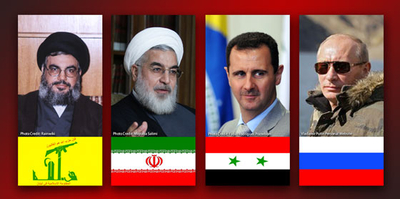
Since launching its 2015 military intervention in Syria’s civil war, Russia has positioned itself as a major benefactor to the Iranian-led Shi’ite axis operating in Syria. Russia provides military training and air support to Hizballah fighters on the ground. Russia reportedly supplies the terrorist group with heavy weaponry and enables the flow of sophisticated armaments from Iran to its terrorist proxy.

Russia historically has faced diverse terrorist threats from its North Caucasus region, a conflict that has increasingly adopted a more global Islamist orientation. In December 2013, Islamist terrorists conducted two suicide bombings within two days, targeting public transportation in the city of Volgograd. Another suicide bombing had taken place in the same city two months earlier. Since the mid 1990’s, Russian forces have fought North Caucasian militants in two bloody wars and other sustained battles in the region. Despite strong crackdowns in recent years, Russian security services allegedly encouraged many local extremists to leave the North Caucasus and join terrorist organizations in Syria, disregarding its own laws deterring individuals from fighting with terrorist groups that oppose Russian interests. Since 2011, an estimated 2,400 Russians have travelled to Syria to fight with various militant groups, including the Islamic State and al-Qaida’s affiliate Jabhat al-Nusra. Now, Russia is particularly vulnerable to the threat from returning foreign fighters.

In Afghanistan, Russia has been increasingly supporting the Taliban under the pretext of combatting the Islamic State’s affiliate in that country. Like Syria, Russia is allying with one terrorist organization to fight another one. In both contexts, these policies may be intended to reduce the domestic terrorist threat to Russia and enhance Russia’s influence. But working with terrorist entities that hold long-standing grievances with the Russian state in order to fight other short-term terrorist threats, will likely backfire.

The Islamist terrorist threat to Russian national security is unlikely to wane anytime soon. Russia’s population is in decline, but Muslims living in Russia maintain relatively high birthrates. Some projections suggest that Muslims – which currently represent about 16 percent of Russian citizens – will account for one fifth of the country’s population by 2020. Support for various types of Islamist groups abroad does not bode well for long-term Russian counterterrorism efforts at home. Russia’s marginalized and predominately Sunni Muslim population may become even more susceptible to radical Islamist ideologies as Russia continues to support Shi’ite terrorist organizations in Syria.

Russia’s explicit military, financial, and diplomatic assistance to some of the most brutal powerful terrorist groups make it one of the world’s leading state sponsors of terrorism today. All acts of Islamist terrorist violence needs to be condemned and supressed uniformly, not in Russia’s selective way.

Will Trump make a peace breakthrough in 2018?

June 15, 2017

Will Trump make a peace breakthrough in 2018? DEBKAfile, June 15, 2017

(Lots of speculation about future events, but an interesting piece nevertheless. — DM)

US President Donald Trump’s goal of generating a rapid improvement of Israel’s ties with the Arab world, including the Palestinians in 2018, is not just up to Prime Minister Binyamin Netanyahu and Palestinian Authority Chairman Mahmoud Abbas, but depends largely on how the Trump administration handles the continuing conflict between Qatar and its powerful Arab opponents, Egypt, Saudi Arabia and the UAE.

Up until the end of this week, Trump had turned down the efforts of Secretary of State Rex Tillerson and Secretary of Defense James Mattis to resolve the Gulf conflict by diplomacy. Instead of heeding them, the president took the advice of the Saudi defense minister, Prince Mohammed bin Salman, and Saudi Foreign Minister Adel Al-Jubeir, who visited Washington this week. Tillerson and Mattis tried to arrange a conference between Saudi Arabia and Qatar so as to gradually ease the tensions, but Trump torpedoed the initiative by adopting Riyadh’s tough line.

A complex situation has arisen in the last few days regarding the US diplomacy for bringing Israel and the Palestinians aboard a peace process. The signs of movement on this score fluctuate between crises and some progress:

1. The Gaza electricity row falls under the first heading. Some circles contend that the crisis is artificial, since the Palestinian enclave is receiving as much power now as before. What is different is the new, intensified pressure by Egypt on the one hand and the Palestinian Authority on the other in the hope of toppling Hamas rule in the Gaza Strip or squeezing its leaders into toeing their lines. Neither Egyptian President Abel Fatteh El-Sisi nor the Palestinian Authority chairman has made headway. Hamas stubbornly refuses Cairo’s demand to sever ties with Qatar, while launching a counteroffensive to draw Israel into the dispute by making an empty threat of an “explosion.”

Israel responded with a counter-threat on Thursday, June 15: a proposal to transfer one hour’s worth of power from West Bank Palestinian towns to boost the supply to Gaza.

This maneuver kept the entire electricity issue in the court from it was tossed, Ramallah.

2. A shower of Israeli concessions is landing on the Palestinians judging by almost daily reports. Some are true and others false. But in sum, they are designed to impress President Trump with the Netanyahu government’s good will towards his peace initiative and readiness to take steps in its support. In fact, the prime minister is preparing the ground for the forthcoming arrival of Jason Greenblatt, Trump’s envoy on the Israel-Palestinian issue.

3. US Secretary of State Tillerson this week informed the Senate that the Palestinian Authority had agreed to  halt its payments to the families of Palestinian terrorists who were killed while carrying out attacks against Israelis. Palestinian officials no doubt let this be understood to demonstrate their willingness to go along with Trump’s peace initiative, without, however, have any real intention of following through.

4. Media reports and the findings of Arab research institutes add up to the following predictions on the fate of the negotiations generated by the Trump administration between Israel and the Arab world:

A. Some time during 2018, a showcase summit will be staged for Trump, Netanyahu and leading Arab rulers like Saudi King Salman, Egyptian President El-Sisi and the UAE’s Crown Prince Mohammed bin Zayed al-Nahyan.

They will publish a joint declaration signaling the phased normalization of relations with Israel by such preliminary steps as the exchange of economic and business delegations, the opening of trade offices and of Arab skies to Israeli commecial flights. None of these researchers is clear about the Palestinian role in this event.

B. Meanwhile, Israel will make concessions towards improving the lives of ordinary Palestinians, such as removing checkpoints, issuing building permits for Palestinian towns and more jobs in Israel.

C. Israel and the Palestinian Authority will expand their security cooperation. The Palestinians will be persuaded to cease their incitement against the Jewish State and stop payouts to the families of convicted Palestinian terrorists and other security offenders.

D. Direct Israeli-Palestinian negotiations will ensue, without preconditions on either side, and expand. with Arab governments sitting in.

E. At the end of a period of some years, this process will mature into a discussion of the core issues of the dispute, Palestinian statehood, future borders, settlements, Jerusalem and refugees.

In other words, the year 2018 will see the building of normal relations between Israel and Arab countries to be followed at a later date by the Israeli-Palestinian peace process. President Trump has clearly seized on relations with Riyadh, Cairo and Abu Dhabi as a lever for pushing Israel and the Palestinians into peace talks.

The idea is simple. Israel’s improved ties with the Arab world will resonate positively on Israeli-Palestinian relations. That appears to be Trump’s formula for peace. But there is a catch. It depends heavily on the US President maintaining good relations with the Arab world in the long term.